
 Home
Home North(
 Chiang Mai(


Luang Kocha Ishak Mosque
Rating: 3.4/5 (5 votes)
 Search By
  Map
Map 
 Have Map
  No Map
Bangkok attractions
Attractions in Thailand
Open Days: Daily
Opening Hours: 08.00 – 17.00
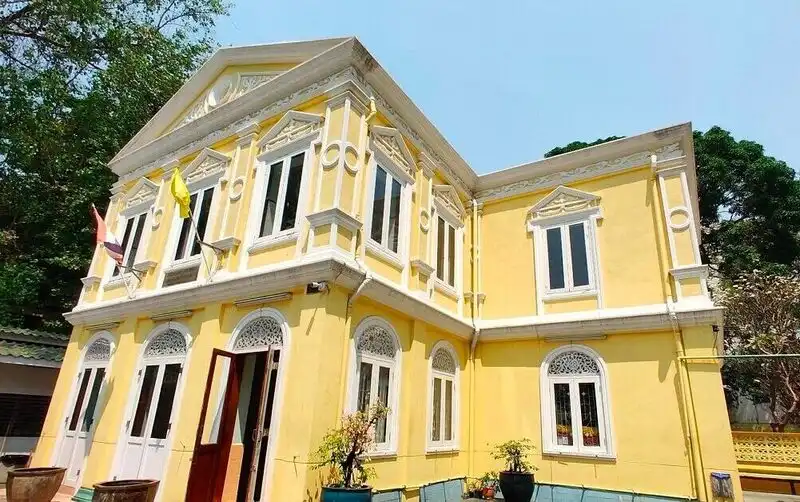
Luang Kocha Ishak Mosque is one of Bangkok’s historic mosques, located on the eastern bank of the Chao Phraya River near Wat Ko (Wat Samphanthawong) in an area most people now recognize as Chinatown or Yaowarat. What makes this place truly distinctive is not only the surprise of finding a mosque in the heart of a predominantly Chinese community, but the layered history of people, trade, and the formation of a Muslim community that has long blended into Bangkok’s old riverside cityscape.
The mosque was established on land closely tied to the family of Luang Kocha Ishak. His family home stood on the opposite bank of the Chao Phraya River in Khlong San. The story traces back to the reign of King Nangklao (Rama III), when a trader named “Nguan Musa” from Saiburi traveled to Bangkok for commerce and settled in Thonburi. Nguan Musa was Luang Kocha’s father and married Miss Liap, a Chinese woman from the Suan Mali area. Their family history reflects Bangkok’s long-standing role as a multicultural port city where people of different backgrounds and faiths connected through trade and settlement.
Luang Kocha’s land holdings stretched across both sides of the river. On the Khlong San side, he owned about 12 rai, once worked as fruit orchards by bonded laborers until the abolition of slavery. Later, when Charoen Nakhon Road was constructed during the reign of King Prajadhipok (Rama VII), the land was divided into two sections. Most of it, especially the riverside portion, remains a residential area for descendants today. Across the river, the opposite plot—aligned with the family home—served as storage and a warehouse, reflecting Luang Kocha Ishak’s role as a merchant as well. This land was later cut through by Song Wat Road and became part of the historic commercial zone along the Chao Phraya.
Luang Kocha Ishak had many children, with three sons especially noted: Phra Kocha Ishak (Mat), Phraya Samantharat Burin (Tui bin Abdullah), and Khun Kanchanaprasat. The name “bin Abdullah” was an honorary surname granted to Phraya Samantharat by King Vajiravudh (Rama VI). Luang Kocha Ishak himself served the Thai court across four reigns beginning in Rama V, working as an interpreter and handling tribute offerings such as silver and gold ceremonial trees. As a result, foreign visitors bringing royal tribute would often stay at his home, and he would then present these offerings onward in an official capacity.
As time passed and the warehouse function declined, part of the Song Wat plot was sold, leaving roughly 2 rai. On the remaining land, Luang Kocha Ishak gathered his descendants to build a small prayer house for communal worship. Because it stood near Wat Ko, people began calling it “Surao Wat Ko” (Wat Ko Prayer House). A section of the land was also dedicated to a koubur—an Islamic cemetery—where members of the family, including the patriarch, were buried, as described in the family interviews you provided. This prayer house was never officially registered, so it has no formal name and no mosque committee like registered mosques. Even so, the community has continued to manage it through family stewardship, using rental income from surrounding land and buildings to support upkeep.
A defining feature of Luang Kocha Ishak Mosque is its openness. It functions as an “open mosque,” welcoming anyone who wishes to pray, and the cemetery is also treated as a public space. On Fridays, around 100 Muslims—many working or living nearby—come to attend congregational prayer. The mosque’s presence in the center of Chinatown feels remarkably seamless. Architecturally, the building carries a modest European-style character. Its Thai-language name was deliberately used so later generations and visitors would recognize the roots of the founder, while also affirming the identity of Thai Muslims living in harmony with Chinese culture—an atmosphere of social cohesion that has long been part of Bangkok’s riverside communities.
Getting There Travel to the Yaowarat or Song Wat area and continue on foot into the riverside community lanes. Visiting in the morning through early afternoon is recommended for comfortable walking and photography.
| Name | Luang Kocha Ishak Mosque (Surao Wat Ko) |
| Mosque Highlights | A historic Thai Muslim mosque in the heart of Chinatown, set along the Chao Phraya River, featuring a modest European-style building and a long-standing story of Thai–Chinese–Muslim coexistence |
| Mosque Caretakers | Descendants of Luang Kocha Ishak’s family (stewarded through the lineage) |
| Nearby Attractions | Wat Samphanthawong (0.2 km), Song Wat Road (0.4 km), Yaowarat Road (0.6 km), MRT Wat Mangkon (1.0 km), Sampeng Market (1.1 km) |
| Popular Restaurants Nearby | Nai Ek Roll Noodle (0.5 km, Tel. 02-226-4651), Texas Suki Yaowarat (0.7 km, Tel. 02-623-3298) |
| Popular Accommodations Nearby | Shanghai Mansion Bangkok (0.8 km, Tel. 02-221-2121), Hotel Royal Bangkok @ Chinatown (0.9 km, Tel. 02-226-0026) |
Frequently Asked Questions (FAQ)
Q: Can the general public visit Luang Kocha Ishak Mosque?
A: In general, visitors may enter, but should dress modestly and avoid disturbing prayer times.
Q: How should I dress when visiting the mosque?
A: Wear modest, respectful clothing that covers the body appropriately and follows the etiquette of a religious site.
Q: Why is this mosque historically significant?
A: It represents a Thai Muslim community rooted in Bangkok’s old riverside trade districts, closely tied to Luang Kocha Ishak’s lineage and the cultural evolution of Chinatown.
Q: Is it convenient to get here by public transport?
A: Yes. Travel to the Yaowarat or Song Wat area, or take the MRT to Wat Mangkon, then walk a short distance into the riverside community lanes.
Q: Can I take photos inside the mosque?
A: It is best to ask for permission first and avoid photographing during religious activities out of respect.
 Luang Kocha Ishak Mosque Map
 Category:
  Group:
  Tag: ●Luang Kocha Ishak Mosque●luang kocha ishak mosque ●wat ko mosque ●mosque in bangkok ●chinatown mosque bangkok ●yaowarat mosque ●muslim community bangkok ●historic mosque bangkok ●chao phraya riverside mosque
Last Update: 2 MonthAgo
Tag: ●Luang Kocha Ishak Mosque●luang kocha ishak mosque ●wat ko mosque ●mosque in bangkok ●chinatown mosque bangkok ●yaowarat mosque ●muslim community bangkok ●historic mosque bangkok ●chao phraya riverside mosque
Last Update: 2 MonthAgo
Comment
 Nearby Attractions
| Keyword (Advance) |
 Facebook Fanpage
 Region
 Art, Culture and Heritage
 Historical Sites and Monuments(
 Landmarks and Memorials(
 Royal Palace(
 Art, Craft Centres, Tradition(
 Museums(
 Historical Houses and The Ancient City(
 Art Gallery(
 Educational Places
 Museum for Study(
 Library(
 University
 Temple(
 Church(
 Other religious and spiritural sites(
 Research and Development
 Royal Project(
 Suburban Living
 Village, Community(
 Local Market(
 Floating Market(
 Nature and Wildlife
 River, Canal(
 Bays and Beaches(
 Other natural attractions(
 Entertainment and Agricultural
 Zoos and Aquariums(
 Animal camps and shows(
 Stadium(
 Farm, Parks, Gardens and Ecotourism(
 Amusement Park(
 Waterpark(
 Theater(
 Cinema(
 Shopping
 Shopping and Night Market(
 Department Store(
 Spas and Wellness
 Spas and Wellness(
 Restaurant
 Michelin Star(
 Accommodation
 Hotel(
 Call Customer Service in Tourism
 Call Customer Service in Tourism(
 Travel Articles, Recipes
 Travel Review, Food Review(
 Royal Thai Desserts, Traditional Dessert, Thai Dessert Recipes(
 Copyright 2012,