
lovethailand home >Northeastern Travel Attractions
> Khon Kaen Travel Attractions
TL;DR: A quick overview of attractions in Khon Kaen, plus planning details, access, and key travel highlights.
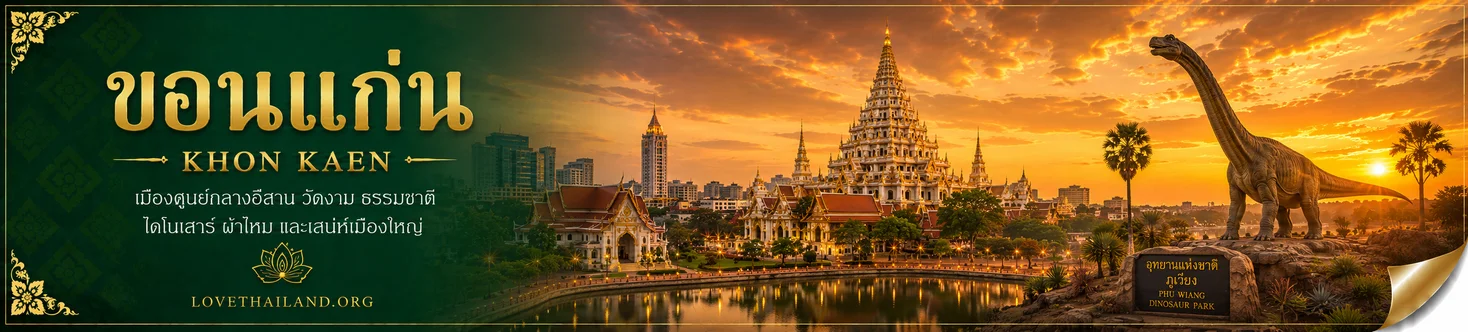
Khon Kaen
Slogan : Phra That Kham Kaen, sound of Can Dok Koon, center of the silk, travel Khon Kaen big city, famous Dinosaur, olympic boxing gold medal.
Khon Kaen is one of the most important provinces in Northeastern Thailand, also known as Isan. It is widely recognized as a major regional hub with a large population and a strategic geographic location at the heart of the Northeast. Beyond its central position, Khon Kaen plays a critical role as an educational and technological center, primarily due to the presence of Khon Kaen University, one of Thailand’s leading academic institutions. The province is also well-developed in terms of infrastructure, offering a full range of accommodations, transportation systems, and urban amenities, especially within Mueang Khon Kaen District.
The province covers an area of approximately 10,885 square kilometers, making it the 15th largest province in Thailand. Its landscape spans two major river basins: the Chi River Basin and the Mun River Basin. The western part of the province features mountainous terrain connected to the Phetchabun mountain range, while the eastern and southeastern areas are characterized by gently rolling plains. The elevation ranges between 100 and 200 meters above sea level, with key rivers such as the Chi River and Phong River contributing to the region’s ecological and agricultural significance.
Although Khon Kaen was officially established during the reign of King Rama I in 1797, archaeological evidence suggests that this area has been inhabited for thousands of years. Numerous prehistoric artifacts and ancient settlement sites have been discovered throughout the province, indicating that Khon Kaen was once part of an advanced civilization long before the Buddhist era. The Phu Wiang area, in particular, is believed to have been an important settlement across multiple historical periods, supported by discoveries of ancient city remains and archaeological structures.
During the Ayutthaya and Thonburi periods, Phu Wiang functioned as a frontier city under the influence of Vientiane, serving as a strategic route connecting Laos and central Thailand. Over time, due to warfare and regional instability, many communities were abandoned, leaving behind remnants of once-thriving settlements. Later, in the Rattanakosin period, King Rama I elevated Ban Bueng Bon to city status, officially naming it “Khon Kaen.” The administrative center was relocated several times before settling in its current location in the early 20th century.
Today, Khon Kaen is divided into 20 districts and continues to grow as a dynamic urban and cultural center. Its development has been driven by strong infrastructure, including Khon Kaen Airport, railway connectivity, and major highways such as Mittraphap Road, which links the province directly to Bangkok and other parts of Thailand. These factors make Khon Kaen highly accessible and convenient for both domestic and international travelers.
In addition to its economic and logistical importance, Khon Kaen stands out for its rich cultural heritage. Traditional Isan culture remains deeply rooted in the daily lives of its people, reflected through festivals, rituals, and local traditions that continue to thrive. One of the most significant events is the Bun Bang Fai Festival, or Rocket Festival, which is held in various districts. This ancient tradition is dedicated to Phaya Thaen, a rain deity, and symbolizes the community’s hope for a prosperous agricultural season.
Another major cultural highlight is the Khon Kaen International Silk Festival, combined with the Phuk Siao tradition and the Red Cross Fair. This annual event showcases the region’s finest silk products, including Mudmee silk and Praewa silk, which are known for their intricate patterns and craftsmanship. The “Phuk Siao” ceremony, unique to Isan culture, represents deep friendship and lifelong bonds between participants. The festival also includes cultural performances, exhibitions, and entertainment activities that attract both Thai and international visitors.
Food is another essential aspect of Khon Kaen’s identity. The province is famous for authentic Isan cuisine, known for its bold flavors and use of local ingredients. Popular dishes include som tam (papaya salad), larb (spicy minced meat salad), grilled chicken from Khao Suan Kwang, nam tok (grilled meat salad), and bamboo shoot soup. These dishes reflect the region’s culinary wisdom and the balance of spicy, sour, and savory tastes that define Isan food culture.
Local products and souvenirs also play a significant role in the province’s economy. Chonnabot District is particularly famous for its Mudmee silk, which is handwoven with exceptional detail and artistic value. Visitors can find a wide range of silk products, including scarves, clothing, and accessories. In addition, processed local foods such as fermented pork (naem), Isan sausages, and traditional snacks are popular items to take home.
Khon Kaen offers a wide variety of tourist attractions, catering to different travel styles. Nature lovers can explore Ubolratana Dam and Phu Pha Man National Park, while history and science enthusiasts can visit Phu Wiang National Park, a globally recognized dinosaur fossil site. Cultural landmarks such as Wat Nong Wang, with its iconic nine-story stupa, and Bueng Kaen Nakhon, a large lake in the city center, provide both spiritual and recreational experiences.
Getting There Traveling to Khon Kaen is highly convenient. The province is accessible by air via Khon Kaen Airport, which offers regular flights from Bangkok and other major cities. It is also connected by rail through Khon Kaen Railway Station, as well as by road via Mittraphap Highway. These transportation options make Khon Kaen one of the most accessible destinations in Northeastern Thailand.
With its combination of modern infrastructure, deep-rooted culture, diverse attractions, and strategic location, Khon Kaen has firmly established itself as a major travel destination in Thailand. Whether for a short visit or an extended stay, the province offers a well-rounded experience that reflects the true essence of Isan.
Khon Kaen Festivals 2026
| Festival | Date | Time | Venue | Address |
| International Silk Festival & Phuk Siao Ceremony | Late Nov – Early Dec 2026 | All Day | Kanchanaphisek Convention Center | Khon Kaen University, Nai Mueang, Mueang Khon Kaen |
| Bun Bang Fai (Rocket Festival) | May 2026 | Morning – Evening | Various Districts | Across Khon Kaen Province |
| Songkran Festival (Khao Niew Road) | 13–15 April 2026 | All Day | Sri Chan Road | Nai Mueang, Mueang Khon Kaen |
| Loy Krathong Festival | November 2026 | Evening – Night | Bueng Kaen Nakhon | Nai Mueang, Mueang Khon Kaen |
3–5 Day Khon Kaen Travel Plan (Detailed)
| Day | Plan | Places | Address |
| Day 1 | City Tour & Cultural Landmarks | Wat Nong Wang, Bueng Kaen Nakhon | Nai Mueang, Mueang Khon Kaen |
| Day 2 | Nature & Scenic Views | Ubolratana Dam | Ubolratana District, Khon Kaen |
| Day 3 | Dinosaur & History Exploration | Phu Wiang National Park | Phu Wiang District, Khon Kaen |
| Day 4 | Local Culture & Silk Village | Chonnabot Silk Village | Chonnabot District, Khon Kaen |
| Day 5 | Shopping & Cafés | Ton Tann Market & City Cafés | Mueang Khon Kaen District |
Top 10 MUST VISIT Attractions in Khon Kaen
| No. | Attraction | Highlight | Address |
| 1 | Wat Nong Wang | 9-Story Stupa | Mueang Khon Kaen |
| 2 | Bueng Kaen Nakhon | City Lake Park | Mueang Khon Kaen |
| 3 | Ubolratana Dam | Scenic Nature | Ubolratana District |
| 4 | Phu Wiang National Park | Dinosaur Fossils | Phu Wiang District |
| 5 | Phu Pha Man | Mountain Landscape | Phu Pha Man District |
| 6 | Ton Tann Market | Night Market & Food | Mueang Khon Kaen |
| 7 | Khon Kaen Zoo | Family Attraction | Khao Suan Kwang District |
| 8 | Chonnabot Silk Village | Traditional Silk | Chonnabot District |
| 9 | Tham Phu Ta Luang | Cave & Nature | Phu Pha Man District |
| 10 | Phra That Kham Kaen | Sacred Landmark | Nam Phong District |
Frequently Asked Questions (FAQ)
Q: What is Khon Kaen best known for?
A: Khon Kaen is known as the economic, educational, and transportation hub of Northeastern Thailand. It is also famous for its rich Isan culture, silk production, traditional festivals, and attractions such as Wat Nong Wang, Bueng Kaen Nakhon, and Phu Wiang National Park.
Q: When is the best time to visit Khon Kaen?
A: The best time to visit is between November and February when the weather is cooler and more comfortable. April is also popular for travelers who want to experience the vibrant Songkran Festival on Khao Niew Road.
Q: How many days are enough to explore Khon Kaen?
A: A 2–3 day trip is sufficient for exploring the city and nearby attractions. However, for a more comprehensive experience including nature, culture, and local communities, 4–5 days is recommended.
Q: Is Khon Kaen suitable for family travel?
A: Yes, Khon Kaen is very suitable for families. It offers a variety of attractions such as parks, temples, zoos, and cultural sites, along with convenient transportation and modern facilities.
Q: How can I travel to Khon Kaen?
A: Khon Kaen is easily accessible by air via Khon Kaen Airport, by train through Khon Kaen Railway Station, and by road via Mittraphap Highway, which connects directly to Bangkok and other major provinces.
Q: What food should I try in Khon Kaen?
A: Must-try dishes include som tam (papaya salad), larb, nam tok, grilled chicken from Khao Suan Kwang, bamboo shoot soup, and other traditional Isan dishes known for their bold and spicy flavors.
Q: Are there historical or archaeological sites in Khon Kaen?
A: Yes, Khon Kaen is home to important archaeological sites, especially in the Phu Wiang area, where dinosaur fossils have been discovered. The region also contains evidence of ancient settlements dating back thousands of years.
Q: What are the best souvenirs from Khon Kaen?
A: Popular souvenirs include Mudmee silk from Chonnabot District, handmade silk products, fermented pork (naem), Isan sausages, and local snacks.
Q: Is Khon Kaen more of a business city or a tourist destination?
A: Khon Kaen is both. It serves as a major business and education hub while also offering a wide range of tourist attractions, making it a well-rounded destination.
Khon Kaen Map

 Art, Culture and Heritage
 Historical Sites and Monuments(7)
 Landmarks and Memorials(3)
 Art, Craft Centres, Tradition(2)
 Museums(4)
 Educational Places
 Museum for Study(2)
 Places of Worship
 Temple(27)
 Other Sacred Sites(5)
 Suburban Living
 Village, Community(3)
 Local Market(1)
 Nature and Wildlife
 National Parks and Marine Reserves(5)
 Mountain (Doi)(1)
 Dam, Reservoir, Lake(4)
 Waterfalls(8)
 Caves(9)
 River, Canal(10)
 Bays and Beaches(3)
 Islands(1)
 Other natural attractions(5)
 Entertainment and Agricultural
 Zoos and Aquariums(2)
 Animal camps and shows(2)
 Farms, Parks and Ecotourism(7)
 Waterpark(3)
 Travel Articles, Recipes
 Travel Review, Food Review(1)


