
lovethailand home >Eastern Travel Attractions
> Rayong Travel Attractions
TL;DR: A quick overview of attractions in Rayong, plus planning details, access, and key travel highlights.
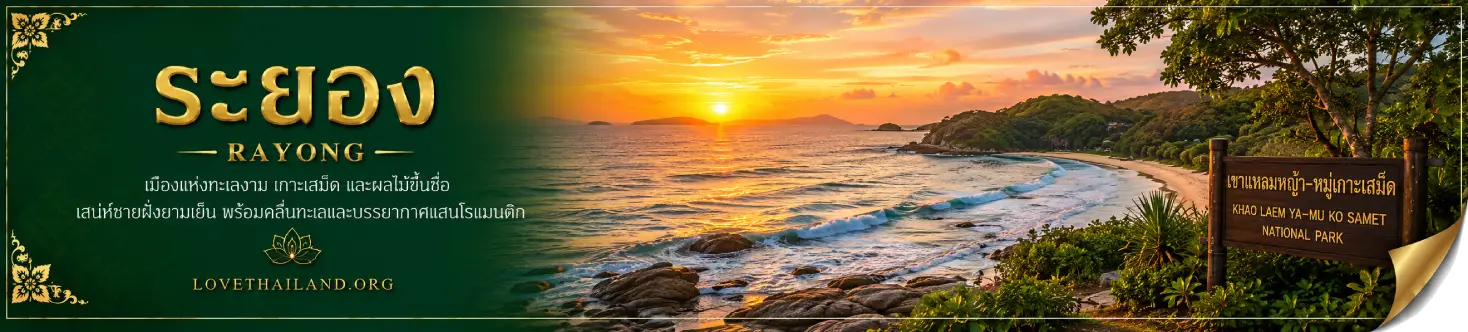
Rayong
Slogan : Fruits very tasty, advanced technology industries, fish sauce in the best, Koh Samet island so beautiful, Soonthornphu is the best of poet.
Rayong Province is a coastal province located in eastern Thailand, distinguished by its rich blend of history, culture, natural beauty, and economic significance. It is part of the Eastern Economic Corridor (EEC), one of Thailand’s key strategic development zones, positioning Rayong not only as a tourism destination but also as a major industrial and economic hub of the country.
Rayong is widely known as the “Land of Thailand’s Great Poet Sunthorn Phu”, as its coastal landscapes and surrounding islands inspired scenes in his legendary literary work, “Phra Aphai Mani”. The province’s scenic seascapes, islands, and traditional coastal lifestyle continue to reflect the poetic imagery described in the story, particularly in areas such as Koh Samet, which has gained international recognition.
Geographically, Rayong covers approximately 3,552 square kilometers and features diverse terrain, including over 100 kilometers of coastline, fertile coastal plains, and inland hills and mountains. The Khao Chamao mountain range plays a crucial role in sustaining local ecosystems and water resources.
The province is home to two major rivers: the Rayong River and the Prasae River. These waterways have historically supported agriculture, fisheries, and community settlements, flowing into the Gulf of Thailand and forming fertile estuarine areas ideal for traditional fishing communities.
Historically, Rayong is an ancient city believed to have been established around 957 CE during the Khmer influence in the region, as evidenced by laterite structures and archaeological remains found in Ban Khai District. During the late Ayutthaya period, Rayong played a crucial role when King Taksin the Great led his troops through enemy lines and temporarily stationed in Rayong before continuing to Chanthaburi to rebuild his forces and reclaim independence for Siam.
Today, the people of Rayong continue to honor King Taksin the Great. His statue at Wat Lum Mahachai Chumphon serves as a spiritual center, and one of the main roads in the city is named “Taksin Maharaj Road” in tribute to his legacy.
Culturally, Rayong has a distinctive identity shaped by the Chong ethnic group, whose language and speech patterns are unique. One notable characteristic is the use of the ending word “hi”, which serves as a polite particle similar to “yes” or “sir/ma’am”. The name “Rayong” itself is believed to derive from the Chong word “Rayong”, meaning either “territory” or “rosewood tree”.
Rayong’s economy is highly diversified, comprising three main sectors: agriculture, industry, and tourism. Coastal and estuarine areas serve as important fishing grounds, while inland regions are known for high-quality fruit cultivation, including durian, mangosteen, rambutan, and longkong, which are nationally recognized for their premium quality.
The province is also a major industrial center, particularly in areas such as Map Ta Phut and Pluak Daeng, which host large-scale petrochemical, energy, and automotive industries. This industrial base makes Rayong one of Thailand’s most economically significant provinces.
In terms of tourism, Rayong offers a wide range of experiences, from beaches and islands to waterfalls, forests, and cultural attractions. Visitors can relax at Mae Ramphueng Beach, explore marine life around Koh Samet, experience local fishing communities in Ban Phe, or hike through natural reserves such as Khao Chamao National Park.
Koh Samet is one of Rayong’s most famous destinations, known for its crystal-clear waters, white sandy beaches, and vibrant atmosphere. It caters to a wide range of travelers, from families to couples, and offers activities such as snorkeling, kayaking, and sunset viewing.
Rayong is also renowned for its culinary scene, particularly fresh seafood. Coastal markets such as Ban Phe are central hubs for both fresh and processed seafood, including dried squid, shrimp paste, fish sauce, and ready-to-eat dishes. Additionally, Rayong’s fruits—especially durian—are highly sought after both domestically and internationally.
The province’s cultural traditions reflect its coastal and agricultural heritage. Festivals such as fruit festivals, religious ceremonies, and local community events provide visitors with opportunities to experience authentic Thai culture and local ways of life.
Administratively, Rayong is divided into 8 districts: Mueang Rayong, Klaeng, Ban Khai, Ban Chang, Pluak Daeng, Wang Chan, Khao Chamao, and Nikhom Phatthana. Each district offers unique characteristics in terms of tourism, economy, and local identity.
Thanks to its strategic location, just 2–3 hours from Bangkok, Rayong has become a highly popular destination for both short trips and extended vacations. Travelers can conveniently reach the province by private car, bus, van, or via U-Tapao International Airport located nearby.
Getting There Travelers can reach Rayong via Highway 3 (Sukhumvit Road) or Highway 36 from Bangkok, with an approximate travel time of 2–3 hours. Public transportation options include buses and vans departing from Ekkamai and Mo Chit terminals. U-Tapao International Airport also provides convenient access for domestic and international travelers.
Overall, Rayong is a province that seamlessly blends modern development with natural beauty. Its strong economic foundation, rich cultural heritage, and diverse tourism offerings make it one of Thailand’s most promising and attractive destinations for travelers in every season.
Rayong Annual Festivals 2026
| No. | Festival Name | Period | Location | Highlights |
| 1 | Rayong Fruit Festival | May – June 2026 | Mueang Rayong & Klaeng District | All-you-can-eat tropical fruits including durian, mangosteen, and rambutan |
| 2 | Sunthorn Phu Memorial Festival | June 26, 2026 | Sunthorn Phu Monument, Klaeng | Thai literature performances and exhibitions inspired by Phra Aphai Mani |
| 3 | Koh Samet Festival | March 2026 | Koh Samet, Mueang Rayong | Beach concerts, light shows, and seaside activities |
| 4 | Floating Kathin Ceremony | October 2026 | Pak Nam Prasae, Klaeng | Unique Buddhist merit-making ceremony held on boats |
| 5 | Rayong Seafood Festival | December 2026 | Mae Ramphueng Beach | Fresh seafood and special local dishes at affordable prices |
Rayong 3–5 Day Travel Itinerary (Detailed Plan)
| Day | Destination | Location | Highlights |
| 1 | Mae Ramphueng Beach | Phe Subdistrict, Mueang Rayong | Long peaceful beach, ideal for relaxation |
| 2 | Koh Samet | Phe Subdistrict, Mueang Rayong | Crystal-clear water and world-class beaches |
| 3 | Thung Prong Thong | Pak Nam Prasae, Klaeng | Golden mangrove forest boardwalk, Unseen Thailand |
| 4 | Rayong Fruit Orchards | Klaeng District | Durian buffet and seasonal fruit tasting |
| 5 | Wat Lum Mahachai Chumphon | Rayong City Center | Spiritual landmark honoring King Taksin |
Top 10 Must-Visit Attractions in Rayong
| No. | Attraction | Location | Highlights |
| 1 | Koh Samet | Mueang Rayong | Clear water and white sandy beaches |
| 2 | Laem Mae Phim Beach | Klaeng District | Quiet and relaxing seaside atmosphere |
| 3 | Thung Prong Thong | Klaeng District | Golden mangrove forest walkway |
| 4 | Ban Phe Market | Mueang Rayong | Dried seafood and local souvenirs |
| 5 | Princess Maha Chakri Sirindhorn Herbal Garden | Nikhom Phatthana | Educational herbal learning center |
| 6 | Khao Laem Ya | Mueang Rayong | Panoramic sea views |
| 7 | Pak Nam Prasae | Klaeng District | Historic fishing community |
| 8 | Nam Rin Beach | Ban Chang | Quiet, less crowded beach |
| 9 | Wat Pa Pradu | Rayong City | Unique reclining Buddha (left-side posture) |
| 10 | Laem Charoen | Mueang Rayong | Famous seafood dining area |
Frequently Asked Questions (FAQ)
Q: When is the best time to visit Rayong?
A: The best time to visit Rayong is from November to May, when the weather is dry, the sea is calm, and conditions are ideal for beach activities and island trips such as Koh Samet.
Q: What is Rayong best known for?
A: Rayong is best known for its beautiful beaches, Koh Samet island, fresh seafood, tropical fruits like durian, and its role as a major industrial hub in Thailand.
Q: How many days should I spend in Rayong?
A: A 3–5 day trip is recommended to fully explore Rayong, including beaches, islands, cultural attractions, local markets, and natural sites.
Q: Is Rayong suitable for international tourists?
A: Yes, Rayong is very suitable for international travelers. It offers a mix of relaxation, cultural experiences, and modern facilities, and is easily accessible from Bangkok and U-Tapao International Airport.
Q: How do I get to Rayong from Bangkok?
A: You can travel from Bangkok to Rayong by car via Sukhumvit Road or Highway 36 in about 2–3 hours. Buses and vans are available from Ekkamai and Mo Chit terminals, and U-Tapao Airport is the nearest airport to the province.
Q: What are the must-visit places in Rayong?
A: Must-visit places include Koh Samet, Mae Ramphueng Beach, Thung Prong Thong, Ban Phe Market, and Khao Laem Ya for panoramic sea views.
Q: What local food should I try in Rayong?
A: You should try fresh seafood such as grilled prawns, steamed crabs, spicy seafood salads, and local specialties like dried squid and shrimp paste, as well as seasonal fruits like durian and mangosteen.
Q: Is Rayong a good destination for a weekend trip?
A: Yes, Rayong is one of the best weekend getaway destinations from Bangkok due to its short travel time, beautiful beaches, and wide range of activities.
Rayong Map

 Art, Culture and Heritage
 Landmarks and Memorials(3)
 Art, Craft Centres, Tradition(2)
 Museums(3)
 Educational Places
 Educational Gardens, Farm(2)
 Places of Worship
 Temple(34)
 Other Sacred Sites(7)
 Research and Development
 Royal Project(1)
 Suburban Living
 Village, Community(2)
 Local Market(3)
 Nature and Wildlife
 National Parks and Marine Reserves(2)
 Mountain (Doi)(2)
 Dam, Reservoir, Lake(5)
 Waterfalls(4)
 River, Canal(1)
 Bays and Beaches(27)
 Islands(8)
 Other natural attractions(4)
 Entertainment and Agricultural
 Zoos and Aquariums(1)
 Farms, Parks and Ecotourism(16)
 Outdoor and Adventure Activities(2)
 Shopping
 Shopping and Night Market(1)


