
lovethailand home >South Travel Attractions
> Satun Travel Attractions
TL;DR: A quick overview of attractions in Satun, plus planning details, access, and key travel highlights.
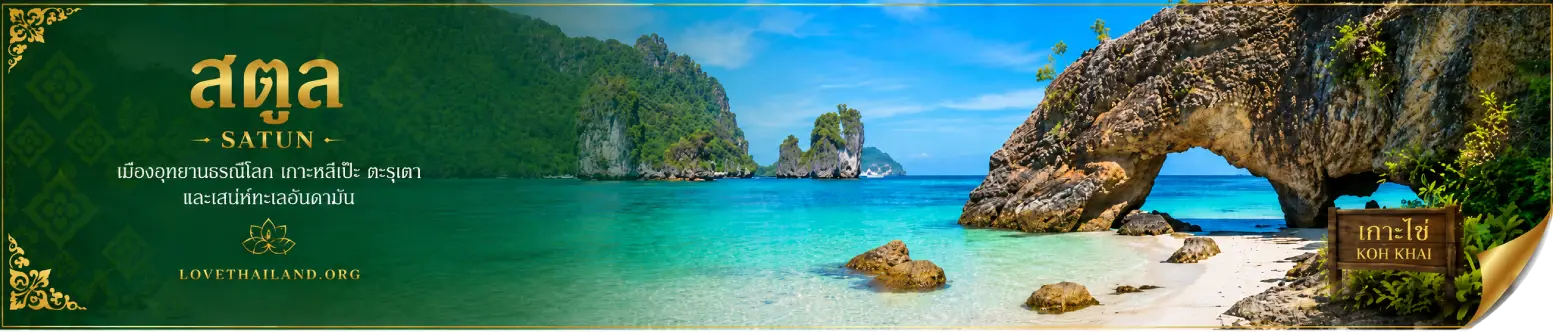
Satun
Slogan : Peaceful, Clean and Pure Nature.
Satun is a coastal province along the Andaman Sea, distinguished by its unique blend of natural beauty, cultural richness, and local way of life. It is especially notable for its multicultural society, where Thai Buddhists and Thai Muslims coexist harmoniously. This province is not only a destination for beach lovers but also a place that clearly reflects historical, religious, and cultural identities that remain alive in the present day.
With its strategic location along the Andaman coastline, Satun is home to more than 100 islands, many of which are internationally recognized for their stunning beauty. Notable destinations include the Tarutao Archipelago, the Adang–Rawi Islands, and Koh Lipe, all of which are considered among the most beautiful seas in Thailand. The crystal-clear waters, rich coral reefs, and preserved tranquility make Satun stand out from other coastal destinations.
The geography of Satun is highly diverse, consisting of mountains, forests, mangrove areas, and coastal plains. The eastern part of the province features mountainous terrain mixed with dense forests, while the central area near the sea is characterized by lowland plains and numerous canals. Along the coastline, fertile mangrove forests form an essential ecosystem that supports marine biodiversity in the Andaman Sea.
One of the most significant natural areas in Satun is Talay Ban National Park, a vast tropical rainforest that includes limestone mountains, caves, waterfalls, and a scenic freshwater lake. It serves as an important site for ecological study and biodiversity conservation in southern Thailand. Additionally, the surrounding mangrove forests play a crucial role as breeding grounds for marine life and help maintain the balance of coastal ecosystems.
Historically, Satun has long been connected to the Malay states. It was once part of the Kedah region before being incorporated into Thailand in the early 20th century. The name “Satun” is derived from the Malay word “Setul” or “Satoy,” meaning “mangosteen-like fruit (santol),” reflecting the area’s former abundance of natural vegetation.
Satun Province was officially established as a province after the administrative reform in 1932 and has continued to develop into one of the key tourism destinations along Thailand’s Andaman coast. Today, it is divided into 6 districts: Mueang Satun, Khuan Don, Tha Phae, Khuan Kalong, La-ngu, Thung Wa, and Manang.
Another defining characteristic of Satun is the lifestyle of its people, most of whom are Thai Muslims. They continue to preserve their traditions, customs, and religious practices with great dedication. This includes their attire, cuisine, and daily routines, all of which contribute to the province’s distinctive cultural atmosphere.
The local culture of Satun is particularly vibrant, especially traditions associated with the sea gypsy community (Urak Lawoi). One of the most important ceremonies is the traditional boat-floating festival, held during the 12th–15th waxing moon of the 12th lunar month. This ritual symbolizes the cleansing of misfortune and the bringing of good fortune. Additionally, Islamic festivals such as Hari Raya are celebrated with great significance and reflect the strong faith of the local community.
Satun’s cuisine is another highlight that should not be overlooked. Influenced by Malay culinary traditions and fresh seafood from the Andaman Sea, the flavors are rich and distinctive. Popular dishes include Massaman curry, coconut-based fish curry, shrimp chili paste, and a wide variety of fresh seafood that is both high-quality and reasonably priced.
Economically, Satun relies primarily on tourism and fisheries. Nature-based and eco-tourism have been growing steadily, attracting both domestic and international visitors. In addition, cross-border trade with Malaysia plays a significant role in boosting the local economy.
Traveling to Satun can be done by both road and air. The most common route is to fly to Hat Yai Airport in Songkhla Province and continue by car for approximately 2 hours. Alternatively, visitors can travel by car from Bangkok through southern provinces, which takes about 12–14 hours.
Getting There Within the province, transportation options include private cars, rental vehicles, and local buses. For island travel, visitors must depart from Pak Bara Pier, which serves as the main gateway to Satun’s famous islands such as Koh Lipe and Tarutao.
The best time to visit Satun’s islands is between November and April, when the sea is calm, the water is clear, and conditions are ideal for snorkeling and marine tourism. However, travelers are advised to check weather conditions in advance, as occasional off-season monsoons may occur.
With all these elements combined, Satun stands out as a destination that offers a complete travel experience. From breathtaking natural landscapes to rich cultural heritage and authentic local lifestyles, it provides more than just relaxation—it offers an opportunity to deeply explore and understand the diversity of Thailand.
Satun Tourism Festivals 2026
| No. | Festival | Period | Location | Highlights |
| 1 | Sea Gypsy Boat Floating Festival (Urak Lawoi) | November 2026 (12th–15th waxing moon, 12th lunar month) | Koh Lipe, La-ngu District | Ancient ritual, symbolic cleansing ceremony, traditional boat floating |
| 2 | Hari Raya Festival (Eid Celebration) | April & June 2026 | Province-wide | Post-Ramadan celebration, traditional Muslim attire, family gatherings |
| 3 | Tarutao National Park Tourism Opening Festival | November 2026 | Pak Bara Pier & Tarutao Islands | Start of sea tourism season, island hopping, snorkeling |
| 4 | Satun Geopark Festival | March 2026 | Thung Wa District (UNESCO Global Geopark Area) | Geology exhibitions, caves, fossils, eco-tourism activities |
| 5 | Satun Seafood & Local Products Festival | May 2026 | Satun Town | Fresh seafood, local culture, community events |
Satun Travel Itinerary (3–5 Days Detailed Plan)
| Day | Destination | Location | Highlights |
| Day 1 | Satun Town / Satun National Museum | Mueang Satun District | Explore history and local Muslim culture |
| Day 2 | Koh Lipe | La-ngu District | Crystal-clear sea, white sand beaches, sea gypsy culture |
| Day 3 | Adang–Rawi Islands | Tarutao National Marine Park | Snorkeling, coral reefs, emerald waters |
| Day 4 | Talay Ban National Park | Khuan Don District | Rainforest, waterfalls, caves, freshwater lake |
| Day 5 | Phu Pha Phet Cave / Thung Wa | Thung Wa District | One of Thailand’s largest caves, geological wonders |
Must-Visit Attractions in Satun (Top 10)
| No. | Attraction | Location | Highlights |
| 1 | Koh Lipe | La-ngu District | World-class beaches, crystal-clear waters |
| 2 | Tarutao National Marine Park | La-ngu District | Protected marine park, pristine islands |
| 3 | Adang–Rawi Islands | Andaman Sea | Snorkeling, vibrant coral reefs |
| 4 | Hin Ngam Island | Tarutao Area | Unique black polished stones |
| 5 | Talay Ban National Park | Khuan Don District | Rainforest, waterfalls, lake scenery |
| 6 | Phu Pha Phet Cave | Thung Wa District | One of the largest caves in Thailand |
| 7 | Wang Sai Thong Waterfall | La-ngu District | Emerald limestone waterfall |
| 8 | Satun Geopark | Thung Wa District | UNESCO Global Geopark |
| 9 | Pak Bara Beach | La-ngu District | Main gateway to islands |
| 10 | Satun National Museum | Mueang District | Local history and cultural exhibits |
Frequently Asked Questions (FAQ)
Q: When is the best time to visit Satun?
A: The best time to visit Satun is from November to April, when the weather is dry and the sea is calm, making it ideal for island hopping, snorkeling, and diving.
Q: How do I get to Koh Lipe?
A: You can travel to Koh Lipe by taking a boat from Pak Bara Pier in La-ngu District. Boats operate regularly during the high season, and the journey takes approximately 1.5 to 2 hours.
Q: Is Satun suitable for family travel?
A: Yes, Satun is suitable for families. It offers a mix of beaches, nature parks, and cultural attractions that are safe and enjoyable for all ages.
Q: What makes Satun unique compared to other southern provinces?
A: Satun stands out for its peaceful atmosphere, well-preserved marine ecosystems, and its rich blend of Thai and Muslim cultural heritage, which is reflected in local traditions and cuisine.
Q: Are there any cultural festivals tourists should not miss?
A: Yes, notable festivals include the Sea Gypsy Boat Floating Festival, Hari Raya celebrations, and the Satun Geopark Festival, all of which showcase the province’s cultural diversity.
Q: Do I need to book accommodation in advance?
A: It is highly recommended to book accommodation in advance, especially during peak season (November to April), as popular destinations like Koh Lipe can fill up quickly.
Q: Is Satun expensive for travelers?
A: Satun is generally more affordable than other popular island destinations in Thailand, although prices on Koh Lipe may be higher due to its popularity and location.
Satun Map

 Art, Culture and Heritage
 Historical Sites and Monuments(1)
 Landmarks and Memorials(1)
 Art, Craft Centres, Tradition(5)
 Museums(3)
 Places of Worship
 Temple(3)
 Mosque(27)
 Suburban Living
 Village, Community(1)
 Local Market(2)
 Nature and Wildlife
 National Parks and Marine Reserves(7)
 Mountain (Doi)(1)
 Dam, Reservoir, Lake(2)
 Waterfalls(9)
 Hot Springs(1)
 Caves(9)
 Bays and Beaches(10)
 Islands(16)
 Other natural attractions(5)
 Entertainment and Agricultural
 Zoos and Aquariums(1)
 Farms, Parks and Ecotourism(4)
 Outdoor and Adventure Activities(1)


