
lovethailand home >North Travel Attractions
> Chiang Mai Travel Attractions
TL;DR: A quick overview of attractions in Chiang Mai, plus planning details, access, and key travel highlights.
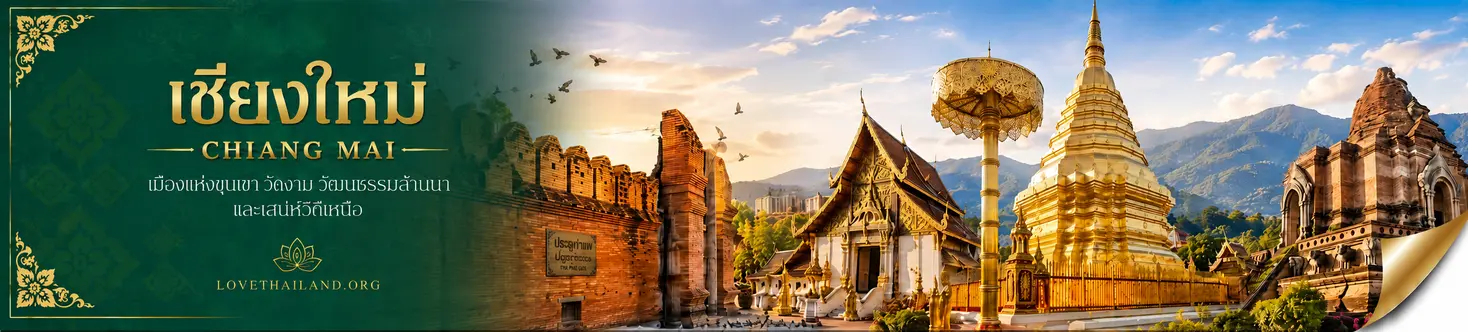
Chiang Mai
Slogan : In the shadow of Doi Suthep mount, blessed with rice customs and traditions, beautiful wild flowers, magnificent Nakhon Phing.
Chiang Mai Province, formerly known as “Nopburi Si Nakhon Ping,” is one of the most historically significant cities in Thailand and serves as a true cultural, economic, and tourism hub of Northern Thailand. This city is not merely a popular tourist destination but also a place that fully and deeply reflects Lanna civilization, which continues to exist vividly in the present day.
Chiang Mai was founded around the 13th century (19th Buddhist century) by King Mangrai, the first ruler of the Mangrai Dynasty. He selected the Ping River basin as the center for establishing the city due to its abundance of water resources, fertile land, and geographical suitability for settlement. The area also offered strong strategic advantages for defense against external threats. As a result, Chiang Mai was systematically designed with a moat, city walls, and gates in all four directions, which can still be seen in the Old City today.
Over several centuries, Chiang Mai has undergone numerous political and administrative transformations. From the prosperous Lanna Kingdom, it later came under Burmese rule before returning to become part of Siam during the Rattanakosin period. During the reign of King Rama I, Chiang Mai held the status of a tributary state, and later administrative reforms during King Rama V’s reign transformed it into the “Monthon Phayap,” eventually evolving into a modern province.
Chiang Mai’s geographical significance is particularly remarkable, as it is surrounded by high mountain ranges, especially the Thanon Thong Chai Range, the main mountain range of Northern Thailand. This terrain gives Chiang Mai a climate distinct from other regions of Thailand. During winter, the weather is cool and pleasant, and in some areas, temperatures drop low enough to produce frost, a unique phenomenon that attracts a large number of tourists each year.
In addition to its distinctive geography, Chiang Mai is rich in natural resources, including forests, waterfalls, and important watershed areas. Notably, “Doi Inthanon,” the highest mountain in Thailand, is a protected natural area with exceptional biodiversity, home to rare plants, wildlife, and migratory birds during the winter season.
In terms of culture, Chiang Mai is truly the center of Lanna civilization. Lanna culture is not merely preserved in museums but continues to live within the daily lives of its people. This includes the Northern Thai dialect, traditional clothing, handicrafts such as weaving, wood carving, and silverwork, as well as long-standing traditions that have been passed down through generations.
One of the most internationally recognized traditions is the “Yi Peng Festival,” during which lanterns are released into the sky to symbolize letting go of misfortune and making wishes for a better future. The atmosphere during this festival is filled with the beauty of floating lanterns and decorative lights throughout the city, making Chiang Mai a dream destination for visitors worldwide.
Another important tradition is the Lanna-style Songkran festival, known as “Pi Mai Mueang,” which has its own unique characteristics compared to other regions of Thailand. It emphasizes merit-making, bathing Buddha images, and pouring water over elders’ hands as a sign of respect.
The lifestyle of people in Chiang Mai is simple and deeply connected to nature. Local markets such as Warorot Market (Kad Luang) serve as central hubs of daily life, where people still buy local food, fresh vegetables, and everyday items in a traditional way. At the same time, the city continues to develop, offering modern cafés, restaurants, and attractions that blend harmoniously with traditional culture.
Chiang Mai cuisine has a distinct identity. Northern Thai food differs significantly from other regions, with sticky rice as a staple and spices playing a key role. Well-known dishes include Khao Soi, influenced by Yunnan Chinese cuisine, Sai Ua (Northern Thai sausage), Nam Prik Noom served with pork crackling, and Gaeng Khae, a mixed vegetable curry.
Northern cuisine also reflects local wisdom in using seasonal ingredients and food preservation techniques, such as fermentation (e.g., Naem). There are also unique local snacks and desserts, such as Khao Taen (crispy rice crackers) and Khanom Jok.
Getting There Traveling to Chiang Mai can be done in several ways. Air travel is the fastest option, with Chiang Mai International Airport serving both domestic and international flights. Alternatively, visitors can travel by train or bus, which is ideal for those who want to enjoy the scenery along the journey.
Within the city, transportation is convenient. Red songthaews (shared taxis), a signature of Chiang Mai, operate throughout the city. There are also rental cars, motorbikes, and bicycles, which are especially suitable for exploring the Old City where major attractions are located close together.
However, traveling to mountainous areas such as Mon Jam, Doi Suthep, or Doi Inthanon requires driving experience, as the roads are steep and winding. Drivers should exercise caution and strictly follow traffic regulations.
Chiang Mai is also home to diverse ethnic groups, including the Hmong, Karen, Akha, and Lahu, who have preserved their traditional cultures and ways of life. Visitors can learn about and experience these cultures through community-based tourism, which supports local income and cultural preservation.
Another charm of Chiang Mai lies in the blend of old and modern elements. The city features ancient temples that are hundreds of years old alongside contemporary cafés and creative spaces that cater to modern lifestyles, making it appealing to a wide range of travelers.
Chiang Mai is therefore not just a tourist destination but an “experience” that harmoniously combines nature, culture, and lifestyle, leaving a lasting impression on visitors.
From a tourism perspective, Chiang Mai offers not only diversity but also a well-structured range of experiences. Visitors can design their trips in various ways, including nature tourism, cultural tourism, food tourism, and wellness or lifestyle tourism, all within a single province.
In terms of nature tourism, Chiang Mai is one of the most geographically diverse regions in Thailand, offering mountains, forests, waterfalls, and sea-of-mist viewpoints. One of the most popular destinations is Doi Inthanon, which is not only the highest peak in the country but also an important nature study area with trails such as Kew Mae Pan, allowing visitors to closely experience diverse ecosystems.
Another notable destination is Mon Jam, which has become a key landmark for scenic tourism. Visitors can enjoy panoramic mountain views and morning mist, representing the essence of Northern Thailand.
In terms of cultural tourism, Chiang Mai has numerous temples and historical sites that reflect authentic Lanna art and architecture, such as Wat Phra That Doi Suthep, the province’s most iconic landmark and an important religious site. Other notable temples include Wat Chedi Luang, Wat Phra Singh, and Wat Suan Dok, each with distinctive history and architecture.
Exploring Chiang Mai’s Old City is not just sightseeing but a journey through history, where every street, temple, and city layout reflects the urban planning concepts of the Lanna era.
In terms of food tourism, Chiang Mai offers exceptional diversity. Visitors can enjoy authentic local dishes as well as modern fusion cuisine that blends local ingredients with contemporary techniques. Night markets such as the Night Bazaar and Sunday Walking Street bring together a wide variety of food in one place.
Chiang Mai is also known for its rapidly growing café culture. Many cafés are designed to harmonize with nature, such as forest cafés, mountain-view cafés, or minimalist urban cafés, making them highly attractive to younger travelers.
Another important aspect is wellness tourism. Chiang Mai is an international hub for this type of travel, offering spas, wellness resorts, meditation centers, and yoga retreats that cater to those seeking relaxation for both body and mind.
Economically, Chiang Mai plays a significant role in Thailand’s tourism industry, attracting a large number of both domestic and international visitors each year. This has led to continuous development in infrastructure, accommodations, restaurants, and services.
However, one of the key challenges for Chiang Mai is maintaining a balance between development and conservation. Rapid tourism growth can impact both the environment and local culture, making sustainable tourism an important priority.
Chiang Mai is also an educational center, home to leading institutions such as Chiang Mai University, which contributes to research and development in Northern Thailand and enhances the city’s cultural and intellectual diversity.
Socially, Chiang Mai is an “open city” that welcomes people from diverse backgrounds, including Thais from other regions and international residents, resulting in a unique cultural blend.
This diversity is reflected in various activities such as art festivals, music events, and creative initiatives, making Chiang Mai a vibrant and dynamic city.
Overall, Chiang Mai offers multiple layers of experience. Visitors can discover something new with each visit, whether it is a new place, a new dish, or a fresh perspective on a familiar city.
Traveling in Chiang Mai is therefore not just about visiting, but about learning, experiencing, and connecting deeply with culture and nature, which is what makes Chiang Mai different from other tourist destinations.
Chiang Mai Festivals 2026
| Period | Festival / Event | Location | Status | Notes |
| 16–17 Jan 2026 | Chiang Mai International Food Festival 2026 | Chiang Mai Cultural Center | Confirmed | International food festival featuring chefs and culinary activities |
| 13–15 Feb 2026 | Chiang Mai Flower Festival 2026 | Nong Buak Haad Public Park | Confirmed | Includes floral parade and month-long flower exhibitions |
| 13–17 Feb 2026 | Chiang Mai Chinese New Year Festival | Warorot Market Area | To Be Confirmed | Parades, cultural performances, and Chinese market atmosphere |
| 6 Mar 2026 | Chiang Mai Holi Festival 2026 | Culture Square, Chiang Mai University | Confirmed | Colorful Indian-style festival celebration |
| 21–23 Mar 2026 | Highland Ethnic Festival 2026 | Highland People Discovery Museum | Confirmed | Ethnic culture, traditional performances, and local cuisine |
| 11–15 Apr 2026 | Songkran Festival Chiang Mai | Throughout Chiang Mai City | Confirmed | Water celebrations around the moat and traditional ceremonies |
| 18–19 Apr 2026 | International Music Art & Culture Festival | Three Kings Monument Plaza | Confirmed | Music, art, and cultural performances |
| 24–25 Nov 2026 | CAD Yi Peng Lantern Festival | CAD Festival Area | Confirmed | Ticketed lantern release event |
| Late Nov 2026 | Yi Peng / Loy Krathong Festival Chiang Mai | Chiang Mai City Area | Pending Announcement | Lantern releases, candle lighting, and traditional parades |
Frequently Asked Questions (FAQ)
Q: What makes Chiang Mai different from other provinces?
A: Chiang Mai stands out for its Lanna culture, diverse natural landscapes, and the ability to offer a complete travel experience—nature, food, and lifestyle—within one province.
Q: How many days should I spend in Chiang Mai?
A: Typically, 3–5 days is recommended to explore both the city and natural attractions such as Doi Inthanon and Mon Jam.
Q: What type of travelers is Chiang Mai suitable for?
A: It is suitable for all types of travelers, including nature lovers, culture enthusiasts, café explorers, relaxation seekers, and international visitors interested in Thai culture.
Q: What is the best way to get around Chiang Mai?
A: Within the city, red songthaews or motorbike rentals are convenient. For mountain travel, a car with suitable performance is recommended.
Q: How is Northern Thai food different from Isan food?
A: Northern Thai food emphasizes herbs and mild flavors, while Isan food is spicier and often uses fermented fish.
Q: When should I avoid visiting Chiang Mai?
A: Late dry season, around March–April, may have air pollution from haze. It is advisable to check air quality before traveling.
Q: Are there hidden attractions in Chiang Mai?
A: Yes, there are many, including mountain villages, lesser-known waterfalls, and quiet nature trails suitable for travelers seeking privacy.
Q: Why is Chiang Mai popular among foreigners?
A: It offers a relatively low cost of living, rich culture, beautiful nature, and well-developed facilities.
Chiang Mai Map

 Art, Culture and Heritage
 Historical Sites and Monuments(8)
 Landmarks and Memorials(5)
 Royal Palace(2)
 Art, Craft Centres, Tradition(43)
 Museums(24)
 Educational Places
 Museum for Study(2)
 Educational Gardens, Farm(5)
 Training Center(1)
 Places of Worship
 Temple(79)
 Mosque(2)
 Other Sacred Sites(17)
 Research and Development
 Royal Project(45)
 Suburban Living
 Village, Community(41)
 Local Market(14)
 Nature and Wildlife
 National Parks and Marine Reserves(18)
 Mountain (Doi)(21)
 Dam, Reservoir, Lake(26)
 Waterfalls(43)
 Hot Springs(12)
 Caves(11)
 River, Canal(6)
 Other natural attractions(14)
 Entertainment and Agricultural
 Zoos and Aquariums(3)
 Animal camps and shows(3)
 Stadium(1)
 Farms, Parks and Ecotourism(19)
 Waterpark(2)
 Theater(1)
 Outdoor and Adventure Activities(10)
 Shopping
 Shopping and Night Market(6)
 Restaurant
 Michelin Star(1)
 Michelin Guide(23)
 Call Customer Service in Tourism
 Call Customer Service in Tourism(1)
 Travel Articles, Recipes
 Travel Review, Food Review(24)
 Food Menu, North Recipes(30)
 Thai Desserts, North Recipes(17)


