
lovethailand home >North Travel Attractions
> Tak Travel Attractions
TL;DR: A quick overview of attractions in Tak, plus planning details, access, and key travel highlights.
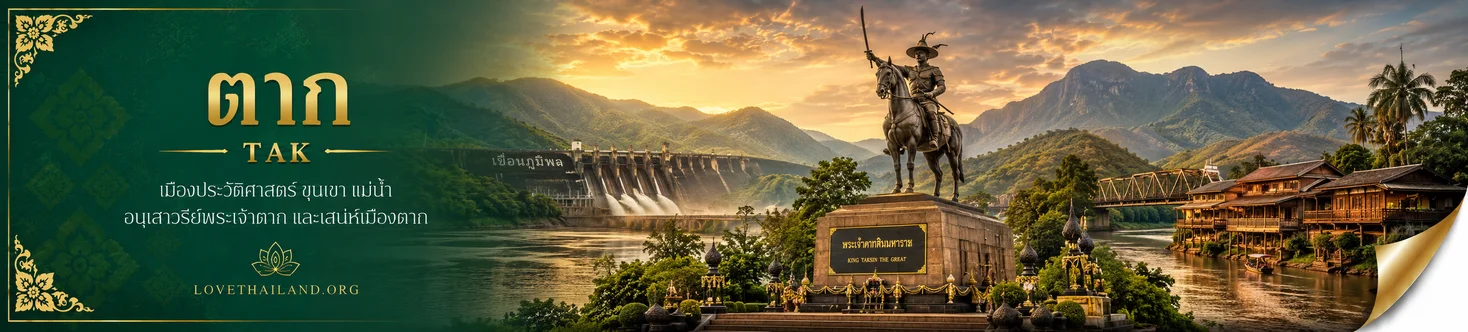
Tak
Slogan : Natural grate to see, large Bhumibol dam, king Taksin majestic, land of wood and beautiful forest.
Tak Province is a province in the lower northern region of Thailand, distinguished by its rich history, cultural heritage, and abundant natural resources. Formerly known as “Mueang Rahaeng,” it was an important frontier city from the Sukhothai period onward, serving as a center of trade, transportation, and strategic defense for the Thai kingdom in the past. With its location linking northern Thailand, central Thailand, and the border with Myanmar, Tak has long played a significant role in the country’s security and regional importance.
Later, the center of Tak was relocated from the right bank of the Ping River to the left bank, in the area of Ban Rahaeng Subdistrict today. This marked the beginning of a new phase of urban development in terms of economy, transportation, and community expansion. As a result, Tak became an important regional city and has continued to play a major role up to the present day, especially as a vibrant border city with active international trade in Mae Sot District.
With such a long history, Tak Province is filled with diverse cultural traces, especially in religious architecture such as temples and pagodas influenced by Mon art, which reflect the settlement of Mon communities in the past. In addition, important temples throughout the province display Sukhothai and Ayutthaya artistic styles, while old European-style buildings from the reign of King Rama V provide evidence of Thailand’s openness to Western culture during a period of national transition.
In terms of lifestyle, Tak is home to a diverse range of ethnic groups, including local Thai communities, Karen, Hmong, and Mon people. Each group has its own culture, traditions, and local wisdom, creating a fascinating cultural richness seen in language, food, clothing, and religious beliefs. In many parts of the province, the blending of Buddhism with traditional ways of life can still be clearly observed.
Tak is also well known for its natural resources, as it forms part of the Western Forest Complex, the largest forest area in Southeast Asia. This vast forested zone includes several national parks and wildlife sanctuaries, such as Mae Moei National Park, Taksin Maharat National Park, and Umphang Wildlife Sanctuary. These areas are globally significant for their biodiversity and also serve as the source of important rivers in Thailand.
One of the most famous tourist attractions in Tak is Thi Lo Su Waterfall, which is regarded as one of the most beautiful waterfalls in Thailand. Its massive scale and the beauty of the water cascading down cliffs amid lush forest make it one of the province’s iconic highlights. Tak also offers other natural attractions such as Doi Hua Mot, the sea of mist in Umphang, Pha Charoen Waterfall, and rafting routes that are especially popular among adventure travelers.
Economically, Tak Province plays an important role in border trade, especially in Mae Sot District, which serves as a key checkpoint between Thailand and Myanmar. Trade, transportation, and international investment continue to grow in this area. The province also has a diverse agricultural base, including temperate crops, flowers, and fruits, which provide important income for local communities.
Local food is another charm of Tak that should not be missed. The province offers both northern Thai cuisine and ethnic dishes with distinctive flavors, such as khao soi, nam phrik noom, kaeng hang lay, and tribal foods that reflect local wisdom and the skillful use of ingredients from nature.
The overall atmosphere of Tak feels peaceful, natural, and unhurried, making it ideal for travelers seeking genuine relaxation. Whether walking through the old town, visiting temples, heading into the mountains, or simply spending time surrounded by nature, every activity offers a different and meaningful experience.
Getting There is convenient. Travelers can use the Asian Highway from Bangkok via Nakhon Sawan into Tak, or continue onward to Mae Sot District, the province’s key border hub. Interprovincial buses are also available from many provinces, making it possible to plan a trip in various ways.
With all of these elements combined, Tak Province stands out as a destination that offers history, culture, nature, and local way of life all in one place. It is suitable for all kinds of travelers, whether they are interested in nature, culture, or adventure, and it is undoubtedly one of the northern provinces that should not be overlooked.
Tak Province Annual Tourism Festival Calendar 2026
| Month | Festival Name | Details | Highlights |
| Jan | Tak Cool Season Travel Period | This is an ideal time to explore Tak town, Bhumibol Dam, Mae Moei National Park, and scenic mountain viewpoints, as the weather is cool and pleasant, travel is convenient, and the views are wide open. | Perfect for road-trip travelers, photographers, and anyone who wants to experience Tak during one of the most beautiful late-winter periods of the year. |
| Feb | Border Nature and Mae Moei Sea of Mist Travel | The cool weather continues, making it a great time to travel to Phop Phra, Mae Sot, and Mae Ramat Districts, as well as enjoy seas of mist and mountain views along the western border. | A wonderful way to see Tak through its mountains, forests, and border landscapes, with a peaceful atmosphere ideal for a longer holiday. |
| Mar | Mae Sot and Border Culture Travel | A suitable month for exploring Mae Sot District, enjoying the atmosphere of the border trade town, visiting Rim Moei Market, Wat Mani Phraison, and key cultural landmarks reflecting the diversity of people in the area. | You get to see a different side of Tak beyond pure nature, with trade, border lifestyles, and multicultural communities all present in one destination. |
| Apr | Tak Songkran Festival | Many districts hold local Songkran activities, including bathing Buddha images, water-pouring ceremonies for elders, and community celebrations, especially in the town center and major districts where the warm northern Thai atmosphere remains strong. | Ideal for experiencing authentic local culture and seeing the close bonds of the communities during the Thai New Year festival. |
| May | Late Rafting Season and Umphang Adventure Travel | This is still a suitable period for rafting and adventure travel on certain routes, especially around Umphang before the rainy season fully sets in, making it attractive for travelers seeking nature-based adventure. | The final stretch of the rafting season, making it a good time for outdoor lovers and activity-focused travelers. |
| Jun | Early Green Season of the Western Forest | Nature begins turning lush and green again, making this a good time to visit national parks, waterfalls, and viewpoints that are easy to access, with a much fresher atmosphere than the hot season. | The forests begin to recover, waterfalls gain more water, and the scenery is ideal for those who enjoy nature without large crowds. |
| Jul | Buddhist Lent and Faith-Based Travel | Many parts of the province hold merit-making ceremonies and religious activities during Buddhist Lent, making it a good time to visit important temples in the town center and nearby districts while learning about the history of the old city. | You get to experience Tak in a calmer, simpler, and more community-centered way. |
| Aug | Beautiful Waterfall and Lush Forest Season | This is a great time to visit natural attractions with waterfalls and forests, especially areas with scenic routes and notable waterfalls such as Pha Charoen Waterfall, along with natural sites in Mae Sot and Phop Phra Districts. | The landscape is especially fresh and green, ideal for travelers who want to see Tak at its most vibrant time of year. |
| Sep | Thi Lo Su and Umphang Travel Season | This is generally when many travelers begin planning trips to Thi Lo Su Waterfall and Umphang District, one of Tak’s nationally recognized highlights. Routes and visiting seasons should still be checked in advance before departure. | It is one of the defining travel images of Tak Province for nature and adventure travelers. |
| Oct | End of Buddhist Lent and Late Rainy to Early Winter Travel | At the end of the rainy season, Tak remains very beautiful, with green mountains, forests, and rivers. It is an ideal time for relaxed travel in Tak town, Mae Sot, and natural routes that are easy to reach. | The mountains remain vividly green, the weather starts improving, and it becomes an excellent transition period for a longer trip. |
| Nov | Loi Krathong Sai – The Flowing Lights of 1,000 Lanterns | This is one of Tak’s most important and famous festivals, held along the Ping River in Tak town. Long lines of floating krathongs create beautiful streams of light on the water, and the festival continues throughout the province’s Loy Krathong celebrations. | A unique symbol of Tak, especially stunning at night, and one of the strongest visual identities of the province. |
| Dec | Tak Winter Season and Year-End Mountain Trips | This is one of the best times to travel in the province, suitable for Tak town, Bhumibol Dam, Mae Sot, Mae Moei, and mountain routes across several districts. Travelers can enjoy either relaxed trips or nature-focused itineraries. | Cool weather, easy travel, and open scenic views make this one of the best times for a year-end holiday in Tak. |
3–5 Day Travel Plan (Detailed) – Tak Province
| Day | Morning | Afternoon | Evening / Notes |
| Day 1 | Start in Tak town. Visit the Shrine of King Taksin the Great, enjoy the atmosphere of the old town, and walk along the Ping River to get an overall feel for the province. | Visit important temples in the town, such as Wat Mani Banphot or other old temples reflecting the history of Rahaeng, and stop for local food. | The evening is ideal for a walk along the Ping River. If you visit during the Loy Krathong period, it can become one of the most beautiful nights of the trip. A good first day with light travel. |
| Day 2 | Travel to Bhumibol Dam and enjoy the views from the dam crest and surrounding reservoir, one of Tak’s important relaxation spots. | Stop at viewpoints around the dam for photography, or relax at cafés and nature-view restaurants in the Sam Ngao area. | This day is suitable for relaxed travelers and families. You can return to stay in Tak town or choose accommodation near the dam to continue enjoying the atmosphere. |
| Day 3 | Travel to Mae Sot District. Visit Wat Thai Wattanaram, Wat Mani Phraison, and important cultural landmarks reflecting the diversity of this border town. | Explore Rim Moei Market, experience the border trade atmosphere, buy souvenirs, and take in the lively city environment throughout the day. | The evening is suitable for staying overnight in Mae Sot, where there are many restaurants and hotels. This day works well for travelers who want to see Tak from the perspective of border economy and multicultural life. |
| Day 4 | Choose a nature-focused route in the Mae Sot–Phop Phra zone, such as Pha Charoen Waterfall or other natural routes that are easy to access, perfect for leaving the city behind and enjoying the forest and waterfalls. | Stop at cafés, viewpoints, or community-based attractions along the way. If you enjoy photography, some seasons offer good mountain and mist scenery. | Return to your accommodation and adjust the plan according to the season. This day is ideal for unhurried travel and leaves room for personal interests. |
| Day 5 | If you have more time, continue to Umphang or plan a deeper nature route featuring major highlights such as Doi Hua Mot, Thi Lo Su Waterfall, or rafting routes. An overnight arrangement is recommended. | If you do not continue to Umphang, use this time to buy souvenirs in Mae Sot or Tak town, including local community products, regional specialties, and well-known snacks. | This works well as a flexible final day. If you want a truly in-depth trip, Tak can easily be extended beyond five days because the distances between districts are quite large. |
15 MUST VISIT Attractions in Tak Province
| No. | Place Name | Highlight | Type | Approximate Area |
| 1 | Thi Lo Su Waterfall | One of the most famous waterfalls in Thailand, a national-level highlight of Tak Province, and an iconic image of Umphang District. | Waterfall / Nature | Umphang District |
| 2 | Doi Hua Mot | A well-known sunrise and sea-of-mist viewpoint in Umphang, especially beautiful during the late rainy and early winter period. | Viewpoint / Mountain | Umphang District |
| 3 | Bhumibol Dam | A major landmark of the province with beautiful views over the reservoir and surrounding mountains. | Dam / Viewpoint | Sam Ngao District |
| 4 | Rim Moei Market | A key attraction in Mae Sot reflecting cross-border trade life and the lively energy of Tak’s western economic zone. | Market / Border | Mae Sot District |
| 5 | Wat Thai Wattanaram | An important temple in Mae Sot with striking Burmese-influenced art and a strong reflection of the border area’s cultural diversity. | Temple / Culture | Mae Sot District |
| 6 | Wat Mani Phraison | A temple with a large chedi and Burmese-style art, making it another cultural highlight of Mae Sot for travelers interested in heritage. | Temple / Religious Art | Mae Sot District |
| 7 | Pha Charoen Waterfall | An easily accessible waterfall with beautiful tiered cascades, suitable for general travelers and families. | Waterfall / Nature | Phop Phra District |
| 8 | Mae Moei National Park | Known for sea-of-mist viewpoints and nature trails, ideal for travelers who enjoy mountain scenery and border panoramas. | National Park / Nature | Tha Song Yang District |
| 9 | Taksin Maharat National Park | An important natural area of the province, suitable for relaxation, forest walks, and experiencing Tak’s large forest landscapes. | National Park / Nature | Mueang Tak District |
| 10 | Shrine of King Taksin the Great | A significant historical and spiritual landmark for the people of Tak, closely connected to the legacy of King Taksin the Great. | History / Faith | Mueang Tak District |
| 11 | Ping River Riverside, Tak Town | One of the best places to stroll and enjoy the city atmosphere, especially in the evening and during the Loy Krathong Sai festival. | Community / City View | Mueang Tak District |
| 12 | Thai–Myanmar Friendship Bridge No. 1 | A symbolic landmark representing the economic and transportation links between Thailand and Myanmar. | Landmark / Border | Mae Sot District |
| 13 | Umphang Sky Road 1219 | A famous winding route that has become symbolic of the journey to Umphang and is regarded as one of Thailand’s beautiful scenic roads. | Travel Route / Mountain View | Mae Sot–Umphang Route |
| 14 | Mae Kasa Community | A community-based tourism area reflecting local life and natural surroundings near Mae Sot, suitable for slow and meaningful travel. | Community / Nature | Mae Sot District |
| 15 | Umphang Rafting Routes | A popular adventure activity for travelers who want to experience Tak’s natural environment in a more immersive way. | Adventure / Nature | Umphang District |
Frequently Asked Questions (FAQ)
Q: How many days should I spend in Tak Province?
A: At least 3–5 days are recommended if you want to explore Tak town, Mae Sot, and Umphang at a comfortable pace, because the districts are quite far apart and each has very different highlights. If you plan to visit Thi Lo Su Waterfall or Doi Hua Mot, you should allow at least 1–2 extra days.
Q: What are the main attractions in Tak Province?
A: The major highlights of Tak include Thi Lo Su Waterfall, Doi Hua Mot, Bhumibol Dam, Rim Moei Market, Wat Thai Wattanaram, Wat Mani Phraison, Pha Charoen Waterfall, Mae Moei National Park, Taksin Maharat National Park, and King Taksin the Great Shrine. Each offers a different experience, from nature and history to border culture.
Q: What makes Tak Province stand out from other provinces?
A: Tak stands out because it offers remarkable diversity within a single province: a historic old town, a dynamic border economy in Mae Sot, the rich ecosystems of the Western Forest Complex, and nationally recognized natural attractions such as Thi Lo Su Waterfall. This makes Tak complete in terms of culture, trade, and nature.
Q: When is the best time to visit Tak?
A: The best time is from November to February, when the weather is cool and pleasant for travel in the town, mountain routes, and natural attractions. The Loy Krathong Sai festival is one of the province’s major highlights during this period. The late rainy to early cool season is also ideal for nature lovers, as the mountains and waterfalls are especially beautiful.
Q: Is Tak Province easy to reach?
A: Yes. Tak can be reached conveniently by private car or long-distance buses from Bangkok and many northern provinces. The main road connections are good, but if you want to explore several districts, especially Mae Sot or Umphang, having your own car or a rental vehicle will make the trip much easier.
Q: What type of traveler is Tak suitable for?
A: Tak is suitable for many kinds of travelers, including nature lovers, photographers, history enthusiasts, culture-focused travelers, and adventure seekers. The province offers waterfalls, mountains, important temples, a lively border city, and outdoor activities such as rafting and scenic mountain travel.
Q: How should I plan a trip to Thi Lo Su Waterfall?
A: Thi Lo Su should be planned separately from a Tak town or Mae Sot trip because it is located in Umphang District and requires significantly more travel time than other attractions in the province. You should always check the seasonal access conditions and route status in advance to ensure a safe and convenient journey.
Q: What souvenirs are worth buying in Tak Province?
A: Interesting souvenirs from Tak include border-trade goods from Mae Sot, community-made products, local handicrafts, processed foods, and regional snacks that reflect the province’s identity. Community-style products and goods from the border area are especially easy to find at Rim Moei Market and other commercial zones.
Q: Is Tak suitable for family travel?
A: Yes. Tak offers many relaxed destinations that are easy to reach, such as Bhumibol Dam, the Ping River riverside area, Rim Moei Market, and important temples. These places are well suited to families, while larger natural sites and adventure routes can be added depending on the ages and travel readiness of the group.
Q: If I visit Tak for the first time, where should I start?
A: If it is your first time, it is best to begin in Tak town to understand the province’s historical background. From there, you can continue to Bhumibol Dam or Mae Sot depending on your interests. If you enjoy nature and have more time, you can then extend the trip to Umphang and Thi Lo Su Waterfall in the next stage, which helps make the itinerary more organized and less tiring.
Tak Map

 Art, Culture and Heritage
 Historical Sites and Monuments(2)
 Landmarks and Memorials(3)
 Art, Craft Centres, Tradition(6)
 Historic Homes and Cities(2)
 Educational Places
 Educational Gardens, Farm(2)
 Places of Worship
 Temple(22)
 Other Sacred Sites(9)
 Research and Development
 Royal Project(1)
 Suburban Living
 Village, Community(5)
 Local Market(3)
 Nature and Wildlife
 National Parks and Marine Reserves(11)
 Mountain (Doi)(9)
 Dam, Reservoir, Lake(14)
 Waterfalls(23)
 Hot Springs(2)
 Caves(6)
 River, Canal(1)
 Bays and Beaches(1)
 Islands(1)
 Other natural attractions(1)
 Entertainment and Agricultural
 Farms, Parks and Ecotourism(5)
 Outdoor and Adventure Activities(4)
 Travel Articles, Recipes
 Travel Review, Food Review(1)


