
lovethailand home >Northeastern Travel Attractions
> Kalasin Travel Attractions
TL;DR: A quick overview of attractions in Kalasin, plus planning details, access, and key travel highlights.
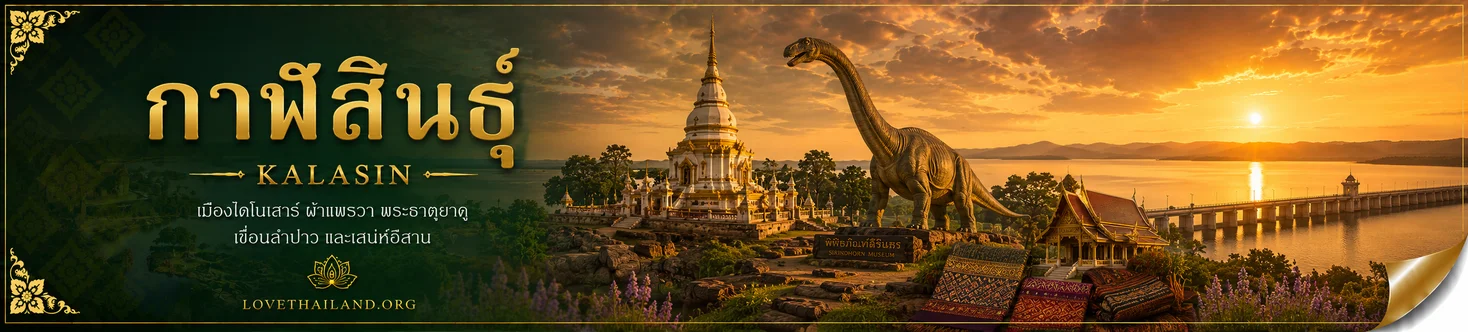
Kalasin
Slogan : Fa Daet Song Yang Ancient City, Pong Lang Folk Music, Phu Thai Culture, Phrae Wa Silk, Pha Saweoi Phu Phan, Lam Pao River, and Million-year Dinosaurs.
Kalasin is a province located in the northeastern region of Thailand, well known for its unique identity in terms of history, nature, culture, and traditional way of life. It is especially famous as the “Dinosaur City” of Thailand due to the discovery of numerous prehistoric fossils in the area, making Kalasin not only a travel destination but also an important center of paleontological research in Southeast Asia.
The landscape of Kalasin is diverse, consisting of fertile plains suitable for agriculture, mountainous areas, forests, and major water resources such as Lam Pao Dam, which serves as a key landmark of the province. In addition, the province preserves strong Isan cultural traditions, simple lifestyles, and long-standing local customs. Visiting Kalasin offers more than just sightseeing; it provides insight into the authentic roots of Thai society.
Historically, Kalasin has been associated with ancient civilizations along the Chi River basin. Archaeological evidence indicates that human settlements existed in this region since prehistoric times. Later, during the Rattanakosin period, Kalasin was officially established as a city, with Phraya Chaisunthon recognized as its first governor, playing a crucial role in the development of the province.
One of the most remarkable features of Kalasin is the discovery of dinosaur fossils in Sahatsakhan District, particularly at Phu Kum Khao, which is considered one of the most important excavation sites in Southeast Asia. The fossils found here date back millions of years and are well-preserved, allowing for in-depth scientific study. Today, the area has been developed into a major learning center and museum open to visitors.
Beyond its academic significance, Kalasin also offers beautiful and relatively untouched natural attractions. Lam Pao Dam is a vast reservoir that plays a vital role in agriculture and tourism. It is also one of the most popular spots for sunset viewing and relaxation among both locals and visitors.
Mountain areas such as Phu Sing and Phu Pha Lek National Park provide excellent opportunities for hiking, scenic viewpoints, and experiencing peaceful natural surroundings. The province is also home to several waterfalls, including Kaeng Don Klang Waterfall, which becomes especially stunning during the rainy season.
In terms of culture, Kalasin is a center of traditional Isan arts that are still actively practiced. One of the most notable is “Pong Lang,” a traditional musical instrument that has evolved into a well-known cultural performance. Another highlight is Praewa silk, regarded as one of the finest and most intricate silk textiles in Thailand.
Major cultural traditions in Kalasin include the Pong Lang Praewa Festival, the Bun Bang Fai (Rocket Festival), and Loy Krathong. These traditions reflect the deep connection between the local community, nature, and religious beliefs. Many of these events are celebrated on a large scale and allow visitors to participate and experience local culture firsthand.
Local cuisine in Kalasin is another important highlight, featuring authentic Isan flavors such as larb, koi, papaya salad with fermented fish, grilled fish from Lam Pao Dam, and many other traditional dishes. These foods are not only delicious but also represent the cultural identity of the region.
Getting There Kalasin can be reached in several ways. Traveling by car from Bangkok takes approximately 7–8 hours. Alternatively, buses are available from Mo Chit Bus Terminal. Visitors can also fly to nearby airports such as Khon Kaen or Roi Et, and then continue by car to Kalasin, which takes around 1–2 hours.
Overall, Kalasin is an ideal destination for travelers seeking a unique experience beyond mainstream tourist cities. It offers a perfect combination of knowledge, nature, and culture, while preserving its authentic and simple charm.
Kalasin Annual Festivals 2026
| Festival | Season | Date (Approx.) | Location / Address | Description |
| Pong Lang Praewa Festival | Cool Season | February 1–10, 2026 | Kalasin Provincial Hall, Mueang Kalasin District | Major cultural festival showcasing Pong Lang music and Praewa silk |
| Bun Bang Fai Rocket Festival | Pre-Rainy Season | May 2026 | Kamalasai District and Yang Talat District | Traditional rain-calling festival with parades and rocket competitions |
| Songkran Festival | Summer | April 13–15, 2026 | Kalasin City Area | Thai New Year celebration with water splashing and merit-making |
| Loy Krathong Festival | Late Year | November 2026 | Lam Pao Dam, Mueang District | Floating lantern festival with cultural shows and night markets |
Kalasin Travel Plan (3–5 Days)
| Day | Time | Destination | Address | Activity |
| Day 1 | Morning | Sirindhorn Museum | Non Buri Subdistrict, Sahatsakhan District | Explore dinosaur exhibits |
| Day 1 | Afternoon | Phu Kum Khao | Sahatsakhan District | Visit excavation site |
| Day 2 | Morning | Lam Pao Dam | Lam Pao Subdistrict, Mueang District | Sightseeing and photography |
| Day 2 | Evening | Local Market | Kalasin City | Try local food |
| Day 3 | Morning | Phu Sing | Sahatsakhan District | Nature viewpoint |
| Day 4 | Morning | Kaeng Don Klang Waterfall | Kuchinarai District | Relax and swim |
Top 10 Must-Visit Attractions in Kalasin
| No. | Place | Address | Type | Highlight |
| 1 | Sirindhorn Museum | Sahatsakhan District | Museum | Dinosaur fossils |
| 2 | Phu Kum Khao | Sahatsakhan District | Archaeological Site | Excavation area |
| 3 | Lam Pao Dam | Mueang District | Nature | Sunset views |
| 4 | Phu Sing | Sahatsakhan District | Mountain | Scenic viewpoint |
| 5 | Kaeng Don Klang Waterfall | Kuchinarai District | Waterfall | Natural beauty |
| 6 | Wat Wang Kham | Mueang District | Temple | Artistic architecture |
| 7 | Praewa Silk Village | Kham Muang District | Cultural | Traditional silk |
| 8 | Night Market | Mueang District | Food | Local cuisine |
| 9 | Nong Pla Thao | Kamalasai District | Nature | Reservoir scenery |
| 10 | Ban Tha Ruea | Yang Talat District | Community | Local lifestyle |
Frequently Asked Questions (FAQ)
Q: What is Kalasin best known for?
A: Kalasin is best known as Thailand’s “Dinosaur City,” with major fossil discoveries at sites such as Sirindhorn Museum and Phu Kum Khao. It is also known for its natural attractions, cultural heritage, and traditional Isan lifestyle.
Q: When is the best time to visit Kalasin?
A: The best time to visit is from November to February when the weather is cool and comfortable. The rainy season is also suitable for enjoying lush greenery and waterfalls.
Q: How many days should I spend in Kalasin?
A: A 3–5 day trip is recommended to explore dinosaur museums, natural attractions like Lam Pao Dam and Phu Sing, as well as local culture and cuisine.
Q: How can I travel to Kalasin?
A: You can travel by car from Bangkok, which takes approximately 7–8 hours, or by bus from Mo Chit Bus Terminal. Alternatively, you can fly to Khon Kaen or Roi Et and continue by car to Kalasin.
Q: Is Kalasin suitable for family travel?
A: Yes, Kalasin is ideal for families. It offers educational attractions such as dinosaur museums, as well as natural and cultural experiences suitable for all ages.
Q: What local food should I try in Kalasin?
A: Popular local dishes include larb, koi, som tam with fermented fish, grilled fish from Lam Pao Dam, and various traditional Isan dishes known for their bold flavors.
Q: Are there accommodations available in Kalasin?
A: Yes, Kalasin offers a range of accommodations including hotels, resorts, and homestays, especially in Mueang District and near major attractions.
Q: What are the best photo spots in Kalasin?
A: Popular photo spots include Lam Pao Dam during sunset, Phu Sing viewpoints, and the dinosaur landmarks at Sirindhorn Museum.
Kalasin Map

 Art, Culture and Heritage
 Historical Sites and Monuments(2)
 Landmarks and Memorials(3)
 Art, Craft Centres, Tradition(4)
 Museums(3)
 Art Gallery(1)
 Educational Places
 Educational Gardens, Farm(1)
 Places of Worship
 Temple(21)
 Other Sacred Sites(6)
 Suburban Living
 Village, Community(3)
 Nature and Wildlife
 National Parks and Marine Reserves(3)
 Mountain (Doi)(2)
 Dam, Reservoir, Lake(5)
 Waterfalls(4)
 Caves(2)
 River, Canal(3)
 Bays and Beaches(1)
 Other natural attractions(2)
 Entertainment and Agricultural
 Animal camps and shows(1)
 Farms, Parks and Ecotourism(2)
 Travel Articles, Recipes
 Travel Review, Food Review(1)


