
lovethailand home >Northeastern Travel Attractions
> Nong Bua Lamphu Travel Attractions
TL;DR: A quick overview of attractions in Nong Bua Lamphu, plus planning details, access, and key travel highlights.
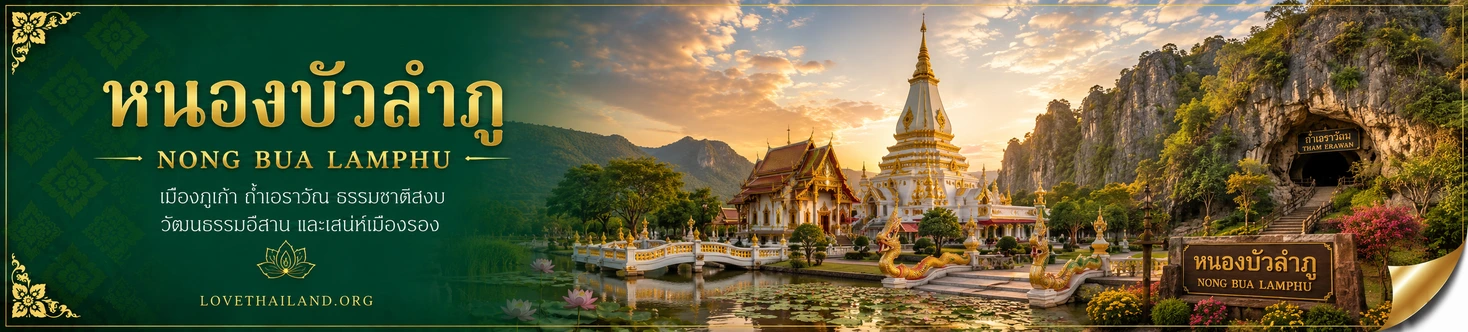
Nong Bua Lamphu
Slogan : Shrine of King Naresuan, Phu kao - Phu Phan kham national park, land of fair and peace, Loung Poo Koaw, Erawan cave, Nakorn Keon Kant lotus blossom.
Nong Bua Lamphu is a province in Northeastern Thailand (Isan) that offers a compelling blend of natural landscapes, historical depth, and authentic local culture. Positioned on a plateau surrounded by the Phu Phan mountain range and Phu Kao, the province has long served as both a strategic settlement and a cultural crossroads. Despite its relatively small size, Nong Bua Lamphu presents a wide spectrum of travel experiences, ranging from sacred temples and archaeological sites to waterfalls, caves, and traditional communities that preserve their way of life.
The origin of Nong Bua Lamphu dates back to the establishment of the ancient city known as “Nakhon Khuean Khanth Kab Kaeo Bua Ban” around 1759 by Phra Wo and Phra Ta. The city was fortified with walls, gates, and defensive structures to protect against invasions, particularly from Vientiane. One of the most significant historical battle sites is located near Thao To Waterfall in the Phu Phan Kham area, where prolonged conflicts took place. These events later became intertwined with broader regional history involving the Kingdom of Vientiane, the Lan Xang Kingdom, and eventually the Kingdom of Siam during the reign of King Taksin the Great.
Over time, the city underwent several administrative transformations, including renaming and integration into larger governing regions such as Nong Khai and Udon Thani. It was officially established as Nong Bua Lamphu Province on December 1, 1993. Today, the province consists of 6 districts: Mueang Nong Bua Lamphu, Non Sang, Si Bun Rueang, Na Klang, Suwannakhuha, and Na Wang.
One of the key strengths of Nong Bua Lamphu lies in its natural attractions. Visitors can explore Phu Kao–Phu Phan Kham National Park, a vast conservation area known for its scenic viewpoints, forest trails, and biodiversity. Thao To Waterfall is a popular destination, especially during the rainy season when the water flow is at its peak. Phu Phan Noi offers another perspective of untouched nature, with panoramic views and cooler climate conditions suitable for relaxation and eco-tourism.
In addition to natural beauty, the province is rich in religious and cultural landmarks. Wat Tham Klong Phen is one of the most revered meditation temples, historically associated with the renowned monk Luang Pu Khao Analayo. Wat Tham Suwannakhuha, located within a limestone cave, is another important spiritual site featuring a large reclining Buddha image and serene cave atmosphere that attracts both pilgrims and tourists.
Cultural identity in Nong Bua Lamphu is strongly rooted in Isan traditions. Local festivals such as Songkran and Bun Bang Fai (Rocket Festival) are celebrated with enthusiasm, reflecting agricultural cycles and community beliefs. These events combine religious ceremonies, traditional performances, and communal activities, offering visitors an opportunity to experience authentic Thai culture beyond mainstream tourist destinations.
Local cuisine is another highlight that should not be overlooked. The food in Nong Bua Lamphu reflects the bold and vibrant flavors of Isan gastronomy. Popular dishes include som tam (papaya salad), larb, grilled chicken, nam tok, tom saep, bamboo shoot curry, and mushroom soup. These dishes are widely available in local markets and roadside eateries, often prepared using fresh local ingredients and traditional recipes.
Getting There Nong Bua Lamphu is conveniently accessible via Udon Thani, which serves as the nearest transportation hub. Travelers can fly into Udon Thani International Airport or take a train or long-distance bus. From Udon Thani, the province is approximately 50 kilometers away and can be reached by car, taxi, or local bus within about 1 hour. This makes Nong Bua Lamphu an excellent extension for travelers exploring the northeastern region of Thailand.
Although often overlooked in favor of more popular destinations, Nong Bua Lamphu offers a distinctive travel experience characterized by tranquility, authenticity, and cultural richness. It is particularly suitable for travelers seeking a deeper understanding of Isan heritage, natural exploration, and a slower pace of travel away from crowded tourist routes.
Annual Tourism Festivals in Nong Bua Lamphu Province 2026
| Event Name | Date | Duration | Venue | Address | Highlights |
| Paying Homage to King Naresuan the Great Shrine and Nong Bua Lamphu Red Cross Fair 2026 | 18–27 January 2026 | 10 consecutive days | King Naresuan the Great Shrine Grounds | Naresuan Road, Lamphu Subdistrict, Mueang Nong Bua Lamphu District, Nong Bua Lamphu Province | The province’s major annual fair featuring homage ceremonies, Red Cross booths, performances, and community activities |
| Nong Bua Lamphu Isan-Lan Xang Grand Songkran Festival 2026 | 13–15 April 2026 | 3 days | Khao Phua Long Road – Sad Hai Sok Road and festival areas in Mueang District | Lamphu Subdistrict, Mueang Nong Bua Lamphu District, Nong Bua Lamphu Province | Bathing sacred Buddha images, walking street water celebrations, cultural parades, and a Songkran atmosphere inspired by Isan-Lan Xang heritage |
| Mueang Nong Bua Lamphu Songkran Festival 2026 | 14–15 April 2026 | 2 days | Mueang Nong Bua Lamphu District Area | Mueang Nong Bua Lamphu District, Nong Bua Lamphu Province | Activities promoting Thai culture, traditional games, and a lively local Songkran atmosphere |
| Tham Erawan Uphill Pilgrimage Festival 2026 | 9–12 April 2026 | 4 days | Wat Tham Erawan | Ban Pha In Plaeng, Wang Thong Subdistrict, Na Wang District, Nong Bua Lamphu Province | A popular merit-making festival featuring the uphill walk to the cave temple, cave visits, and panoramic mountain views |
3–5 Day Travel Plan in Nong Bua Lamphu Province (Practical and Detailed)
| Day | Morning | Afternoon | Address | Highlights |
| Day 1 | Wat Tham Klong Phen | King Naresuan the Great Shrine + Nong Bua Public Park | Wat Tham Klong Phen, Non Than Subdistrict, Mueang Nong Bua Lamphu District, Nong Bua Lamphu Province / King Naresuan the Great Shrine, Naresuan Road, Lamphu Subdistrict, Mueang Nong Bua Lamphu District, Nong Bua Lamphu Province / Nong Bua Public Park, in front of the Mueang Nong Bua Lamphu District Office | Start the trip at a well-known meditation temple, learn about the province’s history, and relax by the lake in the heart of the city |
| Day 2 | 150-Million-Year-Old Shell Fossil Museum and Outdoor Dinosaur Park | Thao To Waterfall Forest Park + Phu Phan Noi | 150-Million-Year-Old Shell Fossil Museum, Ban Huai Duea, Village No. 6, Na Kham Hai Subdistrict, Mueang Nong Bua Lamphu District, Nong Bua Lamphu Province / Thao To Waterfall Forest Park, Non Than Subdistrict, Mueang Nong Bua Lamphu District, Nong Bua Lamphu Province / Phu Phan Noi, Nong Bua Subdistrict, Mueang Nong Bua Lamphu District, Nong Bua Lamphu Province | A day combining geology, fossils, dinosaurs, an accessible roadside waterfall, and an eco-viewpoint near town |
| Day 3 | Wat Tham Suwannakhuha | Phu Kao–Phu Phan Kham National Park | Wat Tham Suwannakhuha, Ban Khuha Phatthana, Village No. 7, Na Si Subdistrict, Suwannakhuha District, Nong Bua Lamphu Province / Phu Kao–Phu Phan Kham National Park, Non Sang District, Nong Bua Lamphu Province | Explore a sacred cave temple with historical importance, then continue to mountain landscapes, forests, and wide scenic viewpoints |
| Day 4 | Wat Tham Erawan | Huai Pha Wang Reservoir | Wat Tham Erawan, Ban Pha In Plaeng, Wang Thong Subdistrict, Na Wang District, Nong Bua Lamphu Province / Huai Pha Wang Reservoir, Ban Thai Niyom, Village No. 5, Wang Thong Subdistrict, Na Wang District, Nong Bua Lamphu Province | A day that combines pilgrimage and nature, with a stair climb to the cave temple followed by relaxing views over a reservoir surrounded by mountains |
| Day 5 | Tad Hai Community Tourism Village | Morning market or local market in Mueang District | Tad Hai Community Tourism Village, Khok Muang Subdistrict, Non Sang District, Nong Bua Lamphu Province / Local market in Mueang Nong Bua Lamphu District, Nong Bua Lamphu Province | End the trip with community life, nature-based boat activities, local food, and shopping for regional products |
10 MUST VISIT Attractions in Nong Bua Lamphu Province
| No. | Attraction | Address | Highlights |
| 1 | Wat Tham Klong Phen | Non Than Subdistrict, Mueang Nong Bua Lamphu District, Nong Bua Lamphu Province | A famous forest temple with a peaceful atmosphere and strong historical ties to Luang Pu Khao Analayo |
| 2 | Wat Tham Erawan | Ban Pha In Plaeng, Wang Thong Subdistrict, Na Wang District, Nong Bua Lamphu Province | Known for its staircase leading up to the cave temple and its dramatic limestone mountain views |
| 3 | Wat Tham Suwannakhuha | Ban Khuha Phatthana, Village No. 7, Na Si Subdistrict, Suwannakhuha District, Nong Bua Lamphu Province | A large cave temple with important Buddha images and a sacred atmosphere |
| 4 | Thao To Waterfall Forest Park | Non Than Subdistrict, Mueang Nong Bua Lamphu District, Nong Bua Lamphu Province | An easily accessible roadside waterfall connected to local historical events |
| 5 | 150-Million-Year-Old Shell Fossil Museum and Outdoor Dinosaur Park | Ban Huai Duea, Village No. 6, Na Kham Hai Subdistrict, Mueang Nong Bua Lamphu District, Nong Bua Lamphu Province | Ideal for families and geology enthusiasts, featuring shell fossils and an outdoor dinosaur zone |
| 6 | King Naresuan the Great Shrine | Naresuan Grounds, Naresuan Road, Lamphu Subdistrict, Mueang Nong Bua Lamphu District, Nong Bua Lamphu Province | A sacred landmark of the province and the center of the province’s most important annual fair |
| 7 | Phu Phan Noi | Ban Phu Phan Thong, Nong Bua Subdistrict, Mueang Nong Bua Lamphu District, Nong Bua Lamphu Province | An eco-tourism spot along the Phu Phan range, ideal for scenic views and nature photography |
| 8 | Phu Kao–Phu Phan Kham National Park | Non Sang District, Nong Bua Lamphu Province | A large protected area with forests, mountains, and several scenic viewpoints |
| 9 | Huai Pha Wang Reservoir | Ban Thai Niyom, Village No. 5, Wang Thong Subdistrict, Na Wang District, Nong Bua Lamphu Province | A peaceful reservoir surrounded by mountains, perfect for relaxation |
| 10 | Tad Hai Community Tourism Village | Khok Muang Subdistrict, Non Sang District, Nong Bua Lamphu Province | A community-based tourism destination known for boat activities, local lifestyle, and the natural scenery around the reservoir |
Frequently Asked Questions (FAQ)
Q: What are the main travel highlights of Nong Bua Lamphu Province?
A: Nong Bua Lamphu offers a wide range of attractions, including natural sites, mountains, waterfalls, caves, religious landmarks, and archaeological locations such as Wat Tham Erawan, Wat Tham Klong Phen, and the 150-Million-Year-Old Shell Fossil Museum. The province also preserves a strong and authentic Isan cultural identity.
Q: When is the best time to visit Nong Bua Lamphu?
A: The province can be visited year-round, but the most pleasant period is from November to February when the weather is cooler and ideal for nature travel. April is also an exciting time because of the Songkran celebrations, while January features the province’s annual fair and Red Cross festival.
Q: How many days should I spend in Nong Bua Lamphu?
A: A 3–5 day trip is recommended, allowing enough time to explore natural attractions, temples, religious sites, and local communities while still enjoying a relaxed travel pace.
Q: What local foods should I try in Nong Bua Lamphu?
A: Popular local dishes include Isan larb, som tam, grilled chicken, nam tok, bamboo shoot curry, and traditional local dishes made with regional ingredients, especially the boldly flavored cuisine that represents authentic Isan food culture.
Q: Is it convenient to travel to Nong Bua Lamphu?
A: Yes. Travelers can easily reach the province by private car from Bangkok in about 7–8 hours, or travel first to Udon Thani and then continue for around 1 hour by road to Nong Bua Lamphu.
Q: Are there any must-visit natural attractions?
A: Yes. Recommended natural attractions include Thao To Waterfall Forest Park, Phu Kao–Phu Phan Kham National Park, and Phu Phan Noi, all of which are well suited to nature lovers and travelers looking for scenic mountain landscapes.
Q: Is Nong Bua Lamphu suitable for family travel?
A: Very much so. The province has educational attractions such as the 150-Million-Year-Old Shell Fossil Museum, as well as accessible natural attractions that are safe and enjoyable for both children and adults.
Nong Bua Lamphu Map

 Art, Culture and Heritage
 Historical Sites and Monuments(4)
 Landmarks and Memorials(1)
 Art, Craft Centres, Tradition(1)
 Museums(3)
 Places of Worship
 Temple(10)
 Other Sacred Sites(6)
 Suburban Living
 Village, Community(3)
 Nature and Wildlife
 National Parks and Marine Reserves(3)
 Mountain (Doi)(5)
 Dam, Reservoir, Lake(5)
 Waterfalls(1)
 Caves(6)
 River, Canal(2)
 Bays and Beaches(1)
 Other natural attractions(3)


