
lovethailand home >Central Travel Attractions >Bangkok Travel Attractions > City Pillar Shrines in All 77 Provinces of Thailan..
TL;DR: City Pillar Shrines in All 77 Provinces of Thailand, open Daily Opening Hours: 06.30 – 18.30, hours 08:00 – 16:30. Highlights include Worship Guide and Travel Tips.
City Pillar Shrines in All 77 Provinces of Thailand
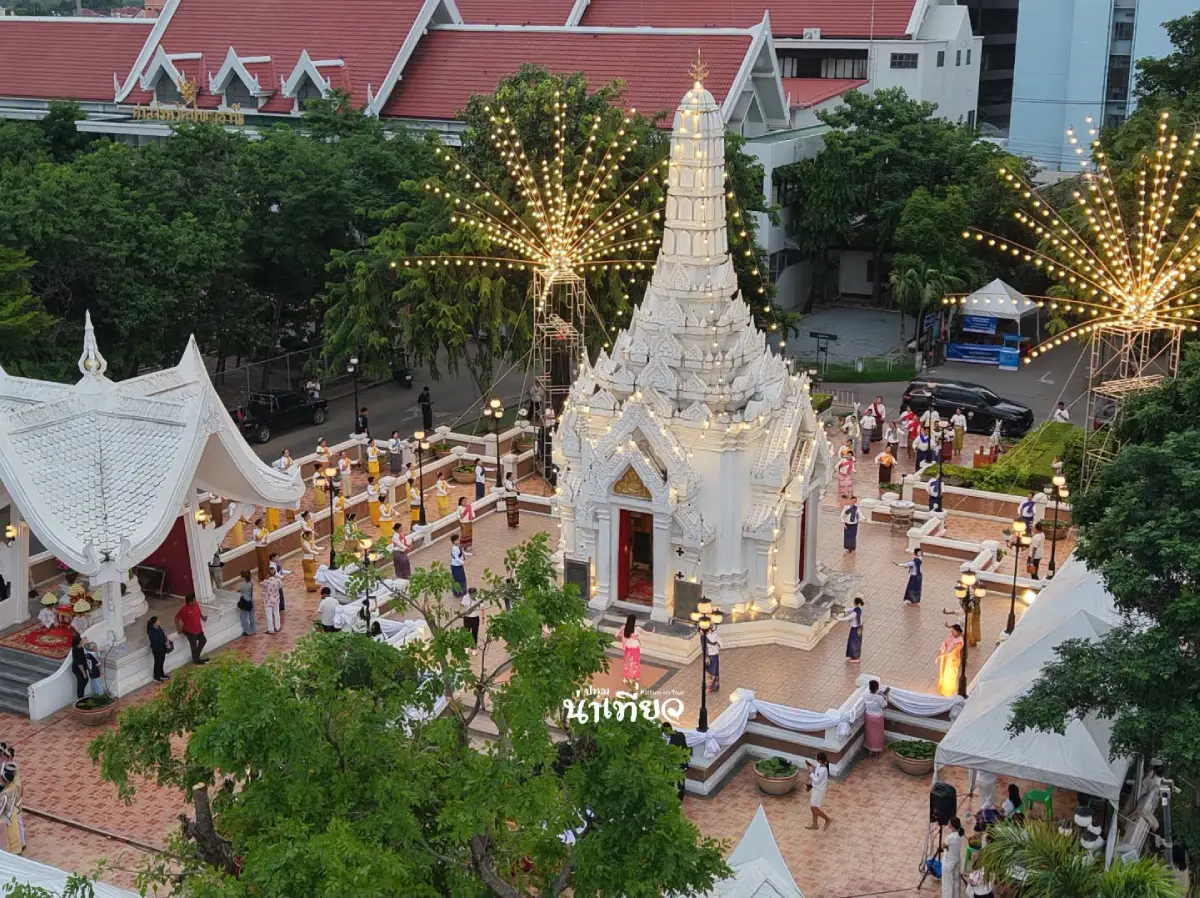
City Pillar Shrines in All 77 Provinces of Thailand: Sacred Landmarks, History, Worship Guide and GPS Locations City pillar shrines are sacred landmarks that hold an important place in Thailand's history, beliefs, and cultural heritage. They reflect traditional ideas about founding cities, establishing stable communities, and maintaining a spiritual connection between local people and the guardian spirits believed to protect their homes. Many city pillar shrines serve as spiritual centers where residents and travelers pay their respects and seek blessings for good fortune. They also preserve distinctive historical and architectural features that reflect the periods and regions in which they were established. Visiting city pillar shrines across Thailand offers an opportunity to explore the country's religious traditions, city-founding history, annual ceremonies, and regional identities.
According to traditional Thai beliefs, establishing a new city involved carefully selecting an auspicious location, determining an appropriate date and time, and conducting ceremonies intended to bring prosperity and stability. The city pillar became a symbol of the city's foundation, security, and future development. In particular, Thai royal traditions were influenced by Brahmanical rituals in which the installation of a city pillar represented both the formal establishment of a new administrative center and the spiritual protection of the capital.
However, city pillar shrines throughout Thailand do not all share the same origins or architectural forms. Some were established according to royal ceremonies associated with the founding of cities. Others were built through the collective efforts of local communities as places of worship and spiritual unity. Certain shrines are closely connected with the worship of guardian spirits, locally known as Chao Pho Lak Mueang, or other protective deities revered by residents for generations. These differences reveal the social, administrative, and cultural development of individual communities across the country.
Bangkok City Pillar Shrine is one of the most significant examples of Thailand's royal city-founding traditions. The installation ceremony for Bangkok's city pillar took place on April 21, 1782, during the reign of King Phutthayotfa Chulalok the Great, or King Rama I. This event coincided with the establishment of Rattanakosin as the new capital of Siam and remains an important historical milestone illustrating the relationship between the foundation of a capital city and traditional beliefs concerning auspiciousness, political stability, and spiritual protection.
The architecture of city pillar shrines is another fascinating aspect of these cultural landmarks. Some shrines feature traditional Thai cruciform pavilions with elaborate prang towers or mondop-style roofs. Others display influences from Lanna architecture, Khmer artistic traditions, or Chinese temple designs, reflecting the cultural backgrounds of the communities in which they were built. The pillars themselves may be made from auspicious types of wood traditionally associated with prosperity and stability, while decorative elements reveal the craftsmanship and artistic identities of different regions.
In addition to the city pillars, certain shrines house guardian deities or other sacred figures associated with local beliefs. As a result, each shrine may have its own worship customs and ceremonial arrangements. Visitors interested in Thai history and spirituality can learn about the meanings of these guardian spirits, the offerings presented to them, and the sequence of worship rituals. These traditions provide valuable insight into the relationships among religion, folk beliefs, and cultural practices preserved within Thai society.
Annual Traditions and City Pillar Worship Ceremonies are an important part of Thailand's intangible cultural heritage. Many city pillar shrines organize annual worship or celebratory ceremonies to commemorate the establishment of the city and pay respect to its guardian spirits. Activities may include ceremonial offerings, Brahmanical rites, Buddhist chanting, traditional cultural performances, and community participation. The dates and formats of these ceremonies vary according to the history and customs of each province.
Ceremonial offerings may include flowers, incense, candles, fruit, prepared food, traditional sweets, and other auspicious items appropriate to local customs. Ritual specialists or designated ceremony leaders conduct the proceedings according to established traditions. These events are significant not only as expressions of religious or spiritual belief but also as opportunities for communities to preserve cultural practices, pass down local history, and strengthen relationships between generations.
For travelers interested in experiencing traditional celebrations, visiting during an annual city pillar ceremony offers an opportunity to observe regional clothing, elaborate ceremonial offerings, and distinctive cultural performances. Visitors should nevertheless respect the boundaries of sacred rituals, avoid interfering with participants, and follow the instructions of organizers, particularly regarding photography and access to ceremonial areas.
How to Worship at a Thai City Pillar Shrine Visitors should begin by dressing respectfully and behaving appropriately within the sacred grounds. Flowers, incense, candles, or other offerings may be prepared according to the traditions of the individual shrine. Worshippers can then compose their thoughts, acknowledge the city's guardian spirits, state their names if they wish, and make a personal prayer. Common wishes concern good fortune, stability in life, career advancement, business success, family well-being, and protection during travel.
Some shrines have several worship stations, including the main city pillar, guardian-deity pavilions, and other sacred figures within the complex. Visitors should read the instructional signs or consult shrine attendants about the proper sequence, number of incense sticks, and appropriate offerings. Customs may differ from one location to another. Respectful conduct is more important than purchasing expensive offerings or performing elaborate ceremonies.
Prayers at city pillar shrines are often associated with major new beginnings, such as starting a job, opening a business, moving to a new home, or preparing for a long journey. Many worshippers regard these visits as opportunities to gain encouragement and confidence. At the same time, spiritual wishes are traditionally understood as accompanying personal effort, responsibility, and appropriate action in everyday life.
Offerings made in fulfillment of a vow, as well as special ceremonial offerings, should follow the rules of the individual shrine. Some locations provide designated offering areas or restrict incense and candle burning to reduce fire risks and maintain cleanliness. Visitors should respect these regulations and help preserve shrine buildings and sacred objects, many of which possess considerable historical and artistic value.
Visiting city pillar shrines can also be combined with other cultural attractions. Many shrines are located in historic town centers, near significant temples, royal palaces, museums, or government buildings associated with local history. Travelers may begin their journey by paying respects at a city pillar shrine and then continue exploring nearby historical monuments, museums, traditional markets, and local communities.
Getting There Access to city pillar shrines varies according to their locations. Travelers may use private vehicles, public buses, trains, or local transportation services, depending on the destination. Checking latitude and longitude coordinates before departure can help prevent confusion between city pillar shrines and other sacred sites with similar names, especially in provinces with more than one historically significant city pillar or guardian shrine.
Exploring the city pillar shrines of Thailand provides a meaningful opportunity to understand the country's city-founding history, architecture, spiritual beliefs, traditions, and regional ways of life. These shrines are not merely places where visitors seek blessings. They are also cultural landmarks preserving the memories of communities and revealing the deep connections between Thailand's past and present.
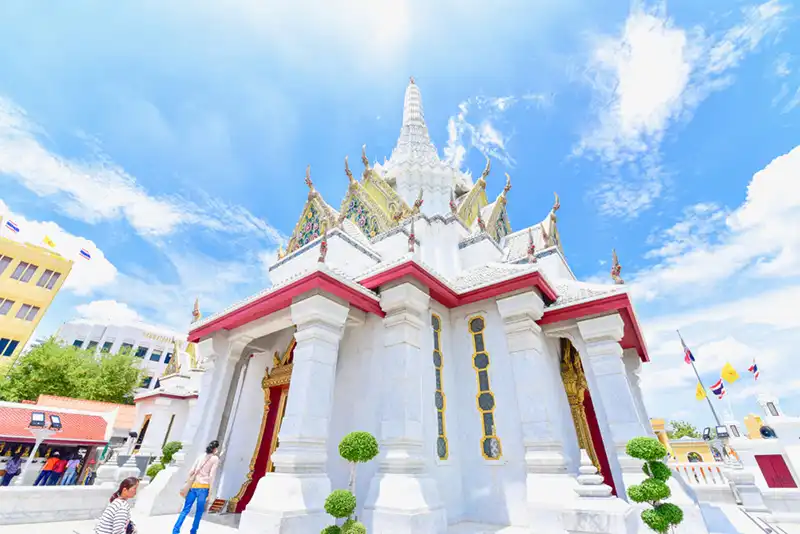
1. Bangkok City Pillar Shrine is one of the most important sacred landmarks of the Rattanakosin era. It stands on Lak Mueang Road in Phra Borom Maha Ratchawang Subdistrict, Phra Nakhon District, Bangkok, at the southeastern corner of Sanam Luang, opposite the Grand Palace and near the Ministry of Defence. The shrine serves as a major spiritual center and an important historical site associated with the establishment of Bangkok as the capital in 1782. Within the complex are two city pillars dating from the reigns of King Rama I and King Rama IV, together with shrines dedicated to five guardian deities and a Buddha image hall. These form the principal places of worship for visitors.
History and Significance Bangkok City Pillar Shrine was established alongside the founding of Rattanakosin as the new capital during the reign of King Phutthayotfa Chulalok the Great, or King Rama I. The King ordered the ceremonial installation of the city pillar on April 21, 1782, in accordance with ancient royal traditions influenced by Brahmanical beliefs concerning auspicious locations, favorable ceremonial timing, and the establishment of the capital's horoscope. The ceremony symbolized stability and prosperity for the newly founded royal city.
The original city pillar was made from chaiyaphruek wood, with sandalwood attached to its exterior, and was crowned with a lotus-bud-shaped finial. The choice of materials reflected traditional beliefs about auspicious wood and the prosperity of the kingdom. Later, during the reign of King Mongkut, or King Rama IV, the original pillar had deteriorated. The King ordered a new city pillar to be established, using teak for the internal core and chaiyaphruek wood for the exterior. A ceremony to renew the capital's horoscope was also conducted according to royal tradition.
During the bicentennial celebrations of Rattanakosin in 1982, Bangkok City Pillar Shrine underwent a major restoration to enhance its appearance and preserve its importance as a sacred royal landmark. The work included improvements to the shrine buildings and surrounding grounds, together with the reinstallation of the original city pillar beside the later pillar. As a result, the shrine remains an important place illustrating the continuity of Thailand's royal ceremonies and the historical development of its capital.
Architecture and Important Sacred Objects The main shrine building features traditional Thai cruciform architecture with an elaborate prang-style roof and richly detailed gold ornamentation. Inside are the two city pillars, distinguished by the different finial designs associated with their periods of installation. The complex also includes a Buddha image hall, a pavilion containing replicas of the city pillars, and a pavilion dedicated to the guardian deities, each serving a different role in the sequence of worship.
The five guardian deities are Phra Suea Mueang, Phra Song Mueang, Phra Kan Chai Si, Chao Chetkhup, and Chao Hoklong. According to traditional beliefs, these deities protect different aspects of the capital, including governance, civic order, protection against danger, and public well-being. Visitors commonly pay their respects and pray for stability, safety, success in life, and the happiness of their families.
Annual Traditions and Important Ceremonies April 21 is an important anniversary for Bangkok City Pillar Shrine because it commemorates the installation of the city's first pillar in 1782. Traditional Brahmanical ceremonies are associated with this anniversary, honoring the city pillar and commemorating the founding of Rattanakosin.
Traditional Thai dance performances may also be offered at the shrine as expressions of devotion or in fulfillment of vows. These performances form part of the cultural traditions maintained by worshippers and demonstrate that the shrine is not simply a historical monument but a living place of faith and cultural activity.
How to Worship at Bangkok City Pillar Shrine Visitors can follow the five principal worship stations established by the Office of Bangkok City Pillar Shrine. The sequence begins at the Buddha image hall, continues to the replica city pillar pavilion, the main city pillar shrine, and the pavilion of the five guardian deities, and concludes at the oil lamps associated with the days of birth. Visitors should dress respectfully, maintain a quiet and considerate manner, and use the appropriate offerings at each station.
Recommended Offerings include lotus flowers for the Buddha images; incense and candles for the replica city pillar pavilion; floral garlands for the city pillars and guardian deities; three-colored ceremonial fabric for tying around one of the replica pillars; gold leaf for application at designated locations; and lamp oil for the lamps associated with the worshipper's day of birth and the ritual of dispelling misfortune. Visitors may obtain suitable offerings from the designated facilities at the shrine and do not need to bring every item themselves.
How Many Incense Sticks and Candles Should Visitors Use? Under the shrine's recommended worship procedure, incense and candles are used at the replica city pillar pavilion. The appropriate number should follow the offering set provided or the instructions of shrine attendants, since there is no single fixed quantity applied to every station. Visitors do not need to light incense or candles repeatedly inside each building. The shrine's regulations concerning incense and candle use should always be followed for safety and conservation.
Station 1: Buddha Image Hall Begin by presenting lotus flowers to the Buddha images. Visitors may also make merit by placing offerings in the alms bowls associated with their day of birth. According to traditional beliefs, this practice is connected with overcoming misfortune and encouraging stability in life. A Buddha image used in a traditional divination practice is also present. Those wishing to participate should carefully follow the shrine's instructions.
Station 2: Replica City Pillar Pavilion This is the designated station for offering incense and candles and making personal prayers. Worshippers may tie three-colored ceremonial fabric around one of the replica city pillars and apply gold leaf to the areas provided. Tying the colored fabric is a traditional expression of respect and devotion. Visitors should apply gold leaf only to authorized surfaces and should not touch the original city pillars.
Station 3: Main City Pillar Shrine The main building houses the city pillars installed during the reigns of King Rama I and King Rama IV. Visitors may present floral garlands and pray for prosperity, stability, career advancement, and family well-being. Quiet and respectful behavior should be maintained throughout the visit.
Station 4: Pavilion of the Five Guardian Deities Offer floral garlands to Phra Suea Mueang, Phra Song Mueang, Phra Kan Chai Si, Chao Chetkhup, and Chao Hoklong. According to traditional beliefs, worshippers may pray for safety, peace, personal stability, and success in their activities while paying respect to these deities believed to safeguard the capital.
Station 5: Oil Lamps for the Days of Birth The final step involves pouring half a bottle of oil into the lamp associated with the worshipper's day of birth and the remaining oil into the lamp designated for dispelling misfortune, according to the shrine's instructions. In traditional belief, keeping a sacred lamp burning symbolizes bringing light, good fortune, and greater clarity into one's life. After completing this step, visitors may offer a final gesture of respect before leaving.
Additional Offerings and Ceremonial Items For ordinary worship, visitors do not need to prepare large quantities of savory dishes, desserts, or fruit. The standard worship procedure focuses on flowers, incense, candles, garlands, ceremonial fabric, gold leaf, and lamp oil. Those wishing to arrange special ceremonies, present elaborate bai si offerings, or fulfill a vow should contact the Office of Bangkok City Pillar Shrine for guidance on suitable offerings and procedures.
How to Make a Prayer at Bangkok City Pillar Shrine Worshippers may begin by calming their thoughts and stating their full names. They can then pay their respects to the city pillar and express their wishes in their own words. Common prayers concern career advancement, business success, family stability, good health, and protection during travel. It is not necessary to memorize a complicated prayer or chant; sincere and respectful words are sufficient.
Visitor Etiquette Visitors should wear appropriate clothing, avoid loud conversations, keep walkways clear, and follow the instructions of shrine attendants. Particular care should be taken with incense and candles, the application of gold leaf, the tying of ceremonial fabric, lamp-oil offerings, and photography inside important buildings. Maintaining cleanliness and showing consideration for other worshippers are essential parts of a respectful visit.
Beyond worship, Bangkok City Pillar Shrine offers an excellent introduction to the history of Rattanakosin. Located in Bangkok's historic royal district, it is surrounded by nationally significant cultural landmarks. Visitors can combine their visit with the Grand Palace, Wat Phra Kaew, Wat Pho, the Bangkok National Museum, and other attractions around Sanam Luang, making it possible to explore several important historical sites in a single day.
Getting There Bangkok City Pillar Shrine can be reached by private car, taxi, public bus, MRT, or Chao Phraya River boat. Visitors using the MRT may alight at Sanam Chai Station and continue toward Sanam Luang by walking or taking local transportation. Those traveling by river boat can get off at Tha Chang Pier and walk to Lak Mueang Road. Drivers should check parking availability around Sanam Luang and nearby parking facilities, allowing additional travel time during weekends, public holidays, and important religious occasions.
Open Days: Daily Opening Hours: 06.30 – 18.30
Address: 2 Lak Mueang Road, Phra Borom Maha Ratchawang, Phra Nakhon, Bangkok 10200, Thailand
Contact Numbers: 02-225-4403, 085-485-2464
Coordinates (Latitude, Longitude): 13.752555, 100.494021
Map (GPS):Google Maps – Bangkok City Pillar Shrine

2. Pathum Thani City Pillar Shrine is situated in front of the Pathum Thani Provincial Hall on Pathum Thani–Sam Khok Road, Bang Prok Subdistrict, Mueang Pathum Thani District. It is one of the province's most significant sacred landmarks, representing the symbolic foundation of the city and the continuing spiritual traditions of local residents. Located within the provincial administrative center, the shrine is an important place where people pay their respects, seek auspicious blessings, and commemorate important occasions in their lives.
History and Significance Pathum Thani has a long history associated with Mon settlements and the communities that developed along the Chao Phraya River. The present city pillar was established on August 23, 1978, creating a sacred symbol of the province's stability and civic identity. The shrine continues to play an important role in local ceremonies and is regarded as a place where the traditions of city guardianship are maintained alongside the modern administrative life of the province.
Architecture and Important Sacred Objects The shrine features an elegant traditional Thai pavilion with four gabled sides and a prang-style roof. Inside stands a city pillar made from auspicious chaiyaphruek wood, carved in a lotus-stalk-like form. The use of this material reflects Thai beliefs concerning prosperity, endurance, and good fortune. Other sacred elements associated with religious traditions and temples in Pathum Thani add to the spiritual importance of the shrine.
Traditions and Ceremonies Local residents visit the shrine during important personal and community occasions. Some worshippers come before starting a new occupation, beginning a business, or undertaking a significant journey. Provincial ceremonies may also include paying respect to the city pillar as an expression of goodwill, civic unity, and remembrance of the city's history.
How to Worship Visitors should approach the main shrine respectfully, present flowers or floral garlands at the designated offering point, and make a personal prayer for stability, safety, prosperity, and family well-being. Incense and candles should be used only where permitted. Worshippers should follow local instructions rather than assuming that the number of incense sticks is identical to that used at other provincial shrines.
Recommended Offerings Fresh flowers and floral garlands are suitable for ordinary worship. Any additional offerings should comply with the instructions of shrine attendants. Visitors should avoid touching the city pillar or attaching ceremonial fabric unless the practice is specifically permitted.
Visitor Etiquette Appropriate clothing, quiet behavior, and consideration for other worshippers are recommended. Because the shrine stands within an administrative area, visitors should also respect the surrounding government premises and designated parking arrangements.
Getting There From Bangkok, travel toward central Pathum Thani by road and continue to the Provincial Hall on Pathum Thani–Sam Khok Road. The shrine stands near the entrance to the government complex. Visitors using public transportation can continue from central Pathum Thani by taxi or local hired vehicle.
Open Days: Daily
Opening Hours: 08:00 – 16:30
Address: In front of Pathum Thani Provincial Hall, Pathum Thani–Sam Khok Road, Bang Prok, Mueang Pathum Thani, Pathum Thani 12000, Thailand

3. Old Nonthaburi City Pillar Shrine (Pak Khlong Om City Pillar Shrine) is situated in the historic Pak Khlong Om area of Bang Si Mueang Subdistrict, Mueang Nonthaburi District, on the western bank of the Chao Phraya River near Wat Chaloem Phra Kiat Worawihan. Unlike the present provincial city pillar shrine at the Nonthaburi Government Center, this older shrine preserves the memory of a former administrative center and the changing geography of Nonthaburi through successive historical periods.
History and Significance The old city pillar shrine is associated with the relocation of Nonthaburi from Ban Talat Khwan to Pak Khlong Om in 1665 during the reign of King Narai the Great of Ayutthaya. The relocation reflected the strategic and administrative concerns of that period, when waterways were essential for transportation, defense, trade, and communication. The shrine became a symbolic representation of the city's new location and a center of spiritual devotion for the surrounding communities.
Historical Importance As urban development gradually shifted to other parts of Nonthaburi, the Pak Khlong Om shrine retained its significance as a reminder of the former city center. Its value therefore extends beyond the worship of guardian spirits. It offers an opportunity to understand the movement of settlement patterns, the development of riverside communities, and the close relationship between the Chao Phraya River and the political geography of central Thailand.
Architectural and Cultural Character The shrine is situated within a historic riverside environment where temples, traditional communities, and older routes of transportation preserve the atmosphere of Nonthaburi's past. Visitors can appreciate the shrine as part of a wider cultural landscape rather than as an isolated religious monument. Nearby Wat Chaloem Phra Kiat Worawihan provides another important connection to the history of the province.
How to Worship Visitors may pay their respects at the designated worship area, offer fresh flowers or a floral garland, and make a personal prayer according to their beliefs. The shrine is particularly meaningful for people interested in historical traditions of city foundation and local guardianship. Any incense, candles, or additional offerings should follow the customs displayed at the site.
Visitor Etiquette The shrine is part of an established local community. Visitors should dress respectfully, avoid obstructing residents, and maintain a quiet atmosphere. It is important not to confuse this older shrine with the newer provincial city pillar shrine at the government center on Rattanathibet Road.
Getting There Travel toward Bang Si Mueang on the western bank of the Chao Phraya River, using Wat Chaloem Phra Kiat Worawihan and Maha Chesadabodindranusorn Bridge as nearby landmarks. A private vehicle or taxi is convenient. Travelers arriving by MRT can continue by local transportation to the riverside community.
Open Days: Daily
Address: Pak Khlong Om, Bang Si Mueang, Mueang Nonthaburi, Nonthaburi, Thailand

4. Ayutthaya City Pillar Shrine is a sacred landmark associated with the founding of the historic capital of Ayutthaya. Located within the old city of Phra Nakhon Si Ayutthaya, the shrine reflects traditional beliefs concerning the establishment of political authority, the selection of an auspicious city center, and the spiritual protection of an important royal capital. Its significance is closely connected with Ayutthaya's position as one of the great historical cities of Southeast Asia.
History and Significance The founding of Ayutthaya is traditionally dated to 1351, during the reign of King Ramathibodi I, also known as King U Thong. According to royal chronicles, the establishment of the capital involved ceremonies that connected the physical foundation of the city with cosmological ideas derived from Brahmanical and Buddhist traditions. The concept of a city pillar was associated with the sacred center of urban life, political stability, and the auspicious beginning of a new kingdom.
Historical Traditions Local historical narratives connect the city-founding ceremony with the discovery of a right-spiraling conch shell, known in Sanskrit tradition as a Dakshinavarta Shankha. Such shells are considered auspicious objects in Brahmanical ceremonial practice. The story illustrates the importance of favorable omens and sacred symbolism in the foundation of Ayutthaya, although legendary accounts should be distinguished from material archaeological evidence.
Architecture and Cultural Value The shrine is part of the historic landscape of Ayutthaya, where numerous religious and royal monuments survive from different periods. Its importance lies in the way it preserves the idea of the city as more than an administrative center: the city also possessed a sacred identity expressed through ceremonial objects, religious buildings, guardian beliefs, and ritual traditions.
Worship Traditions Visitors come to pay respect to the city pillar and seek blessings associated with personal stability, good fortune, safety, and success in important undertakings. The shrine's historical setting makes it a particularly meaningful destination for travelers interested in the relationship between royal history and Thai religious traditions.
How to Worship Begin by entering the shrine respectfully and paying homage at the principal city pillar worship point. Flowers or floral garlands are appropriate offerings. Any incense and candle use should follow the instructions displayed at the shrine. Visitors should not touch sacred objects or architectural surfaces without permission.
Getting There Travel into the historic island area of Phra Nakhon Si Ayutthaya and follow local directions to the city pillar shrine. A visit can be combined with nearby historical temples, royal palace sites, museums, and the wider Ayutthaya Historical Park. Allow additional time for traffic and visitors on weekends and public holidays.
Open Days: Daily
Opening Hours: 08:30 – 16:30
Address: Pratu Chai, Phra Nakhon Si Ayutthaya District, Phra Nakhon Si Ayutthaya, Thailand

5. Ang Thong City Pillar Shrine stands opposite the Ang Thong Provincial Hall in the center of Mueang Ang Thong District. It is an important sacred landmark representing the spiritual foundation of the province and the continuing belief that guardian deities protect the city and its inhabitants. The shrine is particularly notable for its traditional Thai pavilion, elegant decorative design, and mural paintings covering all four interior walls.
History and Significance The establishment of city pillar shrines in Thailand is traditionally associated with Brahmanical concepts of the sacred center of a settlement. Ceremonies for selecting auspicious timber and installing a pillar emphasized the symbolic relationship between political authority, the community, and divine protection. Ang Thong City Pillar Shrine continues this cultural tradition as a provincial landmark where residents gather to express respect and seek blessings.
Architecture and Important Sacred Objects The shrine is designed as a four-gabled Thai pavilion raised approximately 1.5 meters above the ground. Inside stands the principal city pillar, surrounded by interior decorations inspired by classical Thai artistic traditions. The murals include the refined Phum Khao Bin Kan Yaeng motif, a stylized decorative pattern associated with auspiciousness, elegance, and prosperity. The shrine is particularly distinctive because mural paintings decorate all four interior walls.
Guardian Beliefs Traditional Thai beliefs associate city pillar shrines with protective guardian spirits, particularly Phra Suea Mueang and Phra Song Mueang. These sacred figures are understood as symbols of the protection, stability, and peaceful development of the city. Worshippers commonly seek blessings for career success, business prosperity, family well-being, and safety.
How to Worship Visitors should approach the main city pillar with respect and present flowers or floral garlands at the designated offering area. Incense and candles may be used where permitted. A short personal prayer is appropriate, and visitors should remain considerate of others who are engaged in worship.
Visitor Etiquette Avoid touching the city pillar, murals, or other decorative surfaces. As the paintings are an important artistic feature of the shrine, visitors should take photographs only in permitted areas and avoid leaning against the interior walls.
Getting There The shrine is conveniently situated opposite the provincial hall in central Ang Thong. Travelers arriving by car can follow signs to the provincial administrative center. Local transportation within the town can also provide access to the shrine and nearby cultural attractions.
Open Days: Daily
Opening Hours: 06:00 – 18:00
Address: Opposite Ang Thong Provincial Hall, Mueang Ang Thong, Ang Thong, Thailand
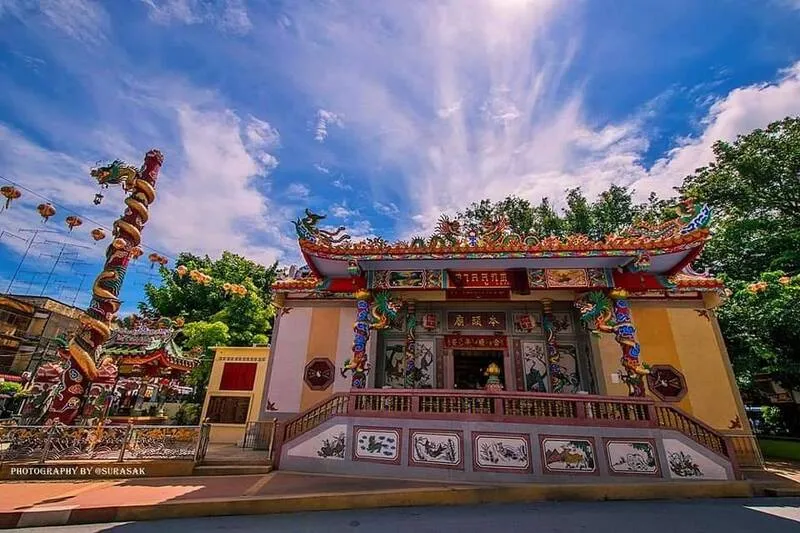
6. Lopburi City Shrine (Arrow Shrine) is a small but historically meaningful sacred site situated on the riverside road behind Wat Puen Yai, near Ban Wichayen, in Tha Hin Subdistrict, Mueang Lopburi District. The shrine is closely associated with the local legend of the Arrow Shrine and the tradition of a sacred city foundation. Although its physical structure is modest, its importance lies in its connection with the ancient city of Lavo and the historical development of Lopburi.
History and Significance Lopburi has been an important settlement for many centuries, with a cultural history extending through the Dvaravati, Khmer-influenced, and Ayutthaya periods. During the reign of King Narai the Great, Lopburi became a major royal center. Within this layered historical setting, the Arrow Shrine is a local sacred landmark that preserves memories of city guardianship, traditional beliefs, and legends associated with the foundation of the city.
Architecture and Sacred Features The shrine occupies a small area of approximately 12 square meters and contains a stone pillar rising about one meter above ground level. Unlike the monumental city pillar shrines found in many other provinces, this site is characterized by its simplicity. The stone pillar and the surrounding old-town setting are its principal features, making it especially interesting for travelers studying local history and traditional sacred landscapes.
Local Legend and Cultural Meaning The name Arrow Shrine reflects stories preserved in Lopburi's oral and cultural traditions. Such narratives should be understood as part of local belief rather than treated automatically as documented historical events. Their importance lies in how they express the relationship between the community, its sacred landmarks, and the memory of the ancient city.
How to Worship Visitors may pay respect at the stone pillar, offer flowers or floral garlands at the designated area, and make a prayer according to their beliefs. Because the shrine is very small, worshippers should avoid crowding the entrance and allow others sufficient space for prayer.
Recommended Visit The shrine is well suited to a walking itinerary through historic Lopburi. Nearby landmarks include Ban Wichayen, King Narai's Palace, Wat Puen Yai, and Phra Prang Sam Yot. The site offers an opportunity to examine how local belief survives within an urban landscape shaped by multiple historical periods.
Getting There From central Lopburi, follow the road toward Ban Wichayen and Wat Puen Yai, then continue to the nearby riverside road. Travelers arriving by train can disembark at Lopburi Railway Station and continue by walking or taking local transportation through the old-town district.
Open Days: Daily
Opening Hours: 08:00 – 17:00
Address: Riverside Road behind Wat Puen Yai, near Ban Wichayen, Tha Hin, Mueang Lopburi, Lopburi 15000, Thailand
Coordinates (Latitude, Longitude): 14.803235, 100.609200
Map (GPS):Google Maps – Lopburi City Shrine
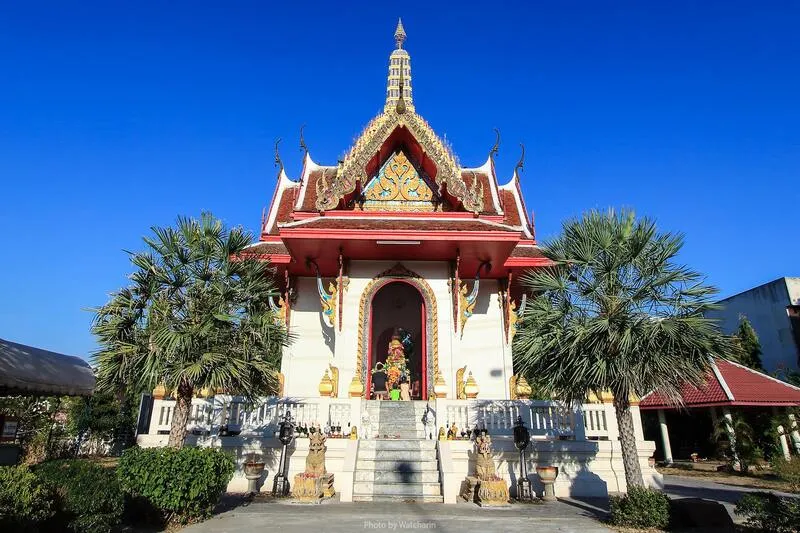
7. Sing Buri City Pillar Shrine is an important sacred landmark in Mueang Sing Buri District. The shrine represents the symbolic foundation of the province and serves as a place of worship for residents seeking blessings for stability, prosperity, and protection. One particularly distinctive feature is its association with the Hall of the Nine Venerated Sing Buri Monks, an important cultural and religious feature within the same compound.
History and Significance The current city pillar shrine was completed in 1982. Its construction reflected the desire to establish a dignified sacred center for the province and maintain the traditional belief in a guardian presence protecting the community. The Hall of the Nine Venerated Sing Buri Monks was officially opened on August 9, 2001, at the auspicious time of 09:09, creating an additional place where visitors could honor prominent religious figures connected with the province.
Architecture and Important Sacred Objects The shrine features a traditional Thai four-sided mondop with layered roofing, ornamental chofa and bai raka elements, and a central spire. The principal city pillar is made of golden teak, with carved and lacquered details and a lotus-bud-shaped upper section. Rising approximately 2.70 meters from the shrine floor, the pillar represents stability, endurance, and auspiciousness.
Religious and Cultural Significance The adjacent sacred hall enshrines images of nine revered monks associated with Sing Buri, together with Buddhist sacred figures. This combination offers visitors an opportunity to learn about both city pillar beliefs and Buddhist traditions. The shrine compound therefore functions as more than a single worship station; it represents several layers of local religious memory.
How to Worship Begin by paying respect to the city pillar, offering flowers or a garland, and praying for personal well-being. Visitors who wish to pay homage to the revered monks and Buddhist images can continue to the adjacent hall, observing the instructions displayed at each sacred point. Incense and candles should be used only at authorized locations.
Traditions and Visitor Advice The shrine is particularly significant during local merit-making occasions and provincial ceremonies. Visitors interested in Thai Buddhist culture may find the combination of city guardian beliefs and the veneration of respected monks especially meaningful. Modest clothing and considerate behavior are recommended throughout the compound.
Getting There The shrine is located in Mueang Sing Buri District and can be reached from the provincial town center by car or local transport. Other cultural attractions in the wider area include Wat Sawang Arom, Wat Phra Non Chakkrasi Worawihan, and Wat Phikun Thong.
Open Days: Daily
Opening Hours: 08:00 – 16:30
Address: Sing Buri City Pillar Shrine area, Mueang Sing Buri, Sing Buri 16000, Thailand

8. Chainat City Pillar Shrine stands beside the Chao Phraya River near the stone embankment in Mueang Chai Nat District. Its riverside setting is one of the shrine's most appealing features, allowing visitors to combine traditional worship with an appreciation of the historic river landscape. The shrine is a spiritual landmark of Chainat, where local residents pay respect to the city pillar and seek blessings for good fortune and peaceful lives.
History and Cultural Significance Chainat developed as an important community in the Chao Phraya River basin, where waterways supported farming, settlement, transportation, and trade. The city pillar shrine represents the belief that a city should possess a sacred center symbolizing its stability and protection. Its location beside the river also reflects the close relationship between urban development and the waterways of central Thailand.
Architecture and Atmosphere The shrine features Thai-influenced architecture with a traditional roof and decorative motifs associated with sacred buildings. Inside, the city pillar serves as the central focus of worship. The surrounding embankment and river create an open atmosphere that distinguishes the shrine from many city pillar shrines situated within administrative compounds or crowded commercial streets.
Traditions and Beliefs Residents visit the shrine during important personal occasions and community festivals. Traditional beliefs associate the city pillar with security, prosperity, and protection from misfortune. During Thai New Year and other significant celebrations, worship and ceremonial offerings may form part of local activities.
How to Worship Visitors may begin by paying respect to the main city pillar and presenting fresh flowers or garlands at the designated area. After making a personal prayer for safety, stability, and prosperity, they can spend time appreciating the riverside surroundings. Incense and candles should be used only in accordance with shrine regulations.
Visitor Etiquette Respect the worship area, avoid touching sacred objects, and dispose of offerings responsibly. Take care when walking beside the river embankment, especially after rainfall or during periods of high water.
Getting There Drive into central Chainat and follow local directions to the Chao Phraya River embankment. The shrine can be included in a wider itinerary featuring Chainat Bird Park and important temples in the surrounding district.
Open Days: Daily
Opening Hours: 06:00 – 18:00
Address: Chao Phraya Riverside near the stone embankment, Mueang Chai Nat, Chai Nat, Thailand
Map (GPS):Google Maps – Chainat City Pillar Shrine
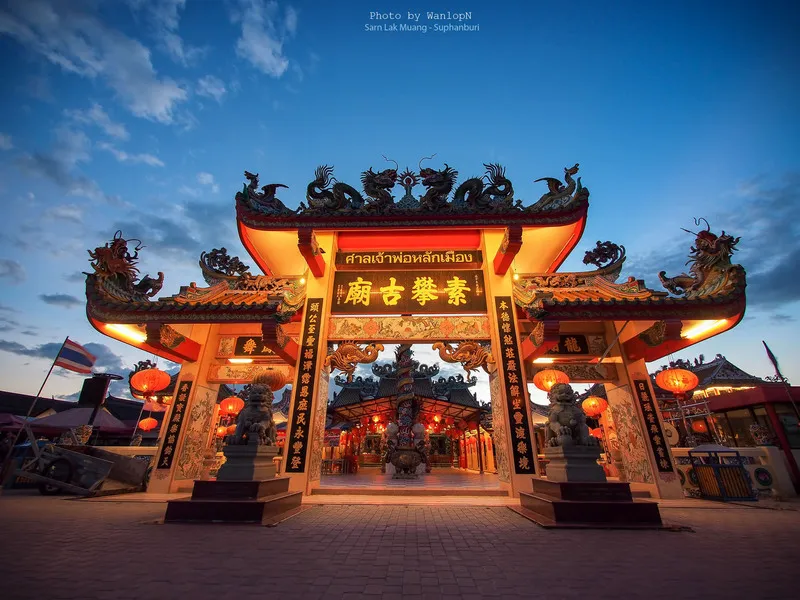
9. Suphan Buri City Pillar Shrine is situated on Malai Maen Road in Rua Yai Subdistrict, Mueang Suphan Buri District, beside the western bank of the Suphan Buri River, also known as the Tha Chin River. It is one of the province's most important sacred and cultural attractions, combining archaeological heritage, Mahayana Buddhist devotion, Chinese religious traditions, and a lively contemporary cultural landscape centered around Heavenly Dragon Park.
History and Significance Unlike city pillar shrines whose principal sacred object is a wooden pillar, this shrine is especially associated with an ancient stone relief identified as Avalokitesvara Bodhisattva. The image is known locally as Phra Narai Si Kon, meaning the Four-Armed Narayana. The sculpture reflects Khmer-influenced artistic traditions and Mahayana Buddhist beliefs that developed in the region many centuries before the establishment of modern provincial administration.
Historical Development The shrine's importance was recognized during the reign of King Chulalongkorn, or King Rama V, who visited during his Praphat Ton journey in 1904. His visit and support for improvements to the shrine area became part of its historical record. Later developments introduced additional Chinese-style architectural elements, helping transform the site into a significant center of Thai-Chinese worship and cultural activity.
Architecture and Sacred Features Visitors can observe Chinese-influenced shrine architecture, sacred stone images, worship pavilions, and ornamental elements that express the site's multicultural identity. The nearby Heavenly Dragon Park further expands the visitor experience with architecture, sculptures, and spaces devoted to Chinese cultural heritage. The entire complex illustrates how religious traditions can evolve while remaining deeply connected with community identity.
Annual Traditions One of the best-known religious and community activities associated with the shrine is the Ting Krachat ceremony, a Mahayana Buddhist charitable ritual held according to the Chinese lunar calendar. The event involves merit-making, remembrance of departed spirits, and the distribution of goods to those in need. It demonstrates the close relationship between religious belief, generosity, and collective welfare.
How to Worship Visitors should begin at the principal worship area, pay respect to the sacred image and guardian deities according to the shrine's instructions, and present offerings appropriate to the Chinese religious setting. Incense, flowers, fruit, or other offerings may be used according to the regulations displayed on-site. Because multiple worship points are present, follow the designated sequence rather than assuming one method applies throughout the complex.
Visitor Etiquette Be respectful of active ceremonies, avoid touching ancient stone objects, and take photographs only where permitted. The shrine is both a living place of worship and a heritage attraction, so preserving its cultural objects is particularly important.
Getting There Travel to Malai Maen Road in central Suphan Buri. The shrine and Heavenly Dragon Park occupy the same general area. Other nearby attractions include Wat Phra Si Rattana Mahathat, Wat Pa Lelai Worawihan, and Banharn-Jamsai Tower.
Open Days: Daily
Opening Hours: 08:00 – 17:00
Address: Malai Maen Road, Rua Yai, Mueang Suphan Buri, Suphan Buri, Thailand
Contact Number: 035-521-690

10. Nakhon Nayok City Pillar Shrine is located within King Rama IX Commemorative Public Park beside the Nakhon Nayok River, opposite the Nakhon Nayok Provincial Court. It is a sacred landmark distinguished by its peaceful riverside surroundings and the presence of two city pillars housed within the same traditional Thai pavilion. The original pillar and the newer replacement provide a tangible reminder of the changing history of the city.
History and Significance The former city pillar was originally situated near the historic city walls. Around 1910, after the older shrine structure deteriorated, the pillar was moved to a building associated with Srinakornnayok School. A new shrine was subsequently constructed in the present riverside location. These changes reflect how local authorities and communities preserved the sacred pillar while adapting the shrine to the developing urban environment.
Architecture and Important Sacred Objects The shrine is a traditional Thai pavilion with four gabled sides, layered roofs, and a central spire. Inside are two wooden pillars. The original pillar is approximately 113 centimeters high, while the newer pillar is about 160 centimeters tall and decorated in gold. Both have lotus-bud-shaped upper sections. Their side-by-side placement enables visitors to compare the two stages of the shrine's history directly.
Guardian Deities Other sacred figures associated with the shrine include the City Pillar Guardian Spirit, Phra Siam Devadhiraj, and Phra Kan Chai Si. Their presence reflects the incorporation of multiple protective beliefs into the sacred space, emphasizing stability, order, and protection for the community.
How to Worship Begin by paying respect to the city pillars according to the shrine's directions. Flowers or floral garlands may be presented as offerings. Worshippers can then pay respect to the guardian figures at their designated points. The number of incense sticks and other ritual details should follow the signs or the guidance of attendants.
Visitor Etiquette Do not touch the original or newer city pillar unless explicitly permitted. The riverside park is also a public recreation space, so visitors should keep walkways clear, dispose of offerings properly, and respect others using the park.
Getting There Travel via Rangsit–Nakhon Nayok Road into the provincial town, then follow Sri Mueang Road toward the park opposite the provincial court. The shrine is accessible by private car or local hired vehicle. Nearby attractions include temples and other cultural sites within Mueang Nakhon Nayok District.
Open Days: Daily
Opening Hours: 06:00 – 18:00
Address: 368 Sri Mueang Road, Ban Yai, Mueang Nakhon Nayok, Nakhon Nayok 26000, Thailand

11. Samut Sakhon City Pillar Shrine is located in the Maha Chai area of Mueang Samut Sakhon District, near the riverside embankment and historic Wichian Chodok Fort. It is closely associated with Chao Pho Wichian Chot, a guardian deity deeply revered by local residents, fishing communities, and people engaged in trade and maritime occupations. The shrine is a distinctive example of Thai city pillar beliefs developing alongside Thai-Chinese devotional traditions.
History and Significance Samut Sakhon has long been an important trading and fishing center near the mouth of the Tha Chin River. The city's development was closely connected with river navigation, coastal travel, commerce, and the settlement of Thai and Chinese communities. The worship of Chao Pho Wichian Chot emerged as a significant expression of collective belief, especially concerning protection, safety, and prosperity for those whose livelihoods depended upon the water.
Guardian-Deity Traditions The guardian figure of Chao Pho Wichian Chot is carved from bodhi wood and represented as a standing celestial figure. The right hand is raised in a gesture of blessing, while the left holds a sword. Historical accounts connect the shrine with the name San Thep Chao Chom Mueang, meaning a shrine of the city's guardian deity, associated with the reign of King Rama III.
Architecture and Important Sacred Objects The shrine area contains a Chinese-style guardian-deity shrine and a nearby Thai-style city pillar hall. Their coexistence illustrates the blending of different traditions within a single sacred landscape. The worship of Chao Pho Wichian Chot and the presence of the provincial city pillar are related but distinct elements, each deserving recognition in the historical description of the site.
Traditions and Beliefs The shrine has particular importance for the local fishing and maritime community. Worshippers traditionally seek blessings for safety at sea, successful voyages, trade, and the well-being of family members. Community ceremonies reflect the belief that the guardian deity protects both individual livelihoods and the wider city.
How to Worship Visitors should follow the designated sequence for the guardian-deity shrine and the Thai-style city pillar hall. Flowers, incense, candles, fruit, or other offerings may be suitable, depending on the customs of each worship point. The number of incense sticks should be determined from the shrine's own instructions.
Visitor Etiquette Maintain respectful behavior during religious ceremonies and avoid obstructing narrow walkways in the riverside community. Photography of sacred images should follow local guidance. Additional care is recommended near roads and the embankment.
Getting There Travel toward Maha Chai in Mueang Samut Sakhon District and continue along Setthakit 1 Road toward Wichian Chodok Fort and the river embankment. The shrine can be combined with a visit to the Maha Chai market and other sites reflecting the town's fishing and trading heritage.
Open Days: Daily
Opening Hours: 06:00 – 18:00
Address: Setthakit 1 Road, Maha Chai, Mueang Samut Sakhon, Samut Sakhon, Thailand

12. Ratchaburi City Pillar Shrine (Chao Pho Lak Mueang Shrine) is an important sacred landmark associated with the historic city of Ratchaburi. Situated within the area of Phanurangsi Military Camp in Phong Sawai Subdistrict, Mueang Ratchaburi District, the shrine preserves the memory of the city's foundation and the importance of guardian beliefs in traditional Thai urban life. It is also connected with Ratchaburi's long history as a settlement and strategic center in the Mae Klong River basin.
History and Significance Ratchaburi has been an important community since ancient times, with archaeological and historical evidence reflecting several successive periods of settlement. The city's development continued through the Ayutthaya and Rattanakosin eras. Its city pillar shrine is particularly associated with the reign of King Phutthaloetla Naphalai, or King Rama II, when the city's administrative development and the establishment of a new civic center became significant concerns.
Historical Setting The shrine occupies a location connected with the older civic and military landscape of Ratchaburi. This gives it an atmosphere different from city pillar shrines situated within modern commercial areas. Its importance lies not only in its function as a place of worship but also in its connection with the administrative and military history of the city.
Architecture and Sacred Features The shrine contains the sacred city pillar and associated worship areas maintained for local devotion. Its traditional character reflects Thai beliefs concerning auspicious city foundations and guardian spirits. Visitors interested in cultural history can study the relationship between the shrine, older urban locations, and the strategic significance of Ratchaburi.
Traditions and Beliefs People visit the shrine to seek blessings for stability, prosperity, safety, and success in life. Paying respect to the city pillar may also form part of provincial ceremonies or other important occasions. These traditions express a continuing link between local history and the spiritual identity of the community.
How to Worship Begin by paying homage at the principal worship point, offering flowers or a floral garland, and making a respectful personal prayer. Any incense, candle, or additional offerings should follow the shrine's own regulations. Because the site is associated with a military area, visitors should also observe local access and security instructions.
Getting There Travel toward Phanurangsi Military Camp in Mueang Ratchaburi District, using the historic city pillar shrine as the destination. Visitors should confirm the permitted entrance and access arrangements before setting out, rather than assuming that every road within the surrounding military compound is open to the public.
Address: Phanurangsi Military Camp area, Phong Sawai, Mueang Ratchaburi, Ratchaburi, Thailand

13. Prachuap Khiri Khan City Pillar Shrine stands on Sala Cheep Road opposite the provincial hall in Mueang Prachuap Khiri Khan District. It is among the province's most recognizable sacred landmarks, admired for its elaborate Thai architecture and the distinctive form of its principal city pillar. The shrine serves as both a place of worship and a significant symbol of civic identity in this historic coastal town.
History and Significance City pillar shrines traditionally represent the auspicious foundation of a settlement. In Prachuap Khiri Khan, this symbolism is expressed through a city pillar known as Jatu Chok. The pillar reflects beliefs concerning protection, the stability of the community, and the prosperity of the province. Its distinctive artistic form connects traditional city guardian beliefs with the cultural heritage of southern Thailand.
Architecture and Important Sacred Objects The city pillar is made from takian wood, a timber traditionally regarded as having sacred associations. Its upper section is carved with four heads and four faces in an artistic form influenced by southern and Srivijaya traditions. The four-sided arrangement symbolizes protection and auspiciousness extending in all directions. Decorative lacquer, gilding, and ornamental details give the pillar a highly distinctive appearance.
Other Sacred Figures The shrine also includes sacred figures associated with Brahmanical-Hindu traditions, including Brahma, Vishnu, and Shiva, together with a Buddha image positioned within the architectural composition. This combination illustrates the way Buddhist and Brahmanical symbolism may coexist within Thai civic shrines.
How to Worship Visitors should pay respect to the principal city pillar and follow the designated sequence for other sacred figures. Fresh flowers or garlands are suitable for ordinary worship, while incense and candles should be used only in authorized areas. If separate worship points have different instructions, follow each point's posted guidance.
Visitor Etiquette Appropriate clothing and quiet behavior are recommended. Visitors should not touch the gilded surfaces, decorative details, or the city pillar without permission. Those interested in photography should remain considerate of worshippers and avoid obstructing entrances or ceremonial areas.
Getting There Travel to central Prachuap Khiri Khan and continue along Sala Cheep Road to the area opposite the provincial hall. The shrine is well suited to an itinerary combining cultural sightseeing with nearby coastal attractions, including Prachuap Bay.
Open Days: Daily
Opening Hours: 06:00 – 18:00
Address: Sala Cheep Road, Prachuap Khiri Khan, Mueang Prachuap Khiri Khan, Prachuap Khiri Khan, Thailand

14. Chachoengsao City Pillar Shrine is located on Na Mueang Road in Mueang Chachoengsao District. It is one of the important sacred landmarks of the city commonly known as Paet Riu. The shrine represents the traditional concept of a city's spiritual foundation and preserves a connection with Chachoengsao's history as an important eastern settlement during the Rattanakosin period.
History and Significance Construction of the shrine began in 1834 during the reign of King Nangklao, or King Rama III. At that time, Chachoengsao occupied an important strategic position to the east of Bangkok, and the area played a role in the defense and administration of the kingdom. Establishing a city pillar shrine formed part of the symbolic development of the town, emphasizing its stability, civic order, and spiritual protection.
Architectural Heritage The shrine has undergone changes and improvements over time, reflecting the continuing importance attached to the city pillar by successive generations. Its architecture and ceremonial arrangement preserve aspects of traditional Thai sacred building design. Visitors can appreciate the shrine not only as a religious place but also as a cultural marker of the city's nineteenth-century development.
Traditions and Beliefs Chachoengsao residents traditionally pay respect to the city pillar to seek blessings for the community, success in important undertakings, and the safety of their families. The shrine is also associated with local ceremonies and occasions when government representatives or members of the public express respect for sacred civic landmarks.
How to Worship Visitors should begin at the principal city pillar worship point, offer flowers or garlands, and make a personal prayer. Follow the local instructions concerning the use of incense and candles. Where other sacred figures are enshrined, they should be approached in the order indicated by the shrine.
Visitor Etiquette Dress modestly and avoid loud conversations within the sacred area. Do not touch sacred architectural objects or ceremonial items without authorization. During official ceremonies, visitors should follow the directions of organizers and keep ceremonial routes clear.
Getting There The shrine is situated on Na Mueang Road in central Chachoengsao. Travelers can reach it by private car, taxi, or local transportation. A visit can be combined with the city's temples, historic neighborhoods, and attractions along the Bang Pakong River.
Open Days: Daily
Opening Hours: 07:00 – 16:00
Address: Na Mueang Road, Mueang Chachoengsao, Chachoengsao, Thailand

15. Sa Kaeo City Pillar Shrine is located within the Kanchanaphisek Park area in Tha Kasem Subdistrict, Mueang Sa Kaeo District, approximately four kilometers east of the town center along Highway 33 toward Watthana Nakhon. The shrine serves as an important sacred civic landmark for Sa Kaeo Province and symbolizes the unity, prosperity, and continuing cultural identity of this eastern border region.
History and Significance The city pillar was established in 1996 during the development of the province's important civic landmarks. The ceremonies included the consecration of a gold city horoscope plate and the installation of the pillar. The city pillar represents a sacred foundation for the community and embodies traditional beliefs about auspicious beginnings, civic stability, and collective well-being.
Architecture and Important Sacred Objects The pillar is made from auspicious chaiyaphruek wood, chosen in accordance with traditional ceremonial beliefs. The design follows proportions associated with Thai city pillar construction, and the shrine architecture was developed with reference to the Fine Arts Department's planning. The sacred city horoscope plate is another important ceremonial element associated with the establishment of the city pillar.
Traditions and Beliefs Sa Kaeo residents and visitors pay respect to the city pillar as a symbol of stability and protection. Many worshippers visit before important events or journeys, seeking blessings for safety, successful work, and family prosperity. The shrine's location within a landscaped public setting provides a suitable atmosphere for reflection and worship.
How to Worship Begin by approaching the main city pillar respectfully. Flowers or garlands may be offered at the designated point, and visitors can make a personal prayer according to their beliefs. Incense and candles should be used only where permitted. Visitors should also respect any restrictions on access to ceremonial structures.
Getting There From Sa Kaeo town, follow Highway 33 eastward toward Watthana Nakhon for approximately four kilometers and enter the Kanchanaphisek Park area. Travelers using local transportation may take a minivan or songthaew traveling along this route and continue on foot from the park entrance.
Open Days: Daily
Opening Hours: 08:30 – 16:30; hours may vary on public holidays
Address: Moo 3, Kanchanaphisek Park area, Tha Kasem, Mueang Sa Kaeo, Sa Kaeo, Thailand
Map (GPS):Google Maps – Sa Kaeo City Pillar Shrine
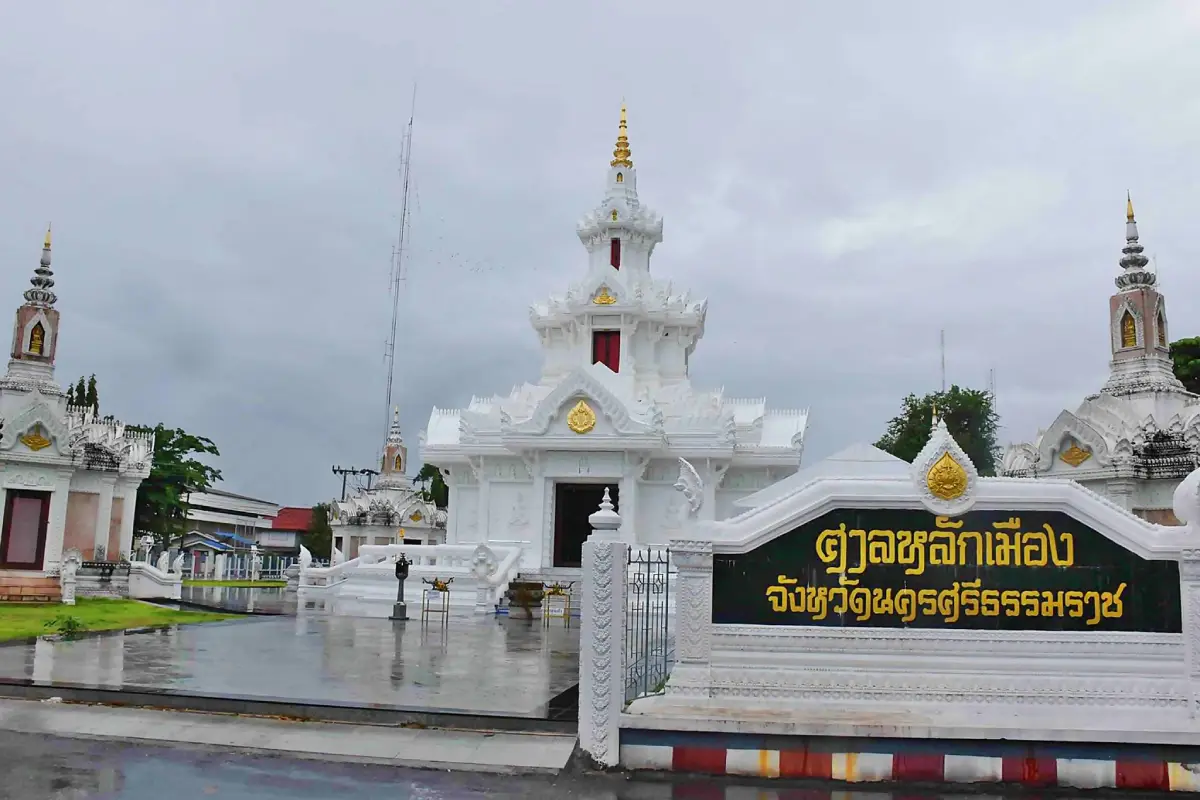
16. Nakhon Si Thammarat City Pillar Shrine is located on the northern side of Sanam Na Mueang in Khlang Subdistrict, Mueang Nakhon Si Thammarat District. It is one of the most distinctive and culturally significant city pillar shrines in southern Thailand, celebrated for its white architecture inspired by Srivijaya artistic traditions, a sacred golden teak city pillar, and four surrounding guardian shrines. The complex is particularly important as a spiritual center for the people of the historic city of Nakhon Si Thammarat.
History and Significance The main shrine's foundation stone was laid on August 4, 1989. The foundations of the four surrounding guardian shrines were established on May 7, 1992. Construction of the complex was completed in 1999, and an official opening ceremony followed on June 16, 2000. These developments created a sacred civic landmark that draws upon the region's artistic heritage and the long-standing tradition of city guardianship.
Royal Connections The upper portion of the city pillar received royal consecration from King Bhumibol Adulyadej at Chitralada Palace on August 3, 1987. This event forms an important part of the shrine's history and reinforces the relationship between royal ceremonial traditions and the provincial belief in the city's sacred foundation.
Architecture and Important Sacred Objects The main shrine building is inspired by Srivijaya art and is locally associated with the Hemmarat Lila architectural style. The complex covers approximately two rai and consists of five principal buildings. The central hall houses the city pillar, while the four smaller surrounding shrines represent guardian figures associated with the protection of the city from different directions.
The City Pillar The principal pillar is carved from golden teakwood originating from the Khao Yot Lueang area in Nopphitam District. It measures approximately 2.94 meters in height and features a carved four-faced Jatukam Ramathep figure near the upper section. These details are among the shrine's most recognizable artistic and spiritual features.
Guardian Shrines The four surrounding pavilions are associated with Phra Suea Mueang, Phra Song Mueang, Phra Phrom Mueang, and Phra Ban Dan Mueang. Together with the main city pillar, they represent a sacred arrangement in which the city is symbolically protected from several directions.
Annual Traditions The shrine is associated with city pillar blessing and celebration ceremonies, including activities during the Songkran period and other commemorative occasions. Visitors interested in attending a major ceremony should check the current program issued by local authorities before traveling.
How to Worship Visitors generally begin by paying respect to the principal city pillar and then continue to the surrounding guardian shrines following the local sequence. Flowers, garlands, and other appropriate offerings may be presented at designated points. Incense, candles, and other ritual items should be used in accordance with the shrine's instructions.
Visitor Etiquette Dress respectfully and avoid touching the golden teak pillar or decorative architectural details. During busy ceremonies, leave sufficient space for worshippers and ceremonial participants. Photography should not interfere with religious activities.
Getting There Travel to the northern side of Sanam Na Mueang in central Nakhon Si Thammarat. The shrine is accessible by private car, taxi, or local transportation. Visitors may combine their visit with Wat Phra Mahathat Woramahawihan, the Old City Wall, and the city's important museums.
Open Days: Daily
Opening Hours: 08:00 – 16:30
Address: Northern side of Sanam Na Mueang, Khlang, Mueang Nakhon Si Thammarat, Nakhon Si Thammarat 80000, Thailand
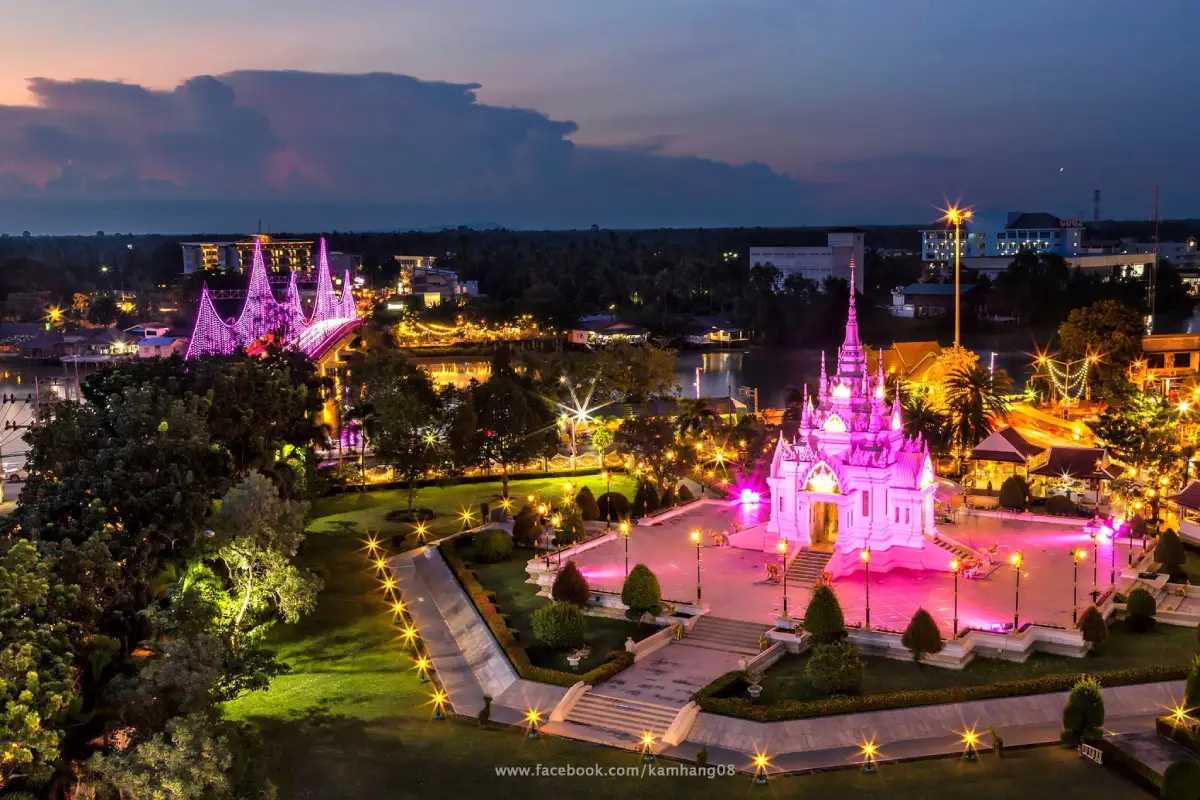
17. Surat Thani City Pillar Shrine is one of the principal sacred landmarks in central Surat Thani. Located near the Tapi River in Talat Subdistrict, Mueang Surat Thani District, the shrine is recognized for its distinctive architecture inspired by Srivijaya art and its prominent position within the historic urban landscape. It is an important spiritual center for residents who pay respect to the city pillar and seek blessings for stability, prosperity, and the protection of their families.
History and Significance The shrine was constructed to commemorate the fiftieth anniversary of the accession of King Bhumibol Adulyadej, or King Rama IX, on June 9, 1996. The project reflected both loyalty to the monarchy and the traditional belief that a provincial capital should possess a sacred symbol of its foundation. As an important public monument, the shrine also contributes to the cultural identity of Surat Thani, a province whose history is closely connected with the Tapi River and the maritime trade routes of southern Thailand.
Architecture and Important Sacred Objects The shrine's architecture combines a four-sided mandapa arrangement with elements inspired by southern Thai and Srivijaya artistic traditions. Its decorative features include recessed corners, receding roof tiers, ornamental stucco patterns, and a central spire crowned with a ceremonial finial. The proportions and detailing give the shrine a ceremonial appearance that distinguishes it from more conventional Thai city pillar pavilions.
The City Pillar The principal city pillar is made from auspicious ratchaphruek wood, also known as golden shower tree wood. It is approximately 108 inches high and 20 inches in diameter. Its upper section features four representations of Avalokitesvara Bodhisattva, while a seated Buddha image in a meditation posture forms another important sacred element. The design illustrates the connection between the region's Buddhist artistic heritage and the traditional city pillar concept.
Traditions and Beliefs Residents and travelers visit the shrine for auspicious blessings and personal encouragement before important undertakings. The city pillar is associated with stability, civic protection, and the prosperity of the community. Paying respect to the shrine also provides an opportunity to appreciate the artistic identity of Surat Thani and the wider historical influence of Srivijaya culture in southern Thailand.
How to Worship Begin at the principal city pillar worship point and offer flowers or a floral garland. Worshippers may make a personal prayer for safety, career progress, family well-being, or other auspicious intentions. Incense, candles, and additional ceremonial offerings should follow the regulations displayed at the shrine. Visitors should avoid touching the carved pillar or other sacred objects.
Visitor Etiquette Dress respectfully and behave quietly within the worship area. Do not apply gold leaf or attach fabric to decorative surfaces unless permission is explicitly provided. Visitors should also take care when moving around the surrounding public spaces, particularly during busy community events.
Getting There The shrine is centrally located near Si Surat Field and the Tapi River in Mueang Surat Thani District. It is accessible by private car, taxi, or local transportation. Nearby places of interest include Ko Lamphu Public Park, riverside walking areas, and traditional markets in the central city.
Open Days: Daily
Opening Hours: 07:00 – 19:00
Address: Si Surat Field area, Talat, Mueang Surat Thani, Surat Thani 84000, Thailand
Coordinates (Latitude, Longitude): 9.1393279, 99.3216759
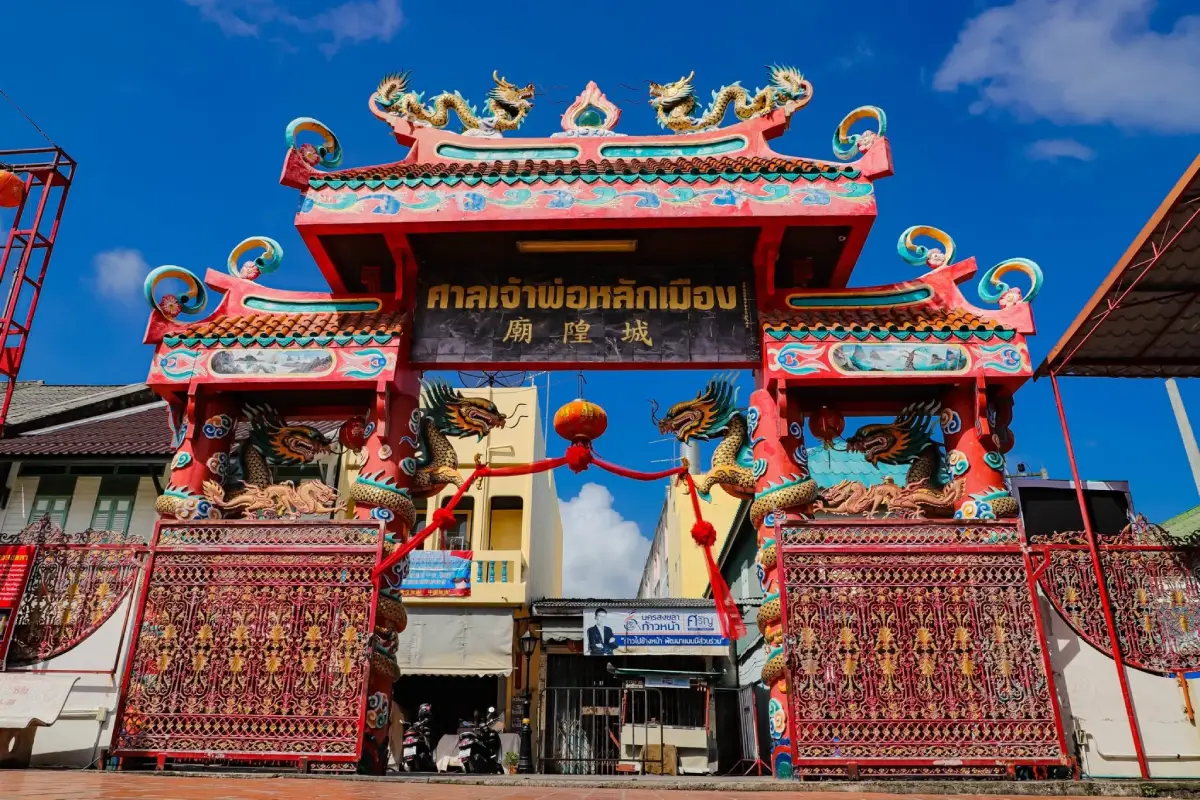
18. Songkhla City Pillar Shrine stands on Nang Ngam Road in Bo Yang Subdistrict, Mueang Songkhla District, at the heart of Songkhla Old Town. It is an important sacred landmark that illustrates the close relationship between Thai city pillar traditions, Chinese religious beliefs, and the historic development of Songkhla as a maritime trading center. The shrine is especially distinctive for its Chinese-style architecture and its position within one of southern Thailand's best-preserved historic commercial neighborhoods.
History and Significance The shrine is associated with the establishment of Songkhla on the Bo Yang side in the nineteenth century. The city pillar installation ceremony took place on March 10, 1842, during the reign of King Nangklao, or King Rama III. This ceremony marked the establishment of a sacred center for the developing town. The shrine subsequently became an important place of worship for Thai and Thai-Chinese communities, reflecting the influence of merchants, settlers, and maritime trade on the city's cultural identity.
Restoration and Heritage Status The original city pillar deteriorated over time. In 1917, during the reign of King Vajiravudh, or King Rama VI, merchants and residents contributed to the creation of a more durable replacement pillar, with the replacement ceremony taking place on March 1, 1917. The shrine was later registered as an ancient monument by the Fine Arts Department in 1935, recognizing its importance as part of Thailand's cultural heritage.
Architecture and Important Sacred Objects The shrine features Chinese-style architecture with a ceremonial entrance, guardian lions, elaborate roof ornaments, and devotional spaces associated with the city pillar and Chao Pho Lak Mueang. Additional sacred figures and deities reflect the rich religious traditions of the Thai-Chinese community. The design differs from the Thai-style mondop shrines commonly found elsewhere in the country and provides an important example of a city pillar shrine shaped by Chinese architectural influences.
Annual Traditions and Important Ceremonies The shrine plays a major role in annual cultural celebrations and city pillar worship ceremonies. Activities may include the raising of ceremonial poles, processions of sacred images, traditional Chinese opera, lion and dragon dances, and other devotional performances. These events reflect Songkhla's continuing connection with Thai-Chinese customs and community life.
How to Worship Visitors should follow the shrine's designated worship sequence, beginning at the appropriate principal worship point and continuing to other guardian deities according to the posted instructions. Flowers, incense, candles, fruit, or other offerings may be used depending on each deity's customs. It is important not to assume that the same number of incense sticks or identical offerings are appropriate at every station.
Visitor Etiquette Respect the shrine as an active religious place and a protected historic monument. Do not touch sacred objects, historical surfaces, or ceremonial decorations without permission. During annual festivals, visitors should allow space for processions, performers, and local worshippers.
Getting There Travel to Nang Ngam Road in Songkhla Old Town. The shrine is within walking distance of Nakhon Nok Road, Nakhon Nai Road, traditional food shops, historic shophouses, and other heritage attractions. Travelers coming from Hat Yai can reach Songkhla by private vehicle, taxi, or local transportation before continuing on foot through the old-town area.
Open Days: Daily
Opening Hours: 07:00 – 17:00
Address: Nang Ngam Road, Bo Yang, Mueang Songkhla, Songkhla 90000, Thailand
Coordinates (Latitude, Longitude): 7.1965361, 100.5885169

19. Khon Kaen City Pillar Shrine is one of the most important sacred landmarks in Khon Kaen Province and a recognized spiritual center of the city. It is situated in the central urban area, where local residents and visitors pay respect to the city's guardian spirits and seek blessings for auspicious beginnings. The shrine's religious importance is closely connected with Khon Kaen's development as a major educational, commercial, and cultural center of northeastern Thailand.
History and Significance The city pillar tradition reflects the belief that a settlement should possess a sacred foundation symbolizing protection, prosperity, and unity. In Khon Kaen, this tradition has become part of the province's modern civic identity. The shrine is a place where the history of city development and religious beliefs intersect, creating a spiritual landmark respected by many generations of residents.
Architecture and Sacred Features The shrine's architecture expresses traditional Thai and northeastern religious influences, with a principal worship area centered on the city pillar. Visitors can observe ornamental details associated with sacred construction and the ceremonial arrangement of the shrine grounds. The combination of the shrine building, sacred objects, and surrounding public spaces illustrates its continuing place in the city's cultural life.
Beliefs and Community Role Residents visit the shrine to pray for prosperity, career success, educational achievement, safety, and family happiness. The shrine also provides a setting for civic religious ceremonies and local activities expressing respect for the city's spiritual traditions. Its location makes it accessible to visitors who want to experience the culture of central Khon Kaen.
How to Worship Visitors should begin by paying homage to the principal city pillar at the designated worship point. Flowers or garlands are suitable offerings, while incense and candles should be used only according to local instructions. Worshippers may make personal prayers for important life events, such as starting a new job, pursuing studies, or beginning a journey.
Visitor Etiquette Wear respectful clothing, remain considerate of other worshippers, and follow the prescribed sequence if the shrine includes more than one worship area. Avoid touching sacred objects or attaching additional items to architectural surfaces without permission.
Getting There The shrine is located in the central area of Khon Kaen and is accessible by private car, taxi, or local transportation. Visitors can include it in a broader itinerary exploring temples, cultural attractions, and important civic landmarks in Mueang Khon Kaen District.
Address: Nai Mueang, Mueang Khon Kaen, Khon Kaen, Thailand
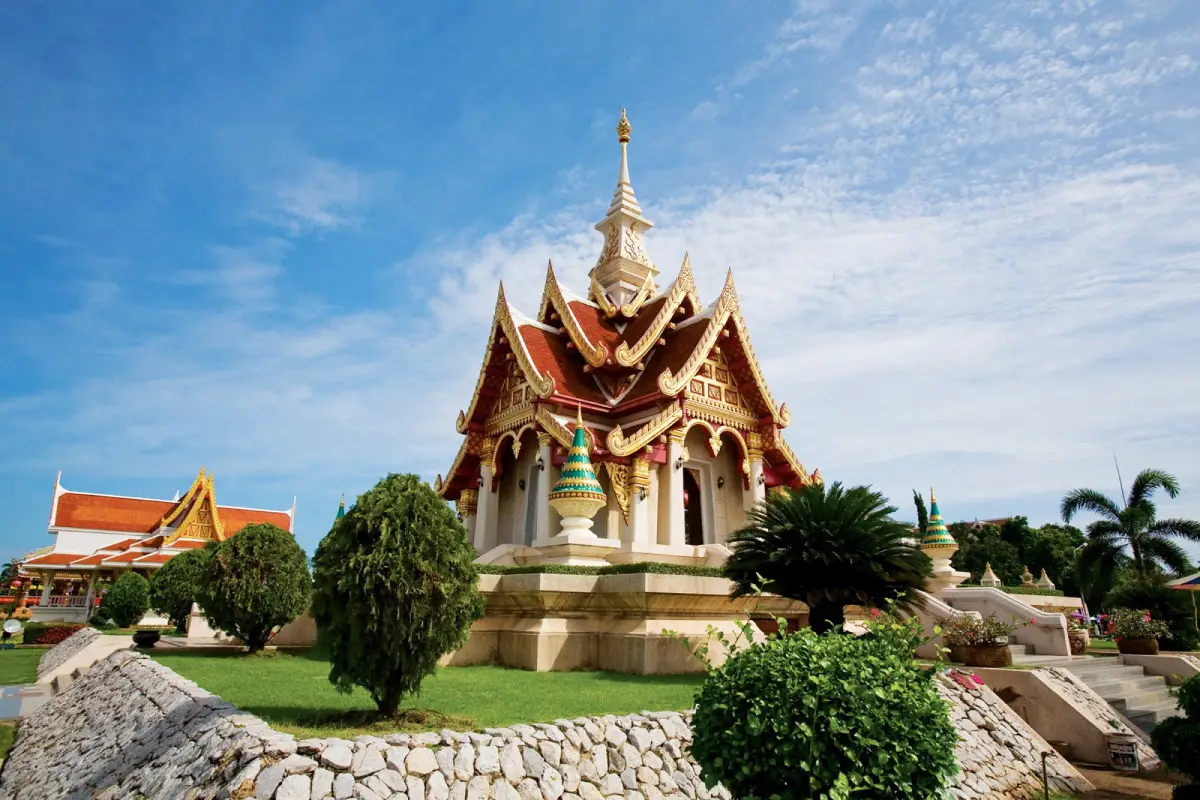
20. Udon Thani City Pillar Shrine is an important spiritual and cultural landmark in the central area of Udon Thani. Situated in Mak Khaeng Subdistrict, Mueang Udon Thani District, the shrine is associated with traditional beliefs concerning the city's sacred foundation and protection. It is respected by local residents who visit to pay homage, make offerings, and seek blessings before significant events in their lives.
History and Significance Udon Thani developed into an important administrative and commercial center in northeastern Thailand during the modern Rattanakosin period. The city's history is connected with regional settlement, transportation networks, military administration, and the development of local communities. The city pillar shrine represents the symbolic continuity of this civic history through a religious tradition in which the city is understood to possess a sacred center and protective presence.
Architecture and Sacred Features The shrine occupies an important public location within the central city. Its sacred arrangement includes the principal city pillar and associated worship spaces maintained for local devotion. Traditional decorative elements and religious symbolism reinforce the shrine's position as a place where civic identity and spiritual belief meet.
Traditions and Beliefs Many worshippers visit the shrine before beginning a new business, undertaking a journey, applying for employment, or marking another important personal occasion. Prayers commonly concern stability, career advancement, prosperity, safety, and the well-being of loved ones. The shrine also forms part of the wider cultural landscape of Udon Thani, a province with diverse historical and religious influences.
How to Worship Begin at the principal city pillar worship point. Flowers or floral garlands can be presented according to local practice, followed by a respectful personal prayer. Where additional sacred figures are present, visitors should follow the posted worship sequence. The correct number of incense sticks should be determined from the instructions at the shrine rather than copied from another province.
Visitor Etiquette Dress modestly and maintain a peaceful atmosphere. Visitors should not touch or alter the city pillar, its decorative surfaces, or other sacred objects without permission. During major ceremonies, follow the directions of attendants and avoid obstructing ceremonial pathways.
Getting There Udon Thani City Pillar Shrine is located in the central urban area of Mueang Udon Thani District. Visitors can travel by car, taxi, or local transportation from the railway station, bus terminal, or other parts of the city. The shrine can be included in a cultural sightseeing route through central Udon Thani.
Address: Mak Khaeng, Mueang Udon Thani, Udon Thani, Thailand
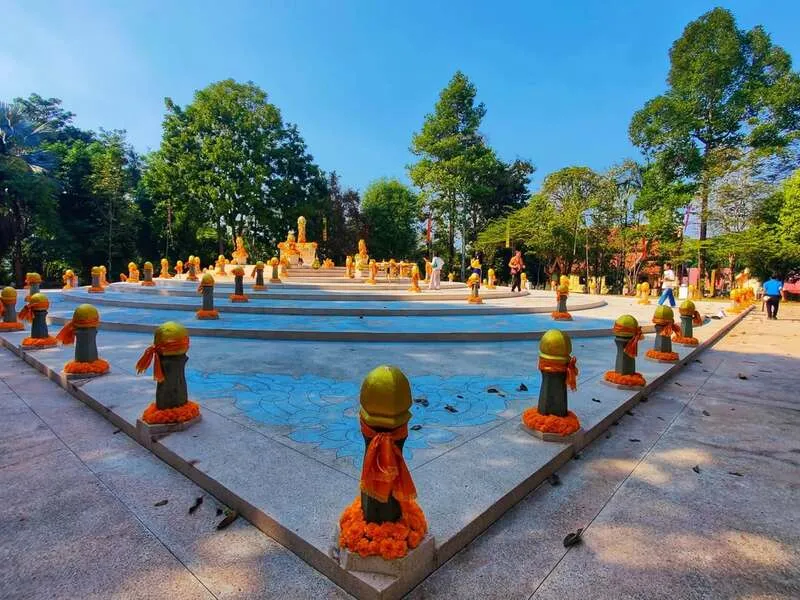
21. Chiang Rai City Navel Pillar (Sadu Mueang Chiang Rai) is an important sacred landmark representing the spiritual center of Chiang Rai according to Lanna cultural traditions. Unlike many provincial city pillar shrines established in the conventional central Thai style, Chiang Rai's city navel pillar reflects a northern understanding of the city as a sacred space whose center connects community life, protective beliefs, and the historical identity of the settlement.
History and Significance Chiang Rai was founded in 1262 by King Mangrai and became an important center during the early history of the Lanna Kingdom. Traditional northern beliefs associate the foundation and protection of a city with its sacred center, commonly described as the city navel or Sadu Mueang. This concept represents the symbolic heart of the settlement and reflects the importance of auspicious geography, ceremonial traditions, and guardian beliefs in northern Thai culture.
Lanna City Pillar Traditions In Lanna belief, the sacred city center is associated with the community's stability, its historical foundation, and the protective forces believed to safeguard the settlement. The idea is related to, but not identical with, the royal city pillar traditions used in central Thailand. This distinction is important for understanding the cultural identity of Chiang Rai and the variety of city-founding practices found across the country.
Architecture and Cultural Features Chiang Rai City Navel Pillar reflects the use of sacred spatial arrangements and architectural symbolism associated with Lanna traditions. Its significance is found in the relationship between the central sacred marker, the wider ceremonial setting, and the historical city landscape. The site is a meaningful destination for visitors interested in the distinctive religious and artistic identity of northern Thailand.
Beliefs and Spiritual Meaning Local traditions regard the city navel as a symbol of civic stability and auspicious protection. Visitors may pay their respects and reflect on the historical importance of the site. The sacred center also represents continuity between the earlier Lanna city and the modern provincial capital of Chiang Rai.
How to Worship Visitors should approach the principal sacred marker respectfully and follow the local worship arrangements. Flowers or garlands may be appropriate according to the site's instructions. Rather than assuming that ceremonies are identical to those at Bangkok-style city pillar shrines, visitors should observe the customs maintained by the local community.
Visitor Etiquette Dress respectfully and avoid touching sacred markers or ceremonial objects without permission. Do not leave offerings in unauthorized areas or disturb the surrounding grounds. During community ceremonies, follow the guidance of organizers and respect participants.
Getting There The Chiang Rai City Navel Pillar is located within the urban area of Mueang Chiang Rai District. Travelers can reach the city center by private car or local transportation and then continue to the sacred site using its specific name, Chiang Rai City Navel Pillar, to avoid confusion with other city landmarks.
Address: Wiang, Mueang Chiang Rai, Chiang Rai, Thailand
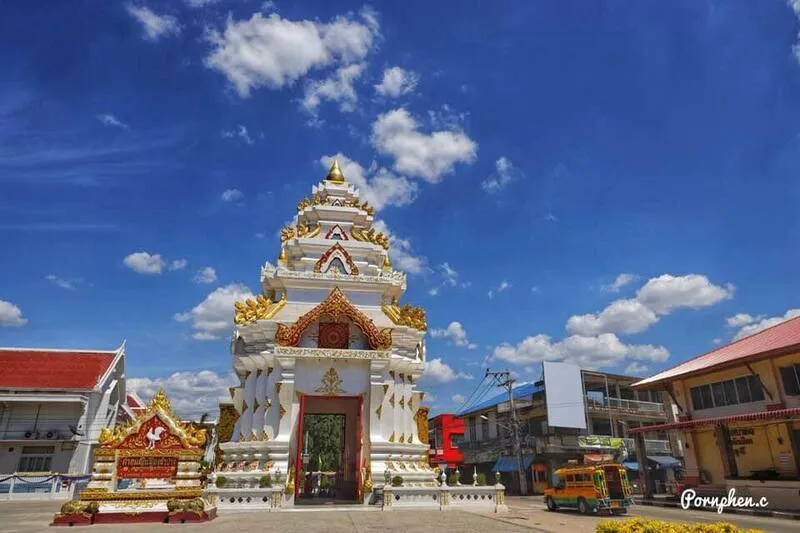
22. Lampang City Pillar Shrine (Chao Pho Lak Mueang Shrine) is located in front of Lampang Provincial Hall on Wachirawut Damnoen Road in Mueang Lampang District. The shrine is one of the province's important sacred landmarks and reflects the historical identity of Lampang as a major center of Lanna culture. Its most distinctive feature is the presence of three historic teak city pillars within the same sacred area. Rather than representing a single moment in the city's foundation, these pillars illustrate the continuing development and preservation of civic beliefs through different periods of Lampang's history.
History and Significance The three pillars are associated with different historical periods, dating to approximately 1857, 1873, and 1886. Their preservation within one shrine provides valuable evidence of how the symbolism of the city pillar remained important as the town underwent administrative and social changes. For local residents, the shrine is connected with the belief that the city possesses a sacred center protecting the community and providing an auspicious foundation for daily life.
Architecture and Sacred Features The pillars are made of teak, a material closely associated with the forests, traditional craftsmanship, and historic architecture of northern Thailand. The shrine's appearance reflects Lanna and Thai architectural traditions. The three pillars are the principal objects of devotion and distinguish Lampang from provincial shrines containing only a single pillar.
Traditions and Ceremonies Lampang maintains city pillar worship ceremonies and rituals associated with extending the spiritual life and prosperity of the city. These traditions express wishes for public well-being, protection, and stability. Participation in such ceremonies also demonstrates how Lanna religious and community customs remain part of contemporary life.
How to Worship Visitors should pay respect to the city pillars according to the shrine's designated sequence. Fresh flowers and floral garlands are appropriate offerings, while incense and candles should be used only where permitted. Those wishing to participate in special rituals should consult shrine attendants about the required offerings and ceremonial arrangements.
Visitor Etiquette Dress modestly, maintain a peaceful atmosphere, and do not touch the historic teak pillars. Visitors should also avoid tying cloth around the pillars or applying gold leaf unless the practice is expressly permitted.
Getting There The shrine is in central Lampang near the provincial hall and can be reached by private vehicle, taxi, local songthaew, or horse carriage. A visit can be combined with Kad Kong Ta, Wat Pong Sanuk, Wat Phra Kaeo Don Tao Suchadaram, and other historic attractions in Lampang town.
Open Days: Daily
Opening Hours: 06:00 – 17:00
Address: Wachirawut Damnoen Road, Mueang Lampang, Lampang, Thailand
Map (GPS):Google Maps – Lampang City Pillar Shrine

23. Phrae City Pillar Shrine is situated on Khum Doem Road in Nai Wiang Subdistrict, Mueang Phrae District. Located within the old-town area, it is an important spiritual and historical landmark where civic memory, sacred belief, and local heritage are closely connected. A distinctive characteristic of the shrine is its relationship with an older stone inscription, providing a connection between the present place of worship and historical evidence associated with Phrae.
History and Significance Phrae is an ancient northern town with a long history of settlement, regional trade, and cultural exchange. The present city pillar shrine was constructed in 1992 under the Ministry of Interior's policy to develop civic shrines in provincial centers. Although the existing shrine building is relatively modern, the surrounding historical context gives it greater significance than a newly constructed monument alone.
Architecture and Important Features The shrine follows Thai architectural traditions adapted for a provincial sacred landmark. Its city pillar serves as the focus of religious devotion, while the nearby historic inscription adds an important dimension for visitors interested in documentary evidence and local history. Together, these elements connect the symbolic protection of the town with the preservation of its historical identity.
Local Beliefs and Traditions Residents commonly pay respect to the city pillar for auspiciousness, family stability, safety, and success in important undertakings. The shrine also offers an opportunity to learn about how traditional civic beliefs remain meaningful within a historic northern community.
How to Worship Begin at the main city pillar worship point, present flowers or a floral garland, and make a respectful personal prayer. Incense and candles should be used according to the shrine's posted instructions. Visitors should not touch the inscription or sacred pillar, as preserving original surfaces is important.
Visitor Etiquette Dress appropriately, speak quietly, and avoid placing offerings directly against historical objects. The shrine is situated in an active town environment, so visitors should use permitted parking areas and avoid blocking local roads.
Getting There Travel into the old-town area of Phrae and follow Khum Doem Road. The shrine can be visited alongside Khum Chao Luang, historic teak houses, Wat Luang, and other architectural attractions in Mueang Phrae.
Open Days: Daily
Opening Hours: 06:00 – 20:00
Address: Khum Doem Road, Nai Wiang, Mueang Phrae, Phrae 54000, Thailand
Map (GPS):Google Maps – Phrae City Pillar Shrine

24. Phayao City Pillar Shrine stands on Tha Kwan Road in Wiang Subdistrict, Mueang Phayao District, within the historic urban area close to Phayao Lake. It is a sacred landmark admired for its elegant traditional Thai architecture and central position in the town. Both local residents and visitors pay respect to the city pillar as a symbol of stability, protection, and prosperity.
Historical and Cultural Significance Phayao has a long history associated with the northern kingdom of Phu Kam Yao and the wider cultural development of Lanna. The concept of a sacred city center is closely connected with traditional beliefs regarding auspicious foundations and the spiritual well-being of communities. The city pillar shrine preserves this concept in a form accessible to contemporary residents and travelers.
Architecture and Atmosphere The shrine features a Thai-style four-sided pavilion with entrances on all four sides and a graceful spire-like roof. Its balanced architectural form creates a distinctive landmark within the town. During daylight hours visitors can appreciate the building's decorative details, while after dark the illumination of the shrine gives it a different character within the urban landscape.
Traditions and Beliefs Worshippers visit to pray for family well-being, stability in life, success in work, and safe travel. The shrine is also an appropriate starting point for exploring the history and sacred landmarks of Phayao, where local Buddhist traditions and older city beliefs form part of the same cultural environment.
How to Worship Visitors should pay respect at the principal city pillar, offer fresh flowers or a floral garland, and pray according to their beliefs. Incense and candles should be used only where permitted. Keep the entrance clear for other worshippers and avoid touching the city's sacred pillar.
Getting There From Pratu Chai Road, turn toward Tha Kwan Road in the central town area. The shrine is accessible by car, motorcycle, or on foot from the lakeside district. Nearby places of interest include Wat Si Umong Kham, Wat Ratchakhru, King Ngam Mueang Monument, Wat Si Khom Kham, and Phayao Lake.
Open Days: Daily
Address: Tha Kwan Road, Wiang, Mueang Phayao, Phayao, Thailand
Map (GPS):Google Maps – Phayao City Pillar Shrine
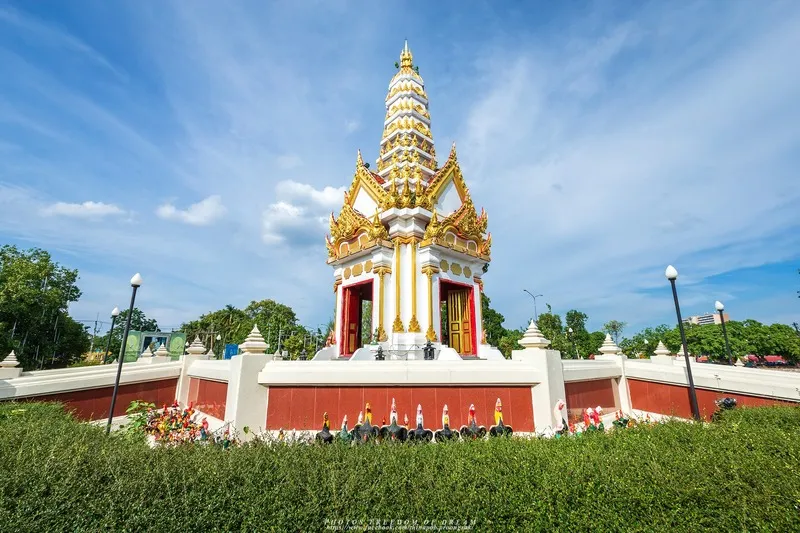
25. Phitsanulok City Pillar Shrine is situated on the western bank of the Nan River in Nai Mueang Subdistrict, Mueang Phitsanulok District. It is a prominent sacred landmark of the historic city known as Mueang Song Khwae, or the City of Two Rivers. Its riverside location places it within an important cultural landscape that includes Wat Phra Si Rattana Mahathat and several historically significant temples and palace sites.
History and Significance Phitsanulok played an important role during the Sukhothai and Ayutthaya periods and developed into a significant administrative, military, and religious center. The city pillar shrine expresses the traditional belief in a sacred foundation protecting the community and contributing to the stability of the town. For contemporary residents, it remains a place to pay respect before undertaking important personal or professional activities.
Architecture and the City Pillar One of the shrine's distinctive features is its city pillar made from three auspicious types of wood: ratchaphruek, rosewood, and golden teak. The selection of these materials reflects traditional ideas concerning prosperity, strength, and auspiciousness. The shrine's architecture provides a dignified setting for the pillar and a place for visitors to make offerings respectfully.
Annual Traditions Phitsanulok holds city pillar worship and celebration activities, generally associated with early April. These events provide opportunities for residents to express devotion and for visitors to experience local cultural traditions. Festival dates and ceremonial programs should be checked for the specific year of travel.
How to Worship Pay respect to the main city pillar at the designated point, offer flowers or a garland, and make a personal prayer for protection, stability, and prosperity. Avoid touching the different wooden elements of the pillar. Incense and candles should be used according to the shrine's own instructions.
Getting There From Phitsanulok Railway Station, travel by local taxi, songthaew, or hired transport toward the Nan River and the old-town area. A visit can be combined with Wat Phra Si Rattana Mahathat, Wat Nang Phaya, Wat Ratchaburana, and the Wang Chan Palace historical area.
Open Days: Daily
Opening Hours: 06:00 – 18:00
Address: Western bank of the Nan River, Nai Mueang, Mueang Phitsanulok, Phitsanulok, Thailand

26. Kamphaeng Phet City Pillar Shrine stands within the old-town area near Wat Phra Kaeo in Nai Mueang Subdistrict, Mueang Kamphaeng Phet District. It is particularly remarkable for its ancient laterite city pillar, which links the shrine with the archaeological and architectural heritage of Kamphaeng Phet. The shrine is an important place of worship and a cultural landmark within the historical landscape recognized for its ancient temples and fortifications.
History and Significance The sacred city pillar is traditionally believed to be more than 700 years old, reflecting the long history of the town. The shrine underwent a major restoration in 1984 and was officially registered on May 29, 1985. Its preservation illustrates the continuing respect given to the city's sacred foundation, even as the physical settlement and administrative structures changed through the centuries.
Architecture and Sacred Objects The principal city pillar is made of rounded laterite and crowned with the head of a guardian deity. Laterite is particularly significant in Kamphaeng Phet, where it was extensively used in ancient construction. The pillar is housed within a four-sided reinforced-concrete pavilion whose surfaces are designed to harmonize with the reddish tones of the historic stonework.
Religious and Cultural Importance The shrine brings together the city's ancient archaeological identity and its continuing spiritual traditions. For travelers, the combination of a laterite pillar and the surrounding historical monuments provides a meaningful introduction to Kamphaeng Phet's development as an important regional center.
How to Worship Visitors may pay respect to the sacred pillar, present fresh flowers or garlands at the offering point, and pray for auspiciousness, safety, and personal well-being. As the laterite pillar is historically significant, it should not be touched, climbed upon, or altered in any way.
Getting There Travel to the historic area near Wat Phra Kaeo via Highway 101 in Kamphaeng Phet town. The shrine can be visited together with Wat Phra That, Shiva Shrine, Kamphaeng Phet National Museum, and Kamphaeng Phet Historical Park.
Open Days: Daily
Opening Hours: 07:00 – 17:00
Address: Highway 101, Nai Mueang, Mueang Kamphaeng Phet, Kamphaeng Phet 62000, Thailand

27. City Pillar Shrine of the Four Great Kings, Tak is situated at the foot of Kittikachorn Bridge before entering Tak city. It is an important sacred landmark that commemorates four kings connected with the history of Tak: King Ramkhamhaeng the Great, King Naresuan the Great, King Narai the Great, and King Taksin the Great. The shrine is both a place of worship and a historical landmark representing the strategic importance of Tak as a frontier settlement linking central and northern Thailand.
History and Significance The shrine was built in 1992 to honor the four kings and establish a spiritual center for local residents. Tak has long been connected with important travel routes and the history of warfare, trade, and settlement along the Ping River. The shrine preserves this historical memory through a contemporary sacred monument.
Architecture and Important Sacred Objects The Thai-style shrine houses two city pillar posts within a ceremonial worship area. Its location beside Kittikachorn Bridge gives it the character of a symbolic gateway into the city. This setting is significant because Tak historically developed around river crossings and major regional transport routes.
Traditions and Beliefs Visitors pay respect to the city pillars and commemorate the royal figures associated with the province. Common prayers concern protection, safe journeys, career success, and auspicious beginnings. The shrine is also a meaningful starting point for exploring Tak's historical sites.
How to Worship Approach the shrine respectfully, offer flowers or floral garlands at the designated point, and make a personal prayer. Incense and candles should be used according to the site's instructions. Visitors should avoid touching the sacred pillars or interrupting ceremonies.
Getting There From Bangkok or Kamphaeng Phet, follow Phahonyothin Road toward Tak. The shrine stands near the foot of Kittikachorn Bridge before crossing into the town. Travelers arriving at Tak Bus Terminal can continue by taxi or local transport. Nearby attractions include King Taksin the Great Shrine, Trok Ban Chin, and temples in the historic town.
Open Days: Daily
Address: Kittikachorn Bridge area, Mueang Tak, Tak 63000, Thailand
Coordinates (Latitude, Longitude): 16.8558280307, 99.1215799918
28. Sawankhalok City Pillar Shrine, Sukhothai is situated in Mueang Sawankhalok Subdistrict, Sawankhalok District, near the Yom River and Highway 1048. It is a sacred landmark associated with the historical identity of Sawankhalok, a town that has maintained its own traditions and civic importance within Sukhothai Province.
History and Significance Sawankhalok is closely connected with the historical development of the Sukhothai region and the trade networks that once linked inland settlements with important ceramic production centers. The city pillar shrine symbolizes the spiritual foundation of the community and its continuity through changing political and administrative periods. Its identity should be distinguished from sacred landmarks within Sukhothai Historical Park, as Sawankhalok developed its own civic traditions.
Architecture and Cultural Character The shrine provides a designated sacred space for the city pillar and local worship. Its setting within Sawankhalok town creates a connection between everyday community life and traditional beliefs concerning protection, stability, and collective prosperity. The nearby old-town landscape offers opportunities to study the development of the Yom River communities.
Traditions and Beliefs Local residents visit the shrine to pay respect and seek blessings for safety, family happiness, successful work, and peace in the community. The city pillar is understood as an auspicious symbol of the town and its history.
How to Worship Visitors may pay respect at the main pillar, present flowers or a floral garland, and make a personal prayer according to their beliefs. Use incense and candles only at permitted points and maintain a quiet atmosphere.
Getting There Travel from Sukhothai town toward Sawankhalok District and continue to the urban area near Highway 1048. The shrine can be combined with Sawankhalok Street Art, Sawankhaworanayok National Museum, Wat Sawang Arom Worawihan, and other local heritage attractions.
Open Days: Daily
Opening Hours: 08:00 – 17:00
Address: Mueang Sawankhalok, Sawankhalok District, Sukhothai, Thailand
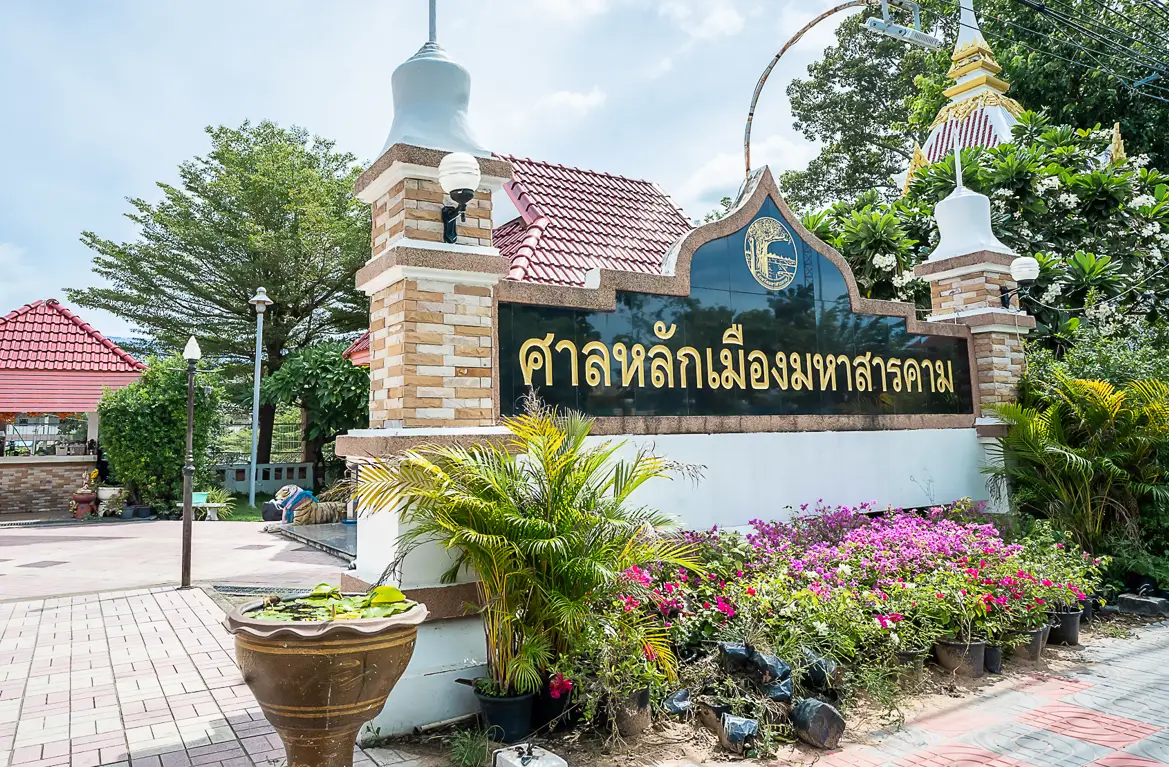
29. Maha Sarakham City Pillar Shrine stands on Nakhon Sawan Road in front of Lak Mueang Maha Sarakham School, Talat Subdistrict, Mueang Maha Sarakham District. It is an important spiritual landmark that preserves the memory of the city's establishment and its first ruler, Thao Maha Chai, also known as Phra Charoen Ratchadet. The shrine remains closely connected with the cultural identity of Maha Sarakham, a provincial center renowned for its educational institutions and Isan traditions.
History and Significance The original city pillar shrine was established in 1865, when Thao Maha Chai led people from Roi Et to establish a new town. The shrine became the symbolic spiritual foundation of the settlement. The present structure dates to 1912 and underwent substantial restoration in 1984, reflecting continuing community involvement in preserving the sacred city pillar.
Architecture and Important Sacred Objects The shrine is designed as a four-sided pavilion with entrances on all four sides. Inside stands a city pillar made from chaiyaphruek wood, carved, lacquered, and gilded according to Thai ceremonial traditions. These materials and decorative techniques symbolize prosperity, strength, and auspiciousness.
Traditions and Beliefs Residents visit the shrine before taking examinations, beginning a new job, starting a business, or undertaking important journeys. Such practices reflect the belief that respect for the city's guardian brings encouragement, stability, and protection.
How to Worship Visitors should pay respect to the principal pillar, offer flowers or a garland, and make a prayer for personal and family well-being. Incense, candles, and other ritual items should follow the shrine's instructions. The carved pillar and its gilded surfaces should not be touched without permission.
Getting There From the clock tower intersection in central Maha Sarakham, travel along Nakhon Sawan Road toward Kosum Phisai. The shrine stands in front of Lak Mueang Maha Sarakham School. Nearby attractions include Wat Mahachai, Wat Pa Wang Nam Yen, and Kaeng Loeng Chan.
Open Days: Daily
Opening Hours: 06:00 – 18:00
Address: Nakhon Sawan Road, Talat, Mueang Maha Sarakham, Maha Sarakham 44000, Thailand
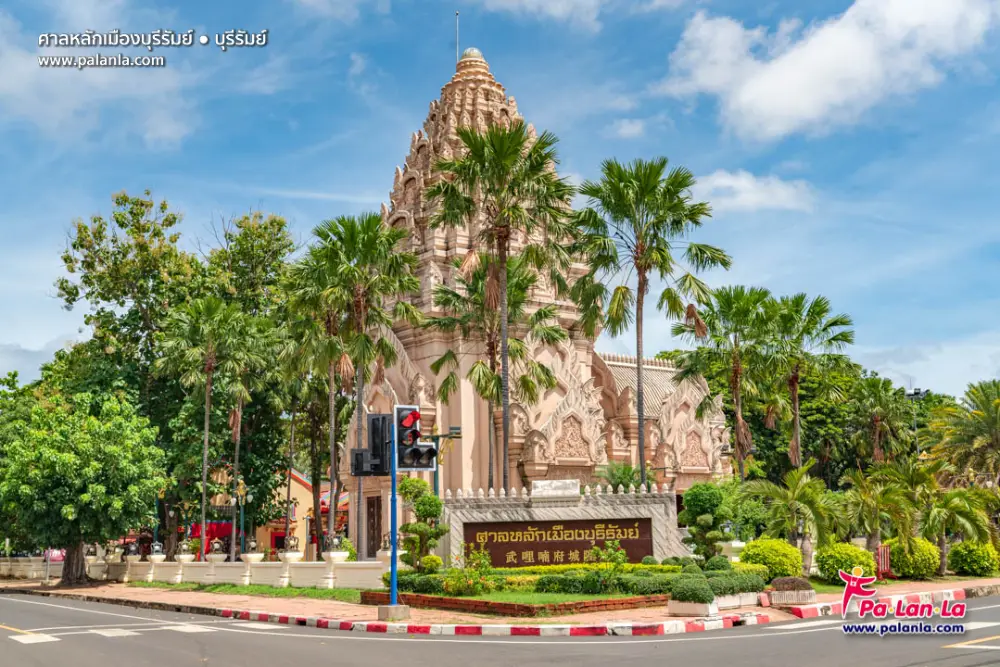
30. Buriram City Pillar Shrine is located on Lak Mueang Road in Nai Mueang Subdistrict, Mueang Buri Ram District. It is one of the most distinctive city pillar shrines in northeastern Thailand because its architecture is inspired by the ancient Khmer sanctuaries associated with the province, particularly Phanom Rung. The complex combines a Thai city pillar shrine, guardian-deity worship areas, and a Chinese shrine, reflecting Buriram's cultural diversity.
History and Significance The original shrine was a comparatively small structure. In 2005, it was rebuilt in a more elaborate form inspired by Khmer architecture. The redevelopment reflected the desire to express Buriram's identity through a building combining traditional sacred functions with artistic forms associated with its archaeological heritage.
Architecture and Sacred Features The principal building has a prang-like form inspired by Khmer sanctuary architecture. Within the complex are two city pillars and worship areas for Phra Suea Mueang, Phra Song Mueang, and other protective deities. The adjacent Chinese shrine contains sacred figures respected by the local Thai-Chinese community. The arrangement demonstrates how several religious traditions can coexist within the same civic sacred space.
Traditions and Ceremonies Buriram City Pillar Shrine is associated with worship ceremonies, annual celebrations, and important community occasions, including activities connected with Songkran. Residents seek blessings for career success, family well-being, safe travel, and general prosperity.
How to Worship Visitors should begin with the principal city pillars and then continue to the guardian deities and Chinese shrine according to the local worship sequence. Suitable offerings may include flowers, garlands, incense, and candles where permitted. Different worship points may require different offerings, so signs or attendants should be consulted.
Visitor Etiquette Avoid touching sacred pillars, decorative carvings, and religious images. Respect people performing ceremonies and do not obstruct the shrine's courtyard. Photography should be considerate and limited to permitted areas.
Getting There Travel to Lak Mueang Road in central Buri Ram, which is accessible from Jira Road and other main municipal routes. The shrine can be included in a visit to King Rama I Monument, Buriram Provincial Cultural Center, and Khao Kradong Forest Park.
Open Days: Daily
Opening Hours: 06:00 – 17:00
Address: Lak Mueang Road, Nai Mueang, Mueang Buri Ram, Buri Ram 31000, Thailand
Coordinates (Latitude, Longitude): 14.9958716, 103.1135752
Map (GPS):Google Maps – Buriram City Pillar Shrine
31. Surin City Pillar Shrine is situated on Lak Mueang Road approximately 500 meters west of Surin's city hall, in the historic urban area of Mueang Surin District. It is an important landmark of the province, where the city pillar symbolizes the spiritual foundation and protection of the community. Surin's strong connection with Khmer-influenced cultural traditions and the history of its old town gives the shrine an additional layer of cultural significance.
History and Significance The shrine initially existed without a city pillar. In 1968, Thailand's Fine Arts Department designed a new shrine and prepared the creation of the pillar using auspicious golden shower wood obtained from Sai Yok District in Kanchanaburi Province. The ceremonial installation and celebration took place on March 15, 1974, marking an important moment in the shrine's modern history.
Architecture and Important Sacred Objects The city pillar was carved from a wooden log measuring approximately three meters long, with a circumference of about one meter. The shrine's architecture follows Thai civic religious traditions and provides a dedicated space for offerings and prayers. Its location within Surin's historic town also connects it with the old city wall and moat.
Traditions and Beliefs Residents visit to pray for protection, stability, career progress, and family prosperity. The shrine is part of Surin's wider sacred and historical landscape, alongside Wat Burapharam, the city wall, and the monument honoring Phraya Surin Phakdi.
How to Worship Begin by paying respect to the principal city pillar, offering flowers or a garland at the designated point and making a personal prayer. Incense and candles should follow the site's instructions. Visitors should avoid touching the pillar or other ceremonial objects without permission.
Getting There Travel to Lak Mueang Road in central Surin, around 500 meters west of city hall. The shrine can be combined with the Phraya Surin Phakdi Monument, Wat Burapharam, and the old city wall and moat.
Open Days: Daily
Opening Hours: 09:00 – 17:00
Address: Lak Mueang Road, Nai Mueang, Mueang Surin, Surin, Thailand
Map (GPS):Google Maps – Surin City Pillar Shrine
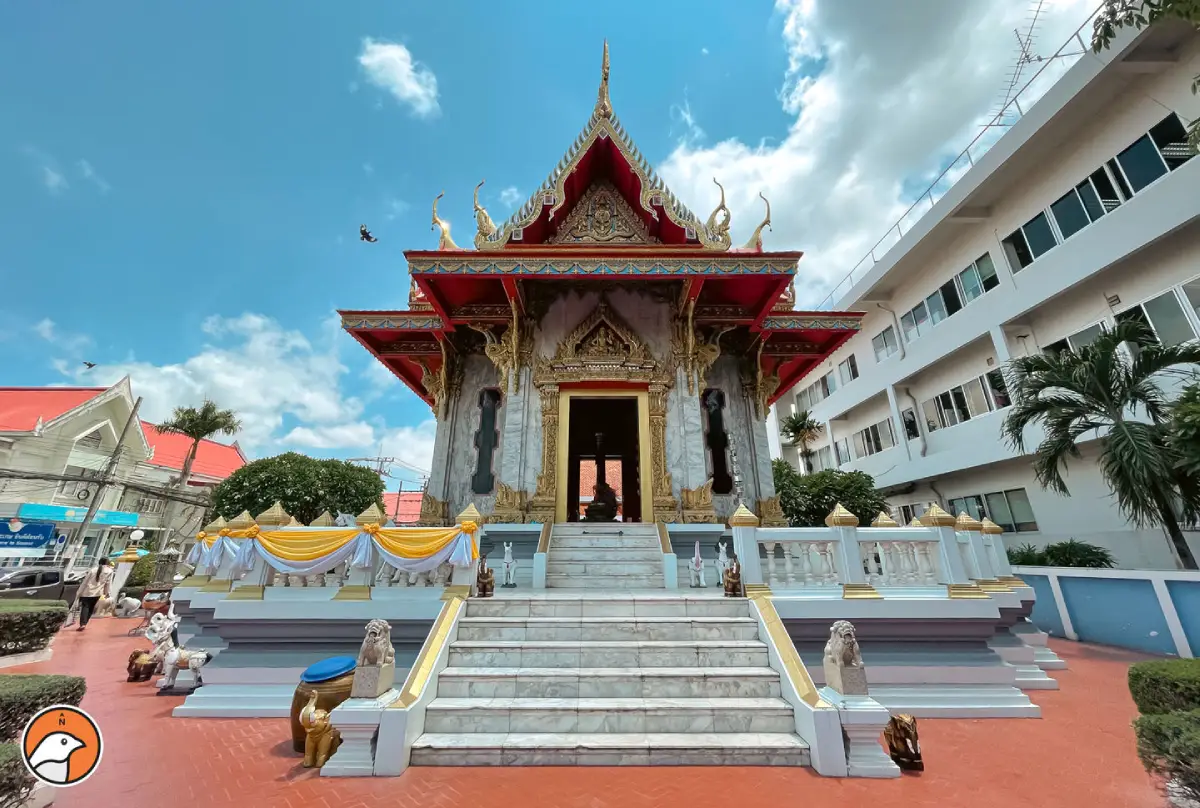
32. Si Sa Ket City Pillar Shrine is located at the intersection of Thepha Road and Lak Mueang Road in Mueang Nuea Subdistrict, Mueang Si Sa Ket District. It is one of the most important spiritual landmarks of the provincial capital. The shrine represents the sacred foundation, stability, and protection of the city, while its architectural design reflects traditional Thai religious craftsmanship.
History and Significance Construction of the present shrine began in 1976 and was completed in 1988 during the administration of Governor Chamlong Ratprasert. The project provided Si Sa Ket with a prominent place for city pillar worship and provincial ceremonies. The shrine reflects the spiritual identity of a province whose communities include Lao, Khmer, Kui, and Yoe cultural groups.
Architecture and Important Sacred Objects The main pavilion stands on a raised base and features a traditional Thai four-gabled roof. Its walls are decorated with marble and colored glass, while the southern gable displays a Kanchanaphisek emblem. The city pillar is carved from chaiyaphruek wood, stands approximately 229 centimeters high from its base, and measures around 30 centimeters in diameter. Its upper portion has a rounded, pointed finial.
Traditions and Beliefs Local residents visit the shrine to seek blessings for prosperity, protection, stability, and successful beginnings. The shrine is also associated with the civic identity of Si Sa Ket, historically known as Si Nakhon Lamduan.
How to Worship Approach the main city pillar respectfully and offer flowers, garlands, or other permitted ceremonial items. Incense, candles, colored cloth, and lamp oil may be used according to local instructions. Visitors should avoid touching the pillar or architectural decorations.
Getting There From Si Sa Ket Railway Station or the central town area, travel toward the intersection of Thepha Road and Lak Mueang Road near the provincial hall. A visit can be combined with Wat Maha Phuttharam, Somdet Phra Srinagarindra Park, and cultural attractions around the city.
Open Days: Daily
Opening Hours: 08:00 – 17:00
Address: Thepha Road and Lak Mueang Road Intersection, Mueang Nuea, Mueang Si Sa Ket, Si Sa Ket 33000, Thailand
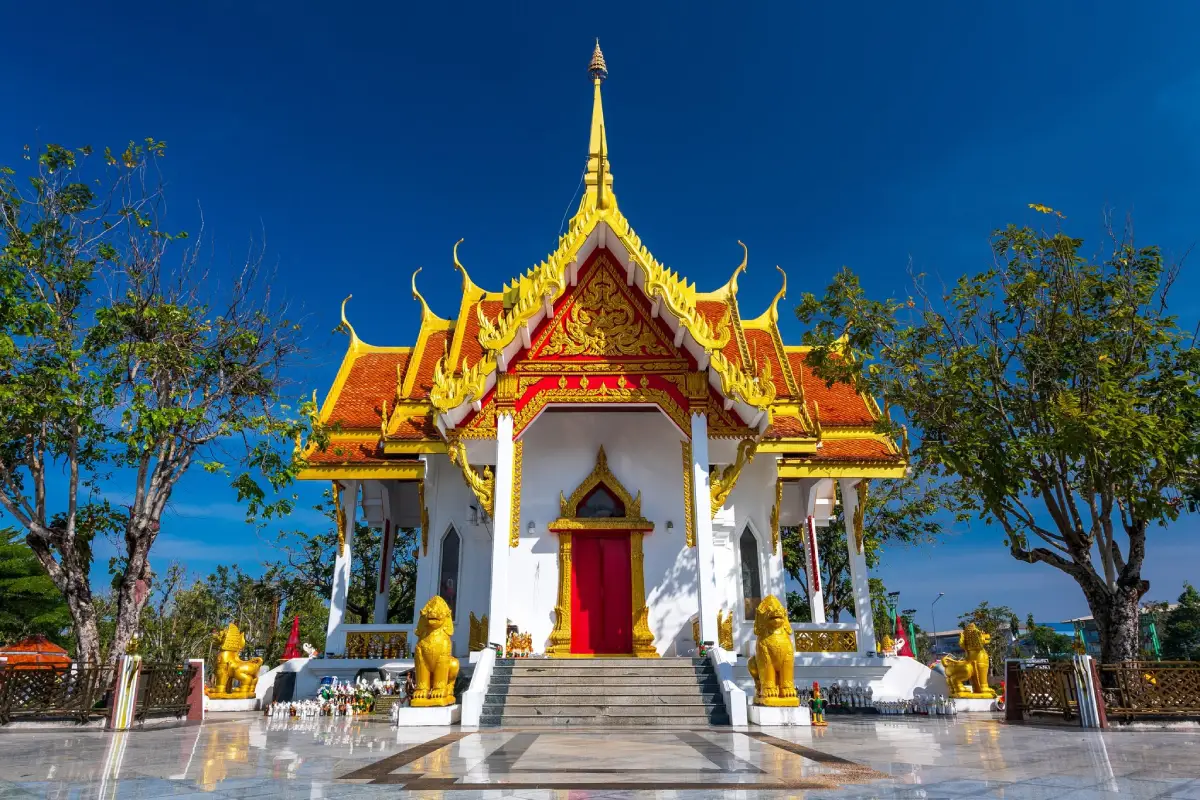
33. Ubon Ratchathani City Pillar Shrine is located on Si Narong Road south of Thung Si Mueang, near the Ubon Ratchathani National Museum, in Nai Mueang Subdistrict, Mueang Ubon Ratchathani District. It is one of the city's principal sacred landmarks and an important place where residents pay respect to the guardian spirit of the provincial capital.
History and Significance Construction began in 1972, with a foundation-stone ceremony held on August 27 of that year. The shrine officially opened on January 16, 1976. Its establishment provided Ubon Ratchathani with a sacred civic monument symbolizing the province's stability, prosperity, and spiritual protection.
Architecture and Sacred Features The city pillar was designed by Thailand's Fine Arts Department and is made from ratchaphruek wood. Its upper section takes the form of a lotus-bud finial, a motif commonly associated with auspiciousness and sacred symbolism in Thai architecture. The shrine building provides a ceremonial setting for the pillar and a designated area for devotional offerings.
Annual Traditions An important annual ceremony takes place on the first waxing-moon day of the seventh lunar month. The event is associated with the Isan Bun Samha tradition, which emphasizes the removal of misfortune and the renewal of auspiciousness for the community. It illustrates the relationship between the city's sacred pillar and the wider ritual calendar of northeastern Thailand.
How to Worship Visitors should begin by paying homage to the principal pillar, offering flowers or a garland, and making a respectful personal prayer. Traditional offerings may include orchids, marigolds, incense, candles, gold leaf, and ceremonial cloth in three, five, or seven colors, depending on local arrangements. Visitors should follow the instructions on where these items may be placed.
Visitor Etiquette Dress appropriately and avoid obstructing worshippers during ceremonies. Do not apply gold leaf or tie cloth directly to the sacred pillar without express permission. Keep the surrounding area clean and use incense only at designated points.
Getting There The shrine is situated on Si Narong Road immediately south of Thung Si Mueang. Visitors can combine their trip with Ubon Ratchathani National Museum, Wat Si Ubon Rattanaram, Wat Thung Si Mueang, and other important religious landmarks in central Ubon Ratchathani.
Open Days: Daily
Opening Hours: 08:00 – 17:00
Address: Si Narong Road, Nai Mueang, Mueang Ubon Ratchathani, Ubon Ratchathani, Thailand
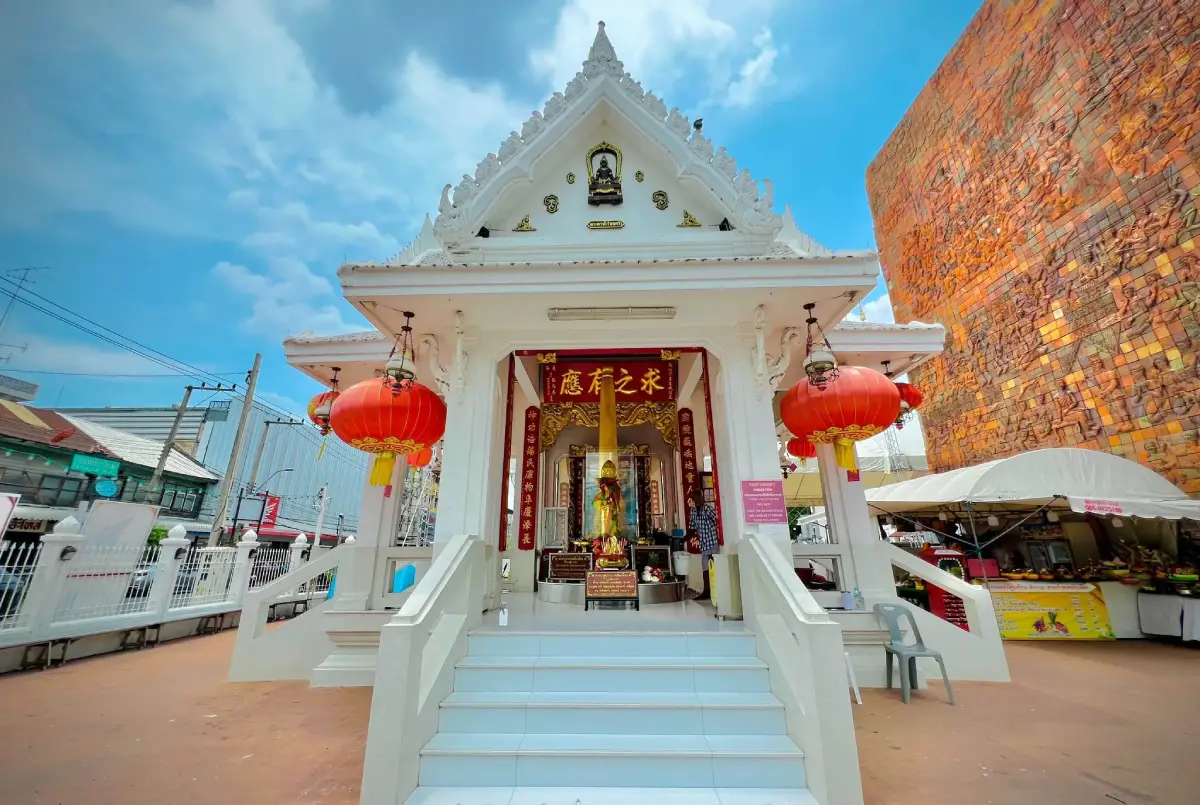
34. Nakhon Ratchasima City Pillar Shrine, also known as Korat City Pillar Shrine, stands on Jomphon Road at the corner of Wat Phra Narai Maharat in Nai Mueang Subdistrict, Mueang Nakhon Ratchasima District. It is an important historical and spiritual landmark within the old city of Korat, combining city guardian beliefs with Thai-Chinese architectural and religious influences.
History and Significance The shrine's origins are associated with the reign of King Narai the Great in the seventeenth century, when Nakhon Ratchasima developed into an important administrative and strategic center. In 1963, a new shrine was constructed to house the original city pillar. The continued preservation of the pillar reflects the city's long-standing beliefs concerning stability and spiritual protection.
Architecture and Important Features The shrine is a compact structure with Thai-Chinese artistic influences. One particularly distinctive feature is a terracotta relief wall depicting Thao Suranari and historical scenes of local life. This artwork links the sacred function of the shrine with the identity and historical memory of Korat.
Traditions and Beliefs Local residents and travelers pay respect to the city pillar before important undertakings and pray for career success, business prosperity, safety, and family well-being. The shrine is part of a broader cultural route connecting the old city, its fortifications, temples, and memorials.
How to Worship Begin with the city pillar and follow any additional worship points identified by the shrine. Flowers or garlands are appropriate offerings. Incense and candles should be used only in designated locations. Avoid touching the terracotta reliefs or sacred pillar.
Getting There Travel to Jomphon Road near Wat Phra Narai Maharat, Chumphon Gate, and Thao Suranari Monument. The shrine is accessible by private car, local taxi, songthaew, or ride-hailing service within central Korat.
Open Days: Daily
Opening Hours: 08:00 – 16:30
Address: Jomphon Road, Nai Mueang, Mueang Nakhon Ratchasima, Nakhon Ratchasima 30000, Thailand
Coordinates (Latitude, Longitude): 14.975001, 102.106013
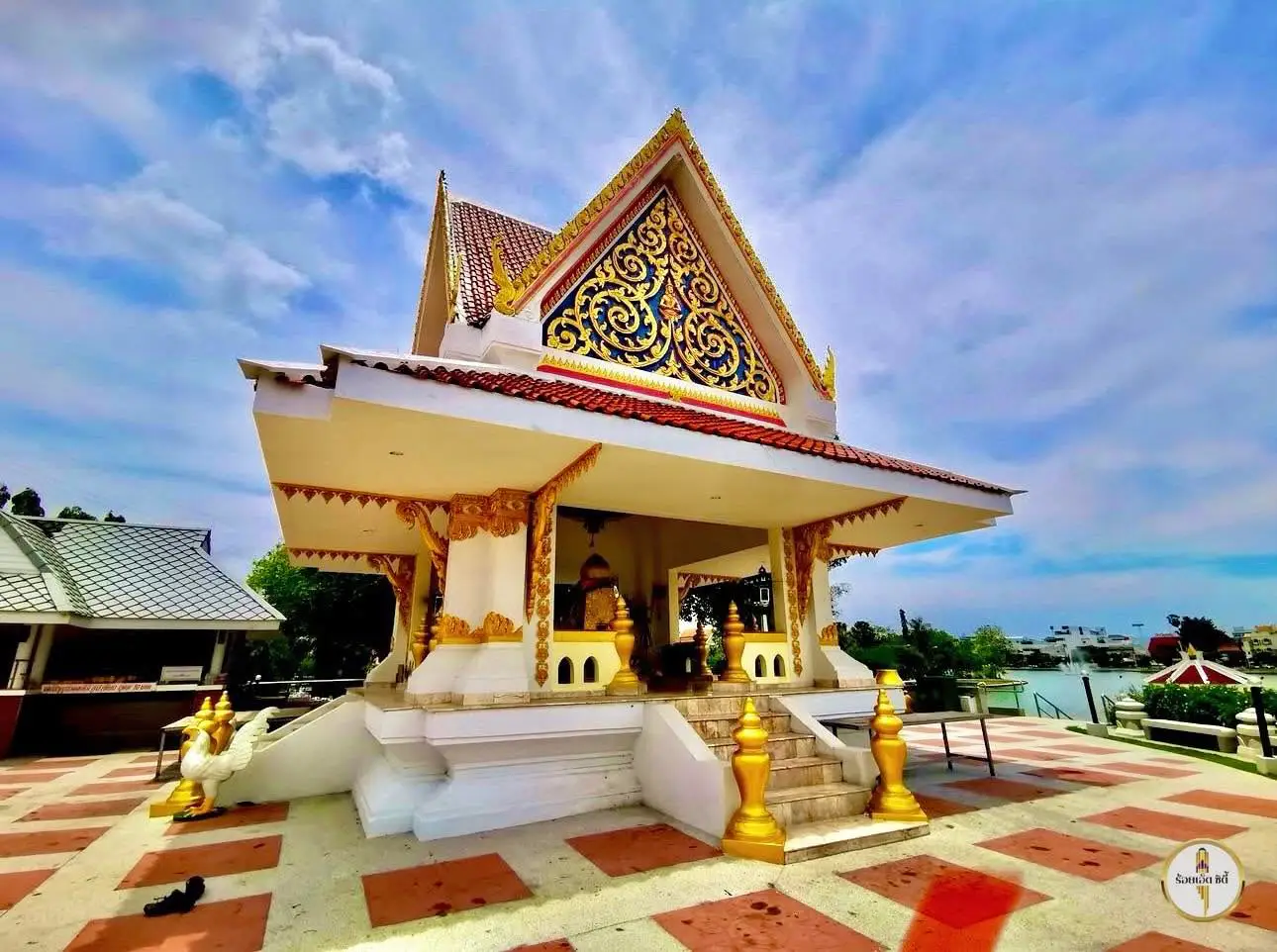
35. Roi Et City Pillar Shrine (Chao Pho Mahesak Shrine) is situated within the grounds of Wat Burapha Phiram on Phadung Phanit Road in Nai Mueang Subdistrict, Mueang Roi Et District. It is also known as Chao Pho Mahesakdanuphap Shrine, reflecting the local belief in a powerful guardian spirit protecting the city. Its location near the old eastern city moat connects the shrine with the historic urban landscape of Roi Et.
History and Significance The shrine preserves traditions concerning the protection and stability of the city. Its connection with the old city moat is particularly meaningful, because defensive earthworks and waterways historically marked the physical boundaries of Thai towns, while sacred city pillars and guardian shrines expressed their spiritual foundations.
Architecture and Sacred Features The present shrine is housed within a pavilion in the grounds of Wat Burapha Phiram, one of Roi Et's important Buddhist temples. The shrine provides a dedicated worship space for Chao Pho Mahesak and represents the coexistence of local guardian beliefs and Buddhist religious life.
Traditions and Beliefs Residents visit to pray for good fortune, protection, successful work, safe travel, and family stability. The shrine is an important place for the transmission of local religious customs and collective memories associated with old Roi Et.
How to Worship Pay respect at the main Chao Pho Mahesak worship point, present flowers or a garland, and make a personal prayer. Follow any instructions issued by temple or shrine attendants concerning incense, candles, and ceremonial offerings.
Visitor Etiquette As the shrine is situated within a Buddhist temple, visitors should dress modestly, keep noise to a minimum, and respect temple activities. Do not touch sacred images or place offerings outside the designated areas.
Getting There Travel to Wat Burapha Phiram on Phadung Phanit Road in central Roi Et. Other attractions in the city can be visited on the same journey, including the provincial park and important Buddhist landmarks.
Open Days: Daily, including public holidays
Opening Hours: 08:30 – 16:30
Address: Wat Burapha Phiram, 559 Phadung Phanit Road, Nai Mueang, Mueang Roi Et, Roi Et 45000, Thailand
Map (GPS):Google Maps – Roi Et City Pillar Shrine
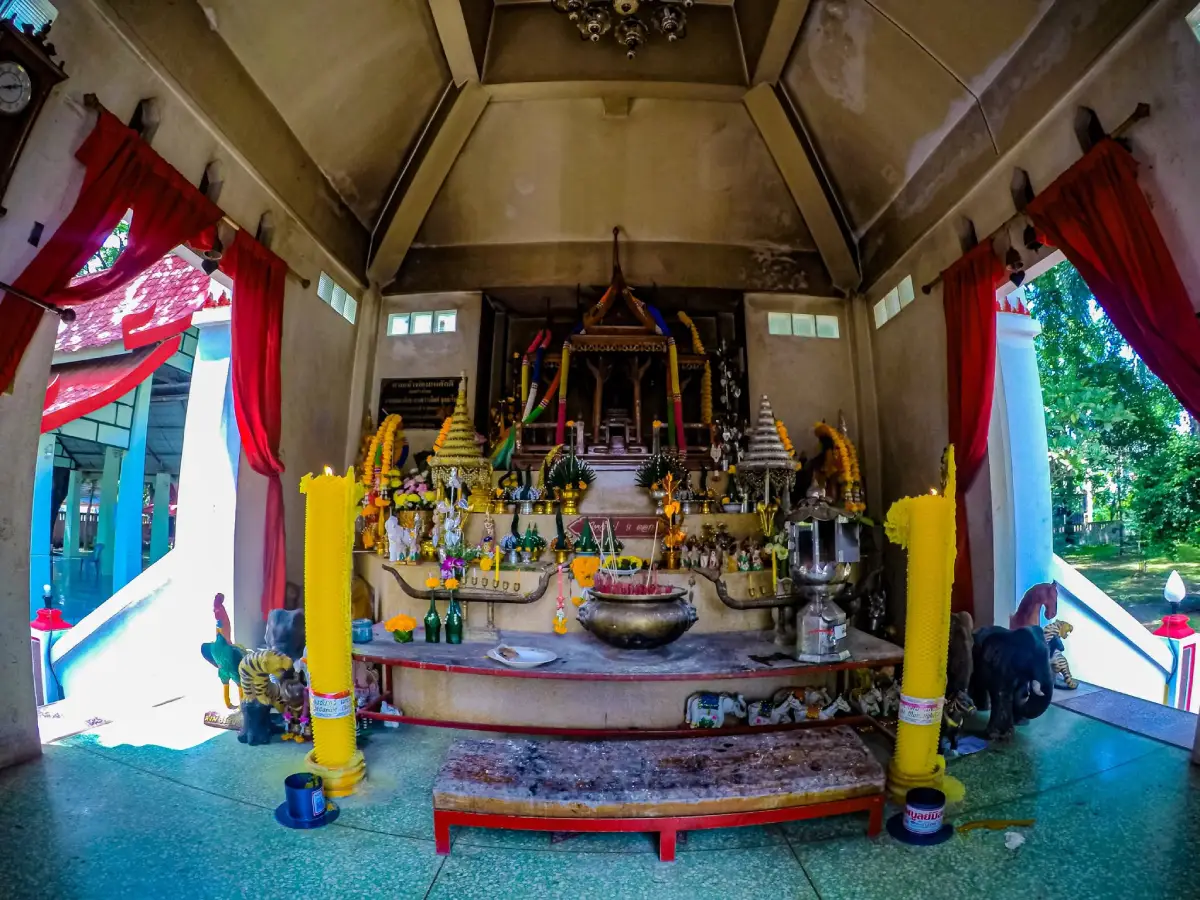
36. Chao Pho Mahesak Shrine (Sakon Nakhon City Guardian Shrine) is located in Ngio Don Subdistrict, Mueang Sakon Nakhon District. Formerly known as Chao Pu Tong Mahesak Lak Mueang Shrine, it is associated with local traditions concerning the guardian of the old city of Nong Han Luang. It preserves an important form of northeastern Thai spirituality in which the protection of a settlement is connected with respected ancestors, guardian figures, and sacred local history.
History and Local Legend The shrine is associated with Chao Pu Tong, also known as Phra Uphat Tong, a figure remembered in local narratives as a deputy ruler linked to the Mekong-region polity of Saraphan Wan Thong. According to tradition, he was sent to protect the people of Nong Han Luang and safeguard Phra That Choeng Chum. After his death, the community continued to honor him as a spiritual protector. The shrine was renamed Chao Pho Mahesak in 2000.
Cultural Significance The shrine's importance derives from its relationship with the old town, the Nong Han basin, city moats, and the wider sacred landscape of Sakon Nakhon. It should be understood as a local guardian shrine associated with city pillar traditions, rather than automatically assumed to have exactly the same ceremonial origins as every provincial city pillar shrine.
Annual Traditions An annual offering ceremony takes place on the third waxing-moon day of the sixth lunar month. The ritual demonstrates the continuing importance of Chao Pu Tong in the cultural memory of local residents and the transmission of guardian-spirit traditions between generations.
How to Worship Visitors may pay respect to Chao Pho Mahesak and other sacred objects at the designated worship area. Offer flowers or other appropriate items following the shrine's own customs. Personal prayers may concern safety, prosperity, family stability, and protection.
Visitor Etiquette Dress respectfully, maintain a quiet atmosphere, and avoid touching sacred figures or placing unauthorized objects within the shrine. During annual ceremonies, visitors should follow the directions of community organizers.
Getting There Travel toward Ngio Don Subdistrict from Sakon Nakhon city. A private car or local hired vehicle is convenient. Other cultural destinations in the wider area include Wat Phra That Choeng Chum, Wat Pa Sutthawat, Nong Han Lake, and Phu Phan Museum.
Open Days: Daily
Opening Hours: 08:00 – 17:00
Address: Ngio Don, Mueang Sakon Nakhon, Sakon Nakhon, Thailand
Map (GPS):Google Maps – Chao Pho Mahesak Shrine
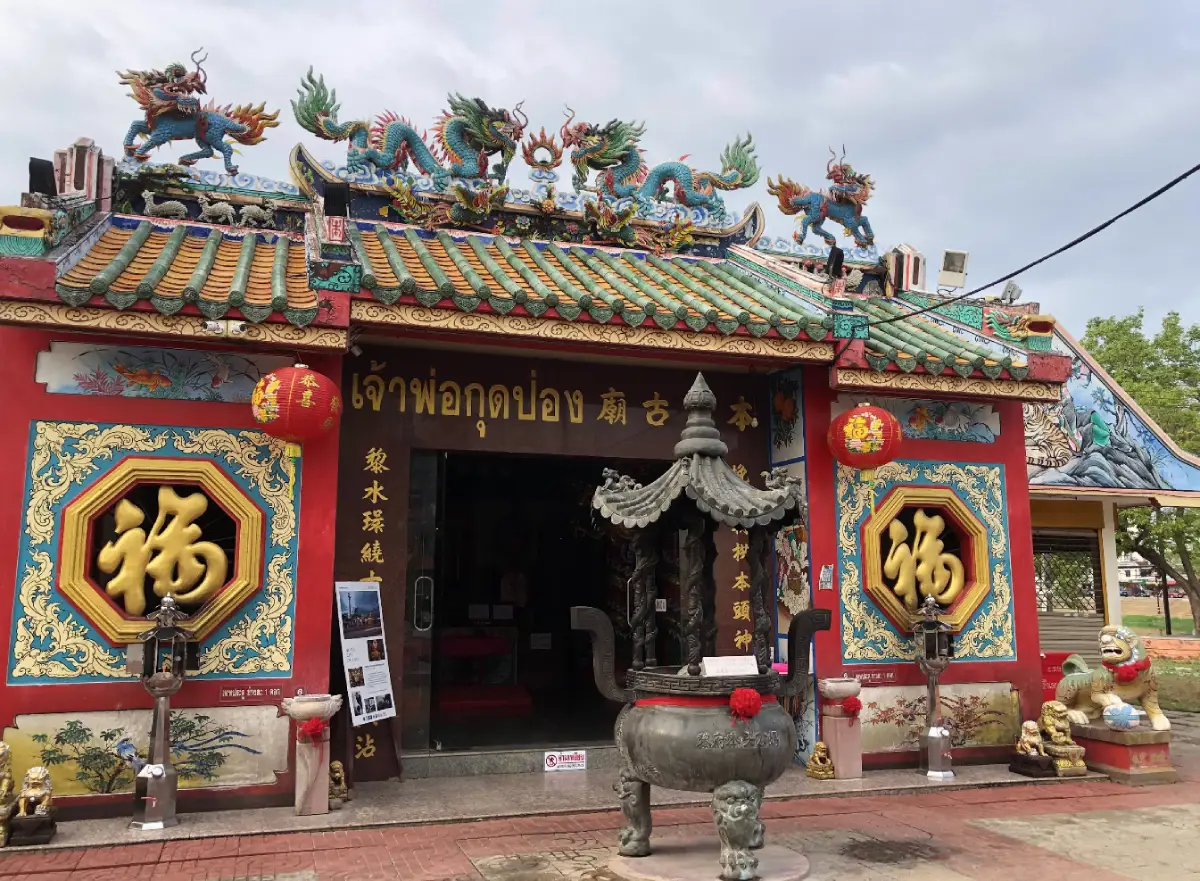
37. Loei City Pillar Shrine and Chao Pho Kut Pong Shrine are located in Kut Pong Subdistrict, Mueang Loei District, approximately 100 meters from the fountain roundabout and beside Kut Pong Public Park. The two shrines form an important sacred area where traditional Thai city pillar beliefs coexist with local devotion to Chao Pho Kut Pong, a guardian spirit respected by residents. Their proximity allows visitors to experience two connected yet distinct forms of worship in one location.
History and Significance Loei City Pillar Shrine was established in 1982, providing the town with an official sacred civic landmark. Chao Pho Kut Pong Shrine preserves an older form of local belief associated with Chao Pho Thong Kham, a protective guardian figure. Together, the shrines illustrate how a provincial city can maintain both an established city pillar and an inherited tradition of local guardian worship.
Architecture and Important Sacred Objects The city pillar is made from ratchaphruek wood and stands approximately 139 centimeters high. It features a mandapa-style carved top and is decorated with lacquer and gold. The nearby Chao Pho Kut Pong Shrine includes a separate worship area and devotional objects associated with local customs. The combined setting is surrounded by the public spaces and urban landmarks of central Loei.
Traditions and Beliefs Residents visit the shrines to seek blessings for stability, career success, protection, family well-being, and good fortune. The connection between the two shrines reflects the coexistence of civic ritual and older local beliefs in the spiritual protection of the community.
How to Worship Visitors commonly begin at the city pillar shrine, presenting flowers or a garland and making a personal prayer. They can then continue to Chao Pho Kut Pong Shrine and pay respect according to its customs. Since these are distinct sacred sites, offerings and incense arrangements may differ and should follow local guidance.
Visitor Etiquette Keep the worship areas quiet and clean. Do not touch sacred objects without permission or obstruct the entrances. Parking near the shrines may be limited, so visitors should use designated spaces.
Getting There From the fountain roundabout in central Loei, continue approximately 100 meters toward Kut Pong Public Park. The shrines can easily be reached by walking, private vehicle, motorcycle, or local transport. Nearby attractions include the park, Wat Si Sutthawat, and the town's walking street area.
Open Days: Daily
Opening Hours: 07:30 – 17:00
Address: Kut Pong, Mueang Loei, Loei, Thailand

38. Chanthaburi City Pillar Shrine stands on Tha Luang Road in Mueang Chanthaburi District, directly opposite King Taksin the Great Shrine. It is an important sacred landmark connected with the province's history and the traditional belief that a city pillar represents the stability and spiritual protection of its community. Its location near the King Taksin shrine makes it particularly meaningful for travelers interested in the historical role of Chanthaburi during the late Ayutthaya period.
History and Significance The shrine's original construction date has not been conclusively established. Local tradition connects its origins with King Taksin the Great, who entered Chanthaburi in 1767 and used the city as a strategic base to gather troops and resources before reclaiming Ayutthaya. These accounts form an important part of local historical memory, although the exact circumstances surrounding the shrine's original establishment remain uncertain.
Historical Remains The original shrine may have been constructed using laterite, traces of which are associated with the site. As these remains have deteriorated over time, their original form is difficult to determine. The present shrine and city pillar were built in 1981, with later improvements to the building and surrounding landscape.
Architecture and Sacred Features The present shrine provides a ceremonial setting for the city pillar and maintains a connection with the historical and religious character of Chanthaburi. Its placement opposite King Taksin the Great Shrine allows visitors to appreciate two sacred landmarks with related but distinct historical meanings.
Traditions and Beliefs Residents visit the shrine to seek blessings for protection, prosperity, family happiness, and the successful beginning of important undertakings. Paying respect to the city pillar is also regarded as a meaningful way to connect with the spiritual heritage of Chanthaburi.
How to Worship Begin at the principal city pillar shrine and offer flowers or a garland at the designated point. Visitors may then pay respect at the nearby King Taksin the Great Shrine according to its separate instructions. Incense and candles should be used only where permitted, and sacred objects should not be touched without permission.
Getting There Travel to Tha Luang Road in the central Chanthaburi area, using King Taksin the Great Shrine as a landmark. Visitors can combine the two shrines with cultural sightseeing in Chanthaburi's historic neighborhoods and other important city attractions.
Open Days: Daily
Opening Hours: 07:00 – 17:00
Address: Tha Luang Road, Mueang Chanthaburi, Chanthaburi, Thailand

39. Phetchabun City Pillar Shrine is situated on Lak Mueang Road in Nai Mueang Subdistrict, Mueang Phetchabun District. It is one of the most historically distinctive city pillar shrines in Thailand because its principal sacred object is an ancient stone pillar rather than a wooden pillar created solely for a modern civic ceremony. This stone pillar establishes a meaningful connection between Phetchabun and the ancient city of Si Thep.
History and Significance The stone pillar was brought from Si Thep in 1904 by Prince Damrong Rajanubhab. Si Thep is an important ancient settlement associated with Dvaravati and later Khmer cultural influences. This historical association gives the Phetchabun city pillar exceptional cultural significance, linking the province's contemporary civic beliefs with archaeological heritage from an earlier period.
Architecture and Important Sacred Objects Unlike many city pillars made from ratchaphruek or teak, Phetchabun's main pillar is a rounded-top stone object. Its material, shape, and historical association distinguish the shrine from conventional provincial city pillar buildings. The shrine provides a dedicated space where this historic object can be respected as the city's sacred center.
Cultural Importance The shrine illustrates how existing ancient objects can acquire new symbolic meanings as communities develop. The original stone pillar's association with Si Thep adds an archaeological dimension to the city's spiritual history. Visitors can therefore regard it as both a living place of devotion and a cultural landmark connected with ancient settlement traditions.
Traditions and Beliefs Local residents pay respect to the city pillar and pray for stability, prosperity, safety, and success in important undertakings. The shrine is particularly meaningful for travelers interested in the relationship between ancient material culture and modern Thai beliefs.
How to Worship Visitors should pay respect at the designated city pillar worship area, present flowers or a floral garland, and make a personal prayer. Avoid touching, rubbing, scraping, or applying substances to the stone pillar, as these activities could damage the surface of a historically significant object.
Getting There Travel to Lak Mueang Road in central Phetchabun. The shrine is accessible by private vehicle and local transport. Visitors interested in the pillar's wider history may also wish to explore archaeological and cultural attractions associated with Si Thep on a separate journey.
Open Days: Daily
Opening Hours: 08:00 – 16:30
Address: Lak Mueang Road, Nai Mueang, Mueang Phetchabun, Phetchabun, Thailand
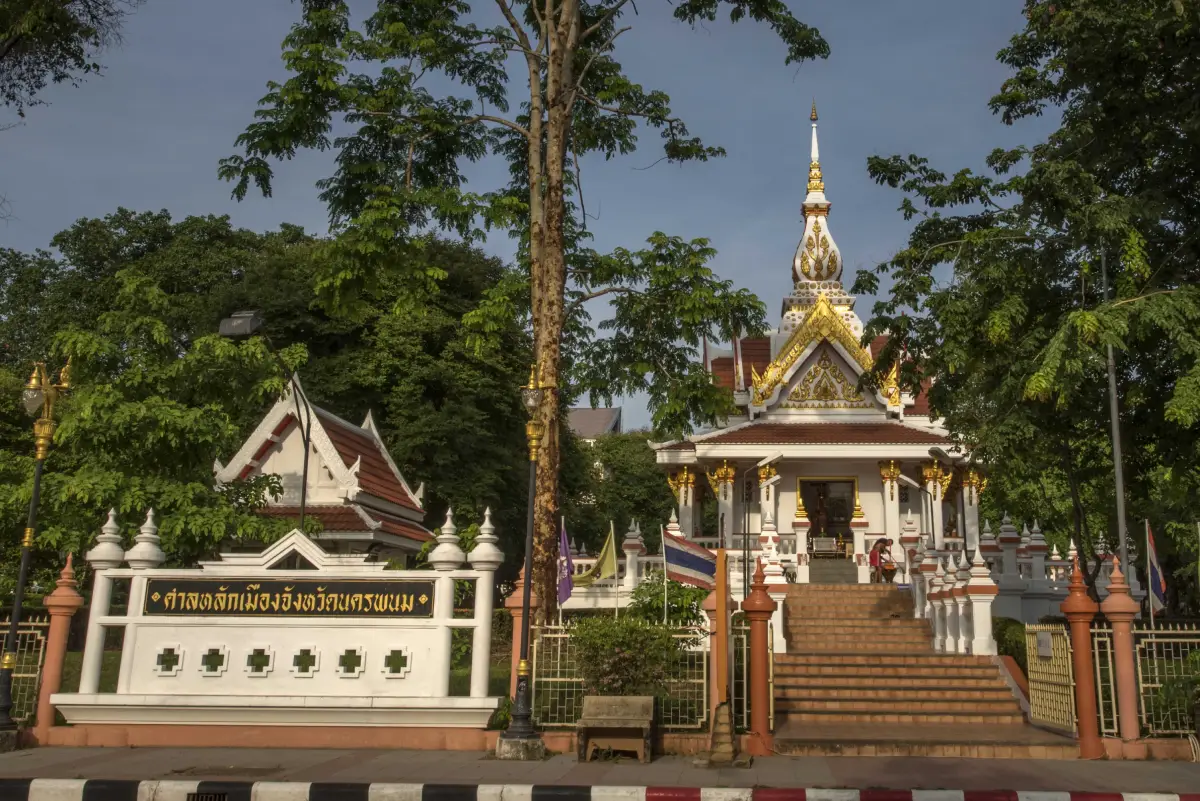
40. Nakhon Phanom City Pillar Shrine is situated on Aphiban Bancha Road in front of the Nakhon Phanom Provincial Administrative Organization, opposite the provincial hall and beside the H.M. Queen Sirikit National Library. The shrine is a significant spiritual landmark in the historic Mekong River town, reflecting the relationship between city guardian beliefs, local identity, and the development of Nakhon Phanom as an important provincial center.
History and Significance The initiative to construct the shrine began in 1992, and the city pillar was ceremonially installed on September 25, 1996. The project symbolized civic stability, community unity, and the belief in auspicious protection of the town. The shrine's location in the provincial administrative area reinforces its position as a symbolic center of Nakhon Phanom.
Architecture and Important Sacred Objects The city pillar was made from kan krao wood, also known as tembusu, a species recognized as the provincial tree of Nakhon Phanom. The pillar measures approximately 4.675 meters in total length. The selection of a tree connected with provincial identity gives the shrine a distinctive cultural meaning beyond the usual symbolism of auspicious timber.
Traditions and Beliefs Visitors pray for successful work, safe travel, family well-being, new responsibilities, and peace for the community. The shrine is an important place where the traditional spiritual foundations of a Thai provincial capital remain part of contemporary civic life.
How to Worship Visitors may present fresh flowers or a marigold garland and make a respectful personal prayer. Local recommendations commonly include three incense sticks and one candle, subject to the shrine's current regulations. Purchasing a complete offering set is not required; worshippers may simply pay respect according to their beliefs.
Visitor Etiquette Maintain a quiet atmosphere and use the designated incense and candle stations. Do not touch the city pillar or decorative surfaces without permission. Visitors should respect the nearby library and administrative premises.
Getting There Travel to Aphiban Bancha Road near the provincial hall in central Nakhon Phanom. A visit can be combined with the Vietnamese Memorial Clock Tower, Nakhon Phanom Walking Street, the Mekong riverfront, and Phaya Si Sattanakharat.
Open Days: Daily
Opening Hours: 07:00 – 20:00
Address: Aphiban Bancha Road, central Nakhon Phanom, Mueang Nakhon Phanom, Nakhon Phanom, Thailand
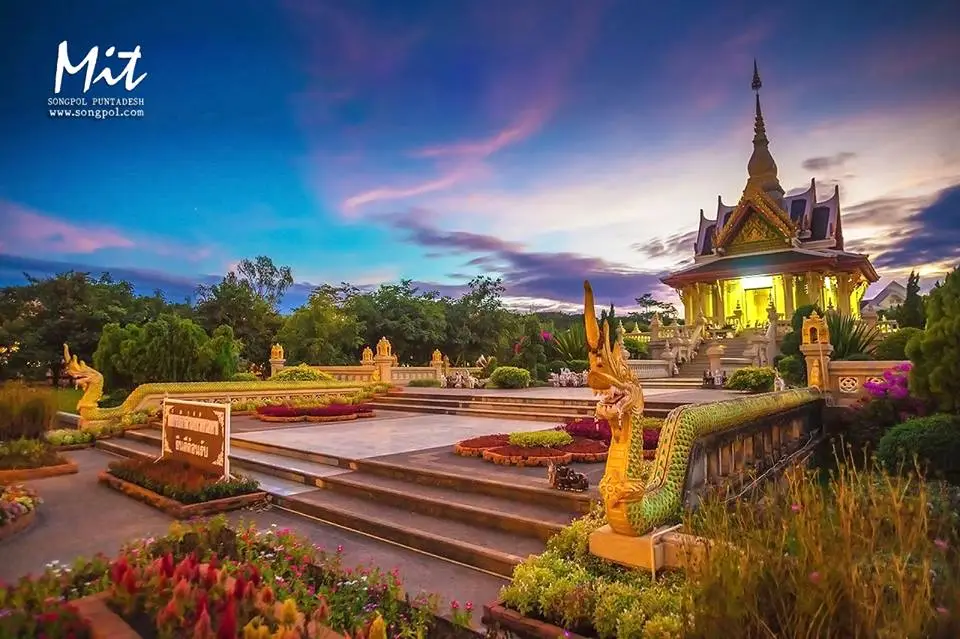
41. Nong Khai City Pillar Shrine is located on Mittraphap Road beside Nong Khai Provincial Hall in Mi Chai Subdistrict, Mueang Nong Khai District. It is an important spiritual landmark of this northeastern border province, symbolizing stability, prosperity, and the collective identity of the community. The shrine was established through cooperation among public officials, merchants, local supporters, and residents.
History and Significance The formal establishment of the city pillar began with a timber preparation ceremony on July 8, 1999, at the auspicious time of 09:39. A foundation-stone ceremony followed on April 23, 2000, while a royal consecration ceremony took place on February 28, 2004. These events marked important stages in creating a sacred civic landmark for Nong Khai Province.
Architecture and Important Sacred Objects The shrine features traditional Thai chaturamuk architecture, with four gabled sides and an upper level housing the city pillar. Its architectural form includes a stupa-like roof and balconies extending around the building. These features create a dignified ceremonial setting for the sacred pillar and reflect traditional Thai building principles used for important civic religious monuments.
Cultural Significance Nong Khai's history has been shaped by its location on the Mekong River and its long-standing connections with communities across the Thai–Lao border. The city pillar symbolizes the spiritual foundation of this border town, while the surrounding provincial administrative center reflects its contemporary civic role.
Traditions and Beliefs Residents and travelers visit the shrine to pray for stability, success, protection, good fortune, and safe travel. The shrine is particularly meaningful as a place to pay respects at the beginning of a journey through the province.
How to Worship Visitors should approach the principal city pillar respectfully, offer flowers or a garland, and make a personal prayer. Incense and candles should be used according to posted instructions. Worshippers should not touch the pillar or architectural decorations without permission.
Visitor Etiquette Dress respectfully, avoid loud conversations, and keep the worship area clean. Visitors should follow any restrictions associated with provincial ceremonies or government activities in the surrounding administrative area.
Getting There Travel via Mittraphap Road to the provincial government center in Mueang Nong Khai District. The shrine is situated beside Nong Khai Provincial Hall. Nearby places of interest include Wat Pho Chai, Tha Sadet Market, the First Thai–Lao Friendship Bridge, and Sala Keoku.
Open Days: Daily
Opening Hours: 08:00 – 17:00
Address: Mittraphap Road, Mi Chai, Mueang Nong Khai, Nong Khai, Thailand
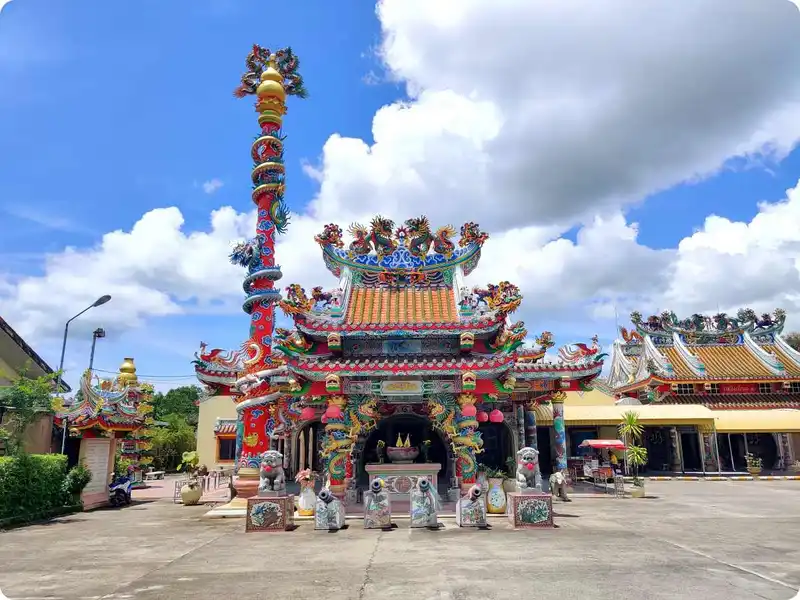
42. Trat City Pillar Shrine is located on Lak Mueang Road in Bang Phra Subdistrict, Mueang Trat District, near Wat Yothanimit. It is one of Thailand's most distinctive city pillar shrines because its main building follows Chinese architectural traditions rather than the more familiar Thai-style pavilion. The shrine is an important spiritual landmark for Trat residents and reflects the historical relationship between Thai and Chinese communities in this eastern coastal province.
History and Significance The shrine is closely associated with King Taksin the Great. Local historical tradition connects its establishment with the period when King Taksin gathered forces and supplies in Trat during his campaign to restore Siamese independence. The shrine is therefore remembered not only as a place of worship but also as a landmark linked to Trat's place in the country's history. Its Chinese-style character reflects the cultural influence of Chinese merchants and settlers in the town.
Architecture and Sacred Features The main shrine is designed as a Chinese-style pavilion decorated with auspicious symbols and traditional ornamental details. Inside are sacred objects associated with Chao Pho Lak Mueang, the guardian deity believed to protect the city. The building's Chinese roof forms and devotional arrangements distinguish it from the Thai-style city pillar shrines found in many other provinces.
Local Legends One well-known story concerns the period of French occupation in Trat. According to local legend, attempts were made to remove the sacred city pillar, but it resisted being uprooted. The story continues to be told as an expression of the community's belief in the protective power of the city's guardian spirit. It is best understood as a local tradition rather than independently established historical fact.
Annual Traditions and Ceremonies The shrine's annual Wan Phli Mueang ceremony, also known as Se Kong Sae Yid, is held on the sixth waxing-moon day of the sixth lunar month. It is regarded as a ceremonial birthday celebration for Chao Pho Lak Mueang. Chinese-style festivities associated with the shrine may also take place during the Chinese New Year period, reflecting Trat's long-standing Thai-Chinese cultural heritage.
How to Worship Visitors should begin at the principal guardian-deity worship point and follow the shrine's instructions for any additional sacred figures. Flowers, incense, candles, or fruit may be offered according to the Chinese-influenced devotional customs practiced here. The correct number of incense sticks should be confirmed from signs or shrine attendants rather than assumed from Thai-style city pillar ceremonies.
Recommended Offerings and Visitor Etiquette Flowers and fruit are suitable offerings when permitted by the shrine. Visitors should dress modestly, behave respectfully, avoid touching sacred objects, and leave sufficient space for other worshippers. During annual ceremonies, it is especially important not to obstruct processions or religious activities.
Getting There Travel into central Trat and follow Lak Mueang Road near Wat Yothanimit. The shrine can be visited together with Trat City Museum, Wat Buppharam, the old town, and traditional markets. Private cars, taxis, and local transportation provide convenient access.
Open Days: Daily
Opening Hours: 05:00 – 21:00
Address: Lak Mueang Road, Bang Phra, Mueang Trat, Trat, Thailand
Map (GPS):Google Maps – Trat City Pillar Shrine
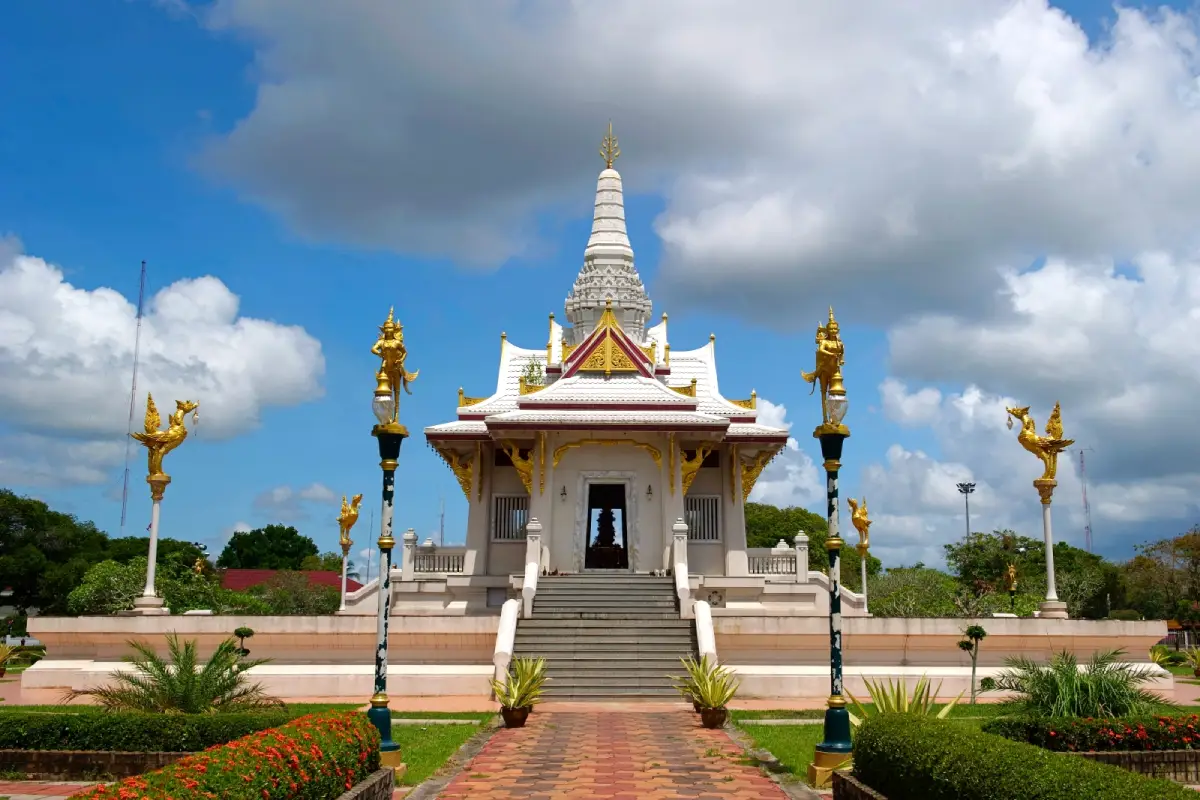
43. Yala City Pillar Shrine is situated on Phiphit Phakdi Road in front of Yala Provincial Hall, Sateng Subdistrict, Mueang Yala District. It occupies a prominent roundabout at the center of Yala's distinctive urban layout. The shrine serves as a sacred landmark, a civic symbol, and an important feature of the city's public landscape, surrounded by gardens, walkways, ornamental plants, and a pond.
History and Significance Yala's administrative center moved through several locations before the present urban area developed. The city pillar shrine represents the establishment of a stable modern civic center. Its foundation stone was laid on November 21, 1961. The city pillar's upper section received royal consecration on May 18, 1962, and the installation ceremony followed on May 25, 1962. These events are important milestones in the development of the shrine.
Architecture and City Planning The shrine is particularly interesting because it lies at the center of Yala's well-known spider-web street plan, where major roads radiate through a carefully organized urban network. The building takes the form of a four-sided pavilion, with entrances and stairways facing different directions. Its pale stone surfaces and decorative roof create a dignified landmark within the public garden setting.
The City Pillar The upper portion of the city pillar is made from chaiyaphruek wood and carved with the four-faced Brahma and a flame motif. Measuring approximately 50 centimeters in height, the carved section reflects Brahmanical symbolism concerning sacred protection and the auspicious foundation of the city.
Annual Traditions Yala holds an annual City Pillar Celebration and Red Cross Fair, generally from late May to early June. The event combines city pillar worship, ceremonial offerings, cultural performances, exhibitions, community activities, and public festivities. In 2026, the celebration took place from May 25 to June 4. Future dates should be checked with provincial organizers.
How to Worship Visitors should begin at the main shrine, present flowers or an appropriate offering, and pay respect to the city pillar. Some visitors also offer lamp oil according to the shrine's arrangements. Incense and candles should be used only at designated points, with quantities determined from the instructions displayed on-site.
Visitor Etiquette Dress respectfully, maintain a quiet atmosphere, and avoid touching the city pillar or decorative features. The surrounding garden is a public area, so visitors should help keep walkways clean and avoid obstructing other people using the space.
Getting There From central Yala, travel to the roundabout in front of the provincial hall on Phiphit Phakdi Road. The shrine is easy to recognize as a major urban landmark. Nearby attractions include Yala Learning Park, the railway station, local gardens, and important religious and cultural sites.
Open Days: Daily
Opening Hours: 08:00 – 18:30
Address: Phiphit Phakdi Road, in front of Yala Provincial Hall, Sateng, Mueang Yala, Yala, Thailand
Coordinates (Latitude, Longitude): 6.5425000, 101.2830556
Map (GPS):Google Maps – Yala City Pillar Shrine
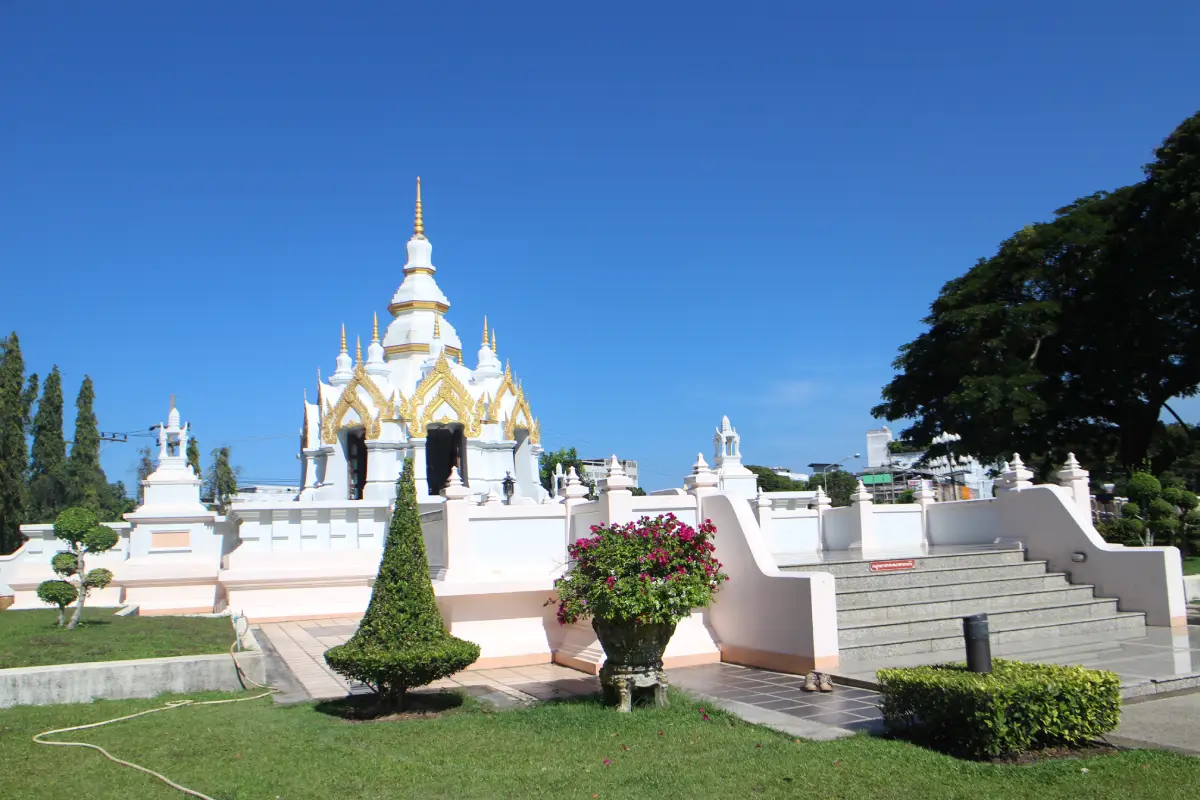
44. Pattani City Pillar Shrine is situated at Sak Seni Field in Sabarang Subdistrict, Mueang Pattani District, beside Benjamarachuthit School and opposite Pattani Provincial Hall. Located near the left bank of the Pattani River, it is an important sacred civic landmark in a province renowned for its multicultural history and long-standing connections with maritime trade.
History and Significance The shrine was established on May 13, 1951, during the governorship of Phraya Rattanaphakdi. Its city pillar represents the symbolic foundation and stability of the modern provincial capital. The shrine's position beside the river and civic center also reflects Pattani's historical development as an important settlement in the southern peninsula.
Architecture and Sacred Features The shrine has a white exterior with gold decorative details and a raised ceremonial base. Inside stands the city pillar, the main object of worship. Its relatively compact architectural form places emphasis on the sacred pillar and provides a quiet space for personal prayers and civic ceremonies.
Cultural Significance Pattani's heritage includes Malay, Thai, Chinese, Muslim, Buddhist, and other cultural influences. The city pillar shrine represents one component of this diverse landscape. Visitors should understand that the shrine is a place of devotion for those who follow its customs, rather than assuming that everyone in Pattani shares the same religious practices.
Traditions and Beliefs People visit the shrine for blessings relating to stability, good fortune, safety, and success in important activities. It also provides a place for ceremonies associated with provincial traditions and civic occasions.
How to Worship Begin by paying homage to the main city pillar, offering flowers or a floral garland, and making a personal prayer. Incense and candles should be used only in designated areas. Visitors should follow the guidance of shrine attendants if a formal ceremony is taking place.
Recommended Visit A cultural itinerary can continue from the shrine to Lim Ko Niao Shrine, Kue Da Chino Old Town, Pattani Central Mosque, Krue Se Mosque, and other historic sites. Respectful clothing and behavior are appropriate at all religious locations.
Getting There Travel to Sak Seni Field in central Pattani, opposite the provincial hall. The shrine can be reached by private car, taxi, motorcycle taxi, or local transport.
Open Days: Daily
Opening Hours: 08:00 – 17:00
Address: Sak Seni Field, Sabarang, Mueang Pattani, Pattani 94000, Thailand
Coordinates (Latitude, Longitude): 6.8693855271, 101.261343744
Map (GPS):Google Maps – Pattani City Pillar Shrine
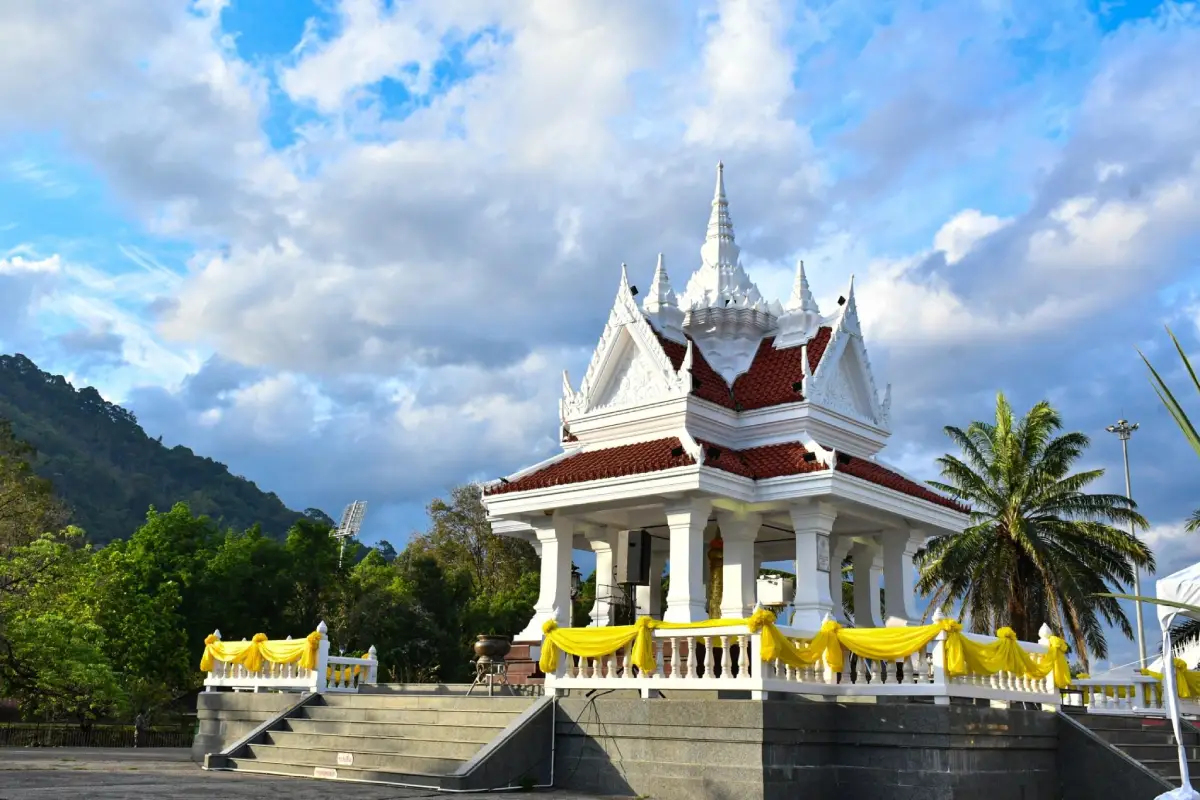
45. Ranong City Pillar Shrine stands on Phoemphon Road opposite Ranong Municipality Office in Khao Niwet Subdistrict, Mueang Ranong District. It is a prominent sacred landmark surrounded by the landscape of Ranong town, where mountains, canals, and historic administrative buildings are all part of the city's identity. The shrine is especially recognizable for its white Thai-style pavilion with four projecting gables and five spires.
History and Significance The project to establish the city pillar shrine began in 1987. A foundation-stone ceremony followed on February 21, 1988, and the city pillar was installed on July 21, 1990. The shrine officially opened on August 21, 1990. Its development represented the province's wish to create a sacred civic landmark and a spiritual gathering place for residents.
Architecture and Sacred Features The main building has a four-sided Thai pavilion design crowned by five spires. It is approximately six meters wide and six meters long, with a height of around 13.6 meters. The pillar itself is made of auspicious golden shower tree wood, with a rounded form and lotus-bud-shaped upper section. Naga figures and other decorative elements contribute to the ceremonial character of the setting.
Historical Connections The shrine is located near the monument to Phraya Damrong Sucharit Mahison Phakdi, better known as Kho Su Chiang, an important figure in Ranong's nineteenth-century development. His association with tin mining, trade, and the growth of the town adds an interesting historical dimension to a visit.
Traditions and Annual Ceremonies The shrine is a venue for annual city pillar worship and blessing ceremonies. Some activities are associated with wider provincial festivals, including events linked to Ranong's mineral springs and historic heritage. These ceremonies provide opportunities for residents to demonstrate civic unity and preserve local traditions.
How to Worship Visitors should enter the shrine respectfully, offer flowers or a garland at the main city pillar, and pray for stability, safety, and prosperity. Incense and candles should follow the site's regulations. Worshippers should avoid touching the sacred pillar or attaching ceremonial objects without permission.
Getting There From central Ranong, follow Phoemphon Road to Ranong Municipality Office. The shrine can be visited alongside the Kho Su Chiang Monument, Hat Som Paen Canal, Rattanarangsan Palace, and the town's historic streets.
Open Days: Daily
Opening Hours: 08:00 – 17:00
Address: Phoemphon Road, Khao Niwet, Mueang Ranong, Ranong 85000, Thailand
Coordinates (Latitude, Longitude): 9.962262, 98.640564
Map (GPS):Google Maps – Ranong City Pillar Shrine
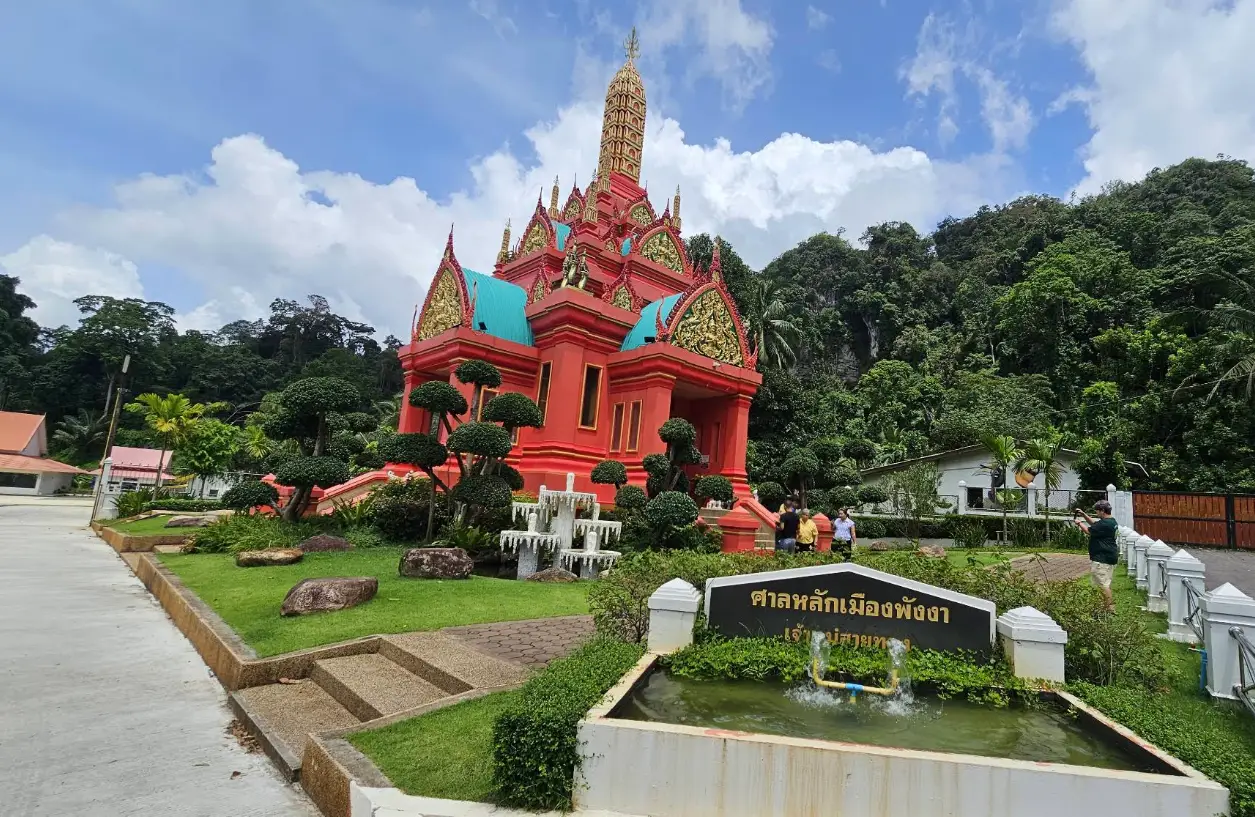
46. Phang Nga City Pillar Shrine (Chao Mae Sai Thong Shrine) is located along Phetkasem Road in Tham Nam Phut Subdistrict, Mueang Phang Nga District. The shrine combines the traditional concept of the city pillar with local devotion to Chao Mae Sai Thong, a guardian figure deeply connected with the cultural memory of the community. Its architectural character reflects influences from several southern Thai and historical artistic traditions.
History and Significance Phang Nga has a long history shaped by trade, mining, settlement, and its position on the Andaman coast. The city's guardian traditions developed within this environment, and Chao Mae Sai Thong became an important figure of local belief. The city pillar shrine represents both a civic sacred landmark and a place where the community continues to honor its protective guardian.
Architecture and Sacred Features The shrine features a four-sided building topped by five prang-like towers. Its design combines artistic influences associated with the Srivijaya, Khmer, Lopburi, and Rattanakosin periods. The unusual composition makes it a distinctive architectural landmark within Phang Nga town.
Legend of Chao Mae Sai Thong The shrine is linked with a local story concerning Chao Mae Sai Thong, remembered as a protective female spirit. The legend forms part of the cultural heritage of the region. Visitors should distinguish oral traditions and spiritual beliefs from independently documented historical events while recognizing their importance to the local community.
Annual Traditions An annual worship ceremony is associated with January 5, and the shrine also hosts a wider city pillar celebration. Activities may include religious ceremonies, cultural performances, traditional dances, community gatherings, and local products.
How to Worship Visitors can begin by paying respect to the main city pillar and Chao Mae Sai Thong at the designated points. Offer flowers or garlands and follow the local instructions for incense, candles, and any additional offerings. Do not touch sacred objects or decorative architectural surfaces without permission.
Getting There Travel along Phetkasem Road through Mueang Phang Nga toward the shrine area in Tham Nam Phut Subdistrict. A visit can be combined with Wat Tham Ta Pan, Phung Chang Cave, Khao Chang, and other natural and cultural attractions close to Phang Nga town.
Open Days: Daily
Opening Hours: 07:30 – 18:00
Address: Phetkasem Road, Tham Nam Phut, Mueang Phang Nga, Phang Nga, Thailand

47. Chao Pho Lak Mueang Li Shrine, Lamphun is located in Li District, Lamphun Province. It is an important spiritual landmark for residents of the district and represents a local tradition of honoring guardian spirits believed to protect the community. Although the shrine is included in a province-by-province collection of city pillar sites, it is specifically associated with the Li community rather than an independently confirmed provincial city pillar installed at Lamphun's administrative center.
History and Significance Li District has a cultural history connected with the settlements, temples, and travel routes of southern Lamphun. Local guardian shrines developed as places where residents expressed respect for the forces believed to safeguard their homes and the stability of their communities. The shrine remains an important part of this local cultural identity.
Architecture and Sacred Features The shrine provides a dedicated place for paying respect to Chao Pho Lak Mueang. Its religious importance lies in its continuing role within the community and the traditions practiced by local worshippers. The site should be appreciated within its own cultural context rather than judged solely by the monumental scale of provincial shrines elsewhere in Thailand.
Traditions and Beliefs Local residents visit for auspicious blessings before significant events, important journeys, and new undertakings. Prayers often concern protection, family well-being, prosperity, and peace within the community.
How to Worship Visitors should begin at the principal guardian worship area, offer flowers or a floral garland, and make a respectful personal prayer. Incense, candles, and any ceremonial offerings should follow the shrine's local customs and instructions.
Getting There Travel to Li District from Lamphun town or nearby districts, using local road connections. Once in the district center, follow local directions to Chao Pho Lak Mueang Li Shrine. A private vehicle is convenient for exploring temples and other cultural places in the wider district.
Open Days: Daily
Opening Hours: 06:00 – 18:00
Address: Li District, Lamphun, Thailand
48. Nakhon Ban Phetchabun City Pillar, Lom Sak District is a historical city pillar landmark associated with the development of Nakhon Ban Phetchabun in the Lom Sak area of Phetchabun Province. It should be distinguished from the Phetchabun Provincial City Pillar Shrine described in Location 39. The two places are connected with different aspects of the province's historical development and should not be presented as the same city pillar or treated as interchangeable destinations.
History and Significance The Lom Sak area played an important role in Phetchabun's regional development, including changes in administrative boundaries, settlement patterns, and the location of government institutions. The name Nakhon Ban Phetchabun is associated with historical plans and projects concerning the organization and development of the area. Its city pillar therefore has significance as a marker of this particular historical context.
Historical Distinction The stone pillar of the provincial shrine in Mueang Phetchabun, discussed in Location 39, is associated with the ancient city of Si Thep. The Nakhon Ban Phetchabun pillar has a different historical background connected with Lom Sak. Understanding this distinction is essential for travelers interested in both cultural history and accurate site identification.
Cultural Importance The pillar provides an opportunity to examine how the idea of a sacred city center can be associated with changing administrative ambitions and the memory of historical communities. Its significance is therefore not limited to religious practice but includes the history of the province's settlement and political development.
How to Worship Visitors may respectfully pay homage at the designated sacred point, offer flowers or a garland if permitted, and make a personal prayer. Do not touch historical surfaces or place offerings directly against the pillar without authorization.
Getting There Travel toward Lom Sak District in Phetchabun Province and confirm the precise location of the Nakhon Ban Phetchabun pillar before departure. Do not rely on the navigation pin for the provincial city pillar shrine in central Phetchabun, as this is a separate historical location.
Address: Lom Sak District, Phetchabun, Thailand
49. Inthakhin Pillar (Chiang Mai City Pillar) is a sacred Lanna city pillar preserved within Wat Chedi Luang Worawihan in the historic center of Chiang Mai. Known locally as Sao Inthakhin, the pillar occupies an important place in the spiritual and cultural identity of the city. It differs from many central Thai city pillar shrines in its relationship with Lanna cosmology, temple traditions, and annual ceremonies associated with the city's well-being.
History and Significance Chiang Mai was founded in 1296 by King Mangrai and became the center of the Lanna Kingdom. Traditional accounts connect the city's sacred pillar with its foundation and the protection of the settlement. Over time, the pillar became a central symbol of civic stability, and the rituals associated with it were incorporated into the religious calendar of Chiang Mai.
The Inthakhin Tradition The pillar's significance is associated with local beliefs about the spiritual foundation of the city and the relationship between the community and guardian forces. The annual Inthakhin Festival, commonly called the City Pillar Offering Festival, brings residents together to pay respect and renew their wishes for the prosperity of Chiang Mai.
Architecture and Sacred Setting The pillar is enshrined within Wat Chedi Luang, one of Chiang Mai's most important historic temples. The surrounding sacred architecture, including the monumental ancient chedi and associated shrines, provides a distinctive setting in which Lanna Buddhist traditions and older city guardian beliefs coexist.
Annual Festival and Ceremonies The Inthakhin Festival is held around the period of the sixth and seventh lunar months, generally falling in May or June. Worshippers traditionally offer flowers and participate in merit-making ceremonies. Festival dates vary from year to year, so visitors should check the current temple and municipal announcements.
How to Worship Visitors should follow the temple's designated worship arrangements. Flowers and other suitable offerings may be presented during authorized periods. The inner area housing the sacred pillar may have special access rules; these should be respected, including any restrictions based on temple tradition or the timing of ceremonies.
Visitor Etiquette Dress appropriately for a Buddhist temple, respect monks and worshippers, and avoid entering restricted areas. During the annual Inthakhin Festival, visitors should leave sufficient space for local participants and follow instructions regarding photography and offerings.
Getting There Travel to Wat Chedi Luang in the old walled city of Chiang Mai. The site is accessible on foot from many central attractions and by taxi, songthaew, or ride-hailing service from other parts of the city.
Address: Wat Chedi Luang Worawihan, Si Phum area, Mueang Chiang Mai, Chiang Mai, Thailand
Map (GPS):Google Maps – Inthakhin Pillar
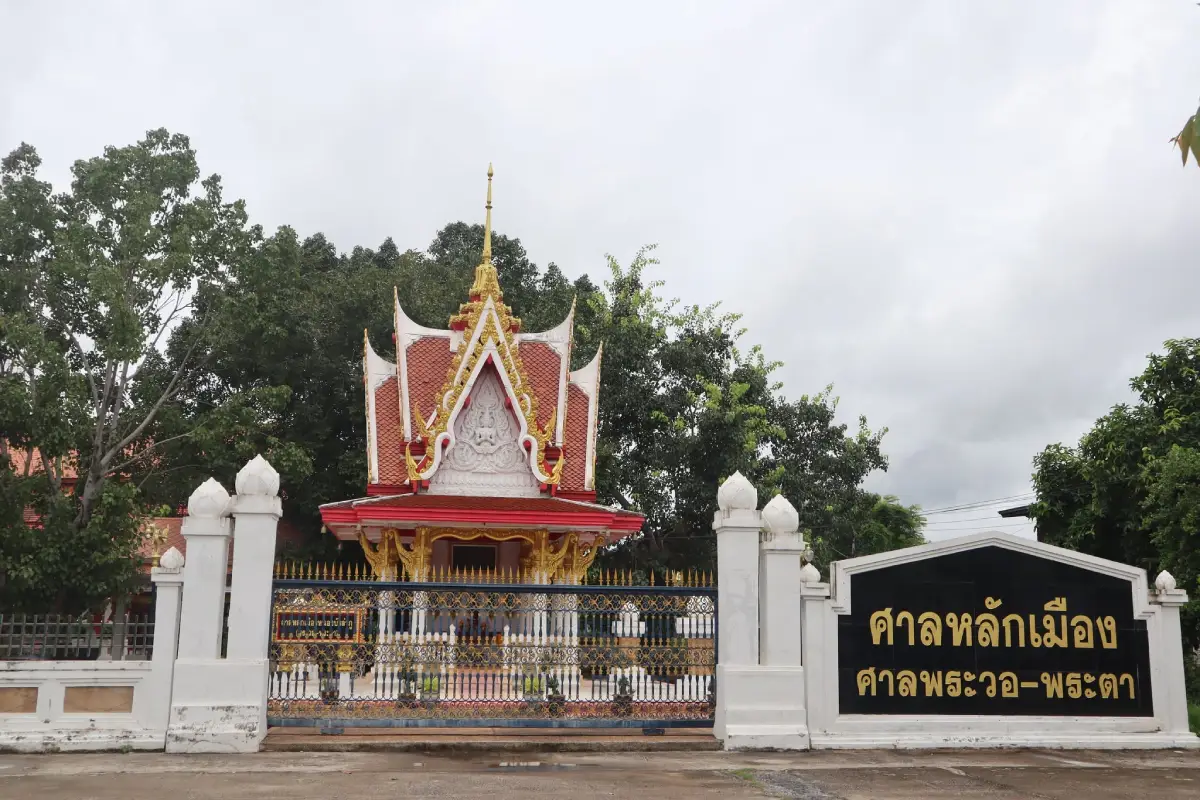
50. Phra Wo Phra Ta City Pillar Shrine, Nong Bua Lamphu is located in the Ban Klang area of Lamphu Subdistrict, Mueang Nong Bua Lamphu District. It is a sacred landmark associated with Phra Wo and Phra Ta, two historical figures remembered in local traditions as leaders and ancestral protectors connected with the development of the community.
History and Significance The shrine reflects the memory of the early settlement and defense of the Nong Bua Lamphu area. Phra Wo and Phra Ta are particularly important in the local historical narrative, and their names remain closely connected with the community's identity. The shrine provides a place where these memories are expressed through worship and civic ceremonies.
Guardian Traditions The worship of Phra Wo and Phra Ta illustrates how northeastern Thai communities honor ancestral leaders alongside city pillar and guardian-spirit traditions. These beliefs emphasize protection, unity, stability, and respect for those associated with the foundation of local settlements.
Architecture and Sacred Features The shrine contains worship areas dedicated to the sacred figures associated with the city's historical memory. The arrangement reflects local devotional customs and the relationship between important community leaders and protective beliefs.
How to Worship Visitors should follow the shrine's prescribed sequence, pay respect to Phra Wo and Phra Ta, and offer flowers or garlands according to local customs. Incense and candles should be used only where permitted, and the quantities should follow the guidance provided at the shrine.
Visitor Etiquette Respect the sacred figures and the people participating in local ceremonies. Avoid touching devotional objects or placing unauthorized offerings near them. A visit is most meaningful when the shrine's history is understood in its local context.
Getting There Travel to the Ban Klang area of Lamphu Subdistrict in Mueang Nong Bua Lamphu District. Private vehicles and local transport are suitable for reaching the shrine and exploring nearby attractions in the province.
Open Days: Daily
Opening Hours: 07:00 – 18:00
Address: Ban Klang, Lamphu, Mueang Nong Bua Lamphu, Nong Bua Lamphu, Thailand

51. Uthai Thani City Pillar Shrine is situated in front of Uthai Thani Provincial Hall on Si Uthai Road in Uthai Mai Subdistrict, Mueang Uthai Thani District. It is an important place of worship for residents and a symbolic landmark associated with the modern administrative center of the province. The shrine occupies a prominent urban location and can be visited alongside the historic streets and riverside communities of Uthai Thani.
History and Significance The provincial city pillar shrine was established in 1993 as a sacred civic landmark representing the stability and prosperity of Uthai Thani. Its development reflects the continuing tradition of installing city pillars in provincial centers and providing a common place for ceremonial worship.
Architecture and Important Sacred Objects The shrine features a Thai-style pavilion housing the principal city pillar. Architectural ornamentation and the ceremonial arrangement reflect traditional ideas concerning auspiciousness, guardianship, and the symbolic center of the city.
Traditions and Beliefs Residents visit the shrine to pray for safety, good fortune, successful work, and family well-being. The city pillar also represents a connection with the province's historical development as a town in the Sakae Krang River basin.
How to Worship Visitors can offer flowers or garlands at the designated point and make a respectful personal prayer. Incense, candles, and other ritual offerings should follow the shrine's instructions. Avoid touching the pillar or ceremonial objects without permission.
Getting There Travel along Si Uthai Road toward Uthai Thani Provincial Hall in the town center. A visit can be combined with the Sakae Krang River area, traditional riverside communities, and important temples in Uthai Thani.
Open Days: Daily
Address: In front of Uthai Thani Provincial Hall, Si Uthai Road, Uthai Mai, Mueang Uthai Thani, Uthai Thani, Thailand

52. Phra Pradaeng City Pillar Shrine, Samut Prakan is located in Talat Subdistrict, Phra Pradaeng District, Samut Prakan Province. It is a historic city pillar shrine associated with the former city of Nakhon Khuean Khan, an important defensive settlement established near the Chao Phraya River in the early Rattanakosin period. The shrine has particular historical significance because it represents an older urban center rather than the present administrative center of Samut Prakan Province.
History and Significance Phra Pradaeng developed as a strategic river settlement during the reign of King Buddha Loetla Nabhalai, or King Rama II. Its historic city pillar was established in 1813 as part of the town's foundation and defensive development. The city became closely connected with Mon communities, river transportation, and the fortifications built to protect the approach to Bangkok.
Architecture and Sacred Features The shrine preserves a city pillar associated with a carved figure of Ganesha above the pillar. This distinctive detail reflects Brahmanical influences within Thai city-founding traditions. The shrine's significance lies in its combination of historical civic identity, traditional guardianship, and the religious symbolism of an auspicious city foundation.
Local Culture Phra Pradaeng is particularly well known for its Mon heritage and its distinctive Songkran celebrations. The city pillar shrine can be understood within this wider cultural landscape, where temples, local communities, historic streets, and traditional festivities preserve the area's identity.
How to Worship Visitors should pay respect to the principal sacred pillar and follow the shrine's customs for any accompanying sacred figure. Flowers or a floral garland are suitable offerings. Incense and candles should be used only at designated points. The pillar and its carved decoration should not be touched without authorization.
Getting There Travel to the historic center of Phra Pradaeng District, using local roads connecting the Chao Phraya River communities. The shrine may be visited together with the old town, Mon cultural landmarks, and other historic sites in Phra Pradaeng.
Open Days: Daily
Opening Hours: 06:00 – 18:00
Address: Talat, Phra Pradaeng District, Samut Prakan, Thailand
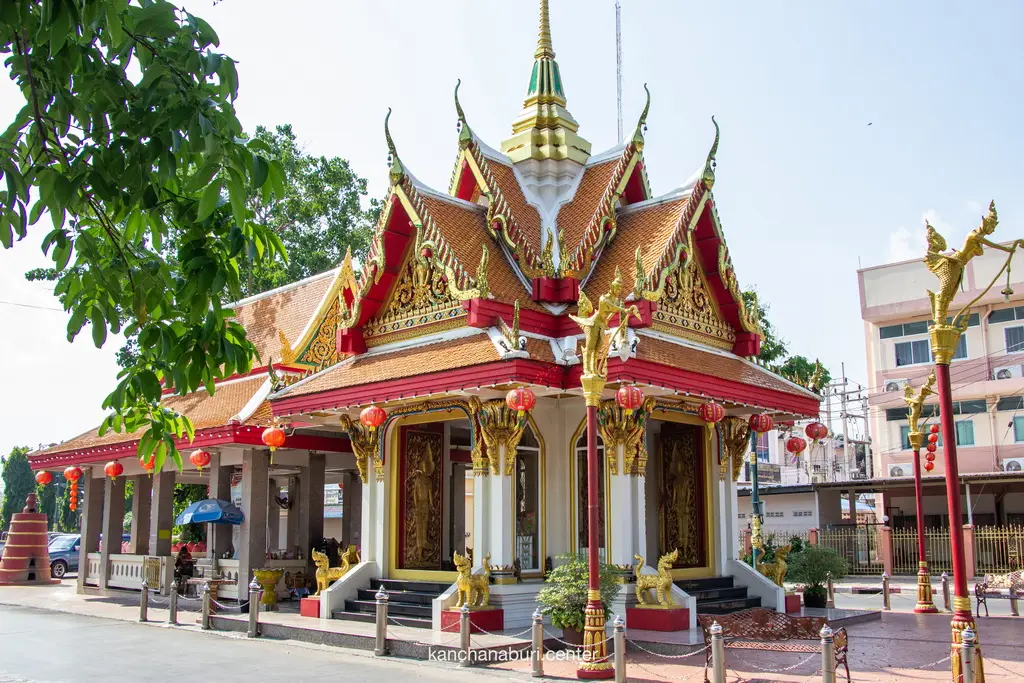
53. Kanchanaburi City Pillar Shrine stands on Lak Mueang Road in Pak Phraek Subdistrict, Mueang Kanchanaburi District, close to the historic city gate and the monument to King Rama III. It is an important sacred landmark that connects local religious traditions with the history of Kanchanaburi as a strategic frontier city.
History and Significance The establishment of the present city center is associated with the reign of King Nangklao, or King Rama III, in 1831. The development of defensive walls, a city gate, and a new administrative center reflected Kanchanaburi's strategic position along routes leading toward the western frontier. The city pillar represents the symbolic and spiritual foundation of this historical settlement.
Construction and Restoration The present shrine building was constructed in 1960. Its continued preservation reflects the importance of the city pillar to local residents and provincial identity. The shrine provides a ceremonial location where historical traditions of city founding remain part of public life.
Architecture and Historical Objects The shrine is built in the Thai chaturamuk style, with four projecting gables and an ornate roof. Inside is a gilded city pillar, together with inscriptions on sandstone and teakwood associated with the site's history. The nearby historic city gate adds further value to the surrounding heritage landscape.
Annual Traditions Kanchanaburi holds an annual city pillar worship and celebration associated with the sixth waxing-moon day of the sixth lunar month. In 2026, celebrations took place from April 23 to May 4. Ceremonial dates may differ in future years and should be checked with local organizers.
How to Worship Begin by paying respect to the principal city pillar. Flowers or garlands are appropriate offerings, and incense and candles may be used where permitted. Visitors can then examine the historic inscriptions and nearby city gate without touching or damaging the surviving heritage objects.
Visitor Etiquette Do not apply gold leaf to inscriptions or historic surfaces unless expressly allowed. Keep ceremonial areas clear and respect other worshippers. The surroundings are part of a historic urban landscape and should be treated accordingly.
Getting There Travel to Lak Mueang Road in the Pak Phraek area of central Kanchanaburi. The shrine is near the historic city gate and King Rama III Monument. Other attractions that can be included in the same city itinerary include the Kanchanaburi Skywalk, Wat Chai Chumphon Chana Songkhram, and riverside cultural sites.
Open Days: Daily
Opening Hours: 05:00 – 20:00
Address: Lak Mueang Road, Pak Phraek, Mueang Kanchanaburi, Kanchanaburi 71000, Thailand
54. Mae Hong Son: Two Local City Pillar Sites Mae Hong Son Province has two locally significant city pillar or guardian sites included in this collection: one in Mae Sariang District and another in Pai District. They reflect the different histories of the province's communities and should be treated as separate places rather than as two names for a single shrine.
54.1 Chao Pho Lak Mueang Mae Sariang Shrine is an important spiritual landmark for the people of Mae Sariang District, Mae Hong Son Province. It preserves local traditions of paying respect to the guardian spirit associated with the town and offers a meaningful cultural stop for travelers exploring the historical settlements of the Yuam River valley.
History and Cultural Significance Mae Sariang developed along regional trade and travel routes linking northern Thai communities with settlements beyond the western mountains. The worship of guardian spirits forms part of the local cultural landscape, together with Buddhist temples, community traditions, and historical settlement patterns. The shrine represents a place where these beliefs remain active.
How to Worship Visitors may pay respect to Chao Pho Lak Mueang at the designated worship area, offer flowers or garlands, and make personal prayers for auspiciousness and protection. Incense and other offerings should follow local instructions.
Getting There Travel to the central area of Mae Sariang District and follow local directions to the guardian shrine. A visit may be combined with the town's temples and heritage attractions.
54.2 Pai District City Pillar is another local sacred landmark in Mae Hong Son Province. Associated with the Pai community, it is an example of how individual towns maintain their own symbolic centers and protective traditions independently of the provincial administrative capital.
History and Significance Pai is a historic settlement with strong connections to the mountainous landscape and regional trading routes of northern Thailand. The local city pillar represents the town's spiritual identity and the belief that a community benefits from an auspicious protective center.
How to Worship Visitors should respectfully pay homage at the pillar, offer flowers if permitted, and avoid touching or modifying the sacred structure. Ceremonial practices should follow the advice of local caretakers.
Getting There The city pillar is associated with the area near Pai District Office. Travelers can reach central Pai by road from Chiang Mai or Mae Hong Son and continue on foot or by local transport.
Map (GPS):Google Maps – Pai City Pillar
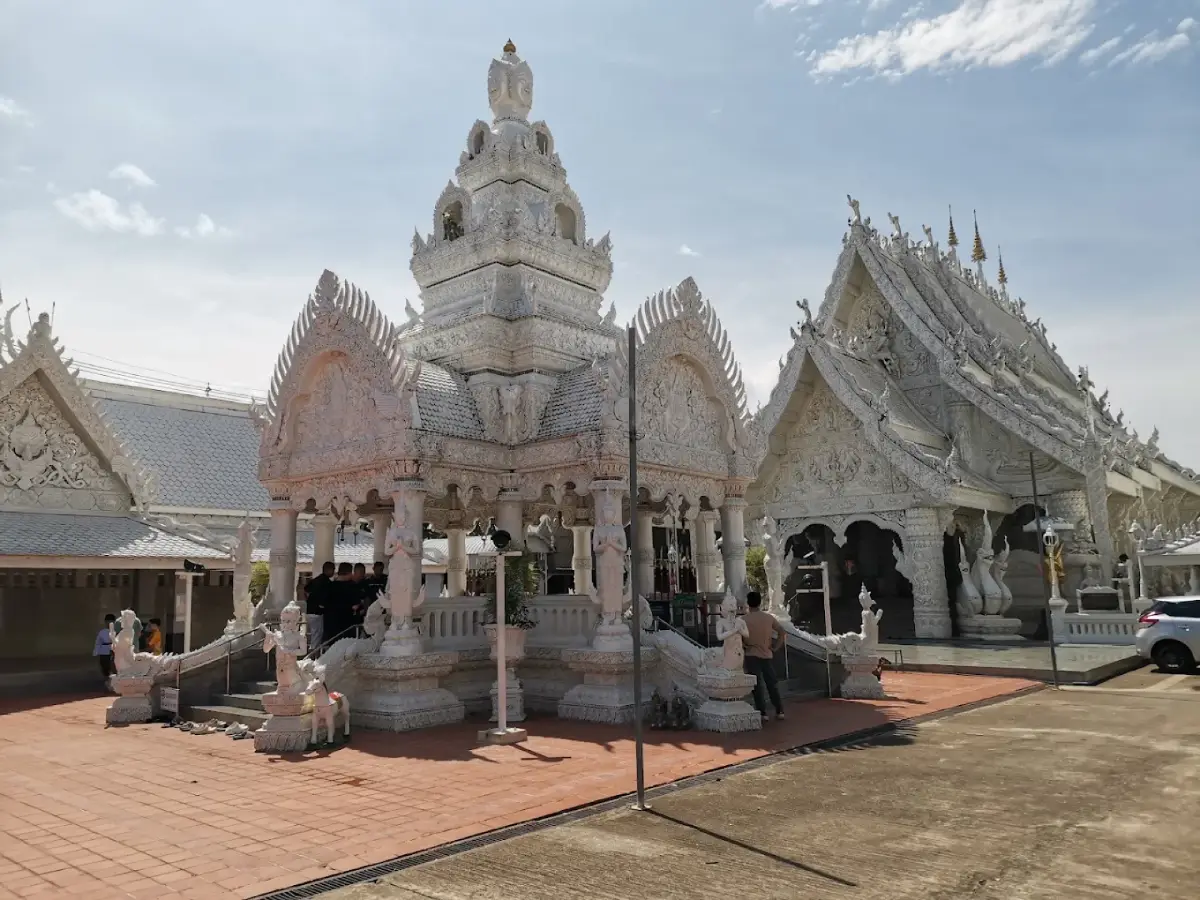
55. Nan City Pillar (Sao Ming Mueang) is located within Wat Ming Mueang on Suriyapong Road in Nai Wiang Subdistrict, Mueang Nan District. The pillar represents an important sacred center of the historic city of Nan and is associated with traditional northern beliefs in a protective city foundation. Its location inside a Buddhist temple creates a cultural setting where the worship of the city pillar and Buddhist devotional practices coexist.
History and Significance The city pillar is associated with the historical development of Nan in the late eighteenth century, around 1788. Nan was an important northern principality, and the city's sacred pillar represents the continuity of its civic identity through different periods of political and cultural change.
Architecture and Important Sacred Objects The pillar is approximately three meters tall and made of teak. Its upper section features a four-faced Brahma figure, reflecting traditional cosmological symbolism. Wat Ming Mueang is also notable for its richly decorated white architectural surfaces and detailed sculptural ornamentation, making the site a popular destination for visitors interested in northern Thai art.
Traditions and Beliefs The pillar is known locally as Sao Ming Mueang and is revered as a sacred symbol of the city's stability. Residents pay respect to the pillar for protection, good fortune, and family well-being. The shrine remains an important element of Nan's cultural and spiritual identity.
How to Worship Visitors should dress appropriately for a Buddhist temple and pay respect to the city pillar at the designated point. Flowers or a garland may be offered, followed by a personal prayer. Visitors may also pay respect to the temple's Buddha images according to their beliefs.
Visitor Etiquette Do not touch the carved pillar or delicate white decorative surfaces. Photography should be considerate, and visitors should respect temple ceremonies and any posted restrictions.
Getting There Travel to Wat Ming Mueang on Suriyapong Road in central Nan. The location is accessible by private vehicle, bicycle, or local transport and can be combined with visits to Wat Phumin, Wat Phra That Chang Kham, and Nan National Museum.
Open Days: Daily
Opening Hours: 06:00 – 17:00
Address: Wat Ming Mueang, Suriyapong Road, Nai Wiang, Mueang Nan, Nan, Thailand
Coordinates (Latitude, Longitude): 18.774632, 100.769246
Map (GPS):Google Maps – Nan City Pillar
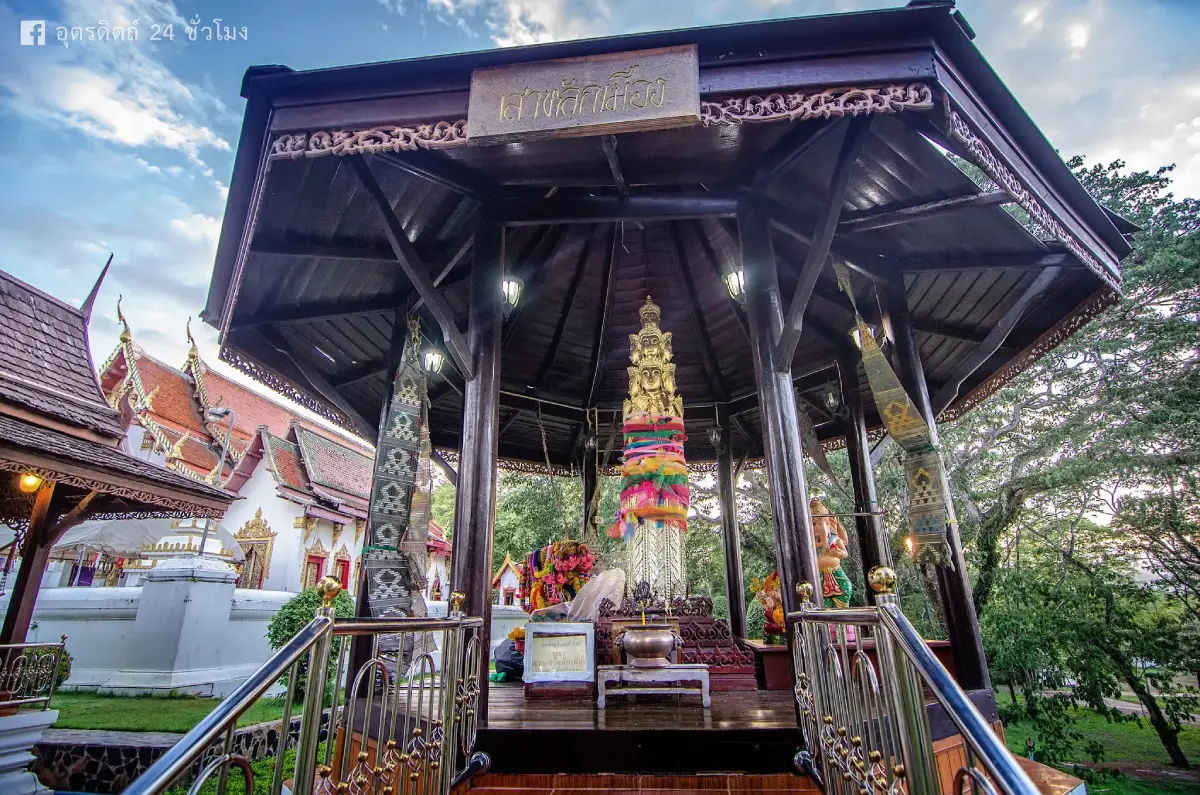
56. Uttaradit Replica City Pillar at Wat Phra Thaen Sila At is located within Wat Phra Thaen Sila At in Thung Yang Subdistrict, Laplae District, Uttaradit Province. It is a replica city pillar maintained in a significant Buddhist temple complex. The site should be described accurately as a replica rather than as a completed provincial city pillar shrine in the administrative center of Uttaradit.
History and Significance The replica city pillar is associated with the local wish to preserve the symbolism of the city's sacred foundation. Its location at Wat Phra Thaen Sila At also connects it with one of Uttaradit's important religious landmarks. The separate project to establish a provincial city pillar shrine in Mueang Uttaradit was still under development in the October 2026 source information used for this article.
Religious Setting Wat Phra Thaen Sila At is an important Buddhist pilgrimage site with its own religious history and annual traditions. The replica pillar should therefore be appreciated within the broader context of the temple, rather than presented as the principal reason for the temple's historical significance.
How to Worship Visitors may pay respect to the replica city pillar and the temple's principal sacred objects according to local customs. Flowers or garlands are suitable where permitted, while incense and candles should be used only at designated points. Temple rules and ceremonial activities should be respected.
Important Distinction Because the pillar is a replica, visitors should not confuse this site with a formally completed provincial city pillar shrine. Anyone seeking the official shrine should check the current construction and opening status with Uttaradit provincial authorities before traveling.
Getting There Travel from Uttaradit town toward Laplae District, then follow signs to Wat Phra Thaen Sila At in Thung Yang Subdistrict. The temple is accessible by private car and local hired vehicle.
Open Days: Daily
Opening Hours: 08:00 – 17:00
Address: Wat Phra Thaen Sila At, Thung Yang, Laplae District, Uttaradit, Thailand
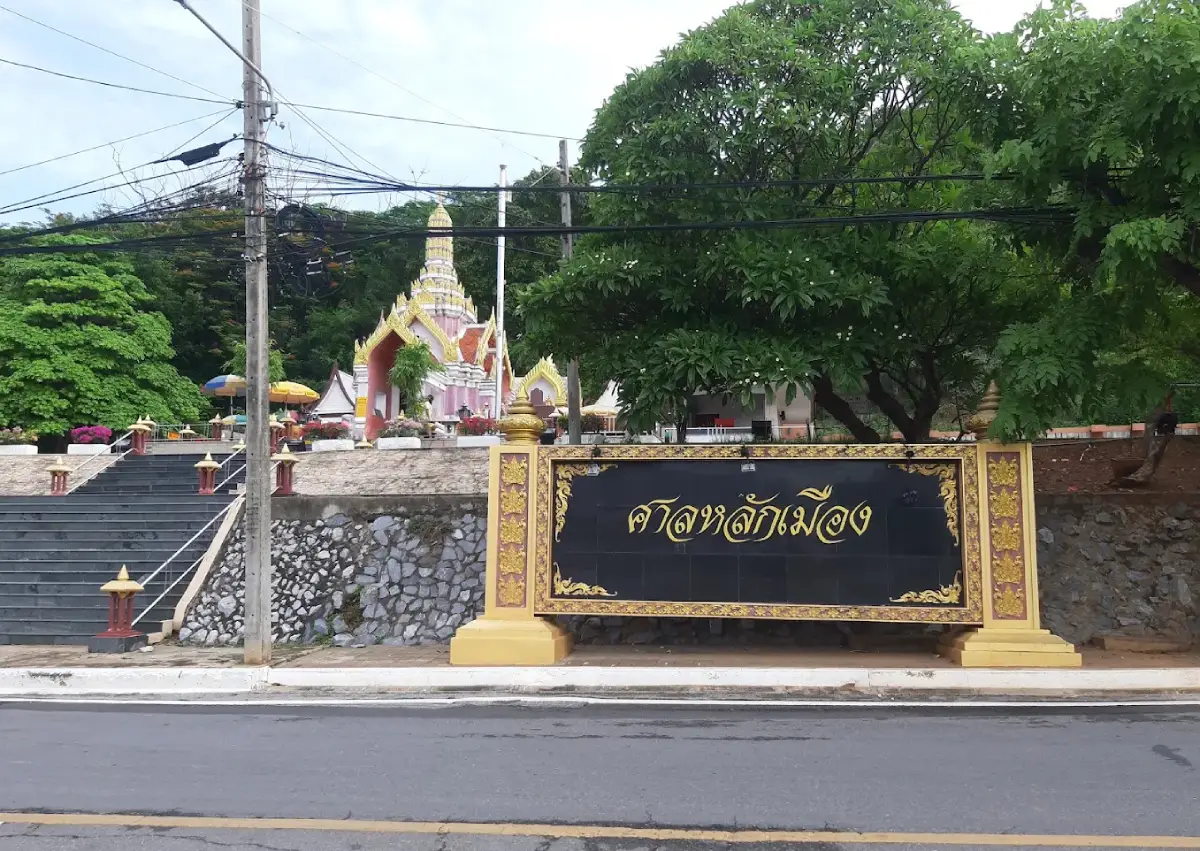
57. Nakhon Sawan City Pillar Shrine is located near Khao Kop on Amarinwithee Road in the Pak Nam Pho area of Mueang Nakhon Sawan District. It is an important sacred landmark of the province and a spiritual center for residents of the city where the Ping and Nan rivers meet to form the Chao Phraya River. Its location near Khao Kop also connects it with one of Nakhon Sawan's distinctive natural and cultural landmarks.
History and Significance The city pillar was installed on January 4, 1974, as part of the development of a provincial sacred landmark. The ceremony reflected the traditional belief that the city should possess a spiritual foundation symbolizing stability, safety, and prosperity. Since then, the shrine has remained an important place where local residents pay respect during personal and community occasions.
Architecture and Sacred Features The shrine houses a city pillar made from ratchaphruek wood, a species traditionally associated with auspiciousness and victory. The sacred pillar is the focus of worship, while the surrounding structure provides a formal place for offerings and ceremonies.
Annual Traditions Nakhon Sawan City Pillar Shrine is associated with annual worship and celebration activities during the Songkran period. These occasions bring together local residents and representatives of the community to express respect for the guardian spirit of the city.
How to Worship Visitors should begin by paying respect to the principal city pillar, offering flowers or garlands, and making a personal prayer for safety, family happiness, career progress, and auspicious beginnings. Incense and candles should follow the shrine's own instructions.
Visitor Etiquette Dress respectfully and avoid touching the pillar or ceremonial decoration. During Songkran celebrations or other organized events, visitors should allow space for official rituals and other worshippers.
Getting There Travel to Amarinwithee Road in central Nakhon Sawan, using Khao Kop as a nearby landmark. The shrine can be combined with visits to Wat Khiri Wong and other cultural attractions around Pak Nam Pho.
Open Days: Daily
Opening Hours: 07:00 – 17:00
Address: Amarinwithee Road, near Khao Kop, Pak Nam Pho, Mueang Nakhon Sawan, Nakhon Sawan, Thailand
Coordinates (Latitude, Longitude): 15.712971, 100.132929
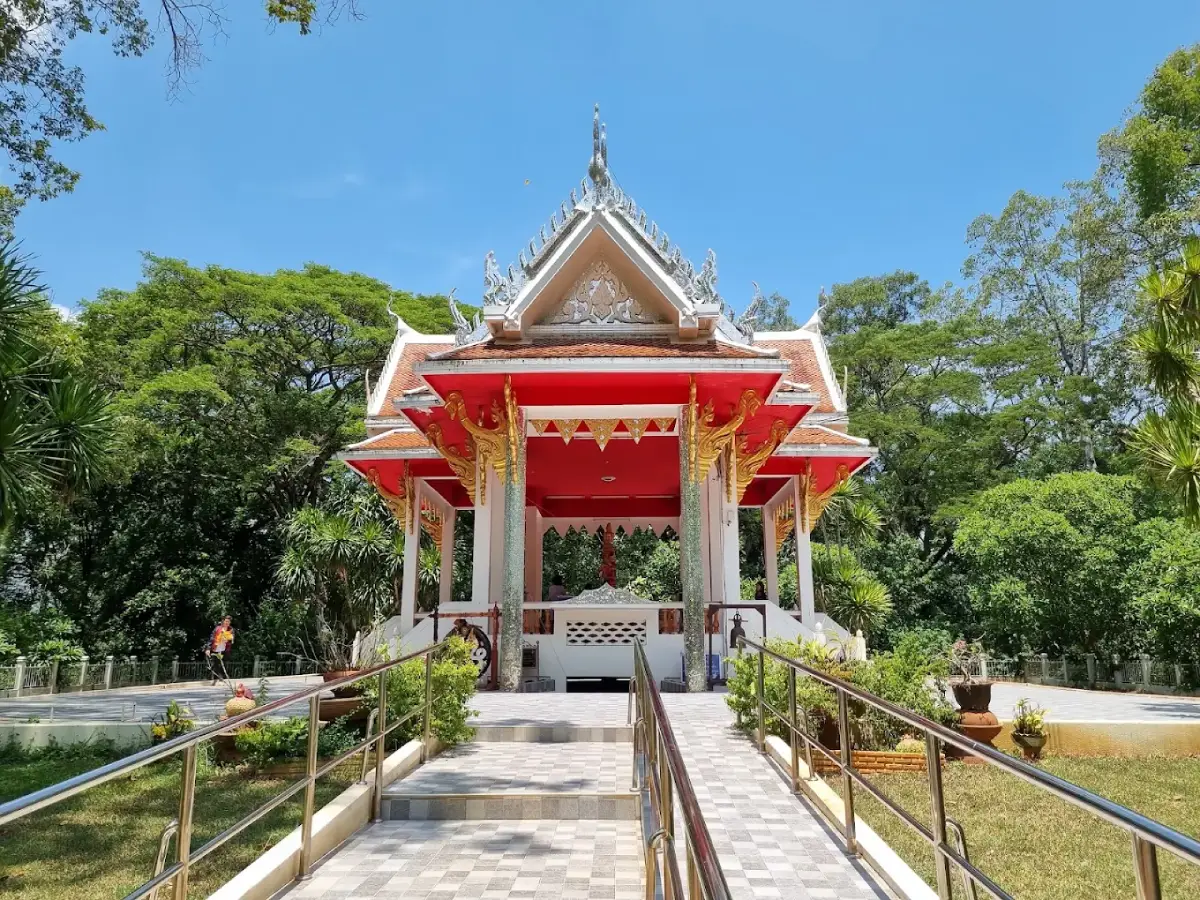
58. Phichit City Pillar Shrine is located within Old Phichit Historical Park in Mueang Phichit District. The shrine is an important sacred landmark connected with the history of Phichit as an old river-basin settlement. One particularly distinctive feature is its two-level architectural arrangement, which places the city pillar on the upper level and a figure associated with Phraya Khot Tabong Thewarat on the lower level.
History and Significance The historic city of Phichit developed along important waterways and was connected with regional trade, settlement, and administration during several periods of Thai history. The city pillar shrine preserves the symbolic idea of a sacred urban center, while its location within the old city park allows visitors to connect the worship of the city guardian with the physical remains of the historic settlement.
Architecture and Important Sacred Objects The shrine is designed with two levels. The upper floor is dedicated to the city pillar, while the lower floor contains a figure of Phraya Khot Tabong Thewarat, a locally revered historical or legendary guardian figure. This arrangement makes the shrine distinctive because visitors encounter two related but separate aspects of local sacred tradition within one building.
Local Beliefs The city pillar is associated with protection, stability, and prosperity, while the veneration of Phraya Khot Tabong Thewarat reflects the importance of local historical memory and guardian traditions. Visitors should recognize the different meanings of the two worship areas rather than treating them as identical sacred objects.
How to Worship Visitors should follow the shrine's recommended sequence for paying respect to the city pillar on the upper floor and Phraya Khot Tabong Thewarat on the lower floor. Flowers or garlands may be presented at the designated offering stations. Incense and candles should follow the instructions posted at each location.
Visitor Etiquette Respect the shrine and surrounding archaeological landscape. Avoid touching sacred objects or historical features. Take care on stairs when moving between floors, particularly during periods of heavy visitor traffic.
Getting There Travel from central Phichit toward Old Phichit Historical Park, then follow signs to the city pillar shrine within the historic area. The visit can be combined with other features of the park to gain a better understanding of the former city.
Open Days: Daily
Opening Hours: 08:00 – 17:00
Address: Old Phichit Historical Park, Mueang Phichit, Phichit, Thailand
Map (GPS):Google Maps – Phichit City Pillar Shrine
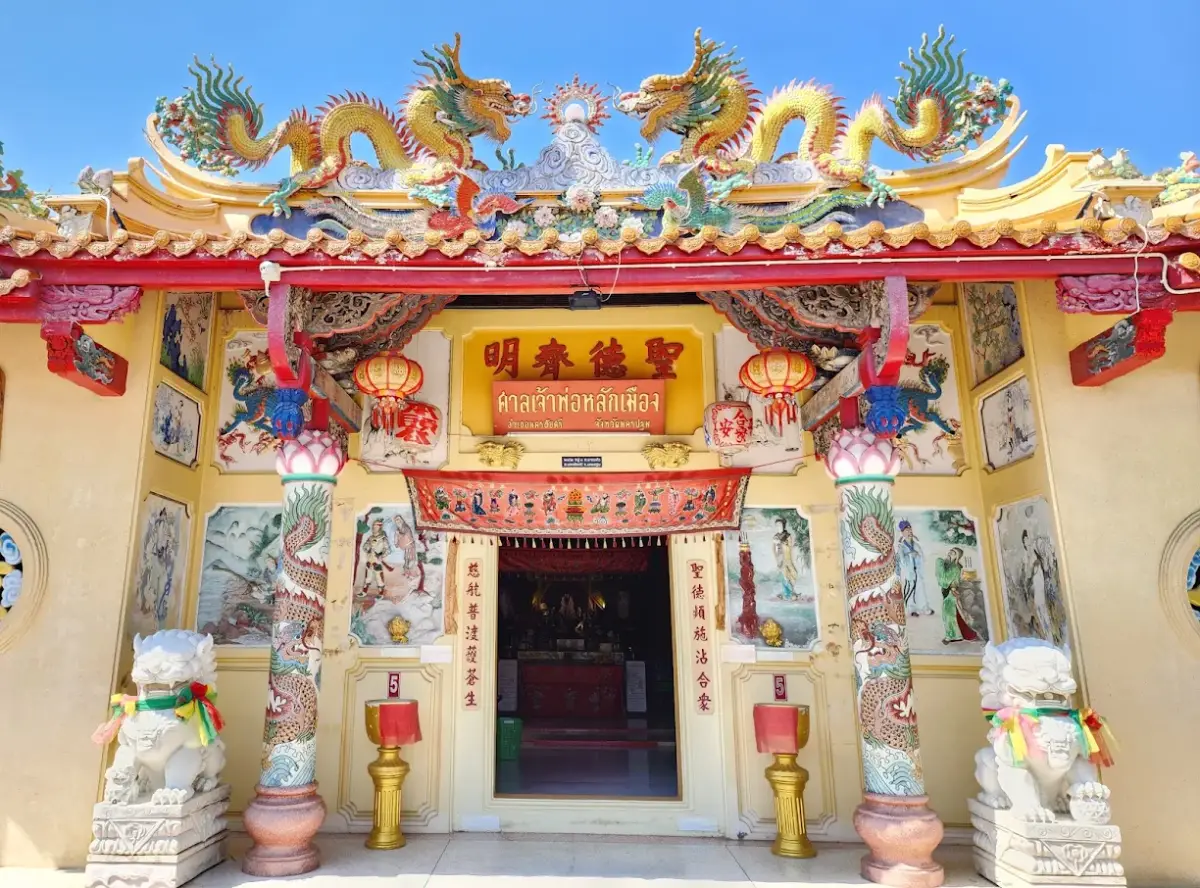
59. Chao Pho Lak Mueang Nakhon Chai Si Shrine, Nakhon Pathom is located in Bang Kaeo Subdistrict, Nakhon Chai Si District, Nakhon Pathom Province, near the Bang Kaeo Canal. It is a historic Chinese-influenced guardian shrine associated with the local community and the development of riverside settlements. Although included in this collection of city pillar and guardian sites across Thailand, it should be identified as a community guardian shrine rather than automatically described as an officially established provincial city pillar shrine.
History and Significance The shrine is associated with local accounts of a sacred pillar discovered in the waters of Bang Kaeo Canal. According to community tradition, residents retrieved the pillar and later established a place where it could be respected as a sacred guardian of the settlement. The story reflects the importance of waterways in the formation of communities and the relationship between spiritual belief and the historical development of Nakhon Chai Si.
Architecture and Sacred Features The shrine is influenced by Chinese religious architecture, with decorative roof forms, auspicious symbols, and worship areas associated with Chao Pho Lak Mueang and other sacred figures. These features reflect the presence of Thai-Chinese communities involved in trade and settlement along the waterways of Nakhon Pathom.
Traditions and Beliefs Residents pay respect to the guardian deity for the well-being of their families, successful trading activities, and protection of the community. The shrine remains connected with local offerings, devotional practices, and ceremonial traditions.
How to Worship Begin at the principal guardian-deity worship point and follow the local sequence for additional sacred figures. Flowers, fruit, incense, and other offerings may be used according to the shrine's customs. Visitors should ask attendants about the correct number of incense sticks rather than applying the ritual practices of Thai-style provincial shrines.
Visitor Etiquette Keep the worship area quiet, avoid touching sacred images or ceremonial objects, and use incense and candles only at designated stations. Be considerate when parking or walking through the surrounding residential community.
Getting There From Bangkok, travel toward Nakhon Chai Si District using Borommaratchachonnani Road or Phetkasem Road. Continue to Bang Kaeo Subdistrict and the canal-side community, using the shrine's local name for navigation.
Open Days: Daily
Address: Moo 1, Bang Kaeo, Nakhon Chai Si District, Nakhon Pathom 73120, Thailand
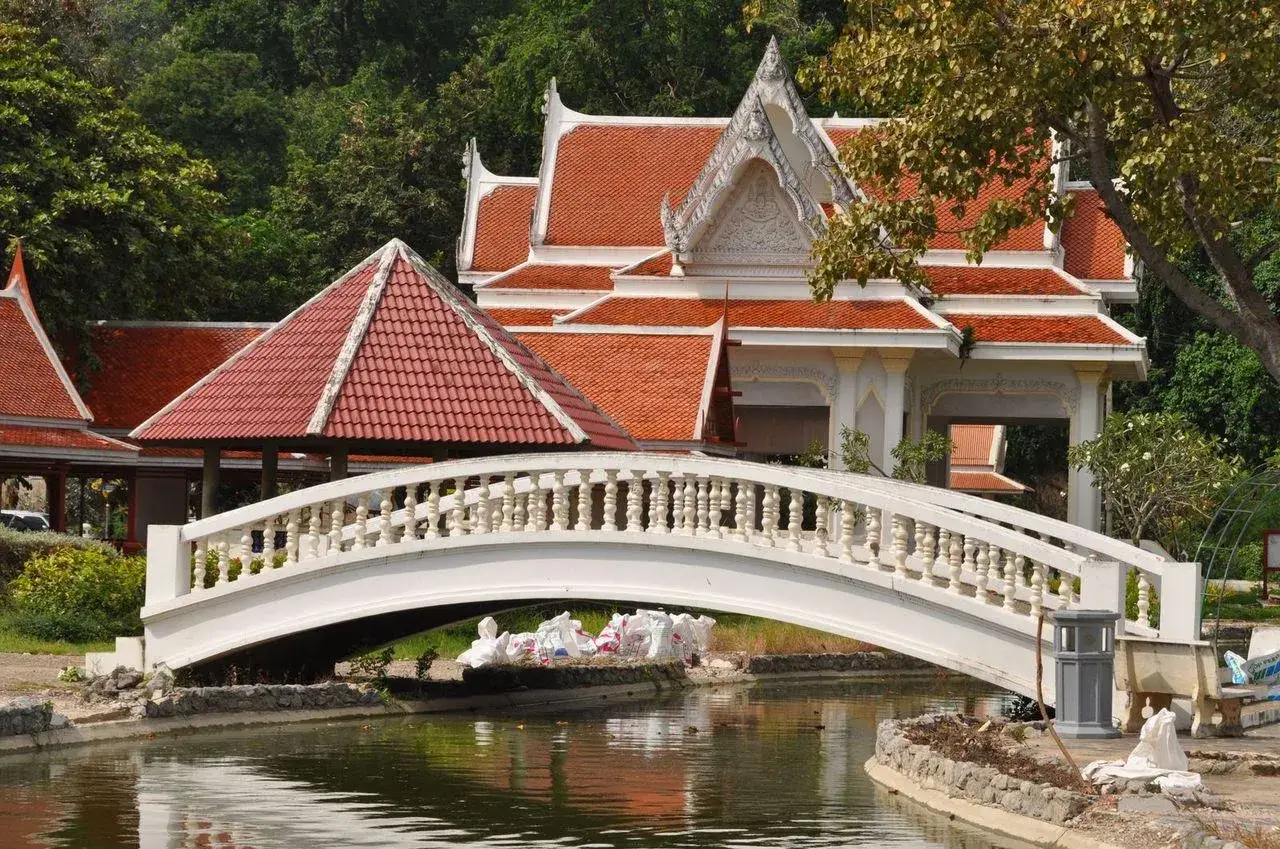
60. Phetchaburi City Pillar Shrine stands near the foot of Khao Wang, or Phra Nakhon Khiri, in Khlong Krachaeng Subdistrict, Mueang Phetchaburi District. It is an important sacred landmark and a distinctive example of traditional Thai shrine architecture, set within a landscaped environment of gardens, pathways, and water features. Its location near the historic palace complex makes it a convenient starting point for exploring the architectural and cultural heritage of Phetchaburi.
History and Significance Phetchaburi is a historic city with a long tradition of settlement, craftsmanship, and religious art. Its city pillar shrine was constructed in 1976, reflecting the continuing belief that a provincial capital should possess a sacred center symbolizing protection, stability, and auspiciousness.
Architecture and Important Sacred Objects The shrine was designed by the Fine Arts Department and features a white building crowned with traditional red-tiled roofs, chofa ornaments, bai raka roof elements, and gold decorative details. The principal city pillar is enshrined within the main pavilion. The surrounding landscaped grounds create an attractive setting for both worship and architectural appreciation.
Cultural Importance Phetchaburi is widely known for its skilled traditional craftsmen, temple architecture, decorative stucco, and historic royal buildings. The city pillar shrine belongs to this broader artistic landscape. Its architectural design offers visitors an opportunity to appreciate the continued use of traditional forms in twentieth-century civic sacred monuments.
Traditions and Beliefs People visit the shrine to pray for career advancement, family stability, good fortune, and protection during important journeys. City pillar worship may also form part of official ceremonies on significant provincial occasions.
How to Worship Visitors should enter the main pavilion respectfully, present flowers or a garland at the authorized point, and pay homage to the city pillar. Incense and candles should be used only where permitted. The decorative architecture and garden features should be treated with care.
Getting There Travel along Phetkasem Road toward central Phetchaburi and follow signs to Khao Wang or Phra Nakhon Khiri Historical Park. The shrine is situated near the foot of the hill and can be combined with visits to the historic palace and nearby temples.
Open Days: Daily
Opening Hours: 08:00 – 17:00
Address: Khao Wang area, Khlong Krachaeng, Mueang Phetchaburi, Phetchaburi 76000, Thailand
Coordinates (Latitude, Longitude): 13.111830, 99.939610
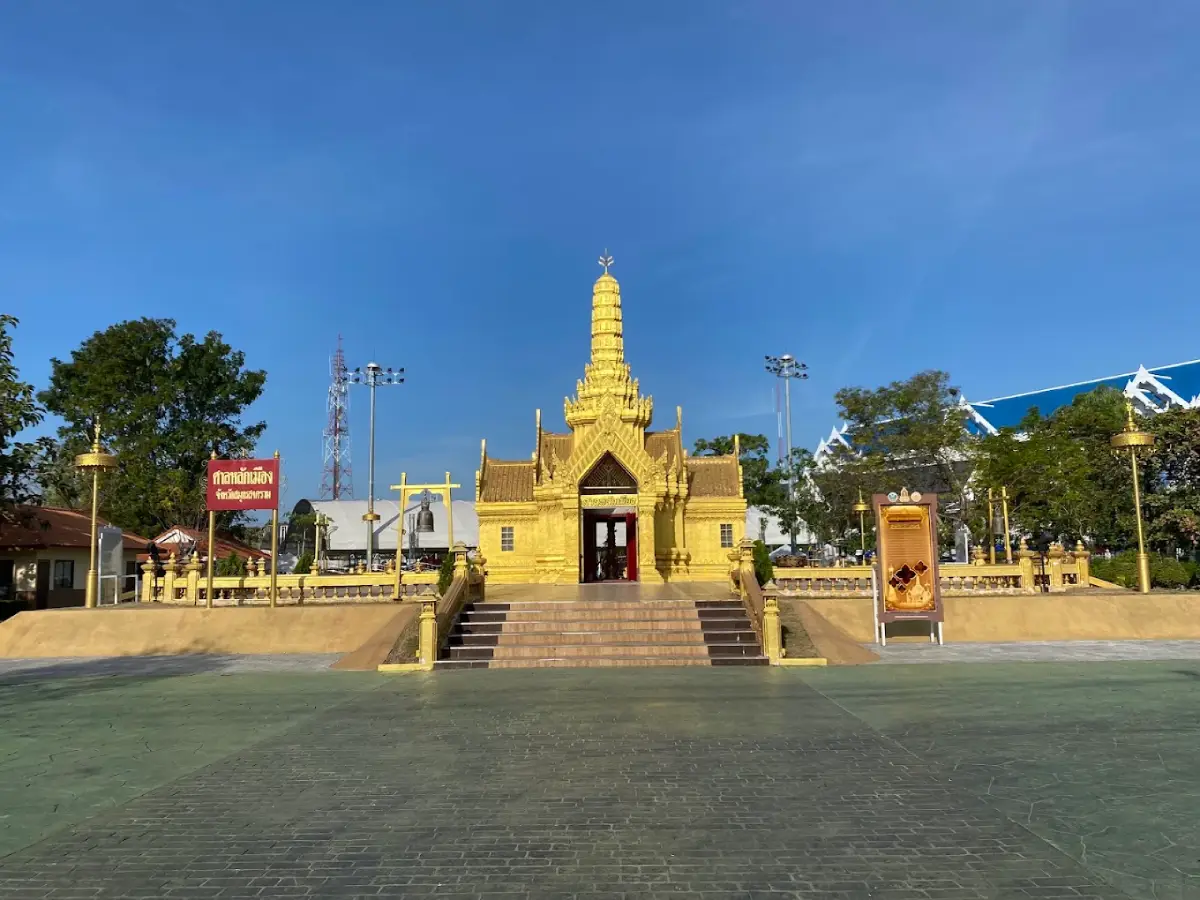
61. Samut Songkhram City Pillar Shrine is located in front of Samut Songkhram Provincial Hall on Ekkachai Road in Mae Klong Subdistrict, Mueang Samut Songkhram District. It is a sacred landmark of the province and an important symbol of the communities that developed around the Mae Klong River. The shrine is particularly recognizable for its golden Thai-style four-gabled pavilion and its position within the provincial administrative center.
History and Significance The present shrine was established in 1974 to provide a sacred civic landmark representing the stability and protection of Samut Songkhram. The province has a rich history connected with river trade, orchards, canals, and traditional markets. The city pillar reflects the symbolic importance of the urban center within this wider river-based cultural landscape.
Architecture and Important Sacred Objects The shrine is built as a Thai chaturamuk pavilion with four entrances, two tiers of roofing, and a decorative upper tower. The exterior features gold and yellow tones associated with auspiciousness. Inside stands a city pillar made from chaiyaphruek wood, approximately 108 inches or 2.74 meters high.
Traditions and Ceremonies The shrine is associated with official worship and blessing ceremonies conducted on important provincial occasions. Residents pay their respects and seek blessings for the safety, prosperity, and peaceful development of the community.
How to Worship Visitors should begin at the main city pillar worship point and offer fresh flowers or garlands. A personal prayer for auspiciousness, career success, or family well-being may follow. Incense, candles, and ceremonial offerings should be used according to the site's regulations.
Visitor Etiquette Dress modestly, maintain a quiet atmosphere, and respect the shrine's sacred objects and architectural surfaces. Visitors should avoid obstructing access to the provincial administrative offices and should use authorized parking areas.
Getting There From Bangkok, travel along Rama II Road toward Samut Songkhram and continue to Ekkachai Road in central Mae Klong. The shrine stands in front of the provincial hall and can be combined with a visit to the Mae Klong Railway Market and other cultural attractions in the town.
Open Days: Daily
Opening Hours: 06:00 – 18:00
Address: Ekkachai Road, in front of Samut Songkhram Provincial Hall, Mae Klong, Mueang Samut Songkhram, Samut Songkhram 75000, Thailand
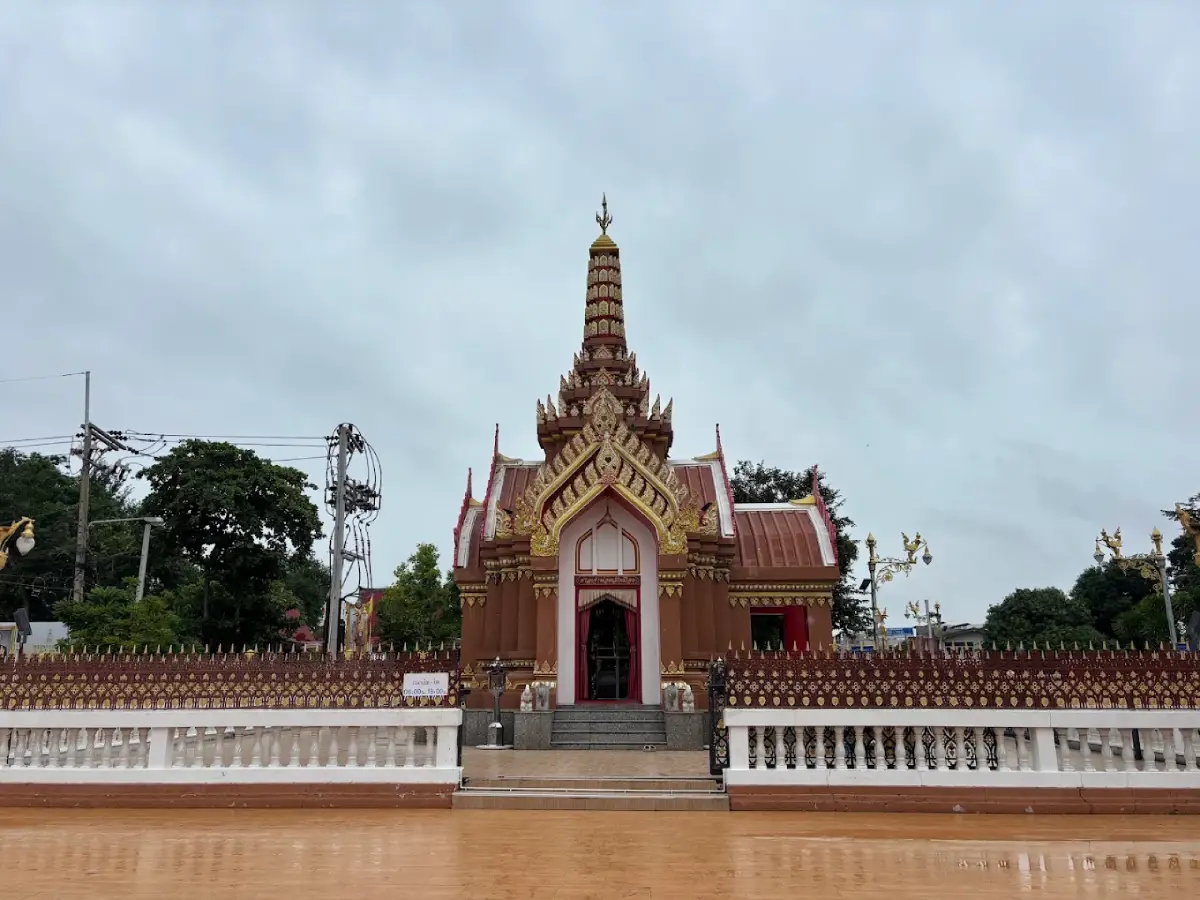
62. Saraburi City Pillar Shrine is located on Phichai Ronnarong Songkhram Road within the Mueang Saraburi District Office compound, formerly the site of the provincial hall, in Pak Phriao Subdistrict, Mueang Saraburi District. This sacred landmark preserves a link between Saraburi's city-founding traditions and its changing administrative center. One of its notable features is the presence of both an older city pillar and a newer pillar, reflecting different periods in the city's history.
History and Significance Saraburi developed during the Ayutthaya period and later experienced administrative changes as its population and transport routes expanded. The movement of the city center toward Pak Phriao during the Rattanakosin era made the present area increasingly important. The city pillar shrine represents the continuing belief in an auspicious civic center despite such geographical and administrative changes.
Architecture and Important Sacred Objects The shrine contains the older and newer city pillars within a traditional Thai religious setting. The two pillars provide a tangible connection between the preservation of the city's earlier traditions and the development of its modern administrative identity. Visitors should distinguish between the pillars and follow the worship arrangements established for each one.
Traditions and Beliefs Local residents pay respect to the city pillars for prosperity, family well-being, safety, and success in important undertakings. The shrine is also associated with civic occasions and ceremonies that express respect for the spiritual foundations of the community.
How to Worship Visitors should approach the shrine respectfully and follow the designated sequence for the older and newer city pillars. Flowers or floral garlands may be offered at the appropriate points. Incense and candles should be used only according to instructions displayed at the shrine. There is no need to assume that both pillars require identical offerings.
Visitor Etiquette Dress appropriately, avoid touching the pillars, and keep the offering areas clean. Because the shrine stands within a government compound, visitors should respect administrative activities, entrances, and parking restrictions.
Getting There Travel into central Saraburi and follow Phichai Ronnarong Songkhram Road toward the Mueang Saraburi District Office and the former provincial hall. The shrine can be combined with cultural sightseeing in the town and nearby historical temples.
Open Days: Daily
Opening Hours: 06:00 – 18:00
Address: Phichai Ronnarong Songkhram Road, Pak Phriao, Mueang Saraburi, Saraburi 18000, Thailand
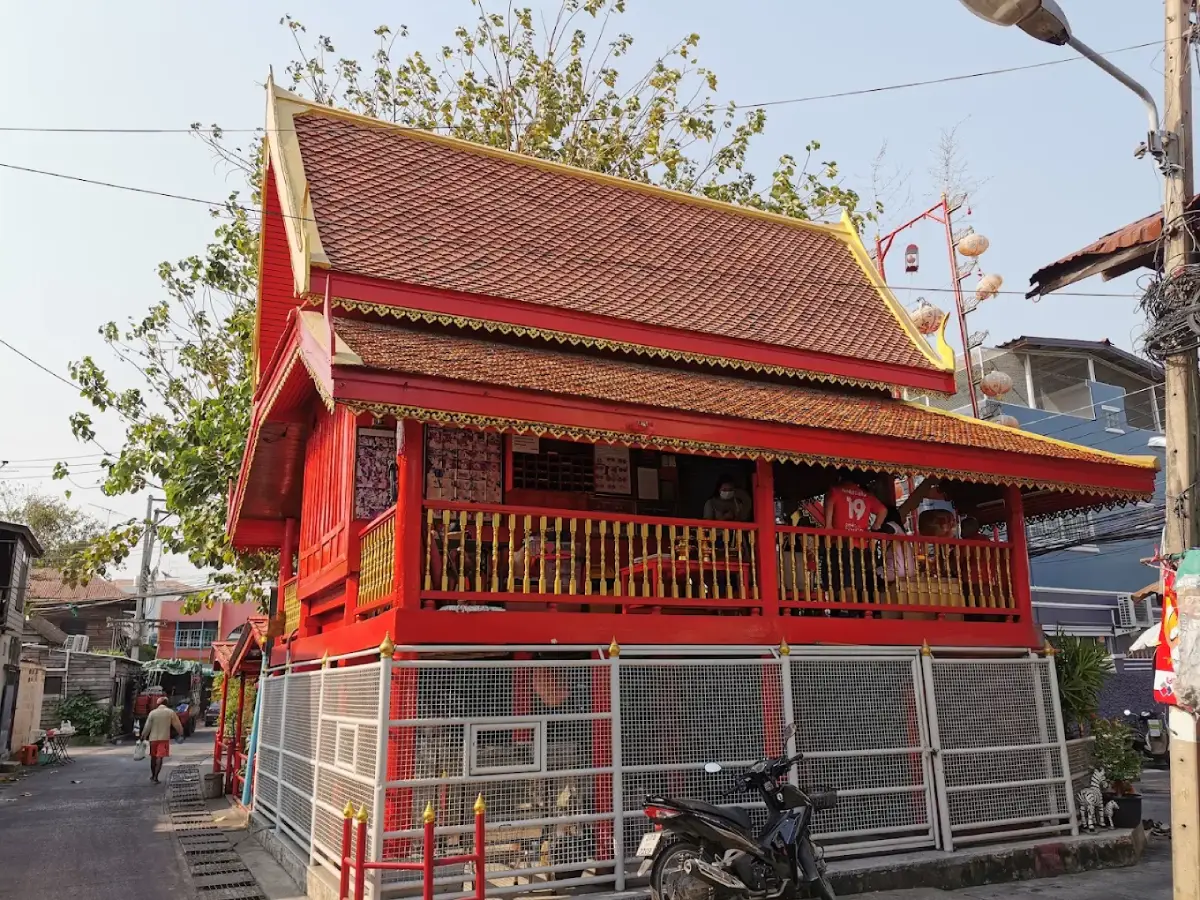
63. Chonburi City Guardian Shrine (Chao Pho Lak Mueang Siri Maha Mongkhon Chonburi) is located in the Thikhamak Lane area of Bang Pla Soi Subdistrict, Mueang Chonburi District, near Wat Yai Intharam. It is a long-established guardian shrine associated with the spiritual traditions and history of Bang Pla Soi, a historic coastal community that developed through fishing, trade, and transport along the eastern Gulf of Thailand.
History and Significance Bang Pla Soi was an important settlement in the historical development of Chonburi. Its commercial activities and coastal connections created a multicultural environment in which Thai and Chinese devotional traditions became closely intertwined. The worship of Chao Pho Lak Mueang represents the community's continuing belief in a protective guardian and the stability of the town.
Architecture and Sacred Features The shrine's character reflects the traditions of a local guardian sanctuary rather than simply following the form of a royal Thai city pillar pavilion. Its religious decorations and worship arrangements express the history of community devotion. Visitors should recognize the distinction between a historically respected guardian shrine and an officially established provincial pillar.
Traditions and Beliefs Worshippers visit for blessings concerning safety, family prosperity, successful business activities, and the peaceful development of the community. The shrine is also important during local ceremonies and other occasions when residents gather to honor their guardian deity.
How to Worship Pay respect to the principal guardian figure at the designated point. Flowers, fruit, incense, or candles may be offered according to the shrine's instructions. Because the site has Thai-Chinese cultural associations, the number of incense sticks and sequence of worship should follow local practice rather than the procedures of a conventional city pillar shrine.
Visitor Etiquette Dress respectfully, remain quiet during prayers, and avoid touching sacred images or decorative objects. The shrine is located in an established urban community, so visitors should also respect neighboring residents and avoid obstructing local roads.
Getting There Travel to Bang Pla Soi in central Chonburi and continue toward Thikhamak Lane near Wat Yai Intharam. The shrine can be included in a walking or driving itinerary exploring old Chonburi's temples, traditional streets, and markets.
Open Days: Daily
Opening Hours: 05:00 – 17:00
Address: Thikhamak Lane, Bang Pla Soi, Mueang Chonburi, Chonburi 20000, Thailand
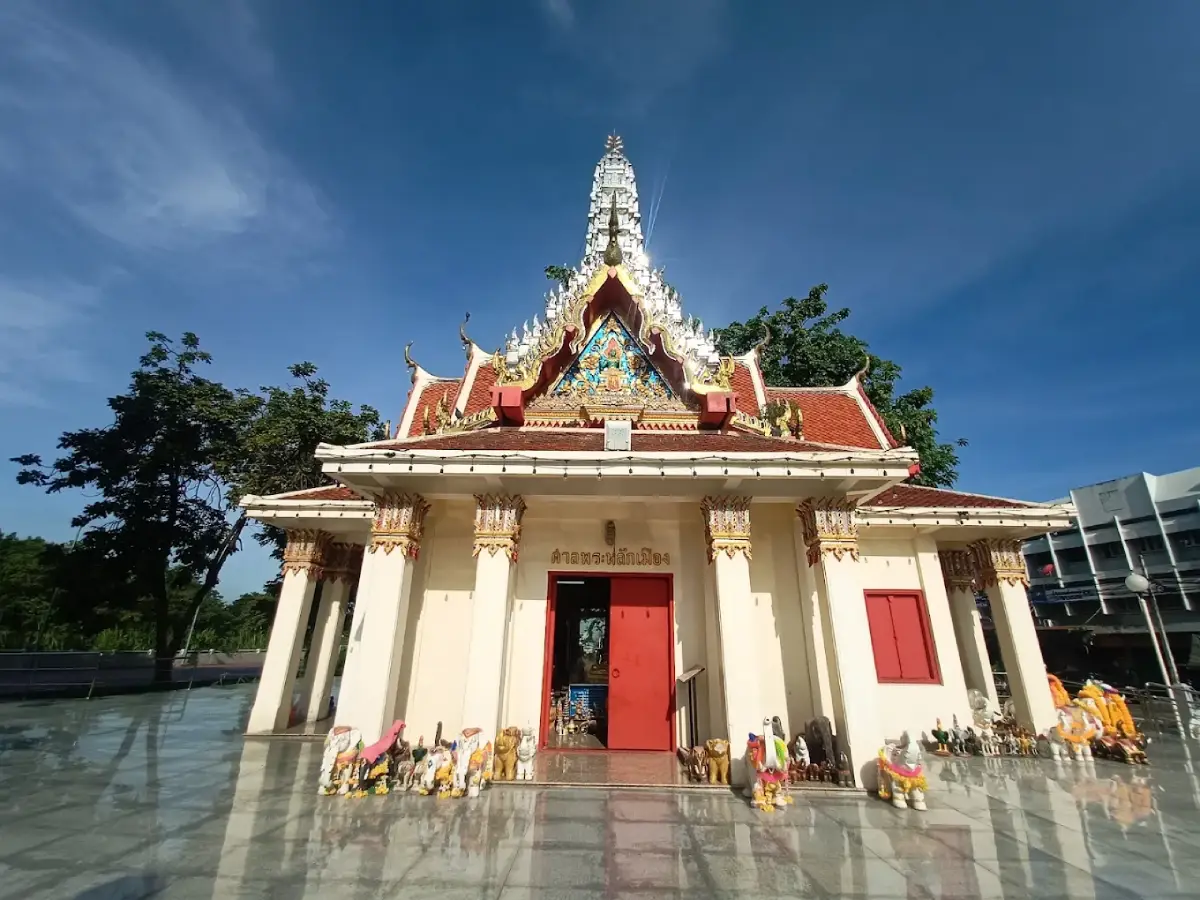
64. Prachin Buri City Pillar Shrine stands on Prachin Anuson Road beside the Prachin Buri River, opposite Thetsaban Soi 1, in Na Mueang Subdistrict, Mueang Prachin Buri District. Its riverside location is a distinctive characteristic, connecting the shrine with the historical waterways that supported commerce, communication, and settlement in the province.
History and Significance The city's pillar tradition is associated with the establishment of a shrine and the installation of a city pillar in 1872 during the reign of King Chulalongkorn, or King Rama V. The site represents the continuing importance of the spiritual foundation of the town and its role as a provincial civic landmark.
Architecture and Sacred Features The shrine features a four-sided traditional Thai pavilion housing a city pillar made from auspicious chaiyaphruek wood. Its setting near the river provides an attractive combination of architectural heritage and the natural landscape of the historic town.
Traditions and Beliefs Residents pay their respects for family stability, good fortune, safety, and success in business or employment. The river setting gives the shrine an additional connection with the everyday history of communities that depended upon waterways for generations.
How to Worship Begin at the principal city pillar, offer flowers or a garland at the authorized worship point, and make a personal prayer. Incense and candles should be used only where permitted. Visitors should not attach items directly to the pillar without permission.
Visitor Etiquette Dress modestly and maintain a respectful atmosphere. Take care when walking near the riverside, particularly during wet weather or periods of high water.
Getting There From central Prachin Buri, follow Prachin Anuson Road toward the riverside area opposite Thetsaban Soi 1. The shrine is accessible by private car or local transport and can be combined with other attractions around the historic town.
Open Days: Daily
Opening Hours: 08:00 – 17:00
Address: Prachin Anuson Road, Na Mueang, Mueang Prachin Buri, Prachin Buri 25000, Thailand
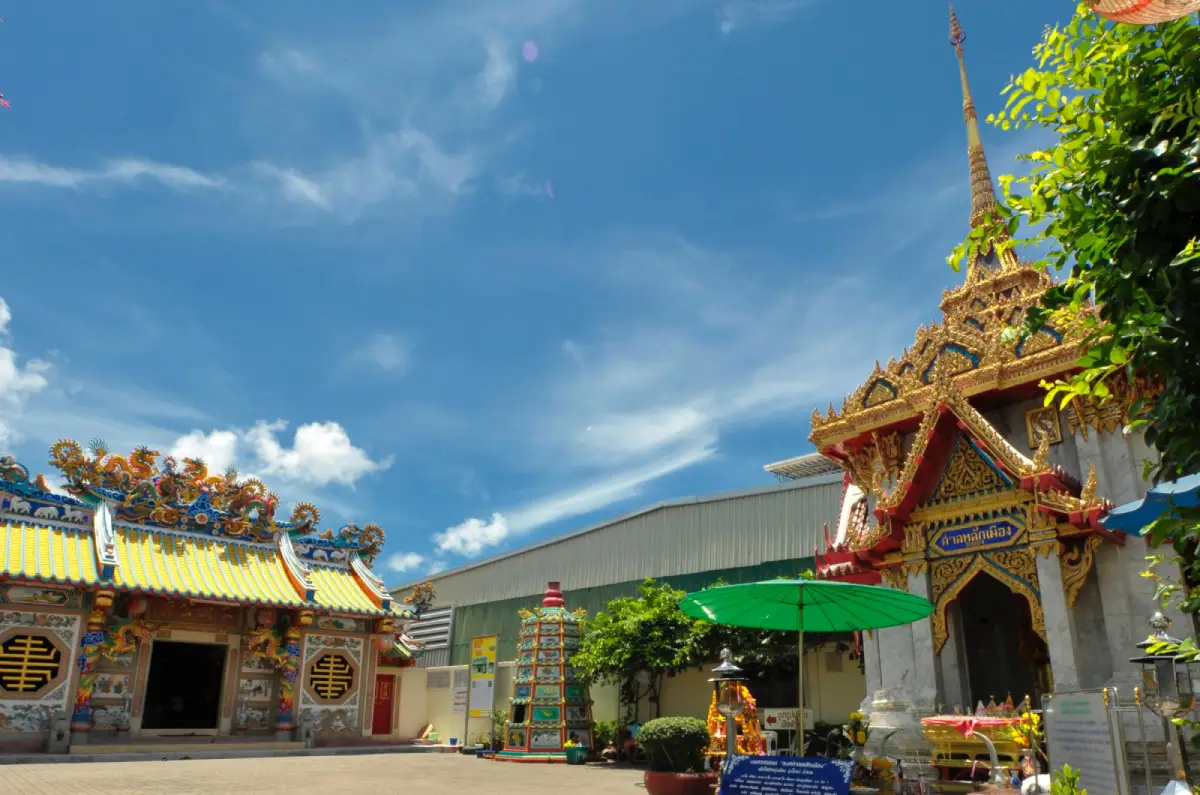
65. Rayong City Pillar Shrine stands at 10/1 Lak Mueang Road, also known as Sukhumvit Nakhon Rayong Soi 62, in Tha Pradu Subdistrict, Mueang Rayong District. Located in the historic center of Rayong, the shrine reflects the province's longstanding city guardian beliefs and its cultural connections with Thai-Chinese communities.
History and Significance The first city pillar was established in 1895 during the reign of King Chulalongkorn, or King Rama V. Subsequent restoration and redevelopment improved the sacred complex while preserving its importance as a symbol of the town's identity and stability.
Architecture and Sacred Features A distinctive feature is the coexistence of a traditional Thai pavilion containing the city pillar and a Chinese-style shrine within the same sacred area. This arrangement illustrates how different systems of religious symbolism can be maintained side by side through shared community devotion.
Traditions and Beliefs Local residents visit to pray for protection, prosperity, successful trade, family happiness, and good fortune. The shrine also forms part of Rayong's old-town heritage landscape, where religious sites, older shophouses, and commercial streets preserve traces of the city's history.
How to Worship Visitors should distinguish between the Thai city pillar pavilion and the adjoining Chinese shrine. Begin at the worship point indicated by the site's instructions, offer suitable flowers or other permitted offerings, and continue to the remaining stations as directed. Incense quantities and offering arrangements may differ between the two parts of the complex.
Visitor Etiquette Do not touch the sacred pillar or religious figures without permission. Respect people performing ceremonies, and keep entrances and offering areas clear.
Getting There Travel into central Rayong and follow Lak Mueang Road in the Tha Pradu old-town area. Nearby heritage sites and historic streets can be included in the same visit.
Open Days: Daily
Opening Hours: 06:00 – 18:00
Address: 10/1 Lak Mueang Road, Tha Pradu, Mueang Rayong, Rayong 21000, Thailand
Map (GPS):Google Maps – Rayong City Pillar Shrine
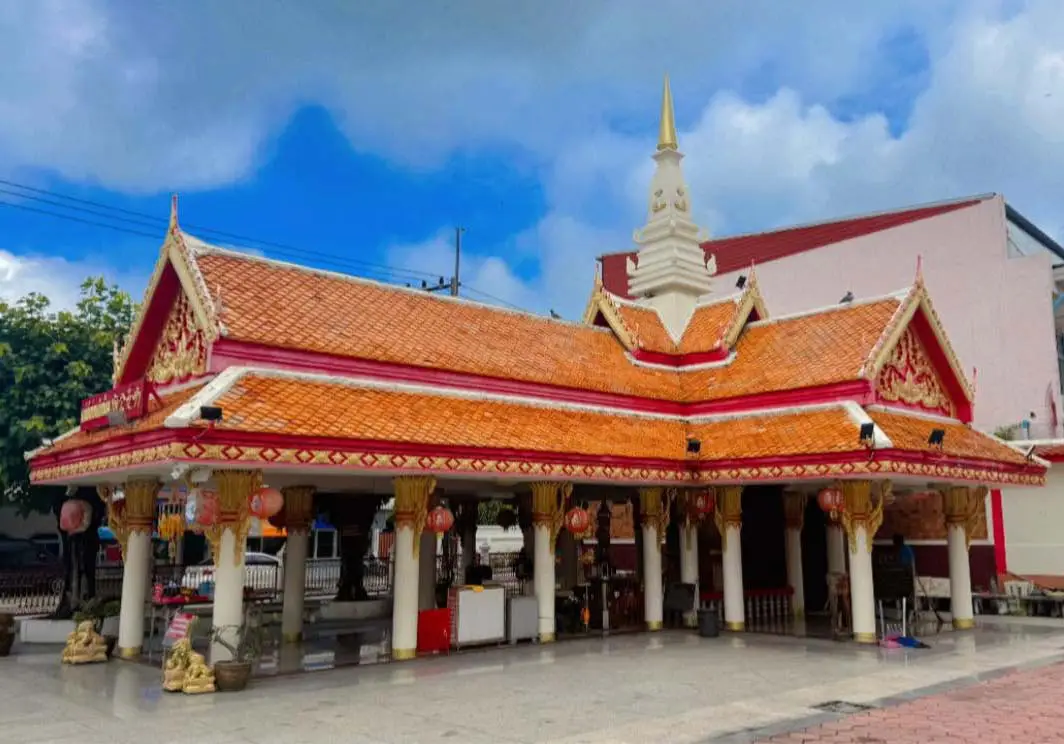
66. Kalasin City Pillar Shrine is situated at the intersection of Kalasin Road and Kaeng Samrong Road in Kalasin Subdistrict, Mueang Kalasin District. It is a significant spiritual landmark linked to the development of Kalasin during the early Rattanakosin period and the memory of Thao Somphamit, the historical leader associated with the establishment of the city.
History and Significance Kalasin's history is connected with the movement of communities into the region during the early Rattanakosin era. Thao Somphamit occupies an important position in accounts of the city's foundation. The city pillar shrine preserves the significance of these historical traditions and provides a place where the community can express respect for the city's beginnings.
Architecture and Cultural Features The shrine houses the city pillar and includes sacred elements associated with local beliefs. Its cultural interpretation is also connected with the wider archaeological landscape of Kalasin, including the influence of Dvaravati-period Buddhist monuments and ancient boundary stones found elsewhere in the province.
Traditions and Ceremonies Traditional city guardian worship may be associated with local merit-making activities, including Bun Samha, a northeastern ceremony concerned with purification and the renewal of auspiciousness. Specific dates and ceremonial arrangements should be confirmed with local organizers.
How to Worship Pay respect to the main city pillar, present flowers or a floral garland, and make a prayer for personal safety, prosperity, and family well-being. Other offerings should follow the shrine's instructions rather than a generalized ritual procedure.
Visitor Etiquette Dress respectfully and use incense and candles only where permitted. Keep the area clean and avoid touching historical objects or decorative surfaces without authorization.
Getting There From central Kalasin, travel toward the intersection of Kalasin Road and Kaeng Samrong Road. The shrine is easily accessible by car or local transportation and can be combined with other cultural attractions in Mueang Kalasin.
Open Days: Daily
Opening Hours: 06:00 – 17:00
Address: Intersection of Kalasin Road and Kaeng Samrong Road, Kalasin, Mueang Kalasin, Kalasin 46000, Thailand
Map (GPS):Google Maps – Kalasin City Pillar Shrine
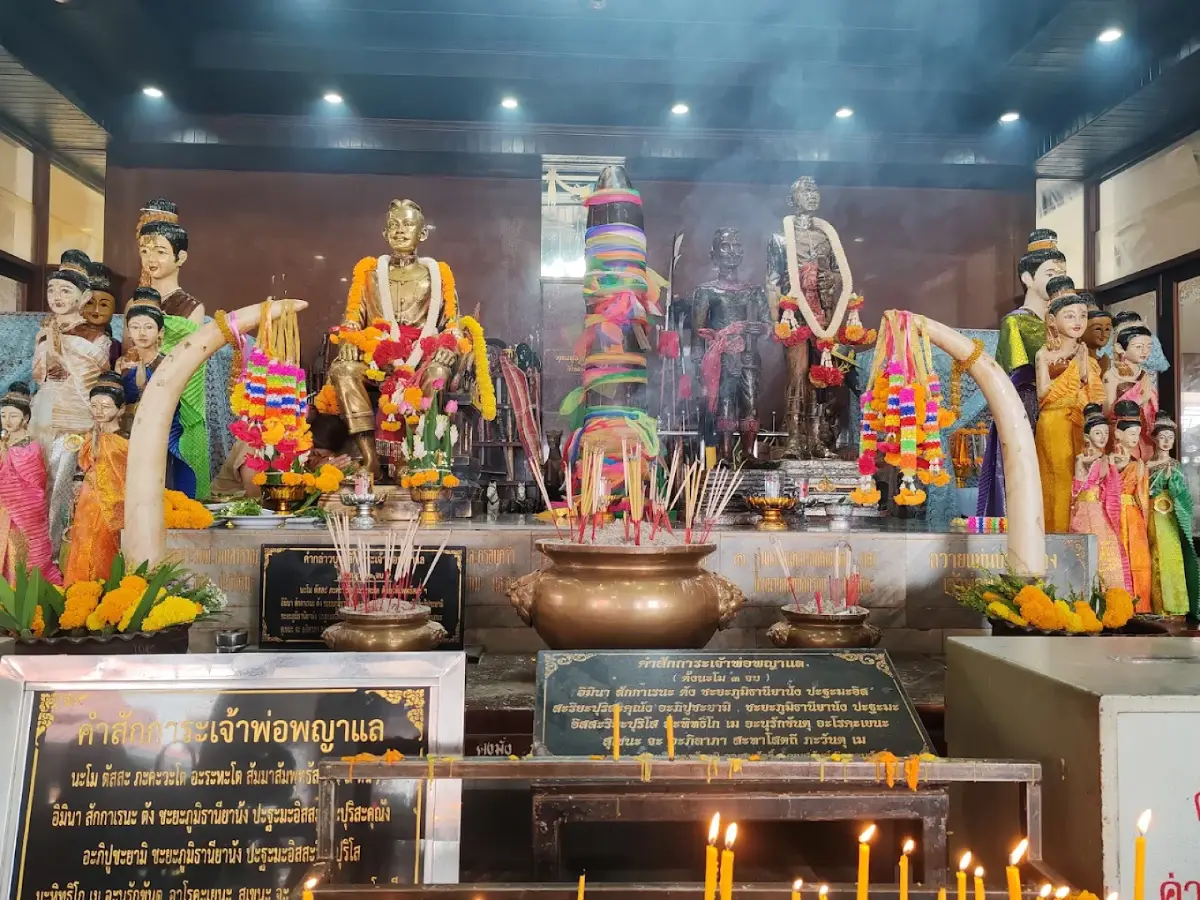
67. Chaiyaphum City Pillar Shrine is located in the sacred complex associated with Chao Pho Phraya Lae beside Nong Pla Thao in Nai Mueang Subdistrict, Mueang Chaiyaphum District. The shrine is closely connected with the historical memory of Phraya Phakdi Chumphon, commonly known as Phraya Lae, the first governor of Chaiyaphum, who is deeply respected by local residents as a founder and protector of the city.
History and Significance The history of Chaiyaphum is closely associated with Phraya Lae and the establishment of the town during the early Rattanakosin period. His role in local history and the circumstances surrounding his death made him an enduring figure of respect and remembrance. The city pillar and guardian shrines in the Nong Pla Thao area express both historical gratitude and traditional beliefs in the spiritual protection of the community.
Architecture and Important Sacred Objects The sacred area includes the city pillar worship point and the shrine dedicated to Chao Pho Phraya Lae. These structures have different historical and religious meanings, although they are closely connected in the devotional practices of local residents. Visitors should distinguish between the city pillar and the figure of the province's founding governor.
Annual Traditions The worship of Chao Pho Phraya Lae is particularly important during the annual Bun Duean Hok, or Sixth-Month Merit Festival. The festival includes ceremonies, traditional performances, and community activities commemorating the city's guardian figure and local history.
How to Worship Visitors should follow the site's instructions for the city pillar and Chao Pho Phraya Lae shrine separately. Flowers or garlands may be presented at designated points. Incense, candles, and other offerings should conform to the customs of each worship area.
Visitor Etiquette Dress appropriately and behave respectfully during religious ceremonies. Do not touch sacred figures or ceremonial objects without permission. During the annual festival, follow the procession routes and the instructions of organizers.
Getting There From central Chaiyaphum, travel toward Nong Pla Thao and the Chao Pho Phraya Lae sacred complex. The area is accessible by private car and local transportation.
Open Days: Daily
Opening Hours: 07:00 – 17:00
Address: Nong Pla Thao area, Nai Mueang, Mueang Chaiyaphum, Chaiyaphum 36000, Thailand
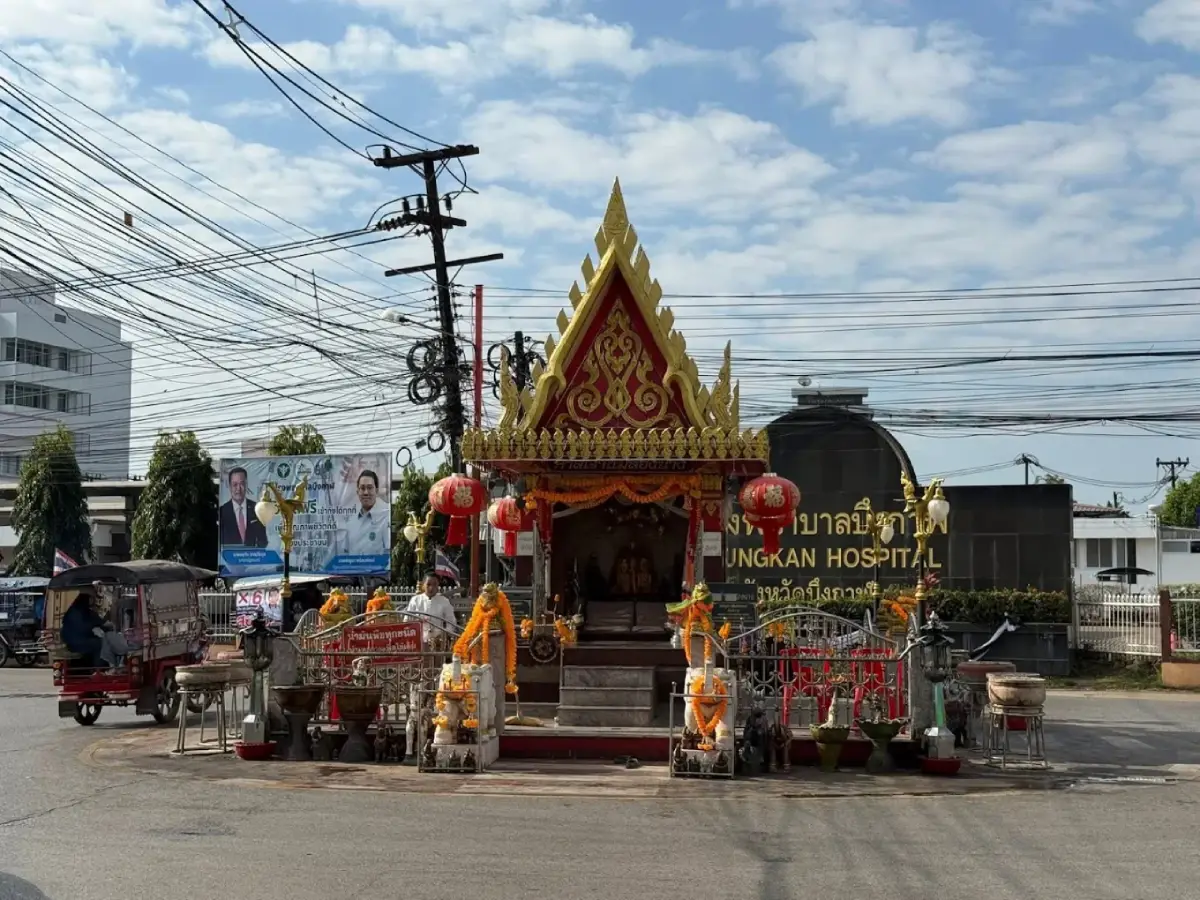
68. Chao Mae Song Nang Shrine (Bueng Kan City Guardian Shrine) is located on Chao Mae Song Nang Road in Ban Bueng Kan Klang, Moo 1, Bueng Kan Subdistrict, Mueang Bueng Kan District. It is an important local sacred landmark associated with the worship of two female guardian spirits. Although sometimes included in collections of city pillar shrines, it is best understood as a traditional guardian shrine rather than automatically identified with a formally installed provincial city pillar.
History and Local Legend The shrine is associated with the story of two sisters, Sao Phao and Sao Lao, daughters of Pho Thao Phrom, who are remembered in local tradition as protective spirits. Their story belongs to the oral heritage of communities along the Mekong River and reflects the relationship between local ancestry, sacred beliefs, and the historical identity of Bueng Kan.
Architecture and Cultural Features The shrine provides a ceremonial place for paying respect to the two guardian figures. Its position in the town reflects the continuing importance of the local community's traditions, particularly those associated with the protection of residents and the well-being of the settlement.
Traditions and Beliefs Worshippers visit to seek blessings for prosperity, safe journeys, family stability, and protection. Community ceremonies and offerings preserve the significance of the two sisters within Bueng Kan's cultural memory.
How to Worship Visitors should pay respect to Chao Mae Song Nang at the designated worship area. Flowers, garlands, and other permitted offerings may be presented according to local customs. The shrine's instructions should determine the use and number of incense sticks.
Visitor Etiquette Avoid touching sacred figures and do not place offerings in unauthorized areas. The shrine is an active place of devotion, so respectful behavior toward local worshippers is particularly important.
Getting There Travel to Chao Mae Song Nang Road in central Bueng Kan, near Bueng Kan Hospital. The site is accessible by private car or local transport and can be visited alongside cultural attractions in the town.
Open Days: Daily
Opening Hours: 07:30 – 19:00
Address: Ban Bueng Kan Klang, Moo 1, Chao Mae Song Nang Road, Bueng Kan, Mueang Bueng Kan, Bueng Kan 38000, Thailand
Map (GPS):Google Maps – Chao Mae Song Nang Shrine
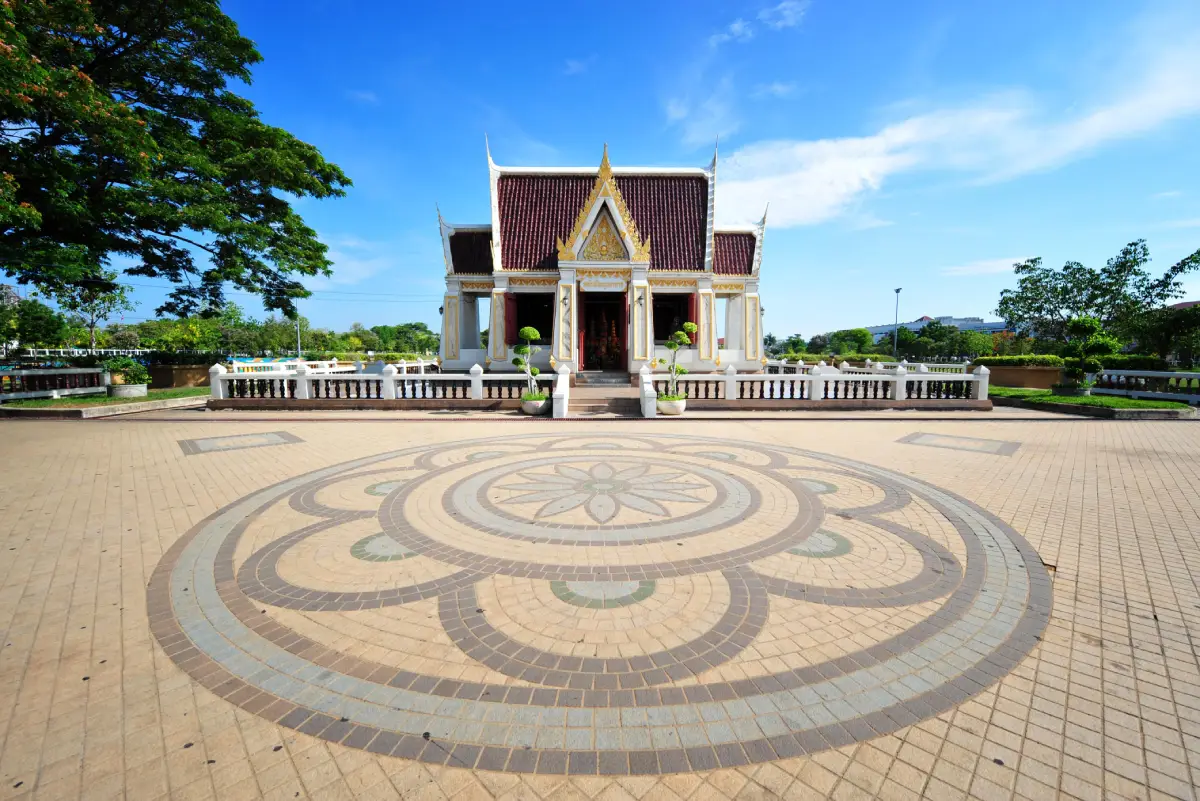
69. Mukdahan City Pillar Shrine stands near Mukdahan Provincial Hall on Wiwit Surakan Road in Mukdahan Subdistrict, Mueang Mukdahan District. It is a significant civic and spiritual landmark of this northeastern border province, whose history has been shaped by the Mekong River, regional trade, and cultural connections with neighboring Laos.
History and Significance Mukdahan developed as an important settlement along the Mekong River and became a separate province in 1982. The city pillar shrine reflects the traditional belief in establishing a sacred foundation for the administrative center and represents a place where residents express hopes for stability, unity, and prosperity.
Architecture and Sacred Features The shrine has a Thai chaturamuk design, with four gabled sides and an ornamental roof. The principal pillar is made from chaiyaphruek wood, an auspicious material traditionally used for Thai city pillars. Its architecture emphasizes the pillar as the central sacred object.
Traditions and Beliefs Local residents visit the shrine for blessings concerning safety, career progress, family well-being, and successful travel. Worship and offering ceremonies may be conducted during important provincial occasions.
How to Worship Visitors should pay respect to the principal city pillar, offer flowers or a garland, and make a personal prayer. Other offerings should follow instructions provided at the shrine. Incense and candles should be used only where permitted.
Visitor Etiquette Maintain a respectful atmosphere, avoid touching the wooden pillar or decorative surfaces, and comply with access arrangements around the provincial government center.
Getting There Follow Wiwit Surakan Road into the provincial administrative area in central Mukdahan. The shrine is located near the provincial hall and can be combined with visits to Mukdahan's riverfront and other historic urban landmarks.
Open Days: Daily
Opening Hours: 06:00 – 18:00
Address: Provincial Government Center, Wiwit Surakan Road, Mukdahan, Mueang Mukdahan, Mukdahan 49000, Thailand
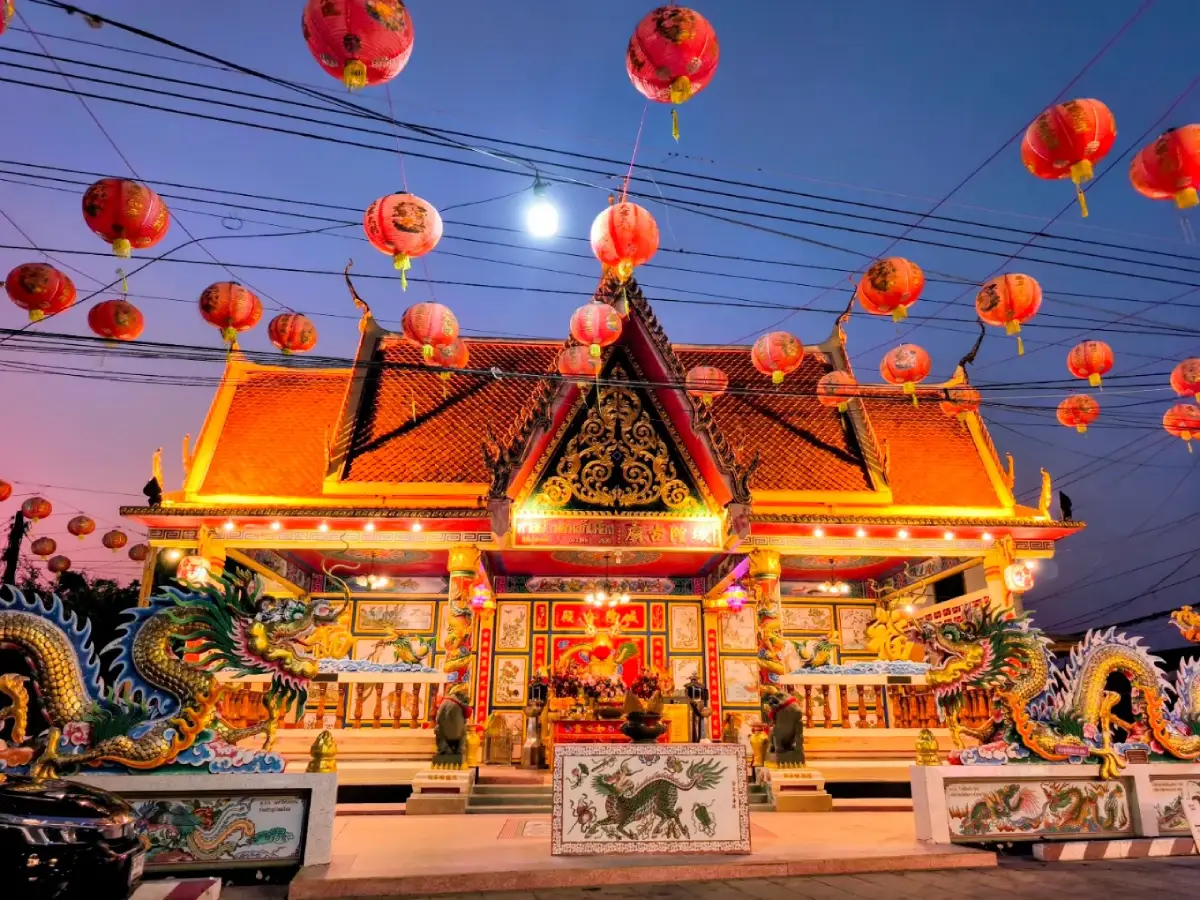
70. Yasothon City Pillar Shrine is situated at 38 Uthai Ramrit Road in the historic Ban Sing Tha neighborhood of Nai Mueang Subdistrict, Mueang Yasothon District. It is one of the most distinctive city pillar shrines in northeastern Thailand because its architecture blends Thai, Chinese, and Lao influences. The shrine houses three sacred pillars, each associated with a different protective belief.
History and Significance Yasothon developed from communities with cultural connections across the Mekong region. Ban Sing Tha remains an important historic neighborhood with old buildings and traditional urban character. The city pillar shrine reflects the blending of religious traditions within this environment and stands as an important symbol of the city's cultural identity.
Architecture and Sacred Features The building combines decorative forms associated with Thai, Chinese, and Lao traditions. Inside are three sacred pillars, with the central one identified as the city pillar and the pillars on either side associated with protective guardian figures. The arrangement gives the shrine a different devotional character from single-pillar provincial shrines.
Traditions and Beliefs The shrine remains an important spiritual center for residents who seek protection, auspiciousness, and family well-being. Its three-pillar arrangement also reflects the historical diversity of the city's religious and cultural influences.
How to Worship Visitors should follow the designated sequence for the central city pillar and the two accompanying sacred pillars. Flowers, incense, candles, or other offerings may be appropriate depending on the local instructions. Do not assume that all three pillars require the same number of incense sticks.
Visitor Etiquette Respect the sacred objects and avoid touching the pillars or decorative surfaces. During community ceremonies, keep entrances and worship stations clear.
Getting There Travel to Uthai Ramrit Road in the historic Ban Sing Tha area of central Yasothon. The shrine can be visited together with the neighborhood's older buildings, temples, and cultural landmarks.
Open Days: Daily
Opening Hours: 08:00 – 17:00
Address: 38 Uthai Ramrit Road, Nai Mueang, Mueang Yasothon, Yasothon 35000, Thailand
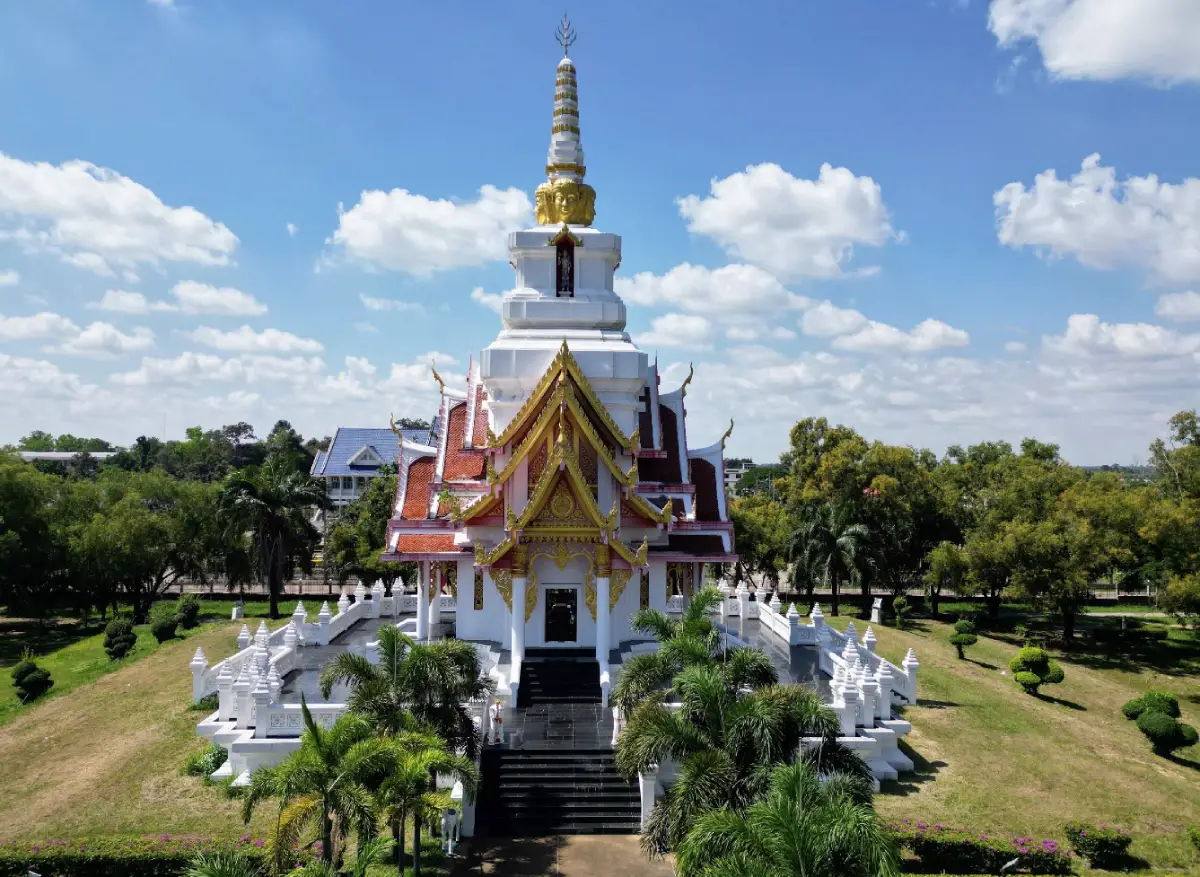
71. Amnat Charoen City Pillar Shrine is located within Chaloem Phra Kiat Ming Mueang Park on Chayangkun Road in Bung Subdistrict, Mueang Amnat Charoen District. It is an important sacred civic monument and a prominent landmark within the province's landscaped public space.
History and Significance Amnat Charoen became a separate province in 1993, and the city pillar shrine forms part of the province's modern civic identity. It represents the traditional belief that a provincial center should possess a sacred symbol of its foundation and protection.
Architecture and Sacred Features The shrine is an elegant white Thai chaturamuk pavilion topped by a prang-style tower, with red and gold ornamental roof elements. The building stands on a raised base within the landscaped park. Inside is a city pillar made from ratchaphruek wood, selected for its auspicious symbolism.
Traditions and Beliefs Residents visit the shrine to pray for stability, safety, prosperity, and the well-being of their families. Civic ceremonies and public occasions help maintain its importance as a spiritual landmark.
How to Worship Begin by paying respect to the main city pillar, presenting flowers or a floral garland at the designated point. Incense and candles should be used according to the shrine's instructions. The wooden pillar and its decoration should not be touched without permission.
Visitor Etiquette Dress appropriately and maintain a quiet atmosphere in the worship area. The surrounding park is a public recreational space, so visitors should also respect its walkways, gardens, and other users.
Getting There Travel along Chayangkun Road toward Chaloem Phra Kiat Ming Mueang Park in central Amnat Charoen. The shrine is accessible by private car or local transportation and can be combined with sightseeing around the park.
Open Days: Daily
Opening Hours: 08:00 – 18:00
Address: Chaloem Phra Kiat Ming Mueang Park, Chayangkun Road, Bung, Mueang Amnat Charoen, Amnat Charoen 37000, Thailand
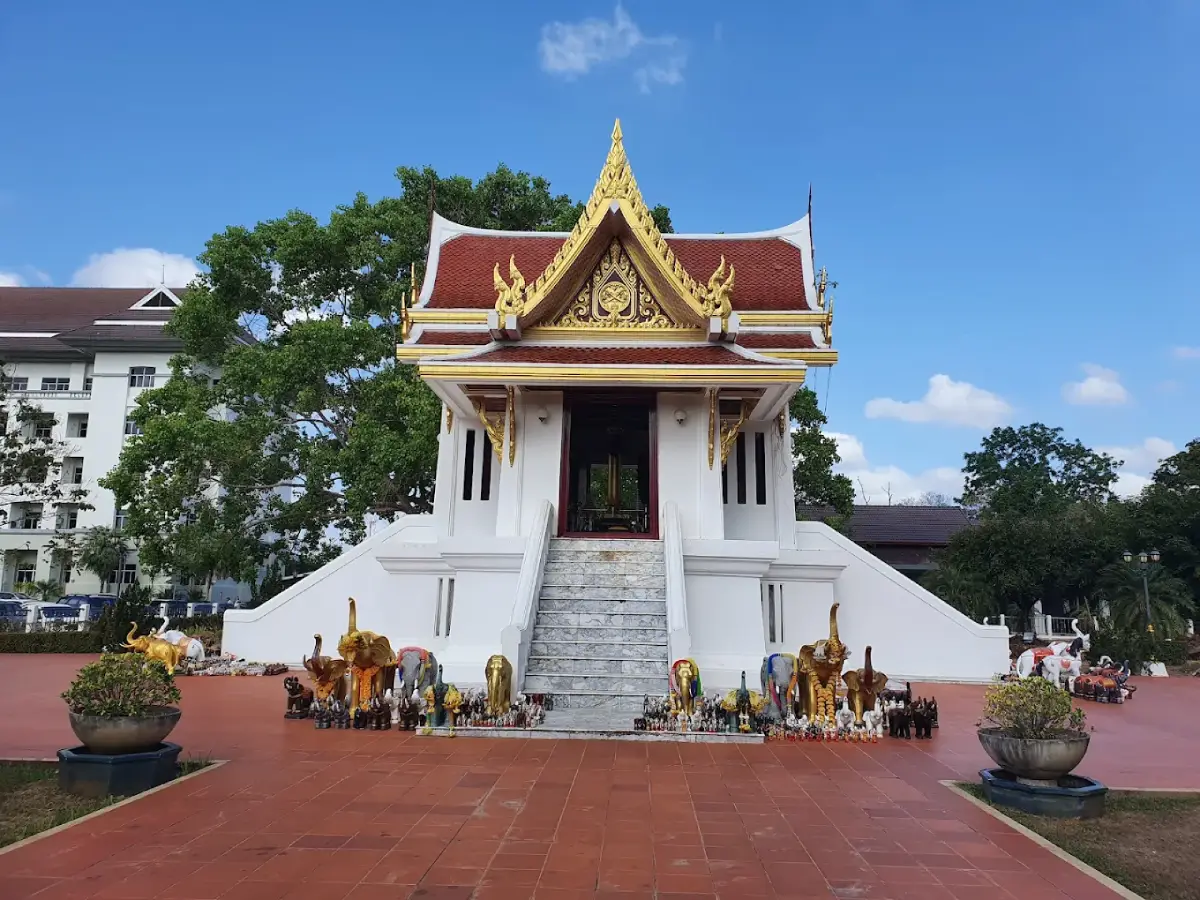
72. Krabi City Pillar Shrine is located near Krabi Provincial Hall on Utarakit Road in Pak Nam Subdistrict, Mueang Krabi District. It is an important sacred landmark of this Andaman coastal province, combining traditional Thai architecture with the ceremonial significance of a city pillar. The white pavilion has a red-tiled roof, ornamental chofa and bai raka roof elements, and decorative gold details. Its raised base and landscaped surroundings create an attractive setting for worship and cultural sightseeing.
History and Significance Krabi developed through the growth of communities on the Andaman coast and the expansion of regional administrative and transportation networks. In 1872, Krabi was elevated to the status of a town. Its administrative center later shifted from the Ban Talat Kao area toward Pak Nam, which became the center of the present provincial capital. The city pillar shrine reflects the historical importance of this urban development and the traditional belief in the spiritual foundation of the community.
Architecture and Sacred Features The pavilion follows a Thai architectural style with a white exterior, red roof tiles, and gold decorative motifs. Inside stands the principal city pillar, the focus of worship. The lawn and ornamental planting around the structure create a calm environment within the government center.
Traditions and Beliefs Residents and visitors pay respect to the city pillar for auspiciousness, protection, prosperity, and the well-being of the community. The shrine may also be included in official worship ceremonies on significant provincial occasions.
How to Worship Begin at the principal city pillar, offer flowers or a garland at the designated point, and make a respectful personal prayer. Incense and candles should be used only where permitted. Visitors who wish to arrange special offerings or ceremonial activities should consult the caretakers.
Visitor Etiquette Dress appropriately, maintain a quiet atmosphere, avoid touching the city pillar, and respect the surrounding government premises. Keep the lawns and landscaped areas clean.
Getting There From Krabi International Airport, travel toward Krabi town and continue to Utarakit Road near the provincial hall. The shrine can be visited along with the Black Crab Monument, Khao Khanab Nam, and other attractions within central Krabi.
Open Days: Daily
Opening Hours: 06:00 – 18:00
Address: Krabi Provincial Hall area, Utarakit Road, Pak Nam, Mueang Krabi, Krabi 81000, Thailand
Map (GPS):Google Maps – Krabi City Pillar Shrine
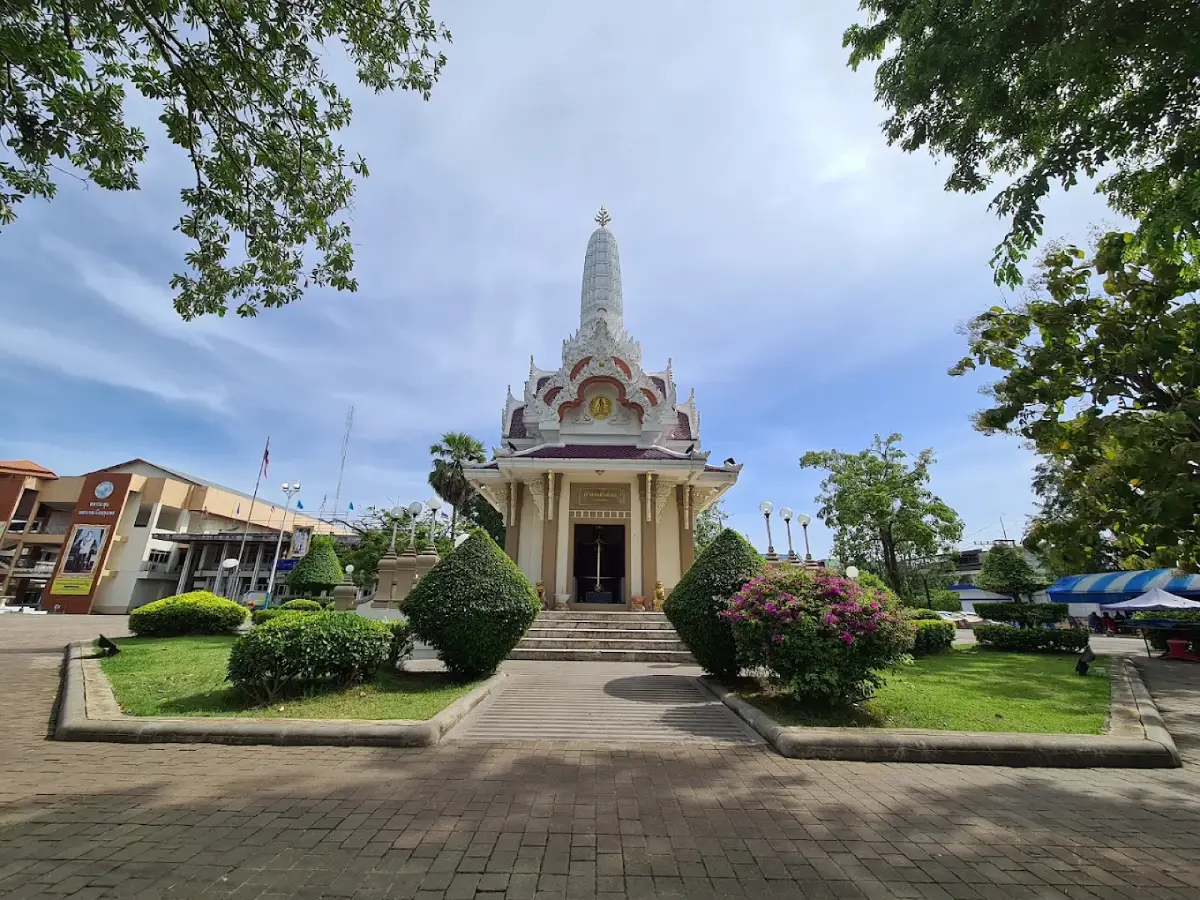
73. Chumphon City Pillar Shrine stands in front of Chumphon Municipality Office on Poraminmankha Road in Tha Taphao Subdistrict, Mueang Chumphon District. It is a significant sacred landmark recognized for its Thai-style architecture, featuring a four-sided pavilion crowned by a prang-shaped tower and decorated with white and gold ornamental details.
History and Significance The shrine was established in 1992 during celebrations commemorating the six-hundredth anniversary of Chumphon and the sixtieth birthday of Queen Sirikit. It officially opened on July 31, 1992. Its development reflected cooperation among public authorities and local residents in establishing a dignified sacred center for the province.
Architecture and City Pillar The city pillar is made from ratchaphruek wood obtained from the Wat Thep Charoen, or Wat Tham Rap Ro, area in Tha Sae District. The timber was more than one hundred years old. The pillar was carefully carved and decorated, emphasizing its ceremonial importance and the symbolic use of auspicious wood.
Annual Traditions Chumphon maintains city pillar worship and celebration activities. In 2026, an important ceremony was held on June 29, with related festivities continuing until July 8. These events emphasize the shrine's continued importance in community religious life.
How to Worship Visitors should approach the principal pillar respectfully, present flowers or a garland, and make a personal prayer for stability, protection, and success. Incense, candles, and other offerings should follow local instructions. No single incense quantity should be assumed without checking the shrine's current guidance.
Visitor Etiquette Dress respectfully and avoid touching the pillar or decorative surfaces. During official ceremonies, follow the instructions of organizers and allow adequate space for participants.
Getting There Travel into central Chumphon along the main roads from Phetkasem Highway and continue to Poraminmankha Road near Chumphon Municipality Office. Travelers arriving by train can take a local taxi from Chumphon Railway Station.
Open Days: Daily
Opening Hours: 06:00 – 18:00
Address: In front of Chumphon Municipality Office, Poraminmankha Road, Tha Taphao, Mueang Chumphon, Chumphon 86000, Thailand
Coordinates (Latitude, Longitude): 10.493398, 99.179691
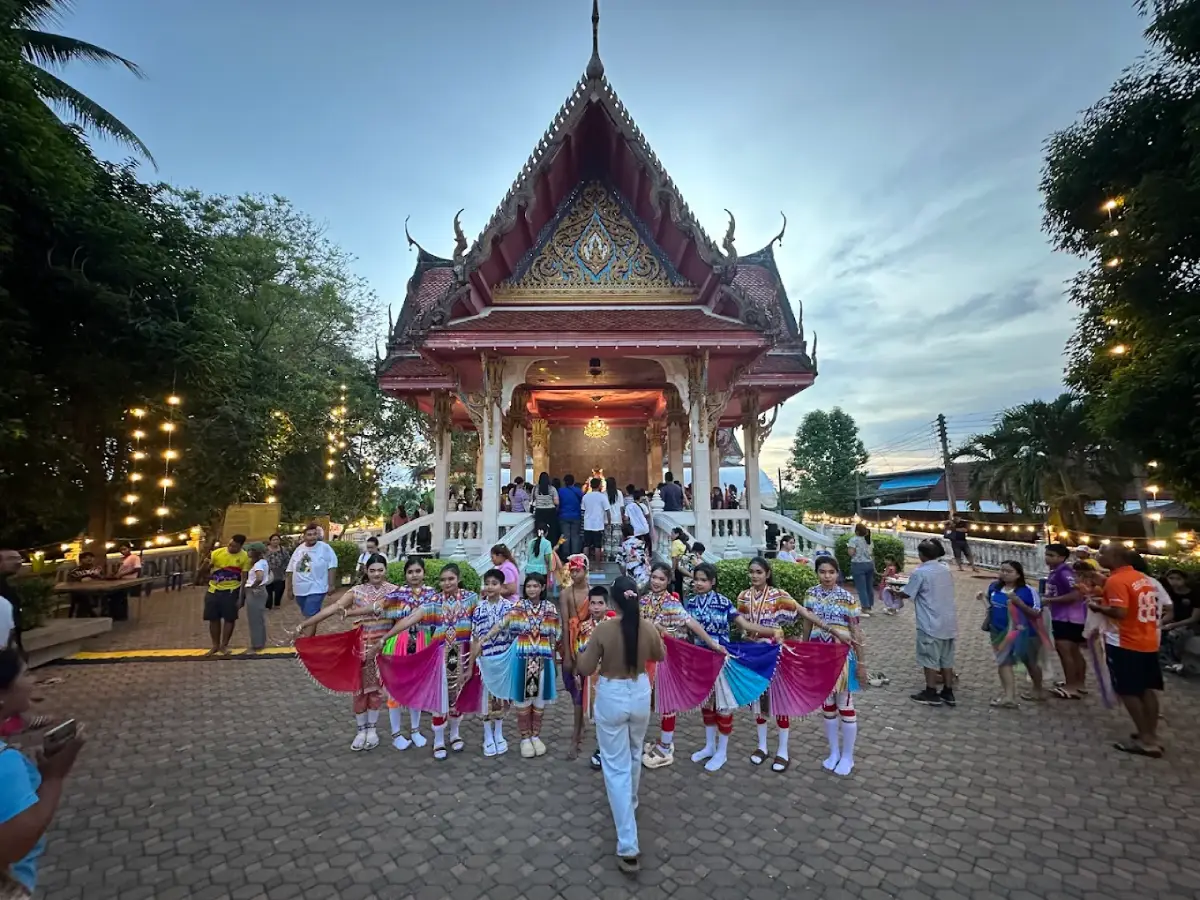
74. Trang City Pillar Shrine is located in Moo 2, Khuan Thani Subdistrict, Kantang District, Trang Province. It is one of the province's most important historic sacred landmarks because it stands within the area that once served as the administrative center of Trang. The shrine preserves the memory of the town's earlier location, before the seat of government moved to Kantang and later to Thap Thiang.
History and Significance Khuan Thani played a significant role in the early administrative history of Trang. The provincial center was moved to Kantang in 1893 and then to Thap Thiang in 1915. Despite these changes, the city pillar remained at Khuan Thani and continued to be respected by local residents. The shrine thus represents an important connection between the province's history and the sacred geography of its former town center.
Restoration Major restoration work began in 1992, and the restored shrine opened on April 8, 1995. These improvements helped preserve its status as a significant cultural and spiritual landmark.
Architecture and Important Sacred Objects The present structure is a traditional Thai chaturamuk pavilion, with four gabled sides, red roof tiles, white pillars, and decorative gold details. The city pillar is enshrined within the main building. The grounds offer a calm setting for worship and for understanding the history of the former town center.
Traditions and Ceremonies The shrine is associated with civic worship and offering ceremonies. An important ceremony was held on May 7, 2026, reflecting the community's continuing respect for the historic city pillar.
How to Worship Visitors should pay respect to the main pillar, offer flowers or a garland, and make a personal prayer according to their beliefs. Incense and candles should follow local instructions. The historic pillar and architectural surfaces should not be touched without permission.
Important Location Distinction Trang City Pillar Shrine at Khuan Thani is not the same site as the historic city pillar shrine at Ban Khuan Thong Si in Bang Pao Subdistrict. Travelers should check the full location name to avoid visiting the wrong place.
Getting There From Trang town, follow the Trang–Kantang route toward Khuan Thani Subdistrict, then continue to the city pillar shrine in Moo 2. A private vehicle is convenient for reaching the historical site.
Open Days: Daily
Address: Moo 2, Khuan Thani, Kantang District, Trang 92110, Thailand
Coordinates (Latitude, Longitude): 7.524040, 99.557730
Map (GPS):Google Maps – Trang City Pillar Shrine
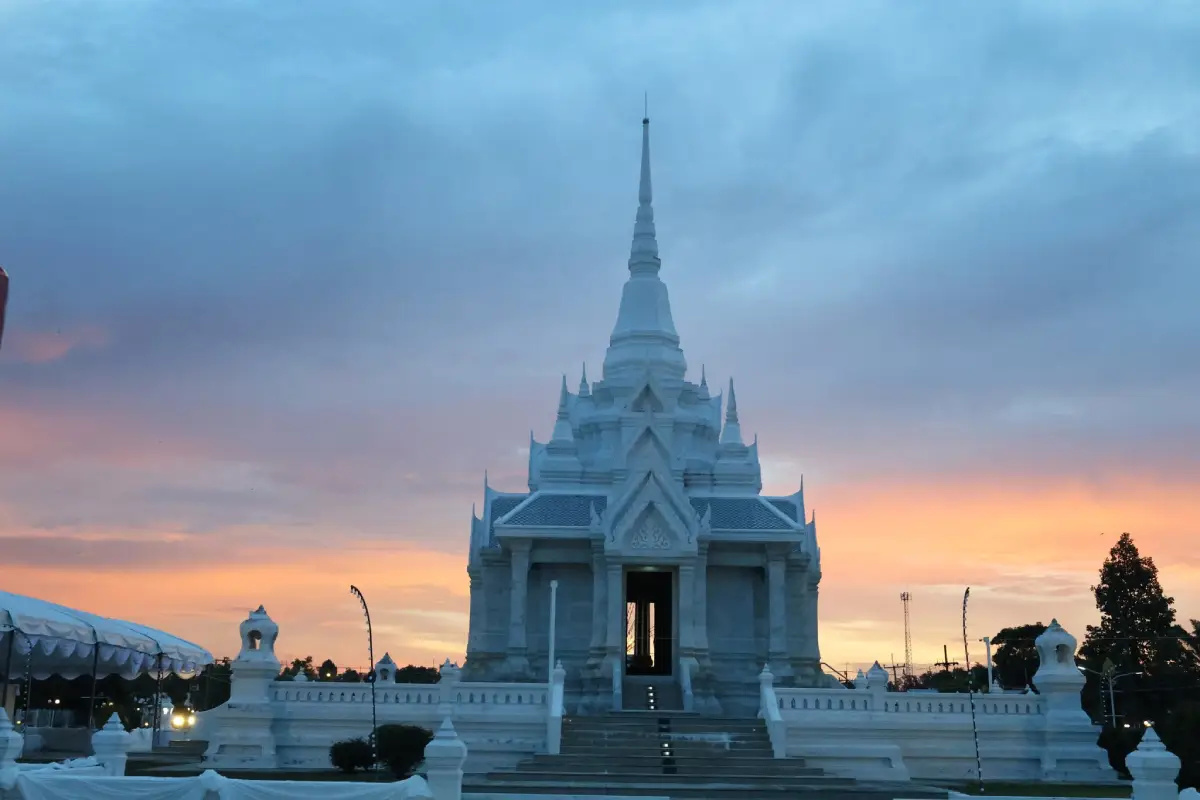
75. Narathiwat City Pillar Shrine is located within the Cultural Plaza at the former Narathiwat Provincial Hall, on Sun Ratchakan Road in Khok Khian Subdistrict, Mueang Narathiwat District. The shrine is a major sacred landmark distinguished by its white marble architecture and nine spires, combining traditional Thai architectural forms with artistic influences associated with Srivijaya and southern Thailand.
History and Significance Plans to establish the shrine were associated with the centenary of the royal naming of Narathiwat in 1915. The province's name conveys the idea of a great place for its people. Important ceremonies relating to the city pillar took place in 2022, followed by the official opening of the shrine on September 30, 2023.
Architecture and Important Sacred Objects The structure is a white-marble chaturamuk pavilion crowned with nine spires. It rises approximately 20.25 meters from the ceremonial base to the highest point and measures around 26 meters across. Inside is the principal city pillar, together with zodiac paintings and representations of guardian deities associated with the eight directions. These artistic elements reflect traditional beliefs in cosmic order and sacred protection.
Cultural Significance The shrine represents one dimension of Narathiwat's diverse cultural landscape, which includes Thai and Malay heritage as well as several religious traditions. Visitors should approach the site with an understanding that local people may have different practices and beliefs.
Traditions and Ceremonies The shrine provides a place for city pillar worship and ceremonies on important provincial occasions. Such activities express respect for the city's foundation and hopes for the stability and well-being of its communities.
How to Worship Visitors may pay respect to the main city pillar, offer flowers or a floral garland, and pray according to their personal beliefs. Incense and candles should be used only where permitted. The nine spires and decorative representations of guardian deities do not, by themselves, determine how many incense sticks should be used.
Visitor Etiquette Dress respectfully, avoid touching the city pillar or mural paintings, and take photographs without disturbing worshippers. Follow any instructions governing access to the Cultural Plaza and adjacent government buildings.
Getting There From Narathiwat Airport or the city center, travel toward the former provincial hall and Cultural Plaza in Khok Khian Subdistrict. The shrine is accessible by private car or local transport.
Open Days: Daily
Opening Hours: 07:00 – 19:00
Address: Cultural Plaza, former Narathiwat Provincial Hall, Sun Ratchakan Road, Khok Khian, Mueang Narathiwat, Narathiwat 96000, Thailand
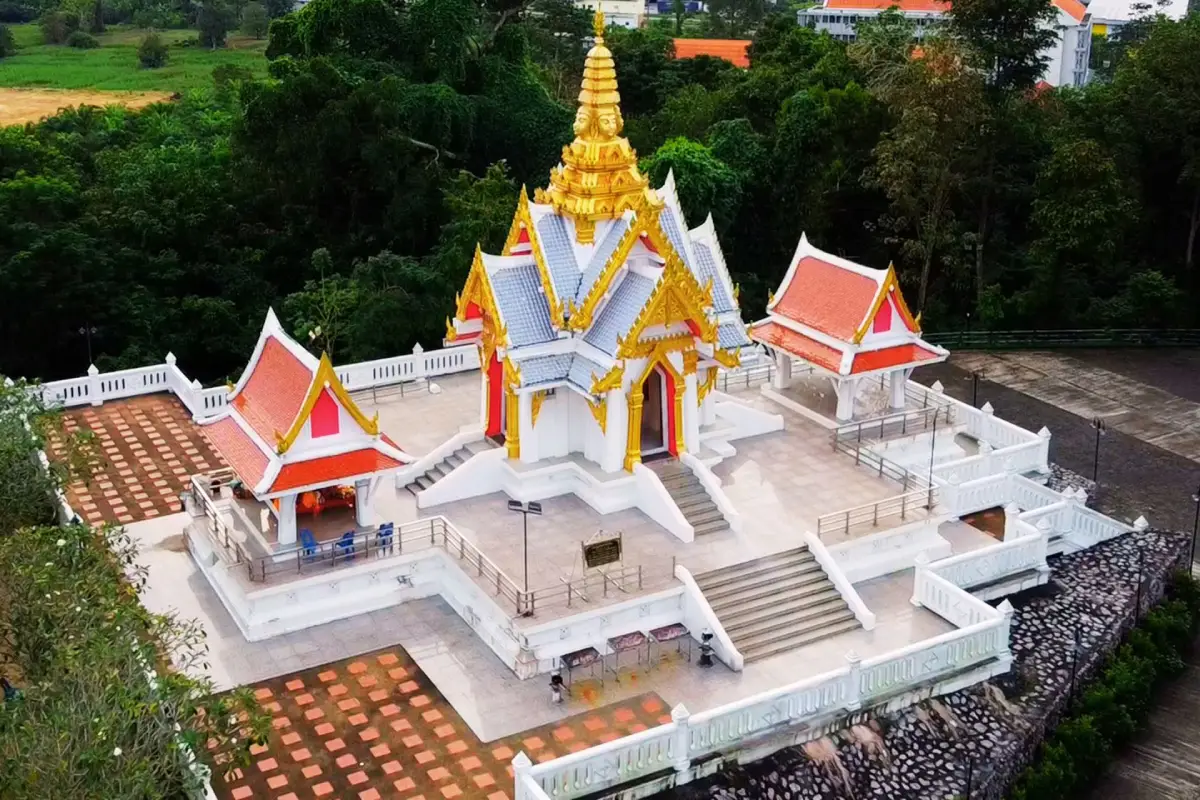
76. Phatthalung City Pillar Shrine is located near Wat Khuan Prong in Moo 2, Tha Miram Subdistrict, Mueang Phatthalung District. The shrine stands on elevated ground overlooking parts of Phatthalung town and the distinctive outline of Khao Ok Thalu, one of the province's best-known natural landmarks. Its prominent hilltop setting and carefully designed traditional architecture make it an important spiritual and cultural destination.
History and Significance Phatthalung has a long history involving changes in settlement and administrative locations. The idea of constructing a new provincial city pillar shrine gained momentum around 1995–1996. Construction began on June 18, 2010, and was completed in 2011. Further improvements to the building and landscape followed in 2019, and the shrine officially opened on November 28, 2020.
Architecture and Artistic Importance The shrine was designed by Associate Professor Dr. Pinyo Suwankiri, a National Artist in Architecture. The building features a traditional Thai chaturamuk plan, layered roofing, intricate white-and-gold stucco decoration, and a prang-like upper tower with Brahma imagery and a sacred finial. The design expresses the high level of craftsmanship associated with contemporary Thai sacred architecture.
The City Pillar The pillar is made from ratchaphruek wood donated by Wat Khao Chiak and carved through the involvement of Phatthalung Central Prison. Its material and craftsmanship reflect the collective effort involved in establishing a sacred landmark for the province.
Traditions and Beliefs Residents visit the shrine to pray for auspiciousness, prosperity, protection, and family stability. The shrine also provides a place for ceremonial worship during important provincial occasions.
How to Worship Visitors should approach the principal city pillar respectfully, offer flowers or a garland, and make a personal prayer. Incense, candles, and additional offerings should follow the shrine's own instructions. No fixed incense quantity should be assumed without local confirmation.
Visitor Etiquette The elevated setting requires particular care on steps and sloping paths. Visitors should wear suitable footwear, avoid touching delicate stucco decoration, and keep the landscaped areas clean.
Getting There From central Phatthalung, travel toward Tha Miram Subdistrict via the roads connecting with Phetkasem Highway. Follow signs to Wat Khuan Prong and the access route leading up to the shrine. The trip can be combined with visits to Khao Ok Thalu and other attractions around Phatthalung town.
Open Days: Daily
Address: Wat Khuan Prong area, Moo 2, Tha Miram, Mueang Phatthalung, Phatthalung 93000, Thailand
77. Phuket: Four Historic City Pillar Shrines Phuket has four historic city pillar shrines associated with different communities of the former Thalang region. They are Tharuea City Pillar Shrine (Mae Duang), Mueang Mai City Pillar Shrine (Mae Chuang), Thalang Pa Sak City Pillar Shrine (Mae Soi Kaeo), and Le Phang City Pillar Shrine (Mae Kasini). Each shrine has its own guardian traditions, historical setting, and local identity. These four sites should therefore be understood as separate places rather than four names for a single provincial shrine.
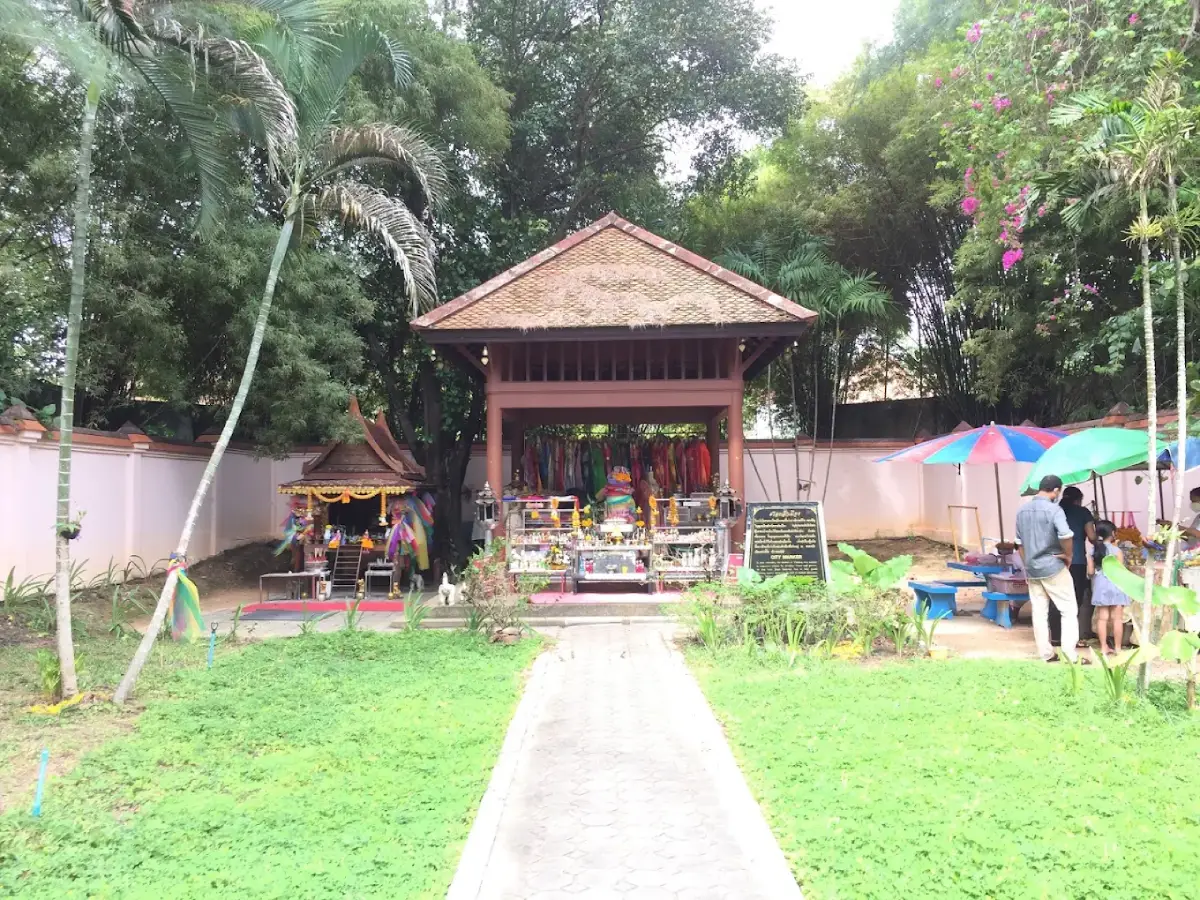
77.1 Tharuea City Pillar Shrine (Mae Duang Shrine), Phuket is located at 229 Soi Lak Mueang 1 in Ban Tharuea, Si Sunthon Subdistrict, Thalang District. This historic shrine is associated with the local guardian known as Mae Duang, who is revered as a protector of the city pillar and the surrounding community. Its importance is closely linked with the history of Ban Tharuea as a settlement connected to inland waterways and maritime transport.
History and Significance Ban Tharuea was historically an important landing point and transport connection in the Thalang region. Before modern roads became the principal means of travel, waterways supported commerce and communication between local communities. The shrine preserves this historical connection through beliefs associated with Mae Duang and the protection of the settlement.
Architecture and Important Sacred Objects The shrine is built in a Thai architectural style with a two-tiered roof, ornamental chofa and bai raka elements, and a gable decorated with a praying celestial figure. Its interior contains the city pillar and a small rowing boat with a paddle, objects associated with local tradition. The shrine faces east, and the boat is a particularly distinctive element linking its spiritual significance to the area's historical waterborne activities.
Traditions and Beliefs Local residents honor Mae Duang as a guardian figure believed to protect families, the community, and travelers. Worship often concerns safety, auspiciousness, stability, and prosperity. The shrine's traditions preserve an important part of the cultural heritage of Thalang.
How to Worship Begin by paying respect to Mae Duang and the city pillar at the designated worship point. Offer flowers or a garland and make a personal prayer. Additional offerings, incense, and candles should follow local instructions. The small rowing boat should not be touched or moved without permission.
Visitor Etiquette Dress respectfully, keep the worship area quiet, and avoid touching sacred or historically significant objects. The shrine is situated within a local community, so visitors should also respect neighboring homes and roads.
Getting There From Phuket town, follow Thepkrasattri Road toward Thalang District. In the Ban Tharuea area of Si Sunthon Subdistrict, continue to Soi Lak Mueang 1. The shrine can be visited together with other historical attractions associated with old Thalang.
Address: 229 Soi Lak Mueang 1, Ban Tharuea, Si Sunthon, Thalang District, Phuket 83110, Thailand
Coordinates (Latitude, Longitude): 7.978927, 98.369041
Map (GPS):Google Maps – Tharuea City Pillar Shrine
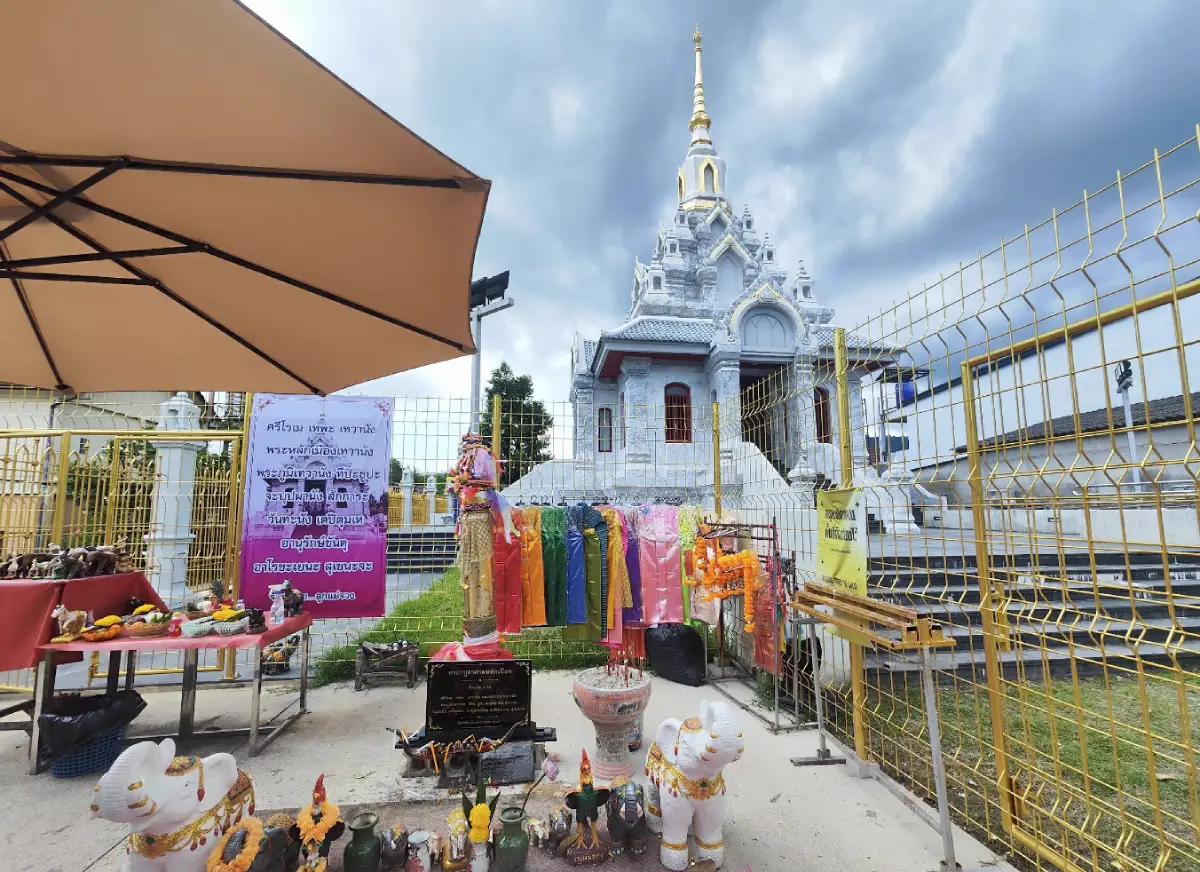
77.2 Mueang Mai City Pillar Shrine (Mae Chuang Shrine), Phuket is located in Ban Mueang Mai beside Thepkrasattri Road in Thep Krasattri Subdistrict, Thalang District. It is one of Phuket's four historic city pillar shrines and is closely connected with the rebuilding and development of Thalang communities during the early Rattanakosin period.
History and Significance The shrine is associated with the historical recovery of Thalang after the conflict of 1785. During the early nineteenth century, communities gradually reorganized and developed new settlements. Ban Mueang Mai is linked with settlement activity around 1827, and its name, meaning New Town, reflects this process of rebuilding rather than suggesting that the shrine itself is a recent creation.
Architecture and Sacred Features The present shrine has a Thai-influenced architectural style with pale marble decoration and ornate ceremonial features. A new city pillar was installed in August 2023, reflecting continuing community devotion and efforts to preserve the site. The shrine remains dedicated to Mae Chuang, the protective guardian associated with this historic settlement.
Traditions and Beliefs Local residents visit Mae Chuang Shrine for blessings concerning family stability, personal safety, successful work, and prosperity. The shrine is also connected with community ceremonies and the continuing remembrance of Thalang's history.
How to Worship Visitors should pay respect to Mae Chuang and the city pillar at the designated point, present flowers or a garland, and make a personal prayer. Incense and candles should follow the shrine's instructions. The sacred pillar and decorative surfaces should not be touched without permission.
Visitor Etiquette Respect worshippers and avoid obstructing the entrance. During ceremonies, follow the instructions of local organizers and caretakers.
Getting There From Phuket town, follow Thepkrasattri Road north through Thalang District toward Ban Mueang Mai. The shrine stands near the main road in Thep Krasattri Subdistrict.
Open Days: Daily
Opening Hours: 08:00 – 17:00
Address: Ban Mueang Mai, Thepkrasattri Road, Thep Krasattri, Thalang District, Phuket 83110, Thailand
Coordinates (Latitude, Longitude): 8.080071, 98.343848
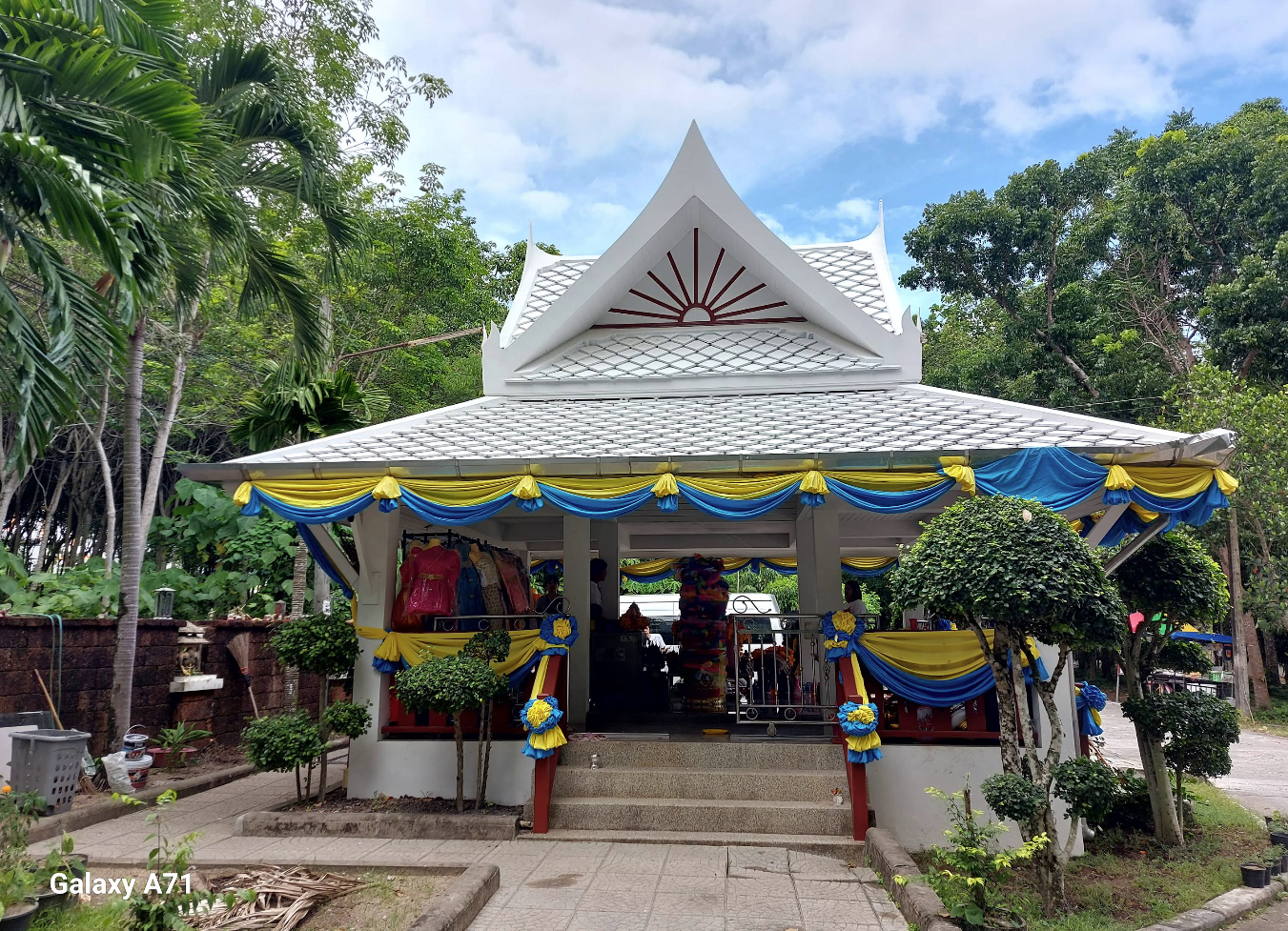
77.3 Thalang Pa Sak City Pillar Shrine (Mae Soi Kaeo Shrine), Phuket is located near the entrance to Phra Khao Monastic Residence in Ban Pa Sak, Moo 4, Soi Pa Sak 4, Choeng Thale Subdistrict, Thalang District. It is a historic guardian shrine associated with Mae Soi Kaeo, who is revered by local residents as a protective spirit connected with the city pillar and the surrounding community.
History and Significance The shrine has a long connection with Ban Pa Sak, an old settlement in western Thalang. The area is also associated with the former Wat Pa Sak temple site and local accounts of an old city pillar near a large yang tree. These traditions form part of the cultural memory of the community and are preserved through continued respect for Mae Soi Kaeo.
Architecture and Sacred Features The shrine is a Thai-style pavilion built around the sacred city pillar area. Its gable is decorated with a praying celestial figure, and the structure faces north. The surrounding landscape, including the nearby monastic residence and traces of older religious settlement, adds historical interest to the site.
Traditions and Beliefs Residents pay respect to Mae Soi Kaeo for protection, family well-being, stability, and auspiciousness. Annual worship and community merit-making traditions help maintain the shrine's role in local cultural life.
How to Worship Visitors should pay homage to Mae Soi Kaeo and the city pillar at the designated point. Flowers or garlands are appropriate offerings, while incense and candles should be used according to local instructions. Avoid touching old timber or sacred surfaces.
Visitor Etiquette Maintain a quiet atmosphere and respect the neighboring monastic area. Do not enter restricted parts of the former temple site or disturb community activities.
Getting There From central Phuket, travel toward Choeng Thale in Thalang District, then continue to Ban Pa Sak, Moo 4, and Soi Pa Sak 4. The shrine is near Phra Khao Monastic Residence.
Address: Ban Pa Sak, Moo 4, Soi Pa Sak 4, Choeng Thale, Thalang District, Phuket 83110, Thailand
Coordinates (Latitude, Longitude): 7.998182, 98.313803
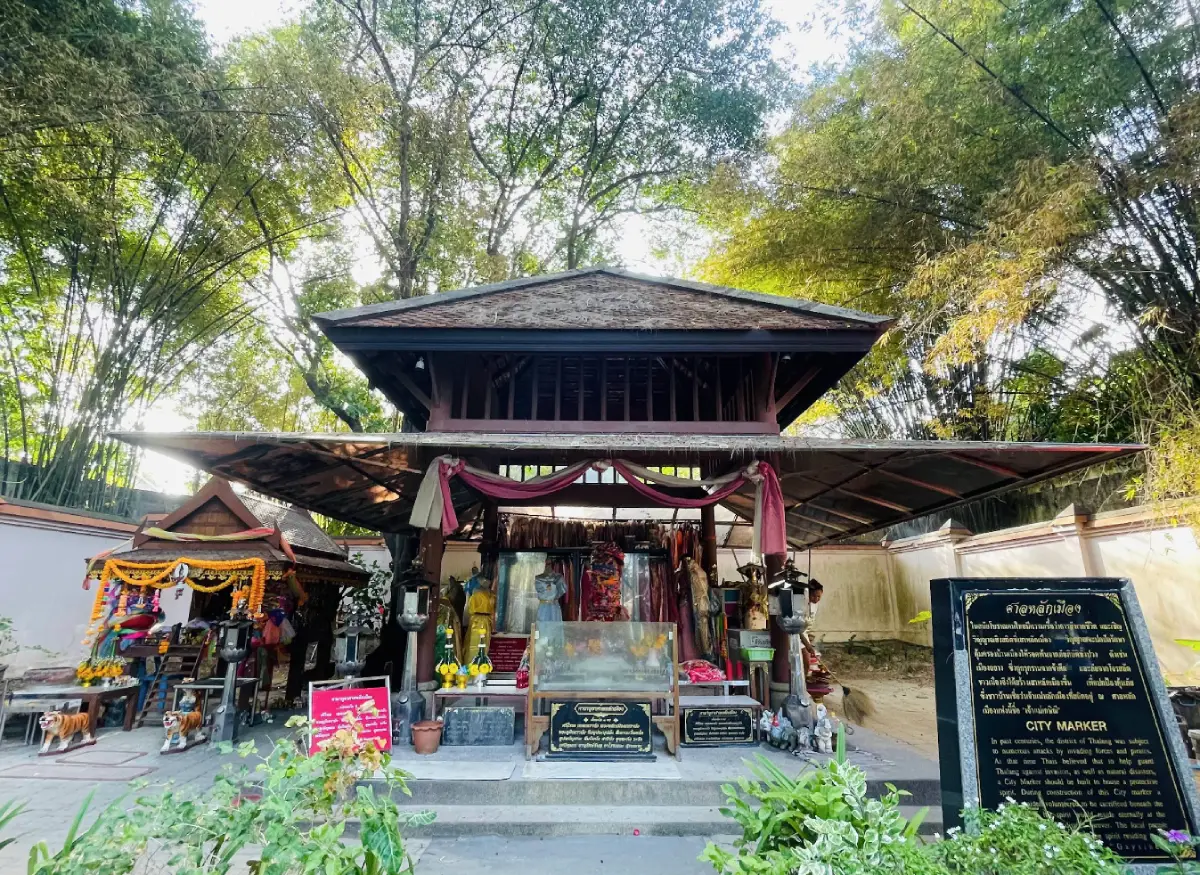
77.4 Le Phang City Pillar Shrine (Mae Kasini Shrine), Phuket is located near Le Phang Beach in Moo 4, Choeng Thale Subdistrict, Thalang District, close to the Laguna Phuket area and Banyan Tree Phuket. It is an old sacred landmark associated with the communities of Phuket's western coast and the protective guardian known as Mae Kasini.
History and Significance Le Phang has a historical connection with coastal settlement, navigation, and the maritime activities of the former Thalang region. The worship of Mae Kasini reflects beliefs concerning the protection of communities living beside the Andaman Sea and the spiritual importance of the surrounding coastal landscape.
Architecture and Sacred Features The shrine is a modest wooden pavilion containing sacred devotional objects and offering areas. Its orientation toward the west, facing the Andaman Sea, is associated in local tradition with protective beliefs concerning the maritime approaches to the area.
Traditions and Beliefs Local worshippers honor Mae Kasini as a guardian figure associated with protection, prosperity, and safe travel. The shrine remains a significant cultural element within a coastal area that has changed considerably through tourism development.
How to Worship Visitors may pay respect to Mae Kasini and the sacred city pillar area according to local custom, presenting flowers, garlands, or other permitted offerings. Incense and candles should be used only where designated.
Visitor Etiquette Respect the shrine's sacred objects and keep the surrounding beach clean. Visitors should avoid obstructing access routes used by residents or nearby businesses and take care when walking on wet or sandy surfaces.
Getting There From Phuket town, travel toward Choeng Thale and the Laguna Phuket area, then continue toward Le Phang Beach. As access routes in the surrounding hotel district may change, visitors should confirm the appropriate route to the shrine before departure.
Address: Le Phang Beach, Moo 4, Choeng Thale, Thalang District, Phuket 83110, Thailand
Reference Coordinates (Latitude, Longitude): 8.010041, 98.293550
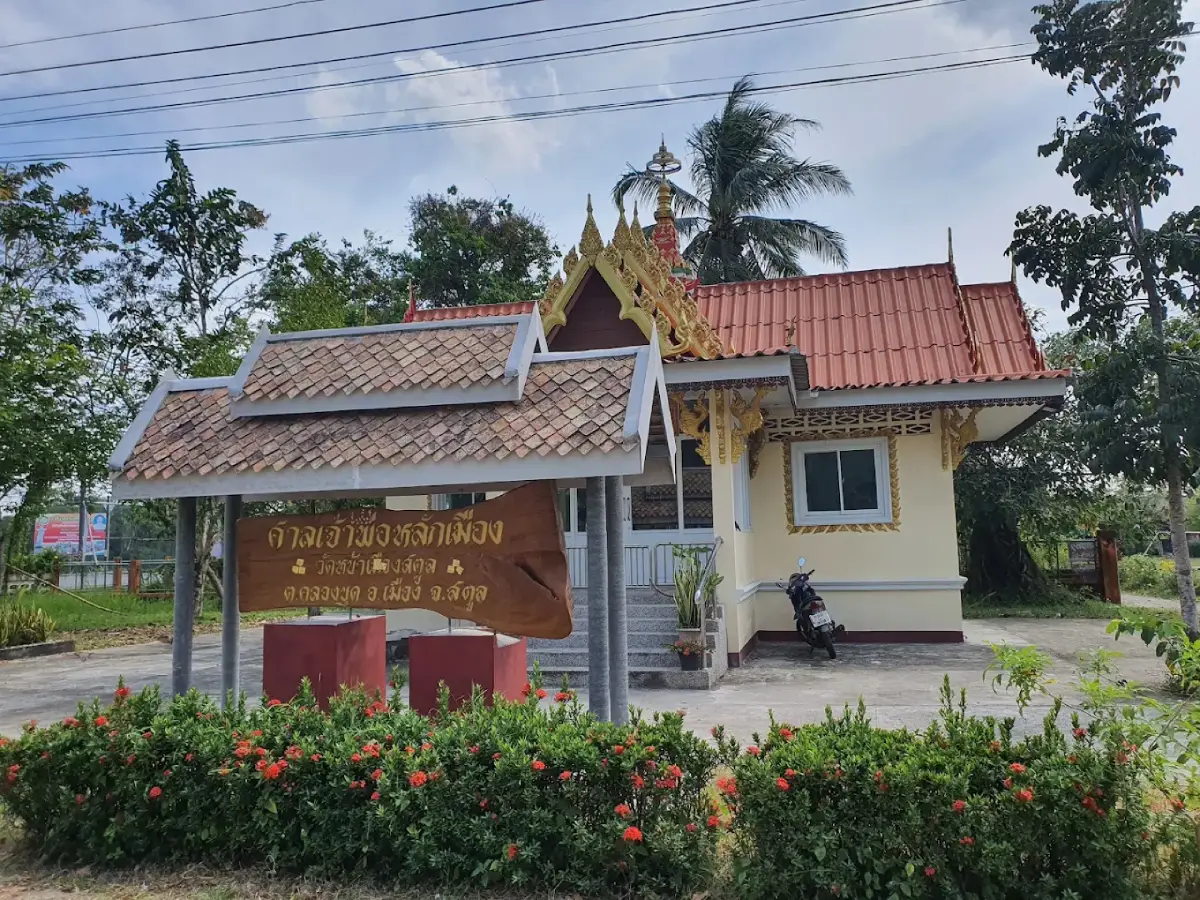
78. Satun City Pillar Shrine is located in the Khao Chin area of Khlong Khut Subdistrict, Mueang Satun District. Also referred to as Chao Pho Lak Mueang Satun Shrine, it is a sacred landmark associated with beliefs concerning the spiritual protection and auspicious foundation of the city. Its most distinctive characteristic is its setting amid limestone hills and natural surroundings, giving it a different atmosphere from city pillar shrines located in town centers or government compounds.
History and Significance Satun has a long history connected with the Malay Peninsula and the former Kedah region. Its cultural development reflects diverse influences associated with trade, settlement, administration, language, and religion. The construction of a provincial city pillar shrine is part of the contemporary expression of traditional Thai city guardian beliefs within this historically diverse province.
Development of the Shrine Information concerning the city pillar project includes preparation and coordination activities around 2016. The shrine has since become a place where visitors can pay respect to the sacred pillar in the Khao Chin area. Its significance is both spiritual and cultural, representing one element within the wider history of Satun's communities.
Landscape and Sacred Features The principal city pillar stands within a worship area near limestone formations and green surroundings. The natural landscape is a defining feature of the site. Rather than being dominated by a large monumental pavilion, the location emphasizes the relationship between the sacred pillar and the distinctive limestone environment.
Cultural Diversity Satun is home to communities with different religious and cultural traditions. Worship at the city pillar shrine is an expression of personal or community faith among those who observe this practice. It should not be assumed that all residents share the same religious customs.
Traditions and Beliefs Visitors may pay respect to the pillar and pray for protection, good fortune, family well-being, and peaceful community life. Special ceremonies should follow the arrangements made by the caretakers or relevant local authorities.
How to Worship Approach the pillar respectfully, present flowers or a garland at the designated point, and make a personal prayer. Incense, candles, and other offerings should be used only where permitted. Avoid placing objects against the pillar or disturbing the surrounding natural environment.
Visitor Etiquette and Safety Dress appropriately and maintain a quiet atmosphere. Because the shrine is close to limestone formations and sloping natural terrain, take care on wet or uneven surfaces. Do not enter unsafe cliff areas or leave litter, food waste, or ceremonial materials in the surrounding landscape.
Getting There From central Satun, travel toward Khlong Khut Subdistrict and continue to the Khao Chin area. The nearby Wat Tham Khao Chin Theerapradit can serve as a general area landmark, but the temple and city pillar shrine are separate destinations. Travelers should confirm the correct access route to the shrine.
Open Days: Open for general worship daily
Address: Khao Chin area, Khlong Khut, Mueang Satun, Satun 91000, Thailand
Map (GPS):Google Maps – Satun City Pillar Shrine
Summary Table of City Pillar Shrines in Northern Thailand City pillar shrines in Northern Thailand are distinguished by traditional beliefs associated with Sao Ming Mueang (auspicious city pillars), Sao Inthakhin (Inthakhin pillars), and Sadu Mueang (city navel pillars). These sacred landmarks are closely connected with Lanna history and local beliefs concerning guardian spirits responsible for protecting cities and communities. In the lower northern region, city pillar shrines also reflect the historical development of ancient towns and changes in administrative centers.
| Province and Shrine | Highlights | Worship Guide and Travel Tips |
| 1. Chiang Rai – City Navel Pillar (Sadu Mueang) | A sacred city center based on Lanna traditions, symbolizing the spiritual heart and stability of the city. | Pay respect at the principal sacred point, pray for stability and prosperity, and observe local Lanna customs. |
| 2. Chiang Mai – Inthakhin Pillar | A sacred Lanna city pillar enshrined at Wat Chedi Luang, associated with the annual Inthakhin Festival. | Follow the temple's designated worship arrangements, dress modestly, and check the annual Inthakhin Festival schedule. |
| 3. Mae Hong Son – Chao Pho Lak Mueang Mae Sariang Shrine | An important local guardian shrine representing the spiritual traditions of Mae Sariang. | Offer flowers or floral garlands, pay respect to the guardian deity, and follow community worship customs. |
| 4. Mae Hong Son – Pai District City Pillar | A sacred wooden pillar representing the local community of Pai, situated near the district office. | Pay respect to the pillar, avoid touching sacred objects, and take care around nearby roads and traffic. |
| 5. Lamphun – Chao Pho Lak Mueang Li Shrine | A local guardian shrine associated with the history and beliefs of Li District. | Follow local worship traditions and distinguish this district shrine from an officially established provincial city pillar shrine. |
| 6. Lampang – City Pillar Shrine | A sacred landmark preserving the traditions of historic Lampang, with three teak city pillars. | Present flowers or garlands and pay respect to the city pillars according to the shrine's designated sequence. |
| 7. Phrae – City Pillar Shrine | A city pillar shrine situated within Phrae's historic old town, associated with local heritage and historical evidence. | Pay respect to the pillar and explore the nearby historic town while preserving cultural objects. |
| 8. Nan – Sao Ming Mueang (Nan City Pillar) | A sacred teak pillar crowned with a four-faced Brahma figure, enshrined within Wat Ming Mueang. | Pay respect to the city pillar and Buddha images, follow temple rules, and avoid touching the carved pillar. |
| 9. Phayao – City Pillar Shrine | An important sacred landmark representing the spiritual identity of Phayao. | Offer flowers or garlands and pay respect at the designated worship point. |
| 10. Uttaradit – Replica City Pillar | A replica city pillar located at Wat Phra Thaen Sila At in Laplae District. | Pay respect to the replica pillar and the temple's sacred objects. Check the status of the separate provincial city pillar project. |
| 11. Sukhothai – Sawankhalok City Pillar Shrine | A sacred city pillar associated with the historic community of Sawankhalok. | Follow local worship customs and confirm the location in Sawankhalok District before traveling. |
| 12. Phitsanulok – City Pillar Shrine | An important sacred landmark of the historic City of Two Rivers. | Pay respect to the city pillar and combine the visit with Wat Phra Si Rattana Mahathat. |
| 13. Phichit – City Pillar Shrine | A two-story shrine with the city pillar upstairs and Phraya Khot Tabong Thewarat downstairs. | Pay respect at both worship points according to the shrine's instructions and explore Old Phichit Historical Park. |
| 14. Phetchabun – City Pillar Shrine | A sacred provincial landmark associated with an ancient stone pillar and the historic city of Si Thep. | Offer flowers or garlands, pray for auspiciousness, and avoid touching the historic stone pillar. |
| 15. Phetchabun – Nakhon Ban Phetchabun City Pillar | A separate historical city pillar associated with the Lom Sak area. | Confirm the exact location and distinguish it from the provincial city pillar shrine in central Phetchabun. |
| 16. Kamphaeng Phet – City Pillar Shrine | An ancient laterite city pillar closely associated with the historical town. | Pay respect to the pillar and help preserve the surrounding archaeological heritage. |
| 17. Tak – City Pillar Shrine of the Four Great Kings | A sacred landmark commemorating four important kings and the historical role of Tak. | Pay respect at the designated worship point and confirm access to the shrine near Kittikachorn Bridge. |
| 18. Nakhon Sawan – City Pillar Shrine | A shrine near Khao Kop, housing a ratchaphruek-wood pillar installed in 1974. | Pay respect to the pillar and check annual celebration dates, particularly around Songkran. |
| 19. Uthai Thani – City Pillar Shrine | A provincial sacred landmark established in 1993, reflecting the civic identity of Uthai Thani. | Worship at the designated point and explore the historic riverside communities nearby. |
Travel Tips for Northern Thailand: Visitors should distinguish among Sao Inthakhin, Sadu Mueang, Sao Ming Mueang, and local guardian shrines, as these sacred landmarks may follow different ceremonial traditions. Before attending annual celebrations, confirm the current dates and worship arrangements with the responsible temple or local community.
Summary Table of City Pillar Shrines in Central Thailand City pillar shrines in Central Thailand reflect the historical development of royal capitals, provincial towns, and former administrative centers. Some preserve original and replacement pillars within the same complex, while others incorporate both Thai and Chinese guardian-deity traditions. These shrines offer valuable opportunities to explore the connections between royal city-founding ceremonies, local history, and community beliefs.
| Province and Shrine | Highlights | Worship Guide and Travel Tips |
| 1. Bangkok – City Pillar Shrine | The historic Rattanakosin city pillar shrine, containing several principal worship stations and guardian deities. | Follow the shrine's recommended worship sequence and allow additional time during busy periods. |
| 2. Samut Prakan – Phra Pradaeng City Pillar Shrine | A historic pillar associated with the former city of Nakhon Khuean Khan, featuring Ganesha symbolism. | Pay respect according to the shrine's customs and confirm that the destination is Phra Pradaeng rather than central Samut Prakan. |
| 3. Nonthaburi – Old City Pillar Shrine | A historic shrine connected with the former administrative center of Nonthaburi. | Visit the old shrine at Pak Khlong Om and distinguish it from the newer provincial city pillar shrine. |
| 4. Pathum Thani – City Pillar Shrine | A provincial spiritual landmark representing the stability and identity of Pathum Thani. | Offer flowers or garlands and pay respect to the principal city pillar. |
| 5. Phra Nakhon Si Ayutthaya – City Pillar Shrine | A sacred landmark associated with the historic capital of Ayutthaya. | Pay respect to the city pillar before visiting nearby historical monuments and temples. |
| 6. Ang Thong – City Pillar Shrine | An important provincial shrine featuring traditional Thai architecture and interior murals. | Pay respect at the principal worship point and avoid touching the historical decorative surfaces. |
| 7. Lopburi – Arrow Shrine (City Shrine) | A local sacred landmark associated with legends concerning the foundation of Lopburi. | Follow the Arrow Shrine's own traditions rather than assuming it is identical to a formally installed provincial city pillar shrine. |
| 8. Sing Buri – City Pillar Shrine | A sacred civic landmark associated with the Hall of Nine Venerated Sing Buri Monks. | Pay respect to the city pillar and visit the religious hall following the site's instructions. |
| 9. Chai Nat – City Pillar Shrine | A city pillar shrine connected with the historic river communities of the Chao Phraya basin. | Present flowers or garlands at the designated point and take care around the riverside area. |
| 10. Suphan Buri – City Pillar Shrine | An important Thai-Chinese sacred landmark featuring historic religious imagery and Chinese-influenced architecture. | Follow the worship sequence for individual deities and respect the site's ancient sacred objects. |
| 11. Nakhon Nayok – City Pillar Shrine | A riverside shrine containing both original and newer city pillars. | Pay respect to the two pillars and other sacred figures according to the shrine's designated arrangements. |
| 12. Samut Sakhon – City Pillar Shrine | A shrine associated with Chao Pho Wichian Chot and the traditions of the fishing and trading communities. | Follow the respective worship customs of the guardian-deity shrine and Thai-style city pillar hall. |
| 13. Nakhon Pathom – Chao Pho Lak Mueang Nakhon Chai Si Shrine | A Chinese-influenced guardian shrine associated with the Bang Kaeo Canal community. | Observe local Chinese shrine customs and follow the instructions for the different sacred figures. |
| 14. Samut Songkhram – City Pillar Shrine | A golden Thai-style four-sided pavilion containing a chaiyaphruek-wood city pillar. | Pay respect to the main pillar and combine the trip with the Mae Klong Railway Market. |
| 15. Saraburi – City Pillar Shrine | A sacred civic landmark preserving both the older and newer city pillars. | Follow the recommended worship sequence for both pillars and respect the surrounding government premises. |
Travel Tips for Central Thailand: Some shrines have several worship stations or contain more than one sacred pillar. Visitors should check the shrine's worship map and instructions before beginning. Particularly at Bangkok, Suphan Buri, and Saraburi, incense quantities and offerings may differ between individual stations.
Summary Table of City Pillar Shrines in Western Thailand City pillar shrines in Western Thailand reflect the historical development of frontier towns, coastal settlements, and administrative centers. Many of these shrines are located near important historical monuments, making them suitable for cultural journeys that combine traditional worship with an exploration of local history and architecture.
| Province and Shrine | Highlights | Worship Guide and Travel Tips |
| 1. Kanchanaburi – City Pillar Shrine | A traditional Thai four-sided pavilion in the historic Pak Phraek area, associated with the relocation and development of Kanchanaburi during the reign of King Rama III. | Pay respect to the principal city pillar, then explore the nearby historic city gate and other monuments associated with the old town. |
| 2. Phetchaburi – City Pillar Shrine | An elegant white Thai-style shrine with red-tiled roofs, situated near Khao Wang and Phra Nakhon Khiri Historical Park. | Present flowers or floral garlands, pay respect to the city pillar, and combine the visit with Phra Nakhon Khiri and nearby historical temples. |
| 3. Prachuap Khiri Khan – City Pillar Shrine | A distinctive Thai-style shrine featuring a carved city pillar with a four-faced upper section and artistic influences associated with southern Thailand. | Pay respect to the principal pillar and other sacred figures according to the shrine's instructions, then explore Prachuap Bay and the surrounding town. |
| 4. Ratchaburi – City Pillar Shrine | A historical city pillar shrine associated with the development of Ratchaburi and its former administrative and military landscape. | Pay respect at the designated worship point, learn about the city's history, and confirm access arrangements because the shrine is situated within the Phanurangsi Military Camp area. |
Travel Tips for Western Thailand: Visitors can combine city pillar worship with cultural and historical sightseeing. Kanchanaburi and Phetchaburi are particularly suitable for itineraries that include former city centers, historic gates, royal buildings, and important temples. Before visiting shrines within military or administrative compounds, confirm the permitted entrance and access arrangements.
Summary Table of City Pillar Shrines in Eastern Thailand City pillar shrines in Eastern Thailand reflect the history of maritime trading towns, coastal settlements, and communities influenced by both Thai and Chinese cultural traditions. Several shrines preserve guardian-deity customs alongside traditional city pillars, while others are closely associated with historic riverside neighborhoods and provincial administrative centers.
| Province and Shrine | Highlights | Worship Guide and Travel Tips |
| 1. Chachoengsao – City Pillar Shrine | A sacred landmark of Paet Riu, reflecting the historical development of Chachoengsao and its connections with the Bang Pakong River. | Pay respect to the principal city pillar and combine the visit with temples, historic neighborhoods, and attractions along the Bang Pakong River. |
| 2. Chonburi – Chao Pho Lak Mueang Siri Maha Mongkhon Shrine | A historic community guardian shrine in Bang Pla Soi, reflecting the combination of Thai and Chinese religious traditions. | Follow local guardian-shrine customs and check the recommended worship sequence and offerings for each sacred figure. |
| 3. Chanthaburi – City Pillar Shrine | A sacred city landmark associated with Chanthaburi's historic town center and local traditions concerning King Taksin the Great. | Pay respect to the city pillar and learn about Chanthaburi's history through the nearby King Taksin the Great Shrine and historic neighborhoods. |
| 4. Trat – City Pillar Shrine | A distinctive Chinese-style city pillar shrine associated with the history and Thai-Chinese traditions of Trat. | Follow the shrine's designated worship sequence and confirm the appropriate offerings. Visitors interested in local traditions may check the annual city guardian celebration schedule. |
| 5. Prachin Buri – City Pillar Shrine | A traditional Thai four-sided pavilion beside the Prachin Buri River, containing a city pillar made from auspicious chaiyaphruek wood. | Pay respect at the principal worship point and take care when walking near the riverside, especially during wet weather. |
| 6. Rayong – City Pillar Shrine | A historic city pillar complex containing both a traditional Thai pavilion and a Chinese-style guardian shrine. | Worship at the Thai city pillar and Chinese shrine according to their respective customs. Do not assume that the same offerings or incense quantities apply at both locations. |
| 7. Sa Kaeo – City Pillar Shrine | A sacred civic landmark symbolizing the stability and identity of this eastern border province. | Pay respect to the city pillar, pray for auspiciousness, and confirm the travel route and local access arrangements before departure. |
Travel Tips for Eastern Thailand: Several shrines incorporate both Thai and Chinese religious traditions, particularly in Chonburi, Trat, and Rayong. Visitors should read the instructions for each worship station and use offerings appropriate to the individual shrine. Combining city pillar visits with historic town centers and riverside communities can provide a broader understanding of the region's cultural heritage.
Summary Table of City Pillar Shrines in Northeastern Thailand City pillar shrines in Northeastern Thailand, commonly known as Isan, are distinguished by traditional beliefs concerning city guardians, founding rulers, ancestral protectors, and local guardian spirits. Many shrines maintain close connections with annual merit-making festivals and ceremonial offerings. Several provinces preserve stories associated with their first governors and the establishment of communities along the Mekong River and its tributaries.
| Province and Shrine | Highlights | Worship Guide and Travel Tips |
| 1. Kalasin – City Pillar Shrine | Closely associated with the history of Thao Somphamit, the founding leader of Kalasin, and the province's wider Dvaravati cultural heritage. | Pay respect to the principal city pillar and learn about local traditions such as the Bun Samha purification ceremony. |
| 2. Khon Kaen – City Pillar Shrine | An important spiritual center of Khon Kaen and a landmark associated with the city's cultural identity. | Follow the shrine's designated worship sequence and allow extra time during religious festivals and public celebrations. |
| 3. Chaiyaphum – City Pillar Shrine and Chao Pho Phraya Lae Shrine | Closely connected with Phraya Lae, the first governor of Chaiyaphum, and the annual Sixth-Month Merit Festival. | Pay respect separately to the city pillar and Chao Pho Phraya Lae, following the instructions at each worship point. |
| 4. Nakhon Phanom – City Pillar Shrine | An important sacred landmark representing the history and cultural identity of this Mekong River town. | Offer flowers or garlands and combine the visit with the town's historical and cultural attractions along the Mekong River. |
| 5. Nakhon Ratchasima – City Pillar Shrine | A historic city pillar shrine associated with the development of Korat as an important administrative and strategic center. | Pay respect to the city pillar and other sacred figures according to the shrine's instructions, then explore the old town. |
| 6. Bueng Kan – Chao Mae Song Nang Shrine | A local guardian shrine associated with the legend of two sisters revered as protective spirits. | Pay respect to Chao Mae Song Nang according to local customs. The shrine should not automatically be identified as an officially installed provincial city pillar. |
| 7. Buriram – City Pillar Shrine | An important sacred landmark with architecture inspired by Khmer artistic traditions, reflecting Buriram's historical identity. | Present appropriate offerings and follow the worship sequence for the city pillars and other guardian deities. |
| 8. Maha Sarakham – City Pillar Shrine | A historic sacred landmark connected with the establishment of Maha Sarakham and its traditional city guardian beliefs. | Pay respect to the principal pillar and pray for prosperity, stability, and auspicious beginnings. |
| 9. Mukdahan – City Pillar Shrine | A traditional Thai four-sided pavilion housing a chaiyaphruek-wood city pillar, associated with the history of this Mekong border town. | Pay respect to the city pillar and check the schedule of annual provincial worship ceremonies. |
| 10. Yasothon – City Pillar Shrine | A distinctive shrine blending Thai, Chinese, and Lao architectural influences, with three sacred pillars. | Follow the recommended sequence for the central city pillar and the two accompanying sacred pillars. Offerings may differ between the worship points. |
| 11. Roi Et – City Pillar Shrine | An important city guardian shrine associated with Chao Pho Mahesak and the historic identity of Roi Et. | Pay respect at the designated worship point and follow the customs of the surrounding religious compound. |
| 12. Loei – City Pillar Shrine and Chao Pho Kut Pong Shrine | Two closely connected sacred landmarks reflecting the coexistence of a civic city pillar and a traditional local guardian shrine. | Pay respect to both shrines according to their respective customs and check the designated worship points before beginning. |
| 13. Si Sa Ket – City Pillar Shrine | An important provincial sacred landmark reflecting the cultural identity and religious traditions of Si Sa Ket. | Pay respect to the principal city pillar and observe local ceremonial customs. |
| 14. Sakon Nakhon – Chao Pho Mahesak Shrine | A historic guardian shrine associated with local beliefs and the development of Sakon Nakhon. | Pay respect to the guardian spirit according to the shrine's instructions and distinguish local guardian traditions from formal city pillar ceremonies. |
| 15. Surin – City Pillar Shrine | A sacred landmark representing Surin's historical development and traditional beliefs concerning the protection of the city. | Pay respect to the city pillar and observe the instructions associated with local worship ceremonies. |
| 16. Nong Khai – City Pillar Shrine | A sacred civic landmark associated with the cultural identity of this Thai–Lao border town. | Pay respect to the principal pillar and combine the visit with cultural sightseeing along the Mekong River. |
| 17. Nong Bua Lamphu – Phra Wo Phra Ta City Pillar Shrine | An important sacred site associated with Phra Wo and Phra Ta, two historical figures remembered as local protectors. | Pay respect to Phra Wo and Phra Ta according to local customs and follow the shrine's designated worship arrangements. |
| 18. Amnat Charoen – City Pillar Shrine | A traditional white Thai-style pavilion housing a ratchaphruek-wood city pillar within Ming Mueang Park. | Pay respect to the city pillar and enjoy the landscaped surroundings while observing park regulations. |
| 19. Udon Thani – City Pillar Shrine | A significant spiritual landmark situated in the central area of Udon Thani. | Follow the shrine's worship sequence and allow additional time during festivals or important ceremonies. |
| 20. Ubon Ratchathani – City Pillar Shrine | An important provincial sacred landmark associated with the historical and cultural identity of Ubon Ratchathani. | Offer flowers or garlands, follow the designated worship arrangements, and learn about the history of the city. |
Travel Tips for Northeastern Thailand: Many shrines are associated with founding rulers, ancestral guardians, and local protective spirits. Visitors should distinguish between the physical city pillar, the shrine of a founding ruler, and other guardian-deity worship points. This distinction is particularly important at Chaiyaphum, Bueng Kan, Sakon Nakhon, Loei, and Yasothon. Annual ceremony dates may follow the lunar calendar, so travelers should confirm the current schedule before visiting.
Summary Table of City Pillar Shrines in Southern Thailand City pillar shrines in Southern Thailand display remarkable historical and architectural diversity. They include traditional Thai pavilions, ancient city pillar sites, local guardian shrines, and sacred landmarks connected with the relocation of administrative centers. Phuket is particularly distinctive because this collection includes four historic city pillar shrines associated with different communities in Thalang District.
| Province and Shrine | Highlights | Worship Guide and Travel Tips |
| 1. Krabi – City Pillar Shrine | A white Thai-style pavilion with a red-tiled roof, situated near Krabi Provincial Hall. | Pay respect to the principal city pillar and observe regulations within the surrounding government compound. |
| 2. Chumphon – City Pillar Shrine | A sacred landmark housing a century-old ratchaphruek-wood city pillar, established in 1992. | Pay respect to the city pillar and check the schedule of annual worship and celebration ceremonies. |
| 3. Trang – Khuan Thani City Pillar Shrine | A historic city pillar located in the former administrative center of Trang, before the capital moved to Kantang and Thap Thiang. | Visit the shrine in Khuan Thani Subdistrict, Kantang District, and distinguish it from other historic pillar sites in Trang. |
| 4. Nakhon Si Thammarat – City Pillar Shrine | An important sacred landmark with white architecture inspired by Srivijaya artistic traditions and a golden teak city pillar. | Follow the designated worship sequence for the principal city pillar and surrounding guardian shrines. |
| 5. Narathiwat – City Pillar Shrine | A distinctive white-marble shrine with nine spires, officially opened in 2023. | Pay respect to the city pillar and observe the customs of the shrine while respecting the province's multicultural communities. |
| 6. Pattani – City Pillar Shrine | A sacred civic landmark associated with the historical development of Pattani and its diverse cultural heritage. | Follow the shrine's worship regulations and respect the different religious traditions practiced within the local community. |
| 7. Phang Nga – City Pillar Shrine | A sacred landmark associated with Chao Mae Sai Thong, featuring a five-spired building influenced by southern Thai artistic traditions. | Offer flowers or garlands and follow the designated worship arrangements for the city pillar and Chao Mae Sai Thong. |
| 8. Phatthalung – City Pillar Shrine | An architecturally distinctive shrine designed by Dr. Pinyo Suwankiri, standing on elevated ground near Wat Khuan Prong. | Pay respect to the city pillar and take care when walking along the sloping paths and steps leading to the shrine. |
| 9. Phuket – Tharuea City Pillar Shrine (Mae Duang) | A historic city pillar shrine in Ban Tharuea, featuring a rowing boat associated with the community's traditional waterways. | Pay respect to Mae Duang and the city pillar. Do not touch or move the historic boat without permission. |
| 10. Phuket – Mueang Mai City Pillar Shrine (Mae Chuang) | A historic shrine connected with the rebuilding of Thalang, featuring a newly installed city pillar consecrated in 2023. | Pay respect to Mae Chuang and the city pillar at the designated worship point, following local ceremonial customs. |
| 11. Phuket – Thalang Pa Sak City Pillar Shrine (Mae Soi Kaeo) | A historic guardian shrine in Ban Pa Sak, close to an older religious settlement and monastic area. | Pay respect to Mae Soi Kaeo and maintain a quiet atmosphere in the surrounding community and religious area. |
| 12. Phuket – Le Phang City Pillar Shrine (Mae Kasini) | A historic coastal guardian shrine near the Andaman Sea, facing west toward the shoreline. | Pay respect to Mae Kasini, confirm the access route, and help maintain the cleanliness of the nearby beach. |
| 13. Ranong – City Pillar Shrine | A Thai-style city pillar shrine with a distinctive five-spired roof, representing the cultural identity of this Andaman coastal province. | Pay respect to the city pillar and follow the designated worship arrangements. Confirm the travel route before departure. |
| 14. Satun – City Pillar Shrine | A sacred city pillar situated amid limestone hills and natural surroundings in the Khao Chin area. | Pay respect at the principal pillar and take care on wet surfaces and paths near the limestone formations. |
| 15. Songkhla – City Pillar Shrine | A historically significant Chinese-style shrine reflecting the Thai-Chinese cultural heritage of Songkhla Old Town. | Follow the shrine's designated worship sequence and combine the visit with historic streets and cultural attractions in Songkhla Old Town. |
| 16. Surat Thani – City Pillar Shrine | A prominent sacred landmark featuring traditional southern Thai architecture influenced by Srivijaya artistic traditions. | Pay respect to the principal city pillar and explore important attractions in central Surat Thani. |
| 17. Yala – City Pillar Shrine | An important sacred landmark situated at the center of Yala's distinctive planned urban layout. | Follow the shrine's worship arrangements and check the schedule of the annual City Pillar Celebration and Red Cross Fair. |
Travel Tips for Southern Thailand: Phuket has four historic city pillar shrines located in different parts of Thalang District, so travelers should confirm the exact name and location of each shrine before departing. Trang City Pillar Shrine is situated in Khuan Thani Subdistrict, Kantang District, rather than in present-day central Trang. Satun City Pillar Shrine is located in a limestone hill environment, so appropriate footwear and awareness of weather conditions are recommended.
City Pillar Shrine Worship Guide by Shrine Type Worship customs at city pillar shrines vary according to the history, religious traditions, and cultural backgrounds of individual communities. Although many shrines share beliefs concerning protection, prosperity, and auspicious beginnings, they do not necessarily follow identical ceremonies or require the same offerings. Understanding the different types of shrines can help visitors pay their respects appropriately and appreciate the cultural significance of each site.
| Shrine Type | Recommended Worship Method | Important Recommendations |
| Traditional Thai City Pillar Shrine | Pay respect to the principal city pillar, offer fresh flowers or floral garlands, and make a personal prayer for auspiciousness, prosperity, and protection. | Check the designated incense and candle stations. Do not touch the city pillar or attach ceremonial fabric without permission. |
| Lanna City Pillar, Sao Ming Mueang, and Sao Inthakhin | Follow traditional Lanna worship customs and the instructions of the responsible temple or local community. | Respect temple regulations, ceremonial restrictions, and the schedule of annual city pillar festivals. |
| Chao Pho Lak Mueang or Local Guardian Shrine | Pay respect to the principal guardian deity and any additional sacred figures according to the shrine's recommended sequence. | Not every local guardian shrine contains an officially installed provincial city pillar. Visitors should understand the site's historical identity. |
| Chinese or Thai-Chinese Guardian Shrine | Present incense, candles, flowers, fruit, or other offerings according to the customs associated with each sacred figure. | The number of incense sticks and worship sequence may differ between stations. Read the instructions or consult shrine attendants. |
| Shrine with Multiple Pillars or Guardian Deities | Follow the shrine's designated sequence for paying respect to each pillar, deity, or other sacred object. | Do not assume that identical offerings or incense quantities are required at every worship station. |
| Replica City Pillar | Pay respect to the replica according to the customs of the temple or community where it is enshrined. | Distinguish a replica pillar from a formally completed provincial city pillar shrine and check the status of any separate official shrine project. |
Regardless of the type of shrine, respectful conduct is more important than elaborate offerings. Visitors may express their wishes sincerely without purchasing expensive ceremonial items. When specific rituals are required, shrine attendants or official instructional signs should be regarded as the primary source of guidance.
Essential Travel Tips for Visiting City Pillar Shrines Across Thailand Traveling to city pillar shrines across Thailand offers an opportunity to explore local history, architecture, spiritual beliefs, and traditional community life. However, the locations and visitor arrangements of these sacred landmarks vary considerably. Some shrines stand in provincial administrative centers, while others are located within historic towns, Buddhist temples, residential communities, or natural landscapes. Preparing appropriately will help visitors enjoy a respectful and convenient journey.
1. Confirm the Exact Shrine Name and Location Some provinces have more than one city pillar shrine or guardian shrine, while others have sacred pillars associated with former administrative centers. Phuket, Mae Hong Son, Phetchabun, and Trang are important examples. Before traveling, confirm the full shrine name, district, subdistrict, and navigation destination. Using only the province name may lead to a different sacred site.
2. Check Opening Days and Visiting Hours Although many city pillar shrines welcome visitors daily, official visiting hours are not available for every location. Certain shrines are situated within temples, military areas, or government compounds where access arrangements may differ from those of the surrounding buildings. Visitors should verify current visiting conditions directly with the shrine or responsible organization and should not assume that a nearby temple's or office's operating hours also apply to the shrine.
3. Prepare Suitable Offerings Fresh flowers or floral garlands are generally appropriate for ordinary worship. Incense, candles, fruit, ceremonial fabric, gold leaf, and other offerings may be used according to the traditions of individual shrines. Visitors do not need to prepare elaborate offerings unless participating in a special ceremony or fulfilling a personal vow. Whenever possible, follow the instructions displayed at the shrine.
4. Respect Sacred Objects and Historical Structures Do not touch, scratch, climb on, or apply substances to city pillars, sacred images, archaeological objects, or decorative architectural surfaces without permission. Gold leaf and ceremonial fabric should be used only at designated locations. Visitors should also avoid interfering with religious ceremonies and should follow any restrictions on photography.
5. Dress Appropriately and Maintain Respectful Behavior Modest, comfortable clothing is suitable for visiting city pillar shrines. Visitors should avoid loud conversations, keep walkways clear, and show consideration for worshippers. At shrines located within Buddhist temples, additional dress requirements or restrictions on access to ceremonial areas may apply.
6. Plan Routes by Region Travelers planning to visit several city pillar shrines can organize their routes by geographical region and neighboring provinces. This approach allows visitors to explore multiple sacred landmarks while reducing unnecessary travel. Combining city pillar shrines with historic town centers, museums, temples, traditional markets, and cultural attractions can provide a more complete understanding of each destination.
7. Consider Local Weather and Terrain Some city pillar shrines are located beside rivers, on elevated ground, near limestone hills, or in communities reached by smaller roads. Visitors should wear appropriate footwear and take care on wet or uneven surfaces. Particular attention is recommended at locations such as Phatthalung City Pillar Shrine and Satun City Pillar Shrine, where the surrounding terrain differs from that of typical urban shrines.
8. Respect Local Religious and Cultural Diversity Thailand's city pillar and guardian shrines reflect different cultural traditions, including Lanna, Thai, Chinese, Khmer-influenced, and local community beliefs. Visitors should not assume that all shrines share identical rituals. This is particularly important in culturally diverse provinces, where residents may follow different religious traditions and not everyone participates in city pillar worship.
9. Check Annual Festival and Ceremony Dates Many city pillar shrines organize annual worship ceremonies, merit-making events, or community celebrations. Some follow fixed calendar dates, while others use the Thai lunar calendar. Visitors wishing to attend these events should verify the schedule for the relevant year. During major festivals, accommodation demand, traffic, and visitor numbers may increase.
10. Help Preserve Thailand's Cultural Heritage City pillar shrines are both living places of worship and important cultural landmarks. Visitors should dispose of ceremonial offerings responsibly, avoid leaving litter, respect public and private property, and help protect historical objects. Responsible travel allows these traditions and sacred places to remain meaningful for future generations.
Frequently Asked Questions (FAQ)
Q: Are there exactly 77 city pillar shrines in Thailand?
A: Thailand has 77 provinces, but this does not mean that there are exactly 77 city pillar shrines. Some provinces have older and newer city pillars, while others contain additional district pillars or traditional guardian shrines. Phuket, for example, has four historic city pillar shrines included in this collection. Therefore, the number of individual sacred sites can exceed the number of provinces.
Q: How many incense sticks should visitors use at a Thai city pillar shrine?
A: There is no single number of incense sticks that applies to every city pillar shrine in Thailand. The appropriate quantity depends on the shrine's traditions and the particular worship station. Visitors should read the posted instructions or ask shrine attendants, especially at sites containing several guardian deities or Chinese-style worship areas.
Q: Where should visitors begin when worshipping at a city pillar shrine?
A: Visitors should generally begin at the principal worship point identified by the shrine and then continue to other sacred figures according to the recommended sequence. Because different shrines follow different traditions, local instructions should take priority over a generalized worship procedure.
Q: What offerings should visitors prepare for city pillar worship?
A: Fresh flowers and floral garlands are suitable for ordinary worship at many city pillar shrines. Incense, candles, fruit, ceremonial fabric, gold leaf, lamp oil, and other items may be appropriate depending on local customs. Visitors should follow the shrine's instructions rather than assuming that every location requires the same offerings.
Q: Are city pillar shrines and Chao Pho Lak Mueang shrines the same?
A: They may be closely related, but they are not necessarily identical. Some shrines contain city pillars established according to formal city-founding traditions, while others are guardian shrines dedicated to protective spirits revered by local communities. Understanding the historical background of each site helps visitors appreciate these differences.
Q: How many historic city pillar shrines are included for Phuket?
A: This collection includes four historic city pillar shrines in Phuket: Tharuea City Pillar Shrine (Mae Duang), Mueang Mai City Pillar Shrine (Mae Chuang), Thalang Pa Sak City Pillar Shrine (Mae Soi Kaeo), and Le Phang City Pillar Shrine (Mae Kasini). All four are associated with different communities in Thalang District.
Q: Can travelers visit city pillar shrines in all 77 provinces of Thailand?
A: Travelers can plan a journey covering the provinces included in this collection, but they should verify the current visiting status, opening arrangements, and exact location of each site before departure. Some places are community guardian shrines or replica city pillars rather than conventional provincial city pillar shrines with regular visitor services.
Q: Which shrine should visitors worship at first when a province has several city pillar sites?
A: Visitors may choose the shrine that best suits their travel route and historical interests. There is no universal requirement to visit one shrine before another. It is more important to identify each site accurately and respect its individual traditions.
Q: What should visitors wear when visiting a Thai city pillar shrine?
A: Visitors should wear modest, respectful clothing suitable for a sacred place. They should avoid loud behavior, follow local regulations, and respect any additional dress requirements at shrines located inside Buddhist temples or other religious compounds.
Q: Is admission to every city pillar shrine in Thailand free?
A: Visitors should not assume that all shrines have identical admission conditions. Access arrangements and possible charges may vary, particularly at locations situated within temples, historical sites, or areas with special visitor regulations. Current admission information should be checked directly with the responsible organization.
 Category: ●Travel Articles, Recipes
 Group: ●Travel Review, Food Review
Last Update : 1 DayAgo
 Last Update : 1 DayAgo
Recommend

 Art, Culture and Heritage
 Historical Sites and Monuments(3)
 Landmarks and Memorials(23)
 Royal Palace(13)
 Art, Craft Centres, Tradition(35)
 Museums(59)
 Historic Homes and Cities(3)
 Art Gallery(16)
 Educational Places
 Museum for Study(6)
 Library(4)
 Places of Worship
 Temple(72)
 Church(2)
 Mosque(67)
 Other Sacred Sites(8)
 Research and Development
 Royal Project(1)
 Suburban Living
 Village, Community(5)
 Local Market(9)
 Floating Market(2)
 Nature and Wildlife
 River, Canal(3)
 Bays and Beaches(1)
 Other natural attractions(1)
 Entertainment and Agricultural
 Zoos and Aquariums(5)
 Animal camps and shows(5)
 Stadium(9)
 Farms, Parks and Ecotourism(20)
 Amusement Park(1)
 Waterpark(4)
 Theater(7)
 Cinema(1)
 Shopping
 Shopping and Night Market(20)
 Department Store(7)
 Spas and Wellness
 Spas and Wellness(1)
 Restaurant
 Michelin Star(5)
 Accommodation
 Hotel(3)
 Call Customer Service in Tourism
 Call Customer Service in Tourism(1)
Travel Review, Food Review(41)
 Royal Thai Desserts and Recipes(56)


