
lovethailand home >South Travel Attractions >Yala Travel Attractions >Muang Yala >Sateng > Yala City Pillar Shrine
TL;DR: Yala City Pillar Shrine is located at Phiphit Phakdi Road, In Front Of Yala Provincial Hall, Sateng Subdistrict, Mueang Yala District, Yala Province, open Daily, hours 08:00 – 18:30.

Yala City Pillar Shrine
Open Days: Daily
Opening Hours: 08:00 – 18:30
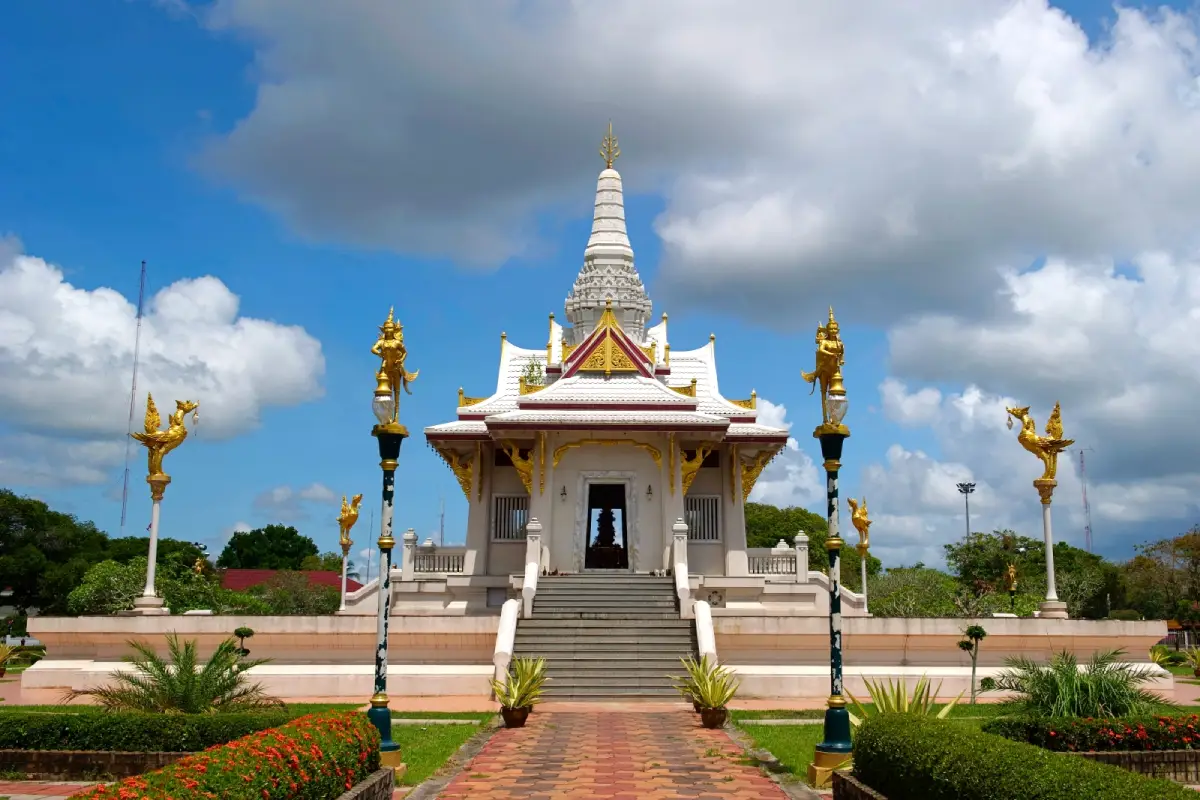
Yala City Pillar Shrine, also known as Chao Pho Lak Mueang Yala Shrine, is one of the most important spiritual and cultural landmarks in Yala Province. It is located on Phiphit Phakdi Road in front of Yala Provincial Hall, Sateng Subdistrict, Mueang Yala District, Yala Province. The shrine stands at the center of a major roundabout and functions as both a sacred place for worship and the symbolic center of Yala’s distinctive spider-web city plan. For visitors who want to understand Yala beyond ordinary sightseeing, this shrine is one of the best starting points because it connects faith, city history, urban planning, public space, annual ceremonies, and the everyday life of local people.
The shrine is important because it blends sacred meaning with urban design. It is not hidden away from the city. It stands in a public roundabout in front of the provincial hall, surrounded by lawns, ornamental plants, a pond, walkways, and public garden areas. Local people come here to pay respect to the guardian spirit of the city, make wishes, feed fish, rest in the garden, or pause during a day of business in the government district. This makes Yala City Pillar Shrine a living place rather than a monument viewed only from a distance.
In Thai tradition, a city pillar represents the founding of a city, the spiritual protection of the settlement, and the shared center of civic identity. In Yala, the city pillar carries even deeper meaning because it is tied to the relocation of the city, the development of a new administrative center, and the creation of a planned urban layout. The shrine is therefore not only a place of worship. It is a key to understanding how Yala became a modern provincial city with a clear center and an orderly network of roads.
Yala’s city history includes several relocations before the modern city center took shape. The town moved through different areas such as Ban Yala, Tha Sap, Sateng, and Ban Nibong before developing into the present urban area. These relocations reflected geography, administration, transport routes, and settlement growth. When Yala became a modern administrative center, the present city core was planned with a strong central point. The area of the City Pillar Shrine therefore became more than a religious site. It became the symbolic heart of the province.
The construction of Yala’s city pillar became clearly established during the administration of Police Colonel Siri Kochahiran, then Governor of Yala Province. The foundation stone for the city pillar was laid on 21 November 1961 at 10:30. This marked the beginning of a project to create a sacred civic symbol for the people of Yala. The city pillar was intended to serve as a source of unity, blessing, and identity for a province known for its cultural diversity.
The most important royal connection came on 18 May 1962, when King Bhumibol Adulyadej, Rama IX, graciously granted the top of the city pillar to Yala Province. The sacred top of the pillar was made from Chaiyaphruek wood. It measures 50 centimeters high, with a circumference of 43 inches at the base and 36 inches at the top. The head of the pillar is carved in the form of four-faced Brahma and a flame. These details give the pillar strong artistic, spiritual, and historical significance.
Chaiyaphruek wood carries auspicious meaning in Thai culture because the word chai is associated with victory and good fortune. The four-faced Brahma symbolizes the four sublime states of mind: loving-kindness, compassion, sympathetic joy, and equanimity. The flame at the top suggests light, wisdom, blessing, and protection. Together, these elements make the city pillar a symbol of peace, stability, and prosperity for Yala.
After the royal granting of the pillar top, Yala Province held the ceremony to install the pillar and its top on 25 May 1962 at 12:11. A seven-day celebration then took place from 25 to 31 May 1962. This first celebration became the beginning of the annual Yala City Pillar Celebration, a tradition that continues to link the shrine with public life and provincial identity.
The shrine building is a reinforced concrete structure finished with polished stone. It has a four-sided pavilion form, with entrances and steps facing all four directions. The building has a square form with indented corners and a tiled roof with alternating colors. The shrine is about 6 meters wide and about 6.50 meters high. Its size is modest enough to fit the roundabout landscape, but dignified enough to serve as the visual and spiritual center of the area.
The four-sided design is important because it allows access from every direction and matches the idea of a central civic point. The shrine is not only a cover for the city pillar. It connects the road network, public garden, government district, and civic movement around it. The beauty of Yala City Pillar Shrine therefore comes not only from the building itself, but also from its relationship with the city plan.
Yala’s city plan is one of the province’s strongest identities. The road network is often described as a spider-web layout, with circular roads and radial routes arranged around the city center. The City Pillar Shrine stands at the innermost center. Around it are important public buildings and government offices, while outer rings include residences, schools, hospitals, markets, and commercial areas. This urban structure makes the shrine the heart of Yala both physically and symbolically.
Phiphit Phakdi Road, where the shrine is located, helps visitors understand the city’s urban order. The road links government areas, older parts of the city, and other important routes. When visitors arrive at the shrine, they can see how the roundabout, roads, public garden, and administrative buildings work together. This gives Yala a strong city identity different from many other towns in southern Thailand.
The garden around the shrine softens the official character of the government district. Lawns, flower beds, ornamental plants, walkways, a pond, and shaded areas create a calm public space. Visitors can pay respect, walk around the shrine, feed fish, or rest in the surrounding garden. The shrine is therefore active not only during ceremonies but also in daily civic life.
The main activity for visitors is paying respect to Chao Pho Lak Mueang and asking for blessings. Local people often come to pray for work, trade, safe travel, health, family well-being, and peaceful living. The belief in a city pillar is communal because the pillar symbolizes the protection and stability of the city as a whole. Paying respect here is therefore a personal act and a connection with the wider identity of Yala.
Visitors may also buy flower, incense, and candle sets, lamp oil, or fish food in the shrine area. The general area is not operated like a commercial attraction with an admission ticket. Visitors can enter the public area, pay respect, walk in the garden, and rest respectfully. Those who want to make offerings or feed fish can do so according to their own intention.
The annual Yala City Pillar Celebration is one of the province’s most important events. It is held from late May to early June. Tourism information for the province records the annual period as 24 May to 4 June, while the 64th Yala City Pillar Celebration and Red Cross Fair in 2026 was held from 25 May to 4 June for 11 days and 11 nights. The event takes place around the City Pillar roundabout, Sukkhayang Road, and nearby public areas.
The annual celebration includes Buddhist rites, Brahmanic rites, a city-pillar worship ceremony, the invitation of a replica city pillar, a procession around Yala city, cultural performances, government exhibitions, public and private booths, local products, Red Cross activities, music, entertainment, and community participation. It is therefore more than a sacred ritual. It is a major provincial festival that combines faith, culture, charity, local economy, and civic pride.
The pre-festival worship ceremony is especially important. Officials and participants light incense and candles, worship in the four directions, apply gold leaf, offer ceremonial cloth and garlands, prepare ritual offerings, and invite the replica city pillar from the provincial hall to the shrine. These acts express the wish for prosperity, protection, and good fortune for the province and its people.
The continuity of the annual celebration gives the shrine a clear cultural calendar. The 2026 event was identified as the 64th edition, showing a long tradition from the first celebration in 1962. This continuity confirms that the shrine is not a silent monument. It remains a living center for ceremonies, public activities, and shared civic identity.
For travelers, the annual celebration offers a livelier experience than an ordinary visit. Visitors can see processions, local dress, cultural shows, student performances, exhibitions, local products, and Red Cross activities. Those who prefer a quiet visit should come on an ordinary morning or weekday, when the shrine is calmer and easier to appreciate. During the festival, traffic and parking around the shrine may be crowded.
Yala City Pillar Shrine is easy to combine with nearby places. Visitors can begin at the shrine, then continue to Suan Khwan Mueang Yala, Chang Phueak Ceremonial Ground, the Clock Tower roundabout, Si Mueang Garden, Ban Rom Public Park, Yala Railway Station, Yala Learning Park, the old market area, Yala Provincial Central Mosque, or Wat Khuha Phimuk. This route shows Yala through worship, public gardens, civic space, transport, markets, and religious diversity.
Suan Khwan Mueang Yala is one of the nearest leisure areas and is suitable after visiting the shrine. It is used by residents for walking, exercise, relaxation, and family activities. Chang Phueak Ceremonial Ground and the Clock Tower also help visitors understand the urban axis of central Yala. Visiting these places together gives a clearer view of how the city center is organized.
The shrine is also not far from the old market area and Yala Railway Station. The old market offers food, tea shops, roti stalls, small businesses, and local urban life. The railway station has long been an important gateway into the province. When the shrine, market, and railway station are viewed together, visitors can see how administration, transport, trade, and faith shaped Yala.
Culturally, the shrine belongs to a multi-faith city. Its roots are connected with Thai, Brahmanic, and Buddhist beliefs, but it stands in a province where Buddhist, Muslim, Chinese, and other communities live together. The shrine’s role as a public civic space helps show that Yala is not defined by a single identity. It is a city where different faiths, histories, markets, and communities occupy the same urban landscape.
For those interested in Thai architecture, the shrine is a compact but complete example of a city pillar shrine. Its four-sided pavilion form, four-direction stairways, tiled roof, indented corners, elevated base, and ornamental details create the visual dignity of a sacred building. The steps also create a symbolic transition from public space into a place of worship.
For visitors interested in urban history, the shrine should be read together with the development of Yala’s new town center. The spider-web plan, the placement of the provincial hall, the arrangement of public offices, and the roads such as Phiphit Phakdi, Sukkhayang, and Siroros all help explain how the city was planned and used. The shrine is therefore not only a religious stop, but also a key to reading the city.
Families can use the shrine as an educational stop for children and young visitors. The site helps explain what a city pillar is, why people ask for blessings, how Yala’s city plan works, why annual celebrations matter, and how public space can hold both religious and civic meaning. Learning from the actual place gives young visitors a direct understanding of local history.
Visitors should behave respectfully. Modest dress, quiet voices, careful movement near worshippers, and cleanliness are expected. Visitors should not climb on the shrine structure, touch sacred components inappropriately, litter, or feed fish outside suitable areas. Photography is acceptable in general public areas, but it should never disturb people who are praying or taking part in ceremonies.
The best times to visit are morning and late afternoon, when the light is softer and the temperature is more comfortable. Midday is suitable for a short stop while visiting the government district. Late May to early June is the annual festival period. Visitors who come during the festival can experience the province’s largest public celebration around the shrine, but they should allow extra time for traffic and parking.
Getting There is straightforward from anywhere in central Yala. The shrine is on Phiphit Phakdi Road in front of Yala Provincial Hall. Visitors driving into central Yala can follow main city roads toward the provincial hall and the large roundabout. Train travelers can get off at Yala Railway Station and continue by local transport, motorcycle taxi, or hired vehicle to the shrine. The journey stays within the city and can be combined easily with other attractions.
Drivers should be careful around the roundabout and government district because vehicles approach from several directions. On ordinary days, visitors can park in permitted public areas around the provincial hall or nearby roads. During the City Pillar Celebration and Red Cross Fair, parking and traffic become busier, so walking from a suitable parking point is usually more convenient.
A practical first-time route can begin at Yala City Pillar Shrine in the morning, then continue to Suan Khwan Mueang, Chang Phueak Ceremonial Ground, the Clock Tower roundabout, the old market area, Yala Provincial Central Mosque, Yala Learning Park, Wat Khuha Phimuk, or Yala Railway Station. The route can be adjusted into a half-day or full-day trip depending on how much time visitors want to spend in the city.
Dining near the shrine is convenient because central Yala has many options in the garden area, Phiphit Phakdi Road, Sukkhayang Road, Siroros Road, and the old market quarter. Visitors can find halal food, roti, tea shops, rice dishes, local restaurants, and cafés. Planning meals together with the shrine route helps reduce unnecessary backtracking and makes a city trip smoother.
Accommodation is best chosen in Mueang Yala District, especially around Chaloemchai Road, Jongrak Road, municipal roads, Siroros Road, Sateng, and Sateng Nok. These areas give easy access to the City Pillar Shrine, railway station, Suan Khwan Mueang, the old market, restaurants, and other city attractions. During the annual celebration, advance planning is useful because the city center becomes busier.
From a conservation perspective, Yala City Pillar Shrine should be protected as both a sacred site and a civic heritage place. Conservation should cover the shrine building, city pillar, garden, pond, roundabout setting, annual ceremonies, cleanliness, visitor etiquette, and public safety. Protecting the shrine means protecting the cultural heart of Yala.
Compared with other major places in Yala, the shrine has its own role. Wat Khuha Phimuk represents Buddhist heritage and cave worship. Yala Provincial Central Mosque represents Islamic architecture and Muslim community life. Suan Khwan Mueang represents public recreation. Yala City Pillar Shrine represents the city’s spiritual and urban center. A complete cultural trip through Yala should include all these dimensions.
Yala City Pillar Shrine is also a natural starting point for understanding old and modern Yala together. It is close to the provincial hall, Sukkhayang Road, Phiphit Phakdi Road, and government offices, while also connecting to the old market and railway station. Moving from the shrine to these areas reveals Yala in layers: faith, administration, trade, transport, and community culture.
For photography, the shrine offers several strong viewpoints: the front staircase, the garden approach, the pond reflection, the roundabout angle, and late-afternoon light on the white and gold details. Photographs should be taken respectfully and without disturbing worshippers. This is a sacred civic shrine, not merely a decorative landmark.
The reason Yala City Pillar Shrine stands apart from many city pillar shrines is its double role. It is a sacred place where people worship the city guardian spirit, and it is also the center of one of Thailand’s most distinctive urban plans. Once visitors understand both roles, the shrine becomes more than a place to make a wish. It becomes the key to reading the whole city.
In summary, Yala City Pillar Shrine is an essential landmark for anyone visiting Yala city. Its history is tied to the foundation stone laid in 1961, the royal granting of the pillar top on 18 May 1962, and the installation ceremony on 25 May 1962. The shrine houses a Chaiyaphruek-wood pillar top carved with four-faced Brahma and a flame. The pavilion stands at the center of the roundabout in front of Yala Provincial Hall, surrounded by garden space and a pond. Today it remains open daily for worship and continues to host the annual Yala City Pillar Celebration and Red Cross Fair. Visitors who want to understand Yala deeply should see this shrine as a spiritual center, an urban landmark, and the cultural heart of the province.
| Name | Yala City Pillar Shrine, Or Chao Pho Lak Mueang Yala Shrine |
| Location | Phiphit Phakdi Road, In Front Of Yala Provincial Hall, Sateng Subdistrict, Mueang Yala District, Yala Province |
| Coordinates | 6.5425000, 101.2830556 |
| Place Type | City Pillar Shrine, Sacred Civic Shrine, And Central Landmark Of Yala’s City Plan |
| Highlights | Chaiyaphruek-wood city pillar top, four-faced Brahma and flame carving, four-sided pavilion, central roundabout, public garden, pond, and annual City Pillar Celebration. |
| History / Period | Foundation stone laid on 21 November 1961, royal granting of the pillar top on 18 May 1962, and installation ceremony on 25 May 1962. |
| Significance | A sacred symbol of Yala, spiritual center for local people, and the central point of Yala’s spider-web city layout. |
| City Pillar Top | Made from Chaiyaphruek wood, 50 centimeters high, 43 inches in circumference at the base, 36 inches at the top, with a four-faced Brahma and flame carving. |
| Shrine Architecture | Reinforced concrete shrine finished with polished stone, four-sided pavilion form, entrances and steps facing four directions, indented square plan, and alternating-color tiled roof. |
| Shrine Size | About 6 meters wide and about 6.50 meters high. |
| Caretaker / Related Agencies | Yala Province, Yala City Municipality, Yala Red Cross Chapter, and agencies involved in the annual City Pillar Celebration and Red Cross Fair. |
| Contact Number | Yala City Municipality, Tel. 073-223-666 |
| Main Areas / Zones | City pillar shrine, pillar chamber, four-direction stairways, worship area, surrounding garden, pond, walkways, and annual-event area. |
| Facilities | Worship area, walkways, garden, pond, fish-feeding area, nearby permitted parking areas, and public-event space during the annual celebration. |
| Open Days | Daily |
| Opening Hours | 08:00 – 18:30 |
| Admission Fee | No general admission fee. Flower, incense, and candle set 20 baht; lamp oil 20 baht per bottle; fish food 10 baht per bucket. |
| Regular Activities | Paying respect to Chao Pho Lak Mueang, making wishes, walking in the garden, resting, and feeding fish. |
| Annual Tradition / Festival | Yala City Pillar Celebration and Red Cross Fair from late May to early June. The 2026 event was held from 25 May to 4 June for 11 days and 11 nights. |
| Annual Festival Activities | Buddhist rites, Brahmanic rites, city-pillar worship ceremony, replica city-pillar procession, cultural shows, exhibitions, Red Cross booths, local products, and entertainment. |
| Visitor Etiquette | Dress modestly, speak respectfully, avoid disturbing worshippers, do not climb or touch sacred structures inappropriately, keep the area clean, and feed fish only in suitable areas. |
| Travel Information | From central Yala, travel to Phiphit Phakdi Road in front of Yala Provincial Hall. Train travelers can get off at Yala Railway Station and continue by local transport, motorcycle taxi, or hired vehicle. |
| Current Status | Still open for daily worship and still used for the annual Yala City Pillar Celebration and Red Cross Fair. |
| Nearby Tourist Attractions | 1. Suan Khwan Mueang Yala About 626 m 2. Chang Phueak Ceremonial Ground About 687 m 3. Clock Tower Roundabout About 883 m 4. Yala Railway Station About 1.5 km 5. Yala Learning Park About 1.5 km 6. Si Mueang Garden About 2.03 km 7. Ban Rom Public Park About 2.03 km 8. Yala Provincial Central Mosque About 3 km 9. Wat Khuha Phimuk About 10 km |
| Nearby Restaurants | 1. FUSHKA Suan Khwan Mueang Yala About 800 m, Tel. 066-130-7178 2. Kadah Suan Khwan Mueang About 1 km, Tel. 084-855-6481 3. Khao Mok Kai Tod Kor Phai / Bang Bee Khao Mok & Soup About 2 km, Tel. 061-229-3212, 063-069-9560 4. Thai Islam Phochana, Siroros Road About 3 km, Tel. 080-549-2208 5. Roti de Forest Talat Kao About 3 km, Tel. 065-084-2972 6. Roti-ong Yala, Siroros Road About 3 km, Tel. 098-553-3151 7. Laila Restaurant Yala About 4 km, Tel. 091-646-6115 |
| Nearby Accommodations | 1. Yala Grand Palace Hotel About 1 km, Tel. 073-215-711, 073-215-712 2. Yala Rama Hotel About 1.5 km, Tel. 073-221-990-2 3. Park View Yala Hotel About 2 km, Tel. 073-217-001-5 4. Nibong Resort About 2.5 km, Tel. 073-224-341, 099-312-5548 5. @INN YRU About 3 km, Tel. 062-182-2662 6. 999 Yala Hotel About 4 km, Tel. 073-222-630 7. Buri Sateng Hotel About 5 km, Tel. 096-642-9663 |
Frequently Asked Questions (FAQ)
Q: Where is Yala City Pillar Shrine located?
A: Yala City Pillar Shrine is located on Phiphit Phakdi Road in front of Yala Provincial Hall, Sateng Subdistrict, Mueang Yala District, Yala Province.
Q: What are the opening hours of Yala City Pillar Shrine?
A: Yala City Pillar Shrine is open daily from 08:00 to 18:30.
Q: Is there an admission fee for Yala City Pillar Shrine?
A: There is no general admission fee. Visitors may buy flower, incense, and candle sets, lamp oil, or fish food if they wish.
Q: Why is Yala City Pillar Shrine important?
A: It is the sacred city pillar shrine of Yala, a spiritual center for local people, and the central point of Yala’s distinctive spider-web city plan.
Q: What is special about the Yala city pillar top?
A: The pillar top is made from Chaiyaphruek wood, measures 50 centimeters high, and is carved with four-faced Brahma and a flame.
Q: When is the Yala City Pillar Celebration held?
A: The annual Yala City Pillar Celebration and Red Cross Fair is held from late May to early June. In 2026, it was held from 25 May to 4 June for 11 days and 11 nights.
Q: How should visitors behave at the shrine?
A: Visitors should dress modestly, speak respectfully, avoid disturbing worshippers, keep the area clean, and avoid touching sacred structures inappropriately.
Q: What places can visitors see near Yala City Pillar Shrine?
A: Nearby places include Suan Khwan Mueang Yala, Chang Phueak Ceremonial Ground, the Clock Tower roundabout, Yala Railway Station, Yala Learning Park, Yala Provincial Central Mosque, and Wat Khuha Phimuk.
 Category: ●Places of Worship
 Group: ●Other Sacred Sites
Last Update : 2 WeekAgo
 Last Update : 2 WeekAgo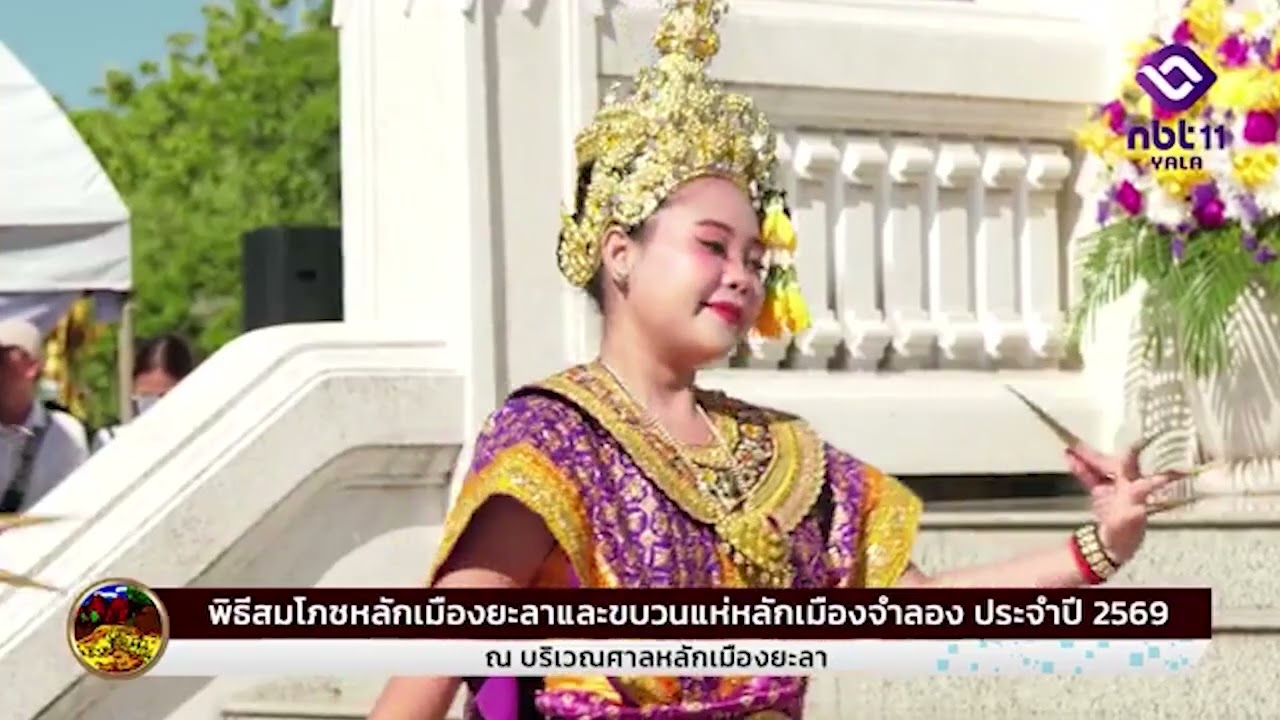
 Click to Access the Navigation Map GPS
Yala City Pillar Shrine Map

 Art, Culture and Heritage
 Landmarks and Memorials(1)
 Art, Craft Centres, Tradition(2)
 Museums(2)
 Educational Places
 Educational Gardens, Farm(1)
 Temple(6)
 Mosque(2)
Other Sacred Sites(3)
Mosque(2)
Other Sacred Sites(3)
 Suburban Living
 Village, Community(4)
 Nature and Wildlife
 National Parks and Marine Reserves(2)
 Mountain (Doi)(5)
 Dam, Reservoir, Lake(5)
 Waterfalls(13)
 Hot Springs(2)
 Caves(7)
 River, Canal(4)
 Islands(1)
 Other natural attractions(8)
 Entertainment and Agricultural
 Stadium(1)
 Farms, Parks and Ecotourism(4)
 Outdoor and Adventure Activities(1)
 Travel Articles, Recipes
 Travel Review, Food Review(2)


