
lovethailand home >Northeastern Travel Attractions >Maha Sarakham Travel Attractions >Muang Maha Sarakham >Talat > Maha Sarakham City Pillar Shrine
TL;DR: Maha Sarakham City Pillar Shrine is located at Nakhon Sawan Road, in front of Lak Mueang Maha Sarakham School, Talat Subdistrict, Mueang Maha Sarakham District, Maha Sarakham Province, open Daily, hours 06.00 – 18.00.
Maha Sarakham City Pillar Shrine
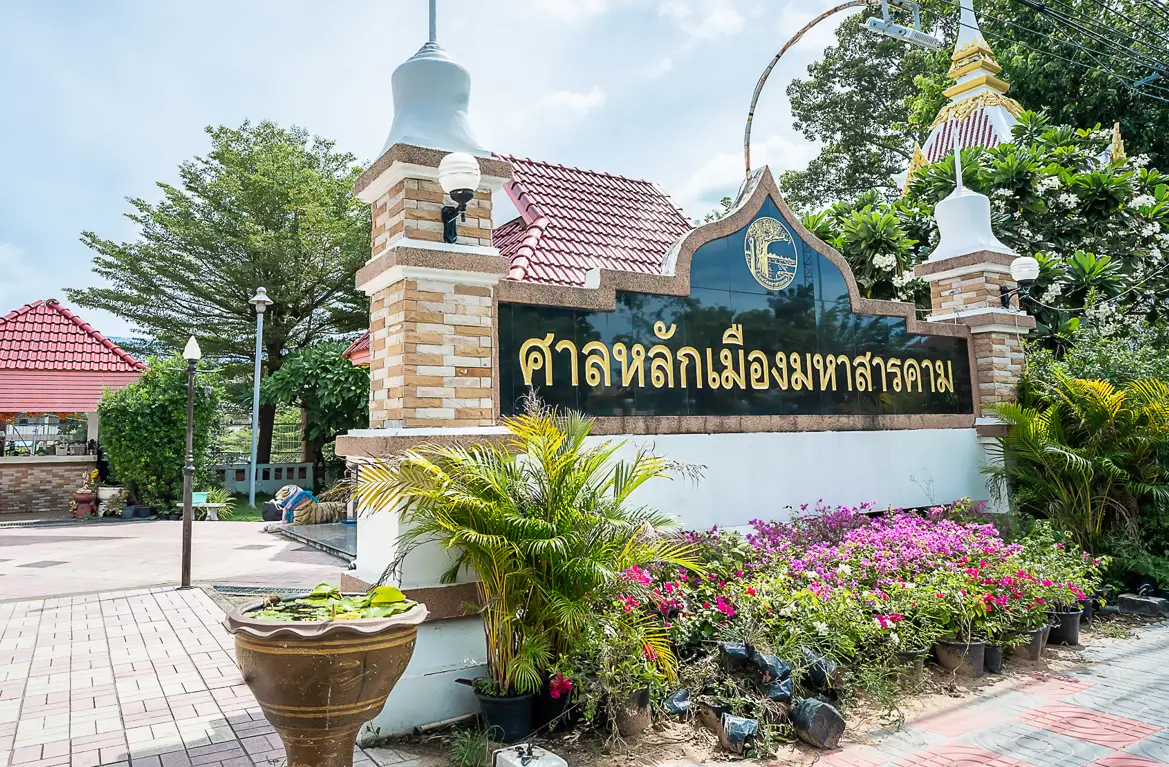
Open Days: Daily
Opening Hours: 06.00 – 18.00
Maha Sarakham City Pillar Shrine, also known as San Chao Pho Lak Mueang Maha Sarakham, is one of the most meaningful sacred landmarks in Maha Sarakham Province. Located on Nakhon Sawan Road in front of Lak Mueang Maha Sarakham School, in Talat Subdistrict, Mueang Maha Sarakham District, the shrine is deeply respected by local residents and is closely connected to the founding history of the city. For travelers, it is one of the best places to begin a visit to Maha Sarakham because it brings together history, local belief, Thai urban tradition, and the spiritual identity of the province in one compact and accessible site.
The shrine is suitable for travelers who want to start their journey in Maha Sarakham with a meaningful act of respect. Visitors come here to pay homage to the guardian spirit of the city, make wishes for stability and good fortune, and learn about the early history of Maha Sarakham during the time of Thao Maha Chai, also known as Phra Charoen Ratchadet, the first ruler of Maha Sarakham. The shrine is open daily from 06.00 to 18.00, has no admission fee, and is located in the city center near important roads, cafés, restaurants, hotels, and other local attractions.
The historical importance of Maha Sarakham City Pillar Shrine dates back to 1865, when Thao Maha Chai gathered people from Roi Et to establish a new town. As part of the founding of the city, a city pillar shrine was built to serve as the spiritual foundation of the settlement. In Thai tradition, a city pillar is not simply a marker of location. It represents the beginning of a city, the stability of the community, the protection of its people, and the auspicious center from which civic life grows.
In the context of Maha Sarakham, the City Pillar Shrine carries a meaning that goes beyond ordinary sightseeing. Maha Sarakham developed from a local Isan settlement into an important provincial center known for education, culture, and regional commerce. The city pillar therefore symbolizes the act of establishing a home, building a community, and creating a shared sense of identity. Many local residents still visit the shrine before beginning important tasks, traveling, opening a business, taking examinations, starting a new job, or asking for blessings related to stability in life.
One of the most distinctive features of the shrine is its four-sided pavilion structure, known in Thai as a chaturamuk-style building. It has entrances on all four sides, symbolizing openness and protection in every direction. Inside the shrine stands the city pillar made from Chaiyaphruek wood, also known as Ratchaphruek or golden shower tree wood. In Thai culture, this tree is associated with prosperity, growth, and auspiciousness. The pillar is carved, lacquered, and gilded with care, giving the shrine both artistic and spiritual significance.
The current shrine has gone through several important historical stages. The original city pillar was established in 1865 during the founding period of Maha Sarakham. The present shrine structure was built in 1912. It was originally a wooden shrine, and in 1984 it underwent a major restoration designed according to traditional principles with the involvement of the Fine Arts Department. This continuity of construction, restoration, and preservation reflects the relationship between the city, local administration, official institutions, and the people of Maha Sarakham.
When visitors arrive, they will find the shrine standing in an active urban setting, close to Lak Mueang School, the clock tower area, and the main routes of the city. The building is modest in scale, with a clean white structure, red roof, and Thai decorative elements. It does not feel like a large commercial tourist attraction. Instead, it conveys a strong sense of local devotion. People passing by often raise their hands in a wai or honk their car horns as a gesture of respect, a common local practice around sacred city shrines in Thailand.
The central point of worship is the city pillar itself. Visitors usually offer prayers, light incense and candles, present garlands, or bring colored cloth according to their personal faith. Many people make wishes related to work, education, business, safe travel, and personal stability. In Thai belief, paying respect to a city pillar is often associated with the idea of having a firm foundation in life, being guided in the right direction, and receiving protection from the guardian spirit of the city.
Worship at Maha Sarakham City Pillar Shrine is simple and respectful. Visitors should dress modestly, calm their mind, and bring flowers, incense, candles, or garlands if they wish. After arriving, they can pay respect at the front of the shrine and make a quiet wish. The ritual does not need to be elaborate. The most important elements are sincerity, respect, and proper behavior in a sacred place. Travelers who wish to take photographs should do so discreetly, avoid disturbing worshippers, and never walk directly in front of someone who is praying.
The shrine also plays a role in the ceremonial life of the city. During important provincial and municipal occasions, worship ceremonies and offerings may be held here because the shrine is regarded as the spiritual center of Maha Sarakham. When a civic event is connected with auspicious beginnings, protection, or the identity of the city, the City Pillar Shrine often becomes a ceremonial starting point. These occasions reflect cooperation among local authorities, community leaders, residents, and devotees.
For travelers interested in local history, the shrine provides a clear entry point into the story of Maha Sarakham. The province is often recognized as a city of education, but its deeper identity is tied to the expansion of communities from Roi Et, the establishment of a new settlement, and the creation of sacred spaces that helped unite people. Visiting the city pillar gives travelers a way to understand Maha Sarakham through history, culture, and belief rather than through geography alone.
The use of Chaiyaphruek wood for the pillar is also meaningful. The golden shower tree is familiar throughout northeastern Thailand, and its bright yellow flowers are often associated with summer, Songkran, prosperity, and Thai cultural identity. Because the Thai word “khun” or “khoon” is connected with ideas of increase and benefit, the use of this wood in a city pillar reinforces the meaning of prosperity and growth for the city and its people.
The four-sided architectural form is another detail worth observing. Its balanced structure gives the shrine the feeling of a central point open to all directions. This design matches the role of a city pillar shrine as a spiritual center for the entire community. It is not a sacred place reserved for a particular group. Anyone can enter respectfully, pay homage, and take part in the living tradition of the city.
The surrounding atmosphere is distinctly urban. The shrine is located near a school, local roads, shops, and community areas, making it part of everyday life rather than an isolated monument. Seeing the shrine in this setting helps visitors understand how sacred places function in Thai towns. They are not separate from daily routines. Students, parents, workers, business owners, and travelers can all stop by to pay respect during the day.
For visitors arriving from other provinces, paying respect at the City Pillar Shrine is a practical way to begin a city tour. From here, travelers can continue to Wat Mahachai, Wat Phutthawanaram or Wat Pa Wang Nam Yen, Kaeng Loeng Chan, Khong Kut Wai Fish Park, Ban Chiang Hian Museum, and Ku Mahathat. This route combines religious heritage, local history, natural scenery, and community culture within Mueang Maha Sarakham District.
If visitors have only 15 to 30 minutes, they can still pay respect, take photographs of the exterior, and walk around the shrine area. Those with more time can use the shrine as the first stop before visiting Wat Mahachai, which is located nearby and offers another perspective on the religious and cultural history of the city. From there, continuing to Wat Pa Wang Nam Yen provides a broader view of Maha Sarakham’s spiritual landscape.
Maha Sarakham City Pillar Shrine is suitable for several types of travelers. It is ideal for those interested in sacred sites and good-luck rituals, for visitors who want to learn about local history, for first-time travelers who want to understand the identity of Maha Sarakham, and for international visitors who wish to experience Thai local culture beyond the major tourist cities. The shrine is small, accessible, and culturally rich.
Visitors should follow basic etiquette while at the shrine. Dress politely, speak softly, avoid touching the city pillar unnecessarily, do not block the worship area, and keep the place clean. If lighting incense or candles, use the designated area and be mindful of smoke, especially when elderly visitors, children, or people sensitive to smoke are nearby. These simple practices help maintain the dignity of the sacred space.
For foreign travelers, it is useful to understand that a city pillar shrine is not exactly the same as a Buddhist temple. It is a sacred civic shrine that combines Brahmanical tradition, local belief, and Thai cultural practice. Visitors are welcome to observe how locals worship, walk around respectfully, and take photos from appropriate points. Learning about the city pillar tradition helps visitors understand how Thai communities express respect for the spiritual center of a city.
The shrine also reflects Maha Sarakham’s identity as a city that preserves a connection between past and present. Even as the city has grown with roads, shops, hotels, shopping areas, and educational institutions, the City Pillar Shrine remains a familiar point of reference. It is a landmark of memory, faith, and belonging for local people.
Getting There is straightforward. Travelers can reach Maha Sarakham City Pillar Shrine by private car, local transport, or hired vehicle. From the clock tower intersection, head toward Kosum Phisai District. The shrine is located in front of Lak Mueang Maha Sarakham School on the right-hand side. Because it is in the city area, it is easy to include as a short stop before continuing to other attractions. Online maps can be used by searching for Maha Sarakham City Pillar Shrine or the plus code 57QX+M24.
The best time to visit is in the morning or late afternoon, when the weather is more comfortable and the light is suitable for photography. Midday visits are also possible, but travelers should prepare for the heat because the shrine is located in an urban roadside setting. Those who want quieter photos should visit in the morning, when the atmosphere is calmer and fewer people are around.
A half-day itinerary can begin at the City Pillar Shrine, continue to Wat Mahachai, Wat Pa Wang Nam Yen, and then include a café or local restaurant in the city. A full-day itinerary can add Kaeng Loeng Chan, Khong Kut Wai Fish Park, Ban Chiang Hian Museum, and Ku Mahathat. This gives travelers a balanced view of Maha Sarakham’s sacred sites, nature, history, and local life.
Accommodation in the city center is convenient for visitors who want to stay near the shrine. Options include Chuanchom Hotel, SP Place Mahasarakham, Hop Inn Mahasarakham, Debua Mahasarakham, and Taksila Hotel. Staying in the city makes it easier to visit the shrine, restaurants, cafés, and nearby attractions, especially for travelers without a private car.
Nearby food and drink options range from cafés close to the shrine, such as PunThai Coffee on Nakhon Sawan Road and Sweet Me Coffee Bake, to local restaurants in the city such as Yaowarat, Oksang & Coffee In Mind by Mum Aroi, and Tumkratoei Mahasarakham. This makes the shrine a convenient starting point for a city visit that includes worship, food, and local exploration.
As a travel experience, Maha Sarakham City Pillar Shrine does not require much time, but it offers significant meaning. Visitors can see local devotion, a four-sided Thai shrine building, the gilded Chaiyaphruek city pillar, and the everyday urban setting in which the shrine continues to function. Its simplicity makes it easy to visit, while its history adds depth to the experience.
The shrine also helps explain the meaning of a city in Thai cultural thought. A city is not only a built environment or an administrative area. It is made of people, memory, belief, and shared identity. The city pillar represents roots, direction, protection, and a common spiritual center for the community.
Overall, Maha Sarakham City Pillar Shrine should be included in the travel plan of anyone visiting Maha Sarakham for the first time. It introduces the province through its founding history, sacred belief, Thai architecture, and living local culture. Although it is not a large attraction, its importance lies in being the spiritual foundation of the city and a lasting symbol of Maha Sarakham’s identity since 1865.
| Name | Maha Sarakham City Pillar Shrine |
| Location | Nakhon Sawan Road, in front of Lak Mueang Maha Sarakham School, Talat Subdistrict, Mueang Maha Sarakham District, Maha Sarakham Province |
| Address | Nakhon Sawan Road, Talat Subdistrict, Mueang Maha Sarakham District, Maha Sarakham 44000, Thailand |
| Coordinates | 57QX+M24, Nakhon Sawan Road, Talat Subdistrict, Mueang Maha Sarakham District, Maha Sarakham 44000 |
| Highlights | Sacred city pillar shrine of Maha Sarakham, first established during the founding of the city in 1865 and highly respected by local residents |
| History | First established in 1865 when Thao Maha Chai, the first ruler of Maha Sarakham, gathered people from Roi Et to establish a new town. The present shrine was built in 1912 and underwent major restoration in 1984. |
| Name Origin | The shrine enshrines the city pillar and the guardian spirit of Maha Sarakham, making it the sacred spiritual center of the city. |
| Distinctive Features | Four-sided pavilion with entrances on all 4 sides; the city pillar is made from Chaiyaphruek wood, carved, lacquered, and gilded. |
| Travel Information | From the clock tower intersection, head toward Kosum Phisai District. The shrine is located in front of Lak Mueang Maha Sarakham School on the right-hand side. It is accessible by private car, hired vehicle, or local transport. |
| Current Status | Open daily for worshippers and visitors |
| Open Days | Daily |
| Opening Hours | 06.00 – 18.00 |
| Fees | No admission fee |
| Facilities | Worship area, offering area, prayer space, and walking area around the shrine |
| Main Areas / Zones | Four-sided shrine pavilion, Chaiyaphruek city pillar, worship court, incense and candle area, and surrounding walkway |
| Caretaker / Related Authority | Maha Sarakham Town Municipality |
| Tourism Information Contact | 043-711509 |
| Maha Sarakham Town Municipality Contact | 043-725573-6 |
| Official Website / Official Page | Maha Sarakham Town Municipality |
| Nearby Tourist Attractions | 1. Wat Mahachai (Wat Nuea), about 1.1 km 2. Wat Phutthawanaram (Wat Pa Wang Nam Yen), about 1.8 km 3. Kaeng Loeng Chan, about 3.3 km 4. Khong Kut Wai Fish Park, about 4.7 km 5. Khum Bun Tam Than Museum, about 4.8 km 6. Ban Chiang Hian Museum, about 8.9 km 7. Ban Nong Khuean Chang Handicraft Village, about 11.9 km 8. Ku Mahathat (Prang Ku Ban Khwao), about 13.2 km |
| Nearby Restaurants | 1. PunThai Coffee Nakhon Sawan Road Mahasarakham, about 0.1 km, Tel. 093-321-1625 2. Sweet Me Coffee Bake, about 0.1 km, Tel. 089-577-7888 3. Yaowarat Restaurant, about 1.2 km, Tel. 089-571-6969 4. Oksang & Coffee In Mind By Mum Aroi, about 1.3 km, Tel. 082-596-6544 5. Tumkratoei Mahasarakham, about 2.5 km, Tel. 043-021225 6. Farmsook Cafe & Restaurant Mahasarakham, about 6 km, Tel. 064-996-6414 |
| Nearby Accommodations | 1. Chuanchom Hotel, about 0.2 km, Tel. 093-992-0122 2. SP Place Mahasarakham, about 0.6 km, Tel. 097-302-4737 3. Hop Inn Mahasarakham, about 1.2 km, Tel. 02-080-2222 4. Debua Mahasarakham, about 1.5 km, Tel. 043-020-191 5. Taksila Hotel Mahasarakham, about 2 km, Tel. 043-719999 |
Frequently Asked Questions (FAQ)
Q: Where is Maha Sarakham City Pillar Shrine located?
A: It is located on Nakhon Sawan Road in front of Lak Mueang Maha Sarakham School, Talat Subdistrict, Mueang Maha Sarakham District, Maha Sarakham Province.
Q: What are the opening hours of Maha Sarakham City Pillar Shrine?
A: The shrine is open daily from 06.00 to 18.00.
Q: Is there an admission fee?
A: No. Visitors can enter and pay respect at the shrine free of charge during opening hours.
Q: Why is Maha Sarakham City Pillar Shrine important?
A: It is the sacred city pillar shrine of Maha Sarakham, first established during the founding of the city in 1865, and remains a spiritual center for local residents.
Q: What material is the city pillar made from?
A: The city pillar is made from Chaiyaphruek wood, also known as golden shower tree wood, and is carved, lacquered, and gilded.
Q: How should visitors pay respect at the shrine?
A: Visitors should dress politely, stay quiet and respectful, offer flowers, incense, candles, or garlands according to personal faith, and avoid disturbing other worshippers.
Q: What attractions are near Maha Sarakham City Pillar Shrine?
A: Nearby attractions include Wat Mahachai, Wat Phutthawanaram, Kaeng Loeng Chan, Khong Kut Wai Fish Park, Ban Chiang Hian Museum, and Ku Mahathat.
Q: Is Maha Sarakham City Pillar Shrine suitable for foreign travelers?
A: Yes. It is suitable for foreign travelers who want to understand Thai city pillar traditions, local sacred beliefs, the founding history of Maha Sarakham, and everyday spiritual culture in northeastern Thailand.
 Category: ●Places of Worship
 Group: ●Other Sacred Sites
Last Update : 2 MonthAgo
 Last Update : 2 MonthAgo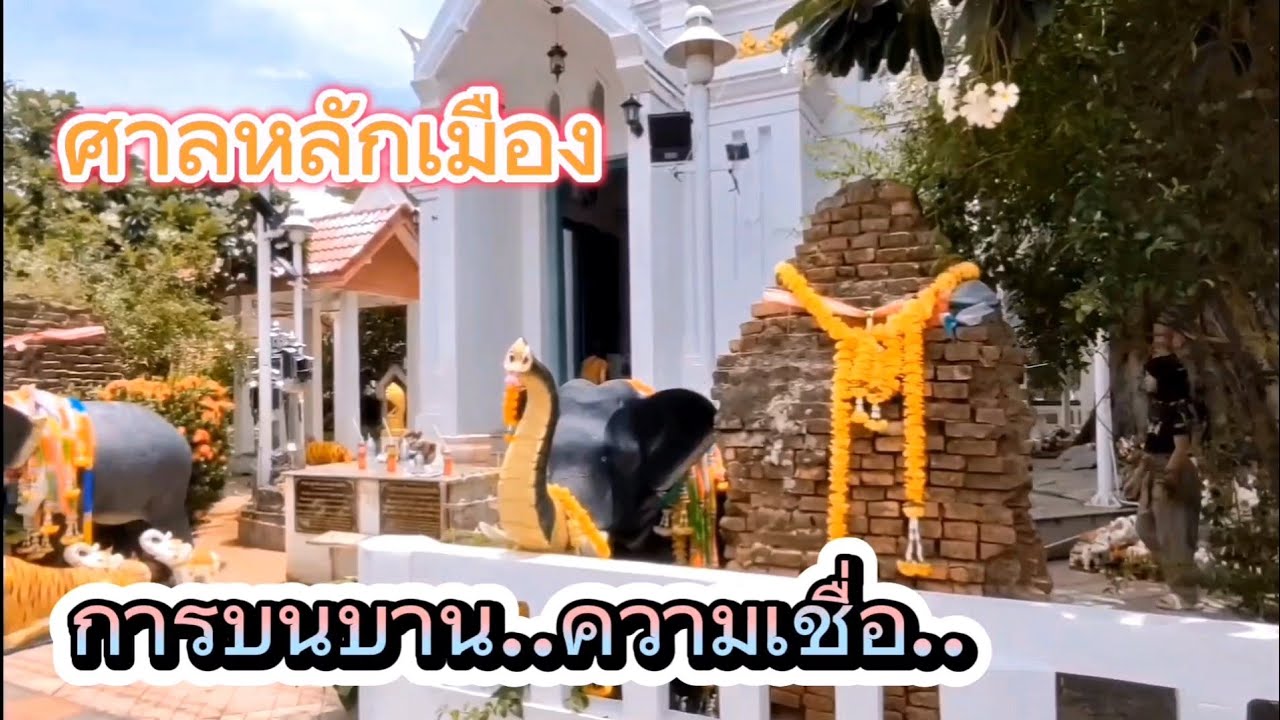
 Click to Access the Navigation Map GPS
Maha Sarakham City Pillar Shrine Map

 Art, Culture and Heritage
 Historical Sites and Monuments(4)
 Art, Craft Centres, Tradition(5)
 Museums(3)
 Temple(17)
Other Sacred Sites(7)
Temple(17)
Other Sacred Sites(7)
 Research and Development
 Royal Project(2)
 Suburban Living
 Village, Community(5)
 Nature and Wildlife
 National Parks and Marine Reserves(3)
 Dam, Reservoir, Lake(10)
 River, Canal(2)
 Bays and Beaches(2)
 Other natural attractions(2)
 Entertainment and Agricultural
 Farms, Parks and Ecotourism(3)
 Travel Articles, Recipes
 Food Menu, Northeastern Recipes(1)


