
lovethailand home >Central Travel Attractions >Bangkok Travel Attractions > 40 Best Hot Springs in Thailand with GPS Coordinat..
TL;DR: 40 Best Hot Springs in Thailand with GPS Coordinates and Maps, open Daily Opening Hours: 07:00 – 18:00. Highlights include GPS Coordinates.
40 Best Hot Springs in Thailand with GPS Coordinates and Maps
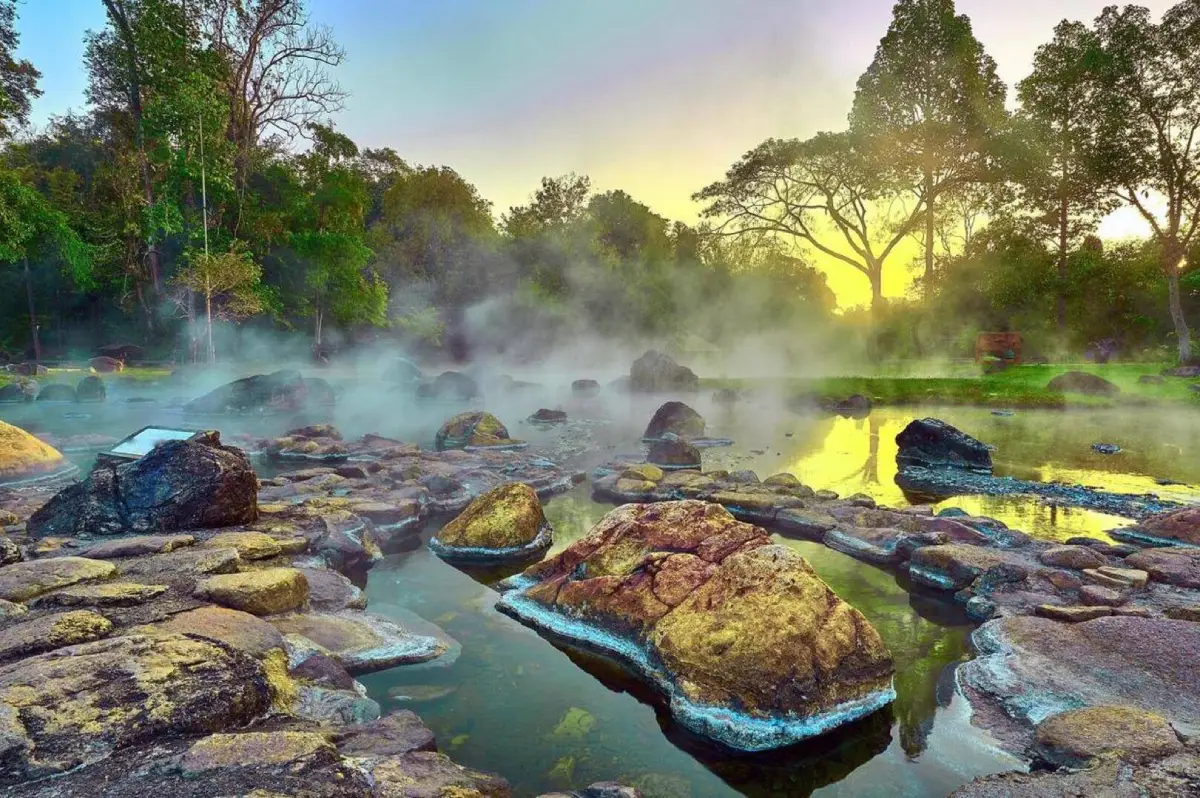
40 Best Hot Springs in Thailand with GPS Coordinates and Maps brings together 40 natural hot springs, mineral bathing destinations, and geothermal attractions across Thailand. From San Kamphaeng Hot Springs in Chiang Mai, famous for its jets of hot water and popular egg-boiling activities, to Fang Hot Springs in Doi Pha Hom Pok National Park, Chae Son Hot Springs in Lampang, Raksawarin Hot Springs in Ranong, and Betong Hot Springs in Yala, each destination offers a different combination of geological features, landscapes, water temperatures, and visitor experiences. This comprehensive guide is designed for travelers seeking a relaxing mineral soak, families looking for nature-based activities, and visitors interested in discovering Thailand's fascinating geothermal landscapes.
Natural hot springs form when water seeps underground through spaces and fractures in rock formations, absorbs heat from deeper geological layers, and eventually returns to the Earth's surface. In some locations, the heated water rises slowly, forming warm pools or gently flowing streams. Elsewhere, higher temperatures and pressure cause hot water and steam to erupt intermittently. These differences explain why Thailand has such a wide variety of geothermal attractions, ranging from natural hot springs intended primarily for observation to developed mineral bathing facilities with dedicated soaking pools and foot baths. Importantly, the original source pools of very hot geothermal water are not necessarily safe for bathing.
Northern Thailand is especially rich in natural hot springs, many of which are scattered across mountain ranges and valleys in Chiang Mai, Chiang Rai, Lampang, and Mae Hong Son. San Kamphaeng Hot Springs is widely known for egg boiling and mineral bathing, while Fang Hot Springs features numerous natural geothermal pools within a national park. Chae Son Hot Springs offers a forested mountain environment combined with outdoor activities, whereas Pong Dueat Pa Pae stands out for its geothermal eruptions, with hot water and steam rising from the ground. Visitors can therefore choose between a comfortable wellness outing and a more immersive experience focused on geological phenomena and nature exploration.
Western Thailand also has distinctive geothermal attractions. Hin Dad Hot Spring in Kanchanaburi is among the best-known destinations along the Sai Yok–Thong Pha Phum travel route. Its mineral soaking pools are surrounded by natural scenery, and a visit can be combined with waterfalls, mountain landscapes, and other outdoor attractions. Ratchaburi and neighboring western provinces also contain natural hot springs that illustrate the relationship between geothermal activity and the geological structures of Thailand's western mountain ranges.
Southern Thailand offers hot springs that attract both leisure travelers and visitors interested in wellness tourism. Ranong is particularly well known for Raksawarin Hot Springs, which is conveniently located near the provincial town and provides a relaxing experience without requiring a long journey into the forest. Yala is home to Betong Hot Springs, a destination that can be combined with mountain scenery, waterfalls, and community attractions. Surat Thani, Satun, and other southern provinces also have natural hot springs that serve as local recreation areas and opportunities to learn about the region's geological resources.
Although soaking in warm mineral water is a popular way to relax, not all hot springs offer the same activities or facilities. Some have foot-soaking pools, full-body bathing areas, or private mineral bath rooms. Others are developed primarily as viewing areas where visitors can observe steam vents, bubbling pools, or geothermal eruptions. Some destinations also have seasonal access restrictions or temporary closures imposed by national parks and local authorities. Travelers should always distinguish between dangerously hot source pools and designated bathing areas, and should never enter an unmarked natural pool that lacks appropriate safety measures.
Visiting Thailand's hot springs also creates opportunities to discover local culture and traditional ways of life. Many destinations are located near village restaurants, community products, fruit orchards, temples, local markets, and other natural attractions. Combining a mineral bathing experience with these activities can provide a more complete understanding of each province. For example, the San Kamphaeng–Mae On route offers handicrafts and rural communities, Fang features mountain scenery and agricultural landscapes, Thong Pha Phum is known for its waterfalls and forests, and Betong has distinctive local cuisine, multicultural communities, and scenic mountains near Thailand's southern border.
For travelers with only one day available, the most practical choice is a hot spring that is relatively close to a city or conveniently located along an established travel route, such as San Kamphaeng Hot Springs from Chiang Mai city or Raksawarin Hot Springs from central Ranong. With two or three days, visitors can extend their itinerary to include nearby nature attractions and communities, allowing sufficient time for mountain roads, actual driving distances, and weather conditions. Those with four or five days can organize a multi-stop journey within a particular province or region, experiencing different types of hot springs without rushing between distant destinations.
Before entering a hot spring pool, visitors should carefully check the water temperature, use only bathing areas that are officially permitted, avoid soaking continuously for extended periods, and drink sufficient water. People with heart conditions, blood pressure disorders, or difficulties regulating body temperature, as well as pregnant travelers, should seek medical advice before using high-temperature pools. Mineral bathing should be regarded as a relaxation activity rather than a treatment for disease or a substitute for professional medical care.
Responsible tourism is equally important when visiting natural hot springs. Visitors should remain on designated paths, use only authorized facilities, avoid introducing soap or other chemicals into natural water sources, and never collect mineral deposits or damage the structure of geothermal pools. Litter should always be taken away or disposed of properly. By treating these places with care, travelers can help protect water quality, fragile ecosystems, and natural landscapes for future generations.

1. San Kamphaeng Hot Springs is located in Ban Sahakon Subdistrict, Mae On District, Chiang Mai Province. It is one of northern Thailand's best-known natural hot spring attractions, distinguished by jets of hot water rising from beneath the ground amid beautifully landscaped gardens. Visitors can boil eggs in designated geothermal pools, soak their feet in warm mineral streams, and enjoy mineral bathing services suitable for different age groups. Combining fascinating natural phenomena with relaxing activities and family-friendly surroundings, the destination is ideal for both half-day excursions and leisurely full-day visits.
Highlights: Natural hot-water jets rising above the ground, dedicated hot-spring egg-boiling areas, mineral streams for foot soaking, mineral bathing facilities, and attractively landscaped gardens offering a peaceful setting for relaxation.
One of the most distinctive characteristics of San Kamphaeng Hot Springs is its geyser-like geothermal activity, which results from the accumulation of underground heat and water pressure. Groundwater seeps through rock formations, absorbs geothermal heat, and rises back toward the surface through natural fractures and underground channels. The temperature within the geothermal system can be extremely high, with published information referring to temperatures reaching approximately 105 degrees Celsius. For this reason, the original hot-water outlets must never be used for direct bathing or touched by visitors.
Boiling eggs in the designated geothermal pools is one of the attraction's most popular activities. Visitors can purchase eggs from local vendors and place them in specially prepared hot-water areas, choosing the cooking time according to their preferred level of doneness. The experience is especially enjoyable for families and groups of friends because it demonstrates a practical everyday use of natural geothermal heat. Visitors should use only the designated egg-boiling pools and remain cautious around hot steam, particularly when traveling with young children.
The gardens and walking paths feature mineral-water streams flowing through designated foot-soaking areas. Water temperatures may vary depending on the location along the stream and the way the facility manages its water supply. Visitors should check the temperature before placing their feet in the water and sit only in sections that are officially open. Foot soaking is a relaxing option for travelers arriving from Chiang Mai city or returning from outdoor activities in the surrounding mountains and communities.
For travelers seeking a more complete mineral bathing experience, the site offers several types of facilities, including traditional scoop bathing, private mineral bath rooms, and mineral soaking pools designed for groups. Prices vary according to the service selected. Visitors should check the availability of different rooms, current rates, and operating arrangements before paying, as some facilities may operate according to specific schedules or have limited capacity.
The appeal of San Kamphaeng Hot Springs extends beyond its geothermal water. The surrounding San Kamphaeng–Mae On travel route offers traditional restaurants, handicraft workshops, agricultural gardens, and rural scenery. Visitors can plan an itinerary that includes exploring local communities in the morning before spending the afternoon enjoying mineral foot soaking or relaxing in the hot spring gardens.
Safety is particularly important around the main geothermal outlets. Visitors should not approach source pools beyond the permitted boundaries, enter pools containing dangerously hot water, or allow young children to walk unattended near steam vents or wet surfaces. Mineral bathing should be enjoyed in moderation. Anyone experiencing dizziness, palpitations, or lightheadedness should stop soaking immediately and rest in a well-ventilated area.
Open Days: Daily Opening Hours: 07:00 – 18:00
Fees: Published rates for Thai nationals include an entrance fee of 55 THB for adults and 35 THB for children, traditional scoop bathing at 20 THB, private mineral bathing at 65 THB, an outdoor mineral soaking pool at 500 THB per hour for up to 10 people, and a children's mineral pool at 10 THB. Visitors should confirm current prices before using the facilities.
Getting There: From Chiang Mai city, follow the San Kamphaeng route toward Mae On District and Ban Sahakon Subdistrict, then continue following signs to San Kamphaeng Hot Springs. A private car is the most convenient option. Travelers using public transportation can travel toward San Kamphaeng and arrange local transportation for the remaining distance, ideally confirming their return journey in advance.
GPS Coordinates: 18.816436, 99.227802 Google Maps:Directions to San Kamphaeng Hot Springs
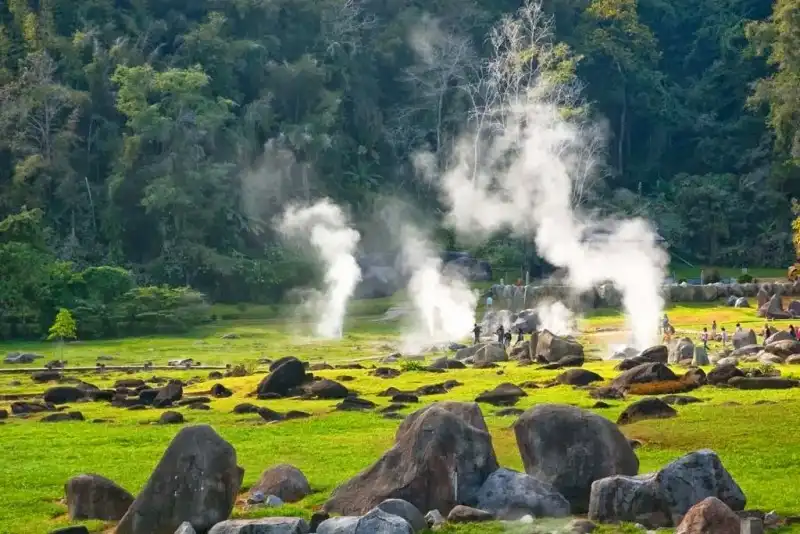
2. Fang Hot Springs is located in Ban Pong Nam Ron, Mon Pin Subdistrict, Fang District, Chiang Mai Province, within Doi Pha Hom Pok National Park. This important natural hot spring complex is notable for both its tourism appeal and geological significance. Numerous hot spring pools are scattered across a relatively broad area at the foot of the mountains, with steam continuously rising from the ground and water surfaces. Some pools contain visibly bubbling or boiling water, creating a landscape very different from an ordinary mineral bathing facility. The site is an excellent destination for visitors interested in geothermal phenomena as well as relaxation in a natural environment.
Highlights: Numerous natural geothermal pools, steam rising from the ground, egg-boiling activities, designated foot-soaking areas, mineral bathing and steam-bathing services, and the forested mountain surroundings of Doi Pha Hom Pok National Park.
Fang Hot Springs originates from groundwater circulating through fractures and fault systems in the underlying rock. Rainwater seeps underground and is heated at greater depths before returning to the surface through geological pathways, forming numerous hot-water outlets. The local geological setting is associated with granite formations and structural features of the Fang Basin, creating pools where hot water emerges gently alongside others with temperatures high enough to generate continuous steam.
One of the site's most interesting characteristics is the opportunity to observe several types of natural geothermal activity within a single area. Visitors can follow designated walking paths to view different hot spring pools, examine the colors of mineral deposits around their edges, and learn how groundwater, surrounding rock layers, and natural heat interact. The source pools, however, should never be approached too closely or touched, as their temperatures may be dangerously high before the water has been prepared for recreational use.
Popular activities include boiling eggs at designated geothermal pools, soaking feet in warm mineral water, and enjoying mineral baths after a long journey. The national park headquarters area provides various visitor facilities, including mineral bathing rooms and other amenities. Opening hours for individual services may differ from the general national park visiting hours, so travelers should confirm the availability of specific activities with park staff before arriving.
Fang Hot Springs is especially atmospheric during the cool season, when lower air temperatures in the mountain valley make the steam rising from the geothermal pools more visible. Travelers can combine their visit with natural attractions and local communities in Fang District, including agricultural gardens, cultural destinations, and the Ang Khang mountain travel route. Adequate time should be allowed for driving distances, mountain roads, and changing weather conditions.
Families traveling with young children or older visitors should select activity areas that are easy to access, be cautious on wet surfaces, and use only mineral bathing facilities designated by national park staff. Those planning an overnight stay can check the availability of national park accommodation and camping facilities in advance, particularly during the busy cool season.
Open Days: Generally open daily Opening Hours: 08:00 – 16:30 for visits within the national park, although some mineral bathing services may operate on different schedules.
Fees: Published national park entrance rates are 50 THB for Thai adults, 20 THB for Thai children, 300 THB for foreign adults, and 150 THB for foreign children. Mineral bathing, steam bathing, and other special services may involve additional charges. Visitors should confirm the current rates before traveling.
Getting There: From Chiang Mai city, take Highway 107 through Mae Rim, Mae Taeng, Chiang Dao, and Chai Prakan toward Fang District. Continue toward Ban Pong Nam Ron and the headquarters area of Doi Pha Hom Pok National Park, following signs to the hot springs. A private car or rental vehicle is the most convenient option, particularly for visitors who want to explore nearby attractions at their own pace.
GPS Coordinates: 19.965913, 99.154263 Google Maps:Directions to Fang Hot Springs
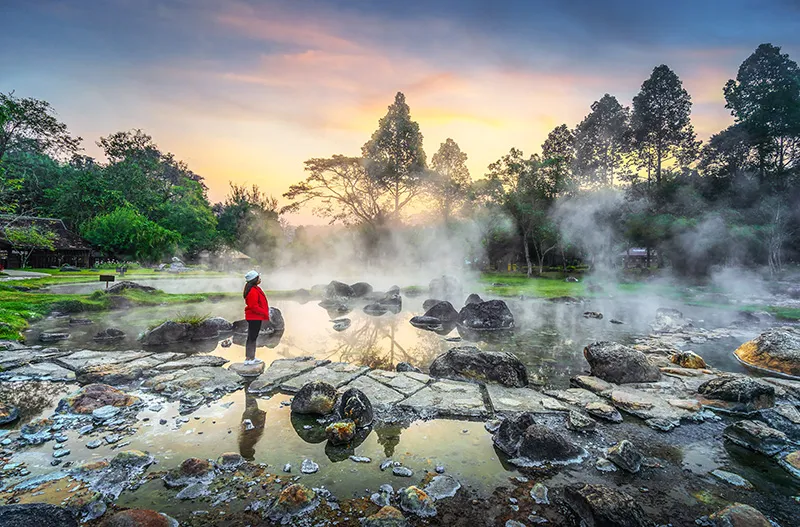
3. Chae Son Hot Springs, Chae Son National Park is located within Chae Son National Park in Mueang Pan District, Lampang Province. It is one of northern Thailand's most famous natural geothermal attractions, distinguished by numerous hot spring pools scattered across a scenic forested landscape. Steam rises above the water and surrounding rocks as part of the natural geothermal activity. Visitors can walk around the pools, enjoy designated mineral bathing facilities, and continue to Chae Son Waterfall, which is located within the same national park.
Highlights: Multiple natural hot spring pools, egg-boiling activities, mineral bathing services, shaded forest scenery, Chae Son Waterfall, and accessible nature experiences suitable for families.
Chae Son Hot Springs forms when groundwater seeps through rock formations, absorbs heat at greater depths, and returns to the surface through underground fractures. The water at the original source pools can reach very high temperatures, producing steam above the pools and contributing to the accumulation of mineral deposits on nearby rocks and pool edges. These natural processes make the site particularly interesting for casual visitors and travelers who want to learn more about geothermal geology.
One of Chae Son's most recognizable scenes is the collection of steaming hot spring pools surrounded by rocks and trees. The rising steam becomes especially visible early in the morning or during cooler weather, when the temperature difference between the hot water and the surrounding air is greater. The combination of gently drifting steam and forest scenery creates a peaceful atmosphere for sightseeing and photography from designated walking areas.
Boiling eggs in areas specifically designated by the national park is one of the most popular activities. Visitors can experience the practical use of natural geothermal energy while enjoying a relaxing outdoor excursion. Mineral bathing services are also available in facilities designed specifically for visitors. Natural geothermal source pools, however, must not be used for direct bathing, because the water in some areas is hot enough to cause serious burns.
One of Chae Son National Park's greatest attractions is the combination of waterfalls and natural hot springs within the same protected area. Travelers can spend the morning exploring the steaming geothermal pools before continuing to Chae Son Waterfall for a refreshing walk among streams, rocks, and forest vegetation. Visiting both locations in one day provides an excellent introduction to the diversity of Lampang's natural environment.
Travelers interested in culture and local communities can also extend their route to Ban Pa Miang and Wat Phra Bat Pu Pha Daeng, both important destinations within the broader Mueang Pan and Chae Hom travel area. These attractions require additional travel time along mountain roads, so visitors should plan their schedule carefully and check weather conditions before departure, particularly during the rainy season.
When visiting the hot spring pools, travelers should obey all warning signs, remain on designated paths, avoid getting too close to boiling water, and supervise young children at all times. Those planning to use mineral bathing facilities should select authorized areas and check the water temperature before entering.
Open Days: Daily, subject to national park access arrangements Opening Hours: 08:00 – 18:00
Fees: Published national park entrance rates are 40 THB for Thai adults, 20 THB for Thai children, 200 THB for foreign adults, and 100 THB for foreign children. Mineral bathing and other activities may involve additional charges. Visitors should confirm current prices with national park staff before traveling.
Getting There: From Lampang city, travel toward Mueang Pan District using the roads leading to Chae Son National Park, then continue to the visitor center and hot spring area. A private car or rental vehicle is convenient for visiting the park and surrounding attractions. Travelers without their own vehicles may use available services on the Lampang–Chae Son route and arrange onward local transportation as necessary.
GPS Coordinates: 18.836370, 99.469360 Google Maps:Directions to Chae Son Hot Springs

4. Pong Dueat Pa Pae (Pong Dueat Hot Spring) is located in Pa Pae Subdistrict, Mae Taeng District, Chiang Mai Province, within the Huai Nam Dang National Park area. It is one of Thailand's notable natural geyser destinations, famous for hot water and steam erupting from the ground rather than simply seeping slowly into pools. The surrounding environment features lush mountain forest, designated nature trails, and visitor facilities, making the hot spring particularly appealing to travelers interested in geology and outdoor experiences.
Highlights: Natural geyser eruptions, hot steam rising through the forest, nature interpretation trails, designated geothermal viewing walkways, and mineral bathing facilities located separately from dangerously hot source pools.
Pong Dueat Pa Pae's geothermal activity is associated with groundwater descending through fractures in the surrounding rock, absorbing heat from deeper geological layers, and accumulating pressure before rising back toward the surface. When hot water and steam are forced upward through suitable underground channels, they can erupt intermittently in visible bursts. This geyser-like behavior makes Pong Dueat Pa Pae a fascinating location for observing the interaction between underground water, geothermal heat, and pressure.
From the parking area, visitors follow a designated walking trail to reach the geyser viewing zone. The trail passes through mountain forest with trees and natural vegetation, creating an enjoyable outdoor experience beyond the geothermal attraction itself. The surrounding greenery also provides an opportunity to observe the forest ecosystem and the natural environment protected by Huai Nam Dang National Park.
Temperatures around the source vents can be extremely high. Visitors should remain behind safety barriers or within the marked observation areas, avoid approaching active geyser openings, and never touch the hot water or steam directly. Anyone wishing to enjoy mineral bathing should use only the designated pools or services provided elsewhere within the visitor facilities, rather than entering the original boiling-water sources.
Pong Dueat Pa Pae is situated along the broader Chiang Mai–Pai travel route, making it possible to combine a visit with mountain scenery, viewpoints, and communities in Mae Taeng District. However, the journey involves winding mountain roads and steep sections, so vehicles should be in good condition and drivers should proceed carefully, particularly during rain or fog.
Travelers should bring drinking water, suitable footwear for nature trails, and allow enough time to walk from the parking area to the geyser viewing zone. Families traveling with young children or older visitors should consider the walking distance and trail conditions before beginning their visit.
Open Days: Generally daily, subject to national park announcements Opening Hours: Approximately 08:00 – 17:00
Fees: Published national park entrance rates are 60 THB for Thai adults, 30 THB for Thai children, 300 THB for foreign adults, and 150 THB for foreign children. Additional charges may apply for mineral bathing or private facilities. Visitors should verify current fees with Huai Nam Dang National Park before traveling.
Getting There: From Chiang Mai city, take Highway 107 toward Mae Taeng District, then connect to Highway 1095 on the Mae Malai–Pai route. At the junction leading to Pong Dueat Pa Pae, follow national park signs to the designated parking area. From there, continue on foot along the marked trail toward the geothermal viewing zone.
GPS Coordinates: 19.241766, 98.684298 Google Maps:Directions to Pong Dueat Pa Pae Hot Spring

5. Hin Dad Hot Spring is located in Hin Dad Subdistrict, Thong Pha Phum District, Kanchanaburi Province. It is a long-established natural hot spring bathing destination featuring several warm mineral pools surrounded by the forested mountain scenery of western Thailand. One of its main attractions is the opportunity to soak in naturally heated mineral water near a flowing stream, offering visitors a pleasant contrast between the warmth of the pools and the cooler natural surroundings.
Highlights: Outdoor natural mineral bathing pools, lush forest scenery, a nearby stream, and a convenient location along the Sai Yok–Thong Pha Phum tourism route.
Hin Dad Hot Spring has an interesting historical background associated with World War II. Local accounts and travel information connect the discovery and early use of the hot spring with the period when Japanese military forces were constructing transportation routes through Kanchanaburi. The site was later developed and improved as a recreational destination for local residents and tourists, eventually becoming one of Thong Pha Phum District's recognized natural attractions.
The hot spring forms when groundwater absorbs heat beneath the surface and rises through fractures in the surrounding rock. As the site was developed for recreational use, mineral soaking pools were created to accommodate visitors. Temperatures may differ between individual pools, so bathers should begin with water that feels comfortably warm and carefully test the temperature before entering any pool.
Much of Hin Dad Hot Spring's appeal comes from soaking in mineral water outdoors rather than using an enclosed spa facility. Visitors can enjoy the surrounding trees, stream, and natural scenery while relaxing in the warm water. This makes it a popular stopping point for travelers recovering from a long drive or returning from outdoor activities in the surrounding area.
A visit to Hin Dad Hot Spring can be combined with Phatad Waterfall, Sai Yok's natural attractions, and other destinations in Thong Pha Phum District. Travelers should nevertheless check actual road distances and driving times, because Kanchanaburi's mountainous terrain means that places appearing relatively close on a map may require considerably longer journeys.
Visitors should bring a towel, a change of clothes, non-slip sandals, and drinking water. They should avoid entering the hot water immediately after strenuous exercise or when feeling exhausted, and should not soak for excessively long periods. Extra care is recommended for anyone with heart conditions or blood pressure problems.
Open Days: Daily Opening Hours: 06:00 – 22:00, according to published information. Hours may change following announcements by local management.
Fees: Published entrance rates are 10 THB for Thai adults, 5 THB for Thai children, 40 THB for foreign adults, and 20 THB for foreign children. Visitors should confirm current prices at the entrance before their visit.
Getting There: From Kanchanaburi town, follow Highway 323 through Sai Yok District toward Thong Pha Phum. Upon reaching Hin Dad Subdistrict, turn into the entrance indicated by signs for Hin Dad Hot Spring. Visitors can travel by private car, rental vehicle, or locally arranged transportation.
GPS Coordinates: 14.624998, 98.724555 Google Maps:Directions to Hin Dad Hot Spring
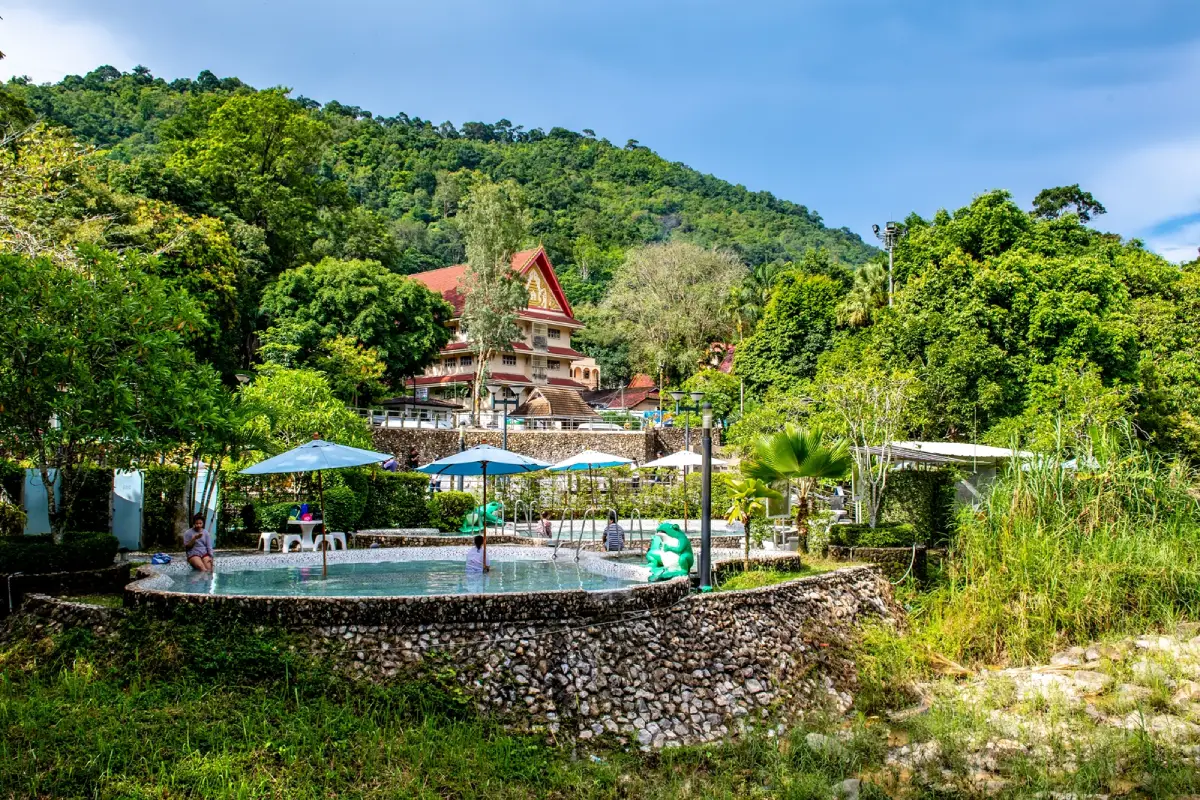
6. Raksawarin Hot Springs is located on Chon Ra-u Road in Khao Niwet Subdistrict, Mueang Ranong District, Ranong Province. It is one of the province's most important natural mineral hot spring attractions, distinguished by its historical significance, geothermal resources, and role in wellness tourism. Its convenient location near central Ranong makes it an accessible destination for visitors seeking a relaxing mineral foot bath, a peaceful walk through landscaped gardens, or an opportunity to learn about natural hot springs without traveling deep into the forest.
Highlights: Natural mineral hot springs near central Ranong, three historically significant geothermal pools, an arboretum and landscaped public park, nearby streams, and a variety of mineral bathing services available around the hot spring area.
Raksawarin Hot Springs has a close connection with Ranong's history, particularly the development of Chon Ra-u Road, which is associated with King Chulalongkorn's visit to the province in 1890. The road's name reflects the presence of naturally heated water in the area and illustrates how the hot springs have long been recognized as an important feature of the local landscape. The historical association adds cultural significance to a destination that is already valued for its geothermal resources.
The three best-known natural hot spring pools are Bo Pho, Bo Mae, and Bo Luk, traditionally referred to as the Father Pool, Mother Pool, and Child Pool. These pools form part of a geothermal system in which naturally heated mineral water emerges from beneath the ground. Water temperatures near the original outlets are high and unsuitable for direct bathing. Visitors should therefore use only designated foot-soaking or full-body bathing facilities where the water is managed for recreational purposes.
Beyond its natural importance, Raksawarin Hot Springs also has connections with local beliefs and ceremonial traditions. Water from this geothermal source has historically played a role in significant ceremonies, according to accounts preserved in the area. These associations demonstrate that the hot springs are more than a recreational attraction; they are also part of Ranong's cultural heritage and collective memory.
The surrounding arboretum offers shaded walking paths, landscaped gardens, and comfortable places to rest. Visitors can enjoy a leisurely stroll, soak their feet in designated areas, or choose mineral bathing and spa services from nearby establishments. Travelers interested in Ranong's history can also combine their visit with Rattana Rangsan Palace, Wat Tapo Tharam, and the old town area, creating an itinerary that connects geothermal attractions with local heritage.
Early morning and late afternoon are pleasant times to visit because the weather is generally less intense and steam may be more visible above the pools when the surrounding air is cooler. Mineral bathing should begin with a careful temperature check, and visitors should avoid soaking continuously for excessively long periods. Those interested in private mineral baths should confirm operating hours and prices directly with the individual service providers, as these facilities are managed separately.
Open Days: Daily Opening Hours: Public park area 05:00 – 21:00. Nearby private mineral bathing and spa establishments may operate approximately 09:00 – 22:00, depending on the operator.
Fees: Admission to the public hot spring area is free. Private mineral bathing pools, spa treatments, massage services, and steam rooms operated by nearby businesses have separate fees depending on the service selected.
Getting There: From central Ranong, follow Chon Ra-u Road toward Raksawarin Hot Springs. The attraction can be reached conveniently by private car, motorcycle, or local taxi. Its location near the town center makes it an excellent stop during a sightseeing itinerary around Ranong without requiring a long journey into the surrounding mountains.
GPS Coordinates: 9.959796, 98.651395 Google Maps:Directions to Raksawarin Hot Springs
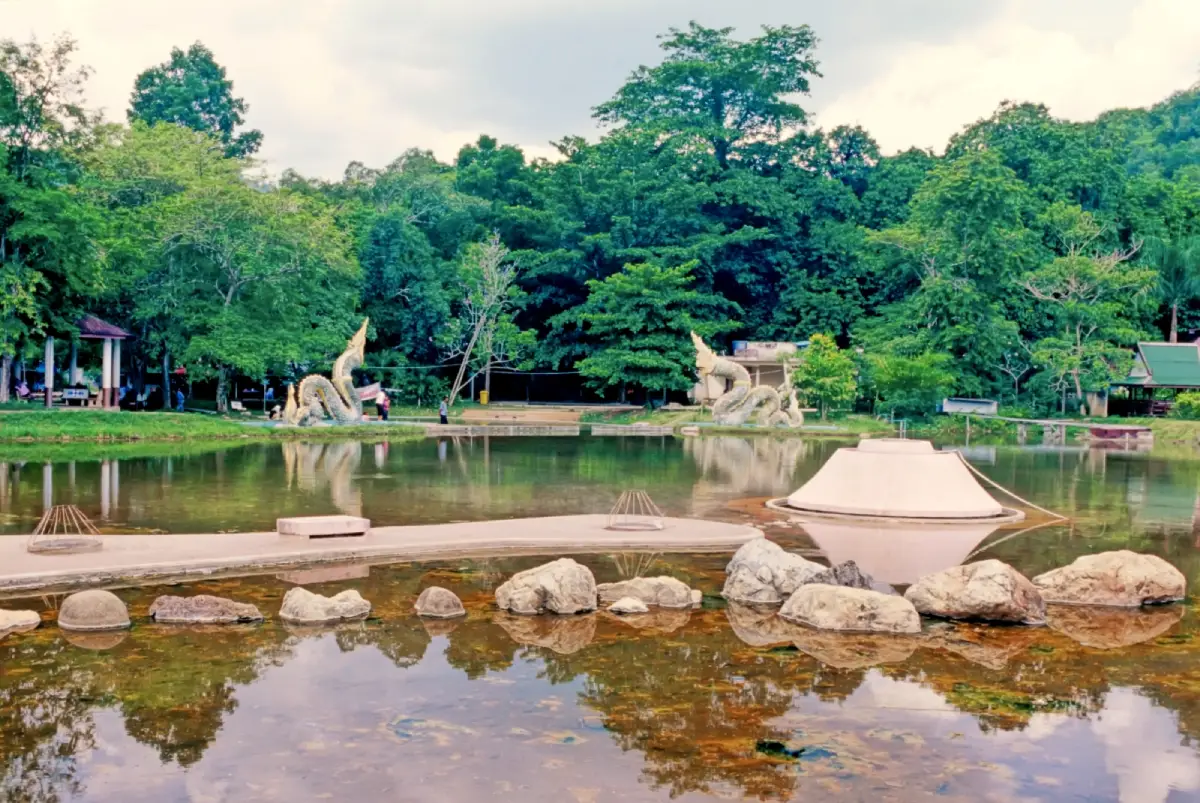
7. Betong Hot Spring is located in Ban Bon Nam Ron, also known as Ban Charo Parai, in Tano Maero Subdistrict, Betong District, Yala Province. It is one of Betong's most popular natural geothermal attractions, featuring an extensive hot spring area that has been developed for leisure and wellness tourism. Visitors can explore the geothermal pools, soak their feet, enjoy mineral bathing in designated facilities, and experience the mountain scenery and traditional communities surrounding Betong.
Highlights: A large natural geothermal spring, popular egg-boiling activities, designated foot-soaking pools, mineral bathing facilities, and a convenient location along routes connecting several of Betong's most important natural attractions.
Betong Hot Spring forms when groundwater absorbs heat from deeper rock layers and returns to the surface through fractures in the underlying geological formations. Some of the original geothermal pools reach very high temperatures, with steam visibly rising above the water. For safety, the natural source areas must be kept separate from the locations designated for bathing and other visitor activities.
Boiling eggs in the naturally heated water is one of the most popular experiences at Betong Hot Spring. Visitors can purchase eggs from vendors in the area and cook them in specifically designated geothermal pools. This simple activity demonstrates how natural underground heat can be used in everyday life and makes the destination especially appealing to families and first-time visitors to Betong.
The bathing facilities include public areas and selected additional services. Water used for recreational soaking must be at a temperature suitable for visitors, unlike the extremely hot water found at the original geothermal outlets. Guests should read the posted instructions and check the temperature before entering any pool. Those interested in private mineral bathing rooms should ask local staff about availability, operating arrangements, and current service charges.
Betong Hot Spring is an important stop on a broader travel route that brings together the district's natural attractions, distinctive cultural heritage, and local cuisine. Visitors can combine a trip to the hot springs with Piyamit Tunnel, Betong Winter Flower Garden, and other attractions in the district. However, sufficient travel time should be allowed because roads through the surrounding mountains include winding and steep sections.
Morning and afternoon visits are suitable for travelers who want to explore the geothermal area and enjoy its activities without rushing. Visitors planning to bathe should bring a towel, a change of clothes, non-slip sandals, and drinking water. Families should supervise young children carefully and never allow them to approach dangerously hot natural pools without adult supervision.
Open Days: Daily Opening Hours: 09:00 – 17:00
Fees: Admission to the public area is free. Private mineral bathing rooms, accommodation, and additional services may involve separate charges according to the facilities selected.
Getting There: From Betong town, follow Highway 410 toward Tano Maero Subdistrict, then turn onto the local road leading to Ban Bon Nam Ron or Ban Charo Parai, following signs for Betong Hot Spring. Travelers can reach the attraction by private car, rental vehicle, or locally arranged transport from Betong. Road conditions should be checked before departure, particularly during periods of heavy rain.
GPS Coordinates: 5.849718, 101.071852 Google Maps:Directions to Betong Hot Spring

8. Pa Tueng Hot Springs (Huai Hin Fon Hot Springs) is located in Pa Tueng Subdistrict, Mae Chan District, Chiang Rai Province. It is an interesting natural geothermal attraction with geological features and a peaceful rural atmosphere characteristic of northern Thailand. Hot water emerges from underground at several points, creating natural geothermal pools that visitors can observe while enjoying the surrounding environment. The attraction offers an opportunity to learn about geothermal phenomena and relax in a setting associated with the local community.
Highlights: Natural geothermal outlets, visibly emerging hot water, the rural atmosphere of Mae Chan District, and nearby routes connecting Chiang Rai's mountain landscapes with local cultural attractions.
Pa Tueng Hot Springs forms through the circulation of groundwater along cracks and fractures in underground rock. Water heated at greater depths returns to the surface through geological pathways, producing geothermal pools and bubbling outlets. Conditions vary between the individual pools, including their temperature, water flow, and mineral deposits along the edges. These differences make the area a useful place to observe natural geothermal processes and learn about local geological resources.
Another interesting aspect of Pa Tueng Hot Springs is its close connection to the surrounding community. Rather than functioning solely as a tourist attraction, the hot spring represents a natural resource familiar to local residents over many years. Visiting the area therefore offers an opportunity to understand the relationship between geothermal resources and everyday life in Mae Chan District.
Visitors can spend time observing the geothermal pools and exploring the surrounding area along designated pathways. If foot-soaking areas or mineral bathing services are available, they should check the water temperature and follow the site's instructions before using them. Some original geothermal pools may be hot enough to cause burns and are not suitable for direct contact.
Travelers exploring Chiang Rai can combine a visit to Pa Tueng Hot Springs with other attractions in Mae Chan District and neighboring areas, including local markets, agricultural communities, and mountain routes. The itinerary can be adjusted according to available travel time, road conditions, and personal interests.
Environmental care is particularly important when visiting natural geothermal areas. Visitors should avoid littering, keep soap and other chemicals out of the natural water sources, and never enter geothermal outlets without designated access paths or appropriate safety barriers. Respecting these rules helps protect the hot springs and surrounding community landscape.
Open Days: Generally daily Opening Hours: A visit between 08:00 – 18:00 is recommended; these are suggested visiting hours rather than a confirmed operating schedule.
Getting There: From Chiang Rai city, travel toward Mae Chan District, then continue into Pa Tueng Subdistrict using the main roads and local access routes to the hot spring area. Searching for Huai Hin Fon Hot Springs or asking local residents for directions can help avoid confusion with other geothermal attractions in Chiang Rai.
GPS Coordinates: 20.117218, 99.798657 Google Maps:Directions to Pa Tueng Hot Springs

9. Sai Ngam Hot Spring is located in the Ban Sai Ngam conservation forest area of Mae Na Toeng Subdistrict, Pai District, Mae Hong Son Province. It is a distinctive natural warm spring, different from geothermal attractions known for extremely high temperatures. Here, clear warm water flows through a series of gently descending natural pools, resembling a miniature cascade beneath the shade of forest trees. Its tranquil atmosphere makes it an appealing destination for visitors seeking a peaceful mineral soak close to Pai.
Highlights: Clear, emerald-toned natural warm pools, gently cascading water flowing between small terraces, temperatures of approximately 30–32 degrees Celsius, lush forest surroundings, and opportunities for relaxing in naturally warm mineral water.
Sai Ngam Hot Spring is characterized by warm underground water rising to the surface and flowing through natural basins and rock formations at different elevations. This creates a series of small, interconnected pools through which the water moves continuously. In some areas, the water is exceptionally clear, allowing visitors to see the rocks and sand beneath the surface. Much of the site's visual appeal comes from this combination of groundwater movement, natural stone formations, and surrounding vegetation.
The relatively gentle water temperature is one of Sai Ngam's greatest attractions. Unlike geothermal sites where boiling water is the main feature, Sai Ngam offers water that is comfortably warm in its designated soaking areas. Visitors can sit and relax in authorized pools while taking in the natural surroundings. The temperature and water depth should still be checked before entering, and visitors should avoid remaining in the water for so long that they become tired or dehydrated.
The surrounding forest provides generous shade and contributes significantly to the atmosphere of the hot spring. Protecting the natural water is especially important in this environment. Visitors should not use soap, shampoo, or other chemicals in the pools and must avoid leaving litter along the water's edge or walking paths. Maintaining the site's natural character is essential to its continued appeal.
Sai Ngam Hot Spring is relatively close to Pai town, making it suitable for a half-day excursion or a relaxing stop during a wider sightseeing itinerary. Early morning visits offer a peaceful forest setting and cooler air, while afternoon visits can be arranged according to travelers' schedules. Road and weather conditions should be checked before entering the conservation area.
Some sections of the access road are narrow and steep, so visitors traveling by motorcycle should take particular care during wet weather. Families should bring a change of clothes, a towel, non-slip footwear, and a bag for wet belongings. Preparing these essentials in advance makes it easier to enjoy the natural soaking pools while minimizing disturbance to the surrounding environment.
Open Days: Daily Opening Hours: 08:00 – 17:00
Fees: Published charges are 20 THB per person for the hot spring area and 30 THB per person for the conservation area. Visitors should confirm the current fees before entering.
Getting There: From Pai town, follow Highway 1095 toward Pang Mapha or Mae Hong Son town for approximately 15 kilometers. Turn onto the local access road at the Sai Ngam Hot Spring sign. Some sections are steep or narrow, so careful driving is recommended, especially during the rainy season.
GPS Coordinates: 19.459328, 98.380010 Google Maps:Directions to Sai Ngam Hot Spring
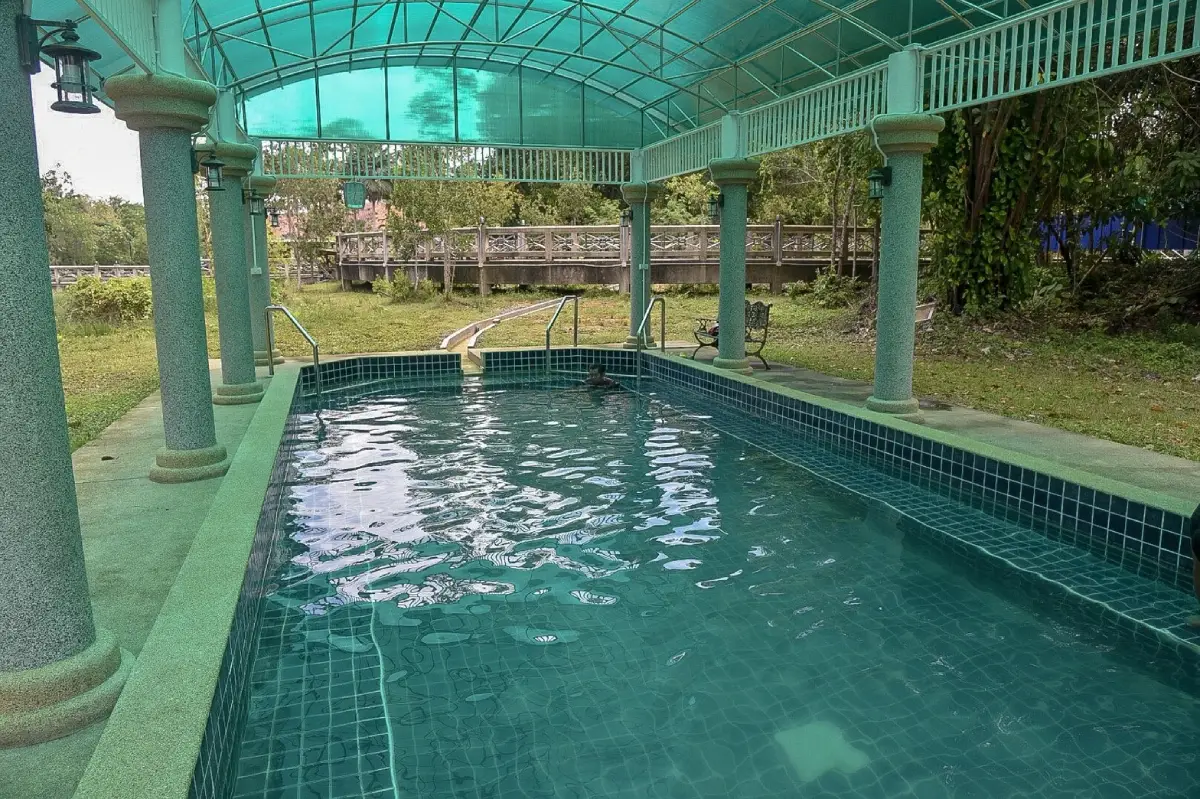
10. Tha Sathon Hot Spring, also known as Rattanakosai Hot Spring, is located in Moo 6, Tha Sathon Subdistrict, Phunphin District, Surat Thani Province. It is a natural geothermal attraction that has been developed as a wellness tourism destination and a recreational area for the local community. The site features natural hot-water sources, foot-soaking pools, body-soaking facilities, landscaped public gardens, and areas suitable for families. It is a convenient stopping point for travelers exploring Surat Thani, Phunphin, and Tha Chang.
Highlights: Natural hot spring water with a source temperature of approximately 70 degrees Celsius, designated foot and body soaking pools, public gardens, a children's playground, and a landscape historically associated with wetlands and peat-swamp vegetation.
Tha Sathon Hot Spring forms when groundwater seeps through rock formations, absorbs heat from deeper geological layers, and returns to the surface. Hot water emerges from several geothermal outlets rather than erupting in a tall geyser. Temperatures near the original source pools reach approximately 70 degrees Celsius, and mineral deposits can be observed accumulating on some of the surrounding surfaces.
Published geological information about the hot spring refers to a pH value of approximately 7.90 and the presence of naturally dissolved minerals. White or cream-colored deposits found around some of the pools are associated with minerals precipitating from the water as it reaches the surface and comes into contact with air. Observing these features offers visitors an opportunity to learn about the geochemistry of natural hot springs while enjoying a relaxing outdoor environment.
Historically, the surrounding landscape consisted of peat-swamp vegetation and fields of krajood reeds, which are traditionally associated with wetlands in southern Thailand. Local authorities and community organizations subsequently worked together to improve the area for public recreation and tourism. Foot-soaking facilities, bathing areas, walking paths, public gardens, and other recreational spaces were developed, transforming Tha Sathon Hot Spring into both a local wellness destination and an important shared community space.
Visitors wishing to enjoy the geothermal water should use only designated pools where the temperature has been managed for recreational use. The naturally heated water at the original source is extremely hot and may cause burns if touched directly. A short foot soak can be a sensible way to become accustomed to the water temperature before considering other bathing facilities. Travelers should always check the temperature rather than immediately immersing their entire body.
Another appealing feature is the availability of family-friendly recreational space. Landscaped gardens and resting areas allow visitors who do not wish to bathe to enjoy the surroundings. Families with young children or older relatives should choose shaded places to rest and take care that children do not approach the original geothermal outlets.
Tha Sathon Hot Spring can be included as a relaxing stop on a journey along Highway 41 or combined with visits to nearby areas of Phunphin District and Surat Thani Province. Private transportation is especially convenient because it allows travelers to choose when to stop, enjoy the facilities without rushing, and continue their journey according to their own schedule.
Open Days: Daily Opening Hours: 08:00 – 17:00
Getting There: Follow Highway 41 through Phunphin District. Around kilometer marker 184, turn onto the road toward Tha Sathon Subdistrict and continue in the direction of the Tha Sathon Subdistrict Administrative Organization for approximately 4 kilometers. From there, follow local signs toward the hot spring area.
GPS Coordinates: 8.977720, 99.264750 Google Maps:Directions to Tha Sathon Hot Spring
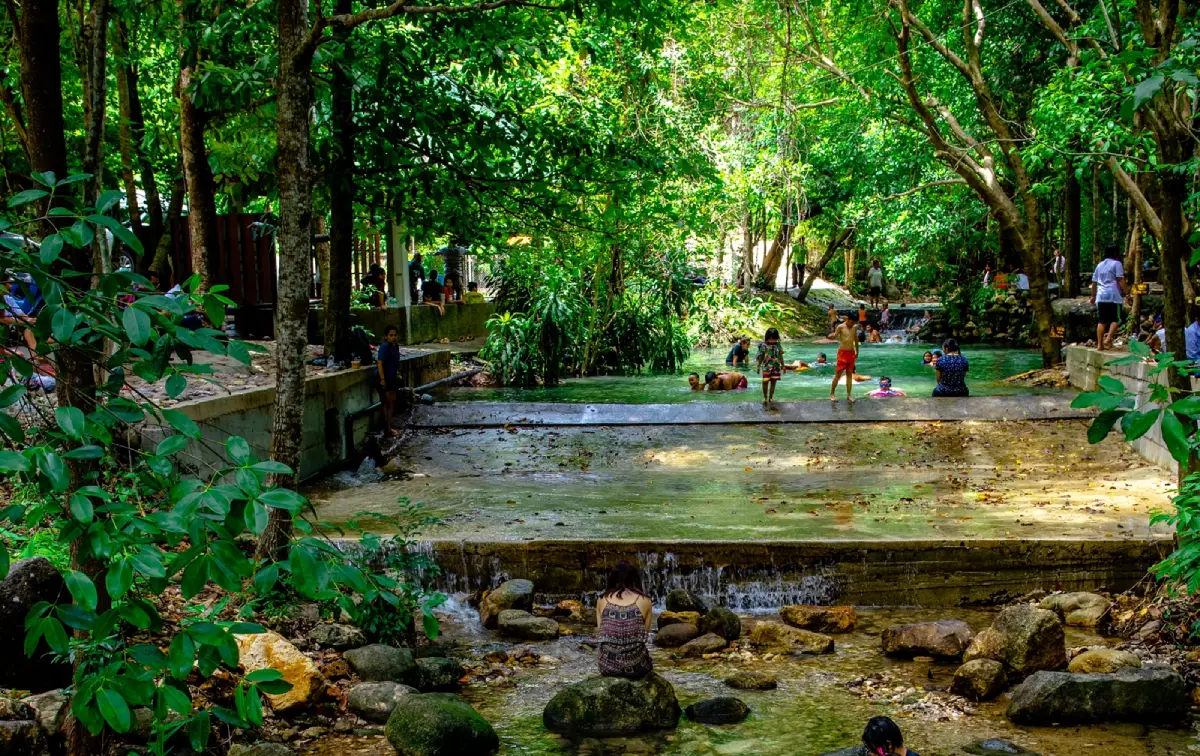
11. Ban Phon Rang Hot Spring, also known as Ban Phon Rang Mineral Hot Spring, is located in Bang Rin Subdistrict, Mueang Ranong District, Ranong Province, within Namtok Ngao National Park. This natural geothermal attraction is distinguished by its peaceful forest surroundings and its location in a valley beside Phon Rang Stream. Naturally heated mineral water emerges from underground, while a cool freshwater stream flows through the nearby landscape. The combination allows visitors to experience geothermal water, shaded forest scenery, and outdoor relaxation within a single destination.
Highlights: Natural mineral water at approximately 40–44 degrees Celsius, full-body mineral soaking pools, foot baths, private mineral bathing rooms, a nearby cool-water stream, and lush forest surroundings within Namtok Ngao National Park.
Ban Phon Rang Hot Spring forms when groundwater absorbs heat beneath the surface and rises through cracks and fractures in the surrounding rock. Warm mineral water emerges from several natural outlets within the valley, while a cool stream flows nearby. This creates a landscape quite different from urban hot springs or geysers that force hot water high into the air. Here, the appeal comes from the gentle emergence of mineral water and its close relationship with the surrounding forest and stream ecosystem.
The hot spring is one of the recreational areas managed within Namtok Ngao National Park. Visitors can choose from several types of mineral bathing facilities, including full-body soaking pools, foot baths, private mineral bathing rooms, and outdoor resting areas. These facilities make it possible to enjoy the natural mineral water in different ways according to personal preferences and physical conditions. Before bathing, visitors should check the temperature of each pool and follow the instructions provided by park staff.
Ban Phon Rang has become popular among travelers looking for a relaxing natural mineral bathing experience because it is situated in a shaded forest environment. Soaking in warm mineral water surrounded by trees creates a very different atmosphere from using an enclosed spa facility. Nevertheless, bathing should always be enjoyed in moderation. Visitors should avoid remaining in hot water continuously for excessive periods and drink enough water to prevent dehydration or fatigue.
In addition to the mineral bathing facilities, the surrounding landscape offers opportunities to observe the forest and stream environment. Visitors can see how underground geothermal water, surface streams, and the valley's natural terrain exist close together. Walking along designated trails also provides an opportunity to experience the local ecosystem. Travelers should remain on authorized paths and avoid entering areas that have been temporarily closed for safety or environmental restoration.
Ban Phon Rang Hot Spring can be included in a one-day itinerary around Ranong, together with Phu Khao Ya, also known as Grass Hill, Namtok Ngao Waterfall, Wat Ban Ngao, and Raksawarin Hot Springs. This combination is particularly suitable for visitors interested in wellness tourism, forest scenery, and the natural attractions surrounding Ranong town.
Travelers should bring a change of clothes, a towel, non-slip sandals, drinking water, and other personal essentials for mineral bathing. Visitors interested in overnight accommodation or specific bathing facilities should check availability with the relevant operator in advance, particularly on weekends and public holidays when visitor numbers may be higher.
Open Days: Daily Opening Hours: 08:30 – 16:30
Fees: Published entrance rates are 20 THB for Thai adults, 10 THB for Thai children, 100 THB for foreign adults, and 50 THB for foreign children. Vehicle charges are listed as 20 THB for motorcycles and 30 THB for four-wheeled vehicles. Accommodation and additional services may incur separate charges. Travelers should confirm the current fees with the national park before their visit.
Getting There: From Ranong town, follow Highway 4, also known as Phet Kasem Road, toward Phang Nga. Around kilometer markers 620–621, turn left at the sign for Ban Phon Rang Mineral Hot Spring. Continue approximately 2 kilometers through the local community and forested surroundings to reach the hot spring area within Namtok Ngao National Park.
GPS Coordinates: 9.894790, 98.641363 Google Maps:Directions to Ban Phon Rang Hot Spring

12. Mae Kachan Hot Spring is located in Mae Chedi Mai Subdistrict, Wiang Pa Pao District, Chiang Rai Province, alongside Highway 118, the main road connecting Chiang Mai and Chiang Rai. It is one of northern Thailand's best-known natural hot spring rest stops, popular with travelers looking for a short break during their journey. The attraction features geothermal pools with steam rising continuously from the water, egg-boiling activities, foot-soaking facilities, and local shops serving travelers along this important mountain route.
Highlights: Natural hot spring pools beside the Chiang Mai–Chiang Rai highway, designated geothermal egg-boiling areas, foot-soaking facilities, restaurants, cafés, souvenir shops, and convenient roadside parking.
Mae Kachan Hot Spring forms when groundwater circulates through fractures and openings in the underlying rock, absorbs geothermal heat, and returns to the surface. The natural pools have different characteristics depending on their temperatures and patterns of groundwater circulation. Steam is particularly visible at some outlets, while several of the principal geothermal pools are approximately 3 meters wide. Visitors can observe the rising water and steam from areas specifically arranged for public access.
Egg boiling is one of the most popular activities at Mae Kachan Hot Spring because it offers travelers a simple and memorable demonstration of natural geothermal energy. Local vendors sell eggs and other food products near the hot spring area, allowing visitors to enjoy the experience during a short stop. Eggs should be cooked only in designated pools. Visitors should remain outside restricted geothermal areas and closely supervise children near the hot water.
Travelers who want more than a brief sightseeing stop can find foot-soaking facilities and mineral bathing services offered by some establishments in the Mae Kachan area. These facilities may be located separately from the natural roadside geothermal pools. Visitors should check the exact location, services, and admission charges before entering to avoid confusion between public viewing areas and privately operated mineral bathing facilities.
One of Mae Kachan Hot Spring's greatest attractions is its role as a convenient break along a relatively long mountain journey. Travelers driving from Chiang Mai to Chiang Rai can stop to stretch their legs, enjoy a drink or meal, browse local products, and view the hot spring pools before continuing. This makes the journey more comfortable while offering an opportunity to experience the landscape of Wiang Pa Pao District.
Anyone using foot-soaking or mineral bathing facilities should choose only designated areas and check the temperature before touching the water. Soaking should not continue for so long that it causes fatigue or dizziness. Visitors who need to drive a considerable distance afterward should allow time to rest and rehydrate, particularly after spending time in warm water or hot weather.
Open Days: Daily Opening Hours: 07:00 – 19:00, according to published information.
Fees: General access to the public hot spring area is free. Some privately operated mineral bathing facilities charge separate fees according to the services provided. Visitors should confirm current prices directly with the operator before use.
Getting There: From Chiang Mai city, take Highway 118 toward Chiang Rai. The hot spring area is located near Mae Kachan Market in Mae Chedi Mai Subdistrict, Wiang Pa Pao District, beside the main road. It is accessible by private car, rental vehicle, and buses that stop along the Chiang Mai–Chiang Rai route.
GPS Coordinates: 19.114816, 99.462210 Google Maps:Directions to Mae Kachan Hot Spring
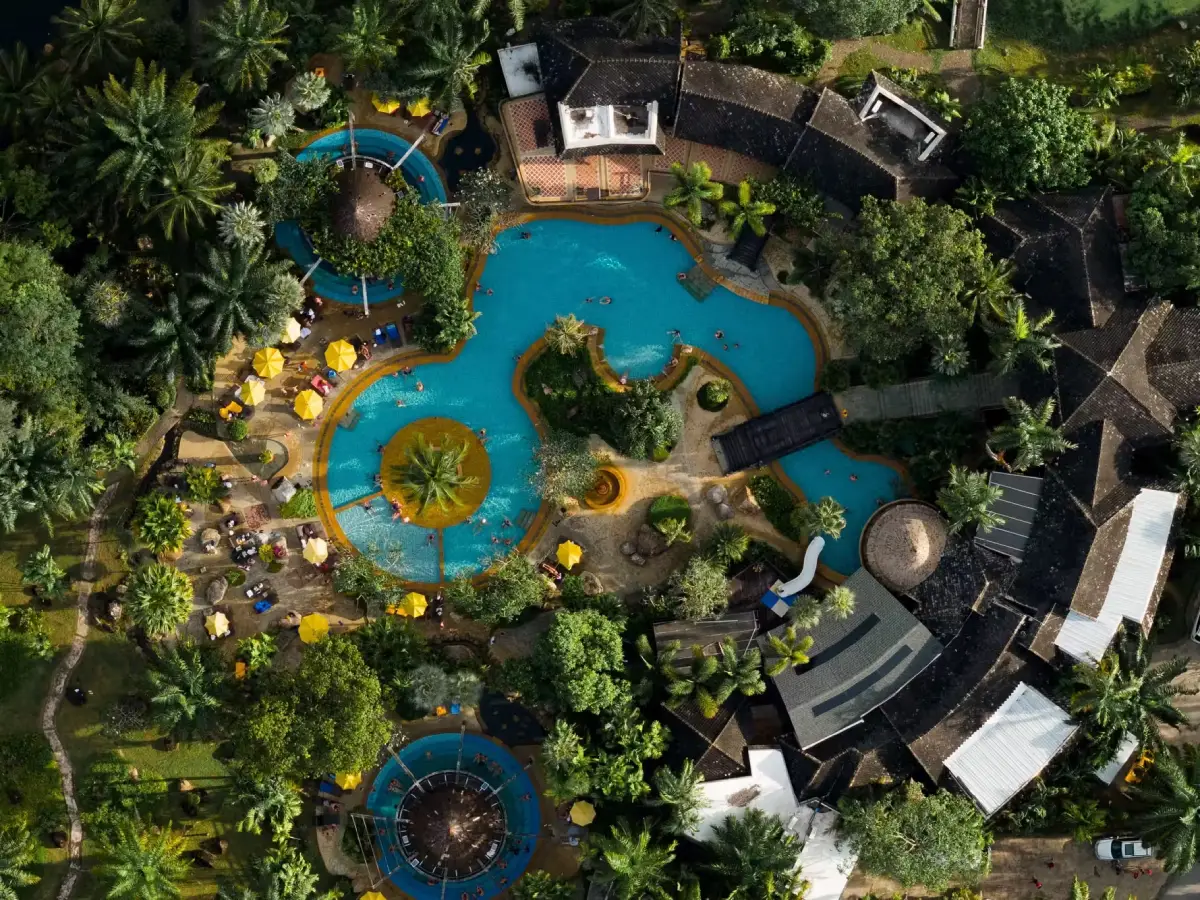
13. Ban Bo Dan Hot Spring is located in Ban Bo Dan, Na Toei Subdistrict, Thai Mueang District, Phang Nga Province. It is a natural mineral hot spring that has been developed into a wellness-oriented recreational destination within The Hotspring Beach Resort & Spa. The attraction features naturally heated mineral water at approximately 45 degrees Celsius, together with hot mineral soaking pools, cold-water pools, an outdoor swimming pool, spa facilities, and landscaped gardens. It is particularly suitable for travelers seeking a mineral bathing experience in a resort setting with a wide range of amenities.
Highlights: Natural mineral water at approximately 45 degrees Celsius, hot mineral soaking pools, cold-water pools, an outdoor swimming pool, spa facilities, landscaped gardens, and resort services along the Phang Nga travel route.
Ban Bo Dan Hot Spring reflects the geothermal characteristics of southern Thailand's Andaman coast, where underground water absorbs heat beneath the surface before rising through geological structures. The naturally heated water is used in a system of pools and bathing facilities designed for relaxation. This developed setting differs from geothermal sites where visitors walk through forests or protected natural areas to observe the original hot spring outlets.
One of the destination's main attractions is the combination of mineral bathing facilities and resort amenities. Visitors can relax in the landscaped gardens, enjoy the warm mineral pools or cold-water facilities, and choose from spa services offered by the operator. This type of experience is especially suitable for travelers who prefer comfort, privacy, and convenient facilities rather than a more basic natural hot spring excursion.
Ban Bo Dan is located along a route connecting Phang Nga with the Khok Kloi area and Natai Beach, making it possible to combine mineral bathing with beach visits and other attractions along the Andaman coast. Relaxing in warm mineral water after a long journey or outdoor activities can be an appealing part of a travel itinerary. Visitors should nevertheless drink sufficient water and avoid remaining in hot pools continuously for extended periods.
Because Ban Bo Dan Hot Spring is managed within a privately operated resort, access and services depend on the establishment's conditions. Travelers who are not staying overnight should confirm whether day-use access to the mineral pools is available and ask about current prices before traveling. The site should not be regarded as an unrestricted public hot spring where all facilities can be used without permission.
Visitors should prepare suitable swimwear or bathing clothes, a towel, and a change of clothes, and follow the resort's swimming pool and mineral bathing regulations. Families traveling with young children should choose facilities suitable for their age and supervise them closely. Some naturally heated mineral water may be too hot for direct bathing without temperature management.
Open Days: Daily, subject to resort operations Opening Hours: 08:00 – 20:00 for the designated facilities, according to published information. Visitors should confirm the schedule directly with the resort before traveling.
Fees: This is a privately operated facility. Charges depend on the mineral bathing pools, spa treatments, accommodation, and other services selected. Day visitors should contact the resort directly to confirm availability and current rates.
Getting There: From Phang Nga town, follow the route toward Khok Kloi and Na Toei Subdistrict in Thai Mueang District. From the Khok Kloi intersection, continue along the main road and follow signs toward Ban Bo Dan and The Hotspring Beach Resort & Spa. The destination can be reached by private car, rental vehicle, or locally arranged transportation.
GPS Coordinates: Use The Hotspring Beach Resort & Spa as the navigation destination. Google Maps:Directions to Ban Bo Dan Hot Spring
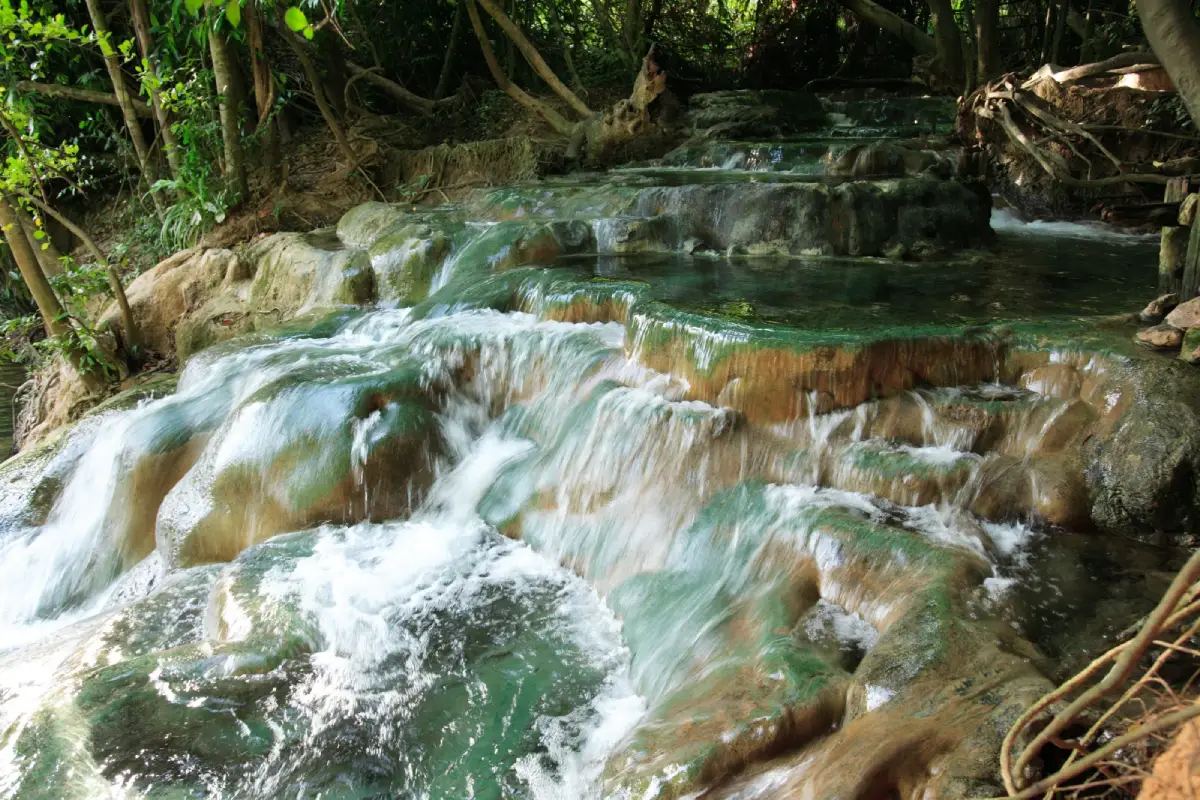
14. Namtok Ron Khlong Thom (Khlong Thom Hot Waterfall) is located around Ban Bang Khram and Ban Bang Tiao in Khlong Thom Nuea Subdistrict, Khlong Thom District, Krabi Province. This remarkable natural attraction is distinguished by warm mineral water flowing over a series of limestone formations, creating small cascading waterfalls and natural pools where bathing is permitted in designated areas. The beautiful combination of warm flowing water and lush tropical rainforest makes Khlong Thom Hot Waterfall one of Krabi's most popular wellness and nature destinations.
Highlights: Naturally heated mineral water cascading like a small waterfall, limestone pools suitable for bathing in designated areas, water temperatures of approximately 40–50 degrees Celsius, tropical rainforest surroundings, and opportunities to combine a visit with the nearby Emerald Pool.
Unlike geothermal attractions characterized by boiling pools, Khlong Thom Hot Waterfall features mineral-rich water emerging from underground and flowing as a stream through shaded forest. The water follows the natural gradient of the limestone terrain, passing over rock formations and collecting in small basins. Over a long period, mineral and limestone deposits have contributed to the formation of terraced pools resembling naturally formed bathtubs.
Visitors follow a designated walking route from the entrance toward the hot waterfall. Along the way, the tropical forest provides a glimpse of the area's lush vegetation and humid environment. Upon reaching the stream, visitors can see warm water flowing through limestone basins of different shapes and sizes, particularly where the stream descends over small rock ledges. These natural formations give the waterfall its distinctive appearance and make it an appealing location for observing geothermal water in a rainforest setting.
Bathing should take place only in pools where it is officially permitted, and the water temperature should always be checked beforehand. Although some sections feel comfortably warm, other areas may be much hotter, and the limestone surfaces can be slippery. Visitors should exercise caution when sitting in flowing water and should never climb across rock terraces where no designated walkway or safety measures are provided.
Khlong Thom Hot Waterfall is an excellent destination to combine with the Emerald Pool and other natural attractions in Khlong Thom District. Visitors can allocate time for sightseeing, walking, and mineral bathing according to their interests. Those traveling from Krabi town or Ao Nang should depart early because the journey involves a considerable distance by road, followed by additional walking to reach the hot waterfall itself.
The significance of Khlong Thom Hot Waterfall goes beyond its scenic beauty. It is also an example of how geothermal water and mineral deposition can shape natural streams and limestone formations. Visitors should help protect the delicate rock surfaces and water system by avoiding graffiti, preventing damage to limestone terraces, and refraining from using soap or other chemicals in the natural pools.
Open Days: Daily Opening Hours: 08:30 – 17:00
Fees: Published entrance rates are 20 THB for Thai adults, 10 THB for Thai children, 200 THB for foreign adults, and 100 THB for foreign children. Visitors should confirm current rates before entering.
Getting There: From Krabi town, take Highway 4 toward Khlong Thom District, then continue into Khlong Thom Nuea Subdistrict, following signs for Namtok Ron Khlong Thom or Khlong Thom Hot Waterfall. From the entrance, walk along the designated trail to reach the waterfall. A private car or rental vehicle is the most convenient option for combining several attractions in one day.
GPS Coordinates: 7.931577, 99.205774 Google Maps:Directions to Khlong Thom Hot Waterfall
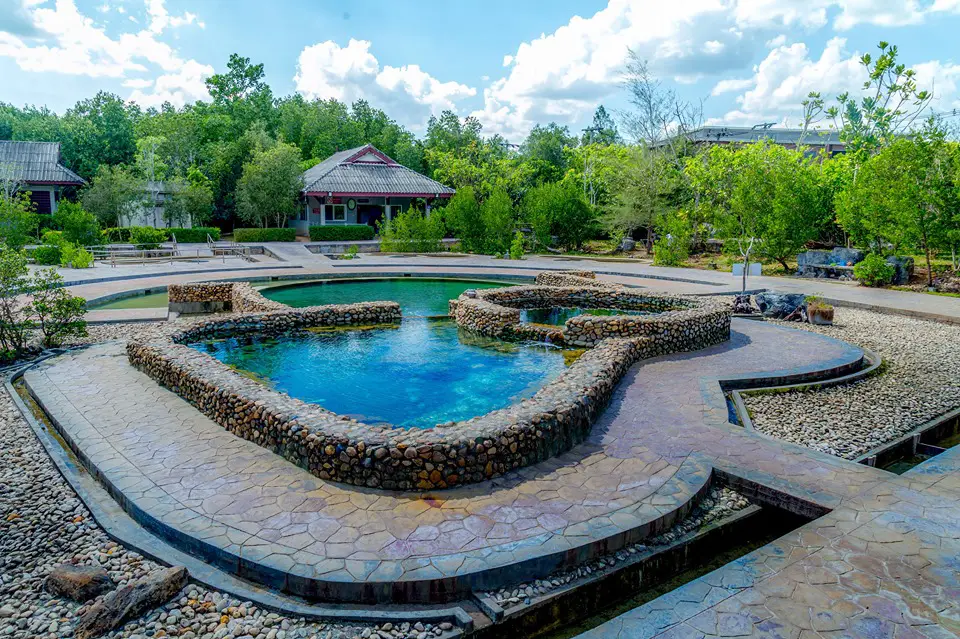
15. Krabi Hot Springs (Bang Phueng Hot Springs) is located in Ban Bang Phueng, Khok Yang Subdistrict, Nuea Khlong District, Krabi Province, near Highway 4, also known as Phet Kasem Road, around kilometer markers 989–990. This natural geothermal attraction has been developed as a recreational mineral bathing facility with several hot spring pools, foot-soaking basins, adult bathing pools, children's areas, changing rooms, food services, and outdoor resting spaces. It is a convenient destination for travelers seeking a relaxing break along the Krabi–Trang route or while heading toward Khlong Thom District.
Highlights: Natural mineral hot spring water at approximately 40–50 degrees Celsius, full-body bathing and foot-soaking facilities, amenities suitable for families, and a convenient location close to Phet Kasem Road.
Krabi Hot Springs at Bang Phueng is distinctly different from Khlong Thom Hot Waterfall. Bang Phueng is a developed hot spring bathing area with facilities arranged for visitors, whereas Khlong Thom Hot Waterfall is a natural stream of heated mineral water cascading over limestone terraces in a forest environment. Travelers should therefore distinguish between the names and locations of these two attractions before planning their journey.
The geothermal water forms when groundwater circulates through heated geological layers and emerges at the surface as natural hot spring outlets. Several geothermal sources within the area have been developed for recreational use. The availability of bathing pools and facilities designed for different visitor groups makes this destination suitable for both individual travelers and families who want to enjoy mineral water without undertaking a long forest walk.
The pools may have different water temperatures, so visitors should use only those authorized by the operator and check the temperature before entering. Water measuring approximately 40–50 degrees Celsius can be too hot for some people, particularly young children, older adults, and those sensitive to heat. No one should enter a pool without first making sure the water is suitable for bathing.
Convenient road access is one of Krabi Hot Springs' main advantages. The attraction is close to a major highway, with parking available near the visitor facilities. Travelers coming from Krabi Airport, Nuea Khlong District, or Khlong Thom can include it as a stop along their route. Visitors staying in Ao Nang should allow additional time for the road journey and for changing clothes after bathing.
A visit can be combined with attractions in Khlong Thom and Nuea Khlong districts, including the Emerald Pool, Khlong Thom Hot Waterfall, and local cultural destinations. However, travelers should check the actual road distances, as these places are not located immediately next to one another. A well-planned itinerary allows enough time to enjoy the mineral bathing facilities without rushing.
Open Days: Daily Opening Hours: 08:00 – 17:00, according to published information.
Fees: This is a privately operated recreational bathing facility. Charges vary according to the pools and amenities selected. Visitors should confirm current prices with the operator before using the facilities.
Getting There: From Krabi town, follow Highway 4 toward Nuea Khlong District and the route leading to Trang Province. Around Ban Bang Phueng in Khok Yang Subdistrict, look for signs indicating the hot spring entrance near kilometer markers 989–990, then turn off the main road and follow the local access road to the bathing facilities.
GPS Coordinates: 8.080268, 99.072800 Google Maps:Directions to Krabi Hot Springs (Bang Phueng)
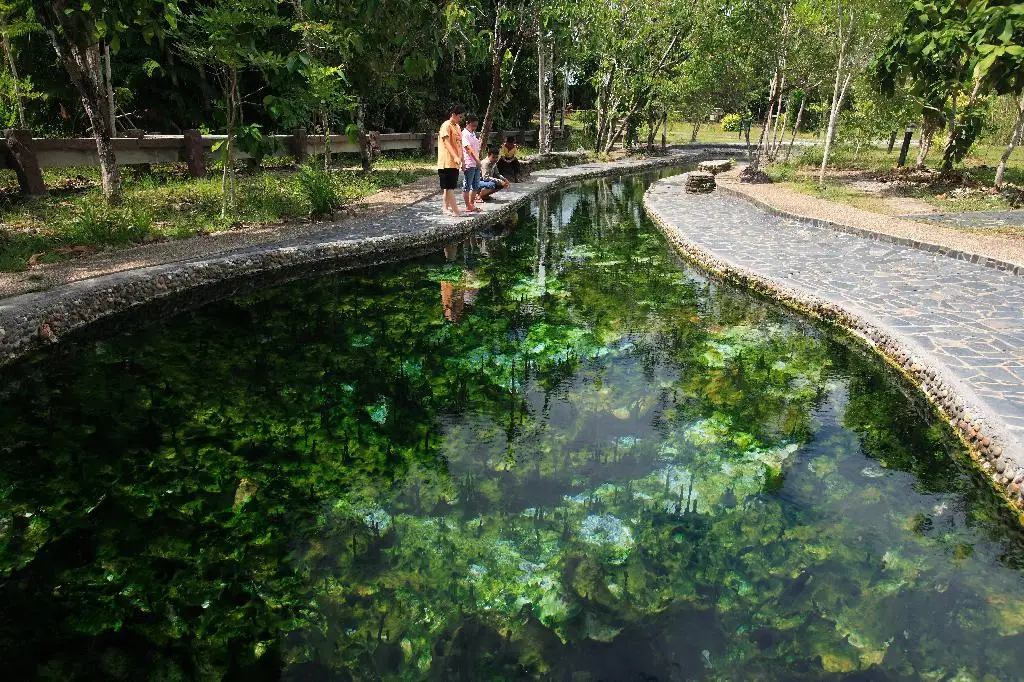
16. Kantang Hot Spring Forest Park (Khuan Khaeng Hot Spring) is located in Ban Khuan Khaeng, Moo 7, Bo Nam Ron Subdistrict, Kantang District, Trang Province, within a protected forest landscape that includes tropical evergreen forest and peat-swamp vegetation. This natural geothermal attraction is distinguished by hot mineral water rising from beneath the ground and by visitor facilities that include foot-soaking pools, communal mineral baths, private bathing rooms, and a nature study trail. It is an appealing destination for travelers who want to combine wellness activities with an introduction to southern Thailand's coastal forest ecosystems.
Highlights: Natural hot spring pools with three different temperature levels, communal foot-soaking facilities, mineral bathing pools, private bathing rooms, community-operated relaxation and massage services, and a nature study trail through peat-swamp and tropical evergreen forest environments.
Kantang Hot Spring Forest Park has a natural environment quite different from geothermal attractions in northern Thailand's mountain ranges. It is situated within the wetland and forest landscape of Kantang District, where naturally heated groundwater continuously rises to the surface. Temperatures differ among individual geothermal outlets, making it important to separate the original hot-water sources from the pools specifically prepared for foot soaking and mineral bathing.
What makes this destination particularly interesting is the combination of wellness tourism and nature conservation. Visitors can observe the geothermal pools, learn about plants growing in wetland environments, and follow the designated nature study trail. These activities provide an opportunity to understand the relationship between underground water, forest ecosystems, and the everyday lives of residents in the Khuan Khaeng community.
The mineral bathing facilities include communal areas and more private options. Visitors should ask about the operating hours of each service before entering, as some facilities may operate according to scheduled sessions or close temporarily for cleaning and maintenance. Bathers should select a water temperature suitable for their physical condition, avoid remaining in hot water continuously for excessive periods, and leave the pool immediately if they feel unwell.
The forest park is also significant for its connection with community-based tourism. Certain visitor services are organized with local participation, helping generate income for nearby residents. A visit therefore offers more than an opportunity to soak in mineral water; it also supports community livelihoods and encourages appreciation of responsible natural resource management.
Travelers can combine Kantang Hot Spring Forest Park with historic Kantang town, Kantang Railway Station, Thailand's first rubber tree, and the Phraya Ratsadanupradit Mahison Phakdi Museum. Such an itinerary provides an introduction to both the commercial history and the natural heritage of Trang Province.
Open Days: Daily Opening Hours: 08:30 – 16:30
Fees: Published entrance rates are 20 THB for Thai adults, 10 THB for Thai children, 100 THB for foreign adults, and 50 THB for foreign children. Private mineral bathing rooms and additional services may carry separate charges.
Getting There: From Trang town, follow Highway 403 toward Kantang District, then continue to Bo Nam Ron Subdistrict and Ban Khuan Khaeng. The route passes through the Ban Tha Som area and includes a vehicle ferry connection serving communities in this part of the district. Visitors should check ferry operating schedules and road conditions before departure.
GPS Coordinates: 7.40970163, 99.46316796 Google Maps:Directions to Kantang Hot Spring Forest Park
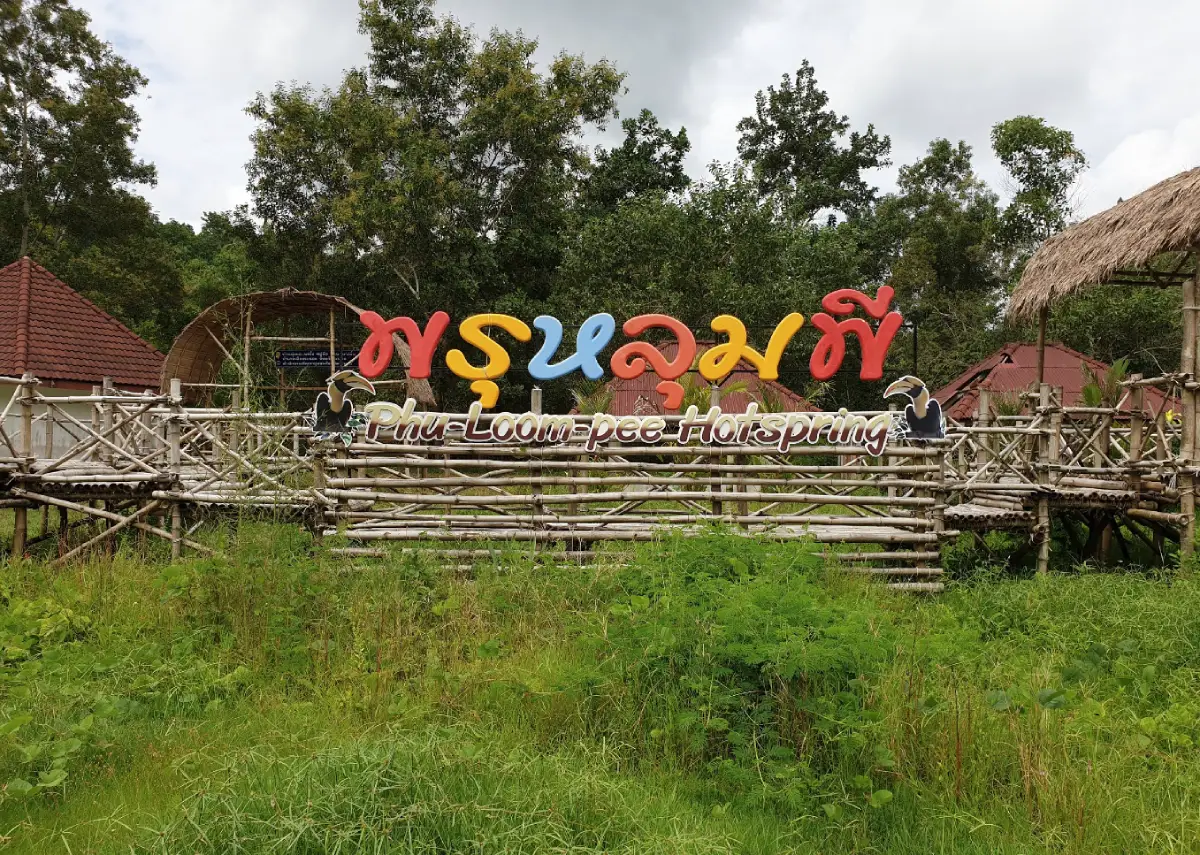
17. Phu Lum Phi Hot Spring is located in Moo 3, Ban Phon Rang, Bang Rin Subdistrict, Mueang Ranong District, Ranong Province. It is a small natural geothermal pool whose appeal lies in its simple surroundings and close connection with the local community. The water is remarkably clear, allowing visitors to see the bottom of the pool, including fractures in the ground and bubbles that continuously rise from beneath the surface. These features make the site particularly interesting for observing the natural processes that create geothermal springs.
Highlights: A small natural geothermal pool, exceptionally clear water revealing the pool bottom, bubbles emerging from underground fractures, a peaceful community setting, and a convenient travel connection with Phu Khao Ya and Ban Phon Rang Hot Spring.
Phu Lum Phi Hot Spring forms when groundwater circulates through fractures in underground rock, absorbs geothermal heat, and rises to the surface through a natural opening. The pool is notable for its clear water and the bubbles emerging from the bottom, allowing visitors to observe the movement of water and gases associated with the underground geothermal system. Unlike attractions known for violently boiling water or spectacular geyser eruptions, Phu Lum Phi has a quieter and more understated natural character.
The attraction is valued not for its size or extensive tourist facilities but for the opportunity to experience a natural hot spring that has long been part of the Bang Rin community's local environment. It is located near the route to Phu Khao Ya, also known as Grass Hill, one of Ranong's best-known natural landmarks. Travelers can therefore stop to observe the geothermal pool while exploring other attractions in the area.
Phu Lum Phi Hot Spring is different from both Ban Phon Rang Hot Spring and Raksawarin Hot Springs, although all three are located in Ranong and originate from natural geothermal water. Raksawarin is a public recreational destination near the provincial town, complete with landscaped gardens. Ban Phon Rang offers mineral bathing facilities in a forested national park setting. Phu Lum Phi, by contrast, is a small geothermal source best suited to nature observation and an introduction to the local community rather than a fully developed bathing attraction.
Visitors seeking mineral bathing facilities with additional amenities should check nearby establishments such as Tharin Hot Spring, which is a separate private facility rather than part of the original natural pool. Travelers should not assume that Phu Lum Phi provides the same services as a commercial mineral bathing establishment or that every part of the geothermal pool is open for bathing without restrictions.
Nature enthusiasts can include Phu Lum Phi Hot Spring in a morning or afternoon excursion before continuing to Phu Khao Ya, Namtok Ngao Waterfall, or Ban Phon Rang Hot Spring. The schedule can be adjusted according to travel time and road conditions, allowing visitors to enjoy several different natural landscapes in Ranong without rushing.
Although the pool is relatively small, visitors should never touch the water without checking its temperature or enter areas that have not been prepared for public bathing. Soap, shampoo, and other chemicals should be kept out of the natural geothermal water to protect its quality and preserve the surrounding community environment.
Open Days: Daily, according to published information Opening Hours: 08:00 – 18:00
Getting There: From Ranong town, follow Phet Kasem Road toward Phu Khao Ya. Look for the tourist sign indicating Phu Lum Phi Hot Spring, then turn onto the local access road and continue approximately 400 meters to the geothermal pool. The destination can be reached by private car, rental vehicle, motorcycle, or locally arranged transportation from Ranong town.
GPS Coordinates: 9.905641, 98.632129 Google Maps:Directions to Phu Lum Phi Hot Spring
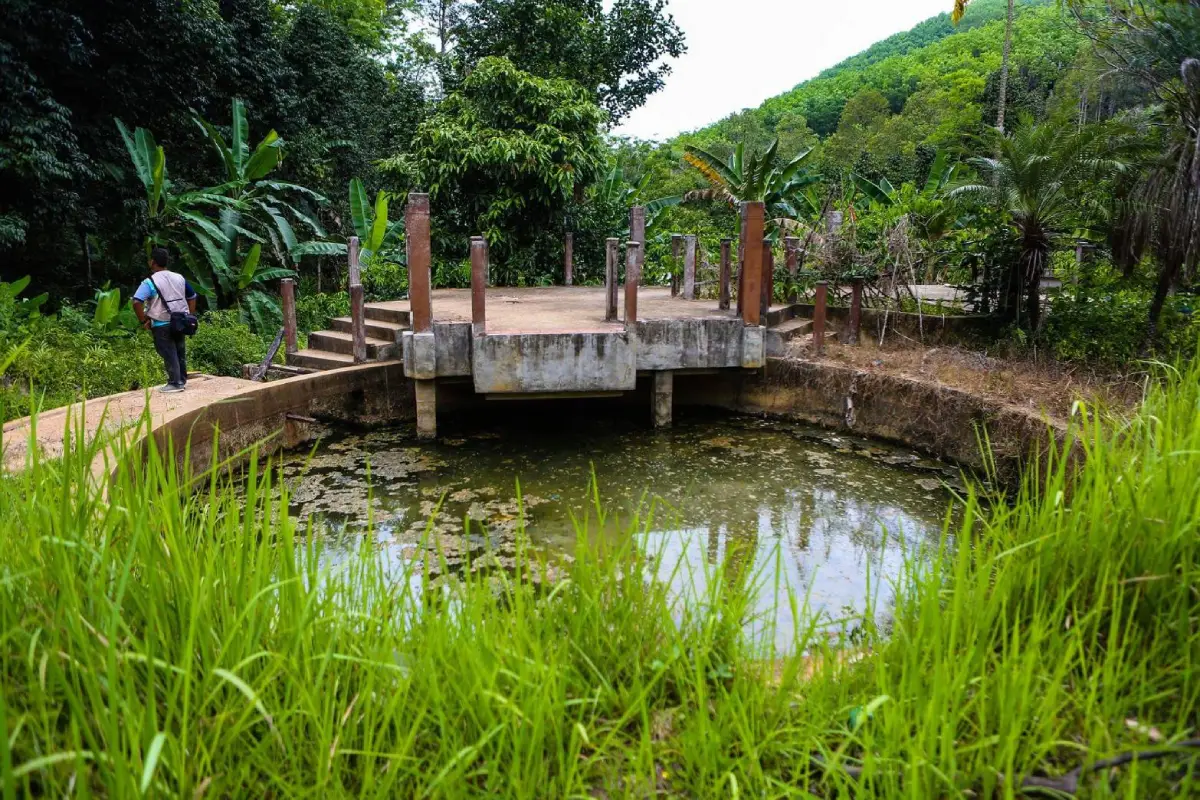
18. Ban Nako Hot Spring, also known locally as Ban Nako Mineral Hot Spring, is located in Moo 9, Aiyerweng Subdistrict, Betong District, Yala Province. It is a community-based natural geothermal attraction distinguished by the presence of warm mineral water close to a cool freshwater stream and a small waterfall. Surrounded by the mountains and lush forest of Aiyerweng, the destination features geothermal pools for relaxation and foot soaking, warm-water areas for children, community shops, and selected tourism services. It is an appealing choice for travelers who want to experience natural scenery and local ways of life together.
Highlights: Natural mineral hot spring pools in a forest environment, a cool stream and small Nako waterfall, foot-soaking facilities, warm-water pools, community shops, and access to the wider Aiyerweng sea-of-mist tourism route.
Ban Nako Hot Spring originates from groundwater heated beneath the surface before rising through fractures in the underlying rock. One of the area's most interesting features is the presence of warm geothermal water close to naturally cool freshwater, allowing visitors to observe the contrast between different water sources in the same landscape. However, the hot spring pools and freshwater stream have different temperatures and physical conditions. Visitors should therefore use only the areas specifically designated for each activity.
Ban Nako is a mountain community in Aiyerweng Subdistrict, where the local way of life is closely connected to forests, streams, and natural resources. The development of the hot spring for tourism has created opportunities for local residents to participate in managing the attraction and providing services, including food stalls, relaxation areas, and community-based tourism activities.
Popular activities include soaking feet in warm mineral water, resting beside the geothermal pools, and enjoying the surrounding stream and forest scenery. Visitors can spend time exploring the area at a relaxed pace and choose activities suited to members of their group. Families with young children should supervise them closely because water depth and temperature can vary between individual bathing areas.
The Aiyerweng area also has several major attractions, particularly its sea-of-mist viewpoints and the Aiyerweng Skywalk, which are popular among visitors to Betong District. A morning excursion to see the sea of mist followed by a visit to Ban Nako Hot Spring can make an appealing itinerary. Travelers should nevertheless check road distances and mountain driving conditions before departure.
In addition to enjoying the natural hot spring, visitors may be able to stay within the community or use designated camping facilities, depending on the services available at the time of travel. Accommodation, camping, and other activities are managed by individual operators or local caretakers, so advance inquiries are recommended, particularly during weekends and busy travel seasons.
Responsible tourism is important for protecting Ban Nako's natural water sources and community surroundings. Visitors should avoid littering, keep chemicals out of the geothermal pools, and never enter extremely hot source pools that have not been prepared for recreational use. Respecting the site helps maintain its value as both a community resource and a peaceful place for relaxation.
Open Days: Daily Opening Hours: 06:00 – 18:00, according to published information.
Fees: General access to the principal visitor area and natural hot spring is free. Accommodation, camping, meals, and additional activities may have separate charges according to the operator.
Getting There: From Betong town, follow the main route toward Aiyerweng Subdistrict and the area's sea-of-mist attractions, then continue along local roads to Ban Nako, Moo 9. Some sections pass through mountain terrain and rural communities. Visitors should use a vehicle in good condition and check the weather before departure, especially during periods of heavy rainfall.
GPS Coordinates: Search for Ban Nako Hot Spring, Aiyerweng, Betong, Yala. Google Maps:Directions to Ban Nako Hot Spring

19. Thepphanom Hot Spring is located around Ban Om Kut in Kong Khaek Subdistrict, Mae Chaem District, Chiang Mai Province. This natural geothermal attraction is distinguished by its location amid the forests and mountainous terrain of Mae Chaem. Unlike hot springs situated near major towns or main highways, reaching the site requires traveling along rural roads and mountain routes. It is therefore particularly suitable for nature enthusiasts interested in exploring geothermal phenomena within a relatively remote forest environment.
Highlights: A natural geothermal spring surrounded by mountain forests, the peaceful setting of Ban Om Kut, the rugged landscape of Mae Chaem District, and opportunities for nature-oriented travel away from busy urban areas.
Thepphanom Hot Spring forms when groundwater seeps through openings and fractures in the underlying rock, absorbs heat at greater depths, and returns to the surface through natural geological pathways. This process produces geothermal outlets within the forest landscape. Visitors can learn about underground heat and water circulation by observing the geothermal water and surrounding environment from locations that are safe and officially accessible.
One of the attraction's most appealing qualities is the natural atmosphere of Mae Chaem District, where mountains, forests, streams, and rural communities are closely connected to local resources. Traveling to Thepphanom Hot Spring therefore offers more than an opportunity to observe geothermal water; it also provides an introduction to the district's landscape and the diversity of natural resources in this part of Chiang Mai Province.
Because the site is not developed as an extensive mineral bathing destination comparable to San Kamphaeng or Fang Hot Springs, visitors should pay particular attention to access conditions, road quality, and the current status of the site before traveling. Travelers should not assume that every area has bathing pools, private bathrooms, restaurants, or the same level of amenities available at more established tourist attractions.
Daylight travel is recommended because rural roads and mountain routes may have limited lighting after dark. During the rainy season, slippery surfaces, rising stream levels, or temporary changes in road accessibility may create additional challenges. Visitors should ask local authorities or community residents about the route and current conditions before setting out.
For travelers interested in exploring natural landscapes, Thepphanom Hot Spring can be included in a wider journey through Mae Chaem District and its surrounding communities. The trip should be planned carefully, allowing adequate driving time and avoiding unnecessary haste. Visitors should never leave safe pathways or approach natural geothermal outlets simply to obtain a closer view.
Environmental conservation is especially important in forested geothermal areas. Travelers should take their rubbish away, keep chemical products out of natural water sources, avoid disturbing plants and wildlife, and refrain from damaging rocks or mineral deposits around the hot spring.
Open Days: Generally accessible daily, subject to local conditions. Recommended Visiting Hours: 08:00 – 17:00. These are suggested daytime visiting hours rather than officially confirmed operating hours.
Getting There: From Chiang Mai city, travel toward Mae Chaem District, then continue to Kong Khaek Subdistrict and Ban Om Kut using the local roads leading to the geothermal area. A private car or a vehicle suitable for mountain roads is the most convenient option. Travelers should confirm the final access route with the local community before departure.
GPS Coordinates: 18.271070, 98.396185 Google Maps:Directions to Thepphanom Hot Spring
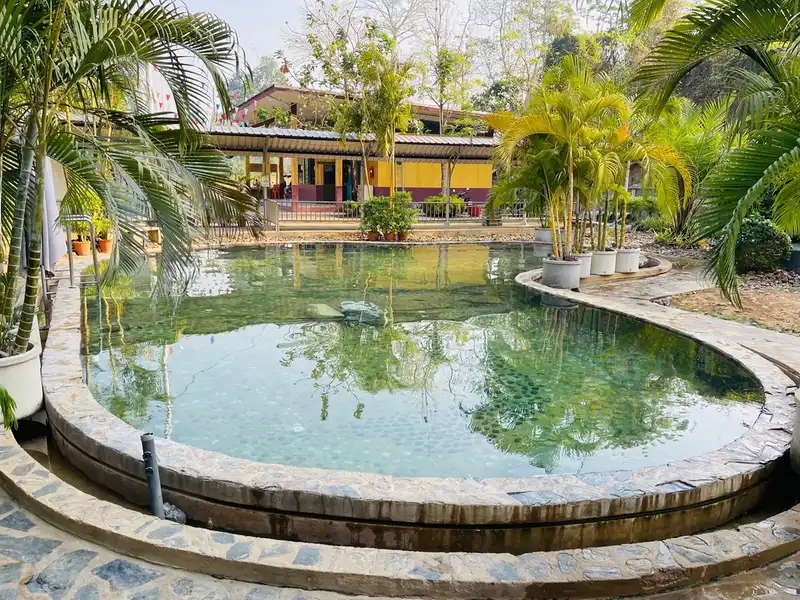
20. Lin Thin Hot Springs is located in Lin Thin Subdistrict, Thong Pha Phum District, Kanchanaburi Province. It is a natural geothermal bathing destination popular with travelers exploring the Kanchanaburi–Thong Pha Phum route. The site provides areas for mineral soaking and relaxation amid natural surroundings. Its main appeal lies in offering a relatively accessible hot spring experience that can be included as a resting stop while traveling to the mountainous landscapes and waterfalls of western Thailand.
Highlights: Natural mineral soaking pools, relaxation facilities in Thong Pha Phum District, a peaceful community setting, and convenient connections with Kanchanaburi's mountain and waterfall tourism routes.
Lin Thin Hot Springs originates from an underground water system in which groundwater circulates through openings and fractures in rock formations exposed to geothermal heat. The heated water subsequently emerges at the surface as natural hot spring outlets. The use of this geothermal resource for local recreation and tourism makes Lin Thin another example of how geological resources contribute to everyday life and travel experiences in Thong Pha Phum District.
Lin Thin differs from some larger geothermal attractions because it emphasizes mineral bathing in a relatively simple and relaxed environment. Visitors do not need to undertake a long forest trek or follow an extensive nature interpretation trail to enjoy the facilities. Instead, the site can serve as a convenient stop after driving or completing outdoor activities, allowing travelers time to relax before continuing their journey.
Before entering the mineral water, visitors should check the temperature of the available pools because naturally heated water may vary between bathing areas. Travelers should choose water suitable for their physical condition, never immerse themselves without first checking the temperature, and avoid soaking continuously for so long that dizziness, fatigue, or discomfort develops.
A visit to Lin Thin Hot Springs can be combined with other attractions along the Thong Pha Phum route, which features mountains, waterfalls, and a variety of natural landscapes. Families may find it particularly useful as a relaxing stop during a longer road trip, helping to create a more comfortable travel schedule without rushing between destinations.
Visitors should bring a towel, a change of clothes, sandals, and drinking water, and follow all instructions provided by the facility's caretakers. Soap and shampoo should not be used in natural mineral water sources, and all travelers are encouraged to help keep the bathing and recreation areas clean.
Open Days: Daily Opening Hours: Monday – Friday 07:00 – 20:00; Saturday – Sunday 07:00 – 21:00
Fees: Published admission rates for Thai nationals are 20 THB for adults and 10 THB for children. Visitors should confirm the current charges before entering.
Getting There: From Kanchanaburi town, follow Highway 323 toward Thong Pha Phum District, then continue into Lin Thin Subdistrict along the local roads leading to the hot springs. Visitors may travel by private car, rental vehicle, or locally arranged transportation.
GPS Coordinates: 14.546394, 98.759468 Google Maps:Directions to Lin Thin Hot Springs
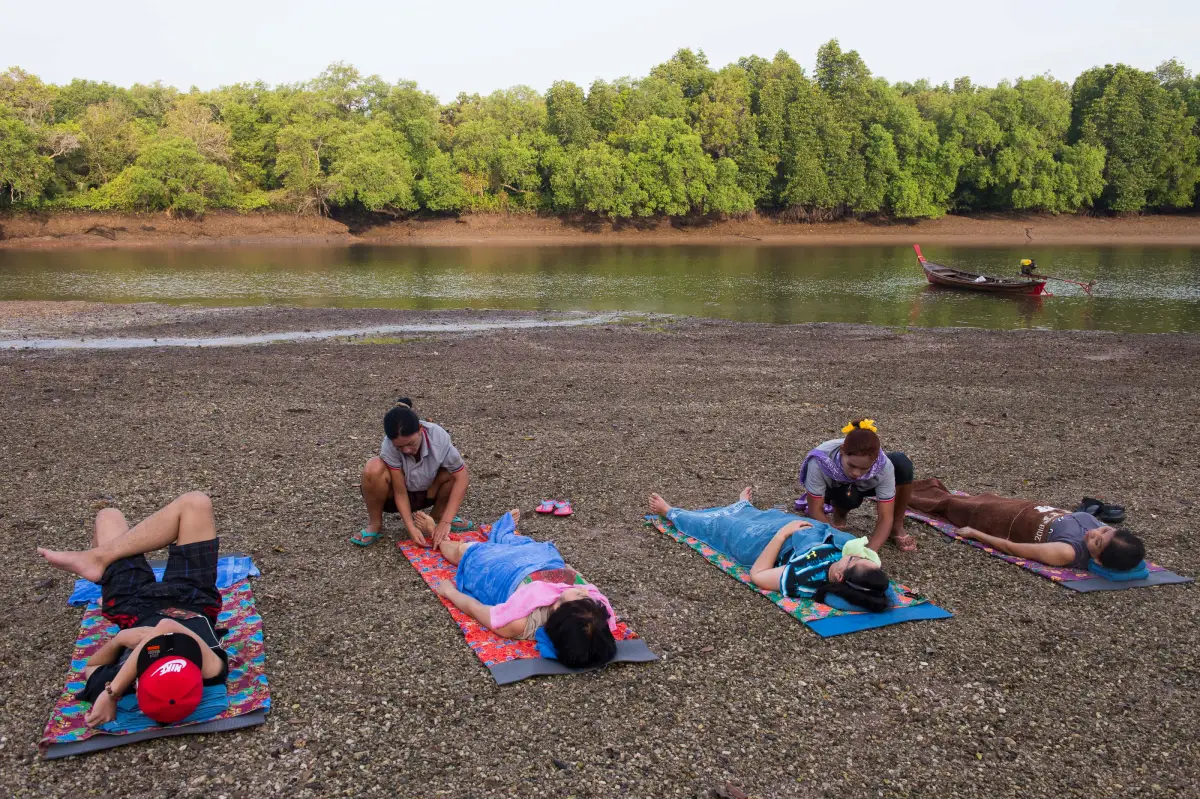
21. Hon Hot Spring (Khlong Marui Hot Sand Beach) is located around Khlong Marui in Marui Subdistrict, Thap Put District, Phang Nga Province. This distinctive natural geothermal attraction differs considerably from conventional inland hot springs because its main features include naturally heated saline water, hot sand, and hot mud along coastal and estuarine areas. Some sections are accessible only when the tide is low. Travelers interested in hot mud spa experiences and the surrounding coastal environment should contact the Ban Khok Khrai community in advance to arrange their visit according to tidal conditions and the availability of local tourism services.
Highlights: Naturally heated sandy beach areas, geothermal mud, hot saline water, community-based hot mud spa activities at Ban Khok Khrai, boat excursions along Khlong Marui, and the surrounding mangrove ecosystem.
The geothermal activity around Khlong Marui is associated with the geological structures of the Khlong Marui Fault Zone. Groundwater heated beneath the Earth's surface can move upward through fractures and openings in rock formations, reaching coastal environments and creating unusually warm areas within the surrounding sand, mud, and water. This type of geothermal landscape differs from hot springs that emerge in mountain forests or developed mineral bathing facilities.
One of the site's most interesting characteristics is the way its appearance and accessibility change with the tides. At low tide, sections of the sandy shore and mudflats become exposed, allowing visitors to participate in activities organized by local community guides. When the tide rises or weather conditions become unsuitable, however, certain areas may no longer be accessible. Arriving without advance arrangements may therefore mean that visitors cannot take part in their preferred activities.
Hot mud spa treatments are among the distinctive wellness tourism activities organized by the Ban Khok Khrai community. These experiences make use of the naturally warmed mud and sand found in the area. Visitors should participate under the supervision of local guides and should not dig into or touch unusually hot areas without checking the temperature. The use of hot mud should be understood as a recreational wellness activity rather than a proven medical treatment for disease.
Beyond its geothermal features, Khlong Marui offers a fascinating mangrove landscape and an opportunity to learn about traditional coastal fishing communities. Exploring the waterways by boat with local guides allows visitors to observe how natural resources, estuarine ecosystems, and local livelihoods are connected. A visit therefore combines community experiences and environmental learning with leisure and relaxation.
Travelers can include the hot sand beach and mud spa experience in an itinerary exploring Ban Khok Khrai and other natural attractions in Thap Put District. Suitable footwear for wet and slippery ground, a change of clothes, drinking water, and sun protection are recommended. Visitors should also check the weather forecast and tidal schedule before departure.
Protecting the environment is particularly important because coastal mangrove ecosystems and geothermal areas along tidal waterways are fragile. Visitors should never throw rubbish into the canal, damage mangrove vegetation, or remove mud and other natural materials without permission. Following local guides' instructions helps protect the landscape while supporting responsible community-based tourism.
Open Days: Daily, subject to community activity arrangements. Operating Hours: 08:00 – 16:00. Access to the hot sand beach depends on tidal conditions and requires advance arrangements.
Fees: Boat excursions and hot mud spa activities have separate charges and conditions depending on the community tourism program. Visitors should confirm prices, group sizes, and availability before booking.
Getting There: From Phang Nga or Krabi, travel toward Marui Subdistrict in Thap Put District and continue to the Ban Khok Khrai community. From there, join a local boat excursion, usually using a traditional long-tail boat, to reach the hot sand beach in Khlong Marui at a suitable time during low tide. The hot sand beach cannot be reached directly by car.
GPS Coordinates: 8.566186, 98.655605 (reference navigation point). Google Maps:Directions to the Khlong Marui area

22. Nong Ya Plong Hot Spring is located in Yang Nam Klat Nuea Subdistrict, Nong Ya Plong District, Phetchaburi Province. This natural geothermal attraction lies amid the forested mountain landscape in the western part of the province. Several natural hot spring pools have been developed to support tourism and recreation, with warm mineral water emerging from beneath the ground. Its main attractions are the peaceful forest environment, naturally heated mineral water, and designated facilities for foot soaking and mineral bathing, allowing visitors to experience the area's geological resources in a relaxed outdoor setting.
Highlights: Four natural hot spring pools arranged along a connected area, forested foothill scenery, foot-soaking facilities, private mineral bathing rooms, and recreational areas developed with local community participation.
Nong Ya Plong Hot Spring forms when groundwater seeps through fractures in rock formations, absorbs heat at greater depths, and returns to the surface through natural geological pathways. Four geothermal pools are found within the area, aligned approximately from north to south. Water from the northern pools flows toward the southern section, allowing visitors to observe how naturally heated water circulates and moves through the landscape.
The attraction's appeal extends beyond its geothermal water to the surrounding terrain and vegetation. Nong Ya Plong District is closely associated with forests, streams, mountain landscapes, and rural communities. A visit to the hot spring therefore offers a different perspective on Phetchaburi Province, which many travelers may otherwise associate primarily with Cha-am Beach or historical landmarks in the provincial town.
Visitor facilities include areas for foot soaking and mineral bathing rooms arranged separately from the original geothermal source pools. Travelers should select facilities according to their physical condition and check the temperature before entering the water. Families should ensure that children do not approach dangerously hot pools and should avoid entering geothermal areas without appropriate safety measures.
The hot spring also reflects the community's role in managing natural resources for tourism. Mineral bathing services and recreational facilities help support local economic activity while making the geothermal attraction more accessible to visitors. At the same time, travelers have a responsibility to use the natural resource carefully, avoiding soap or shampoo in untreated geothermal pools and keeping the surrounding environment clean.
Nong Ya Plong Hot Spring can serve as the main destination for a one-day excursion or be combined with nearby natural attractions within the district, depending on road conditions and the time available. Visitors should bring a change of clothes, a towel, non-slip sandals, and drinking water so they can enjoy the mineral bathing facilities comfortably.
Open Days: Daily Opening Hours: 08:00 – 17:00
Fees: Published service rates include foot soaking at 10 THB per person, a private mineral bathing room at 30 THB per person, and a shared hot-water bathing room at 150 THB per room. Visitors should confirm the current prices before using the facilities.
Getting There: From Phetchaburi town, travel toward Nong Ya Plong District, then continue into Yang Nam Klat Nuea Subdistrict along local roads following signs to Nong Ya Plong Hot Spring. A private car or rental vehicle is recommended because the attraction is situated in a rural area away from major public transportation routes.
GPS Coordinates: 13.153248, 99.600738 Google Maps:Directions to Nong Ya Plong Hot Spring
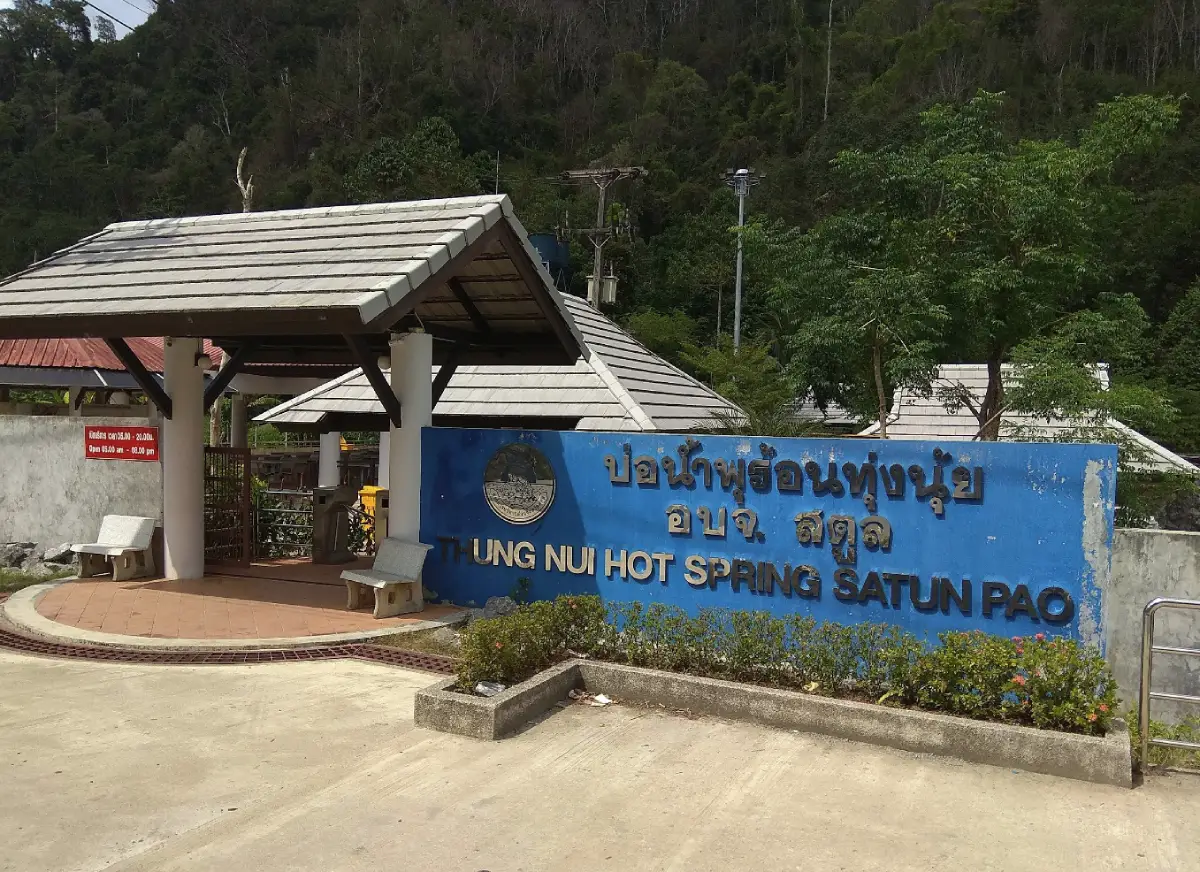
23. Thung Nui Hot Spring is located in Thung Nui Subdistrict, Khuan Kalong District, Satun Province. This wellness-oriented natural attraction features mineral hot water emerging from beneath the ground amid foothills and rural communities. The site offers separate foot-soaking and full-body bathing pools, as well as resting areas, bathing rooms, and visitor amenities. It is particularly suitable for travelers seeking a relaxing stop on the way to Satun or planning a nature-based trip around Khuan Kalong District.
Highlights: Natural geothermal water with source temperatures of approximately 50–60 degrees Celsius, free public foot-soaking facilities, designated mineral bathing pools, bathing rooms, and opportunities to combine a visit with Ton Pa Nan Waterfall.
Thung Nui Hot Spring forms through the circulation of groundwater within heated geological layers before the water emerges at the surface. Temperatures at the original geothermal outlets are higher than those suitable for direct skin contact. The visitor facilities have therefore been arranged to provide separate areas for foot soaking and full-body mineral bathing. This organization makes the attraction more convenient for both tourists and local residents who regularly visit the hot spring.
The area surrounding the hot spring is shaded by trees and lies close to the foothills, with rubber plantations, fruit orchards, and rural villages scattered throughout the landscape. This creates a peaceful natural setting rather than the atmosphere of a large, crowded commercial resort. The quiet environment is one of the site's attractions, particularly for visitors who want to relax after a long journey.
Foot soaking is an accessible activity for travelers who wish to experience naturally heated mineral water without immersing their entire body. The full-body bathing facilities are organized separately and may have different charges depending on the user category. Visitors should choose services according to their physical condition and avoid soaking continuously for excessive periods, particularly older adults, people with heart or blood pressure conditions, and young children.
A nearby attraction is Ton Pa Nan Waterfall, located within Thung Nui Subdistrict. The waterfall offers a forest landscape quite different from the geothermal bathing area. Travelers can arrange a nature excursion to the waterfall in the morning before returning to the hot spring for foot soaking or relaxation in the afternoon. Weather and trail safety should be checked before visiting the waterfall, especially during the rainy season.
Visitors should bring a towel, a change of clothes, sandals, and drinking water, while following all regulations established by the facility's caretakers. Soap and other chemicals should not be used in mineral water pools. Keeping the bathing areas and surrounding grounds clean helps protect the hot spring as an important natural resource for the local community.
Open Days: Daily Opening Hours: General area 05:00 – 20:00; foot-soaking and mineral bathing pools 05:00 – 19:00.
Fees: Foot soaking is free. Published full-body bathing charges are 50 THB for Thai adults, 30 THB for Thai children, 100 THB for foreign adults, and 60 THB for foreign children. Visitors should confirm current rates with the caretakers.
Getting There: From Satun town or Hat Yai, travel toward Khuan Kalong District, then continue into Thung Nui Subdistrict following signs to Thung Nui Hot Spring. The destination can be reached conveniently by private car or rental vehicle and can be combined with a trip to Ton Pa Nan Waterfall.
GPS Coordinates: 6.843800, 100.156233 Google Maps:Directions to Thung Nui Hot Spring

24. Pong Krathing Hot Spring (Thai Prachan Hot Spring) is located in Ban Phu Nam Ron, Moo 4, Ban Bueng Subdistrict, Ban Kha District, Ratchaburi Province, within Chaloem Phra Kiat Thai Prachan National Park. This natural geothermal spring lies amid forested mountains and is particularly appealing to visitors interested in conservation-oriented travel and peaceful natural surroundings. Its main feature is a natural hot spring pool with a temperature of approximately 65 degrees Celsius, accompanied by designated bathing facilities and a nearby freshwater stream. These features make the destination suitable for learning about the relationship between underground geothermal water and the surrounding ecosystem.
Highlights: A natural geothermal pool in a forest environment, hot water at approximately 65 degrees Celsius, designated mineral bathing facilities, a cool freshwater stream, and nature-based activities within Chaloem Phra Kiat Thai Prachan National Park.
Pong Krathing Hot Spring forms when groundwater is heated at greater depths and rises to the surface through natural fractures in the underlying rock. The original geothermal outlet is a relatively small natural pool, approximately 5 meters in diameter, with water hot enough to make direct bathing unsafe. Visitors should therefore use only bathing areas specifically designated by park staff and check the temperature before entering the water.
The surrounding landscape consists of mountains, streams, forests, and rural scenery in Ban Kha District. Travelers visiting Pong Krathing Hot Spring can enjoy an environment far removed from large, crowded tourist destinations. The quiet natural setting makes it particularly suitable for visitors who prefer conservation-oriented excursions and unhurried time in the countryside.
The area's history is connected with the establishment of Chaloem Phra Kiat Thai Prachan National Park, whose development originated from forest conservation initiatives beginning in 1992. Protecting the forest and watershed environments helps maintain the natural conditions associated with groundwater circulation and local streams. As a result, the hot spring has importance not only as a geothermal attraction but also as a location for environmental education and nature conservation.
Visitors can plan a day trip combining mountain scenery with a stop at the hot spring or consider an overnight stay in accommodation or camping areas permitted by the national park or local community. However, camping arrangements must be confirmed in advance, and travelers should never set up tents in forest areas that are not officially open for overnight use.
Travelers should be cautious about road conditions during the rainy season and prepare drinking water, appropriate footwear for wet ground, and other essentials. Visitors must not approach the original geothermal pool more closely than permitted and should follow all national park staff instructions, particularly around areas containing dangerously hot water.
Open Days: Daily, subject to national park announcements Opening Hours: 08:00 – 16:30
Getting There: From Ratchaburi town, travel toward Ban Kha District, then continue into Ban Bueng Subdistrict and Ban Phu Nam Ron, Moo 4, following the access route to Chaloem Phra Kiat Thai Prachan National Park. A private vehicle is recommended. Road conditions should be checked before departure, particularly during heavy rainfall.
GPS Coordinates: 13.260765, 99.407354 Google Maps:Directions to Pong Krathing Hot Spring
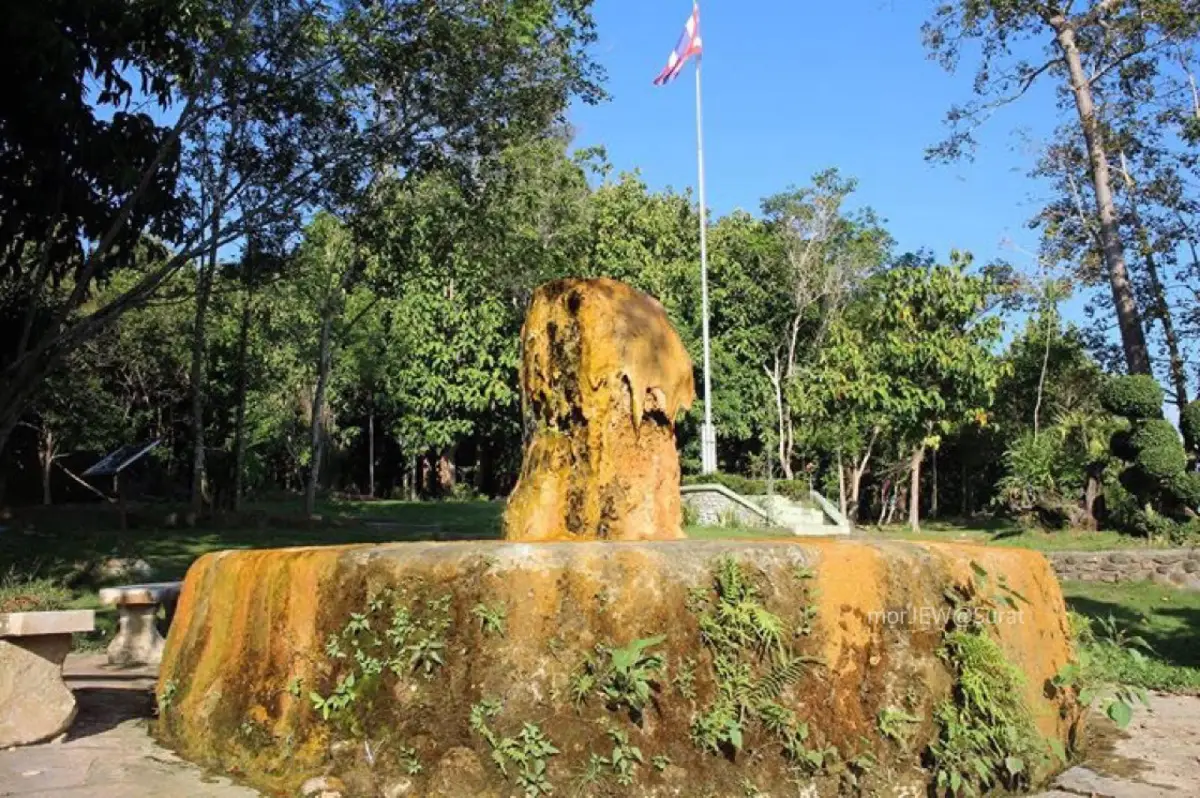
25. Ban Khao Tok Hot Spring is located in Moo 2, Khao Tok Subdistrict, Khian Sa District, Surat Thani Province, within Nong Thung Thong Wildlife Non-Hunting Area. This natural geothermal attraction features several hot-water outlets emerging from beneath the ground amid wetlands, forest vegetation, and a relatively undisturbed ecosystem. Its main appeal is the opportunity to observe natural hot springs while exploring the wetland environment of Nong Thung Thong, an important habitat for waterbirds and other wildlife.
Highlights: Several natural geothermal pools, clear hot spring water, forest and wetland scenery, a designated nature study trail, and opportunities to learn about the ecosystem of Nong Thung Thong.
Ban Khao Tok Hot Spring forms when underground water circulates through heated rock formations before rising to the surface through fractures in the ground. Several natural geothermal outlets occur within the area, some with high water temperatures and visible movement at the source. Visitors should distinguish between designated observation areas and any pools that may be approved for foot soaking or bathing, always following posted signs and the instructions of local caretakers.
A particularly interesting feature is the location of the geothermal springs within a wetland landscape rich in vegetation and wildlife. Nong Thung Thong Wildlife Non-Hunting Area includes ponds, grasslands, scattered woodland, and marshy habitats that play an important role in Surat Thani's ecosystem. Visitors therefore have an opportunity to learn about surface water, underground water, and the living environment within the same protected area.
Walking along the nature study trail is one of the most suitable activities at the site. The trail is approximately 1 kilometer long and is not particularly demanding under normal conditions. Visitors can observe wetland plants, signs of wildlife, and the characteristics of natural geothermal outlets from authorized observation points without undertaking a lengthy forest trek.
Anyone wishing to use the geothermal water for relaxation should enter only pools explicitly approved by the caretakers and must never step into the original source pools. Water temperatures should always be checked before any form of soaking. Visitors interested in birdwatching or environmental education may wish to bring binoculars and should remain quiet to avoid disturbing wildlife in the protected area.
Ban Khao Tok Hot Spring can be combined with nature exploration in Nong Thung Thong Wildlife Non-Hunting Area and nearby communities in Khian Sa District. It is particularly suitable for families, school groups, university students, and visitors interested in quiet, nature-based experiences rather than large commercial bathing facilities.
Environmental protection is especially important in this wildlife conservation area. Visitors should never feed wild animals, remove plants or animals, or use soap and other chemicals in natural water sources. Respecting the wetland ecosystem helps protect both the geothermal resource and the surrounding habitats.
Open Days: Daily Opening Hours: 08:00 – 17:00
Getting There: From Surat Thani town, travel toward Khian Sa District and continue to Khao Tok Subdistrict, Moo 2, following the access roads to Nong Thung Thong Wildlife Non-Hunting Area. A private car or rental vehicle is the most convenient option. Groups should contact local caretakers before entering the protected area.
GPS Coordinates: 8.842918, 99.223532 Google Maps:Directions to Ban Khao Tok Hot Spring
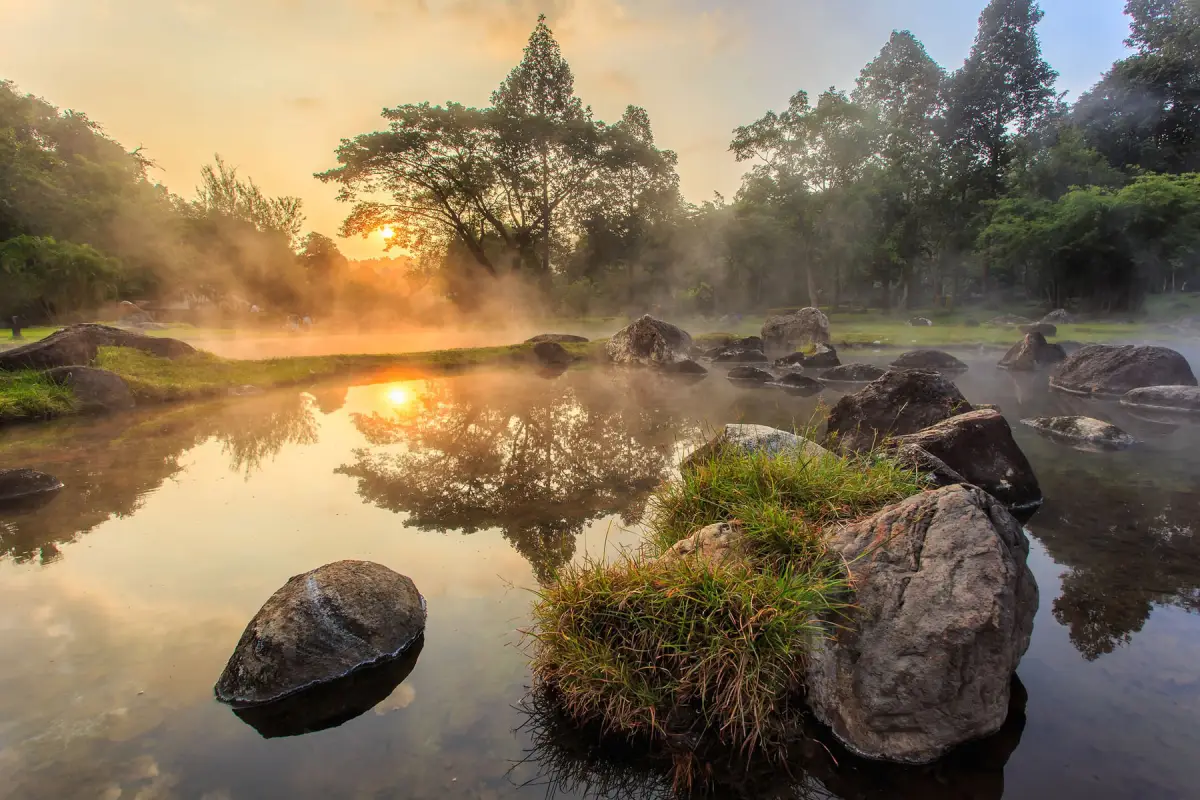
26. Ban Bang Cham Hot Spring is located in Ban Bang Cham, Moo 15, Takuk Nuea Subdistrict, Vibhavadi District, Surat Thani Province. It is a natural geothermal attraction within a rural community, distinguished by hot water rising from beneath the ground in the middle of a large mineral-rich earth clearing. The setting is different from developed mineral bathing pools because the natural ground surface and geothermal outlets remain visible. This makes Ban Bang Cham particularly interesting for visitors who want to learn about geological processes and explore less-developed natural attractions.
Highlights: Natural hot-water outlets in a mineral-rich earth clearing, rural scenery in Vibhavadi District, and opportunities to observe groundwater emerging at the Earth's surface.
Ban Bang Cham Hot Spring forms through an underground circulation process in which groundwater seeps through openings and fractures in rock formations, absorbs heat at depth, and rises back toward the surface. The appearance of hot-water outlets in an open earth clearing illustrates the relationship between underground geothermal systems and surface geological features. Unlike geysers or hot streams flowing over limestone terraces, the main feature here is the natural emergence of heated water from the ground.
The attraction's appeal lies in the simplicity of Ban Bang Cham's rural environment. The surrounding landscape includes woodland, agricultural land, and nearby waterways. A visit is therefore most suitable for travelers interested in discovering an undeveloped geothermal site rather than expecting an extensive resort, spa, or mineral bathing complex.
Visitors should observe the geothermal outlets and the surrounding ground from a safe location. Walking across wet or unstable earth without a designated path may be dangerous because some sections can be soft or hotter than they appear from the surface. It is important not to approach bubbling water or mineral-rich ground without appropriate local guidance.
Ban Bang Cham Hot Spring can be included in a wider exploration of natural attractions around Vibhavadi District. Travelers should check the road and access conditions with local residents before setting out. The site is better suited to observing and learning about natural geothermal features than to expecting fully equipped bathing rooms, spa services, or comprehensive tourist amenities.
Visitors should help protect the earth clearing and geothermal outlets by keeping the area clean, avoiding the removal of soil or rocks, and keeping chemicals out of the water. They should also respect land boundaries and never enter community or private property without permission.
Open Days: Daily, according to published information Opening Hours: 08:00 – 19:00
Getting There: From Surat Thani town, travel toward Vibhavadi District, then continue to Takuk Nuea Subdistrict and Ban Bang Cham, Moo 15. A private car is recommended. Visitors should ask local residents for final directions because some access roads are rural and entrance signs may be difficult to identify.
GPS Coordinates: Takuk Nuea Subdistrict, Vibhavadi District, Surat Thani Province. Google Maps:Find Ban Bang Cham Hot Spring on Google Maps

27. Pa Sert Hot Spring, also known as Doi Hang Onsen, is located beside Huai Pong Nam Ron Stream in Ban Pha Sert Phatthana, Moo 6, Doi Hang Subdistrict, Mueang Chiang Rai District, Chiang Rai Province. It is a natural geothermal bathing destination that has been developed to provide wellness and recreational services amid forested hills and communities near the Kok River. The facilities include outdoor mineral soaking pools, private mineral bathing rooms, and various relaxation activities, making it an appealing choice for travelers seeking a peaceful hot spring experience within reach of Chiang Rai city.
Highlights: Natural mineral hot springs, outdoor mineral bathing pools, private bathing rooms, foot-soaking facilities, egg-boiling pools, traditional Thai massage, forest and stream scenery, and opportunities to visit Huai Kaew Waterfall and the Doi Hang community.
Pa Sert Hot Spring has a history closely connected with communities living along the Kok River. In earlier times, the geothermal source was located in low-lying ground affected by changes in river levels. During the rainy season, flooding sometimes covered the hot spring area for extended periods, limiting the ways in which local residents could use it. Villagers had long been familiar with the natural hot water and made practical use of it in everyday life, including soaking and cooking bamboo shoots, before the location was gradually developed for tourism.
Development of the attraction became more organized in 2002, when the Doi Hang Subdistrict Administrative Organization began improving the landscape and visitor services around the geothermal source. Financial support from the Chiang Rai Provincial Administrative Organization and other local agencies contributed to its continued development. Over time, the site evolved from a community hot spring into a wellness tourism destination with facilities for visitors, while creating economic opportunities for residents of Doi Hang.
The geothermal system is associated with groundwater circulating through openings and fractures in the underlying rock. Water that seeps underground absorbs heat at deeper levels before rising to the surface through geological pathways. The original hot-water outlets are separated from the areas developed for recreational bathing. Visitors can choose from designated foot-soaking and full-body mineral bathing facilities, but should always check the water temperature before entering.
One of Pa Sert Hot Spring's most attractive features is its range of mineral bathing options. Outdoor communal pools allow visitors to relax while enjoying the surrounding scenery, whereas private mineral bathing rooms provide additional privacy for those who prefer a more secluded experience. These different facilities make the destination suitable for couples, groups of friends, and families seeking time together.
Beyond mineral bathing, visitors may find additional services and activities, including foot soaking, geothermal egg boiling, and traditional Thai massage. Travelers who do not wish to immerse themselves fully can rest and enjoy the natural surroundings. Those planning to use private bathing rooms should check service schedules and consider arranging their visit in advance, especially during weekends and public holidays when the site may be busier.
The natural setting is another major reason to visit Pa Sert Hot Spring. Unlike geothermal attractions beside major highways, the site lies in Doi Hang near the Kok River and foothill communities. This setting allows visitors to enjoy forest scenery and the quiet atmosphere of rural Chiang Rai while relaxing. Morning or afternoon visits are suitable for travelers planning an unhurried half-day excursion.
Historically, Ban Pha Sert was also connected with water-based travel along the Kok River. The Ban Pha Sert landing area served routes used by boats and rafts traveling between communities along the river. Nearby natural attractions and culturally diverse communities further enrich the area's tourism appeal. Visitors interested in these experiences should check whether the relevant transport and community activities are operating before arranging a trip.
For a broader itinerary, Pa Sert Hot Spring can be combined with Huai Mak Liam Hot Spring, Huai Kaew Waterfall, and attractions around Doi Hang. Each offers a different experience: Pa Sert is particularly suitable for recreational mineral bathing, while nearby waterfalls and natural sites provide opportunities for sightseeing and exploring local ecosystems.
Visitors intending to bathe should bring a towel, spare clothes, non-slip sandals, and drinking water. Hot-water immersion should be limited to a comfortable duration, and anyone experiencing dizziness or discomfort should leave the pool immediately. Older adults, young children, pregnant visitors, and people with heart or blood pressure conditions should be particularly careful. Mineral bathing is intended for relaxation rather than as a substitute for medical treatment.
Pa Sert Hot Spring also demonstrates the importance of community-based natural resource management. Geothermal water is a valuable resource that requires protection alongside the surrounding environment. Visitors should keep the area clean, avoid dropping litter into the water, never use soap or chemicals in natural geothermal pools, and follow all local regulations to help maintain the quality of the water and landscape.
Open Days: Monday, Tuesday, and Thursday – Sunday. The outdoor communal pool is closed every Wednesday. Opening Hours: 09:00 – 17:00
Fees: Published rates include 30 THB for adults and 10 THB for children using the outdoor communal pool. Private mineral bathing is listed at 50 THB for one person, or 40 THB per person for groups of two or three. Traditional Thai massage is listed at 150 THB per person. Visitors should confirm the current rates and availability of services before traveling.
Getting There: From Chiang Rai city, travel through the Ban Den Ha intersection toward Doi Hang Subdistrict and the Kok River area. Continue to Ban Pha Sert Phatthana, Moo 6, following signs for Pa Sert Hot Spring or Doi Hang Onsen. The site can be reached by private car, rental vehicle, or local transport arranged in Chiang Rai. Road conditions should be checked before departure, particularly during the rainy season.
GPS Coordinates: Ban Pha Sert Phatthana, Moo 6, Doi Hang Subdistrict, Mueang Chiang Rai District, Chiang Rai Province. Google Maps:Directions to Pa Sert Hot Spring

28. Huai Mak Liam Hot Spring is located near the headquarters of Lam Nam Kok National Park in Doi Hang Subdistrict, Mueang Chiang Rai District, Chiang Rai Province. It is an important natural geothermal attraction for nature-oriented tourism and relaxation in Chiang Rai. Located approximately 20 kilometers from the city, it lies along the same general travel route as Pa Sert Hot Spring. Its main attraction is naturally heated water emerging from underground amid a forested mountain landscape close to the Kok River, making the area suitable for observing geothermal phenomena and enjoying the natural environment.
Highlights: Natural geothermal water outlets, forest scenery near the Kok River, recreation in the Lam Nam Kok National Park area, nature-oriented travel through Doi Hang, and the possibility of combining a visit with Pa Sert Hot Spring.
Huai Mak Liam Hot Spring forms through the circulation of groundwater within fractures and openings in rock formations. Water seeping to deeper levels absorbs geothermal heat before returning to the surface through natural channels, producing geothermal outlets. The phenomenon illustrates geological processes found in northern Thailand's mountainous landscapes, where hot springs occur in association with rock fractures and subsurface water systems.
The surrounding natural environment is one of Huai Mak Liam Hot Spring's defining features. Forests, streams, and foothill terrain create a peaceful setting different from hot springs situated in busy urban areas. Visitors can walk through accessible sections of the site, observe the geothermal water, and appreciate the surrounding scenery while remaining on designated routes and following the instructions of local caretakers.
Its location near Pa Sert Hot Spring makes the two attractions suitable for inclusion in the same travel itinerary. Although both are situated within the broader Doi Hang area, Huai Mak Liam and Pa Sert are separate destinations with different locations and visitor facilities. Travelers should check the exact destination on their map before departure to avoid confusing one site with the other.
Nature enthusiasts can combine Huai Mak Liam Hot Spring with destinations along the Kok River and Huai Kaew Waterfall. Sufficient time should be allowed for traveling along local roads, and visitors should check weather conditions beforehand. The cool season is especially pleasant for enjoying mountain scenery, while the rainy season requires greater care on wet roads and near streams.
Visitors should be careful around geothermal outlets because water rising from beneath the ground may be too hot to touch. Bathing should never take place in pools that are not explicitly designated for recreational use or where no temperature management is provided. Keeping the area clean and avoiding chemicals in natural water sources also helps protect the geothermal environment.
Open Days: Daily Opening Hours: 08:00 – 17:00, according to published information. Access may be affected by national park announcements.
Getting There: From Chiang Rai city, follow the route toward Doi Hang Subdistrict along the Kok River area, passing Pa Sert Hot Spring before continuing toward Lam Nam Kok National Park headquarters and Huai Mak Liam Hot Spring. A private car or rental vehicle is the most convenient option. Travelers should check local signs and final road conditions before entering the area.
GPS Coordinates: 19.963055, 99.680083 Google Maps:Directions to Huai Mak Liam Hot Spring

29. Pong Dueat Hot Spring (Mueang Paeng) is located around Ban Mueang Paeng in Mueang Paeng Subdistrict, Pai District, Mae Hong Son Province. This natural geothermal attraction is distinguished by its high-temperature pools and steam rising amid mountains and rural communities in the Pai area. It is particularly suitable for travelers who enjoy exploring less crowded natural destinations and wish to experience a peaceful geothermal landscape away from the busiest attractions in central Pai.
Highlights: High-temperature natural geothermal pools, visible steam rising from the ground, scenic mountain valleys, the rural atmosphere of the Mueang Paeng community, and nature-focused travel routes from Pai District.
Pong Dueat Hot Spring at Mueang Paeng forms when groundwater circulates through fractures in rock formations, absorbs geothermal heat at greater depths, and returns to the surface through natural channels. In some areas, the water is extremely hot, producing steam that rises continuously above the geothermal outlets. The attraction is therefore better suited to observing natural geothermal activity than attempting to bathe directly in the original source pools.
This hot spring is different from Sai Ngam Hot Spring, another geothermal attraction in Pai District. Sai Ngam features comfortably warm water flowing through a series of natural pools within the forest, whereas Mueang Paeng is better known for its hotter geothermal water and visible steam. Travelers should select the destination that best matches their interests and should not assume that all hot springs around Pai are suitable for recreational bathing.
The surrounding landscape consists of mountains, valleys, and communities distributed along rural roads. Traveling toward Mueang Paeng gives visitors an opportunity to enjoy the scenery and experience rural life in Mae Hong Son. Forests, agricultural land, and small mountain villages can be seen along the route, making the journey itself an important part of the experience.
Cool-season mornings are particularly suitable for observing geothermal steam because the temperature difference between the hot water and the surrounding air makes the steam more visible. Visitors interested in photography should choose safe viewing locations and avoid approaching pool edges too closely. Ground surrounding geothermal outlets may be wet, slippery, unstable, or hotter than it appears.
Travelers should bring drinking water, suitable footwear for natural terrain, and check road conditions before departure. During the rainy season, some roads may become slippery or temporarily difficult to use. Visitors should never touch water at the original geothermal sources or allow young children to approach steaming pools without supervision. Respect for the natural environment is equally important, including avoiding littering and damage to geothermal features.
Open Days: Daily, according to published information Opening Hours: 07:00 – 18:00. Travelers should check road access and any current restrictions before visiting.
Getting There: From Pai town, follow Highway 1095 toward Mae Malai for approximately 28–29 kilometers, then turn onto Highway 1265 toward Mueang Paeng Subdistrict. Continue through Ban Mueang Paeng toward the geothermal area. Some sections of the final approach may be narrow or uneven, so a well-maintained vehicle and careful driving are recommended.
GPS Coordinates: 19.214316, 98.370993 Google Maps:Directions to Pong Dueat Hot Spring at Mueang Paeng

30. Pong Kwao Hot Spring is located in Ban Pong Kwao, Moo 3, Samoeng Nuea Subdistrict, Samoeng District, Chiang Mai Province. This natural hot spring destination offers a relaxing escape amid the mountains and valleys of Samoeng. Its rural surroundings provide a peaceful atmosphere, while the naturally heated mineral water offers opportunities for recreation close to nature. It is especially appealing to visitors who prefer quieter destinations and wish to experience the mountain communities of Chiang Mai away from heavily visited tourist areas.
Highlights: Natural mineral hot spring pools, scenic mountains in Samoeng District, peaceful recreational areas with a sense of privacy, rural landscapes, and routes connecting the destination with the communities of Samoeng Nuea.
Pong Kwao Hot Spring originates from an underground water system heated at greater depths before returning to the surface through natural geological pathways. The presence of geothermal water within a mountain valley reflects the geological characteristics of northern Thailand, where rock fractures and groundwater circulation are closely associated with naturally heated springs. Visitors can learn about these processes by observing the hot spring and its surrounding landscape.
One of Pong Kwao's most appealing features is its atmosphere, which differs from major destinations such as San Kamphaeng or Fang Hot Springs. Situated in a relatively quiet mountain community, it allows visitors to relax without rushing and experience the contrast between cool mountain air and naturally heated mineral water, particularly during the winter season.
Samoeng Nuea is characterized by mountains, agricultural land, and scattered villages. The journey toward Ban Pong Kwao therefore provides an opportunity to appreciate rural scenery and the landscapes of western Chiang Mai. Visitors can combine the hot spring with agricultural communities, fruit orchards, and other leisure attractions around Samoeng District according to their schedule and interests.
Those planning to soak in mineral water should check the availability and temperature of the pools before using them. Natural geothermal water can vary in temperature between outlets and over time. Visitors should bathe for a comfortable duration rather than staying immersed until they become dizzy or exhausted, and should drink enough water throughout their visit.
Travelers should allow additional time when driving through Samoeng because the area includes mountain roads and numerous bends. During the rainy season, road conditions should be checked before departure. Families with young children or older adults should select bathing pools with suitable temperatures and follow the caretaker's instructions.
Getting There: From Chiang Mai city, travel toward Samoeng District, then continue through Samoeng Nuea Subdistrict along the mountain roads leading to Ban Pong Kwao, Moo 3. A private car or rental vehicle is the most convenient option. Travelers should allow sufficient time and drive carefully on steep or winding sections.
GPS Coordinates: 19.014445, 98.731002 Google Maps:Directions to Pong Kwao Hot Spring

31. Yang Pu To Hot Spring, also known as Ban Yang Pu To Hot Spring, is located in Moo 6, Chiang Dao Subdistrict, Chiang Dao District, Chiang Mai Province. This natural geothermal attraction retains a relatively undeveloped character, with fewer permanent structures than the larger commercial hot spring destinations. Its main features are natural geothermal pools surrounded by foothills and the rural landscape of Chiang Dao. The site is particularly suitable for travelers interested in nature observation and the geological characteristics of natural hot springs.
Highlights: Approximately two natural geothermal pools, forested mountain surroundings, a faint natural mineral odor, rural scenery, and the opportunity to explore nearby natural attractions in Chiang Dao District.
Yang Pu To Hot Spring forms when groundwater seeps through openings and fractures in underground rock, absorbs heat at greater depths, and returns to the Earth's surface as naturally heated water. The site has approximately two principal warm-water pools where visitors can observe the emergence of geothermal water and the natural accumulation of mineral deposits around the pools.
What makes Yang Pu To interesting is its natural character rather than extensive tourist facilities. The surrounding area retains a rural atmosphere, with relatively few buildings and structures. This allows visitors to experience a geothermal site that remains close to its original natural condition. It is especially suitable for observing groundwater activity and learning about the geological processes associated with mountainous environments.
Information about the hot spring mentions a faint sulfur-like odor, which can occur in certain geothermal systems. There are also important considerations regarding the mineral composition of the water, particularly fluoride. Visitors should therefore never drink water directly from the geothermal pools or use it as drinking water, even when it appears clear or does not have a strong smell.
Yang Pu To Hot Spring can be included in a wider tour of Chiang Dao District, an area known for limestone mountains, forests, agricultural communities, and significant natural attractions. Visitors may combine the hot spring with Chiang Dao Cave and scenic routes around Doi Luang Chiang Dao. Such an itinerary provides an opportunity to discover different natural resources and landscapes within the same district.
Daytime visits are recommended, and travelers should check road conditions before departure. Visitors should not expect extensive mineral bathing rooms or comprehensive services comparable to those at commercial hot spring resorts. Drinking water, non-slip footwear, and other personal essentials should be brought along, as facilities may be limited.
For safety, visitors must not enter geothermal pools without designated bathing facilities, touch the water without checking its temperature, or introduce soap and other chemicals into natural water sources. These actions may harm both visitors and the surrounding ecosystem. Families should closely supervise young children near the edges of geothermal pools.
Getting There: From Chiang Mai city, follow Highway 107 toward Chiang Dao District. Continue into Chiang Dao Subdistrict and Ban Yang Pu To, Moo 6, using local roads through rural and foothill areas. Travelers should confirm the final approach before departure, especially during the rainy season.
GPS Coordinates: 19.368608, 98.932145 Google Maps:Directions to Yang Pu To Hot Spring

32. Phra Ruang Hot Spring (Bueng Sap) is located around Ban Lan Hin, Moo 3, Lan Dokmai Subdistrict, Mueang Kamphaeng Phet District, Kamphaeng Phet Province. This natural geothermal attraction is known for its mineral hot spring pools and its connection with local legends about King Phra Ruang. The site has been developed to provide foot-soaking facilities, private mineral bathing rooms, and resting areas, making it suitable for travelers interested in both wellness tourism and the cultural heritage of Kamphaeng Phet.
Highlights: Natural geothermal pools with water temperatures of approximately 40–65 degrees Celsius, foot-soaking facilities, mineral bathing rooms, peaceful natural surroundings, and the legend of King Phra Ruang associated with the name Bueng Sap.
Phra Ruang Hot Spring forms when groundwater circulates through heated rock layers before emerging naturally at the surface around Ban Lan Hin. Water temperatures vary between geothermal outlets, so separate visitor facilities have been developed to allow recreational use. The original hot-water sources are distinguished from the pools designated for foot soaking or mineral bathing, helping visitors experience the water more safely.
The legends associated with King Phra Ruang contribute to the cultural significance of the hot spring. Local stories describe the king's supernatural power of speech and connect this belief with the formation of a water source in the area. These accounts are best understood as part of the region's traditional beliefs, folklore, and cultural heritage rather than as scientific explanations for the origin of geothermal water.
The site has been developed as a destination for wellness-oriented recreation. Visitors can soak their feet after a long journey or choose private mineral bathing rooms according to their preferences. The availability of resting areas and natural scenery makes the attraction suitable for families, groups of friends, and travelers passing through Kamphaeng Phet Province.
History enthusiasts can combine a visit to Phra Ruang Hot Spring with Kamphaeng Phet Historical Park and important ancient monuments around the provincial town. Such an itinerary allows travelers to explore Sukhothai-period history, traditional architecture, archaeological heritage, and the province's natural geothermal resources within the same day.
Mineral bathing should be enjoyed for a comfortable duration, and the water temperature should always be checked before entering. Older adults, people with underlying medical conditions, and visitors sensitive to heat should take additional precautions. Anyone experiencing dizziness, lightheadedness, or heart palpitations should stop soaking immediately and rest in a well-ventilated area.
Open Days: Daily Opening Hours: 08:30 – 16:30
Getting There: From Kamphaeng Phet town, travel toward Lan Dokmai Subdistrict and continue to Ban Lan Hin, Moo 3, following signs for Phra Ruang Hot Spring or Bueng Sap. The destination can be reached by private car, rental vehicle, or local transport arranged from the provincial town. Visitors planning to use mineral bathing facilities should allow enough time before closing.
GPS Coordinates: 16.657896, 99.470787 Google Maps:Directions to Phra Ruang Hot Spring
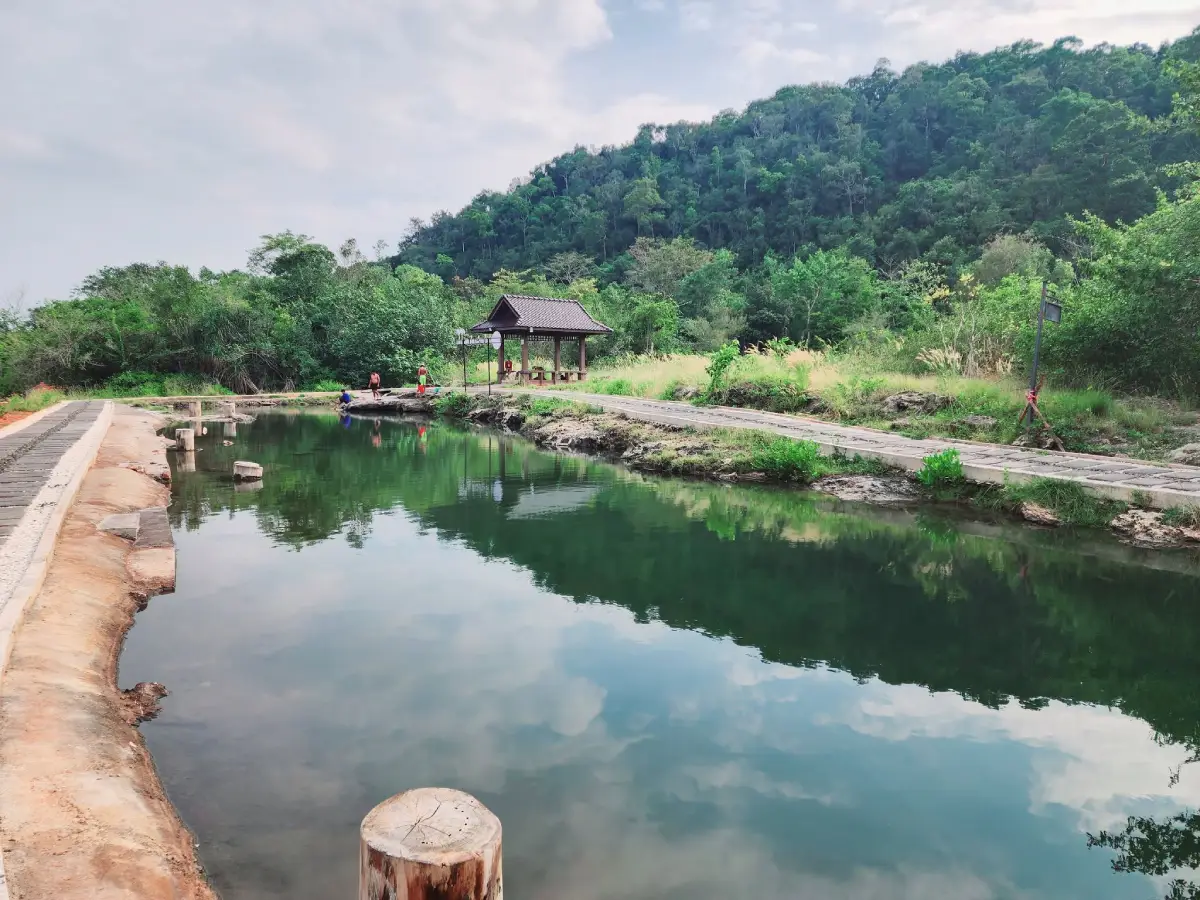
33. Samnak Than Nam Ron is located in Ban Than Nam Ron, Moo 1, Khao Than Subdistrict, Tha Chang District, Surat Thani Province. This distinctive natural geothermal destination combines saline hot spring water, recreational bathing facilities, and a peaceful setting associated with a Buddhist meditation center. Surrounded by the rural and coastal landscapes of Tha Chang District, the attraction offers visitors an opportunity to experience naturally heated mineral water while appreciating local community life and the surrounding mangrove environment.
Highlights: Natural saline hot spring water, concrete mineral bathing pools and traditional earthen pools, resting areas, mangrove scenery, nature study opportunities, and religious activities associated with the meditation center.
Samnak Than Nam Ron is particularly interesting because its geothermal water has saline characteristics, unlike many freshwater hot springs elsewhere in Thailand. Groundwater heated at greater depths contains dissolved substances and minerals derived from surrounding geological formations before returning to the surface. These naturally occurring minerals give the water certain characteristics that differ from ordinary surface water and make the location an interesting place to learn about geothermal groundwater systems in southern Thailand.
The bathing area has been arranged to accommodate different types of use. Concrete pools provide more convenient access for visitors, while earthen pools retain some of the natural characteristics of the geothermal landscape. Anyone wishing to soak should use only designated areas and check the water temperature beforehand. Water emerging directly from the original sources may be too hot for safe skin contact.
Another distinctive aspect of Samnak Than Nam Ron is the relationship between its natural resources and local beliefs. The site combines a peaceful religious environment with recreational spaces and opportunities to experience geothermal water. Visitors can spend time quietly, enjoy the surrounding landscape, and learn about community life in Ban Than Nam Ron while respecting the spiritual character of the area.
The surrounding landscape reflects the natural environment of Tha Chang District, including agricultural communities and coastal areas influenced by tidal processes. A visit can therefore be combined with learning about local ecosystems and traditional ways of life. Visitors should show respect for the religious grounds and avoid disturbing people participating in meditation or other Buddhist activities.
Travelers should bring a towel, sandals, and a change of clothes. They should keep the geothermal water clean, avoid using soap or other chemicals in pools not specifically intended for washing, and never leave litter in the natural surroundings. Mineral bathing should be enjoyed in moderation and should not be regarded as a substitute for appropriate medical treatment.
Open Days: Daily Opening Hours: 08:00 – 17:00
Getting There: From Surat Thani town, travel toward Tha Chang District and continue into Khao Than Subdistrict along local roads leading to Ban Than Nam Ron, Moo 1. A private car or rental vehicle is the most convenient option, particularly for visitors who wish to explore nearby communities and natural attractions within Tha Chang District.
GPS Coordinates: 9.336867, 99.198271 Google Maps:Directions to Samnak Than Nam Ron
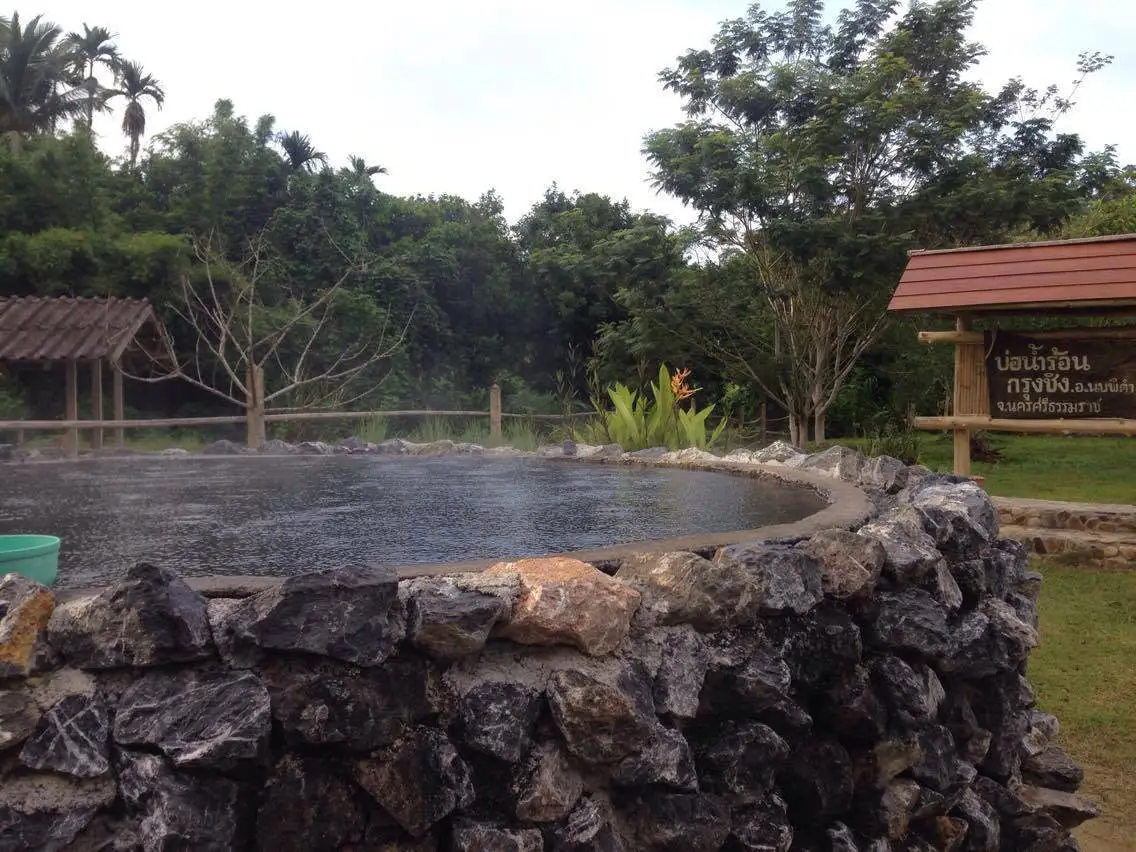
34. Krung Ching Hot Spring is located in Krung Ching Subdistrict, Nopphitam District, Nakhon Si Thammarat Province, near Bo Nam Ron Wanaram Buddhist monastic grounds. This natural hot spring is surrounded by the lush mountains and forests of the Krung Ching area. It is distinguished by geothermal water emerging from beneath the ground and by its location close to local religious and natural attractions. Visitors can observe the pools, enjoy designated mineral bathing areas where permitted, and combine the visit with the mountain landscapes of Nopphitam District.
Highlights: Natural geothermal water with temperatures of approximately 44–55 degrees Celsius, bubbles emerging from hot-water outlets, the peaceful setting of Bo Nam Ron Wanaram Buddhist monastic grounds, the forested Krung Ching landscape, and travel connections to Krung Ching Waterfall.
Krung Ching Hot Spring forms when groundwater absorbs heat from geological layers at greater depths before rising to the surface through natural fractures. The water has a relatively high temperature and may produce a sulfur-like smell associated with certain compounds in geothermal systems. At some outlets, visitors can observe bubbling water and gas emerging from below the surface, making the site interesting for learning about geothermal geology as well as enjoying the surrounding environment.
One of Krung Ching's greatest attractions is its mountainous setting and the extensive tropical rainforest of the surrounding area. Nopphitam District has a wide variety of natural attractions, including waterfalls, streams, caves, and nature trails. The presence of a natural hot spring in this environment allows visitors to compare geothermal groundwater with the cooler surface water flowing down from the mountains.
The hot spring area has been arranged to support recreation for local residents and travelers, with sections where mineral water may be used for foot soaking or full-body bathing according to the caretaker's regulations. Visitors must not enter the original geothermal source pools directly because their temperatures can be high enough to cause burns.
Beyond mineral bathing, travelers can explore Krung Ching Waterfall and other natural attractions in Krung Ching Subdistrict. A morning excursion into the forest or to the waterfall followed by a relaxing afternoon at the hot spring can make an appealing itinerary. However, visitors should allow sufficient travel time and check road and weather conditions, particularly during the rainy season when heavy rainfall may affect mountainous areas.
Because the hot spring lies near Buddhist monastic grounds, visitors should dress and behave respectfully, keep noise to a minimum, and maintain the cleanliness of the area. Mineral bathing should follow the caretaker's instructions, and soap or other chemicals should not be used in natural geothermal pools.
Open Days: Daily Opening Hours: 08:00 – 19:00
Getting There: From Nakhon Si Thammarat town, travel toward Nopphitam District and continue into Krung Ching Subdistrict. Follow local roads to Bo Nam Ron Wanaram Buddhist monastic grounds in Moo 3, then follow the signs to the hot spring area. A private car or rental vehicle is recommended. Road and weather conditions should be checked before traveling.
GPS Coordinates: 8.748215, 99.659093 Google Maps:Directions to Krung Ching Hot Spring
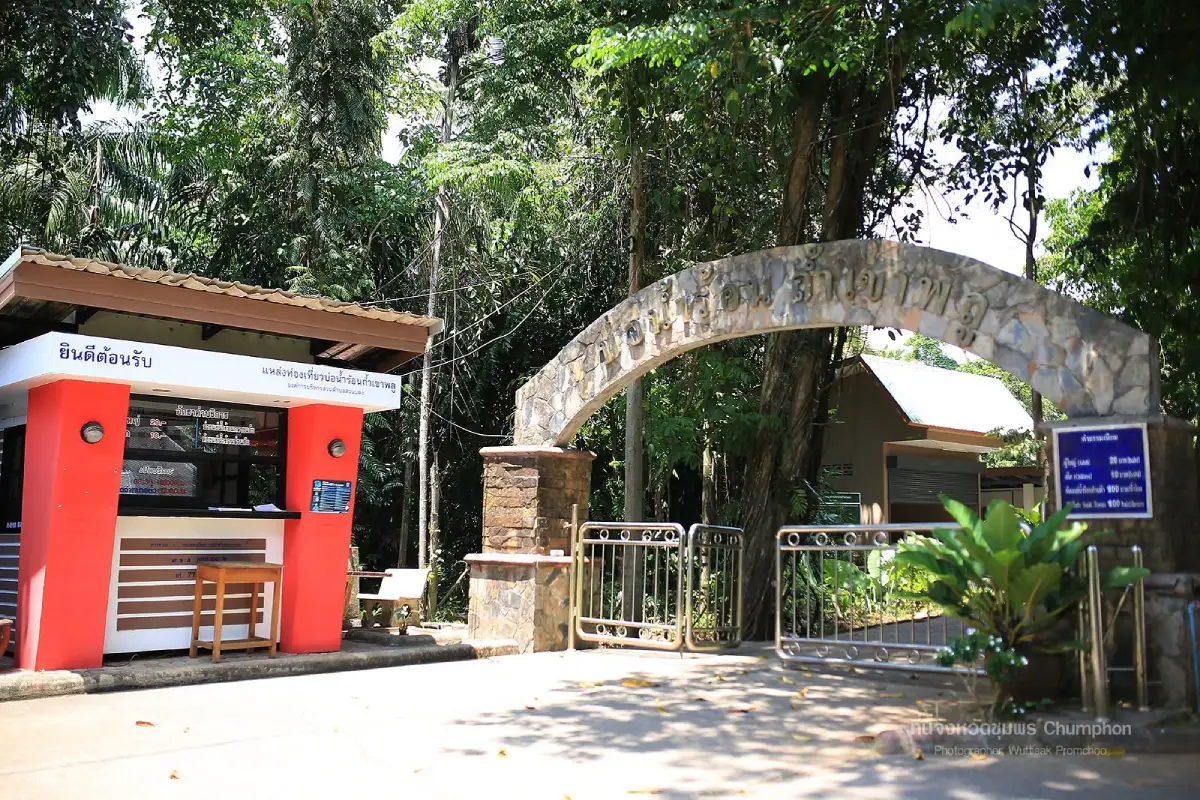
35. Tham Khao Phlu Hot Spring is located in Moo 2, Ban Duat, Suan Taeng Subdistrict, Lamae District, Chumphon Province. It is one of Lamae District's best-known natural mineral hot spring attractions. Naturally heated water emerges at the foot of a limestone mountain surrounded by shaded forest. The site features three principal geothermal pools as well as visitor facilities for mineral bathing, making it suitable for travelers seeking a relaxing break along southern Thailand's main highway or planning a wellness-oriented excursion in Chumphon.
Highlights: Three natural geothermal pools named Uea Ari Than Thip, Amarit Thara, and Phrueksa Chon Than, mineral soaking pools, private mineral bathing rooms, limestone mountain scenery, and convenient access from Highway 41.
Tham Khao Phlu Hot Spring forms when groundwater circulates through fractures in rock formations, absorbs heat at greater depths, and rises back to the surface through natural geological pathways. The presence of geothermal water at the foot of a limestone mountain makes the site interesting from both geological and landscape perspectives. Visitors can observe the emergence of naturally heated water and learn about the relationship between underground water systems and the surrounding rock formations.
The three principal geothermal pools have distinctive traditional names: Uea Ari Than Thip, Amarit Thara, and Phrueksa Chon Than. These names reflect the importance given to the natural geothermal resource by the local community. Water at the original outlets can be very hot and should never be touched without checking its temperature. Visitors who wish to enjoy mineral bathing should use only the designated pools or bathing rooms prepared for recreational use.
The surrounding limestone mountain and trees create a shaded natural atmosphere, making Tham Khao Phlu different from an ordinary roadside rest stop. Travelers can relax after a long drive, enjoy foot soaking or mineral bathing, and explore accessible natural areas around the site. Private mineral bathing rooms also provide an option for visitors who prefer greater privacy.
Convenient transportation is another important advantage. The hot spring is not far from Highway 41, one of southern Thailand's principal roads. Travelers driving between Surat Thani and Chumphon, or continuing to other southern provinces, can include Tham Khao Phlu as a rest stop without traveling deep into the forest or taking an extensive detour from the main route.
Visitors should bring a towel, a change of clothes, non-slip sandals, and drinking water. Mineral bathing should be limited to a comfortable duration to avoid fatigue, and travelers should not enter hot water immediately when feeling exhausted after a long journey. Families with young children or older adults should pay particular attention to water temperature and slippery surfaces.
Open Days: Daily Opening Hours: 08:30 – 18:00
Fees: Published rates are 20 THB for adults, 10 THB for children, and 100 THB per hour for a private mineral bathing room. Visitors should confirm current prices and available sessions before using the services.
Getting There: Follow Highway 41 through Lamae District, Chumphon Province. Around kilometer marker 92, turn onto the local road toward Ban Duat in Suan Taeng Subdistrict and continue approximately 500–700 meters to reach Tham Khao Phlu Hot Spring. The attraction is accessible by private car, rental vehicle, or local transportation from Lamae District.
GPS Coordinates: 9.727801, 99.108334 Google Maps:Directions to Tham Khao Phlu Hot Spring
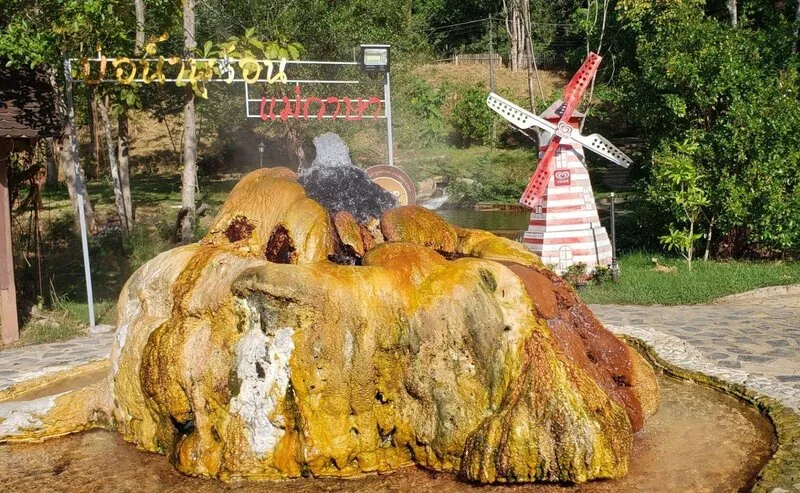
36. Mae Ka Sa Hot Spring and Mae Usa Cave are located in Mae Kasa Subdistrict, Mae Sot District, Tak Province. Together, these attractions offer an opportunity to explore both natural geothermal activity and limestone cave formations along the same travel route. Mae Ka Sa Hot Spring features several natural hot-water outlets, designated foot-soaking areas, and places to rest. Nearby Mae Usa Cave is known for its cave chambers, stalactites, and stalagmites. The combination is particularly appealing to travelers interested in underground geothermal processes and the geological beauty of limestone mountains around Mae Sot.
Highlights: Natural geothermal water at approximately 60–80 degrees Celsius, designated egg-boiling areas, foot-soaking facilities, rising steam, limestone mountains, Mae Usa Cave, and natural attractions along the Mae Sot–Mae Ramat route.
Mae Ka Sa Hot Spring forms when groundwater circulates through fractures in rock formations, absorbs geothermal heat at depth, and returns to the surface through several natural outlets. Temperatures at some source pools are high enough for egg boiling in specially designated areas. Visitors should never touch water directly from the original geothermal outlets because temperatures at this level can cause serious skin injuries.
One of Mae Ka Sa Hot Spring's main attractions is its role as a recreational destination for local communities and travelers using the Mae Sot–Mae Ramat route. The site includes areas for viewing natural geothermal water and designated facilities for foot soaking. Visitors can stop to relax after a long journey or observe natural geothermal phenomena, while following caretakers' instructions and checking the water temperature before using any facilities.
Mae Usa Cave adds another dimension to the experience. Its limestone cave environment contains chambers and mineral formations created through the gradual deposition of dissolved minerals over long periods. The stalactites, stalagmites, and cave walls illustrate geological processes that differ from those responsible for geothermal water. Visiting both attractions provides an opportunity to learn about multiple aspects of the Earth's natural history within the same itinerary.
Travelers can combine the hot spring and cave with Mae Ka Sa Waterfall and other natural attractions around Mae Sot District. Planning activities across the morning and afternoon allows visitors to experience geothermal pools, limestone mountains, caves, and waterfalls. Weather conditions should be checked before departure because rain can make natural trails wet and slippery.
Visitors planning to enter the cave should wear footwear suitable for rocky surfaces and confirm access conditions beforehand. Exploring deeper cave passages without an experienced guide or suitable lighting equipment should be avoided. At the hot spring, visitors should remain clear of dangerously hot pools and supervise young children closely near the edges of geothermal outlets.
Open Days: Daily, according to published information Opening Hours: 08:00 – 18:00. Access to Mae Usa Cave may depend on current conditions and caretakers' regulations.
Getting There: From Mae Sot town, follow the road toward Mae Ramat District, then turn into Mae Kasa Subdistrict and continue toward Mae Ka Sa Hot Spring using local tourist signs. A private car or rental vehicle is convenient for reaching the area. Travelers planning to continue to Mae Usa Cave should confirm its access route and current visitor arrangements before departure.
GPS Coordinates: 16.886598, 98.635583 Google Maps:Directions to Mae Ka Sa Hot Spring and Mae Usa Cave

37. Huai Nam Nak Hot Spring is located in Ban Huai Nam Nak, Phop Phra Subdistrict, Phop Phra District, Tak Province, within an area associated with Namtok Pha Charoen National Park. This natural geothermal attraction is distinguished by hot spring water reaching approximately 60 degrees Celsius, surrounded by mountains, forests, and rural communities. The site has basic recreational areas and visitor facilities, making it suitable for travelers seeking a peaceful stop or planning a nature-focused excursion in Tak Province.
Highlights: Natural geothermal water at approximately 60 degrees Celsius, relatively clear hot spring water, peaceful surroundings, resting pavilions, designated foot-soaking facilities, and travel connections to Pha Charoen Waterfall and other attractions in Phop Phra District.
Huai Nam Nak Hot Spring forms when groundwater absorbs heat at greater depths and returns to the Earth's surface through openings and fractures in underground rock formations. Naturally heated water emerges around Ban Huai Nam Nak, where certain areas have been arranged for recreation and nature observation. Visitors can observe geothermal outlets and learn about underground heat processes within western Thailand's mountainous landscape.
The geothermal pools contain relatively clear water and do not have as strong a sulfur-like odor as some other hot springs. However, temperatures at the original outlets are high, making direct contact or bathing unsafe. Visitors who wish to soak their feet should use only the designated facilities and always check the water temperature before doing so.
The surrounding environment consists of mountain scenery, forests, and agricultural communities in Phop Phra District. The atmosphere is quieter than the more urban attractions around Mae Sot. Visiting Huai Nam Nak Hot Spring is therefore particularly suitable for travelers who prefer a relaxed natural setting where they can walk through accessible areas, observe the surroundings, and rest in designated facilities.
Another appealing feature is the hot spring's location along a broader nature tourism route through Phop Phra District. Travelers can combine a visit with Namtok Pha Charoen National Park, Pha Charoen Waterfall, and Nang Khruan Waterfall, choosing an itinerary that accommodates actual road conditions and provides adequate time to relax between destinations.
The cool season is a pleasant time to visit because the lower mountain temperatures create a noticeable contrast with the geothermal water. During the rainy season, the surrounding landscape becomes particularly green, but wet roads and slippery walking surfaces require additional care. Visitors should bring drinking water, sandals or non-slip footwear, and any necessary personal items.
Families traveling with young children or older adults should take particular care around geothermal pools without protective barriers. Visitors should not enter original hot-water outlets, and all bathing activities should follow caretakers' instructions. Littering or introducing chemicals into natural water sources should be avoided to help protect the surrounding environment.
Open Days: Daily Opening Hours: 08:30 – 17:00
Fees: According to published information, general admission is free. Any additional services may have separate conditions or charges, which should be confirmed with the caretakers.
Getting There: From Phop Phra District, follow Highway 1206 on the Phop Phra–Ban Chong Khaep route, then turn toward Ban Huai Nam Nak according to local signs. Visitors can travel by private car, rental vehicle, or motorcycle. Those arriving from Mae Sot can include Pha Charoen Waterfall and other natural attractions in Phop Phra District along the route. Road conditions should be checked during the rainy season.
GPS Coordinates: 16.423401, 98.670922 Google Maps:Directions to Huai Nam Nak Hot Spring
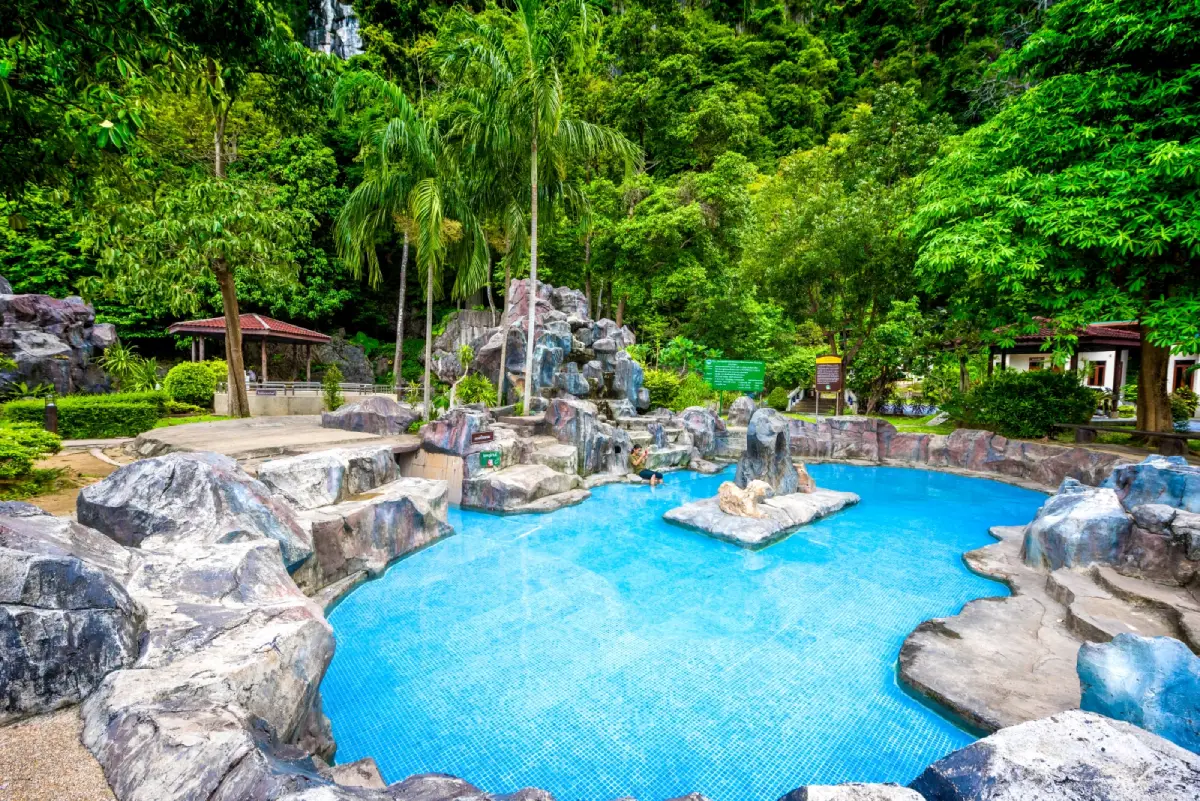
38. Khao Chaison Hot Spring is located in Moo 3, Khao Chaison Subdistrict, Khao Chaison District, Phatthalung Province. It is one of southern Thailand's well-known natural geothermal attractions, distinguished by hot water continuously emerging near the foot of a limestone mountain. Temperatures at the original geothermal source reach approximately 60 degrees Celsius, while separate bathing and recreational facilities have been developed for visitors. A nearby cool-water stream and natural caves add to the area's appeal, allowing travelers to observe contrasting water environments within the same sightseeing route.
Highlights: Natural geothermal water at approximately 60 degrees Celsius, hot water flowing from the limestone foothills, mineral bathing facilities, shady natural surroundings, a nearby cool stream, Tham Phra Cave, and opportunities to combine wellness tourism with the cultural attractions of Khao Chaison District.
Khao Chaison Hot Spring originates from an underground water system in which groundwater circulates through openings and fractures in rock formations, absorbs heat at greater depths, and returns to the surface through natural geological pathways. The geothermal water emerges continuously at relatively high temperatures, illustrating how subsurface heat and groundwater circulation interact with the geological structures of southern Thailand.
One of the area's most interesting characteristics is its limestone foothill landscape, where geothermal pools, caves, and cool-water streams occur close to one another. Visitors can clearly observe the difference between water heated underground and cooler surface water flowing through the surrounding terrain. Trees, rocks, and shaded areas make the location suitable for nature observation and relaxation without requiring a long journey into remote forest.
Khao Chaison Hot Spring is also associated with traditional beliefs held by local communities, which have valued the natural geothermal source for generations. Local stories refer to the special significance of the water and its connection with good fortune and blessings. These beliefs form part of the site's cultural heritage, while contemporary mineral bathing should be regarded primarily as an activity for relaxation rather than a substitute for medical treatment.
The recreational facilities allow visitors to enjoy mineral bathing in areas designated for public use. Travelers should check the water temperature before entering and follow local instructions. The original source pools, where the water is much hotter, are not suitable for direct bathing. Visitors should be especially careful when moving between geothermal areas, limestone surfaces, and nearby streams because wet ground may be slippery.
In addition to the hot spring, visitors can explore the surrounding limestone scenery and nearby Tham Phra Cave. The combination of geothermal water, cool streams, caves, and local cultural traditions gives the area a distinctive character. Khao Chaison can therefore be included in a day trip around Phatthalung or combined with other natural attractions within the province.
Families should supervise young children near the geothermal outlets and choose only suitable bathing facilities. Visitors should bring a towel, spare clothes, drinking water, and non-slip footwear, while helping to keep the natural water sources clean. Soap, shampoo, and other chemicals should not be introduced into the original geothermal pools or surrounding natural streams.
Open Days: Daily Opening Hours: 05:00 – 20:00
Getting There: From Phatthalung town, travel toward Khao Chaison District and continue into Khao Chaison Subdistrict, Moo 3, following local signs for Khao Chaison Hot Spring. A private car or rental vehicle is convenient for combining the hot spring with nearby caves and other attractions.
GPS Coordinates: 7.451071, 100.130665 Google Maps:Directions to Khao Chaison Hot Spring
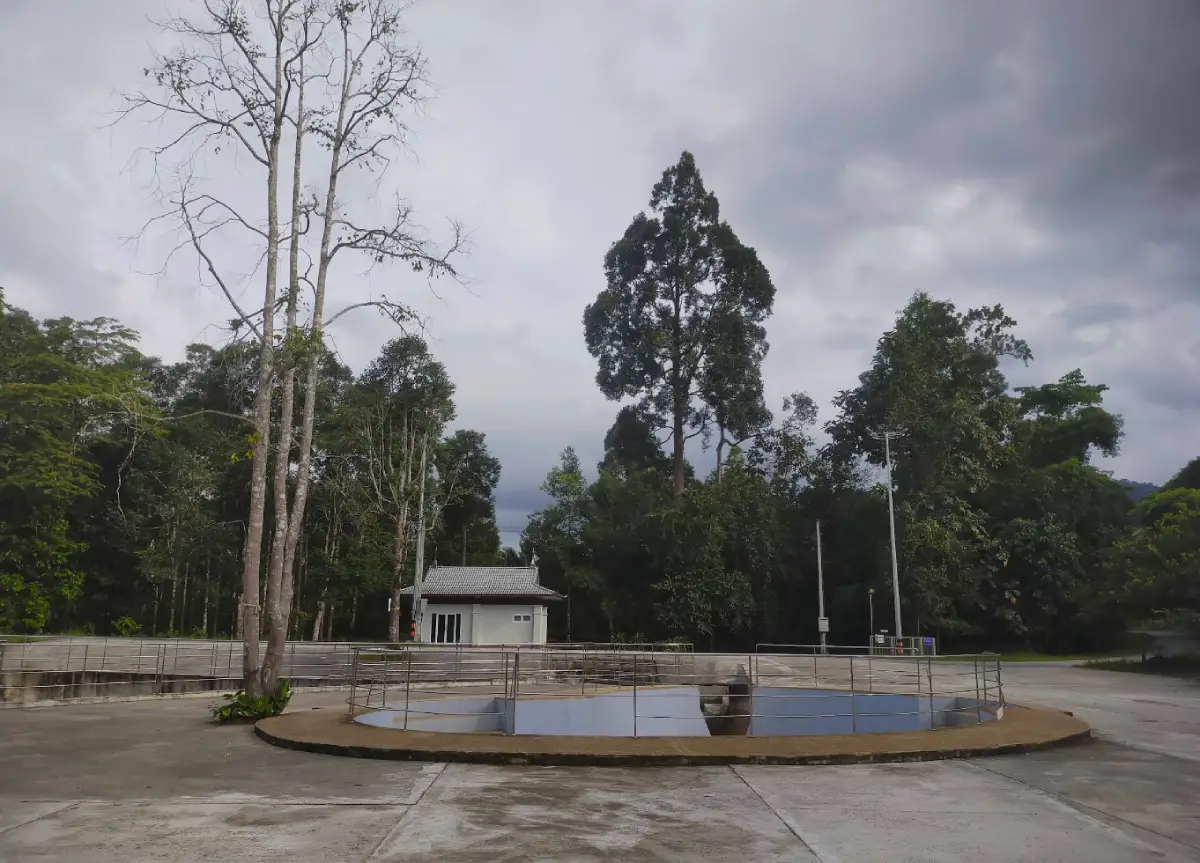
39. Lo Chang Kra Hot Spring is located in Ban Lo Chang Kra, Moo 9, Khlong Chaloem Subdistrict, Kong Ra District, Phatthalung Province. This natural geothermal attraction lies amid rubber plantations, rural communities, and the mountain landscape of southern Thailand. Naturally heated mineral water emerges from beneath the ground and is collected in a small number of pools, including concrete structures developed for local use and recreation. Its peaceful atmosphere makes it an interesting destination for travelers who prefer community-based natural attractions.
Highlights: Clear natural geothermal water, approximately two concrete pools including a designated bathing area, peaceful surroundings near rubber plantations, a forested mountain landscape, and opportunities to combine a visit with Ton Hin Lat rafting activities.
Lo Chang Kra Hot Spring forms when groundwater circulates through fractures and openings in the underlying rock, absorbs geothermal heat, and rises back to the surface as naturally heated water. The presence of a geothermal source within an agricultural and mountain environment illustrates the relationship between underground water systems and the geological characteristics of the Banthat Mountain Range area.
The main geothermal area includes concrete pools used to collect and manage the naturally heated water. One pool has been arranged for bathing, allowing visitors to experience the mineral water in a more controlled environment than at the original source. The water may appear clear, but its temperature should always be checked before use, and visitors should follow any restrictions established by the local caretakers.
The surrounding rubber plantations and rural landscape give Lo Chang Kra Hot Spring a character different from large commercial mineral bathing resorts. Visitors can enjoy a quiet atmosphere and observe the close relationship between local agricultural communities and natural resources. The site is particularly suitable for travelers interested in lesser-known destinations and the natural environment of Kong Ra District.
A visit can be combined with other attractions in Khlong Chaloem Subdistrict, particularly outdoor activities associated with Ton Hin Lat and nearby streams. Travelers interested in rafting should check the operating conditions, water levels, weather forecast, and the availability of qualified local operators before arranging an excursion. Heavy rainfall around the Banthat Mountains can affect the safety of waterways and access roads.
Visitors should use only designated bathing pools, avoid approaching hot-water outlets without protective arrangements, and keep the surroundings clean. As the site is associated with a rural community, travelers should respect local property, vegetation, and shared facilities. Using soap or other chemicals in natural geothermal water should be avoided.
Open Days: Daily Opening Hours: 06:00 – 19:00
Getting There: From Phatthalung town, travel toward Kong Ra District and continue to Khlong Chaloem Subdistrict. Follow local roads toward Ban Lo Chang Kra, Moo 9, and the hot spring area. A private car or rental vehicle is recommended because the final section passes through rural communities and rubber plantations. Travelers should check road conditions before departure, particularly during the rainy season.
GPS Coordinates: 7.330598, 99.983932 Google Maps:Directions to Lo Chang Kra Hot Spring

40. Tha Pai Hot Spring is located in Mae Hi Subdistrict, Pai District, Mae Hong Son Province, within Huai Nam Dang National Park. It is one of Pai's best-known natural geothermal attractions, distinguished by steaming hot spring pools surrounded by forest and a peaceful mountain environment. The area features major natural hot-water basins, smaller geothermal outlets, and paths that allow visitors to observe the activity from designated viewing areas. It is an appealing destination for travelers interested in geothermal geology, forest scenery, and the natural attractions around Pai.
Highlights: Two principal natural geothermal basins, water temperatures reaching approximately 80 degrees Celsius, steam rising among forest trees, nature observation paths, and opportunities to explore Pai's surrounding mountain landscape.
Tha Pai Hot Spring forms when groundwater descends through underground fractures, absorbs heat from deeper geological layers, and returns to the surface through natural openings. In the principal geothermal pools, temperatures are extremely high, causing steam to rise above the water. The natural activity is especially visible during cool weather, when the contrast between the geothermal water and surrounding air makes the steam more noticeable.
The forest setting is a defining part of the attraction. Visitors can observe steaming pools among trees and natural vegetation while walking along designated paths. The surrounding landscape provides an opportunity to learn about the interaction between geothermal water, the local geology, and protected forest ecosystems within Huai Nam Dang National Park.
Unlike warm-water soaking destinations such as Sai Ngam Hot Spring, the main geothermal pools at Tha Pai contain water hot enough to cause serious burns. Visitors should never step into these source pools or attempt to touch the water or steam. Any recreational use of mineral water must take place only in areas expressly designated and maintained for that purpose, subject to the current regulations of the national park.
Tha Pai Hot Spring can be combined with sightseeing around Pai, including rural communities, scenic mountain viewpoints, and other natural attractions. Travelers may wish to visit in the morning when the air is cooler and the surrounding forest has a particularly peaceful atmosphere. The site also offers an opportunity to compare different geothermal landscapes within Pai District, from the naturally warm pools of Sai Ngam to the much hotter source pools at Tha Pai.
Visitors should wear suitable footwear and stay on the marked paths, as surfaces near geothermal water can be wet and slippery. Children must be supervised closely at all times, and nobody should cross protective barriers to approach the original hot spring outlets. Drinking water and adequate sun protection are also recommended for exploring the area.
The natural geothermal environment is sensitive to disturbance. Visitors should avoid littering, damaging mineral deposits, leaving marked paths, or introducing soap and chemicals into the water. Following national park regulations helps preserve the landscape and protect both visitors and the geothermal ecosystem.
Open Days: Daily, subject to national park access arrangements Opening Hours: 07:00 – 16:00
Getting There: From Pai town, travel toward Mae Hi Subdistrict and follow local signs leading to Tha Pai Hot Spring within Huai Nam Dang National Park. A private car, rental vehicle, or motorcycle can be used depending on road and weather conditions. Visitors should check the current access route and national park regulations before traveling, particularly during periods of heavy rain.
GPS Coordinates: 19.311236, 98.476155 Google Maps:Directions to Tha Pai Hot Spring
Summary Table: 40 Best Hot Springs in Thailand by Region, with Highlights, GPS Coordinates and Google Maps
This comprehensive table brings together 40 natural hot springs and geothermal attractions across Thailand, organized into Northern Thailand, Western Thailand, and Southern Thailand. Each entry includes the destination's province, its most distinctive features, available GPS coordinates, and a Google Maps link for travel planning. Click the destination name to read its English-language travel guide. The original numbering is preserved to match the detailed descriptions above.
| No. | Hot Spring / Destination | Province | Highlights | GPS Coordinates | Google Maps |
| Northern Thailand — 17 Destinations | |||||
| 1 | San Kamphaeng Hot Springs | Chiang Mai | Geyser-like hot-water jets, geothermal egg boiling, warm mineral foot streams, private mineral baths, and landscaped family-friendly gardens. | 18.816436, 99.227802 | Get Directions |
| 2 | Fang Hot Springs | Chiang Mai | Multiple geothermal pools, rising steam, egg-boiling areas, mineral bathing, and mountain forests within Doi Pha Hom Pok National Park. | 19.965913, 99.154263 | Get Directions |
| 3 | Chae Son Hot Springs | Lampang | Steaming geothermal pools among forest rocks, egg-boiling activities, mineral bathing, and nearby Chae Son Waterfall. | 18.836370, 99.469360 | Get Directions |
| 4 | Pong Dueat Pa Pae Hot Spring | Chiang Mai | Natural geyser eruptions, steam vents, forest walking trails, and geothermal observation areas within Huai Nam Dang National Park. | 19.241766, 98.684298 | Get Directions |
| 8 | Pa Tueng Hot Springs | Chiang Rai | Natural bubbling geothermal outlets, rural Mae Chan scenery, and opportunities to explore local mountain communities. | 20.117218, 99.798657 | Get Directions |
| 9 | Sai Ngam Hot Spring | Mae Hong Son | Clear, gently cascading warm-water pools at approximately 30–32°C beneath a shady forest canopy near Pai. | 19.459328, 98.380010 | Get Directions |
| 12 | Mae Kachan Hot Spring | Chiang Rai | Roadside geothermal pools, egg boiling, mineral foot baths, cafés, restaurants, and souvenir shops along Highway 118. | 19.114816, 99.462210 | Get Directions |
| 19 | Thepphanom Hot Spring | Chiang Mai | A natural geothermal source amid the remote forests and mountain communities of Mae Chaem, ideal for nature observation. | 18.271070, 98.396185 | Get Directions |
| 27 | Pa Sert Hot Spring | Chiang Rai | Doi Hang Onsen, outdoor mineral soaking pools, private baths, foot soaking, egg boiling, and traditional Thai massage. | Location-based navigation | Open Map |
| 28 | Huai Mak Liam Hot Spring | Chiang Rai | Natural hot-water outlets, forests near the Kok River, and a peaceful national park setting along the Doi Hang route. | 19.963055, 99.680083 | Get Directions |
| 29 | Pong Dueat Hot Spring (Mueang Paeng) | Mae Hong Son | High-temperature geothermal pools, visible steam, mountain valleys, and traditional rural scenery near Pai. | 19.214316, 98.370993 | Get Directions |
| 30 | Pong Kwao Hot Spring | Chiang Mai | Mineral soaking in a peaceful mountain valley, rural landscapes, and a quiet retreat in Samoeng District. | 19.014445, 98.731002 | Get Directions |
| 31 | Yang Pu To Hot Spring | Chiang Mai | Two small natural geothermal pools, a lightly mineral-scented environment, and an undeveloped mountain setting in Chiang Dao. | 19.368608, 98.932145 | Get Directions |
| 32 | Phra Ruang Hot Spring (Bueng Sap) | Kamphaeng Phet | Natural mineral pools, foot soaking, private baths, and traditional legends associated with King Phra Ruang. | 16.657896, 99.470787 | Get Directions |
| 36 | Mae Ka Sa Hot Spring and Mae Usa Cave | Tak | High-temperature geothermal outlets, egg boiling, foot soaking, and nearby limestone cave formations. | 16.886598, 98.635583 | Get Directions |
| 37 | Huai Nam Nak Hot Spring | Tak | Clear geothermal water, forested mountains, simple recreational facilities, and access to the Phop Phra nature route. | 16.423401, 98.670922 | Get Directions |
| 40 | Tha Pai Hot Spring | Mae Hong Son | Two main geothermal basins, very hot water, rising steam, and forest observation trails within Huai Nam Dang National Park. | 19.311236, 98.476155 | Get Directions |
| Western Thailand — 4 Destinations | |||||
| 5 | Hin Dad Hot Spring | Kanchanaburi | Outdoor mineral bathing pools beside a natural stream, forest scenery, and historical associations with World War II. | 14.624998, 98.724555 | Get Directions |
| 20 | Lin Thin Hot Springs | Kanchanaburi | Simple mineral soaking facilities in a peaceful rural environment along the Thong Pha Phum travel route. | 14.546394, 98.759468 | Get Directions |
| 22 | Nong Ya Plong Hot Spring | Phetchaburi | Four connected geothermal pools, forested foothills, foot-soaking facilities, and private mineral bathing rooms. | 13.153248, 99.600738 | Get Directions |
| 24 | Pong Krathing Hot Spring | Ratchaburi | A natural geothermal pool at approximately 65°C, forest surroundings, a cool stream, and national park nature trails. | 13.260765, 99.407354 | Get Directions |
| Southern Thailand — 19 Destinations | |||||
| 6 | Raksawarin Hot Springs | Ranong | Three famous geothermal pools known as Father, Mother, and Child Pools, public gardens, and mineral bathing facilities close to town. | 9.959796, 98.651395 | Get Directions |
| 7 | Betong Hot Spring | Yala | Large geothermal pools, egg boiling, foot soaking, mineral bathing facilities, and mountain attractions around Betong. | 5.849718, 101.071852 | Get Directions |
| 10 | Tha Sathon Hot Spring | Surat Thani | Natural mineral hot water, foot and body soaking pools, landscaped public gardens, and family recreation spaces. | 8.977720, 99.264750 | Open Map |
| 11 | Ban Phon Rang Hot Spring | Ranong | Mineral soaking pools, foot baths, private bathing rooms, and cool streams within a shaded national park forest. | 9.894790, 98.641363 | Get Directions |
| 13 | Ban Bo Dan Hot Spring | Phang Nga | Mineral pools, hot and cold water bathing, outdoor swimming, spa treatments, and a landscaped resort environment. | Resort location | Open Map |
| 14 | Namtok Ron Khlong Thom | Krabi | Warm mineral waterfalls flowing over limestone terraces, natural soaking basins, tropical rainforest, and access to the Emerald Pool. | 7.931577, 99.205774 | Get Directions |
| 15 | Krabi Hot Springs (Bang Phueng) | Krabi | Developed mineral soaking pools, foot baths, family bathing facilities, and convenient access from Phet Kasem Road. | 8.080268, 99.072800 | Get Directions |
| 16 | Kantang Hot Spring Forest Park | Trang | Khuan Khaeng mineral hot spring, foot-soaking pools, private mineral baths, and nature trails through wetland forests. | 7.40970163, 99.46316796 | Get Directions |
| 17 | Phu Lum Phi Hot Spring | Ranong | A small, clear geothermal pool with visible bubbles rising from underground fractures near Phu Khao Ya. | 9.905641, 98.632129 | Get Directions |
| 18 | Ban Nako Hot Spring | Yala | Community geothermal pools, a nearby cool-water stream and waterfall, and the Aiyerweng mountain tourism route. | Location-based navigation | Open Map |
| 21 | Hon Hot Spring (Khlong Marui Hot Sand Beach) | Phang Nga | Natural hot sand, geothermal mud, warm saline water, mangrove scenery, and community-led hot mud spa excursions. | 8.566186, 98.655605 (reference point) | Get Directions |
| 23 | Thung Nui Hot Spring | Satun | Natural mineral water, public foot-soaking pools, separate full-body bathing facilities, and the nearby Ton Pa Nan Waterfall. | 6.843800, 100.156233 | Get Directions |
| 25 | Ban Khao Tok Hot Spring | Surat Thani | Geothermal outlets within Nong Thung Thong Wildlife Non-Hunting Area, wetland habitats, and a nature study trail. | 8.842918, 99.223532 | Get Directions |
| 26 | Ban Bang Cham Hot Spring | Surat Thani | Naturally heated groundwater rising through a mineral-rich earth clearing in a quiet rural community. | Location-based navigation | Open Map |
| 33 | Samnak Than Nam Ron | Surat Thani | Naturally heated saline water, bathing pools, mangrove scenery, and a peaceful setting associated with a meditation center. | 9.336867, 99.198271 | Get Directions |
| 34 | Krung Ching Hot Spring | Nakhon Si Thammarat | Natural geothermal water, visible bubbling outlets, a forested mountain landscape, and access to Krung Ching Waterfall. | 8.748215, 99.659093 | Get Directions |
| 35 | Tham Khao Phlu Hot Spring | Chumphon | Three natural geothermal pools, private mineral baths, limestone mountain scenery, and convenient access from Highway 41. | 9.727801, 99.108334 | Get Directions |
| 38 | Khao Chaison Hot Spring | Phatthalung | Hot mineral water emerging near limestone foothills, bathing facilities, cool streams, and nearby Tham Phra Cave. | 7.451071, 100.130665 | Get Directions |
| 39 | Lo Chang Kra Hot Spring | Phatthalung | Clear mineral water, simple soaking pools near rubber plantations, and nearby Ton Hin Lat outdoor activities. | 7.330598, 99.983932 | Get Directions |
Travel Planning Note: GPS coordinates are provided as reference points for travel planning. In some natural geothermal areas, the visitor entrance, bathing facilities, and original geothermal outlets may be located at different points. Where verified numerical coordinates are unavailable, Google Maps links search for the named destination instead. Access to national parks, remote forest hot springs, and coastal geothermal areas may depend on weather, local restrictions, road conditions, or tidal schedules. Always check current visitor access, opening hours, and safety requirements before traveling.
31. Yang Pu To Hot Spring, also known as Ban Yang Pu To Hot Spring, is located in Moo 6, Chiang Dao Subdistrict, Chiang Dao District, Chiang Mai Province. This natural geothermal attraction retains a relatively undeveloped character, with fewer permanent structures than the larger commercial hot spring destinations. Its main features are natural geothermal pools surrounded by foothills and the rural landscape of Chiang Dao. The site is particularly suitable for travelers interested in nature observation and the geological characteristics of natural hot springs.
Highlights: Approximately two natural geothermal pools, forested mountain surroundings, a faint natural mineral odor, rural scenery, and the opportunity to explore nearby natural attractions in Chiang Dao District.
Yang Pu To Hot Spring forms when groundwater seeps through openings and fractures in underground rock, absorbs heat at greater depths, and returns to the Earth's surface as naturally heated water. The site has approximately two principal warm-water pools where visitors can observe the emergence of geothermal water and the natural accumulation of mineral deposits around the pools.
What makes Yang Pu To interesting is its natural character rather than extensive tourist facilities. The surrounding area retains a rural atmosphere, with relatively few buildings and structures. This allows visitors to experience a geothermal site that remains close to its original natural condition. It is especially suitable for observing groundwater activity and learning about the geological processes associated with mountainous environments.
Information about the hot spring mentions a faint sulfur-like odor, which can occur in certain geothermal systems. There are also important considerations regarding the mineral composition of the water, particularly fluoride. Visitors should therefore never drink water directly from the geothermal pools or use it as drinking water, even when it appears clear or does not have a strong smell.
Yang Pu To Hot Spring can be included in a wider tour of Chiang Dao District, an area known for limestone mountains, forests, agricultural communities, and significant natural attractions. Visitors may combine the hot spring with Chiang Dao Cave and scenic routes around Doi Luang Chiang Dao. Such an itinerary provides an opportunity to discover different natural resources and landscapes within the same district.
Daytime visits are recommended, and travelers should check road conditions before departure. Visitors should not expect extensive mineral bathing rooms or comprehensive services comparable to those at commercial hot spring resorts. Drinking water, non-slip footwear, and other personal essentials should be brought along, as facilities may be limited.
For safety, visitors must not enter geothermal pools without designated bathing facilities, touch the water without checking its temperature, or introduce soap and other chemicals into natural water sources. These actions may harm both visitors and the surrounding ecosystem. Families should closely supervise young children near the edges of geothermal pools.
Getting There: From Chiang Mai city, follow Highway 107 toward Chiang Dao District. Continue into Chiang Dao Subdistrict and Ban Yang Pu To, Moo 6, using local roads through rural and foothill areas. Travelers should confirm the final approach before departure, especially during the rainy season.
GPS Coordinates: 19.368608, 98.932145 Google Maps:Directions to Yang Pu To Hot Spring
32. Phra Ruang Hot Spring (Bueng Sap) is located around Ban Lan Hin, Moo 3, Lan Dokmai Subdistrict, Mueang Kamphaeng Phet District, Kamphaeng Phet Province. This natural geothermal attraction is known for its mineral hot spring pools and its connection with local legends about King Phra Ruang. The site has been developed to provide foot-soaking facilities, private mineral bathing rooms, and resting areas, making it suitable for travelers interested in both wellness tourism and the cultural heritage of Kamphaeng Phet.
Highlights: Natural geothermal pools with water temperatures of approximately 40–65 degrees Celsius, foot-soaking facilities, mineral bathing rooms, peaceful natural surroundings, and the legend of King Phra Ruang associated with the name Bueng Sap.
Phra Ruang Hot Spring forms when groundwater circulates through heated rock layers before emerging naturally at the surface around Ban Lan Hin. Water temperatures vary between geothermal outlets, so separate visitor facilities have been developed to allow recreational use. The original hot-water sources are distinguished from the pools designated for foot soaking or mineral bathing, helping visitors experience the water more safely.
The legends associated with King Phra Ruang contribute to the cultural significance of the hot spring. Local stories describe the king's supernatural power of speech and connect this belief with the formation of a water source in the area. These accounts are best understood as part of the region's traditional beliefs, folklore, and cultural heritage rather than as scientific explanations for the origin of geothermal water.
The site has been developed as a destination for wellness-oriented recreation. Visitors can soak their feet after a long journey or choose private mineral bathing rooms according to their preferences. The availability of resting areas and natural scenery makes the attraction suitable for families, groups of friends, and travelers passing through Kamphaeng Phet Province.
History enthusiasts can combine a visit to Phra Ruang Hot Spring with Kamphaeng Phet Historical Park and important ancient monuments around the provincial town. Such an itinerary allows travelers to explore Sukhothai-period history, traditional architecture, archaeological heritage, and the province's natural geothermal resources within the same day.
Mineral bathing should be enjoyed for a comfortable duration, and the water temperature should always be checked before entering. Older adults, people with underlying medical conditions, and visitors sensitive to heat should take additional precautions. Anyone experiencing dizziness, lightheadedness, or heart palpitations should stop soaking immediately and rest in a well-ventilated area.
Open Days: Daily Opening Hours: 08:30 – 16:30
Getting There: From Kamphaeng Phet town, travel toward Lan Dokmai Subdistrict and continue to Ban Lan Hin, Moo 3, following signs for Phra Ruang Hot Spring or Bueng Sap. The destination can be reached by private car, rental vehicle, or local transport arranged from the provincial town. Visitors planning to use mineral bathing facilities should allow enough time before closing.
GPS Coordinates: 16.657896, 99.470787 Google Maps:Directions to Phra Ruang Hot Spring
33. Samnak Than Nam Ron is located in Ban Than Nam Ron, Moo 1, Khao Than Subdistrict, Tha Chang District, Surat Thani Province. This distinctive natural geothermal destination combines saline hot spring water, recreational bathing facilities, and a peaceful setting associated with a Buddhist meditation center. Surrounded by the rural and coastal landscapes of Tha Chang District, the attraction offers visitors an opportunity to experience naturally heated mineral water while appreciating local community life and the surrounding mangrove environment.
Highlights: Natural saline hot spring water, concrete mineral bathing pools and traditional earthen pools, resting areas, mangrove scenery, nature study opportunities, and religious activities associated with the meditation center.
Samnak Than Nam Ron is particularly interesting because its geothermal water has saline characteristics, unlike many freshwater hot springs elsewhere in Thailand. Groundwater heated at greater depths contains dissolved substances and minerals derived from surrounding geological formations before returning to the surface. These naturally occurring minerals give the water certain characteristics that differ from ordinary surface water and make the location an interesting place to learn about geothermal groundwater systems in southern Thailand.
The bathing area has been arranged to accommodate different types of use. Concrete pools provide more convenient access for visitors, while earthen pools retain some of the natural characteristics of the geothermal landscape. Anyone wishing to soak should use only designated areas and check the water temperature beforehand. Water emerging directly from the original sources may be too hot for safe skin contact.
Another distinctive aspect of Samnak Than Nam Ron is the relationship between its natural resources and local beliefs. The site combines a peaceful religious environment with recreational spaces and opportunities to experience geothermal water. Visitors can spend time quietly, enjoy the surrounding landscape, and learn about community life in Ban Than Nam Ron while respecting the spiritual character of the area.
The surrounding landscape reflects the natural environment of Tha Chang District, including agricultural communities and coastal areas influenced by tidal processes. A visit can therefore be combined with learning about local ecosystems and traditional ways of life. Visitors should show respect for the religious grounds and avoid disturbing people participating in meditation or other Buddhist activities.
Travelers should bring a towel, sandals, and a change of clothes. They should keep the geothermal water clean, avoid using soap or other chemicals in pools not specifically intended for washing, and never leave litter in the natural surroundings. Mineral bathing should be enjoyed in moderation and should not be regarded as a substitute for appropriate medical treatment.
Open Days: Daily Opening Hours: 08:00 – 17:00
Getting There: From Surat Thani town, travel toward Tha Chang District and continue into Khao Than Subdistrict along local roads leading to Ban Than Nam Ron, Moo 1. A private car or rental vehicle is the most convenient option, particularly for visitors who wish to explore nearby communities and natural attractions within Tha Chang District.
GPS Coordinates: 9.336867, 99.198271 Google Maps:Directions to Samnak Than Nam Ron
34. Krung Ching Hot Spring is located in Krung Ching Subdistrict, Nopphitam District, Nakhon Si Thammarat Province, near Bo Nam Ron Wanaram Buddhist monastic grounds. This natural hot spring is surrounded by the lush mountains and forests of the Krung Ching area. It is distinguished by geothermal water emerging from beneath the ground and by its location close to local religious and natural attractions. Visitors can observe the pools, enjoy designated mineral bathing areas where permitted, and combine the visit with the mountain landscapes of Nopphitam District.
Highlights: Natural geothermal water with temperatures of approximately 44–55 degrees Celsius, bubbles emerging from hot-water outlets, the peaceful setting of Bo Nam Ron Wanaram Buddhist monastic grounds, the forested Krung Ching landscape, and travel connections to Krung Ching Waterfall.
Krung Ching Hot Spring forms when groundwater absorbs heat from geological layers at greater depths before rising to the surface through natural fractures. The water has a relatively high temperature and may produce a sulfur-like smell associated with certain compounds in geothermal systems. At some outlets, visitors can observe bubbling water and gas emerging from below the surface, making the site interesting for learning about geothermal geology as well as enjoying the surrounding environment.
One of Krung Ching's greatest attractions is its mountainous setting and the extensive tropical rainforest of the surrounding area. Nopphitam District has a wide variety of natural attractions, including waterfalls, streams, caves, and nature trails. The presence of a natural hot spring in this environment allows visitors to compare geothermal groundwater with the cooler surface water flowing down from the mountains.
The hot spring area has been arranged to support recreation for local residents and travelers, with sections where mineral water may be used for foot soaking or full-body bathing according to the caretaker's regulations. Visitors must not enter the original geothermal source pools directly because their temperatures can be high enough to cause burns.
Beyond mineral bathing, travelers can explore Krung Ching Waterfall and other natural attractions in Krung Ching Subdistrict. A morning excursion into the forest or to the waterfall followed by a relaxing afternoon at the hot spring can make an appealing itinerary. However, visitors should allow sufficient travel time and check road and weather conditions, particularly during the rainy season when heavy rainfall may affect mountainous areas.
Because the hot spring lies near Buddhist monastic grounds, visitors should dress and behave respectfully, keep noise to a minimum, and maintain the cleanliness of the area. Mineral bathing should follow the caretaker's instructions, and soap or other chemicals should not be used in natural geothermal pools.
Open Days: Daily Opening Hours: 08:00 – 19:00
Getting There: From Nakhon Si Thammarat town, travel toward Nopphitam District and continue into Krung Ching Subdistrict. Follow local roads to Bo Nam Ron Wanaram Buddhist monastic grounds in Moo 3, then follow the signs to the hot spring area. A private car or rental vehicle is recommended. Road and weather conditions should be checked before traveling.
GPS Coordinates: 8.748215, 99.659093 Google Maps:Directions to Krung Ching Hot Spring
35. Tham Khao Phlu Hot Spring is located in Moo 2, Ban Duat, Suan Taeng Subdistrict, Lamae District, Chumphon Province. It is one of Lamae District's best-known natural mineral hot spring attractions. Naturally heated water emerges at the foot of a limestone mountain surrounded by shaded forest. The site features three principal geothermal pools as well as visitor facilities for mineral bathing, making it suitable for travelers seeking a relaxing break along southern Thailand's main highway or planning a wellness-oriented excursion in Chumphon.
Highlights: Three natural geothermal pools named Uea Ari Than Thip, Amarit Thara, and Phrueksa Chon Than, mineral soaking pools, private mineral bathing rooms, limestone mountain scenery, and convenient access from Highway 41.
Tham Khao Phlu Hot Spring forms when groundwater circulates through fractures in rock formations, absorbs heat at greater depths, and rises back to the surface through natural geological pathways. The presence of geothermal water at the foot of a limestone mountain makes the site interesting from both geological and landscape perspectives. Visitors can observe the emergence of naturally heated water and learn about the relationship between underground water systems and the surrounding rock formations.
The three principal geothermal pools have distinctive traditional names: Uea Ari Than Thip, Amarit Thara, and Phrueksa Chon Than. These names reflect the importance given to the natural geothermal resource by the local community. Water at the original outlets can be very hot and should never be touched without checking its temperature. Visitors who wish to enjoy mineral bathing should use only the designated pools or bathing rooms prepared for recreational use.
The surrounding limestone mountain and trees create a shaded natural atmosphere, making Tham Khao Phlu different from an ordinary roadside rest stop. Travelers can relax after a long drive, enjoy foot soaking or mineral bathing, and explore accessible natural areas around the site. Private mineral bathing rooms also provide an option for visitors who prefer greater privacy.
Convenient transportation is another important advantage. The hot spring is not far from Highway 41, one of southern Thailand's principal roads. Travelers driving between Surat Thani and Chumphon, or continuing to other southern provinces, can include Tham Khao Phlu as a rest stop without traveling deep into the forest or taking an extensive detour from the main route.
Visitors should bring a towel, a change of clothes, non-slip sandals, and drinking water. Mineral bathing should be limited to a comfortable duration to avoid fatigue, and travelers should not enter hot water immediately when feeling exhausted after a long journey. Families with young children or older adults should pay particular attention to water temperature and slippery surfaces.
Open Days: Daily Opening Hours: 08:30 – 18:00
Fees: Published rates are 20 THB for adults, 10 THB for children, and 100 THB per hour for a private mineral bathing room. Visitors should confirm current prices and available sessions before using the services.
Getting There: Follow Highway 41 through Lamae District, Chumphon Province. Around kilometer marker 92, turn onto the local road toward Ban Duat in Suan Taeng Subdistrict and continue approximately 500–700 meters to reach Tham Khao Phlu Hot Spring. The attraction is accessible by private car, rental vehicle, or local transportation from Lamae District.
GPS Coordinates: 9.727801, 99.108334 Google Maps:Directions to Tham Khao Phlu Hot Spring
36. Mae Ka Sa Hot Spring and Mae Usa Cave are located in Mae Kasa Subdistrict, Mae Sot District, Tak Province. Together, these attractions offer an opportunity to explore both natural geothermal activity and limestone cave formations along the same travel route. Mae Ka Sa Hot Spring features several natural hot-water outlets, designated foot-soaking areas, and places to rest. Nearby Mae Usa Cave is known for its cave chambers, stalactites, and stalagmites. The combination is particularly appealing to travelers interested in underground geothermal processes and the geological beauty of limestone mountains around Mae Sot.
Highlights: Natural geothermal water at approximately 60–80 degrees Celsius, designated egg-boiling areas, foot-soaking facilities, rising steam, limestone mountains, Mae Usa Cave, and natural attractions along the Mae Sot–Mae Ramat route.
Mae Ka Sa Hot Spring forms when groundwater circulates through fractures in rock formations, absorbs geothermal heat at depth, and returns to the surface through several natural outlets. Temperatures at some source pools are high enough for egg boiling in specially designated areas. Visitors should never touch water directly from the original geothermal outlets because temperatures at this level can cause serious skin injuries.
One of Mae Ka Sa Hot Spring's main attractions is its role as a recreational destination for local communities and travelers using the Mae Sot–Mae Ramat route. The site includes areas for viewing natural geothermal water and designated facilities for foot soaking. Visitors can stop to relax after a long journey or observe natural geothermal phenomena, while following caretakers' instructions and checking the water temperature before using any facilities.
Mae Usa Cave adds another dimension to the experience. Its limestone cave environment contains chambers and mineral formations created through the gradual deposition of dissolved minerals over long periods. The stalactites, stalagmites, and cave walls illustrate geological processes that differ from those responsible for geothermal water. Visiting both attractions provides an opportunity to learn about multiple aspects of the Earth's natural history within the same itinerary.
Travelers can combine the hot spring and cave with Mae Ka Sa Waterfall and other natural attractions around Mae Sot District. Planning activities across the morning and afternoon allows visitors to experience geothermal pools, limestone mountains, caves, and waterfalls. Weather conditions should be checked before departure because rain can make natural trails wet and slippery.
Visitors planning to enter the cave should wear footwear suitable for rocky surfaces and confirm access conditions beforehand. Exploring deeper cave passages without an experienced guide or suitable lighting equipment should be avoided. At the hot spring, visitors should remain clear of dangerously hot pools and supervise young children closely near the edges of geothermal outlets.
Open Days: Daily, according to published information Opening Hours: 08:00 – 18:00. Access to Mae Usa Cave may depend on current conditions and caretakers' regulations.
Getting There: From Mae Sot town, follow the road toward Mae Ramat District, then turn into Mae Kasa Subdistrict and continue toward Mae Ka Sa Hot Spring using local tourist signs. A private car or rental vehicle is convenient for reaching the area. Travelers planning to continue to Mae Usa Cave should confirm its access route and current visitor arrangements before departure.
GPS Coordinates: 16.886598, 98.635583 Google Maps:Directions to Mae Ka Sa Hot Spring and Mae Usa Cave
37. Huai Nam Nak Hot Spring is located in Ban Huai Nam Nak, Phop Phra Subdistrict, Phop Phra District, Tak Province, within an area associated with Namtok Pha Charoen National Park. This natural geothermal attraction is distinguished by hot spring water reaching approximately 60 degrees Celsius, surrounded by mountains, forests, and rural communities. The site has basic recreational areas and visitor facilities, making it suitable for travelers seeking a peaceful stop or planning a nature-focused excursion in Tak Province.
Highlights: Natural geothermal water at approximately 60 degrees Celsius, relatively clear hot spring water, peaceful surroundings, resting pavilions, designated foot-soaking facilities, and travel connections to Pha Charoen Waterfall and other attractions in Phop Phra District.
Huai Nam Nak Hot Spring forms when groundwater absorbs heat at greater depths and returns to the Earth's surface through openings and fractures in underground rock formations. Naturally heated water emerges around Ban Huai Nam Nak, where certain areas have been arranged for recreation and nature observation. Visitors can observe geothermal outlets and learn about underground heat processes within western Thailand's mountainous landscape.
The geothermal pools contain relatively clear water and do not have as strong a sulfur-like odor as some other hot springs. However, temperatures at the original outlets are high, making direct contact or bathing unsafe. Visitors who wish to soak their feet should use only the designated facilities and always check the water temperature before doing so.
The surrounding environment consists of mountain scenery, forests, and agricultural communities in Phop Phra District. The atmosphere is quieter than the more urban attractions around Mae Sot. Visiting Huai Nam Nak Hot Spring is therefore particularly suitable for travelers who prefer a relaxed natural setting where they can walk through accessible areas, observe the surroundings, and rest in designated facilities.
Another appealing feature is the hot spring's location along a broader nature tourism route through Phop Phra District. Travelers can combine a visit with Namtok Pha Charoen National Park, Pha Charoen Waterfall, and Nang Khruan Waterfall, choosing an itinerary that accommodates actual road conditions and provides adequate time to relax between destinations.
The cool season is a pleasant time to visit because the lower mountain temperatures create a noticeable contrast with the geothermal water. During the rainy season, the surrounding landscape becomes particularly green, but wet roads and slippery walking surfaces require additional care. Visitors should bring drinking water, sandals or non-slip footwear, and any necessary personal items.
Families traveling with young children or older adults should take particular care around geothermal pools without protective barriers. Visitors should not enter original hot-water outlets, and all bathing activities should follow caretakers' instructions. Littering or introducing chemicals into natural water sources should be avoided to help protect the surrounding environment.
Open Days: Daily Opening Hours: 08:30 – 17:00
Fees: According to published information, general admission is free. Any additional services may have separate conditions or charges, which should be confirmed with the caretakers.
Getting There: From Phop Phra District, follow Highway 1206 on the Phop Phra–Ban Chong Khaep route, then turn toward Ban Huai Nam Nak according to local signs. Visitors can travel by private car, rental vehicle, or motorcycle. Those arriving from Mae Sot can include Pha Charoen Waterfall and other natural attractions in Phop Phra District along the route. Road conditions should be checked during the rainy season.
GPS Coordinates: 16.423401, 98.670922 Google Maps:Directions to Huai Nam Nak Hot Spring
38. Khao Chaison Hot Spring is located in Moo 3, Khao Chaison Subdistrict, Khao Chaison District, Phatthalung Province. It is one of southern Thailand's well-known natural geothermal attractions, distinguished by hot water continuously emerging near the foot of a limestone mountain. Temperatures at the original geothermal source reach approximately 60 degrees Celsius, while separate bathing and recreational facilities have been developed for visitors. A nearby cool-water stream and natural caves add to the area's appeal, allowing travelers to observe contrasting water environments within the same sightseeing route.
Highlights: Natural geothermal water at approximately 60 degrees Celsius, hot water flowing from the limestone foothills, mineral bathing facilities, shady natural surroundings, a nearby cool stream, Tham Phra Cave, and opportunities to combine wellness tourism with the cultural attractions of Khao Chaison District.
Khao Chaison Hot Spring originates from an underground water system in which groundwater circulates through openings and fractures in rock formations, absorbs heat at greater depths, and returns to the surface through natural geological pathways. The geothermal water emerges continuously at relatively high temperatures, illustrating how subsurface heat and groundwater circulation interact with the geological structures of southern Thailand.
One of the area's most interesting characteristics is its limestone foothill landscape, where geothermal pools, caves, and cool-water streams occur close to one another. Visitors can clearly observe the difference between water heated underground and cooler surface water flowing through the surrounding terrain. Trees, rocks, and shaded areas make the location suitable for nature observation and relaxation without requiring a long journey into remote forest.
Khao Chaison Hot Spring is also associated with traditional beliefs held by local communities, which have valued the natural geothermal source for generations. Local stories refer to the special significance of the water and its connection with good fortune and blessings. These beliefs form part of the site's cultural heritage, while contemporary mineral bathing should be regarded primarily as an activity for relaxation rather than a substitute for medical treatment.
The recreational facilities allow visitors to enjoy mineral bathing in areas designated for public use. Travelers should check the water temperature before entering and follow local instructions. The original source pools, where the water is much hotter, are not suitable for direct bathing. Visitors should be especially careful when moving between geothermal areas, limestone surfaces, and nearby streams because wet ground may be slippery.
In addition to the hot spring, visitors can explore the surrounding limestone scenery and nearby Tham Phra Cave. The combination of geothermal water, cool streams, caves, and local cultural traditions gives the area a distinctive character. Khao Chaison can therefore be included in a day trip around Phatthalung or combined with other natural attractions within the province.
Families should supervise young children near the geothermal outlets and choose only suitable bathing facilities. Visitors should bring a towel, spare clothes, drinking water, and non-slip footwear, while helping to keep the natural water sources clean. Soap, shampoo, and other chemicals should not be introduced into the original geothermal pools or surrounding natural streams.
Open Days: Daily Opening Hours: 05:00 – 20:00
Getting There: From Phatthalung town, travel toward Khao Chaison District and continue into Khao Chaison Subdistrict, Moo 3, following local signs for Khao Chaison Hot Spring. A private car or rental vehicle is convenient for combining the hot spring with nearby caves and other attractions.
GPS Coordinates: 7.451071, 100.130665 Google Maps:Directions to Khao Chaison Hot Spring
39. Lo Chang Kra Hot Spring is located in Ban Lo Chang Kra, Moo 9, Khlong Chaloem Subdistrict, Kong Ra District, Phatthalung Province. This natural geothermal attraction lies amid rubber plantations, rural communities, and the mountain landscape of southern Thailand. Naturally heated mineral water emerges from beneath the ground and is collected in a small number of pools, including concrete structures developed for local use and recreation. Its peaceful atmosphere makes it an interesting destination for travelers who prefer community-based natural attractions.
Highlights: Clear natural geothermal water, approximately two concrete pools including a designated bathing area, peaceful surroundings near rubber plantations, a forested mountain landscape, and opportunities to combine a visit with Ton Hin Lat rafting activities.
Lo Chang Kra Hot Spring forms when groundwater circulates through fractures and openings in the underlying rock, absorbs geothermal heat, and rises back to the surface as naturally heated water. The presence of a geothermal source within an agricultural and mountain environment illustrates the relationship between underground water systems and the geological characteristics of the Banthat Mountain Range area.
The main geothermal area includes concrete pools used to collect and manage the naturally heated water. One pool has been arranged for bathing, allowing visitors to experience the mineral water in a more controlled environment than at the original source. The water may appear clear, but its temperature should always be checked before use, and visitors should follow any restrictions established by the local caretakers.
The surrounding rubber plantations and rural landscape give Lo Chang Kra Hot Spring a character different from large commercial mineral bathing resorts. Visitors can enjoy a quiet atmosphere and observe the close relationship between local agricultural communities and natural resources. The site is particularly suitable for travelers interested in lesser-known destinations and the natural environment of Kong Ra District.
A visit can be combined with other attractions in Khlong Chaloem Subdistrict, particularly outdoor activities associated with Ton Hin Lat and nearby streams. Travelers interested in rafting should check the operating conditions, water levels, weather forecast, and the availability of qualified local operators before arranging an excursion. Heavy rainfall around the Banthat Mountains can affect the safety of waterways and access roads.
Visitors should use only designated bathing pools, avoid approaching hot-water outlets without protective arrangements, and keep the surroundings clean. As the site is associated with a rural community, travelers should respect local property, vegetation, and shared facilities. Using soap or other chemicals in natural geothermal water should be avoided.
Open Days: Daily Opening Hours: 06:00 – 19:00
Getting There: From Phatthalung town, travel toward Kong Ra District and continue to Khlong Chaloem Subdistrict. Follow local roads toward Ban Lo Chang Kra, Moo 9, and the hot spring area. A private car or rental vehicle is recommended because the final section passes through rural communities and rubber plantations. Travelers should check road conditions before departure, particularly during the rainy season.
GPS Coordinates: 7.330598, 99.983932 Google Maps:Directions to Lo Chang Kra Hot Spring
40. Tha Pai Hot Spring is located in Mae Hi Subdistrict, Pai District, Mae Hong Son Province, within Huai Nam Dang National Park. It is one of Pai's best-known natural geothermal attractions, distinguished by steaming hot spring pools surrounded by forest and a peaceful mountain environment. The area features major natural hot-water basins, smaller geothermal outlets, and paths that allow visitors to observe the activity from designated viewing areas. It is an appealing destination for travelers interested in geothermal geology, forest scenery, and the natural attractions around Pai.
Highlights: Two principal natural geothermal basins, water temperatures reaching approximately 80 degrees Celsius, steam rising among forest trees, nature observation paths, and opportunities to explore Pai's surrounding mountain landscape.
Tha Pai Hot Spring forms when groundwater descends through underground fractures, absorbs heat from deeper geological layers, and returns to the surface through natural openings. In the principal geothermal pools, temperatures are extremely high, causing steam to rise above the water. The natural activity is especially visible during cool weather, when the contrast between the geothermal water and surrounding air makes the steam more noticeable.
The forest setting is a defining part of the attraction. Visitors can observe steaming pools among trees and natural vegetation while walking along designated paths. The surrounding landscape provides an opportunity to learn about the interaction between geothermal water, the local geology, and protected forest ecosystems within Huai Nam Dang National Park.
Unlike warm-water soaking destinations such as Sai Ngam Hot Spring, the main geothermal pools at Tha Pai contain water hot enough to cause serious burns. Visitors should never step into these source pools or attempt to touch the water or steam. Any recreational use of mineral water must take place only in areas expressly designated and maintained for that purpose, subject to the current regulations of the national park.
Tha Pai Hot Spring can be combined with sightseeing around Pai, including rural communities, scenic mountain viewpoints, and other natural attractions. Travelers may wish to visit in the morning when the air is cooler and the surrounding forest has a particularly peaceful atmosphere. The site also offers an opportunity to compare different geothermal landscapes within Pai District, from the naturally warm pools of Sai Ngam to the much hotter source pools at Tha Pai.
Visitors should wear suitable footwear and stay on the marked paths, as surfaces near geothermal water can be wet and slippery. Children must be supervised closely at all times, and nobody should cross protective barriers to approach the original hot spring outlets. Drinking water and adequate sun protection are also recommended for exploring the area.
The natural geothermal environment is sensitive to disturbance. Visitors should avoid littering, damaging mineral deposits, leaving marked paths, or introducing soap and chemicals into the water. Following national park regulations helps preserve the landscape and protect both visitors and the geothermal ecosystem.
Open Days: Daily, subject to national park access arrangements Opening Hours: 07:00 – 16:00
Getting There: From Pai town, travel toward Mae Hi Subdistrict and follow local signs leading to Tha Pai Hot Spring within Huai Nam Dang National Park. A private car, rental vehicle, or motorcycle can be used depending on road and weather conditions. Visitors should check the current access route and national park regulations before traveling, particularly during periods of heavy rain.
GPS Coordinates: 19.311236, 98.476155 Google Maps:Directions to Tha Pai Hot Spring
Summary Table: 40 Best Hot Springs in Thailand by Region, with Highlights, GPS Coordinates and Google Maps This comprehensive table brings together 40 natural hot springs and geothermal attractions across Thailand, organized into Northern Thailand, Western Thailand, and Southern Thailand. Each entry includes the destination's province, its most distinctive features, available GPS coordinates, and a Google Maps link for travel planning. Click the destination name to read its English-language travel guide. The original numbering is preserved to match the detailed descriptions above.
| No. | Hot Spring / Destination | Province | Highlights | GPS Coordinates | Google Maps |
| Northern Thailand — 17 Destinations | |||||
| 1 | San Kamphaeng Hot Springs | Chiang Mai | Geyser-like hot-water jets, geothermal egg boiling, warm mineral foot streams, private mineral baths, and landscaped family-friendly gardens. | 18.816436, 99.227802 | Get Directions |
| 2 | Fang Hot Springs | Chiang Mai | Multiple geothermal pools, rising steam, egg-boiling areas, mineral bathing, and mountain forests within Doi Pha Hom Pok National Park. | 19.965913, 99.154263 | Get Directions |
| 3 | Chae Son Hot Springs | Lampang | Steaming geothermal pools among forest rocks, egg-boiling activities, mineral bathing, and nearby Chae Son Waterfall. | 18.836370, 99.469360 | Get Directions |
| 4 | Pong Dueat Pa Pae Hot Spring | Chiang Mai | Natural geyser eruptions, steam vents, forest walking trails, and geothermal observation areas within Huai Nam Dang National Park. | 19.241766, 98.684298 | Get Directions |
| 8 | Pa Tueng Hot Springs | Chiang Rai | Natural bubbling geothermal outlets, rural Mae Chan scenery, and opportunities to explore local mountain communities. | 20.117218, 99.798657 | Get Directions |
| 9 | Sai Ngam Hot Spring | Mae Hong Son | Clear, gently cascading warm-water pools at approximately 30–32°C beneath a shady forest canopy near Pai. | 19.459328, 98.380010 | Get Directions |
| 12 | Mae Kachan Hot Spring | Chiang Rai | Roadside geothermal pools, egg boiling, mineral foot baths, cafés, restaurants, and souvenir shops along Highway 118. | 19.114816, 99.462210 | Get Directions |
| 19 | Thepphanom Hot Spring | Chiang Mai | A natural geothermal source amid the remote forests and mountain communities of Mae Chaem, ideal for nature observation. | 18.271070, 98.396185 | Get Directions |
| 27 | Pa Sert Hot Spring | Chiang Rai | Doi Hang Onsen, outdoor mineral soaking pools, private baths, foot soaking, egg boiling, and traditional Thai massage. | Location-based navigation | Open Map |
| 28 | Huai Mak Liam Hot Spring | Chiang Rai | Natural hot-water outlets, forests near the Kok River, and a peaceful national park setting along the Doi Hang route. | 19.963055, 99.680083 | Get Directions |
| 29 | Pong Dueat Hot Spring (Mueang Paeng) | Mae Hong Son | High-temperature geothermal pools, visible steam, mountain valleys, and traditional rural scenery near Pai. | 19.214316, 98.370993 | Get Directions |
| 30 | Pong Kwao Hot Spring | Chiang Mai | Mineral soaking in a peaceful mountain valley, rural landscapes, and a quiet retreat in Samoeng District. | 19.014445, 98.731002 | Get Directions |
| 31 | Yang Pu To Hot Spring | Chiang Mai | Two small natural geothermal pools, a lightly mineral-scented environment, and an undeveloped mountain setting in Chiang Dao. | 19.368608, 98.932145 | Get Directions |
| 32 | Phra Ruang Hot Spring (Bueng Sap) | Kamphaeng Phet | Natural mineral pools, foot soaking, private baths, and traditional legends associated with King Phra Ruang. | 16.657896, 99.470787 | Get Directions |
| 36 | Mae Ka Sa Hot Spring and Mae Usa Cave | Tak | High-temperature geothermal outlets, egg boiling, foot soaking, and nearby limestone cave formations. | 16.886598, 98.635583 | Get Directions |
| 37 | Huai Nam Nak Hot Spring | Tak | Clear geothermal water, forested mountains, simple recreational facilities, and access to the Phop Phra nature route. | 16.423401, 98.670922 | Get Directions |
| 40 | Tha Pai Hot Spring | Mae Hong Son | Two main geothermal basins, very hot water, rising steam, and forest observation trails within Huai Nam Dang National Park. | 19.311236, 98.476155 | Get Directions |
| Western Thailand — 4 Destinations | |||||
| 5 | Hin Dad Hot Spring | Kanchanaburi | Outdoor mineral bathing pools beside a natural stream, forest scenery, and historical associations with World War II. | 14.624998, 98.724555 | Get Directions |
| 20 | Lin Thin Hot Springs | Kanchanaburi | Simple mineral soaking facilities in a peaceful rural environment along the Thong Pha Phum travel route. | 14.546394, 98.759468 | Get Directions |
| 22 | Nong Ya Plong Hot Spring | Phetchaburi | Four connected geothermal pools, forested foothills, foot-soaking facilities, and private mineral bathing rooms. | 13.153248, 99.600738 | Get Directions |
| 24 | Pong Krathing Hot Spring | Ratchaburi | A natural geothermal pool at approximately 65°C, forest surroundings, a cool stream, and national park nature trails. | 13.260765, 99.407354 | Get Directions |
| Southern Thailand — 19 Destinations | |||||
| 6 | Raksawarin Hot Springs | Ranong | Three famous geothermal pools known as Father, Mother, and Child Pools, public gardens, and mineral bathing facilities close to town. | 9.959796, 98.651395 | Get Directions |
| 7 | Betong Hot Spring | Yala | Large geothermal pools, egg boiling, foot soaking, mineral bathing facilities, and mountain attractions around Betong. | 5.849718, 101.071852 | Get Directions |
| 10 | Tha Sathon Hot Spring | Surat Thani | Natural mineral hot water, foot and body soaking pools, landscaped public gardens, and family recreation spaces. | 8.977720, 99.264750 | Open Map |
| 11 | Ban Phon Rang Hot Spring | Ranong | Mineral soaking pools, foot baths, private bathing rooms, and cool streams within a shaded national park forest. | 9.894790, 98.641363 | Get Directions |
| 13 | Ban Bo Dan Hot Spring | Phang Nga | Mineral pools, hot and cold water bathing, outdoor swimming, spa treatments, and a landscaped resort environment. | Resort location | Open Map |
| 14 | Namtok Ron Khlong Thom | Krabi | Warm mineral waterfalls flowing over limestone terraces, natural soaking basins, tropical rainforest, and access to the Emerald Pool. | 7.931577, 99.205774 | Get Directions |
| 15 | Krabi Hot Springs (Bang Phueng) | Krabi | Developed mineral soaking pools, foot baths, family bathing facilities, and convenient access from Phet Kasem Road. | 8.080268, 99.072800 | Get Directions |
| 16 | Kantang Hot Spring Forest Park | Trang | Khuan Khaeng mineral hot spring, foot-soaking pools, private mineral baths, and nature trails through wetland forests. | 7.40970163, 99.46316796 | Get Directions |
| 17 | Phu Lum Phi Hot Spring | Ranong | A small, clear geothermal pool with visible bubbles rising from underground fractures near Phu Khao Ya. | 9.905641, 98.632129 | Get Directions |
| 18 | Ban Nako Hot Spring | Yala | Community geothermal pools, a nearby cool-water stream and waterfall, and the Aiyerweng mountain tourism route. | Location-based navigation | Open Map |
| 21 | Hon Hot Spring (Khlong Marui Hot Sand Beach) | Phang Nga | Natural hot sand, geothermal mud, warm saline water, mangrove scenery, and community-led hot mud spa excursions. | 8.566186, 98.655605 (reference point) | Get Directions |
| 23 | Thung Nui Hot Spring | Satun | Natural mineral water, public foot-soaking pools, separate full-body bathing facilities, and the nearby Ton Pa Nan Waterfall. | 6.843800, 100.156233 | Get Directions |
| 25 | Ban Khao Tok Hot Spring | Surat Thani | Geothermal outlets within Nong Thung Thong Wildlife Non-Hunting Area, wetland habitats, and a nature study trail. | 8.842918, 99.223532 | Get Directions |
| 26 | Ban Bang Cham Hot Spring | Surat Thani | Naturally heated groundwater rising through a mineral-rich earth clearing in a quiet rural community. | Location-based navigation | Open Map |
| 33 | Samnak Than Nam Ron | Surat Thani | Naturally heated saline water, bathing pools, mangrove scenery, and a peaceful setting associated with a meditation center. | 9.336867, 99.198271 | Get Directions |
| 34 | Krung Ching Hot Spring | Nakhon Si Thammarat | Natural geothermal water, visible bubbling outlets, a forested mountain landscape, and access to Krung Ching Waterfall. | 8.748215, 99.659093 | Get Directions |
| 35 | Tham Khao Phlu Hot Spring | Chumphon | Three natural geothermal pools, private mineral baths, limestone mountain scenery, and convenient access from Highway 41. | 9.727801, 99.108334 | Get Directions |
| 38 | Khao Chaison Hot Spring | Phatthalung | Hot mineral water emerging near limestone foothills, bathing facilities, cool streams, and nearby Tham Phra Cave. | 7.451071, 100.130665 | Get Directions |
| 39 | Lo Chang Kra Hot Spring | Phatthalung | Clear mineral water, simple soaking pools near rubber plantations, and nearby Ton Hin Lat outdoor activities. | 7.330598, 99.983932 | Get Directions |
Travel Planning Note: GPS coordinates are provided as reference points for travel planning. In some natural geothermal areas, the visitor entrance, bathing facilities, and original geothermal outlets may be located at different points. Where verified numerical coordinates are unavailable, Google Maps links search for the named destination instead. Access to national parks, remote forest hot springs, and coastal geothermal areas may depend on weather, local restrictions, road conditions, or tidal schedules. Always check current visitor access, opening hours, and safety requirements before traveling.
Recommended Hot Spring Travel Routes in Thailand: How to Plan the Best Trip for Your Time and Interests Exploring natural hot springs in Thailand offers many possibilities, from short relaxation trips and family outings to multi-province journeys focused on discovering different geothermal landscapes. The key to planning a successful trip is choosing destinations that match your interests and available time. Some hot springs provide developed mineral bathing facilities, while others are better suited to observing steam vents, bubbling geothermal pools, and natural geological formations rather than soaking in the water.
Travelers primarily interested in mineral bathing should choose destinations with designated soaking pools or private mineral bath rooms, such as San Kamphaeng Hot Springs in Chiang Mai, Raksawarin Hot Springs in Ranong, and Khao Chaison Hot Spring in Phatthalung. Those more interested in natural geothermal phenomena can consider Fang Hot Springs, Pong Dueat Pa Pae, or Tha Pai Hot Spring, where steam and geothermal activity are key attractions. Visitors should use only officially designated areas and never enter the original pools containing dangerously hot water.
Route 1: Chiang Mai – Mae On – San Kamphaeng | One-Day Hot Spring Excursion This route is particularly suitable for travelers staying in Chiang Mai city who want to experience a natural hot spring without spending the night outside the city. Start the morning by traveling toward San Kamphaeng and Mae On districts, stopping to explore local communities, traditional handicraft workshops, or regional restaurants before continuing to San Kamphaeng Hot Springs in the late morning or afternoon.
San Kamphaeng Hot Springs is distinguished by jets of naturally heated water rising from underground, geothermal egg-boiling activities, warm mineral streams for foot soaking, and various mineral bathing services. Visitors can choose activities according to their available time. Families traveling with young children should select shaded resting areas and supervise children carefully near extremely hot geothermal pools.
The route is suitable for families, couples, and travelers looking for a relaxing day trip. Returning to Chiang Mai city on the same day is practical, although visitors should check mineral bathing service hours and traffic conditions in advance, especially during weekends and public holidays.
Route 2: Chiang Mai – Chiang Dao – Fang | Two Days and One Night Exploring Hot Springs and Nature This route is suitable for travelers who enjoy mountain scenery and want to explore different kinds of geothermal attractions. Begin in Chiang Mai city and follow Highway 107 through Mae Rim, Mae Taeng, and Chiang Dao. Along the way, visitors can explore natural attractions and the limestone mountain landscape of Chiang Dao before continuing north toward Fang District.
Fang Hot Springs, located within Doi Pha Hom Pok National Park, features numerous geothermal pools, steam rising from the ground, and mineral bathing facilities. Travelers can spend time observing the hot-water outlets, learning about geothermal geology, and using designated mineral bathing services where available.
Visitors interested in adding another geothermal destination can consider Yang Pu To Hot Spring in Chiang Dao District. However, its current accessibility and visitor facilities should be checked beforehand because it is a more natural, less-developed site than Fang Hot Springs.
Spending the night in Fang or Chiang Dao allows travelers to enjoy mountain scenery, agricultural communities, and nearby attractions at a more relaxed pace. Driving on mountain roads after dark should be avoided when unfamiliar with the route, particularly during rain or fog.
Route 3: Chiang Mai – Pai – Mae Hong Son | Two to Three Days Exploring Forest Hot Springs The Chiang Mai–Pai route is one of northern Thailand's most scenic mountain journeys and features several geothermal attractions with distinctive characteristics. Pong Dueat Pa Pae is known for its geyser-like eruptions, with hot water and steam rising from underground. Tha Pai Hot Spring features natural geothermal pools and steam within a forest environment, while Sai Ngam Hot Spring offers a series of gently cascading warm-water pools suitable for relaxation in designated areas.
Travelers can depart from Chiang Mai and follow Highway 1095 toward Pai, choosing to visit Pong Dueat Pa Pae along the way. If time is limited, visiting only one hot spring may be preferable to allow enough time for forest walks and relaxation. After arriving in Pai, travelers can explore Tha Pai Hot Spring or Sai Ngam Hot Spring on the following day.
Pong Dueat Hot Spring at Mueang Paeng is another option for visitors interested in discovering rural mountain communities and geothermal landscapes. However, the route toward Mueang Paeng is different from some other attractions around Pai. Actual driving distances, road conditions, and travel times should therefore be checked before combining multiple destinations in one day.
The Chiang Mai–Pai mountain road has numerous sharp bends, gradients, and winding sections. Drivers should allow extra time, take regular breaks, and avoid excessive speed, especially during heavy rain, fog, or other conditions that reduce visibility.
Route 4: Kanchanaburi – Sai Yok – Thong Pha Phum | Two Days and One Night of Mineral Bathing and Nature Kanchanaburi is an excellent destination for combining natural hot springs with waterfalls and mountain scenery. Highway 323 connects Kanchanaburi town with Sai Yok and Thong Pha Phum districts, offering access to several important natural attractions. Travelers can stop at Hin Dad Hot Spring, which features outdoor mineral bathing pools close to a natural stream, or continue toward Lin Thin Hot Springs for a more relaxed local bathing experience.
Hin Dad Hot Spring is particularly suitable for travelers who want to soak in naturally heated mineral water in an outdoor environment. Lin Thin Hot Springs, meanwhile, offers a simpler atmosphere suitable for a resting stop during a journey through Thong Pha Phum. Depending on available time, travelers may combine these destinations with Phatad Waterfall or other nearby natural attractions.
For travelers with only one day available, selecting one hot spring and a nearby attraction is usually more comfortable than visiting both hot springs in a hurry. Spending one night in the area allows enough time for transportation, sightseeing, and mineral bathing without unnecessary rushing.
Route 5: Ranong, Thailand's Natural Mineral Hot Spring Destination | One to Two Days Ranong is home to several important natural geothermal attractions suitable for wellness-oriented travel. A practical itinerary can begin at Raksawarin Hot Springs near the provincial town, where visitors can explore the famous geothermal pools and landscaped public gardens. From there, travelers can continue to Ban Phon Rang Hot Spring, which offers mineral bathing facilities within the lush forest environment of Namtok Ngao National Park.
Nature enthusiasts can also visit Phu Lum Phi Hot Spring, a small natural geothermal pool distinguished by clear water and bubbles emerging from underground. This attraction is more appropriate for observing geothermal activity than expecting extensive bathing facilities similar to those found at larger mineral hot spring destinations.
The route can be combined with Phu Khao Ya, Namtok Ngao Waterfall, and attractions around Ranong town. Travelers should plan according to seasonal weather conditions because Ranong experiences heavy rainfall during parts of the year. Access to forest areas and natural attractions may become more difficult during periods of prolonged rain.
Route 6: Krabi – Khlong Thom | One-Day Hot Waterfall and Emerald Pool Excursion Khlong Thom District in Krabi is an excellent destination for travelers seeking a natural mineral hot spring experience in a tropical forest environment. Namtok Ron Khlong Thom, also known as Khlong Thom Hot Waterfall, is the main highlight. Here, naturally heated mineral water flows over limestone terraces, creating small cascading waterfalls and warm-water pools surrounded by lush rainforest.
Travelers can visit the hot waterfall in the morning before continuing to the Emerald Pool, depending on weather conditions and available time. Those who prefer mineral bathing facilities in a more developed setting can consider Krabi Hot Springs at Bang Phueng as an alternative. However, the precise locations and road distances between these attractions should be checked before departure, because they are separate destinations.
Visitors should bring a change of clothes, a towel, non-slip footwear, drinking water, and sun protection. Bathing should take place only in areas where it is permitted, and extra care is needed on slippery limestone surfaces, particularly after rainfall or when water levels change.
Route 7: Phatthalung – Khao Chaison – Kong Ra | One to Two Days Exploring Hot Springs and Nature Phatthalung offers geothermal attractions in both limestone foothill environments and rural communities. Khao Chaison Hot Spring is particularly notable for naturally heated mineral water emerging near a limestone mountain, with a cool-water stream and Tham Phra Cave located nearby. It is suitable for combining natural scenery, mineral bathing, and local cultural experiences within a single excursion.
Travelers interested in a quieter community-based hot spring can continue to Lo Chang Kra Hot Spring in Kong Ra District. The site is surrounded by rubber plantations and the mountain landscape of the Banthat Range, with natural geothermal pools developed for local recreation. A visit can also be combined with Ton Hin Lat rafting and natural attractions around Khlong Chaloem Subdistrict.
Visitors planning to explore both hot springs should check the actual road distances and local driving conditions. This is especially important during the rainy season, when heavy rainfall around the Banthat Mountains can affect access roads and waterways. Travelers interested in rafting should contact a qualified local operator to confirm water levels and safety conditions before departure.
Route 8: Betong – Aiyerweng | Two to Three Days of Hot Springs and Sea-of-Mist Experiences The Betong travel route in Yala Province is suitable for visitors who want to combine natural geothermal attractions with mountains and the region's distinctive cultural heritage. The journey can begin at Betong Hot Spring, where visitors can enjoy designated mineral bathing facilities, foot soaking, and geothermal egg-boiling activities before continuing toward the mountain communities of Aiyerweng.
Ban Nako Hot Spring is another destination in the Aiyerweng area, featuring natural mineral water near a cool stream and a small waterfall. Its peaceful forest environment makes it appealing to travelers who want to experience the local landscape and community-based tourism. The area is also well known for the Aiyerweng Skywalk and sea-of-mist viewpoints, which attract visitors seeking scenic mountain views during the early morning.
Travelers can add other cultural and culinary experiences around Betong, including Piyamit Tunnel and local food destinations. However, mountain roads in the district contain numerous bends and may require more driving time than similar distances on flat terrain. Visitors should plan adequate rest stops and check road conditions, especially during heavy rainfall.
How to Choose the Right Hot Spring in Thailand Choosing the most suitable hot spring begins with deciding whether the main goal is mineral bathing or observing natural geothermal phenomena. Travelers who want to soak should select destinations with dedicated bathing pools, private mineral bath rooms, and clearly displayed safety regulations. Those interested in geology and nature photography may prefer geothermal attractions featuring steam vents, bubbling source pools, or intermittent eruptions, such as Pong Dueat Pa Pae, Fang Hot Springs, and Tha Pai Hot Spring.
Families should prioritize destinations with safe walking paths, shaded resting areas, toilets, and facilities suitable for children and older adults. Travelers interested in conservation can choose hot springs located within national parks or rural communities, while strictly following the rules established by the relevant caretakers. It is important to recognize that facilities vary significantly between locations; an undeveloped natural spring may not have private bathing rooms, restaurants, changing facilities, or staff available throughout the day.
Before traveling, visitors should check current opening days, operating hours, entrance fees, bathing charges, and access restrictions with the responsible authority or operator. These arrangements may change because of seasonal weather, maintenance, national park regulations, or temporary closures. This is particularly important for geothermal attractions located deep in forests, mountain valleys, protected areas, and locations close to streams or tidal waterways.
Safety Guidelines for Bathing in Natural Hot Springs Natural hot springs and geothermal pools vary considerably in temperature. Some contain comfortably warm water suitable for recreational soaking, while others are hot enough to cause severe burns. Visitors should never assume that a natural pool is safe simply because its surface appears calm or its water looks clear. Bathing must take place only in designated areas where the water temperature and access conditions have been managed appropriately.
Before entering a mineral bathing pool, visitors should carefully test the water temperature and begin with a short soak to allow the body to adjust. Prolonged immersion in hot water should be avoided, and drinking enough water is important for maintaining hydration. Anyone experiencing dizziness, palpitations, weakness, or lightheadedness should leave the pool immediately. People with heart conditions, abnormal blood pressure, or difficulties regulating body temperature, as well as pregnant travelers, should consult a medical professional before using high-temperature mineral bathing facilities.
Mineral bathing should be viewed primarily as an activity for relaxation and well-being. Although warm water may help some people feel more comfortable and relaxed, hot spring bathing should not be presented as a proven treatment for diseases without appropriate medical evidence. Travelers should never substitute mineral bathing for professional medical care or prescribed treatment.
Responsible behavior is equally important for protecting natural geothermal resources. Visitors should not introduce soap, shampoo, or other chemicals into natural water sources, leave litter around geothermal pools, damage mineral deposits, or interfere with protected geological features. Following local safety and conservation regulations helps preserve these valuable attractions and their surrounding ecosystems for future generations.
Frequently Asked Questions (FAQ)
Q: Where are the best hot springs to visit in Thailand?
A: Thailand has many excellent natural hot springs across different regions. Well-known destinations include San Kamphaeng Hot Springs, Fang Hot Springs, and Pong Dueat Pa Pae in Chiang Mai; Chae Son Hot Springs in Lampang; Hin Dad Hot Spring in Kanchanaburi; Raksawarin Hot Springs in Ranong; Khlong Thom Hot Waterfall in Krabi; and Betong Hot Spring in Yala. Each destination offers different natural landscapes, water temperatures, and visitor facilities.
Q: Which hot springs in Thailand are suitable for families?
A: San Kamphaeng Hot Springs in Chiang Mai is a popular choice because it offers landscaped gardens, egg-boiling activities, warm mineral foot streams, and a variety of mineral bathing services. Chae Son Hot Springs in Lampang and Raksawarin Hot Springs in Ranong also provide recreational areas suitable for visitors of different ages. Families should always supervise young children near geothermal water and keep them away from dangerously hot source pools.
Q: What is the difference between a natural hot spring and a mineral bathing pool?
A: A natural hot spring is a place where groundwater heated beneath the Earth's surface emerges naturally through geological openings. A mineral bathing pool is a designated facility where heated mineral water has been prepared for recreational use, often with temperature management and additional amenities. Not every natural geothermal pool is safe or permitted for bathing.
Q: Can bathing in natural hot springs cure diseases?
A: Bathing in comfortably warm water may help some visitors feel relaxed and temporarily ease muscle tension, but it should not be considered a medical treatment or a substitute for professional healthcare. People with existing medical conditions, particularly heart problems and blood pressure disorders, should seek medical advice before using hot mineral bathing facilities.
Q: What is the best season to visit hot springs in Thailand?
A: Many natural hot springs can be visited throughout the year. The cool season is especially pleasant in northern Thailand, where steam rising from geothermal pools becomes more visible against cooler mountain air. The rainy season brings lush green scenery, but visitors should be cautious about slippery walking surfaces, mountain roads, rising water levels, and temporary closures in protected areas.
Q: Which hot springs in Thailand offer geothermal egg-boiling activities?
A: Popular hot springs associated with designated geothermal egg-boiling activities include San Kamphaeng Hot Springs, Fang Hot Springs, Chae Son Hot Springs, Mae Kachan Hot Spring, and Betong Hot Spring. Visitors should use only the designated egg-boiling pools and avoid contact with extremely hot water or steam.
Q: Do natural hot springs in Thailand charge entrance fees?
A: Entrance fees vary depending on the destination and its management. Some public hot spring areas can be visited without an admission charge, while private mineral bathing rooms, spa treatments, and additional services may have separate fees. Hot springs within national parks may also require entrance fees according to the regulations of the responsible authorities. Travelers should check current rates before visiting.
Q: Is it safe to bathe in every natural hot spring in Thailand?
A: No. Some geothermal source pools contain extremely hot water capable of causing serious burns, while others are intended only for viewing natural phenomena. Visitors should use only designated mineral bathing pools where access is officially permitted, temperatures are appropriate, and safety measures are available.
Q: Which hot springs can be visited on a trip from Bangkok?
A: Kanchanaburi and Phetchaburi are useful options for travelers beginning their journey in Bangkok. Destinations include Hin Dad Hot Spring, Lin Thin Hot Springs, and Nong Ya Plong Hot Spring. However, these attractions are located outside major town centers and may require substantial additional driving time, so travelers should check road distances and plan their itinerary carefully.
Q: What should travelers bring when visiting natural hot springs in Thailand?
A: Useful items include a towel, a change of clothes, non-slip sandals, drinking water, and personal bathing essentials. Visitors planning to explore forested or mountainous geothermal areas should also bring suitable walking shoes and check the weather forecast beforehand. Current opening hours, admission fees, access conditions, and Google Maps directions should always be checked before departure.
Conclusion Thailand's 40 natural hot springs and geothermal attractions offer a remarkable range of experiences, from forest geysers and mineral bathing pools in Northern Thailand to scenic mountain hot springs in Western Thailand and warm mineral streams, saline geothermal water, and community-based hot spring destinations in Southern Thailand. Choosing attractions that match personal interests, travel time, and available facilities helps create a more enjoyable and safer journey. Whether the goal is relaxation, learning about geothermal geology, discovering rural communities, or exploring the country's natural landscapes, responsible travel remains essential. Visitors should always use authorized bathing areas, check current conditions before departure, and help conserve these valuable natural resources for future generations.
 Category: ●Travel Articles, Recipes
 Group: ●Travel Review, Food Review
Last Update : 1 DayAgo
 Last Update : 1 DayAgo
Recommend

 Art, Culture and Heritage
 Historical Sites and Monuments(3)
 Landmarks and Memorials(23)
 Royal Palace(13)
 Art, Craft Centres, Tradition(35)
 Museums(59)
 Historic Homes and Cities(3)
 Art Gallery(16)
 Educational Places
 Museum for Study(6)
 Library(4)
 Places of Worship
 Temple(72)
 Church(2)
 Mosque(67)
 Other Sacred Sites(8)
 Research and Development
 Royal Project(1)
 Suburban Living
 Village, Community(5)
 Local Market(9)
 Floating Market(2)
 Nature and Wildlife
 River, Canal(3)
 Bays and Beaches(1)
 Other natural attractions(1)
 Entertainment and Agricultural
 Zoos and Aquariums(5)
 Animal camps and shows(5)
 Stadium(9)
 Farms, Parks and Ecotourism(20)
 Amusement Park(1)
 Waterpark(4)
 Theater(7)
 Cinema(1)
 Shopping
 Shopping and Night Market(20)
 Department Store(7)
 Spas and Wellness
 Spas and Wellness(1)
 Restaurant
 Michelin Star(5)
 Accommodation
 Hotel(3)
 Call Customer Service in Tourism
 Call Customer Service in Tourism(1)
Travel Review, Food Review(41)
 Royal Thai Desserts and Recipes(56)


