
lovethailand home >North Travel Attractions >Lampang Travel Attractions >Chae Hom >Chae Hom > Chae Son National Park
TL;DR: Chae Son National Park is located at Chae Son Subdistrict, Mueang Pan District, Lampang Province, covering parts of Mueang Pan, Chae Hom, and Mueang Lampang districts, open Daily, hours 08.00 – 18.00.

Chae Son National Park
Open Days: Daily
Opening Hours: 08.00 – 18.00
Chae Son National Park is located in Mueang Pan District, Lampang Province, and is one of the province’s most popular natural and wellness destinations. The park is known for its hot springs, waterfalls, mineral baths, forest scenery, nature trails, and mountain atmosphere. Covering parts of Mueang Pan, Chae Hom, and Mueang Lampang districts, it has an area of about 592 square kilometers and was officially declared a national park on 28 July 1988. Its location along the natural boundary between Lampang and Chiang Mai gives it a distinctive landscape of forested mountains, streams, waterfalls, and geothermal activity.
The unique character of Chae Son National Park comes from the fact that hot springs and waterfalls are found in the same area. Near the park office, visitors can see natural hot spring pools with steam rising from the water. Not far away, Chae Son Waterfall flows from Mae Mon stream through forested terrain. Where warm water from the hot springs meets cooler water from the waterfall, natural warm-water areas are formed. This meeting of hot and cold water, forest, rocks, and mountain streams gives Chae Son a memorable identity that differs from many other natural attractions in northern Thailand.
The park is an important watershed forest. Its fertile forest helps protect water sources, supports streams, and provides habitat for plants and wildlife. Visiting Chae Son is therefore not only about enjoying hot springs or waterfalls. It is also an opportunity to understand how forest, water, geology, and local communities are connected. The park’s natural systems support the surrounding landscape and make the area valuable for both recreation and conservation.
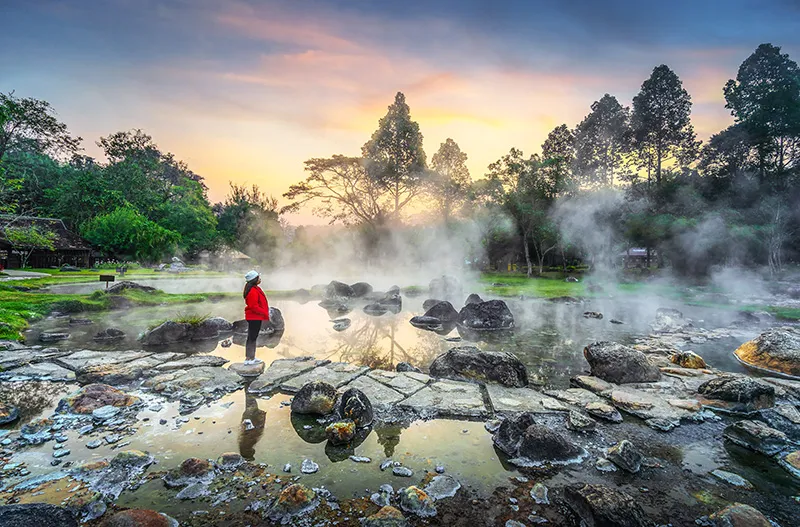
Chae Son Hot Spring is the most famous attraction in the park. Several natural hot spring pools are located together in an area of about 3 rai. The average water temperature is about 73 degrees Celsius, and the pools have a mild sulfur smell. Steam rises from the water, especially during cool weather, creating a misty atmosphere among rocks and forest. The scene is especially beautiful in the morning, when the cool air makes the steam more visible.
A popular activity is boiling eggs in the hot spring water. Chicken eggs are usually soaked for about 17 minutes, producing a distinctive texture in which the yolk becomes firm and rich while the white remains soft and runny. This simple activity is one of the best-known experiences at Chae Son because it allows visitors to interact directly with natural geothermal energy. Visitors should use only designated areas, avoid standing too close to hot pools, and keep children under close supervision.
The warm-water stream near the hot springs is another special feature. It is formed where hot spring water meets cool water from Chae Son Waterfall. The resulting temperature is suitable for soaking feet and relaxing. Sitting beside the warm stream, surrounded by forest and gentle sound of water, is a slow and calming way to enjoy the park. It is especially pleasant after walking to the waterfall or nature trail.
The mineral bath service gives Chae Son its strong reputation as a wellness destination. Mineral water is drawn from the hot spring source and adjusted to a suitable bathing temperature. Soaking in mineral water can help the body relax and may ease tiredness. Visitors with heart disease, blood pressure problems, pregnancy, elderly conditions, or other health concerns should be cautious and avoid soaking for too long. The mineral water here is for bathing, not for drinking.
Chae Son Waterfall is another major highlight. It originates from Mae Mon stream and has water throughout the year. The waterfall flows down in six levels and is located about 3 km from the park office. The trail is reasonably convenient for general visitors, making it suitable for travelers who want to combine hot springs and waterfall scenery in one visit. Along the way, visitors can enjoy forest, streams, and cool mountain air.
Mae Mon Waterfall is located about 5 km from the park office. It is a more powerful waterfall that drops from a high cliff into a deep valley, forming beautiful levels of water. It is not suitable for swimming because the current and terrain may be dangerous. Visitors who plan to go there should check route conditions with park staff and be especially careful during rainy weather.
Mae Khun Waterfall is located near Mae Mon Waterfall. It is a long waterfall about 100 meters high, flowing down to join Mae Mon Waterfall. Because access is more natural and less convenient than the main hot spring and Chae Son Waterfall areas, visitors should contact park staff for guidance before going. The site is more suitable for travelers with some experience in nature routes.
Pha Ngam Cave is located near Chae Son 3 Ranger Station, also known as the Pha Ngam unit. It is about 60 km from the park office and about 8 km from Wang Nuea District Office. The area contains several caves that can be studied and visited, including Tham Fa Ngam, Tham Nam, and Tham Mo. Visitors interested in caves and limestone landscapes should bring proper shoes and a flashlight and should ask park staff about current access conditions before entering.
From January to February, Chae Son is also known for blooming wild Himalayan cherry-like flowers locally referred to as dok siao. The scenic Chae Son – Ban Pa Miang route, about 18 km long, becomes especially beautiful when the flowers bloom through the forest. This seasonal route is suitable for slow driving, photography, and continuing to Ban Pa Miang, a peaceful mountain village known for fermented tea leaves, forest scenery, and quiet homestay-style travel.
The Chae Son Waterfall Nature Trail is one of the park’s best learning routes. It is about 3 km long and takes around 1 hour and 30 minutes to walk. The trail includes many interpretation points and introduces visitors to plants, forest ecology, geothermal features, streams, and local wildlife. It is suitable for students, families, and travelers who want to understand the park beyond sightseeing.
The park also uses hydropower generated from natural water flow. This reflects a practical approach to using local natural energy in a way that fits the landscape. Visitors interested in the hydropower system can ask park staff about access. The route to the hydropower area is about 5 km and may require a four-wheel-drive vehicle because the road is steep.
The Mae Piak Waterfall Nature Trail is another important route for visitors who want deeper forest learning. It is a loop trail about 3.7 km long along Huai Mae Piak and takes about 2 hours and 30 minutes. Along the route, visitors can learn about forest resources such as yang oil, bamboo, miang or tea leaves, local plants used for daily life, and small water-management systems. The route may also include opportunities to see wildlife such as wild boar or big-headed turtles, though wildlife sightings are never guaranteed.
Wang Hai Waterfall and Mae Piak Waterfall are located along the Mae Piak route. Mae Piak Waterfall has three levels, and the third level is especially beautiful, reaching about 100 meters high. The lower area has wild banana plants and shaded forest, giving it a rich natural atmosphere. This route requires more time and preparation than the main hot spring and waterfall areas, so visitors should bring water, wear proper footwear, and check with park staff before entering.
The park environment is arranged to blend with nature, making it suitable for family travel and overnight stays. The cool season is the most popular time to visit because the weather is pleasant for hot spring bathing, walking, waterfall visits, and scenic drives. However, the park can be visited throughout the year, with each season offering different conditions. During the rainy season, waterfalls may be more powerful, but routes can also be slippery and require greater caution.
Accommodation inside the park includes park bungalows and camping areas with basic facilities such as toilets, electricity, and some cooking areas. Visitors planning to stay overnight should contact the park in advance because accommodation is limited, especially during weekends, holidays, and the cool season. Campers should prepare tents, bedding, drinking water, food, flashlights, and warm clothing as needed.
Getting There from Lampang city can be done by several routes. One route begins from the provincial stadium area and follows the old Lampang – Hang Chat road, then turns right at Ban Nam Thong intersection to Highway No. 1147 toward Lampang – Huai Peng – Mueang Pan for about 55 km. Continue to Highway No. 1287 toward Mueang Pan – Chae Hom for about 2 km, then turn left to Highway No. 1252 toward Khuang Kom – Pang Fan for about 11 km, before turning left into the park access road for another 3 km. The total distance from Lampang city is about 75 km.
Another route from Lampang city uses Highway No. 1035 on the Lampang – Chae Hom route. Around kilometer marker 58, turn left to Highway No. 1287 toward Mueang Pan, then turn right at the intersection to Highway No. 1252 toward Khuang Kom – Pang Fan for about 11 km and continue into the park. From Chiang Mai, travelers can come via San Kamphaeng, Mae Kampong, and Ban Pa Miang before reaching the park. This route is suitable for combining Chiang Mai, Mae Kampong, Ban Pa Miang, and Chae Son in one mountain itinerary.
Travelers without private vehicles can use local transport from Lampang toward Chae Son or hire a vehicle. However, private transport is more convenient because attractions in and around the park are spread out. Routes to Ban Pa Miang, Wat Phra Bat Pu Pha Daeng, and other nearby attractions involve mountain roads, so vehicles should be in good condition and drivers should be careful on curves and slopes.
Nearby attractions that combine well with Chae Son include Wat Phra Bat Pu Pha Daeng, also known as Wat Chaloem Phra Kiat Phrachomklao Rachanuson, Ban Pa Miang, Chae Son Waterfall, Chae Son Hot Spring, Mueang Pan town, and the seasonal flower route from Chae Son to Ban Pa Miang. Wat Phra Bat Pu Pha Daeng is especially popular because of its white pagodas on mountain peaks and panoramic views.
Food options near the park include the park welfare shop, coffee shops near the hot spring area, local restaurants in Chae Son, and restaurants in Mueang Pan. Nearby options include Chae Son Park Shop, Chae Son Fresh Coffee, coffee shops around the hot spring, Duang Chan, Khrua Rai Ya, The First Valley Coffee Academy, and local restaurants along the road toward Ban Pa Miang. Visitors planning long walks or multiple stops should carry drinking water and snacks.
Accommodation near the park includes the national park bungalows and camping area, homestays, resorts, and nature lodges around Chae Son, Mueang Pan, and Ban Pa Miang. Options include Chae Son National Park accommodation, The Little Earth Farm View, Sherpa Chae Son, Khao Sound Homestay, Huen Kaew Resort Chae Son, and accommodations in Mueang Pan. Those who want to stay closest to the hot springs and waterfall should choose the park or Chae Son area, while those who prefer mountain village scenery may choose Ban Pa Miang.
Visitors should follow park rules carefully. Do not leave trash, feed wildlife, collect plants, disturb animals, enter dangerous water areas, or stand too close to hot spring pools. Children should be closely supervised around hot water and streams. Proper footwear is recommended for waterfall trails and nature routes. Visitors should check current park announcements before traveling, especially during rainy periods or route maintenance.
Chae Son National Park is worth visiting for travelers who want to experience Lampang’s nature, wellness, waterfalls, forest trails, hot springs, and mountain atmosphere in one destination. Visitors can keep the trip simple by soaking feet, bathing in mineral water, boiling eggs, walking to Chae Son Waterfall, and relaxing in the park. Those who want a deeper nature experience can explore interpretation trails, seasonal flower routes, Ban Pa Miang, and nearby mountain attractions.
Overall, Chae Son National Park is one of Lampang’s most complete natural destinations. It combines geothermal features, waterfalls, forest ecology, hydropower, wellness travel, camping, and family-friendly recreation in one place. With respectful behavior, good preparation, and attention to park rules, Chae Son offers a relaxing and memorable experience that shows why Lampang’s natural heritage is as impressive as its temples, old town, and cultural landmarks.
| Name | Chae Son National Park |
| Location | Chae Son Subdistrict, Mueang Pan District, Lampang Province, covering parts of Mueang Pan, Chae Hom, and Mueang Lampang districts |
| Address | Chae Son National Park, Chae Son Subdistrict, Mueang Pan District, Lampang 52240 |
| Highlights | Chae Son Hot Spring, Chae Son Waterfall, warm-water stream, mineral baths, nature trails, Mae Mon Waterfall, Mae Khun Waterfall, Pha Ngam Cave, and the seasonal Chae Son – Ban Pa Miang flower route |
| History | Officially declared a national park on 28 July 1988, covering about 592 square kilometers of forested mountain area along the Lampang – Chiang Mai natural boundary |
| Name Origin | The park is named after Chae Son, the area in Mueang Pan District where its famous hot springs and waterfall are located. |
| Distinctive Features | A wellness and nature destination where hot springs and waterfalls exist in the same area, with natural mineral water, forest trails, and hydropower use inside the park |
| Travel Information | From Lampang city, use the old Lampang – Hang Chat road, Highway No. 1147, Highway No. 1287, and Highway No. 1252, or use Highway No. 1035 toward Chae Hom and connect to Mueang Pan. The distance is about 75 km. From Chiang Mai, travelers can come via San Kamphaeng, Mae Kampong, and Ban Pa Miang. |
| Current Status | Open as a natural attraction, wellness destination, nature-learning area, and overnight recreation site in Lampang Province |
| Open Days | Daily |
| Opening Hours | 08.00 – 18.00 / Accommodation And Camping Should Be Arranged With The Park In Advance |
| Fees | Thai Visitors: Adult 40 Baht, Child 20 Baht / Foreign Visitors: Adult 200 Baht, Child 100 Baht |
| Mineral Bath Services | Mineral bath rooms, warm-water stream, outdoor soaking areas, and foot-soaking areas at park service points. Current service fees should be confirmed before use. |
| Facilities | Park bungalows, camping area, toilets, welfare shop, welfare restaurant, parking area, hot spring walkway, nature trails, and mineral bath services |
| Main Areas / Zones | Chae Son Hot Spring, warm-water stream, mineral bath area, Chae Son Waterfall, Mae Mon Waterfall, Mae Khun Waterfall, Pha Ngam Cave, Chae Son Waterfall Nature Trail, Mae Piak Waterfall Nature Trail, and Chae Son – Ban Pa Miang flower route |
| Caretaker | Department Of National Parks, Wildlife And Plant Conservation / Chae Son National Park |
| Main Contact Number | Chae Son National Park, Tel. 089-851-3355, 054-380-000 / Department Of National Parks, Tel. 02-562-0760 |
| Recommended Season | November – February, when the weather is cool and suitable for mineral bathing, waterfall visits, nature trails, and viewing seasonal blossoms on the Chae Son – Ban Pa Miang route |
| Visitor Guidelines | Do not stand too close to hot spring pools, supervise children carefully, do not litter, do not feed wildlife, do not collect plants, do not enter unsafe water areas, and follow park staff instructions. |
| Nearby Tourist Attractions | 1. Chae Son Hot Spring, about 0 km 2. Chae Son Waterfall, about 3 km 3. Mae Mon Waterfall, about 5 km 4. Mae Khun Waterfall, about 5 km 5. Ban Pa Miang, about 18 km 6. Wat Phra Bat Pu Pha Daeng / Wat Chaloem Phra Kiat Phrachomklao Rachanuson, about 12 km 7. Mueang Pan Town Center, about 18 km |
| Nearby Restaurants | 1. Chae Son Park Shop, about 0 km 2. Chae Son Fresh Coffee, about 0.2 km 3. Farm Fresh Coffee Near Chae Son Hot Spring, about 0.2 km 4. Duang Chan, about 0.4 km 5. Khrua Rai Ya, about 3 km, Tel. 084-619-4522 6. The First Valley Coffee Academy, about 8 km |
| Nearby Accommodations | 1. Chae Son National Park Bungalows And Camping Area, about 0 km, Tel. 089-851-3355 2. The Little Earth Farm View, about 2.6 km 3. Sherpa Chae Son, about 5 km, Tel. 081-984-1767 4. Khao Sound Homestay Chae Son, about 8 km, Tel. 054-263-162, 081-765-5185 5. Huen Kaew Resort Chae Son, about 8 km 6. Accommodations In Mueang Pan District, about 18 km |
Frequently Asked Questions (FAQ)
Q: Where is Chae Son National Park located?
A: Chae Son National Park is located in Chae Son Subdistrict, Mueang Pan District, Lampang Province, covering parts of Mueang Pan, Chae Hom, and Mueang Lampang districts.
Q: What are the main attractions in Chae Son National Park?
A: Main attractions include Chae Son Hot Spring, Chae Son Waterfall, warm-water stream, mineral baths, nature trails, Mae Mon Waterfall, Mae Khun Waterfall, Pha Ngam Cave, and seasonal blossoms from January to February.
Q: What are the opening hours of Chae Son National Park?
A: The park is open daily from 08.00 to 18.00. Visitors who want to stay overnight or camp should contact the park in advance.
Q: How much is the entrance fee?
A: The listed fee is 40 baht for Thai adults, 20 baht for Thai children, 200 baht for foreign adults, and 100 baht for foreign children. Visitors should confirm current rates before traveling.
Q: What can visitors do at Chae Son Hot Spring?
A: Visitors can see the hot spring pools, soak their feet, use mineral bath services, enjoy outdoor soaking areas, and boil eggs in designated hot spring areas.
Q: Does Chae Son National Park have accommodation?
A: Yes. The park has bungalows and camping areas with basic facilities. Advance contact is recommended, especially during the cool season and public holidays.
Q: How can travelers get to Chae Son National Park?
A: From Lampang city, travelers can use the old Lampang – Hang Chat road with Highways 1147, 1287, and 1252, or use Highway 1035 toward Chae Hom and connect to Mueang Pan. The distance is about 75 km.
Q: What nearby attractions can be visited after Chae Son National Park?
A: Nearby attractions include Wat Phra Bat Pu Pha Daeng, Ban Pa Miang, Mueang Pan town, Mae Mon Waterfall, Mae Khun Waterfall, and the seasonal Chae Son – Ban Pa Miang flower route.
 Category: ●Nature and Wildlife
 Group: ●National Parks and Marine Reserves
Last Update : 5 MonthAgo
 Last Update : 5 MonthAgo
 Click to Access the Navigation Map GPS
Chae Son National Park Map
Recommend

 Art, Culture and Heritage
 Historical Sites and Monuments(2)
 Landmarks and Memorials(5)
 Art, Craft Centres, Tradition(10)
 Museums(4)
 Historic Homes and Cities(1)
 Places of Worship
 Temple(86)
 Other Sacred Sites(9)
 Research and Development
 Royal Project(2)
 Suburban Living
 Village, Community(3)
 Local Market(2)
National Parks and Marine Reserves(6)
Local Market(2)
National Parks and Marine Reserves(6)
 Mountain (Doi)(4)
 Dam, Reservoir, Lake(11)
 Waterfalls(15)
 Hot Springs(1)
 Caves(12)
 Flower Field(1)
 River, Canal(1)
 Bays and Beaches(1)
 Other natural attractions(4)
 Entertainment and Agricultural
 Animal camps and shows(1)
 Farms, Parks and Ecotourism(2)
 Outdoor and Adventure Activities(2)
 Shopping
 Shopping and Night Market(2)
 Spas and Wellness
 Spas and Wellness(1)
 Travel Articles, Recipes
 Travel Review, Food Review(1)


