
lovethailand home >South Travel Attractions
> Phang Nga Travel Attractions
TL;DR: A quick overview of attractions in Phang Nga, plus planning details, access, and key travel highlights.
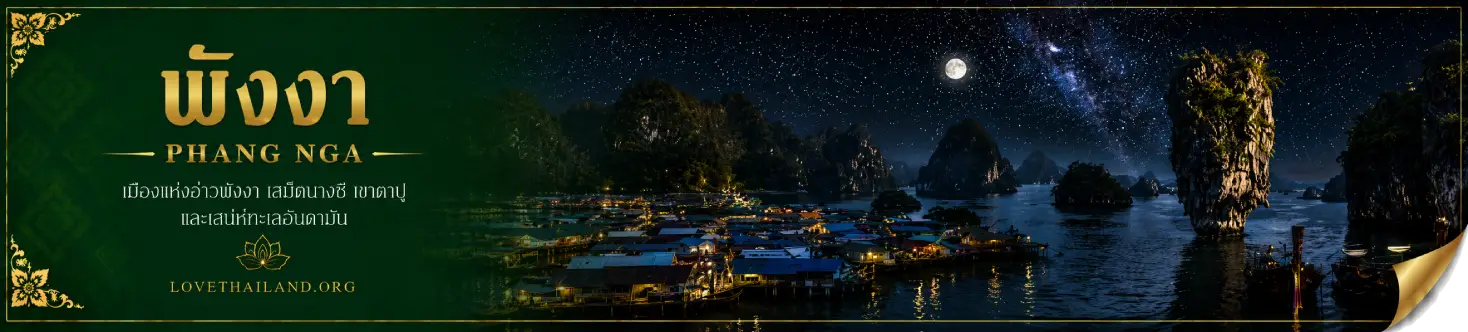
Phang Nga
Slogan : Massive mining industry, Ban Klang Nam “floating house” delightful caves, strangely-shaped hills, Jampun flower, rich in resources.
Phang Nga Province is one of Thailand’s most important travel destinations, distinguished by its outstanding natural beauty, rich culture, and long history. In particular, the Andaman Sea coastline is filled with countless uniquely arranged islands, earning the province the nickname “The Land of Islands,” which reflects the abundance of natural resources rarely found elsewhere in the country.
The landscape of Phang Nga is highly diverse, featuring complex limestone mountains, dense tropical forests, some of the most extensive mangrove forests in Thailand, long stretches of coastline, and world-renowned island groups such as the Similan Islands and the Surin Islands. These locations are internationally recognized diving destinations. This ecological diversity makes Phang Nga a province with exceptional tourism potential and a key destination for both Thai and international travelers.
Beyond its natural resources, Phang Nga is also notable for its distinctive way of life and cultural identity. The province is home to a diverse population, including Thai people, Thai-Chinese communities, Muslims, and sea gypsies or “New Thai” groups such as the Moken in the Surin Islands, who continue to maintain traditional lifestyles closely tied to the sea. Important communities such as Koh Panyee, Koh Yao, and the old mining communities in Takua Pa clearly reflect the cultural and historical diversity of the region.
Phang Nga covers an area of approximately 4,171 square kilometers. Its geography is characterized by a western coastline along the Andaman Sea, while most inland areas consist of mountains and dense forests. This results in a visually striking landscape that includes limestone cliffs, natural caves, waterfalls, and rich mangrove ecosystems. The combination of these features provides a wide range of tourism experiences, from marine attractions to inland natural exploration.
Globally recognized attractions that have brought fame to Phang Nga include Phang Nga Bay, known for its dramatic limestone formations such as Khao Tapu and Khao Phing Kan, as well as Koh Phra Thong, which features a landscape resembling a savanna. In addition, the underwater world of the Similan and Surin Islands offers exceptional biodiversity, including coral reefs and diverse marine species, making Phang Nga one of Thailand’s most significant marine tourism destinations.
From a historical perspective, Phang Nga has been inhabited since prehistoric times. Archaeological evidence such as stone tools, cave paintings, and pottery has been discovered, dating back more than 3,000–4,000 years. One of the most important sites is Suwan Khuha Cave, which provides clear evidence of early human settlement in the area.
Entering the historical period, Phang Nga became part of international trade routes, particularly in areas such as Takua Pa and Takua Thung. These regions were once important settlements where Indian traders established communities and introduced cultural influences. Evidence such as sculptures of Rama, Lakshmana, and Sita clearly reflects the impact of Indian culture in this region.
During the Ayutthaya period, Phang Nga was under the administration of Takua Pa. Later, in the Rattanakosin era, the province gained increased importance, especially during the reign of King Rama V when tin mining flourished significantly. This development transformed Phang Nga into a major economic center in the region.
However, after the decline of the mining industry, Phang Nga returned to a quieter state. It was not until 1974, when Phang Nga Bay was selected as a filming location for a James Bond movie, that the province gained international attention. This exposure introduced its natural beauty to the world and marked the beginning of its rapid growth as a tourism destination.
At present, Phang Nga Province is administratively divided into 8 districts: Mueang Phang Nga, Kapong, Ko Yao, Khura Buri, Takua Thung, Takua Pa, Thap Put, and Thai Mueang. Each district has its own distinct identity in terms of natural landscapes, cultural heritage, and local ways of life.
Phang Nga stands out for its harmonious blend of cultures and lifestyles among diverse ethnic groups, particularly Muslim communities and Thai-Chinese populations, both of which play important roles in the region. This cultural integration has created a unique identity expressed through language, cuisine, traditions, and beliefs that are evident in everyday life across the province.
One of the most prominent cultural events that reflects this diversity is the Vegetarian Festival held in Takua Pa District. This annual event is celebrated on a grand scale, featuring traditional Chinese rituals, processions, and displays of faith. In addition, Muslim communities celebrate important Islamic religious festivals, which are deeply integrated into the social fabric of the province and coexist harmoniously with other cultural traditions.
The lifestyle of sea gypsies, particularly the Moken people in the Surin Islands, is another significant cultural highlight of Phang Nga. These communities maintain a deep connection with the sea and continue to preserve their traditional way of life, including fishing practices, subsistence living, and beliefs related to nature. This authenticity has become a major attraction for travelers seeking meaningful cultural experiences.
In terms of cuisine, Phang Nga is well known for its local dishes influenced by Malay and Chinese culinary traditions, combined with fresh seafood ingredients. Popular dishes include Khao Yum, Nam Budu, sour curry with sea fish, roti, mataba, and a wide variety of fresh seafood. These dishes are characterized by bold flavors and unique local identity, making Phang Nga an appealing destination for food lovers.
The economy of Phang Nga today is diverse, with tourism playing a central role in generating income for the province. Marine tourism activities such as diving, boat tours, and eco-tourism are particularly significant. In addition, agriculture remains an important sector, including rubber plantations, oil palm cultivation, and fisheries, which continue to serve as the economic foundation for many local communities.
Community-based tourism in Phang Nga has been gaining popularity in recent years. Visitors have opportunities to learn about local lifestyles, including traditional fishing, local cooking, and participation in cultural activities. This form of tourism not only provides income to local communities but also helps preserve cultural heritage and traditional knowledge.
In terms of natural resources, Phang Nga possesses high biodiversity across both marine and terrestrial ecosystems. Its mangrove forests are particularly rich and serve as important nurseries for marine life. The province is also home to several national parks, including Mu Ko Similan National Park and Mu Ko Surin National Park, which are globally recognized conservation areas.
Getting There Phang Nga can be accessed through multiple routes. The most common way is via Phuket or Krabi, both of which have international airports. From there, travelers can continue by car or bus to Phang Nga via Highway No. 4, the main route connecting the Andaman coastal provinces.
What truly sets Phang Nga apart from other destinations is the balance between nature and local way of life. Visitors can experience simplicity, tranquility, and the genuine friendliness of local communities, which have successfully preserved their identity over time.
With its combination of breathtaking natural landscapes, diverse cultural heritage, and long-standing history, Phang Nga stands as one of Thailand’s most promising destinations. It is especially suitable for travelers seeking a deeper and more meaningful travel experience beyond typical tourist attractions.
Phang Nga Tourism Festivals 2026
| No. | Festival | Period | Location | Highlight |
| 1 | Takua Pa Vegetarian Festival | September – October 2026 | Takua Pa District, Phang Nga Province | Ancient Chinese rituals, processions, and strong spiritual beliefs |
| 2 | Andaman Tourism Opening Festival | November 2026 | Andaman Coast, Phang Nga Province | Marine tourism activities, performances, and seafood events |
| 3 | Similan Islands Eco-Tourism Festival | November – April | Similan Islands, Khura Buri District, Phang Nga | World-class diving, coral reefs, pristine nature |
Phang Nga Travel Plan (3–5 Days)
| Day | Destination | Address | Highlight |
| Day 1 | Phang Nga Bay (Khao Tapu, Khao Phing Kan) | Ao Phang Nga National Park, Mueang Phang Nga District, Phang Nga Province | World-famous limestone karsts in the sea |
| Day 2 | Koh Panyee | Koh Panyee Subdistrict, Mueang Phang Nga District, Phang Nga Province | Floating village, traditional community lifestyle |
| Day 3 | Similan Islands | Khura Buri District, Phang Nga Province | World-class diving, crystal-clear water |
| Day 4 | Surin Islands | Khura Buri District, Phang Nga Province | Moken community, rich coral reefs |
| Day 5 | Khao Lak & Thai Mueang Beach | Takua Pa District / Thai Mueang District, Phang Nga Province | Peaceful beaches, natural scenery |
Top 10 MUST VISIT Attractions in Phang Nga
| No. | Attraction | Address | Highlight |
| 1 | Phang Nga Bay | Mueang Phang Nga District, Phang Nga Province | Limestone mountains in the sea |
| 2 | Khao Tapu | Ao Phang Nga National Park, Phang Nga Province | James Bond landmark |
| 3 | Khao Phing Kan | Phang Nga Bay | Leaning limestone mountain |
| 4 | Koh Panyee | Mueang Phang Nga District, Phang Nga Province | Floating village |
| 5 | Similan Islands | Khura Buri District, Phang Nga Province | World-class diving |
| 6 | Surin Islands | Khura Buri District, Phang Nga Province | Coral reefs and Moken culture |
| 7 | Khao Lak | Takua Pa District, Phang Nga Province | Long peaceful beaches |
| 8 | Koh Phra Thong | Khura Buri District, Phang Nga Province | Savanna-like landscape |
| 9 | Suwan Khuha Cave | Takua Thung District, Phang Nga Province | Historic cave with reclining Buddha |
| 10 | Thai Mueang Beach | Thai Mueang District, Phang Nga Province | Natural untouched beach |
Frequently Asked Questions (FAQ)
Q: What are the highlights of Phang Nga Province?
A: Phang Nga is known for its rich natural resources, including the Andaman Sea, world-famous islands, mangrove forests, and limestone mountains, as well as its diverse cultural heritage.
Q: What are the main attractions in Phang Nga?
A: Major attractions include Phang Nga Bay, Khao Tapu, Khao Phing Kan, the Similan Islands, the Surin Islands, Koh Panyee, and Khao Lak.
Q: What type of travel is Phang Nga suitable for?
A: It is ideal for nature tourism, diving, island exploration, and cultural experiences with local communities.
Q: What are the famous foods in Phang Nga?
A: Local specialties include Khao Yum, Nam Budu, sour curry with sea fish, roti, mataba, and a variety of fresh seafood dishes.
Q: When is the best time to visit Phang Nga?
A: The best time to visit is from November to April, when the sea is clear and conditions are ideal for island trips and diving.
Q: What is the historical significance of Phang Nga?
A: Phang Nga has evidence of settlement since prehistoric times and was once an important trade center, as well as a major tin mining hub in the past.
Q: How many districts are in Phang Nga Province?
A: The province is divided into 8 districts: Mueang Phang Nga, Kapong, Ko Yao, Khura Buri, Takua Thung, Takua Pa, Thap Put, and Thai Mueang.
Q: Is it convenient to travel to Phang Nga?
A: Yes, it is easily accessible via Phuket or Krabi airports, followed by a short drive to the province.
Q: Does Phang Nga only offer beaches?
A: No, it also features mountains, waterfalls, mangrove forests, caves, and cultural attractions.
Q: Who is Phang Nga suitable for?
A: It is suitable for travelers who enjoy nature, diving, marine tourism, and authentic cultural experiences.
Phang Nga Map

 Art, Culture and Heritage
 Historical Sites and Monuments(2)
 Landmarks and Memorials(6)
 Art, Craft Centres, Tradition(3)
 Places of Worship
 Temple(18)
 Other Sacred Sites(8)
 Suburban Living
 Village, Community(3)
 Nature and Wildlife
 National Parks and Marine Reserves(12)
 Mountain (Doi)(8)
 Waterfalls(21)
 Hot Springs(2)
 Caves(12)
 River, Canal(4)
 Bays and Beaches(28)
 Islands(11)
 Other natural attractions(7)
 Entertainment and Agricultural
 Animal camps and shows(2)
 Farms, Parks and Ecotourism(2)
 Outdoor and Adventure Activities(3)
 Travel Articles, Recipes
 Southern Food Menu, Southern Food Recipes(1)


