
lovethailand home >North Travel Attractions
> Nakhon Sawan Travel Attractions
TL;DR: A quick overview of attractions in Nakhon Sawan, plus planning details, access, and key travel highlights.
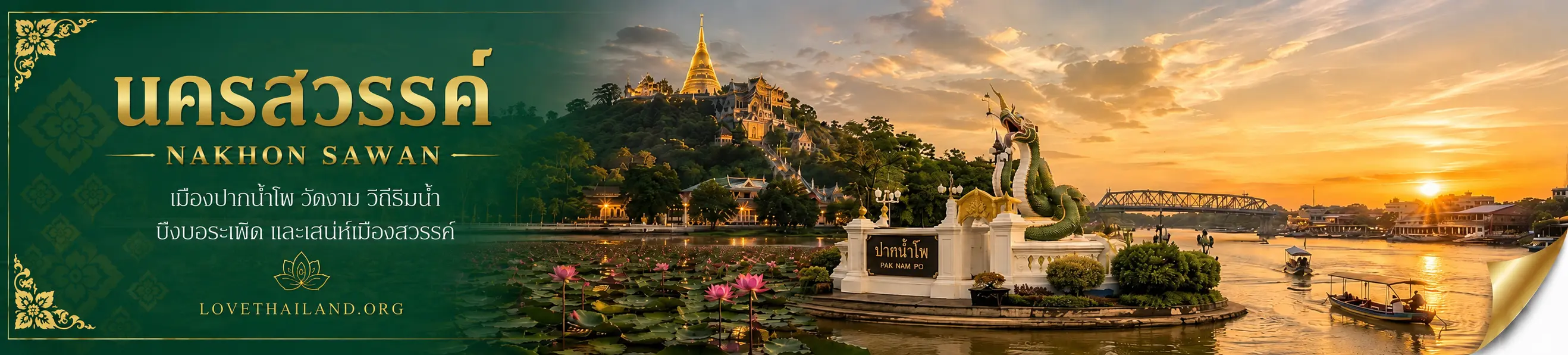
Nakhon Sawan
Slogan : The city of river, dragon parade, tasty fish of Park Nam Pho.
Nakhon Sawan Province is one of the most important provinces in lower northern Thailand, distinguished by its long history, rich natural resources, and strategic role in the country. It is not only a geographical link between central and northern Thailand, but also a place that clearly reflects the role of trade, transportation, warfare, and river-based ways of life. For this reason, it has long been regarded as the “Gateway to the North” of Thailand.
Archaeological evidence found in Nakhon Sawan, particularly at the Ban Mai Chai Mongkhon archaeological site in Soi Thong Subdistrict, Takhli District, confirms that this area has been inhabited and used by humans for a very long time. The abundance of water sources, fertile river plains, and the surrounding ecosystem made Nakhon Sawan one of the important food-producing areas in the lower northern region since early human settlement.
As the region moved into the historical period, Nakhon Sawan gained a more defined role as a frontier city and a strategic military town. During the Sukhothai and Ayutthaya periods, it served as both a defensive outpost and an important resting point for military campaigns. Its location made it essential for defense, troop movement, and control of routes connecting northern cities with the lower Chao Phraya basin.
The importance of Nakhon Sawan was not limited to military affairs. Its geography also made it a major commercial center. Pak Nam Pho, the point where the Ping, Wang, Yom, and Nan rivers merge to form the Chao Phraya River, became a crucial hub for water transportation. Trade between central Thailand and the northern region moved along these river systems, helping to sustain the local economy for generations.
Later, during the reign of King Rama VII, Thailand reformed its administrative system and abolished the old monthon structure. Nakhon Sawan was officially established as a province and continued to develop in trade, transportation, education, and infrastructure. Over time, it became one of the key urban and commercial centers of lower northern Thailand.
Today, Nakhon Sawan is no longer just a stopover for travelers heading north. It is a province with a strong identity of its own, shaped by nature, local culture, old riverfront communities, and mixed Thai-Chinese heritage. The province has old neighborhoods, river-based communities, a strong Chinese cultural presence, and important natural areas that remain highly significant to Thailand’s ecological system.
The most famous natural attraction in the province is Bueng Boraphet, which is regarded as the heart of Nakhon Sawan tourism. It is one of Thailand’s largest freshwater wetlands and an important source of biodiversity, home to freshwater fish, water birds, aquatic plants, and interconnected ecosystems that have supported surrounding communities for generations. Bueng Boraphet is therefore not only a natural attraction, but also a food source, a learning center, and one of the province’s most valuable sites for ecological study.
What makes Bueng Boraphet especially attractive is that visitors can experience nature in several ways in one place. Activities include boat trips among lotus fields, birdwatching, learning about freshwater ecosystems, observing local fishing lifestyles, and visiting the aquarium-style freshwater exhibition center that provides insight into Thai freshwater species. The early morning is particularly recommended because the atmosphere is calm and the chance of spotting water birds is much higher than later in the day.
Beyond Bueng Boraphet, Nakhon Sawan also offers the charm of an old river town closely tied to trade routes and long-established communities. Pak Nam Pho, a name familiar to many Thais, is not merely a geographical point where the Chao Phraya begins. It is also an area that reflects the growth of river commerce, water transport, and cultural blending between Thai and Chinese communities in a particularly vivid way.
When speaking of Nakhon Sawan’s culture, the most famous event is undoubtedly the Nakhon Sawan Chinese New Year Festival. This major celebration is known nationwide. Its significance lies not only in the grand dragon parades and large-scale performances, but also in how it reflects the deep roots of the Chinese community in Pak Nam Pho, which has lived and grown together with local Thai communities for generations. That cultural fusion has become one of the province’s clearest identities.
Nakhon Sawan’s food is equally distinctive. The province combines local Thai food traditions with strong Chinese culinary influence. Many visitors know Nakhon Sawan through its famous “mochi,” which has become one of the best-known souvenirs of the province. In reality, however, the city offers much more than that, including morning-market food, riverside dishes, freshwater fish dishes linked to Bueng Boraphet, and community-based meals that still preserve their traditional character.
For travelers who enjoy panoramic views, Nakhon Sawan also has important viewpoints such as Wat Khiriwong. This temple is another major landmark where visitors can see the city, Pak Nam Pho, public parks, and the wider surrounding landscape from above. Visiting the viewpoint in the early morning or late afternoon offers a broader and deeper understanding of the city than simply staying in the downtown area.
Nakhon Sawan also plays a major role as a transportation city. Whether traveling by private car, bus, or train, it is easy to reach. This makes the province ideal for a 2-day, 3-day, or even 4-day trip, as well as for an overnight stop before continuing farther north. That convenience makes Nakhon Sawan suitable for family trips, nature-focused travelers, and those who want a short but meaningful getaway.
One of the charms of traveling in Nakhon Sawan is that the province does not feel rushed. The city has its own rhythm. People’s lives are still closely tied to rivers, markets, communities, and natural resources. Travel here is therefore not just about checking in at famous places, but about slowly absorbing the character of a city that grew from waterways, trade, and a long history of cultural exchange.
From a learning perspective, Nakhon Sawan is especially rewarding. It offers evidence of prehistoric settlement, political and administrative history, river transportation networks, a large wetland ecosystem, and a river-port culture that remains visible today. Travelers who enjoy understanding places through geography and history will find that Nakhon Sawan is much deeper and richer than its general image might suggest.
In the bigger picture, Nakhon Sawan is a province that combines many important elements of travel in one place: nature, culture, an old town atmosphere, waterways, food, and excellent accessibility. It is suitable both for a focused multi-day trip and for a stop on the way farther north. Either way, it offers distinctive stories and an atmosphere that reveals another side of Thailand—quiet, layered, and far more interesting than many people expect.
Getting There From Bangkok, Nakhon Sawan is easy to reach by car in around 3–4 hours, depending on traffic, via the main highways leading directly toward northern Thailand. There are also daily bus and train services, making it suitable for travelers who do not wish to drive. Once in the province, it is relatively easy to continue onward to Pak Nam Pho, Bueng Boraphet, Wat Khiriwong, and other major attractions.
For those interested in taking a boat trip on Bueng Boraphet, the morning is the best time, as birds are easier to spot and the atmosphere is calmer. Travelers planning to buy Nakhon Sawan mochi as a souvenir should carefully check the FDA label, production date, and expiration date before purchasing. For those interested in serious trekking activities such as the trek to Mokochu Peak, it is important to monitor the seasonal opening announcements from the national park and prepare physically, as the route is demanding and requires several days.
Nakhon Sawan Tourism Festival Calendar 2026
| Festival | Period | Venue | Details |
| Nakhon Sawan Chinese New Year Festival (Pak Nam Pho) | January–February | Pak Nam Pho area, Mueang Nakhon Sawan District | A nationally known festival featuring golden dragon parades, lion dances, large cultural performances, Thai-Chinese food markets, and traditional worship activities within the community |
| Bueng Boraphet Tourism Promotion Event | Late year–early year season | Bueng Boraphet | Nature-based tourism activities, boat rides, birdwatching, freshwater ecology exhibitions, and wetland education programs |
| Nakhon Sawan Loy Krathong Festival | November | Chao Phraya riverside and Pak Nam Pho | Riverside Loy Krathong atmosphere, cultural processions, evening performances, and community-based festive activities in the city area |
| Wetland and Community Lifestyle Events | Held during the tourism season | Communities around Bueng Boraphet | Local activities connected to fishing traditions, freshwater foods, and eco-tourism experiences |
Nakhon Sawan 3–5 Day Travel Plan
| Day | Place | Activities |
| Day 1 | Pak Nam Pho, source of the Chao Phraya River, old town district | Begin by viewing the river confluence, explore the old trading neighborhood, walk through the Chinese community, enjoy local food, and absorb the atmosphere of the city where the Chao Phraya begins |
| Day 2 | Bueng Boraphet, freshwater species exhibition center | Take an early morning boat trip for birdwatching and wetland scenery, observe aquatic plants and ecosystems, then visit the freshwater exhibition center to learn about Thai freshwater species |
| Day 3 | Wat Khiriwong, Sawan Park, Nakhon Sawan city | Go up to the city viewpoint at Wat Khiriwong, then relax at the public park and continue exploring the town at an easy pace |
| Day 4 | Takhli, Ban Mai Chai Mongkhon archaeological site, local communities | Enjoy a history- and archaeology-focused day trip, learning about early settlement in the province while experiencing the atmosphere beyond the city center |
| Day 5 | Adventure option / Mokochu / natural areas around the province | For serious nature travelers and trekkers, extend the trip toward longer wilderness routes, with proper fitness preparation, equipment, and prior seasonal access checks |
Nakhon Sawan MUST VISIT 15 Attractions
| No. | Place | Highlight |
| 1 | Bueng Boraphet | A large wetland and one of the province’s most important birdwatching sites |
| 2 | Pak Nam Pho | The origin of the Chao Phraya River and an old trading district |
| 3 | Wat Khiriwong | Panoramic viewpoint over Nakhon Sawan city |
| 4 | Bueng Boraphet Freshwater Species Exhibition Center | A learning center on Thai freshwater ecosystems, suitable for families |
| 5 | Sawan Park | A central public park for relaxation in the city |
| 6 | Pak Nam Pho Market District | Local food and old-town atmosphere |
| 7 | Ban Mai Chai Mongkhon Archaeological Site | Evidence of prehistoric settlement in the province |
| 8 | Khao Dao Dueng | A nature viewpoint and scenic high ground |
| 9 | Wat Si Sawan Sangkharam (Wat Thu Nam) | A historically important temple with ceremonial significance |
| 10 | Dejatiwong Bridge | Another symbolic structure linked to the city’s transportation history |
| 11 | Pak Nam Pho Chinese Community | A strong cultural identity and the province’s famous Chinese New Year celebration |
| 12 | Birdwatching Zones around Bueng Boraphet | Ideal for nature lovers and bird photography |
| 13 | Nakhon Sawan Mochi Souvenir Area | The province’s best-known local souvenir |
| 14 | Nature Boat Route | Learn about freshwater ecosystems and community life |
| 15 | Mokochu Adventure Route | Suitable for serious trekkers looking for a multi-day wilderness experience |
Frequently Asked Questions (FAQ)
Q: What are the highlights of Nakhon Sawan Province?
A: The highlights of Nakhon Sawan are its role as the starting point of the Chao Phraya River at Pak Nam Pho, Bueng Boraphet as a major wetland destination, and its status as a gateway connecting central and northern Thailand, with a clear blend of history, nature, and local culture.
Q: When is the best time to visit Nakhon Sawan?
A: Nakhon Sawan can be visited throughout the year, but one of the best periods is from late year to early year, when the weather is more comfortable. This is especially suitable for boat trips, birdwatching, and walking around the city in a relaxed atmosphere.
Q: What is the best time of day to visit Bueng Boraphet?
A: Early morning is the best time because the weather is not too hot, the atmosphere is calm, and water birds are easier to spot. It is ideal for boat rides, lotus viewing, and nature photography.
Q: How many days should I spend in Nakhon Sawan?
A: If you want to cover the main attractions such as Pak Nam Pho, Bueng Boraphet, and Wat Khiriwong, 2–3 days is usually enough. If you prefer a slower and deeper trip that also includes markets, communities, and nature routes, 3–4 days is more suitable.
Q: What souvenir is Nakhon Sawan most famous for?
A: The most famous souvenir is Nakhon Sawan mochi, which is widely available in the city and souvenir areas. However, it is always best to check the production date, expiration date, and label carefully before buying.
Q: Does Nakhon Sawan offer more than natural attractions?
A: Yes. Nakhon Sawan offers much more than nature. It has an old town atmosphere, Thai-Chinese communities, important temples, and a long history tied to river trade and transportation, making it suitable for both nature-focused and culture-focused travel.
Q: Is Nakhon Sawan easy to reach?
A: Yes, it is very easy to reach. The province is not far from Bangkok and is directly connected by major highways, buses, and trains. This makes it suitable both for a short trip and as a stopover before continuing farther north.
Q: Is Mokochu suitable for general tourists?
A: Mokochu is better suited to serious trekkers and physically prepared travelers, as it is a demanding route that takes several days and requires proper equipment. Visitors should always check official seasonal opening announcements before going.
Nakhon Sawan Map

 Art, Culture and Heritage
 Historical Sites and Monuments(3)
 Landmarks and Memorials(4)
 Art, Craft Centres, Tradition(9)
 Museums(3)
 Educational Places
 Museum for Study(1)
 Places of Worship
 Temple(34)
 Other Sacred Sites(5)
 Research and Development
 Royal Project(1)
 Suburban Living
 Village, Community(4)
 Local Market(2)
 Floating Market(1)
 Nature and Wildlife
 National Parks and Marine Reserves(3)
 Mountain (Doi)(3)
 Dam, Reservoir, Lake(6)
 Waterfalls(3)
 Caves(8)
 River, Canal(6)
 Other natural attractions(3)
 Entertainment and Agricultural
 Zoos and Aquariums(2)
 Animal camps and shows(1)
 Farms, Parks and Ecotourism(6)
 Accommodation
 Hotel(1)
 Travel Articles, Recipes
 Travel Review, Food Review(3)


