
lovethailand home >Central Travel Attractions
> Bangkok Travel Attractions
TL;DR: A quick overview of attractions in Bangkok, plus planning details, access, and key travel highlights.
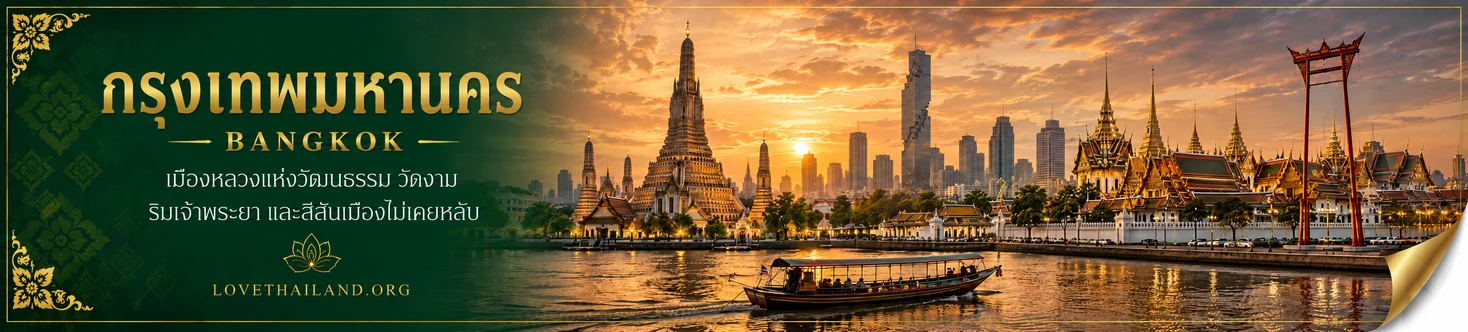
Bangkok
Slogan : God created bangkok, central government, royal palace and temple so beautiful, the capital city of thailand.
Bangkok is the capital city of Thailand and one of the most important metropolitan areas in Southeast Asia in terms of economy, politics, culture, and tourism. The city was officially established in 1782 when King Rama I founded Rattanakosin as the new capital, laying the foundation for Bangkok to become the center of the nation up to the present day.
If explained in the simplest terms, Bangkok is a city that brings everything together in one place. From royal palaces, world-renowned temples, and modern skyscrapers to international business districts, traditional markets, and globally recognized street food, the city caters to all types of travelers—from history enthusiasts and food lovers to shoppers and nightlife seekers.
The key highlight of Bangkok is its seamless blend of “past” and “present.” The Rattanakosin Island area preserves traditional architecture and cultural heritage, while districts like Sukhumvit, Silom, and Sathorn represent the modern side of the city, filled with office buildings, luxury malls, and five-star hotels.
Bangkok consistently ranks among the most visited cities in the world due to its diversity in attractions, cuisine, culture, and transportation convenience, making it a true “Global Destination.”
History of Bangkok The origins of Bangkok began after the fall of Ayutthaya and the establishment of Thonburi. During the reign of King Taksin, Thonburi served as the capital. However, due to spatial and strategic limitations, King Rama I decided to relocate the capital to the eastern bank of the Chao Phraya River.
This area featured a natural river bend that provided strong defensive advantages, along with the ability to dig canals for additional protection. This led to the formation of “Rattanakosin Island,” which became the core of early Bangkok.
The construction of the Grand Palace and Wat Phra Kaew marked the heart of the city’s establishment, involving labor from across the country and the implementation of a structured urban planning system, which laid the groundwork for long-term urban development.
In the early Rattanakosin period, Bangkok focused primarily on defense and religion. Later, during the reigns of King Rama IV and King Rama V, the city underwent modernization, including road construction, adoption of Western technology, and opening up to international trade.
In the modern era, Bangkok has grown rapidly into a metropolis with a population of over 10 million people and serves as the economic center of Thailand with the highest GDP contribution in the country.
Geography and Urban Structure Bangkok is located on the Chao Phraya River delta, with an average elevation of only 1–2 meters above sea level. This makes the city prone to flooding, but it also features an extensive canal system that aids drainage and serves as a unique characteristic of the city.
In the past, Bangkok was known as the “Venice of the East” due to its extensive network of canals used for transportation. Although roads have largely replaced waterways, canals still play an important role in certain areas and remain key tourist attractions.
The urban structure of Bangkok can be divided into several zones, including the Old Town (Phra Nakhon), Central Business District (CBD), residential areas, and suburban zones, reflecting the city’s expansion over time.
Economy of Bangkok Bangkok is the economic hub of Thailand, contributing the largest share of the country’s GDP. Key industries include finance, tourism, retail, technology, and services.
Major economic districts such as Silom, Sathorn, and Asok are home to multinational corporations, banks, and global organizations, while Siam and Ratchaprasong serve as major retail and tourism centers.
The tourism sector is one of the main drivers of Bangkok’s economy, attracting both domestic and international visitors year-round and generating significant revenue for the city.
Culture and Identity of Bangkok Bangkok is a city rich in cultural diversity and depth, particularly in traditional Thai culture, which is still evident in temples, royal ceremonies, and daily life.
Wat Phra Kaew, Wat Pho, and Wat Arun Ratchawararam represent world-class Thai art and architecture, while historic communities such as Yaowarat and Banglamphu reflect the city’s cultural diversity.
Bangkok is also a hub for contemporary art, music, fashion, and modern culture, making the city vibrant and dynamic at all times.
Food Scene in Bangkok is one of the city’s strongest identities and a major reason why travelers from around the world visit. Bangkok is widely recognized as the “Street Food Capital of the World,” offering a wide range of food options from roadside stalls to Michelin-starred restaurants.
Popular Thai dishes in Bangkok include Pad Thai, Tom Yum Goong, Green Curry, Hainanese Chicken Rice, and Som Tam, which are widely available in markets and restaurants. The city also offers a full range of international cuisines, including Japanese, Korean, Chinese, and European, reflecting its global nature.
Top food destinations include Yaowarat (Chinatown), famous for its legendary street food, Banthat Thong Road, which is trending among food lovers, and Sukhumvit, known for its international restaurants and modern cafés.
Chatuchak Market is another major landmark for food and shopping, featuring over 10,000 shops across more than 100,000 square meters, where visitors can find food, goods, and souvenirs in one place.
Major Festivals and Traditions in Bangkok Bangkok serves as the center of national celebrations and important cultural events in Thailand, with festivals taking place throughout the year.
The Songkran Festival in Bangkok is one of the largest celebrations, especially in areas such as Khao San Road, Silom, and Sanam Luang, where both Thai and international tourists gather in large numbers.
Loy Krathong is another major festival held along the Chao Phraya River and in public parks across the city, such as Lumpini Park and Asiatique. The event creates a beautiful atmosphere and reflects traditional Thai culture clearly.
In addition, there are important royal ceremonies such as coronations and royal birthday celebrations, which reflect the close relationship between the monarchy and the Thai people.
Lifestyle and Nightlife Bangkok is a city that never sleeps, offering vibrant activities 24 hours a day, especially at night when the city comes alive with night markets, bars, restaurants, and entertainment venues.
Popular areas such as Sukhumvit, Thonglor, Ekkamai, and Silom are home to world-class bars, fine dining restaurants, and well-known clubs. Meanwhile, night markets such as Asiatique and the Train Night Market provide a more relaxed atmosphere for visitors.
Top Tourist Attractions in Bangkok Bangkok offers a wide range of attractions that cater to all interests, including history, religion, culture, and entertainment.
The Grand Palace and Wat Phra Kaew are the most important landmarks in Thailand, showcasing world-class Thai art and architecture. Wat Pho is home to one of the largest reclining Buddha statues in the country, while Wat Arun Ratchawararam stands as an iconic riverside symbol of Bangkok.
For shopping enthusiasts, Bangkok features major shopping malls such as Siam Paragon, CentralWorld, and ICONSIAM, which house global brands and premium retail experiences.
Transportation in Bangkok Bangkok’s transportation system is diverse and covers most parts of the city, making travel convenient and efficient.
The BTS Skytrain and MRT subway are the primary modes of transport, connecting key areas such as Siam, Silom, Chatuchak, and Asok. Additionally, buses, taxis, and ride-hailing apps are widely available.
Water transportation, such as the Chao Phraya Express Boat, is another excellent option that helps avoid traffic while offering scenic views of the city along the river.
Overall Summary of Bangkok Bangkok is a highly diverse city in terms of culture, economy, cuisine, and tourism. It caters to all types of travelers and continues to evolve as a global metropolis.
Bangkok Festival Calendar 2026
| Festival | Date | Time | Location | Address | Highlights |
| Songkran – Khao San Road | 13–15 April 2026 | 10:00 – 22:00 | Khao San Road, Phra Nakhon | Talat Yot, Phra Nakhon, Bangkok | World-famous water festival with international tourists |
| Songkran – Silom | 13–15 April 2026 | 11:00 – 21:00 | Silom Road | Bang Rak, Bangkok | Business street transforms into a massive water zone |
| Loy Krathong – Chao Phraya River | November 2026 | 18:00 – 22:00 | Asiatique / Rama VIII Bridge | Charoen Krung Road, Bang Kho Laem | Riverside atmosphere with fireworks and floating lanterns |
| Chinese New Year – Yaowarat | Jan–Feb 2026 | 16:00 – 23:00 | Yaowarat Road | Samphanthawong, Bangkok | Dragon parades, Chinese cuisine, vibrant night lights |
| New Year Countdown – CentralWorld | 31 December 2026 | 18:00 – 00:30 | CentralWorld | Pathum Wan, Bangkok | World-class countdown with concerts and fireworks |
3–5 Day Bangkok Itinerary (Detailed Plan)
| Day | Location | Area | Highlights |
| Day 1 | Grand Palace + Wat Phra Kaew | Phra Nakhon | World-class landmark and Thai heritage center |
| Day 2 | Wat Arun + Wat Pho + River Cruise | Thonburi / Old Town | River views and iconic temples |
| Day 3 | Chatuchak + Siam + CentralWorld | Chatuchak / Pathum Wan | Shopping, fashion, cafés |
| Day 4 | Yaowarat + Night Market | Samphanthawong | World-famous street food |
| Day 5 | ICONSIAM + Asiatique | Khlong San / Bang Kho Laem | Riverfront shopping and nightlife |
Top 10 MUST VISIT Places in Bangkok
| No. | Place | Area | Highlights |
| 1 | Grand Palace | Phra Nakhon | Royal landmark of Thailand |
| 2 | Wat Phra Kaew | Phra Nakhon | Home of the Emerald Buddha |
| 3 | Wat Arun | Thonburi | Iconic riverside temple |
| 4 | Wat Pho | Phra Nakhon | Giant reclining Buddha |
| 5 | Khao San Road | Phra Nakhon | Backpacker hub |
| 6 | Chatuchak Market | Chatuchak | Largest market in Thailand |
| 7 | Yaowarat | Samphanthawong | Famous street food district |
| 8 | ICONSIAM | Khlong San | Luxury riverside mall |
| 9 | Lumpini Park | Pathum Wan | Central city park |
| 10 | CentralWorld | Pathum Wan | Mega shopping complex |
Bangkok Overview Summary Table
| Category | Details |
| City Name | Bangkok |
| City Type | Capital city and economic, political, cultural, and tourism hub of Thailand |
| Founded | 1782 (Rattanakosin Era) |
| Geography | Chao Phraya River basin, low-lying area with canal networks |
| Economy | Thailand’s main economic hub with strong tourism, finance, and service sectors |
| Culture | Blend of traditional Thai culture and modern lifestyle |
| Food | World-famous street food and international cuisine |
| Main Attractions | Grand Palace, Wat Arun, Wat Pho, ICONSIAM |
| Transport | BTS, MRT, buses, boats, taxis |
| Best Time to Visit | November – February |
| Overall | A global city offering diverse experiences in one destination |
Frequently Asked Questions (FAQ)
Q: What makes Bangkok unique for travelers?
A: Bangkok stands out for its incredible diversity, offering royal palaces, historic temples, world-class shopping, vibrant street food, large markets, and exciting nightlife—all within one city.
Q: Where should first-time visitors go in Bangkok?
A: First-time visitors should start with the Old Town area, including the Grand Palace, Wat Phra Kaew, Wat Pho, and Wat Arun, before exploring areas like Yaowarat, Siam, and riverside districts.
Q: How many days should I spend in Bangkok?
A: A stay of 3–5 days is ideal to explore major attractions, food districts, markets, shopping areas, and riverside experiences.
Q: What is the best way to get around Bangkok?
A: The BTS and MRT are the most convenient options, supplemented by river boats and taxis for areas not directly connected by rail.
Q: What should I wear when visiting temples in Bangkok?
A: Visitors should dress modestly, with covered shoulders and knees, avoiding overly casual clothing such as sleeveless tops or short shorts.
Q: When is the best time to visit Chatuchak Market?
A: The best time is during weekends when the market is fully open, preferably in the morning to avoid heat and crowds.
Q: Which area is best for food lovers?
A: Yaowarat is the top destination for street food, while Sukhumvit and Thonglor offer modern dining and international cuisine.
Q: Can Bangkok be visited year-round?
A: Yes, Bangkok is a year-round destination, though cooler months from November to February are the most comfortable for sightseeing.
Q: Is Bangkok suitable for families and international travelers?
A: Yes, Bangkok is suitable for all types of travelers, including families, couples, solo travelers, and international visitors, thanks to its wide range of attractions and facilities.
Bangkok Map

 Art, Culture and Heritage
 Historical Sites and Monuments(3)
 Landmarks and Memorials(23)
 Royal Palace(13)
 Art, Craft Centres, Tradition(35)
 Museums(59)
 Historic Homes and Cities(3)
 Art Gallery(16)
 Educational Places
 Museum for Study(6)
 Library(4)
 Places of Worship
 Temple(72)
 Church(2)
 Mosque(67)
 Other Sacred Sites(8)
 Research and Development
 Royal Project(1)
 Suburban Living
 Village, Community(5)
 Local Market(9)
 Floating Market(2)
 Nature and Wildlife
 River, Canal(3)
 Bays and Beaches(1)
 Other natural attractions(1)
 Entertainment and Agricultural
 Zoos and Aquariums(4)
 Animal camps and shows(5)
 Stadium(9)
 Farms, Parks and Ecotourism(20)
 Amusement Park(1)
 Waterpark(1)
 Theater(7)
 Cinema(1)
 Shopping
 Shopping and Night Market(20)
 Department Store(7)
 Spas and Wellness
 Spas and Wellness(1)
 Restaurant
 Michelin Star(5)
 Accommodation
 Hotel(3)
 Call Customer Service in Tourism
 Call Customer Service in Tourism(1)
 Travel Articles, Recipes
 Travel Review, Food Review(21)
 Royal Thai Desserts and Recipes(56)


