
lovethailand home >North Travel Attractions
> Mae Hong Son Travel Attractions
TL;DR: A quick overview of attractions in Mae Hong Son, plus planning details, access, and key travel highlights.
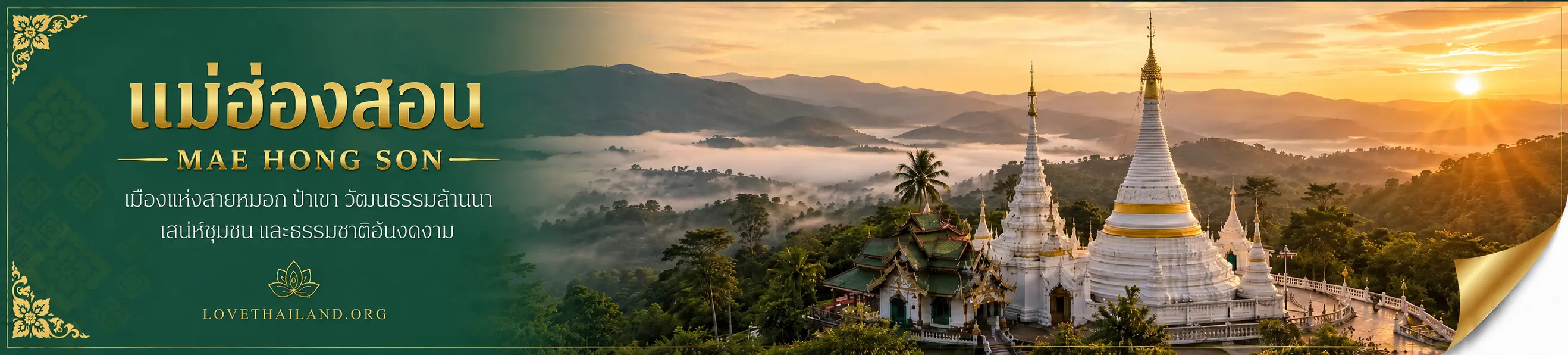
Mae Hong Son
Slogan : Mists thoughout the three seasons, the Kong Mu (Monastery) that scrapes the sky, verdant forests, gentle people, beautiful customs, renowned land of sunflowers.
Mae Hong Son Province is one of the most distinctive provinces in Thailand. Located in the upper northern region, it shares a border with Myanmar and is continuously surrounded by complex mountain ranges. As a result, most of its terrain consists of high mountains and dense forests, making it one of the most naturally abundant provinces in the country.
Because of its rugged mountainous landscape, Mae Hong Son has earned the nickname “The City of Three Mists,” as mist covers the province almost all year round, whether in summer, the rainy season, or winter. This creates a cool, refreshing, and uniquely romantic atmosphere that clearly sets it apart from other northern provinces.
Beyond its natural beauty, Mae Hong Son is also remarkable for its ethnic diversity. It is home to Shan, Karen, Lahu, Lisu, and other hill tribe communities that have continued to preserve their traditional ways of life, culture, and customs with remarkable strength. This gives the province a distinctive charm in both lifestyle and cultural richness.
Historically, before the Rattanakosin period, Mae Hong Son was primarily a forested area without formal administration. Shan people from across the border in Myanmar migrated into the area seasonally for farming and settlement. At that time, the region mainly served as a military passage route for Burmese armies moving toward Ayutthaya and northern Thai cities.
Later, in 1890 during the reign of King Chulalongkorn (Rama V), a new administrative division was established by combining Mae Hong Son, Khun Yuam, Mueang Yuam (Mae Sariang), and Pai into one area called the “Western Chiang Mai Region,” marking the starting point of administrative development in this territory.
In 1903, the administrative office was moved to Mueang Yuam, and in 1910 the area was renamed the “Northern Payap Region.” The administrative center was later relocated to Mae Hong Son.
During the reign of King Vajiravudh (Rama VI), Mae Hong Son was officially elevated to provincial status and became the Mae Hong Son Province known today.
Mae Hong Son is now considered one of the most important tourism destinations in northern Thailand. With its beautiful mountains, sea of mist, waterfalls, and rivers, together with cultural attractions and traditional ways of life that remain authentically preserved, the province continues to attract both Thai and international travelers.
The province’s major attractions are spread across several districts. Pai offers the atmosphere of a small bohemian-style town. Mae Sariang is peaceful and full of natural beauty. Khun Yuam holds historical significance related to World War II. Mae Hong Son town serves as the provincial center and is home to several important landmarks.
One of the unique charms that makes Mae Hong Son different from other provinces is the journey itself, especially along Highway 1095, which connects Chiang Mai to Pai and Mae Hong Son. With more than 1,800 curves, it is considered one of the most famous routes for adventure travelers.
Getting There Travelers can reach Mae Hong Son in several ways, whether by driving from Chiang Mai, which takes around 5–7 hours, or by flying to Mae Hong Son Airport or Pai Airport and continuing by road to the town center and other attractions.
Mae Hong Son is also well known for its local cuisine, especially Shan-style dishes such as Khao Soi, Khanom Jeen Nam Ngiao, and other traditional foods with distinctive flavors, as well as fresh local ingredients from the surrounding natural environment.
In addition, the province hosts interesting festivals and traditions throughout the year, such as the Poy Sang Long Festival, Loy Krathong celebrations, and winter tourism festivals, all of which genuinely reflect the culture and way of life of local people.
For those who love nature-based travel, Mae Hong Son is considered one of the best provinces in Thailand. It still retains rich forest areas, clean air, and beautiful scenery in every season, especially during winter when the sea of mist and cool temperatures last all day.
In terms of cultural tourism, visitors can closely experience the lifestyles of different ethnic groups and visit temples featuring distinctive Shan-style architecture, such as Wat Phra That Doi Kong Mu, one of the province’s most important symbols.
Mae Hong Son is therefore not just another tourist province, but a place where nature, culture, and history come together in perfect balance. It is ideal for travelers who want to escape the crowds and experience genuine peace and calm.
Before traveling, visitors should prepare carefully, especially by booking accommodation in advance during the peak season, bringing motion sickness medicine for the winding roads, and carrying enough photography equipment, as some remote areas may not offer easy access to additional supplies.
For another very popular destination, Pang Ung, visitors must request permission in advance before entering the area, as the number of visitors per day is limited in order to maintain the natural balance of the site.
With all of these elements combined, Mae Hong Son Province is a destination that fully satisfies nature lovers, cultural travelers, and adventure seekers all within a single province.
Mae Hong Son Tourism Festivals 2026
| Month | Festival | Venue | Highlights |
| January | Winter Tourism Festival | Mae Hong Son Town / Pai | Sea of mist, cold weather, winter flowers |
| February | Bua Tong Blooming Festival (Late Season) | Doi Mae U-Kho, Khun Yuam District | Golden flower fields covering the mountain |
| March–April | Poy Sang Long Festival | Temples in Mae Hong Son Town / Pai | Colorful Shan novice ordination ceremony |
| April | Songkran Festival | Town center / Pai District | Lanna-style water celebration + Shan culture |
| July | Buddhist Lent | Wat Phra That Doi Kong Mu | Traditional Lanna religious rituals |
| October–November | Bua Tong in Full Bloom | Doi Mae U-Kho | A national-level seasonal highlight |
| November | Loy Krathong | Jong Kham Lake / Wat Chong Klang | Thousands of floating krathongs reflecting on the water |
| December | Winter Tourism Festival | Pang Ung / Pai / Various mountain areas | Dense mist and cool weather |
Mae Hong Son 3–5 Day Travel Plan (Practical Route)
| Day | Route | Attractions | Highlights |
| Day 1 | Chiang Mai → Pai | 1. Pai 2. Pai Walking Street 3. Kong Lan | A trendy little town |
| Day 2 | Pai | 1. Pang Ung 2. Ban Rak Thai 3. Yun Lai Viewpoint | Mist + lake views |
| Day 3 | Pai → Mae Hong Son Town | 1. Wat Phra That Doi Kong Mu 2. Jong Kham Lake 3. Wat Chong Klang | City landmarks |
| Day 4 | Town → Khun Yuam | 1. Doi Mae U-Kho 2. Mae Surin Waterfall | National-level natural attractions |
| Day 5 | Mae Sariang | 1. Mae Sariang 2. Wat Phra That Chom Mon | Peaceful town, slow-life atmosphere |
Mae Hong Son MUST VISIT 15 Attractions
| No. | Place | Zone | Highlight |
| 1 | Pai | Pai | A trendy little town |
| 2 | Pang Ung | Mueang | The Switzerland of Thailand |
| 3 | Ban Rak Thai | Mueang | Yunnan Chinese village |
| 4 | Doi Mae U-Kho | Khun Yuam | Wild sunflowers |
| 5 | Wat Phra That Doi Kong Mu | Mueang | Provincial landmark |
| 6 | Jong Kham Lake | Mueang | Town scenery |
| 7 | Wat Chong Klang | Mueang | Shan architecture |
| 8 | Mae Surin Waterfall | Khun Yuam | The tallest waterfall |
| 9 | Tham Pla | Mueang | Nature attraction |
| 10 | Su Tong Pae Bridge | Mueang | Long bamboo bridge |
| 11 | Tham Lod Cave | Pai | Bamboo rafting |
| 12 | Yun Lai Viewpoint | Pai | Sea of mist |
| 13 | Kong Lan | Pai | Thailand’s mini grand canyon |
| 14 | Mae Sariang | Mae Sariang | Peaceful town |
| 15 | Wat Phra That Chom Mon | Mae Sariang | River view |
Frequently Asked Questions (FAQ)
Q: What is Mae Hong Son famous for?
A: Mae Hong Son is famous for its rich natural beauty, sea of mist, rugged mountain scenery, and diverse ethnic cultures. It is also known as the “City of Three Mists” because mist covers the province throughout the year.
Q: When is the best time to visit Mae Hong Son?
A: The best time to visit is from October to February, which is the cool season. The weather is pleasant and there is a high chance of seeing clear sea-of-mist views, especially from November to January, which is considered the peak period.
Q: How many curves are there on the road to Mae Hong Son?
A: The route from Chiang Mai to Mae Hong Son, especially along Highway 1095, has more than 1,800 curves. Travelers should prepare accordingly, especially those who are prone to motion sickness.
Q: What are the must-visit attractions in Mae Hong Son?
A: The most popular places include Pang Ung, Ban Rak Thai, Doi Mae U-Kho, Pai, Wat Phra That Doi Kong Mu, Su Tong Pae Bridge, and Tham Lod Cave, all of which are considered top landmarks of the province.
Q: Do I need to book Pang Ung in advance?
A: Yes. Advance booking is required because the number of visitors allowed each day is limited in order to reduce environmental impact. Travelers should contact the responsible authority before visiting.
Q: How many days are recommended for a Mae Hong Son trip?
A: In general, 3–5 days is recommended to fully explore Pai, Mae Hong Son town, and major natural attractions such as Pang Ung, Doi Mae U-Kho, and Mae Sariang.
Q: What is the weather like in Mae Hong Son?
A: The overall climate is cooler than in many other northern provinces. Winter is cold and often misty, while the rainy season is lush and green, with beautiful waterfalls.
Q: Is it convenient to travel to Mae Hong Son?
A: It is accessible by both road and air, but the mountain roads are winding and require careful driving. Flying to Mae Hong Son Airport is a more convenient option for many travelers.
Q: Should I book accommodation in advance?
A: Yes. Booking in advance is recommended, especially during winter and festival periods when tourist numbers are high, particularly in Pai and other popular areas.
Q: What local foods are worth trying in Mae Hong Son?
A: Local cuisine in Mae Hong Son is heavily influenced by Shan traditions, with dishes such as Khao Soi, Nam Ngiao noodles, and traditional local meals made from regional ingredients, all offering distinctive flavors.
Mae Hong Son Map

 Art, Culture and Heritage
 Historical Sites and Monuments(1)
 Landmarks and Memorials(1)
 Art, Craft Centres, Tradition(10)
 Museums(3)
 Educational Places
 Educational Gardens, Farm(1)
 Places of Worship
 Temple(81)
 Other Sacred Sites(1)
 Research and Development
 Royal Project(4)
 Suburban Living
 Village, Community(19)
 Local Market(4)
 Nature and Wildlife
 National Parks and Marine Reserves(5)
 Mountain (Doi)(5)
 Dam, Reservoir, Lake(2)
 Waterfalls(12)
 Hot Springs(6)
 Caves(13)
 Flower Field(2)
 River, Canal(3)
 Other natural attractions(1)
 Entertainment and Agricultural
 Farms, Parks and Ecotourism(2)
 Shopping
 Shopping and Night Market(1)
 Travel Articles, Recipes
 Travel Review, Food Review(1)


