
lovethailand home >South Travel Attractions
> Nakhon Si Thammarat Travel Attractions
TL;DR: A quick overview of attractions in Nakhon Si Thammarat, plus planning details, access, and key travel highlights.
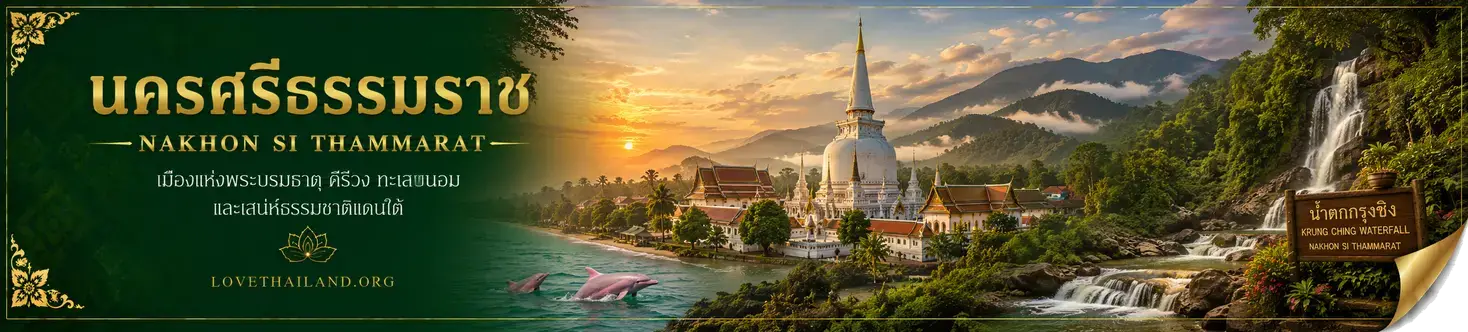
Nakhon Si Thammarat
Slogan : A historical town, the golden Phra That, plentiful minerals, three-metal nielloware, numerous temples, abundant shellfish.
Nakhon Si Thammarat is one of the most important provinces in southern Thailand, recognized for its historical, religious, cultural, and natural significance. With a history spanning over 1,800 years, it is not merely a travel destination but a “center of civilization” that clearly reflects the roots of society on the southern Thai peninsula.
The province possesses a distinct identity that sets it apart from other tourist destinations. It is not defined solely by its beaches or mountains, but rather by its role as a “city of faith,” where Buddhism forms the core of daily life, shaping people, traditions, and culture that have been continuously preserved until today.
In a broader perspective, the charm of Nakhon Si Thammarat can be categorized into four key dimensions: history, religion, nature, and local way of life. These elements combine to form one of the most well-rounded provinces in southern Thailand. Geographically, it is among the larger provinces in the country, featuring diverse landscapes ranging from the Gulf of Thailand coastline and mangrove forests to the Nakhon Si Thammarat mountain range stretching from north to south. At its highest point stands Khao Luang, the tallest peak in southern Thailand and a vital source of water for the region.
This geographical diversity contributes to a rich ecosystem that includes tropical forests, waterfalls, streams, and fertile agricultural land. As a result, Nakhon Si Thammarat has become a key producer of important resources such as rubber, palm oil, and southern fruits. Historically, the province has played a significant role since prehistoric times, as evidenced by archaeological findings such as stone tools, bronze drums, and traces of ancient settlements found across various districts.
Between the 17th and 19th Buddhist centuries, Nakhon Si Thammarat reached its peak prosperity under the rule of the Sri Thammasokaraj dynasty. During this period, it became a major trade and religious center of the Thai peninsula. One of its defining characteristics was its status as a “port city” connecting the East and the West, where goods from India, China, and the Indonesian archipelago passed through, resulting in deep cultural integration.
The province is also home to sacred Buddha relics, which have long served as a spiritual center for Buddhists in southern Thailand. This religious importance attracted people from surrounding regions and contributed to the city’s expansion. A key historical feature of this era was the administrative system known as the “Twelve Zodiac Cities,” which demonstrated the city’s strong political and economic influence.
Although the city experienced periods of decline due to wars, invasions, and epidemics, it later regained prominence during the Ayutthaya period as a major southern administrative center. Its importance continued into the Rattanakosin era. In terms of culture, Nakhon Si Thammarat is a major hub of traditional arts such as shadow puppetry (Nang Talung), Manorah dance, and Nielloware craftsmanship, all of which are recognized at both national and international levels.
Nang Talung and Manorah are not merely forms of entertainment; they reflect beliefs, ways of life, and the wisdom of southern communities. Another important cultural identity is “Nakhon Nielloware,” a highly intricate craft involving blackened designs on silver or gold, which has gained international recognition as a valuable cultural product.
In terms of cuisine, Nakhon Si Thammarat is well known for authentic southern Thai food, characterized by bold, spicy, and intense flavors. Signature dishes include Gaeng Leuang (southern sour curry), Kua Kling, shrimp paste chili dip, and fresh seafood from the Gulf of Thailand. Local desserts such as Khanom La, Khanom Phong, and Khanom Ba also play a significant role, especially during the important Sart Duean Sip festival.
The Sart Duean Sip festival is one of the most significant traditions in the province, centered on making merit and dedicating offerings to ancestors, reflecting gratitude and strong social bonds. Another important ritual is the Hae Pha Khuen That ceremony, which involves wrapping a sacred cloth around the pagoda and represents the deep faith of the local people.
Tourism in Nakhon Si Thammarat offers a wide range of destinations, from important temples such as Wat Phra Mahathat Woramahawihan to natural attractions like Khao Luang National Park, Kiriwong Village, and Khanom Beach. Kiriwong is often regarded as having one of the best air qualities in Thailand and serves as a model for sustainable community-based tourism, while Khanom is known for its rare pink dolphins, making it one of the province’s most popular experiences.
Getting There Nakhon Si Thammarat can be accessed conveniently by air, train, and road. The province has its own airport with daily flights from Bangkok, and transportation within the province is well-connected, allowing easy access to various districts.
Economically, Nakhon Si Thammarat plays a vital role in the southern region, particularly in agriculture, processing industries, and regional trade. Its large land area and abundant natural resources make it a major producer of raw materials in Thailand.
Key agricultural products include rubber, palm oil, and tropical fruits such as durian, mangosteen, and longkong, which generate substantial income for both the province and the country. Nakhon Si Thammarat durian, in particular, has gained increasing popularity in international markets. The fisheries sector is also significant, especially in coastal areas such as Pak Phanang and Hua Sai, which are important sources of seafood including shrimp, shellfish, crabs, and fish.
The combination of agriculture and fisheries contributes to strong food security and supports the development of gastronomy tourism. In terms of tourism development, the province is transitioning from a “transit city” into a true “destination,” particularly for travelers seeking authentic cultural and natural experiences.
In cultural terms, Nakhon Si Thammarat is a birthplace of distinctive performing arts such as Manorah, which combines dance, music, and spiritual beliefs. Manorah is not only a performance but also a ritual connected to traditional teachers and spiritual heritage that is still practiced in many communities today.
Another significant art form is Nang Talung, a shadow puppet performance that blends entertainment with social reflection, maintaining its relevance within local communities. In craftsmanship, Nielloware remains a highly valued art form that requires exceptional skill and experience, representing the transmission of local wisdom across generations.
From a natural perspective, the province offers year-round travel opportunities. The rainy season is ideal for experiencing waterfalls and misty landscapes, while the dry season is perfect for beach tourism. Khao Luang National Park stands out as a major conservation area with hiking trails, waterfalls, and panoramic viewpoints. Kiriwong Village exemplifies successful community management through sustainable tourism and environmental preservation, while Khanom offers peaceful coastal experiences and the unique opportunity to see pink dolphins.
Overall, Nakhon Si Thammarat has strong potential to become a high-quality destination that caters to diverse traveler interests. Its combination of history, religion, culture, and nature creates a comprehensive travel experience that is difficult to replicate elsewhere.
From a culinary perspective, the province clearly represents the identity of southern Thai cuisine. The food is known for its bold, spicy flavors and heavy use of herbs and spices such as turmeric, pepper, garlic, and shrimp paste, which not only enhance flavor but also reflect local climate and lifestyle. Dishes like Gaeng Leuang and Kua Kling exemplify the balance of flavors and the richness of southern cooking traditions.
Local desserts such as Khanom La, Khanom Phong, and Khanom Ba are integral to the Sart Duean Sip festival, symbolizing offerings to ancestors. Food in Nakhon Si Thammarat is therefore more than sustenance—it is a cultural language that conveys beliefs, traditions, and history.
Religiously, the province has long been a major Buddhist center in southern Thailand, particularly due to the presence of sacred relics enshrined at Wat Phra Mahathat Woramahawihan. The temple serves not only as a tourist attraction but as the spiritual heart of the city, connecting people to their faith through rituals and ceremonies held throughout the year.
In experiential tourism, the province offers flexible travel routes that cater to different interests. Pilgrimage routes focus on temples and merit-making activities, nature routes explore forests and waterfalls, and coastal routes highlight beaches and marine life such as pink dolphins. This flexibility is a major strength that allows the province to appeal to a wide range of travelers.
Seasonally, travel is possible year-round, with each season offering a unique experience. The fruit season from July to August is particularly suitable for agro-tourism, especially in areas like Kiriwong, while the Sart Duean Sip festival period offers deep cultural immersion.
In conclusion, Nakhon Si Thammarat is not just a tourist destination but a “city of stories” that seamlessly connects the past, present, and future, making it one of the most worthwhile places to experience in Thailand.
Nakhon Si Thammarat Annual Festivals 2026
| No. | Festival | Period | Location | Address |
| 1 | Hae Pha Khuen That Festival | February | Wat Phra Mahathat Woramahawihan | Nai Mueang Subdistrict, Mueang Nakhon Si Thammarat District |
| 2 | Makha Bucha Cloth Wrapping Ceremony | February | Wat Phra Mahathat | Mueang Nakhon Si Thammarat District |
| 3 | Durian and Fruit Festival | July – August | Lan Saka / Kiriwong | Kam Lon Subdistrict, Lan Saka District |
| 4 | Sart Duean Sip Festival | September – October | Province-wide | Nakhon Si Thammarat |
| 5 | Nang Talung & Manorah Festival | Throughout the Year | Multiple Districts | Nakhon Si Thammarat |
3–5 Day Travel Plan in Nakhon Si Thammarat
| Day | Place | Highlight | Location |
| 1 | Wat Phra Mahathat Woramahawihan | Sacred Relics, Spiritual Center | Mueang District |
| 1 | National Museum | City History | Mueang District |
| 2 | Kiriwong Village | Best Air Quality, Local Lifestyle | Lan Saka District |
| 2 | Phrom Lok Waterfall | Large Scenic Waterfall | Phrom Khiri District |
| 3 | Khanom Beach | Pink Dolphins | Khanom District |
| 3 | Ao Thong Yee | Peaceful Beach | Khanom District |
| 4 | Morning Market | Local Food Experience | Mueang District |
| 5 | Pak Phanang | River Life, Fishing Community | Pak Phanang District |
Top 10 Must-Visit Attractions in Nakhon Si Thammarat
| No. | Attraction | Highlight | Location |
| 1 | Wat Phra Mahathat Woramahawihan | Sacred Relic Pagoda | Mueang |
| 2 | Kiriwong Village | Best Air Quality | Lan Saka |
| 3 | Khanom Beach | Pink Dolphins | Khanom |
| 4 | Phrom Lok Waterfall | Large Waterfall | Phrom Khiri |
| 5 | Khao Luang | Highest Peak | Nakhon Si Thammarat |
| 6 | Wat Chedi (Ai Khai) | Famous Sacred Site | Sichon |
| 7 | Morning Market | Local Food | Mueang |
| 8 | Pak Phanang | River Community | Pak Phanang |
| 9 | Ao Thong Yee | Hidden Beach | Khanom |
| 10 | Nang Talung House | Southern Culture | Nakhon Si Thammarat |
Frequently Asked Questions (FAQ)
Q: Where is Nakhon Si Thammarat located?
A: Nakhon Si Thammarat is located in southern Thailand, along the Gulf of Thailand, and is one of the largest provinces in the region.
Q: What is Nakhon Si Thammarat famous for?
A: The province is famous for its long history, important Buddhist sites, traditional southern culture, Manorah dance, Nang Talung shadow puppetry, and authentic southern Thai cuisine.
Q: What are the must-visit places in Nakhon Si Thammarat?
A: Key attractions include Wat Phra Mahathat Woramahawihan, Khao Luang National Park, Kiriwong Village, Khanom Beach, and Pak Phanang.
Q: When is the best time to visit Nakhon Si Thammarat?
A: The province can be visited year-round. The fruit season from July to August is ideal for agro-tourism, while the dry season is suitable for beach travel.
Q: How can I travel to Nakhon Si Thammarat?
A: You can travel by air via Nakhon Si Thammarat Airport, by train from Bangkok, or by car using major highways connecting southern Thailand.
Q: What local food should I try in Nakhon Si Thammarat?
A: Popular dishes include Gaeng Leuang (southern sour curry), Kua Kling, shrimp paste chili dip, and local desserts such as Khanom La and Khanom Phong.
Nakhon Si Thammarat Map

 Art, Culture and Heritage
 Historical Sites and Monuments(9)
 Landmarks and Memorials(9)
 Royal Palace(1)
 Art, Craft Centres, Tradition(12)
 Museums(5)
 Educational Places
 Educational Gardens, Farm(2)
 Places of Worship
 Temple(44)
 Mosque(2)
 Other Sacred Sites(17)
 Research and Development
 Royal Project(2)
 Suburban Living
 Village, Community(8)
 Local Market(1)
 Floating Market(1)
 Nature and Wildlife
 National Parks and Marine Reserves(6)
 Mountain (Doi)(11)
 Dam, Reservoir, Lake(10)
 Waterfalls(43)
 Hot Springs(1)
 Caves(13)
 River, Canal(3)
 Bays and Beaches(29)
 Islands(2)
 Other natural attractions(3)
 Entertainment and Agricultural
 Farms, Parks and Ecotourism(3)
 Outdoor and Adventure Activities(4)
 Travel Articles, Recipes
 Travel Review, Food Review(5)
 Southern Food Menu, Southern Food Recipes(18)


