
lovethailand home >North Travel Attractions
> Lampang Travel Attractions
TL;DR: A quick overview of attractions in Lampang, plus planning details, access, and key travel highlights.
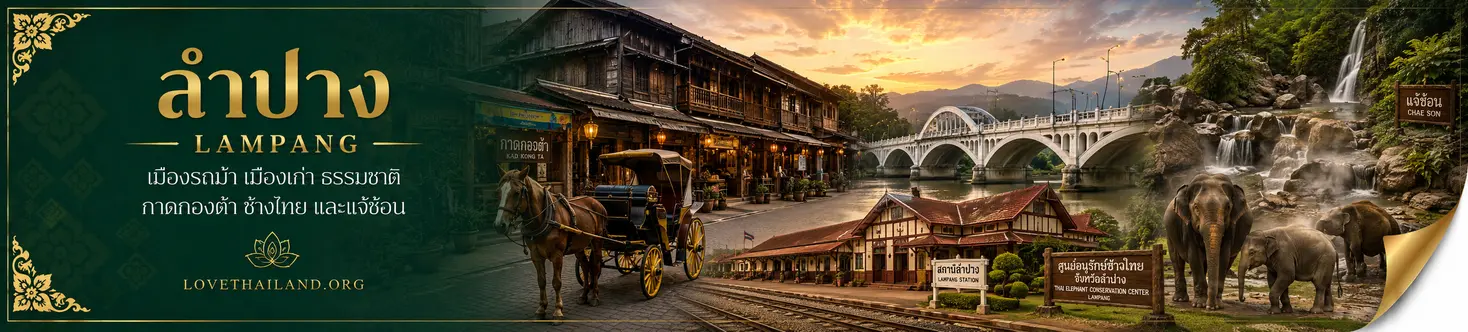
Lampang
Slogan : Coal is the best, famous chariot, earthenware is good, relics celebrated, practic elephant for useful.
Lampang, formerly known as Khelang Nakhon, was historically a twin capital alongside the Hariphunchai Kingdom. The rulers of both cities were twin sons of Queen Chamadevi, making Lampang one of the most important cultural and administrative centers in Northern Thailand. The province reflects the heritage of Lanna civilization and remains a place where history, culture, and identity continue to be preserved in a unique and authentic way.
Lampang is a province rich in traditions that have been passed down since ancient times. It is home to numerous temples, remarkable local architecture, and a way of life that remains simple yet meaningful. The province is well known for its iconic horse-drawn carriages, delicious cuisine, and a lifestyle deeply shaped by Northern Thai culture and traditions. Local customs and beliefs are closely tied to Buddhism, and the region’s culinary identity reflects both faith and local wisdom. As a result, Lampang has become one of the must-visit destinations in Northern Thailand, offering a distinctive experience that cannot be found elsewhere. One of its most famous products is white clay ceramics, especially the rooster-patterned bowls, which have become a symbolic representation of the province.
In addition to its cultural richness, Lampang also boasts abundant natural attractions that remain well preserved and visually stunning. The province is home to several national parks featuring waterfalls, caves, nature trails, and natural hot springs. These natural resources contribute to Lampang’s appeal as a travel destination, making it more than just a stopover city. Today, it has become a destination that travelers intentionally choose to explore and experience in depth.
Lampang is also an important historical city in the Lanna region with strong connections to the Hariphunchai Kingdom. The rulers of both cities were closely associated with Queen Chamadevi, reinforcing Lampang’s role as a long-standing cultural and political center. The city still reflects the identity of Northern Thailand, characterized by tranquility, simplicity, and a distinctive charm.
Today, Lampang successfully blends its historical past with modern life. The city preserves traditional Lanna architecture, valuable temples, and a unique local lifestyle that is increasingly rare in other major tourist cities in the North. The Wang River, which flows through the center of the city, has shaped historic communities and vibrant cultural neighborhoods that remain active today.
The province is widely recognized for its long-standing traditions, including religious ceremonies, merit-making festivals, and local cultural events. Traditional handicrafts also play a significant role, reflecting the wisdom and creativity of local communities. Among these, white clay ceramics stand out as a nationally recognized product, especially the famous “rooster-patterned bowls” that symbolize Lampang.
Another unique identity of Lampang is its use of horse-drawn carriages for tourism, making it the only province in Thailand where this tradition still exists in real use. Visitors can ride through the old town, visit temples, and experience a nostalgic atmosphere that connects the present with the past.
In terms of food, Lampang is a center of authentic Northern Thai cuisine, offering well-balanced flavors and rich culinary traditions. Popular dishes include Khao Soi, Nam Ngiao, Gaeng Hang Lay, and Sai Ua, all of which reflect influences from both Lanna and Burmese cultures. Each dish represents not only taste but also the beliefs and lifestyle of local people.
Nature in Lampang is abundant, with landscapes consisting of mountains, forests, and water resources. The province is home to several national parks, including Chae Son National Park, which features waterfalls, natural hot springs, caves, and trekking routes. These attractions make Lampang an excellent destination for nature lovers and adventure travelers.
Lampang offers a wide variety of attractions, ranging from Wat Phra That Lampang Luang, a prime example of authentic Lanna architecture, to Wat Chaloem Phra Kiat Phrachomklao Rachanusorn, located on a mountain peak. Kad Kong Ta Walking Street is another highlight, featuring historic buildings, local shops, and a nostalgic riverside atmosphere. These attractions have transformed Lampang into a destination where travelers should spend at least 2–4 days exploring.
The lifestyle of Lampang’s residents remains simple and charming. Communities maintain a friendly atmosphere, a slow-paced way of life, and a balanced relationship with nature. Visitors often feel relaxed and immersed in what can truly be described as the authentic Northern Thai experience.
Getting There Traveling to Lampang is convenient and accessible. Visitors can travel by car via Highway No. 1 (Phahonyothin Road) or Highway No. 11. Train services are available, with Lampang Railway Station serving as an important stop. Additionally, Lampang Airport provides domestic flight services, making travel easy and flexible.
For travelers planning their trip and wondering, “how many days should I spend in Lampang?” the recommended duration is 3–4 days. This allows enough time to explore the old town, important temples, natural attractions, and local communities without rushing. Planning ahead helps maximize travel efficiency, and the best time to visit is during the cool season or early rainy season when nature is at its most beautiful.
Travel tips for Lampang include starting your day early to avoid the midday heat, using horse carriage services for a unique experience, and visiting local markets in the evening to enjoy authentic Northern Thai food and shop for local souvenirs. These experiences provide a deeper understanding of the province and make the journey more memorable.
Annual Festivals in Lampang 2026
| Month | Festival Name | Description | Highlights |
| January | Mae Moh Tourism Festival | A seasonal tourism event featuring outdoor activities and scenic viewpoints around Mae Moh during the cool season | Cool weather, panoramic views, photography spots |
| February | Burmese Temple Festival | Cultural merit-making event reflecting the historical Burmese influence in Lampang | Unique cultural heritage and community traditions |
| March | Lampang Ceramic Fair | A major fair showcasing ceramics, pottery, and local handicrafts from across the province | Famous rooster bowls and ceramic products |
| April | Salung Luang Songkran Festival | Traditional Lanna New Year celebration with parades and cultural performances | Authentic Northern Thai Songkran experience |
| May | Relic Bathing Ceremony | Religious ceremony at major temples, symbolizing faith and blessings | Spiritual atmosphere and local rituals |
| June | Green Season Nature Travel | Ideal time to explore waterfalls and forests as nature becomes lush and vibrant | Fresh greenery and fewer crowds |
| July | Thip Chang Heritage Festival | Festival honoring Lampang’s historical hero with cultural and religious activities | Historical storytelling and local identity |
| August | Horse Carriage Carnival | Festival celebrating Lampang’s iconic horse-drawn carriages | Unique identity of Lampang |
| September | Late Rainy Season Travel | Perfect for visiting mountains and temples with misty landscapes | Scenic views and cool atmosphere |
| October | River Lantern Festival | Cultural riverside event with floating lanterns and local products | Nighttime ambiance and cultural charm |
| November | Loy Krathong (Sapao Festival) | Traditional floating lantern festival along Wang River | Beautiful night scenery and cultural experience |
| December | Winter Fair | Annual provincial fair featuring food, products, and performances | Festive atmosphere and local shopping |
3–5 Days Travel Plan in Lampang
| Day | Morning | Afternoon | Evening / Notes |
| Day 1 | Explore the old town, temples, and historical areas | Visit museums and enjoy a traditional horse carriage ride | Walk at Kad Kong Ta market, enjoy local food (08:00–21:00). Easy and relaxed travel day in the city area |
| Day 2 | Visit Wat Phra That Lampang Luang | Explore the Elephant Conservation Center | Watch sunset at the bridge and have dinner (07:30–19:30). Start early for best experience |
| Day 3 | Visit Chae Son National Park | Explore mountain temples and natural surroundings | Relax and return to accommodation (06:30–19:00). Long-distance travel day |
| Day 4 | Visit scenic mountain temples | Stop by dam or railway tunnel | Dinner and rest (06:00–20:00). Ideal day for photography and landscapes |
| Day 5 | Visit Mae Moh or Green Pool | Souvenir shopping and café stops | Return journey (08:00–17:00). Light and flexible schedule |
Top 15 Must-Visit Attractions in Lampang
| No. | Attraction | Highlights | Type | Location |
| 1 | Wat Phra That Lampang Luang | Iconic Lanna temple | Temple | Ko Kha |
| 2 | Ratsadaphisek Bridge | Historic white bridge | Landmark | City |
| 3 | Chae Son National Park | Hot springs & waterfalls | Nature | Mueang Pan |
| 4 | Kad Kong Ta | Historic market | Culture | City |
| 5 | Thai Elephant Conservation Center | Elephant sanctuary | Learning | Hang Chat |
| 6 | Ban Sao Nak | Teakwood house | Museum | City |
| 7 | Wat Phra Kaew Don Tao | Historic temple | Temple | City |
| 8 | Wat Chaloem Phra Kiat | Mountain pagodas | Viewpoint | Chae Hom |
| 9 | Kiu Lom Dam | Scenic lake | Nature | City |
| 10 | Mae Moh Mine | Panoramic viewpoint | Viewpoint | Mae Moh |
| 11 | Wat Pong Sanuk | Historic architecture | Temple | City |
| 12 | Khun Tan Tunnel | Railway tunnel | Historic | Mae Tha |
| 13 | Green Basin (Lom Phu Khiao) | Emerald water pool | Nature | Ngao |
| 14 | Wat Chong Kham | Burmese-style temple | Temple | Ngao |
| 15 | Horse Carriage Tour | Unique local transport | Experience | City |
Frequently Asked Questions (FAQ)
Q: How many days should I spend in Lampang?
A: 3–5 days is ideal to fully explore temples, nature, and local culture without rushing.
Q: What are the must-visit attractions in Lampang?
A: Key highlights include Wat Phra That Lampang Luang, Chae Son National Park, Kad Kong Ta, and the Elephant Conservation Center.
Q: What makes Lampang unique?
A: Lampang is the only province in Thailand that still uses horse-drawn carriages as real transportation.
Q: When is the best time to visit Lampang?
A: November to February offers the best weather, while the rainy season provides lush green scenery.
Q: How do I get to Lampang?
A: You can travel by car, train, or domestic flight via Lampang Airport.
Q: Is Lampang suitable for family travel?
A: Yes, it offers a mix of cultural, natural, and educational attractions suitable for all ages.
Q: What local food should I try?
A: Try Khao Soi, Nam Ngiao, Sai Ua, and Gaeng Hang Lay.
Q: What souvenirs should I buy in Lampang?
A: Ceramic products, especially rooster bowls, are the most famous local souvenirs.
Lampang Map

 Art, Culture and Heritage
 Historical Sites and Monuments(2)
 Landmarks and Memorials(5)
 Art, Craft Centres, Tradition(10)
 Museums(4)
 Historic Homes and Cities(1)
 Places of Worship
 Temple(86)
 Other Sacred Sites(9)
 Research and Development
 Royal Project(2)
 Suburban Living
 Village, Community(3)
 Local Market(2)
 Nature and Wildlife
 National Parks and Marine Reserves(6)
 Mountain (Doi)(4)
 Dam, Reservoir, Lake(11)
 Waterfalls(15)
 Hot Springs(1)
 Caves(12)
 Flower Field(1)
 River, Canal(1)
 Bays and Beaches(1)
 Other natural attractions(4)
 Entertainment and Agricultural
 Animal camps and shows(1)
 Farms, Parks and Ecotourism(2)
 Outdoor and Adventure Activities(2)
 Shopping
 Shopping and Night Market(2)
 Spas and Wellness
 Spas and Wellness(1)
 Travel Articles, Recipes
 Travel Review, Food Review(1)


