
lovethailand home >South Travel Attractions
> Phatthalung Travel Attractions
TL;DR: A quick overview of attractions in Phatthalung, plus planning details, access, and key travel highlights.
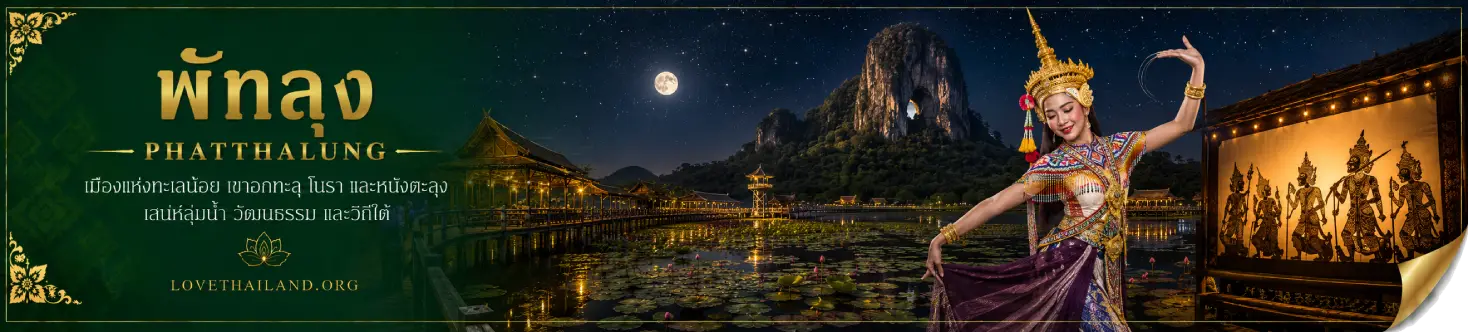
Phatthalung
Slogan : The city of Nora, rice fields, beauty waterfall and lake, Kao Aok Talu, hot springs.
Phatthalung Province is one of the key provinces in southern Thailand, distinguished by its unique identity in culture, way of life, and natural resources. It is widely known by the nicknames “Muang Lung” and “Khao Ok Thalu City,” reflecting both its geographical and cultural characteristics. Phatthalung is recognized as the birthplace of two of Thailand’s most iconic traditional performing arts: Manora (Nora dance) and Nang Talung (shadow puppetry). These art forms have been passed down for hundreds of years and continue to play an important role in the daily lives of local people.
Beyond its strong cultural identity, Phatthalung is also home to nationally significant natural resources. One of the most prominent is “Thale Noi,” a vast wetland and freshwater lake with exceptional ecological importance. Thale Noi serves as a habitat for a wide variety of water birds, including both resident and migratory species from overseas. As a result, it has become one of Thailand’s premier bird-watching destinations. Additionally, part of this wetland system, known as “Khuan Khi Sian Peat Swamp,” has been designated as Thailand’s first internationally recognized wetland site.
The geography of Phatthalung is notably diverse. The western part of the province is dominated by the Banthat Mountain Range, covered with dense tropical rainforest and serving as a crucial watershed area. In contrast, the eastern side consists of lowland plains extending toward Songkhla Lake, making it highly suitable for agriculture, particularly rice farming, as well as freshwater and brackish water fisheries. This diversity of terrain provides the province with mountains, waterfalls, forests, and extensive water bodies, all contributing to its ecological richness.
Another highlight of Phatthalung is its abundance of waterfalls, particularly along the Phatthalung–Trang route, where numerous waterfalls are located along the mountain range. These natural attractions clearly demonstrate the fertility and richness of the watershed forests in the region. Beyond their appeal as tourist destinations, these waterfalls also play a vital role as water sources that sustain local communities.
Phatthalung covers an area of approximately 3,425 square kilometers and has a long historical background dating back to prehistoric times. Evidence such as polished stone axes discovered in various locations indicates early human settlement. During the Srivijaya period (13th–14th Buddhist centuries), the region was significantly influenced by Indian culture. Archaeological findings, including clay votive tablets depicting Bodhisattvas and deities, provide strong evidence of religious and cultural prosperity during that era.
In the Ayutthaya period, Phatthalung was classified as a third-class city and served as one of the important southern administrative centers. Due to its proximity to the sea, the province frequently faced attacks from Malay pirates, which led to multiple relocations of the city for defensive purposes.
During the Rattanakosin period, Phatthalung continued to play a significant historical role. Under the reign of King Rama I, the province was elevated to a second-class city and participated in major historical events, including the Nine Armies War and the suppression of rebellions in the southern regions. These events highlight its importance as a strategic southern frontier city.
Later, during the reign of King Rama V, Phatthalung became part of the Nakhon Si Thammarat administrative circle. In 1924, the city was relocated to Ban Wang Niang, Khuha Sawan Subdistrict, which remains the provincial center today. Following the abolition of the monthon administrative system in 1933, Phatthalung was officially established as a province.
Today, Phatthalung is divided into 10 districts and 1 subdistrict administrative area: Mueang Phatthalung, Khuan Khanun, Khao Chaison, Pak Phayun, Kong Ra, Tamot, Pa Bon, Si Banphot, Bang Kaeo, Pa Phayom, and Si Nakhon Subdistrict. Each district has its own unique characteristics in terms of geography, culture, and lifestyle.
In terms of culture, Phatthalung is considered a central hub of southern performing arts, particularly Manora, known for its intricate dance movements, elaborate costumes, and distinctive music, as well as Nang Talung, a traditional shadow puppet performance that reflects the local way of life, beliefs, and values. These art forms are not merely entertainment but also serve as important tools for transmitting knowledge and cultural heritage from generation to generation.
Furthermore, the province maintains a strong connection between its cultural traditions and natural environment. Communities around Thale Noi, for example, rely on traditional fishing, rice farming, and sustainable use of natural resources. This harmonious and simple way of life has allowed Phatthalung to preserve its identity clearly and authentically.
Phatthalung’s cuisine is another distinctive aspect, characterized by bold southern flavors. Local dishes utilize ingredients from both land and sea, including sour curry, spicy stir-fried dishes, chili pastes, and fresh seafood. Additionally, the province is known for its indigenous rice variety, Sangyod rice, which is a well-known local specialty.
The province’s economy today is diverse, with agriculture as its primary foundation. Key products include rice, rubber, and oil palm, along with fisheries in the Songkhla Lake area. Meanwhile, tourism has been steadily growing, particularly in eco-tourism and cultural tourism, attracting visitors seeking authentic local experiences.
Getting There Phatthalung can be accessed by both road and rail. The main route is Highway No. 4 (Phetkasem Road). Alternatively, travelers can take the southern railway line to Phatthalung Station, located in the city center, which provides convenient access to various tourist attractions.
With all these elements combined, Phatthalung stands out as a distinctive destination in southern Thailand, offering a perfect blend of nature, culture, and history. It is especially suitable for travelers seeking meaningful and authentic experiences beyond mainstream tourist destinations.
Phatthalung Annual Tourism Festivals 2026
| No. | Festival Name | Period | Location (Full Address) | Highlights |
| 1 | Lak Phra Festival | October 2026 | City Ring Road, Khuha Sawan Subdistrict, Mueang Phatthalung District, Phatthalung Province, Thailand | Beautiful Buddha boat processions and religious ceremonies |
| 2 | World Nora Festival | March 2026 | Mueang Phatthalung District, Phatthalung Province, Thailand | Manora performances (UNESCO cultural heritage) |
| 3 | Thale Noi Festival | February 2026 | Thale Noi, Thale Noi Subdistrict, Khuan Khanun District, Phatthalung Province, Thailand | Lotus lake, bird watching, and boat tours |
| 4 | Phatthalung Local Products Festival | August 2026 | Phatthalung Provincial Hall, Khuha Sawan Subdistrict, Mueang Phatthalung District, Phatthalung Province, Thailand | OTOP products and local cuisine |
| 5 | Thale Noi Morning Boat Festival | October – March | Thale Noi, Khuan Khanun District, Phatthalung Province, Thailand | Sunrise views and lotus fields |
Phatthalung 3–5 Day Travel Plan
| Day | Location | Full Address | Highlights |
| Day 1 | Thale Noi | Thale Noi Subdistrict, Khuan Khanun District, Phatthalung Province, Thailand | Boat tour, lotus lake, bird watching |
| Day 2 | Khao Ok Thalu | Khuha Sawan Subdistrict, Mueang Phatthalung District, Phatthalung Province, Thailand | Iconic mountain landmark |
| Day 3 | Wat Khuha Sawan | Khuha Sawan Subdistrict, Mueang Phatthalung District, Phatthalung Province, Thailand | Ancient cave temple |
| Day 4 | Phraiwan Waterfall | Khlong Chaloem Subdistrict, Kong Ra District, Phatthalung Province, Thailand | Large natural waterfall |
| Day 5 | Tai Nod Market | Don Sai Subdistrict, Khuan Khanun District, Phatthalung Province, Thailand | Local lifestyle market |
Top 10 MUST VISIT Attractions in Phatthalung
| No. | Attraction | Full Address | Highlights |
| 1 | Thale Noi | Thale Noi Subdistrict, Khuan Khanun District, Phatthalung Province, Thailand | International wetland |
| 2 | Khao Ok Thalu | Mueang Phatthalung District, Phatthalung Province, Thailand | Provincial landmark |
| 3 | Wat Khuha Sawan | Mueang Phatthalung District, Phatthalung Province, Thailand | Cave temple |
| 4 | Phraiwan Waterfall | Kong Ra District, Phatthalung Province, Thailand | Large waterfall |
| 5 | Tai Nod Market | Khuan Khanun District, Phatthalung Province, Thailand | Local lifestyle market |
| 6 | Khao Pu - Khao Ya | Si Banphot District, Phatthalung Province, Thailand | Nature and legend |
| 7 | Hu Rae Rapids | Kong Ra District, Phatthalung Province, Thailand | Natural rafting |
| 8 | Sumano Cave | Si Banphot District, Phatthalung Province, Thailand | Stalactite cave |
| 9 | Wat Khian Bang Kaeo | Khao Chaison District, Phatthalung Province, Thailand | Ancient temple |
| 10 | Chaloem Phra Kiat Bridge | Thale Noi Area, Phatthalung Province, Thailand | Scenic lake view |
Frequently Asked Questions (FAQ)
Q: Where is Phatthalung located?
A: Phatthalung is a province in southern Thailand, located between Nakhon Si Thammarat and Songkhla. It is known for its rich cultural heritage and natural attractions.
Q: What is Phatthalung famous for?
A: Phatthalung is famous for Thale Noi (a large freshwater lake and wetland), Nora dance (a UNESCO-recognized cultural heritage), Khao Ok Thalu (the iconic mountain), and its authentic southern Thai lifestyle.
Q: When is the best time to visit Phatthalung?
A: The best time to visit is from October to March, when the weather is cooler and the lotus flowers at Thale Noi are in full bloom.
Q: How do you get to Phatthalung?
A: Travelers can reach Phatthalung by train (southern railway line), by car via Highway 41, or by flying to nearby airports such as Hat Yai International Airport and then continuing by road.
Q: How many days should you spend in Phatthalung?
A: A 3–5 day trip is ideal to explore major attractions such as Thale Noi, Khao Ok Thalu, waterfalls, temples, and local markets.
Q: Is Phatthalung suitable for international tourists?
A: Yes. Phatthalung is ideal for travelers seeking authentic Thai culture, nature experiences, and less crowded destinations compared to major tourist cities.
Q: What are the must-visit places in Phatthalung?
A: Must-visit attractions include Thale Noi, Khao Ok Thalu, Wat Khuha Sawan, Phraiwan Waterfall, Tai Nod Market, and Khao Pu - Khao Ya National Park.
Q: What local food should you try in Phatthalung?
A: Visitors should try southern Thai dishes such as spicy curry (Kaeng Tai Pla), stir-fried stink beans with shrimp (Sator Pad Kapi Kung), fresh seafood, and local desserts.
Phatthalung Map

 Art, Culture and Heritage
 Historical Sites and Monuments(1)
 Landmarks and Memorials(1)
 Art, Craft Centres, Tradition(6)
 Historic Homes and Cities(1)
 Educational Places
 Educational Gardens, Farm(1)
 Places of Worship
 Temple(25)
 Other Sacred Sites(3)
 Research and Development
 Royal Project(2)
 Suburban Living
 Village, Community(3)
 Nature and Wildlife
 National Parks and Marine Reserves(3)
 Mountain (Doi)(4)
 Dam, Reservoir, Lake(7)
 Waterfalls(16)
 Hot Springs(2)
 Caves(12)
 River, Canal(5)
 Bays and Beaches(6)
 Islands(2)
 Other natural attractions(4)
 Entertainment and Agricultural
 Farms, Parks and Ecotourism(4)


