
lovethailand home >Central Travel Attractions
> Nakhon Nayok Travel Attractions
TL;DR: A quick overview of attractions in Nakhon Nayok, plus planning details, access, and key travel highlights.
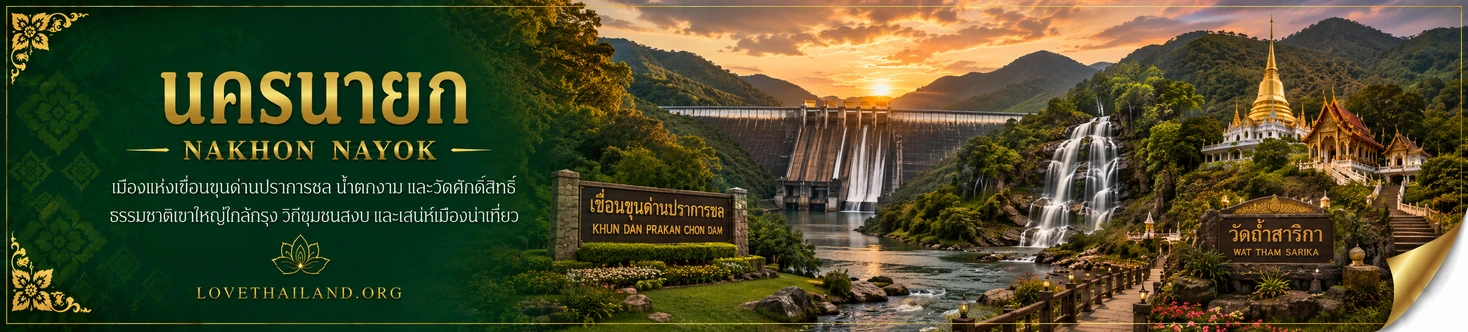
Nakhon Nayok
Slogan : The city ind dreams near bangkok, beautiful mountains and water fall, many natural with out pollution.
Nakhon Nayok is a small province in central Thailand, known for its peaceful atmosphere, natural beauty, and simple way of life. Despite its modest size, it offers a well-rounded tourism experience, including nature, history, culture, and outdoor activities suitable for all ages. As a result, it has become increasingly popular in recent years as one of the top “getaway destinations near Bangkok.”
Located only about 100 kilometers from Bangkok, Nakhon Nayok is an ideal destination for short trips of 1–3 days or weekend getaways. It is especially popular among families, nature lovers, and travelers seeking to escape the hustle and bustle of the city.
The province features diverse geographical characteristics. The northern area consists of mountainous terrain that forms part of the Dong Phaya Yen mountain range and Khao Yai National Park. Meanwhile, the central and southern regions are fertile plains suitable for agriculture. This diversity contributes to both the province’s rich natural resources and its varied local economy.
Several rivers and streams flow through the province, including the Nakhon Nayok Canal, along with water sources from surrounding mountains. These create numerous beautiful waterfalls, which are among the province’s key attractions, especially during the rainy and cool seasons when water levels are high and the landscape is lush and green.
Historically, Nakhon Nayok dates back to the Dvaravati period, as evidenced by ancient city remains found in Dong Lakhon Subdistrict. These include earthen embankments, moats, and archaeological artifacts, indicating that this area was once an important ancient settlement.
During the Ayutthaya period, the province was originally known as “Ban Na” and served as an eastern frontier city. However, due to dense forests and widespread malaria, residents gradually abandoned the area, leaving it deserted for a time.
Later, the king addressed this issue by abolishing land taxes to encourage people to return. This policy successfully revitalized the area, leading to population growth and the development of a larger community. The name “Na-Yok” emerged from this period and eventually evolved into “Nakhon Nayok.”
During the reign of King Rama V, administrative reforms were introduced. Nakhon Nayok was incorporated into Prachin Buri Monthon. Later, the traditional system of local rulers was abolished and replaced by the provincial governor system, which remains in use today.
Nakhon Nayok covers an area of approximately 2,122 square kilometers, or about 1.3 million rai. The province is divided into four districts: Mueang Nakhon Nayok, Ban Na, Ongkharak, and Pak Phli, each with its own distinct characteristics and resources.
The province’s most notable strength lies in its well-preserved natural attractions. Key destinations include Sarika Waterfall, Nang Rong Waterfall, Khun Dan Prakan Chon Dam, and mountainous areas within Khao Yai National Park. These locations serve as important watersheds and ecological systems for central Thailand.
In addition to natural attractions, Nakhon Nayok is home to several culturally and spiritually significant sites, such as Wat Luang Pho Pak Daeng, Wat Khao Cha Ngok, and the Nakhon Nayok City Pillar Shrine. These places reflect the strong faith and traditional way of life of local communities.
Local culture in Nakhon Nayok remains well preserved, with traditional festivals, merit-making ceremonies, and community events held throughout the year. Examples include merit-making during the tenth lunar month, Kathin ceremonies, and various religious activities at temples across the province.
The cuisine of Nakhon Nayok is simple yet distinctive, emphasizing fresh, locally sourced ingredients. Popular dishes include jungle curry, grilled snakehead fish, and seasonal foods that highlight the close relationship between local communities and their natural environment.
The province’s economy is largely based on agriculture, particularly rice farming, fruit orchards, and vegetable cultivation. At the same time, tourism has been steadily growing, especially in areas such as resorts, accommodations, and adventure-based activities.
One of the most popular activities in Nakhon Nayok is river rafting, available in both inflatable rafts and kayaks, particularly during the rainy season when water levels are ideal. Other adventure activities include waterfall abseiling, ATV riding, and mountain biking.
Another increasingly popular activity is boat trips on the reservoir above Khun Dan Prakan Chon Dam. This allows visitors to experience unique scenic views of mountains and water landscapes from a different perspective compared to land-based travel.
Traveling to Nakhon Nayok from Bangkok is convenient and takes approximately 1–2 hours via main routes such as Rangsit–Nakhon Nayok Road or Suwannasorn Road. This makes it suitable for both day trips and overnight stays.
Getting There From Bangkok, travelers can take the Rangsit–Nakhon Nayok route (Highway 305) or the Ongkharak–Nakhon Nayok route, both of which are convenient and relatively quick when traveling by private car. Public buses are also available from Mo Chit Bus Terminal to Nakhon Nayok regularly.
Nakhon Nayok offers a complete travel experience that combines relaxation, nature exploration, and cultural learning. With its beautiful landscapes, long history, and preserved local way of life, the province continues to grow as a promising destination for future tourism development.
Annual Festivals in Nakhon Nayok (2026)
| Festival Name | Period | Location | Highlights |
| Luang Pho Pak Daeng Worship Festival | January – February | Wat Phrommani, Mueang Nakhon Nayok | Famous sacred ritual for wealth and success blessings |
| Loy Krathong Festival | November | Nakhon Nayok River Area | Peaceful natural atmosphere with cultural activities |
| Songkran Festival | April 13–15 | Province-wide | Traditional water festival combined with local culture |
| Tak Bat Devo Festival | October | Wat Khao Cha Ngok | Unique almsgiving ceremony on a mountain setting |
| Khun Dan Dam Tourism Festival | Year-round (Peak: Oct–Feb) | Khun Dan Prakan Chon Dam | Boat tours with scenic mountain and waterfall views |
3–5 Days Travel Itinerary in Nakhon Nayok
| Day | Destination | Location | Highlights |
| Day 1 | Khun Dan Prakan Chon Dam | Hin Tang Subdistrict, Mueang District | Mountain views, boat tours, waterfalls |
| Day 2 | Sarika Waterfall / Nang Rong Waterfall | Mueang District | Large waterfalls, swimming spots |
| Day 3 | Wat Luang Pho Pak Daeng | Ban Yai Subdistrict | Famous temple for wealth blessings |
| Day 4 | Khao Cha Ngok | Chulachomklao Royal Military Academy | Hiking and panoramic views |
| Day 5 | Local Markets & Nature Cafés | Mueang / Ongkharak | Local food and scenic cafés |
Top 10 Must-Visit Attractions in Nakhon Nayok
| No. | Attraction | Location | Highlights |
| 1 | Khun Dan Prakan Chon Dam | Hin Tang | Largest dam with mountain views |
| 2 | Sarika Waterfall | Sarika | Multi-tiered famous waterfall |
| 3 | Nang Rong Waterfall | Hin Tang | Easy-access natural swimming spot |
| 4 | Wat Luang Pho Pak Daeng | Ban Yai | Spiritual destination for fortune |
| 5 | Khao Cha Ngok | CRMA | Hiking and scenic viewpoints |
| 6 | Ganesha Park | Ongkharak | Giant Ganesha statue |
| 7 | Khlong Maduea | Sarika | Off-road stream adventure |
| 8 | Kaeng Sam Chan | Sarika | Popular rafting spot |
| 9 | Wat Khao Cha Ngok | CRMA | Temple with natural surroundings |
| 10 | Khlong Tha Dan Dam | Mueang | Peaceful scenic reservoir |
Frequently Asked Questions (FAQ)
Q: What are the must-visit attractions in Nakhon Nayok?
A: The top attractions include Khun Dan Prakan Chon Dam, Sarika Waterfall, Nang Rong Waterfall, Wat Luang Pho Pak Daeng, Khao Cha Ngok, and Khlong Maduea. These places offer a mix of natural beauty, adventure, and cultural experiences.
Q: When is the best time to visit Nakhon Nayok?
A: Nakhon Nayok can be visited year-round, but the best time is during the rainy to cool season (June to February), when waterfalls are at their most beautiful and the landscape is lush and green.
Q: How many days should I spend in Nakhon Nayok?
A: A short trip of 1–2 days is enough for a quick getaway, but for a more complete experience including waterfalls, temples, cafés, and adventure activities, 3–5 days is recommended.
Q: How far is Nakhon Nayok from Bangkok?
A: Nakhon Nayok is approximately 100 kilometers from Bangkok and takes about 1–2 hours by car, making it ideal for both day trips and weekend travel.
Q: Is Nakhon Nayok suitable for family travel?
A: Yes, Nakhon Nayok is very family-friendly. Attractions like Khun Dan Dam, Nang Rong Waterfall, and local cafés are easy to access and suitable for visitors of all ages.
Q: What local food should I try in Nakhon Nayok?
A: Visitors should try local dishes made from fresh ingredients, such as jungle curry, grilled snakehead fish, and traditional Thai dishes using local herbs and vegetables.
Q: What adventure activities are available in Nakhon Nayok?
A: Popular activities include whitewater rafting, kayaking, waterfall abseiling, ATV riding, and mountain biking, especially during the rainy season.
Q: What type of travelers is Nakhon Nayok best suited for?
A: Nakhon Nayok is suitable for all types of travelers, including families, couples, groups of friends, and nature lovers, thanks to its combination of relaxation, adventure, and cultural experiences.
Nakhon Nayok Map

 Art, Culture and Heritage
 Historical Sites and Monuments(1)
 Landmarks and Memorials(2)
 Art, Craft Centres, Tradition(2)
 Museums(3)
 Educational Places
 Educational Gardens, Farm(1)
 Places of Worship
 Temple(24)
 Church(1)
 Mosque(2)
 Other Sacred Sites(10)
 Suburban Living
 Village, Community(3)
 Local Market(1)
 Nature and Wildlife
 Dam, Reservoir, Lake(7)
 Waterfalls(9)
 Other natural attractions(1)
 Entertainment and Agricultural
 Farms, Parks and Ecotourism(5)
 Outdoor and Adventure Activities(1)


