
lovethailand home >South Travel Attractions
> Songkhla Travel Attractions
TL;DR: A quick overview of attractions in Songkhla, plus planning details, access, and key travel highlights.
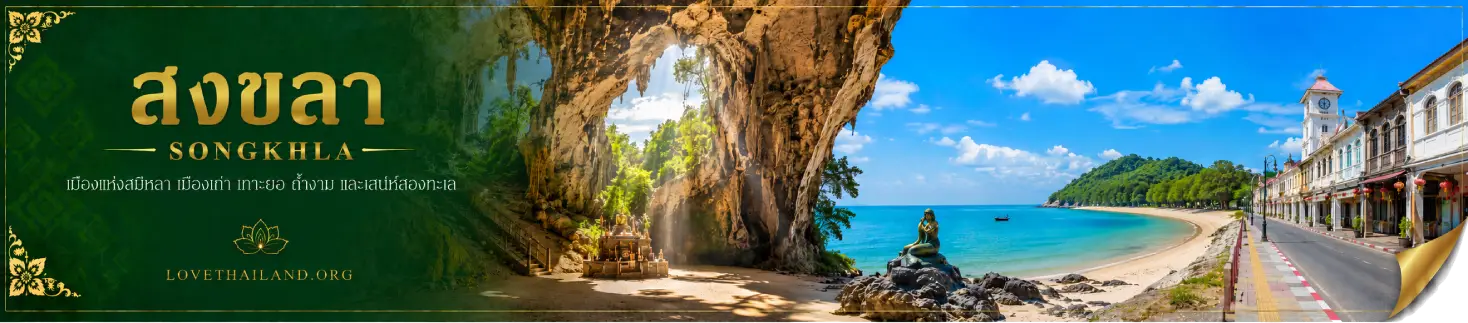
Songkhla
Slogan : Enjoy with waterfowl and Similah island, big city between two ocians, Charming in bridges.
Songkhla Province is one of the most significant provinces in southern Thailand, distinguished by its long-standing importance in history, economy, and culture. Strategically located between the Malay Peninsula and the Gulf of Thailand, this area has served as a major hub for trade and cross-cultural exchange since ancient times. Merchants from China, India, Persia, and the Malay world all traveled through this region, contributing to Songkhla’s rich multicultural identity and making it one of the most culturally diverse provinces in Thailand.
The geography of Songkhla is highly diverse, encompassing coastal areas, a vast inland lake, forested mountains, and fertile plains. These natural features have supported a wide range of economic activities, including fisheries, agriculture, and tourism. In particular, Songkhla Lake is the largest natural freshwater lake in Thailand and has long been a vital ecosystem that sustains local communities and biodiversity across the region.
Historically, Songkhla traces its roots back to the Srivijaya civilization, a powerful maritime empire that flourished in Southeast Asia between the 8th and 13th centuries. The Sathing Phra area was a key center of this civilization, where numerous archaeological sites and artifacts have been discovered. These findings reflect the area’s historical prosperity in religion, trade, and governance. In addition, historical evidence indicates active trade connections with China during the Tang Dynasty, reinforcing Songkhla’s role as an important port city in the region.
As the Srivijaya Empire declined, Songkhla evolved into a new cultural center shaped by the integration of local traditions and external influences. Malay and Islamic cultures became increasingly prominent, contributing to the province’s religious diversity. Today, Songkhla remains a place where Buddhism and Islam coexist harmoniously, reflecting a long history of cultural integration and mutual respect.
During the Ayutthaya and Thonburi periods, Songkhla functioned as a tributary city and an important maritime trade hub. The expansion of trade with China led to significant Chinese migration into the area. These settlers played a crucial role in developing the city’s economy, infrastructure, and urban planning, transforming Songkhla into a thriving port city and a key economic center in southern Thailand.
One of the defining characteristics of Songkhla is its cultural diversity, which is evident in its traditions, beliefs, languages, and daily lifestyles. In districts such as Hat Yai and Mueang Songkhla, communities of Thai Buddhists, Thai Muslims, and Thai-Chinese residents live together in harmony. This multicultural coexistence has created a unique cultural landscape that continues to evolve while preserving its historical roots.
Songkhla is also known for its vibrant cultural festivals and traditions. Important events include the Chak Phra Festival (Buddhist boat procession), the Tak Bat Devo ceremony, and Hari Raya celebrations among Muslim communities. In Hat Yai, large-scale Chinese festivals such as the Vegetarian Festival are held annually, featuring elaborate processions and traditional rituals. These events highlight the province’s cultural richness and its ability to preserve diverse traditions in a unified social environment.
In terms of cuisine, Songkhla offers a distinctive culinary identity shaped by Thai, Chinese, and Malay influences. Signature dishes include Khao Yam (rice salad with herbs), Budu sauce, Roti, Massaman curry, Dim Sum, and a wide variety of fresh seafood. This diversity in food reflects both the cultural blending and the abundance of natural resources found in the region.
The province’s economy is strong and diversified, with Hat Yai serving as the economic and transportation hub of southern Thailand. The city is home to Hat Yai International Airport, major railway connections, and an extensive road network linking Thailand to Malaysia. This strategic positioning has made Songkhla a key logistics center, as well as a major destination for both domestic and international tourism. Cross-border trade, particularly with Malaysia, plays a significant role in driving the province’s economic growth.
Getting There Traveling to Songkhla is convenient and accessible through multiple transportation options. Visitors can fly into Hat Yai International Airport, which offers both domestic and international flights. Alternatively, train services connect Hat Yai to major cities across Thailand, and highways provide easy access by car. For international travelers, the Sadao border crossing offers a direct route from Malaysia, making Songkhla one of the most accessible southern provinces for regional travel.
With all these elements combined, Songkhla is far more than just a coastal destination. It is a province rich in historical depth, cultural diversity, and economic significance. Its unique blend of heritage and modern development reflects a dynamic region where different cultures coexist seamlessly. As a result, Songkhla continues to grow as a high-potential international travel destination in southern Thailand.
Songkhla Tourism Festivals 2026
| No. | Festival | Period | Location | Highlights |
| 1 | Hat Yai Vegetarian Festival | September–October 2026 | Hat Yai District | Chinese rituals, grand processions, large-scale vegetarian food event |
| 2 | Chak Phra & Tak Bat Devo Festival | October 2026 | Mueang Songkhla / Sathing Phra | Buddhist boat procession, traditional southern ceremony |
| 3 | Hat Yai Songkran Festival | April 13–15, 2026 | Hat Yai District | Large-scale water festival, popular with Malaysian tourists |
| 4 | Hari Raya Festival | April & June 2026 | Province-wide Muslim communities | Islamic traditions, local cuisine, cultural celebrations |
| 5 | Koh Yor Cultural Festival | July 2026 | Koh Yor, Mueang District | Local lifestyle, folk performances, traditional food |
Songkhla Travel Itinerary (3–5 Days Detailed Plan)
| Day | Destination | Location | Highlights |
| Day 1 | Samila Beach & Mermaid Statue | Mueang Songkhla | Iconic landmark, Gulf of Thailand coastal views |
| Day 2 | Koh Yor & Tinsulanonda Bridge | Songkhla Lake | Lake scenery, traditional fishing communities |
| Day 3 | Hat Yai & Kim Yong Market | Hat Yai District | Commercial hub, street food, souvenirs |
| Day 4 | Ton Nga Chang Waterfall | Hat Yai District | Seven-tier waterfall, lush natural surroundings |
| Day 5 | Laem Samila & Tang Kuan Hill | Mueang Songkhla | Panoramic city view, cultural landmark |
Must-Visit Attractions in Songkhla (Top 10)
| No. | Attraction | Location | Highlights |
| 1 | Samila Beach | Mueang Songkhla | Famous beach with the Golden Mermaid statue |
| 2 | Koh Yor | Songkhla Lake | Local culture, seafood, scenic views |
| 3 | Tang Kuan Hill | Mueang Songkhla | City and sea panoramic viewpoint |
| 4 | Kim Yong Market | Hat Yai | Popular shopping and food market |
| 5 | Ton Nga Chang Waterfall | Hat Yai | Beautiful multi-tier waterfall |
| 6 | Songkhla National Museum | Mueang | Historical and cultural exhibits |
| 7 | Tinsulanonda Bridge | Songkhla Lake | Iconic bridge connecting Koh Yor |
| 8 | Laem Samila | Mueang | Scenic coastal viewpoint |
| 9 | Wat Laem Pho | Mueang | Large reclining Buddha |
| 10 | Khao Kho Hong | Hat Yai | Viewpoint with cable car |
Frequently Asked Questions (FAQ)
Q: What is the best time to visit Songkhla?
A: The best time to visit Songkhla is from January to April when the weather is relatively dry and suitable for beach and outdoor activities.
Q: How many days should I spend in Songkhla?
A: A 3 to 5-day trip is ideal to explore major attractions such as Samila Beach, Koh Yor, Hat Yai, and nearby natural destinations.
Q: Is Songkhla suitable for family travel?
A: Yes, Songkhla offers a variety of attractions including beaches, cultural sites, markets, and natural parks that are suitable for all age groups.
Q: How do I get to Songkhla?
A: You can fly to Hat Yai International Airport and travel approximately 30 km to Songkhla by taxi, van, or private car.
Q: What are the must-try foods in Songkhla?
A: Popular local dishes include seafood, southern Thai curry, fried sea bass with fish sauce, and traditional desserts available at local markets.
Q: Is Songkhla safe for tourists?
A: Songkhla is generally safe for tourists, especially in main travel areas such as Mueang Songkhla and Hat Yai. Visitors should follow standard travel precautions.
Songkhla Map

 Art, Culture and Heritage
 Historical Sites and Monuments(2)
 Landmarks and Memorials(7)
 Royal Palace(1)
 Art, Craft Centres, Tradition(4)
 Museums(4)
 Art Gallery(1)
 Educational Places
 Library(1)
 Educational Gardens, Farm(3)
 Places of Worship
 Temple(52)
 Mosque(2)
 Other Sacred Sites(11)
 Suburban Living
 Village, Community(3)
 Local Market(3)
 Floating Market(2)
 Nature and Wildlife
 National Parks and Marine Reserves(5)
 Mountain (Doi)(6)
 Dam, Reservoir, Lake(5)
 Waterfalls(12)
 Caves(4)
 River, Canal(2)
 Bays and Beaches(13)
 Islands(3)
 Other natural attractions(2)
 Entertainment and Agricultural
 Zoos and Aquariums(2)
 Animal camps and shows(1)
 Farms, Parks and Ecotourism(6)
 Travel Articles, Recipes
 Travel Review, Food Review(1)
 Southern Food Menu, Southern Food Recipes(2)


