
lovethailand home >Eastern Travel Attractions
> Prachin Buri Travel Attractions
TL;DR: A quick overview of attractions in Prachin Buri, plus planning details, access, and key travel highlights.
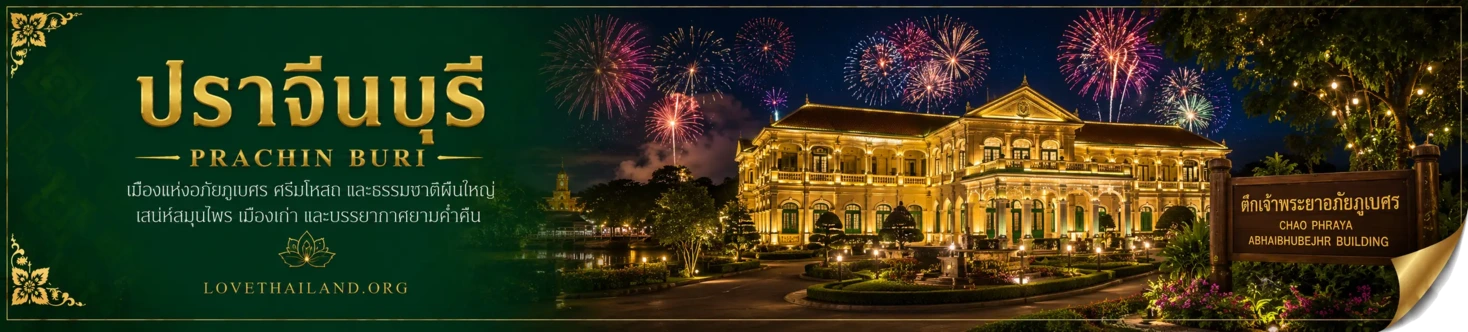
Prachin Buri
Slogan : Si Maha Pho with the city, sweet Tong Bamboo, famous fruits, area of Thra Ra Wa Dee city.
Prachinburi Province is a destination distinguished by its rich history, diverse natural landscapes, and deeply rooted cultural heritage. Located in the eastern part of central Thailand, it serves as a key gateway connecting the central region to the northeast. With its geography ranging from UNESCO-listed forest complexes and important river systems to ancient settlements dating back over 2,000 years, Prachinburi stands out as a province where nature and civilization coexist in remarkable harmony.
From a historical perspective, Prachinburi is one of the regions where human settlement can be traced back to the late prehistoric period. Archaeological evidence such as stone tools, bronze artifacts, and pottery reveals the presence of advanced communities in ancient times. During the Dvaravati and Lopburi periods, the area developed into a significant center of religion and governance, with Si Mahosot Ancient City serving as a key testament to its historical prosperity.
Si Mahosot Ancient City, located in Si Mahosot District, is one of Thailand’s most important archaeological sites. The ancient city is surrounded by moats and earthen embankments, and within its boundaries are numerous historical structures, including Sa Kaeo, Sa Morakot, and religious sites influenced by Indian and Khmer art. Notably, the Sri Maha Bodhi tree, believed to be over 2,000 years old, remains a spiritual center for local communities to this day.
During the Ayutthaya period, Prachinburi became an important frontier city with strategic and commercial significance. Settlements flourished along the Bang Pakong River, which served as a major transportation route in the region. In the early Rattanakosin period, the city was known as “Mueang Prachin” before administrative reforms elevated it to provincial status. Over time, parts of its territory were separated to form neighboring provinces such as Nakhon Nayok, Chachoengsao, and Sa Kaeo.
The province’s geography is characterized by remarkable diversity. The northern and eastern areas are connected to the Dong Phaya Yen mountain range, a vital source of forests and waterways, while the southern region consists of fertile plains along the Bang Pakong River, suitable for agriculture and settlement. The Bang Pakong River itself originates from the confluence of the Hanuman and Phra Prong rivers in Kabin Buri District before flowing through agricultural lands into Chachoengsao Province.
Thanks to its abundant natural resources, Prachinburi is home to some of Thailand’s most important conservation forests, including Khao Yai National Park and Thap Lan National Park. Both are part of the Dong Phaya Yen–Khao Yai Forest Complex, which has been recognized as a UNESCO World Heritage Site. This area is a sanctuary for rare wildlife such as elephants, gaurs, and tigers, as well as a wide variety of plant species.
Thap Lan National Park is particularly notable for having the largest palm forest ecosystem in Thailand, a rare ecological feature that plays a crucial role in plant conservation. Visitors can explore the park through nature trails, trekking routes, and immersive outdoor experiences that showcase the richness of the ecosystem.
For adventure tourism, Prachinburi is widely known for the Hin Phoeng rapids in Na Di District, one of the most challenging white-water rafting routes in Thailand. During the rainy season, the strong currents create an exciting and memorable experience. The best time for rafting is from July to November, when water levels are optimal for both thrill and safety.
Beyond its natural attractions, Prachinburi also offers rich cultural tourism experiences. The Prachinburi National Museum houses artifacts from Si Mahosot and surrounding areas, allowing visitors to gain deep insights into the region’s history. Meanwhile, the Chao Phraya Abhaibhubejhr Building, with its unique European-style architecture, has been transformed into a museum dedicated to traditional Thai medicine and herbal knowledge.
Temples in the province also reflect artistic diversity. Wat Kaew Phichit combines Thai, Chinese, European, and Khmer architectural influences, while Wat Rattananetaram, also known as the “Million Shell Temple,” is decorated with countless seashells, creating a truly distinctive visual identity.
Economically, Prachinburi plays a significant role in agriculture, industry, and wellness tourism. The fertile plains along the Bang Pakong River support fruit orchards, rice farming, and various economic crops. At the same time, industrial estates, particularly in Kabin Buri District, contribute to regional economic growth and provide employment opportunities for local communities.
One of Prachinburi’s most distinctive strengths is its development as a “Herbal City.” The province integrates traditional Thai herbal knowledge with modern wellness tourism. Visitors can participate in activities such as herbal workshops, Thai massage, herbal product making, and spa treatments designed to rejuvenate both body and mind. This approach aligns with global wellness tourism trends and adds sustainable value to local resources.
The lifestyle of people in Prachinburi remains closely connected to nature, especially in rural areas where traditional agriculture and simple living continue to thrive. Communities have preserved local wisdom, including food processing, herbal medicine practices, and seasonal living patterns that reflect harmony with the environment.
In terms of cuisine, Prachinburi is best known for “Bamboo Shoot (Mai Phai Tong),” which is prized for its sweet, crisp texture and lack of bitterness. It is especially abundant during the rainy season and widely available in local markets. Other local dishes include bamboo shoot curry, herbal salads, and traditional meals that reflect the region’s natural resources.
Local fruits are another highlight, including mangoes, durians, and longkong, grown in the fertile Bang Pakong basin. Additionally, herbal products such as balms, oils, and wellness items are popular among visitors seeking natural health solutions.
In terms of traditions and culture, Prachinburi hosts local festivals that clearly reflect community identity. One notable event is the Chao Pho–Chao Mae Procession Festival, featuring sacred parades, traditional performances, and religious ceremonies passed down through generations.
Other traditional Thai festivals such as Songkran, Buddhist Lent, and End of Buddhist Lent are celebrated throughout the province, offering visitors the opportunity to experience authentic Thai cultural practices, including merit-making and temple activities.
Nature lovers will also find numerous attractions, including Tat Khro Waterfall, Salad Dai Waterfall, and Khao Ito, which offers panoramic views of the surrounding landscape. The Chakrapong Reservoir is another popular spot for relaxation among locals.
Tourism in Prachinburi caters to a wide range of travelers, from adventure seekers and nature enthusiasts to cultural explorers. This diversity allows the province to develop as a multifaceted destination with strong growth potential.
Getting There Traveling to Prachinburi is convenient. Visitors can drive from Bangkok via Highway 304 through Chachoengsao to Kabin Buri District, taking approximately 2 hours. Public transportation options include buses, minivans, and the eastern railway line, which serves the province.
Within the province, local transport such as songthaews and motorcycle taxis are available for traveling between attractions. Visitors can plan either a day trip or an extended stay to fully experience the natural environment.
For travel planning, a one-day trip can cover Si Mahosot Ancient City, the National Museum, and the Abhaibhubejhr Building. A 2-day itinerary allows for additional nature exploration in Khao Yai or Thap Lan, while a 3–5 day trip provides opportunities for rafting, trekking, and cultural immersion.
Overall, Prachinburi is evolving into a destination focused on sustainable and wellness tourism, combining natural resources with local wisdom to create meaningful experiences. This approach not only preserves the environment but also strengthens the local economy.
Traveling to Prachinburi is therefore more than just a trip—it is an opportunity to explore the roots of Thai society through its history, culture, and unspoiled nature. It is an ideal destination for those seeking tranquility, knowledge, and meaningful experiences in one journey.
Prachinburi Annual Festivals 2026
| No. | Festival Name | Date / Period | Location | Highlights |
| 1 | Chao Pho–Chao Mae Procession Festival | March 2026 | Prachinburi City Center | Sacred parade, Chinese–Thai rituals, cultural performances |
| 2 | Bamboo Shoot Festival | June – July 2026 | Prachantakham District | Local food, agricultural products, cultural shows |
| 3 | Hin Phoeng Rafting Season | July – November 2026 | Na Di District | Extreme rafting experience, nature adventure |
| 4 | Thai Herbal Festival (Abhaibhubejhr) | August 2026 | Abhaibhubejhr Building | Wellness tourism, Thai herbs, health workshops |
| 5 | Loy Krathong Festival (Bang Pakong River) | November 2026 | Bang Pakong Riverside | Traditional Thai festival, riverside atmosphere |
3–5 Day Travel Itinerary in Prachinburi (Detailed Plan)
| No. | Day | Place | Location | Highlights |
| 1 | Day 1 | Si Mahosot Ancient City | Si Mahosot District | 2,000-year-old archaeological site |
| 2 | Day 1 | Abhaibhubejhr Building | Prachinburi City | Thai herbal museum, European-style architecture |
| 3 | Day 2 | Khao Yai National Park | Prachinburi Zone | UNESCO World Heritage Site, wildlife & waterfalls |
| 4 | Day 3 | Hin Phoeng Rapids | Na Di District | Top rafting destination in Thailand |
| 5 | Day 4 | Khao Ito | Mueang District | Scenic viewpoints, forest trails |
| 6 | Day 5 | Local Bamboo Market | Prachantakham District | Local food experience, bamboo products |
Top 10 Must-Visit Attractions in Prachinburi
| No. | Attraction | Location | Highlights |
| 1 | Si Mahosot Ancient City | Si Mahosot | Ancient archaeological site |
| 2 | Sri Maha Bodhi Tree | Si Mahosot | Over 2,000 years old sacred tree |
| 3 | Khao Yai National Park | Prachinburi | World Heritage forest |
| 4 | Thap Lan National Park | Na Di | Largest palm forest in Thailand |
| 5 | Hin Phoeng Rapids | Na Di | White-water rafting |
| 6 | Abhaibhubejhr Building | City Center | Thai herbal museum |
| 7 | Wat Kaew Phichit | City Area | Mixed architectural styles |
| 8 | Wat Million Shell | Kabin Buri | Decorated with shells |
| 9 | Khao Ito | Mueang | Nature viewpoint |
| 10 | Tat Khro Waterfall | Na Di | Natural waterfall |
Frequently Asked Questions (FAQ)
Q: Where is Prachinburi located?
A: Prachinburi is located in eastern central Thailand and serves as a gateway between the central region and northeastern Thailand. It borders Nakhon Nayok, Chachoengsao, and Sa Kaeo provinces.
Q: What is Prachinburi known for?
A: Prachinburi is known for its ancient history, UNESCO-listed forests, herbal wellness tourism, and natural attractions such as Khao Yai National Park and Hin Phoeng rapids.
Q: Is Prachinburi worth visiting?
A: Yes, Prachinburi is ideal for travelers seeking nature, culture, and relaxation. It offers a mix of historical sites, national parks, adventure activities, and wellness experiences.
Q: How far is Prachinburi from Bangkok?
A: Prachinburi is approximately 120–150 kilometers from Bangkok and takes around 2 hours to travel by car.
Q: What are the top attractions in Prachinburi?
A: Top attractions include Si Mahosot Ancient City, Sri Maha Bodhi Tree, Khao Yai National Park, Thap Lan National Park, Hin Phoeng rapids, and Abhaibhubejhr Building.
Q: When is the best time to visit Prachinburi?
A: The best time to visit is from November to February for cool weather, while July to November is ideal for rafting activities due to higher water levels.
Q: What food is Prachinburi famous for?
A: Prachinburi is famous for bamboo shoots, especially sweet and crispy varieties, along with local herbal dishes and fresh agricultural products.
Q: Can you visit Prachinburi without a car?
A: Yes, you can travel by bus, minivan, or train from Bangkok. Local transport such as songthaews and motorcycle taxis are available within the province.
Q: What activities can you do in Prachinburi?
A: Activities include rafting at Hin Phoeng, hiking in national parks, exploring ancient ruins, visiting herbal wellness centers, and experiencing local culture and festivals.
Q: How many days should you spend in Prachinburi?
A: A 1-day trip covers key cultural sites, while 2–3 days allow for nature exploration. A 3–5 day trip is ideal for a full experience including adventure and wellness tourism.
Prachin Buri Map

 Art, Culture and Heritage
 Historical Sites and Monuments(5)
 Landmarks and Memorials(4)
 Royal Palace(1)
 Art, Craft Centres, Tradition(4)
 Museums(4)
 Art Gallery(1)
 Educational Places
 Educational Gardens, Farm(2)
 Places of Worship
 Temple(23)
 Other Sacred Sites(6)
 Research and Development
 Royal Project(1)
 Suburban Living
 Village, Community(3)
 Local Market(2)
 Nature and Wildlife
 National Parks and Marine Reserves(4)
 Mountain (Doi)(3)
 Dam, Reservoir, Lake(1)
 Waterfalls(14)
 Caves(1)
 River, Canal(2)
 Bays and Beaches(1)
 Entertainment and Agricultural
 Farms, Parks and Ecotourism(2)
 Outdoor and Adventure Activities(1)


