
lovethailand home >Central Travel Attractions
> Phranakhon Si Ayutthaya Travel Attractions
TL;DR: A quick overview of attractions in Phranakhon Si Ayutthaya, plus planning details, access, and key travel highlights.
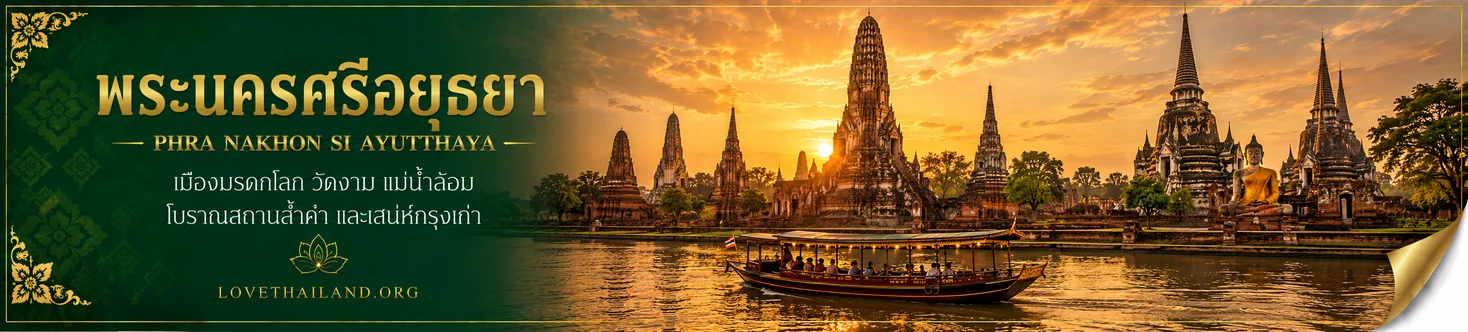
Phranakhon Si Ayutthaya
Slogan : Old capital city, food larder of the country, poet laureates galore, and national heroes.
Phra Nakhon Si Ayutthaya is one of Thailand’s most historically significant provinces, once serving as the capital of the Kingdom of Ayutthaya for over 400 years. Today, it stands as a UNESCO World Heritage Site, preserving the grandeur of a former global trading hub that connected the East and the West. The province is located approximately 80 kilometers north of Bangkok and is easily accessible within 1–1.5 hours, making it one of the most popular destinations for both Thai and international travelers.
The identity of Ayutthaya is deeply rooted in its geography. The province is situated on an island surrounded by three major rivers—the Chao Phraya River, the Pa Sak River, and the Lopburi River. This natural formation not only provided protection in the past but also supported agriculture, trade, and transportation. The fertile plains allowed the kingdom to flourish economically, while the waterways facilitated international commerce with nations such as Japan, China, Portugal, and the Netherlands.
Walking through Ayutthaya today feels like stepping into an open-air museum. Ancient ruins, temple structures, and prangs (Khmer-style towers) are scattered throughout the island city, each telling stories of prosperity, war, and resilience. Among the most iconic sites is Wat Mahathat, famous for the Buddha head entwined within tree roots—a powerful symbol of nature reclaiming history. Nearby, Wat Phra Si Sanphet once served as the royal temple within the Grand Palace complex, representing the spiritual and political center of the kingdom.
Another landmark that defines Ayutthaya’s beauty is Wat Chaiwatthanaram, located along the Chao Phraya River. The temple is known for its symmetrical Khmer-style architecture and is especially stunning during sunset, when golden light reflects off the river and illuminates the ancient bricks. It has become one of the most photographed locations in Thailand, attracting visitors seeking both cultural insight and visual beauty.
Ayutthaya is not only about temples and ruins. The province is rich in living culture and traditions that continue to thrive today. One of the most significant annual events is the “Ayutthaya World Heritage Fair,” held every December to commemorate the province’s UNESCO recognition. The event features light and sound performances, historical reenactments, traditional markets, and cultural exhibitions that bring the past back to life.
Another important cultural celebration is the Songkran Festival, where Ayutthaya becomes one of the most vibrant destinations in Thailand. Water splashing activities take place across the city, especially around historical sites, creating a unique combination of tradition and festivity. Visitors can also witness local rituals such as Buddha bathing ceremonies and merit-making at temples.
Food is another defining element of Ayutthaya’s identity. The province is famous for its river prawns, often grilled and served with seafood sauce. The prawns are known for their large size and rich flavor, making them a must-try dish for visitors. Another iconic delicacy is “Roti Sai Mai,” a Thai-style cotton candy wrapped in thin pancakes. This sweet treat reflects the cultural blending that has existed in Ayutthaya for centuries.
Local markets also play a significant role in showcasing Ayutthaya’s lifestyle. Ayothaya Floating Market offers a nostalgic atmosphere where visitors can explore traditional wooden houses, watch cultural performances, and enjoy local cuisine. The market recreates the ambiance of the old capital during its peak, allowing visitors to experience history in an interactive way.
Economically, Ayutthaya is one of Thailand’s key industrial provinces. While tourism remains a major contributor, the province is also home to numerous industrial estates, particularly in the electronics and automotive sectors. This combination of heritage tourism and modern industry creates a unique balance between past and present.
Despite modernization, Ayutthaya has preserved its traditional way of life in many communities. Local residents continue to engage in crafts, agriculture, and religious activities that reflect the province’s cultural continuity. Temples remain central to community life, serving as places for ceremonies, education, and social gatherings.
Getting There Traveling to Ayutthaya is convenient and flexible. Visitors can drive from Bangkok via Highway No. 1 (Phahonyothin Road) or Highway No. 32 (Asian Highway), both of which offer direct routes to the province. Alternatively, trains depart regularly from Bangkok’s main railway stations to Ayutthaya, providing an affordable and scenic journey. River cruises along the Chao Phraya River are also available, offering a unique perspective of the historic city.
Within the province, transportation options include bicycles, tuk-tuks, motorcycles, and private cars. Cycling is particularly popular among travelers, as many historical sites are located within a relatively compact area. This allows visitors to explore at their own pace while enjoying the charm of the old city.
Ayutthaya continues to be one of Thailand’s most compelling destinations, combining history, culture, cuisine, and accessibility in one place. Whether visiting for a day trip or an extended stay, the province offers a comprehensive travel experience that reflects the essence of Thailand’s heritage.
Annual Tourism Festivals in Phra Nakhon Si Ayutthaya (2026)
| Festival Name | Date | Time | Location | Highlights |
| Ayutthaya World Heritage Fair | 6–15 December 2026 | 16:00 – 22:00 | Ayutthaya Historical Park | Light & sound shows, historical reenactments, cultural performances, night market |
| Songkran Festival Ayutthaya | 13–15 April 2026 | All Day | City Area & Temples | Water splashing, Buddha bathing, temple ceremonies |
| Loy Krathong Festival Ayutthaya | November 2026 | 17:00 – 22:00 | Chao Phraya River / Temples | Floating krathong, candlelight atmosphere, cultural shows |
3–5 Days Travel Itinerary (Detailed & Practical)
| Day | Time | Place | Location | Highlights | Tips |
| Day 1 | Morning | Wat Mahathat | Naresuan Rd, Pratu Chai | Buddha head in tree roots, iconic landmark | Arrive early to avoid crowds |
| Day 1 | Afternoon | Wat Phra Si Sanphet | Historical Park | Royal temple, three iconic chedis | Combine with nearby sites |
| Day 1 | Evening | Wat Chaiwatthanaram | Riverside Area | Sunset photography, Khmer-style architecture | Best time is golden hour |
| Day 2 | Morning | Wat Yai Chai Mongkhon | Hantra Area | Large reclining Buddha, big chedi | Climb for panoramic view |
| Day 2 | Afternoon | Wat Phanan Choeng | Riverfront | Giant Buddha statue, active temple | Respect dress code |
| Day 3 | Full Day | Bang Pa-In Palace | Bang Pa-In District | Royal palace, European-style buildings | Allow at least 3–4 hours |
Top 10 MUST VISIT Attractions in Ayutthaya
| No. | Place | Location | Highlights |
| 1 | Wat Mahathat | Pratu Chai | Buddha head in tree roots |
| 2 | Wat Phra Si Sanphet | Historical Park | Royal temple ruins |
| 3 | Wat Chaiwatthanaram | Riverside | Sunset landmark |
| 4 | Wat Yai Chai Mongkhon | Hantra | Massive chedi |
| 5 | Wat Phanan Choeng | Riverfront | Giant Buddha |
| 6 | Bang Pa-In Palace | Bang Pa-In | Royal architecture |
| 7 | Ayothaya Floating Market | Hantra | Cultural market |
| 8 | Wat Lokayasutharam | City Island | Reclining Buddha |
| 9 | Chao Sam Phraya Museum | City Area | Historical artifacts |
| 10 | Wat Ratchaburana | City Island | Ancient crypt |
Frequently Asked Questions (FAQ)
Q: When is the best time to visit Phra Nakhon Si Ayutthaya?
A: The best time to visit is from November to February, when the weather is cooler and more comfortable for exploring outdoor historical sites. This period also coincides with important festivals and cultural events in the province.
Q: Is one day enough for visiting Ayutthaya?
A: One day is enough to see the main landmarks such as Wat Mahathat, Wat Phra Si Sanphet, and Wat Chaiwatthanaram. However, if you want a deeper experience that includes local culture, food, and riverside activities, staying 2–3 days is a better choice.
Q: How can I travel from Bangkok to Ayutthaya?
A: Ayutthaya can be reached easily from Bangkok by private car, train, van, or bus. The journey usually takes about 1–1.5 hours by car and around 1.5–2 hours by train, depending on the service.
Q: What are the must-visit places in Ayutthaya?
A: The most popular places include Wat Mahathat, Wat Phra Si Sanphet, Wat Chaiwatthanaram, Wat Yai Chai Mongkhon, Wat Phanan Choeng, Bang Pa-In Palace, and Ayothaya Floating Market.
Q: What food is Ayutthaya famous for?
A: Ayutthaya is especially famous for grilled river prawns, roti sai mai, boat noodles, and other traditional Thai dishes that reflect the province’s riverside culture.
Q: What should I prepare before visiting Ayutthaya?
A: You should bring a hat, sunglasses, drinking water, and comfortable walking shoes, as many attractions are outdoors. Modest clothing is also recommended, especially when visiting temples and royal sites.
Q: What festivals are worth visiting in Ayutthaya?
A: Major festivals include the Ayutthaya World Heritage Fair, the Songkran Festival, and Loy Krathong celebrations. These events highlight the province’s historical and cultural identity through performances, ceremonies, and local activities.
Q: How many days should I spend in Ayutthaya?
A: For a well-rounded trip covering historical sites, cultural attractions, local food, and riverside experiences, 3–4 days is ideal. This allows you to explore at a relaxed pace and enjoy the atmosphere more fully.
Phranakhon Si Ayutthaya Map

 Art, Culture and Heritage
 Historical Sites and Monuments(7)
 Landmarks and Memorials(6)
 Royal Palace(4)
 Art, Craft Centres, Tradition(6)
 Museums(9)
 Educational Places
 Museum for Study(1)
 Educational Gardens, Farm(2)
 Training Center(1)
 Places of Worship
 Temple(133)
 Church(2)
 Mosque(2)
 Other Sacred Sites(15)
 Research and Development
 Royal Project(4)
 Suburban Living
 Village, Community(10)
 Local Market(7)
 Floating Market(3)
 Nature and Wildlife
 Dam, Reservoir, Lake(1)
 River, Canal(3)
 Islands(2)
 Other natural attractions(1)
 Entertainment and Agricultural
 Animal camps and shows(2)
 Farms, Parks and Ecotourism(4)
 Waterpark(1)
 Travel Articles, Recipes
 Travel Review, Food Review(2)


