
lovethailand home >South Travel Attractions >Satun Travel Attractions >Khuan Ka Long >Thung Nui > Thung Nui Hot Spring
TL;DR: Thung Nui Hot Spring is located at Tambon Thung Nui, Amphoe Khuan Kalong, Satun Province, open Daily, hours 05.00 – 20.00.

Thung Nui Hot Spring
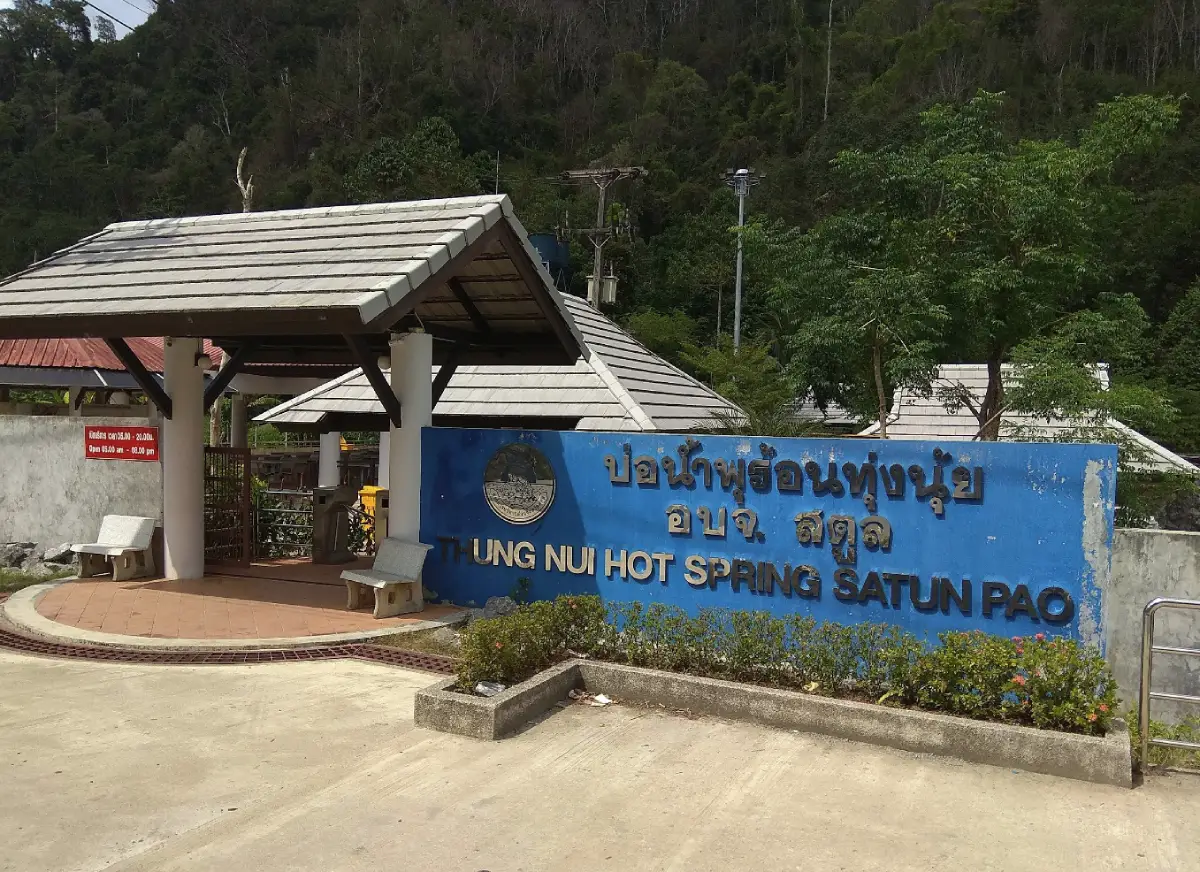
Open Days: Daily
Opening Hours: 05.00 – 20.00
Thung Nui Hot Spring in Satun Province is a natural health and wellness attraction in Tambon Thung Nui, Amphoe Khuan Kalong. It is known for its naturally heated mineral water rising from underground sources, with the original hot spring temperature reported at around 50–60 degrees Celsius in the source area. The site has been developed into a visitor-friendly hot spring facility with foot-soaking pools, gender-separated body soaking pools, seating areas, showers, restrooms, foot-washing points, and supporting public facilities. It is suitable for travelers who want a relaxing stop during a Satun trip, as well as those who want to include a wellness experience in Khuan Kalong District.
Thung Nui Hot Spring is located in Tambon Thung Nui, Amphoe Khuan Kalong, Satun Province. The surrounding area has a quiet natural atmosphere close to hills, orchards, rubber plantations, and local communities. This gives the hot spring a calm and grounded character, different from urban spa facilities. The natural hot spring is an important local resource because it reflects underground geological activity, the water system of the area, and the relationship between nature and community life in Thung Nui.
The main impression of Thung Nui Hot Spring is the warm steam rising above the water, the relaxed atmosphere, and the clear arrangement of soaking areas for visitors. Many people come here to soak their feet or body after long-distance travel, nature walks, or outdoor activities in Satun. Warm mineral water can help the body feel more relaxed and ease general muscle tension after travel. However, soaking in hot spring water should be done moderately, and visitors should always pay attention to their physical condition.
The visitor area is divided into several functional zones. The foot-soaking pool is the easiest area to use and is suitable for those who want a simple hot spring experience without changing clothes or spending too much time. The foot bath water has an average temperature of about 40 degrees Celsius and is supplied by flowing natural hot spring water. The area is maintained and cleaned regularly, making it practical for elderly visitors, families, short-stop travelers, and people who want to relax their feet after travel.
The body soaking area is designed for visitors who want a fuller hot spring experience. It is separated into male and female zones, with hot and warm sections available so visitors can choose a temperature that suits their body. The area includes washing space, shower rooms, restrooms, seating areas, and lockers. This organized layout makes the experience more comfortable and orderly, especially for visitors who come specifically for body soaking and relaxation.
Thung Nui Hot Spring is also interesting from a geological perspective. Natural hot springs generally form when rainwater or surface water seeps underground through fractures, faults, or openings in rock layers. The water is heated beneath the earth and later rises back to the surface as a hot spring. Thung Nui is therefore not only a place for soaking and resting, but also a visible example of natural underground processes connected to Satun’s landscape and the geology of southern Thailand.
From a wellness perspective, Thung Nui Hot Spring is suitable for relaxation after travel. It is especially helpful for those who feel stiff after sitting in a car for a long time, walking, or doing outdoor activities. Foot soaking and body soaking in warm water may help visitors feel more comfortable and refreshed, but it should not be understood as a substitute for medical treatment. Visitors with underlying health conditions, such as heart disease, uncontrolled blood pressure, diabetes with open wounds, contagious skin conditions, or pregnancy, should be especially cautious and should seek medical advice if unsure.
Safe use of the hot spring should begin with washing the feet or body before soaking. Visitors should test the water temperature slowly and avoid entering hot water too quickly. Those using the body soaking pool should begin with the warm zone first before moving to hotter water if the body adjusts well. During soaking, visitors should drink enough water, avoid staying in hot water continuously for too long, and rest between sessions. If dizziness, palpitations, chest tightness, unusual fatigue, or excessive heat occurs, soaking should stop immediately.
What makes Thung Nui Hot Spring different from a typical bathing facility is the combination of nature, local community, and organized public service. Visitors may spend only a short time soaking their feet and sitting quietly, or they may spend longer using the body soaking area, showering, changing clothes, and resting around the site. The atmosphere is not designed as a luxury city spa; it is simple, local, and closely connected to the landscape of Khuan Kalong District.
Thung Nui Hot Spring also has cultural significance for Satun Province. The natural hot spring has been used as a sacred water source in important provincial and royal ceremonies. Water from the site was drawn for Buddhist holy water ceremonies on nationally significant occasions. This background gives Thung Nui Hot Spring meaning beyond health tourism, reflecting local respect for natural water sources and the role of the community in provincial ceremonial life.
The original hot spring source area includes the main natural spring, sometimes described in local and ceremonial contexts as a mother pool. Some records also refer to a child pool that receives water from the main source for public use. This separation between the natural source and the visitor service areas helps preserve the significance of the spring while allowing tourists and local residents to use the water more systematically.
Inside the site, visitors can find several service zones, including the natural hot spring source area, the foot bath, the male body soaking pool, the female body soaking pool, shower rooms, restrooms, foot-washing points, seating pavilions, and general service areas. Shops or food-and-drink areas may be available depending on the period and local service arrangements. Visitors who plan to use the body soaking pools should allow enough time for payment, receiving required items, showering, soaking, and resting after use.
For short visits, the foot bath is the most convenient activity. It does not require changing clothes and can be done in a short period. Visitors can sit near the pool, let the warm water relax their feet, and enjoy the surrounding atmosphere. For elderly visitors, foot soaking is often more suitable than full body soaking because it is easier to control time, movement, and heat exposure.
For body soaking, visitors should prepare spare clothes, a waterproof bag, and personal items. Although some facilities and equipment are available on site, bringing personal essentials makes the experience smoother, especially on days with many visitors. After soaking, visitors should shower, rest, and allow the body temperature to adjust before continuing their journey.
The best times to visit Thung Nui Hot Spring are early morning and late afternoon. The surrounding air is usually more comfortable during these periods, making hot spring soaking more pleasant than in the heat of midday. Morning is suitable for a quiet start to the day, while late afternoon is ideal after visiting waterfalls, caves, or other outdoor sites in Khuan Kalong District and nearby areas. On weekends or public holidays, visitors should allow more time because the service areas may be busier than usual.
Getting There from Satun town is straightforward by road. Head toward Khuan Kalong District and pass through Tambon Thung Nui. Near Ban Thung Nui School, turn onto the local road leading toward Ban Nam Ron and Ton Panan Waterfall, then continue to Thung Nui Hot Spring. The route is easier to access by car than many deep forest attractions, but drivers should still be careful because parts of the road pass through local communities and smaller roads.
Travelers coming from Hat Yai or Songkhla can enter Satun through Khuan Kalong District and continue toward Tambon Thung Nui by road. This makes the hot spring a convenient rest stop before traveling onward to Satun town, La-ngu, Pak Bara, or the coastal and island routes of Satun Province. Its location works well as a stop between inland travel and the Andaman Sea route.
Visitors without a private vehicle should first reach Khuan Kalong District or Tambon Thung Nui, then arrange local transport to the hot spring. The site is not directly beside the main highway, so having the coordinates, official place name, and contact number prepared in advance will make navigation easier.
Thung Nui Hot Spring can be easily combined with Ton Panan Waterfall because both are connected by the same local travel route. Many visitors plan a half-day trip in this area by visiting the waterfall or nearby natural sites first, then ending with foot soaking or body soaking at the hot spring. This route works well for families, friends, and travelers who want to relax after spending time in nature.
Ton Panan Waterfall is one of the closest attractions and is located in Tambon Thung Nui. It offers a natural waterfall atmosphere that contrasts with the warm-water setting of the hot spring. Visitors can enjoy cool forest water and shaded greenery at the waterfall before returning to the hot spring for warmth and relaxation later in the day.
Other nearby attractions in Khuan Kalong and surrounding districts include Thara Sawan Waterfall Forest Park, Suan Style Bang Khey Toon Farm, Fasai Farm, viewpoints in Khuan Don District, and local attractions in Khuan Kalong Municipality. Visitors with more time can continue toward Satun town, La-ngu, or Pak Bara, making Thung Nui Hot Spring a useful link between mountain, forest, waterfall, community, and coastal travel routes.
Visitors interested in nature should also observe the landscape around the hot spring. The area reflects the character of a natural hot spring near hills and agricultural communities. Local life around Tambon Thung Nui is connected with rubber plantations, orchards, water resources, and rural livelihoods. Respecting the community, keeping noise low, using local services appropriately, and not leaving trash behind help preserve the calm character of the site.
For families, Thung Nui Hot Spring can be suitable for children and elderly visitors when activities are selected carefully. Children should always be supervised because some water sources are hot and may be dangerous if touched without caution. Elderly visitors should begin with short foot soaking, avoid long soaking sessions, and stay with family members or companions if they have health concerns.
Important etiquette includes not entering restricted natural spring areas, not using water from the spring in unauthorized ways, not washing dirty items into the pools, and not using soap or shampoo outside designated shower areas. Keeping the pools and surrounding facilities clean is essential because the hot spring is a shared natural resource for both the local community and visitors.
For photography, Thung Nui Hot Spring offers several atmospheric scenes, including the foot bath, hot spring pools, morning steam, seating areas, and the surrounding natural backdrop. Morning light often creates a softer mood, while late afternoon gives the site a relaxed end-of-day feeling. Visitors should always respect the privacy of other users, especially around the body soaking pools and changing areas.
During Ramadan or other special periods announced by local authorities, visitors should check the latest opening hours before traveling because service hours may be adjusted to suit the local community context. Confirming the current schedule helps avoid travel mistakes and makes it easier to combine the hot spring with nearby attractions.
Thung Nui Hot Spring works well for different travel styles. A short visit of 30–60 minutes is enough for foot soaking and a brief rest. For body soaking and fuller use of the facilities, 1–2 hours is more appropriate. Travelers combining the hot spring with Ton Panan Waterfall or other nearby attractions should allow at least half a day for a more comfortable pace.
For a half-day route, visitors can start by entering Tambon Thung Nui, visit Ton Panan Waterfall or a nearby nature site in the morning, and then return to Thung Nui Hot Spring for foot soaking or body soaking before eating in Khuan Kalong District. For a full-day plan, Thara Sawan Waterfall Forest Park or other attractions in Satun can be added depending on direction and travel time.
Visitors who want to stay overnight can choose accommodation in Khuan Kalong District, Tambon Thung Nui, or nearby areas based on their next travel plan. Those continuing to La-ngu, Pak Bara, or the islands may choose accommodation along main connecting routes. Those who want to stay closer to the hot spring should look for options in Khuan Kalong or Thung Nui.
Overall, Thung Nui Hot Spring is a well-rounded natural wellness attraction in Satun Province. It combines natural hot spring water, organized soaking facilities, a quiet local atmosphere, cultural significance, and nearby nature routes. With good preparation, updated service information, and careful use of the pools, visitors can enjoy this natural hot spring safely and comfortably.
| Name | Thung Nui Hot Spring |
| Location | Tambon Thung Nui, Amphoe Khuan Kalong, Satun Province |
| Address | Moo 2, Tambon Thung Nui, Amphoe Khuan Kalong, Satun Province 91130, Thailand |
| Coordinates | 6.843800, 100.156233 |
| Highlights | A natural hot spring in Khuan Kalong District with foot-soaking pools, gender-separated body soaking pools, a quiet hillside atmosphere, and relaxing warm mineral water |
| Hot Spring Temperature | Natural source temperature is reported at around 50–60 degrees Celsius. The foot bath averages about 40 degrees Celsius, while the body soaking pool averages about 41.5 degrees Celsius |
| History / Significance | A natural hot spring in Tambon Thung Nui developed as a wellness attraction by Satun Provincial Administrative Organization and used as a sacred water source in important provincial ceremonies |
| Distinctive Features | Natural hot spring water, easy-access foot bath, organized body soaking areas, peaceful surroundings, and convenient connection to nature routes in Tambon Thung Nui |
| Travel Information | From Satun town, head toward Khuan Kalong District, pass Tambon Thung Nui, turn near Ban Thung Nui School, and follow the local road toward Ban Nam Ron and Ton Panan Waterfall before reaching Thung Nui Hot Spring |
| Current Status | Open as a natural wellness and health tourism attraction in Tambon Thung Nui |
| Open Days | Daily |
| Opening Hours | General Area 05.00 – 20.00 Foot Bath And Body Soaking Pools 05.00 – 19.00 |
| Fees | Foot Bath: Free Body Soaking Pool: Thai Adult 50 Baht, Thai Child 30 Baht, Foreign Adult 100 Baht, Foreign Child 60 Baht |
| Facilities | Restrooms, accessible restroom, foot-washing point, seating pavilions, shower rooms, seating areas, lockers, and general service areas |
| Main Areas / Zones | 1. Natural Hot Spring Source 2. Foot Bath 3. Male Body Soaking Pool 4. Female Body Soaking Pool 5. Hot And Warm Water Zones 6. Shower Rooms And Restrooms 7. Seating And Service Areas |
| Caretaker / Coordinating Agency | Thung Nui Hot Spring Administrative Office under Satun Provincial Administrative Organization |
| Main Contact Number | 074-750-869 098-670-9490 |
| Official Website / Official Page | Official Thung Nui Hot Spring Website And Thung Nui Hot Spring Facebook Page |
| Nearby Tourist Attractions | 1. Ton Panan Waterfall, about 2 km 2. Suan Style Bang Khey Toon Farm, about 5 km 3. Fasai Farm, about 10 km 4. Viewpoint In Khuan Don District, about 9 km 5. Thara Sawan Waterfall Forest Park, about 15 km |
| Nearby Restaurants | 1. Conner Cafe, about 7 km, Tel. 081-540-2684 2. Krua Chaiyasit, about 7 km, Tel. 074-797-076, 089-879-0280 3. Tao Than Isan Tai, about 8 km, Tel. 086-696-2041 4. Cha Na Kalong, about 10 km, Tel. 086-955-1522, 092-887-4794 5. Soil Pizza, about 11 km, Tel. 091-049-7047 |
| Nearby Accommodations | 1. Satun Muslim Home, about 7 km, Tel. 090-946-7786 2. Baan Mai Chaidaen Homestay, about 8 km, Tel. 089-297-6702 3. PalmPuew Resort Satun, about 10 km, Tel. 074-752-403 4. Ban Thai Homestay & Resort, about 14 km, Tel. 089-197-3193 5. Satun Premium Resort, about 24 km, Tel. 081-896-7902 |
Frequently Asked Questions (FAQ)
Q: Where is Thung Nui Hot Spring located?
A: Thung Nui Hot Spring is located in Tambon Thung Nui, Amphoe Khuan Kalong, Satun Province. The current official address lists Moo 2, Tambon Thung Nui, Amphoe Khuan Kalong, Satun Province 91130, Thailand.
Q: What are the opening hours of Thung Nui Hot Spring?
A: The general area is open daily from 05.00 to 20.00. The foot bath and body soaking pools are open from 05.00 to 19.00.
Q: Is there an entrance fee at Thung Nui Hot Spring?
A: The foot bath is free. The body soaking pool has a service fee: Thai adult 50 baht, Thai child 30 baht, foreign adult 100 baht, and foreign child 60 baht.
Q: What can visitors do at Thung Nui Hot Spring?
A: Visitors can soak their feet, use the body soaking pools, relax in seating areas, take photos of the hot spring atmosphere, and combine the visit with Ton Panan Waterfall or other nearby attractions in Khuan Kalong District.
Q: Is Thung Nui Hot Spring suitable for elderly visitors?
A: It can be suitable for healthy elderly visitors when used carefully. Short foot soaking is recommended first, and long soaking sessions should be avoided, especially for those with underlying health conditions.
Q: How do travelers get to Thung Nui Hot Spring?
A: From Satun town, head toward Khuan Kalong District and Tambon Thung Nui, turn near Ban Thung Nui School, and continue on the local road toward Ban Nam Ron and Ton Panan Waterfall before reaching the hot spring.
Q: What nearby attractions can be visited with Thung Nui Hot Spring?
A: Nearby attractions include Ton Panan Waterfall, Suan Style Bang Khey Toon Farm, Fasai Farm, viewpoints in Khuan Don District, and Thara Sawan Waterfall Forest Park.
Q: What should visitors prepare before visiting Thung Nui Hot Spring?
A: Visitors should prepare spare clothes, a towel, personal items, drinking water, a waterproof bag, and should check the latest service hours before traveling, especially during festivals or special announcement periods.
 Category: ●Nature and Wildlife
 Group: ●Hot Springs
Last Update : 2 MonthAgo
 Last Update : 2 MonthAgo
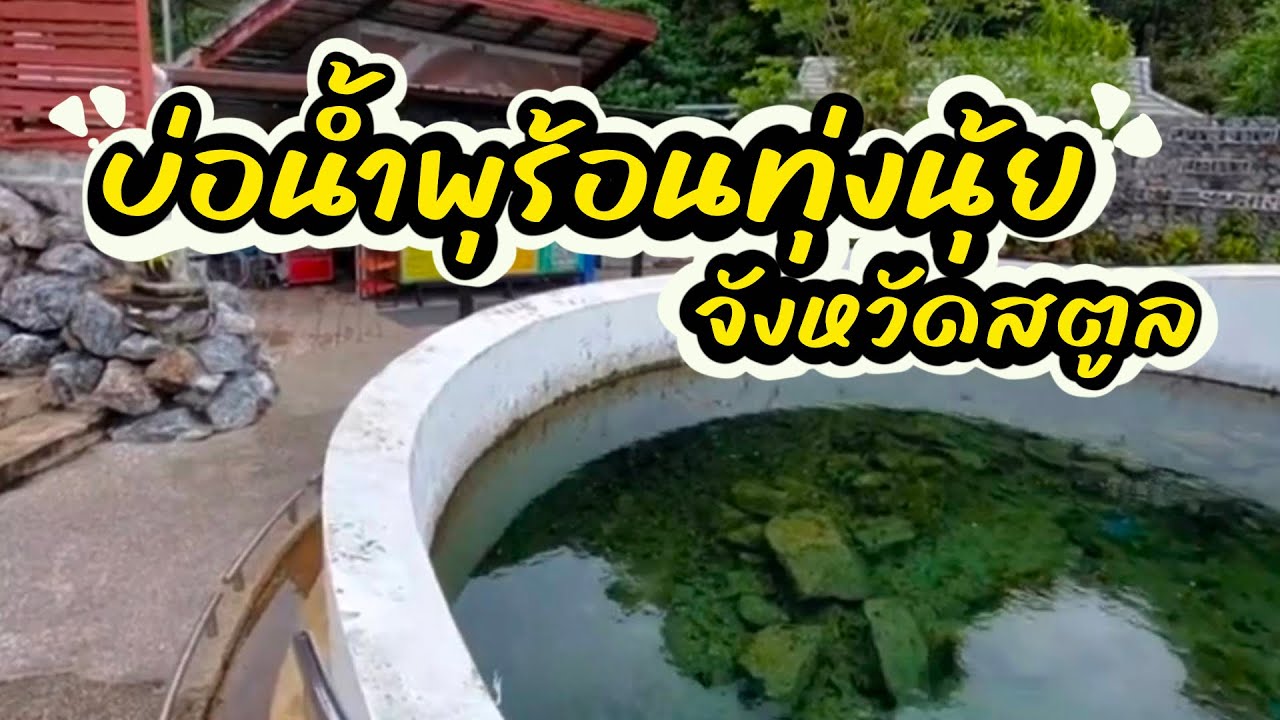
 Click to Access the Navigation Map GPS
Thung Nui Hot Spring Map
Recommend

 Art, Culture and Heritage
 Historical Sites and Monuments(1)
 Landmarks and Memorials(1)
 Art, Craft Centres, Tradition(5)
 Museums(3)
 Places of Worship
 Temple(3)
 Mosque(27)
 Other Sacred Sites(1)
 Suburban Living
 Village, Community(1)
 Local Market(2)
 National Parks and Marine Reserves(7)
 Mountain (Doi)(1)
 Dam, Reservoir, Lake(2)
 Waterfalls(9)
Hot Springs(1)
 Caves(9)
 Bays and Beaches(10)
 Islands(16)
 Other natural attractions(5)
 Entertainment and Agricultural
 Zoos and Aquariums(1)
 Farms, Parks and Ecotourism(4)
 Outdoor and Adventure Activities(1)
 Travel Articles, Recipes
 Travel Review, Food Review(1)


