
lovethailand home >South Travel Attractions >Krabi Travel Attractions > Best Time to Visit Thailand is Beaches 50 Beautifu..
TL;DR: Best Time to Visit Thailand is Beaches 50 Beautiful Beach Destinations by Season.

Best Time to Visit Thailand is Beaches 50 Beautiful Beach Destinations by Season
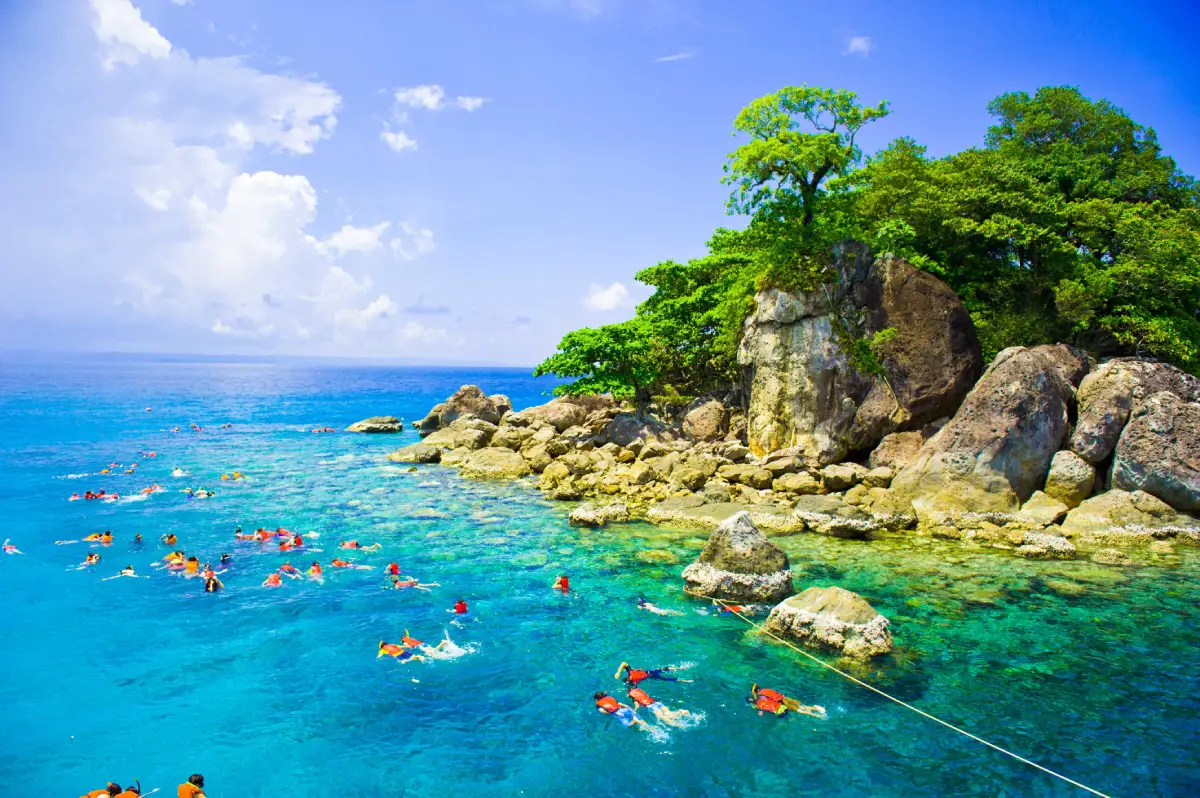
Best Time to Visit Thailand's Beaches: 50 Beautiful Beach Destinations by Season Thailand offers an extraordinary variety of beaches, tropical islands, limestone cliffs, coral reefs, and coastal communities along the Andaman Sea, the Gulf of Thailand, and the eastern coastline. However, the best time to visit depends on which part of the country you choose. The Andaman coast generally offers its most favorable beach conditions from November to April, while the islands of Koh Samui, Koh Phangan, and Koh Tao in the lower Gulf of Thailand often enjoy better travel conditions from February to September. Eastern island destinations such as Koh Chang, Koh Mak, and Koh Kood are generally most appealing between November and April.
For Phuket, Krabi, Phang Nga, Trang, and Satun, plan your beach holiday between November and April, particularly December to March. For Koh Samui, Koh Phangan, and Koh Tao, February to September is generally a better seasonal window. For Koh Chang, Koh Kood, Koh Mak, and Koh Samet, November to April is usually recommended. These are seasonal guidelines rather than guaranteed weather forecasts. Always check marine warnings, ferry schedules, and national park announcements before traveling.
Thailand's coastal regions offer distinctly different experiences. The Andaman Sea is famous for towering limestone formations, dramatic island scenery, turquoise lagoons, white-sand beaches, and rich marine ecosystems. The Gulf of Thailand is home to popular diving destinations and relaxed island resorts, while the eastern coast offers accessible beach holidays within reach of Bangkok. Understanding these differences helps travelers choose a destination that matches both their interests and the time of year.
Thailand is influenced by two major monsoon systems. The southwest monsoon, generally active from around mid-May to mid-October, brings increased rainfall, wind, and rougher seas to many parts of the Andaman coast. The northeast monsoon, which affects the country during the later months of the year and the beginning of the following year, can bring heavy rain and strong waves to the lower Gulf of Thailand. As a result, a month that is excellent for Phuket may not be ideal for Koh Samui, and vice versa.
For travelers planning a holiday between December and March, the Andaman Sea is an excellent starting point. Popular destinations include Railay Beach, the Phi Phi Islands, the Similan Islands, Koh Lipe, and Koh Lanta. Travelers visiting during the middle of the year can instead consider Koh Samui, Koh Phangan, and Koh Tao, where the seasonal weather pattern differs from that of the western coast.
Choosing the right destination also depends on the activities you want to enjoy. Families may prefer easily accessible beaches with accommodation and restaurants nearby. Divers should consider seasonal visibility, underwater currents, and marine park regulations. Travelers looking for quiet surroundings may prefer smaller islands and less-developed stretches of coast. In every case, safe swimming conditions and responsible tourism should take priority over photographs or general seasonal recommendations.
When visiting Thailand's beaches and islands, avoid stepping on coral, feeding marine wildlife, or leaving litter behind. Use licensed boat operators, follow lifeguard instructions, and respect the rules of national parks and protected marine areas. Even during the peak tourist season, rough seas, thunderstorms, and temporary closures can affect travel plans.
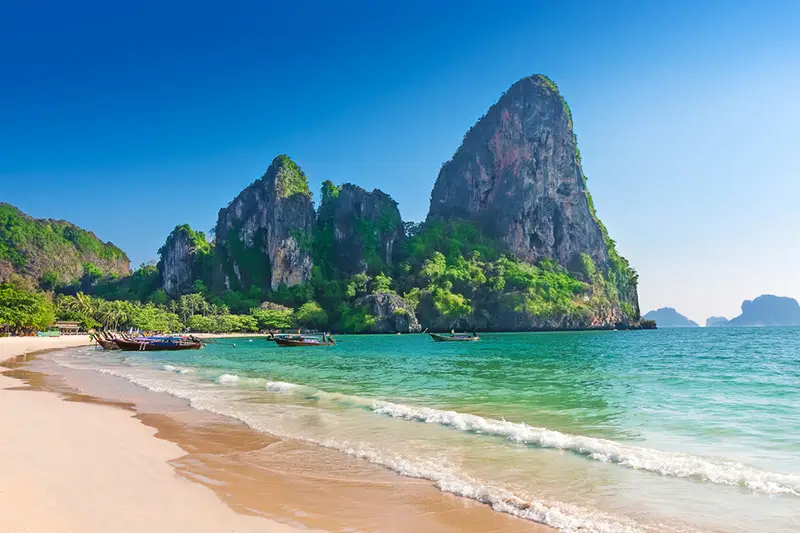
1. Railay Beach, Krabi Province, is one of Thailand's most recognizable coastal destinations. Located in Ao Nang Subdistrict, Mueang Krabi District, the beach is celebrated for its white sand, dramatic limestone cliffs, and spectacular Andaman Sea scenery. Although Railay is part of the mainland rather than an island, towering limestone formations prevent direct road access, so visitors must arrive by boat. This gives Railay a peaceful, island-like atmosphere.
Highlights: White-sand beaches, limestone cliffs, rock climbing, kayaking, Phra Nang Cave Beach, and sunset views from Railay West.
Best Time to Visit: November–April, particularly December–March. Season: Andaman Sea dry-season travel period, generally associated with the northeast monsoon.
December through March is generally the most favorable period for beach relaxation and outdoor activities at Railay. Compared with the southwest monsoon season, the sea is more likely to be calm, making long-tail boat transfers, kayaking, and coastal sightseeing more comfortable. April can also be suitable, although temperatures are usually higher and occasional thunderstorms may occur.
Railay consists of several distinct areas. Railay West is known for its sandy beachfront and sunset views, while Railay East has walking paths, restaurants, and access to other parts of the peninsula. Nearby Phra Nang Cave Beach is another spectacular destination, combining limestone scenery with a beautiful coastal setting. Rock-climbing routes attract visitors with different levels of experience, although proper equipment and professional instruction are essential.
The landscape is particularly appealing to photographers. Massive limestone walls rise above the beach, creating a dramatic contrast with the water and tropical vegetation. Visitors can explore several areas on foot, provided they allow sufficient time for changing tides, boat transfers, and weather conditions.
From May to October, the southwest monsoon can bring heavier rainfall and rougher seas. Long-tail boat journeys may become uncomfortable or be suspended during severe weather. Wet climbing surfaces and strong coastal currents also require additional caution. Travelers visiting during this period should keep their schedules flexible.
Railay Beach is particularly suitable for couples, photographers, climbers, and travelers seeking a combination of natural scenery and beach relaxation. It can also be combined with Phra Nang Cave Beach and nearby island excursions when sea conditions allow.
Getting There: Travel from Krabi Town to Ao Nang or Ao Nam Mao, then take a long-tail boat to Railay. Check the departure pier, operating schedule, and sea conditions before boarding, especially during the rainy season.
Map (GPS):View Railay Beach on Google Maps
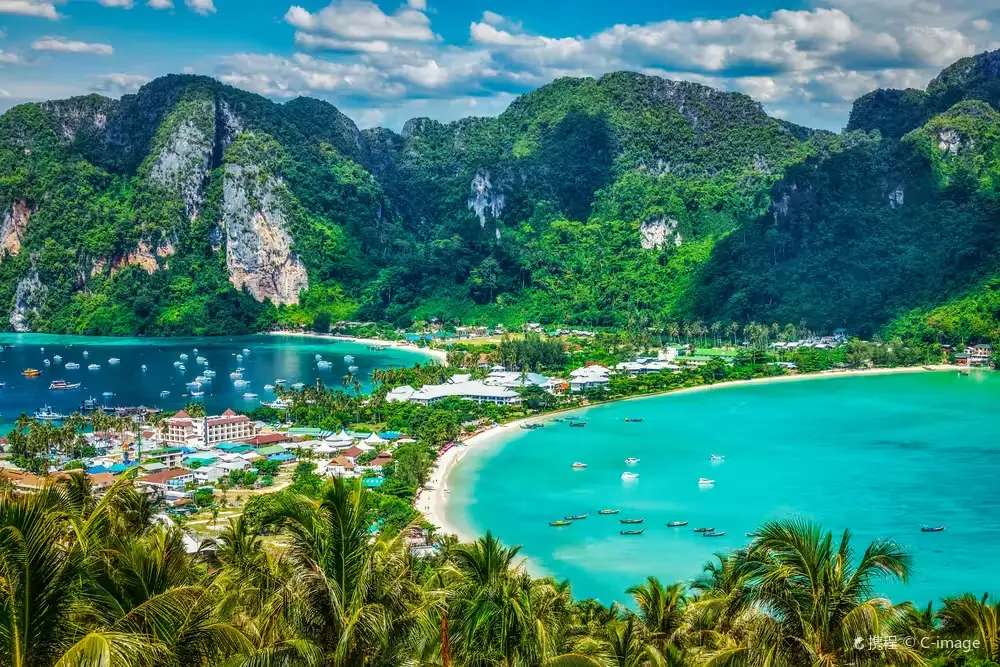
2. The Phi Phi Islands, Krabi Province, are among Thailand's best-known island destinations. The archipelago is famous for turquoise water, white-sand beaches, towering limestone cliffs, and picturesque bays. Its main islands include Koh Phi Phi Don, where most accommodation and visitor services are located, and Koh Phi Phi Le, known for Maya Bay, Pileh Lagoon, and other protected natural attractions.
Highlights: Maya Bay, Pileh Lagoon, limestone cliffs, turquoise water, viewpoints on Koh Phi Phi Don, snorkeling, and scuba diving.
Best Time to Visit: November–April, particularly December–March. Season: Andaman Sea high season.
The period from December to March generally provides the best opportunities for island sightseeing, swimming in permitted areas, and boat excursions around the Phi Phi Islands. Rainfall and wind are usually less persistent than during the southwest monsoon, although underwater visibility can still change according to currents, plankton, and daily weather conditions.
The islands' remarkable landscape is shaped by limestone formations rising directly from the sea. Over time, natural erosion has created steep cliffs, sheltered bays, and narrow beaches. Koh Phi Phi Don serves as the main transportation and accommodation hub, while Koh Phi Phi Le is primarily visited through organized boat excursions subject to national park regulations.
Maya Bay is internationally famous, but access is subject to conservation measures and seasonal restrictions. Travelers should confirm whether the bay and surrounding protected areas are open before booking a tour. A general recommendation to visit the Phi Phi Islands during the dry season does not automatically mean that every bay is accessible.
Between May and October, the southwest monsoon can bring stronger winds, higher waves, and reduced marine visibility. Ferry and tour-boat schedules may change, and some routes may be canceled. Choosing experienced, licensed operators and following marine weather warnings is essential.
The Phi Phi Islands are ideal for travelers interested in snorkeling, diving, photography, limestone landscapes, and tropical beaches. Day trips are available from Krabi and Phuket, but staying overnight on Koh Phi Phi Don allows more time for viewpoints, island walks, and relaxed sightseeing.
Getting There: Take a ferry or speedboat from an authorized departure point in Krabi or Phuket to Koh Phi Phi Don. Excursions to Koh Phi Phi Le require an additional boat trip and must follow the regulations of the national park.
Map (GPS):View the Phi Phi Islands on Google Maps
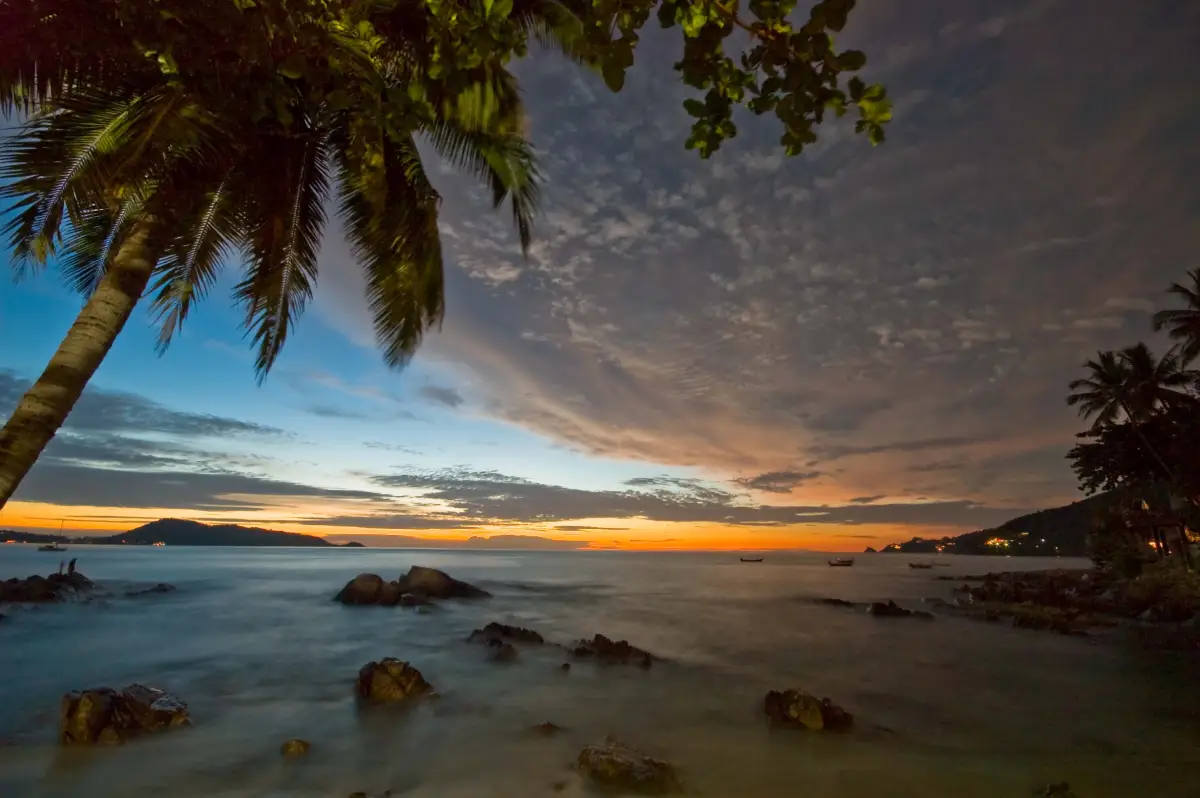
3. Patong Beach, Phuket Province, is one of Thailand's most famous beach resort areas. Located in Patong Subdistrict, Kathu District, it is known for its long sandy shoreline, hotels, restaurants, shopping, nightlife, and marine activities. Patong is particularly attractive to travelers seeking a lively beach destination with extensive facilities and convenient transportation.
Highlights: A long sandy beach, waterfront activities, restaurants, shopping, accommodation, and Phuket's lively entertainment district.
Best Time to Visit: November–April, especially December–March. Season: Andaman Sea dry season.
December through March is generally the most comfortable period for enjoying Patong's beachfront. The weather is often less rainy than during the southwest monsoon season, and the sea is more likely to be suitable for swimming when lifeguards permit it. Visitors can spend the morning at the beach, explore restaurants and shopping areas during the afternoon, and enjoy the lively evening atmosphere.
Patong differs from quieter beaches because it functions as a complete tourist town. Hotels, shops, entertainment venues, transportation services, and tour operators are concentrated around the beachfront and surrounding roads. Travelers who prefer a more relaxed atmosphere can explore other beaches on Phuket's west coast.
During the southwest monsoon season, approximately May through October, strong waves and rip currents may develop along Phuket's western beaches. Such currents can be dangerous even when the sky is sunny. Visitors should obey beach warning flags and lifeguard instructions. Swimming should never take place where red flags prohibit entry.
Patong is well suited to first-time visitors to Phuket, groups of friends, couples, and travelers who value convenience. Marine activities should be arranged with operators that follow proper safety standards and local rules.
Getting There: Travel from Phuket International Airport or Phuket Town by car, taxi, shuttle, or another available transport service. The route from Phuket Town passes through Kathu District toward Patong. Allow extra time during busy periods and heavy rainfall.
Map (GPS):View Patong Beach on Google Maps
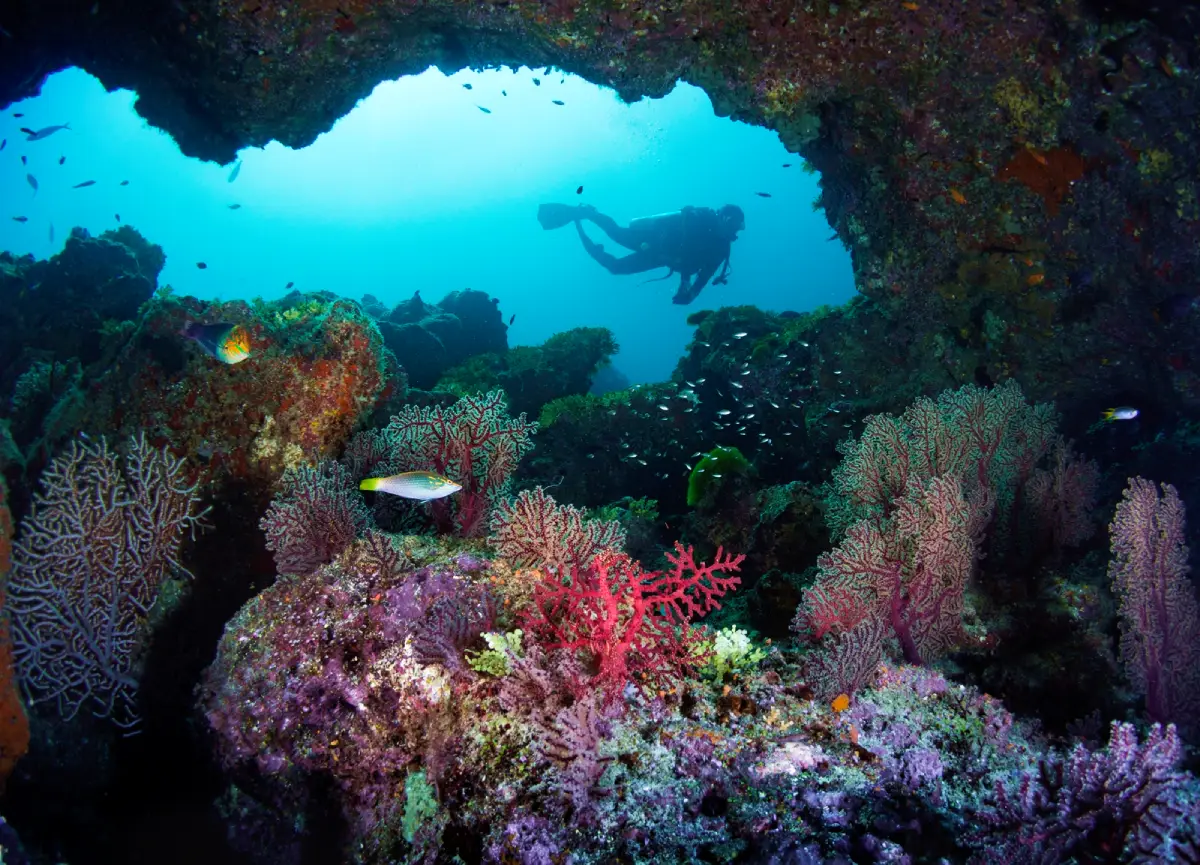
4. Mu Ko Similan National Park, Phang Nga Province, is one of Thailand's most celebrated marine destinations. Situated in the Andaman Sea, the national park is renowned for exceptionally beautiful beaches, clear turquoise water, distinctive granite boulders, and rich underwater ecosystems. Because it is a protected marine area, tourism is controlled through seasonal opening periods and conservation regulations.
Highlights: White-sand beaches, turquoise water, granite boulders, scenic viewpoints, coral reefs, and diving in authorized areas.
Best Time to Visit: December–April, subject to official national park opening dates. Season: Andaman Sea dry season and the park's designated visitor season.
December through April generally provides favorable conditions for visiting the Similan Islands. Compared with the southwest monsoon season, the sea is more likely to be suitable for boat journeys, snorkeling, and approved diving activities. The islands' combination of pale sand, granite formations, and brilliantly colored water makes them especially popular with photographers and marine nature enthusiasts.
The national park protects an important marine ecosystem, including coral reefs, reef fish, and other underwater life. Visitors must remain within approved tourism zones, avoid touching coral, and follow instructions from park staff and licensed tour operators.
Unlike ordinary public beaches, the Similan Islands are not a destination that travelers should assume remains open throughout the year. Seasonal closures are imposed during the monsoon and for environmental protection. Exact reopening and closing dates must be checked against the current national park announcement, particularly for trips planned in October or May.
Sea crossings take longer than reaching beaches on the mainland, so travelers should consider their comfort with boat travel and choose tours that provide appropriate safety equipment. Even during the tourist season, adverse weather can result in changes or cancellations.
The Similan Islands are ideal for photographers, divers, and travelers seeking exceptional tropical island scenery. Responsible travel is essential because the area's natural beauty depends on the health of its protected environment.
Getting There: Travel to an authorized boat departure point in Phang Nga Province, including services operating from the Khao Lak area and Thap Lamu Pier. Confirm the national park's opening status, booking requirements, tour authorization, and marine forecast before departure.
Map (GPS):View the Similan Islands on Google Maps
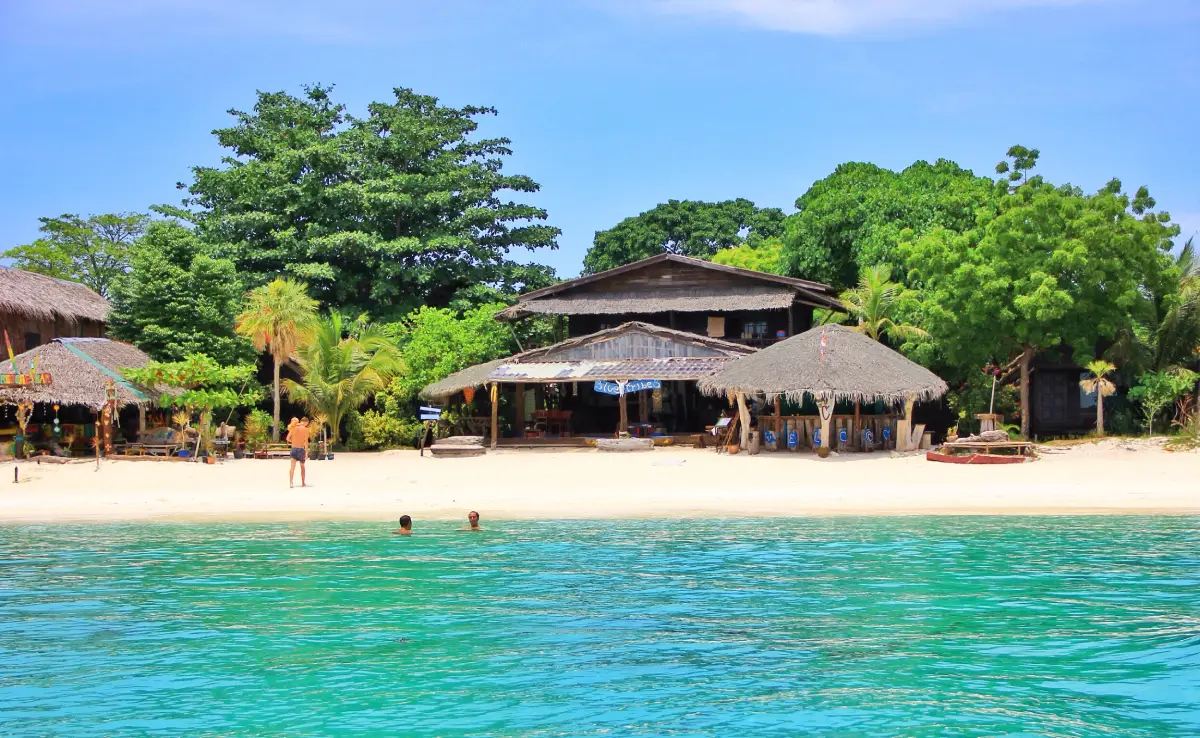
5. Koh Lipe, Satun Province, is a small island in the southern Andaman Sea near Mu Ko Tarutao National Park. Known for its white-sand beaches, clear turquoise water, snorkeling areas, and relaxed island atmosphere, Koh Lipe attracts visitors who want to explore Thailand's southern islands. Its compact size makes it possible to walk between several major beaches.
Highlights: Pattaya Beach, Sunrise Beach, Sunset Beach, clear water, snorkeling, and boat excursions to permitted marine areas.
Best Time to Visit: November–April, particularly December–March. Season: Southern Andaman Sea high season.
December to March is generally the best period for a Koh Lipe holiday. Sea conditions are more likely to be favorable for passenger boats, snorkeling, beach walks, and visiting nearby islands. Clear skies and calm water are common attractions of this period, although weather and underwater visibility vary from day to day.
Koh Lipe has several beaches with different characteristics. Pattaya Beach is a major arrival and accommodation area, Sunrise Beach is popular for early morning views, and Sunset Beach attracts visitors seeking a quieter end to the day. Walking between these areas is part of the island experience, though the tropical heat makes mornings and late afternoons more comfortable.
The island also has cultural significance through its sea-community heritage. Travelers should respect residential areas and local customs while protecting the surrounding marine environment. Coral reefs and marine wildlife must not be disturbed, and all rubbish should be disposed of properly.
From May to October, the southwest monsoon brings a greater possibility of rain, rough seas, and disruptions to passenger boat services. Some routes may operate less frequently or be suspended according to conditions. Travelers should verify connections before booking and allow extra time for unexpected changes.
Koh Lipe is particularly suitable for couples, snorkeling enthusiasts, and travelers looking for a relaxed island holiday with access to beautiful beaches and southern Andaman scenery.
Getting There: Travel to Pak Bara Pier in La-ngu District, Satun Province, and take an operating passenger boat or speedboat to Koh Lipe. Check the current timetable and marine weather warnings before departure.
Map (GPS):View Koh Lipe on Google Maps
### English HTML — Destinations 6–10
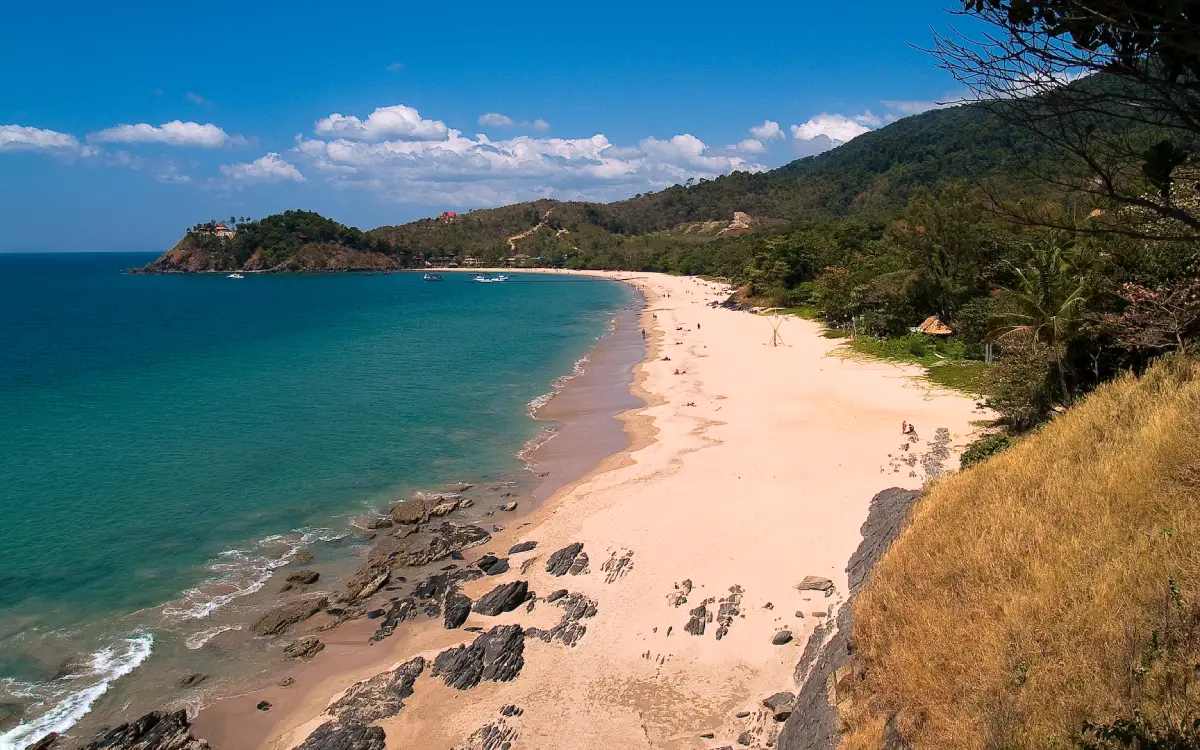
6. Koh Lanta Yai, Krabi Province, is a large island in the Andaman Sea known for its long sandy beaches, peaceful atmosphere, and traditional coastal communities. Unlike more crowded island resorts, Koh Lanta offers a relaxed environment where visitors can explore beaches, fishing villages, local restaurants, and scenic sunset spots at their own pace.
Highlights: Long west-coast beaches, peaceful resorts, sunset views, Lanta Old Town, local communities, and nature excursions.
Best Time to Visit: November–April, especially December–March. Season: Andaman Sea dry season.
Late December through March is generally an excellent period for enjoying Koh Lanta's beaches and outdoor attractions. Rainfall and strong winds are typically less frequent than during the southwest monsoon season, making beach walks, sunset photography, and coastal exploration more comfortable.
The island has a distinctive character, combining tourism facilities with fishing communities and traditional neighborhoods. Lanta Old Town is particularly interesting for visitors who want to explore the island's maritime heritage, while the western beaches are popular for resort stays and evening views across the Andaman Sea.
Visitors interested in snorkeling and diving can join excursions to nearby marine destinations when sea conditions and conservation regulations permit. Tour availability varies seasonally, especially for destinations farther from shore.
From May to October, the southwest monsoon can bring heavier rain, stronger waves, and interruptions to some boat services. While visitors can still travel to the island in suitable conditions, certain water activities and seasonal tourism services may be limited.
Koh Lanta is particularly suitable for couples, families, and travelers who prefer a quieter holiday. Spending several nights on the island allows time to explore different beaches and learn about its local communities.
Getting There: Travel from Krabi Town toward Koh Lanta District and use the available road and vehicle-ferry connections to reach Koh Lanta Yai. Check ferry operations and road conditions, particularly during the rainy season.
Map (GPS):View Koh Lanta Yai on Google Maps
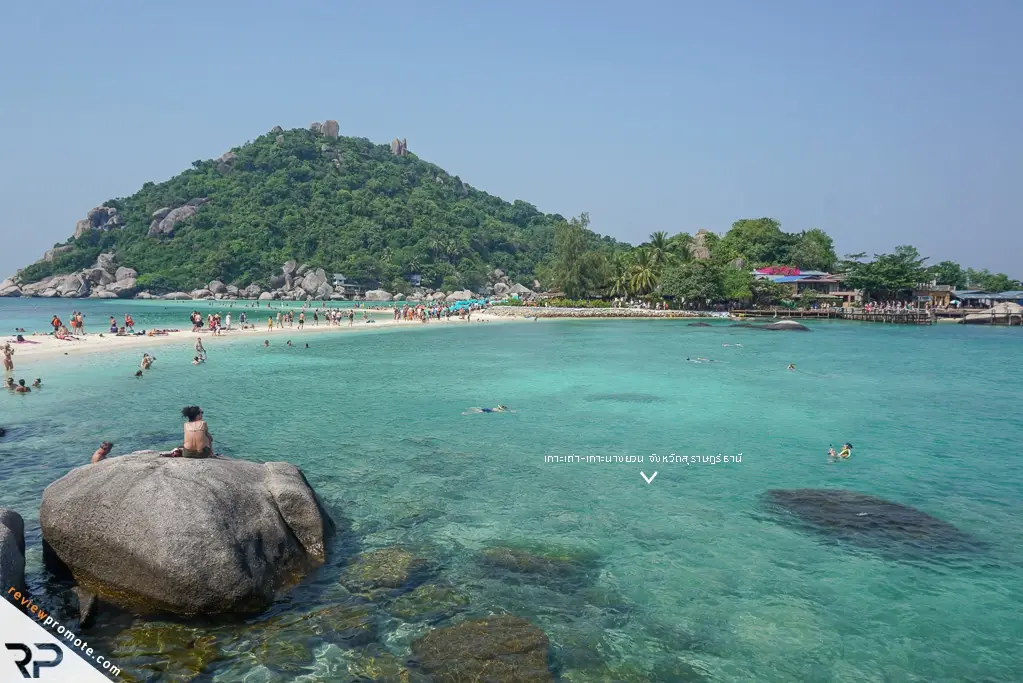
7. Koh Tao, Surat Thani Province, is one of Thailand's best-known destinations for scuba diving and snorkeling. Located in the Gulf of Thailand, the island has numerous bays, beaches, rocky coastlines, and coral reef areas. Visitors can choose between relaxed beach holidays, snorkeling excursions, and certified diving courses provided by professional dive centers.
Highlights: Scuba diving, snorkeling, coral reefs, scenic bays, island viewpoints, and boat excursions to nearby Koh Nang Yuan.
Best Time to Visit: February–September, particularly March–August. Season: The generally favorable marine travel period for the lower Gulf of Thailand.
Koh Tao is especially attractive to travelers visiting Thailand during the middle of the year. While the Andaman coast may experience strong southwest monsoon conditions, Koh Tao often has opportunities for beach activities and diving between February and September. However, underwater visibility depends on currents, plankton, rainfall, and other local conditions, so no particular month guarantees perfect diving every day.
The coastline is formed by small bays, sandy beaches, rocky headlands, and reef habitats. Travelers can spend their time relaxing beside the sea or learning to dive through an accredited training provider. Divers must follow the limits of their certification, environmental regulations, and the instructions of qualified professionals.
Marine conservation is important around Koh Tao. Visitors should never stand on coral, touch marine animals, or feed fish. Choosing responsible tour operators helps protect the underwater ecosystems that make the island an internationally recognized diving destination.
October through December is generally a period of greater concern because the lower Gulf of Thailand can experience heavy rain, strong winds, and rough seas. Passenger boats may be delayed or canceled when conditions are unsuitable. Travelers with connecting flights should allow sufficient flexibility in their schedules.
Koh Tao is ideal for divers, couples, independent travelers, and visitors who enjoy marine wildlife. Koh Nang Yuan can also be included in a suitable day trip when boats are operating and access is permitted.
Getting There: Take an operating ferry or passenger boat from an authorized departure point in Chumphon or Surat Thani Province. Check boat schedules, weather conditions, and luggage arrangements before departure.
Map (GPS):View Koh Tao on Google Maps
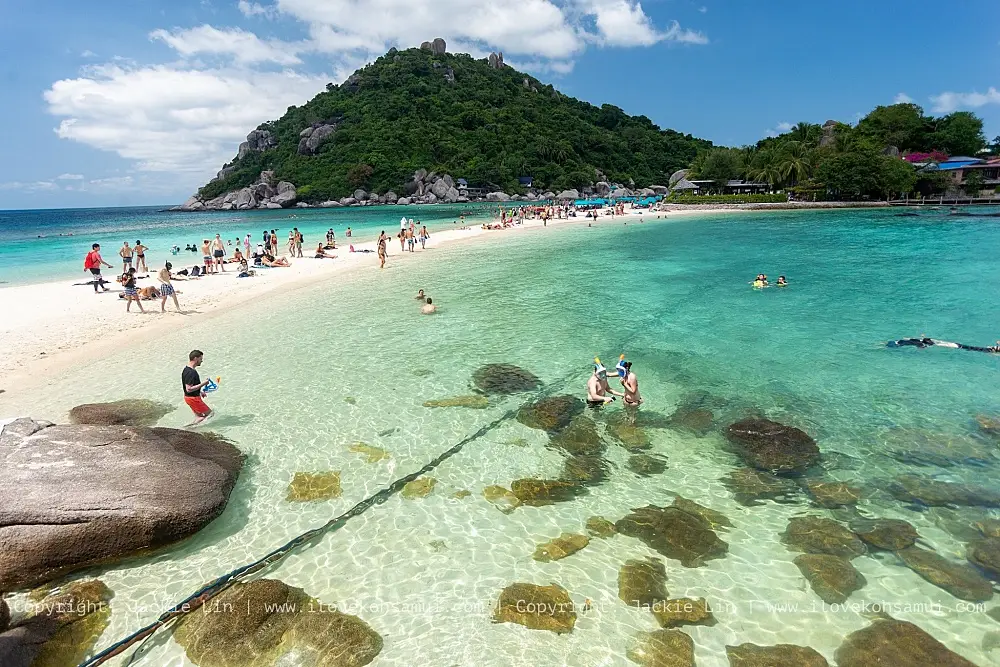
8. Koh Samui, Surat Thani Province, is one of Thailand's leading island holiday destinations. Located in the Gulf of Thailand, Koh Samui offers beautiful beaches, extensive accommodation choices, restaurants, tropical scenery, and marine activities. Visitors can choose from lively resort areas such as Chaweng Beach and more relaxed beachfront settings such as Lamai Beach.
Highlights: Chaweng Beach, Lamai Beach, tropical resorts, coastal viewpoints, restaurants, and excursions to nearby islands.
Best Time to Visit: February–September, particularly February–April. Season: The generally drier and more favorable travel period for Koh Samui compared with the late-year monsoon months.
February through April is generally one of the most attractive periods for a beach holiday on Koh Samui. Rainfall is often lower than during the later part of the year, making beach walks, resort stays, and outdoor sightseeing more enjoyable. May through August can also be suitable in many years, although occasional thunderstorms and strong winds remain possible.
Koh Samui has a wide range of beaches with different atmospheres. Chaweng Beach is known for its extensive accommodation and entertainment facilities, while Lamai Beach offers another popular coastal setting with restaurants and nearby natural attractions. Other beaches around the island may appeal to travelers seeking quieter surroundings.
Boat excursions allow visitors to explore nearby islands and protected marine areas when conditions permit. Such trips should be booked with responsible operators who follow safety requirements and the rules of any national park or conservation area included in the itinerary.
October through December generally brings a higher risk of heavy rainfall and rough seas in the lower Gulf of Thailand. November is often particularly wet on Koh Samui. Visitors traveling during these months should keep their plans flexible and monitor the latest weather forecast before booking boat excursions.
Koh Samui is well suited to families, couples, and travelers seeking a combination of comfortable accommodation, coastal scenery, and convenient tourism services. It can also serve as a starting point for journeys to Koh Phangan and other Gulf islands.
Getting There: Fly directly to Samui Airport or travel through Surat Thani Province and continue by road and ferry. Once on the island, taxis, shuttle services, and rental vehicles provide access to beaches and accommodation areas.
Map (GPS):View Koh Samui on Google Maps

9. Hat Sai Kaew (Koh Samet), Rayong Province, is one of the most popular beaches on Koh Samet, an island off Thailand's eastern coast. It is known for its pale sandy shoreline, attractive sea views, restaurants, and beachfront accommodation. Because Koh Samet is relatively accessible from Bangkok and nearby provinces, it is a popular choice for short holidays and weekend trips.
Highlights: Fine white sand, beach accommodation, seaside restaurants, relaxation, and water activities when sea conditions are safe.
Best Time to Visit: November–April, particularly December–March. Season: The generally drier travel period on Thailand's eastern coast.
Late November through April is generally a favorable time to visit Koh Samet. Rainfall tends to be lower than during the southwest monsoon season, making beach walks and short island holidays more convenient. Peak holiday periods can be busy, so advance accommodation and boat reservations are advisable.
Hat Sai Kaew lies on the northeastern side of Koh Samet and is one of the island's main tourism areas. Its beachfront offers a variety of restaurants and accommodation choices, making it suitable for visitors who want services close at hand. Travelers looking for a quieter setting may consider other beaches around the island, such as Ao Phrao.
The island is associated with a protected marine environment, so responsible visitor behavior is important. Travelers should keep the beach clean, avoid littering, and respect local regulations intended to preserve coastal habitats and marine wildlife.
From May through October, heavier rainfall and stronger monsoon winds are more likely. Ferry and speedboat services may be affected by rough weather, while water activities require careful assessment of local conditions. Flexible travel plans are particularly useful during this period.
Hat Sai Kaew is ideal for families, couples, and travelers seeking a convenient island break without having to travel to southern Thailand.
Getting There: Travel from Bangkok to Ban Phe in Mueang Rayong District, then take an authorized ferry or passenger boat to Koh Samet. Continue from the island's pier to Hat Sai Kaew by local transportation or on foot where appropriate.
Map (GPS):View Hat Sai Kaew on Google Maps

10. Koh Kood, Trat Province, is a large island in Thailand's eastern waters, celebrated for its white-sand beaches, turquoise sea, lush forests, and peaceful atmosphere. Visitors looking for a quiet island getaway can enjoy the island's beaches, natural surroundings, and local coastal communities without the intense activity found in larger resort destinations.
Highlights: White-sand beaches, scenic bays, clear water, tropical forests, waterfalls, and a relaxed island environment.
Best Time to Visit: November–April, particularly December–March. Season: The generally drier northeast monsoon period and the main tourist season for Trat's islands.
December through March is generally the most favorable time to visit Koh Kood. Rainfall tends to be lower than during the southwest monsoon season, while boat conditions are more likely to be suitable for travel from the mainland. Visitors can spend their days exploring sandy bays, relaxing at beachfront resorts, and enjoying the island's natural scenery.
Koh Kood's appeal extends beyond its coastline. The island has forested landscapes, streams, small communities, and scenic natural areas that allow travelers to combine a beach holiday with inland exploration. Its atmosphere makes it particularly attractive to visitors who prefer a slower pace.
Different bays offer different experiences. Some are well suited to photography and quiet beach walks, while others have a greater concentration of resorts and visitor facilities. Selecting accommodation according to its location can make traveling around the island easier.
From May to October, Koh Kood receives more influence from the southwest monsoon. Heavy rainfall, stronger winds, and rough seas can affect ferry schedules and excursions, particularly during the wetter months. Travelers should confirm transport availability before booking accommodation and allow for possible delays.
Koh Kood is especially suitable for couples, families, and nature lovers who want to spend several days enjoying an island setting. Respect for local communities and the marine environment is an important part of a responsible visit.
Getting There: Travel from Bangkok or elsewhere in Thailand to Trat Province, then continue to an operating pier with ferry or speedboat services to Koh Kood. Upon arrival, use accommodation transfers or local transportation to reach your selected beach.
Map (GPS):View Koh Kood on Google Maps
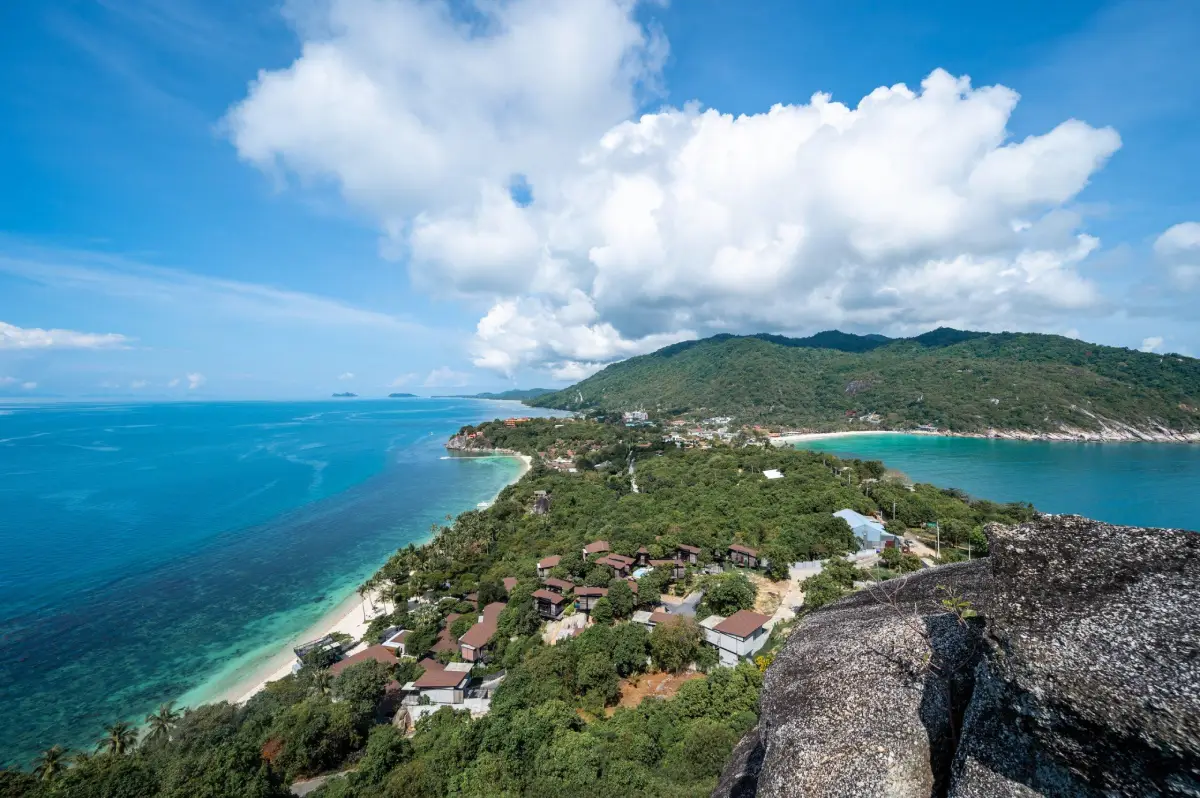
11. Koh Phangan, Surat Thani Province, is a large island in the Gulf of Thailand, located in Koh Phangan District. It is famous for its beautiful beaches, secluded bays, tropical forests, and diverse tourism experiences, ranging from peaceful seaside holidays and snorkeling to the internationally recognized Full Moon Party at Haad Rin. The island appeals to different types of travelers because each coastal area has a distinctive atmosphere.
Highlights: Haad Rin, Thong Nai Pan Beach, Haad Salad, scenic bays, sunset viewpoints, and a variety of marine and nature activities.
Best Time to Visit: February–September, particularly February–April and many periods during July–August. Season: The generally favorable beach travel period for the lower Gulf of Thailand.
Koh Phangan experiences a different seasonal pattern from Thailand's Andaman coast. February through April generally brings less rainfall than the late-year monsoon period, making it attractive for swimming in permitted areas, beach relaxation, and sightseeing. July and August can also be suitable for island travel in many years, although thunderstorms, strong winds, and changing sea conditions remain possible.
The island's beaches cater to different interests. Haad Rin is particularly famous for its Full Moon Party and lively tourism atmosphere, while Thong Nai Pan offers scenic bays surrounded by green hills. Beaches on the western side of the island are popular for their relaxing atmosphere and sunset views. Travelers can choose accommodation according to whether they prefer nightlife, comfortable resorts, or quieter coastal surroundings.
Beyond its beaches, Koh Phangan has mountainous terrain and forested areas that provide opportunities for nature exploration. Some roads connecting coastal areas are steep and winding, especially routes passing through the hills. Motorists and motorcyclists should exercise caution during rainy weather and avoid unfamiliar mountain roads after dark.
October through December is generally the period requiring greater caution because the lower Gulf of Thailand can experience heavy rainfall, rough seas, and strong northeast monsoon winds. Ferry and speedboat connections between Koh Phangan, Koh Samui, and Koh Tao may be delayed, rescheduled, or canceled when marine conditions are unsuitable.
Koh Phangan is ideal for couples, groups of friends, nature lovers, and travelers seeking a multi-day island holiday. It can be combined with Koh Samui and Koh Tao when transport schedules and sea conditions permit.
Getting There: Travel to Surat Thani Province or Koh Samui, then take an operating ferry or passenger boat to Koh Phangan. Local taxis, accommodation transfers, and rental vehicles provide transport to the island's beaches. Check ferry timetables, road conditions, and weather forecasts before traveling.
Map (GPS):View Koh Phangan on Google Maps
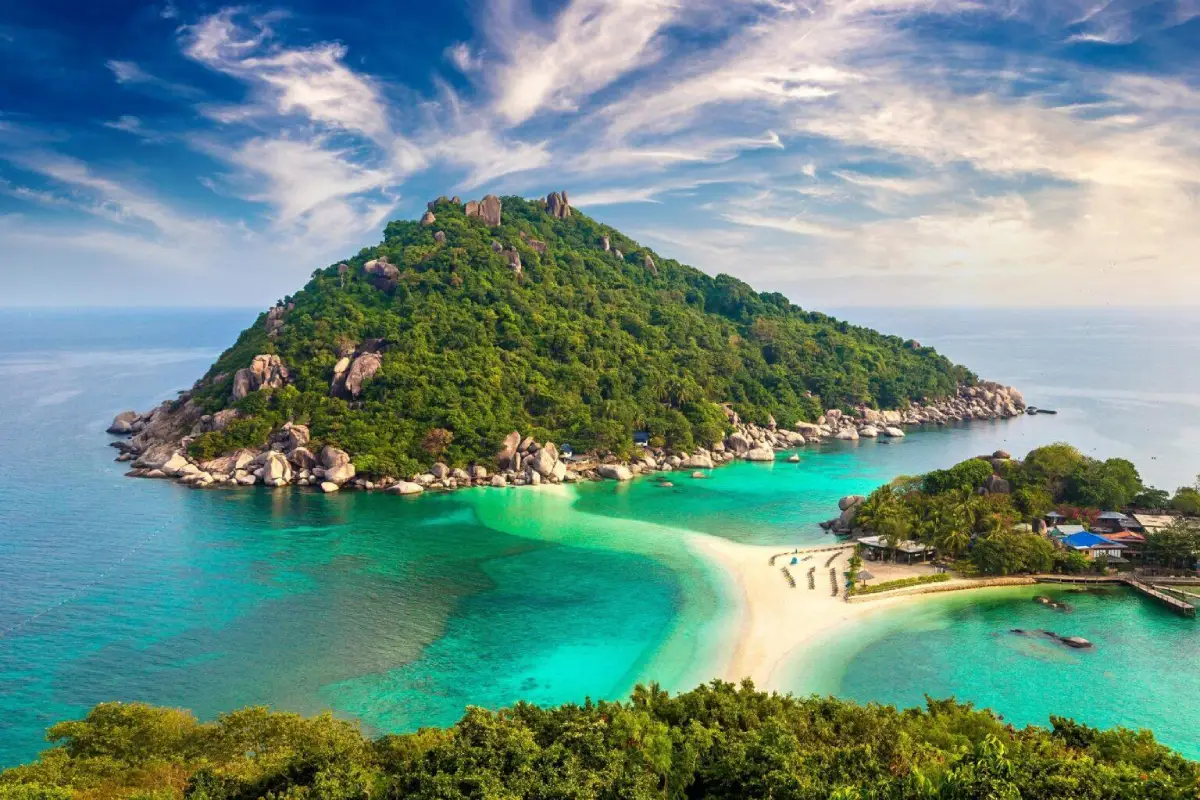
12. Koh Nang Yuan, Surat Thani Province, is a small island group situated near Koh Tao in the Gulf of Thailand. Its distinctive geography consists of three rocky island sections connected by narrow strips of white sand, creating one of the most recognizable coastal landscapes in Thailand. The surrounding turquoise water, coral habitats, and elevated viewpoints make Koh Nang Yuan particularly attractive to photographers and snorkeling enthusiasts.
Highlights: Sandbars connecting three island sections, an elevated viewpoint, clear turquoise water, white-sand beaches, and permitted snorkeling areas.
Best Time to Visit: February–September, particularly March–August. Season: The generally favorable marine travel period around Koh Tao and the lower Gulf of Thailand.
Koh Nang Yuan has a seasonal travel pattern similar to nearby Koh Tao. March through August can offer favorable opportunities for sightseeing, swimming in permitted locations, and snorkeling when marine conditions are suitable. Its proximity to Koh Tao makes it a popular half-day or day excursion, although boat services and access remain subject to weather conditions.
The island group's most remarkable feature is its natural sandbar system. Three rocky island sections are linked by narrow sandy stretches that create a striking contrast with the surrounding turquoise sea. From the designated viewpoint, visitors can appreciate the distinctive shape of the island group and the patterns formed by the beaches and water.
Reaching the viewpoint involves walking uphill along a designated route, including steps and sections that require appropriate footwear. During hot weather, carrying drinking water and allowing time to rest is recommended. Visitors should avoid leaving the approved path or climbing onto unsafe rocks for photographs.
The waters around Koh Nang Yuan include snorkeling areas where visitors can observe marine life under suitable conditions. Coral reefs must not be stepped on or touched, and marine animals should never be fed or disturbed. Visitors should also follow local environmental rules and any restrictions on bringing items onto the island.
October through December usually brings a higher risk of rain and rough seas in the lower Gulf of Thailand. Even though Koh Nang Yuan is close to Koh Tao, small-boat journeys can be affected by strong winds and waves. Travelers should check the island's current visiting hours, access arrangements, and boat availability before departure.
Koh Nang Yuan is especially suitable for photographers, couples, and visitors who enjoy natural island scenery. It is best included in a Koh Tao itinerary rather than treated as a separate destination requiring an additional overnight journey.
Getting There: Travel to Koh Tao and continue by an authorized local boat or island excursion service to Koh Nang Yuan. Check operating schedules, visitor regulations, and marine weather conditions before boarding.
Map (GPS):View Koh Nang Yuan on Google Maps
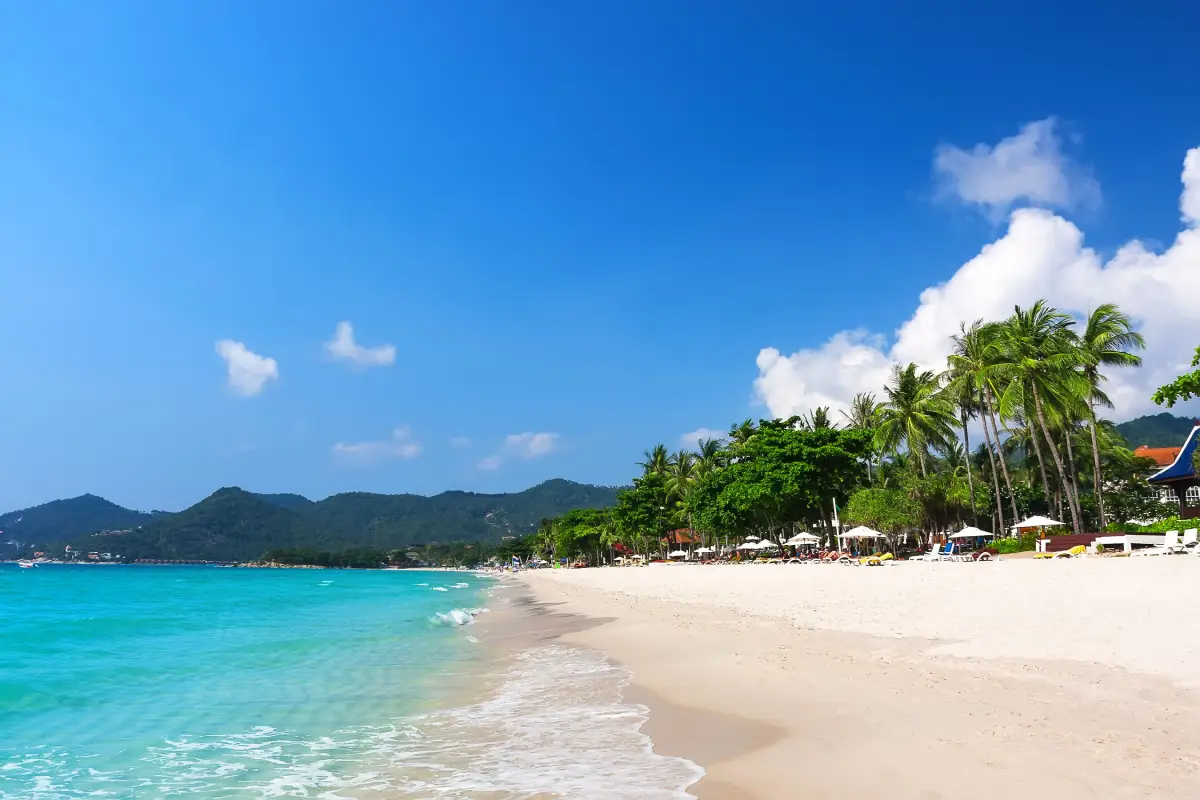
13. Chaweng Beach, Surat Thani Province, is one of the most popular beaches on Koh Samui. Located on the eastern coast of the island, it features a long stretch of white sand, attractive tropical scenery, and a wide range of hotels, resorts, restaurants, and entertainment facilities. Chaweng is ideal for travelers who want a lively beach holiday with convenient access to accommodation and tourism services.
Highlights: A long white-sand beach, beachfront resorts, restaurants, leisure activities, and convenient access to other attractions on Koh Samui.
Best Time to Visit: February–September, particularly February–April and suitable periods during the middle of the year. Season: The generally favorable beach holiday period for Koh Samui.
February through April is generally an excellent time to enjoy Chaweng Beach because Koh Samui usually experiences less rainfall than during the late-year monsoon months. Beach walks, resort stays, and outdoor sightseeing are particularly appealing during this period. May through August can also be suitable in many years, although thunderstorms and changes in sea conditions remain possible.
Chaweng is distinguished by the length of its beachfront and the extensive tourism facilities surrounding it. Travelers can choose accommodation ranging from small hotels to large beachfront resorts, while nearby restaurants serve both Thai cuisine and international dishes. The area offers an active tourism atmosphere throughout much of the year.
Despite its popularity, swimming conditions are not always safe. Waves, water depth, and currents can change with the weather, particularly during the monsoon. Visitors should check beach warning flags and avoid swimming near dangerous currents or rocky sections.
October through December generally brings a higher risk of heavy rainfall and stronger winds to Koh Samui. November is often one of the island's wettest months, and rough seas may affect water activities and ferry excursions. Travelers visiting during this season should choose flexible itineraries with alternative indoor activities.
Chaweng Beach is suitable for couples, families, and groups of friends seeking a combination of beach scenery and convenient facilities. Other destinations around Koh Samui, including Lamai Beach, can be explored during the same trip.
Getting There: Arrive on Koh Samui by air or ferry, then travel to Chaweng on the island's eastern coast using a taxi, accommodation transfer, or rental vehicle.
Map (GPS):View Chaweng Beach on Google Maps
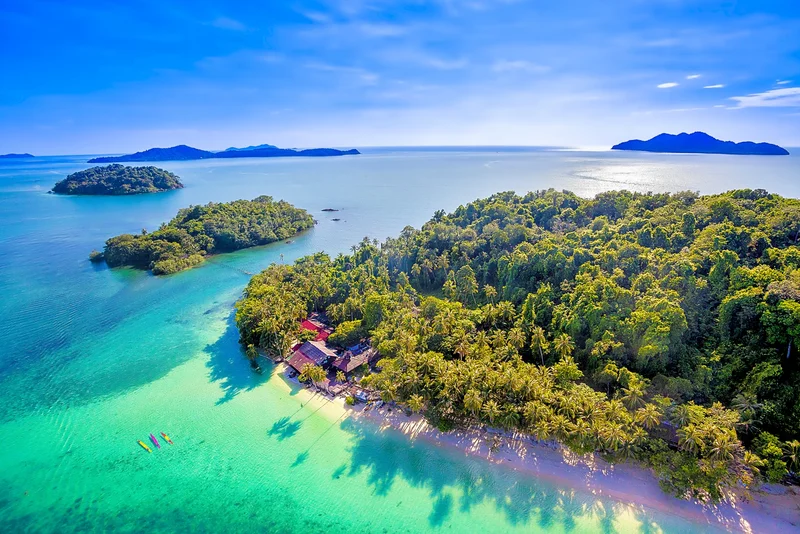
14. Mu Ko Chang National Park, Trat Province, is an important protected marine and forest area encompassing Koh Chang and surrounding islands in eastern Thailand. Koh Chang is one of the country's larger islands, combining sandy beaches with mountainous forests, waterfalls, and local communities. The national park offers opportunities to enjoy both coastal landscapes and inland nature within a single holiday.
Highlights: Koh Chang's beaches, forested mountains, viewpoints, waterfalls, and authorized marine excursions within the surrounding island group.
Best Time to Visit: November–April, especially December–March. Season: The generally drier tourist season for Trat's islands.
December through March is usually one of the best periods for visiting Koh Chang. Rainfall tends to be lower than during the southwest monsoon season, and marine conditions are often more favorable for ferry services, beach relaxation, and authorized island excursions.
Koh Chang has mountainous terrain covered by forest, along with several important beaches on its western coast. Travelers can choose to stay near White Sand Beach, Klong Prao Beach, or other areas depending on whether they prefer busy resort districts or quieter surroundings.
The protected landscapes of Mu Ko Chang National Park are important for conserving tropical forests, headwater resources, coral reefs, and coastal ecosystems. Visitors should follow national park regulations when entering protected areas, joining diving activities, or visiting neighboring islands.
From May through October, Trat Province receives increased rainfall associated with the southwest monsoon. Some periods may bring persistent rain, strong waves, and difficult conditions for boat excursions. Travelers should monitor marine warnings and check transport services before leaving the mainland.
Koh Chang is suitable for families, couples, and nature enthusiasts planning a multi-day holiday. With sufficient time, travelers can also consider Koh Mak or Koh Kood, provided that seasonal boat connections are available.
Getting There: Travel from Bangkok or elsewhere in Thailand to Trat Province and continue to an operating ferry pier for Koh Chang. After arriving on the island, use local transport or a vehicle to reach the beaches. Some roads are steep and winding, so drive cautiously, particularly in wet weather.
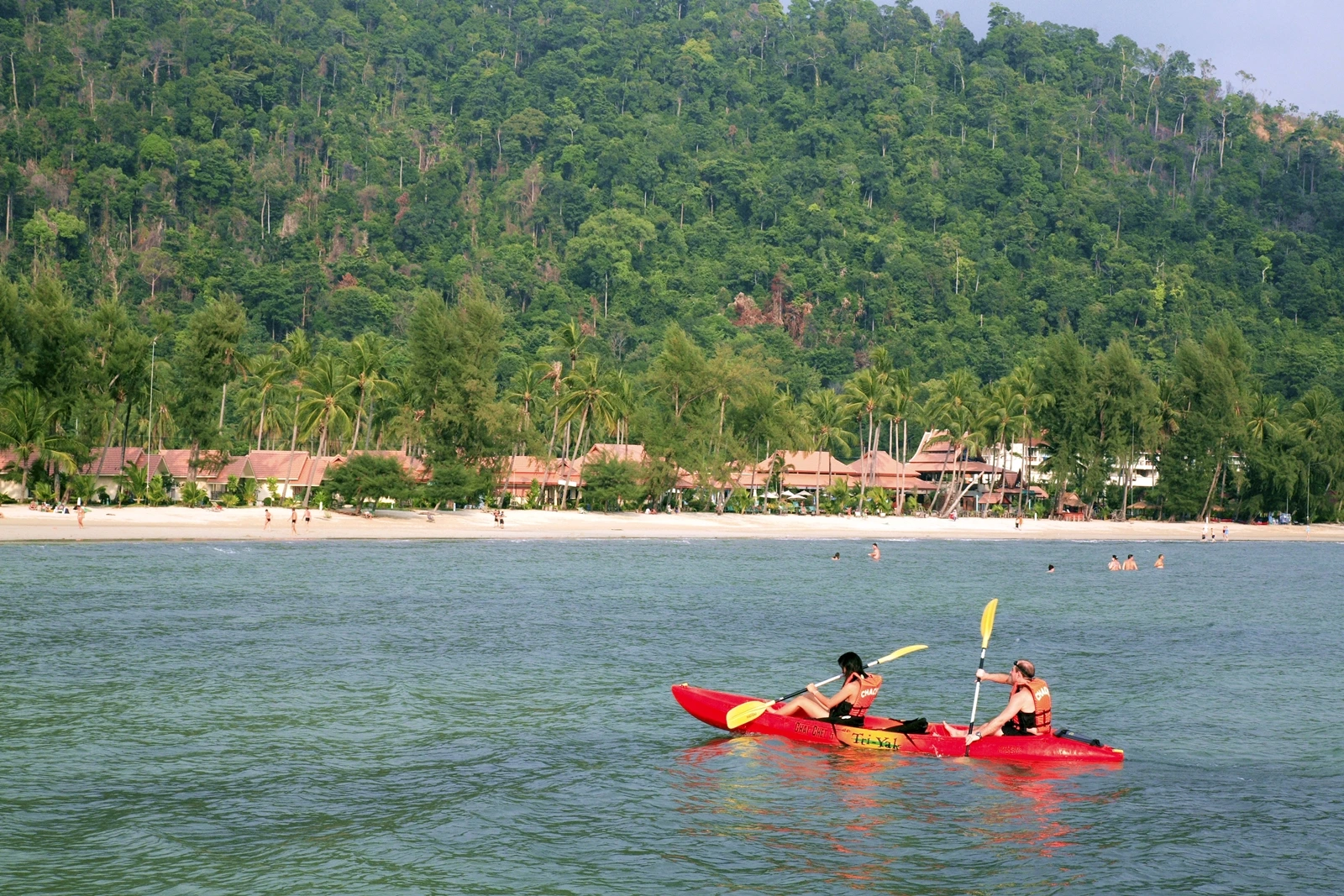
15. Klong Prao Beach (Laem Chai Chet), Trat Province, is one of the principal beaches on the western coast of Koh Chang. It features an extended sandy shoreline, a generally relaxed resort atmosphere, and attractive sunset views across the Gulf of Thailand. Restaurants and accommodation are available in the surrounding area, making Klong Prao a convenient destination for travelers seeking a peaceful island holiday.
Highlights: A long beach, sunset scenery, a relaxed atmosphere, and convenient access to nearby beaches and attractions on Koh Chang.
Best Time to Visit: November–April, particularly December–March. Season: The main tourist season on Thailand's eastern coast.
Late November through April is generally a favorable time to visit Klong Prao Beach. Rainfall and strong southwest monsoon winds are usually less persistent than during the middle of the year. The beach is particularly attractive in the evening when visitors can watch the sun descend toward the horizon over the western sea.
Klong Prao is known for its relatively long sandy shoreline and relaxed atmosphere. Compared with some of Koh Chang's busier beaches, visitors may find more opportunities for quiet seaside walks and extended resort stays. The surrounding area offers accommodation and dining choices for different travel styles.
Laem Chai Chet and nearby sections of the coastline provide varying views of rocks, sandy beaches, and the open sea. Photographers can explore permitted viewpoints while taking care on wet or uneven rocks, particularly when waves are strong.
Between May and October, stronger winds and heavier rainfall can affect the beach. Swimming conditions may become unsafe along sections exposed to waves, and travelers should follow local warnings about currents and restricted areas.
Klong Prao Beach is well suited to couples, families, and visitors seeking a quieter base on Koh Chang. Other nearby attractions, including White Sand Beach, can be included in the same island itinerary.
Getting There: Take an operating ferry from Trat Province to Koh Chang, then follow the main road along the island's western coast toward Klong Prao Beach and Laem Chai Chet.
Map (GPS):View Klong Prao Beach on Google Maps

16. Koh Mak, Trat Province, is a relatively small island in Thailand's eastern waters. Known for its peaceful beaches, local communities, and relaxed atmosphere, Koh Mak appeals to travelers looking for a slower island experience. Compared with mountainous Koh Chang, the island has gentler terrain in many areas, making it attractive for cycling and exploring local surroundings.
Highlights: Quiet beaches, scenic coastal landscapes, cycling, small-scale accommodation, and opportunities to experience local island communities.
Best Time to Visit: November–April, particularly December–March. Season: The generally drier tourist season for Trat's islands.
December through March is usually an excellent period for enjoying Koh Mak's beaches and outdoor activities. Rainfall is generally lower than during the southwest monsoon season, making beach walks, cycling, and coastal photography more comfortable.
Koh Mak is distinguished by its peaceful tourism atmosphere and strong connections with local communities. Visitors can explore beaches, agricultural areas, and village landscapes while learning about the island's relationship with marine resources and its natural environment.
The island is particularly attractive for travelers who prefer uncomplicated itineraries. Rather than rushing between numerous attractions, visitors can spend their time cycling, visiting quieter coastal areas, and enjoying local food. Mornings and late afternoons are preferable for outdoor activities because of the tropical heat.
From May to October, increased rainfall and stronger winds can affect boat connections. Ferry and speedboat services may change with the season and weather. Travelers intending to continue to Koh Kood or Koh Chang should check whether direct island-to-island services are operating.
Koh Mak is ideal for couples, families, and travelers interested in relaxed, community-oriented tourism. Spending two or three days on the island is a comfortable way to appreciate its natural scenery.
Getting There: Travel to Trat Province and continue to a pier operating passenger boats or speedboats to Koh Mak. Upon arrival, use accommodation transfers, local transport, or bicycles where suitable.
Map (GPS):View Koh Mak on Google Maps
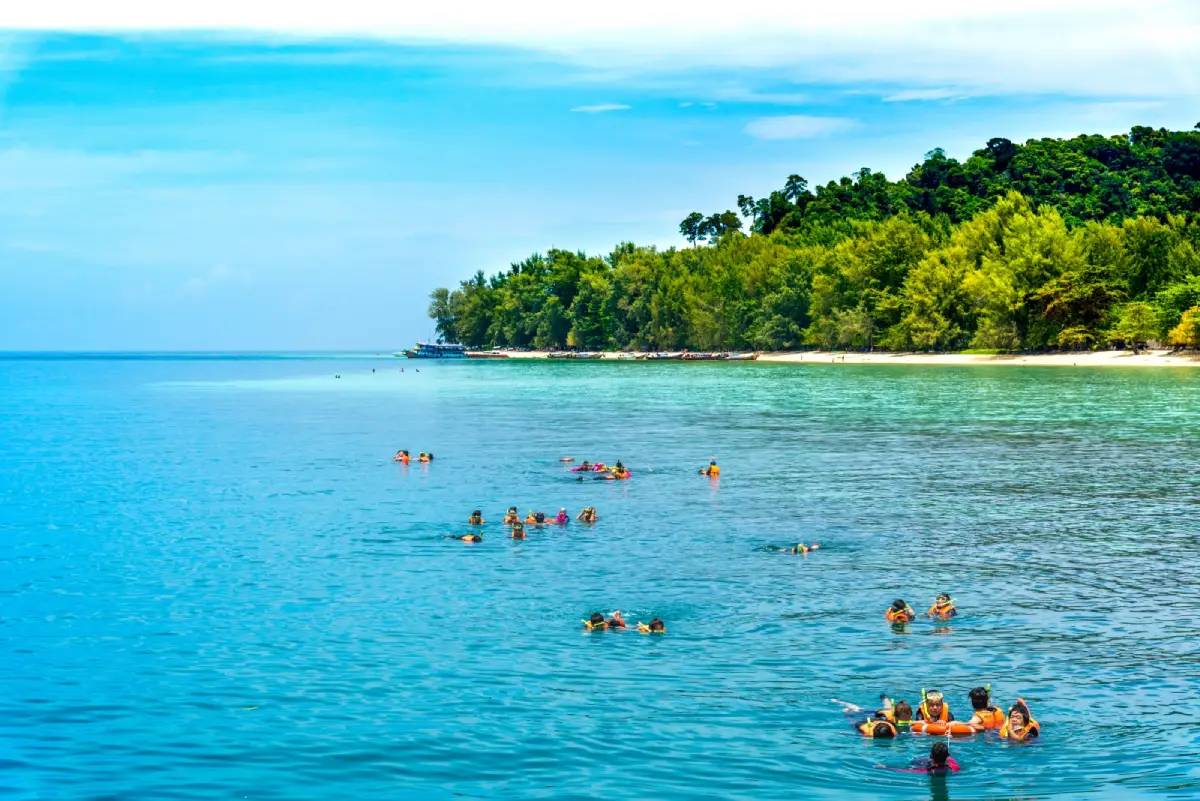
17. Koh Kradan, Trang Province, is a beautiful island in the Andaman Sea, celebrated for its exceptionally attractive white-sand beaches, clear turquoise water, and coral reef habitats. Located within the Hat Chao Mai National Park area, the island is one of Trang's leading marine destinations and appeals to travelers seeking natural scenery and snorkeling.
Highlights: White-sand beaches, turquoise water, coral reefs, snorkeling, and a tranquil island atmosphere.
Best Time to Visit: November–April, particularly December–March. Season: Andaman Sea tourist season.
December through March is generally the most favorable period for visiting Koh Kradan. The sea is more likely to be calm, making boat transfers and snorkeling excursions more comfortable than during the southwest monsoon. Under suitable conditions, the water can be exceptionally clear, with sandy areas visible beneath the surface.
Koh Kradan is known for its long stretches of white sand and relatively natural island setting. The coastal landscape offers opportunities to enjoy nature without requiring an extensive schedule of activities. Visitors can relax by the beach, photograph the turquoise sea, or explore permitted snorkeling areas.
The coral reefs and marine organisms surrounding the island are important ecological resources. Snorkelers must avoid touching or standing on coral, disturbing marine animals, or leaving litter in the sea. Respecting conservation regulations helps protect the area's natural attractions for future visitors.
From May through October, the southwest monsoon can bring strong waves and heavy rain. Boat services may be restricted, and access to some national park areas may be subject to seasonal regulations. Travelers should confirm current access arrangements before booking a tour.
Koh Kradan is particularly suitable for couples, photographers, and snorkeling enthusiasts. Excursions can sometimes be combined with nearby Trang islands, including Koh Mook, when suitable boat services and safe marine conditions are available.
Getting There: Travel to Trang Province and continue to a pier offering boat services to Koh Kradan, such as Pak Meng Pier or Khuan Tung Ku Pier, depending on the operator and route. Confirm sailing schedules and marine conditions before departure.
Map (GPS):View Koh Kradan on Google Maps
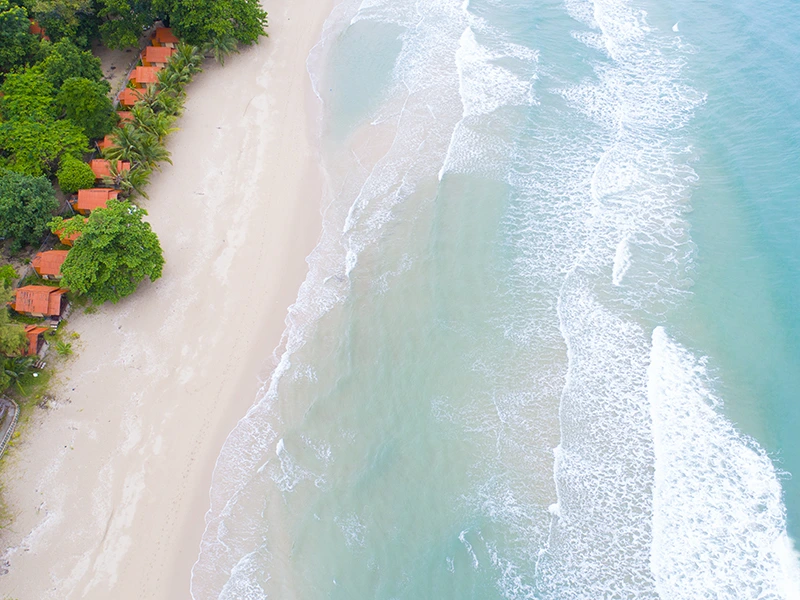
18. White Sand Beach, Trat Province, is one of the most popular beaches on Koh Chang. Located on the island's western coast, it offers a long sandy shoreline, beachfront accommodation, restaurants, and tourism facilities. Its convenient position and active atmosphere make it a popular choice for first-time visitors to Koh Chang.
Highlights: An extensive sandy beach, restaurants, resorts, sunset scenery, and convenient connections to other parts of Koh Chang.
Best Time to Visit: November–April, especially December–March. Season: The generally drier tourist season for Trat Province.
December through March is generally a favorable period for relaxing at White Sand Beach. Rainfall is often lower than during the southwest monsoon, making beach walks and outdoor activities more enjoyable. Holiday periods can be busy, so booking accommodation in advance is advisable.
The beach is one of Koh Chang's main tourism centers and offers more restaurants, shops, and services than some of the quieter coastal areas. Travelers seeking convenient accommodation and easy access to transport may find it particularly suitable, while visitors looking for a more secluded atmosphere can explore Klong Prao Beach and other locations.
As a west-facing beach, White Sand Beach offers attractive evening views across the Gulf of Thailand. Sunset photography and walking along the shoreline are popular activities when weather and tidal conditions are appropriate.
From May through October, rainfall and strong monsoon winds become more likely. Waves and currents can create unsafe swimming conditions in some sections. Visitors should follow local warning signs and avoid entering the water whenever conditions are unsuitable.
White Sand Beach is ideal for families, couples, and travelers who prefer accommodation close to restaurants and everyday facilities. It can be combined with other attractions around Koh Chang during a multi-day stay.
Getting There: Take a ferry from an operating pier in Trat Province to Koh Chang, then travel along the island's western coastal road to White Sand Beach using a vehicle or local transport.
Map (GPS):View White Sand Beach on Google Maps
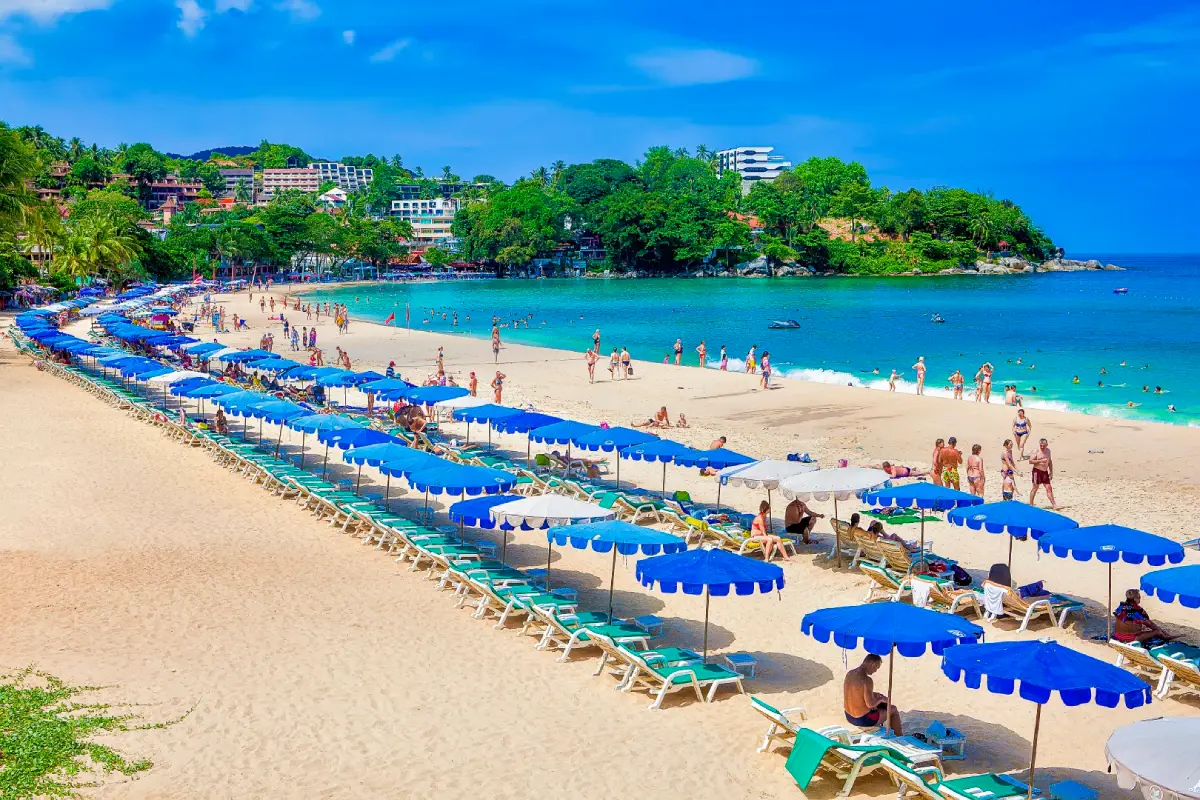
19. Kata Beach, Phuket Province, is a scenic beach on the western coast of Phuket, known for its gently curved sandy bay and attractive Andaman Sea views. With accommodation, restaurants, and access to nearby beaches, Kata is suitable for travelers looking for a balance between natural scenery and convenient tourism facilities.
Highlights: A beautiful curved beach, soft sand, turquoise water, sunset views, and convenient access to Karon Beach and Kata Noi Beach.
Best Time to Visit: November–April, particularly December–March. Season: Andaman Sea dry season.
December through March is generally a favorable period for visiting Kata Beach because Phuket's west coast usually experiences less persistent rain and calmer seas than during the southwest monsoon season. Beach relaxation, coastal sightseeing, and permitted water activities are especially appealing during this time.
Kata Bay is distinguished by its curved sandy shoreline, surrounding hills, and tropical coastal scenery. Visitors can enjoy different viewpoints around the area and combine a visit with nearby Kata Noi and Karon beaches, allowing sufficient time for traffic and local conditions.
Activities at Kata Beach change with the seasons. Calmer conditions are generally better for swimming in designated areas, while periods of larger surf may attract experienced surfers and beginners taking supervised lessons. However, rough water should never be mistaken for safe swimming conditions.
From May to October, the southwest monsoon can produce strong waves and dangerous rip currents along Phuket's west coast. Visitors should strictly obey red warning flags and lifeguard instructions, even when the sun is shining.
Kata Beach is suitable for families, couples, and travelers exploring southern Phuket. It can be included in a coastal sightseeing route with Karon Beach and nearby viewpoints.
Getting There: Travel from Phuket Town or Phuket International Airport toward Karon Subdistrict in Mueang Phuket District, then follow the road to Kata Beach. Private transport, taxis, and available shuttle services can be used.
Map (GPS):View Kata Beach on Google Maps
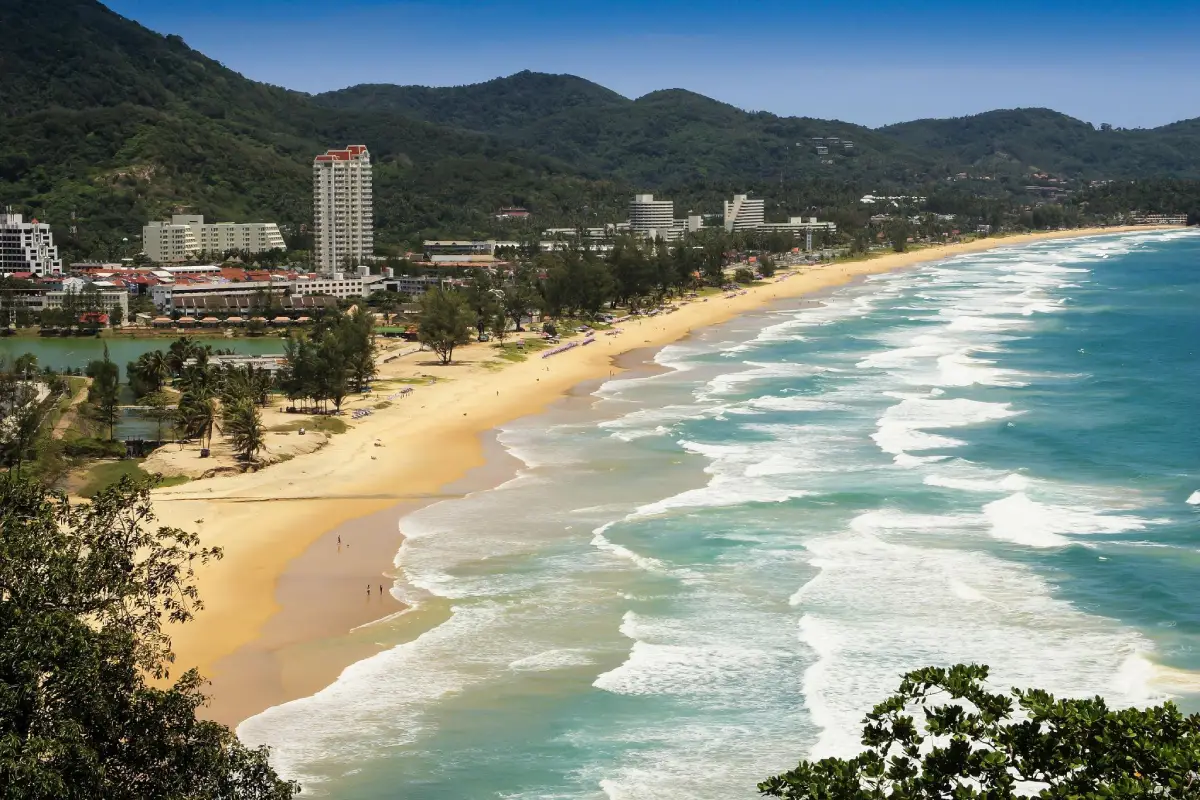
20. Karon Beach, Phuket Province, is a large beach on the island's western coast, famous for its long stretch of sand and expansive views of the Andaman Sea. The surrounding area provides restaurants, hotels, and tourist services, making Karon a popular destination for both short beach visits and longer holidays.
Highlights: A long sandy shoreline, open Andaman Sea views, sunset photography, and convenient connections to Kata Beach and Patong Beach.
Best Time to Visit: November–April, particularly December–March. Season: Andaman Sea dry-season travel period.
December through March generally provides favorable conditions for beach walks and relaxation at Karon. The chance of persistent rainfall is often lower than during the southwest monsoon season, allowing travelers to enjoy the broad sandy shoreline and coastal scenery. Early mornings and evenings are particularly pleasant when temperatures are less intense.
Karon Beach differs from smaller coves because of its extensive open shoreline. Visitors can enjoy wide views of the horizon, while the changing light of the late afternoon creates attractive conditions for landscape photography and watching the sunset.
The surrounding area has hotels, restaurants, and travel facilities, making Karon suitable for overnight stays or stops during a tour of southern Phuket. Travelers can arrange a convenient route between Patong, Karon, Kata, and nearby viewpoints.
From May through October, the southwest monsoon can bring strong surf and dangerous rip currents to the beach. Swimming is unsafe when red flags are displayed, and visitors should not enter the water against lifeguard instructions. Sea conditions should always take priority over general seasonal advice.
Karon Beach is especially suitable for couples, families, and travelers who appreciate an extensive sandy coastline combined with convenient accommodation and dining choices.
Getting There: Travel from Phuket Town or Phuket International Airport to Karon Subdistrict in Mueang Phuket District. The beach lies along the western coastal route connecting Patong and Kata.
Map (GPS):View Karon Beach on Google Maps
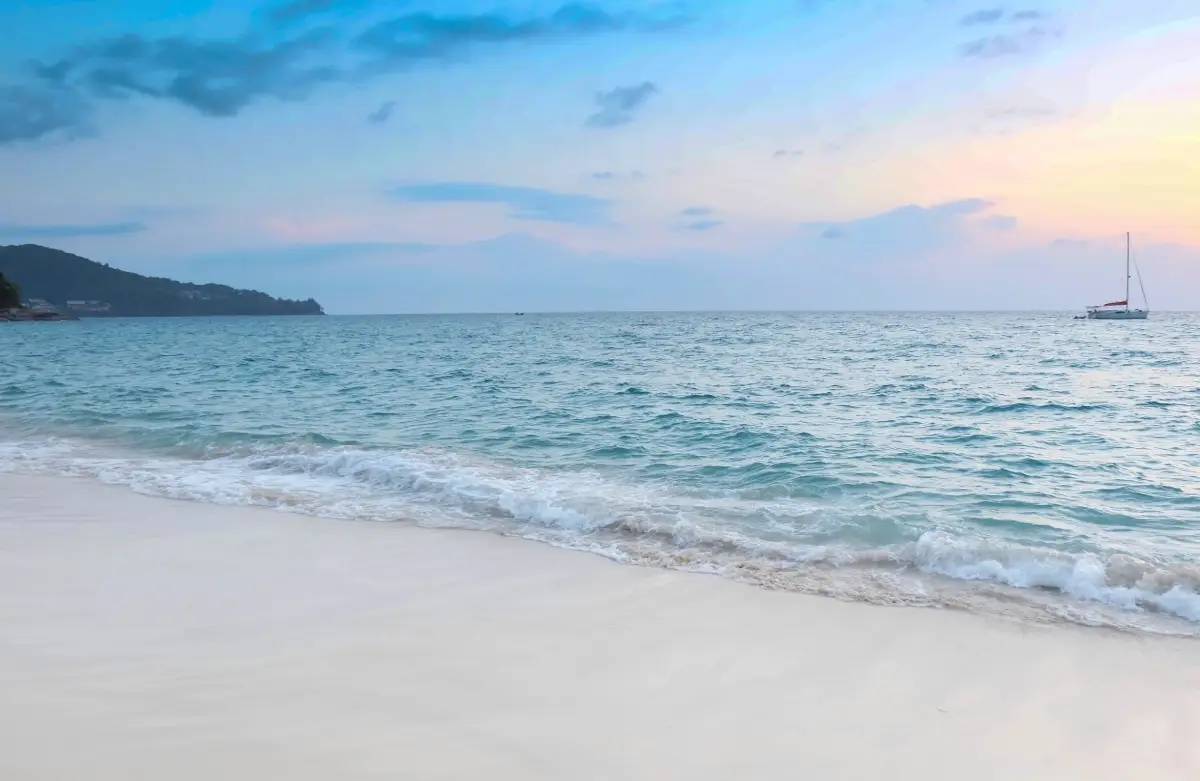
21. Surin Beach, Phuket Province, is a beautiful beach on the island's western coast, located in Choeng Thale Subdistrict, Thalang District. Known for its pale sand, blue sea, and tree-lined surroundings, the beach appeals to travelers seeking a relaxing coastal atmosphere away from the busiest resort districts. Its open views across the Andaman Sea make it particularly attractive for sunset photography and peaceful beach walks.
Highlights: Beautiful sandy beach, turquoise water, west-coast scenery, shaded coastal areas, and sunset views over the Andaman Sea.
Best Time to Visit: November–April, particularly December–March. Season: Andaman Sea dry-season travel period.
December through March is generally the most favorable time to visit Surin Beach. During these months, Phuket's western coastline often experiences less rainfall and calmer seas than during the southwest monsoon. Visitors can enjoy beach walks, coastal photography, and relaxation while appreciating the wide views of the Andaman Sea.
Surin Beach is characterized by an open sandy shoreline, tropical trees, and attractive coastal scenery. Unlike more heavily developed tourism centers, it offers visitors the opportunity to focus on the natural landscape. Travelers can also include Bang Tao Beach and other nearby destinations in a west-coast Phuket itinerary.
November and April are transitional months that can still provide enjoyable beach conditions. However, occasional thunderstorms may occur, particularly as temperatures rise toward the end of the dry season. Travelers should carry sun protection, drinking water, and suitable clothing for tropical weather.
From approximately May through October, the southwest monsoon can bring strong waves and dangerous rip currents. Swimming may be unsafe even on sunny days. Visitors should obey red warning flags, follow lifeguard instructions, and avoid entering the sea when hazardous conditions are reported.
Surin Beach is particularly suitable for couples, families, and photographers who appreciate attractive coastal landscapes. It can be combined with nearby beaches such as Bang Tao and Kamala during a relaxed sightseeing trip.
Getting There: Travel from Phuket Town or Phuket International Airport toward Choeng Thale Subdistrict in Thalang District, then follow local roads to Surin Beach. Private cars, taxis, and accommodation transfers are practical transport options.
Map (GPS):View Surin Beach on Google Maps
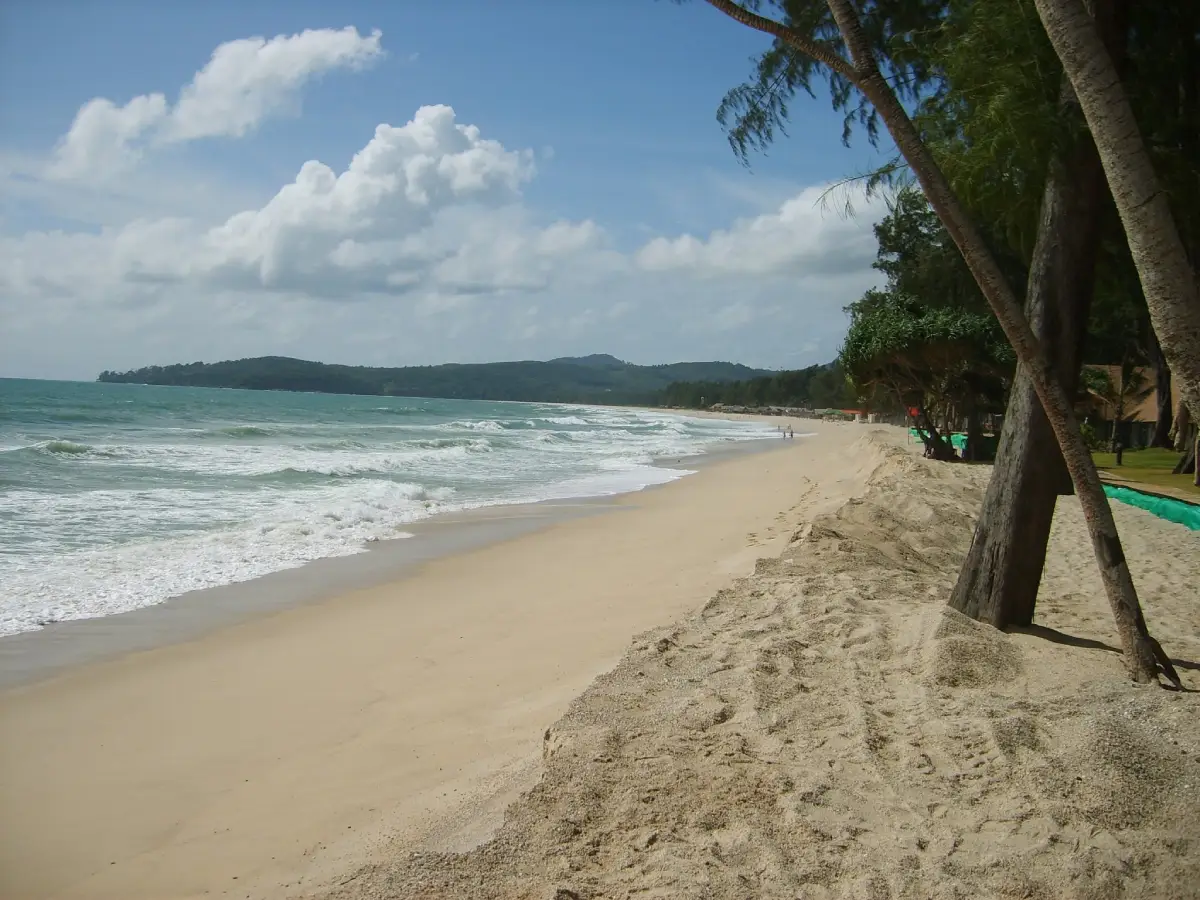
22. Bang Tao Beach, Phuket Province, is a long sandy beach located in Choeng Thale Subdistrict, Thalang District, on Phuket's western coast. The area is known for its spacious beachfront, attractive sunsets, restaurants, and accommodation ranging from smaller properties to larger resorts. Because the shoreline stretches over a considerable distance, different sections offer different levels of activity and privacy.
Highlights: Long sandy coastline, beachfront resorts, seaside restaurants, sunset views, and convenient access to other northern Phuket beaches.
Best Time to Visit: November–April, especially December–March. Season: Andaman Sea dry season.
December through March is generally an excellent period for a holiday at Bang Tao Beach. Compared with the southwest monsoon season, the weather is often drier, and the sea is more likely to be suitable for permitted swimming and other coastal activities. Visitors can spend their time walking along the shoreline, enjoying resort facilities, and watching the sunset over the Andaman Sea.
Bang Tao differs from smaller Phuket coves because of its extended sandy coastline. Its open landscape offers broad views of the sea and provides room for leisurely beach walks. Accommodation and dining facilities are available in different areas along the coast, allowing travelers to select a location that suits their preferred holiday atmosphere.
Early mornings are often appealing for visitors who enjoy a quieter atmosphere, while late afternoons are particularly attractive for photography. Because Bang Tao faces west, the setting sun can create dramatic changes in the colors of the sky and sea when weather conditions are favorable.
From May through October, stronger southwest monsoon winds can produce large waves and rip currents. Visitors should not assume the water is safe simply because the sky is clear. Red flags and beach safety instructions must be followed at all times.
Bang Tao Beach is suitable for families, couples, and travelers seeking comfortable accommodation beside a long coastline. It can be included in a sightseeing route with Surin Beach and other nearby destinations in northern Phuket.
Getting There: Travel from Phuket International Airport or Phuket Town toward Choeng Thale Subdistrict in Thalang District and follow the roads leading to Bang Tao Beach. Private vehicles, taxis, and resort transfers are available options.
Map (GPS):View Bang Tao Beach on Google Maps
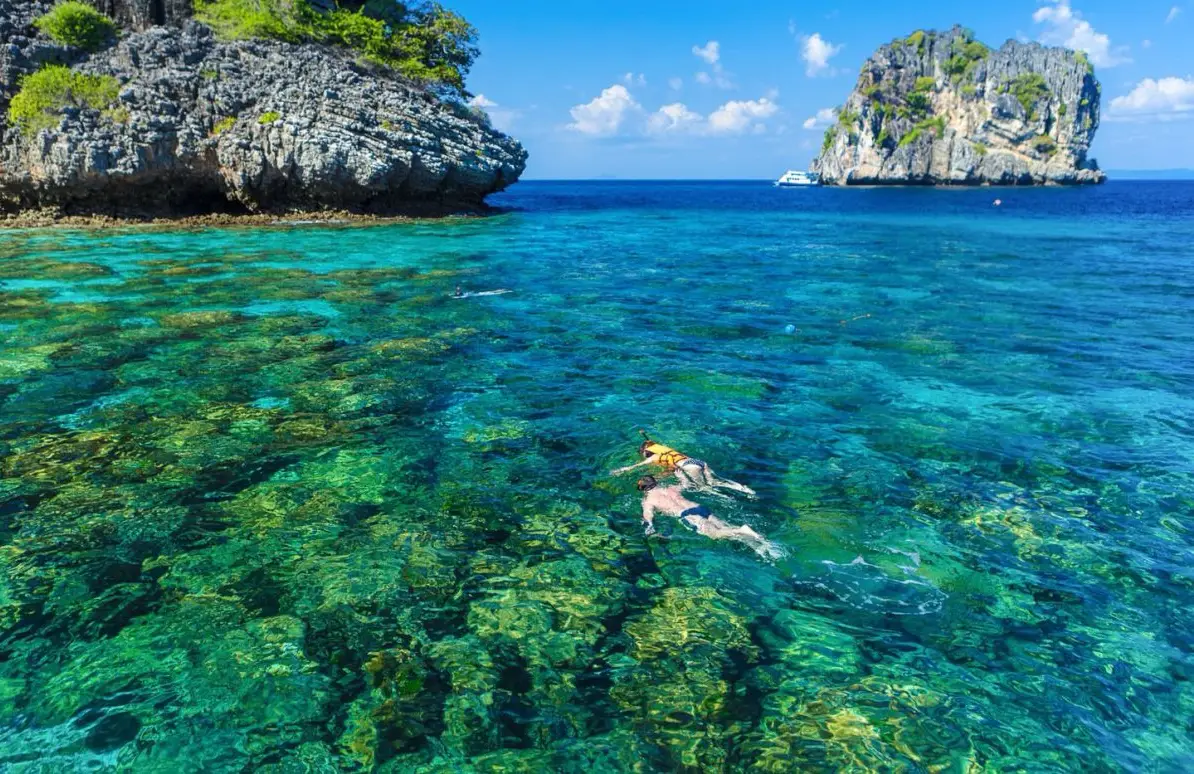
23. Ko Rok Nai, Krabi Province, is one of the two principal islands in the Ko Rok group, situated in the Andaman Sea within Mu Ko Lanta National Park. The island is celebrated for its white-sand beaches, clear turquoise water, and beautiful marine environment. As a relatively remote island destination, it is particularly attractive to travelers interested in snorkeling, nature photography, and protected coastal landscapes.
Highlights: White-sand beaches, turquoise water, coral reef habitats, natural island scenery, and snorkeling in designated areas.
Best Time to Visit: November–April, particularly December–March, subject to national park access regulations. Season: Andaman Sea tourist season and the designated opening period for marine park activities.
December through March generally offers favorable opportunities to visit Ko Rok Nai. Sea conditions are more likely to support comfortable boat journeys and snorkeling than during the southwest monsoon. However, underwater visibility varies with currents, wind, and weather, so clear water cannot be guaranteed on every visit.
Ko Rok Nai forms part of the marine environment protected by Mu Ko Lanta National Park. The surrounding coral reefs and marine organisms are important natural resources that require careful conservation. Visitors should avoid standing on coral, feeding fish, touching marine animals, or leaving waste in the water.
The island's beaches and coastal vegetation create a peaceful landscape for photography and nature observation. Visitors should remain within areas approved for tourism and follow designated walking routes rather than entering restricted conservation zones.
From May through October, rougher seas and heavy rainfall become more likely. National park authorities may also close island destinations or certain activities seasonally for safety and ecosystem recovery. Travelers must confirm the current opening dates before booking a boat trip.
Ko Rok Nai is ideal for snorkeling enthusiasts, photographers, and travelers seeking an Andaman island experience focused on natural scenery. Visits may be combined with nearby Ko Rok Nok when access is permitted and marine conditions are suitable.
Getting There: Join an authorized boat excursion from Koh Lanta or another departure point offering seasonal trips to the Ko Rok islands. Check national park announcements, tour permissions, and the marine weather forecast before departing.
Map (GPS):View Ko Rok Nai on Google Maps
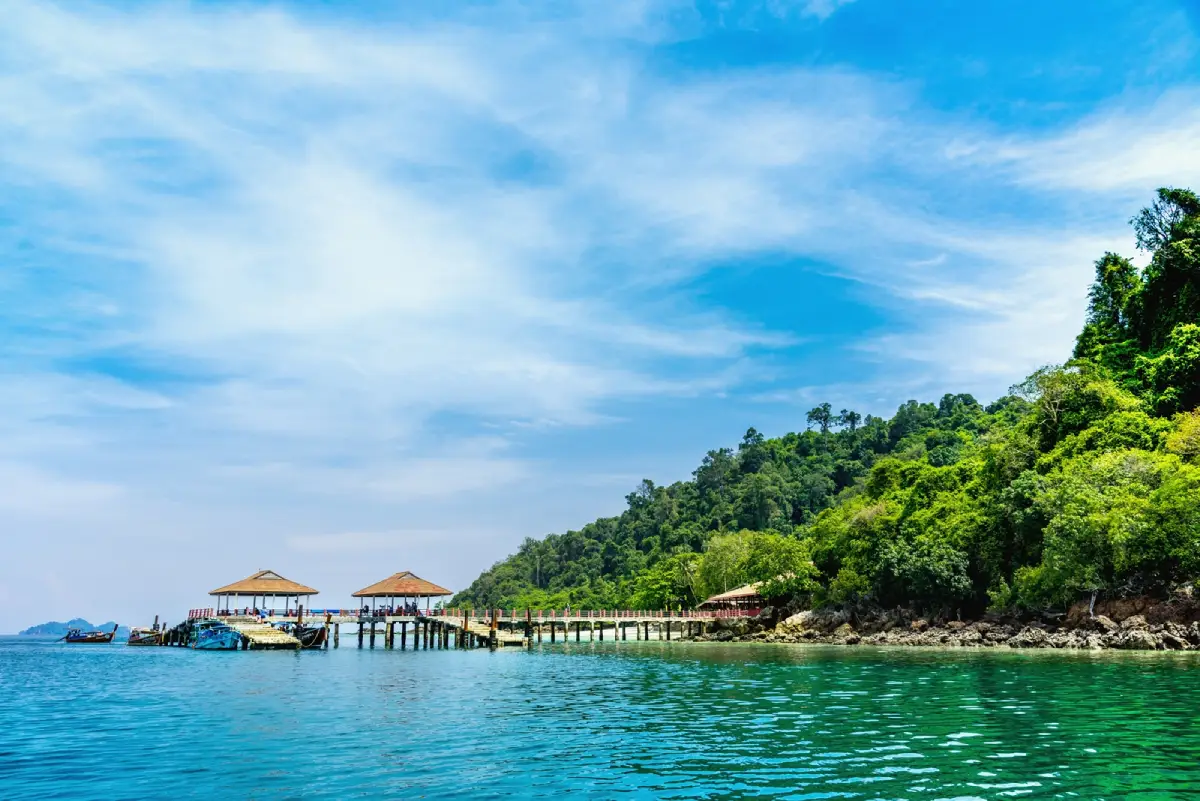
24. Ko Ngai, Krabi Province, is a small island in the Andaman Sea near the provincial boundary with Trang. Known for its pale sandy beaches, turquoise water, and peaceful atmosphere, Ko Ngai appeals to travelers seeking a quiet island holiday surrounded by natural scenery. The island can be reached from departure points in Trang and through seasonal connections with nearby islands.
Highlights: Beautiful sandy beaches, clear water in suitable weather, beachfront accommodation, and a tranquil island atmosphere.
Best Time to Visit: November–April, particularly December–March. Season: Andaman Sea dry-season travel period.
Late November through April is generally the most favorable time to visit Ko Ngai. December through March often brings less rainfall and calmer seas than the southwest monsoon season, making beach relaxation, snorkeling in permitted areas, and boat transfers more comfortable. Travelers staying overnight can enjoy the island's morning and evening atmosphere without a rushed schedule.
Ko Ngai offers attractive views of the surrounding Andaman islands and coastal mountains. Tropical vegetation provides a natural backdrop to the beach, while the quieter surroundings distinguish the island from busier resort destinations. Visitors can enjoy the landscape without needing to schedule numerous activities.
Snorkeling should be undertaken only when currents and visibility are suitable. Visitors must avoid stepping on coral and disturbing marine organisms. The appearance and clarity of the water can change with tides, rainfall, and wind.
Between May and October, the southwest monsoon may bring stronger waves and increased rainfall. Passenger boat connections and some accommodation services may operate seasonally, so travelers should confirm availability before booking.
Ko Ngai is particularly suitable for couples and travelers seeking a peaceful beach escape. Excursions to Koh Kradan and other Trang islands may be possible when suitable boat services and safe marine conditions are available.
Getting There: Travel to a pier operating boat services to Ko Ngai. Pak Meng Pier in Trang Province is one of the commonly used departure points. Confirm current boat routes, operating schedules, and seasonal availability before departure.
Map (GPS):View Ko Ngai on Google Maps
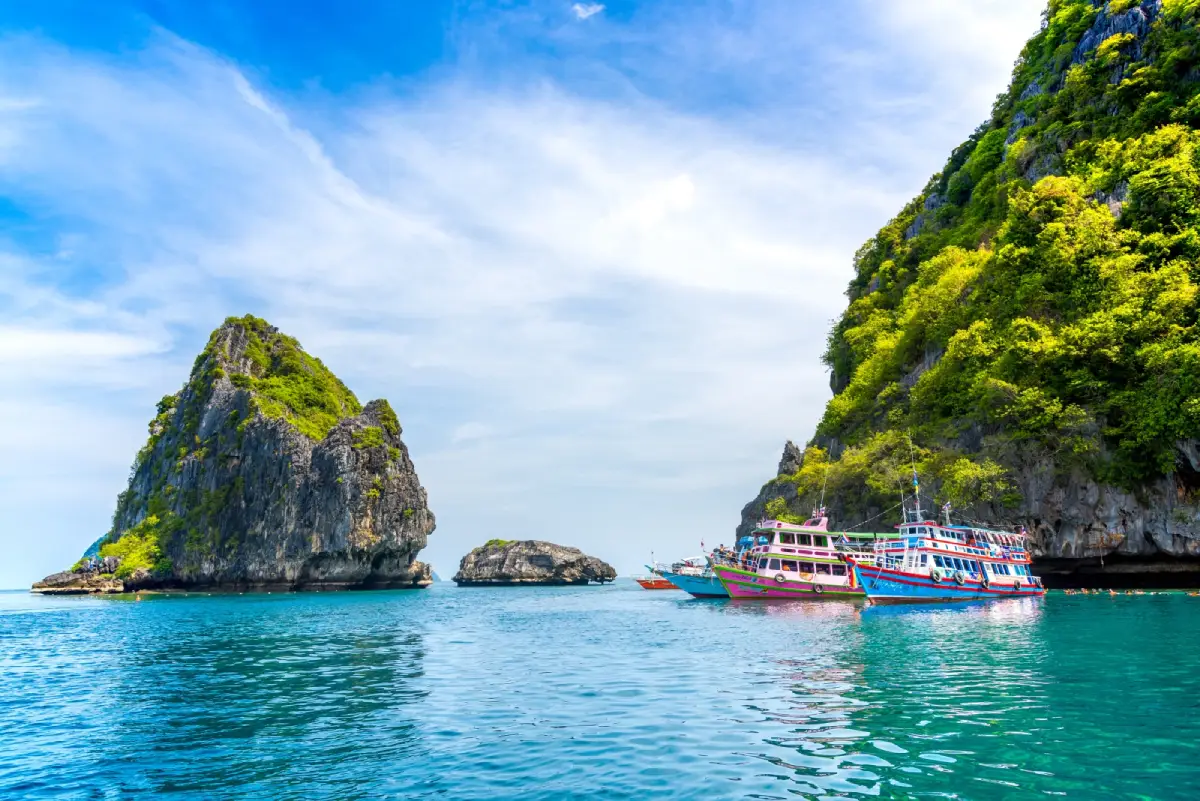
25. Ko Chueak–Ko Waen, Trang Province, are small islands in the Andaman Sea known for their rocky coastal formations and surrounding marine habitats. These islands are popular stops on snorkeling excursions around Trang, offering opportunities to observe underwater life in areas designated for recreational activities.
Highlights: Rocky island scenery, snorkeling areas, marine wildlife, coral reef habitats, and boat excursions around Trang's islands.
Best Time to Visit: November–April, particularly December–March. Season: Andaman Sea dry season.
December through March is generally the most suitable period for visiting Ko Chueak and Ko Waen. Sea conditions are often more favorable for snorkeling and island excursions than during the southwest monsoon season. Travelers can select a boat tour that includes several approved snorkeling locations, depending on marine conditions and access regulations.
Unlike larger resort islands with extensive beaches and accommodation, Ko Chueak and Ko Waen are primarily appreciated for their offshore rocky landscapes and underwater environment. Most visitors experience the islands from organized boats and snorkeling locations rather than spending extended periods ashore.
The surrounding marine ecosystems require responsible behavior. Snorkelers should use life jackets when appropriate, avoid contact with coral, and never feed marine animals. Even small disturbances can damage fragile reef habitats.
From May through October, rough seas and heavy rain become more likely. Strong currents and waves near rocky islands can create additional hazards. Travelers should follow the instructions of qualified boat operators and cancel activities when conditions are unsafe.
Ko Chueak and Ko Waen are particularly attractive to visitors interested in snorkeling and marine nature. They can be combined with Koh Kradan and other Trang destinations when sea conditions and boat services permit.
Getting There: Join an organized island excursion from an operating pier in Trang Province, including services that depart from the Pak Meng area. Confirm the route, island access, and marine conditions before boarding.
Map (GPS):View Ko Chueak–Ko Waen on Google Maps
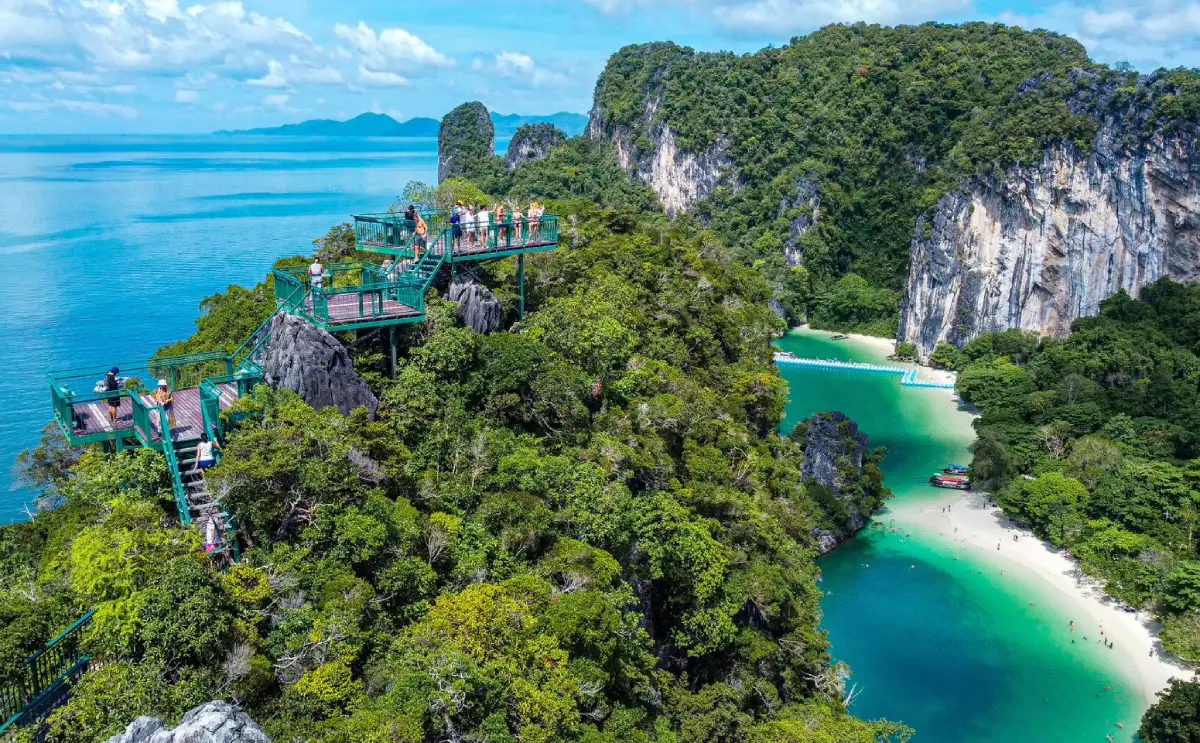
26. Hong Islands, Krabi Province, are a spectacular island group in the Andaman Sea, known for dramatic limestone cliffs, emerald water, beautiful beaches, and a sheltered lagoon surrounded by towering rock formations. Located within Than Bok Khorani National Park, the Hong Islands are a popular excursion destination from Ao Nang and nearby coastal areas.
Highlights: Hong Lagoon, limestone cliffs, emerald water, scenic beaches, island viewpoints, and natural coastal scenery.
Best Time to Visit: November–April, particularly December–March. Season: Andaman Sea tourist season.
December through March is generally the best time to visit the Hong Islands. Compared with the southwest monsoon season, calmer seas are more likely to make island boat excursions comfortable. Travelers can explore the lagoon and designated coastal areas when marine conditions permit. Tides should also be considered because water levels influence access to some sections of the lagoon.
The island group's most distinctive feature is its dramatic limestone geography. Steep cliffs enclose a sheltered body of seawater, creating a natural chamber-like landscape that gives the islands their name. Over long periods, geological processes and erosion have shaped the coastline into bays, channels, and towering rock walls.
The Hong Islands are protected within Than Bok Khorani National Park. Visitors should follow park regulations, remain on designated paths, avoid disturbing marine wildlife, and never damage coral. Travelers intending to visit elevated viewpoints should wear suitable footwear and assess the physical demands of the walking route.
From May to October, increased rain and southwest monsoon winds can affect boat operations. High waves may limit access to some areas, and operators may adjust or cancel excursions for safety reasons.
The Hong Islands are ideal for photographers, couples, and travelers fascinated by Krabi's limestone landscapes. They can be visited as a day excursion from Ao Nang, with enough time set aside to appreciate the main natural attractions.
Getting There: Take an authorized long-tail boat or speedboat from Ao Nang or another operating departure point in Krabi Province. Check national park access rules, boat schedules, tide conditions, and the marine forecast before traveling.
Map (GPS):View the Hong Islands on Google Maps

27. Chao Lao Beach, Chanthaburi Province, is a well-known coastal destination in Tha Mai District, popular for seaside holidays, seafood restaurants, and accommodation near the beach. Its long shoreline and surrounding coastal communities make it suitable for travelers who want to combine beach relaxation with local food and nature experiences in eastern Thailand.
Highlights: A long sandy beach, seafood restaurants, seaside accommodation, local coastal communities, and access to nearby nature attractions.
Best Time to Visit: November–April, particularly December–March. Season: The generally drier travel period for Thailand's eastern coastline.
November through April is generally a favorable period for visiting Chao Lao Beach because Chanthaburi usually receives less rainfall than during the southwest monsoon season. Travelers can enjoy beach walks, coastal scenery, and local seafood while choosing water activities according to the day's waves and currents.
The beach combines tourism facilities with the character of a traditional coastal community. Visitors can relax beside the sea or explore nearby villages and attractions, making the destination suitable for holidays that include more than beach activities alone.
Accommodation and seafood restaurants are available throughout the surrounding area, allowing families and groups of friends to plan convenient overnight stays. Travelers seeking a quieter atmosphere may prefer weekdays or accommodation away from the busiest beach sections.
From May through October, the southwest monsoon increases the likelihood of heavy rainfall and strong coastal winds. Travelers should monitor weather forecasts and avoid swimming or boating when the sea is rough.
Chao Lao Beach is suitable for couples, families, and travelers interested in eastern Thailand's coastal food culture. Nearby communities and natural attractions in Tha Mai District can be included in the same trip.
Getting There: Travel from Bangkok toward Chanthaburi Province, then continue to Tha Mai District and follow signs to Chao Lao Beach. Private cars and locally available transport services can be used.
Map (GPS):View Chao Lao Beach on Google Maps

28. Laem Mae Phim, Rayong Province, is a popular coastal destination in Klaeng District. Known for its long sandy beach and extensive choice of seafood restaurants, it provides an accessible holiday option for travelers who want to enjoy the sea without taking a ferry to an offshore island. The area retains elements of a traditional coastal community alongside its tourism facilities.
Highlights: Long beach, seafood restaurants, coastal scenery, local fishing communities, and convenient road access.
Best Time to Visit: November–April, particularly December–March. Season: The generally drier tourist season on Thailand's eastern coast.
December through March is generally an attractive period for visiting Laem Mae Phim. Compared with the wetter southwest monsoon months, outdoor beach activities and sightseeing are often more comfortable. Visitors can walk along the shoreline, enjoy local seafood, and spend a relaxed weekend near the sea.
Laem Mae Phim is especially convenient because it is accessible by road. Families traveling with children or older relatives may appreciate not having to arrange island transfers. Restaurants and accommodation provide options for both day visits and overnight stays.
The surrounding coastline reflects Rayong's fishing heritage and coastal lifestyle. Visitors can observe the local atmosphere, enjoy regional seafood dishes, and support community businesses while respecting working areas used by fishermen.
From May through October, increased rainfall and occasional strong winds may affect outdoor plans. Even though the beach remains accessible by road in suitable conditions, swimming requires careful consideration of waves and currents.
Laem Mae Phim is particularly suitable for families, groups of friends, and seafood lovers. It can be included in a coastal driving itinerary around Klaeng District and nearby parts of Rayong Province.
Getting There: Travel from Bangkok to Rayong Province, then continue toward Klaeng District and follow the signs to Laem Mae Phim. The beach can be reached by private vehicle or available local transport services.
Map (GPS):View Laem Mae Phim on Google Maps
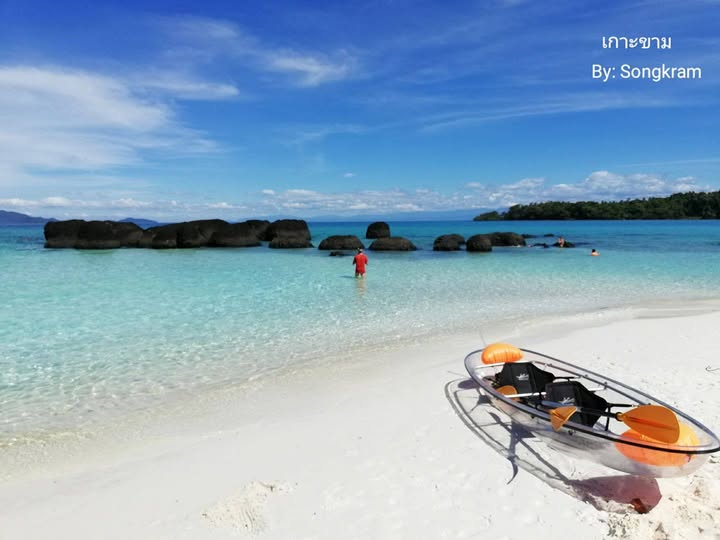
29. Koh Kham, Trat Province, is a small island near Koh Mak, known for its striking contrast between white sandy beaches, dark coastal rocks, and turquoise sea. The island's distinctive scenery makes it particularly appealing to photographers and visitors interested in small tropical islands.
Highlights: Dark coastal rock formations, white sand, clear water, picturesque island scenery, and proximity to Koh Mak.
Best Time to Visit: November–April, especially December–March, provided the island is open to visitors. Season: The generally drier travel season for Trat's islands.
December through March is generally the most favorable period to consider visiting Koh Kham because marine conditions are more likely to be suitable for small-boat travel than during the southwest monsoon. However, access depends on the island's current operating arrangements, visitor permissions, and boat services. Travelers must confirm availability before making plans.
Koh Kham's visual appeal comes from its unusual dark rocks set against pale sand and blue-green water. This combination creates a distinctive landscape that differs from many other beaches in Thailand. Photography should be undertaken from safe positions without climbing wet or unstable rocks.
The island has access arrangements that may differ from ordinary public beaches. Visitors should respect instructions from the relevant operator or site manager, avoid restricted areas, and help preserve the island's natural environment.
From May through October, stronger winds and heavier rainfall can affect boat services. Excursions may be unavailable when conditions are rough, even if the weather seems acceptable on nearby Koh Mak.
Koh Kham is ideal for couples and photographers interested in distinctive coastal landscapes. It is best considered as a possible excursion from Koh Mak when access is confirmed.
Getting There: Travel to Trat Province, take an operating passenger boat to Koh Mak, and confirm whether an authorized local boat service is available to Koh Kham. Do not rely on map coordinates alone as confirmation of island access.
Map (GPS):View Koh Kham on Google Maps
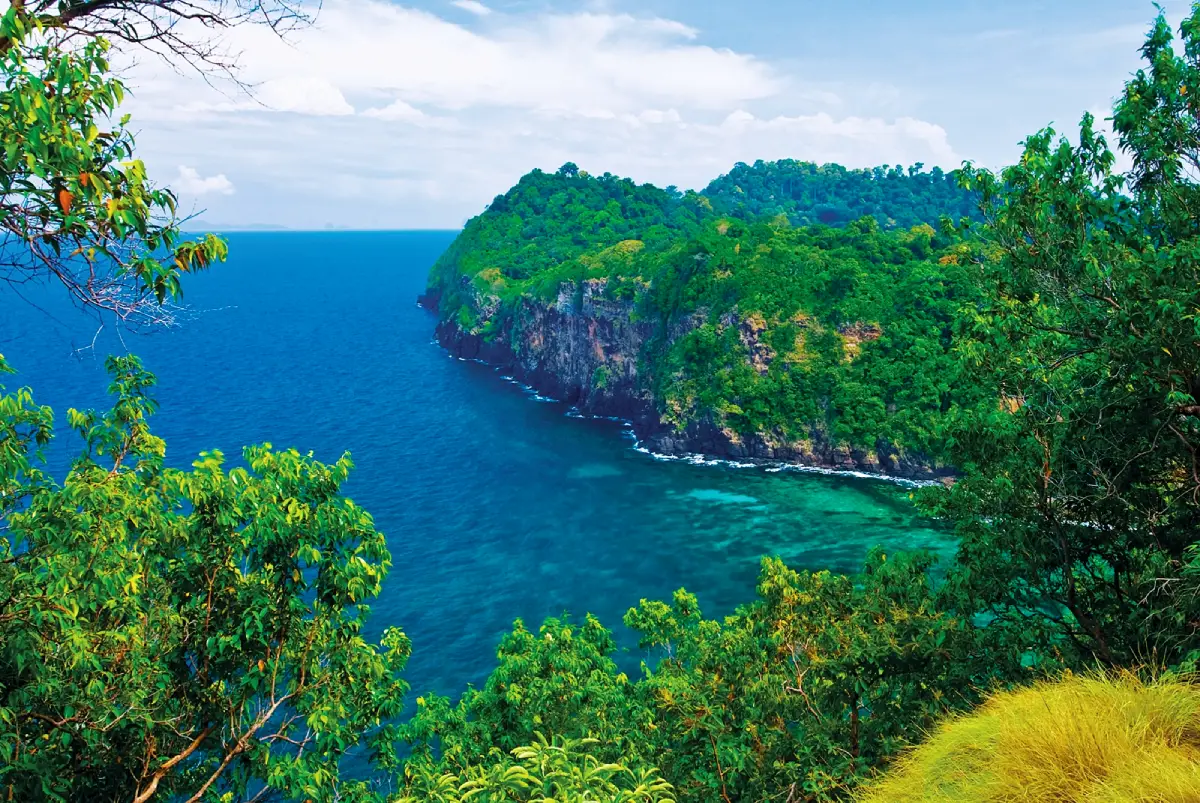
30. Ko Rok Nok, Krabi Province, is one of the main islands in the Ko Rok group, located in the Andaman Sea within Mu Ko Lanta National Park. It is celebrated for its white-sand beaches, clear turquoise water, and natural island scenery. The surrounding marine habitats make the area an important destination for snorkeling and nature observation in designated tourism zones.
Highlights: White sand, clear turquoise water, coral reef habitats, island photography, and snorkeling in authorized locations.
Best Time to Visit: November–April, particularly December–March, subject to national park opening regulations. Season: Andaman Sea tourist season and the designated marine park visitor period.
December through March is generally the most favorable period for visiting Ko Rok Nok. Calmer sea conditions are more likely to make boat crossings and snorkeling comfortable than during the southwest monsoon season. Visitors should nevertheless check marine warnings and national park announcements before traveling.
Ko Rok Nok features attractive white-sand beaches and natural coastal landscapes. The contrast between turquoise water, pale sand, and tropical vegetation creates excellent conditions for photography when the weather is suitable. Visitors must remain within areas open for tourism and respect any protected sections of the island.
Snorkeling is one of the area's main attractions, but marine conservation rules are essential. Visitors should not stand on coral, touch marine animals, or leave litter in the water. Using operators that respect environmental regulations helps protect the surrounding ecosystems.
From May through October, monsoon rain and stronger waves become more likely. The national park may close destinations seasonally for visitor safety and environmental recovery. Travelers considering trips during transitional months such as October or May should confirm exact opening dates rather than relying solely on general Andaman travel seasons.
Ko Rok Nok is suitable for photographers, couples, and snorkeling enthusiasts. It can be combined with nearby Ko Rok Nai during an authorized island excursion when sea conditions are appropriate.
Getting There: Join an authorized boat excursion from Koh Lanta or another departure point offering seasonal trips to the Ko Rok islands. Check current national park access rules, tour availability, and marine forecasts before departure.
Map (GPS):View Ko Rok Nok on Google Maps

31. Hua Hin Beach, Prachuap Khiri Khan Province, is one of Thailand's most established seaside holiday destinations. Located in Hua Hin District, the beach stretches along the Gulf of Thailand beside a town known for its hotels, restaurants, markets, and recreational facilities. Hua Hin combines the atmosphere of a traditional Thai seaside resort with modern accommodation and convenient travel connections, making it particularly attractive to visitors seeking a coastal holiday without taking a ferry to an island.
Highlights: An extensive sandy beach, historic seaside resort atmosphere, beachfront accommodation, restaurants, coastal walks, and convenient connections to southern Hua Hin beaches.
Best Time to Visit: November–April, particularly December–February. Season: The generally cooler and drier period, although northeast monsoon winds can still produce rough seas.
December through February is generally an appealing time to visit Hua Hin, especially for travelers who prefer comfortable temperatures and outdoor sightseeing. Rainfall is often lower than during the rainy season, making beach walks, coastal photography, and family holidays enjoyable. Nevertheless, the northeast monsoon can occasionally create strong waves, so favorable weather on land does not always mean that swimming conditions are safe.
Hua Hin has a long association with Thailand's history of seaside tourism. The development of railway connections played an important role in transforming the area into a resort destination. Over time, the town developed a distinctive character combining historic attractions, local markets, seafood restaurants, and modern tourism facilities.
The beach itself offers a long, relatively open coastline where visitors can enjoy views across the Gulf of Thailand. Early mornings are particularly attractive for walking beside the sea and watching the sunrise. In the evening, travelers can explore nearby restaurants, markets, and other attractions within the resort town.
From May through October, increased rainfall and occasional thunderstorms may affect outdoor activities. Between November and January, strong northeast monsoon winds can also generate significant surf. Travelers should therefore check marine forecasts and local warnings rather than relying solely on rainfall patterns.
Hua Hin Beach is suitable for families, couples, older travelers, and visitors seeking convenient transport and accommodation. A two- or three-day holiday provides time to enjoy the beach and visit nearby destinations such as Suan Son Pradiphat.
Getting There: Travel from Bangkok to Hua Hin by private car, intercity bus, or train. From the town center, visitors can continue to one of the public beach access points. Allow additional travel time during weekends and major holidays.
Map (GPS):View Hua Hin Beach on Google Maps

32. Suan Son Pradiphat, Prachuap Khiri Khan Province, is a peaceful coastal recreation area south of central Hua Hin. It is known for its long sandy beach and rows of shady coastal trees that create a relaxing atmosphere. The destination is particularly suitable for visitors who want to enjoy natural seaside surroundings while remaining within convenient traveling distance of Hua Hin.
Highlights: Tree-lined beachfront, a long sandy shoreline, peaceful surroundings, Gulf of Thailand views, and convenient access from Hua Hin.
Best Time to Visit: November–April, particularly December–February. Season: The generally cooler and drier period, with occasional strong waves during the northeast monsoon.
December through February is generally a favorable period for visiting Suan Son Pradiphat. Temperatures are often more comfortable than during the hottest months, and rainfall is less frequent than during much of the rainy season. The coastal trees provide shaded areas that make the destination attractive for relaxed beach walks and family outings.
The combination of sand, sea, and coastal greenery distinguishes Suan Son Pradiphat from more heavily developed resort beaches. Visitors can appreciate an open coastal landscape while spending time in areas designated for public recreation. The rows of trees create appealing compositions for photography and offer a contrast to the blue water of the Gulf of Thailand.
Although the beach is attractive for relaxation, swimming conditions depend on waves and currents. Its exposed coastline can experience rough water during periods of strong northeast monsoon winds. Visitors should obey local warning signs and avoid swimming when conditions are unsafe.
From May through October, thunderstorms and rainy weather may interrupt outdoor plans. In the later months of the year, northeast monsoon waves can become a more important concern than rainfall. On days with strong surf, walking along the beach and enjoying the scenery may be more appropriate than entering the sea.
Suan Son Pradiphat is suitable for families, couples, and visitors seeking a quieter coastal atmosphere near Hua Hin. It can be included in a leisurely itinerary that also covers Hua Hin Beach and nearby seaside attractions.
Getting There: Travel south from Hua Hin along Phetkasem Road and follow the designated entrance to Suan Son Pradiphat. Travelers using rail services can check the current timetable and availability of local transportation from Suan Son Pradiphat railway station.
Map (GPS):View Suan Son Pradiphat on Google Maps

33. Ban Krut Beach, Prachuap Khiri Khan Province, is a long and relatively peaceful beach in Bang Saphan District. The area is known for its relaxed coastal village atmosphere, beautiful Gulf of Thailand scenery, and a quieter environment than larger resort destinations. It is an attractive choice for travelers looking for a slow-paced seaside holiday and opportunities to explore nearby cultural landmarks.
Highlights: Long sandy beach, local seaside communities, sunrise views, and access to Khao Thong Chai and important religious attractions.
Best Time to Visit: February–April, when northeast monsoon conditions generally begin to ease. Season: The period following the stronger northeast monsoon, when the likelihood of suitable beach weather generally increases.
February through April is generally an attractive period for a holiday at Ban Krut Beach. Visitors often have better opportunities to enjoy beach walks and outdoor sightseeing than during periods of strong northeast monsoon winds. Early mornings are especially appealing for sunrise views across the Gulf of Thailand, while evenings offer a relaxing atmosphere around the coastal community.
Ban Krut retains much of the charm of a traditional Thai seaside village. Its long shoreline, small accommodation properties, and local restaurants offer a different experience from busy destinations with extensive nightlife and large resort developments. Travelers can enjoy the natural scenery while learning about the lifestyle of the surrounding coastal community.
One of the area's notable nearby attractions is Khao Thong Chai, a hill associated with religious landmarks and elevated views of the coastline. Combining a visit to Ban Krut Beach with the hill allows travelers to experience both the natural beauty and cultural character of the area during the same trip.
From May through October, rainy-season conditions may affect outdoor activities. During approximately November through January, northeast monsoon winds can bring stronger waves along this part of the Gulf coast. Visitors should assess actual water conditions carefully and avoid swimming whenever local warnings indicate dangerous surf.
Ban Krut Beach is ideal for couples, families, and travelers who appreciate quiet coastal destinations. Nearby beaches and attractions in Bang Saphan District can be included in a relaxed road trip.
Getting There: Travel from Bangkok along Phetkasem Road toward Bang Saphan District in Prachuap Khiri Khan Province, then follow signs to Ban Krut Beach. Rail travelers can check trains serving Ban Krut station and arrange onward local transportation to the coast.
Map (GPS):View Ban Krut Beach on Google Maps
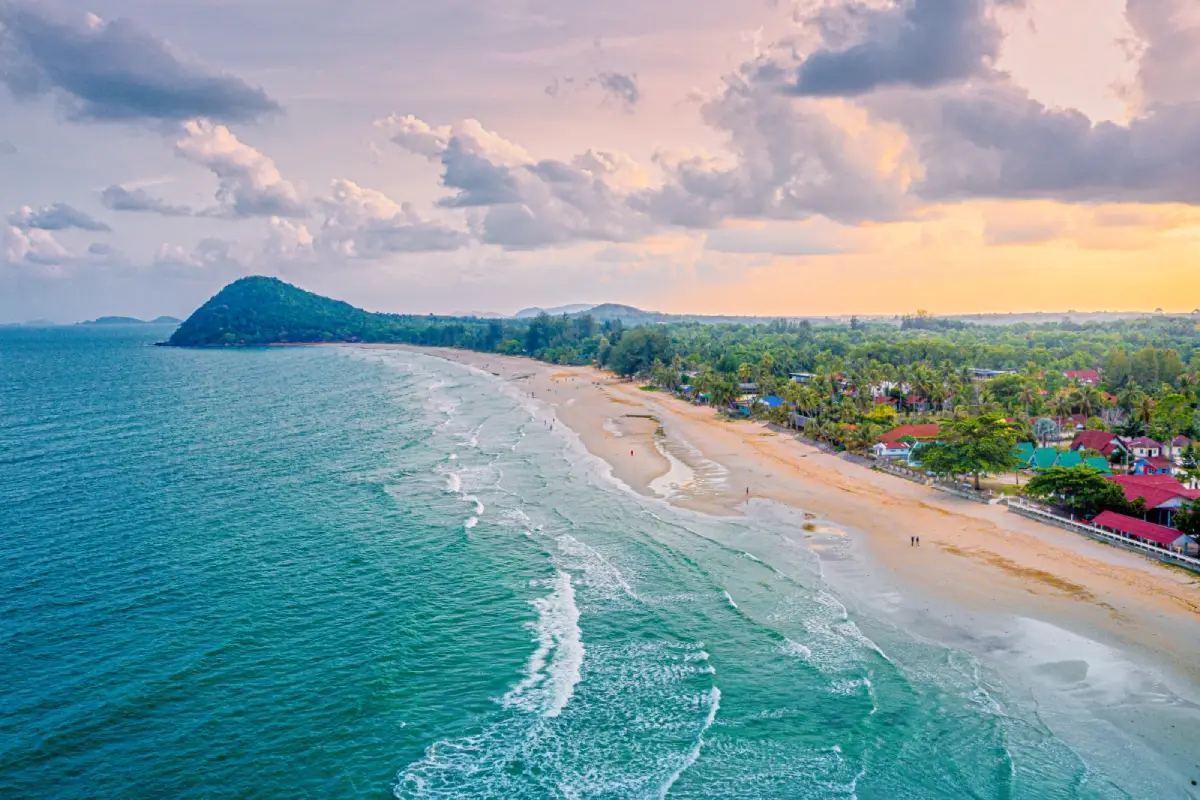
34. Thung Wua Laen Beach, Chumphon Province, is one of the province's best-known beaches, located in Pathio District near Chumphon Town. It features a long sandy shoreline and a welcoming seaside atmosphere, with restaurants and accommodation nearby. The beach is also a convenient base for travelers interested in exploring Chumphon's marine attractions and joining seasonal snorkeling or diving excursions.
Highlights: An extensive sandy beach, sunrise views, coastal accommodation, restaurants, and access to marine excursions around Chumphon.
Best Time to Visit: February–September, particularly March–May. Season: The generally favorable beach travel period for Chumphon, subject to local marine conditions.
March through May is generally an appealing period for visiting Thung Wua Laen Beach. Although temperatures can be high, travelers can enjoy beach relaxation and outdoor activities when the sea is calm. June through September can also offer suitable travel opportunities in many years, but thunderstorms, rainfall, and strong winds must be considered before boating or entering the water.
Thung Wua Laen is characterized by its long sandy coastline, making it attractive for beach walks, coastal photography, and relaxed seaside holidays. Accommodation and restaurants around the beach allow visitors to choose between a day trip from Chumphon Town and an overnight stay by the sea.
Chumphon is also known for islands, reefs, and marine attractions. Travelers staying near Thung Wua Laen may arrange boat excursions to authorized snorkeling or diving sites when weather and sea conditions permit. Licensed tour operators and appropriate safety equipment are important considerations for all offshore trips.
Approximately October through January is a period requiring additional caution because northeast monsoon conditions may bring heavy rain and rough seas to the Gulf of Thailand. Boat excursions can be postponed or canceled if strong winds and high waves make travel unsafe.
Thung Wua Laen Beach is particularly suitable for families, couples, and travelers exploring the Chumphon coastline. It can be combined with Sai Ri Beach and other attractions around Chumphon Town.
Getting There: Travel from Chumphon Town toward Pathio District and Saphli Subdistrict, then follow signs to Thung Wua Laen Beach. The beach can be reached by private vehicle or locally arranged transport.
Map (GPS):View Thung Wua Laen Beach on Google Maps
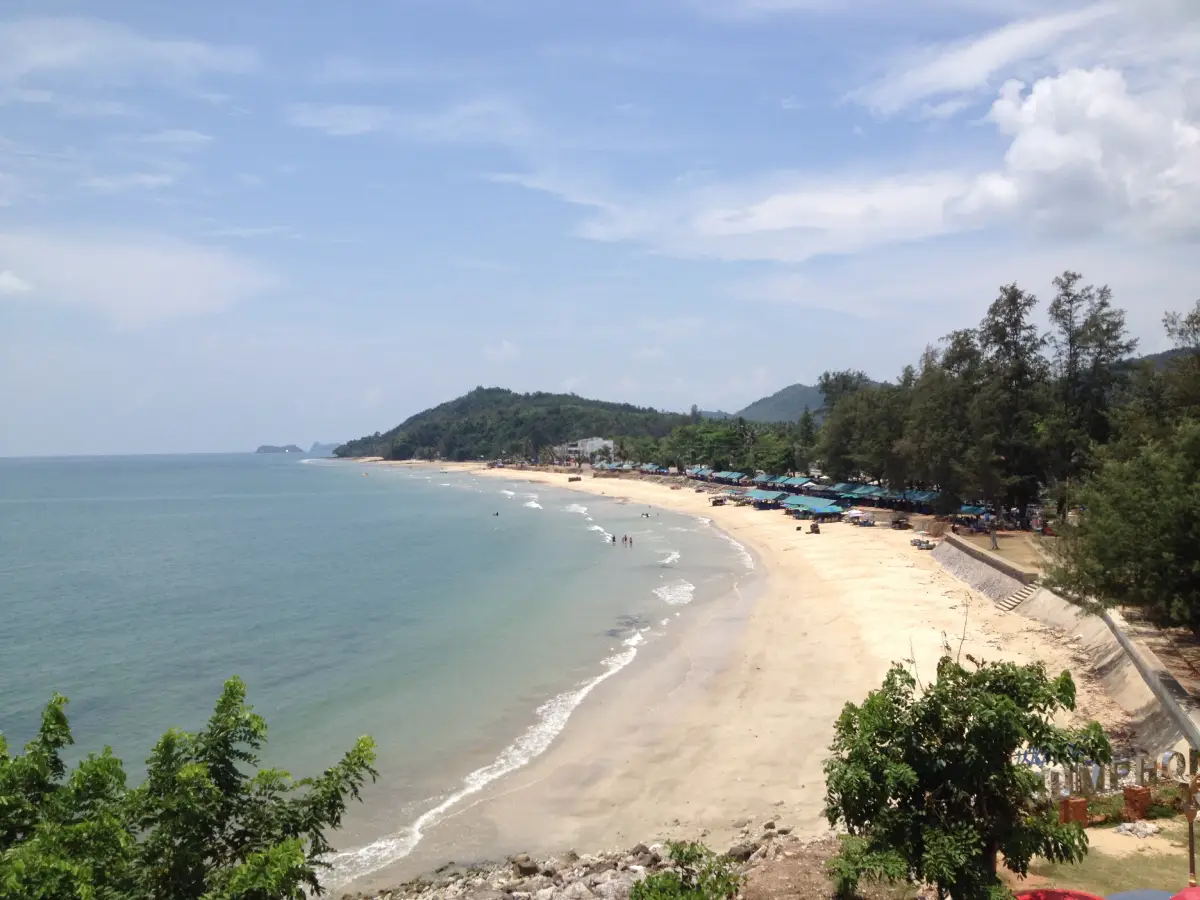
35. Sai Ri Beach, Chumphon Province, is an important coastal destination in Mueang Chumphon District. In addition to its natural Gulf of Thailand scenery, it is associated with the memorial area dedicated to Admiral Prince Abhakara Kiartivongse, widely known as the Prince of Chumphon. The destination is especially interesting because it combines beach tourism with historical and cultural significance.
Highlights: Gulf of Thailand coastal scenery, the Prince of Chumphon memorial, local history, and viewpoints around the surrounding coastal landscape.
Best Time to Visit: February–September, particularly February–April. Season: The generally favorable coastal travel period for Chumphon, although actual wave conditions must be checked daily.
February through April is generally a good time to visit Sai Ri Beach and its surrounding historical attractions. Weather conditions are often more suitable for sightseeing than during the stronger northeast monsoon period late in the year. Visitors can enjoy coastal scenery while learning about the historical importance of Admiral Prince Abhakara Kiartivongse and his contributions to the development of the Royal Thai Navy.
Sai Ri Beach holds particular cultural significance because of its association with the Prince of Chumphon. The memorial area attracts visitors who come to pay their respects, while the surrounding coastline provides opportunities to appreciate the natural scenery of Chumphon.
The local landscape includes coastal areas and nearby elevated terrain, creating several different perspectives over the Gulf of Thailand. Early mornings can be particularly attractive for photography and peaceful sightseeing.
From October through January, strong northeast monsoon winds can bring heavy rainfall and rough seas to the Chumphon coastline. Travelers should monitor marine weather forecasts and follow the instructions of local authorities, especially if they plan to use boats or join marine excursions.
Sai Ri Beach is suitable for families, history enthusiasts, and visitors interested in combining coastal scenery with an important Thai memorial site. It can be included in a trip that also visits Thung Wua Laen Beach.
Getting There: Travel from Chumphon Town toward Sai Ri Subdistrict in Mueang Chumphon District, following the coastal road and signs to the Prince of Chumphon memorial area. The destination is accessible by road.
Map (GPS):View Sai Ri Beach on Google Maps

36. Koh Thalu, Koh Sang, and Koh Sing, Prachuap Khiri Khan Province, are offshore islands in the Gulf of Thailand near Bang Saphan Noi District. They are known for their natural marine landscapes, coral reef habitats, and snorkeling opportunities. Koh Thalu is especially recognizable for a natural opening through a rocky formation, while nearby Koh Sang and Koh Sing contribute to the scenic diversity of island excursions in this area.
Highlights: Koh Thalu's natural rock opening, coral reefs, snorkeling areas, offshore island scenery, and marine nature excursions.
Best Time to Visit: February–September, particularly March–May. Season: The generally favorable period for marine excursions along the Prachuap Khiri Khan coast of the Gulf of Thailand.
March through May is generally an attractive time for arranging excursions to Koh Thalu and nearby islands. Marine conditions are often more favorable than during periods of strong northeast monsoon winds, creating opportunities for snorkeling and island sightseeing. Nevertheless, thunderstorms and changing winds can occur even during these months, making daily marine forecasts essential.
Koh Thalu's most distinctive feature is a natural opening through a coastal rock formation. Over time, erosion has shaped this unusual landscape into one of the area's recognized natural attractions. Visitors can appreciate the formation from authorized boat routes or other designated viewing areas.
Marine life and coral reef habitats around the islands provide opportunities for underwater nature observation. Snorkelers should use appropriate safety equipment, follow guides' instructions, avoid stepping on coral, and never touch or feed marine animals.
Compared with more distant islands in southern Thailand, the Koh Thalu area can be incorporated into a coastal holiday in Bang Saphan Noi. However, an offshore excursion still requires careful consideration of currents, waves, boat conditions, and the experience of the operator.
Approximately October through January is a period when northeast monsoon conditions can bring stronger winds and higher waves. Boat services may be rescheduled or canceled during unsafe marine conditions. Travelers should not depart when official warnings advise against small-boat travel.
The island group is suitable for snorkelers, photographers, and travelers interested in marine conservation. Day excursions can be arranged from the Bang Saphan Noi area when suitable authorized services are operating.
Getting There: Travel to Bang Saphan Noi District in Prachuap Khiri Khan Province and continue to an operating pier serving Koh Thalu and nearby islands. Confirm the departure point, authorized boat service, island access, and weather forecast before traveling.

37. Sichon Beach (Hua Hin Sichon), Nakhon Si Thammarat Province, is a well-known coastal destination in Sichon District on the western shore of the Gulf of Thailand. The beach is characterized by its curved sandy coastline, rocky sections, local seafood restaurants, and relaxed seaside community atmosphere. It is especially suitable for travelers who want to enjoy southern Thailand's coastal scenery away from the country's busiest international resort destinations.
Highlights: Curved sandy beach, coastal rock formations, traditional seaside atmosphere, seafood restaurants, and sunrise views over the Gulf of Thailand.
Best Time to Visit: February–April, with additional opportunities during calmer periods from May–August. Season: The generally drier period following the stronger northeast monsoon.
February through April is generally one of the most favorable periods to visit Sichon Beach. Rainfall and strong monsoon winds are often less persistent than during the late-year wet season, making beach walks, photography, and local sightseeing more comfortable. Early mornings are particularly attractive for watching the sunrise across the Gulf of Thailand.
Sichon Beach features a mixture of sandy shoreline and rocky coastal formations, producing different scenery along the waterfront. Waves breaking against the rocks can create dramatic natural views, although visitors should remain at a safe distance and avoid climbing onto wet or slippery formations.
The destination is also known as Hua Hin Sichon, a local name associated with its seaside holiday atmosphere. Restaurants, accommodation, and the surrounding coastal community create opportunities for visitors to enjoy local food and observe everyday life in this part of Nakhon Si Thammarat.
May through August can provide additional travel opportunities when sea conditions are suitable. However, occasional thunderstorms and changes in wind direction remain possible, so travelers should check current marine conditions before participating in water activities.
Approximately October through January is a period requiring greater caution. Northeast monsoon winds can bring heavy rain and high waves to this section of the Gulf of Thailand, particularly during severe weather events. Swimming and other marine activities should be avoided whenever conditions are unsafe.
Sichon Beach is suitable for families, couples, and travelers interested in southern coastal communities. It can be combined with Khanom Bay and other attractions in northern Nakhon Si Thammarat.
Getting There: Travel from Nakhon Si Thammarat Town toward Sichon District, then follow signs to Sichon Subdistrict and the beachfront. Private vehicles and locally arranged transfers can be used.
Map (GPS):View Sichon Beach on Google Maps
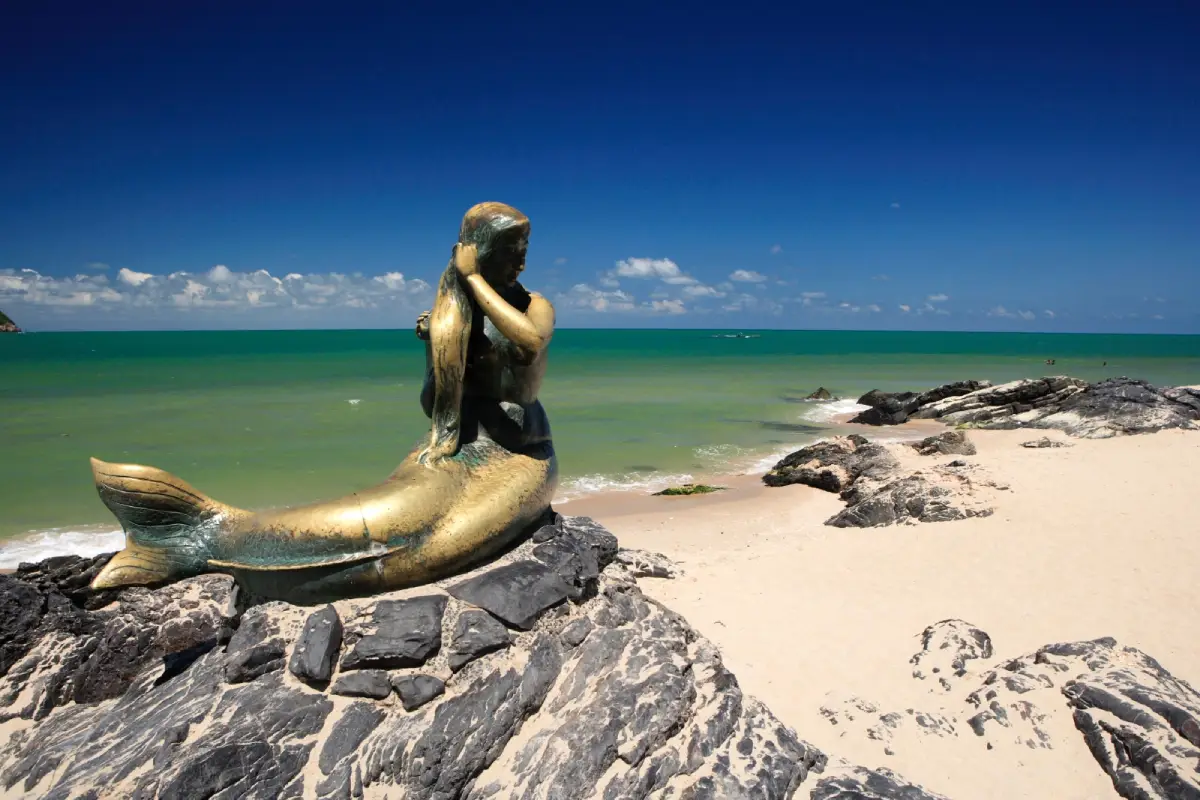
38. Laem Samila, Songkhla Province, is one of southern Thailand's most recognizable coastal landmarks. Located in Mueang Songkhla District, the area is famous for Samila Beach, coastal trees, and the iconic Golden Mermaid statue, which has become a symbol of Songkhla. The destination combines attractive Gulf of Thailand scenery with local legends, cultural identity, and the historical atmosphere of Songkhla City.
Highlights: The Golden Mermaid statue, Samila Beach, coastal trees, Gulf of Thailand views, and convenient access to Songkhla Old Town.
Best Time to Visit: February–April, with additional opportunities during calmer periods from May–August. Season: The generally more favorable period following the late-year northeast monsoon.
February through April is generally a good time to visit Laem Samila, as outdoor sightseeing is often more comfortable than during the wettest months toward the end of the year. Visitors can walk along the beach, photograph the Golden Mermaid statue, and enjoy views of the Gulf of Thailand, particularly during the cooler morning hours.
The Golden Mermaid is one of the best-known symbols of Songkhla and a popular photography landmark. Together with the beach, coastal trees, and open sea views, it creates a destination where visitors can enjoy both nature and a recognizable element of local cultural identity.
Laem Samila also has a close connection with the wider history of Songkhla, a coastal city shaped by maritime trade and diverse cultural influences. Travelers can combine a morning visit to Samila Beach with an afternoon exploring Songkhla Old Town, where historic buildings, local restaurants, and established communities reflect the city's heritage.
May through August can also be suitable for visiting the area when weather and sea conditions are favorable. The beach is primarily appreciated as a sightseeing and leisure destination, and swimming should only be considered where permitted and when conditions are safe.
From approximately October through January, the northeast monsoon can bring heavy rain, strong winds, and high waves to the eastern coast of southern Thailand. November and December can be particularly wet in some years. Travelers should follow coastal safety warnings and avoid entering the sea during rough conditions.
Laem Samila is ideal for families, photographers, and culturally curious visitors. It is particularly convenient for travelers who want to explore both the Songkhla waterfront and the city's historical attractions in a single day.
Getting There: Travel from central Songkhla to the coastal road leading to Laem Samila and Samila Beach. Visitors coming from Hat Yai can reach Songkhla by road before continuing to the beachfront and nearby attractions.
Map (GPS):View Laem Samila on Google Maps

39. Koh Sichang, Chon Buri Province, is an island in the Gulf of Thailand, located off the coast of Si Racha District. Unlike islands primarily known for white-sand beaches or snorkeling, Koh Sichang combines coastal landscapes, traditional island communities, and significant historical attractions. One of its most important landmarks is Phra Chudadhuj Palace, a historic royal residence associated with the island's development in earlier periods.
Highlights: Island communities, Phra Chudadhuj Palace, coastal viewpoints, historical landmarks, and scenic seaside landscapes.
Best Time to Visit: November–April, particularly December–February. Season: The generally drier travel period for Thailand's eastern coast, subject to daily marine conditions.
December through February is generally a favorable time to visit Koh Sichang. Temperatures are often more comfortable than during the hottest months, and rainfall is usually lower than in the rainy season. Travelers can take a passenger boat from Si Racha and explore the island's historic sites and coastal viewpoints during a day trip or overnight stay.
Phra Chudadhuj Palace is a major attraction and an important part of the island's historical identity. Its surviving features and landscaped surroundings offer insights into the development of Koh Sichang as a destination associated with Thailand's royal history.
Koh Sichang also has a distinctive island community atmosphere. Roads, coastal settlements, rocky shorelines, and elevated viewpoints provide opportunities to experience everyday life beside the Gulf of Thailand. Visitors can explore the island using available local transport or other permitted rental services.
Because the island includes hilly terrain, travelers should allow enough time to move between attractions and avoid rushing from one location to another. The drier months are generally more comfortable for outdoor exploration, although strong winds can occasionally affect the coastline.
From May through October, rainfall and thunderstorms become more likely. Strong northeast monsoon winds can also affect boat crossings during some parts of the cooler season. Travelers should always confirm the current ferry timetable and marine weather forecast before departure.
Koh Sichang is suitable for families, history enthusiasts, couples, and travelers seeking an island excursion from the Bangkok metropolitan area. A day trip is possible, while an overnight stay allows more time to experience the community atmosphere.
Getting There: Travel from Bangkok or nearby provinces to Si Racha District in Chon Buri Province, then take an operating passenger boat to Koh Sichang. Local transport is available for visiting the island's historical landmarks and coastal attractions.
Map (GPS):View Koh Sichang on Google Maps

40. Koh Larn, Chon Buri Province, is a popular island destination near Pattaya, known for sandy beaches, attractive sea views, and convenient transport connections from the mainland. The island is suitable for both day trips and overnight stays, offering several beaches with different atmospheres, including Tawaen Beach, Tien Beach, and Samae Beach.
Highlights: Tawaen Beach, Tien Beach, Samae Beach, turquoise water in suitable weather, island viewpoints, and convenient ferry connections from Pattaya.
Best Time to Visit: November–April, particularly December–March. Season: The generally drier travel period for Chon Buri's coastal islands.
December through March is generally an excellent period for visiting Koh Larn. Rainfall tends to be lower than during the main rainy season, and sea conditions are often suitable for passenger boat travel and beach activities. The island is especially popular during weekends and public holidays, so visitors should allow extra time at the pier and consider booking accommodation in advance.
Koh Larn has several beaches with different characteristics. Tawaen Beach is a major tourism area with restaurants and visitor facilities, Tien Beach is popular for its picturesque surroundings, and Samae Beach offers another setting for coastal relaxation. Travelers can choose locations based on their preferred atmosphere, facilities, and activities.
Visitors can explore Koh Larn during a day trip from Pattaya, but spending a night on the island allows a more relaxed itinerary and additional time for morning views. Water activities should be arranged through operators that prioritize safety and comply with environmental regulations.
From May through October, heavier rain, thunderstorms, and stronger winds may affect passenger boats and speedboat services. Occasionally, strong northeast monsoon winds can also create rough seas during the cooler months. Travelers should check official pier and boat operator announcements before traveling.
Koh Larn is particularly suitable for families, couples, and groups of friends looking for a convenient island holiday near Bangkok. It can be combined with sightseeing in Pattaya and other attractions in Chon Buri Province.
Getting There: Travel from Bangkok to Pattaya in Chon Buri Province, then take an operating public ferry or authorized speedboat to Koh Larn. Upon arrival, use available local transport to reach the island's beaches, and confirm the return boat timetable before beginning your sightseeing.
Map (GPS):View Koh Larn on Google Maps
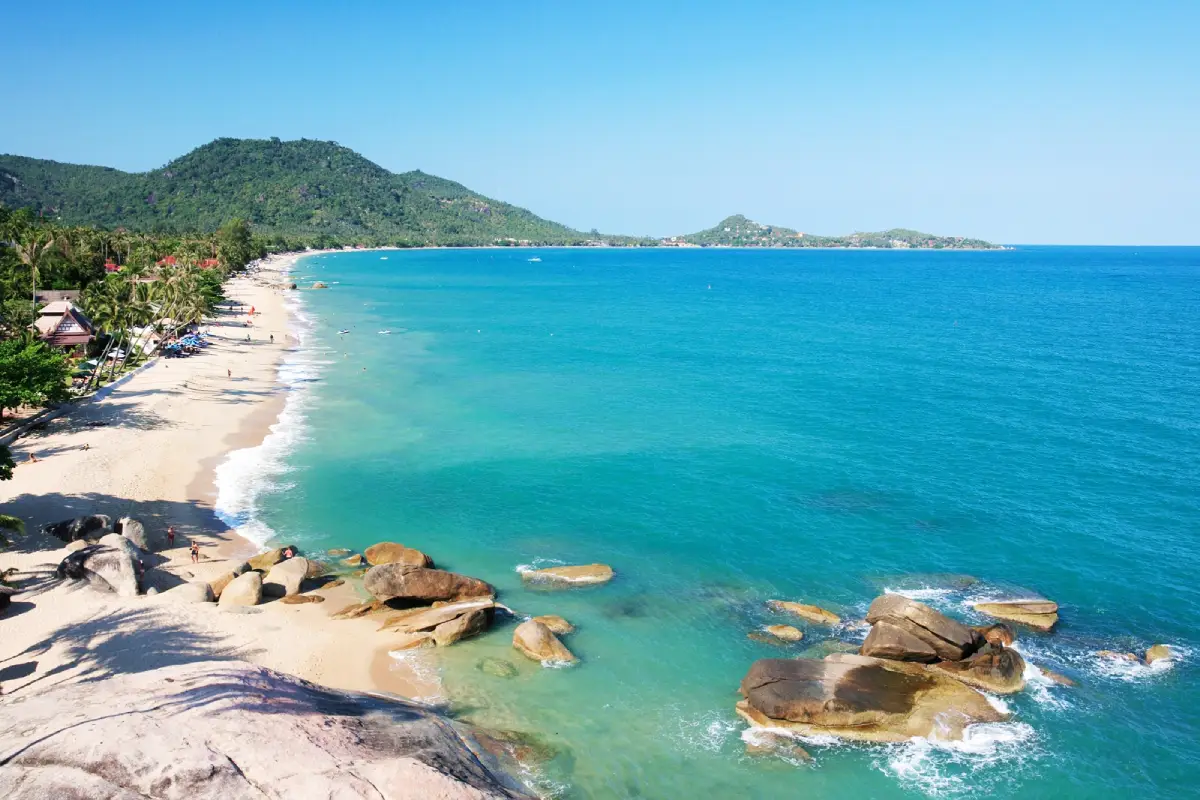
41. Lamai Beach, Surat Thani Province, is a popular beach on the southeastern coast of Koh Samui. It is known for its gently curving sandy shoreline, tropical coconut palms, attractive sea views, and a wide choice of accommodation and restaurants. Lamai offers a combination of comfortable tourism facilities and natural coastal scenery, making it suitable for travelers who want a relaxing island holiday without being too far from the island's main attractions.
Highlights: Curved sandy beach, coconut palms, tropical scenery, beachfront restaurants, and nearby Hin Ta and Hin Yai rock formations.
Best Time to Visit: February–September, particularly February–April. Season: The generally drier and more favorable travel period for Koh Samui compared with the late-year northeast monsoon months.
February through April is generally one of the best periods for a Lamai Beach holiday. Rainfall is often less persistent than during Koh Samui's late-year wet season, making beachfront relaxation, walks, and outdoor sightseeing more enjoyable. May through August can also provide suitable travel conditions in many years, although thunderstorms and changing sea conditions remain possible.
Lamai Beach features a curved shoreline with sandy stretches and rocky sections. Toward the southern part of the area, visitors can explore the famous Hin Ta and Hin Yai rock formations, among Koh Samui's best-known natural landmarks. The combination of beach scenery and distinctive rocks makes Lamai appealing for visitors interested in coastal photography and natural attractions.
The surrounding area offers accommodation ranging from small guesthouses to beachfront resorts. Restaurants and local tourism services make Lamai a convenient base for visitors planning several days on Koh Samui. Early mornings are particularly attractive for beach walks and photography because the coastline faces the rising sun.
Swimming conditions vary along the beach. Some sections have deeper water, rocks, or stronger waves depending on the season. Travelers should check warning signs and local advice before entering the water, particularly after heavy rainfall or during periods of strong wind.
From October through December, the lower Gulf of Thailand experiences a greater risk of heavy rain and rough seas associated with the northeast monsoon. November is often particularly wet on Koh Samui. Travelers should keep their schedules flexible and monitor weather conditions before booking boat excursions.
Lamai Beach is suitable for couples, families, and visitors seeking a relaxed island resort atmosphere. It can be combined with Chaweng Beach, Hin Ta and Hin Yai, and other Koh Samui attractions during the same holiday.
Getting There: Travel to Koh Samui by air or ferry, then continue to Lamai Beach on the island's southeastern coast using a taxi, accommodation transfer, or rental vehicle. The main island road connects Lamai with Chaweng and other coastal communities.
Map (GPS):View Lamai Beach on Google Maps
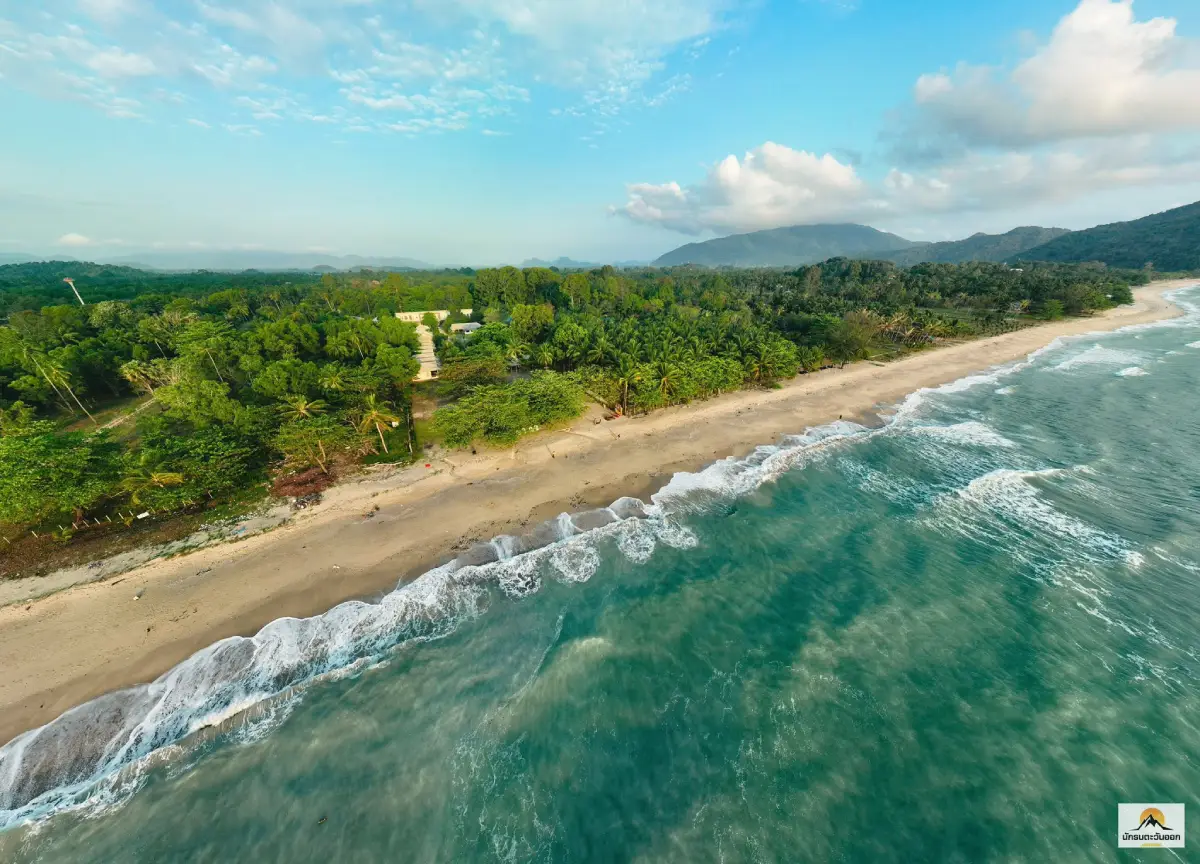
42. Ao Khanom (Khanom Bay), Nakhon Si Thammarat Province, is a scenic coastal destination in Khanom District, known for its natural beaches, fishing communities, and diverse landscapes along the lower Gulf of Thailand. The surrounding coastline includes long sandy shores, smaller bays, and green hills rising near the sea. Khanom is particularly attractive to travelers who prefer a peaceful coastal atmosphere rather than a large, crowded resort center.
Highlights: Natural sandy beaches, scenic bays, traditional fishing communities, coastal landscapes, and authorized marine wildlife excursions.
Best Time to Visit: February–September, especially February–April. Season: The generally favorable coastal travel period following the stronger northeast monsoon.
February through April is generally an appealing time to visit Khanom Bay. Rainfall and strong monsoon winds are often less persistent than during the final months of the year, making beach walks, sunrise photography, and coastal exploration more enjoyable. May through August can also offer suitable opportunities for sightseeing, although marine activities remain dependent on daily weather conditions.
Khanom's natural landscape includes sandy beaches, curved bays, and coastal hills. Visitors can explore quieter sections of the shore or enjoy local restaurants and accommodation within nearby communities. The relatively relaxed environment makes the area suitable for travelers who wish to spend several days enjoying the coast without a demanding sightseeing schedule.
The waters around Khanom are also known for marine wildlife, including dolphins. Visitors interested in dolphin-watching excursions should select responsible operators that avoid chasing, feeding, or disturbing wild animals. Sightings depend entirely on natural conditions and cannot be guaranteed on any particular trip.
Traditional fishing activities remain an important part of the area's coastal identity. Travelers can enjoy local seafood while respecting community spaces and working fishing areas. Avoiding litter and supporting responsible tourism help protect both the marine environment and the livelihoods of local residents.
Approximately October through January is a period of greater concern because northeast monsoon conditions can bring heavy rainfall, strong winds, and high waves to the lower Gulf of Thailand. Boat trips should only proceed when marine forecasts and local operators confirm safe conditions.
Khanom Bay is suitable for families, couples, and travelers interested in nature and coastal communities. It can be combined with Sichon Beach and other attractions in northern Nakhon Si Thammarat.
Getting There: Travel by road from Nakhon Si Thammarat Town or Surat Thani Province to Khanom District, then continue to the beach or bay you wish to visit. For marine excursions, confirm the operating pier, authorized boat service, and marine weather conditions before departure.
Map (GPS):View Khanom Bay on Google Maps
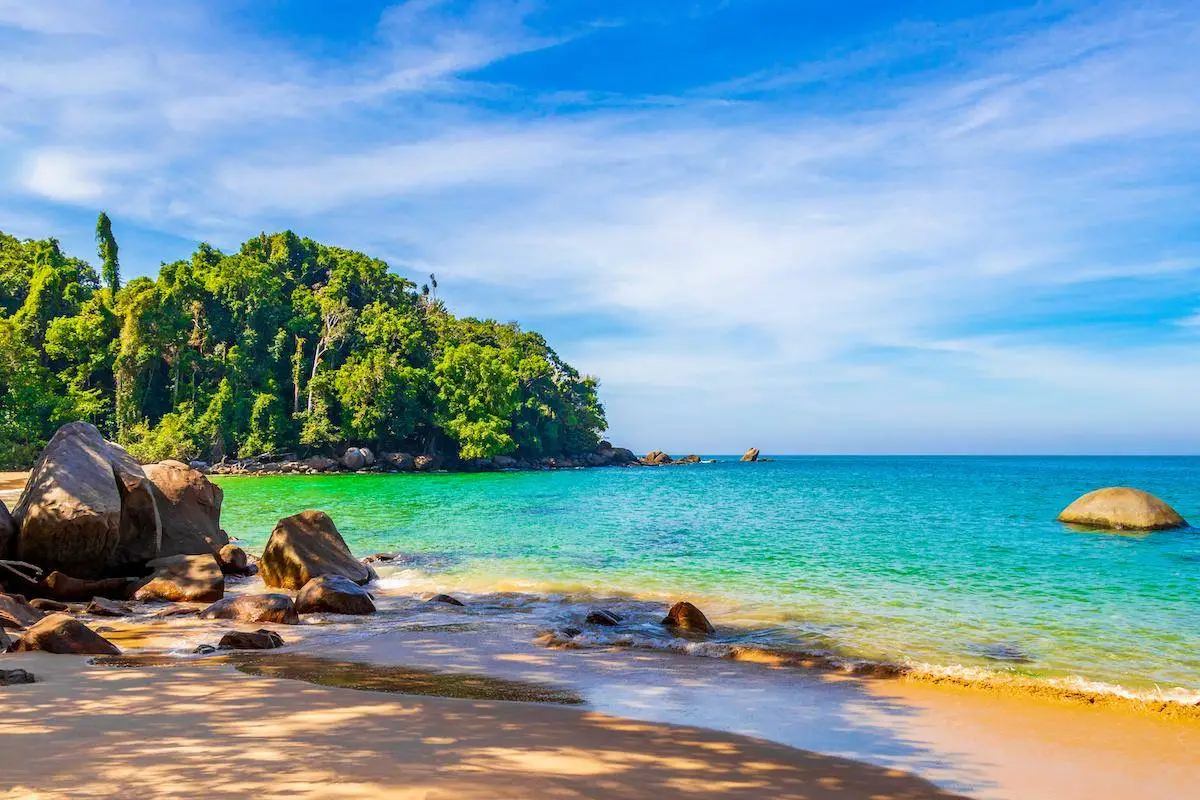
43. Khao Lak Coast, Phang Nga Province, is an important Andaman Sea holiday destination known for long sandy beaches, tropical coastal scenery, and a wide choice of beachfront resorts. The area extends along the coastline around Khao Lak and Takua Pa District, providing opportunities for quiet seaside holidays as well as excursions to protected islands and diving destinations in Phang Nga Province.
Highlights: Long sandy beaches, Andaman Sea views, sunset photography, beachfront accommodation, and access to boat excursions serving the Similan Islands.
Best Time to Visit: November–April, particularly December–March. Season: Andaman Sea dry season.
December through March is generally the most favorable period for visiting Khao Lak's coastline. Compared with the southwest monsoon season, there is usually less persistent rainfall and a better chance of calmer seas. Visitors can enjoy beach walks, resort facilities, and sunset views along the Andaman Sea. November and April can also be suitable, although occasional thunderstorms and changing weather conditions are more likely during transitional periods.
Khao Lak is distinguished by its extended coastline and proximity to green hills and natural landscapes. Unlike remote islands that require boat transfers, its beaches are accessible from the mainland. This makes the area particularly convenient for travelers seeking seaside accommodation together with restaurants and other tourism services.
Khao Lak is also a major starting point for excursions to the Similan Islands and other marine attractions in Phang Nga. These trips depend on the opening dates of the relevant national parks and the availability of authorized boat services. Travelers should confirm current regulations rather than assuming that every offshore destination is accessible throughout the dry season.
Visitors seeking a relaxed holiday can spend their time exploring different beaches along the coast and enjoying local communities. Those interested in marine activities can arrange excursions on suitable days while keeping alternative plans available if weather conditions deteriorate.
From May through October, southwest monsoon conditions can bring heavy rain, rough surf, and dangerous rip currents to exposed beaches. Visitors must observe warning flags and avoid swimming when authorities advise against entering the sea.
The Khao Lak Coast is suitable for families, couples, and travelers who want comfortable beachfront accommodation with opportunities for nearby nature excursions. Staying several nights provides greater flexibility for arranging activities around the weather.
Getting There: Travel from Phuket International Airport or Phang Nga Town by road toward the Khao Lak area of Takua Pa District, following Phetkasem Road and local access roads to the chosen beach or accommodation.
Map (GPS):View Khao Lak Coast on Google Maps
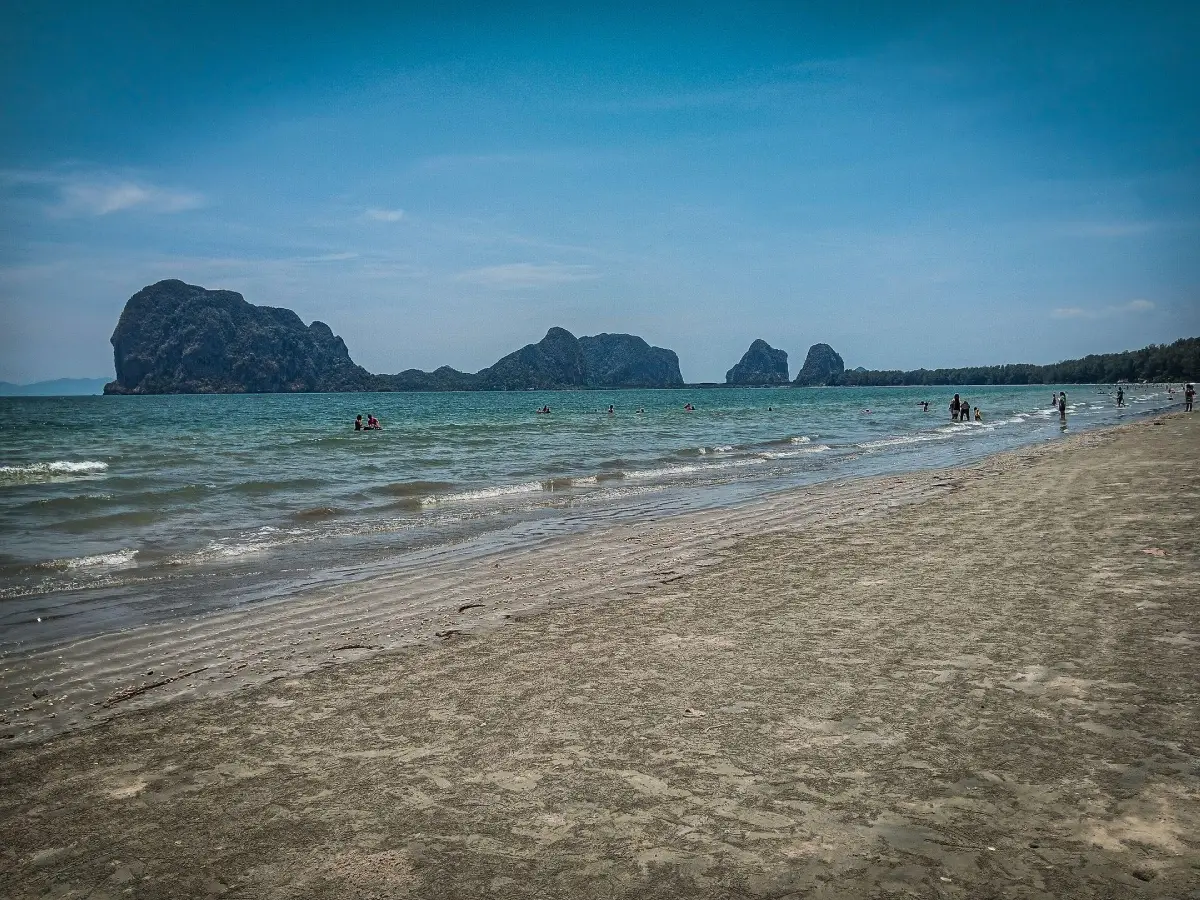
44. Pak Meng Beach, Trang Province, is a well-known coastal destination in Mai Fat Subdistrict, Sikao District. The beach features a long sandy shoreline, shaded coastal trees, and scenic views of limestone islands rising from the Andaman Sea. The surrounding area offers seafood restaurants and facilities for visitors, while nearby piers provide access to several of Trang's offshore islands.
Highlights: Long sandy beach, coastal trees, limestone island views, sunset scenery, seafood restaurants, and access to island excursion services.
Best Time to Visit: November–April, particularly December–March. Season: Andaman Sea dry-season travel period.
December through March is generally the best time to visit Pak Meng Beach. The Andaman Sea is more likely to be calm than during the southwest monsoon, allowing visitors to enjoy coastal scenery and plan island excursions when weather conditions permit. Sunset is particularly attractive because the changing light illuminates the offshore islands and open horizon.
Pak Meng's landscape is distinguished by its long sandy shoreline and views of limestone formations standing offshore. Rows of trees along the coast provide shaded areas for relaxation, while the beachfront atmosphere offers a combination of natural scenery and local tourism services.
For travelers planning to visit Koh Kradan, Ko Ngai, or other islands in Trang Province, Pak Meng is a convenient area to consider for accommodation before departure. The exact pier and sailing route should be confirmed with the operator, as different islands and boat services may use different departure arrangements.
The surrounding area also has local communities, seafood restaurants, and natural attractions in Sikao District. Visitors can combine an afternoon at the beach with nearby sightseeing without requiring a boat excursion on every day of their holiday.
From May through October, the southwest monsoon increases the likelihood of rain and rough seas. Island boat services may be affected, although sightseeing along the mainland beach can still be possible in suitable weather. Swimming and offshore excursions should always depend on actual marine conditions.
Pak Meng Beach is ideal for families, couples, and travelers planning a combined mainland-and-island holiday in Trang. Spending two or three days in the area allows enough time to enjoy the beach and select a suitable day for an island excursion.
Getting There: Travel from Trang Town toward Sikao District using Highway 4046 and connecting roads toward Pak Meng Beach. Local routes lead to the beachfront restaurants, accommodation, and piers serving offshore islands.
Map (GPS):View Pak Meng Beach on Google Maps
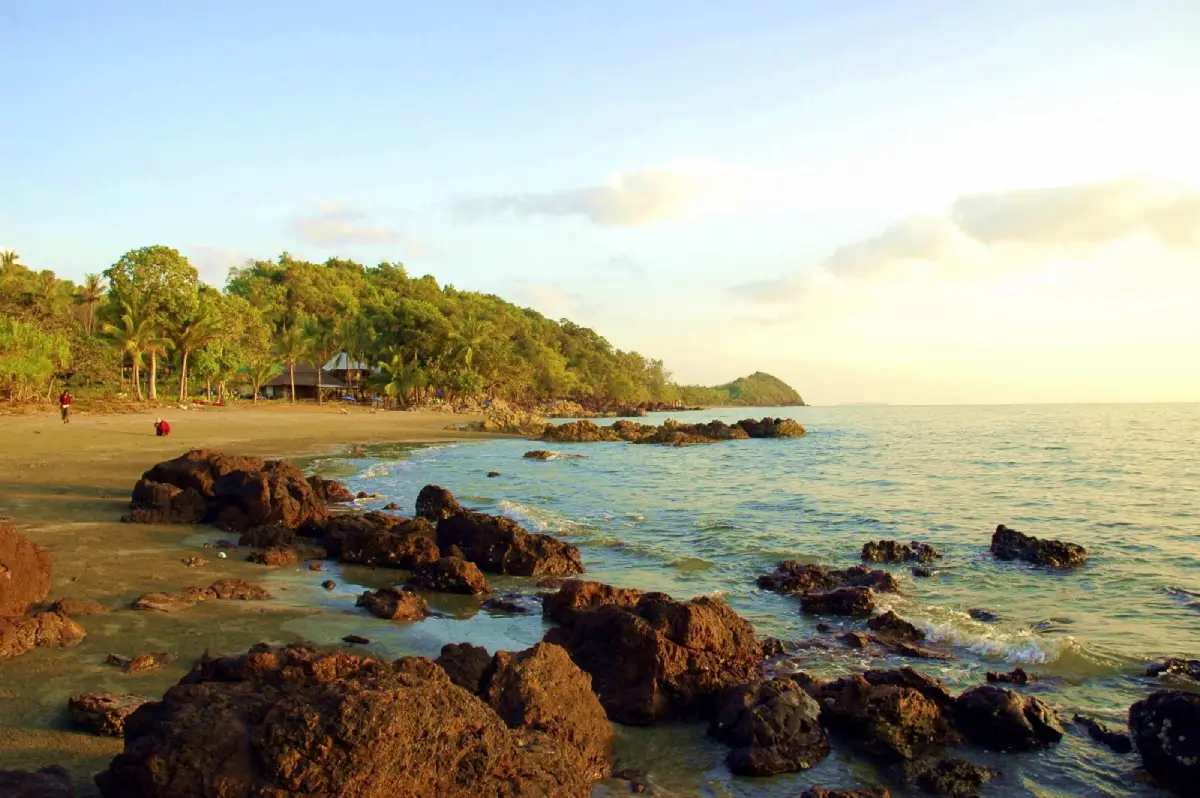
45. Koh Sukorn, Trang Province, is an inhabited island in Palian District, recognized for its fishing communities, agricultural traditions, and peaceful rural atmosphere. Unlike island destinations primarily focused on white-sand beaches and snorkeling, Koh Sukorn offers opportunities to experience village life, farming, and the relationship between coastal communities and the Andaman Sea.
Highlights: Traditional island communities, rural landscapes, local agriculture, cycling, coastal scenery, and peaceful village experiences.
Best Time to Visit: November–April, particularly December–March for coastal travel, with March–April also of interest for seasonal watermelon farming when cultivation conditions permit. Season: Andaman Sea tourist season and locally variable agricultural harvest periods.
December through March is generally the most comfortable period for visiting Koh Sukorn because boat crossings are more likely to be favorable than during the southwest monsoon. Travelers interested in the island's agricultural traditions may also consider March and April, when local watermelon cultivation and harvesting can be part of the seasonal landscape. Exact farming schedules depend on weather and individual growers.
The island's main attraction is its community-oriented atmosphere. Visitors can explore villages, agricultural fields, and coastal areas using bicycles or locally arranged transport. This provides opportunities to learn about the island's fishing activities and agricultural lifestyle without the intense tourism development found on larger resort islands.
Koh Sukorn is especially suitable for slow travel. Spending time in a local guesthouse or community-based accommodation allows visitors to enjoy traditional food, observe everyday village activities, and appreciate the surrounding countryside. Travelers should respect private property and request permission before entering agricultural land.
Early mornings and late afternoons are ideal for cycling and exploring the island because temperatures are generally more comfortable. The changing light also provides opportunities to photograph fishing communities, rural landscapes, and coastal views.
From May through October, southwest monsoon rain and stronger winds may affect boat travel. Passenger boats and local crossings should only be used when conditions are safe, and travelers should confirm transport arrangements before departure.
Koh Sukorn is ideal for visitors interested in local culture, agriculture, community tourism, and peaceful island surroundings. A stay of one or two nights provides time to appreciate the island without rushing.
Getting There: Travel from Trang Town toward Palian District and continue to an operating pier serving Koh Sukorn, including connections from the Tase area where available. Take a local passenger boat across to the island and use local transport or bicycles to explore.
Map (GPS):View Koh Sukorn on Google Maps

46. Pak Bara Beach, Satun Province, is a coastal destination in Pak Nam Subdistrict, La-ngu District, on the southern Andaman coast. It is well known for its seaside views, local seafood restaurants, and proximity to Pak Bara Pier, an important departure point for boats traveling to Koh Lipe and the islands of Satun Province. The area provides a convenient place to rest before or after an offshore island excursion.
Highlights: Sunset views, offshore island scenery, seafood restaurants, coastal community atmosphere, and convenient access to Pak Bara Pier.
Best Time to Visit: November–April, particularly December–March. Season: Southern Andaman Sea tourist season.
December through March is generally the most favorable time to visit Pak Bara Beach. Rainfall and strong southwest monsoon winds are usually less persistent than during the middle of the year, making coastal sightseeing and island transfers more convenient. Travelers can enjoy the beachfront, sample local seafood, and organize boat journeys to Koh Lipe or other destinations when services are operating.
Pak Bara is important both as a seaside attraction and as a transport gateway for marine tourism in Satun Province. Visitors arriving before their boat departure may explore nearby coastal areas, while those planning early morning departures can consider staying overnight in the vicinity.
The coastal landscape offers views of the Andaman Sea and offshore islands when visibility is good. Late afternoons can be especially attractive for photography, with the setting sun creating warm light across the water and horizon.
Seafood restaurants and local businesses are part of Pak Bara's coastal identity. Travelers can enjoy regional dishes while supporting local communities. Responsible tourism includes avoiding litter, respecting working fishing areas, and following any restrictions around transport facilities.
From May through October, heavier rainfall and stronger monsoon winds can affect the sea. Boat services to Koh Lipe and other offshore islands may be reduced, altered, or suspended. Conditions at the mainland beach should not be used as the sole indicator of offshore safety.
Pak Bara Beach is suitable for families, seafood lovers, and travelers planning island excursions in Satun Province. It can serve as a convenient overnight stop before an early boat departure.
Getting There: Travel from Satun Town toward La-ngu District, then follow the road toward Pak Bara and Pak Nam Subdistrict. The beach is near the route leading to Pak Bara Pier and can be reached by private car or locally available transport.
Map (GPS):View Pak Bara Beach on Google Maps

47. Nang Ram Beach, Chon Buri Province, is a popular beach in Sattahip District, located in an area managed by the Royal Thai Navy. Known for its attractive sandy shoreline and organized coastal recreation areas, the beach is suitable for travelers seeking a seaside break within convenient driving distance of Bangkok and Pattaya.
Highlights: A pleasant sandy beach, coastal scenery, designated relaxation areas, and convenient access to other Sattahip attractions.
Best Time to Visit: November–April, particularly December–March. Season: The generally drier travel period for Thailand's eastern coastline.
December through March is generally a favorable period for visiting Nang Ram Beach. Rainfall is often lower than during the main rainy season, making coastal walks and family outings more comfortable. Visitors should nevertheless check the current opening arrangements and entry regulations because the beach is located in a managed military area.
Nang Ram Beach differs from heavily developed urban beaches because of its relatively compact size and organized visitor facilities. Travelers should follow posted signs, remain within public-access areas, and avoid restricted zones. Regulations on recreational equipment and permitted activities may also apply.
Families can enjoy the beach and coastal scenery, but swimming conditions must always be assessed. Children should be supervised closely, and visitors should avoid deeper water, strong currents, or areas where officials have advised against swimming.
From May through October, thunderstorms and heavier rainfall become more likely. Strong winds and waves can also occur during some periods of the northeast monsoon. Marine safety warnings must be followed regardless of the season.
Nang Ram Beach is particularly suitable for families, couples, and travelers seeking a short coastal getaway near Bangkok. It can be combined with other authorized attractions in Sattahip District.
Getting There: Travel from Bangkok or Pattaya toward Sattahip District in Chon Buri Province, then follow the designated road to Nang Ram Beach. Check public-access arrangements and any restrictions issued by the managing authority before departure.
Map (GPS):View Nang Ram Beach on Google Maps

48. Laem Sing Beach, Chanthaburi Province, is a coastal destination in Laem Sing District, known for its sea views, local fishing communities, and connections with the province's historical attractions. The surrounding area combines beach scenery, seafood restaurants, traditional coastal activities, and significant landmarks reflecting Chanthaburi's past.
Highlights: Coastal scenery, local fishing communities, seafood restaurants, and access to historical attractions in Laem Sing District.
Best Time to Visit: November–April, particularly December–March. Season: The generally drier travel period for eastern Thailand.
December through March is generally a favorable time to visit Laem Sing Beach. Rainfall is usually lower than during the southwest monsoon season, making it more comfortable to enjoy coastal scenery, visit local restaurants, and explore nearby outdoor attractions.
Laem Sing retains the character of a working coastal community, where fishing activities and daily life remain closely connected to the sea. Visitors can observe the atmosphere of the seaside town while respecting local residents and areas used for professional fishing activities.
The wider Laem Sing District is also associated with important historical events and landmarks. Travelers interested in culture and history can combine the beach with nearby heritage attractions, allowing a trip that extends beyond ordinary seaside relaxation.
For photographers, the coastline and traditional community surroundings provide a variety of subjects. Visitors should take pictures from public areas, avoid disturbing fishing operations, and request permission before photographing people in private or working spaces.
From May through October, Chanthaburi can experience heavy rainfall and stronger southwest monsoon winds. Swimming and boating should only be considered when marine conditions are safe, and travelers should follow local warnings about rough seas.
Laem Sing Beach is suitable for families and travelers interested in coastal food culture and local history. It can be combined with Chao Lao Beach and nearby attractions within Chanthaburi Province.
Getting There: Travel from Chanthaburi Town toward Laem Sing District along the main road network, then follow local signs to the beach. Private vehicles and locally arranged transport are practical options.
Map (GPS):View Laem Sing Beach on Google Maps

49. Cha-am Beach, Phetchaburi Province, is one of the best-known coastal resort destinations on the upper Gulf of Thailand. Located in Cha-am District, the beach features an extended sandy shoreline, convenient road access from Bangkok, seafood restaurants, accommodation, and a variety of seaside recreation facilities. It is particularly attractive to families, couples, and groups of friends seeking a short beach holiday.
Highlights: Long sandy beach, seafood restaurants, beachfront accommodation, and convenient travel connections from Bangkok.
Best Time to Visit: November–April, particularly December–February. Season: The generally cooler and drier period on the upper Gulf coast, with occasional strong northeast monsoon waves.
December through February is generally an enjoyable period for visiting Cha-am Beach. Temperatures are often more comfortable than during the hottest months, and rainfall is usually lower than in the rainy season. Visitors can relax beside the sea, walk along the beach, and enjoy fresh seafood at local restaurants.
Cha-am is well suited to travelers who want a beach holiday without arranging ferry connections. A road running near the coastline provides access to restaurants, accommodation, and recreational areas, making the destination convenient for families with children and older travelers.
Popular activities include seaside walks, relaxing beneath permitted beach umbrellas, and dining at local seafood restaurants. Water activities should only be undertaken when waves and currents are suitable. Visitors should follow local safety instructions and avoid swimming in prohibited areas.
From May through October, rainfall and thunderstorms can affect outdoor plans. Strong northeast monsoon winds during the cooler part of the year may also generate rough surf on some days. The best travel dates should therefore be selected with reference to current marine conditions rather than seasonal averages alone.
Cha-am Beach is suitable for families, couples, and travelers looking for a convenient getaway from Bangkok. It can be combined with Hua Hin or other attractions in Phetchaburi Province during a one- or two-night trip.
Getting There: Travel from Bangkok toward Phetchaburi Province using Rama II Road or another suitable main route, then continue to Cha-am District and the beachfront road. Private cars, intercity transport, and rail services may be used according to current schedules.
Map (GPS):View Cha-am Beach on Google Maps
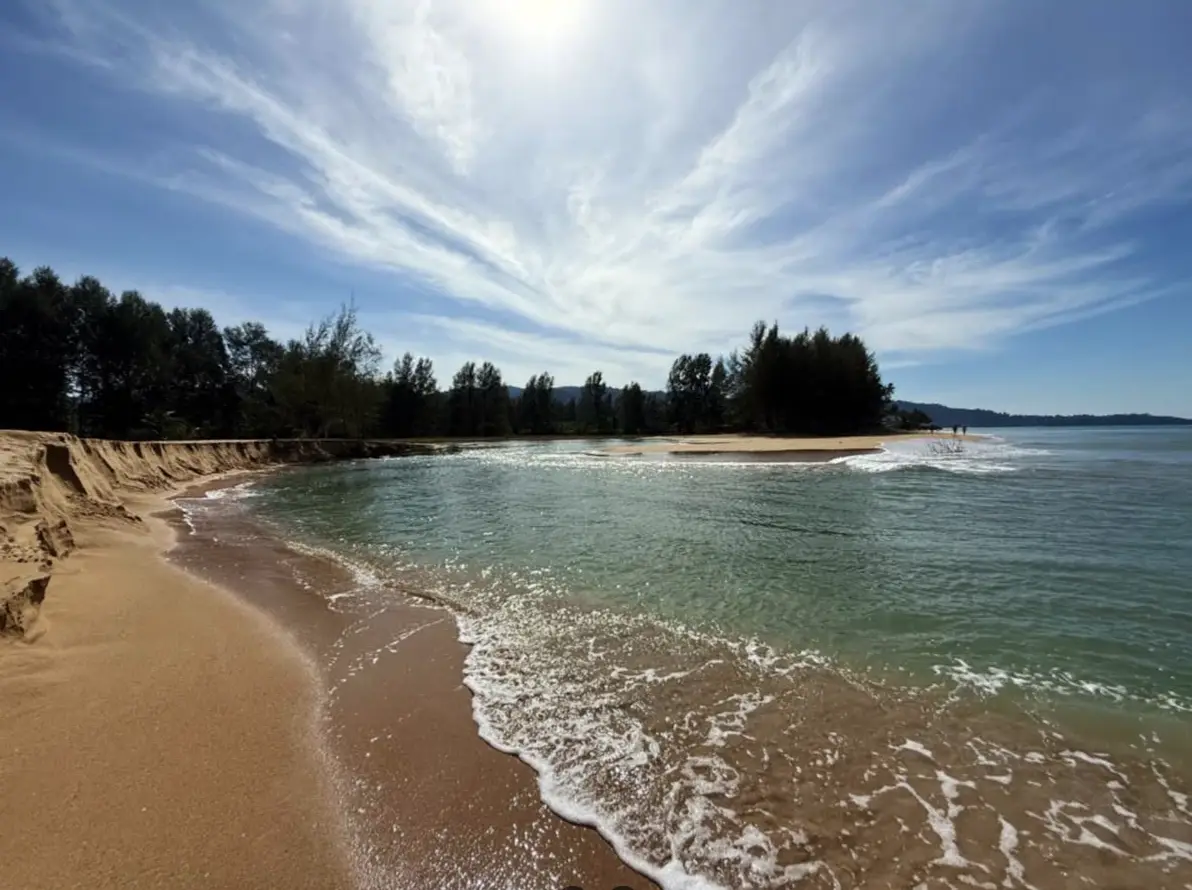
50. Khuk Khak Beach, Phang Nga Province, is a peaceful coastal destination in the Khao Lak area of Takua Pa District. Known for its long sandy shoreline, tranquil atmosphere, and natural Andaman Sea scenery, the beach is particularly suitable for visitors seeking a relaxing holiday away from the busiest tourism centers.
Highlights: Long sandy beach, peaceful coastal scenery, Andaman Sea views, sunset photography, and nearby Khao Lak accommodation.
Best Time to Visit: November–April, especially December–March. Season: Andaman Sea dry-season travel period.
December through March is generally the most favorable time to visit Khuk Khak Beach. Rainfall is often lower than during the southwest monsoon, while beach walks and sunset sightseeing are usually more comfortable. Travelers can enjoy a quiet coastal atmosphere and spend time relaxing beside the sea.
Khuk Khak forms part of the extended coastline associated with Khao Lak. The surrounding area offers accommodation, natural scenery, and convenient access to other attractions in Takua Pa District. Visitors can choose a peaceful beachfront stay while remaining close enough to explore the wider region.
Photographers will appreciate the open sea views and long stretch of sand. Late afternoons can be particularly attractive as the setting sun changes the color of the sky and water. During lower tides, broader sections of sand may become visible, although visitors should remain alert to currents and avoid unsafe areas.
Khuk Khak can also be included in a Khao Lak itinerary that combines mainland beaches with excursions to offshore islands. Travelers planning to visit the Similan Islands must verify current national park opening dates, authorized boat services, and marine weather conditions.
From May through October, southwest monsoon winds can produce heavy surf, dangerous rip currents, and increased rainfall along Phang Nga's exposed coastline. Visitors should observe warning signs and never swim where local authorities have prohibited entering the water.
Khuk Khak Beach is especially suitable for couples, families, and travelers who prefer a peaceful holiday in the Khao Lak area. A stay of two or three days allows time to enjoy the shoreline and explore nearby attractions at a relaxed pace.
Getting There: Travel from Phuket International Airport or Phang Nga Town toward the Khao Lak area in Takua Pa District, then follow local access roads to Khuk Khak Beach and nearby accommodation.
Map (GPS):View Khuk Khak Beach on Google Maps
Summary Table: 50 Beautiful Beach Destinations in Thailand by Season Thailand offers year-round opportunities for beach holidays when travelers select the right coastline for the season. The Andaman Sea and the eastern islands generally offer favorable conditions from November to April, while Koh Samui, Koh Phangan, and Koh Tao often have better travel opportunities between February and September. The table below summarizes the recommended travel months, seasonal highlights, and weather considerations for all 50 destinations.
| No. / Destination | Province / Coast | Best Time to Visit | Seasonal Considerations |
| 1. Railay Beach | Krabi / Andaman Sea | November–April; peak: December–March | May–October: Rougher seas and boat disruptions |
| 2. Phi Phi Islands | Krabi / Andaman Sea | November–April; peak: December–March | May–October: Rough seas; check individual bay closures |
| 3. Patong Beach | Phuket / Andaman Sea | November–April; peak: December–March | May–October: Strong surf and rip currents |
| 4. Mu Ko Similan National Park | Phang Nga / Andaman Sea | December–April, subject to park opening dates | Seasonal closures; verify current park announcements |
| 5. Koh Lipe | Satun / Andaman Sea | November–April; peak: December–March | May–October: Monsoon waves and limited boat connections |
| 6. Koh Lanta Yai | Krabi / Andaman Sea | November–April; peak: December–March | May–October: Rain and reduced offshore tour services |
| 7. Koh Tao | Surat Thani / Lower Gulf | February–September; peak: March–August | October–December: Increased rain and rough seas |
| 8. Koh Samui | Surat Thani / Lower Gulf | February–September; peak: February–April | October–December: Heavy rain, often especially in November |
| 9. Hat Sai Kaew (Koh Samet) | Rayong / Eastern Coast | November–April; peak: December–March | May–October: Rain and boat schedule changes |
| 10. Koh Kood | Trat / Eastern Coast | November–April; peak: December–March | May–October: Heavy rain and seasonal ferry limitations |
| 11. Koh Phangan | Surat Thani / Lower Gulf | February–September; peak: February–April | October–December: Rain and strong winds |
| 12. Koh Nang Yuan | Surat Thani / Lower Gulf | February–September; peak: March–August | October–December: Rough seas and small-boat restrictions |
| 13. Chaweng Beach | Surat Thani / Lower Gulf | February–September; peak: February–April | October–December: Heavy rainfall and occasional strong surf |
| 14. Mu Ko Chang National Park | Trat / Eastern Coast | November–April; peak: December–March | May–October: Heavy seasonal rain; check park access |
| 15. Klong Prao Beach | Trat / Eastern Coast | November–April; peak: December–March | May–October: Rain and coastal waves |
| 16. Koh Mak | Trat / Eastern Coast | November–April; peak: December–March | May–October: Rain and seasonal island boat connections |
| 17. Koh Kradan | Trang / Andaman Sea | November–April; peak: December–March | May–October: Rough seas and national park restrictions |
| 18. White Sand Beach (Koh Chang) | Trat / Eastern Coast | November–April; peak: December–March | May–October: Rain and strong currents |
| 19. Kata Beach | Phuket / Andaman Sea | November–April; peak: December–March | May–October: High surf and rip currents |
| 20. Karon Beach | Phuket / Andaman Sea | November–April; peak: December–March | May–October: Strong waves and swimming warnings |
| 21. Surin Beach | Phuket / Andaman Sea | November–April; peak: December–March | May–October: Rip currents and strong surf |
| 22. Bang Tao Beach | Phuket / Andaman Sea | November–April; peak: December–March | May–October: Strong coastal waves |
| 23. Ko Rok Nai | Krabi / Andaman Sea | November–April; subject to park opening dates | Monsoon-season closures and offshore boat restrictions |
| 24. Ko Ngai | Krabi / Andaman Sea | November–April; peak: December–March | May–October: Rougher seas and seasonal boat services |
| 25. Ko Chueak–Ko Waen | Trang / Andaman Sea | November–April; peak: December–March | May–October: Waves, currents, and diving restrictions |
| 26. Hong Islands | Krabi / Andaman Sea | November–April; peak: December–March | May–October: Rough seas and boat route restrictions |
| 27. Chao Lao Beach | Chanthaburi / Eastern Coast | November–April; peak: December–March | May–October: Heavy rain and coastal waves |
| 28. Laem Mae Phim | Rayong / Eastern Coast | November–April; peak: December–March | May–October: Rain and occasional rough surf |
| 29. Koh Kham (Trat) | Trat / Eastern Coast | November–April, when visitor access is permitted | Monsoon conditions and periods without boat services |
| 30. Ko Rok Nok | Krabi / Andaman Sea | November–April; subject to park opening dates | Seasonal park closures and boat restrictions |
| 31. Hua Hin Beach | Prachuap Khiri Khan / Upper Gulf | November–April; peak: December–February | Rainy season and occasional northeast monsoon waves |
| 32. Suan Son Pradiphat | Prachuap Khiri Khan / Upper Gulf | November–April; peak: December–February | Rain and occasional northeast monsoon surf |
| 33. Ban Krut Beach | Prachuap Khiri Khan / Gulf | February–April | November–January: Stronger northeast monsoon waves |
| 34. Thung Wua Laen Beach | Chumphon / Gulf | February–September; peak: March–May | October–January: Monsoon rain and high waves |
| 35. Sai Ri Beach | Chumphon / Gulf | February–September; peak: February–April | October–January: Rough seas and rain |
| 36. Koh Thalu, Koh Sang, and Koh Sing | Prachuap Khiri Khan / Gulf | February–September; peak: March–May | October–January: Rough seas and boat restrictions |
| 37. Sichon Beach | Nakhon Si Thammarat / Lower Gulf | February–April; additional calmer periods in May–August | October–January: Heavy rain and stronger surf |
| 38. Laem Samila | Songkhla / Lower Gulf | February–April; additional calmer periods in May–August | October–January: Heavy rain and coastal waves |
| 39. Koh Sichang | Chon Buri / Upper Gulf | November–April; peak: December–February | Rain and strong winds that affect ferry services |
| 40. Koh Larn | Chon Buri / Upper Gulf | November–April; peak: December–March | May–October: Rain, thunderstorms, and ferry changes |
| 41. Lamai Beach | Surat Thani / Lower Gulf | February–September; peak: February–April | October–December: Heavy rain and stronger waves |
| 42. Ao Khanom (Khanom Bay) | Nakhon Si Thammarat / Lower Gulf | February–September; peak: February–April | October–January: Monsoon rain and rough seas |
| 43. Khao Lak Coast | Phang Nga / Andaman Sea | November–April; peak: December–March | May–October: Rip currents and high surf |
| 44. Pak Meng Beach | Trang / Andaman Sea | November–April; peak: December–March | May–October: Rougher seas and island boat disruptions |
| 45. Koh Sukorn | Trang / Andaman Sea | November–April; agricultural activities vary by season | May–October: Rain and island boat conditions |
| 46. Pak Bara Beach | Satun / Andaman Sea | November–April; peak: December–March | May–October: Offshore waves and island boat disruptions |
| 47. Nang Ram Beach | Chon Buri / Upper Gulf | November–April; peak: December–March | Rainy season and managed-area access regulations |
| 48. Laem Sing Beach | Chanthaburi / Eastern Coast | November–April; peak: December–March | May–October: Rain and coastal waves |
| 49. Cha-am Beach | Phetchaburi / Upper Gulf | November–April; peak: December–February | Rainy season and occasional northeast monsoon surf |
| 50. Khuk Khak Beach | Phang Nga / Andaman Sea | November–April; peak: December–March | May–October: Rip currents and strong surf |
The months shown above are general seasonal guidelines rather than guarantees of sunshine or calm seas. Always consult current weather forecasts, marine warnings, passenger boat schedules, and national park announcements before traveling, particularly when visiting remote islands or protected marine areas.
Thailand Beach Calendar: Where to Go Each Month
January: January is generally an excellent month for visiting the Andaman Sea, including Phuket, Krabi, Phang Nga, Trang, and Satun. Eastern island destinations such as Koh Chang, Koh Kood, and Koh Samet are also attractive choices. The lower Gulf of Thailand may still experience northeast monsoon winds and rough seas in some areas, so travelers heading to Koh Samui or nearby islands should check local conditions carefully.
February: February offers a wide range of beach destinations across Thailand. The Andaman coast remains highly attractive, while Koh Samui, Koh Phangan, Koh Tao, and parts of the Chumphon coastline generally enter a more favorable travel period. It is a particularly useful month for travelers seeking flexibility between different coastal regions, although marine conditions still vary by location.
March: March is one of the most versatile months for a Thailand beach holiday. Popular options include Phuket, Krabi, Koh Lipe, Koh Samui, Koh Tao, and the islands of Trang Province. The Andaman Sea is generally within its favorable travel season, while many destinations in the Gulf of Thailand also offer opportunities for beach activities. Travelers should prepare for high temperatures and strong tropical sunshine.
April: April can still be suitable for many Andaman destinations, including Phuket, Krabi, and Koh Lipe, as well as Gulf islands such as Koh Samui, Koh Phangan, and Koh Tao. It is one of Thailand's hottest months, and occasional thunderstorms may occur as weather patterns change. Sun protection, drinking water, and flexible outdoor plans are particularly important.
May: As the southwest monsoon begins to affect the Andaman Sea more strongly, travelers can consider Koh Samui, Koh Phangan, and Koh Tao as alternative destinations. Beaches along suitable sections of the Gulf coast may also be appealing. However, thunderstorms and strong winds remain possible, and ferry journeys should only be undertaken when marine conditions are safe.
June: The lower Gulf of Thailand is generally a useful area to consider during June. Koh Samui, Koh Phangan, and Koh Tao often offer more favorable seasonal opportunities than many exposed Andaman destinations. Travelers should still monitor daily weather forecasts, especially when booking snorkeling, diving, or island-hopping excursions.
July: July can be a suitable month for visiting Koh Samui, Koh Phangan, and Koh Tao, depending on local conditions. Meanwhile, the Andaman coast is often affected by southwest monsoon rainfall and stronger waves. Visitors should prioritize safe swimming conditions, licensed boat services, and flexible arrangements for outdoor activities.
August: Koh Samui and Koh Tao remain attractive options for many travelers planning a mid-year beach holiday. Although rain and thunderstorms can occur, the lower Gulf of Thailand often provides better seasonal choices than parts of the Andaman coast and the islands of Trat Province. Offshore excursions still require careful attention to marine warnings.
September: September requires more careful destination selection. The Andaman coast may experience significant rainfall and rough seas, while some locations in the lower Gulf of Thailand can remain suitable during favorable weather periods. Travelers should choose accommodation and activities that allow changes if the weather deteriorates.
October: October is a transitional month. Southwest monsoon conditions may continue to affect the Andaman coast, while the northeast monsoon begins to influence the lower Gulf of Thailand. This combination makes detailed, location-specific weather checks especially important. Travelers should avoid making offshore arrangements based solely on general monthly travel advice.
November: November marks the beginning of the more favorable tourist season for many Andaman destinations, including Phuket, Krabi, and Phang Nga. Eastern islands such as Koh Chang and Koh Kood also become increasingly attractive as the wetter period eases. Koh Samui and parts of the lower Gulf, however, can experience substantial rainfall during this month.
December: December is a popular month for holidays on the Andaman coast and the eastern islands. Good options include the Phi Phi Islands, Koh Lanta, Koh Lipe, Koh Chang, Koh Mak, and Koh Kood. Visitors considering Koh Samui or other lower Gulf destinations should be aware that northeast monsoon rain and strong waves can remain significant concerns.
A month-by-month calendar helps travelers choose destinations that are more likely to offer favorable seasonal conditions, but no month guarantees sunny skies or safe seas every day. Before visiting remote islands or joining marine activities, check the latest weather forecasts, passenger boat announcements, and national park access regulations.
10 Recommended Thailand Beach Itineraries by Season
1. Phuket: 3 Days, 2 Nights — Best from November to April: Spend your first day enjoying Patong Beach and its surrounding attractions. On the second day, explore Karon Beach and Kata Beach. Use the third day to visit Surin Beach or Bang Tao Beach, depending on your accommodation and departure schedule. This itinerary is suitable for travelers who want to experience several different beaches without taking offshore boat excursions.
2. Krabi: 3 Days, 2 Nights — Best from November to April: Begin with Railay Beach and nearby Phra Nang Cave Beach. On the second day, take an authorized boat excursion to the Hong Islands when weather conditions permit. Spend your final day relaxing around Ao Nang or exploring nearby coastal attractions. Travelers wishing to include the Phi Phi Islands should consider adding another full day rather than rushing between distant island destinations.
3. Khao Lak and the Similan Islands: 3 Days, 2 Nights — Best from December to April: Relax on the Khao Lak Coast on the first day. On the second day, join an authorized excursion to Mu Ko Similan National Park, provided that the park is open and marine conditions are safe. Visit Khuk Khak Beach on the final day before departure. Always verify the national park's current operating dates and booking requirements.
4. Trang Islands: 3 Days, 2 Nights — Best from November to April: Start with Pak Meng Beach and its coastal restaurants. On the following day, choose an island excursion that includes Koh Kradan and suitable snorkeling locations around Ko Chueak and Ko Waen. Travelers who want to stay overnight on Ko Ngai should allow additional time and arrange boat transfers carefully to avoid unnecessary backtracking.
5. Koh Lanta and the Ko Rok Islands: 3–4 Days — Best from December to March: Use Koh Lanta Yai as your accommodation base and spend time exploring its beaches and local communities. Reserve one suitable day for an authorized boat excursion to Ko Rok Nai and Ko Rok Nok, subject to national park opening dates and marine safety conditions. Keeping a spare day in the itinerary provides flexibility if offshore excursions are postponed.
6. Koh Samui and Koh Phangan: 4 Days, 3 Nights — Best from February to August: Spend the first day relaxing on Koh Samui, then explore Chaweng Beach and Lamai Beach on the second day. Travel to Koh Phangan by an operating ferry on the third day, and spend the fourth day enjoying the island's beaches before returning. This itinerary is especially useful for travelers visiting Thailand during the middle of the year.
7. Koh Tao and Koh Nang Yuan: 3 Days, 2 Nights — Best from March to August: Stay on Koh Tao and use the first two days for beaches, snorkeling, or professionally supervised diving activities. Visit Koh Nang Yuan when boat services, access regulations, and weather conditions permit. This itinerary is ideal for travelers interested in underwater nature and scenic island viewpoints.
8. Koh Chang, Koh Mak, and Koh Kood: 4–5 Days — Best from November to April: Begin on Koh Chang, staying near White Sand Beach or Klong Prao Beach. Continue to Koh Mak or Koh Kood if the appropriate seasonal boat services are operating. Confirm connections between islands before making accommodation reservations, and allow sufficient time between ferries rather than relying on tight transfers.
9. Rayong, Chanthaburi, and Trat: 3–4 Days — Best from November to April: Start with Laem Mae Phim or Koh Samet in Rayong Province, according to whether you prefer a mainland beach or an island visit. Continue to Chao Lao Beach and Laem Sing Beach in Chanthaburi, enjoying seafood and the atmosphere of local coastal communities. Add Trat Province if your schedule allows another day or more. This route is suitable for a coastal road trip through eastern Thailand.
10. Chumphon, Prachuap Khiri Khan, and Nakhon Si Thammarat — Best from February to April: Choose a practical accommodation base rather than attempting to visit all three provinces in a short trip. In Chumphon, consider Thung Wua Laen Beach and Sai Ri Beach. In Nakhon Si Thammarat, explore Ao Khanom and Sichon Beach. Travelers interested in Koh Thalu off Prachuap Khiri Khan should allocate a separate day for an authorized boat excursion. Distances between these provinces make careful route planning essential.
These itineraries are suggested travel frameworks rather than guaranteed schedules. Before confirming accommodation or transport, check actual travel distances, ferry timetables, national park opening dates, and current marine forecasts. Offshore destinations require additional flexibility because weather-related changes can occur even during the recommended season.
Frequently Asked Questions (FAQ)
Q: What is the best month to visit Thailand's beaches?
A: February and March offer a wide choice of beach destinations across Thailand. The Andaman Sea, eastern islands, and several destinations in the lower Gulf of Thailand may all provide favorable seasonal opportunities. However, the ideal month depends on the specific coastline, local weather, and the activities you plan to enjoy.
Q: Where should I go for a beach holiday in Thailand in January?
A: January is generally an excellent month for the Andaman Sea, including Phuket, Krabi, the Phi Phi Islands, Koh Lanta, and Koh Lipe. Eastern destinations such as Koh Chang, Koh Kood, and Koh Samet are also attractive choices. Some lower Gulf locations may still experience strong northeast monsoon winds.
Q: Which Thai beaches are best to visit in April?
A: April can be suitable for Phuket, Krabi, Koh Lipe, Koh Samui, Koh Phangan, and Koh Tao when marine conditions are favorable. Temperatures are typically high, and thunderstorms can occur, so sun protection and flexible outdoor plans are recommended.
Q: Which coast of Thailand is better from May to August?
A: The lower Gulf of Thailand is generally worth considering during these months, particularly Koh Samui, Koh Phangan, and Koh Tao. Their seasonal weather patterns differ from the Andaman coast, which receives more influence from the southwest monsoon. However, daily weather and sea conditions still determine whether boat trips and water activities are safe.
Q: Can I visit Thailand's beaches during the rainy season?
A: Yes. Beach travel is possible during the rainy season when you choose suitable destinations and remain flexible. Avoid boat excursions during marine warnings or rough weather. Mainland accommodation and alternative indoor activities can make it easier to adjust plans when heavy rainfall occurs.
Q: When is the best time to visit the Andaman Sea?
A: November through April is generally the most favorable period, particularly December through March. Popular destinations include Phuket, Krabi, Phang Nga, Trang, and Satun. Some islands within national parks operate under specific seasonal opening schedules, so visitors must confirm current access regulations.
Q: When is the best time to visit the Gulf of Thailand?
A: The Gulf of Thailand has different seasonal patterns depending on location. Koh Samui, Koh Phangan, and Koh Tao are generally attractive between February and September. Upper Gulf destinations such as Hua Hin and Cha-am may be pleasant during the cooler months from November to April, although northeast monsoon winds can sometimes create rough seas.
Q: Is Phuket or Koh Samui better in November?
A: Phuket is generally the more favorable seasonal choice in November because the Andaman coast is entering its main tourist season. Koh Samui often experiences heavy rainfall around this time due to the northeast monsoon. Nevertheless, actual weather should be checked close to departure for either destination.
Q: Where should I visit in Thailand for a beach holiday in December?
A: December is generally suitable for Andaman destinations such as Phuket, the Phi Phi Islands, Koh Lanta, and Koh Lipe. Eastern islands including Koh Chang, Koh Mak, and Koh Kood are also attractive options. Koh Samui and parts of the lower Gulf may still experience significant rain and rough seas.
Q: Are the Similan Islands and Ko Rok open throughout the year?
A: No. Marine destinations within national parks are subject to official seasonal opening and closure arrangements. Temporary restrictions may also be introduced for visitor safety or ecosystem recovery. Always verify current national park announcements before booking an excursion.
Q: Which beaches are convenient for a short trip from Bangkok?
A: Popular options include Koh Larn, Koh Sichang, and Nang Ram Beach in Chon Buri Province; Koh Samet and Laem Mae Phim in Rayong Province; Cha-am Beach in Phetchaburi Province; and Hua Hin Beach in Prachuap Khiri Khan Province. These destinations can be included in day trips or overnight holidays depending on transport schedules and travel distances.
Q: What are the best places for snorkeling and scuba diving in Thailand?
A: Koh Tao and Koh Nang Yuan are popular destinations for diving and snorkeling in the Gulf of Thailand. In the Andaman Sea, notable marine destinations include the Similan Islands, the Ko Rok islands, and Koh Kradan. Suitable diving conditions depend on currents, underwater visibility, sea conditions, park regulations, and individual diving experience.
Q: What should I check before traveling to a Thai island?
A: Check weather forecasts, wave heights, marine warnings, ferry schedules, national park opening dates, and any island access restrictions. Travelers with children or older relatives should consider destinations with convenient transportation and alternative activities in case of bad weather.
Q: How can I enjoy Thailand's beaches safely and responsibly?
A: Follow warning flags and lifeguard instructions, avoid swimming during dangerous conditions, wear life jackets when required, and use licensed boat operators. Never step on coral, touch or feed marine wildlife, or leave rubbish on beaches or in the sea. Respect national park rules and the communities that live along the coast.
 Category: ●Travel Articles, Recipes
 Group: ●Travel Review, Food Review
Last Update : 2 WeekAgo
 Last Update : 2 WeekAgo
Recommend

 Art, Culture and Heritage
 Historical Sites and Monuments(1)
 Landmarks and Memorials(7)
 Art, Craft Centres, Tradition(2)
 Museums(2)
 Educational Places
 Educational Gardens, Farm(1)
 Places of Worship
 Temple(3)
 Mosque(2)
 Other Sacred Sites(2)
 Research and Development
 Royal Project(1)
 Suburban Living
 Village, Community(6)
 Nature and Wildlife
 National Parks and Marine Reserves(5)
 Mountain (Doi)(2)
 Dam, Reservoir, Lake(3)
 Waterfalls(12)
 Hot Springs(3)
 Caves(20)
 River, Canal(2)
 Bays and Beaches(36)
 Islands(23)
 Other natural attractions(7)
 Entertainment and Agricultural
 Farms, Parks and Ecotourism(1)
 Outdoor and Adventure Activities(1)
Travel Review, Food Review(2)
 Southern Food Menu, Southern Food Recipes(1)


