
lovethailand home >South Travel Attractions >Phang Nga Travel Attractions >Khura Buri >Koh Phra Thong > Mu Ko Similan National Park
TL;DR: Mu Ko Similan National Park, Phang Nga attractions : Nature and Wildlife, National Parks and Marine Reserves.

Mu Ko Similan National Park
Open Days: Tourism Season From 15 October – 15 May Every Year; Annual Tourism And Overnight Closure From 15 May – 15 October 2026
Opening Hours: Mainland Office 08.30 – 16.30
Mu Ko Similan National Park in Phang Nga Province is one of Thailand’s most famous marine national parks and one of the signature seascapes of the Andaman Sea. The park is known for clear turquoise water, powdery white sand, granite boulders, coral reefs, snorkeling sites, scuba diving sites, and carefully managed marine ecosystems. For many travelers, the Similan Islands represent the classic image of the Thai Andaman: blue water, bright beaches, forested islands, and dramatic rock formations rising above and below the sea.
The word “Similan” comes from Malay or Yawi and means “nine,” referring to the original group of nine islands arranged from north to south in the Andaman Sea. These were Ko Huyong, Ko Payang, Ko Payan, Ko Miang, Ko Ha, Ko Hok, Ko Payu, Ko Similan, and Ko Bangu. Later, Ko Bon and Ko Tachai were added to the protected area, bringing the national park’s island group to 11 islands. The park now covers about 140 square kilometers, or approximately 87,500 rai, following the expansion from the original 80,000 rai area.
Mu Ko Similan National Park was officially declared on 1 September 1982 as Thailand’s 43rd national park. Ko Bon and Ko Tachai were later incorporated into the park in 1998. The islands lie in the Andaman Sea off the west coast of Phang Nga Province, about 40 km from Thap Lamu Pier and around 70 km from the Phang Nga mainland coast in broader geographic terms. The most common departure point is Thap Lamu Pier in Thai Mueang District, where speedboats take about 1.5 hours to reach the islands, depending on sea conditions and boat type.
The Similan landscape is defined by granite. Large granite boulders appear on the beaches, on hilltops, and underwater, forming one of the park’s strongest visual identities. On Ko Similan, the Sail Rock viewpoint is the best-known symbol. Other rocks resemble a boot or the head of a cartoon duck. Underwater, granite formations create walls, swim-throughs, channels, slopes, and reef structures that support rich marine life. The contrast between white sand, clear blue water, grey granite, and green island forest gives the Similan Islands their distinct character.
The tourism season runs from 15 October to 15 May every year. During the southwest monsoon, the park closes tourism and overnight stays for safety and ecological recovery. In 2026, Mu Ko Similan National Park is closed to tourism and overnight stays from 15 May to 15 October 2026. Travelers should not treat the Similan Islands as a year-round destination. Access depends on the official season, sea conditions, conservation rules, and permission through the national park system.
The best period for visiting is generally from November to April, when the sea is usually calmer and visibility is often better for snorkeling and diving. December to April is especially popular among Thai and international travelers who want clear water, beach photography, and underwater scenery. October after the reopening can also be attractive because nature has had several months of recovery, but actual weather and marine conditions should always be checked before travel.
Current tourism in the Similan Islands is based on day trips. Overnight stays on all islands inside the national park are not allowed. Visitors travel with licensed tour operators or authorized boats, leave the mainland in the morning, visit permitted islands and snorkeling areas, and return to the mainland the same day. This rule reduces pressure on the islands, limits waste, protects wildlife, and helps keep visitor numbers within the carrying capacity of the park.
Entry to Mu Ko Similan National Park uses the E-Ticket system under the Department of National Parks, Wildlife and Plant Conservation. Visitors must purchase tickets and provide required identification details. Thai visitors use national identification details, while foreign visitors use passport information. The E-Ticket system helps control visitor numbers, improve fee transparency, and support better management on the islands. Travelers booking a tour should confirm whether the national park fee and E-Ticket process are already included in the package.
The current national park entrance fee is 100 baht for Thai adults and 50 baht for Thai children. Foreign adults pay 500 baht and foreign children pay 250 baht. This is the park entrance fee only. Boat tour fees, snorkeling equipment, meals, drinks, insurance, and other services are separate and depend on the tour operator. Travelers should read package details carefully, especially cancellation conditions when weather or sea conditions affect boat departures.
Ko Similan, or Island Eight, is the largest island and one of the most important highlights of the park. Its main bay curves like a horseshoe, with white sand, clear water, and the famous Sail Rock viewpoint on the northern side. The walk to Sail Rock is not long, but it is steep and requires care. From the viewpoint, visitors can see Ao Kueak, the beach, and the surrounding blue sea. This is one of the most photographed views in Phang Nga Province. Visitors should stay on the marked route and avoid climbing outside safe areas.
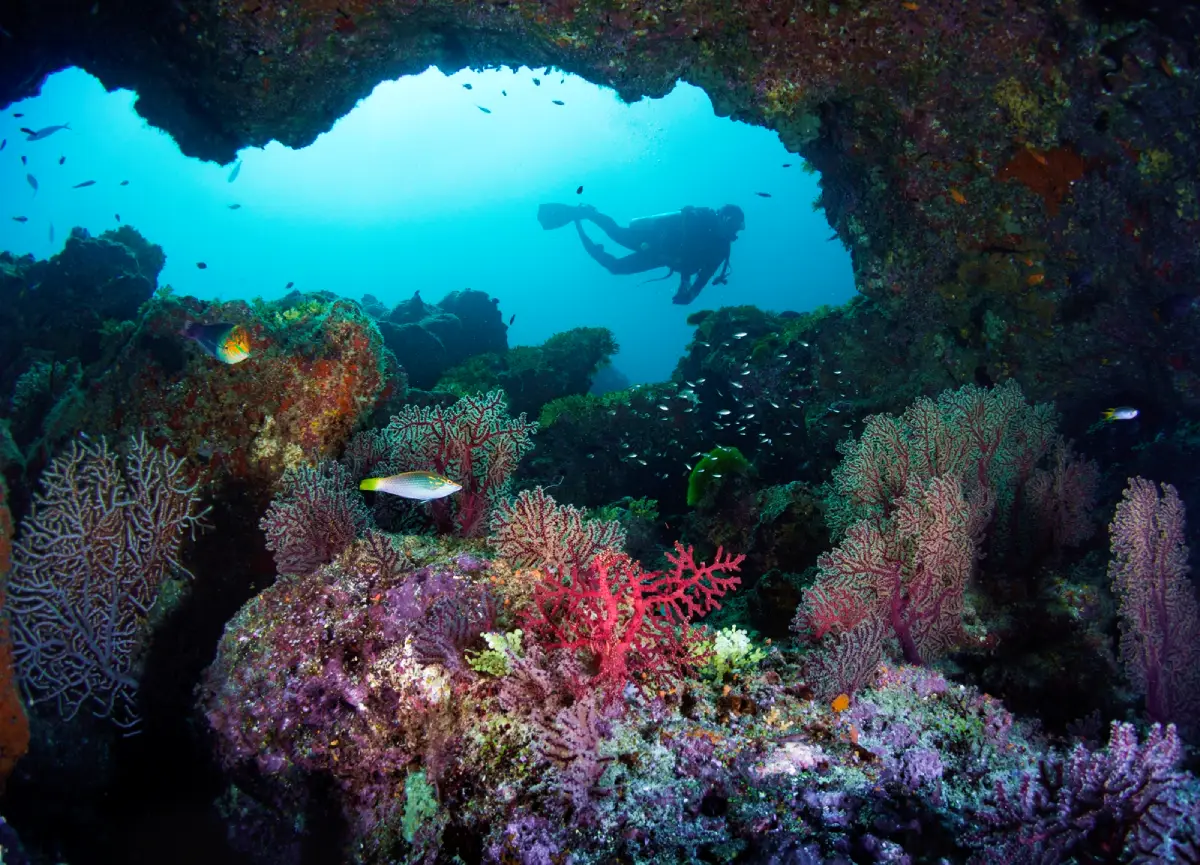
The underwater areas around Ko Similan contain coral reefs, reef fish, and granite-based underwater scenery. Marine life may include staghorn coral, brain coral, mushroom coral, sea fans, parrotfish, damselfish, clownfish, butterflyfish, and small animals living among rocks and coral. Snorkeling sites suitable for visitors are selected according to conditions, while scuba divers can explore more complex underwater terrain such as boulder formations, channels, and slopes.
Ko Miang, or Island Four, is another important island. It has beautiful beaches, clear water, shaded areas, and natural freshwater sources. It is one of the main visitor service points during the open season. Wildlife associated with Ko Miang includes the red-and-blue chicken crab, Nicobar pigeon, hermit crabs, and large flying foxes. This makes Ko Miang interesting not only for beaches but also for the relationship between island forest and marine habitat.
Ko Huyong, or Island One, has one of the longest and cleanest beaches in the original Similan group, but it is important as a sea turtle nesting area. Visitors are not allowed to land on Ko Huyong in order to protect turtle nesting habitat. This restriction shows how the national park prioritizes conservation over opening every beautiful location to tourism. Understanding this helps travelers appreciate why some areas remain off-limits even within a famous destination.
Ko Bangu, or Island Nine, is known among divers for Christmas Point, a large underwater boulder formation with coral, sea fans, and varied marine life. Possible sightings include ribbon eels, groupers, gobies, mantis shrimps, and reef fish. This site is better suited to experienced scuba divers because currents and underwater terrain can be more demanding than simple snorkeling areas. Diving here should be done with qualified operators and experienced dive leaders.
Ko Payu, or Island Seven, together with the Hin Pusar area, is another popular diving zone. The underwater scenery includes boulders, soft corals, colorful sea fans, and schools of fish. In the right season and conditions, divers may encounter manta rays or whale sharks, although sightings are never guaranteed. Large marine animals should always be observed respectfully. Divers and snorkelers should never chase, touch, block, or crowd marine wildlife.
Ko Ha and Ko Hok are also associated with coral and fish-rich underwater scenery. Ko Ha has an eastern dive area known for garden eels, soft coral, sea fans, and numerous fish. Ko Hok is popular for both snorkeling and scuba diving depending on sea conditions. Tour programs do not visit every island on every trip. Operators select suitable islands and snorkeling points based on weather, waves, currents, safety, and national park rules.
Ko Bon lies northeast of the main Similan group and is one of the best-known scuba diving areas connected with the park. It is especially associated with manta ray encounters, white-tip reef sharks, and other larger marine species. The site can include walls, slopes, and changing currents, so it is more suitable for trained divers. Ko Tachai is also part of the national park and is famous for its beach and underwater life, but landing on Ko Tachai remains closed for ecological recovery. Travelers should not expect to go ashore there.
The strength of the Similan Islands is that beauty exists both above and below the water. On land, visitors see white beaches, granite boulders, beach forest, crabs, birds, and viewpoints. Underwater, they see coral reefs, fish, sea fans, boulder formations, and occasional large marine animals. A good visit should not be only about taking photos. It should include observing nature carefully, listening to guide instructions, and understanding why conservation rules are necessary.
Facilities on the islands are limited because tourism is managed as day-trip travel. Overnight stays on every island are not permitted. During the open season, food service, welfare shops, and toilets are available on Ko Miang and Ko Similan. Visitors should bring only what they need: reef-safe sun protection, a hat, sunglasses, towel, spare clothes, waterproof bag, motion sickness medicine, and some cash. Traveling light makes boat transfers and island movement easier.
Snorkeling in the Similan Islands must be done carefully. Visitors should not stand on coral, touch coral, touch fish, chase turtles, feed fish, or collect shells and marine life. Even small contact can damage coral that takes years to grow. Wearing a life jacket properly and listening to the guide helps keep visitors safe and reduces accidental contact with the reef.
Scuba divers should choose licensed operators with good safety standards, properly maintained equipment, and dive leaders who know the Similan area. Sites such as Christmas Point, Ko Bon, and deep boulder formations may have currents and depths unsuitable for beginners. Dive planning should match certification level, experience, sea conditions, and official park rules. No dive should proceed when weather, health, or safety conditions are unsuitable.
The main gateway to the Similan Islands is Thap Lamu Pier in Thai Mueang District, Phang Nga Province. The pier is about 70 km from Phang Nga town and around 40 km from the islands. Travelers staying in Khao Lak can reach the pier easily in the morning, while travelers from Phuket can use transfers, vans, or rental cars to reach Thap Lamu before departure. Staying in Khao Lak or Lam Kaen near the pier helps reduce early-morning travel pressure.
Other routes from Khura Buri or Phuket may be available through some operators, but Thap Lamu remains the most practical and common departure point for most visitors. Travelers from Bangkok can fly to Phuket International Airport and continue by road to Khao Lak or Thap Lamu, or take a long-distance bus to Takua Pa and continue by local transfer. Booking a tour in advance usually simplifies transport, boat travel, meals, snorkeling equipment, insurance, and entry procedures.
Choosing a Similan tour should involve more than comparing prices. Travelers should check whether the boat is licensed, life jackets are available, insurance is included, guides explain conservation rules, waste is managed properly, and the operator follows park restrictions. A responsible operator does not enter closed areas and does not rush visitors through too many stops. The long-term quality of the Similan Islands depends partly on the behavior of tour operators and visitors.
Families with children and older travelers can visit the Similan Islands when they choose the right tour. Boats should be safe and comfortable, the schedule should not be too rushed, and staff should assist during boarding and disembarking. Children should wear life jackets whenever they are on or near the water. Travelers prone to seasickness should prepare medication before departure and follow medical advice. Good preparation makes a day trip safer and more enjoyable.
Weather is one of the most important factors in a Similan trip. Even during the open season, waves, rain, or wind may affect boat operations. Tour operators or the national park may adjust routes, cancel some stops, or postpone travel for safety reasons. The islands are far offshore, and all visitors travel by boat in open sea conditions. Safety must always come before completing a planned itinerary.
For first-time visitors, Ko Similan and Sail Rock are the classic highlights. Ko Miang is suitable for resting and observing island nature. Snorkeling around Ko Ha, Ko Hok, or Ko Payu reveals the underwater side of the park. Experienced scuba divers may focus on Ko Bon or Christmas Point, depending on sea conditions and dive planning. A well-matched route gives visitors a strong experience without placing unnecessary pressure on the environment.
Mu Ko Similan National Park is not only a beautiful island destination. It is a complex protected marine ecosystem with open visitor areas, restricted areas, conservation zones, seasonal closures, and visitor control measures. The beauty of the Similan Islands depends on the balance between tourism and protection. Travelers who understand this will value the islands not only for clear water and white sand, but also for the reefs, wildlife, beaches, and recovery time that keep the national park healthy.
In summary, the Similan Islands are best for travelers who want a high-quality Andaman Sea experience: clear water, white beaches, snorkeling, scuba diving, Sail Rock views, and responsible travel in a protected marine park. Visitors should plan ahead, travel during the open season, confirm E-Ticket arrangements, choose licensed operators, and prepare properly for boat travel. With the right planning, Mu Ko Similan National Park is one of the most memorable marine destinations in Phang Nga Province.
| Name | Mu Ko Similan National Park |
| Location | Andaman Sea, Phang Nga Province; mainland office in Lam Kaen Subdistrict, Thai Mueang District, Phang Nga Province |
| Mainland Office Address | 93 Moo 5, Phet Kasem Road, Lam Kaen Subdistrict, Thai Mueang District, Phang Nga 82210, Thailand |
| Mainland Office Coordinates | 8.6487347, 97.6277508 |
| Highlights | Ko Similan, Sail Rock, Ao Kueak, Ko Miang, Ko Bangu, Christmas Point, Ko Bon, snorkeling sites, scuba diving sites, white beaches, and clear blue water |
| History | Declared a national park on 1 September 1982 as Thailand’s 43rd national park; Ko Bon and Ko Tachai were incorporated into the park in 1998 |
| Name Origin | “Similan” comes from Malay or Yawi and means “nine,” referring to the original nine-island group |
| Distinctive Features | Marine national park with granite islands, white sand, clear water, coral reefs, snorkeling areas, scuba diving sites, and strict seasonal conservation management |
| Travel Information | Main departure from Thap Lamu Pier, Thai Mueang District, Phang Nga Province; about 70 km from Phang Nga town and about 40 km from the islands; speedboat travel takes about 1.5 hours |
| Current Status | Seasonal marine national park; as of 28 August 2026, the park is within its annual tourism and overnight closure period |
| Open Days | Tourism season from 15 October – 15 May every year; annual tourism and overnight closure from 15 May – 15 October 2026 |
| Opening Hours | Mainland office 08.30 – 16.30; boat schedules depend on licensed operators and the E-Ticket system |
| Fees | Thai adults 100 baht, Thai children 50 baht / foreign adults 500 baht, foreign children 250 baht |
| Facilities | Mainland office, E-Ticket system, food service, welfare shops, and toilets on Ko Miang and Ko Similan during the open season; overnight stays on all islands are not permitted |
| Main Areas / Zones | Ko Huyong, Ko Payang, Ko Payan, Ko Miang, Ko Ha, Ko Hok, Ko Payu, Ko Similan, Ko Bangu, Ko Bon, Ko Tachai, Sail Rock, Ao Kueak, Christmas Point, and surrounding dive sites |
| Conservation Closure Areas | Landing on Ko Huyong is not permitted to protect sea turtle nesting areas; landing on Ko Tachai remains closed for ecological recovery |
| Caretaker | Department of National Parks, Wildlife and Plant Conservation, Protected Area Regional Office 5 (Nakhon Si Thammarat) |
| Main Contact Number | 076-453-272, 076-453-273 |
| Official Website / Official Page | Facebook: อุทยานแห่งชาติหมู่เกาะสิมิลัน - Mu Ko Similan National Park |
| Nearby Tourist Attractions | 1. Thap Lamu Pier, about 0 km from the mainland office 2. Chulabhorn Underwater Park Conservation Center, about 2 km 3. Khao Lak Beach / South Khao Lak Beach, about 6 km 4. Wang Kiang Khu Waterfall, about 12 km 5. Khao Lak-Lam Ru National Park, about 15 km |
| Nearby Restaurants | 1. Phang Nga Naval Base Restaurant, about 0.1 km, Tel. 081-648-8656, 081-691-0228 2. Catch And Co., about 0.1 km, Tel. 094-555-3541 3. Kra Chang Khao Lak, about 0.8 km, Tel. 095-656-0862 4. Rordung, about 4.6 km, Tel. 085-691-5821 5. Man Pochana, about 4.5 km, Tel. 076-595-066 |
| Nearby Accommodations | 1. Poseidon Bungalows Khao Lak, about 4 km, Tel. 087-895-9204 2. Khaolak Emerald Beach Resort & Spa, about 6 km, Tel. 076-428-700 3. Khaolak Merlin Resort, about 7 km, Tel. 076-428-300 4. Accommodations In Lam Kaen And South Khao Lak, about 6–10 km 5. Accommodations In Thap Lamu And Thai Mueang, about 1–15 km |
Frequently Asked Questions (FAQ)
Q: When is Mu Ko Similan National Park open?
A: The tourism season runs from 15 October to 15 May every year. In 2026, the park is closed to tourism and overnight stays from 15 May to 15 October 2026.
Q: How much is the entrance fee?
A: Thai adults pay 100 baht and Thai children pay 50 baht. Foreign adults pay 500 baht and foreign children pay 250 baht. Boat and tour fees are separate.
Q: Can visitors stay overnight on the Similan Islands?
A: No. Overnight stays on all islands inside the national park are not permitted. Visitors travel as day-trip tourists only.
Q: Which pier is the most convenient gateway to the Similan Islands?
A: Thap Lamu Pier in Thai Mueang District, Phang Nga Province is the main and most convenient departure point. It is about 40 km from the islands, and speedboat travel takes about 1.5 hours.
Q: What are the must-see highlights?
A: Key highlights include Ko Similan, Sail Rock, Ao Kueak, Ko Miang, snorkeling areas around Ko Ha, Ko Hok, and Ko Payu, plus scuba diving areas such as Ko Bon and Christmas Point for experienced divers.
Q: Can visitors land on Ko Tachai or Ko Huyong?
A: No. Landing on Ko Huyong is not permitted to protect sea turtle nesting habitat, and landing on Ko Tachai remains closed for ecological recovery.
Q: Is E-Ticket required for visiting the Similan Islands?
A: Yes. The park uses the E-Ticket system. Travelers should confirm with their tour operator that the national park fee and E-Ticket process are included and completed properly.
Q: Are the Similan Islands suitable for children and older travelers?
A: Yes, when travelers choose a safe licensed operator, a comfortable boat, and a relaxed program. Children should wear life jackets at all times near or on the water, and seasick-prone travelers should prepare before departure.
 Category: ●Nature and Wildlife
 Group: ●National Parks and Marine Reserves
Last Update : 1 MonthAgo
 Last Update : 1 MonthAgo
 Click to Access the Navigation Map GPS
Mu Ko Similan National Park Map
Gellery
Recommend

 Art, Culture and Heritage
 Historical Sites and Monuments(2)
 Landmarks and Memorials(6)
 Art, Craft Centres, Tradition(3)
 Places of Worship
 Temple(18)
 Other Sacred Sites(8)
 Suburban Living
 Village, Community(3)
National Parks and Marine Reserves(12)
Village, Community(3)
National Parks and Marine Reserves(12)
 Mountain (Doi)(8)
 Waterfalls(21)
 Hot Springs(2)
 Caves(12)
 River, Canal(4)
 Bays and Beaches(28)
 Islands(11)
 Other natural attractions(7)
 Entertainment and Agricultural
 Animal camps and shows(2)
 Farms, Parks and Ecotourism(2)
 Outdoor and Adventure Activities(3)
 Travel Articles, Recipes
 Travel Review, Food Review(1)
 Southern Food Menu, Southern Food Recipes(1)


