
lovethailand home >Central Travel Attractions >Bangkok Travel Attractions > 20 Beautiful Mosques to Visit in Thailand with GPS..
TL;DR: 20 Beautiful Mosques to Visit in Thailand with GPS Locations, open Daily Opening Hours: 08:00 – 17:00, hours 08:00 – 17:00 for visitors, subject to religious activities. Highlights include Visitor Recommendations.
20 Beautiful Mosques to Visit in Thailand with GPS Locations
20 Beautiful Mosques to Visit in Thailand with GPS Locations takes travelers on a journey through Islamic religious landmarks celebrated for their architecture, history, and connections to Muslim community life. From magnificent central mosques with elegant domes and reflecting pools to centuries-old wooden mosques and traditional Thai-style mosques that display a distinctive blend of cultural influences, these destinations offer much more than beautiful places for photography. They are also valuable sites for discovering urban history, patterns of settlement, traditional craftsmanship, and Thailand's religious and cultural diversity.
For visitors interested in monumental Islamic architecture, Pattani Central Mosque and Songkhla Central Mosque are among the country's most remarkable destinations, featuring grand buildings, impressive domes, and spacious foregrounds that provide excellent views of their architectural designs. History enthusiasts should explore Krue Se Mosque in Pattani and Wadi Al-Husein Mosque, also known as the 300-Year-Old Mosque, in Narathiwat. Meanwhile, travelers interested in traditional Thai architecture and Bangkok's historic neighborhoods should not miss Bang Luang Mosque, commonly known as Kudi Khao, and Ton Son Mosque in the old Thonburi district.
The architectural beauty of Thailand's mosques extends far beyond domes and minarets. Each Islamic religious building has developed its own character through the backgrounds of its founders, locally available construction materials, and artistic traditions familiar to the surrounding community. Some mosques draw inspiration from Islamic architecture in South Asia and the Middle East, while others combine Malay, Chinese, and Thai influences. Certain historic mosques also preserve traditional woodworking skills and construction techniques that are increasingly rare in modern buildings.
Southern Thailand is particularly important for mosque tourism because it is home to large Muslim communities and possesses a long history connected with the Malay Peninsula, Indian Ocean trade, and prosperous maritime trading towns. Pattani, Songkhla, Yala, and Narathiwat offer a remarkable variety of mosques, ranging from ancient religious monuments to major provincial central mosques. Along the Andaman coast, provinces such as Krabi reveal the close relationship between Muslim community life, the sea, fishing, and traditional maritime activities.
Bangkok is equally significant, particularly the Muslim communities established along the Chao Phraya River and the historic canals of Thonburi. Their settlement history reaches back to the Ayutthaya period and the early years of the Rattanakosin era. The mosques in these neighborhoods are therefore valuable not only as religious buildings but also as evidence of how different religious communities have lived alongside one another. Exploring historic neighborhoods, Buddhist temples, Chinese shrines, and mosques within the same area provides a deeper understanding of Bangkok's history than visiting a single landmark in isolation.
When planning a trip, travelers with just one day can explore several mosques situated close together in Bangkok or visit Pattani Central Mosque and other important attractions in Pattani town. A two- or three-day itinerary is suitable for exploring Pattani, Yala, and Narathiwat, provided that the route is organized around actual travel distances and current road conditions. With four or five days available, travelers can extend their journey to Songkhla and other cultural destinations in Southern Thailand for a broader understanding of the region's history and communities.
Mosques are active places of worship that continue to serve their communities. Visitors should therefore dress modestly, avoid disturbing people at prayer, and obtain permission before entering interior areas, particularly prayer halls and spaces reserved for worshippers. When viewing the exterior or taking photographs, travelers should respect the privacy of local residents and avoid entering during religious ceremonies or activities unless permission has been granted. Considerate behavior helps make the experience meaningful for visitors while respecting those who care for and use these sacred places.
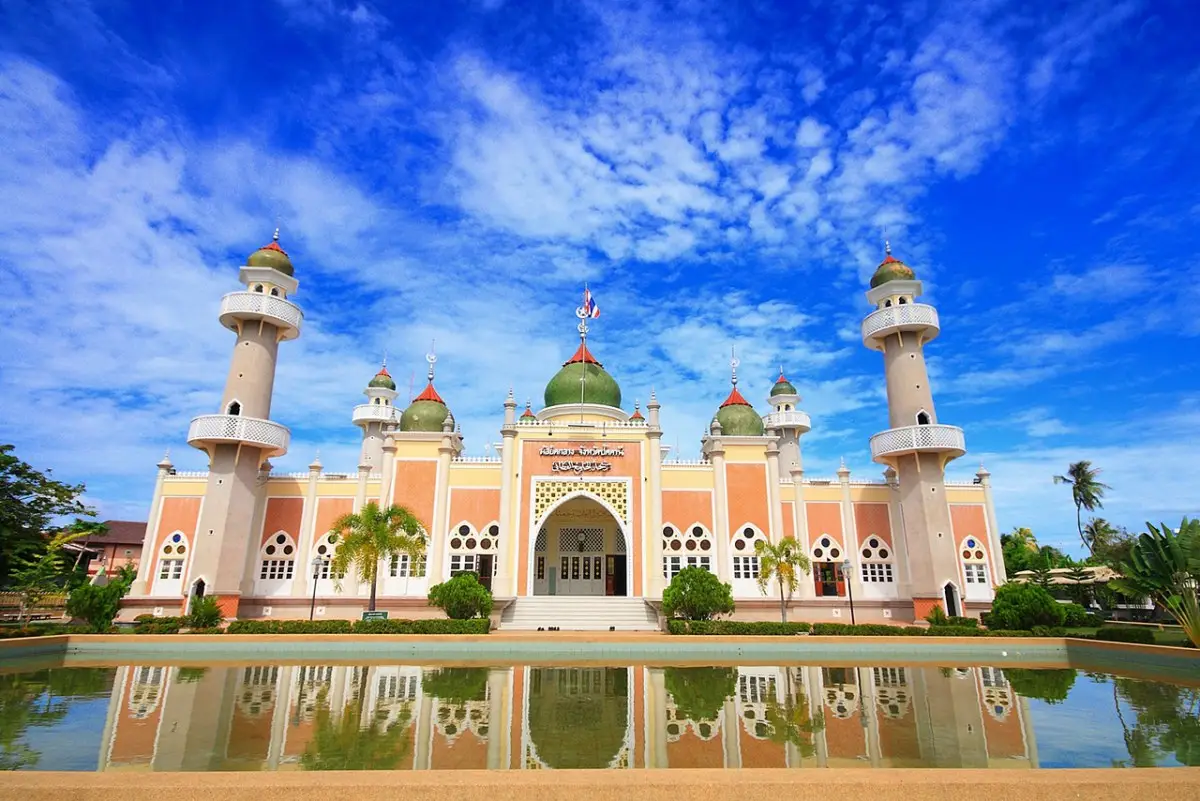
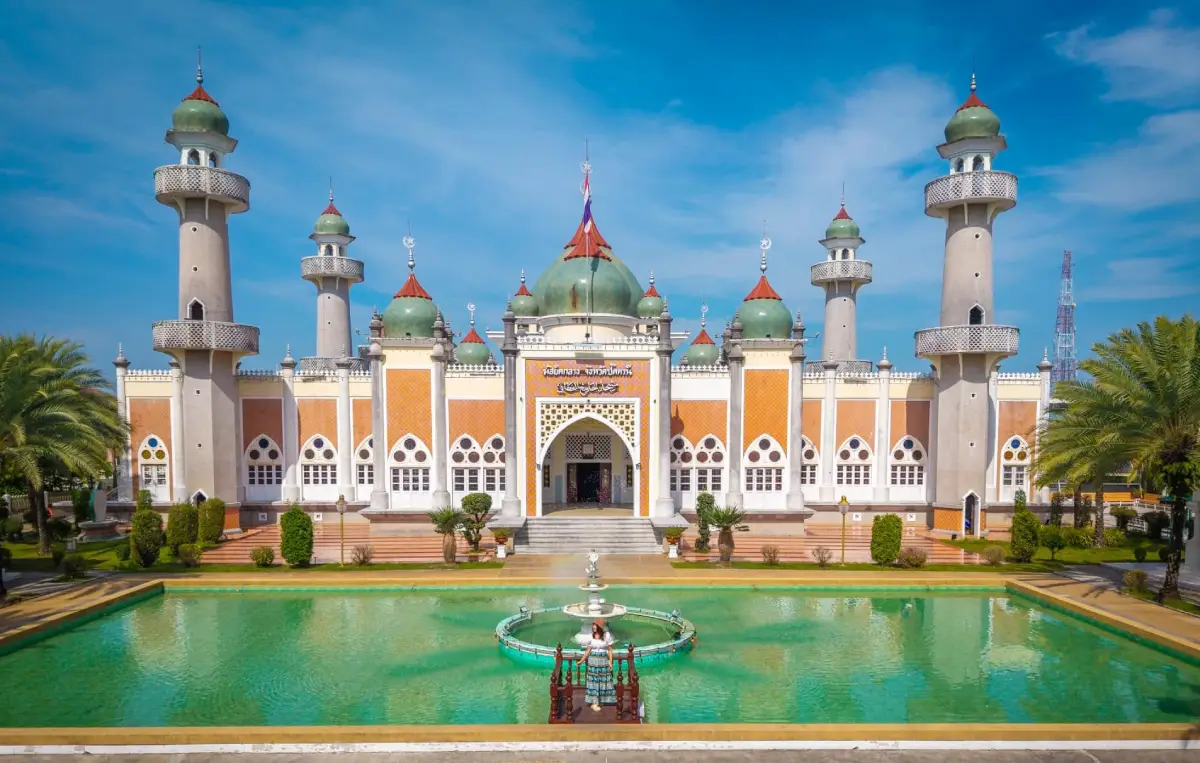
1. Pattani Central Mosque is located at 249 Yarang Road, Anoru Subdistrict, Mueang Pattani District, Pattani Province. It is one of Thailand's most architecturally impressive mosques, distinguished by its grand light-colored building, green dome, twin minarets, and long rectangular reflecting pool stretching across the front of the complex. The building's symmetrical design and beautiful reflection in the water create a memorable scene that attracts worshippers, students of Islamic art and architecture, and travelers visiting Pattani Province.
Highlights: A magnificent building inspired by Islamic architecture in South Asia, with a prominent green dome at its center, two tall minarets, and a reflecting pool that captures the mosque's image, particularly when natural lighting conditions are favorable.
Pattani Central Mosque plays an important role as a spiritual center for Thai Muslims in Pattani Province and the surrounding areas. Its interior is used for daily religious observances, congregational prayers, and activities connected with Islam. The mosque is therefore much more than an elegantly designed structure; it is a meaningful space within the everyday lives and social relationships of the local community. Its importance also reflects Pattani's longstanding position as a center of history, culture, and Islamic learning.
The mosque's architecture is distinguished by its carefully balanced composition. A large central dome dominates the main building, accompanied by smaller domes and minarets that establish a harmonious architectural rhythm. The reflecting pool in front adds a sense of tranquility and grandeur. From the main approach, visitors can clearly appreciate how the different architectural elements align with one another. The site is particularly appealing to travelers interested in Islamic architectural design and those wishing to photograph the building respectfully from a wide perspective.
For visitors hoping to learn more about Islamic culture, the arrangement of the mosque's spaces offers insight into how a religious building accommodates large numbers of worshippers. The prayer hall is a particularly important area where cleanliness and quiet behavior must be maintained, while the minarets are associated with the call to prayer. Permission should always be obtained from the mosque's caretakers before entering interior spaces, especially when religious activities are taking place.
Tourists are encouraged to begin by exploring the exterior grounds and reflecting pool, following the designated walkways, staying out of the water, and avoiding disturbance to worshippers. Anyone wishing to photograph individuals should ask for their permission first. Clothing should be modest and appropriate for a sacred place, and visitors should carefully follow all instructions issued by mosque staff or caretakers.
Open Days: Daily Opening Hours: 08:00 – 17:00
Getting There: From central Pattani, take Yarang Road or Highway 410 toward Yala. The mosque is situated in Anoru Subdistrict and can be reached by private car, hired vehicle, or local transportation. Travelers can search for Pattani Central Mosque when planning their route. Those wishing to explore more of the province can continue to Pattani's historic neighborhoods and Krue Se Mosque.
Map (GPS):Google Maps – Pattani Central Mosque
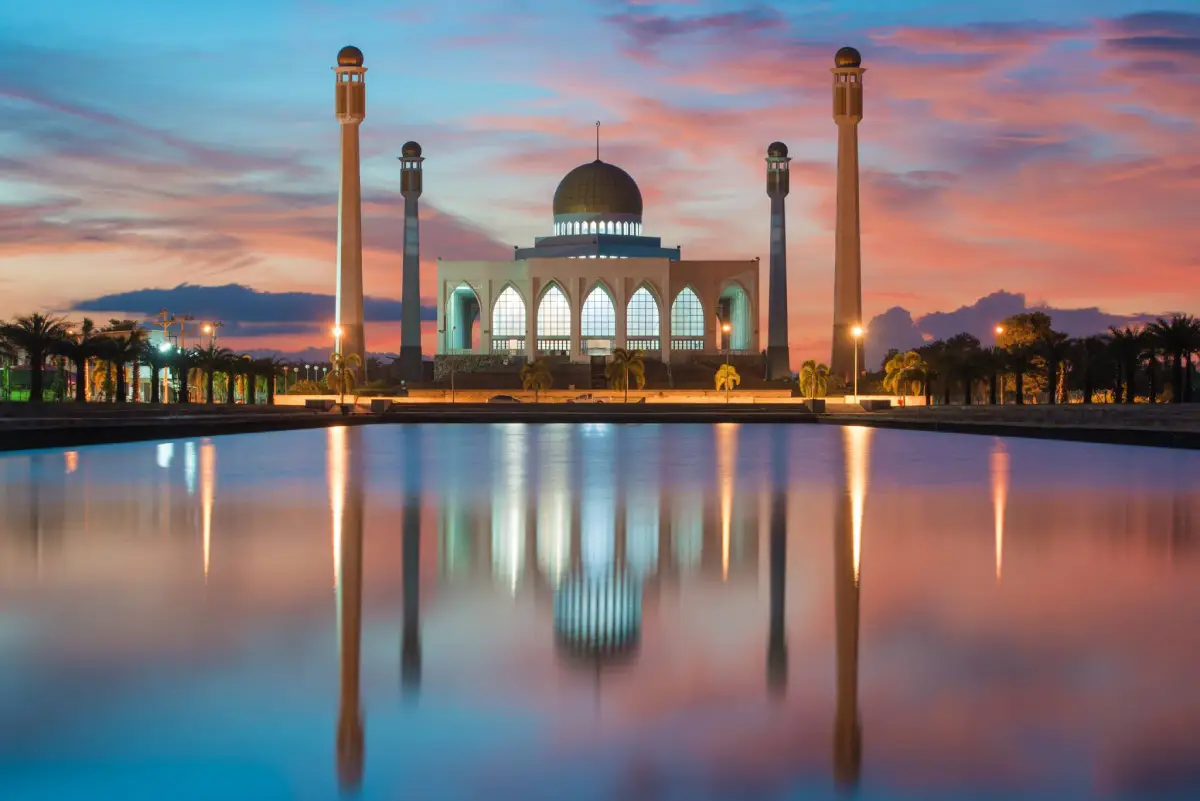
2. Songkhla Central Mosque, also known as Masjid Klang Diy-Nul Islam, is located along Lopburi Ramesuan Road in Khlong Hae Subdistrict, Hat Yai District, Songkhla Province. It is an architecturally outstanding religious landmark along the route between Hat Yai and Songkhla city. The large white mosque features a golden dome, tall minarets, and a reflecting pool extending more than 200 meters in front of the building. Together, these features create an impressive architectural scene that has earned the mosque the popular nickname "The Taj Mahal of Thailand."
Highlights: A magnificent white mosque with a golden dome, minarets, Islamic geometric forms, and a long reflecting pool that creates a symmetrical view of the building. It is an excellent destination for visitors interested in architecture and photographing important landmarks in Songkhla.
Songkhla Central Mosque serves as a major center of Islamic religious activities at the provincial level. The complex includes areas for worship, meeting facilities, and offices associated with the administration of Islamic affairs. The origins of the construction project can be traced to the intentions of the Islamic Committee of Songkhla around 1991, when plans were developed to establish a central mosque and suitable facilities for the administration of religious activities in the province.
The mosque's beauty comes from its symmetrical architectural arrangement. The long reflecting pool in front is a central feature that emphasizes the grandeur of the building. Standing along the main approach, visitors can see the golden dome rising prominently at the center, surrounded by minarets and other architectural elements arranged in harmony. Arched openings and the entrance staircase add further elegance to the structure. The reflection of the mosque on the water has become one of the most recognizable and memorable views for visitors.
Although the mosque is a popular photography destination, its primary purpose remains religious worship and community activities. Visitors should clearly distinguish between public areas suitable for viewing the architecture and spaces reserved for prayer. Walking near the entrances, using the stairways, or photographing people arriving for worship should always be done with consideration. Loud conversations and inappropriate photography poses should be avoided.
Travelers with only half a day can visit the mosque from Hat Yai and continue to nearby attractions. Those wishing to explore Songkhla's multicultural heritage in greater depth may extend their itinerary to Songkhla Old Town, where historic buildings, Chinese shrines, Thai-Chinese communities, and numerous historical landmarks offer further insights into the province's cultural diversity.
Open Days: Daily Opening Hours: 08:00 – 17:00
Getting There: From central Hat Yai, follow Lopburi Ramesuan Road toward Songkhla city. The mosque is located in Khlong Hae Subdistrict, approximately 9.6 kilometers from central Hat Yai and 22.5 kilometers from Songkhla city center. It is conveniently accessible by private car, rental vehicle, or taxi.
Map (GPS):Google Maps – Songkhla Central Mosque
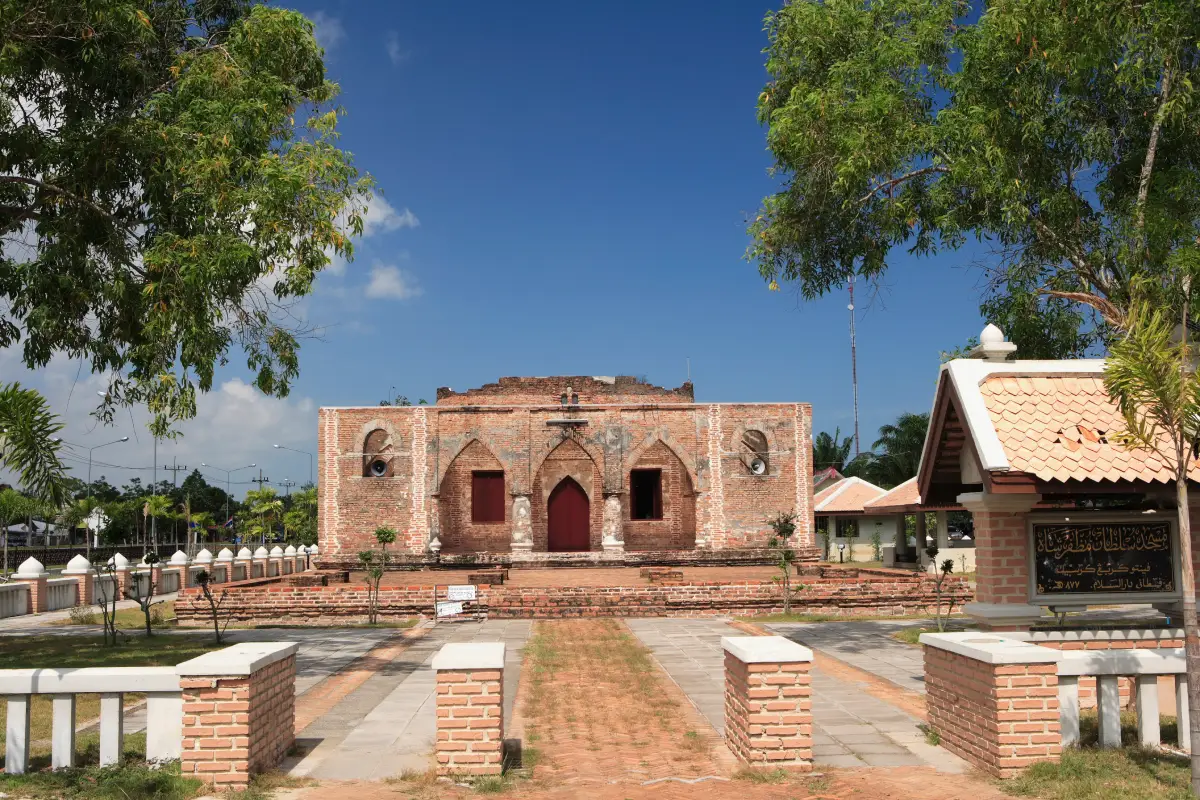
3. Krue Se Mosque is located in Ban Krue Se, Tanyong Lulo Subdistrict, Mueang Pattani District, Pattani Province, beside Highway 42. It is one of Southern Thailand's most important historic mosques and archaeological landmarks. The exposed red-brick structure gives the building a distinctive appearance that contrasts with modern mosques. Its beauty lies in the dignified simplicity of its brick walls, arched openings, and historical associations with the former Patani kingdom.
Highlights: An ancient brick-and-mortar building with thick walls, round pillars, pointed and rounded arches in the doors and windows, an unfinished roof structure, and the atmosphere of a historic monument that remains a sacred place for the local Muslim community.
Krue Se Mosque is particularly important to the study of Pattani's history because it stands within an old settlement associated with trade, migration, and connections with other territories across the Malay Peninsula. The building's present condition reflects traditional construction techniques, changes over time, and the efforts of successive generations to preserve an important historical monument. Visiting the mosque is therefore especially rewarding for those interested in urban history, Islamic art, and archaeology.
Architecturally, the mosque consists of a substantial brick-and-mortar structure measuring approximately 15.10 meters wide, 29.60 meters long, and 6.50 meters high. Its arched openings reflect influences from several artistic traditions. The building's lines convey a sense of strength and simplicity. From areas open to visitors, it is possible to observe the arrangement of bricks, the walls, and the surviving interior architectural elements.
Several versions of local legends are associated with Krue Se Mosque, including stories about its construction and events in the past. These accounts are significant because they help preserve the community's collective memory. However, local legends should not be presented as established historical facts without making the distinction clear. Krue Se Mosque already possesses considerable heritage value through its surviving architectural evidence and its continuing religious significance for the local community.
Visitors should take particular care not to touch or mark the brick walls, climb on any part of the structure, or enter areas restricted for conservation purposes. The mosque remains a place where religious activities take place, so tourists should avoid disturbing worshippers and ask permission before photographing interior areas. Taking time to understand the site's history while respecting the faith of the community will make the visit more meaningful.
Open Days: Daily Opening Hours: 08:00 – 17:00
Getting There: From central Pattani, take Highway 42 toward Narathiwat for approximately 7 kilometers. The mosque is situated in Ban Krue Se, Tanyong Lulo Subdistrict, and can be reached by private car or hired vehicle. It is suitable for inclusion in an itinerary combining Pattani Central Mosque and other historical attractions in the old Pattani area.
Map (GPS):Google Maps – Krue Se Mosque
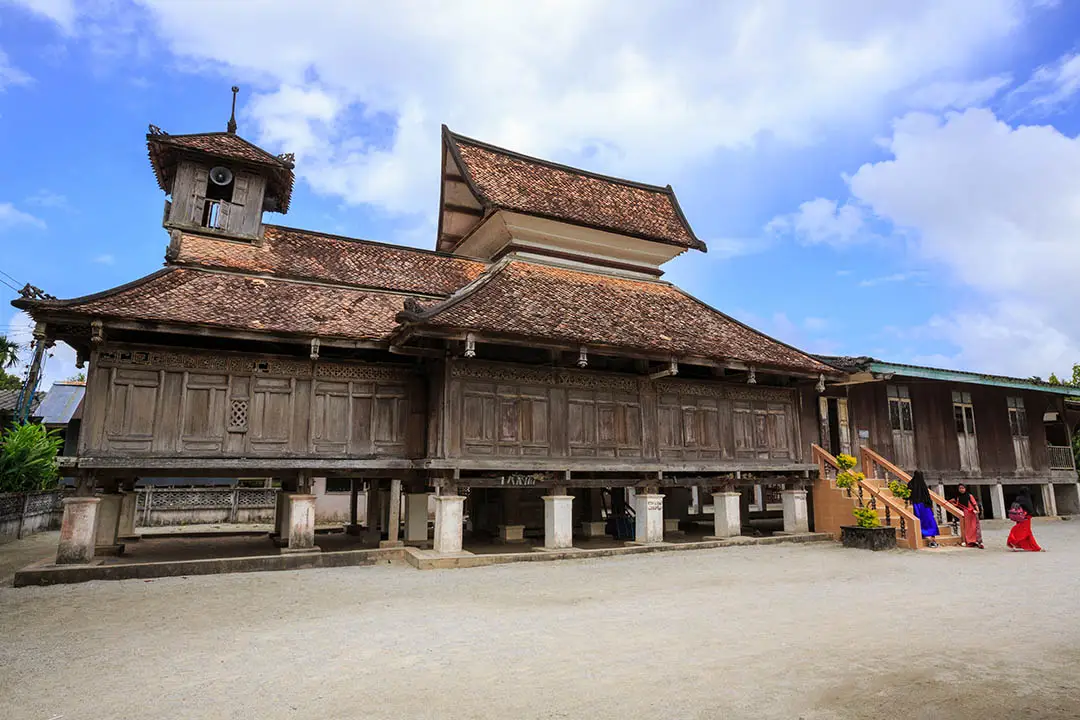
4. 300-Year-Old Mosque (Wadi Al-Husein Mosque or Taloh Mano Mosque) is located in Moo 1, Ban Taloh Mano, Lubo Sawo Subdistrict, Bacho District, Narathiwat Province, near the foothills of the Budo mountain range. This historic wooden mosque is an exceptionally valuable religious landmark in terms of architecture, traditional craftsmanship, and the history of Malay Muslim communities. Its distinctive appeal does not come from the size or grandeur of the building, but from its traditional construction techniques and the harmonious combination of local artistic influences that have preserved its unique identity for several centuries.
Highlights: An ancient mosque built from takhian hardwood, traditional wooden joints used instead of metal nails, two connected wooden building sections, architecture incorporating Thai, Chinese, and Malay influences, and a minaret-like structure above the roof that resembles a traditional Chinese pavilion.
Local historical traditions associate the construction of the mosque with Wan Husein As-Sanawi in 1624. The original building demonstrates the remarkable woodworking knowledge of local craftsmen, who selected strong and durable takhian timber and assembled its various structural elements using carefully fitted wooden joints. Such construction required considerable precision and expertise. These techniques make Wadi Al-Husein Mosque an important example of traditional craftsmanship capable of producing a religious building that has remained in use for generations.
The mosque's architectural style differs considerably from the large domed mosques familiar to many international travelers. Its design reflects traditional wooden buildings of the Malay Peninsula, combined with Thai and Chinese artistic elements. The roof structure and decorative details illustrate the cultural exchanges that occurred among communities in Thailand's southern border region. For visitors interested in architecture, the mosque demonstrates that Islamic religious buildings are not defined solely by domes or minarets. Their identity is fundamentally connected to their religious function and the beliefs of the communities that use them.
The mosque stands in a historic community surrounded by the landscape of the Budo foothills. Its peaceful setting creates a cultural experience quite different from visiting a large provincial mosque in an urban center. Travelers can learn about traditional woodworking, settlement history, and the role of mosques as centers of religious and community life. Local knowledge and the guidance of caretakers are especially valuable when exploring a place whose significance has been preserved across many generations.
Visitors should exercise particular care because the building is both historically significant and still used for religious activities. The exterior may be viewed from areas accessible to visitors, but anyone wishing to enter the interior should first obtain permission from the imam or the mosque's caretakers. Visitors must not touch fragile historic timber, climb onto structures not designated for public access, or use photography equipment in ways that may disturb worshippers.
Open Days: Daily Opening Hours: 08:00 – 18:00
Getting There: From Narathiwat town, travel toward Bacho District and continue to Ban Taloh Mano in Lubo Sawo Subdistrict. The mosque is approximately 25 kilometers from central Narathiwat. The route passes through local communities and the landscape near the Budo foothills. A private car or hired vehicle with a driver familiar with local roads is recommended.
Map (GPS):Google Maps – 300-Year-Old Mosque
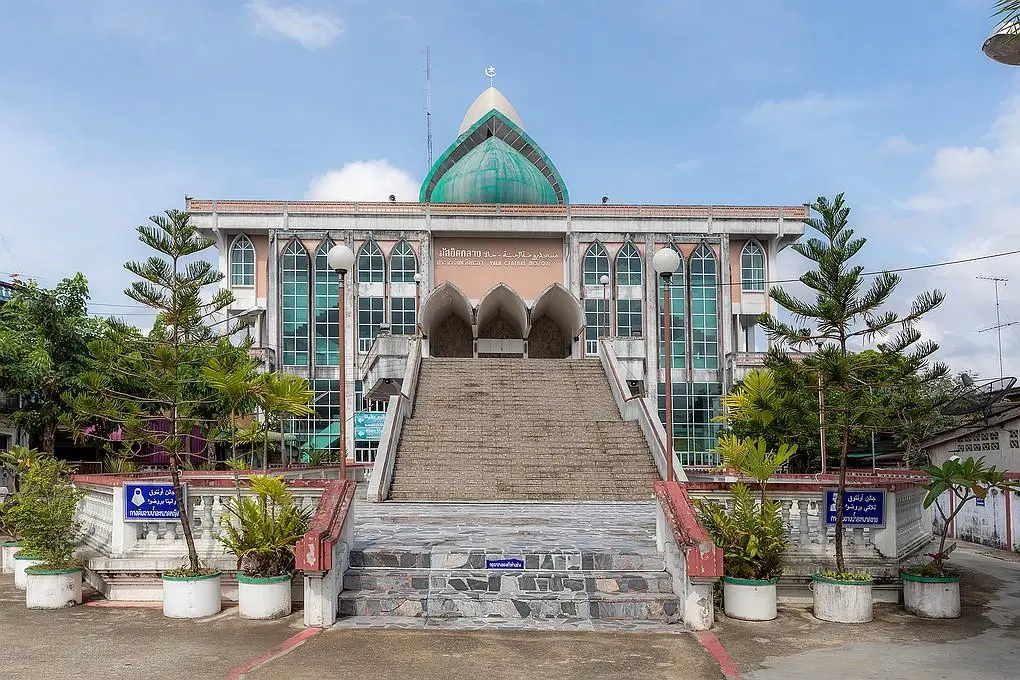
5. Yala Central Mosque, also known as Raudatul Jannah Mosque, is located at 835 Sirorot Road, Ban Talat Kao, Sateng Subdistrict, Mueang Yala District, Yala Province. It is one of the province's most important mosques, distinguished by its historical significance and impressive architecture. The large building features a broad entrance staircase, a distinctive central dome, and a tall minaret visible from the surrounding area. The mosque reflects the important role of the Muslim community in the historical development of Yala city.
Highlights: A large central mosque with an entrance staircase of approximately 30 steps, a central dome resembling an opening lotus flower, a minaret approximately 38 meters high, and architecture combining Western design elements with Islamic artistic traditions.
The mosque's origins are closely associated with the development of the Muslim community in Yala's old market district. Its early history includes the purchase of land by Usman Dohe in 1925, followed by the beginning of mosque construction in 1932. The religious institution was registered under the name Raudatul Jannah Mosque in 1954. Over time, the mosque complex was developed to accommodate increasing numbers of worshippers as Yala continued to grow.
Architecturally, the mosque is distinguished by its broad staircase, which connects the lower entrance level with the prayer hall above. The dome and minaret create an elegant and recognizable skyline. The building also illustrates the evolution of mosque architecture in Thailand, demonstrating how modern design approaches can be combined with architectural elements that express Islamic religious identity.
Yala Central Mosque remains an active place of worship and a center of community activities. In addition to daily prayers, it is associated with religious activities during Ramadan, Islamic lectures, and gatherings of community members. These functions make the mosque an important part of everyday life rather than merely a beautiful building open for sightseeing.
Travelers interested in architecture can appreciate the dome, minaret, and overall building composition from the exterior grounds. Those wishing to enter the interior should contact the mosque's caretakers in advance. Respecting prayer times and the privacy of worshippers is essential, particularly when large congregations are gathering for religious activities.
Open Days: Daily Opening Hours: 05:00 – 20:00
Getting There: From Yala Provincial Hall, follow Sirorot Road toward the Ban Talat Kao area. The mosque is located in Sateng Subdistrict, approximately 2 kilometers from the provincial hall. Visitors can travel by private car, hired vehicle, or local transportation. The visit can also be combined with other cultural and historical attractions in central Yala.
Map (GPS):Google Maps – Yala Central Mosque
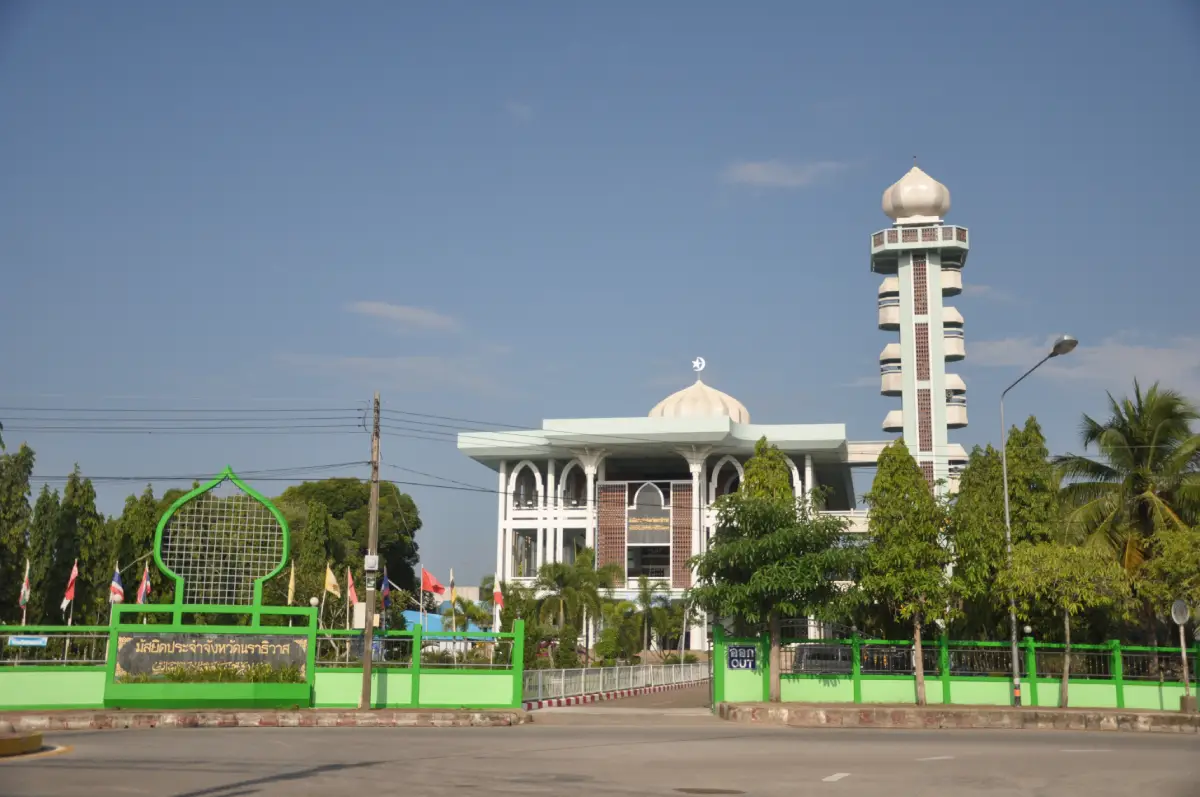
6. Narathiwat Central Mosque (New) is located in the Ban Bang Nara area of Bang Nak Subdistrict, Mueang Narathiwat District, close to the mouth of the Bang Nara River and the route toward Narathat Beach. This important provincial mosque features architecture influenced by Arab Islamic traditions and was designed to accommodate the religious activities of the Muslim community in the urban area. The large building is distinguished by its prominent dome and minarets, which clearly express its character as an Islamic religious landmark.
Highlights: A large three-story mosque incorporating architectural influences from the Arab world, a prominent central dome, tall minarets, and a location near the Bang Nara riverside community and the coastal landscape of Narathiwat.
The new central mosque was constructed in 1981 to accommodate population growth and the increasing need for suitable religious facilities. The building was organized across several levels, with the ground floor providing areas for meetings and communal activities, while the upper levels were developed for prayer and other religious observances. This arrangement reflects the mosque's continuing role as both a religious center and a place for community gatherings.
The building's architectural character is defined by its elegant dome and the strong lines of its overall design. The surrounding landscape also connects the mosque with Narathiwat's urban environment and coastal setting. Travelers interested in Islamic architecture can begin by observing the exterior, studying the dome and minarets, and learning about the mosque's religious and social functions through information provided by its caretakers, without disturbing worshippers.
The mosque remains an important venue for Friday congregational prayers, religious activities during Ramadan, Islamic education, and community gatherings. Visitors should therefore avoid entering the prayer hall when ceremonies are taking place. Photography inside the building should be undertaken only with permission, and all regulations concerning cleanliness, footwear, and appropriate clothing should be respected.
Visiting the mosque is particularly rewarding for travelers interested in understanding Narathiwat through its religious traditions and coastal communities. The visit can be combined with Narathat Beach, the mouth of the Bang Nara River, and other important attractions in the town. Such an itinerary offers a broader perspective on the connections between religion, fishing traditions, settlement patterns, and everyday community life.
Open Days: Daily Opening Hours: 08:00 – 18:00
Getting There: From central Narathiwat, travel toward Ban Bang Nara and follow the road leading to Narathat Beach. The mosque is located before reaching the beach area. It can be accessed by private car, motorcycle, or local hired transportation.

7. Ton Son Mosque is located along Arun Amarin Road in Wat Arun Subdistrict, Bangkok Yai District, Bangkok, near the mouth of Bangkok Yai Canal. It is a historic mosque of considerable importance to the Muslim communities of Thonburi and a religious landmark that reflects settlement patterns along the Chao Phraya River dating back to the Ayutthaya period and the early Rattanakosin era. The mosque is also known as Kudi Bangkok Yai or Kudi Yai.
Highlights: A historic mosque in the old Thonburi district, distinctive domed architecture, the history of Muslim communities along Bangkok Yai Canal, and a location close to several important religious landmarks that demonstrate Bangkok's cultural diversity.
Ton Son Mosque is closely connected with Muslim settlements around the mouth of Bangkok Yai Canal, an area that was historically important for water transportation and trade. These communities were associated with population movements from Ayutthaya and the expansion of Bangkok during the city's early development. The presence of a mosque alongside Buddhist temples and other religious communities in the surrounding neighborhood demonstrates how people from different cultural backgrounds have lived together in this part of the city.
The name Ton Son Mosque is linked to local traditions concerning two pine trees planted during the reign of King Rama III. Over time, the trees became associated with the religious site, giving rise to the name by which the mosque is known today. Its alternative names, Kudi Bangkok Yai and Kudi Yai, refer to the canal-side location and the historical memory of the local community. These different names reveal the mosque's longstanding place in the identity and everyday life of the neighborhood.
The mosque's architecture has a distinctive character compared with surrounding religious buildings, particularly through its dome and other features associated with Islamic worship. When viewed alongside the old houses, narrow streets, and waterways of Thonburi, the mosque becomes part of a wider historic community landscape rather than a religious monument standing apart from daily life.
Ton Son Mosque is particularly suitable for visitors interested in Bangkok's history, community-based cultural tourism, and religious diversity. Travelers can combine the visit with the Wat Arun area and the historic neighborhoods around the mouth of Bangkok Yai Canal. However, it is important to respect local residents and worshippers. Arrangements for entering the interior of the mosque should be made with its caretakers in advance.
Getting There: Travel to Arun Amarin Road in Bangkok Yai District. Visitors can use the MRT and continue by taxi or walk from a suitable nearby station, depending on their route. Local buses and private vehicles are also possible options. Some streets in the surrounding community are narrow, and parking may be limited at certain times, so planning ahead is recommended.
Map (GPS):Google Maps – Ton Son Mosque

8. Bang Luang Mosque (Kudi Khao) is located in Soi Bang Luang Mosque, Wat Kanlaya Subdistrict, Thon Buri District, Bangkok. The mosque is especially remarkable because its entire architectural design follows traditional Thai styles, unlike the familiar image of Islamic mosques with Middle Eastern domes and minarets. The white-painted brick-and-mortar building incorporates artistic details from several cultural traditions, making Bang Luang Mosque one of Bangkok's most fascinating religious landmarks for visitors interested in history and architecture.
Highlights: A white traditional Thai-style brick-and-mortar mosque, a harmonious combination of Thai, Chinese, and Western artistic influences, intricately decorated gables, and a history closely connected with the Muslim communities along Bangkok Yai Canal.
The history of Bang Luang Mosque is associated with Muslim settlement in Thonburi following the second fall of Ayutthaya in 1767. Some Muslim families originally lived in houses and floating homes along the canals before gradually expanding their settlement onto the surrounding land. Local traditions describe an earlier wooden prayer house known as Kudi Daeng, or the Red Mosque, followed by the construction of a more permanent mosque as the community became better established.
One of the mosque's most important characteristics is the use of traditional Thai architecture for an Islamic religious building. The structure features a Thai-style roof and gables, complemented by decorative details that reveal Western and Chinese influences. The gable frames incorporate traditional Thai ornamental elements, while the gable surfaces contain stucco designs influenced by Western art and floral patterns associated with Chinese decoration. This combination creates a distinctive architectural identity and demonstrates how local craftsmanship was adapted to the cultural and religious needs of the community.
The building's white walls gave rise to its alternative name, Kudi Khao, meaning the White Mosque. Its interior arrangement reflects the requirements of Islamic prayer and religious observance. Rather than simply reproducing mosque architecture from another part of the world, the builders selected forms familiar to local craftsmen and suited to the surrounding Thai cultural environment, while preserving the building's essential religious functions.
Visitors can experience the atmosphere of an old canal-side neighborhood, with traditional homes, small lanes, and religious landmarks belonging to different faiths situated close together. A visit to Bang Luang Mosque is therefore especially rewarding for travelers interested in the history of multicultural coexistence in Bangkok, rather than those seeking only an attractive building to photograph. Anyone wishing to enter the interior should make arrangements with the mosque's caretakers and carefully observe its visiting regulations.
Getting There: Travel to Soi Bang Luang Mosque in Wat Kanlaya Subdistrict, Thon Buri District, using the area around New Arun Amarin Road as an access point. Visitors can reach the neighborhood by private car or hired vehicle before continuing on foot through the local streets. Those relying on public transport should check suitable bus or rail connections to Thonburi on the day of their visit.
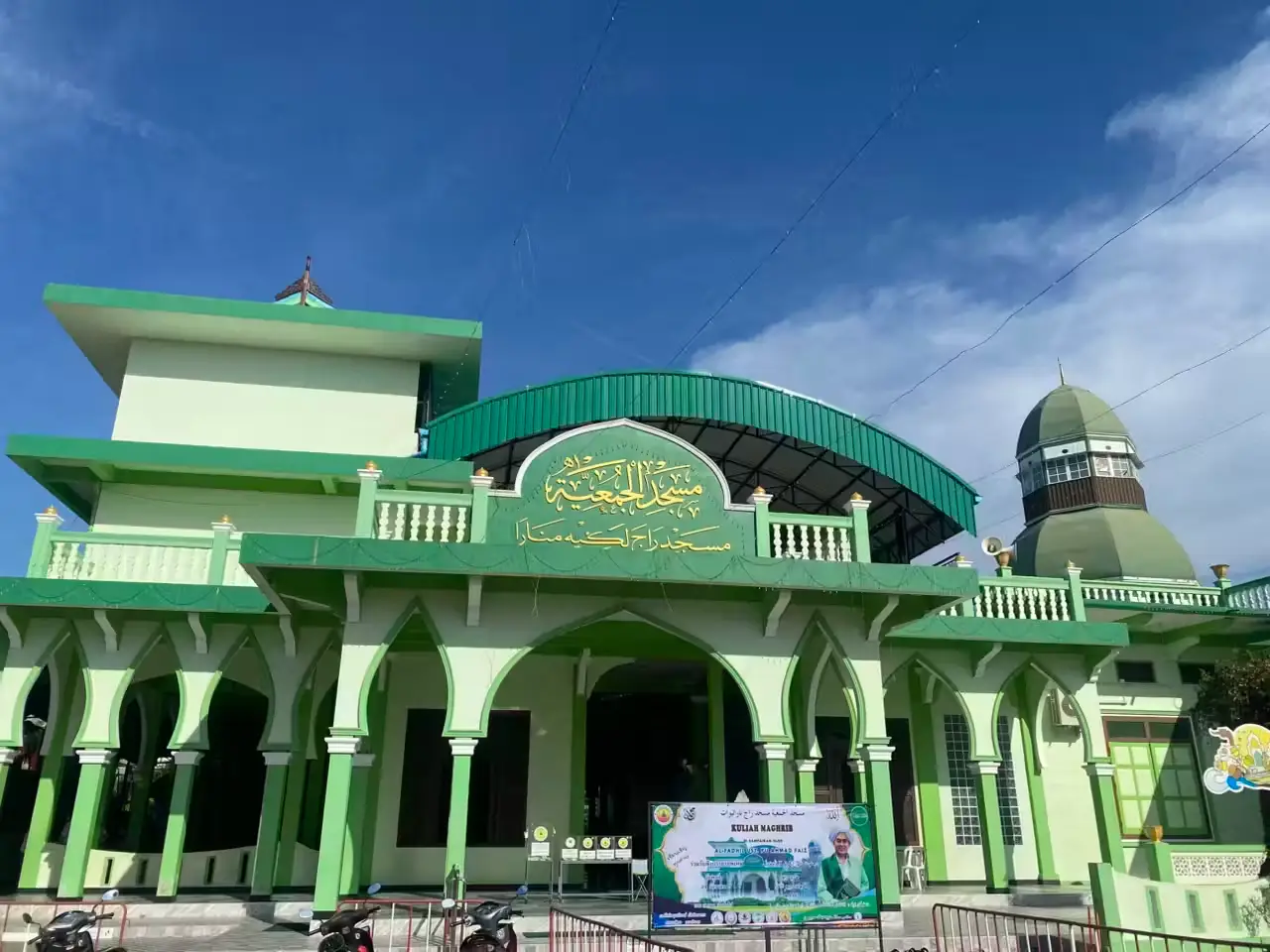
9. Narathiwat Old Central Mosque is situated in central Narathiwat along Phichit Bamrung Road, close to the Narathiwat Clock Tower. It is an important religious landmark that reflects the development of the Muslim community in the province. The historic mosque holds considerable meaning for local residents and continues to maintain its religious role. Visiting the site is therefore particularly suitable for travelers interested in urban community history and the relationship between religion, architecture, and the changing character of Narathiwat.
Highlights: A historic mosque in central Narathiwat, a building that reflects the background and traditions of the local Muslim community, its connections with the province's history, and a convenient location close to several important urban landmarks.
Narathiwat Old Central Mosque is historically valuable because it has served the community as a place for religious activities over a long period. It predates the development of the newer central mosque, which was established to meet the needs of an increasing population. The continued existence of the original mosque provides important evidence of social change and urban development while preserving the collective memories of the local community.
The building and its prayer facilities reflect a religious architectural tradition closely connected with the surrounding community. Studying the old mosque alongside Narathiwat's newer central mosque helps visitors understand differences in architectural design and the organization of religious spaces across different periods. The significance of a historic mosque should not be judged solely by its size or grandeur, because its enduring value lies primarily in its religious role and the community's longstanding connection with it.
The area around the mosque is also associated with burial grounds and the memories of important figures in local history. Learning about these connections provides insight into the relationships among community leaders, urban administration, and Islam in Narathiwat Province. Visitors interested in history should allow time to explore the surrounding neighborhood respectfully, maintaining a quiet atmosphere and avoiding areas that are not open to the public.
For a broader cultural itinerary, travelers can combine the visit with the Narathiwat Clock Tower, Narathiwat City Museum, and the new central mosque. Exploring these landmarks within the same day provides a deeper understanding of Narathiwat through its religious heritage, urban history, and living community traditions.
Open Days: Daily Opening Hours: 08:00 – 18:00
Getting There: From the area around the former Narathiwat Provincial Hall, follow Phichit Bamrung Road toward the Narathiwat Clock Tower. The mosque stands a short distance before reaching the clock tower. It can be accessed by private vehicle or local taxi within the town.
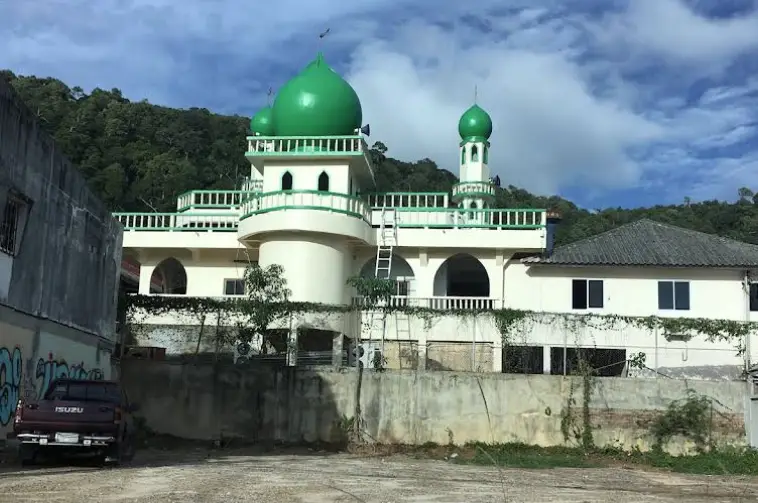
10. Ban Loh Bahra Mosque is located at 678 Moo 3, Saladan–Sang Ka U Road, Sala Dan Subdistrict, Ko Lanta District, Krabi Province. It is a community mosque of considerable importance to the history and everyday life of Muslim residents on Ko Lanta. Although it is not as large or architecturally monumental as Thailand's major provincial central mosques, its significance comes from the collective efforts of local residents who established and maintained it. The mosque clearly illustrates the close connections between religion, settlement history, and island life.
Highlights: A community mosque on Ko Lanta, a founding history rooted in cooperation among village residents, strong ties with coastal Muslim communities, and a location that can be incorporated into a cultural sightseeing itinerary around the island.
Ban Loh Bahra is a community within Sala Dan Subdistrict, an area that has played an important role in transportation and settlement on Ko Lanta. The island is home to several cultural groups, including Muslim communities, traditional sea-oriented communities, and residents whose livelihoods are connected with fishing, trade, and tourism. As a result, life on Ko Lanta is culturally diverse and closely connected with the marine environment. Ban Loh Bahra Mosque serves as one of the important institutions helping preserve the identity of the local community.
The mosque's construction history reflects the participation of many people in the village, including those who donated land, provided financial support, contributed labor, and served as religious leaders. Together, they worked to establish a permanent place for Islamic worship. The development of the mosque was not the achievement of a single individual but the result of cooperation across generations of community members. This shared effort has given the mosque an important place in the collective memory and family relationships of local residents.
The mosque serves functions extending beyond daily prayer. It is a gathering place where villagers learn about their religion, attend meetings, and participate in important community activities. Such functions are particularly significant in an island environment, where residents often maintain close social ties and depend on cooperation in everyday life. Understanding the mosque's history therefore reveals a side of Ko Lanta that goes beyond its beaches and conventional tourist attractions.
Visitors can observe the surrounding community and the relationship between the mosque and nearby homes, but should avoid disturbing anyone engaged in religious activities. Photography inside the mosque and entry into private areas should be undertaken only with the permission of its caretakers. The mosque functions primarily as an important center of community life rather than as an exhibition space intended for tourists.
A visit is particularly suitable for travelers wishing to explore Ko Lanta through its cultural heritage. It can be combined with the Sala Dan community, historic trading areas, and other destinations around the island. Visitors should allow sufficient time to travel between different parts of Ko Lanta and respect the everyday activities of local residents when stopping at religious landmarks.
Open Days: Daily Opening Hours: 08:00 – 17:00 for general visiting, subject to religious activities and local permission
Getting There: Travel to Ko Lanta in Krabi Province and proceed to Sala Dan Subdistrict. Continue along the Saladan–Sang Ka U Road toward Ban Loh Bahra in Moo 3. The mosque can be reached by car or rented motorcycle. Visitors should check local road conditions and arrangements for reaching the island before traveling.
Map (GPS):Google Maps – Ban Loh Bahra Mosque
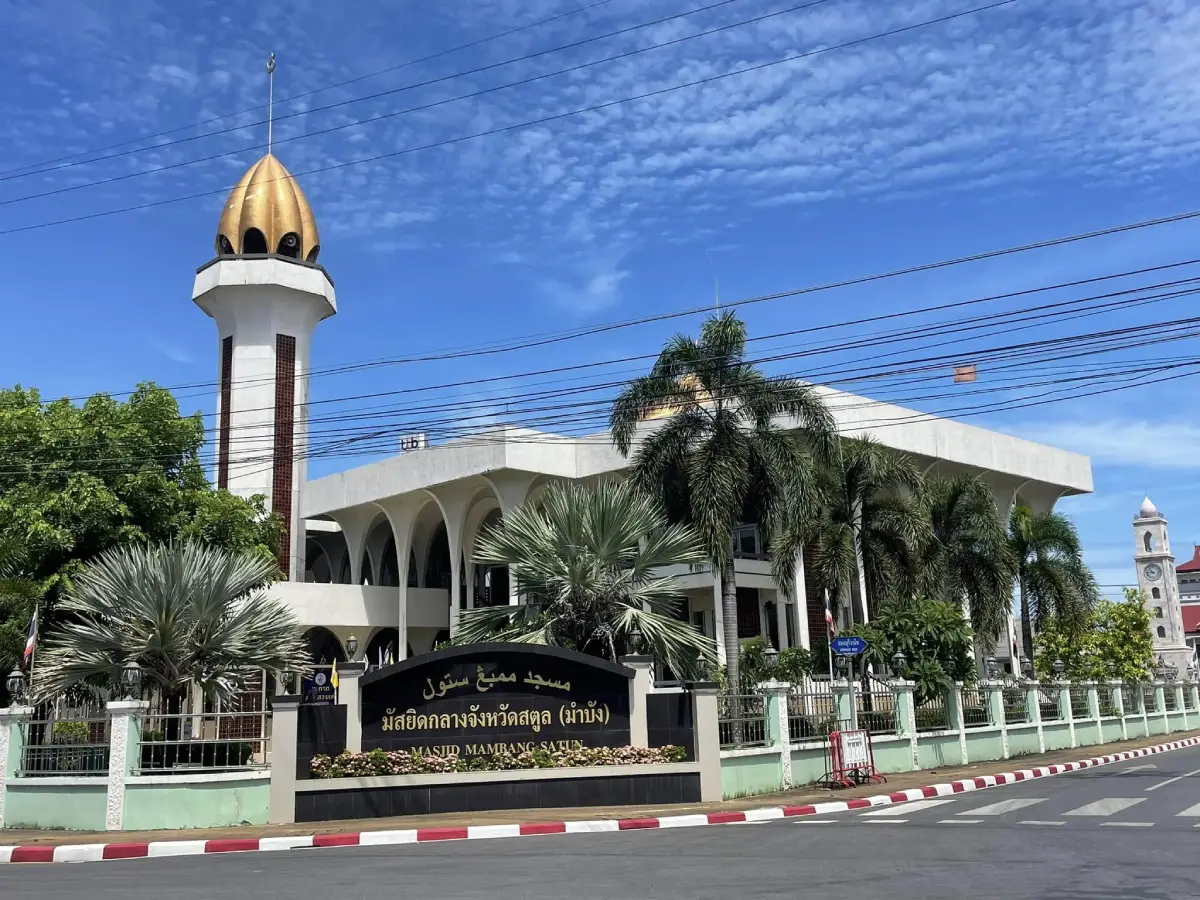
11. Satun Central Mosque (Mambang Mosque) stands at the intersection of Buriwanich Road and Satun Thani Road in Phiman Subdistrict, Mueang Satun District, Satun Province. It is one of Southern Thailand's important Islamic religious landmarks, distinguished by its architecture and historical connections. The white building, crowned by an elegant golden dome and tower, stands prominently in the town center. The mosque serves both as a spiritual center for the Muslim community and as an important landmark expressing Satun's cultural identity.
Highlights: A white provincial central mosque with a golden dome, contemporary Islamic architecture, historical connections with the former name of Satun, Mambang Nakhara, construction associated with local communities and Malay Peninsula trading networks, and its official opening by King Bhumibol Adulyadej (Rama IX) on September 20, 1979.
The name Mambang is historically connected with Mambang Nakhara, an earlier name associated with the town of Satun. It reflects the region's settlement history and its longstanding ties with other centers across the Malay Peninsula. Satun historically maintained trading and cultural relationships with Kedah, Malacca, and Penang. Maritime transportation and commercial exchange played important roles in the town's development, including the establishment of religious buildings serving its Muslim communities.
The original mosque was established during the administration of Phraya Samanrat Burin, also known as Tengku Muhammad Akib, a ruler of Satun during the early Rattanakosin period. Its construction depended on cooperation among local leaders and donors. Craftsmen from Malacca were brought to assist with the building, while construction materials were obtained through maritime trade. The original mosque was a single-story structure with a three-tiered roof, timber columns, and a rectangular prayer space, reflecting traditional Malay architectural knowledge and building techniques.
As the original building deteriorated over time, plans were made to construct a new mosque on the same site. Work began on April 7, 1974, with funding provided through public contributions and donations from members of the Muslim community. The new structure used reinforced concrete, emphasizing strength, openness, and the capacity to accommodate a much larger congregation. The mosque was officially opened in 1979.
The architecture of the present building differs considerably from that of the original mosque. Its white walls, golden dome, tower, and curved architectural elements reflect modern Islamic design. A large prayer hall occupies the principal interior space, while other areas support meetings and educational activities. The building therefore fulfills the practical requirements of religious observance while continuing to serve as an important community center.
Visitors interested in architecture can admire the exterior, especially viewpoints where the golden dome stands out against the white building. Anyone wishing to enter the prayer hall should contact the caretakers and avoid prayer times. A visit to Mambang Mosque can also be combined with a walking tour of Satun's historic streets, local markets, and other landmarks that reflect the province's multicultural character.
Open Days: Daily Opening Hours: 09:00 – 16:00 for general visitors, excluding prayer periods
Getting There: From central Satun, follow Satun Thani Road or Buriwanich Road toward the intersection where the mosque is located. The golden dome makes the building easy to recognize. Visitors can travel by private car, local hired transportation, or on foot from nearby destinations within the town center.
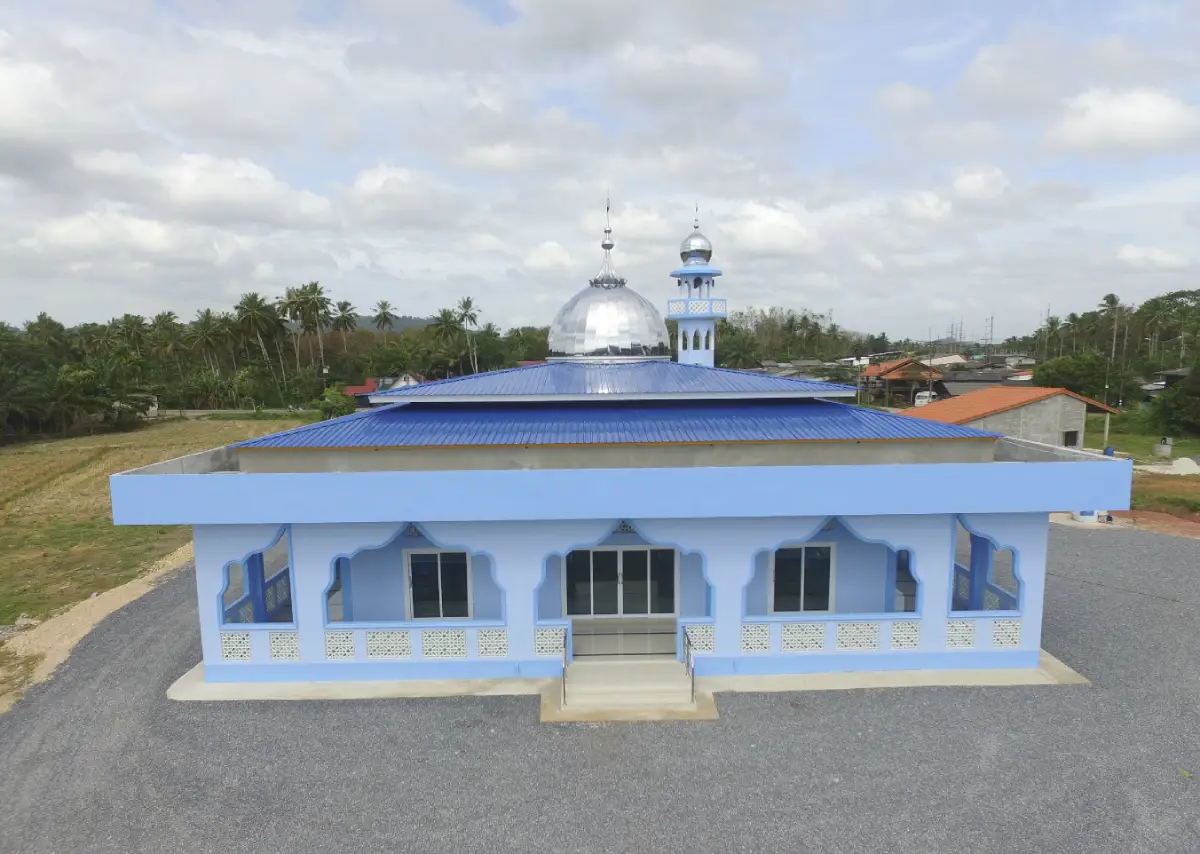
12. Chalung Central Mosque is located in Moo 4, Ban Chalung, Chalung Subdistrict, Mueang Satun District, Satun Province. It is a historic mosque of considerable importance to the life and development of the Chalung community. Situated in an area with diverse cultural traditions and connections to important provincial transportation routes, the mosque reflects the longstanding role of Islamic religious buildings as centers of faith, education, village gatherings, and the preservation of local historical memory.
Highlights: A historic community mosque in Chalung, registered as Mosque No. 5 on August 3, 1949, a longstanding relationship with the local Muslim community, and its inclusion in the cultural tourism itinerary known as "One Day in Chalung."
Chalung is one of Satun's historic communities, with connections to both overland transportation and traditional local ways of life. The settlement of Muslim residents gave the mosque an important role in preserving the community's cultural identity. It became a place where people gathered for prayers, exchanged information, participated in religious activities, and maintained social relationships over successive generations.
The registration of Chalung Central Mosque in 1949 demonstrates the longstanding presence of an established religious institution within the community. Its historical significance should therefore not be judged solely by the age of the building visible today. Equally important are the continuity of the community, the generations of caretakers, and the religious practices that have allowed the mosque to remain a central spiritual institution.
Beyond its prayer functions, Chalung Central Mosque is associated with basic Islamic education and activities for children and young people. Community-based learning helps pass on religious teachings, language, manners, responsibility, and relationships between families and their wider community. The mosque consequently fulfills an important social and educational role alongside its function as a religious building.
One of the most rewarding aspects of visiting Chalung is experiencing the mosque within its historic community rather than viewing it simply as an isolated architectural landmark. Travelers can learn about village life, local food, important community sites, and traditional customs along the same route. Such an experience provides insight into aspects of Satun that differ from its more widely known marine and natural attractions.
Those wishing to enter the interior should make arrangements with the mosque's caretakers in advance, as the building remains an active place of worship. Modest clothing, quiet behavior, and respect for worshippers are important. Visitors should also avoid photographing individuals without their permission.
Getting There: From Satun town, take Highway 416 toward Chalung Subdistrict, then continue into Ban Chalung, Moo 4. Visitors can travel by private car or local hired vehicle. Anyone planning a group visit should contact the mosque's caretakers in advance.
Map (GPS):Google Maps – Chalung Central Mosque

13. Nurul Yamal Mosque is located in Lum Phli Subdistrict, Phra Nakhon Si Ayutthaya District, Phra Nakhon Si Ayutthaya Province. It is an important mosque serving the local Thai Muslim community and reflecting the religious and cultural diversity of Thailand's former capital. In addition to being a center of faith, the mosque offers an opportunity to explore Ayutthaya's social history as a major international trading city that once attracted settlers from many ethnic and religious backgrounds.
Highlights: Architecture influenced by Egyptian mosque design, a hipped roof covered with cement tiles, Italian marble flooring in the interior, and historical connections with the Muslim community of Lum Phli Subdistrict.
Phra Nakhon Si Ayutthaya played a major role in international trade and overseas relations for centuries. Muslim communities participated in the city's economic, social, and religious development. The continued existence of mosques and Muslim neighborhoods around the historic city is therefore important evidence of Ayutthaya's multicultural history, which extends beyond the Buddhist temples, royal palaces, and ancient monuments for which the province is best known.
Nurul Yamal Mosque serves as a center for prayer and religious activities among local residents. Gathering at the mosque strengthens relationships between families and helps transmit Muslim traditions from one generation to the next. Its importance consequently lies not only in its architectural features but also in its continuing role as a shared place for community life.
The mosque's architectural character reflects the influence of Egyptian Islamic design, adapted to the local environment and building traditions of Thailand. Its hipped roof and carefully selected interior materials demonstrate attention to craftsmanship and practicality. The Italian marble flooring contributes to the prayer space's clean, orderly appearance and provides a suitable environment for religious observance.
Visiting Nurul Yamal Mosque is particularly rewarding for travelers interested in cultural exchange and architecture in Ayutthaya. The visit can be combined with other Muslim communities in Lum Phli Subdistrict and historical attractions on Ayutthaya's main island. However, the mosque's interior is an active religious space, so visitors should obtain permission before entering and avoid disturbing congregational prayers.
Getting There: From Ayutthaya's historic city island, travel toward Lum Phli Subdistrict along the principal roads connecting the surrounding communities with the town center. A private car or local hired vehicle is recommended. Visitors should search specifically for Nurul Yamal Mosque to avoid confusing it with other mosques in the same subdistrict.
Map (GPS):Google Maps – Nurul Yamal Mosque
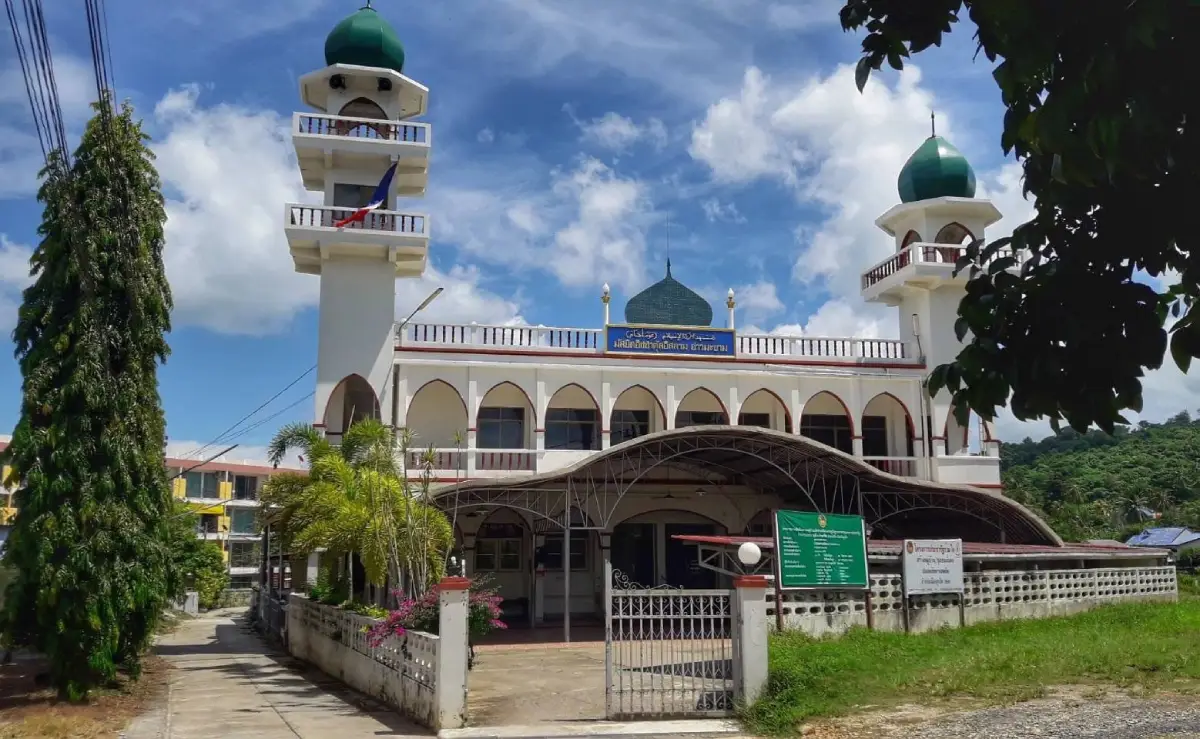
14. Izzatul Islam Mosque is located in the Ban Ao Makham community, Wichit Subdistrict, Mueang Phuket District, Phuket Province. It is an important mosque serving the Muslim community on the southeastern coast of Phuket Island. Situated along Sakdidej Road, which connects Phuket Town with Ao Makham and Cape Panwa, the mosque features contemporary architecture and has been developed to accommodate the religious activities of a community that has grown alongside changes in the surrounding area.
Highlights: A community mosque in Ban Ao Makham featuring a two-story building and minaret, with the principal prayer area on the ground floor and additional space upstairs to accommodate larger congregations during Friday prayers. Its coastal setting also reflects the traditional way of life of Muslim communities in Phuket.
The mosque was formerly known as Jamiyah Mosque and was officially registered as Mosque No. 13 in Phuket Province in 1950. The establishment of a permanent community mosque reflects the longstanding Muslim presence in the Ao Makham area, where local livelihoods have traditionally been connected with the sea, maritime transportation, fishing, and trade.
The architecture of the mosque has developed in response to the community's changing needs. Its two-story layout provides suitable accommodation for worshippers, with the principal prayer hall on the ground floor and an upper level that can be used when larger numbers of people gather for religious activities. The minaret gives the building a recognizable Islamic architectural identity within the surrounding neighborhood.
Ao Makham is a coastal area characterized by maritime activities and scenic waterfront surroundings. Muslim communities in this part of Phuket have traditionally maintained close relationships with ports, fishing activities, residential neighborhoods, and the island's transportation network. Izzatul Islam Mosque is one of the places that illustrate how local cultural traditions continue alongside the development of tourism in Phuket.
For travelers interested in cultural tourism, the mosque provides an opportunity to observe the architecture from outside and learn about the history of the Ao Makham community. Visitors should not enter the prayer hall without permission and should avoid photographing people engaged in religious observances. Respectfully observing the surroundings and speaking politely with local residents are appropriate ways to learn more about the area's cultural heritage.
The mosque can be included in an itinerary featuring Cape Panwa, Ao Yon Beach, and Khao Khad Viewpoint. Such a journey allows travelers to experience both Phuket's coastal landscapes and the cultural traditions of its Muslim communities during the same trip.
Getting There: From Phuket Town, take Sakdidej Road or Highway 4023 toward Ban Ao Makham and Cape Panwa. Continue into the local community following directions to Izzatul Islam Mosque. The destination is accessible by private car, rental vehicle, or local taxi.
Map (GPS):Google Maps – Izzatul Islam Mosque
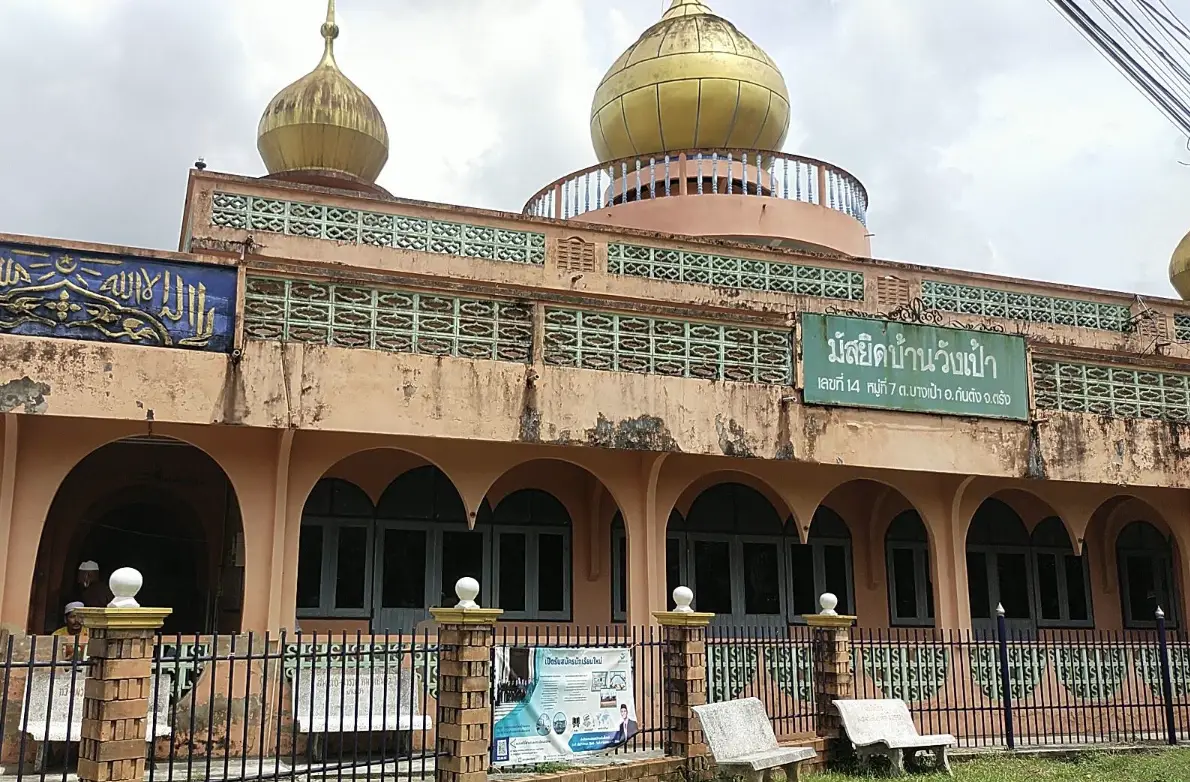
15. Ban Wang Pao Mosque, also known as Wang Pao Mosque (Tha Ruea), is located in Moo 7, Bang Pao Subdistrict, Kantang District, Trang Province. It is an important religious landmark for the local Muslim community in the historic town of Kantang, an area whose history is closely associated with trade, water transportation, and the coexistence of people from different ethnic and religious backgrounds. The mosque is valuable as a center of community life and as a place that helps preserve the cultural memories of Trang's historic port communities.
Highlights: A community mosque in Ban Wang Pao with historical connections to the former port town of Kantang, the cultural identity of Muslim communities living near waterways, and an enduring role as a center of religion, education, and social relationships in Bang Pao Subdistrict.
Kantang District is a historic town that once played a significant role in Trang's transportation, trade, and provincial administration. Communities in the area have long maintained connections with the Trang River and maritime routes leading toward the Andaman coast. The presence of Ban Wang Pao Mosque is therefore part of the broader history of Muslim settlement and community life in this former trading port.
The name Ban Wang Pao Mosque comes from the local community of Ban Wang Pao, while its alternative name, Wang Pao Mosque (Tha Ruea), directly reflects the area's historical relationship with waterways, travel, and trade. The mosque is also part of a wider network of religious institutions in Bang Pao Subdistrict, where several Muslim communities are distributed among different villages. Connections between these mosques help sustain religious life and strengthen social relationships throughout the area.
The role of Ban Wang Pao Mosque extends beyond daily prayers. It also supports Friday congregational prayers, Islamic education, community meetings, and activities held during important religious occasions. Generations of residents have used the mosque as a place to meet, support one another, and maintain social bonds. These activities make the religious building an essential part of everyday community life.
A visit to Ban Wang Pao Mosque is particularly suitable for travelers interested in community history and cultural heritage rather than those seeking only monumental domes or imposing religious architecture. Observing the surrounding village, residential environment, and relationship between the mosque and nearby homes offers valuable insights into the history of Kantang.
Visitors should respect both worshippers and local residents because the mosque remains an active religious institution. Entering private areas or the prayer hall without permission is inappropriate. Viewing the building from outside and learning about the community's history in a considerate manner are suitable approaches for cultural visitors.
Getting There: From Trang town, travel toward Kantang District and continue to Bang Pao Subdistrict, heading for Ban Wang Pao in Moo 7. Private cars and local hired transportation are convenient options. When using navigation services, search for either Ban Wang Pao Mosque or Wang Pao Mosque (Tha Ruea) to identify the correct destination.
Map (GPS):Google Maps – Ban Wang Pao Mosque
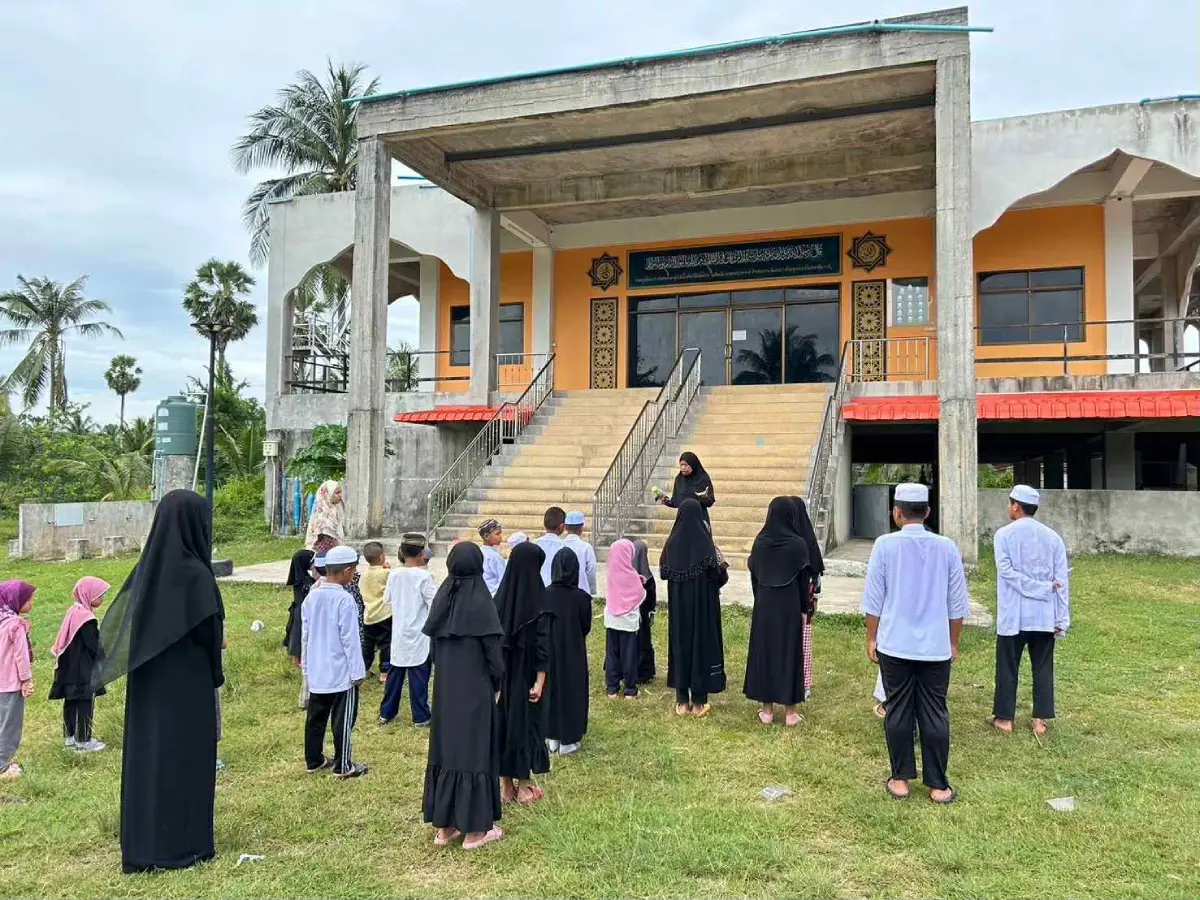
16. Masjid Nurul Iman (Nurul Eman Mosque) is located in Moo 6, Ban Khok Khet, Ban Na Subdistrict, Chana District, Songkhla Province, along the Chana–Saphan Mai Kaen Road. This community mosque has a history closely associated with settlement, Islamic education, and the social development of Muslim communities in Chana District. Its significance lies in having served as a spiritual center for local residents for more than 60 years, with historical connections to the establishment of Pondok Langa, an important institution in the development of Islamic education in the area.
Highlights: A historic community mosque in Ban Khok Khet, founded through the efforts of Ustaz Abdul Ghani Al-Fikri, a religious educator from Malaysia, with historical connections to Pondok Langa and Rungroj Wittaya School. The mosque continues to serve as a center of religious life and education in the surrounding community.
The name Nurul Iman carries religious meaning associated with the light of faith. This meaning corresponds closely with the mosque's role as a place where residents gather for worship, study Islamic teachings, listen to religious lectures, and support one another. A name expressing light and faith therefore reflects the community's aspiration for the mosque to become a place where both spiritual understanding and knowledge can develop.
The founding history of the mosque is associated with Ustaz Abdul Ghani Al-Fikri, a Malaysian religious educator who played an important role in the development of Islamic learning in Chana District. Working together with the residents of Ban Khok Khet, he helped establish the mosque to accommodate prayers and religious activities. He was also closely involved in the beginnings of Pondok Langa. This history reflects the educational and religious connections between Muslim communities in Southern Thailand and those of the wider Malay Peninsula.
The mosque did not develop separately from the society around it. Instead, its history is intertwined with local education, family life, and the development of younger generations. Its continued use for prayer, religious learning, and community gatherings helps preserve the traditions and identity of the Muslim community in Ban Khok Khet.
For cultural travelers, Masjid Nurul Iman is particularly interesting because of its connections with Islamic education and community history in Southern Thailand. Observing the surrounding environment and understanding the relationship between the mosque and nearby educational institutions provides deeper insights into the everyday role of religion than focusing exclusively on the building's appearance.
Visitors should contact the mosque's caretakers before entering interior areas, particularly when traveling in groups. Educational activities and religious observances should not be disturbed. Permission should also be obtained before photographing individuals or religious activities.
Open Days: Daily
Opening Hours: 08:00 – 17:00 for visitors, subject to religious activities
Getting There: From Songkhla city or Hat Yai, travel toward Chana District, then follow the Chana–Saphan Mai Kaen Road to Ban Khok Khet, Moo 6, Ban Na Subdistrict. The mosque can be reached by private car, rental vehicle, or local taxi. Visitors should confirm the exact entrance within the village before departure.
Map (GPS):Google Maps – Masjid Nurul Iman
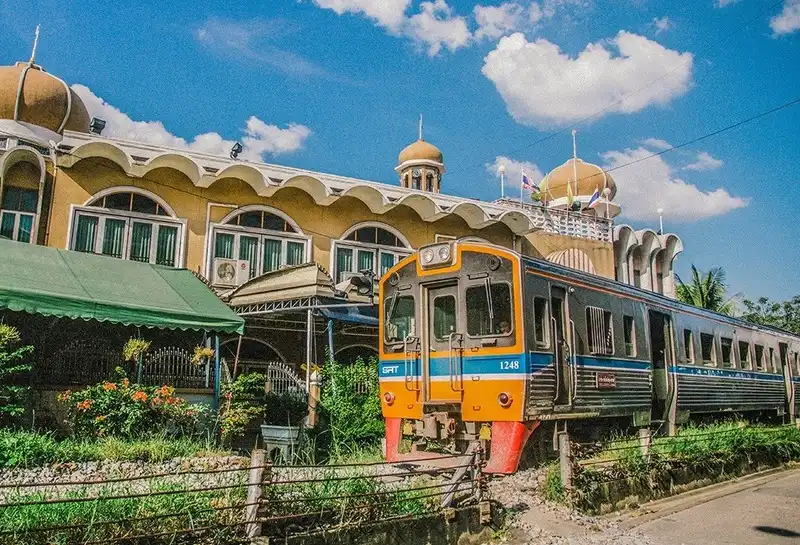
17. Suan Phlu Mosque is situated near Soi Thoet Thai 11 in Bang Yi Ruea Subdistrict, Thon Buri District, Bangkok, close to the Wongwian Yai–Maha Chai railway line. It is a historic mosque that provides valuable insight into the development of Malay Muslim communities in the Thonburi area. The mosque is particularly significant for travelers interested in settlement history, urban transformation, and the preservation of religious and cultural identity in Bangkok's older neighborhoods.
Highlights: A historic mosque near the Wongwian Yai–Maha Chai railway, the history of Malay Muslim settlement connected with Pattani, architectural development from an early traditional wooden prayer house, and the name Suan Phlu, which preserves memories of Bangkok's former agricultural landscape.
The Suan Phlu neighborhood was once an agricultural community where betel vines were extensively cultivated for local consumption and trade. Over time, the area gradually transformed into a densely populated urban neighborhood with houses, markets, and transportation routes. The name Suan Phlu, meaning Betel Garden, remains a reminder of the area's former landscape despite the substantial changes that have taken place. Suan Phlu Mosque consequently serves as an important link between the community's past and present.
The history of the local Muslim community is associated with the movement and settlement of Malay people from the Pattani region during the early Rattanakosin period. The emergence of this community demonstrates the diversity of Bangkok's population from the early years of the capital. Religion, language, food, and traditional customs all played important roles in helping residents preserve their collective identity.
Accounts of the mosque's development identify Haji To Chango as the community's first imam and an important figure in the construction of its religious building in 1836. The original structure incorporated forms and materials associated with traditional Thai houses, including timber construction, a central supporting pillar, and a tiled roof. These features illustrate the adaptation of local building techniques for Islamic religious purposes.
Subsequent renovations enabled the mosque to accommodate increasing numbers of worshippers while preserving its close relationship with the surrounding community. Its importance therefore extends beyond the architecture itself to encompass family memories, community gatherings, and the role of the mosque in maintaining religious traditions across generations.
Visitors can explore the historic neighborhood and observe the relationship between the mosque and the nearby railway. However, particular attention should be paid to railway safety. Travelers must not stand on the tracks for photographs or enter restricted railway areas, and they should avoid disturbing local residents. Anyone wishing to enter the mosque's interior should contact its caretakers beforehand.
Getting There: From the Wongwian Yai area or Thoet Thai Road, proceed toward Soi Thoet Thai 11, near the Wongwian Yai–Maha Chai railway line and the Thon Buri District Office. Visitors can travel by private vehicle, local taxi, or public transportation before continuing on foot into the community.
Map (GPS):Google Maps – Suan Phlu Mosque
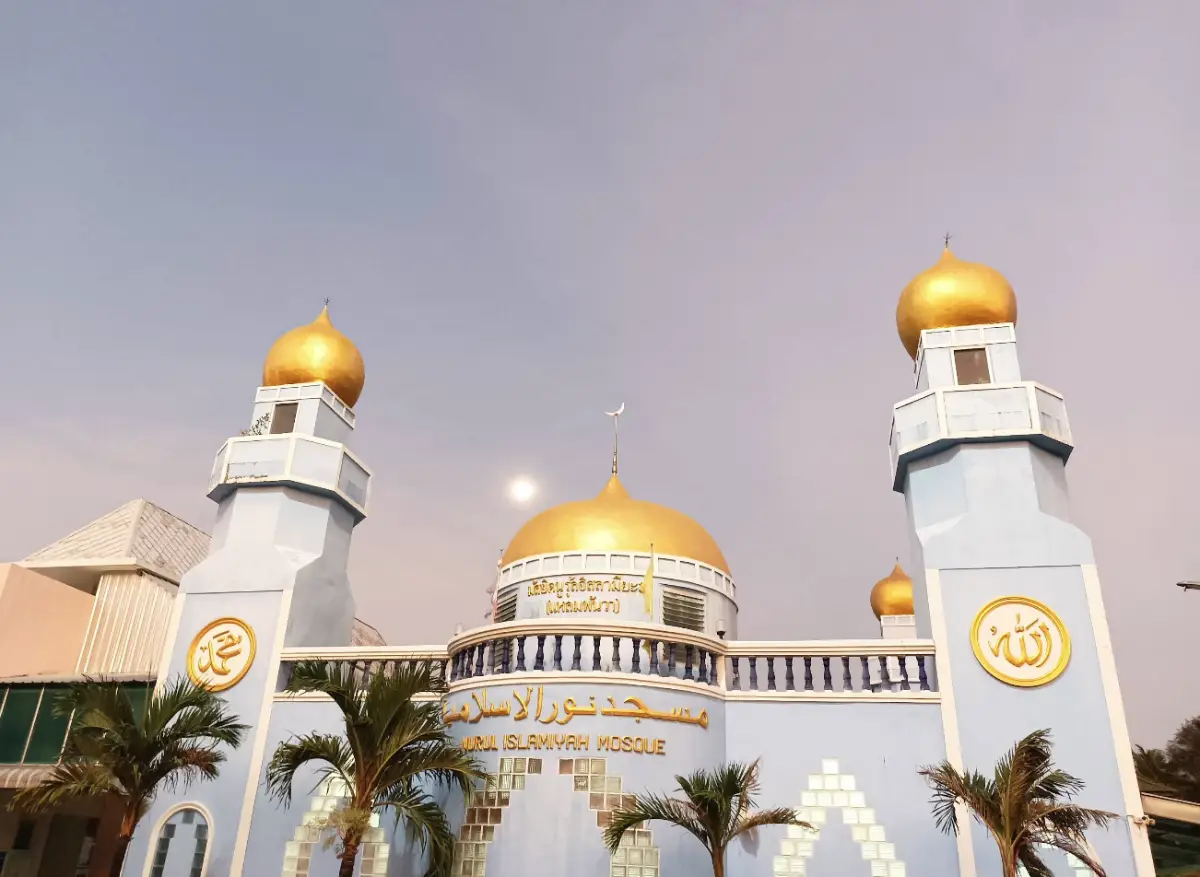
18. Nurul Islamiyah Mosque is located in Ban Laem Panwa, Wichit Subdistrict, Mueang Phuket District, Phuket Province, along Sakdidej Road, which connects Phuket Town with Ao Makham, Ao Yon, and Cape Panwa. It is an important religious landmark for Muslim communities on the southeastern coast of Phuket Island. The mosque reflects a history of development from a small wooden structure built through the collective efforts of local residents into a center of worship and religious education serving the wider community.
Highlights: A community mosque in Ban Laem Panwa, originally established in 1957 and officially registered as Mosque No. 28 in Phuket Province in 1968. It maintains strong connections with the traditions and everyday lives of Muslim communities along the coasts of Ao Yon and Cape Panwa.
Construction of the mosque began in 1957, when residents of Ban Laem Panwa, Ao Yon, and Khao Khad still had to travel to other communities to participate in religious activities. Establishing a mosque of their own therefore arose from the practical needs of local people. The first building was a simple wooden structure with a corrugated metal roof and concrete floor, constructed through cooperation among village residents.
In 1968, the mosque was officially registered as Mosque No. 28 in Phuket Province. This registration marked an important stage in the development of religious facilities and reflected the growing strength of the Muslim community around Cape Panwa. Having a local mosque enabled residents to gather for congregational prayers, study their religion, and organize community activities on a continuing basis.
Ban Laem Panwa is a coastal community whose history is closely connected with the sea and maritime travel. In earlier times, many residents depended on fishing and other coastal occupations for their livelihoods. Today, Cape Panwa is also one of Phuket's important tourism areas. The continued presence of the mosque amid these changes illustrates the enduring local traditions and cultural identity of the community.
The mosque serves as a center for prayer, Islamic education, and community gatherings. Its relationship with local families helps younger generations learn religious teachings, appropriate conduct, and their responsibilities toward society. This gives the mosque considerable value as a community institution as well as a place of worship.
A visit to Nurul Islamiyah Mosque is suitable for travelers who wish to discover the cultural heritage of Cape Panwa. The mosque can be included in an itinerary with Ao Yon Beach, Cape Panwa, and Phuket Aquarium. Visitors should nevertheless respect the privacy of residents and obtain permission before entering the mosque's interior.
Getting There: From Phuket Town, follow Sakdidej Road or Route 4129 toward Cape Panwa, then enter the Ban Laem Panwa community using the local roads leading to the mosque. The destination can be reached by private car, rental vehicle, or local taxi.
Map (GPS):Google Maps – Nurul Islamiyah Mosque
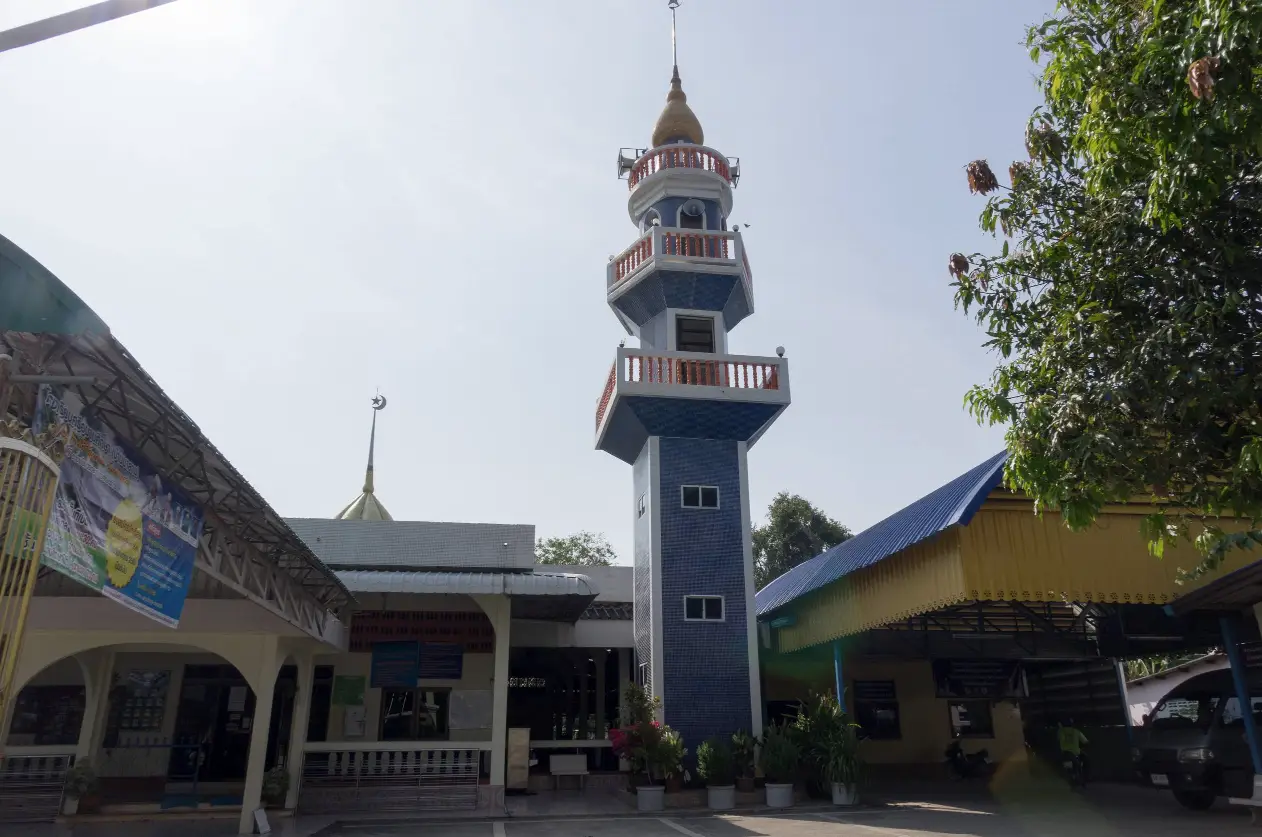
19. Bukit Bunga Mosque is located in Moo 7, Ban Khlong Khut, Khlong Khut Subdistrict, Mueang Satun District, Satun Province, along Yontrakan Kamthon Road or Highway 406. It is a community mosque whose history reflects the development of a small wooden prayer building into a permanent religious institution and a center for Islamic education in Ban Khlong Khut. The mosque's significance lies in the collective efforts of local residents and the transmission of religious knowledge from one generation to the next.
Highlights: A historic community mosque in Ban Khlong Khut, a name connected with the Malay language and the former local identity of Bukit Bunga, establishment in 1957, registration as Mosque No. 77 on September 1, 1966, and an important role as a center for Islamic education.
The name Bukit Bunga is closely connected with the historical background of Khlong Khut Subdistrict, which was formerly known by a similar Malay-derived name. The expression refers to a hill or mountain associated with flowers. The mosque's name therefore preserves linguistic and cultural evidence of the longstanding relationship between communities in Satun and the wider Malay world.
The mosque's founding history began when villagers in Ban Khlong Khut constructed an elevated wooden building for prayer and Quranic study. As the number of worshippers increased, the community gradually developed a more substantial mosque. Construction depended on the cooperation of land donors, religious leaders, and local residents, demonstrating that the mosque emerged directly from the shared needs and faith of the community.
The present mosque is a single-story reinforced-concrete building with a flat roof. Construction began in 1985 and continued until the building was completed in 1992. Its architecture reflects the modernization of religious facilities to meet contemporary needs while preserving the mosque's longstanding role as a place of worship for the original community.
One of Bukit Bunga Mosque's most important functions is its role as a center for basic Islamic education, commonly known locally as a tadika. This educational system helps children and young people learn religious principles, Quranic reading, manners, and social responsibility. Such community-based education is particularly important in Southern Thailand because it connects families, teachers, parents, and religious leaders through a shared commitment to learning.
The mosque is a rewarding destination for travelers interested in community history and the place of religion in everyday life. Visitors should contact the caretakers before entering interior areas and avoid disturbing prayer activities or religious classes for children and young people.
Getting There: From Satun town, follow Highway 406, also known as Yontrakan Kamthon Road, toward Khlong Khut Subdistrict. Continue to Ban Khlong Khut, Moo 7. The mosque can be accessed by private car or hired transportation. Visitors should confirm the exact entrance before setting out.
Map (GPS):Google Maps – Bukit Bunga Mosque

20. Muhammad Ali Mosque (Yis Solihin) is located in Moo 3, Lum Phli Subdistrict, Phra Nakhon Si Ayutthaya District, Phra Nakhon Si Ayutthaya Province. It is a contemporary mosque of considerable importance to the Muslim community in Lum Phli and the second newly established mosque in the subdistrict. The religious landmark reflects the growth of the community and the increasing need for suitable facilities for Islamic worship in modern times.
Highlights: A contemporary mosque in Lum Phli Subdistrict, an architectural design emphasizing simplicity, openness, and functionality for religious observance, and a continuing role as a spiritual center and gathering place for Muslim communities surrounding the historic city of Ayutthaya.
Lum Phli Subdistrict is an area with a long history of settlement by people from different ethnic and religious backgrounds. In the past, Ayutthaya was a major center of international trade and overseas relations, attracting various communities that contributed to its economy and society. The continued presence of mosques in Lum Phli therefore reveals an important dimension of Ayutthaya's history beyond the Buddhist religious landmarks and royal monuments of the historic city island.
The construction of Muhammad Ali Mosque resulted from cooperation among members of the community who wished to establish a suitable place for prayer and religious activities as the local population increased. Developing a new religious institution reflected the strength of local social relationships and the shared commitment of residents to creating facilities for the benefit of the community.
The mosque's architectural design emphasizes simplicity and practical use. Its spaces are organized to accommodate Islamic prayer, providing an open and peaceful environment suitable for religious activities. The building's beauty consequently comes from the balance between contemporary architecture and its purpose as a functioning community mosque.
Beyond daily prayers, the mosque also provides space for residents to gather, exchange ideas, and support one another. Maintaining a shared community institution helps strengthen relationships among different generations and preserves the continuity of Islamic traditions in everyday life.
Travelers interested in the history of Muslim communities in Ayutthaya can combine a visit to Muhammad Ali Mosque with Nurul Yamal Mosque and other important places in Lum Phli Subdistrict. Visitors should contact the mosque's caretakers before entering the interior because the building is an active place of worship, not a tourist attraction where all areas are automatically open to the public.
Getting There: From Ayutthaya's historic city island, travel toward Lum Phli Subdistrict and continue to Moo 3. Private cars or locally hired vehicles are convenient options. Travelers should search specifically for Muhammad Ali Mosque (Yis Solihin) to distinguish it from other mosques in the surrounding area.
Summary Table: 20 Beautiful Mosques to Visit in Thailand with GPS Coordinates and Google Maps Discover 20 fascinating mosques across Thailand, including provincial central mosques celebrated for their impressive Islamic architecture, historic mosques that preserve centuries of cultural heritage, and community mosques reflecting the traditions and everyday lives of local Muslim communities. This summary provides each mosque's key attractions, visitor recommendations, GPS coordinates, and Google Maps directions to help travelers plan their journeys.
| Mosque / Province | Highlights | Visitor Recommendations | GPS Coordinates | Google Maps |
| 1. Pattani Central Mosque, Pattani | A magnificent mosque featuring a green dome, twin minarets, a reflecting pool, and grand Islamic architecture. | Ideal for architectural sightseeing and exterior photography. Avoid disturbing worshippers during prayer times. | 6.862162, 101.256148 | Get Directions |
| 2. Songkhla Central Mosque, Songkhla | A grand white mosque with a golden dome, a long reflecting pool, and striking symmetrical architecture. | Admire the building from the reflecting pool and obtain permission before entering interior areas. | 6.705392, 100.443768 | Get Directions |
| 3. Krue Se Mosque, Pattani | An ancient red-brick mosque featuring thick walls, arched openings, and historical connections with the former Patani kingdom. | Do not climb on or touch the historic structure. Respect the mosque's conservation areas and religious activities. | 6.873323, 101.302842 | Get Directions |
| 4. 300-Year-Old Mosque (Wadi Al-Husein), Narathiwat | A historic takhian-wood mosque constructed using traditional wooden joints, with Thai, Chinese, and Malay architectural influences. | Ask permission before entering and take particular care around the historic wooden structure. | 6.484183, 101.656174 | Get Directions |
| 5. Yala Central Mosque, Yala | A distinctive central mosque with a lotus-inspired dome, a tall minaret, and a broad entrance staircase. | Enjoy the exterior architecture and avoid disturbing congregational prayers. | 6.566383, 101.294191 | Get Directions |
| 6. Narathiwat Central Mosque (New), Narathiwat | A large three-story mosque influenced by Arab Islamic architecture, located near the mouth of the Bang Nara River. | Contact the caretakers before entering prayer halls or other interior areas. | 6.443684, 101.821799 | Get Directions |
| 7. Ton Son Mosque, Bangkok | A historic mosque in the Bangkok Yai Canal community, closely associated with the multicultural heritage of Thonburi. | Ideal for cultural and historical exploration. Arrange permission before entering interior spaces. | 13.740044, 100.488678 | Get Directions |
| 8. Bang Luang Mosque (Kudi Khao), Bangkok | A distinctive white Thai-style mosque combining Thai, Chinese, and Western architectural influences. | Ask permission before entering the prayer area and respect the privacy of surrounding residents. | 13.738050, 100.489350 | Get Directions |
| 9. Narathiwat Old Central Mosque, Narathiwat | A historic urban mosque reflecting the development and religious traditions of Narathiwat's Muslim communities. | Suitable for exploring local history and the cultural heritage of central Narathiwat. | 6.430293, 101.823256 | Get Directions |
| 10. Ban Loh Bahra Mosque, Krabi | A community mosque on Ko Lanta reflecting the coastal traditions and cultural identity of the Sala Dan Muslim community. | Contact mosque caretakers before visiting interior areas. | 7.634471, 99.033741 | Get Directions |
| 11. Satun Central Mosque (Mambang Mosque), Satun | A white central mosque with a golden dome and historical connections to Mambang Nakhara, the former name associated with Satun. | Excellent for architectural sightseeing and exploring Satun's history. Avoid visiting the prayer hall during worship. | 6.614973, 100.066298 | Get Directions |
| 12. Chalung Central Mosque, Satun | A historic community mosque registered in 1949, with longstanding roles in religious life and education. | Suitable for cultural exploration of the Chalung community. Contact the caretakers before visiting. | 6.727236, 100.063109 | Get Directions |
| 13. Nurul Yamal Mosque, Phra Nakhon Si Ayutthaya | A mosque featuring Egyptian Islamic architectural influences, marble flooring, and a traditional hipped roof. | Ideal for travelers interested in Ayutthaya's Muslim communities and multicultural history. Seek permission before entering. | 14.381663, 100.549280 | Get Directions |
| 14. Izzatul Islam Mosque, Phuket | A two-story community mosque with a minaret in Ao Makham, connected with Phuket's coastal Muslim heritage. | Obtain permission before entering. The visit can be combined with Cape Panwa and nearby coastal attractions. | 7.829227, 98.401432 | Get Directions |
| 15. Ban Wang Pao Mosque, Trang | A community mosque in Kantang District reflecting the history of Trang's former trading port and its multicultural traditions. | Recommended for visitors interested in community life and the history of old Kantang. | 7.414571, 99.533806 | Get Directions |
| 16. Masjid Nurul Iman, Songkhla | A historic mosque in Ban Khok Khet with connections to Islamic education and the establishment of Pondok Langa. | Suitable for cultural visits. Avoid disturbing religious or educational activities. | 6.895987, 100.742012 | Get Directions |
| 17. Suan Phlu Mosque, Bangkok | A historic mosque associated with Malay Muslim communities near the Wongwian Yai–Maha Chai railway. | Respect local residents and exercise caution around railway tracks. | 13.723315, 100.486496 | Get Directions |
| 18. Nurul Islamiyah Mosque, Phuket | A community mosque in Cape Panwa whose history began with a wooden prayer building established in 1957. | Suitable for cultural exploration of Phuket's coastal communities. Permission is required before entering interior areas. | 7.904086, 98.303109 | Get Directions |
| 19. Bukit Bunga Mosque, Satun | A community mosque in Ban Khlong Khut reflecting local traditions and the importance of Islamic education. | Contact caretakers before entering spaces used for prayer or religious classes. | 6.635438, 100.070928 | Get Directions |
| 20. Muhammad Ali Mosque (Yis Solihin), Phra Nakhon Si Ayutthaya | A contemporary mosque in Lum Phli Subdistrict serving as a spiritual center and gathering place for the local Muslim community. | Arrange permission before visiting and observe the mosque's religious regulations. | 14.338900, 100.558600 | Get Directions |
Important Information for Visitors: Mosques are active places of worship. Travelers should dress modestly, obtain permission before entering interior areas, and avoid disturbing people during prayers. The GPS coordinates provided in this table are navigation reference points. Visitors should confirm the exact mosque name and entrance location on Google Maps before beginning their journey.
Recommended Mosque Travel Itineraries in Thailand: 1–5 Days Planning a mosque sightseeing journey in Thailand offers a variety of possibilities depending on the region and individual interests. Travelers can explore historic mosques in Bangkok, study Islamic architecture in Phra Nakhon Si Ayutthaya, discover old towns and Muslim communities in Pattani, Yala, and Narathiwat, or experience the traditions of coastal Muslim communities in Satun, Phuket, Krabi, and Trang. The most important consideration is choosing destinations that can realistically be connected within the available travel time and allowing sufficient time to obtain permission before entering individual religious sites.
One-Day Mosque Tour in Bangkok: Discover the History of Thonburi's Muslim Communities A mosque sightseeing itinerary in Bangkok is ideal for travelers with limited time who wish to learn about the historic communities along the Chao Phraya River. Begin at Ton Son Mosque in Bangkok Yai District, which reflects the history of Muslim settlements near the mouth of Bangkok Yai Canal. Continue to Bang Luang Mosque (Kudi Khao) in Thon Buri District, distinguished by its white traditional Thai-style architecture incorporating influences from several cultural traditions.
In the afternoon, travelers can continue to Suan Phlu Mosque, near Soi Thoet Thai 11, to explore the history of Malay Muslim communities and their relationship with Bangkok's urban development. Visitors may then explore local markets and historic neighborhoods along the Thonburi route. Using rail services in combination with taxis or walking is suitable for this itinerary because some community streets are narrow and parking facilities may be limited.
Recommended Route: Ton Son Mosque → Bang Luang Mosque (Kudi Khao) → Suan Phlu Mosque
One-Day Mosque Tour in Phra Nakhon Si Ayutthaya: Exploring the Multicultural Heritage of Thailand's Former Capital Phra Nakhon Si Ayutthaya is an excellent destination for combining mosque visits with historical exploration. Begin at Nurul Yamal Mosque in Lum Phli Subdistrict, which is distinguished by architectural influences from Islamic artistic traditions and its importance to the local Muslim community. Continue to Muhammad Ali Mosque (Yis Solihin), a contemporary mosque that reflects the continued development and growth of Muslim communities in the same area.
After visiting both mosques, travelers can continue to Ayutthaya's historic city island to discover the area's multicultural heritage through its religious buildings, traditional trading neighborhoods, and historical landmarks. This itinerary helps visitors understand that Ayutthaya was a city where people from different ethnic and religious backgrounds lived together, rather than a historical destination associated exclusively with Buddhist temples and monuments.
Recommended Route: Nurul Yamal Mosque → Muhammad Ali Mosque (Yis Solihin) → Historical Landmarks and Traditional Communities in Phra Nakhon Si Ayutthaya
Two-Day Mosque Tour in Pattani and Yala: Beautiful Islamic Architecture and the History of Patani A two-day journey is ideal for travelers interested in outstanding mosque architecture and important historical landmarks. Begin the first day at Pattani Central Mosque, where visitors can admire the green dome, twin minarets, and reflecting pool in front of the building. Continue to Krue Se Mosque, an important historical monument distinguished by its red-brick walls and arched openings.
On the second day, travel from Pattani to central Yala to visit Yala Central Mosque, also known as Raudatul Jannah Mosque. The building is recognized for its distinctive central dome and tall minaret. Along the journey, travelers can learn about local community life and the region's cultural diversity. Current road conditions and travel advice from local authorities should be checked before departure.
Recommended Route: Day 1: Pattani Central Mosque → Krue Se Mosque | Day 2: Yala Central Mosque
Three-Day Mosque Tour in Pattani, Yala, and Narathiwat: Islamic Architecture and Historic Mosque Travelers with three days available can extend the Pattani and Yala itinerary into Narathiwat Province. The first two days can follow the route covering Pattani Central Mosque, Krue Se Mosque, and Yala Central Mosque. On the third day, travel into Narathiwat to visit the 300-Year-Old Mosque, also known as Wadi Al-Husein Mosque, in Ban Taloh Mano, Bacho District. The historic building is particularly remarkable for its ancient wooden structure and its combination of Thai, Chinese, and Malay artistic traditions.
After exploring the historic wooden mosque, travelers can continue to Narathiwat town to visit Narathiwat Old Central Mosque and Narathiwat Central Mosque (New). This itinerary reveals architectural differences across several historical periods, from traditional timber construction and older urban mosques to contemporary religious buildings designed for larger congregations.
Recommended Route: Day 1: Pattani | Day 2: Yala | Day 3: 300-Year-Old Mosque → Narathiwat Old Central Mosque → Narathiwat Central Mosque (New)
Four-Day Mosque Tour in Satun and Songkhla: Islamic Heritage and Historic Communities of Southern Thailand A four-day itinerary is suitable for travelers interested in the relationship between Islamic architecture, urban history, and community traditions. Begin in Songkhla Province. On the first day, visit Songkhla Central Mosque in Hat Yai District to admire its white building, golden dome, and reflecting pool. The remaining time can be spent exploring cultural attractions in Hat Yai or Songkhla city, depending on personal preferences.
On the second day, travel to Chana District to learn about the history of Masjid Nurul Iman in Ban Khok Khet, which has strong historical connections with Islamic education and the establishment of Pondok Langa. After the visit, continue to Satun Province and spend the night in Satun town.
On the third day, visit Satun Central Mosque (Mambang Mosque), distinguished by its golden dome and historical connections with Mambang Nakhara. The remainder of the day can be spent exploring Satun's historic neighborhoods and important cultural sites.
On the fourth day, travel to Chalung Central Mosque and Bukit Bunga Mosque. Both demonstrate the important roles community mosques play in Islamic education and the preservation of local Muslim traditions. Travelers can begin their return journey afterward. This itinerary is particularly suitable for those interested in community heritage and cultural details rather than monumental religious architecture alone.
Recommended Route: Day 1: Songkhla Central Mosque | Day 2: Masjid Nurul Iman → Satun | Day 3: Mambang Mosque | Day 4: Chalung Central Mosque → Bukit Bunga Mosque
Five-Day Mosque Tour in Phuket, Krabi, and Trang: Discovering Muslim Coastal Traditions along the Andaman Sea Travelers interested in coastal Muslim communities can plan a five-day itinerary beginning in Phuket Province. On the first day, visit Izzatul Islam Mosque in the Ao Makham community and Nurul Islamiyah Mosque in Ban Laem Panwa. Both mosques reflect the way of life of Muslim communities on Phuket Island and are situated along its southeastern coastline.
On the second day, spend time exploring Cape Panwa, Ao Yon Beach, or Phuket Old Town to discover the island's trading history and cultural diversity. Continue toward Krabi Province according to the travel schedule.
On the third day, travel to Ko Lanta to visit Ban Loh Bahra Mosque in the Sala Dan community. Visiting this community mosque provides valuable insight into the connections between religion, settlement history, and the livelihoods of the island's residents.
On the fourth day, travel from Ko Lanta toward Trang Province. Allow sufficient time for leaving the island and adjusting transportation arrangements. Spend the night in Trang town or Kantang District, depending on the itinerary.
On the fifth day, visit Ban Wang Pao Mosque in Bang Pao Subdistrict, Kantang District, to learn about the Muslim community in Trang's historic port area. Continue exploring local historical attractions before beginning the return journey.
Recommended Route: Day 1: Izzatul Islam Mosque → Nurul Islamiyah Mosque | Day 2: Explore Phuket and Travel to Krabi | Day 3: Ban Loh Bahra Mosque, Ko Lanta | Day 4: Travel to Trang | Day 5: Ban Wang Pao Mosque, Kantang
The itineraries above are suggested travel plans rather than fixed schedules based on guaranteed visitor access to every mosque. Travelers should check weather conditions, transportation arrangements, public visiting policies, and religious activities within each community before departure. Additional attention is recommended when traveling through Thailand's southern border provinces or following routes that involve island transfers and smaller local roads.
Essential Mosque Visiting Etiquette and Guidelines for Tourists Mosques are places of Islamic worship, and visiting them requires respect for both religious traditions and the people who use these sacred spaces. Although many mosques feature beautiful architecture and attract considerable interest from travelers, their interiors are not necessarily open to visitors in the same way as museums. Following the instructions provided by mosque caretakers is essential for ensuring that each visit is appropriate and respectful.
Appropriate Clothing: Visitors should wear modest clothing that is neither transparent nor excessively tight. Shoulders and legs should be appropriately covered. Any additional requirements concerning head coverings or access to designated areas must be observed. When uncertain, visitors should ask mosque caretakers before entering.
Removing Shoes: Cleanliness is especially important in Islamic prayer halls. Visitors are generally required to remove their shoes before entering designated prayer areas. Follow posted signs or ask the caretakers for guidance before proceeding.
Prayer Times: Muslims perform their daily prayers at prescribed times, which vary according to the date and geographical location. Tourists should avoid entering prayer halls during religious observances and should not walk directly in front of individuals who are praying.
Photography: Exterior architectural photography may be permitted in designated public areas. However, permission should be obtained before photographing mosque interiors, worshippers, children, or other community members. Flash photography and equipment that could disturb religious activities should be avoided.
Entering Interior Areas: Visiting regulations differ between mosques. Some welcome individual visitors or organized groups during suitable hours, while smaller community mosques may reserve most interior spaces primarily for worshippers. Travelers who wish to explore the interior should contact the relevant mosque before their visit.
Respecting Local Communities: Many mosques are located within villages, historic neighborhoods, or residential communities. Visitors should avoid unnecessary noise, keep walkways and entrances clear, and never enter private property without permission.
Choosing the Best Time to Visit: Morning and afternoon light can be particularly suitable for appreciating exterior architectural details. Nevertheless, religious activities and the mosque's visiting regulations should always take priority over photography preferences.
Visiting during Ramadan and on Fridays: Mosques may become particularly busy during Ramadan and Friday congregational prayers. Tourists should check visiting arrangements in advance and avoid disturbing areas reserved for religious observances.
Protecting Historic Architecture: Special care should be taken when visiting historic mosques such as Krue Se Mosque and the 300-Year-Old Mosque. Visitors should not touch, scratch, climb on, or move architectural materials or historical features. Responsible sightseeing helps preserve these important cultural landmarks for future generations.
Frequently Asked Questions (FAQ)
Q: What are the most beautiful mosques to visit in Thailand?
A: Some of Thailand's most architecturally remarkable mosques include Pattani Central Mosque, Songkhla Central Mosque, Yala Central Mosque, Satun Central Mosque, and Bang Luang Mosque in Bangkok. Each features a distinctive architectural style, so visitors can choose destinations according to their interests in design, culture, and history.
Q: Which mosques in Thailand have beautiful reflecting pools?
A: Pattani Central Mosque in Pattani Province and Songkhla Central Mosque in Hat Yai District, Songkhla Province, are particularly famous for their reflecting pools. Songkhla Central Mosque is also popularly known as the Taj Mahal of Thailand because of its impressive architecture and symmetrical reflection.
Q: Which historic mosques are worth visiting in Thailand?
A: Important historic mosques include Krue Se Mosque in Pattani, the 300-Year-Old Mosque or Wadi Al-Husein Mosque in Narathiwat, Ton Son Mosque in Bangkok, and Bang Luang Mosque in Bangkok. Each has a different architectural identity and historical background.
Q: Can non-Muslim tourists visit mosques in Thailand?
A: Non-Muslim visitors may enter some mosques according to the regulations of each site, particularly exterior grounds and public visitor areas. Permission should always be obtained before entering prayer halls or restricted interior spaces.
Q: What should tourists wear when visiting a mosque in Thailand?
A: Tourists should dress modestly, covering their shoulders and legs appropriately. Clothing should not be transparent or excessively tight. Visitors should also follow each mosque's requirements concerning head coverings, removing shoes, and access to designated areas.
Q: Is photography allowed inside mosques in Thailand?
A: Photography policies vary between mosques. Exterior photography may be permitted in certain areas, but visitors should request permission before photographing prayer halls or individuals. Photography must never interfere with religious activities.
Q: Where is the 300-Year-Old Mosque in Thailand, and what makes it special?
A: The 300-Year-Old Mosque, also known as Wadi Al-Husein Mosque, is located in Ban Taloh Mano, Lubo Sawo Subdistrict, Bacho District, Narathiwat Province. It is particularly remarkable for its historic takhian-wood construction, traditional wooden joints, and architectural influences from Thai, Chinese, and Malay traditions.
Q: Which mosques can travelers visit during a one-day trip in Thailand?
A: In Bangkok, visitors can explore Ton Son Mosque, Bang Luang Mosque, and Suan Phlu Mosque in the Thonburi area. In Pattani Province, Pattani Central Mosque and Krue Se Mosque can be combined into a one-day sightseeing itinerary.
Q: Do tourists need to pay admission fees to visit mosques in Thailand?
A: Many mosques do not charge admission for viewing their exterior grounds. However, interior access and organized group visits may be subject to individual regulations. Travelers should contact mosque caretakers before visiting rather than assuming that all mosques follow identical policies.
Q: Where can travelers find mosque GPS coordinates and Google Maps directions?
A: The summary table of 20 mosques in this article provides latitude and longitude coordinates together with Google Maps links for each destination. Travelers should confirm the correct mosque name and entrance location before starting their journey.
 Category: ●Travel Articles, Recipes
 Group: ●Travel Review, Food Review
Last Update : 2 DayAgo
 Last Update : 2 DayAgo
Recommend

 Art, Culture and Heritage
 Historical Sites and Monuments(3)
 Landmarks and Memorials(23)
 Royal Palace(13)
 Art, Craft Centres, Tradition(35)
 Museums(59)
 Historic Homes and Cities(3)
 Art Gallery(16)
 Educational Places
 Museum for Study(6)
 Library(4)
 Places of Worship
 Temple(72)
 Church(2)
 Mosque(67)
 Other Sacred Sites(8)
 Research and Development
 Royal Project(1)
 Suburban Living
 Village, Community(5)
 Local Market(9)
 Floating Market(2)
 Nature and Wildlife
 River, Canal(3)
 Bays and Beaches(1)
 Other natural attractions(1)
 Entertainment and Agricultural
 Zoos and Aquariums(5)
 Animal camps and shows(5)
 Stadium(9)
 Farms, Parks and Ecotourism(20)
 Amusement Park(1)
 Waterpark(4)
 Theater(7)
 Cinema(1)
 Shopping
 Shopping and Night Market(20)
 Department Store(7)
 Spas and Wellness
 Spas and Wellness(1)
 Restaurant
 Michelin Star(5)
 Accommodation
 Hotel(3)
 Call Customer Service in Tourism
 Call Customer Service in Tourism(1)
Travel Review, Food Review(42)
 Royal Thai Desserts and Recipes(56)


