
lovethailand home >South Travel Attractions >Satun Travel Attractions >Muang Satun >Chalung > Chalung Central Mosque
TL;DR: Chalung Central Mosque is located at Moo 4, Ban Chalung, Chalung Subdistrict, Mueang Satun District, Satun Province, open Daily For Religious Activities, hours Contact The Mosque Before Entering Interior Areas; Visitors Should Avoid Prayer.
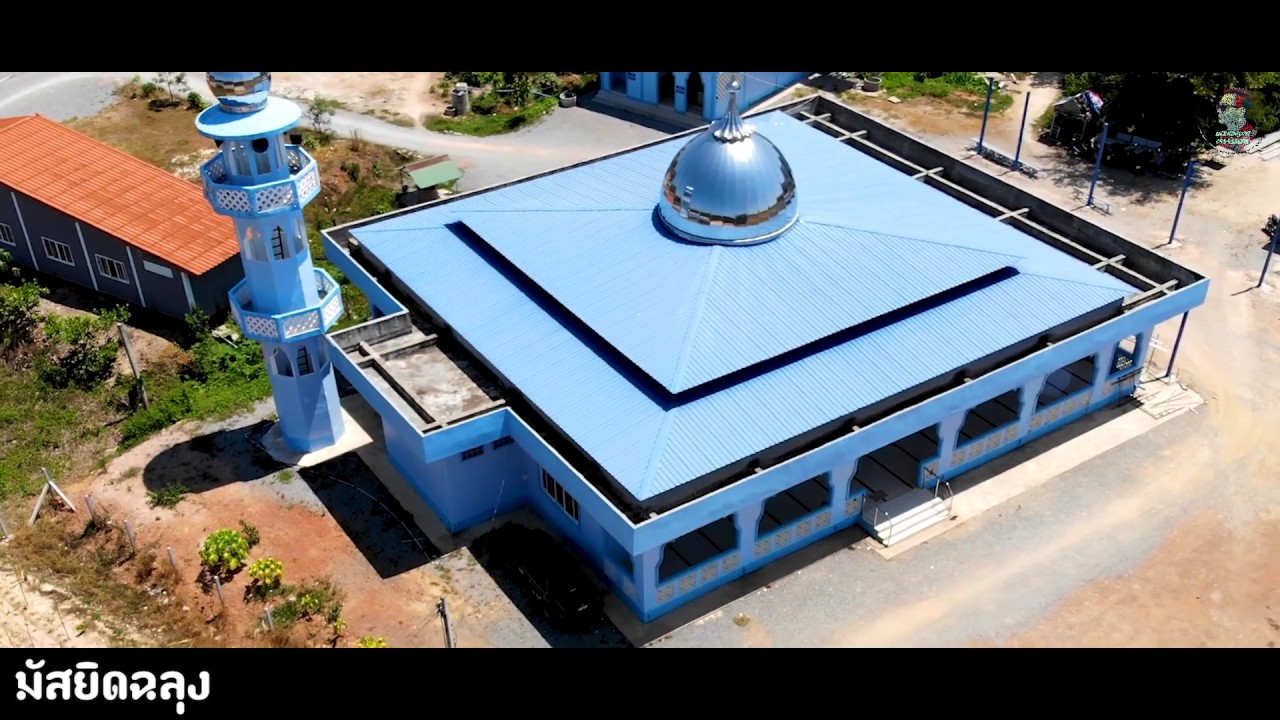
Chalung Central Mosque
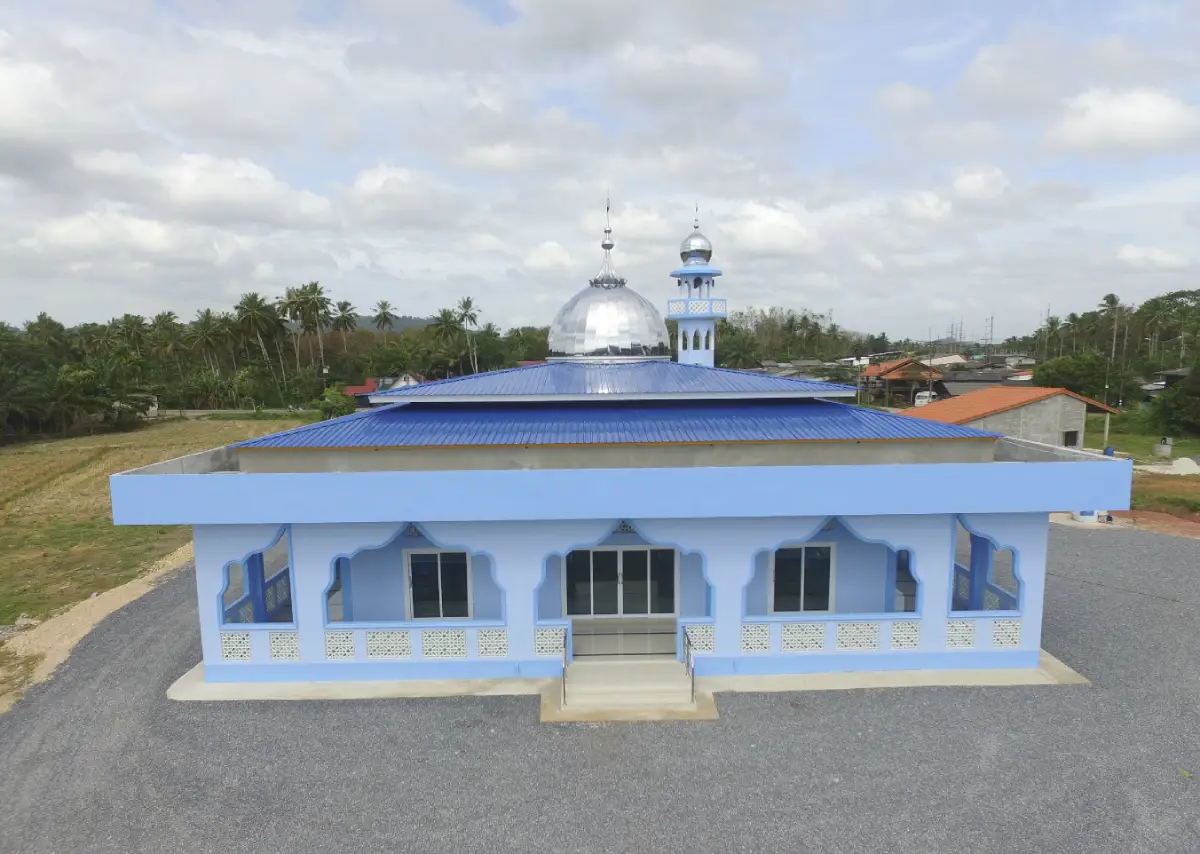
Open Days: Daily For Religious Activities
Opening Hours: Contact The Mosque Before Entering Interior Areas; Visitors Should Avoid Prayer Times
Chalung Central Mosque is an important Islamic religious site in Chalung Subdistrict, Mueang Satun District, Satun Province. It is located in Moo 4, Ban Chalung, Chalung Subdistrict, on the community route connected with Road 416. The mosque is not only a place of worship for Muslims in Chalung, but also a community center, a local Islamic learning space, and one of the cultural stops on the “One Day In Chalung” travel route. For visitors who want to understand Satun beyond beaches and islands, this mosque offers a direct view of local faith, education, community life, and multicultural coexistence.
The name “Chalung Central Mosque” clearly reflects its function. In this context, “central” refers not only to geography, but also to the mosque’s role as a gathering point for prayer, religious learning, community activities, and local Islamic identity. The mosque serves as a space where worship, education, social connection, and community responsibility meet. It is therefore both a religious building and a living social institution for the Muslim community of Chalung.
Chalung Central Mosque was registered as mosque number 005 on 3 August 1949. This early registration number shows its long-standing importance within Satun’s Muslim community network. Local tourism and community sources also describe it as a mosque with a history of more than 100 years. Its value is not limited to age. The deeper value lies in continuous use, inherited faith, community care, and the mosque’s ability to remain part of everyday religious and social life across generations.
Chalung itself is a community with strong historical and cultural character. Local information explains that the name Chalung is connected with a Malay-origin term associated with a place for catching or enclosing elephants. This background reflects a landscape once shaped by forests, elephants, old routes, settlement communities, and interaction among different groups of people. Chalung Central Mosque stands within this wider cultural landscape rather than apart from it.
From a religious perspective, the mosque functions as an active place of Islamic worship. It supports regular prayers, community gatherings, and religious occasions. For local Muslims, the mosque is a place to return to spiritual discipline and shared identity. Its importance is not limited to major events. It is created every day through the ordinary rhythm of prayer, learning, meeting, and caring for the community.
Another important role of Chalung Central Mosque is its connection with the Islamic Education Center Attached To The Mosque, commonly known in southern Thailand as a TADIKA. The information provided for this article states that TADIKA Klang Chalung has 5 teachers and 45 students. This makes the mosque more than a prayer venue. It also functions as a foundation for children and young people to learn Islamic knowledge, manners, ethics, and the cultural identity of their community.
TADIKA education is important in Muslim communities in southern Thailand. Children who study at a mosque-based Islamic education center learn not only religious practice, but also discipline, respect for elders, social responsibility, and moral conduct. Through this role, Chalung Central Mosque connects homes, families, children, teachers, and religious leaders. It helps sustain community values and passes them on to the next generation.
This educational role gives the mosque strong value for cultural travelers. A visit here is not only about looking at a building. It is about understanding how a mosque can support learning, identity, and social cohesion. In communities where religion is part of daily life, a mosque operates as a place of worship, a classroom, a meeting space, and a point of belonging at the same time.
Chalung Central Mosque has also played a visible role in Maulid and charity events. Local news has reported the event “Rin Nam Jai Su Masjid Klang Chalung 100 Years,” held to commemorate the Prophet Muhammad, support religion and local culture, strengthen unity among TADIKA groups, and encourage children, youth, and residents to follow good manners and ethical conduct. This kind of event shows that the mosque functions as a wide community platform rather than only a prayer building.
The Maulid event at Chalung Central Mosque is important both religiously and socially. It brings together religious leaders, local officials, TADIKA students, youth, families, and residents. Activities include religious talks, stage performances, cultural participation, charity support, and community gathering. For cultural tourism, this shows how faith becomes part of public life and how the mosque helps maintain social connection within the community.
The mosque’s inclusion in the “One Day In Chalung” route confirms its place in the cultural identity of the area. The route connects Wat Dulyaram, Ban Taenan, the Living House Museum of Mor Huat, traditional Khanom Ta Yap, Chalung Central Mosque, and local halal food. Together, these places allow visitors to experience Chalung through Buddhism, Islam, old houses, folk medicine, local snacks, and community food culture in one compact itinerary.
Within this route, Chalung Central Mosque represents Islamic faith and multicultural life. Wat Dulyaram represents Buddhist devotion and the story of Luang Pho Kae. Ban Taenan preserves the atmosphere of an old local house. The Living House Museum of Mor Huat introduces traditional medicine and local memory. Food stops present the taste of the community. Seeing these places together helps visitors understand Chalung as a living cultural landscape rather than a series of disconnected tourist spots.
The mosque’s architecture and physical setting are those of a functioning community mosque. Its key value is not monumental scale, but active use. It has prayer areas, activity spaces, a TADIKA learning function, and areas that support community gatherings. The beauty of this type of mosque is found in its connection with people: worshippers entering for prayer, children studying, residents gathering for Maulid, and local leaders helping maintain the mosque’s role.
Visitors who wish to photograph or view the mosque should place etiquette first. The mosque remains an active place of worship. Visitors should dress modestly, cover shoulders and knees, keep quiet, avoid walking through prayer areas during worship, and avoid photographing people without permission. Interior access should never be assumed. Visitors should ask mosque caretakers or committee members before entering interior areas.
The most appropriate time for a cultural visit is outside prayer times, especially in the morning or afternoon when no religious activity is taking place. Friday prayer periods should be avoided by general visitors because the mosque is primarily used by worshippers at that time. Those who wish to visit for educational purposes, photography, or group study should contact the mosque in advance so that the visit can be arranged respectfully.
Traveling to Chalung Central Mosque is convenient from Satun town. Visitors can travel from the town center toward Chalung Subdistrict along the main road network and continue to Moo 4, Ban Chalung. Private car, rental car, motorcycle, and local hired transport are practical options. Because Chalung has several villages and several mosques, travelers should confirm the location before departure, especially when visiting as a group.
For travelers using private transport, it is best to pin Chalung Central Mosque in Moo 4 and check the route before leaving. The latest mosque directory lists a public contact number, which can be used to ask about directions or appropriate visiting times. This is especially useful for school groups, researchers, cultural travelers, or visitors who wish to learn about TADIKA and mosque-based community education.
A cultural route in Chalung can begin at Chalung Central Mosque to learn about the Muslim community, then continue to Wat Dulyaram to pay respect to Luang Pho Kae, followed by Ban Taenan or the Living House Museum of Mor Huat. The trip can end with local halal food or traditional sweets in Chalung. This route is suitable for travelers who want a short but meaningful introduction to religion, history, old houses, food, and community life.
With more time, visitors can connect Chalung Central Mosque with cultural sites in Satun town, such as Satun Central Mosque or Masjid Mambang, Wat Chanathip Chaloem Royal Monastery, Satun National Museum at Kuden Mansion, Satun Clock Tower, Satun Street Art, and Satun Night Market. This extended route allows travelers to compare a community mosque in Chalung with the provincial central mosque in Satun town and to understand religious institutions at village, subdistrict, and provincial levels.
The interest of Chalung Central Mosque for travelers lies in its authenticity as a living community site. It is not a large landmark designed primarily for tourism. Its value comes from its religious use, its TADIKA education, its Maulid activities, its charity functions, and its role in the social fabric of Chalung. Respectful visitors can learn a great deal about local life by observing the mosque in its proper community context.
From a multicultural perspective, the mosque helps explain Satun as a province where different religious communities have long lived side by side. Muslim residents of Chalung have mosques and TADIKA centers as spiritual and educational anchors. Buddhist residents have temples and their own traditions. The wider community shares markets, food, public spaces, and local routes. Understanding Chalung therefore requires seeing these places together as parts of one cultural landscape.
From an educational perspective, Chalung Central Mosque is suitable for students, local history learners, cultural researchers, and visitors interested in Muslim communities in southern Thailand. It can be understood as a case study of a registered community mosque with a long history, mosque-based education, Maulid events, charity activities, and continuing local relevance. A respectful visit shows that a mosque is not just an architectural object, but a social structure that supports community life over time.
When writing or speaking about Chalung Central Mosque, it is important to treat it as an active religious institution rather than a general tourist attraction. Its primary function is worship and community religious life. Tourism information should therefore emphasize respect, appropriate timing, modest dress, and advance contact before entering interior spaces. This approach protects both the dignity of the mosque and the quality of the visitor experience.
Overall, Chalung Central Mosque is a meaningful stop for anyone who wants to understand Chalung and Satun through faith, education, and community life. It brings together an early mosque registration record, the role of a local Islamic center, TADIKA education, Maulid and charity events, and its place in a cultural travel route through Chalung. A visit here helps travelers see Satun as a province shaped not only by landscapes and old buildings, but also by living communities, religious continuity, and respectful multicultural coexistence.
| Name | Chalung Central Mosque |
| Thai Name | มัสยิดกลางฉลุง |
| Place Type | Mosque, Islamic Religious Site, Community Learning Space, And Mosque-Based TADIKA Education Center |
| Location | Moo 4, Ban Chalung, Chalung Subdistrict, Mueang Satun District, Satun Province |
| Address | Moo 4, Chalung Subdistrict, Mueang Satun District, Satun 91140, Thailand |
| Coordinates | 6.727166667, 100.0630278 |
| Mosque Registration | Registration Number 005 / Number 5, Registered On 3 August 1949 |
| Highlights | An old community mosque in Chalung, a center of Islamic worship and education, and one of the cultural stops on the One Day In Chalung route |
| History | Chalung Central Mosque was registered as mosque number 5 on 3 August 1949 and is described in local tourism sources as a mosque with more than 100 years of community history |
| Name Origin | The name reflects the mosque’s central role in religious practice, learning, and community activities for Muslims in Chalung Subdistrict |
| Distinctive Features | A community mosque supporting prayer, TADIKA education, Maulid events, charity activities, and local Muslim community life |
| Main Areas / Zones | Prayer Area, Mosque Activity Area, Islamic Education Center Attached To The Mosque Or TADIKA Klang Chalung, And Community Event Area For Maulid And Charity Activities |
| TADIKA Education Center | TADIKA Klang Chalung is reported to have 5 teachers and 45 students |
| Facilities | Prayer Space, TADIKA Learning Area, Community Activity Space, Mosque Committee Contact Point, And Areas Used For Religious Or Charity Events When Scheduled |
| Travel Information | From Satun town, travel toward Chalung Subdistrict along the main road network and continue to Moo 4, Ban Chalung. Private car, rental car, motorcycle, or local hired transport is recommended |
| Current Status | Still listed in the mosque directory of the Central Islamic Council of Thailand and still mentioned as an important religious site in Chalung’s cultural tourism route |
| Open Days | Daily For Religious Activities |
| Opening Hours | Contact The Mosque Before Entering Interior Areas; Visitors Should Avoid Prayer Times |
| Fees | Free Admission |
| Caretaker / Committee | Chalung Central Mosque Committee |
| Main Contact Number | 080-546-2517 |
| Nearby Tourist Attractions | 1. Wat Dulyaram / Wat Chalung, About 1 km 2. Ban Taenan, About 2 km 3. Living House Museum Of Mor Huat, About 2 km 4. Nong Plak Phraya And Khao Phraya Bangsa Wildlife Sanctuary, About 8 km 5. Satun Clock Tower, About 13 km 6. Satun National Museum, Kuden Mansion, About 14 km 7. Satun Central Mosque / Masjid Mambang, About 14 km |
| Nearby Restaurants | 1. Noor Malaysia Satun Chalung Restaurant, About 0.5 km, Tel. 093-360-9783 2. Roti Bang Bao Chalung, About 0.8 km, Tel. 083-193-6931 3. Cha Mix Chalung, About 1 km, Tel. 085-077-2118, 099-595-3136 4. Krua Muslim Paet Rio, About 1.5 km, Tel. 082-732-4059 5. Tor Tiaw Yok Sot Chalung, About 3 km 6. Krua Pla Pao Halal Chalung Satun, About 7 km, Tel. 083-608-0760 7. Junie Halal Street Food, About 8 km, Tel. 062-941-9464 |
| Nearby Accommodations | 1. Chalung House Rental, About 1 km, Tel. 089-878-7102 2. MEESUK Hotel, About 2 km, Tel. 081-907-3355 3. Peeraporn Resort Satun, About 3 km, Tel. 094-479-5191 4. Navakiri Boutique Resort Satun, About 4 km, Tel. 097-354-1642 5. Sabaidee Resort, About 5 km, Tel. 074-839-719 6. Satun Premium Resort, About 8 km, Tel. 081-896-7902 |
Frequently Asked Questions (FAQ)
Q: Where is Chalung Central Mosque located?
A: Chalung Central Mosque is located in Moo 4, Ban Chalung, Chalung Subdistrict, Mueang Satun District, Satun Province, within easy reach of Satun town by road.
Q: Why is Chalung Central Mosque important?
A: It is an old community mosque and a central place of worship for Muslims in Chalung. It also supports mosque-based Islamic education, Maulid events, charity activities, and community gatherings.
Q: When was Chalung Central Mosque registered?
A: Chalung Central Mosque was registered as mosque number 5 on 3 August 1949 and is still listed in the mosque directory of the Central Islamic Council of Thailand.
Q: What is TADIKA Klang Chalung?
A: TADIKA Klang Chalung is the Islamic education center attached to Chalung Central Mosque. It provides religious, moral, and community-based education for children and young people.
Q: Is there an admission fee?
A: There is no admission fee. Visitors should contact the mosque before entering interior areas and should follow proper mosque etiquette.
Q: Can non-Muslim visitors visit Chalung Central Mosque?
A: Non-Muslim visitors may respectfully view the exterior and learn about the mosque. Interior access should be requested from mosque caretakers or committee members, and visitors should dress modestly and avoid prayer times.
Q: How do travelers get to Chalung Central Mosque?
A: From Satun town, travel toward Chalung Subdistrict along the main road network and continue to Moo 4, Ban Chalung. Private car, rental car, motorcycle, or local hired transport is recommended.
Q: What nearby places can visitors see after Chalung Central Mosque?
A: Nearby places include Wat Dulyaram, Ban Taenan, the Living House Museum of Mor Huat, Nong Plak Phraya and Khao Phraya Bangsa Wildlife Sanctuary, Satun Clock Tower, Kuden Mansion, and Masjid Mambang.
 Category: ●Places of Worship
 Group: ●Mosque
Last Update : 2 MonthAgo
 Last Update : 2 MonthAgo
 Click to Access the Navigation Map GPS
Chalung Central Mosque Map
Recommend

 Art, Culture and Heritage
 Historical Sites and Monuments(1)
 Landmarks and Memorials(1)
 Art, Craft Centres, Tradition(5)
 Museums(3)
 Temple(3)
Mosque(27)
 Other Sacred Sites(1)
 Suburban Living
 Village, Community(1)
 Local Market(2)
 Nature and Wildlife
 National Parks and Marine Reserves(7)
 Mountain (Doi)(1)
 Dam, Reservoir, Lake(2)
 Waterfalls(9)
 Hot Springs(1)
 Caves(9)
 Bays and Beaches(10)
 Islands(16)
 Other natural attractions(5)
 Entertainment and Agricultural
 Zoos and Aquariums(1)
 Farms, Parks and Ecotourism(4)
 Outdoor and Adventure Activities(1)
 Travel Articles, Recipes
 Travel Review, Food Review(1)


