
lovethailand home >Central Travel Attractions >Bangkok Travel Attractions > 71 Zoos and Wildlife Attractions in Thailand
TL;DR: 71 Zoos and Wildlife Attractions in Thailand, open Daily Opening Hours: 08:00–18:00, hours 08:00–17:00. Highlights include Telephone.
71 Zoos and Wildlife Attractions in Thailand
71 Zoos and Wildlife Attractions in Thailand: Government Zoos, Private Zoos, Open Zoos and Safari Parks invites travelers to explore the fascinating world of animals through 71 wildlife-related attractions across Thailand. This comprehensive collection features major government-operated zoos, private zoos, open zoos, safari parks, tiger parks, bird parks, aquariums, wildlife conservation centers, and specialized animal learning facilities throughout the country. These destinations offer a wide range of experiences for families with children, students interested in nature and wildlife, and travelers looking for enjoyable outdoor activities combined with opportunities to learn about animals.
Thailand offers many different types of animal attractions, each with its own characteristics and visitor experiences. Notable examples include Khao Kheow Open Zoo in Chon Buri, known for its spacious animal habitats surrounded by nature; Chiang Mai Zoo, located at the foothills of Doi Suthep; Nakhon Ratchasima Zoo, with its safari-inspired atmosphere; and Songkhla Zoo, set among hills and tropical greenery. Khon Kaen Zoo and Ubon Ratchathani Zoo are also important wildlife learning destinations in northeastern Thailand. Other popular attractions include Safari World in Bangkok, Chiang Mai Night Safari, Safari Park Open Zoo in Kanchanaburi, and Bonanza Exotic Zoo in Khao Yai, each offering a different approach to animal encounters and family-friendly activities.
Visiting a zoo is about more than seeing rare or exotic animals. It also provides an opportunity to learn about animal behavior, life cycles, adaptations, and the relationships between living organisms and their environments. Visitors can discover mammals, birds, reptiles, aquatic species, and smaller animals through a variety of exhibits and educational experiences. Activities range from walking through designated animal habitats and taking safari vehicle tours to exploring underwater tunnels and participating in conservation-focused learning programs that encourage a deeper appreciation of biodiversity.
For families planning a zoo visit, choosing a destination that suits the ages and interests of everyone in the group is important. Some zoos are large enough to explore for an entire day, while smaller animal parks and specialized learning centers are better suited to half-day excursions. Travelers should also consider transportation, opening hours, admission fees, visitor facilities, and safety regulations, particularly when activities involve large animals or predators. Planning ahead helps ensure a comfortable, safe, and enjoyable experience for everyone.
This guide brings together 71 zoos and wildlife-related attractions across Thailand, with information about their highlights, featured animals, activities, transportation, and directions. The collection includes government-operated zoos, private zoos, open zoos, safari parks, and other animal-focused destinations. Some locations are animal farms, aquariums, or conservation centers rather than conventional licensed zoological parks. They are included as additional options for travelers interested in wildlife, nature, and educational experiences, helping visitors choose destinations that match their interests and plan their journeys throughout Thailand.

1. Khao Kheow Open Zoo, Chon Buri Province is located in Bang Phra Subdistrict, Si Racha District. It is one of Thailand's largest and best-known open zoos, surrounded by mountains, forests, and extensive green landscapes. Its defining feature is the presentation of animals in spacious habitats designed to resemble their natural environments, allowing visitors to observe animal behavior from appropriate viewing areas while learning about wildlife and the importance of healthy ecosystems.
Khao Kheow Open Zoo is operated by the Zoological Park Organization of Thailand under Royal Patronage. Its responsibilities include animal care, wildlife education, and the conservation of biodiversity. The development of the site as an open zoo creates a learning experience that differs from smaller urban zoos. Visitors can observe animals in relatively extensive exhibition areas where natural landscape features are an important part of the surroundings.
The zoo houses a wide variety of animals, including mammals, birds, reptiles, and species originating from different regions of the world. Popular animals include giraffes, zebras, elephants, tigers, hippopotamuses, and numerous herbivorous species. Observing these animals offers an opportunity to understand differences in body structure, movement, feeding habits, and adaptation to different habitats.
Giraffes are particularly recognizable for their long necks and legs, which allow them to reach leaves high in trees. Zebras and many other hoofed animals demonstrate group-living behavior, while predators have physical features and sensory abilities adapted to hunting. By observing such different animal groups, children and adults can develop a better understanding of the relationship between physical characteristics and survival in the wild.
Visitors can enjoy walking through the various animal zones, using the zoo's sightseeing transportation, attending educational activities presented by animal keepers, and participating in animal-feeding experiences in designated areas. These activities provide opportunities to learn about animal behavior and the responsibilities involved in caring for wildlife.
Because the zoo covers a large area, visitors should review the map and plan their route before beginning their visit, especially when traveling with young children or elderly family members. Using the sightseeing transportation can save time and reduce fatigue when traveling between exhibits that are located some distance apart.
Arriving in the morning is a good choice for visitors who want to explore several zones in one day. It allows more time for animal observation and activities, while the morning weather is generally more comfortable for outdoor exploration than the afternoon heat. Wildlife photography enthusiasts should use designated viewing locations and avoid disturbing the animals while taking photographs.
Highlights: Large open zoo, wildlife from different regions, extensive natural surroundings, educational animal activities, sightseeing transportation, and family-friendly recreation.
Open Days: Daily Opening Hours: 08:00–18:00
Admission Fees: Thai visitors: adults THB 200, children aged 3–12 THB 40. International visitors: adults THB 350, children aged 3–12 THB 120. Children under 3, visitors aged 60 and above, and visitors with disabilities are eligible for free admission under the zoo's conditions. Vehicle entry fees are THB 80 for cars, THB 40 for motorcycles, and THB 100 for buses. Additional activities and services may involve separate charges.
Getting There: From Bangkok, take Motorway 7 toward Chon Buri and Si Racha, then follow the signs toward Bang Phra and the zoo. Alternatively, travel along Sukhumvit Road through Bang Phra and continue on the connecting road to the zoo. A private car or rental car is convenient because the destination lies outside the main urban area and the zoo grounds are extensive.
Map (GPS):Get Directions to Khao Kheow Open Zoo

2. Chiang Mai Zoo, Chiang Mai Province is situated on Huay Kaew Road in Suthep Subdistrict, Mueang Chiang Mai District, at the foothills of Doi Suthep. It is an important wildlife attraction in northern Thailand with a long history of welcoming both Thai and international visitors. The zoo is distinguished by its hilly terrain and wooded setting, which create a natural atmosphere quite different from that of zoos built on flat land.
The history of Chiang Mai Zoo is associated with the development of an animal care and exhibition area in Chiang Mai that subsequently expanded into a major zoological park with many different animal exhibits. Today, the zoo plays an important role in tourism, education, wildlife awareness, and environmental learning.
The grounds follow the gently rising and falling terrain of the Doi Suthep foothills, with walking paths and connecting routes between different zones. Visitors can enjoy mature trees and green landscapes while exploring the exhibits, making the zoo appealing to those who appreciate wildlife as well as outdoor recreation.
The zoo features animals from several regions of the world, including mammals, birds, reptiles, and aquatic species. Visitors can learn about their physical characteristics, feeding behavior, movement, and adaptations to different environments. Seeing a range of animal groups also helps explain the diversity of living organisms and their relationships within ecosystems.
Learning about herbivores and predators can help children understand food chains in nature. Different animal groups possess teeth, claws, and behavioral adaptations suited to their diets. Birds and reptiles provide further examples of ways of life that differ from those of mammals.
Families with young children should select exhibits according to their interests while taking the slopes of the walking routes into account. Some parts of the zoo require walking uphill or downhill. Available visitor transportation and other services may help make the experience more comfortable, particularly for elderly travelers and families using strollers.
Visitors should allow at least half a day to explore the zoo. Those interested in special exhibits should check admission conditions and opening hours in advance, as certain activities and buildings may require separate tickets. Starting in the morning leaves sufficient time for both educational activities and relaxation.
Its location on Huay Kaew Road also makes Chiang Mai Zoo easy to combine with a sightseeing itinerary that includes Doi Suthep and other attractions around Chiang Mai. Visitors can enjoy wildlife experiences alongside natural and cultural attractions in a single day, provided that travel times and traffic conditions are taken into account.
Highlights: Zoo at the foothills of Doi Suthep, rolling terrain, shaded green spaces, diverse animal exhibits, and educational nature activities for families.
Open Days: Daily Opening Hours: Generally 08:00–18:00. Special exhibits may have different operating hours.
Admission Fees: Thai visitors: adults THB 130, children aged 3–12 THB 40. International visitors: adults THB 350, children THB 120. Children under 3, visitors aged 60 and above, and visitors with disabilities qualify for free admission under the zoo's conditions. Special exhibits, the aquarium, and sightseeing transportation may require additional payment.
Getting There: From Chiang Mai city center, follow Huay Kaew Road toward Doi Suthep. Continue past the Chiang Mai University area to reach the zoo entrance. Visitors can travel by private car, rental car, taxi, or local public transportation operating along Huay Kaew Road.
Map (GPS):Get Directions to Chiang Mai Zoo
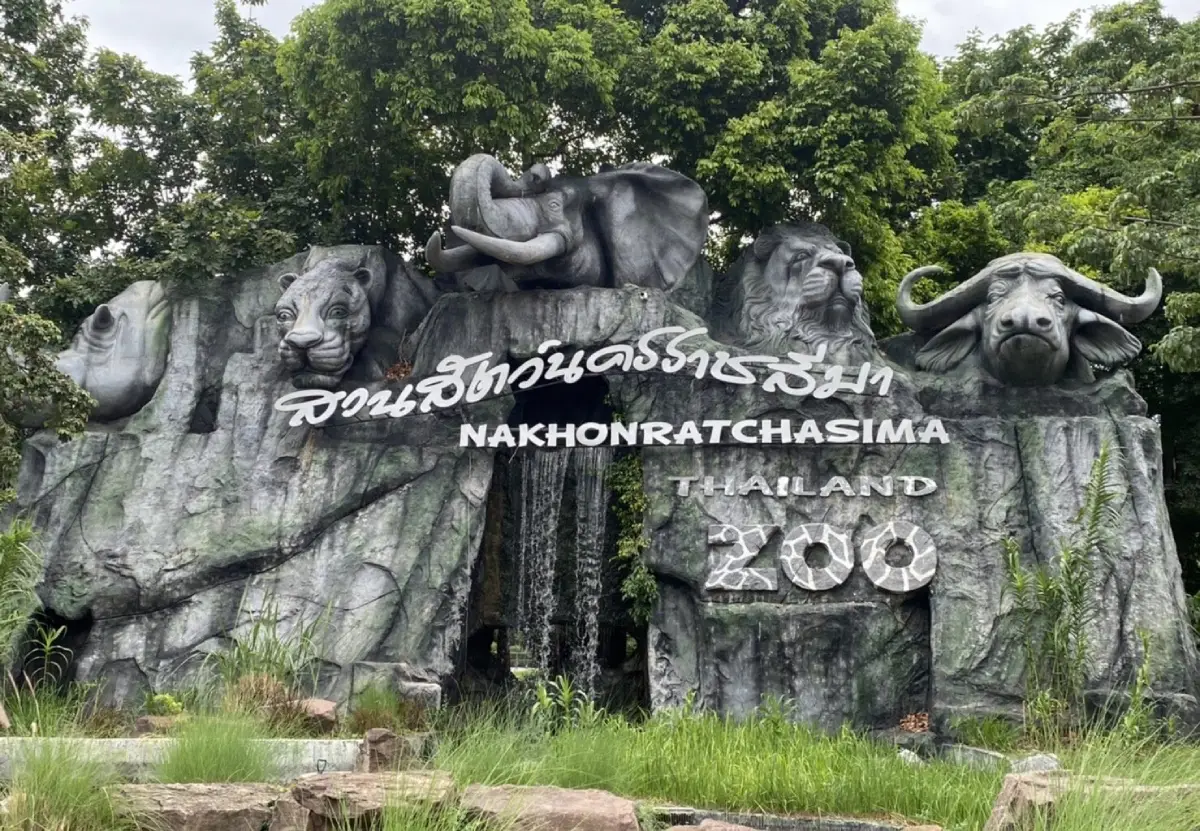
3. Nakhon Ratchasima Zoo, Nakhon Ratchasima Province is located in Chai Mongkhon Subdistrict, Mueang Nakhon Ratchasima District. It is an important wildlife learning destination in northeastern Thailand, developed as both a zoological park and a recreational attraction for families. Its defining features include extensive grounds and animal exhibits with a safari-inspired atmosphere, including species native to Africa and other parts of the world.
The zoo is operated by the Zoological Park Organization of Thailand under Royal Patronage. Its responsibilities include tourism, animal care, wildlife education, and conservation. Exhibits featuring different animal groups allow visitors to learn about herbivores, predators, and reptiles during a single visit.
African herbivores are among the animals that attract considerable interest, particularly giraffes and zebras. Giraffes have long necks that enable them to feed on vegetation growing high above the ground, while zebras are recognized by their distinctive stripes and social group behavior. Observing these animals helps visitors understand adaptations associated with life in grassland ecosystems.
The predator exhibits provide opportunities to learn about food chains and the ecological role of carnivorous animals. Predators possess physical and sensory adaptations associated with hunting, which differ from the characteristics of many herbivores that depend on group behavior and vigilance to avoid danger.
Reptiles are another interesting group because their methods of regulating body temperature and their general way of life differ from those of mammals. Visitors can explore the connections between environmental conditions and animal behavior while developing a better understanding of why different species require protection in their natural ecosystems.
In addition to wildlife exhibits, the zoo has recreational facilities for families, including a water park that operates as an additional attraction. Families may choose to spend the morning exploring animal exhibits before relaxing or enjoying optional activities later in the day.
As the grounds are relatively extensive, visitors should plan their route and allow sufficient time to travel between exhibition zones. Families with small children and elderly travelers should check the availability of sightseeing transportation and visitor facilities to make their visit more comfortable and convenient.
The zoo's location within Mueang Nakhon Ratchasima District makes it suitable for a day trip from the city and surrounding provinces. It can also be included in a wider Nakhon Ratchasima itinerary, especially for visitors seeking an attraction that combines education, nature, and family recreation.
Highlights: Safari-style zoo in northeastern Thailand, giraffes, zebras, African wildlife, predators, reptiles, family activities, and a water park.
Open Days: Daily Opening Hours: 08:00–17:00
Admission Fees: Thai visitors: adults THB 130, children aged 3–12 THB 40. International visitors: adults THB 350, children THB 120. Children under 3, visitors aged 60 and above, and visitors with disabilities are eligible for free admission under the zoo's policies. The water park and some additional activities require separate payment.
Getting There: From central Nakhon Ratchasima, follow the Nakhon Ratchasima–Pak Thong Chai Road toward Chai Mongkhon Subdistrict and continue along the signposted route to the zoo. Visitors can travel by private car, rental car, or hired vehicle from the city.
Map (GPS):Get Directions to Nakhon Ratchasima Zoo
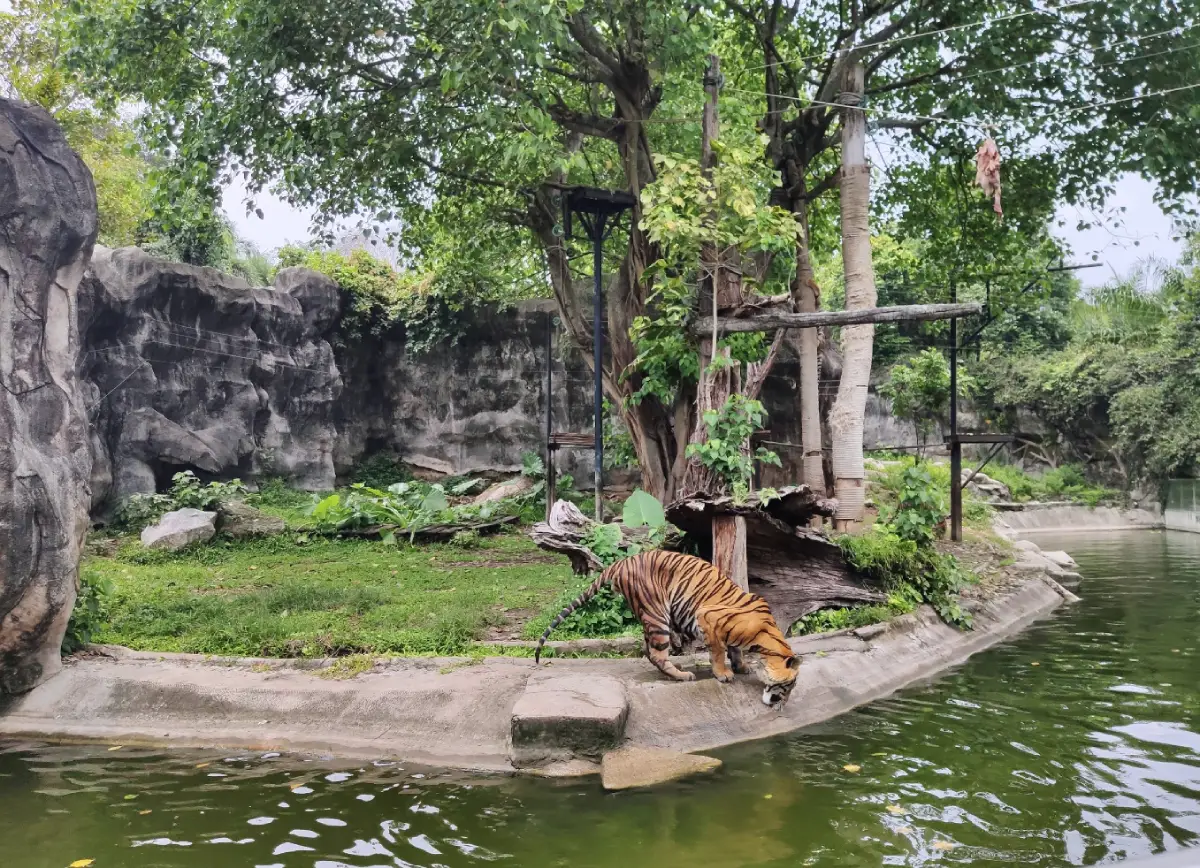
4. Songkhla Zoo, Songkhla Province is situated along Songkhla–Na Thawi Road in Khao Rup Chang Subdistrict, Mueang Songkhla District. It is an important wildlife attraction in southern Thailand, distinguished by its hilly terrain and tropical forest setting. The zoo is surrounded by trees and natural landscapes, making it an appealing destination for families who want to observe animals while enjoying outdoor recreation.
The hilly landscape creates a distinctive setting for animal exhibits and nature-viewing routes. As visitors move between different zones, they can experience changing views and surroundings, with green spaces forming an important part of the overall visit.
The zoo houses different animal groups, including mammals, birds, and other species. Visitors can learn about their behavior, movement, and physical characteristics. Exploring the exhibits combines recreation with opportunities to learn about biology and the natural world.
Tropical forests provide vital habitats for many wildlife species, offering food, water, and shelter. Learning about the relationships between animals and forests helps visitors recognize that wildlife conservation must go hand in hand with the protection of natural habitats.
For children and young people, observing living animals offers a direct introduction to biodiversity. They can compare herbivores and carnivores, recognize social behavior in different species, and study how animals move. Learning through firsthand observation can encourage a lasting interest in environmental conservation.
The zoo's hillside setting is also attractive for its scenery and natural atmosphere. Photography enthusiasts can take pictures of animals and surrounding landscapes from designated viewing points, provided they avoid loud noises and flash photography in areas where these may disturb the animals.
Families should allow enough time for walking and resting, especially during hot or rainy weather. Comfortable outdoor footwear, drinking water, and an umbrella or raincoat are useful items to bring for a more enjoyable visit.
Located within easy reach of Songkhla city, the zoo can be combined with cultural attractions and natural landmarks around the city. It is a suitable choice for travelers who want to devote a day to wildlife learning and discovering the landscapes of southern Thailand.
Highlights: Hillside zoo, tropical forest atmosphere, diverse animal exhibits, scenic viewpoints, and wildlife education activities.
Open Days: Daily Opening Hours: 08:30–16:30
Admission Fees: Thai visitors: adults THB 130, children aged 3–12 THB 40. International visitors: adults THB 350, children THB 120. Children under 3, visitors aged 60 and above, and visitors with disabilities are eligible for free admission under the zoo's conditions. Additional activities or services may involve separate charges.
Getting There: From Songkhla city center, take Songkhla–Na Thawi Road toward Khao Rup Chang Subdistrict and follow the zoo signs. Travelers arriving from Hat Yai can follow the connecting roads toward Mueang Songkhla District before continuing to Songkhla–Na Thawi Road. A private car, rental car, or hired vehicle is a convenient option.
Map (GPS):Get Directions to Songkhla Zoo
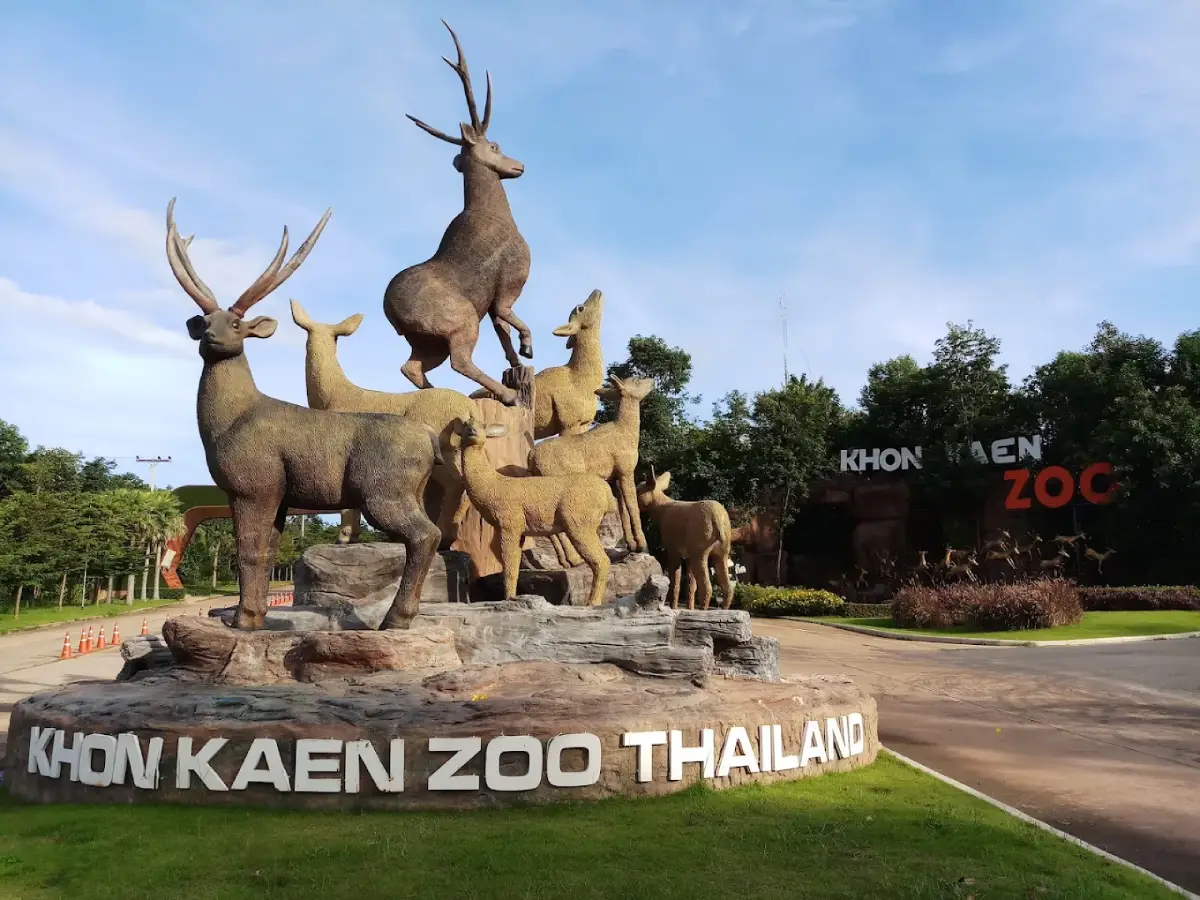
5. Khon Kaen Zoo, Khon Kaen Province is located at 88 Moo 8, Kham Muang Subdistrict, Khao Suan Kwang District. It is an important wildlife attraction and environmental education center in upper northeastern Thailand. The zoo is known for its hilly terrain and natural forest setting, where the landscape of Khao Suan Kwang has been incorporated into animal exhibits and recreational areas for visitors.
The development of the zoo originated from the Upper Northeastern Wildlife Park Project for Khon Kaen and Udon Thani, which aimed to promote wildlife and natural resource conservation. A cooperation agreement involving the relevant organizations was signed on April 27, 2009. The zoo initially opened informally on January 9, 2010, before beginning official ticketed admission on June 28, 2013.
The central concept behind the zoo was to create an educational destination connecting forest conservation, wildlife protection, and tourism. The natural setting around Khao Suan Kwang is therefore an important part of the zoo's atmosphere and helps promote understanding of the relationship between people and natural resources.
One of its best-known attractions is Thung Saen Kwang, an extensive exhibition area for deer and other hoofed animals. Visitors can observe herd behavior, feeding, and movement while enjoying the surrounding landscape from designated walkways and viewing points.
Observing deer and related species provides opportunities to learn about differences in body size, antler shape, feeding habits, and survival behavior. These herbivores play important ecological roles through grazing, seed dispersal, and their position within natural food chains.
Beyond the deer exhibits, the zoo also features animals from other regions of the world, including African herbivores, predators, reptiles, and native Thai wildlife. The range of animal exhibits gives children and adults the opportunity to compare body structures, behavior, and habitats.
The hilly forest landscape makes exploring the zoo a different experience from visiting a typical urban zoo. Guests can enjoy green spaces, scenic viewpoints, and connecting routes between the various animal zones.
Thale Bon Phu Water Park is another recreational feature within the grounds. Families can combine wildlife viewing with water-based activities, although they should check the water park's operating schedule and separate admission charges in advance.
The zoo's location along the travel corridor between Khon Kaen and Udon Thani makes it suitable for day trips from either province. Travelers arriving by private car can also stop to enjoy Khao Suan Kwang grilled chicken, a well-known local specialty, during their journey.
Highlights: Thung Saen Kwang deer exhibit, elevated animal-viewing walkways, wildlife from several continents, Khao Suan Kwang's hilly landscapes, natural viewpoints, and Thale Bon Phu Water Park.
Open Days: Daily, including public holidays Opening Hours: 08:30–16:30
Admission Fees: Thai visitors: adults THB 130, children aged 3–12 THB 40. International visitors: adults THB 350, children THB 120. Children under 3, visitors aged 60 and above, and visitors with disabilities qualify for free admission under the zoo's conditions. Additional charges apply to the water park and certain optional activities.
Getting There: From central Khon Kaen, take Highway 2, also known as Mittraphap Road, toward Udon Thani. Turn onto the route leading to Khao Suan Kwang District and follow signs to the zoo. Travelers coming from Udon Thani can take Mittraphap Road toward Khon Kaen before turning onto the connecting road to the zoo.
Map (GPS):Get Directions to Khon Kaen Zoo
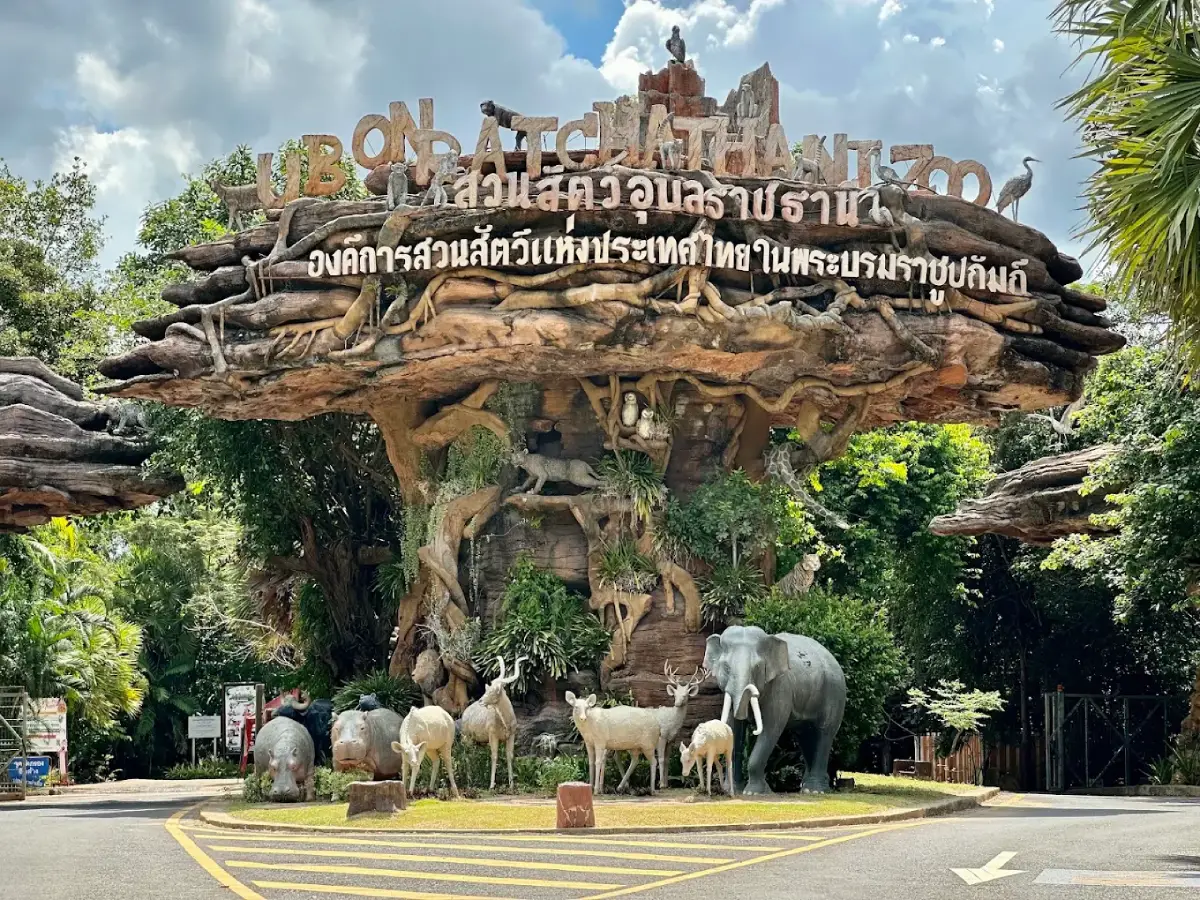
6. Ubon Ratchathani Zoo, Ubon Ratchathani Province is located at 112 Moo 17, Kham Yai Subdistrict, Mueang Ubon Ratchathani District. The zoo is distinguished by its Jungle Park concept, which combines a forest environment with wildlife exhibits and nature-based educational activities. It is a suitable destination for families seeking relaxation in green surroundings alongside opportunities to learn about wild animals.
The zoo's landscape is closely connected to Dong Fa Huan Forest, which forms an important part of the surrounding environment. Trees and natural areas contribute to the shaded atmosphere, while the animal exhibits have been developed to support wildlife education and an understanding of ecosystems.
The importance of Ubon Ratchathani Zoo extends beyond tourism. It also contributes to wildlife conservation awareness and animal care education. Visitors can learn about the role of forests as sources of food, water, and shelter for wild animals, as well as the importance of protecting biodiversity.
The zoo features a variety of animals, including mammals, birds, herbivores, and other species. Visitors can learn about differences between animal groups by observing their movement, feeding, and resting behavior. These observations can be connected to broader knowledge of biology and natural science.
The Jungle Park concept highlights the importance of suitable environments for wildlife. Different species have different requirements regarding space, temperature, moisture, and food. Designing animal habitats therefore involves considering their natural behavior and welfare alongside other factors.
For children and young people, visiting the zoo encourages learning about ecosystems and animal diversity. Seeing live animals provides opportunities to observe differences in physical characteristics and understand why conserving forests and water sources is essential for the survival of wildlife.
The zoo offers tram services that help visitors travel between different animal exhibits. These are particularly convenient for families with young children and elderly visitors. Taking the tram can reduce the amount of walking required and make it easier to plan an efficient route through the zoo.
The natural atmosphere is another important attraction, offering visitors an opportunity to escape the pace of everyday life. Traveling through green spaces and visiting different animal exhibits creates an experience that combines learning with relaxation.
Located in Mueang Ubon Ratchathani District, the zoo is suitable for a day trip from the city. Visitors are advised to arrive in the morning to allow sufficient time for sightseeing and to bring drinking water, a hat, and comfortable outdoor footwear.
Highlights: Jungle Park concept, Dong Fa Huan Forest surroundings, tram tours, wildlife education, and family activities.
Open Days: Daily, including public holidays Opening Hours: 08:30–16:30
Admission Fees: Thai visitors: adults THB 130, children aged 3–12 THB 40. International visitors: adults THB 350, children THB 120. Children under 3, visitors aged 60 and above, and visitors with disabilities qualify for free admission under the zoo's conditions. Tram services and certain activities may involve additional charges.
Getting There: From Ubon Ratchathani city center, travel toward Kham Yai Subdistrict along the main connecting roads and follow the signs to the zoo. Visitors can use a private car, rental car, or hired vehicle.
Map (GPS):Get Directions to Ubon Ratchathani Zoo

7. Chiang Mai Night Safari, Chiang Mai Province is located in Nong Khwai Subdistrict, Hang Dong District. This safari-style wildlife attraction is particularly known for its evening and nighttime animal-viewing activities, which allow visitors to discover animal behavior at times that differ from conventional daytime zoo visits. This is especially interesting for animals that become more active or begin searching for food as natural daylight fades.
One of the main attractions is the guided tram safari, which takes visitors through animal exhibition areas while providing information about the characteristics and behavior of different species. Viewing animals during the evening and at night offers a different experience from daytime sightseeing because lighting conditions, atmosphere, and animal activity change throughout the day.
The Savanna Safari zone focuses on herbivorous animals associated with grassland habitats, including giraffes and hoofed animals from different regions. Observing these species helps visitors understand herd behavior, feeding patterns, and movement across open landscapes, all of which are important aspects of life for many wild herbivores.
Predator Prowl is an area dedicated to learning about carnivorous animals and their important roles in food chains. Visitors can explore the characteristics of these animals, including their vision, hearing, sense of smell, and behavior associated with hunting and survival.
In addition to tram safaris, the Jaguar Trail provides a walking route where visitors can observe animals and enjoy a natural atmosphere. This area offers opportunities to spend time learning about individual species at a comfortable pace while following the posted guidelines and safety regulations.
Learning about nocturnal animal behavior helps explain how different species adapt to changing light conditions and activity periods. Some animals have eyesight suited to low-light environments, while others rely heavily on their sense of smell or hearing to locate food and communicate. Evening wildlife viewing is therefore an interesting opportunity to explore animal biology.
Chiang Mai Night Safari is suitable for families, couples, and groups of friends looking for an evening activity after visiting other attractions during the day. Families traveling with young children should choose a safari departure time that fits their children's normal sleeping schedule and check tram operating times before arriving.
Visitors interested in nighttime wildlife photography should avoid flash photography in restricted areas because sudden light and noise may disturb the animals. Quiet observation and compliance with staff instructions help maintain an appropriate learning environment while reducing disturbances to animals in the exhibits.
Highlights: Nighttime tram safaris, Savanna Safari, Predator Prowl, Jaguar Trail, and educational experiences focusing on nocturnal animal behavior.
Open Days: Daily Opening Hours: 11:00–22:00. Ticket sales close at 21:00. Tram departures and individual activities follow their own schedules.
Admission Fees: Published standard nighttime admission rates are THB 300 for Thai adults and THB 150 for Thai children. International admission is THB 800 for adults and THB 400 for children. Separate tickets for individual zones and online promotions may also be available. Children under 100 cm in height enter free of charge, while visitors aged 60 and above receive a 50% discount under the attraction's conditions.
Getting There: From Chiang Mai city center, travel toward Hang Dong District through the Mae Hia area and continue to Nong Khwai Subdistrict, following the signs to Chiang Mai Night Safari. Private cars, rental cars, and hired vehicles are suitable options. Allow enough travel time to arrive before the scheduled activity or tram departure you wish to join.

8. Safari World, Bangkok is located at 99 Panya Intra Road, Sam Wa Tawan Tok Subdistrict, Khlong Sam Wa District. It is a popular safari and zoological attraction among Thai and international visitors, offering an experience that combines driving through open animal habitats with walking through wildlife exhibition areas and participating in various scheduled activities.
The attraction is divided into two main sections, Safari Park and Marine Park, each offering a different visitor experience. Safari Park focuses on viewing animals from vehicles in an open environment, while Marine Park provides walking routes, animal exhibits, and activities scheduled throughout the day. This arrangement allows visitors to plan their itinerary according to their interests and available time.
Safari Park features animals from different regions of the world, including giraffes, zebras, deer, and other species suited to open-habitat exhibitions. Visitors can observe wildlife from their own vehicles or from designated sightseeing vehicles along established routes, creating a perspective that differs from walking past conventional animal enclosures.
Viewing animals in open habitats allows visitors to observe herd movements, feeding, resting, and social behavior. These experiences can help explain relationships between animals and their environments, including the importance of adequate living space for large herbivorous species.
Marine Park contains various animal exhibits and scheduled activities for visitors. Guests can organize their time to explore the different areas and participate in activities of interest. Reviewing the daily schedule before beginning a visit is useful for ensuring that preferred activities are not missed.
Safari World is suitable for families seeking a full day of shared activities because it combines vehicle-based wildlife viewing with walking routes and other attractions. Children can discover differences between animal groups through direct observation, while adults can enjoy the exhibits and recreational experiences.
Visitors should begin planning by checking the activity schedules and opening hours of individual zones. Families with young children should allow time for rest and meals and select a route appropriate for the weather because some parts of the attraction are outdoors.
Safety regulations must be followed strictly when visiting the safari area. Visitors should not leave vehicles in unauthorized areas, open vehicle doors in restricted zones, or feed animals without permission. Some animals are large and powerful and may move unexpectedly.
Its Bangkok location makes Safari World convenient for a day trip, particularly for families who prefer not to travel to another province. Nevertheless, visitors should allow sufficient time for traffic and potentially larger crowds during weekends and public holidays.
Highlights: Safari Park vehicle tours through open wildlife habitats, Marine Park animal exhibits and scheduled activities, animals from different regions of the world, and family-friendly attractions.
Open Days: Tuesday–Sunday and public holidays. Normally closed on Mondays. Opening Hours: Weekdays 09:00–16:30; weekends and holidays 09:00–17:00.
Admission Fees: Thai visitors: combined Safari Park and Marine Park tickets THB 800 for adults and THB 700 for children; Marine Park only THB 650 for adults and THB 550 for children; Safari Park only THB 500 for adults and THB 400 for children. International visitors: combined tickets THB 1,500 for adults and THB 1,400 for children; Marine Park only THB 1,300 for adults and THB 1,100 for children; Safari Park only THB 1,000 for adults and THB 900 for children. Sightseeing transportation and special activities may require additional payment.
Getting There: From central Bangkok, travel along Ram Inthra Road and connecting routes toward Panya Intra Road, continue into Khlong Sam Wa District, and follow the signs to Safari World. Private cars, rental cars, and hired vehicles are convenient options. Check traffic conditions before departure, especially on weekends.
Map (GPS):Get Directions to Safari World
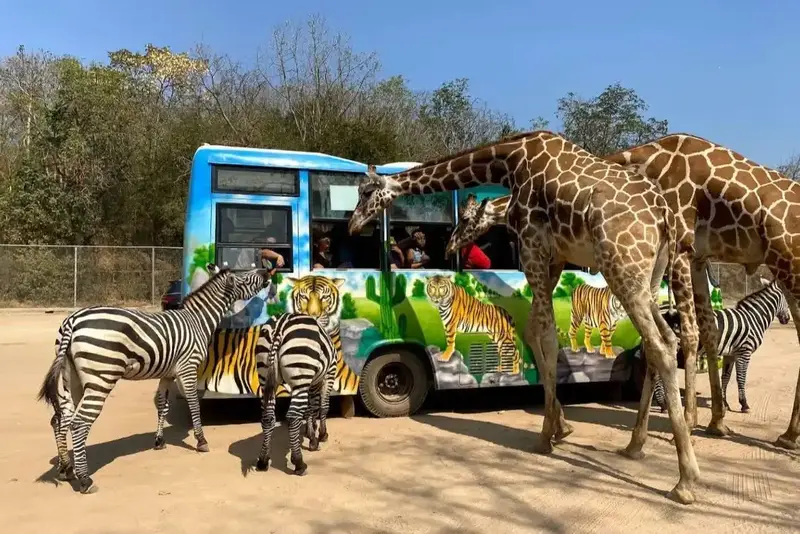
9. Safari Park Kanchanaburi, Kanchanaburi Province is located at 40/2 Nong Kum Subdistrict, Bo Phloi District. It is an open zoo particularly known for vehicle-based safari tours, allowing visitors to observe animals from sightseeing vehicles along designated routes. The park features a variety of animals in open surroundings, providing an opportunity to learn about wildlife in a safari-style environment.
Animals that attract considerable attention include giraffes, zebras, deer, and other species with different characteristics and ways of life. Traveling through the park in a sightseeing vehicle offers a perspective that differs from observing animals through conventional cages or glass barriers.
Giraffes are distinguished by their long necks and impressive height, making them interesting examples of adaptations related to feeding. Zebras are recognized by their black-and-white stripes and herd behavior, while other hoofed species demonstrate the diversity of herbivorous animals living in grassland ecosystems.
Vehicle-based animal viewing is suitable for families with young children because visitors do not need to walk long distances throughout the experience. Parents can use the journey to explain animal behavior, feeding habits, and the differences between herbivores and carnivores.
Animals living in open exhibition areas display various forms of behavior, including feeding, resting, walking, and gathering in groups. Visitors can observe differences between species and discover how physical characteristics and movement relate to the environments in which animals live.
Safety is particularly important during safari activities. Visitors should follow staff instructions, avoid touching animals without permission, and only feed animals as part of approved activities. These measures help prevent accidents and minimize disruption to the animals.
Wildlife photography enthusiasts can take photographs from approved viewing areas and during permitted activities. However, safety should always take priority over approaching animals for photographs. Maintaining an appropriate distance reduces disturbance and supports a more natural viewing experience.
The park can be incorporated into a wider Kanchanaburi itinerary alongside the province's natural and historical attractions. Visitors should allow sufficient time for travel and scheduled safari tours. Those interested in special activities should check the details and additional charges before arriving.
Highlights: Guided vehicle safaris, giraffes, zebras, various herbivorous animals, open zoo surroundings, and family-oriented wildlife learning activities.
Open Days: Daily Opening Hours: 09:00–17:00
Admission Fees: From September 1, 2026, published admission rates are THB 250 for Thai adults and THB 150 for Thai children measuring 90–120 cm in height. International visitors pay THB 550 for adults and THB 350 for children measuring 90–120 cm. Children under 90 cm enter free of charge. Special activities and additional services may involve separate fees.
Getting There: From Kanchanaburi city center, follow the main road toward Bo Phloi District and continue to Nong Kum Subdistrict, following the signs to Safari Park Open Zoo. Private cars and rental cars are convenient options. Travelers arriving from Bangkok can first travel to Kanchanaburi before continuing toward Bo Phloi District.

10. Bueng Chawak Chaloem Phrakiat, Suphan Buri Province is situated in Doem Bang Nang Buat District, near the boundary with Hankha District in Chai Nat Province. It is an important nature attraction and educational destination in central Thailand. The site is centered on a large natural freshwater lake developed into a recreational area, conservation destination, and learning center for freshwater ecosystems, aquatic species, and several kinds of wildlife.
One of its most distinctive features is the combination of a natural wetland environment with educational attractions developed for public visitors. This allows travelers to study aquatic animals, wildlife, and the importance of wetlands while enjoying recreational activities at the same location.
Wetlands play an essential role in supporting biodiversity because they provide habitats for fish, waterbirds, aquatic plants, and numerous small animals. They also contribute to water storage and support the livelihoods of surrounding communities. Learning about such ecosystems helps visitors appreciate the importance of maintaining healthy natural waterways.
The aquarium is one of Bueng Chawak's major attractions, featuring freshwater and marine species in several exhibition areas. Visitors can observe different aquatic animals and study their body shapes, movement, and behavior through tanks of varying sizes. This creates an engaging introduction to underwater life.
The underwater viewing tunnel is another popular highlight. It allows visitors to observe aquatic animals from perspectives not normally available through standard display tanks. Walking through the glass tunnel creates an atmosphere resembling an underwater environment and is particularly enjoyable for families with children.
The freshwater and marine exhibits help visitors understand how aquatic species adapt to different environments. These adaptations can be seen in the body shapes, fins, coloration, and swimming behavior of fish, which are related to feeding, escaping predators, and surviving in their habitats.
In addition to aquatic animals, the attraction includes wildlife exhibits, large bird enclosures, and areas featuring other animal species. Visitors can therefore explore land animals, aquatic species, and birds within a single destination, making the experience especially varied.
The surroundings of the lake are suitable for relaxation and outdoor walks. The water and green spaces create a peaceful atmosphere while offering opportunities to observe the relationship between aquatic environments, wildlife, and nearby communities.
For children and young people, Bueng Chawak provides an educational experience beyond the classroom. Knowledge of biology, zoology, ecosystems, and water conservation can be connected to direct observations of living animals.
Visitors should allow at least half a day to explore the main attractions. Those wishing to see every exhibit may prefer a full-day visit. It is advisable to check the locations of individual buildings, opening times, and admission charges because some exhibition areas require separate tickets.
Located near Chai Nat Province in central Thailand, Bueng Chawak is accessible for day trips from several nearby provinces. It can also form part of a wider Suphan Buri itinerary that includes natural and cultural attractions.
Highlights: Large natural freshwater lake, aquarium exhibits, underwater viewing tunnel, large bird enclosures, wildlife exhibits, and wetland ecosystem education.
Open Days: Daily Opening Hours: Monday–Friday 08:30–16:30; Saturdays, Sundays, and public holidays 08:30–17:00.
Admission Fees: Aquarium Buildings 1 and 2, including the crocodile exhibit: adults THB 30, children THB 10. Aquarium Building 3, also known as the Underwater Paradise: adults THB 150, children THB 50. Visitors aged 60 and above qualify for free admission under the attraction's conditions. Certain exhibits and activities may have separate charges.
Getting There: From Suphan Buri city center, take the route toward Doem Bang Nang Buat District and follow the signs to Bueng Chawak. Travelers from Chai Nat can approach through Hankha District. A private car or rental car is convenient for traveling between the different attraction zones.

11. Samut Prakan Crocodile Farm and Zoo, Samut Prakan Province is located at 555 Moo 7, Thai Ban Road, Thai Ban Subdistrict, Mueang Samut Prakan District. This long-established animal attraction is widely known in Thailand for combining a crocodile breeding facility, zoo exhibits, and animal-related activities within the same grounds. It is an option for families interested in animal attractions without traveling far from Bangkok.
The history of the farm is associated with Uthai Youngprapakorn, a pioneer of crocodile breeding in Thailand. He played an important role in developing crocodile farming and breeding activities, which eventually made the location a popular tourist attraction over many decades. This history gives the farm significance in both tourism heritage and education about reptiles.
Its major attraction is the crocodile exhibition area, where visitors can observe crocodiles of different sizes and learn about their physical features and behavior. Crocodiles are reptiles adapted to life in water and on land. Their powerful tails, strong jaws, and eyes positioned high on their heads are examples of adaptations that support survival in wetlands and natural waterways.
In addition to crocodiles, the zoo has exhibited other animals, including elephants, deer, and various mammals. This allows visitors to learn about several animal groups and compare the characteristics of reptiles and mammals.
Crocodile performances are among the activities that have brought recognition to the attraction. Such performances require skilled handlers and take place in specially designated exhibition areas. Visitors should remain within approved viewing areas and follow all safety instructions. Under no circumstances should activities performed by trained handlers be imitated.
For families with children, observing crocodiles creates an opportunity to explain ectothermic animals, life cycles, and the ecological roles of crocodiles. As predators, crocodiles form part of aquatic food webs and contribute to ecological relationships among different animal populations. This helps children recognize that even intimidating animals play important roles in nature.
A visit can generally be planned as a half-day activity depending on the exhibitions and performances of interest. Visitors should check performance schedules before arriving and allow enough time to explore other animal exhibits. As parts of the attraction are outdoors, drinking water, hats, or umbrellas are recommended, particularly during hot afternoons.
Highlights: Historic crocodile farm, crocodiles of various sizes, additional animal exhibits, crocodile performances, and a family attraction near Bangkok.
Open Days: Daily Opening Hours: 08:00–18:00. Ticket sales close at 17:00.
Admission Fees: Thai visitors: adults THB 100; children taller than 80 cm but not exceeding 140 cm THB 50. Children 80 cm tall or shorter enter free of charge.
Getting There: From Bangkok, follow Sukhumvit Road or another connecting route toward central Samut Prakan, then continue to Thai Ban Road following the signs. Travelers using public transportation can take the BTS Skytrain toward Samut Prakan and transfer to a local taxi or hired vehicle. Additional travel time should be allowed during weekends and holidays.
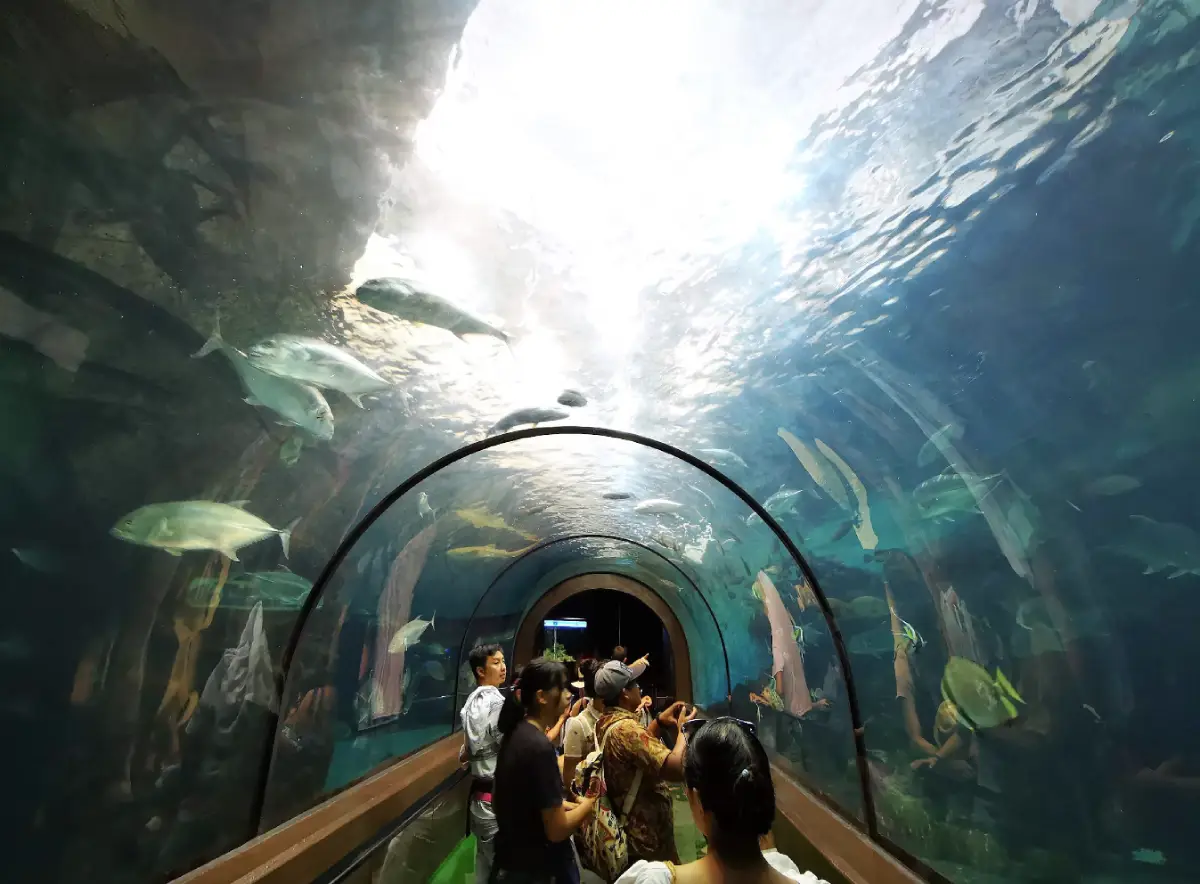
12. Phuket Aquarium, Phuket Province is located at 51 Moo 8, Sakdidej Road, Wichit Subdistrict, Mueang Phuket District, near the tip of Cape Panwa. It is an important marine learning center in southern Thailand, featuring freshwater animals, marine species, and organisms from different aquatic ecosystems. The attraction is suitable for nature enthusiasts, students, and families interested in Thailand's marine resources.
Phuket Aquarium is connected to research, education, and public awareness concerning marine and coastal resources in the Andaman Sea. Its role therefore extends beyond tourism by helping visitors understand the importance of marine ecosystems, mangrove forests, coral reefs, and the organisms that inhabit different environments.
Inside the aquarium, exhibits introduce visitors to aquatic life through displays that progress from freshwater ecosystems to marine environments. Visitors can observe many fish species and compare body shapes, fins, coloration, and swimming behavior. These displays also demonstrate differences between animals living in rivers and those inhabiting the sea.
The mangrove exhibits explain the importance of environments where land and sea meet. Mangrove forests serve as nursery habitats for many young aquatic animals and help protect coastlines from erosion. Animals and plants in these ecosystems possess adaptations that allow them to survive changing salinity and tidal conditions.
One of the major attractions is the underwater tunnel, which offers a viewing experience different from ordinary display tanks. Visitors can observe fish and other aquatic organisms swimming in a large tank from close range while learning about movement and interactions among different species.
Marine exhibitions and displays relating to large sea animals also help explain connections between living organisms and the oceans. Learning about marine life provides an opportunity to discuss environmental issues such as plastic waste, marine pollution, coral reef destruction, and habitat degradation.
For families with young children, indoor aquarium exhibits provide a comfortable setting for learning about aquatic animals without spending the entire visit outdoors. Children can observe different shapes and colors while asking questions about diet, habitats, and movement, supporting an interest in science.
A visit can be combined with other attractions around Cape Panwa. Visitors should allow sufficient time to explore all exhibition areas and check feeding demonstrations or scheduled activities in advance to plan their experience more effectively.
Highlights: Underwater tunnel, freshwater and marine animals, mangrove and coral reef ecosystems, marine resource exhibitions, and family-friendly educational experiences.
Open Days: Daily, including public holidays Opening Hours: 08:30–16:30. Ticket sales close at 16:00.
Admission Fees: Thai visitors: adults THB 80, children THB 40. International visitors: adults THB 300, children THB 150. Children under 108 cm in height, visitors aged 60 and above, Buddhist monks and novices, visitors with disabilities, and other eligible groups receive free admission under the aquarium's conditions.
Getting There: From Phuket Town, follow Sakdidej Road toward Cape Panwa through Wichit Subdistrict, then follow the signs to Phuket Aquarium. Private cars, rental cars, and hired vehicles are convenient transportation options.
Map (GPS):Get Directions to Phuket Aquarium
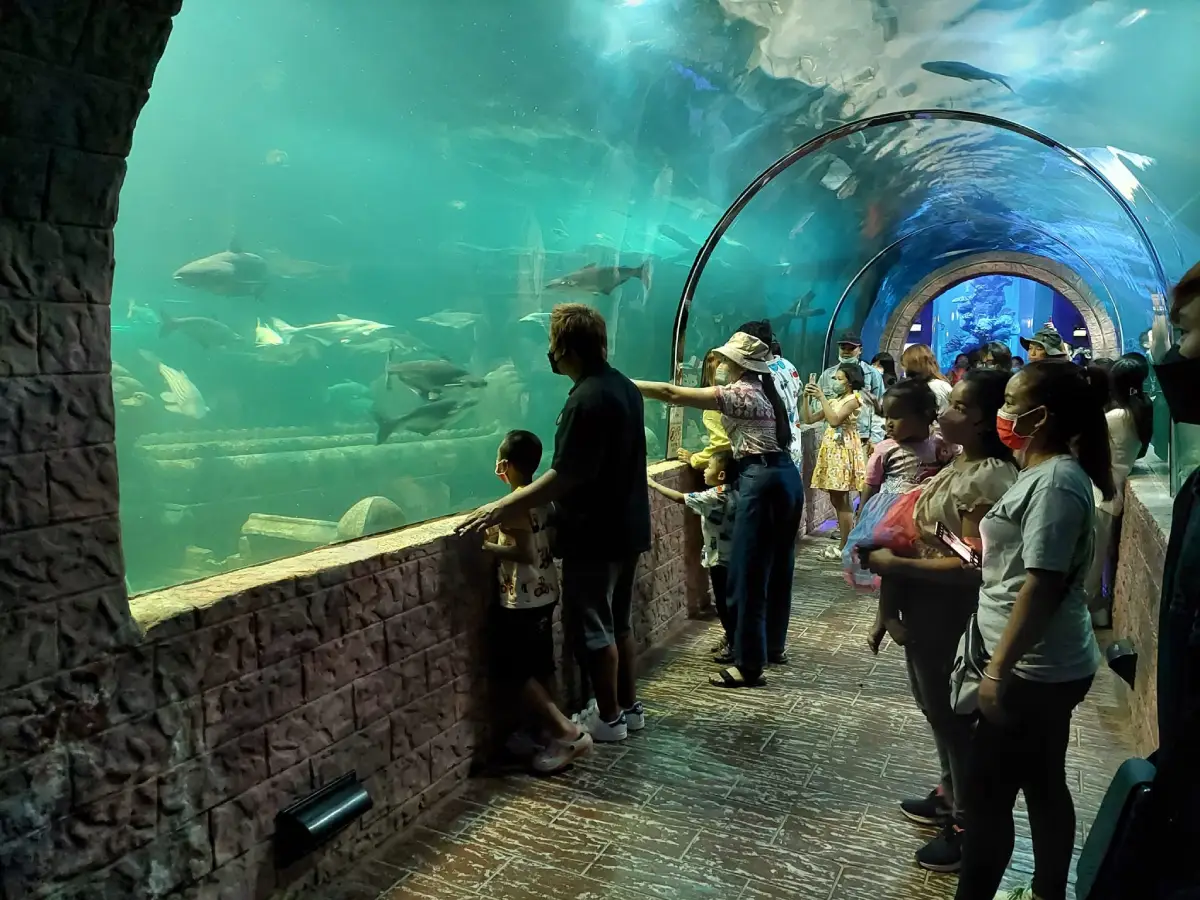
13. Sisaket Aquarium, Si Sa Ket Province is located within the public park commemorating the 80th Birthday Anniversary of His Majesty the King, also known as Ko Huai Nam Kham, on the bypass road in Nong Khrok Subdistrict, Mueang Sisaket District. The aquarium is a popular family and educational attraction known for its underwater glass tunnel and various fish exhibits.
Its location inside a large public park gives Sisaket Aquarium an atmosphere different from aquariums situated in commercial buildings. Visitors can combine an underwater learning experience with outdoor recreation, green spaces, and views of the surrounding reservoir during the same visit.
The main attraction is an underwater glass tunnel approximately 24 meters long, allowing visitors to walk through an area surrounded by swimming aquatic animals. Viewing fish through the tunnel provides an interesting perspective on their body shapes, movement, and behavior and is particularly engaging for children learning about aquatic life through direct observation.
The aquarium also features freshwater fish, marine fish, and ornamental species. Visitors can compare animals from different aquatic ecosystems and discover how body structures, such as fin shapes, mouth positions, and coloration, are related to feeding and survival.
Freshwater ecosystems are closely connected to daily life in northeastern Thailand. Rivers, streams, ponds, and wetlands provide essential natural resources for local communities. Learning about freshwater animals therefore helps visitors appreciate the importance of maintaining water quality and healthy aquatic ecosystems.
The indoor exhibition areas are suitable for exploring at a relaxed pace. Visitors can stop to read explanatory displays and observe individual tanks according to their interests. For school and university students, the aquarium provides an opportunity to connect classroom knowledge of biology and environmental science with real aquatic species.
After exploring the aquarium, visitors can walk around Ko Huai Nam Kham, which features water views, walking paths, and green spaces. This makes the attraction suitable for a half-day family itinerary without traveling far from central Sisaket.
Highlights: Approximately 24-meter underwater glass tunnel, freshwater fish, marine fish, ornamental fish, aquatic education, and the park atmosphere of Ko Huai Nam Kham.
Open Days: Tuesday–Sunday. Normally closed on Mondays and certain public holidays according to the published schedule. Opening Hours: 10:00–16:00.
Admission Fees: Adults THB 30, children THB 20. Children under 100 cm in height, visitors aged 60 and above, and visitors with disabilities qualify for free admission under the aquarium's conditions.
Getting There: From Sisaket city center, follow the bypass road toward the commemorative public park at Ko Huai Nam Kham. Continue along the signs to the aquarium building. Visitors can travel by private car or hire a local vehicle from the city.
Map (GPS):Get Directions to Sisaket Aquarium

14. Underwater World Pattaya, Chon Buri Province is situated in the Pattaya area of Bang Lamung District. It is an aquarium attraction where visitors can discover the underwater world through display tanks and a large glass tunnel. The attraction features numerous aquatic species and activities suitable for families, students, and visitors interested in marine life.
The aquarium is designed to allow visitors to explore aquatic life through a connected series of exhibition areas. Its displays include colorful marine species as well as creatures with body structures very different from those of typical fish. Observing these organisms helps illustrate the extraordinary variety of life within marine ecosystems.
The underwater tunnel is one of the major highlights. Its curved glass viewing structure allows visitors to observe aquatic animals from the sides and above as they walk through the enclosed passage. The experience creates the impression of being surrounded by an underwater environment and gives children an engaging opportunity to study swimming behavior.
The aquarium features different aquatic animals, including marine fish, ornamental species, and organisms associated with coastal ecosystems. Visitors can learn about camouflage, feeding behavior, and adaptation to different habitats, as well as the importance of coral reefs and other natural marine environments.
Exploring the display tanks makes it possible to compare differences between fish species, including fin structures, mouth shapes, coloration, and swimming patterns. These features are often related to feeding strategies, movement, and the environments in which each species lives. Such observations provide an introduction to marine biodiversity.
For families traveling with young children, Underwater World Pattaya is an indoor activity option within the city. Children can learn by observing living animals and reading educational information, while parents can introduce topics such as marine conservation, reducing plastic waste, and the effects of pollution on aquatic wildlife.
Visitors interested in special activities should check the fish-feeding schedules before arriving. These demonstrations take place at designated times and provide opportunities to observe feeding behavior more closely. Planning around the scheduled activities can make the visit more rewarding.
Highlights: Underwater tunnel, diverse marine species, marine ecosystem exhibits, aquatic feeding activities, and a family-friendly attraction in Pattaya.
Open Days: Daily Opening Hours: 09:00–18:00
Admission Fees: Published general admission rates are THB 550 for visitors taller than 130 cm and THB 320 for children measuring 91–130 cm. Children under 91 cm enter free of charge. Discounts and special promotions may be available under separate conditions.
Getting There: From central Pattaya, follow Sukhumvit Road toward South Pattaya and the Jomtien area, then follow the signs to Underwater World Pattaya. Private cars, rental cars, and local hired vehicles are convenient options.

15. Marine Science Institute, Burapha University, Chon Buri Province is located within Burapha University in Saen Suk Subdistrict, Mueang Chon Buri District. It is a well-known center for marine science education and a popular attraction among families and travelers interested in aquatic animals. Its main feature is the combination of marine animal exhibits with scientific knowledge about biology and marine resource conservation.
The institute has educational and research responsibilities in addition to welcoming public visitors. This allows visitors to learn about aquatic species through scientific information related to Thailand's marine ecosystems. The exhibition areas feature a variety of marine organisms, accompanied by explanations of their relationships with their environments.
One of the most popular exhibits features jellyfish, marine animals with unusual body structures and movement patterns that differ significantly from those of fish. Jellyfish move partly by contracting and relaxing their bell-shaped bodies, providing an interesting example of marine invertebrates.
Observing jellyfish helps visitors recognize that marine biodiversity extends far beyond fish and marine mammals. Oceans contain enormous numbers of smaller organisms and invertebrates, many of which contribute to food webs and ecological relationships.
In addition to jellyfish, the institute features marine fish and organisms associated with coral reefs. Visitors can study adaptations to marine environments, such as camouflage coloration, streamlined body shapes, and feeding behavior among reef-dwelling species.
Marine education is particularly important for a coastal province such as Chon Buri because marine ecosystems are closely connected to fisheries, tourism, and environmental quality. The exhibitions help explain the importance of reducing pollution and protecting marine resources for the future.
For school and university students, the institute is a valuable destination for learning about biology, ecology, and marine science. General visitors can also enjoy observing diverse aquatic species in indoor exhibition areas suited to relaxed exploration.
The institute's location near Bang Saen makes it convenient to combine a marine learning experience with a seaside outing. Visitors should allow enough time to explore the exhibits and check ticket sales hours for the buildings they plan to enter.
Highlights: Jellyfish exhibits, marine animals, coral reef ecosystems, marine science exhibitions, educational facilities at Burapha University, and proximity to Bang Saen Beach.
Open Days: Check the schedules of individual exhibition buildings before visiting, as opening days and closures may vary. Opening Hours: Generally published as 08:30–17:00.
Admission Fees: Thai visitors: adults THB 80, children THB 40. Children not exceeding 90 cm in height and other eligible visitors qualify for free admission under the institute's conditions. Special exhibition areas may have different fees.
Getting There: From central Chon Buri, take Sukhumvit Road toward Saen Suk Subdistrict and follow the signs to Burapha University. Travelers from Bangkok can take Motorway 7 or Sukhumvit Road toward the Bang Saen area before continuing to the university.
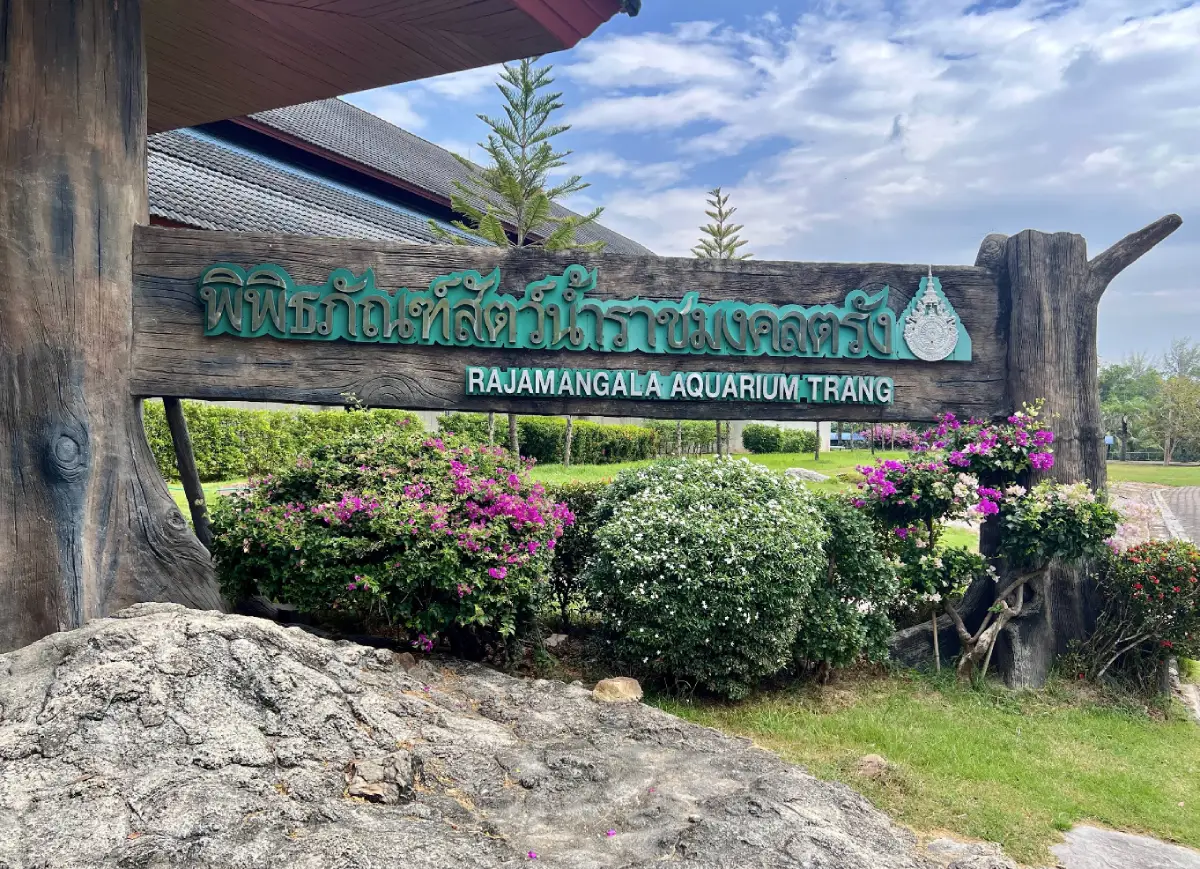
16. Rajamangala Trang Aquarium, Trang Province is located at 179 Moo 3, Mai Fat Subdistrict, Sikao District, within Rajamangala University of Technology Srivijaya's Trang Campus near Rajamangala Beach. It is an important aquarium and educational attraction in Trang Province, particularly for visitors interested in marine life in the Andaman Sea and coastal ecosystems.
The aquarium is distinguished by its location within an educational institution, connecting aquatic animal exhibits with scientific and environmental knowledge. Visitors can learn about various aquatic species while gaining an understanding of the importance of marine resources to coastal communities.
Its exhibition areas introduce freshwater and marine species, providing opportunities to observe physical characteristics, swimming behavior, feeding habits, and adaptations to different environments. Visitors can compare animals living in waters with different salinity levels and depths.
The Andaman Sea ecosystem is an important subject because the region contains coral reefs, seagrass beds, and coastal habitats that support numerous aquatic species. Understanding the relationships between marine organisms and their habitats demonstrates why water quality and healthy coastal ecosystems are essential to biodiversity.
Different aquatic animals have body structures suited to their environments. Some bottom-dwelling fish possess features that allow them to move across sandy seabeds, while fish living in open water may have streamlined bodies and fins designed for efficient swimming. Observing these differences helps visitors understand animal adaptation.
For families with young children, exploring the aquarium provides opportunities to observe living organisms and learn through their colors, shapes, and movements. Parents can introduce topics such as food chains, marine conservation, and reducing waste that could harm aquatic species.
The aquarium is suitable for educational tourism and recreation and can be combined with a visit to coastal attractions in Sikao District. Nature enthusiasts can explore the aquarium before continuing to the nearby coastline, connecting the animals seen in the exhibits with their natural marine environments.
Highlights: Freshwater and marine animals, marine science education, Andaman Sea ecosystems, Rajamangala University of Technology Srivijaya's Trang Campus, and proximity to the coast of Sikao District.
Open Days: Daily Opening Hours: 09:00–16:30
Admission Fees: Adults THB 60, children aged 3–12 THB 30. Educational groups submitting an official request letter may be eligible for special admission arrangements under the university's conditions.
Getting There: From Trang city center, travel toward Sikao District, then continue to Mai Fat Subdistrict and Rajamangala University of Technology Srivijaya, Trang Campus, following the signs. A private car or rental car is convenient for this journey.

17. Samut Sakhon Aquatic Animal Exhibition Center, Samut Sakhon Province is located in Khok Kham Subdistrict, Mueang Samut Sakhon District. It is an educational attraction focused on aquatic animals and is suitable for families and general visitors, particularly those seeking an affordable opportunity for children to learn about fish and aquatic life. Its main feature is the combination of animal displays with educational information about natural resources.
Samut Sakhon is closely associated with the Tha Chin River estuary and the coast of the Gulf of Thailand, both of which support important fisheries. Learning about aquatic animals in this area can therefore be connected to the lifestyles of local fishing communities and the significance of aquatic resources to the economy and environment.
The aquarium displays different species of fish and aquatic animals. Visitors can observe their shapes, coloration, and behavior while learning about differences between organisms living in freshwater, brackish water, and seawater. The exhibits also explain how aquatic species adapt to environments with varying salinity.
Estuarine ecosystems are particularly interesting because they form where freshwater rivers meet the sea. Salinity levels change according to seasons, tides, and other environmental conditions, requiring organisms living in these areas to adapt to changing conditions.
Learning about coastal ecosystems also highlights the importance of mangrove forests, which serve as nursery habitats for many young aquatic animals and help protect shorelines. Healthy mangroves are essential to maintaining biodiversity and supporting fisheries over the long term.
For children and young people, visiting the aquarium encourages an interest in natural science. Direct observation allows children to learn about fish anatomy, breathing through gills, movement using fins, and the relationships between aquatic animals and their environments.
The aquarium is suitable for a half-day visit from Bangkok or nearby provinces. It can be incorporated into an educational itinerary exploring aquatic animals and coastal nature in Samut Sakhon. Visitors should check operating hours before arrival because schedules may change according to the responsibilities and activities of the managing organization.
Highlights: Freshwater and coastal aquatic animals, Tha Chin River estuary ecosystems, fisheries education, learning opportunities for children, and free admission.
Open Days: Daily according to published visitor information Opening Hours: Approximately 11:00–17:00.
Admission Fees: Free admission.
Getting There: From central Samut Sakhon, follow Sahakon Road or Nikhom Sahakon Road toward Khok Kham Subdistrict and continue to the location shown on the map. Visitors can travel by private car or hire a vehicle from the Maha Chai area.

18. Military Engineer Sheep Farm, Nakhon Sawan Province is located inside Chiraprawat Military Camp in Takhian Luean Subdistrict, Mueang Nakhon Sawan District. It is an agricultural tourism destination and educational farm suitable for families. Its main attractions include sheep, green surroundings, and activities that introduce children to domestic animals through an experience different from visiting a large zoo.
Sheep are domesticated mammals that humans have raised for thousands of years. They are important to agriculture and wool production. Their most recognizable feature is their woolly coat, which helps regulate body temperature and gives sheep the appearance that makes them particularly appealing to children.
Visiting the farm provides opportunities to learn about the behavior of herbivorous animals, including moving in groups, grazing, ruminating, and resting. These behaviors differ from those of predators and many other mammals. Observing sheep can also introduce visitors to livestock farming and animal husbandry.
The farm provides a family-friendly environment because the experience is not focused on exploring numerous animal zones across a large zoo. Instead, visitors can enjoy the atmosphere of a working animal farm while learning about domesticated animals in an agricultural setting.
Children can learn about sheep diets, animal care, and the importance of keeping farm environments clean. Parents should explain that animals must be approached carefully, without chasing them, making loud noises, or giving food that has not been approved by staff.
Activities of this kind support learning outside the classroom by helping children understand relationships between people and animals in everyday life. This differs from the emphasis on wildlife and conservation found in conventional zoological parks.
The farm is suitable for travelers looking for a relaxed family activity in Nakhon Sawan, especially those with young children or an interest in farm environments. Visitors should plan their trips around the published weekend and holiday schedules and check which activities are available on the day of their visit.
Highlights: Sheep farm, green surroundings, education about domestic animals and agriculture, family activities, and recreation within Chiraprawat Military Camp.
Open Days: Saturdays, Sundays, and public holidays Opening Hours: 08:30–17:00.
Admission Fees: Free admission. Optional activities or animal feed may involve additional charges.
Getting There: From Nakhon Sawan city center, travel toward Chiraprawat Military Camp in Takhian Luean Subdistrict and follow the signs to the farm. Private cars and locally hired vehicles are convenient transportation options.

19. Khao Prathap Chang Open Zoo and Wildlife Breeding Research Station, Ratchaburi Province is located in Pak Chong Subdistrict, Chom Bueng District. It is an important location for wildlife education and nature conservation, combining activities associated with wildlife care and breeding with opportunities for the public to learn about animals in designated visitor areas.
The station is distinctive because its responsibilities differ from those of a commercial zoo. Its activities are associated with wildlife care, breeding, and conservation. Visitors can learn that managing wild animals requires knowledge of biology, animal behavior, nutrition, and the environmental conditions appropriate for each species.
The Khao Prathap Chang area has natural surroundings that give wildlife education a different atmosphere from animal viewing inside buildings or urban zoos. Visitors can experience forest landscapes and develop an understanding of relationships between animals and their habitats.
Wildlife breeding has an important role in managing certain animal populations, particularly species requiring specialized care and scientific management. Learning about these activities demonstrates that conservation involves more than preventing hunting. It also requires habitat protection, behavioral research, and responsible wildlife population management.
For children and young people, the station provides an opportunity to study wildlife in the context of conservation work. Observing physical characteristics and animal behavior can help develop an understanding of the complex relationships among living organisms in nature.
Visitors must follow the managing organization's rules and remain within permitted areas. They should not feed animals, make excessive noise, or enter restricted zones used by staff for research and animal care. Some areas may be closed to the general public because of ongoing conservation responsibilities.
The station is suitable for visitors interested in nature-based tourism in Ratchaburi and can be included in an itinerary exploring Chom Bueng District. Travelers should confirm routes and visitor access conditions before departure to ensure they enter areas that are officially open to visitors.
Highlights: Open wildlife viewing in natural surroundings, wildlife breeding and research, conservation education, the Khao Prathap Chang landscape, and free admission.
Open Days: Daily according to published information Opening Hours: 08:30–16:00.
Admission Fees: Free admission.
Getting There: From Ratchaburi city center, travel toward Chom Bueng District and continue into Pak Chong Subdistrict along the route to Khao Prathap Chang Wildlife Breeding Research Station. A private car is recommended, and visitors should follow the mapped route to reach the correct entrance.
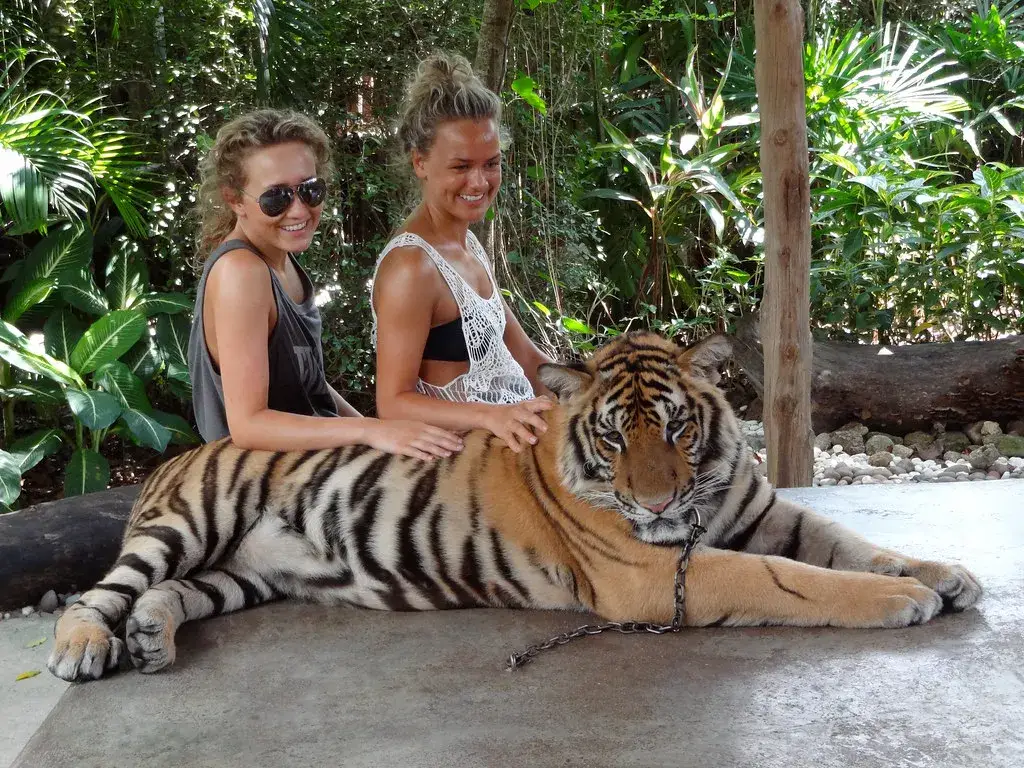
20. Samui Aquarium and Tiger Zoo, Surat Thani Province is located near Ao Laem Set in Maret Subdistrict, Ko Samui District. This animal attraction combines aquatic and land-animal exhibits within the same grounds. Its main attraction is the opportunity to discover marine life alongside several types of terrestrial animals, making it an additional activity for travelers visiting Ko Samui who want experiences beyond relaxing on the island's beaches.
The aquatic exhibition area introduces visitors to marine biodiversity, including fish and other organisms with different body structures. Observing aquatic animals in display tanks allows visitors to study their movement, feeding behavior, and adaptations to life in the sea.
Ko Samui is situated in the Gulf of Thailand and has marine ecosystems associated with seagrass beds, coral reefs, and coastal habitats. Learning about marine animals can therefore be connected to the importance of protecting marine resources and reducing the environmental effects of tourism activities.
Aquarium exhibits allow visitors to learn about differences among aquatic animal groups, including fish body shapes, fin structures, coloration, and movement patterns. These characteristics are closely related to feeding and escaping predators in natural environments.
Another part of the attraction features land animals, adding variety to the visitor experience. Guests can learn about the physical characteristics and behavior of mammals and compare the differences between predators and herbivores.
Animal viewing should always take animal welfare and visitor safety into consideration. Travelers should avoid activities that disturb the animals, refrain from making excessive noise, and never approach or touch animals without permission. Appropriate distances are particularly important around predators.
For families, the opportunity to observe aquatic and land animals in a single visit can create an educational experience beyond the classroom. Children can compare marine organisms with animals that live on land and learn how different ecosystems create different environmental conditions and survival requirements.
A visit can be included in a wider Ko Samui itinerary. Travelers should check ticket options and the activities included in each package before arriving, as different admission packages may cover different exhibits and experiences.
Highlights: Marine animal exhibits, land-animal displays, underwater wildlife education, family activities, and a location near Ao Laem Set.
Open Days: Daily Opening Hours: 11:00–16:00.
Admission Fees: Published aquarium packages start at THB 950 for adults and THB 750 for children measuring 100–140 cm in height. Children under 100 cm enter free of charge under the attraction's conditions. Prices may vary depending on the package and included activities.
Getting There: From the Chaweng or Lamai areas, follow Ko Samui's ring road toward Maret Subdistrict and Ao Laem Set, then continue along the signs to the aquarium. Visitors can travel by rental car, taxi, or local sightseeing vehicle.
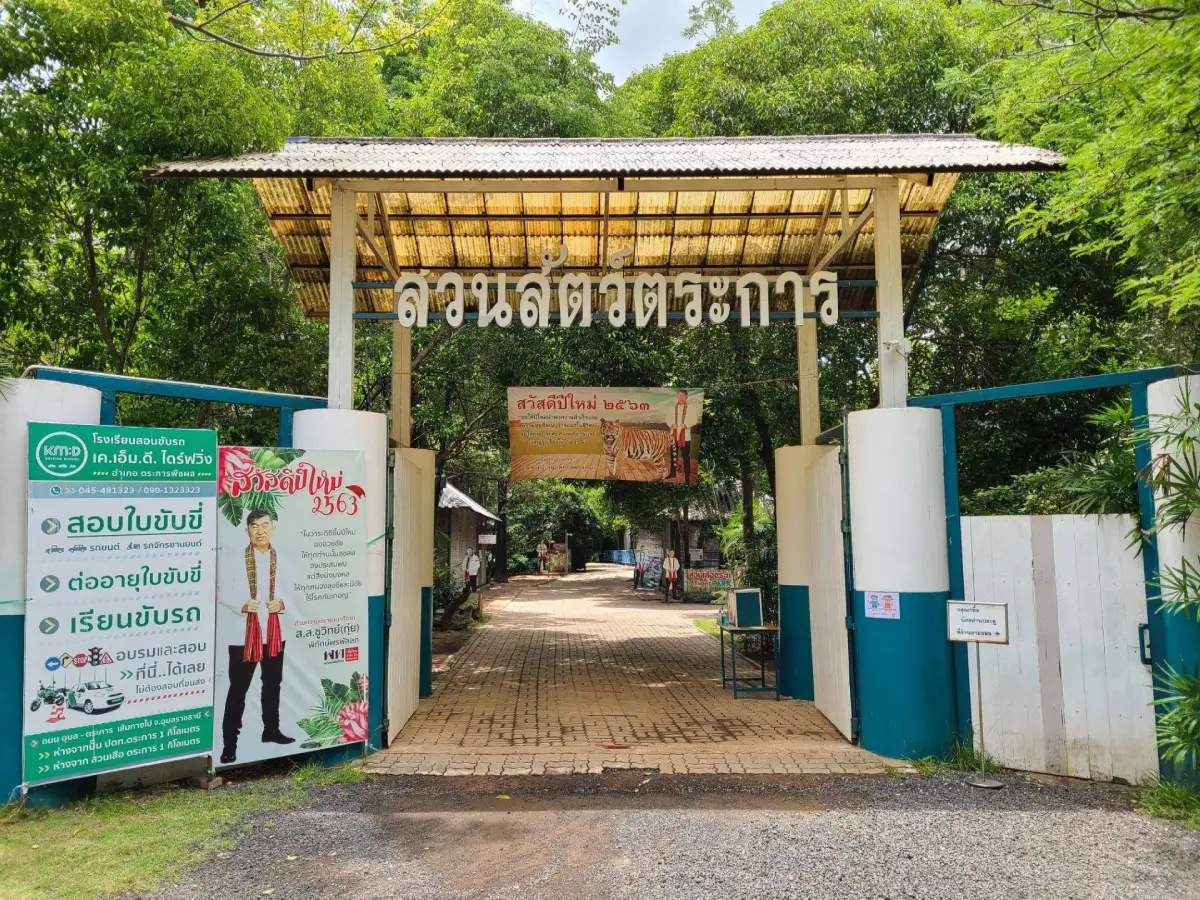
21. Trakan Zoo (Tiger Park), Ubon Ratchathani Province is located in Khulu Subdistrict, Trakan Phuet Phon District. This animal attraction offers an interesting destination for families and travelers visiting the northern part of the province. Its main feature is a collection of different animal species in an area that can be explored conveniently on foot, including predatory animals that inspired the name Trakan Tiger Zoo.
The zoo serves as a local recreational attraction, providing another sightseeing option for visitors to Trakan Phuet Phon District. Families can spend time observing animals and enjoying activities together without having to return to the provincial capital to find animal-related attractions.
Predatory animals are particularly interesting from a biological perspective because they possess physical features and sensory abilities adapted to hunting. These include strong teeth and claws, keen eyesight, and the ability to respond quickly to movement in their surroundings. Learning about predators helps visitors understand their important role in maintaining the ecological balance of natural ecosystems.
In addition to predators, observing other types of animals allows visitors to compare the different behaviors of herbivores and carnivores, especially their feeding habits, resting patterns, and responses to the environment. These observations provide a foundation for understanding biodiversity and the different ways animals survive in nature.
Exploring a relatively small zoo is convenient for families with young children because visitors can spend time learning about each animal without having to travel long distances between exhibition zones. Parents can use the experience to explain wildlife conservation and the importance of treating living creatures responsibly.
Visitors interested in wildlife photography should remain in designated viewing areas and avoid approaching predators beyond safe distances. They should also refrain from making loud noises or behaving in ways that might cause stress to the animals. Respecting the regulations established by animal keepers is essential for visitor safety and animal welfare.
Because of its location in Trakan Phuet Phon District, the zoo can serve as a convenient stop during a wider journey through Ubon Ratchathani Province. Visitors should allow approximately 1–2 hours for animal viewing and relaxation, depending on their interests, and check operating information before traveling.
Highlights: Local tiger zoo and animal park, opportunities to learn about predators, different animal species, family activities, and affordable admission.
Open Days: Daily Opening Hours: 08:00–17:00
Admission Fees: Adults THB 40, children THB 20.
Getting There: From Ubon Ratchathani city center, follow the main road toward Trakan Phuet Phon District, then continue into Khulu Subdistrict using the main roads and directional signs. Visitors can travel by private car or hire a local vehicle from the district center.
Map (GPS):Get Directions to Trakan Zoo

22. Saraburi Crocodile Farm and Zoo, Saraburi Province is located in Nong Pla Lai Subdistrict, Mueang Saraburi District. This animal attraction combines a crocodile breeding and exhibition area with displays of other animal species within the same grounds. It is suitable for families interested in animal activities and learning about nature without traveling far from Saraburi city center.
Crocodiles are fascinating reptiles because of their physical characteristics and survival behavior. Their bodies are adapted to living both in water and on land. Their powerful tails help them move through water, while their eyes and nostrils are positioned in ways that allow them to see and breathe even when most of their bodies remain submerged.
Observing crocodiles in exhibition areas helps visitors understand the adaptations of reptiles and the differences between crocodiles and mammals, particularly how they regulate body temperature and how their behavior relates to environmental conditions.
In addition to crocodiles, other animals are available for observation, adding variety to the visitor experience. Families traveling with children can use the opportunity to explain the differences between herbivores and carnivores and the relationships between various animal groups and natural ecosystems.
Animal farms are also associated with the responsibilities of keeping and managing animals under human care. Learning about their basic needs, including food, water, suitable living space, and health, helps visitors understand the importance of animal welfare.
For families with young children, exploring animals within a relatively compact area makes it easier to organize a visit. Parents should supervise children closely around crocodile ponds and animal enclosures, ensuring that children do not extend their hands or objects into restricted animal areas.
Located within convenient reach of Saraburi city center, the farm is suitable for a half-day outing or a stop during a journey to other attractions in the province. Visitors should check activity schedules and opening hours before traveling.
Highlights: Crocodiles, various animal species, reptile education, family activities, and a convenient location near Saraburi city center.
Open Days: Daily Opening Hours: Monday–Friday 08:30–18:30; Saturdays and Sundays 08:00–18:00.
Admission Fees: Adults THB 30, children THB 20.
Getting There: From central Saraburi, take the main road toward Nong Pla Lai Subdistrict and follow the signs or mapped directions to the farm. Visitors can travel conveniently by private car or hired vehicle from the city.
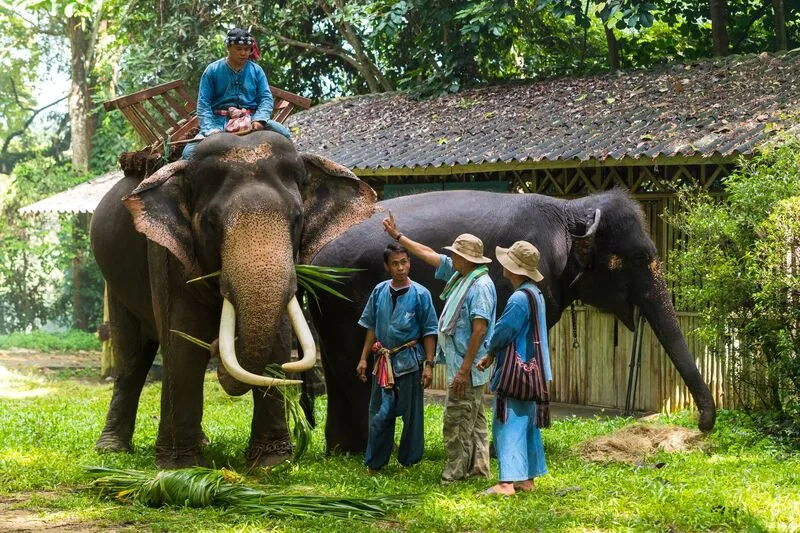
23. Thai Elephant Conservation Center (Thung Kwian Forest Plantation), Lampang Province is located at Ban Thung Kwian, Wiang Tan Subdistrict, Hang Chat District. It is one of Thailand's important elephant conservation and educational centers, known for elephant care, the preservation and promotion of knowledge about Thai elephants, and visitor activities that explain the relationship between elephants, Thai livelihoods, and cultural traditions.
Elephants have played significant roles throughout Thai history, including transportation, forestry work, and cultural beliefs. The development of an elephant conservation center is therefore important for preserving traditional and modern knowledge about elephant care while promoting an understanding of elephant needs in changing environments.
One of the center's distinctive characteristics is its natural forest setting, which provides a suitable environment for learning about elephant behavior and the care of large animals. Elephants require substantial amounts of food and water, together with adequate space for movement, rest, and natural activities. Understanding these needs helps visitors recognize the importance of animal welfare.
The center's educational activities introduce visitors to elephant biology, physical characteristics, the use of the trunk, feeding habits, and communication within herds. Elephants are remarkable for their memory and learning abilities. They also form complex social relationships with other members of their groups, which are important aspects of their natural behavior.
Elephant health and veterinary care are additional important subjects because these large animals require specialized attention to nutrition, hygiene, foot care, and medical treatment. Learning about the work involved in caring for elephants demonstrates that conservation depends on knowledge and professionals with appropriate expertise.
Visitors can choose from educational activities offered according to the center's schedule. Preference should be given to experiences that promote responsible elephant care and meaningful learning. Families with children can use the visit to explain the history of elephants in Thailand, the relationship between people and elephants, and the importance of preserving natural habitats.
At least half a day should be allowed for activities and travel within the center. Travelers using the Chiang Mai–Lampang route can conveniently include this destination in a northern Thailand itinerary. Checking activity schedules before departure is recommended.
Highlights: Thai elephant conservation, learning about elephant behavior, elephant healthcare, educational activities, and the natural surroundings of Thung Kwian Forest Plantation.
Open Days: Daily Opening Hours: 08:30–15:30. Published activity sessions include 10:00, 11:00, and 13:30.
Admission Fees: Admission and activity tickets are available according to the type of service. No specific amount is stated where current rates have not been confirmed.
Getting There: From Lampang city center, take Highway 11 toward Hang Chat District and Chiang Mai. Continue to the Thung Kwian Forest Plantation area and follow the signs to the Thai Elephant Conservation Center. A private car or rental car is a convenient option.

24. The Scenery Resort, Ratchaburi Province is located at 234 Moo 7, Suan Phueng Subdistrict, Suan Phueng District. It is a well-known farm-themed resort and tourist attraction, particularly popular for its natural atmosphere and sheep-related activities. The destination appeals to families, couples, and travelers seeking relaxation among the mountains and green landscapes of Suan Phueng.
The main attraction is the combination of animal farming areas with recreational facilities. Sheep-viewing activities create a visitor experience different from exploring a large zoological park. Grassy fields, countryside-style buildings, and surrounding mountains are important elements of the atmosphere that have made the resort popular with tourists.
Sheep are herbivorous animals that typically live in groups and communicate with other members of their flocks. Observing sheep at close range in designated areas offers children an opportunity to learn about domesticated animals and everyday life on a farm.
Wool is one of the defining characteristics of sheep and has been connected to human livestock farming for thousands of years. Learning about sheep can introduce visitors to animal husbandry, fiber production, and the responsibilities involved in caring for livestock, including providing sufficient food, water, and appropriate living conditions.
Feeding sheep in designated areas is a popular educational activity for families. Visitors should follow instructions from animal keepers and use only feed approved by the attraction to ensure that it is suitable for the animals' digestive systems and helps protect their health.
Beyond the sheep, the natural surroundings and photography locations are important attractions. Visitors can walk around the grounds, relax, and photograph the scenery of Suan Phueng District. Morning and late afternoon generally offer more comfortable temperatures and softer light for outdoor activities than the middle of the day.
Families with young children should bring hats and drinking water and supervise children closely during activities involving animals. The destination can be included in a half-day program or combined with other natural attractions around Suan Phueng District.
Highlights: Sheep farm, countryside atmosphere, Suan Phueng mountain scenery, domestic animal learning activities, photography locations, and family recreation.
Open Days: Daily Opening Hours: 08:30–18:00.
Admission Fees: Various admission and activity packages are available, with prices differing according to activities and visiting periods. No unconfirmed current ticket price is specified.
Getting There: From Ratchaburi city center, follow the main route toward Suan Phueng District and continue into Suan Phueng Subdistrict following the signs. Private cars and rental cars are convenient options. Travelers from Bangkok can use Phet Kasem Road or Rama II Road to reach Ratchaburi Province.
Map (GPS):Get Directions to The Scenery Resort

25. Chamsom Crocodile Farm and Zoo, Chanthaburi Province is located at Ban Chamsom, Salaeng Subdistrict, Mueang Chanthaburi District. This animal attraction combines a crocodile farm with exhibits featuring other animal species within the same grounds. It is suitable for families seeking opportunities to learn about reptiles and wildlife while traveling in Chanthaburi Province.
The main attraction is the crocodile, a large reptile belonging to an ancient evolutionary lineage. Its body, tail, and jaws demonstrate adaptations suited to aquatic life, particularly swimming, ambush hunting, and detecting movement in the surrounding environment.
Observing crocodiles in exhibition areas allows visitors to learn about differences between reptiles and mammals, including skin structure, methods of movement, and body temperature regulation. Visitors can also discover the ecological importance of predators in natural freshwater habitats.
The farm also features other animals, adding variety to the visitor experience. Families with children can use the opportunity to observe differences in animal appearance and behavior and ask questions about the diets and habitats of different species.
Animal performances have historically been among the activities attracting visitors to the farm. Travelers should check which activities are offered on their visiting date and follow safety instructions carefully, particularly near crocodiles and other large animals.
Responsible farm tourism involves respecting animal welfare. Visitors should not feed animals without permission, make excessive noise, strike enclosure barriers, or approach animals more closely than permitted by staff. These practices help reduce animal stress and improve visitor safety.
The attraction can be included in a sightseeing itinerary around central Chanthaburi. A half-day visit may be appropriate depending on the activities available. Families with children should consider visiting during cooler hours and bringing sun protection for outdoor areas.
Highlights: Crocodile farm, various animal species, reptile education, animal-viewing activities, and a family-friendly attraction.
Open Days: Daily Opening Hours: 08:30–18:00.
Admission Fees: Thai visitors: adults THB 30, children THB 20. International visitors: THB 60 per person.
Getting There: From central Chanthaburi, travel toward Salaeng Subdistrict and Ban Chamsom using the mapped route. Visitors can travel by private car or hire a local vehicle. Confirming the destination coordinates before setting out is recommended.

26. Mae Khi Sheep Farm, Chiang Mai Province is located in Mae Raem Subdistrict, Mae Rim District. It is a sheep farm attraction surrounded by the natural scenery of the foothills, making it suitable for families and travelers seeking a peaceful atmosphere while learning about domesticated animals and enjoying a farm-style experience.
The farm is distinguished by its natural setting and sheep-raising areas. Sheep are recognizable by their woolly coats and flocking behavior. Visitors can observe their movement, feeding, and resting activities from designated viewing locations.
Sheep have played an important role in human agriculture for thousands of years, particularly in the production of wool and other agricultural products. Visiting a sheep farm can therefore be connected to learning about animal husbandry, feed management, and animal healthcare, all of which are essential parts of responsible livestock farming.
Sheep display interesting social behavior because they naturally live in groups and often move together with other flock members. Observing these behaviors helps children understand differences between herbivores and predators, including the importance of group living for survival.
The foothill scenery of Mae Rim District forms an important part of the visitor experience. Surrounding landscapes and the local climate create an atmosphere different from central Chiang Mai. Visitors can relax, take photographs, and observe the animals at an unhurried pace.
Families with young children should encourage them to approach animals calmly, without chasing or touching them without permission. If animal-feeding activities are available, visitors should use only the food provided or approved by the animal keepers to protect the animals' digestive health.
The farm can be included in a sightseeing itinerary around Mae Rim District alongside other nature attractions and animal farms. Depending on the activities of interest, a visit of approximately 1–2 hours may be suitable. Morning or late afternoon is often preferable for enjoying the cooler foothill atmosphere.
Highlights: Sheep farm, natural foothill scenery, domestic animal education, photography opportunities, and family relaxation.
Open Days: Daily Opening Hours: 07:30–18:00.
Admission Fees: Farm services and activities are available. No admission amount is specified where current ticket rates cannot be confirmed.
Getting There: From Chiang Mai city center, follow the main road toward Mae Rim District, then continue along the route to Mae Raem Subdistrict using the map coordinates. Private cars, rental cars, and hired vehicles from the city are suitable transportation options.
Map (GPS):Get Directions to Mae Khi Sheep Farm
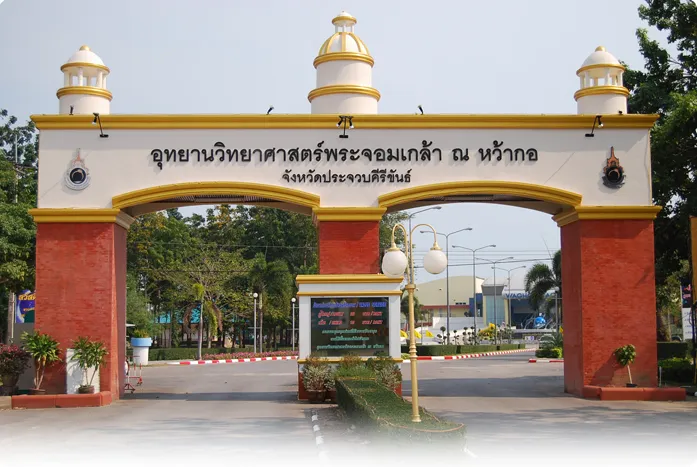
27. King Mongkut Memorial Park of Science and Technology at Waghor, Prachuap Khiri Khan Province is located at 181 Moo 4, Khlong Wan Subdistrict, Mueang Prachuap Khiri Khan District. It is an important science and nature learning destination in the lower central region of Thailand. Its main attractions include scientific exhibitions, the history of astronomy in Thailand, and displays relating to aquatic animals and marine ecosystems. It is suitable for families and students interested in studying nature alongside science.
Waghor has historical significance associated with King Mongkut, Rama IV, who played an important role in developing astronomical knowledge in Thailand. The area is particularly connected to the observation of the solar eclipse in 1868. This historic event gives the location importance in both scientific and historical contexts.
The park features exhibitions that introduce visitors to science through various displays and educational media. Subjects include nature, the environment, and scientific study, encouraging visitors to understand natural phenomena and the importance of evidence-based explanations.
The aquatic animal exhibition is particularly interesting for nature enthusiasts because it introduces marine organisms and coastal ecosystems. Visitors can observe differences among fish and other aquatic species and learn about their body structures, movement, and adaptation to particular habitats.
Coastal ecosystems in the Gulf of Thailand are closely connected to the lives of people in Prachuap Khiri Khan Province through fisheries, tourism, and marine conservation. Learning about aquatic animals helps demonstrate the importance of maintaining water quality, reducing marine waste, and protecting natural habitats.
For children and young people, visiting the science park encourages scientific curiosity through direct experience. Astronomy, nature, and biology can be explored together, offering a wider variety of learning opportunities than an attraction devoted to animal exhibits alone.
The destination is suitable for educational sightseeing and can be combined with visits to natural attractions around Prachuap Khiri Khan. It is especially appropriate for families who want children to learn about Thailand's scientific history and marine ecosystems during the same trip.
Visitors planning to explore several exhibition areas should allow at least half a day and check which buildings and activities are operating before traveling. This will help ensure that enough time is available for the displays they wish to see.
Highlights: Thai astronomical history, science exhibitions, aquatic animal displays, marine ecosystem education, and educational activities for families and school groups.
Open Days: Daily Opening Hours: 09:00–15:45.
Admission Fees: Adults THB 50, children THB 30, according to the published admission schedule. Special exhibitions and activities may involve separate charges.
Getting There: From Prachuap Khiri Khan city center, follow Phet Kasem Road toward Khlong Wan Subdistrict, then follow the signs to King Mongkut Memorial Park of Science and Technology at Waghor. Private cars, rental cars, and local hired vehicles are convenient options.

28. Commemoration Open Zoo, Amnat Charoen Province is located at Ban Na Khu, Moo 9, Sang Tho Noi Subdistrict, Hua Taphan District. It is a local animal and nature attraction known for combining a zoo area with the surroundings of Dong Yai Forest, nearby water sources, and recreational spaces. It offers families an opportunity to observe animals and enjoy nature in a relaxed setting.
The attraction is characterized by its community-based tourism atmosphere, which differs from larger zoos offering extensive facilities and commercial activities. Visitors can experience the local environment while learning about animals and exploring the natural surroundings.
Animals on display include deer, peacocks, rabbits, goats, wild boars, and other species with different lifestyles. Visitors can observe feeding behavior, group living, and relationships between animals and their environments, particularly among herbivores that play important roles in natural ecosystems.
Dong Yai Forest is important to the atmosphere and identity of the attraction because forests provide habitats for many forms of wildlife, including birds, mammals, and smaller animals. Walking through accessible areas gives visitors opportunities to understand the relationships between forests, water sources, and wild animals.
For children and young people, visiting a community animal park can encourage an interest in nature. They can observe physical characteristics and animal behavior while learning about responsible care, including avoiding unauthorized feeding, keeping the surroundings clean, and not disturbing the animals with unnecessary noise.
The attraction can also be incorporated into cultural and community-based sightseeing in Hua Taphan District. Nearby communities and natural landscapes form important parts of the local environment, making it possible to combine animal viewing with a relaxed exploration of local life.
Travelers should bring drinking water, hats, and cash for admission, as this is an affordable community attraction where digital payments may not be accepted at every point. Young children should be supervised around animals, and all visitors should follow instructions from the animal keepers.
Highlights: Community open zoo, various animal species, Dong Yai Forest, natural surroundings, recreational areas, and affordable admission.
Open Days: Daily Opening Hours: 08:30–16:30.
Admission Fees: Adults THB 10, children THB 5.
Getting There: From Amnat Charoen city center, travel toward Hua Taphan District, approximately 48 kilometers away. Continue to Ban Na Khu in Sang Tho Noi Subdistrict using road signs and map coordinates. A private car is the most convenient transportation option.
Map (GPS):Get Directions to Commemoration Open Zoo

29. Chalermphrakiat 6th Cycle Anniversary Aquarium, Chanthaburi Province is located near Laem Sadet in Khlong Khut Subdistrict, Tha Mai District. It is an important learning center for aquatic animals and coastal resources in eastern Thailand. Its main attraction is the exhibition of marine species and other aquatic animals in a setting close to the natural coastline, making it suitable for educational trips and family recreation.
The aquarium contributes to public awareness of marine resource conservation and aquatic wildlife. Chanthaburi has coastal waters and mangrove forests with considerable biodiversity, and its exhibits help visitors understand the relationships between living organisms and coastal ecosystems.
The exhibition areas provide opportunities to observe the body shapes, coloration, and behavior of fish and other aquatic animals. Viewing different species in tanks allows visitors to compare bottom-dwelling animals with those that swim in open water, as well as differences in movement and feeding adaptations.
Mangrove ecosystems are particularly important to marine education along the Chanthaburi coast. Mangrove forests provide nursery habitats for young aquatic animals, reduce coastal erosion, and serve as habitats for numerous species. Learning about these environments helps explain the importance of mangrove conservation and reducing marine pollution.
For children and students, the aquarium offers opportunities to learn through direct observation of living aquatic animals. Visitors can compare the body structures of different species and recognize the relationships between their physical characteristics and natural habitats. Parents can also use the experience to explain the importance of reducing plastic waste and keeping the sea clean.
The location near Laem Sadet makes it convenient to combine aquarium viewing with visits to beaches and nature attractions in Tha Mai District. Visitors can explore marine exhibits before continuing to the coastline, gaining a clearer understanding of the connection between displayed animals and their natural environments.
Highlights: Marine species, coastal resource education, mangrove ecosystems, children's learning opportunities, and the coastal location near Laem Sadet.
Open Days: Daily Opening Hours: 08:30–16:30.
Getting There: From Chanthaburi city center, travel toward Tha Mai District, then continue to Khlong Khut Subdistrict and the Laem Sadet area following the road signs. Private cars and rental cars are convenient transportation options.
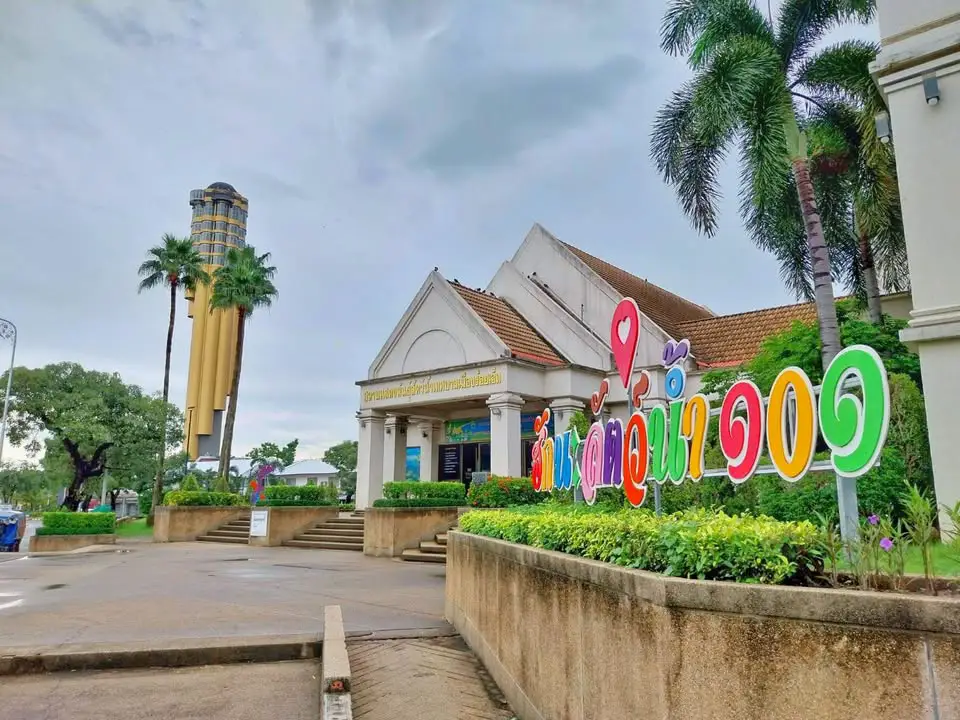
30. Roi Et Municipal Aquarium, Roi Et Province is located southwest of Bueng Phlan Chai on Sunthon Thep Road, Nai Mueang Subdistrict, Mueang Roi Et District. It is an accessible educational attraction in the city center, providing opportunities for families to learn about aquatic animals without paying an admission fee.
The aquarium is distinguished by its role as a municipal learning facility, making natural science education more accessible to local residents and students. It is particularly suitable for families wishing to introduce children to freshwater fish and aquatic ecosystems without traveling far from the city.
Inside, the aquarium features a variety of aquatic animals, allowing visitors to study the physical characteristics, movement, and behavior of different fish species. Observing living animals helps explain differences between aquatic organisms and connects directly with scientific learning.
Freshwater ecosystems are essential to everyday life in northeastern Thailand. Rivers, ponds, lakes, and natural waterways support fisheries and provide habitats for many species. Learning about freshwater animals therefore helps visitors appreciate the importance of protecting water quality and conserving local natural resources.
Nearby Bueng Phlan Chai is one of Roi Et's important recreational landmarks. Visitors can combine an aquarium visit with a walk around the lake, enjoying the waterfront and public green spaces. This gives the area additional value as a destination for both education and relaxation.
For families with young children, exploring the aquarium is suitable for an activity lasting approximately 1–2 hours. Children can observe fish, read the accompanying information, and learn about environmental protection before enjoying the green spaces around Bueng Phlan Chai.
Highlights: Freshwater fish and other aquatic species, municipal educational exhibits, proximity to Bueng Phlan Chai, and free admission.
Open Days: Tuesday–Sunday; closed on Mondays. Opening Hours: 08:30–16:30.
Admission Fees: Free admission.
Getting There: From central Roi Et, follow Sunthon Thep Road toward Bueng Phlan Chai. The aquarium is located southwest of the lake, near Wat Bueng Phra Lan Chai. Visitors can travel by private car or local hired vehicle.

31. Freshwater Fish Exhibition, Bangkok is located within the Department of Fisheries compound near Kasetsart University in Lat Yao Subdistrict, Chatuchak District. It is an educational attraction devoted to freshwater fish and fisheries resources, making it suitable for school students, university students, and the general public. Its distinctive feature is the presentation of aquatic animals alongside educational information about fisheries and freshwater ecosystems.
The importance of this attraction is closely connected to the role of Thailand's Department of Fisheries in researching aquatic animals and promoting public knowledge about aquatic resources. These resources are closely related to the livelihoods, economy, and food security of the country. Learning through the aquarium's exhibits helps visitors develop a better understanding of freshwater fish diversity and the importance of conserving fisheries resources.
The exhibition areas allow visitors to compare the characteristics of different fish species, including body shapes, fin structures, coloration, and swimming behavior. Studying these characteristics helps explain the relationship between body structure, feeding habits, and survival in different aquatic habitats.
Thailand has a wide variety of freshwater ecosystems, including rivers, ponds, lakes, streams, and wetlands. Each supports aquatic species that have adapted to particular environmental conditions. Learning about freshwater fish therefore helps visitors understand why maintaining water quality and reducing the effects of pollution are essential to the survival of aquatic organisms.
For school and university students, visiting the aquarium can complement classroom lessons in biology, ecology, and fisheries science. It is particularly useful for learning about fish identification, the adaptations of aquatic organisms, and the relationships between human activities and natural resources.
Nature enthusiasts can combine a visit with other educational attractions and green spaces around Kasetsart University and Chatuchak. Visitors should check which exhibition buildings are open and when public access is permitted, as the aquarium is located within a government department where visitor arrangements may change according to official activities.
Highlights: Diverse freshwater fish species, fisheries resource education, freshwater ecosystem learning, and an educational attraction within the Department of Fisheries compound.
Open Days: Tuesday–Sunday; normally closed on Mondays according to the published schedule. Opening Hours: 10:00–16:00.
Admission Fees: Published information includes an admission rate of THB 20 for adults and THB 10 for children, school students, and university students. However, admission fees differ between published sources, so visitors should confirm the applicable rates directly with the managing department before traveling.
Getting There: From Bangkok, follow Phahon Yothin Road or Ngam Wong Wan Road toward Kasetsart University. Continue into the Department of Fisheries compound using the map coordinates. Visitors can travel by private car, taxi, or public transportation serving the Kasetsart University area.
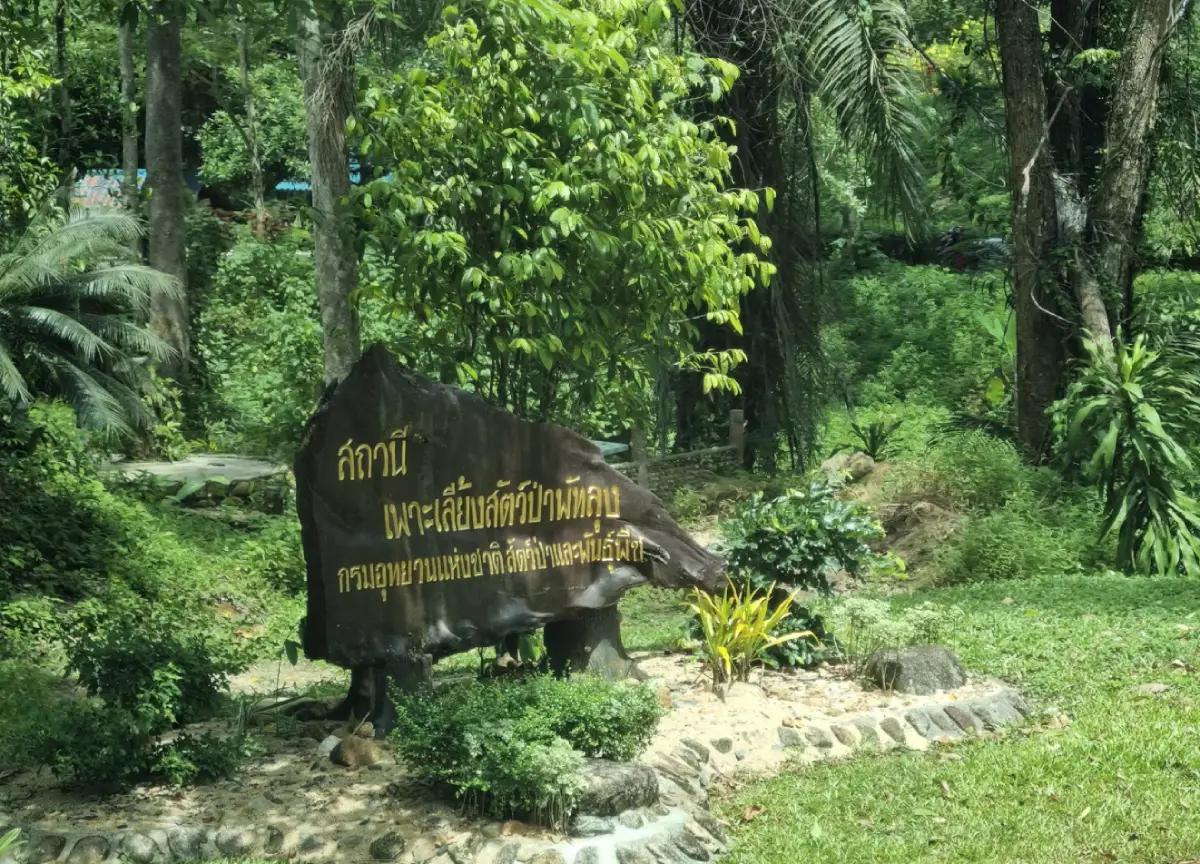
32. Phatthalung Wildlife Breeding Station, Phatthalung Province is located at Ban Na Wong, Moo 1, Ban Na Subdistrict, Srinagarindra District. It is a wildlife conservation and breeding facility distinguished by its location near the Banthat Mountain Range, surrounded by hills, forests, and natural streams. The station is particularly interesting for visitors wishing to learn about wildlife and the relationships between living organisms and southern Thailand's ecosystems.
The importance of a wildlife breeding station lies in the scientific care and management of wild animals. Appropriate nutrition, health management, behavioral needs, and living environments must all be considered for each species. These responsibilities contribute to wildlife conservation awareness and the protection of Thailand's biodiversity.
The landscape surrounding the Banthat Mountain Range is an important feature of the area. Its forests and natural waterways support habitats suitable for numerous forms of wildlife. Learning about southern Thailand's forest environments helps visitors understand relationships between animals and their habitats, as well as the importance of watershed forests and healthy ecosystems.
Visiting areas that are open to the public can provide opportunities to learn about wild animals and breeding programs under the supervision of station personnel. However, visitors should recognize that conservation is the station's primary responsibility. It is not a commercial zoo where every animal care and management area is freely accessible.
For school and university students, learning about wildlife breeding provides a practical introduction to conservation work. Animals under human care may have different requirements, and certain species need specialized attention according to their biological characteristics and health conditions.
Nature photography enthusiasts should remain within authorized areas, avoid flash photography or excessive noise, and refrain from feeding animals without staff instructions. Respecting visitor restrictions helps maintain safety and minimizes stress among animals receiving care.
The station can be incorporated into a nature-oriented itinerary around Srinagarindra District, including opportunities to appreciate the landscapes of the Banthat Mountain Range. Visitors should check access conditions and confirm which areas are open to the public before traveling.
Highlights: Wildlife breeding and conservation, the natural atmosphere of the Banthat Mountain Range, forest landscapes, natural streams, and education about southern Thailand's ecosystems.
Open Days: Daily according to published location information. Opening Hours: 06:00–18:00. Access to animal care areas is subject to staff regulations.
Admission Fees: No clearly published general admission fee is available. Visitors planning educational visits or group tours should contact the managing organization in advance.
Getting There: From Phatthalung city center, travel toward Srinagarindra District and Ban Na Subdistrict, then continue to Ban Na Wong using the map coordinates. A private car is recommended because the station is located near mountainous terrain, away from the main urban area.

33. Khao Soi Dao Wildlife Breeding Center, Chanthaburi Province is located near Soi 14, Moo 8, Thap Sai Subdistrict, Pong Nam Ron District. It is an important wildlife breeding and conservation facility in eastern Thailand, closely associated with the natural landscape of Khao Soi Dao. The surrounding forests and mountains form an important area for biodiversity in Chanthaburi Province.
The station is significant because of its role in wildlife care and breeding under the management of the responsible conservation authorities. Such work requires knowledge of animal behavior, nutrition, health, and habitat management. Wildlife breeding stations therefore differ from conventional tourist zoos because animal conservation and management are among their principal responsibilities.
Khao Soi Dao is part of eastern Thailand's forested mountain landscapes, which contain important natural resources and wildlife habitats. Forest ecosystems provide food, water, shelter, and breeding grounds for many animal species. Understanding these habitats is fundamental to sustainable wildlife conservation.
Wildlife education can introduce visitors to differences between herbivores, carnivores, and nocturnal animals. Individual species have different needs and adaptations, so wildlife care and breeding programs must take their biological characteristics into account.
For school students, university students, and nature enthusiasts, a wildlife breeding station offers an opportunity to understand responsible animal management and the challenges facing wildlife. These include habitat loss, illegal wildlife trafficking, and conflicts between people and wild animals.
Visitors should remain within areas authorized by staff and avoid disturbing animals with excessive noise or light. Some animals may be receiving specialized treatment or care. Educational groups and visitors interested in organized nature activities should coordinate with the responsible authorities in advance.
The station can be included in a conservation-oriented itinerary around Pong Nam Ron District. It is particularly suitable for visitors interested in wildlife care and the natural environment rather than amusement-park attractions or large-scale recreational activities.
Highlights: Wildlife breeding and conservation, the natural landscapes of Khao Soi Dao, animal welfare education, and eastern Thailand's forest ecosystems.
Open Days: Daily according to published location information. Opening Hours: 06:00–18:00. Access to animal care areas is subject to the managing organization's regulations.
Admission Fees: No clearly confirmed general admission rate is available. Visitors planning educational trips or group visits should contact the station before traveling.
Getting There: From Chanthaburi city center, follow the route toward Pong Nam Ron District, then continue to Thap Sai Subdistrict and the Soi 14 area of Moo 8 using the mapped directions. A private car is convenient because the station is some distance from the city and lies close to a forested mountain landscape.
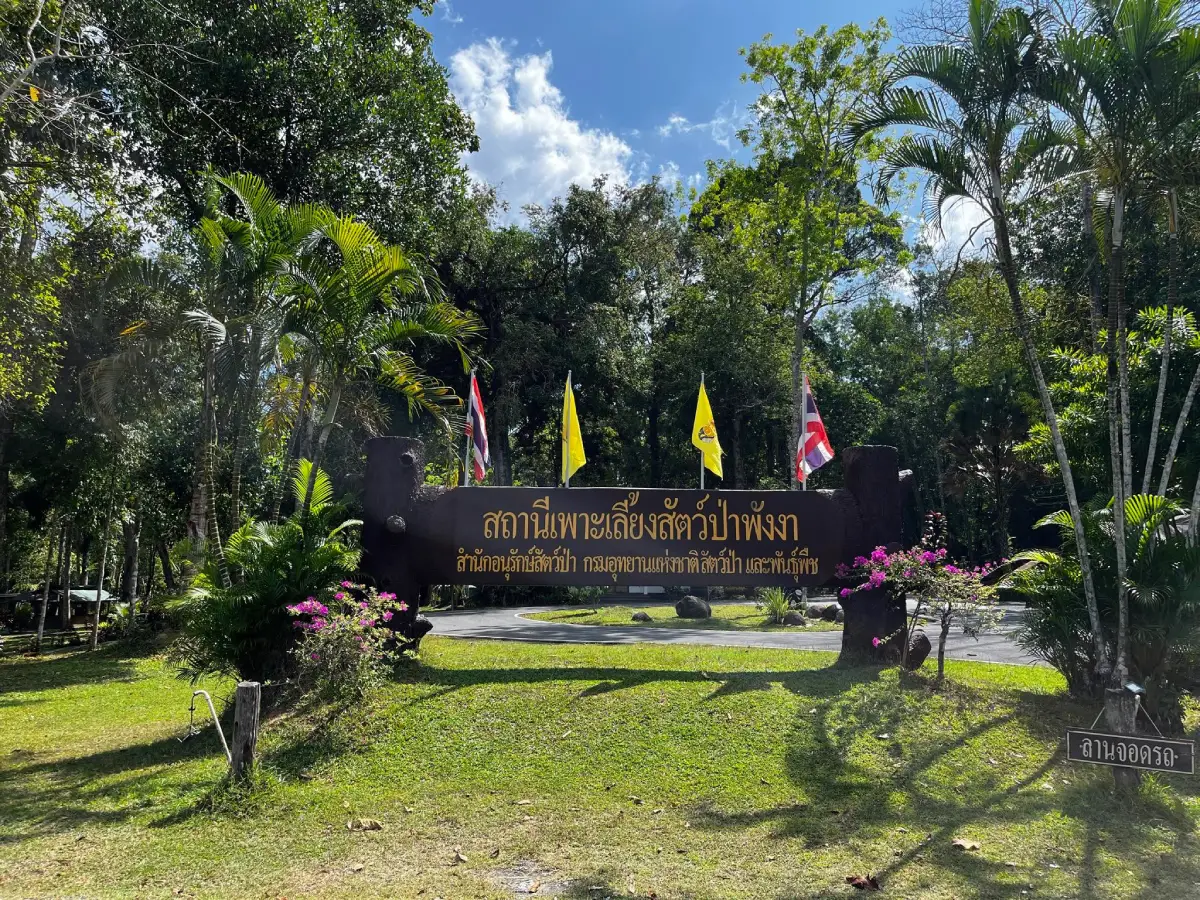
34. Phang Nga Wildlife Breeding Station, Phang Nga Province is situated along Phet Kasem Road near kilometer marker 33 in Tak Daet Subdistrict, Mueang Phang Nga District. It is an important wildlife education and conservation facility in southern Thailand, surrounded by trees and natural landscapes that create a shaded atmosphere. It is particularly suitable for visitors interested in wildlife and learning about animal care within the responsibilities of a conservation organization.
Wildlife breeding stations differ from commercial zoos because their primary focus is animal care and conservation rather than tourism. Animals receiving care may have specific requirements relating to food, health, resting areas, and protection from stress caused by external disturbances.
Visitors entering sections that are open to the public can learn about different types of wildlife and the importance of protecting natural habitats. Wildlife education also highlights problems associated with deforestation, hunting, and the inappropriate capture and keeping of wild animals as pets.
Phang Nga Province contains diverse natural ecosystems, including tropical rainforests, mangrove forests, limestone mountains, and coastal habitats. These environments support many animal species. The diversity of landscapes provides a useful context for learning about the conservation of southern Thailand's ecosystems.
For children and young people, visiting a wildlife breeding station offers an opportunity to understand human responsibilities toward wildlife and the importance of protecting natural resources. Parents can use the visit to explain why wild animals should not be taken from their natural habitats and kept as ordinary household pets.
The station is suitable for quiet nature-based learning. Visitors should remain on designated paths, avoid feeding animals without permission, and not enter areas reserved for animal treatment or care. Following staff instructions helps protect animal welfare and visitor safety.
Its location along Phet Kasem Road makes the station a potential stop during a sightseeing trip through Phang Nga, particularly for travelers interested in learning about terrestrial wildlife in addition to exploring beaches and islands.
Highlights: Wildlife breeding station, peaceful natural surroundings, wildlife conservation education, and free admission.
Open Days: Daily Opening Hours: 08:30–16:30.
Admission Fees: Free admission. Groups should coordinate their visits in advance.
Getting There: From Phang Nga city center, take Phet Kasem Road toward Tak Daet Subdistrict and follow the map coordinates to the area near kilometer marker 33. Private cars and rental cars are convenient transportation options.
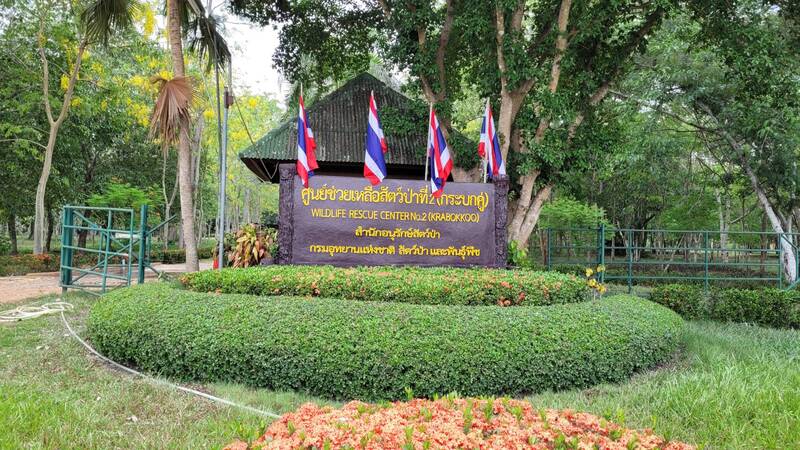
35. Krabok Khu Wildlife Breeding Station, Chachoengsao Province is located in Moo 4, Ban Tha Klong, along Highway 3259 in Tha Takiap Subdistrict, Tha Takiap District. It is an important wildlife breeding and conservation facility in eastern Thailand, with responsibilities involving animal care and public education about nature conservation. Its location is closely connected to the forests and landscapes of Tha Takiap District.
The station is significant for its wildlife care responsibilities, which require suitable food, healthcare, and environmental management for individual species. Animals receiving care at a breeding station may have characteristics and requirements different from those living in the wild and therefore need to be managed by personnel with specialized knowledge.
Tha Takiap District is associated with eastern Thailand's forest ecosystems, which provide habitats for many wildlife species. Learning about animals in this area helps visitors recognize the importance of protecting forests and preventing the consequences of habitat loss.
Wildlife breeding also contributes to the study of animal behavior and the management of animal populations under appropriate conditions. Those interested in biology can learn that different species have different dietary needs, resting patterns, and space requirements. Such information is important for planning animal care and long-term conservation work.
For school and university students, an educational visit can improve understanding of wildlife conservation and human responsibilities toward nature. Prior arrangements should be made with the managing organization because the station's primary purpose is not to operate as a conventional tourist zoo.
Visitors should follow regulations strictly, refrain from feeding or touching animals without permission, and avoid entering restricted animal care areas. Quietly exploring permitted sections helps reduce disturbance to wildlife and supports the station's conservation objectives.
A visit can be combined with nature-oriented sightseeing in Tha Takiap District, particularly for those interested in forests and wildlife conservation work. However, visitors should always confirm whether the station is accepting visitors on their intended travel date.
Highlights: Wildlife breeding, scientifically managed animal care, eastern Thailand's forest ecosystems, and opportunities to learn about nature conservation.
Open Days: Educational visits should be arranged Monday–Friday. Opening Hours: 08:00–16:00 according to the station's published contact hours.
Admission Fees: No general admission rate has been published. Educational and nature-study visits should be arranged with the responsible organization in advance.
Getting There: From Chachoengsao city center, travel toward Tha Takiap District, then take Highway 3259 to Ban Tha Klong in Tha Takiap Subdistrict, following the map coordinates. A private car is the most convenient way to reach the station.
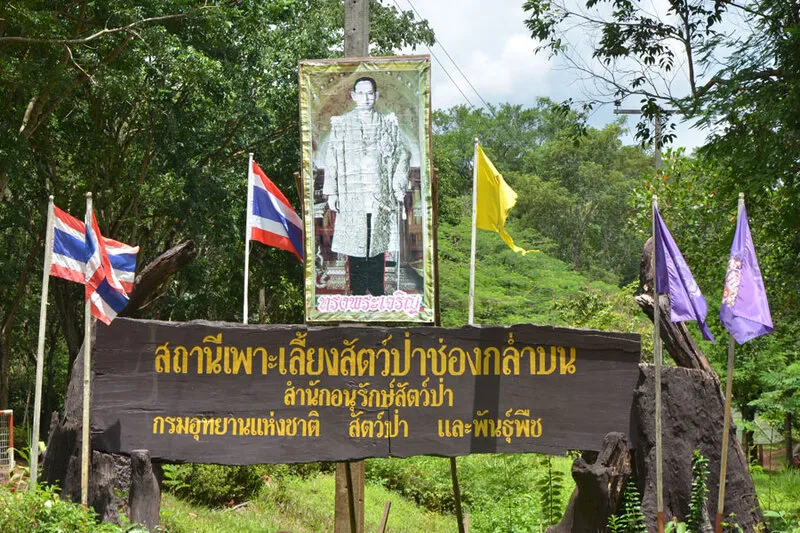
36. Chong Klam Bon Wildlife Breeding Station, Sa Kaeo Province is located in Nong Mak Fai Subdistrict, Watthana Nakhon District, along a route connecting to Pang Sida National Park. It is an important wildlife breeding and conservation learning facility in eastern Thailand, particularly suitable for visitors interested in wildlife and the relationships between animals and natural forest habitats.
The wildlife breeding station is responsible for animal care and conservation under the supervision of the relevant authorities. Such work requires attention to animal health, nutrition, and suitable environments for different species. Learning about wildlife care helps demonstrate that conservation depends on scientific knowledge and systematic management.
The surrounding landscape is associated with the forests of Pang Sida, an ecosystem that supports many different types of wildlife. Protecting forested areas helps maintain sources of food and water as well as habitats for animals. Forest conservation is also important for preserving the ecological balance of the wider region.
Wildlife education in this area can include mammals, birds, and reptiles, all of which have different behaviors and adaptations. Individual species play different roles in ecosystems and require environmental conditions suited to their natural ways of life.
For children and young people, a visit to the wildlife breeding station can help raise awareness of habitat loss and the importance of responsible animal care. Firsthand learning provides a clearer picture of conservation work than studying through educational media alone.
Because the station is responsible for caring for animals, visitors should respect staff regulations, avoid feeding or approaching animals without permission, and refrain from making excessive noise. These precautions are particularly important for animals that may be recovering or adapting to new environments.
Travelers visiting Pang Sida National Park can combine wildlife education with exploring the natural surroundings of the area. It is advisable to confirm visitor access and travel routes in advance to ensure that the visit complies with station regulations and seasonal travel conditions.
Highlights: Wildlife breeding and animal care, conservation activities, proximity to Pang Sida National Park, and education about eastern Thailand's forest ecosystems.
Open Days: Daily according to published information. Opening Hours: 08:30–16:30. Access to certain areas is subject to the managing organization's regulations.
Admission Fees: Generally free admission, without a ticket fee. Opportunities to make voluntary contributions toward conservation activities may be available.
Getting There: From Sa Kaeo city center, travel toward Watthana Nakhon District, then continue to Nong Mak Fai Subdistrict along the route connecting to Pang Sida National Park. Follow the mapped directions. A private car is the most convenient transportation option.

37. Rayong Aquarium, Rayong Province is located near Ban Phe Bay, Moo 2, Phe Subdistrict, Mueang Rayong District. It is an important educational attraction focusing on marine animals and coastal resources in eastern Thailand. Its main features include exhibits of different aquatic species and educational information about the marine ecosystems of the Gulf of Thailand, which are closely connected to fishing communities and coastal tourism.
The aquarium plays a role in marine education and public awareness, providing opportunities to learn about the shapes, colors, and behavior of different aquatic animals through exhibits designed for close observation.
Studying aquatic life is particularly interesting because marine animals live in a variety of ecosystems. Some species inhabit the seabed, others live among coral reefs, and others swim in open water. Each group has different physical characteristics and feeding strategies adapted to its environment.
Ban Phe is an important coastal area for fisheries and tourism in Rayong Province. Learning about marine animals helps visitors understand how marine resources support local economies and why maintaining water quality and preventing marine litter are essential for aquatic organisms and communities that depend on the sea.
For children and young people, observing aquatic animals encourages learning about natural science. Students can compare the shapes, movement, and behavior of different fish species through direct observation and connect the experience to lessons about food chains and biodiversity.
The aquarium's exhibitions are primarily educational, making the attraction suitable for nature enthusiasts seeking an educational activity while traveling in Rayong. However, published information indicates a temporary closure for structural repairs. Travelers should check official reopening announcements before planning a visit.
Once the aquarium resumes normal operations, visitors can combine an aquarium visit with beaches and other attractions around Ban Phe. Sufficient time should be allowed to explore the exhibits and check any additional scheduled activities.
Highlights: Marine animals, Gulf of Thailand ecosystems, fisheries resource education, the Ban Phe Bay location, and marine nature learning activities.
Open Days: The regular schedule is Wednesday–Sunday and public holidays, with Mondays and Tuesdays normally closed. However, the aquarium is temporarily closed for renovations according to the source information. Opening Hours: Regular published hours are Wednesday–Friday 10:00–16:00; Saturdays, Sundays, and public holidays 10:00–17:00.
Admission Fees: Admission rates following the completion of renovations have not yet been confirmed.
Getting There: From Rayong city center, take Sukhumvit Road or a connecting road toward Phe Subdistrict, then follow signs to the Ban Phe Bay area. Visitors can travel by private car or hired vehicle, but should confirm the aquarium's operating status before departure.
Map (GPS):Get Directions to Rayong Aquarium
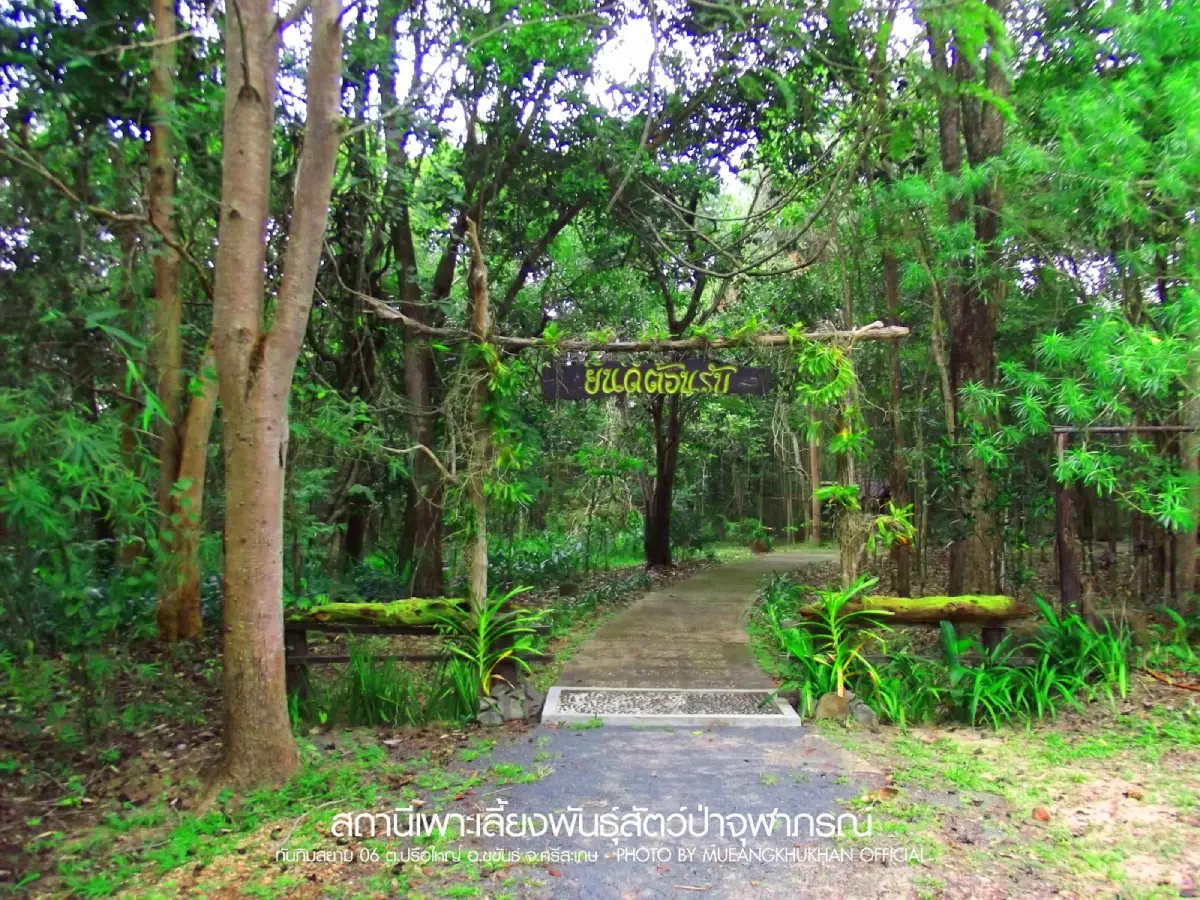
38. Chulabhorn Wildlife Breeding Station, Si Sa Ket Province is located at 5 Moo 13, Ban Na Charia, Prue Yai Subdistrict, Khukhan District. It is an important wildlife conservation and educational facility in northeastern Thailand, with responsibilities involving animal breeding, wildlife care, and promoting public awareness of biodiversity.
The station is significant because it is a wildlife management facility rather than a conventional commercial zoo. Wildlife breeding requires knowledge of animal behavior, health, nutrition, and suitable environmental conditions for each species. Scientific management helps the public understand the importance of conservation and responsible animal care.
The natural environment and landscapes of Sisaket Province are associated with northeastern Thailand's forest ecosystems, which provide habitats for mammals, birds, reptiles, and many other animals. Studying wildlife habitats demonstrates why animal conservation must be carried out alongside the protection of natural forest areas.
Wildlife enthusiasts can learn about differences among animal groups, including herbivores with digestive systems suited to plant-based diets, predators with specialized teeth and senses for locating prey, and birds with physical characteristics adapted to movement through the air. These differences demonstrate how living organisms have adapted to their environments.
The station is also connected to nature-study activities and local tourism, particularly excursions to Pha Morakot that are organized according to announced schedules. Such activities connect wildlife education with the study of landscapes and natural resources in their actual environments.
For school students, university students, and conservation enthusiasts, visiting the station provides opportunities to learn about the responsibilities of wildlife management organizations. These include preventing illegal wildlife trafficking, reducing disturbances to wild animals, and maintaining suitable habitats.
Visitors should follow the designated opening days and times, especially for group visits and nature trails that have additional requirements. They should not feed animals, make excessive noise, or enter animal care areas that are not open to the public.
Highlights: Wildlife breeding, nature conservation, wildlife education, scheduled Pha Morakot excursions, and learning about local ecosystems.
Open Days: Saturdays and Sundays for general visitors. Group visits are subject to separate advance booking arrangements. Opening Hours: 10:00–15:00.
Admission Fees: Thai visitors: adults THB 30, children THB 20. International visitors: adults THB 500, children THB 200. Pha Morakot excursions are charged separately according to the tour package and number of participants.
Getting There: From Sisaket city center, travel toward Khukhan District, then continue to Prue Yai Subdistrict and Ban Na Charia following the signs. A private car or rental car is recommended for convenience. Visitors should also arrange their visiting date before departure.
39. Doi Tung Wildlife Breeding Research Station, Chiang Rai Province is located at 170 Moo 10, Ban Nong Phak Hueat, Chom Mok Kaeo Subdistrict, Mae Lao District. It is an important wildlife breeding and research facility involved in nature conservation in northern Thailand. The station is particularly relevant to visitors interested in animal behavior and the work of wildlife care organizations.
Although its name refers to Doi Tung, the station is located in Mae Lao District. Visitors should therefore rely on the specific location coordinates when planning their journey. Its importance lies in its responsibilities for wildlife care and conservation education, which differ from the better-known tourist attractions on Doi Tung.
Wildlife breeding requires an understanding of the needs of individual species. Different animals have different feeding habits, resting patterns, and space requirements. Appropriate care must therefore consider biological characteristics, environmental conditions, and the reduction of factors that may cause animal stress.
For nature enthusiasts, the station offers opportunities to learn about relationships between wildlife and northern Thailand's forests. The region contains several forest ecosystems, including mixed deciduous forests, dry dipterocarp forests, and montane evergreen forests in certain areas. Different species have evolved adaptations suited to varying climates and available food sources.
Wildlife education also helps explain habitat loss and illegal wildlife trade. Declining populations of wild animals can disrupt food chains and ecological balance. Conservation therefore requires both forest protection and appropriate wildlife population management.
Families with children can use animal viewing in authorized areas as an opportunity to teach responsibility toward living creatures, emphasizing quiet observation, refraining from unauthorized feeding, and following staff instructions.
Because the station is located in Mae Lao District, it can be included in an educational itinerary from Chiang Rai city center. Visitors should plan their travel using the actual location rather than assuming the station is situated within the Doi Tung tourist area.
Highlights: Wildlife breeding research, conservation education, animal behavior learning, and free admission.
Open Days: Daily according to published information. Opening Hours: 08:30–16:30.
Admission Fees: Free admission to areas open to the public.
Getting There: From Chiang Rai city center, travel toward Mae Lao District, then continue to Chom Mok Kaeo Subdistrict and Ban Nong Phak Hueat using the map coordinates. Private cars and rental cars are convenient transportation options.
40. Phu Khiao Wildlife Breeding Research Station, Chaiyaphum Province is located in Huai Yang Subdistrict, Khon San District. It is a wildlife conservation and breeding research facility associated with the natural environment of Phu Khiao, an important forested landscape within northeastern Thailand. It is particularly interesting for visitors wishing to learn about wildlife, nature research, and biodiversity.
Phu Khiao is an important name in nature conservation because its forests form part of mountain and watershed ecosystems. Maintaining healthy forests helps protect wildlife habitats and preserve the balance of natural ecosystems over the long term.
The wildlife breeding research station is involved in studying animal care and management under suitable environmental conditions. This work requires information about the health, diet, reproduction, and behavior of individual species, all of which is important to wildlife conservation.
Those interested in biology can learn about differences in the physical characteristics and behavior of different animal groups. Some herbivores live in herds to increase safety, while predators have physical structures and sensory abilities adapted to finding food. Protecting the diversity of these animals is part of maintaining balanced ecosystems.
The station is suitable for educational learning outside the classroom because it helps children and young people understand wildlife management and the importance of habitat conservation. Learning in a real-world environment can also increase awareness of the effects of deforestation, hunting, and human activities that disturb wild animals.
Visitors should follow the regulations established by the managing organization because research stations contain operational areas and animal care facilities where access may be restricted. They should not feed animals, enter unauthorized sections, or make excessive noise that might disturb wildlife.
Travelers exploring Khon San District can include the station in a nature-oriented itinerary. However, they should confirm visiting days, operating hours, and access conditions before traveling and consider using a private car for convenient transportation.
Highlights: Wildlife breeding research, Phu Khiao conservation, forest ecosystem education, and free admission.
Open Days: Monday–Saturday, including public holidays according to the published schedule; closed on Sundays. Opening Hours: 08:30–16:00.
Admission Fees: Free admission.
Getting There: From Chaiyaphum city center, travel toward Khon San District, then continue to Huai Yang Subdistrict and the research station using the map coordinates. A private car or rental car is a convenient transportation option.
41. Huai Sai Wildlife Breeding Research Station, Phetchaburi Province is located near Khao Tao Pun on Chom Phon Road, Sam Phraya Subdistrict, Cha-am District. It is an important facility for wildlife breeding and nature conservation, with responsibilities involving animal care and public education about wildlife. The station is particularly suitable for visitors interested in nature and conservation activities in the lower central region of Thailand.
The Huai Sai area is significant for natural resource restoration and environmental rehabilitation. Its landscape includes forests, hills, and areas undergoing ecological restoration. These environments are closely connected to the preservation of moisture and the development of suitable habitats for living organisms.
Wildlife breeding and propagation require consideration of several biological factors, including the selection of appropriate diets, environmental management, healthcare, and the reduction of disturbances. Different animal species have different needs, so conservation work requires specialized knowledge and continuous care.
For visitors interested in conservation, learning about wildlife breeding helps explain that animal care involves more than providing food and shelter. It also includes maintaining natural behavior, managing animal populations, and ensuring suitable standards of animal welfare.
Studying wildlife in this area can be connected to forest ecology and the importance of restoring degraded environments. When ecological conditions are restored appropriately, they can better support the survival of many plant and animal species.
For families with young children, visiting authorized areas offers an opportunity to learn about wildlife responsibly. Parents should explain that certain sections are operational wildlife management facilities rather than tourist attractions where visitors can move freely.
The station can be included in a nature-oriented itinerary around Cha-am District and the Huai Sai area. Visitors should coordinate access arrangements before traveling, especially school groups or educational parties wishing to receive guidance from staff.
Highlights: Wildlife breeding and propagation, nature conservation, environmental restoration in Huai Sai, and education about animal welfare.
Open Days: Daily according to published location information. Opening Hours: 08:30–16:30. Access to animal care areas is subject to staff regulations.
Admission Fees: No clearly published general admission rate is available. Educational visits should be coordinated with the managing organization.
Getting There: From Phetchaburi city center or Cha-am District, travel toward Sam Phraya Subdistrict, then continue to the Khao Tao Pun area and Chom Phon Road using the map coordinates. A private car is a convenient option.
42. Kanchanaburi Pet Zoo, Kanchanaburi Province is located at Ban Phu Pradu, Nong Bua Subdistrict, Mueang Kanchanaburi District. It is an animal care and welfare learning facility that differs from large commercial zoos because of its emphasis on animal sheltering and responsible care, alongside opportunities for interested visitors to learn about animals in designated areas.
The importance of this facility lies in its approach to responsible animal care, including appropriate feeding, healthcare, resting areas, and suitable living environments for different species. Learning about animal welfare helps visitors understand that animals need care based on their biological requirements, rather than merely being provided with areas where people can observe them.
Observing animals in designated care areas offers opportunities to study their physical characteristics and behavior, including the differences between herbivores and carnivores. Visitors can use firsthand observation to understand how animals live and adapt to their surroundings.
Animals receiving shelter or care may have particular needs related to their histories and health conditions. Some may require specialized diets or environments, making it especially important to respect the instructions of caretakers. Visitors should not bring unauthorized food or touch animals without permission.
For children and young people, the facility offers an opportunity to learn about responsibility toward living creatures. Parents and educators can explain that keeping any animal involves long-term commitments to nutrition, healthcare, and appropriate living conditions, providing an important lesson about relationships between humans and animals.
The surroundings of Ban Phu Pradu and Nong Bua Subdistrict have a quieter rural atmosphere than Kanchanaburi's principal tourist areas. Visitors interested in animal welfare can combine an authorized visit with nature-oriented sightseeing in Mueang Kanchanaburi District, while considering access requirements and the suitability of available activities.
Visitors should prioritize animal welfare and respect the working areas of caretakers. They should avoid disturbing animals that are resting or receiving treatment and refrain from entering sections that are not open to the general public.
Highlights: Animal sheltering, animal welfare education, responsible animal care, and the rural surroundings of Mueang Kanchanaburi District.
Open Days: Daily according to published location information. Opening Hours: 08:00–17:00.
Admission Fees: No clearly confirmed general admission rate is available. Visitors should check access conditions with the facility's caretakers.
Getting There: From Kanchanaburi city center, follow the route toward Nong Bua Subdistrict, then continue to Ban Phu Pradu using the mapped directions. Private cars and rental cars are convenient transportation options.
Map (GPS):Get Directions to Kanchanaburi Pet Zoo

43. Phu Kradueng Water Park and Zoo, Loei Province is located at Ban Huai Khama, Phu Kradueng Subdistrict, Phu Kradueng District. It is a family attraction combining water park activities and animal viewing within the same grounds. Its main appeal lies in offering several recreational activities in one location, particularly for families traveling with children.
The attraction is interesting because water-based recreation and animal exhibition areas are provided together, giving visitors a wider selection of activities. Guests can choose to relax in the water park or explore the animal displays according to their interests, while enjoying the atmosphere of Phu Kradueng District.
The grounds feature swimming pools, water slides, and water play areas for children and adults, providing enjoyable leisure activities during holidays. Water parks are particularly appealing in hot weather, although parents should supervise children closely and select water play areas appropriate for their ages.
The animal exhibits and ornamental fish displays add an educational dimension to the experience. Children can observe differences between animal groups, including their shapes, colors, and behavior. Combining animal viewing with recreation allows families to enjoy both entertainment and learning.
Ornamental fish display a wide variety of colors and body shapes. Observing different species helps children understand movement, breathing through gills, and the adaptations of animals living in water. Land animals provide further opportunities to compare different forms of life.
The attraction is suitable for family outings because visitors can divide their time between swimming, relaxation, and animal viewing. Families should bring swimwear, towels, and essential items for children while following all water park safety regulations.
Travelers exploring Phu Kradueng District can include the attraction in an itinerary featuring other local destinations. It is particularly suitable for families seeking a recreational break after outdoor sightseeing or a long journey.
Highlights: Water park, water slides, aquatic play facilities, animal exhibits, ornamental fish, and family recreation.
Open Days: Daily. Opening Hours: 09:00–18:00.
Admission Fees: Combined admission and water park tickets: adults THB 100, children THB 50.
Getting There: From Loei city center, travel toward Phu Kradueng District, then continue into Phu Kradueng Subdistrict and Ban Huai Khama using the map coordinates. Private cars and rental cars are convenient transportation options.
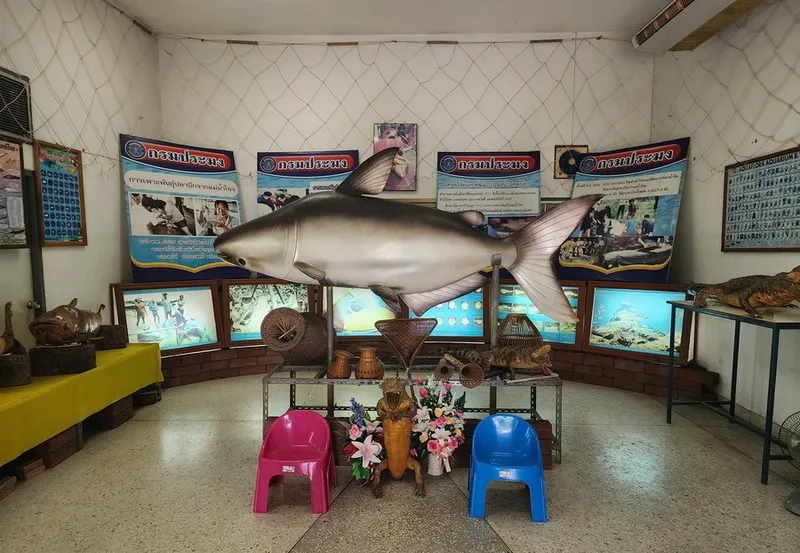
44. Phayao Inland Fisheries Research and Development Center, Phayao Province is located on Phahon Yothin Road in Wiang Subdistrict, Mueang Phayao District. It is an important freshwater fisheries learning facility in northern Thailand, with responsibilities involving research, aquatic resource development, and education about freshwater fish. The center is also closely connected to Kwan Phayao, a natural freshwater lake that is highly valuable to local ecosystems and community life.
The center is distinguished by its combination of freshwater animal research and local historical knowledge. Visitors can learn about aquatic animal breeding, fish conservation, and the importance of managing fisheries resources sustainably.
One of its interesting features is the Giant Catfish Museum, which introduces visitors to the Mekong giant catfish, a large freshwater fish native to the Mekong River basin. This species has distinctive physical characteristics and is important to the study of freshwater biodiversity in Southeast Asia.
Learning about the Mekong giant catfish helps explain the importance of conserving fish species in major river systems. Some aquatic animals require particular environmental conditions for growth and reproduction. Changes in water quality, the construction of barriers across waterways, and inappropriate resource use may affect their survival.
Kwan Phayao is a freshwater lake that has been closely connected to local communities for generations through fishing, agriculture, and tourism. Learning about aquatic life in the area helps illustrate the relationships between freshwater ecosystems and community livelihoods, as well as the long-term importance of maintaining healthy water resources.
The center also includes facilities associated with local history and scientific education, allowing visitors to connect nature studies with an understanding of the area's historical background. Guests should follow the relevant regulations, particularly in sections used for fisheries research and official operations.
For school and university students, the center is suitable for educational visits focusing on fish biology, freshwater ecosystems, and natural resource management. Families can also explore the aquatic exhibits and combine the visit with sightseeing around Kwan Phayao during the same day.
Highlights: Giant Catfish Museum, freshwater fisheries research, fish conservation, Kwan Phayao ecosystems, and local history education.
Open Days: Government working days. Opening Hours: 08:30–16:30.
Admission Fees: Free admission to areas open to the public.
Getting There: From Phayao city center, follow Phahon Yothin Road toward the Phayao Inland Fisheries Research and Development Center. Visitors can travel by private car, local hired vehicle, or public transportation passing through nearby areas.

45. Oasis Farm, Lop Buri Province is located at 85/2 Moo 13, Chong Sarika Subdistrict, Phatthana Nikhom District. It is an agricultural tourism destination and a learning center focusing on domesticated animals, with natural surroundings and a farm environment forming important parts of its appeal. The farm is suitable for families and travelers interested in animal-related activities combined with relaxation in the countryside.
The attraction combines agricultural activities with family-oriented tourism. Its domestic animal areas and natural gardens provide an experience different from that of a large zoo, allowing visitors to learn about farm animal care and relationships between people and domesticated animals.
Learning about domesticated animals is particularly suitable for children. Observing feeding habits, movement, and resting behavior helps introduce basic animal biology and the importance of providing diets and living environments appropriate for different species.
The grounds also include a butterfly garden, adding variety to the nature learning experience. Butterflies are insects with a life cycle consisting of four stages: egg, caterpillar, chrysalis, and adult. Learning about these stages helps children understand metamorphosis and the influence of environmental conditions on insect development.
Butterflies play important roles in pollinating many plant species and are therefore connected to plant diversity and environmental health. Observing butterflies in a garden provides opportunities to understand relationships between insects and flowers and the importance of maintaining green spaces and suitable food plants.
Another attraction associated with Lop Buri's identity is the sunflower field, which adds color to the farm landscape and provides a popular photography setting. However, visitors should take seasonal planting schedules into account, as the appearance and flowering of sunflowers vary throughout the year.
For families, visiting the farm offers children an opportunity to discover nature through different living organisms, including domesticated animals, insects, and plants. Adults can relax in the countryside atmosphere and enjoy taking photographs.
A visit can generally be planned as a half-day activity and combined with other attractions in Phatthana Nikhom District. Visitors should check which farm activities are available and the condition of the sunflower fields before traveling so that the experience matches their interests.
Highlights: Domestic animal farm, butterfly garden, sunflower fields, rural scenery, agricultural activities, and family photography opportunities.
Open Days: Daily. Opening Hours: 08:00–17:00.
Admission Fees: No clearly confirmed current admission price is available. Individual farm activities may involve separate charges.
Getting There: From Lop Buri city center, travel toward Phatthana Nikhom District, then continue to Chong Sarika Subdistrict using the map coordinates. The farm is located in an agricultural area, making a private car or rental car a convenient option.
Map (GPS):Get Directions to Oasis Farm

46. Saithip Butterfly Garden, Chon Buri Province is located in Bang Phra Subdistrict, Si Racha District, along a route connecting to Khao Kheow Open Zoo. It is a nature-oriented attraction particularly known for butterfly breeding and education about insects. It is suitable for families, school students, university students, and anyone interested in learning about the diversity of small organisms that play important roles in ecosystems.
The garden is distinguished by an environment designed to support butterflies, including flowering plants, caterpillar food plants, and natural areas. Visitors can observe butterfly behavior in surroundings close to nature and learn about relationships between insects and plants.
Butterflies undergo complete metamorphosis, with four stages in their life cycle: egg, caterpillar, chrysalis, and adult. Each stage has distinct physical characteristics and behavior. Learning about the cycle helps explain changes in the forms of living organisms and the effects of the environment on insect growth.
The caterpillar stage is especially important for growth because the insect feeds and stores energy before entering the chrysalis stage and eventually emerging as an adult butterfly. Studying caterpillar host plants demonstrates how individual butterfly species may depend on particular plant types.
When butterflies reach adulthood, many contribute to flower pollination as they move from one bloom to another while feeding. This relationship is important for plant reproduction and maintaining ecosystem biodiversity.
The garden provides exhibits and educational activities about butterflies and insects, allowing visitors to study wing structures, coloration, and differences between species. Observing wing patterns also provides an introduction to camouflage, warning coloration, and the adaptations insects use against natural predators.
In addition to butterflies, the exhibits introduce visitors to bees, important pollinating insects that contribute to agriculture and ecosystems. Learning about bees helps explain social insect behavior, food gathering, and the relationships between insects and human food production.
The garden has a shaded atmosphere created by flowering plants and surrounding vegetation, making it suitable for nature walks and photography. Butterfly photographers should move slowly, avoid touching butterfly wings, and refrain from disturbing the insects because butterfly wings are delicate and can be damaged by direct contact.
For families with young children, the garden offers an enjoyable and accessible learning experience outside the classroom. Children can observe butterflies flying among flowers, study their life cycles, and learn that protecting insects is just as important to nature as conserving larger animals.
Because the garden is located near the route to Khao Kheow Open Zoo, both destinations can be included in a single-day wildlife and nature itinerary. Visitors should check the garden's operating status and activities before departure and choose a time when natural light and weather conditions are suitable for butterfly viewing.
Highlights: Large butterfly garden, butterfly life cycle education, flowering and host plants, insect museum exhibits, information about bees, and nature photography.
Open Days: Daily according to published information. Opening Hours: 08:00–17:30.
Admission Fees: Adults THB 100, children THB 50, according to the rates published on the location's webpage.
Getting There: From Chon Buri city center or Si Racha, follow Sukhumvit Road toward Bang Phra, then take the connecting route toward Khao Kheow Open Zoo. Private cars and rental cars are convenient options. Visitors should check the destination coordinates before departure.

47. The Million Years Stone Park and Pattaya Crocodile Farm, Chon Buri Province is located at 22/1 Moo 1, Nong Pla Lai Subdistrict, Bang Lamung District. This attraction combines the beauty of natural rock gardens, ancient trees, a crocodile farm, and a small zoo within the same grounds. It is particularly known for unusual rock formations, petrified wood, and several animal species, with crocodiles forming a distinctive part of its identity.
The park's history is associated with Suan Phanomwatthanakun, who had a strong interest in nature and collecting natural objects of value. He spent several decades gathering unusual rocks and trees before developing the area into a park open to the public. The attraction first opened to visitors on February 1, 1992, and its exhibition areas have continued to evolve.
One feature that distinguishes the attraction from conventional zoos is its extensive stone garden, displaying natural rocks in different shapes and formations. These include stones resembling animals, naturally sculptural forms, and large rock formations arranged among flowering plants and ornamental trees. Visitors can appreciate these natural features while learning about the diversity of rock formations and environmental changes over geological time.
Petrified wood is another particularly interesting exhibit. It is natural fossil evidence formed through a long process in which minerals gradually replace the original structure of wood under suitable environmental conditions. The resulting fossils may preserve the appearance of tree trunks. Observing these specimens connects tourism with geological knowledge and natural history.
The park also features shaped trees and old ornamental plants that reflect the art of traditional Thai garden design. Some shaped trees are several hundred years old and have been carefully maintained to produce distinctive forms. Walking through the garden therefore offers both appreciation of the landscape and insight into the relationship between nature and horticultural art.
The crocodile farm forms another major part of the attraction. It features freshwater and saltwater crocodiles, reptiles whose bodies are adapted to life both in water and on land. They have powerful tails for swimming, tough scaled skin, and strong jaws. Observing crocodiles in their exhibition areas helps visitors understand adaptations associated with predatory animals in aquatic ecosystems.
One of the farm's highlights is its extensive crocodile-keeping area, where visitors can observe differences in size, resting behavior, and movement. Guests must remain within designated visitor areas because crocodiles are powerful predators capable of moving quickly and may pose a serious safety risk if approached inappropriately.
Crocodile performances are another activity that has contributed to the farm's reputation over many years. Performances are presented at scheduled times, with visitors watching from designated seating areas. Guests should follow staff instructions carefully and never attempt to imitate activities involving predatory animals, as such work carries a high level of risk.
Additional animal exhibits have included white tigers, horses, and certain bird species, allowing visitors to compare mammals and reptiles within the same location. Exhibiting several animal groups adds variety to the sightseeing experience, particularly for families wishing to introduce children to animals and nature.
The Million Years Stone Park and Pattaya Crocodile Farm is suitable for a half-day visit. Travelers can begin by exploring the rock gardens and ancient trees before visiting the crocodile farm or attending scheduled activities. Photography enthusiasts will find opportunities to capture rock formations, ornamental gardens, and distinctive landscaped areas. Hats, drinking water, and comfortable outdoor footwear are recommended.
Its location in Nong Pla Lai Subdistrict makes it convenient to combine a visit with other attractions around Pattaya and Bang Lamung District. This is particularly suitable for visitors traveling by private car from Bangkok or staying in Pattaya. The combination of natural gardens and animal education gives the attraction a character different from zoological parks devoted primarily to animal exhibits.
Highlights: Extensive natural stone gardens, petrified wood, ancient shaped trees, crocodile farm, freshwater and saltwater crocodiles, white tigers, and crocodile performances.
Open Days: Daily
Opening Hours: 08:00–17:00
Telephone: 038-249-347 to 038-249-349, 083-112-6080
Getting There: From central Pattaya or Sukhumvit Road, head toward Na Kluea and take Chaiyaphon Withi Road (Highway 3024) near the connecting road by Wat Sawang Fa. Continue following the signs to The Million Years Stone Park and Pattaya Crocodile Farm. Visitors can travel by private car, rental car, or hired vehicle from Pattaya.
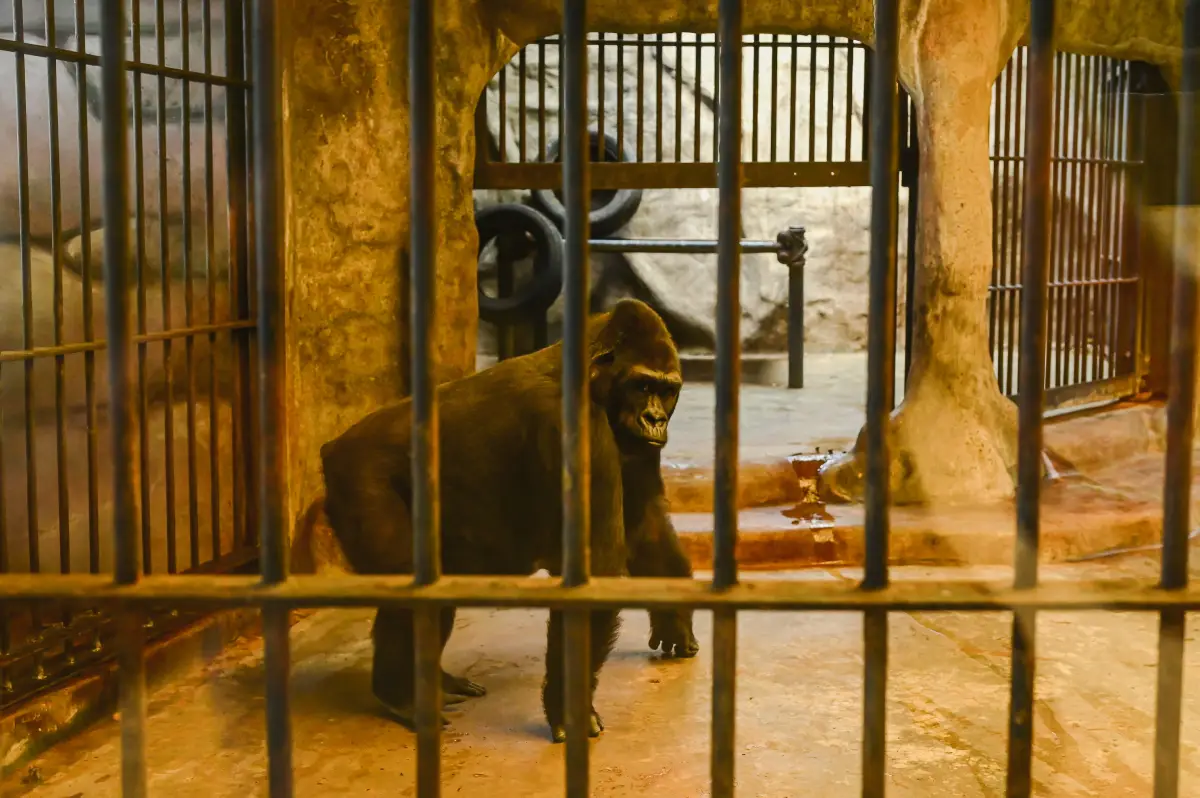
48. Pata Zoo, Bangkok is located inside Pata Pinklao at 125 Somdet Phra Pinklao Road, Bang Yi Khan Subdistrict, Bang Phlat District. It is a private zoo distinguished by its animal exhibits on the upper floors of a shopping center building, setting it apart from conventional zoos located in extensive outdoor grounds. The zoo has a long history and remains associated with the memories of several generations of Bangkok families.
Pata Zoo began operating in 1983 following the development of the Pata Pinklao department store. Its main animal exhibition areas are located on the sixth and seventh floors of the building. The idea of establishing a zoo inside a shopping center reflected an earlier style of urban recreation in which families commonly combined shopping, dining, and leisure activities within the same building.
The attraction is interesting not only because of its animals but also because of its connections to Bangkok's tourism history and urban culture, particularly on the Thon Buri side of the Chao Phraya River, where commercial districts and residential neighborhoods continued to expand. Pata Zoo therefore serves as both an animal learning attraction and a reminder of an earlier generation of shopping centers.
The zoo's best-known animal is Bua Noi, a female gorilla that has lived at the facility for many years. Gorillas are primates with sophisticated learning, communication, and social behavior. Learning about gorillas helps visitors understand the importance of tropical forest habitats, appropriate animal care, and the conservation of wildlife species facing population decline.
In addition to the gorilla, the zoo has displayed mammals, birds, reptiles, and other animal groups according to the exhibits available to visitors. Guests can learn about physical characteristics, diets, behavior, and differences between species within an indoor building environment, creating an experience unlike visiting a large open zoo.
Operating a zoo on upper floors requires particular attention to animal welfare and environmental management, including available space, ventilation, cleanliness, lighting, and the conditions required by individual species. Learning about this form of zoo operation can therefore be connected to discussions about animal welfare and the importance of providing habitats suited to animals' biological needs.
Pata Zoo underwent improvements to its exhibition areas during 2023 to develop educational facilities and accommodate visitors while retaining its identity as a zoo inside Pata Pinklao. These changes allow people who visited the zoo in the past to revisit a familiar attraction while introducing younger generations to a distinctive part of Bangkok's tourism history.
For families with young children, Pata Zoo offers opportunities to learn about different animal species without traveling far outside the city. Parents can use animal viewing to introduce subjects such as behavior, feeding habits, and habitats, while encouraging appropriate conduct around animals, including avoiding loud noises, not tapping on glass, and not feeding animals without permission.
Visitors should respect the regulations of individual exhibit areas, particularly where animals require a quiet environment. They should observe animals from designated locations, avoid attempting to provoke responses or specific behaviors, and refrain from using flash photography where it is prohibited. Responsible animal viewing is an important part of a meaningful educational experience.
The zoo's location in Bang Phlat makes it accessible from Pinklao, Bang Yi Khan, and the Phra Nakhon side of Bangkok. Visitors can combine the zoo with historic attractions along the Chao Phraya River, such as Rama VIII Bridge, Santi Chai Prakan Park, and the Royal Barges National Museum, creating a varied itinerary within the capital.
Pata Zoo is significant as a long-established private zoo, an animal education facility, and a location reflecting the history of leisure activities in Bangkok. Although its format and limitations differ from those of large open zoos, its distinctive story connects animals, architecture, and visitors' memories.
Highlights: Private zoo on the upper floors of a building, history dating back to 1983, Bua Noi the gorilla, exhibits featuring different animal groups, and a long-established attraction in the Pinklao area.
Open Days: Fridays, Saturdays, Sundays, and special holidays as announced.
Opening Hours: 10:00–18:00.
Getting There: From the Phra Nakhon side of Bangkok, cross Somdet Phra Pinklao Bridge and follow Somdet Phra Pinklao Road to Pata Pinklao. MRT Blue Line passengers can get off at Bang Yi Khan Station and continue by local bus or taxi. Travelers arriving by private car should allow additional time for traffic along Somdet Phra Pinklao Road.
Map (GPS):Get Directions to Pata Zoo

49. Chainat Bird Park, Chai Nat Province is located in Moo 4 along Phahon Yothin Road, Khao Tha Phra Subdistrict, Mueang Chai Nat District. It is a specialized bird park and an important nature learning attraction in Chai Nat Province. Covering approximately 260 rai, the park is particularly known for its enormous aviary, which gives numerous bird species a relatively spacious living environment, alongside additional animal exhibits and educational activities for families.
Chai Nat Bird Park is important for tourism and education in central Thailand because it brings knowledge about birds and nature conservation together in one destination. Visitors can study the physical characteristics of different bird species, including their shapes, colors, wing structures, and movement, providing a foundation for understanding avian biodiversity.
One of the park's most distinctive attractions is its giant aviary, covering approximately 26 rai. It has been developed to provide birds with a setting resembling a natural environment. Such a large exhibition area allows birds more freedom of movement than small cages, giving visitors opportunities to observe flight, perching, and feeding behavior from designated viewpoints.
The park features several types of birds with different physical structures and behavior. These include species with beaks suited to eating seeds, fruit-eating birds, and birds that feed on small animals. Observing their beaks and feet helps visitors understand the connections between anatomy, diet, and methods of survival.
Birds perform important ecological functions, including seed dispersal, pollination, and controlling insect populations. Learning about birds therefore goes beyond appreciating their colorful feathers and attractive appearance. It also demonstrates the relationships between birds, forests, wetlands, and natural food resources.
In addition to its bird exhibits, the park includes other animal attractions, such as a snake garden, a rabbit garden, and freshwater animal learning areas. Visitors can therefore study differences among several groups of living organisms within a single destination. These exhibits are particularly suitable for students interested in birds, reptiles, and mammals.
The Freshwater Fish Museum adds another educational dimension by allowing visitors to compare aquatic organisms with animals living on land or in the air. Differences in movement, respiration, and adaptation to different environments can be explored through these exhibits.
For families with young children, Chai Nat Bird Park offers enough attractions for several hours of exploration. Visitors can observe animals, relax in the gardens, and enjoy educational activities. Parents can use a walk through the aviary to teach children about wildlife conservation, avoiding disturbances to animals, and protecting natural resources responsibly.
The park is suitable for day trips from Chai Nat and nearby provinces, as well as for travelers passing through upper central Thailand. Visitors should allow at least half a day if they wish to explore the main exhibits and enjoy the gardens at a comfortable pace.
Highlights: Giant aviary covering approximately 26 rai, a wide variety of bird species, snake garden, rabbit garden, Freshwater Fish Museum, and a family-friendly nature learning attraction.
Open Days: Daily. Opening Hours: 08:00–18:00.
Getting There: From Bangkok, follow Highway 32, also known as the Asian Highway, toward Chai Nat Province. Connect to Phahon Yothin Road toward Khao Tha Phra Subdistrict, then follow the signs to Chai Nat Bird Park. Private cars and rental cars are convenient transportation options.
Map (GPS):Get Directions to Chainat Bird Park

50. Thai Red Cross Snake Farm (Queen Saovabha Memorial Institute), Bangkok is located within the Queen Saovabha Memorial Institute of the Thai Red Cross Society at 1871 Rama IV Road, Pathum Wan Subdistrict, Pathum Wan District. It is one of Thailand's most important educational attractions focusing on snakes and reptiles, combining public education with knowledge about snake venom and the prevention of snakebite injuries.
The Snake Farm has an important place in Thailand's scientific and medical history because the Queen Saovabha Memorial Institute has long been involved in antivenom production and the study of snake venom. Developing a snake farm accessible to the public connects zoological knowledge with public health and the prevention of injuries caused by venomous animals.
The farm features exhibits of various snakes, including venomous and nonvenomous species, allowing visitors to understand differences among reptiles. Studying body structure, scales, head shapes, and behavior requires appropriate scientific information because venomous and nonvenomous snakes cannot be reliably distinguished using any single physical characteristic alone.
Snakes play essential ecological roles, particularly in controlling populations of small animals such as rodents and other natural prey. Learning about snakes helps correct the misconception that all snakes are dangerous to humans and encourages safer ways of living alongside wildlife.
Education about venomous snakes is important for preventing accidents because some species may be found in agricultural areas, forests, or near communities. Visitors can learn why they should avoid approaching snakes, never attempt to capture them, and seek prompt professional medical treatment in the event of a snakebite.
In addition to its animal exhibits, the Snake Farm provides educational activities and demonstrations by experienced staff. These activities help visitors understand snake behavior and essential safety principles through practical examples. Those wishing to attend scheduled demonstrations should check the timetable on the day of their visit because demonstration times may differ from general opening hours.
For school and university students, the Thai Red Cross Snake Farm offers an educational experience connecting biology, zoology, and medicine. Students can learn about snake movement, feeding behavior, shedding of skin, and the medical significance of snake venom through exhibits and educational activities.
The Snake Farm is suitable for families and nature enthusiasts, but visitors should follow all safety regulations strictly. They must not touch snakes, approach exhibition areas beyond the permitted safety distance, or attempt to imitate the handling techniques demonstrated by trained specialists.
Its central Bangkok location on Rama IV Road makes the Snake Farm accessible by rail, bus, or private car. It is suitable for a half-day educational itinerary and can be combined with other learning attractions around Pathum Wan District.
Highlights: Venomous and nonvenomous snake exhibits, snake venom and antivenom education, demonstrations by experienced staff, reptile biology, and the medical history of the Queen Saovabha Memorial Institute.
Open Days: Monday–Friday and certain holidays according to the institute's announcements. Opening Hours: Monday–Friday 08:30–15:30; on holidays when open, 09:30–13:00.
Getting There: Travel to the Queen Saovabha Memorial Institute on Rama IV Road in central Bangkok. Visitors using the MRT can get off at Sam Yan Station or Si Lom Station and continue to the institute by walking or local transportation, depending on convenience.

51. Wat Sing Crocodile Farm (Wasan Crocodile Farm), Chai Nat Province is located in Moo 3, Makham Thao Subdistrict, Wat Sing District. It is a crocodile farm and small zoo with a long history of crocodile breeding. Crocodiles are the principal animals at the facility, alongside other species displayed for public education. One of the farm's distinctive features is its role as a local animal attraction offering free admission, making it suitable for families wishing to learn about reptiles in Chai Nat Province.
The history of the farm is associated with the development of crocodile breeding in Wat Sing District, an activity relevant to reptile farming and education in Thailand. Wasan Crocodile Farm is also a name appearing in crocodile breeding facility registration information. This gives the location an interesting background as both a local attraction and a place where visitors can learn about animal management within a farm environment.
Crocodiles are large reptiles adapted to living in both aquatic and terrestrial environments. They have tough scaled bodies, long and powerful tails for swimming, extremely strong jaws, and eyes and nostrils positioned to help them observe their surroundings while remaining partly submerged. Observing crocodiles therefore offers an opportunity to learn about the evolution and physical adaptations of predatory animals.
Freshwater crocodiles are associated with river and wetland ecosystems in Thailand. Studying these reptiles helps illustrate the ecological roles of predators and their relationships with other animal populations in natural waterways. Visitors can also compare crocodiles with other reptiles by observing their body structures and movement.
In addition to crocodiles, published descriptions of the farm have mentioned other animals, including tigers, deer, peacocks, ostriches, and some aquatic species. The presence of different animal groups provides opportunities to compare feeding habits, movement, and habitats among mammals, birds, and reptiles within a single location.
For children and young people, a crocodile farm can serve as a zoological learning destination where classroom knowledge is connected with observations of living animals. Parents can explain crocodile reproduction, egg laying, growth, the use of the tail for swimming, and body temperature regulation, which differs from that of mammals.
Safety must be a priority during every visit, especially around crocodile ponds. Visitors should not stand too close to the edges or extend their hands or belongings into animal enclosures. Families with young children should supervise them closely and follow all posted safety instructions to prevent accidents and avoid disturbing the animals.
Located in Wat Sing District, the farm can be included in an itinerary featuring natural attractions and other places of interest in Chai Nat Province. It is suitable for a short visit or a half-day excursion. Travelers from Chai Nat city center can follow the Chai Nat–Wat Sing route and continue to Makham Thao Subdistrict.
Highlights: Crocodile breeding farm, freshwater crocodiles, mammals and birds, reptile education, and free admission.
Open Days: Daily. Opening Hours: 09:00–16:00.
Admission Fees: Free admission.
Getting There: From Chai Nat city center, take Highway 3183 toward Wat Sing District, then continue to Makham Thao Subdistrict near kilometer marker 24 of the Chai Nat–Wat Sing route. Follow the directional signs and map coordinates. Traveling by private car is recommended.

52. Pattaya Elephant Village, Chon Buri Province is located in Nong Prue Subdistrict, Bang Lamung District. It is a long-established elephant attraction in Pattaya that has operated since 1973. The village has played a role in elephant care while promoting knowledge about the relationship between elephants and human society. Its highlights include natural surroundings, elephant-related activities, and opportunities to learn about Thailand's traditional elephant care culture.
The history of Pattaya Elephant Village is connected to the establishment of a facility for elephants that had previously worked and required suitable places to live and receive care. This background gives the village significance as both an elephant care facility and a tourist attraction, reflecting the changing roles of elephants from working animals in the past to animals receiving specialized care.
Asian elephants are large mammals with remarkable learning and memory abilities. Their trunks are used to grasp food, drink water, and explore their surroundings. Elephants also communicate through sounds, physical contact, and social behavior. Learning about elephants helps visitors understand the complexity of animals that have maintained close relationships with people for centuries.
Elephants have played important roles throughout Thai history, including transportation, forestry, agriculture, and cultural traditions. Studying these roles helps explain how people once depended on the strength of large animals and why modern approaches to elephant management increasingly emphasize health, appropriate care, and animal welfare.
The village offers elephant-related tourist activities within natural surroundings. Visitors can learn about elephant diets, care, and everyday behavior through activities available under the attraction's operating conditions. Responsible activity selection should prioritize appropriate treatment of elephants and avoid experiences that may cause unnecessary stress.
Mong Chang Cafe is another attraction associated with the village, offering a relaxing environment with opportunities to observe elephants. Travelers can combine time at the cafe with elephant-related learning activities. However, they should check which experiences are included in admission packages and which require additional payment.
For families with children, observing elephants provides an opportunity to learn about large mammals and human responsibility toward animals. Parents can explain elephant diets, their substantial requirements for water and space, and why the care of large animals requires experienced personnel.
Pattaya Elephant Village can be included in a wider sightseeing itinerary around Pattaya. Located in Nong Prue, it can be reached from Pattaya's beachfront areas by private car or taxi. Travelers should allow sufficient time for traffic and check the details of available activities before their intended visit.
Highlights: Long-established elephant care attraction in Pattaya, history dating back to 1973, elephant behavior education, Mong Chang Cafe, and natural surroundings.
Open Days: Daily. Opening Hours: 10:00–18:00 for elephant village activities. The cafe may operate on a different schedule.
Getting There: From central Pattaya, travel toward Nong Prue Subdistrict in Bang Lamung District and follow the route to Pattaya Elephant Village. Private cars, rental cars, and taxis are convenient transportation options.

53. Bangkok Butterfly Garden and Insectarium, Bangkok is located within Wachirabenchathat Park, commonly known as Rot Fai Park, on Kamphaeng Phet 3 Road in Lat Yao Subdistrict, Chatuchak District. It is one of Bangkok's important educational attractions focusing on butterflies and insects. A large butterfly dome provides an environment designed to support insect life, making the garden a nature-oriented destination suitable for families and visitors interested in ecology.
One of the garden's distinguishing features is its role as a butterfly education center within a major Bangkok public park. The attraction covers approximately 6 rai, with a butterfly exhibition dome measuring about 1,100 square meters and rising approximately 15 meters high. The enclosure has been designed to accommodate suitable host plants and environmental conditions for butterflies.
Butterflies undergo complete metamorphosis through four stages: egg, caterpillar, chrysalis, and adult. Changes in their appearance during each stage are important examples of insect development. Visitors can learn that butterflies have different dietary and environmental requirements throughout their life cycles.
During the caterpillar stage, most butterflies feed on leaves from particular host plants. Adult butterflies commonly feed on nectar from flowers. Providing suitable host plants and flowering vegetation is therefore essential to supporting their complete life cycles. This makes the garden particularly useful for studying relationships between insects and plants.
Butterflies are important to ecosystems because they help pollinate many plant species and form part of natural food chains. Declines in butterfly populations in some areas may be associated with the loss of host plants, chemical use, and habitat changes. Learning about butterflies encourages an understanding of the importance of maintaining green spaces and biodiversity.
The garden also provides exhibitions and educational areas focusing on insects. These help children and young people understand differences between insect groups, including body structures, the number of legs, wing characteristics, and lifestyles. Visitors can connect biological knowledge with direct observations of insects.
For nature photography enthusiasts, the butterfly garden provides opportunities to practice close-up photography. Visitors should move calmly and avoid catching or disturbing butterflies because their wings are delicate. Careful photography allows visitors to capture the beauty of these insects while minimizing disturbance.
Located within Rot Fai Park, the garden can be combined with walking, relaxation, and outdoor recreational activities in the surrounding public park. It is suitable for families seeking an educational nature activity in Bangkok without paying an admission fee.
Highlights: Large butterfly dome, butterfly life cycle education, insect host plants, insect exhibitions, the green surroundings of Rot Fai Park, and free admission.
Open Days: Tuesday–Sunday and public holidays; closed on Mondays. Opening Hours: 08:30–16:30.
Admission Fees: Free admission.
Getting There: Travel to Wachirabenchathat Park, or Rot Fai Park, in Bangkok's Chatuchak District. Visitors using public transportation can take the BTS Skytrain to Mo Chit Station or the MRT to Chatuchak Park Station, then walk or continue by local transport to a convenient park entrance.

54. Suan Palm Bird Farm, Chachoengsao Province is located at 25 Moo 6, Wan Phuti 6 Road, Bang Talat Subdistrict, Khlong Khuean District. It is a nature-oriented bird farm distinguished by its collection of different bird species within palm groves and landscaped gardens. The attraction is suitable for visitors interested in birds, bird behavior, and relaxing amid the shaded natural surroundings of Chachoengsao Province.
The farm's main appeal lies in making birds the central focus of the visitor experience, with trees and gardens contributing to the atmosphere. Walking through animal exhibits in green surroundings offers a different experience from observing animals inside buildings and is suitable for travelers who enjoy learning about nature at a leisurely pace.
Birds display considerable diversity in body shape, size, coloration, and behavior. Some species have beaks adapted to eating seeds, while others possess beaks suited to consuming fruit or catching small animals. Studying these differences helps explain the relationships between physical structures, diets, and habitats.
Observing birds also helps visitors understand different forms of avian communication, including vocalizations, body movements, and group behavior. Many bird species use calls to establish territories, attract mates, or warn other members of their groups about danger. These behaviors are particularly interesting from a zoological perspective.
Garden ecosystems and green spaces are important to birds because they provide food, resting places, and nesting habitats. Many trees produce fruits or seeds consumed by birds, while insects in gardens form an important food source for other species. Bird education therefore also promotes an understanding of the relationships between animals and plants.
For children and young people, visiting a bird farm encourages observational skills. Individual bird species have distinguishing features that can be compared, including wing shapes, tails, feather coloration, and movement. Parents can use these observations to explain bird conservation and the importance of avoiding disturbances when animals are resting.
Bird photography should be undertaken from a suitable distance without loud noises or tapping on exhibition enclosures because many birds are sensitive to disturbances. Photographing birds only from permitted viewing points and following caretakers' instructions promotes both visitor safety and animal welfare.
The farm can be combined with sightseeing around Khlong Khuean District and the Bang Pakong River area. It is particularly suitable for travelers interested in wildlife and garden relaxation. Visitors should plan their journey according to the farm's operating days and prepare sun protection for outdoor exploration.
Highlights: Bird farm, diverse bird species, palm gardens, shaded natural surroundings, bird behavior education, and family activities.
Open Days: Tuesday–Sunday and public holidays; normally closed on Mondays.
Getting There: From Chachoengsao city center, travel toward Khlong Khuean District, then continue to Bang Talat Subdistrict and Wan Phuti 6 Road following the signs. Private cars and rental cars are convenient transportation options.
Map (GPS):Get Directions to Suan Palm Bird Farm
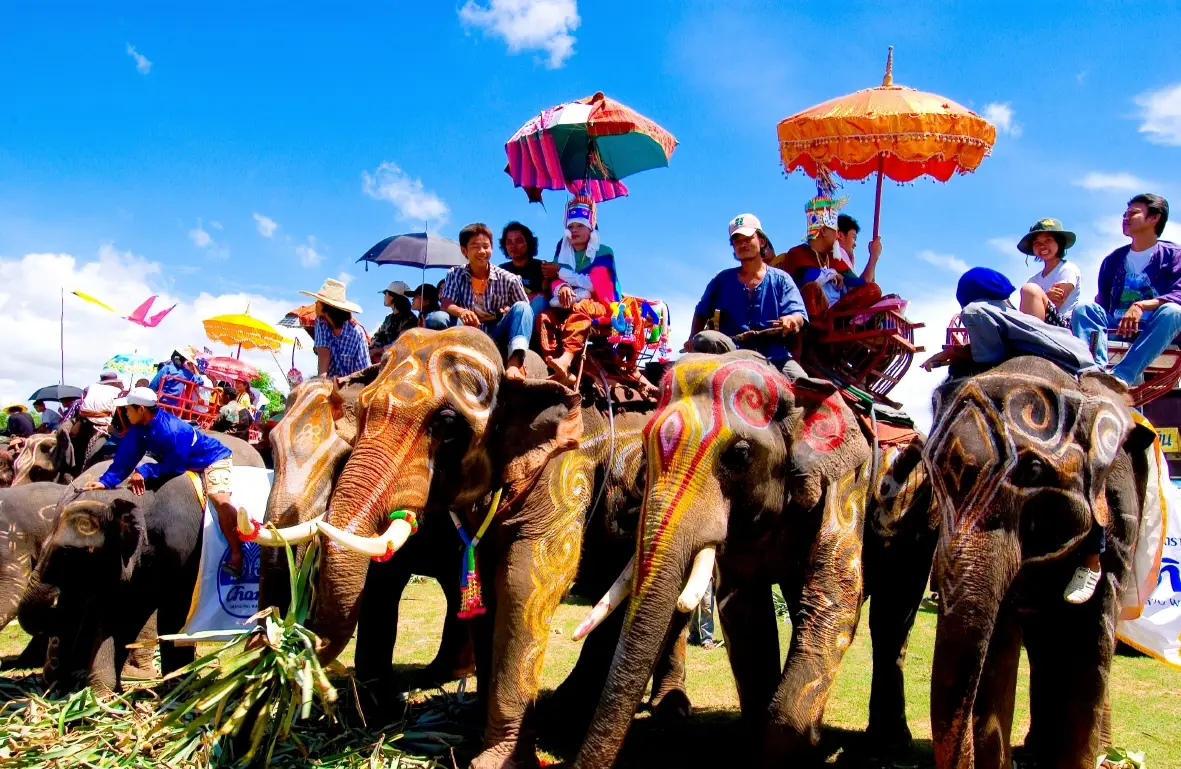
55. Surin Elephant Village, Surin Province is located in Ban Ta Klang, Krapho Subdistrict, Tha Tum District. It is a renowned cultural tourism and elephant learning destination, distinguished by the traditional way of life of the Kui people, whose communities have maintained close relationships with elephants for generations. The area includes the Elephant Study Center, the Elephant World project, a museum, and elephant-related learning activities. This combination brings together wildlife education, local history, and cultural heritage.
Ban Ta Klang has considerable historical significance for elephant keeping in northeastern Thailand. The Kui community has passed down specialized knowledge of elephant care and coexistence with elephants over many generations. This traditional knowledge includes feeding, healthcare, and understanding elephant behavior, all of which form part of the community's identity and daily life.
Asian elephants are large mammals with sophisticated learning and memory abilities. Their trunks can grasp food, draw up water, and touch objects in their surroundings. Elephants also exhibit complex social behavior and communicate through vocalizations and physical contact. Studying elephants helps explain the importance of suitable environments and relationships among herd members.
The Elephant Study Center plays an important role in sharing knowledge about elephants and the culture of elephant-keeping communities. Visitors can learn about the history of elephant use in Thailand, their roles in traditional livelihoods, and changes in elephant management in modern society. This helps illustrate the connections between elephant conservation, nature, and human culture.
The Elephant World project is another significant part of the destination. Through exhibition areas and educational activities, visitors can explore elephant behavior, diets, care, and suitable environments. These experiences should emphasize animal welfare and avoid activities that might cause unnecessary stress to elephants.
The Surin Elephant Museum connects wildlife education with local history by presenting the relationship between elephants and Kui community life, as well as the importance of elephants in Thai society. Its exhibitions help visitors understand that elephants are more than animals to observe; they are also central to longstanding cultural knowledge and traditions.
The surrounding community has distinctive elephant-related lifestyles and traditions that set it apart from conventional zoos. Visitors can learn about coexistence between people and elephants and see how local knowledge relates to the everyday care of large animals.
For children and young people, visiting Surin Elephant Village combines zoology, history, and cultural education. Parents can explain the importance of Asian elephant conservation, the protection of forests and natural food sources, and human responsibilities toward animals under their care.
The village can be included in a wider Surin Province itinerary. Visitors should allow enough time to explore the Elephant Study Center, museum, and other available activities. Those interested in Kui culture should also spend time learning about the community's traditions alongside observing elephants, creating an experience that goes beyond wildlife viewing alone.
Highlights: Ban Ta Klang Elephant Village, Elephant Study Center, Elephant World project, Surin Elephant Museum, Kui traditional lifestyles, and elephant care culture.
Open Days: Daily. Opening Hours: 07:30–17:00. Certain buildings and activities follow separate schedules.
Getting There: From Surin city center, travel toward Tha Tum District, then continue to Krapho Subdistrict and Ban Ta Klang following the road signs. A private car or rental car is convenient for traveling between the various sites within the community.
Map (GPS):Get Directions to Surin Elephant Village

56. Royal Commemorative Insect Park, Nakhon Pathom Province is located within Kasetsart University's Kamphaeng Saen Campus in Kamphaeng Saen District. It is an important educational and research destination focusing on insects and biodiversity. Its distinguishing feature is the presentation of knowledge about different insect species, their life cycles, and their ecological roles. The park is suitable for school students, university students, families, and nature enthusiasts.
The park is significant for connecting entomology, the scientific study of insects, with opportunities to observe living organisms. Insects are extraordinarily diverse and inhabit almost every type of ecosystem. Studying their body structures, life cycles, and behavior provides a practical understanding of relationships between living things and the environment.
Butterflies are important examples of insects that undergo complete metamorphosis, beginning as eggs, developing into caterpillars, entering the chrysalis stage, and finally becoming adults. Each stage has different characteristics and dietary requirements. Studying this life cycle helps children understand animal development and the importance of particular host plants.
Insects perform essential ecological functions, including pollination, the decomposition of organic matter, and serving as food for other animals such as birds, frogs, and reptiles. Learning about insects demonstrates that healthy ecosystems depend not only on large animals but also on vast numbers of small organisms.
The park is also suitable for studying differences between insects that benefit agriculture and those that may damage crops. Understanding agricultural ecosystems helps explain how pests can be managed appropriately while maintaining a balance between farming activities and nature conservation.
For school and university students, a visit can be connected directly to lessons on insect anatomy, reproductive systems, and relationships between insects and plants. Visitors can learn through exhibitions and designated educational areas while following the regulations of the managing institution.
Its location within Kasetsart University's Kamphaeng Saen Campus makes the park suitable for field trips and educational visits. It is accessible as a half-day excursion from Nakhon Pathom and nearby areas. Groups should coordinate their visits with the responsible department in advance.
Highlights: Entomology education, insect life cycles, biodiversity, insects and agriculture, and educational field trips for students.
Open Days: Monday–Friday. Weekend visits require advance arrangements. Opening Hours: 08:30–16:30.
Getting There: From Nakhon Pathom city center, travel toward Kamphaeng Saen District and enter Kasetsart University's Kamphaeng Saen Campus following the directional signs. Private cars and rental cars are convenient transportation options.

57. Pha Nee Butterfly Garden, Prachuap Khiri Khan Province is located in Hin Lek Fai Subdistrict, Hua Hin District. It is a nature-oriented attraction featuring butterflies and plants, with areas where visitors can learn about butterfly life cycles and relationships between insects and the environment. The garden is suitable for families wishing to observe small animals and relax in natural surroundings.
The attraction combines nature education with tourism activities. Butterflies display great variety in size, coloration, and wing patterns. Observing them helps visitors understand how insect characteristics relate to camouflage, feeding, and adaptation to different environments.
Butterflies develop through four stages: egg, caterpillar, chrysalis, and adult. During the caterpillar stage, they feed and store energy before undergoing metamorphosis. Studying this life cycle helps explain biological changes in insects and the importance of specific host plants.
Plants within the garden are essential to butterfly survival because caterpillars of many species feed on particular types of leaves, while adult butterflies commonly depend on flowers for nectar. This relationship helps demonstrate why butterfly conservation requires the protection of both food plants and suitable habitats.
Butterflies also pollinate various plant species, contributing to plant reproduction and biodiversity. Learning about pollinating insects is therefore important for conserving natural gardens and agricultural ecosystems.
Walking through the garden is suitable for visitors wishing to relax at an unhurried pace while learning through direct observation. Butterfly photographers should move quietly, avoid touching the insects' wings, and refrain from disturbing their behavior because butterfly wings are delicate and sensitive to contact.
For families with young children, a butterfly garden provides an introduction to small living organisms. Children can learn about insect coloration, metamorphosis, and relationships between insects and flowers through observing the natural world around them.
Its location in Hua Hin District makes it possible to combine a visit with other nature-related attractions in the area. Visitors should choose a time when weather conditions are suitable for outdoor walking and check the garden's operating status before traveling.
Highlights: Diverse butterfly species, butterfly host plants, medicinal plants and local flora, insect life cycle education, and a natural garden atmosphere.
Open Days: Daily according to published location information. Opening Hours: 08:30–17:00.
Getting There: From Hua Hin town center, travel toward Hin Lek Fai Subdistrict and follow the mapped directions to Pha Nee Butterfly Garden. Visitors can travel by private car or hired vehicle.

58. Khajorn Farm (Ostrich Farm), Phichit Province is located at 121 Moo 2, Wang Ngio Subdistrict, Dong Charoen District. It is an agricultural tourism attraction known for ostrich breeding and exhibits featuring several other animal species within a rural farm environment. The farm offers opportunities to learn about large flightless birds and livestock operations, making it suitable for families and travelers interested in agricultural tourism.
Ostriches are large birds native to Africa. Although they belong to the bird family, they cannot fly like most other birds because their bodies are adapted to running on the ground. Their long, powerful legs allow them to move at high speeds. Observing ostriches therefore provides an interesting introduction to the evolution and adaptations of flightless birds.
Ostriches have feeding habits different from those of smaller birds. They consume plants and other food sources available in their natural environments. Managing their diets within a farm requires appropriate nutrition for growth, together with sufficient water and space for movement.
Ostrich breeding is connected to agriculture and livestock production because these birds are raised on farms for economic and educational purposes. Visiting a farm offers opportunities to learn about enclosure management, animal health, and responsible agricultural practices.
Published information about the farm also mentions other animals, including crocodiles, peacocks, deer, and wild boars. These additional exhibits allow visitors to compare the behavior of mammals, birds, and reptiles. However, the activities available and the number of animals on display may change according to farm operations.
For children and young people, observing animals on a farm provides an opportunity to learn about biodiversity through firsthand experience. Children can study ostrich movement, leg structure, and feeding behavior while learning about safety precautions around large animals.
Visitors should follow the instructions of farm staff, maintain appropriate distances, avoid bringing unauthorized animal feed, and refrain from making excessive noise. Ostriches have powerful legs and may respond quickly to disturbances, making safe distances especially important.
The farm is located in Dong Charoen District, some distance from Phichit city center. Traveling by private car is therefore recommended. Visitors should check admission conditions and available farm activities before departure.
Highlights: Ostriches, large animal farm, livestock education, diverse animal species, and rural agricultural tourism.
Open Days: Daily according to published location information. Opening Hours: 08:00–17:00.
Getting There: From Phichit city center, travel toward Dong Charoen District, then continue to Wang Ngio Subdistrict and the Moo 2 area using the map coordinates. A private car is recommended.
Map (GPS):Get Directions to Khajorn Farm

59. Freshwater Sea (Ostrich Farm), Kanchanaburi Province is located at 8 Moo 3, Tha Takhro Subdistrict, Tha Muang District. It is a recreational attraction combining water activities with an animal farm on the same grounds. Its main features include a large swimming area landscaped to resemble a beach and facilities for viewing animals, particularly ostriches. It is suitable for families and groups seeking outdoor relaxation.
The attraction is distinctive for recreating a seaside atmosphere in a landlocked province. Its swimming area and sandy beach provide spaces for leisure activities, allowing visitors to enjoy swimming, relaxing, and learning about animals within the same location.
Ostriches are large birds capable of running at high speeds. They are distinguished by long, powerful legs and wings that are not adapted to flight in the same way as those of most birds. Observing them helps visitors understand the differences between flying birds and birds that have evolved for life on the ground.
Learning about ostriches can be connected to agriculture and livestock care, particularly the importance of providing appropriate food, water, and living space. Keeping large animals requires attention to their behavior and measures to prevent accidents involving animals and visitors.
For families with young children, the attraction provides a range of activities. Visitors can divide their time between observing farm animals and enjoying the swimming areas. Parents should supervise children closely around water and select activities appropriate for their ages.
Responsible farm tourism requires visitors not to feed animals unless authorized by caretakers and not to touch ostriches without instruction. Ostriches are large, powerful animals capable of moving quickly, so maintaining a safe distance is essential.
Because this is an outdoor attraction, appropriate preparation is important. Visitors should bring hats, drinking water, sunscreen, and clothing suitable for the planned activities. Those wishing to swim should bring a change of clothes and review the rules for using the facilities.
Its location in Tha Muang District makes the attraction suitable for inclusion in a wider Kanchanaburi itinerary. It is particularly convenient for visitors traveling by private car and seeking a full day of family activities.
Highlights: Swimming area and artificial beach, ostrich farm, outdoor recreation areas, and family activities.
Open Days: Daily according to published location information. Opening Hours: 08:00–19:00.
Getting There: From Kanchanaburi city center, travel toward Tha Muang District, then continue to Tha Takhro Subdistrict and the Moo 3 area following the map coordinates. Private cars and rental cars are convenient options.

60. Hua Hin Elephant Village, Prachuap Khiri Khan Province is located along Hua Hin–Nong Phlap Road in Hua Hin District. It is an elephant attraction where visitors can learn about the lives of Thai elephants and their relationships with people. Its highlights include elephant-viewing activities and natural surroundings, making it interesting for travelers wishing to learn about large animals and elephant care traditions in Thailand.
Asian elephants are large mammals that have played important roles in Thai history through transportation, work, and cultural traditions. Learning about elephants helps explain the relationship between humans and animals that have been significant to people's lives for centuries.
One of the elephant's most distinctive physical features is its trunk, which can grasp food, draw up water, and touch objects in its surroundings. Elephants also possess sophisticated sensory abilities and learning capacities. Observing their behavior helps visitors understand the characteristics of large mammals.
Elephant care must consider food, water, space for movement, and health because these large animals require substantial amounts of nutrition and resources. Visitors can learn about elephant feeding and care through activities provided under the attraction's operating conditions.
The relationship between elephants and mahouts is another important subject. Mahouts must develop knowledge of elephant behavior and maintain responsibility for their care over time. Learning about this relationship helps visitors understand traditional elephant-keeping knowledge and the importance of treating animals responsibly.
For families with young children, observing elephants provides an opportunity to learn about large animals through firsthand experience. Parents should explain the importance of maintaining safe distances and not touching or feeding elephants without permission, ensuring safety for both visitors and animals.
Responsible elephant tourism should prioritize animal welfare by choosing experiences that do not create unnecessary stress or force elephants to perform activities beyond appropriate limits. Quietly observing elephants and learning about their care are alternatives that support responsible tourism.
The attraction's location along Hua Hin–Nong Phlap Road makes it possible to combine a visit with other nature-oriented sightseeing in Hua Hin District. Travelers should check which activities are available before departure and choose private cars or hired vehicles according to their preferences.
Highlights: Asian elephants, traditional mahout knowledge, elephant-viewing activities, and Hua Hin's natural surroundings.
Open Days: Daily according to published location information. Opening Hours: Approximately 08:00–17:00.
Getting There: From Hua Hin town center, follow Hua Hin–Nong Phlap Road toward Hua Hin Elephant Village, using the road signs and map coordinates. Visitors can travel by private car, rental car, or hired vehicle.

61. Nakhon Sawan Ostrich Farm, Nakhon Sawan Province is located in Noen Kwao Subdistrict, Krok Phra District. It is an agricultural animal farm distinguished by its ostrich breeding activities and educational information about economically important livestock. Its rural atmosphere and natural surroundings provide opportunities to learn about animal husbandry and farm management.
Ostriches are large birds native to Africa, recognizable by their long necks and legs. Although they have wings, they cannot fly. Instead, they use their powerful legs to run and move across the ground. Studying ostriches helps visitors understand the differences between flying birds and species that have adapted to terrestrial environments.
Ostrich breeding is an agricultural and livestock activity requiring attention to nutrition, animal health, living space, and care during different stages of development. Learning about these responsibilities helps visitors recognize that raising large animals requires appropriate and continuous management.
Ostrich eggs are considerably larger than the eggs of most other birds and provide an interesting example for studying avian reproduction. Observing egg characteristics and learning about chick development helps visitors understand animal life cycles and differences among bird species.
Farms of this type are also interesting for their connections to livestock products and the agricultural economy. Ostrich farming involves farm management, veterinary care, and suitable production practices, providing useful knowledge for those interested in agriculture.
For children and young people, observing animals on a farm encourages an interest in nature. Visitors can study ostrich legs, wing structures, movement, and feeding behavior. They should maintain a safe distance from the animals and refrain from feeding them without permission.
Travel planning should take the farm's rural location in Nakhon Sawan Province into consideration. A private car is recommended for convenience, and visitors should check opening arrangements and available activities before departure.
Highlights: Ostrich farm, livestock education, avian life cycles, and a rural agricultural atmosphere.
Getting There: From Nakhon Sawan city center, travel toward Krok Phra District, then continue to Noen Kwao Subdistrict using the map coordinates. A private car is the most convenient transportation option.
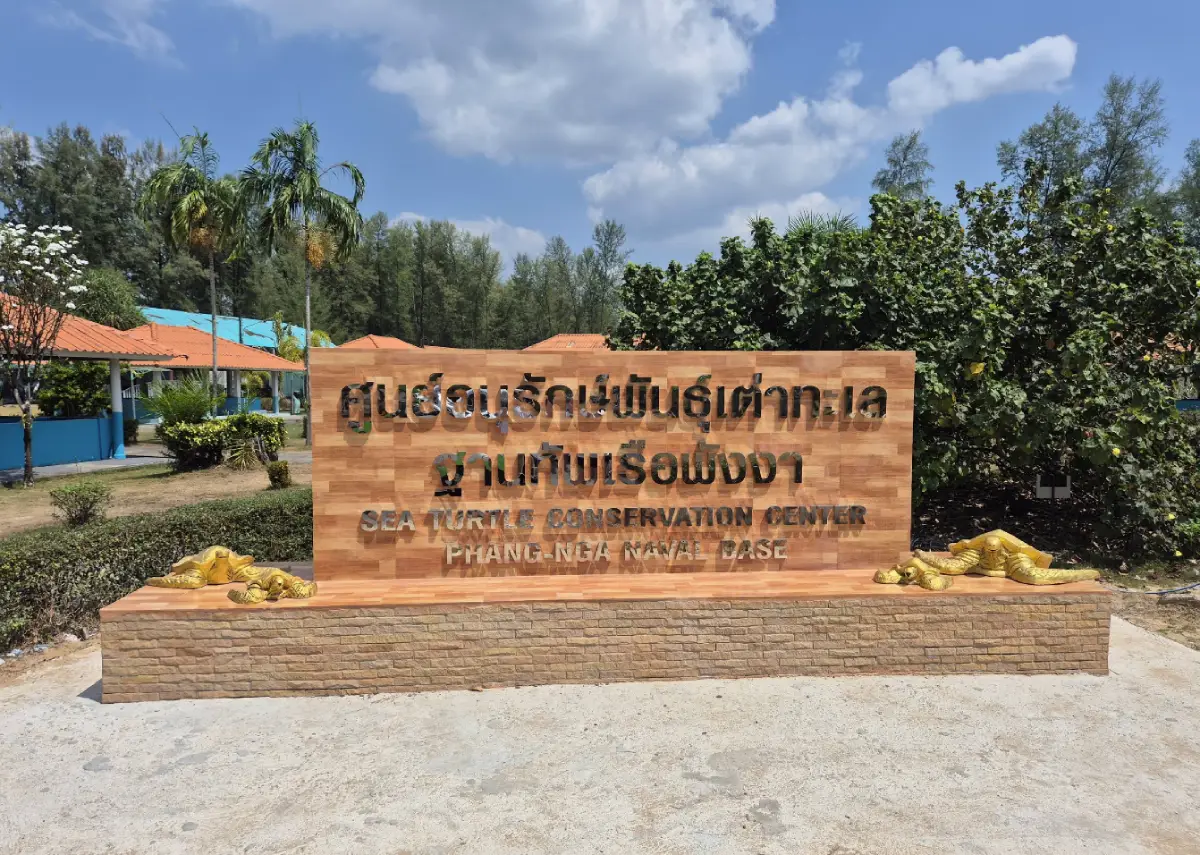
62. Third Naval Area Command Sea Turtle Nursery, Phang Nga Province is located within Phang Nga Naval Base, Third Naval Area Command, in Lam Kaen Subdistrict, Thai Mueang District. It is an important educational facility dedicated to sea turtle conservation and the care of young turtles along Thailand's Andaman coast. Its main features include information about sea turtles, hatchling care, and the importance of protecting marine ecosystems.
Sea turtles are reptiles that spend most of their lives in the ocean but must return to beaches to lay their eggs. Their life cycles are therefore connected to both coastal and marine ecosystems. Sea turtle conservation requires the protection of nesting beaches alongside maintaining healthy marine environments.
Sea turtle nursery programs are conservation activities designed to care for young turtles according to the management practices of the responsible authorities. Visitors can learn about sea turtle life cycles, egg hatching, growth, and factors that influence survival in the wild.
Sea turtles play important ecological roles. Green sea turtles feed on seagrass during certain stages of their lives, while hawksbill turtles are associated with coral reef ecosystems. Learning about these animals helps explain how individual species contribute to marine biodiversity and ecological balance.
Major threats to sea turtles include plastic waste, fishing nets, changes to beach environments, and disturbances at nesting sites. Learning about these challenges encourages awareness of waste reduction and the responsible use of marine resources.
For students and families, visiting the nursery offers an educational opportunity to understand marine conservation work through firsthand observation. Visitors should not touch or feed turtles without permission and must follow the regulations of the naval authorities responsible for the facility.
Its location near Thap Lamu and the Andaman coastline makes the nursery a potential addition to a nature-oriented itinerary in Phang Nga Province. Visitors should check the procedures for entering the naval base and confirm visitor arrangements before traveling.
Highlights: Sea turtle nursery, turtle life cycle education, Andaman Sea conservation, and educational activities for families.
Open Days: Daily according to published location information. Opening Hours: 08:30–16:30.
Admission Fees: Free admission.
Getting There: From Thai Mueang District, travel toward Lam Kaen Subdistrict and continue to the Thap Lamu area and Phang Nga Naval Base, Third Naval Area Command, following the map coordinates. Visitors should comply with all naval base entry procedures.

63. Royal Thai Navy Sea Turtle Conservation Center, Chon Buri Province is located within a Royal Thai Navy area in Sattahip District. It is an important sea turtle conservation learning center in eastern Thailand, featuring turtles at different stages of development and educational information about their life cycles, reproduction, and marine resource conservation. The center is suitable for families, students, and travelers interested in Thailand's marine wildlife.
The center plays an important role in marine biology education, particularly regarding sea turtles, which are reptiles that spend most of their lives in the ocean but return to beaches to lay eggs. This life cycle means that conserving sea turtles involves protecting coastal areas, nesting sites, and ocean environments.
Sea turtles have physical characteristics that distinguish them from terrestrial tortoises. Their front limbs have evolved into flippers used for swimming, and their bodies are adapted for movement through water. Different sea turtle species vary in shell shape, head structure, and feeding behavior. Studying these differences helps explain reptile adaptations to marine environments.
Thailand is home to several sea turtle species, including green and hawksbill turtles, which are associated with different marine ecosystems. Green turtles play important roles in seagrass habitats, while hawksbill turtles are closely associated with coral reefs. Protecting sea turtles therefore contributes to the health of coastal and ocean ecosystems.
Learning about sea turtles also helps explain threats caused by human activities, including plastic waste, fishing nets, disturbance of nesting areas, and changes to beach environments. These problems affect turtle survival at various life stages. Reducing marine litter and protecting coastal habitats are actions in which the public can participate.
The center has educational areas and marine conservation activities carried out as part of the responsible naval organization's work. Visitors can study turtle characteristics and the importance of conservation while learning that caring for marine animals requires appropriate knowledge of nutrition, health, and environmental conditions.
For children and young people, visiting the Sea Turtle Conservation Center connects science lessons with real-world experience. Students can learn about egg laying, growth, and marine adaptations, as well as environmental responsibility through observing animals and educational exhibits.
Visitors should follow all staff regulations, avoid touching turtles or feeding them without permission, and respect restrictions around animal care areas. Turtles receiving care require appropriate diets and health management. Quiet observation also reduces disturbance and helps conservation activities proceed effectively.
Located in Sattahip District, the center can be included in an itinerary featuring nature education and marine attractions in Chon Buri Province. Visitors should allow sufficient time for entry procedures and comply with the requirements of the Royal Thai Navy.
Highlights: Sea turtles at different life stages, turtle life cycle education, marine conservation activities, environmental exhibitions, and educational visits for families.
Open Days: Daily. Opening Hours: 08:00–17:00.
Getting There: From central Sattahip, travel toward the Royal Thai Navy area near Laem Pu Chao, then follow the signs to the Royal Thai Navy Sea Turtle Conservation Center. Private cars and rental cars are convenient options. Visitors should observe all military area entry regulations.
64. Thai Studies Bird Park, Phitsanulok Province is located on Wisut Kasat Road, Soi 17, Nai Mueang Subdistrict, Mueang Phitsanulok District. It is a bird-related attraction and educational destination suitable for families and nature enthusiasts. Its main features include bird exhibits surrounded by trees and green spaces, providing opportunities to learn about the physical characteristics, behavior, and diversity of different bird species.
The park helps make bird education accessible to the public without requiring visitors to travel into natural forests. Its trees and habitat-inspired surroundings create an atmosphere suitable for both learning and relaxation.
Birds are highly diverse vertebrates, differing in size, coloration, body shape, and behavior. Beak structure is an important example of adaptation to different diets, including birds that eat seeds, fruit, or small animals. Observing these differences helps visitors understand the relationships between animal anatomy and ecological roles.
Birds also demonstrate interesting communication methods. Many species use calls to attract mates, communicate with group members, or establish territories, while others use body movements and colorful feathers. Studying these behaviors reveals the complexity of avian life.
Birds contribute to nature through seed dispersal, pollination, and controlling insect populations. Maintaining green spaces and food resources is therefore essential to bird conservation, particularly in urban areas where natural habitats may decline as communities expand.
For children and young people, visiting a bird park helps develop wildlife observation skills. They can compare wing shapes, feet, plumage colors, and behavior while learning about food chains and ecosystem conservation through firsthand experience.
Bird photography should be conducted from appropriate distances without excessive noise or tapping on cages and barriers because many birds are sensitive to sound and movement. Quiet observation allows visitors to study bird behavior in a more natural manner.
Visitors interested in educational tourism can combine the bird park with other attractions in Phitsanulok city center. Sufficient time should be allowed for walking around the exhibits, preferably during the cooler morning hours.
Highlights: Bird exhibits, avian behavior education, shaded green spaces, nature learning for children, and recreation in central Phitsanulok.
Open Days: Daily. Opening Hours: 08:30–17:00.
Getting There: From central Phitsanulok, follow Wisut Kasat Road to Soi 17, then continue using road signs or map coordinates. Visitors can travel by private car or hire a local vehicle.
Map (GPS):Get Directions to Thai Studies Bird Park

65. Tha Sadet Bird Park (Tha Sadet Bird Conservation Unit), Suphan Buri Province is located near Ban Tha Sadet in Sa Kaeo Subdistrict, Mueang Suphan Buri District. It is a nature-oriented bird conservation area that offers opportunities to study birds in their natural surroundings. Its main features include areas used by birds for shelter and education about relationships between birds, wetlands, and surrounding ecosystems.
Tha Sadet Bird Park differs from conventional zoos because it emphasizes learning about birds in natural habitats connected to food sources, water, and nesting or resting sites. Visitors can therefore experience birdwatching in natural surroundings rather than primarily observing animals inside display enclosures.
Natural areas containing trees and water sources provide suitable habitats for numerous bird species. Some birds use these areas for feeding, while others use them for resting or building nests. Maintaining appropriate environmental conditions is therefore important for avian biodiversity.
Birds perform important ecological functions such as seed dispersal, insect population control, and participation in food chains. Protecting bird habitats contributes to healthy ecosystems and the balance of other living organisms in the area.
For birdwatching enthusiasts, walking through natural areas provides opportunities to observe differences in bird shapes, wings, plumage colors, and calls. Binoculars or long-range photography equipment are recommended because they allow visitors to observe birds without approaching too closely or disturbing their behavior.
Morning is often a suitable time for birdwatching because many species actively search for food and move around during the cooler hours. Serious nature enthusiasts should walk quietly, avoid loud noises, and not approach nests or resting areas.
For families and students, Tha Sadet Bird Park is suitable for learning about ecosystems, natural habitat conservation, and relationships between animals and the environment. Birdwatching in natural habitats also encourages an understanding that protecting wildlife requires conserving the places where animals live.
From central Suphan Buri, visitors can travel toward Sa Kaeo Subdistrict and Ban Tha Sadet. Private cars are suitable for accessing the natural area. Travelers interested in birdwatching should bring outdoor footwear, drinking water, and sun protection.
Highlights: Bird conservation area, natural birdwatching, wetland ecosystems, avian biodiversity education, and nature study activities.
Open Days: Daily. Opening Hours: 08:00–17:00.
Getting There: From Suphan Buri city center, travel toward Sa Kaeo Subdistrict, then continue to Ban Tha Sadet using the map coordinates. Private cars and rental cars are convenient transportation options.
Map (GPS):Get Directions to Tha Sadet Bird Park
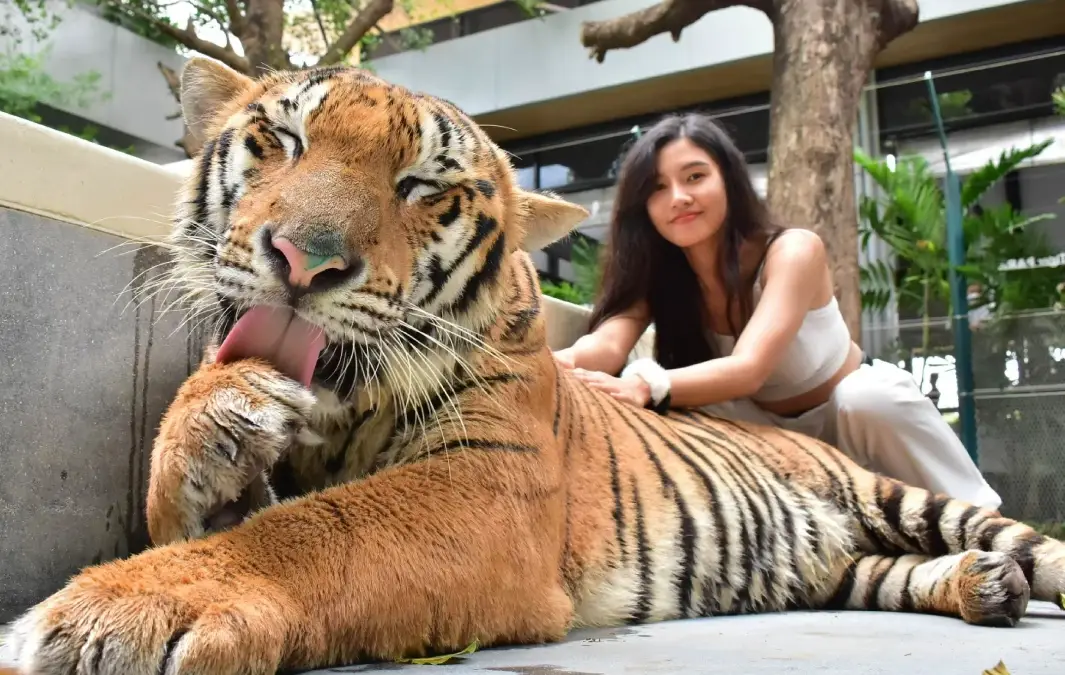
66. Tiger Park Pattaya, Chon Buri Province is located at 349/9 Moo 12, Sukhumvit Road, Bang Lamung District. It is a privately operated tiger park focusing on the exhibition of Bengal tigers and educational activities involving large predators. Its highlights include exhibits featuring tigers of different ages and a safari experience within the same grounds. Its specialized activities distinguish it from conventional zoos featuring many animal groups.
Tigers are large mammals belonging to the cat family and play important roles in natural ecosystems. Their distinctive characteristics include powerful muscles, canine teeth, claws adapted for hunting, and dark stripes that provide camouflage. Individual tigers have unique stripe patterns, which can help distinguish one tiger from another.
The park organizes experiences according to tiger size and the type of activity visitors select. Exhibits feature small, medium, and large tigers, along with animals displaying unusual coat colors, including golden and silver-colored tigers. These differences provide opportunities to learn about genetics and variation within animal populations.
Forest Safari is another activity allowing visitors to explore designated areas by vehicle. This provides a different form of animal viewing in addition to observing tigers in conventional exhibition spaces. Visitors should follow staff instructions and all safety regulations throughout the experience.
In the wild, tigers are generally solitary predators that depend on their senses and physical abilities to find food and patrol territories. Learning about tigers helps explain the importance of apex predators within food chains and why protecting forests and prey populations is essential to maintaining natural ecosystems.
Animal welfare should be an important consideration when visiting tiger parks, particularly during activities involving close contact with large predators. Visitors should review the rules and limitations of each experience. Observing tigers from a safe distance is another way to learn about their characteristics and behavior without direct physical contact.
Tiger Park Pattaya is located along Sukhumvit Road in southern Pattaya, near routes connecting to Pattaya Floating Market and Jomtien. Travelers can include the park in a same-day itinerary around Pattaya. Families with children should select activities appropriate to their ages and the attraction's safety restrictions.
Highlights: Tigers of different ages, golden and silver-colored tigers, Forest Safari, and education about large predators.
Open Days: Daily.
Opening Hours: 09:00–18:00.
Getting There: From Bangkok, take Motorway 7 toward Pattaya, then connect to Sukhumvit Road heading toward southern Pattaya. Continue past the route to Pattaya Floating Market and follow the signs to Tiger Park Pattaya.
Map (GPS):View Tiger Park Pattaya on Google Maps
67. Tiger Kingdom Chiang Mai (Mae Rim), Chiang Mai Province is located at 51/1 Moo 7, Mae Rim–Samoeng Road, Rim Tai Subdistrict, Mae Rim District. It is a private tiger park known for displaying tigers of various sizes and providing tiger-viewing activities. The grounds include tiger exhibition areas, a restaurant, and visitor facilities, making it an option for travelers interested in learning about tigers while exploring the Mae Rim area of Chiang Mai.
Tiger Kingdom specializes in tigers as its primary exhibition animals, unlike large zoos that display numerous animal groups from around the world. Visitors can observe the tigers' physical characteristics, movements, resting behavior, and activities according to the park's visitor arrangements.
Tigers are predators with important ecological roles in forest environments. Their bodies are adapted for movement and hunting, particularly through powerful leg muscles, canine teeth, and claws. Their striped coats provide camouflage among vegetation and natural patterns of light and shadow, making these features interesting subjects for wildlife education.
The park provides activities involving tigers of different sizes, including some with unusual coat colors. These animals offer opportunities to learn about genetic variation. However, animal welfare and visitor safety should be priorities, particularly in activities where visitors come into relatively close proximity to tigers.
Learning about tigers can also be connected to wildlife conservation because they are apex predators that require suitable natural habitats and adequate prey populations. Habitat loss and poaching are major threats to wild tiger populations. Tiger conservation is therefore closely linked to protecting forests and biodiversity as a whole.
In addition to the tiger exhibition areas, the park has a restaurant, beverages, and souvenir facilities where visitors can relax between activities. Travelers who prefer not to participate in direct tiger contact experiences may consider observing animals from designated areas, subject to the operator's available admission options.
Families traveling with young children should check age, height, and activity restrictions because individual programs have different participation requirements. Parents should supervise children closely and avoid touching animals outside the activities authorized by staff.
Its location along Mae Rim–Samoeng Road makes Tiger Kingdom convenient to combine with natural attractions in Mae Rim District, including botanical gardens, waterfalls, and destinations along the mountain route. Visitors can travel from central Chiang Mai by private car or hired vehicle.
Highlights: Tigers of different sizes, special coat color variations, tiger behavior education, restaurant facilities, and a location along the Mae Rim–Samoeng tourism route.
Open Days: Daily.
Opening Hours: 09:00–17:00.
Getting There: From Chiang Mai city center, take Highway 107, also known as Chotana Road, toward Mae Rim District. Turn onto Mae Rim–Samoeng Road, Highway 1096, and continue following the signs to Tiger Kingdom.
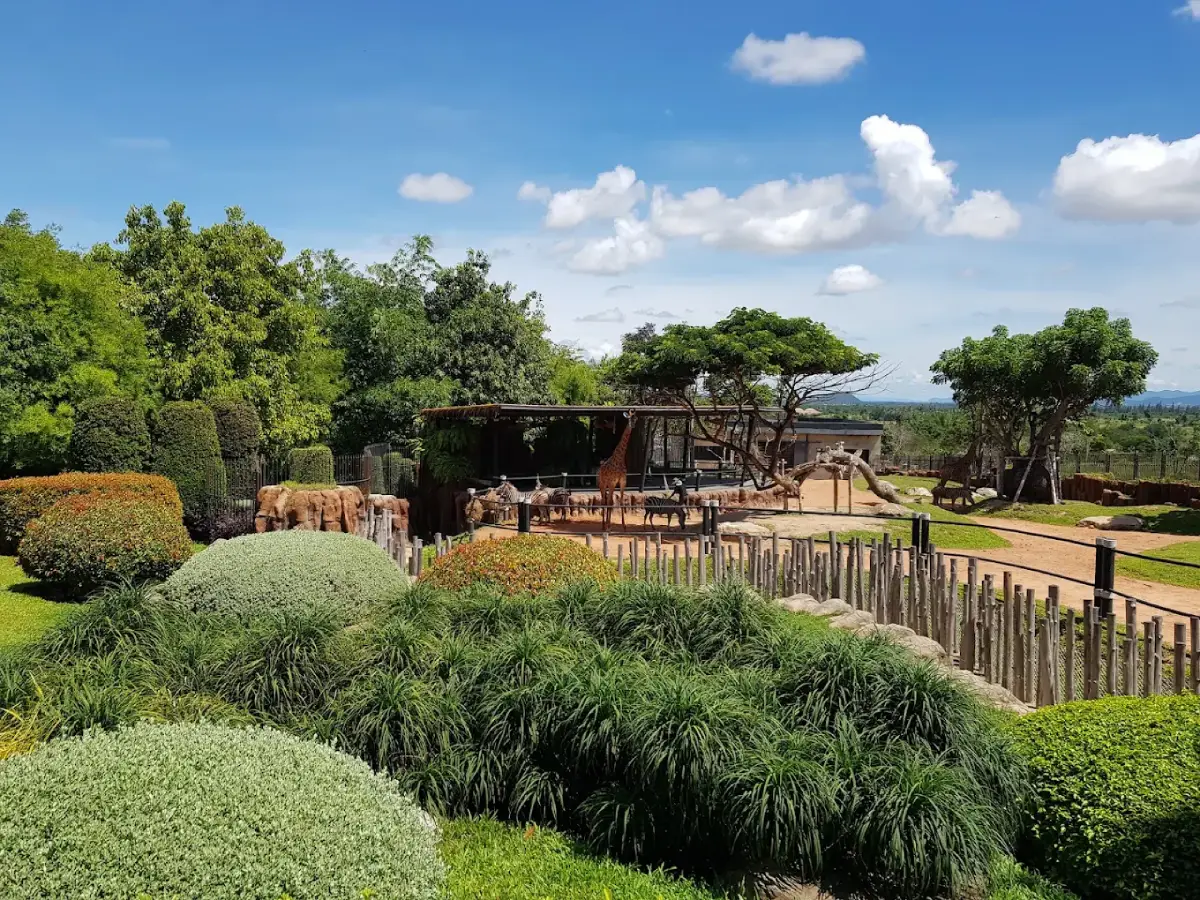
68. Hua Hin Safari & Adventure Park, Prachuap Khiri Khan Province is located at 333 Moo 3, Thap Tai Subdistrict, Hua Hin District. It is a zoo and safari attraction combining animal exhibits with adventure activities for visitors. Covering approximately 60 rai, it offers families another sightseeing option in Hua Hin beyond the district's famous beaches and natural attractions.
The park's main attraction is its collection of activities involving different animal groups in one location. These include tigers, elephants, crocodiles, snakes, and other animals displayed according to the park's visitor programs. Activities operate according to different schedules and packages, allowing travelers to choose experiences that match their interests and available time.
Elephants are large mammals with important roles in Thai history and culture. Their distinctive trunks are used for grasping food, drinking water, and exploring their surroundings. Elephants also possess sophisticated learning abilities and social behavior. Studying them helps explain the importance of appropriate diets, water supplies, movement space, and environmental conditions for large animals.
Tigers are feline predators with physical characteristics suited to hunting, including canine teeth, claws, powerful muscles, and striped coats that provide camouflage. Learning about tigers also highlights the ecological roles of apex predators and the importance of conserving their natural forest habitats.
Crocodiles are reptiles adapted to living in both water and on land. They possess powerful tails for swimming and eyes and nostrils positioned to observe their surroundings while their bodies remain mostly submerged. Observing crocodiles provides opportunities to learn about predator adaptations in aquatic ecosystems. Visitors should strictly follow safety regulations around crocodile exhibits.
In addition to mammals and crocodiles, the park offers snake-related activities introducing visitors to reptiles. Snakes vary considerably in size, coloration, and behavior, and some species are venomous while others are nonvenomous. Snake education should take place through activities supervised by experienced staff. Visitors should never attempt to capture or handle snakes themselves.
Safari activities form an important part of the experience, with animal-viewing and photography options offered through the park's packages. Visitors should review the details before purchasing tickets because some activities have additional charges, age requirements, or safety restrictions. Choosing activities that minimize disturbance and stress to animals supports responsible tourism.
Hua Hin Safari is suitable for families with children and travelers interested in outdoor activities. Visitors should allow enough time to explore the exhibits and attend scheduled activities, bring drinking water, hats, and sun protection, and supervise young children closely around large or predatory animals.
Located in Thap Tai Subdistrict, the park is accessible from central Hua Hin. Travelers can combine animal viewing with visits to beaches, restaurants, or other attractions within Hua Hin District on the same day. Private cars, rental cars, and taxis are convenient transportation options.
Highlights: Zoo and safari, elephants, tigers, crocodiles, snakes, scheduled animal activities, and family recreation.
Open Days: Daily.
Opening Hours: 08:00–17:00.
Getting There: From Hua Hin town center, take Phet Kasem Road and connect to Hua Hin Soi 112 toward Thap Tai Subdistrict. Continue following the signs to Hua Hin Safari. Private cars and hired vehicles are convenient transportation options.

69. Khon Kaen Exotic Pets & Night Safari, Khon Kaen Province is an attraction featuring exotic pets and unusual animals in Mueang Khon Kaen District. Its main features include exhibits of animals that differ from those commonly found on ordinary farms, together with family-oriented spaces and activities. Visitors can learn about animals originating from different regions by observing their physical characteristics, behavior, and diets.
The attraction brings together several types of exotic pets within one location, including alpacas, miniature horses, rabbits, wallabies, sulcata tortoises, and other small animals. This allows visitors to compare mammals, reptiles, and animals adapted to various ecosystems.
Alpacas are mammals native to South America, recognizable by their thick, soft coats, which are associated with their origins in high-altitude environments with relatively cool climates. Studying alpacas helps explain adaptations related to fur and the lifestyles of herbivorous animals domesticated by humans over many generations.
Miniature horses are smaller members of the horse family, sharing many feeding habits and behaviors with larger horses. Observing them helps children learn about herbivores, movement using hooves, and the importance of animal healthcare in managed environments.
Wallabies are marsupials native to Australia, distinguished by their powerful hind legs and tails that help maintain balance during movement. Learning about wallabies helps explain differences between marsupials and other mammals, particularly how their young develop and are cared for during the early stages of life.
Sulcata tortoises are large terrestrial reptiles native to Africa. They have hard shells and legs adapted for walking on land. These herbivores require appropriate diets and environmental conditions. Studying them helps explain differences between land tortoises and aquatic turtles, as well as the importance of proper reptile care.
Exotic pet exhibits help visitors recognize that animals from different geographical regions have varying requirements for food, temperature, space, and healthcare. Keeping these animals requires specialized knowledge, and people should not decide to own exotic pets simply because they are attractive or popular.
For children and young people, a relatively compact animal attraction offers opportunities to learn through close observation. Parents can explain animal diets, geographical origins, and responsible treatment of living creatures. Visitors should avoid handling or feeding animals outside authorized activities.
Another advantage is the convenience of planning a family outing that includes several types of animals without visiting a large zoo. Travelers interested in exotic pets can combine the activity with sightseeing and dining in Khon Kaen city.
Because the attraction's operations and location have changed from earlier promotional information, travelers should rely on the current branch location announced by the operator rather than using the former zoo location along Mittraphap Road. Distinguishing past and present locations helps prevent travel to an outdated address.
Highlights: Alpacas, miniature horses, wallabies, sulcata tortoises, and education about exotic pets from different regions.
Getting There: Use Google Maps to locate the currently operating Khonkaen Exotic Pets branch in Mueang Khon Kaen District. Confirm the entrance and location announced by the operator before traveling because earlier information referred to a different site.
70. Siam Insect Zoo, Chiang Mai Province is located at 23/4 Moo 1, Mae Raem Subdistrict, Mae Rim District, along the Mae Rim–Samoeng route near Mae Sa Waterfall Soi 6. It is a specialized zoo and educational attraction featuring live insects and an insect museum with specimens from various regions of the world. Its main features include entomology exhibits, insect breeding areas, and a butterfly garden, allowing visitors to learn about small organisms that play essential roles in ecosystems.
Siam Insect Zoo was established in 2006 by Pisuth Ek-Amnuay, whose longstanding interest in insects led him to collect specimens from different parts of the world. He developed his collections and knowledge into a public educational attraction, allowing nature enthusiasts to study insect diversity through preserved specimens and living organisms without having to explore remote natural forests.
The zoo is distinctive for presenting the world of small animals, which are often overlooked in conventional zoo tourism. Insects are invertebrates with extraordinary biodiversity, displaying considerable differences in shape, coloration, behavior, and ways of life. Exhibiting different insect groups helps visitors understand the relationships between anatomy and environmental adaptation.
The educational areas are divided into an insect museum and specimen collection, live insect and breeding exhibits, and a butterfly garden. The museum contains specimens of numerous insect species for study. Visitors can compare wings, legs, antennae, coloration, and body shapes, which are important characteristics used to distinguish different insect groups.
Beetles are particularly interesting because their front wings have developed into hard protective coverings that shield the wings used for flight. Beetles vary considerably in size, shape, and coloration. Some species possess horns or specialized structures associated with competition between males. Learning about beetles demonstrates relationships between physical characteristics and insect behavior.
Stick insects and leaf insects are remarkable examples of camouflage because their shapes and colors resemble different plant structures. These adaptations reduce the likelihood of being detected by predators. Visitors can learn that some insects depend on appearance and behavior that blend into their environments rather than using speed for protection.
Praying mantises are another fascinating insect group, distinguished by front legs adapted for capturing prey and the ability to turn their heads to observe their surroundings. Studying mantises helps explain differences between herbivorous and predatory insects, along with the role of small predators in regulating other insect populations.
The butterfly garden is an important educational area where visitors can study the butterfly life cycle, consisting of egg, caterpillar, chrysalis, and adult stages. Complete metamorphosis is a fascinating biological process in which dietary and environmental requirements change considerably during development.
During the caterpillar stage, many butterfly species feed on the leaves of particular host plants, while adult butterflies commonly feed on flower nectar. Host plants and flowering vegetation are therefore essential to maintaining their life cycles. Studying these relationships helps visitors understand why butterfly conservation cannot be separated from protecting natural vegetation and habitats.
Other arthropods, including spiders and scorpions, provide opportunities to compare their characteristics with those of insects. Insects have six legs and bodies divided into three principal sections, while spiders and scorpions belong to arthropod groups with eight legs. Learning these differences introduces visitors to the scientific classification of animals.
Insects perform numerous ecological functions, including pollination, decomposition of organic matter, nutrient cycling, and providing food for birds, amphibians, and other animals. Learning about insects encourages an understanding that healthy ecosystems depend on organisms of every size, not only large animals that are easy to observe.
For children and young people, Siam Insect Zoo is an excellent place for learning outside the classroom. Observing living organisms can be connected with lessons on life cycles, adaptations, biodiversity, and food chains. Parents can encourage children to observe, ask questions, and compare different animal characteristics as they explore each exhibition area.
Visitors should respect safety and animal welfare regulations. They should not capture or disturb live insects except during activities authorized by staff and should never touch potentially venomous animals or those with defensive behavior without guidance. Careful observation helps protect small animals whose bodies are delicate and sensitive to environmental changes.
Siam Insect Zoo is located in the Mae Sa tourism area of Mae Rim District, where natural attractions and educational destinations are distributed along Mae Rim–Samoeng Road. Visitors can combine insect education with nearby nature sightseeing. Approximately 1–2 hours should be allowed for the principal exhibits, with additional time for detailed study or special activities.
Highlights: Insect specimen museum, live insects, beetles, stick insects, leaf insects, praying mantises, butterfly garden, insect life cycle education, and family nature activities.
Open Days: Daily.
Opening Hours: 09:00–17:00.
Getting There: From Chiang Mai city center, take Highway 107, or Chotana Road, toward Mae Rim District. Turn onto Mae Rim–Samoeng Road, Highway 1096, then continue to Mae Sa Waterfall Soi 6 following the signs to Siam Insect Zoo. Private cars, rental cars, and taxis are convenient transportation options.
Map (GPS):View Siam Insect Zoo on Google Maps
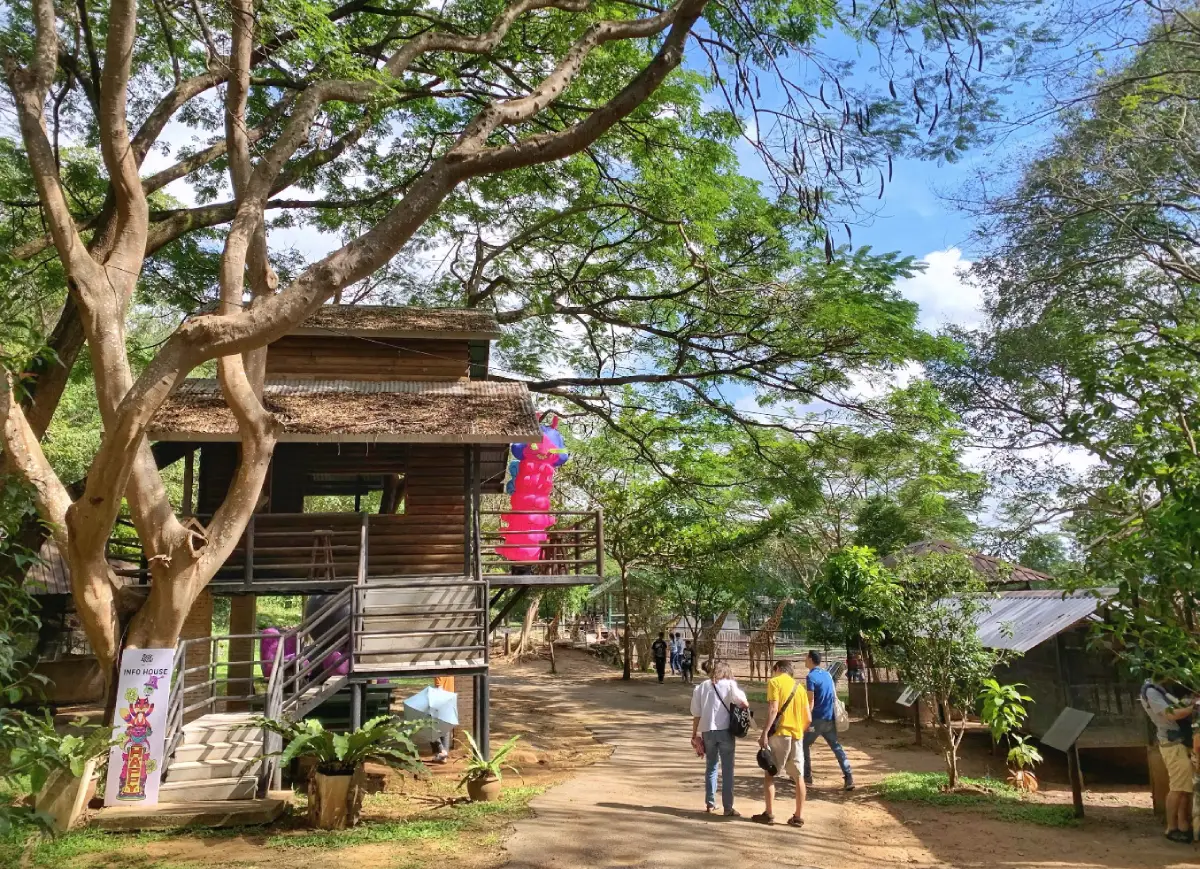
71. Bonanza Exotic Zoo Khao Yai, Nakhon Ratchasima Province is located at 236 Khanong Phra Subdistrict, Pak Chong District, within the Bonanza Khao Yai estate. This private zoo is distinguished by its collection of animal species from different regions of the world, displayed amid the natural landscapes and green surroundings of Khao Yai. One of its main features is a circular walking route around a small hill, approximately 700 meters long. The trail allows visitors to observe animals at close range while learning about their behavior, diets, and biodiversity.
Bonanza Exotic Zoo forms part of the wider Bonanza Khao Yai tourism area, which is known for relaxation and leisure activities in the natural surroundings of Pak Chong District. The development of the zoo has added another attraction for travelers visiting Khao Yai, particularly families with young children and visitors interested in learning about animals through firsthand experience. Walking paths connect the animal exhibition areas, allowing visitors to spend time observing individual species at their own pace.
The zoo's distinctive feature is its collection of mammals, birds, and exotic animals within one location. Popular animals include giraffes, zebras, alpacas, capybaras, miniature horses, prairie dogs, meerkats, lemurs, wallabies, squirrel monkeys, marmosets, gibbons, raccoons, and various parrot species. Observing these animals provides opportunities to compare physical characteristics, movement, feeding behavior, and adaptations among species from different ecosystems.
Giraffes are large African mammals distinguished by their long necks and legs, which allow them to reach leaves high in trees. Zebras have distinctive black-and-white stripes and are herbivores that generally live in herds. Observing these animals helps visitors understand adaptations associated with grassland ecosystems and the importance of space and communication among members of animal groups.
Alpacas are mammals native to South America, recognizable by their thick, soft wool and appearance resembling smaller members of the camel family. Learning about alpacas demonstrates relationships between coat characteristics and adaptation to the climates of their original habitats. They are popular with visitors because of their distinctive appearance and the opportunity to observe their feeding behavior from designated areas.
Capybaras are the world's largest living rodents, native to South America and closely associated with natural water sources. Their distinguishing features include relatively large bodies, short legs, and social group behavior. Studying capybaras helps explain differences between large rodents and other mammals, including adaptations to living both on land and near water.
Meerkats are small African mammals with fascinating social behavior. Members of a group communicate and share responsibilities for monitoring potential danger. Observing meerkats demonstrates the benefits of group living and communication. Prairie dogs, meanwhile, inhabit burrows and use vocal warnings to alert one another to threats, providing another example of behavioral adaptation among small mammals.
Wallabies are Australian marsupials distinguished by powerful hind legs and tails that help maintain balance while moving. Learning about them helps visitors understand differences between marsupials and other mammals, particularly the care of young animals in their mothers' pouches. Lemurs and small monkeys provide additional examples of primate diversity, including different movement patterns, the use of hands for grasping food, and social behavior.
Bird exhibits add further diversity to the zoo, with parrots and other colorful bird species on display. Different birds have beaks, wings, and feeding strategies adapted to their diets and habitats. Studying birds helps explain relationships between anatomy and nutrition, as well as their ecological roles in seed dispersal and maintaining natural balance.
Popular visitor activities include feeding animals at designated locations, such as alpacas, rabbits, birds, and meerkats, as well as viewing larger animals according to the zoo's operating arrangements. Visitors should use only food authorized by the animal keepers because individual species have different nutritional requirements, and unsuitable food may harm their health.
Bonanza Exotic Zoo is suitable for educational experiences outside the classroom, particularly for children and young people interested in animals from different regions. Parents can use the visit to explain herbivores, carnivores, mammals, birds, and relationships between organisms and their environments. Observing living animals can support learning in science and natural history.
The surrounding landscape is an important part of the experience because Khao Yai features rolling terrain and extensive vegetation. The approximately 700-meter walking route allows visitors to explore the exhibition areas continuously. Comfortable outdoor footwear, drinking water, hats, and protection against sun or rain are recommended according to the weather.
Families with young children should supervise them closely during animal-feeding activities and avoid reaching into enclosures without permission. Following zoo regulations improves safety and reduces disturbances to animals. Photography enthusiasts should use designated visitor areas and avoid flash photography or excessive noise where animals could become frightened.
The zoo's location in Khanong Phra Subdistrict, Pak Chong District, makes it convenient to combine a visit with natural attractions, restaurants, and family destinations in the Khao Yai area. Travelers from Bangkok can follow Mittraphap Road toward Pak Chong before connecting to local roads leading to Bonanza Khao Yai. Additional travel time should be allowed during weekends and holidays.
Highlights: Private zoo surrounded by the natural landscapes of Khao Yai, an approximately 700-meter animal-viewing trail, giraffes, zebras, alpacas, capybaras, meerkats, wallabies, lemurs, various bird species, and animal-feeding activities at designated locations.
Open Days: Daily.
Opening Hours: Monday–Friday 10:00–17:00; Saturday–Sunday 09:00–17:00.
Getting There: From Bangkok, take Phahon Yothin Road and connect to Mittraphap Road, Highway 2, heading toward Pak Chong District in Nakhon Ratchasima Province. Continue toward Khanong Phra Subdistrict and the Bonanza Khao Yai area, following road signs or map directions. A private car or rental car is recommended because attractions in the area are spread across several locations.
Summary Table: 71 Zoos and Animal Attractions in Thailand This table categorizes 71 animal-related attractions in Thailand by their characteristics and operating organizations, including government zoos, other public zoos, private zoos, safari parks, aquariums, wildlife conservation centers, breeding stations, and animal farms. These categories are intended to help travelers understand the different types of attractions. Inclusion does not constitute confirmation that every facility holds a zoo operating license or is currently open to the general public.
| No. / Attraction | Province | Type / Operator | Highlights | Telephone |
| A. Government Zoos Operated by the Zoological Park Organization of Thailand (6 Attractions) | ||||
| 1. Khao Kheow Open Zoo | Chon Buri | Government · Zoological Park Organization of Thailand | Open wildlife habitats and sightseeing transportation | 038-318-444 |
| 2. Chiang Mai Zoo | Chiang Mai | Government · Zoological Park Organization of Thailand | Hillside zoo at the foothills of Doi Suthep and diverse wildlife | 053-221-179 |
| 3. Nakhon Ratchasima Zoo | Nakhon Ratchasima | Government · Zoological Park Organization of Thailand | Giraffes, zebras, and African wildlife | 044-934-537 |
| 4. Songkhla Zoo | Songkhla | Government · Zoological Park Organization of Thailand | Hillside zoo with natural scenery and green spaces | 074-598-555 |
| 5. Khon Kaen Zoo | Khon Kaen | Government · Zoological Park Organization of Thailand | Thung Saen Kwang deer area and scenic views of Khao Suan Kwang | 086-459-4192 |
| 6. Ubon Ratchathani Zoo | Ubon Ratchathani | Government · Zoological Park Organization of Thailand | Jungle Park concept and tram tours | 045-252-761 |
| B. Other Government, Local Authority and Public Zoos or Bird Parks (3 Attractions) | ||||
| 7. Chiang Mai Night Safari | Chiang Mai | Government · Public Organization (Separate from the Zoological Park Organization of Thailand) | Nighttime wildlife viewing and guided tram safaris | 053-999-073 |
| 28. Commemoration Open Zoo | Amnat Charoen | Community Zoo · Current Management Not Confirmed | Deer, peacocks, and animals in a community setting | - |
| 49. Chainat Bird Park | Chai Nat | Bird Park · Chai Nat Provincial Administrative Organization | Giant aviary and bird education activities | 056-476-624 |
| C. Private Zoos, Open Zoos and Safari Parks (15 Attractions) | ||||
| 8. Safari World | Bangkok | Private · Zoo and Safari Park | Safari Park and Marine Park | 02-518-1000 |
| 9. Safari Park Kanchanaburi | Kanchanaburi | Private · Open Zoo and Safari Park | Vehicle tours featuring giraffes and safari animals | 034-678-225 |
| 11. Samut Prakan Crocodile Farm and Zoo | Samut Prakan | Private · Crocodile Farm and Zoo | Crocodile farm and animal-viewing activities | - |
| 20. Samui Aquarium and Tiger Zoo | Surat Thani | Private · Aquarium and Zoo | Aquarium and terrestrial animal exhibits | - |
| 21. Trakan Zoo (Tiger Park) | Ubon Ratchathani | Local Tiger Park and Zoo | Predatory animals and local tiger park | - |
| 22. Saraburi Crocodile Farm and Zoo | Saraburi | Crocodile Farm and Zoo | Crocodile farm and other animal species | - |
| 25. Chamsom Crocodile Farm and Zoo | Chanthaburi | Crocodile Farm and Zoo | Crocodiles and various other animal species | - |
| 47. The Million Years Stone Park and Pattaya Crocodile Farm | Chon Buri | Private · Stone Park and Crocodile Farm | Ancient stone gardens and crocodile farm | - |
| 48. Pata Zoo | Bangkok | Private · Indoor Zoo | Zoo located on the upper floors of Pata Pinklao | - |
| 66. Tiger Park Pattaya | Chon Buri | Private · Tiger Park and Safari Attraction | Tigers and specialized tiger park activities | - |
| 67. Tiger Kingdom Chiang Mai (Mae Rim) | Chiang Mai | Private · Tiger Park | Tigers of different ages and sizes | - |
| 68. Hua Hin Safari & Adventure Park | Prachuap Khiri Khan | Private · Zoo and Safari Park | Safari attraction and wildlife-viewing activities in Hua Hin | - |
| 69. Khon Kaen Exotic Pets & Night Safari | Khon Kaen | Private · Exotic Animal Attraction | Alpacas, capybaras, and exotic animals | - |
| 70. Siam Insect Zoo | Chiang Mai | Private · Specialized Insect Zoo | Live insects, insect museum, and butterfly garden | - |
| 71. Bonanza Exotic Zoo Khao Yai | Nakhon Ratchasima | Private · Zoo and Exotic Animal Attraction | Giraffes, alpacas, capybaras, and meerkats | 083-941-3368 |
| D. Aquariums and Aquatic Animal Exhibitions (13 Attractions) | ||||
| 10. Bueng Chawak Chaloem Phrakiat | Suphan Buri | Government / Local Authority · Wetland and Aquarium | Underwater viewing tunnel and natural wetland environment | - |
| 12. Phuket Aquarium | Phuket | Aquarium · Aquatic Education Center | Underwater tunnel and marine life of the Andaman Sea | - |
| 13. Sisaket Aquarium | Si Sa Ket | Aquarium · Aquatic Education Center | Glass underwater tunnel and freshwater fish exhibits | - |
| 14. Underwater World Pattaya | Chon Buri | Aquarium · Aquatic Education Center | Underwater tunnel and marine exhibits in Pattaya | - |
| 15. Marine Science Institute, Burapha University | Chon Buri | Public University · Marine Science Institute | Jellyfish exhibits and marine science exhibitions | - |
| 16. Rajamangala Trang Aquarium | Trang | Public University · Aquarium | Andaman Sea aquatic exhibits and marine education | - |
| 17. Samut Sakhon Aquatic Animal Exhibition Center | Samut Sakhon | Aquatic Exhibition Facility · Check Operating Status Before Visiting | Aquatic animals and estuarine ecosystems | - |
| 27. King Mongkut Memorial Park of Science and Technology at Waghor | Prachuap Khiri Khan | Government · Science Park and Aquarium | Science exhibitions and aquatic animal displays | - |
| 29. Chalermphrakiat 6th Cycle Anniversary Aquarium | Chanthaburi | Aquarium · Aquatic Education Center | Marine life and coastal ecosystems of Chanthaburi | - |
| 30. Roi Et Municipal Aquarium | Roi Et | Municipality · Aquarium | Freshwater fish exhibits near Bueng Phlan Chai | - |
| 31. Freshwater Fish Exhibition | Bangkok | Aquatic Exhibition / Fisheries Facility · Check Operating Status Before Visiting | Freshwater fish and fisheries education | - |
| 37. Rayong Aquarium | Rayong | Aquarium · Aquatic Education Center | Marine aquarium and Gulf of Thailand ecosystems | - |
| 44. Phayao Inland Fisheries Research and Development Center | Phayao | Fisheries Research Agency · Not a Zoo | Freshwater aquatic research and fisheries education | - |
| E. Wildlife Conservation Centers, Breeding Stations and Animal Learning Facilities (15 Attractions) | ||||
| 19. Khao Prathap Chang Open Zoo and Wildlife Breeding Research Station | Ratchaburi | Government · Wildlife Breeding Research Station | Wildlife breeding and conservation research | - |
| 23. Thai Elephant Conservation Center (Thung Kwian Forest Plantation) | Lampang | State Enterprise · Elephant Conservation Center | Thai elephant conservation and care | 054-829-329 |
| 32. Phatthalung Wildlife Breeding Station | Phatthalung | Government Agency · Wildlife Breeding Station (Restricted Visitor Access) | Wildlife rehabilitation and breeding | - |
| 33. Khao Soi Dao Wildlife Breeding Center | Chanthaburi | Government Agency · Wildlife Breeding Station (Restricted Visitor Access) | Wildlife care in the Khao Soi Dao area | - |
| 34. Phang Nga Wildlife Breeding Station | Phang Nga | Government Agency · Wildlife Breeding Station (Restricted Visitor Access) | Wildlife care and management in Phang Nga | - |
| 35. Krabok Khu Wildlife Breeding Station | Chachoengsao | Government Agency · Wildlife Breeding Station (Restricted Visitor Access) | Wildlife breeding at Krabok Khu | - |
| 36. Chong Klam Bon Wildlife Breeding Station | Sa Kaeo | Government Agency · Wildlife Breeding Station (Restricted Visitor Access) | Wildlife breeding at Chong Klam Bon | - |
| 38. Chulabhorn Wildlife Breeding Station | Si Sa Ket | Government Agency · Wildlife Breeding Station (Restricted Visitor Access) | Wildlife breeding and care at Chulabhorn Station | - |
| 39. Doi Tung Wildlife Breeding Research Station | Chiang Rai | Government Agency · Wildlife Breeding Research Station (Restricted Visitor Access) | Wildlife research at Doi Tung Station | - |
| 40. Phu Khiao Wildlife Breeding Research Station | Chaiyaphum | Government Agency · Wildlife Breeding Research Station (Restricted Visitor Access) | Wildlife research in the Phu Khiao area | - |
| 41. Huai Sai Wildlife Breeding Research Station | Phetchaburi | Government Agency · Wildlife Breeding Station (Restricted Visitor Access) | Wildlife breeding and propagation at Huai Sai | - |
| 50. Thai Red Cross Snake Farm (Queen Saovabha Memorial Institute) | Bangkok | Thai Red Cross Society · Snake Farm and Learning Center | Venomous snakes and antivenom education | - |
| 55. Surin Elephant Village | Surin | Elephant-Keeping Community · Cultural and Elephant Tourism Destination | Elephant village and traditional community lifestyles | - |
| 62. Third Naval Area Command Sea Turtle Nursery | Phang Nga | Royal Thai Navy · Sea Turtle Nursery | Sea turtle nursery and conservation | - |
| 63. Royal Thai Navy Sea Turtle Conservation Center | Chon Buri | Royal Thai Navy · Sea Turtle Conservation Center | Sea turtle conservation and hatchling care | - |
| F. Animal Farms, Butterfly Gardens and Other Animal Attractions (19 Attractions) | ||||
| 18. Military Engineer Sheep Farm | Nakhon Sawan | Military Unit · Sheep Farm | Sheep farm within Chiraprawat Military Camp | - |
| 24. The Scenery Resort | Ratchaburi | Private · Sheep Farm and Resort | Sheep farm and countryside atmosphere of Suan Phueng | - |
| 26. Mae Khi Sheep Farm | Chiang Mai | Animal Farm · Animal-Viewing Attraction | Sheep farm amid the natural surroundings of Mae Rim | - |
| 42. Kanchanaburi Pet Zoo | Kanchanaburi | Animal Shelter and Care Facility · Not a Conventional Zoo | Domestic animal care and sheltering | - |
| 43. Phu Kradueng Water Park and Zoo | Loei | Water Park and Animal Attraction · Operating Status Requires Verification | Water recreation facilities and animal-viewing areas | - |
| 45. Oasis Farm | Lop Buri | Animal Farm · Agricultural Tourism | Animal farming and agricultural tourism activities | - |
| 46. Saithip Butterfly Garden | Chon Buri | Butterfly Exhibition / Farm · Check Operating Status Before Visiting | Butterflies and nature education | - |
| 51. Wat Sing Crocodile Farm (Wasan Crocodile Farm) | Chai Nat | Animal Farm / Exhibition · Check Operating Status Before Visiting | Local crocodile farm | - |
| 52. Pattaya Elephant Village | Chon Buri | Elephant Attraction · Animal Learning Activities | Elephant-viewing and educational activities | - |
| 53. Bangkok Butterfly Garden and Insectarium | Bangkok | Bangkok Metropolitan Administration · Butterfly Garden and Insectarium | Butterfly and insect garden within a public park | - |
| 54. Suan Palm Bird Farm | Chachoengsao | Animal Farm · Bird-Viewing Attraction | Palm gardens and diverse bird species | - |
| 56. Royal Commemorative Insect Park | Nakhon Pathom | Insect Learning Center · Not a Conventional Zoo | Insect exhibitions and educational activities | - |
| 57. Pha Nee Butterfly Garden | Prachuap Khiri Khan | Butterfly Exhibition / Farm · Check Operating Status Before Visiting | Butterfly garden and breeding activities | - |
| 58. Khajorn Farm (Ostrich Farm) | Phichit | Animal Farm / Exhibition · Check Operating Status Before Visiting | Ostrich farm | - |
| 59. Freshwater Sea (Ostrich Farm) | Kanchanaburi | Animal Farm / Exhibition · Check Operating Status Before Visiting | Ostrich farm | - |
| 60. Hua Hin Elephant Village | Prachuap Khiri Khan | Elephant Attraction · Animal-Viewing Activities | Elephant village and tourist activities | - |
| 61. Nakhon Sawan Ostrich Farm | Nakhon Sawan | Animal Farm / Exhibition · Check Operating Status Before Visiting | Ostrich farm | - |
| 64. Thai Studies Bird Park | Phitsanulok | Birdwatching and Educational Attraction | Bird education and observation garden | - |
| 65. Tha Sadet Bird Park (Tha Sadet Bird Conservation Unit) | Suphan Buri | Bird Conservation Area · Natural Birdwatching | Natural birdwatching habitats | - |
Frequently Asked Questions (FAQ)
Q: How many zoos operated by the Zoological Park Organization of Thailand are included in this article?
A: There are 6: Khao Kheow Open Zoo, Chiang Mai Zoo, Nakhon Ratchasima Zoo, Songkhla Zoo, Khon Kaen Zoo, and Ubon Ratchathani Zoo.
Q: Is Chiang Mai Night Safari operated by the Zoological Park Organization of Thailand?
A: No. Chiang Mai Night Safari is a government attraction operated as a public organization. It is not under the Zoological Park Organization of Thailand.
Q: What is the difference between a private zoo and an animal farm?
A: Private zoos generally exhibit animals for public viewing, while animal farms may focus on animal breeding, livestock management, or agricultural tourism. The presence of animals at a location does not automatically mean that it is a licensed zoo.
Q: What is the difference between an open zoo and a safari park?
A: An open zoo generally provides spacious exhibition areas where visitors can observe animals, while a safari park usually features vehicle routes through animal habitats. Both approaches may be combined within a single attraction.
Q: Are wildlife conservation centers and wildlife breeding stations open to visitors?
A: Some facilities provide educational areas or designated viewing points that are open to the public. Others restrict visitor access because of their responsibilities for animal care or scientific research. Visitors should check directly with the managing organization before traveling.
Q: Is the former Sriracha Tiger Zoo still operating under its original name?
A: The original Sriracha Tiger Zoo announced the closure of its business in 2021. Any attraction subsequently operating at the same location should be checked separately to confirm its current operator, name, and available services.
Q: Are all 71 attractions licensed zoos?
A: No. The article brings together 71 animal-related attractions for travelers, including zoos, aquariums, conservation centers, and animal farms. This is not a count of facilities registered under official zoo operating licenses.
Q: What should visitors check before traveling to a zoo or animal attraction?
A: Visitors should check whether the attraction is currently operating, its opening days and hours, activity schedules, admission fees, current contact information, and any safety requirements for viewing or interacting with animals.
 Category: ●Travel Articles, Recipes
 Group: ●Travel Review, Food Review
Last Update : 1 DayAgo
 Last Update : 1 DayAgo
Recommend

 Art, Culture and Heritage
 Historical Sites and Monuments(3)
 Landmarks and Memorials(23)
 Royal Palace(13)
 Art, Craft Centres, Tradition(35)
 Museums(59)
 Historic Homes and Cities(3)
 Art Gallery(16)
 Educational Places
 Museum for Study(6)
 Library(4)
 Places of Worship
 Temple(72)
 Church(2)
 Mosque(67)
 Other Sacred Sites(8)
 Research and Development
 Royal Project(1)
 Suburban Living
 Village, Community(5)
 Local Market(9)
 Floating Market(2)
 Nature and Wildlife
 River, Canal(3)
 Bays and Beaches(1)
 Other natural attractions(1)
 Entertainment and Agricultural
 Zoos and Aquariums(5)
 Animal camps and shows(5)
 Stadium(9)
 Farms, Parks and Ecotourism(20)
 Amusement Park(1)
 Waterpark(4)
 Theater(7)
 Cinema(1)
 Shopping
 Shopping and Night Market(20)
 Department Store(7)
 Spas and Wellness
 Spas and Wellness(1)
 Restaurant
 Michelin Star(5)
 Accommodation
 Hotel(3)
 Call Customer Service in Tourism
 Call Customer Service in Tourism(1)
Travel Review, Food Review(41)
 Royal Thai Desserts and Recipes(56)


