
lovethailand home >South Travel Attractions >Phatthalung Travel Attractions >Si Nakarin >Ban Na > Phatthalung Wildlife Breeding Station
TL;DR: Phatthalung Wildlife Breeding Station is located at Ban Na Wong, Moo 1, Ban Na Subdistrict, Srinagarindra District, Phatthalung Province, open Daily, hours 06.00 – 18.00.

Phatthalung Wildlife Breeding Station
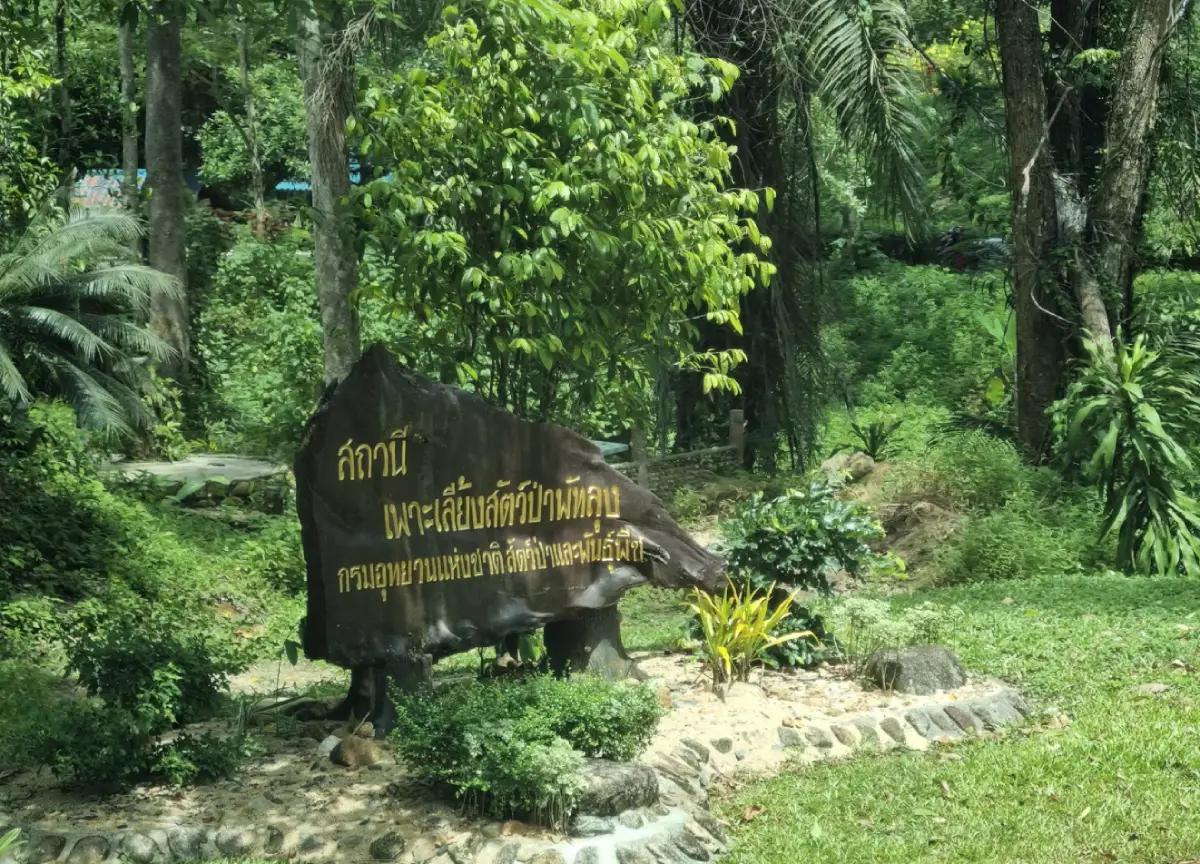
Open Days: Daily
Opening Hours: 06.00 – 18.00
Phatthalung Wildlife Breeding Station is an important wildlife learning and conservation site in Phatthalung Province. It is located at Ban Na Wong, Moo 1, Ban Na Subdistrict, Srinagarindra District, Phatthalung Province, in an area connected with the Banthat Mountain Range. The surrounding landscape includes hills, lowland areas, forest cover, and streams that flow through the area throughout the year. This natural setting makes the station suitable for wildlife care, breeding, behavioral study, and conservation education.
The idea behind the station was initiated by Mr. Phong Lengi, who was Director-General of the Royal Forest Department at the time. The goal was to provide Phatthalung Province with a place for research, study, and learning related to wildlife breeding and wildlife behavior. It was also intended as a place where students, university groups, and the general public could observe and learn about rare wildlife, endangered wildlife, and southern Thai native wildlife in a structured educational setting.
The station was established in 1994 and operates under the Wildlife Breeding Group, Wildlife Conservation Office, Department of National Parks, Wildlife and Plant Conservation. Its main work involves the study, research, breeding, and propagation of wildlife, especially rare and ecologically important species of southern Thailand. The station therefore functions as both a technical conservation unit and a public learning site.
Its location in Ban Na Wong, Ban Na Subdistrict, places it close to the forested landscape of the Banthat Range and the wider Khao Banthat wildlife conservation area. The terrain includes hills and flat areas, with forest cover and water flow that help create a shaded and natural atmosphere. This environment supports the care of wildlife and helps visitors understand the relationship between animal conservation and forest habitat.
Current public information from Phatthalung provincial authorities reports that the station has 82 wildlife species, totaling 1,198 animals. This makes it one of the key wildlife learning sites in southern Thailand. It can be understood as a small wildlife park with a strong conservation mission rather than a general entertainment zoo. Visitors can learn about southern wildlife diversity and the importance of caring for rare and endangered animals.
The station’s work includes wildlife breeding, wildlife propagation, animal care, behavioral observation, and conservation support. It has been involved in breeding rare and endangered animals for release back into nature under the “Return Wildlife to the Forest for a Complete Forest” project. Species mentioned in this mission include greater mouse-deer, lesser mouse-deer, green peafowl-pheasant, and red junglefowl. These species help show the connection between the station and the wider forest conservation work of southern Thailand.
The station also supports broader wildlife protection duties. It may receive protected wildlife from law-enforcement cases, care for injured or displaced wildlife, and work with other conservation agencies in southern Thailand. This role makes Phatthalung Wildlife Breeding Station part of a wider conservation network that protects wildlife beyond its own visitor area.
For visitors, the station is best approached as an educational nature site. It is not a place for loud entertainment or close interaction with animals. Visitors should walk quietly, observe animal behavior, read available information, and understand that many animals are present for care, conservation, or study. Each animal is part of a larger conservation story involving habitat loss, illegal possession, injury, breeding, or reintroduction.
The station is suitable for students, families, study groups, nature travelers, and anyone interested in wildlife conservation. It helps visitors understand practical topics such as rare wildlife conservation, wildlife breeding, the return of animals to nature, the care of injured animals, and the legal and ethical problems caused by keeping protected wildlife without permission.
One of the values of visiting the station is seeing how wildlife is connected with the real forest landscape of southern Thailand. Ban Na Wong and Ban Na Subdistrict are close to the Banthat Range, where forests, streams, waterfalls, caves, orchards, and rural communities are all part of the wider ecological setting. The station is therefore not isolated from nature; it is located within a landscape that helps explain the wildlife of the region.
The station area includes outdoor learning zones, animal care areas, shaded paths, and spaces used for education. Visitors should allow about 1–2 hours for a calm visit. Groups should contact the station in advance, especially schools or study groups that want educational support from staff. Advance coordination helps match the visit with the age, group size, and learning purpose of the visitors.
Visitor behavior is very important. Visitors should not feed animals without permission, knock on cages, shout, put hands into animal areas, use flash close to sensitive animals, throw objects, or try to provoke animals for photographs. Wild animals can be stressed easily, and their behavior differs from domestic animals. Respecting distance is a basic part of ethical wildlife learning.
The station is useful for children because it teaches that wildlife is not a toy and that conservation does not mean keeping wild animals as pets. Children can learn that protecting wildlife involves conserving habitat, reducing hunting, avoiding illegal wildlife trade, and allowing animals to perform their role in natural ecosystems. Parents should prepare children before visiting and explain the importance of quiet and respectful behavior.
In travel terms, Phatthalung Wildlife Breeding Station fits well into a Srinagarindra and Ban Na nature route. Nearby places include Wat Tham Sumano, Khao Khram Waterfall, Phraiwan Waterfall, Ban Na community homestays, Khao Khram, and other nature-based attractions near the Banthat Range. Visitors can combine the station with a cave temple, waterfall, café, or homestay to create a varied educational and nature-focused trip.
Wat Tham Sumano is a strong nearby stop because it is also located in Ban Na Subdistrict. The temple is known for its large limestone cave, Buddha images, stalactites, stalagmites, and peaceful meditation atmosphere. Combining the wildlife breeding station with Wat Tham Sumano gives travelers both wildlife learning and cave-temple scenery in the same local area.
Khao Khram Waterfall is another important nearby natural site in Srinagarindra District. Located in the Khao Pu–Khao Ya National Park area, it is a multi-tiered waterfall fed by streams from the Banthat Range. Combining the wildlife breeding station with Khao Khram Waterfall helps visitors understand both animals and the forest habitats that support southern wildlife.
The Ban Na area also has homestays, cafés, and community-based tourism experiences. Places such as Ban Na homestay network, Baan Suan Kwang Homestay & Café, Ban Na Mountain View, The Khaokram, and The Khuan Dinso show how local communities use mountain scenery, orchards, local ingredients, and nature-based settings to create tourism experiences.
Getting There is easiest by private car or rental car. From Phatthalung town, take the Phet Kasem / Phatthalung–Trang road toward Ban Na Subdistrict, Srinagarindra District. The distance from town is about 24 km. Near Ban Na Wong, a large sign marks the entrance to the wildlife breeding station, and the station is about 1 km from the main road. The route is suitable for a half-day trip from Phatthalung town.
Travelers without a private vehicle should first reach Phatthalung town, then arrange local transport to Ban Na and Ban Na Wong. A private vehicle is recommended because attractions in the Srinagarindra and Ban Na area are spread out. With a car, visitors can more easily combine the station with Wat Tham Sumano, Khao Khram Waterfall, cafés, and community homestays.
The best time to visit is from morning to afternoon, when the weather is more comfortable for walking. In the rainy season, visitors should bring an umbrella or raincoat and wear non-slip footwear because paths may be damp. Groups should contact the station in advance, especially if the visit is for educational purposes.
Visitors should prepare for a nature-learning visit rather than an amusement-style visit. Wear comfortable clothing, use walking shoes, bring drinking water, and take all rubbish back out. Photography should be done from a respectful distance and should not disturb animals or staff. Respecting wildlife and station rules is the core of a responsible visit.
The value of Phatthalung Wildlife Breeding Station lies in making wildlife conservation visible and understandable. Many people only see wildlife in news reports or photographs, but a visit to the station shows that each species requires specific care, food, space, health monitoring, and behavioral understanding. Conservation is a long-term task that depends on trained staff, scientific knowledge, funding, and public cooperation.
The station also helps visitors understand wildlife law and ethics. Many protected animals cannot be kept privately without permission, and illegal wildlife trade removes animals from forests and damages ecosystems. The correct way to love wildlife is not to possess it, but to protect habitat, respect wildlife, and support conservation work.
Phatthalung Wildlife Breeding Station is therefore a meaningful stop for travelers who want to understand Phatthalung through forests and wildlife, not only temples, waterfalls, or Thale Noi. It shows that the province has important conservation work, dedicated wildlife staff, forest habitats, and a public learning site that can build awareness among younger generations.
Overall, the station should be included in a Srinagarindra travel route for visitors interested in wildlife, education, and nature. It offers a chance to see rare and local southern wildlife, learn about breeding and reintroduction work, understand ethical wildlife behavior, and connect the visit with nearby natural attractions around Ban Na. A visit here adds substance to a Phatthalung trip and helps visitors appreciate the living value of southern Thailand’s wildlife.
| Name | Phatthalung Wildlife Breeding Station |
| Location | Ban Na Wong, Moo 1, Ban Na Subdistrict, Srinagarindra District, Phatthalung Province |
| Address | Ban Na Wong, Moo 1, Ban Na Subdistrict, Srinagarindra District, Phatthalung Province 93000, Thailand |
| Highlights | Rare and endangered southern wildlife, wildlife breeding and propagation, wildlife behavior study, conservation learning, and wildlife reintroduction missions. |
| History | Initiated by Mr. Phong Lengi, former Director-General of the Royal Forest Department, and established in 1994 as a research, breeding, and public wildlife-learning site. |
| Distinctive Features | A wildlife breeding station on the Banthat Range landscape, with hills, lowland areas, forest cover, streams, and many animals for conservation learning. |
| Reported Wildlife Collection | 82 species, totaling 1,198 animals. |
| Key Wildlife In Conservation Missions | Greater mouse-deer, lesser mouse-deer, green peafowl-pheasant, red junglefowl, and several rare or endangered southern wildlife species. |
| Travel Information | From Phatthalung town, take the Phet Kasem / Phatthalung–Trang road for about 24 km toward Ban Na Subdistrict. Near Ban Na Wong, follow the sign for about 1 km to the station. |
| Current Status | Open as a wildlife breeding station, wildlife learning site, and nature education area in Srinagarindra District, Phatthalung Province. |
| Open Days | Daily |
| Opening Hours | 06.00 – 18.00 |
| Facilities / Activity Areas | Wildlife viewing areas, animal care areas, walking paths, shaded areas, and learning spaces for students and public visitors. |
| Main Areas / Zones | Wildlife breeding area, wildlife behavior study area, rare wildlife care area, endangered wildlife area, southern native wildlife area, and conservation-learning area. |
| Caretaker / Related Agency | Wildlife Breeding Group, Wildlife Conservation Office, Department of National Parks, Wildlife and Plant Conservation. |
| Station Chief | Mr. Prach Khongthong |
| Contact Number | 081-388-5936 |
| Key Activities | Observing rare wildlife, studying wildlife behavior, learning about breeding and propagation, understanding wildlife conservation, and arranging educational study visits. |
| Visitor Etiquette | Do not feed animals without permission, knock on cages, shout, put hands into animal areas, litter, or ignore staff guidance. |
| Nearby Tourist Attractions | 1. Wat Tham Sumano, about 5 km 2. Khao Khram Waterfall, about 10 km 3. Ban Na Homestay And Community Route, about 10 km 4. Phraiwan Waterfall, about 18 km 5. Kaeng Hu Rae, about 25 km |
| Nearby Restaurants | 1. Phu Sam Yot Coffee @ Na Wong, about 2 km 2. Ban Na Mountain View, about 8 km, Tel. 063-406-4141 3. The Khaokram, about 9 km, Tel. 084-889-1821 4. Baan Suan Kwang Homestay & Café, about 10 km, Tel. 080-709-8361 5. The Khuan Dinso, about 12 km, Tel. 085-554-2499 |
| Nearby Accommodations | 1. Baannakoh Blissful Resort, about 6 km, Tel. 074-605-770 2. Kritsila Homestay, about 10 km, Tel. 099-296-3928 3. Baan Buppha Homestay, about 10 km, Tel. 081-898-0349 4. Baan Suan Kwang Homestay & Café, about 10 km, Tel. 080-709-8361 5. Na Sita Tul Homestay, about 11 km, Tel. 084-300-6377 |
Frequently Asked Questions (FAQ)
Q: Where is Phatthalung Wildlife Breeding Station located?
A: It is located at Ban Na Wong, Moo 1, Ban Na Subdistrict, Srinagarindra District, Phatthalung Province, about 24 km from Phatthalung town on the Phatthalung–Trang route.
Q: Why is Phatthalung Wildlife Breeding Station important?
A: It is a research, breeding, propagation, and learning site for rare and endangered wildlife of southern Thailand, and it supports public education on wildlife conservation.
Q: What are the opening days and hours?
A: The station is open daily from 06.00 to 18.00.
Q: How many animals are reported at the station?
A: Public provincial information reports 82 wildlife species, totaling 1,198 animals.
Q: Which species are connected with the station’s reintroduction work?
A: Species mentioned in reintroduction work include greater mouse-deer, lesser mouse-deer, green peafowl-pheasant, and red junglefowl.
Q: How should visitors behave at the station?
A: Visitors should observe animals quietly, avoid feeding them, avoid knocking on cages, avoid shouting, keep a safe distance, take rubbish out, and follow staff guidance.
Q: What nearby places can visitors combine with the station?
A: Nearby places include Wat Tham Sumano, Khao Khram Waterfall, Ban Na homestay and community route, Phraiwan Waterfall, and Kaeng Hu Rae.
 Category: ●Nature and Wildlife
 Group: ●National Parks and Marine Reserves
Last Update : 2 MonthAgo
 Last Update : 2 MonthAgo

 Click to Access the Navigation Map GPS
Phatthalung Wildlife Breeding Station Map
Recommend

 Art, Culture and Heritage
 Historical Sites and Monuments(1)
 Landmarks and Memorials(1)
 Art, Craft Centres, Tradition(6)
 Historic Homes and Cities(1)
 Educational Places
 Educational Gardens, Farm(1)
 Places of Worship
 Temple(25)
 Other Sacred Sites(4)
 Research and Development
 Royal Project(2)
 Suburban Living
 Village, Community(3)
National Parks and Marine Reserves(3)
 Mountain (Doi)(4)
 Dam, Reservoir, Lake(7)
 Waterfalls(16)
 Hot Springs(2)
 Caves(12)
 River, Canal(5)
 Bays and Beaches(6)
 Islands(2)
 Other natural attractions(4)
 Entertainment and Agricultural
 Farms, Parks and Ecotourism(4)
 Travel Articles, Recipes
 Travel Review, Food Review(1)


