
TL;DR: Overview of Thailand.
Overview of Thailand
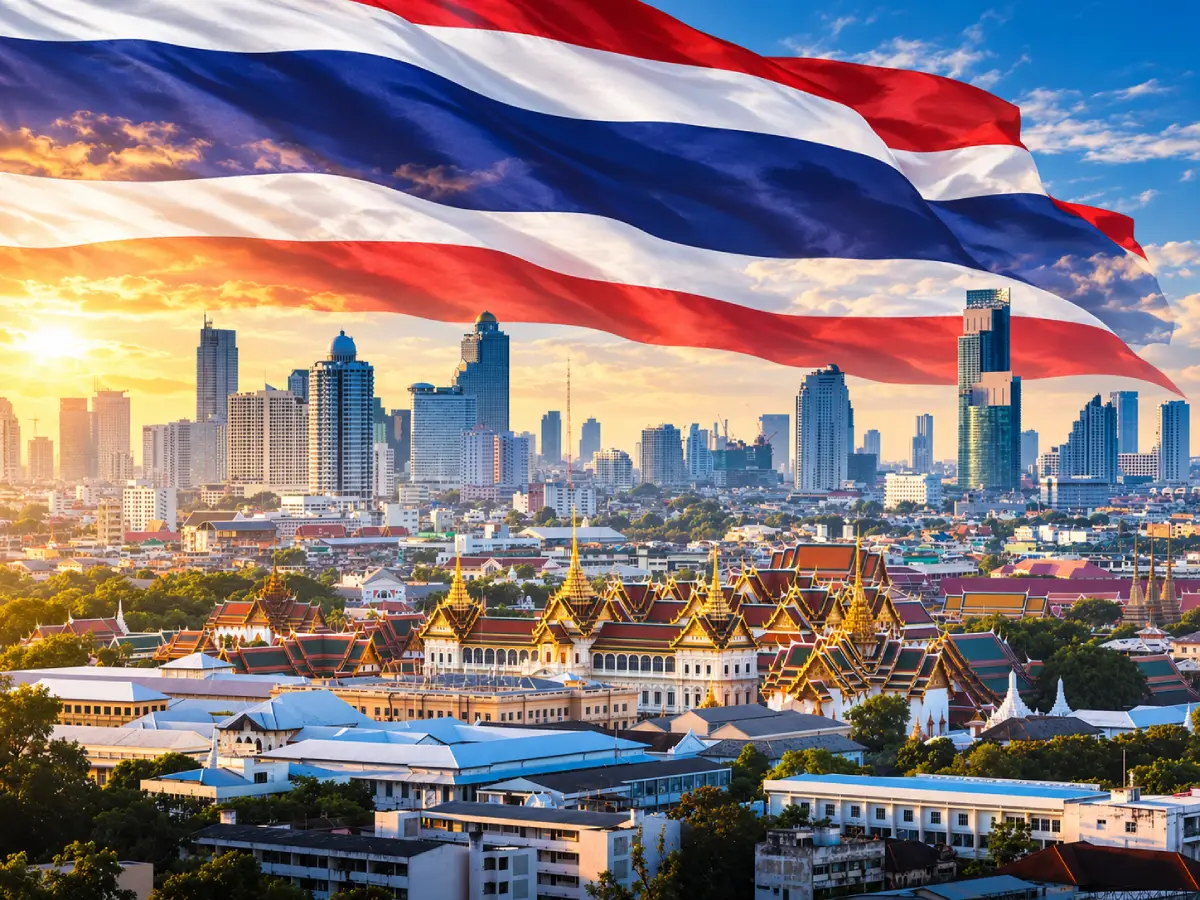
Thailand Overview Thailand, officially known as the Kingdom of Thailand, is a country in Southeast Asia, with Bangkok as its capital. It is located on the Indochinese Peninsula, while its southern territory extends into the Malay Peninsula. Thailand covers approximately 513,120 square kilometers and has 77 provincial-level administrative areas, consisting of 76 provinces and Bangkok. The country shares land borders with Myanmar, Laos, Cambodia, and Malaysia, and has coastlines along both the Gulf of Thailand and the Andaman Sea. Its diverse landscapes, history, society, economy, and cultural traditions give Thailand a distinctive identity within Southeast Asia.
Thailand has a long history of human settlement and cultural development, with archaeological evidence dating back to prehistoric times. Over the centuries, ancient communities, states, and kingdoms emerged in different parts of the territory. Major centers of political power later developed, including Sukhothai, Ayutthaya, Thonburi, and Rattanakosin. These historical periods played important roles in shaping Thailand's systems of government, language, religion, art, cultural traditions, and international relations.
Thailand was formerly known as Siam, a name that appeared for centuries in historical documents and diplomatic correspondence with foreign countries. The country's name was changed to Thailand in 1939. Following World War II, the name Siam was briefly restored before the country officially adopted the name Thailand again in 1949, which has remained in use ever since. Thailand's history is therefore a story of continuous change and adaptation among its people and institutions, shaped by their relationships with neighboring states and cultures throughout the region.
Thailand's geographical position is particularly important because it connects mainland Southeast Asia with the Malay Peninsula. The country has overland connections with neighboring countries in several directions, while its coastlines provide access to maritime routes through both the Gulf of Thailand and the Andaman Sea. These geographical advantages have encouraged trade, migration, transportation, and cultural exchange from ancient times to the present day.
Thailand's physical geography includes mountain ranges, plateaus, river plains, coastal areas, and numerous islands. Northern Thailand is characterized by high mountains and valleys that form important watershed areas. Northeastern Thailand is dominated by the Khorat Plateau, while Central Thailand consists largely of the fertile Chao Phraya River basin. Eastern Thailand includes agricultural areas, coastlines, and major industrial zones, whereas Western Thailand is known for its mountain ranges and extensive forests. Southern Thailand forms a peninsula influenced by the seas on both sides. These geographical differences have shaped local occupations, settlement patterns, traditional cuisine, and everyday life in each region.
Beyond its natural diversity, Thailand possesses a rich artistic and cultural heritage that has been passed down through generations. This heritage includes Buddhist temple architecture, historical monuments, traditional handicrafts, classical dance, folk music, literature, Thai cuisine, and Thai traditions associated with Buddhism, local beliefs, agricultural practices, and community relationships. Thai arts and culture also reflect historical exchanges with Indian, Chinese, Mon, Khmer, and other Southeast Asian civilizations, which were gradually adapted into distinctive cultural expressions in different regions of Thailand.
Thailand's economy consists of agriculture, manufacturing, commerce, exports, services, and tourism. Each region contributes differently according to its natural resources and infrastructure. Thailand is also one of the founding members of the Association of Southeast Asian Nations (ASEAN), an organization that promotes regional cooperation in economic development, social affairs, culture, and international relations.
Understanding Thailand as a whole therefore involves examining the relationships among its geography, history, population, political system, economy, and culture. These interconnected elements explain how the country has developed from ancient times to the present, as well as the major factors influencing Thai society and the lifestyles of people across its different regions.
General Information About Thailand Thailand's official name is the Kingdom of Thailand. Located in Southeast Asia, the country has Bangkok as its capital and principal center of government administration, finance, commerce, education, and transportation. Thailand is governed under a constitutional monarchy with a parliamentary democratic system, in which the King serves as Head of State and the Constitution is the supreme law of the country.
Thailand covers approximately 513,120 square kilometers. Most of its territory lies on the mainland of Southeast Asia, while its southern region extends along the Malay Peninsula to the Malaysian border. When viewed on a map, the shape of Thailand is often compared to an axe, with the long southern peninsula resembling the handle and the broader northern territory forming the head. This comparison provides a simple way to understand the country's overall geographical outline.
The official language of Thailand is Thai, which is used in government administration, education, and formal communication. Standard Thai serves as the common language for communication among people from different regions. At the same time, Thailand is home to numerous regional dialects and ethnic languages, including Kham Mueang or Northern Thai, Isan, Southern Thai, Pattani Malay, and languages spoken by highland ethnic communities. This linguistic diversity reflects the country's rich cultural heritage and the historical settlement patterns of its people.
Thailand's national currency is the Thai baht, with the international currency code THB and the symbol ฿. One baht is divided into 100 satang. The country follows Indochina Time (ICT), which is UTC+7 throughout the year, without daylight saving time. Thailand's international telephone dialing code is +66, while its country-code top-level internet domain is .th.
Thailand is divided into 76 provinces and Bangkok, making a total of 77 provincial-level administrative areas. Ordinary provinces are further divided into districts, subdistricts, and villages, while Bangkok operates under a special form of local administration. Thailand also has several types of local administrative organizations, including Provincial Administrative Organizations, municipalities, and Subdistrict Administrative Organizations. Pattaya is another locality with a special administrative structure established under Thai law.
Thailand's population is diverse in terms of language, religion, ethnicity, and cultural traditions. Most Thai citizens practice Buddhism, while Islam, Christianity, Hinduism, Sikhism, and various indigenous belief systems also play important roles in communities throughout the country. This religious diversity can be seen in places of worship, ceremonies, festivals, food traditions, clothing, and everyday practices in different regions.
Thailand is also characterized by considerable ethnic and linguistic diversity, with different communities preserving their own settlement histories and traditional knowledge. Trade, migration, and cultural interaction among people from different regions and countries have contributed significantly to the development of Thai society, influencing its cuisine, music, clothing, artistic traditions, and local customs.

National Flag of Thailand and National Symbols Thailand's national flag is known as the Thai Tricolor, or Thong Trairong. It consists of five horizontal stripes in red, white, and blue, with the central blue stripe twice as wide as each of the other stripes. The commonly recognized symbolism of the flag is that red represents the nation, white represents religion, and blue represents the monarchy. The present tricolor flag was officially adopted in 1917 during the reign of King Vajiravudh, also known as King Rama VI.
In addition to the national flag, Thailand has a national anthem and a national emblem that serve as important symbols of the state. The lyrics of the current Thai National Anthem were written by Colonel Luang Saranupraphan, while the melody was composed by Phra Chenduriyang. The anthem plays an important role in expressing national identity and fostering a shared sense of belonging among the population. Thailand's national emblem, featuring the Garuda, is used in official government contexts and important state documents.
Geographical Location and Borders of Thailand Thailand is situated in the central part of mainland Southeast Asia, with territory extending across the Indochinese Peninsula and southward into the Malay Peninsula. It shares land borders with four neighboring countries: Myanmar, Laos, Cambodia, and Malaysia. This strategic geographical position makes Thailand an important link for transportation, trade, logistics, and international relations throughout the region.
To the north, Thailand borders Myanmar and Laos. Much of this frontier consists of mountain ranges, valleys, and rugged highland terrain. Important northern border provinces include Chiang Rai, Chiang Mai, Mae Hong Son, and Nan. Chiang Rai is home to the Golden Triangle area, where the territories of Thailand, Laos, and Myanmar meet. This area has historical significance in cross-border trade and cultural exchanges among communities living along the Mekong River.
To the east, Thailand borders Laos and Cambodia, while also extending to the coastline of the Gulf of Thailand. The Mekong River forms a natural boundary between Thailand and Laos along several sections, particularly in the northeastern region. The Thailand–Cambodia border includes both lowland areas and mountain ranges, especially the Dangrek Mountains, which have considerable geographical and historical significance for communities along the border.
To the west, Thailand borders Myanmar and has access to the Andaman Sea. Much of the western frontier is covered by mountain ranges and forests, particularly sections of the Thanon Thong Chai and Tenasserim mountain systems, which extend along parts of the international border. Important provinces in Western Thailand include Tak, Kanchanaburi, Ratchaburi, Phetchaburi, and Prachuap Khiri Khan. These areas contain mountains, watershed forests, and communities whose histories are closely connected with settlements on both sides of the border.
To the south, Thailand shares a land border with Malaysia through the provinces of Satun, Songkhla, Yala, and Narathiwat. Southern Thailand forms a long peninsula with coastlines on both sides. The eastern coast faces the Gulf of Thailand, while the western coast borders the Andaman Sea. This geographical configuration strongly influences local livelihoods, shipping, commerce, fishing, and tourism throughout the southern region.
Thailand's coastlines support a wide variety of ecosystems, including coastal plains, sandy beaches, mangrove forests, river estuaries, coral reefs, and numerous islands. The Gulf of Thailand coastline differs considerably from the Andaman coast, which is particularly known for its deeply indented bays, limestone islands, and coastal cliffs. Both maritime regions are important for fisheries, sea transportation, and tourism, while also supporting rich marine biodiversity.
Thailand's geographical location is also important for international transportation networks. Overland routes connect the country with its neighbors, while maritime shipping routes through the Gulf of Thailand and the Andaman Sea provide access to destinations around the world. These connections have contributed to the development of the country's highway system, railway networks, seaports, airports, and major economic zones.
Geography and Physical Landscapes of Thailand Thailand has a remarkably diverse physical landscape shaped by differences in geological structure, elevation, river systems, and maritime influences. The country encompasses high mountain ranges, plateaus, extensive river plains, coastal lowlands, and numerous islands. This geographical diversity has been a major factor influencing human settlement, occupations, natural resource use, economic development, and cultural traditions in different parts of the country.
Thailand's geography is closely connected with the mountain systems and major river basins of mainland Southeast Asia. Mountains in the northern and western regions form the headwaters of numerous rivers, while the central plains developed through the accumulation of river sediments over long periods. Northeastern Thailand is dominated by a large plateau, whereas Southern Thailand is influenced by its position on a peninsula surrounded by seas on both sides. These geographical differences create distinctive ecosystems and climatic conditions throughout the country.
Thailand can be divided into geographical regions in several ways, depending on the criteria and purposes of individual organizations. For a general understanding of the country's geography and culture, this article uses six regions: Northern Thailand, Northeastern Thailand, Central Thailand, Eastern Thailand, Western Thailand, and Southern Thailand. Each region differs in its landscapes, natural resources, settlement patterns, history, and ways of life.
Physical geography also plays a major role in Thailand's economic development. Fertile river plains support agriculture and large urban settlements, mountainous areas provide watershed forests and other natural resources, plateaus support the cultivation of important commercial crops, and coastal regions are vital for fisheries, maritime transportation, and tourism. Studying the country's regions therefore helps explain the relationship between its natural environment and the development of Thai society.

Geography of Northern Thailand Northern Thailand is characterized primarily by complex mountain ranges and valleys extending in a generally north–south direction. Its important mountain systems include the Thanon Thong Chai Range, Phi Pan Nam Range, Daen Lao Range, and Luang Prabang Range. These mountainous landscapes are particularly important to Thailand's environment because they contain the headwaters of numerous rivers and extensive forests supporting considerable biodiversity.
Thailand's highest mountain is Doi Inthanon, located in Chiang Mai Province at approximately 2,565 meters above mean sea level. It belongs to the Thanon Thong Chai mountain system. Temperatures near the summit are significantly lower than those on the surrounding plains, while ecosystems change with elevation, ranging from mixed deciduous and evergreen forests to high-altitude cloud forests with persistently humid conditions. This natural diversity makes Doi Inthanon National Park one of Thailand's important destinations for nature education and conservation.
In addition to its mountains, Northern Thailand contains fertile intermontane valleys that support established communities and important cities, including Chiang Mai, Lamphun, Lampang, Phrae, and Nan. These plains formed through erosion and the deposition of sediments within river systems, creating favorable conditions for settlements and agricultural activities such as rice farming, fruit cultivation, and the production of crops suited to local climatic conditions.
Major rivers originating in Northern Thailand include the Ping, Wang, Yom, and Nan rivers, which are connected to the Chao Phraya river system. The Ping and Nan rivers meet at Pak Nam Pho in Nakhon Sawan Province to form the Chao Phraya River. The Wang River is a tributary of the Ping, while the Yom forms part of the broader Nan river system. These waterways have long supported agricultural production, historical river transportation, settlement development, and water resource management.
Northern Thailand experiences considerable climatic variation according to altitude. Valleys and lowland areas can become hot during the summer, while high mountains experience cooler conditions and occasional frost during parts of the cold season. These climatic differences make it possible to cultivate a diverse range of crops, including rice, orchard fruits, vegetables, and selected cool-climate crops in highland farming areas.
The region's physical environment is closely connected to Lanna culture and traditional community life. Examples include the muang fai community irrigation system, rice cultivation in valleys, local house designs adapted to seasonal conditions, and the careful use of natural resources. Geography and history have also contributed to the distinctive languages, artistic traditions, handicrafts, and festivals associated with Northern Thailand.
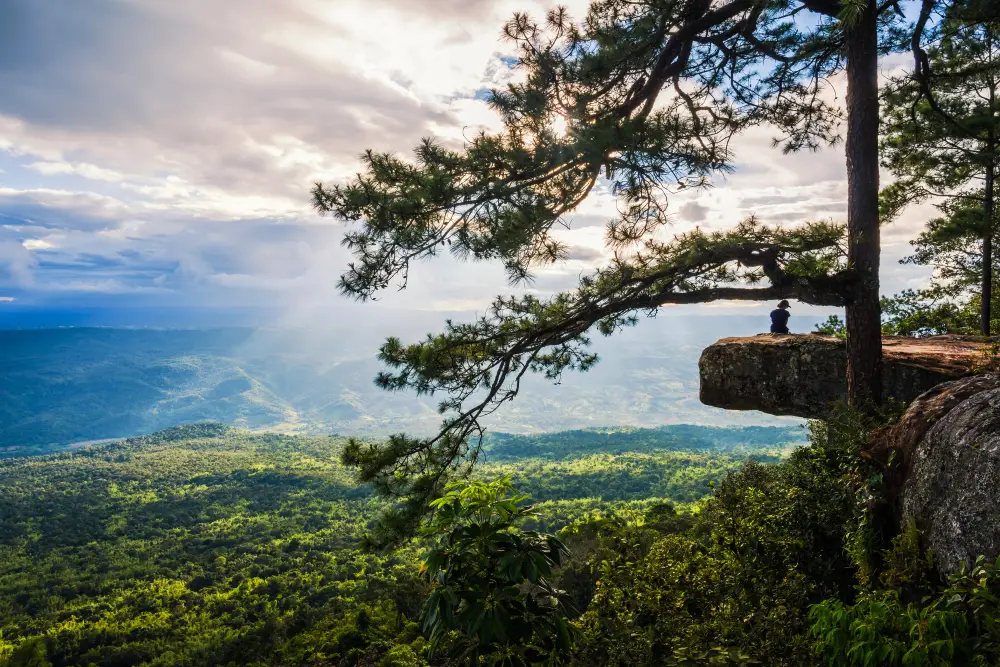
Geography of Northeastern Thailand Northeastern Thailand, commonly known as Isan, is dominated by the Khorat Plateau, an extensive upland region in the eastern part of the country. Its terrain includes gently undulating plateaus, hills, river basins, and sandstone mountains. Important natural boundaries include sections of the Phetchabun Mountains to the west, the Dong Phaya Yen and Sankamphaeng mountain systems to the southwest, and the Dangrek Mountains along the southern border area.
The Khorat Plateau contains two important geographical basins: the Khorat Basin and the Sakon Nakhon Basin, separated in part by the Phu Phan Mountains. The major rivers of Northeastern Thailand are the Chi and Mun, which flow through agricultural areas and settlements before joining the Mekong river system. The Mekong itself forms much of the international boundary between Thailand and Laos along the region's northern and eastern edges.
The region has distinctive geological features resulting from extensive sandstone and sedimentary formations. These have produced flat-topped mountains, cliffs, and broad rocky surfaces. A particularly well-known example is Phu Kradueng National Park in Loei Province, which is famous for its relatively flat sandstone summit plateau, forest ecosystems, grasslands, waterfalls, and landscapes that change with elevation.
Soil conditions vary across Northeastern Thailand. Some areas have sandy soils that drain rapidly and retain relatively little water, while others face problems associated with saline soils or seasonal water shortages. These factors influence agricultural productivity and water management. Nevertheless, Isan is a major producer of important crops, including rice, cassava, sugarcane, and other field crops.
Additional geographical landmarks include the Phu Phan Mountains, Phu Ruea, Phu Luang, and the cliffs overlooking the Mekong River, including areas within Pha Taem National Park in Ubon Ratchathani Province. Historical monuments such as Phanom Rung Historical Park in Buriram demonstrate how mountain settings and elevated landscapes influenced the locations of religious monuments and ancient settlements.
The geography and climate of Northeastern Thailand have strongly influenced agriculture and local culture, particularly seasonal crop production, freshwater fishing, and traditional methods of food preservation such as the fermentation and drying of fish. Numerous regional festivals are connected with agricultural seasons and beliefs surrounding rainfall, including the Bun Bang Fai Rocket Festival and the traditions of the Heet Sip Song annual ceremonial cycle.

Geography of Central Thailand Central Thailand is distinguished by broad river plains, particularly the Chao Phraya River basin, which has played a fundamental role in settlement and national development for centuries. The upper central region includes plains, hills, and river valleys, while the lower central region consists largely of low-lying alluvial plains formed through the accumulation of river sediments over long periods. These fertile landscapes are particularly well suited to rice cultivation and other agricultural activities.
The Chao Phraya River is the principal waterway of Central Thailand. It begins at the confluence of the Ping and Nan rivers in Nakhon Sawan Province, before flowing southward through areas including Chai Nat, Sing Buri, Ang Thong, Phra Nakhon Si Ayutthaya, Pathum Thani, Nonthaburi, Bangkok, and Samut Prakan, eventually reaching the Gulf of Thailand. The river has historically supported irrigation, agriculture, waterways-based transportation, and urban development.
Central Thailand is often described as the country's rice bowl because of its fertile soils and extensive network of rivers and canals. Rice cultivation has been closely linked to local culture and livelihoods for generations. In addition to the Chao Phraya River, the Tha Chin and Pa Sak river systems are important for agriculture and settlement across the central plains.
The region's geography is also closely tied to Thailand's political history, particularly the foundation of Ayutthaya at the meeting point of several rivers. This location offered advantages for transportation, international trade, and urban defense, allowing Ayutthaya to develop into an important capital and commercial center. Monuments such as Wat Ratchaburana provide valuable evidence of the architectural and cultural achievements of communities established within the central river plains.
Irrigation and water management are particularly important in Central Thailand. Dams, water-control gates, irrigation canals, and river basin management systems support agricultural production and help reduce flood risks. However, low-lying areas remain vulnerable to flooding during periods of prolonged heavy rainfall and large volumes of runoff from upstream watersheds.
Today, Central Thailand continues to experience extensive urban and economic development, particularly in Bangkok and surrounding provinces, which form the country's major center for administration, finance, commerce, industry, and transportation. This urban expansion has transformed land use from agriculture to residential, commercial, and industrial activities, while historic riverside communities and traditional farming areas remain important features of the region's cultural identity.

Geography of Eastern Thailand Eastern Thailand contains a combination of coastal plains, hills, mountain ranges, and river valleys. Its shoreline faces the Gulf of Thailand, and the region contains several economically important areas. Major mountain systems include the Chanthaburi and Banthat ranges, while the Bang Pakong river basin supports important agricultural communities and settlements in the northern part of the region.
The eastern coastline includes sandy beaches, river mouths, mangrove forests, islands, and bays of different sizes. Major coastal provinces include Chon Buri, Rayong, Chanthaburi, and Trat. These environments support fisheries, maritime commerce, shipping, and tourism, and contain significant ports and industrial estates.
Eastern Thailand's coastal and island geography is well illustrated by Sai Kaew Beach on Ko Samet in Rayong Province. This area of the Gulf of Thailand features sandy beaches and marine ecosystems. Ko Samet lies within the Khao Laem Ya–Mu Ko Samet National Park, making the island important for both nature conservation and tourism.
Eastern Thailand is a major agricultural region, particularly for tropical fruits such as durian, mangosteen, rambutan, and langsat, which are widely cultivated in Chanthaburi and Trat. At the same time, Chon Buri and Rayong are major industrial and commercial centers. Laem Chabang Port, for example, is among the country's most important infrastructure facilities for international maritime freight.
The development of Eastern Thailand illustrates the relationship between natural resources and modern economic activity. Coastal areas support transportation, ports, and manufacturing, while orchards, forests, and agricultural land remain important to regional livelihoods. Sustainable development therefore requires careful management of water resources, environmental quality, and land use.

Geography of Western Thailand Western Thailand is dominated by mountain ranges, valleys, and extensive forest landscapes. The Thanon Thong Chai and Tenasserim mountain systems are particularly important geographical features. Much of the region borders Myanmar and includes major watershed areas, especially those connected with the Mae Klong river system and its tributaries.
Kanchanaburi Province is one of the best examples of Western Thailand's varied geography, with mountains, forests, caves, waterfalls, and important rivers. The Khwae Yai and Khwae Noi rivers meet to form the Mae Klong River. These waterways support farming, hydroelectric power production, tourism, and local communities.
Erawan National Park in Kanchanaburi is a notable example of the region's mountainous and forested environment. The park is particularly famous for the seven-tiered Erawan Waterfall, where flowing water and geological processes have shaped distinctive natural pools and limestone formations.
Western Thailand also contains some of the country's most important protected forest areas, including the Thungyai–Huai Kha Khaeng Wildlife Sanctuaries, which form a UNESCO World Heritage natural site. These extensive forests provide habitats for numerous wildlife species and are essential to watershed conservation and ecological connectivity.
Beyond its mountainous landscapes, Western Thailand has fertile valleys and river plains that support agriculture. Dams and reservoirs contribute to electricity generation, irrigation, and water management, although their development must also consider environmental impacts and the needs of nearby communities.
The region's geography is inseparable from the history and culture of border communities. Trade, migration, and cultural exchanges with areas across the Myanmar border have contributed to diversity in language, cuisine, handicrafts, and local traditions, particularly among communities living in the mountains and river valleys.
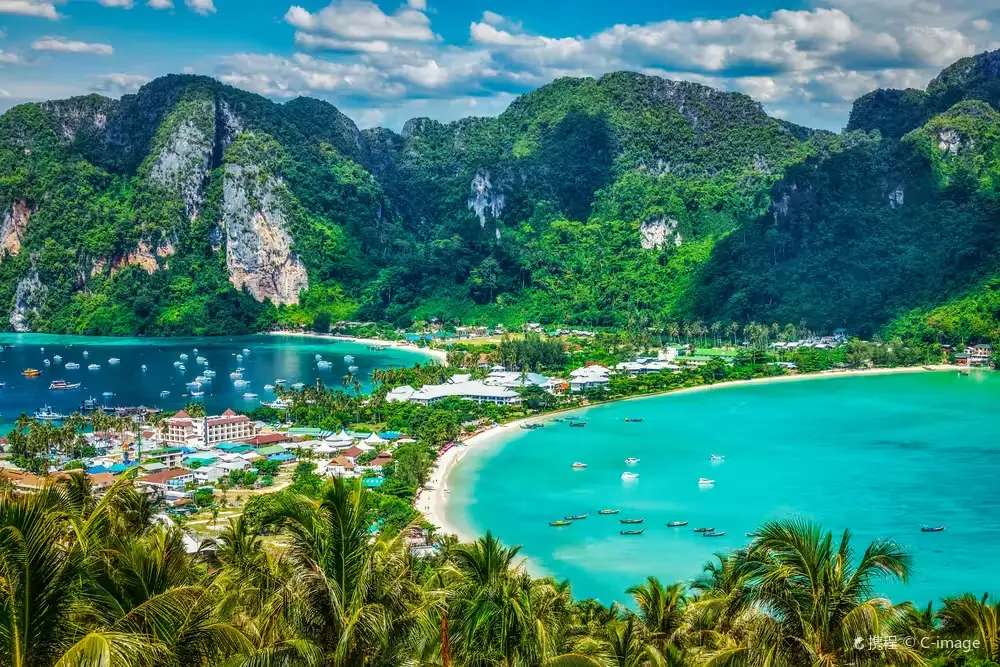
Geography of Southern Thailand Southern Thailand forms a long, narrow peninsula extending toward the Malaysian border. Its mountainous backbone generally runs north to south, with important ranges including the Phuket Range, Nakhon Si Thammarat Range, and Sankalakhiri Range. Coastal plains lie along both sides of the peninsula, varying considerably in width and physical character.
Southern Thailand is influenced by two major maritime environments: the Gulf of Thailand on the eastern side and the Andaman Sea on the western side. The Gulf coastline includes sandy beaches, river estuaries, wetlands, and islands such as Ko Samui, Ko Pha Ngan, and Ko Tao. The Andaman coastline is especially notable for its indented bays, limestone islands, and coastal cliffs, which developed through long-term geological and erosional processes.
One of the most recognizable examples of the Andaman coast is the Phi Phi Islands in Krabi Province. This island group contains dramatic limestone formations, bays, beaches, and important marine ecosystems. Its geological features developed over very long periods through the formation, dissolution, and erosion of limestone rock, while its surrounding waters are important for both conservation and tourism.
Southern Thailand has a humid tropical climate and is influenced by seasonal monsoon winds. Rainfall patterns differ between the Andaman and Gulf of Thailand coasts, affecting agriculture, fisheries, marine transportation, and tourism. Many areas receive substantial rainfall and contain tropical evergreen forests that function as important watersheds and habitats for diverse plants and animals.
The region's major natural resources include tropical forests, mangroves, coral reefs, seagrass beds, and fisheries. Coastal environments and islands are important to fishing, aquaculture, and tourism, while lowlands and foothills support rubber plantations, oil palm cultivation, and tropical fruit farming, which contribute substantially to the regional economy.
Southern Thailand also has considerable historical significance because it lies along maritime routes linking the Indian Ocean and the South China Sea. The region has been involved in trade and cultural exchange with communities from India, China, and the Malay Peninsula for centuries. These relationships are reflected in the region's languages, religious practices, cuisine, architecture, and distinctive local traditions.
Importance of Thailand's Physical Geography The geographical differences among Thailand's six regions have played a fundamental role in shaping the country's society, economy, and culture. Northern and western mountains serve as major watershed and forest resource areas, the northeastern plateau supports extensive agriculture, the central plains are vital to rice production and urban development, the eastern region supports coastal agriculture and manufacturing, and the south is important for tropical agriculture, fisheries, maritime trade, and tourism.
Physical geography also influences regional cultural identities, including housing styles, traditional cuisine, clothing, languages, festivals, and local knowledge. Examples include community irrigation systems in Northern Thailand, fish preservation techniques in Isan, riverside settlements and canal-based trade in Central Thailand, and the fishing traditions of coastal communities in Eastern and Southern Thailand. These practices demonstrate the close historical relationship between people and their natural environments.
Today, Thailand faces environmental challenges related to climate change, urban expansion, changing land use, coastal erosion, and water resource management. Understanding regional geography is therefore essential for appropriate national planning in agriculture, transportation, disaster preparedness, nature conservation, and sustainable tourism.
History of Thailand Thailand has a long history shaped by the development of numerous communities and ancient states in Southeast Asia. These societies gradually evolved into kingdoms and political centers connected through government, trade, religion, language, and cultural exchange. Thai history therefore did not begin with the establishment of any single capital. Its foundations extend back to prehistoric communities, ancient settlements, and overland and maritime trading networks that existed within the territory of present-day Thailand for thousands of years.
Archaeological discoveries from different regions show that humans settled and used natural resources in what is now Thailand during prehistoric times. Over time, communities developed stone tools, pottery, farming, animal husbandry, and metalworking technologies. Some settlements expanded into larger communities with increasingly complex systems of production and exchange. Studying these discoveries helps explain the social and economic foundations of the region before the emergence of ancient states.
Prehistoric Thailand refers to periods in which the lives of ancient people are studied primarily through archaeological evidence because written records were not yet available in the societies under investigation. Archaeologists therefore examine stone tools, ornaments, pottery, metal objects, settlement remains, and human skeletons to understand community structures, daily life, and technological developments across different periods.
Thailand contains many important archaeological sites. One notable example is the Ban Chiang Archaeological Site in Udon Thani Province, which provides evidence of agricultural communities, pottery production, and metal use in prehistoric Southeast Asia. Ban Chiang was inscribed on the UNESCO World Heritage List in 1992 and remains significant to the study of early settlement history in the region.
Ancient States and Kingdoms in the Territory of Thailand existed long before the rise of Sukhothai. Areas within present-day Thailand were home to numerous settlements, city-states, and regional political networks during different historical periods. These included communities associated with Dvaravati culture in Central Thailand, southern trading networks connected with Srivijaya, and ancient settlements influenced by Khmer civilization. Such states maintained relationships with regional commercial systems and trading networks linking Southeast Asia with India, China, and other territories.
Dvaravati culture played an important role in the development of ancient urban settlements in the central plains and surrounding areas. Archaeological evidence includes Buddhist inscriptions, stone Wheels of the Law, Buddha images, and monuments found in historic settlements such as Nakhon Pathom and U Thong. Northeastern Thailand contains stone sanctuaries demonstrating Khmer artistic influence, including Phimai Historical Park and Phanom Rung Historical Park. Southern Thailand, meanwhile, preserves evidence of ancient trading ports and religious monuments reflecting maritime connections and religious diversity.
The development of these ancient societies demonstrates that the territory of Thailand has long been inhabited by different communities involved in continuous cultural exchange. Understanding Thai history therefore requires examining relationships among many states and communities, rather than explaining the country's development through a single historical capital.
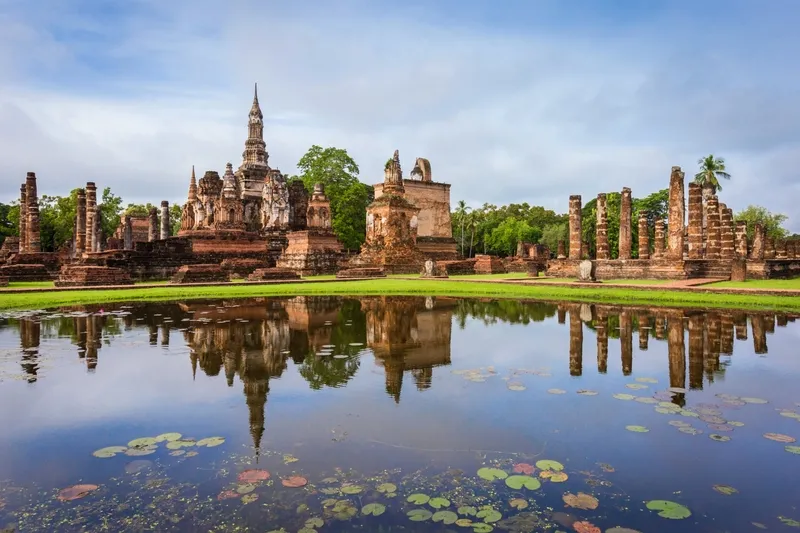
The Sukhothai Kingdom was one of the important states in Thai history, centered in the area corresponding to modern Sukhothai Province. The kingdom underwent significant development during the 13th century CE and maintained relationships with towns along the Yom River basin and surrounding territories. Traditional historical accounts identify Pho Khun Si Inthrathit as the first ruler of the Phra Ruang dynasty, while contemporary historical studies place greater emphasis on the relationships between Sukhothai and other political centers existing in the same region.
During the reign of King Ramkhamhaeng, Sukhothai experienced important developments in politics, trade, language, and religion. Inscriptions associated with the Sukhothai period provide valuable evidence for studying writing systems, government, and community life. References to the Thai script and descriptions of society in the Ramkhamhaeng Inscription, also known as Stone Inscription No. 1, continue to be subjects of academic research and discussion.
Theravada Buddhism played an influential role in Sukhothai culture, particularly during the reign of King Maha Thammaracha I, also known as King Lithai, who supported Buddhism and religious literature. Sukhothai art developed distinctive characteristics, including elegant Buddha images and lotus-bud-shaped stupas, which became widely recognized artistic forms associated with the period.
Today, Sukhothai Historical Park is an important center for historical education, preserving monuments such as Wat Mahathat, Wat Si Sawai, Wat Sa Si, and Wat Si Chum. The Historic Town of Sukhothai and Associated Historic Towns was inscribed as a UNESCO World Heritage cultural property in 1991.
During subsequent centuries, Sukhothai developed increasingly close relationships with Ayutthaya through politics, territorial administration, and dynastic connections. Its territories were gradually incorporated into Ayutthaya's political sphere through a series of developments rather than through a single event that immediately brought the entire kingdom to an end.
The Ayutthaya Kingdom was established as a royal capital in 1350 by King Ramathibodi I, also known as King U Thong. The city was situated in the Chao Phraya basin, where multiple waterways connected with one another. This location provided advantages for agriculture, transportation, defense, and international commerce, enabling Ayutthaya to develop into one of Southeast Asia's major political and economic centers.
Ayutthaya served as a capital for approximately 417 years. During this period, its rulers developed systems of state administration, provincial governance, law, military organization, and diplomacy. Ayutthaya became an important trading city visited by merchants from China, Japan, India, Persia, and other territories. European traders and diplomatic representatives, including those from Portugal, the Netherlands, England, and France, subsequently established relationships with the kingdom, contributing to its ethnically and culturally diverse urban society.
During the reign of King Narai, Ayutthaya maintained extensive diplomatic relationships with foreign states, particularly the French royal court and Asian trading powers. Lop Buri became another important center of royal administration during this period, and surviving buildings display a combination of indigenous architectural traditions and influences from abroad.
Ayutthaya art flourished in architecture, sculpture, painting, literature, and performing arts. Numerous prangs, stupas, ordination halls, assembly halls, and Buddha images were constructed. Historical monuments such as Wat Phra Si Sanphet, Wat Mahathat, Wat Chaiwatthanaram, and Wat Ratchaburana reveal the importance of Buddhism and the royal court in Ayutthaya society.
Throughout its history, Ayutthaya experienced wars and political conflicts with neighboring states. Two particularly significant events were the first fall of Ayutthaya in 1569 and the second fall in 1767. The latter brought the Ayutthaya capital period to an end and led to the political transition toward the Thonburi period.

The Thonburi Period began after Ayutthaya fell to Burmese forces in 1767. King Taksin the Great gathered military forces, restored political authority, and established Thonburi as a new capital on the western bank of the Chao Phraya River. Thonburi's location was favorable for water transportation, trade, and communication with communities near the river's mouth.
Thonburi served as the capital from 1767 to 1782. Although relatively brief compared with other capital periods, it was crucial to the recovery of the country after prolonged warfare. Important achievements included the reunification of territories, economic restoration, renewed commerce, the revival of Buddhist institutions, and efforts to establish political stability during the transition from Ayutthaya.
Important historical sites associated with this period include Wat Arun Ratchawararam and the Former Palace, which served as the royal palace during King Taksin's reign. These landmarks demonstrate the historical importance of settlements on both sides of the Chao Phraya River before the establishment of Rattanakosin.
The Rattanakosin Period began in 1782, when King Phutthayotfa Chulalok the Great, or King Rama I, established a new capital on the eastern bank of the Chao Phraya River. The foundation of Rattanakosin included the construction of the Grand Palace, Wat Phra Si Rattana Satsadaram, and the principal elements of the new capital city.
During the early Rattanakosin period, Buddhism, law, literature, and cultural traditions were restored after the destruction associated with previous wars. Administrative systems and foreign relations also developed. Later, during the reign of King Mongkut, international relations with Western powers increased as European colonial expansion transformed Southeast Asia.
The reign of King Chulalongkorn was a period of major national reform, including the establishment of modern ministries, the development of the monthon administrative system, legal reforms, educational modernization, railway construction, and the gradual abolition of slavery. These changes were fundamental to the development of a modern state and a more systematic government administration.
In the late 19th century, Siam faced increasing pressure from British and French imperial expansion. Diplomatic policies and domestic reforms were pursued to preserve national independence. Although territorial boundaries and aspects of international relations changed considerably, Siam maintained its status as an independent state during the colonial expansion that transformed much of the surrounding region.

The Siamese Revolution of 1932 was a defining event in modern Thai political history. On June 24, 1932, the Khana Ratsadon, or People's Party, brought about a change from absolute monarchy to a constitutional monarchy. New political institutions and a parliamentary system were subsequently established. The revolution represented a major transformation in political authority and the development of the country's legal system.
Following the 1932 revolution, Thailand experienced political developments involving constitutional reform, elections, and the formation of governments. These included periods of elected government as well as changes of power through military coups. Modern Thai political history therefore reflects both the development of democratic institutions and continuing challenges relating to political stability.
Changing the Country's Name from Siam to Thailand took place in 1939, when the government announced that the name Siam would be replaced by Thailand. After World War II, the name Siam was restored for a period before Thailand was adopted again in 1949. The name change was closely associated with ideas of nationhood and the construction of political identity in modern Thai society.
Thailand During World War II was affected by the wider conflict in the Asia-Pacific region, particularly the entry of Japanese forces into Thailand in December 1941 and the policies implemented by the Thai government during the war. At the same time, the Free Thai Movement played an important role in opposing Japan and coordinating with the Allied powers. These developments affected the country's politics, economy, and international relations both during and after the war.
Thailand After World War II experienced continuing economic and social change, especially the expansion of education, healthcare, transportation, and infrastructure. National economic and social development planning encouraged investments in roads, dams, electricity systems, and manufacturing. Population movements from rural areas to towns and cities also increased as people sought employment and educational opportunities.
Thailand played an important role in regional and international relations during the Cold War and participated in several forms of regional cooperation. Its economy expanded rapidly during the late 20th century but was severely affected by the 1997 Asian financial crisis. The crisis disrupted banks, businesses, employment, and household livelihoods before the country entered a period of economic recovery and restructuring.
Thailand in the 21st Century faces changes involving the economy, technology, demographics, the environment, and international relations. Digital economic activities, modern communications, transportation networks, and the service sector have expanded. At the same time, the country faces major challenges associated with population aging, inequality, climate change, workforce development, and competitiveness in global markets.
Thailand's history is therefore the result of the development and adaptation of many communities living within the same broader territory, from prehistoric societies and ancient states to Sukhothai, Ayutthaya, Thonburi, Rattanakosin, and modern Thailand. A comprehensive understanding of this history helps explain the origins of the country's political institutions, economic structures, social relationships, and distinctive cultural traditions.
Regional Divisions of Thailand Thailand is divided into regions for geographical study, population analysis, economic and social development planning, and explanations of historical and cultural characteristics. Regional classifications may differ depending on the criteria used by individual agencies. This article follows a six-region classification: Northern Thailand, Northeastern Thailand, Central Thailand, Eastern Thailand, Western Thailand, and Southern Thailand.
Each region differs in its natural environment and ways of life. Northern Thailand is associated with mountains and Lanna culture, Northeastern Thailand with the Khorat Plateau and Isan culture, and Central Thailand with the Chao Phraya River basin and the country's administrative center. Eastern Thailand is known for its coastlines and major economic areas, Western Thailand for its mountains and extensive forests, and Southern Thailand for its peninsular geography and historical connections with maritime trade and the cultures of the Malay Peninsula.
How Many Provinces Are There in Thailand? Thailand has 76 legally designated provinces and Bangkok, a special local administrative area, making a total of 77 provincial-level administrative areas. Under the six-region grouping used in this article, Northern Thailand contains 9 provinces, Northeastern Thailand 20, Central Thailand 22 provincial-level areas including Bangkok, Eastern Thailand 7 provinces, Western Thailand 5, and Southern Thailand 14.
Northern Thailand: 9 Provinces These are 1. Chiang Rai, 2. Chiang Mai, 3. Nan, 4. Phayao, 5. Phrae, 6. Mae Hong Son, 7. Lampang, 8. Lamphun, and 9. Uttaradit. The region is important for watershed resources, forests, agriculture, and cultural tourism. Numerous towns have historical connections with the Lanna Kingdom and ancient communities along river basins.
Northeastern Thailand: 20 Provinces These are 1. Kalasin, 2. Khon Kaen, 3. Chaiyaphum, 4. Nakhon Phanom, 5. Nakhon Ratchasima, 6. Bueng Kan, 7. Buriram, 8. Maha Sarakham, 9. Mukdahan, 10. Yasothon, 11. Roi Et, 12. Loei, 13. Sakon Nakhon, 14. Surin, 15. Si Sa Ket, 16. Nong Khai, 17. Nong Bua Lamphu, 18. Udon Thani, 19. Ubon Ratchathani, and 20. Amnat Charoen. The region plays a major role in rice, cassava, and sugarcane production, as well as cross-border trade. It also possesses diverse archaeological and cultural heritage.
Central Thailand: 22 Provincial-Level Areas This grouping includes 21 provinces and Bangkok: 1. Kamphaeng Phet, 2. Chai Nat, 3. Nakhon Nayok, 4. Nakhon Pathom, 5. Nakhon Sawan, 6. Nonthaburi, 7. Pathum Thani, 8. Phra Nakhon Si Ayutthaya, 9. Phichit, 10. Phitsanulok, 11. Phetchabun, 12. Lop Buri, 13. Samut Prakan, 14. Samut Songkhram, 15. Samut Sakhon, 16. Sing Buri, 17. Sukhothai, 18. Suphan Buri, 19. Saraburi, 20. Ang Thong, 21. Uthai Thani, and 22. Bangkok. Under this particular classification, several provinces sometimes grouped with Lower Northern Thailand are included in the central region.
Eastern Thailand: 7 Provinces These are 1. Chanthaburi, 2. Chachoengsao, 3. Chon Buri, 4. Trat, 5. Prachin Buri, 6. Rayong, and 7. Sa Kaeo. The region is important for fruit cultivation, industry, maritime transportation, and coastal tourism. Chon Buri, Rayong, and Chachoengsao are particularly significant within Thailand's Eastern Economic Corridor.
Western Thailand: 5 Provinces These are 1. Kanchanaburi, 2. Tak, 3. Prachuap Khiri Khan, 4. Phetchaburi, and 5. Ratchaburi. The region contains important mountains and forests along the Thai–Myanmar border, as well as river basins supporting agriculture and hydroelectricity. Its communities reflect diverse cultural histories, especially in border areas and the Mae Klong basin.
Southern Thailand: 14 Provinces These are 1. Krabi, 2. Chumphon, 3. Trang, 4. Nakhon Si Thammarat, 5. Narathiwat, 6. Pattani, 7. Phang Nga, 8. Phatthalung, 9. Phuket, 10. Ranong, 11. Satun, 12. Songkhla, 13. Surat Thani, and 14. Yala. Southern Thailand plays a major role in rubber cultivation, oil palm production, fisheries, maritime transportation, and tourism. Its linguistic, religious, and cultural diversity reflects the region's long history of seaborne commerce.
Provincial and Local Administration in Thailand Thailand's public administration is organized into central, provincial, and local administrative systems. Ordinary provinces are subdivided into districts, subdistricts, and villages, while Bangkok is organized into districts and subdistricts known locally as khet and khwaeng. Different types of local administrative organizations provide public services and support community development within their legally assigned responsibilities. Administrative boundaries should therefore be distinguished from regional classifications used for geographical study or planning purposes.
Population of Thailand The population of Thailand is diverse in language, religion, ethnicity, and cultural practices. Population distribution varies according to the natural environment and economic opportunities. Bangkok, surrounding metropolitan provinces, and major industrial centers attract large numbers of residents and commuters, while some mountain and rural areas have lower population densities. These patterns are influenced by urban expansion, infrastructure development, and migration for employment or education.
Thailand's population can be measured in different ways, including registered population, census population, and statistical population estimates. Each measurement has its own scope and methodology. Accordingly, the year and counting method should be specified when comparing population statistics. Combining figures from different sources without considering their methodology can create confusion about the number of people actually living in the country.
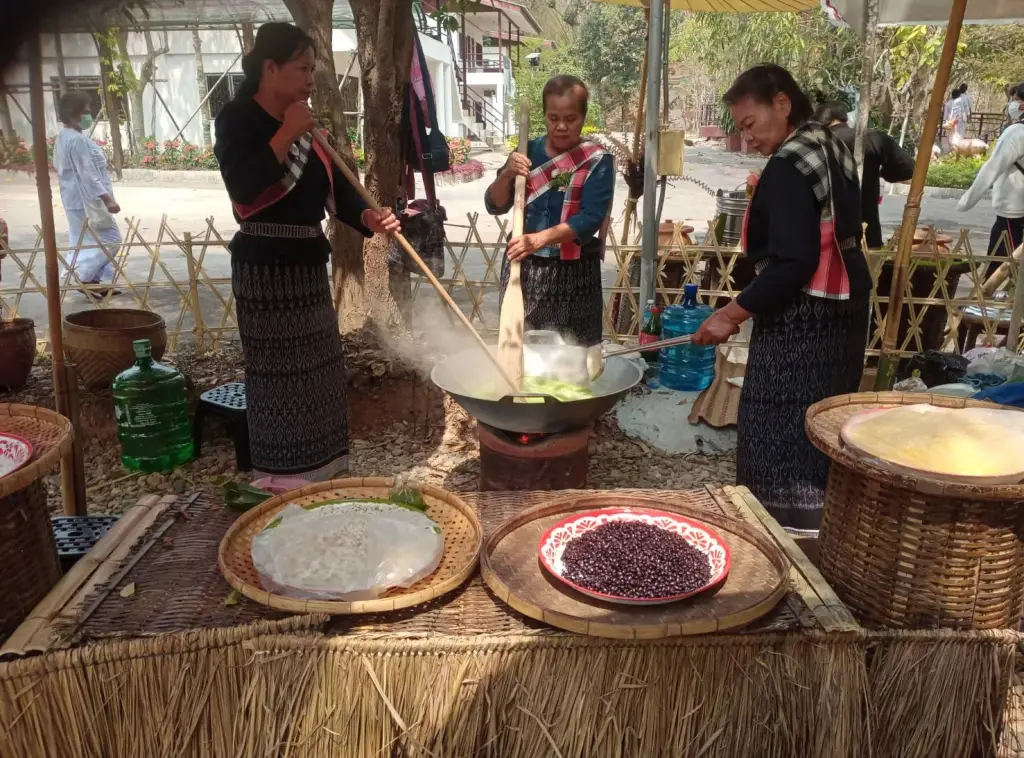
Ethnic Diversity in Thailand reflects the historical settlement and movement of populations throughout Southeast Asia. Communities preserve different languages and cultural traditions, including Lanna, Lao Isan, Phu Thai, Thai Phuan, Mon, Northern Khmer, Karen, Hmong, and many others. This diversity is expressed through language, clothing, cuisine, handicrafts, religious practices, and local festivals. Communities such as Ban Thai Phuan in Udon Thani provide examples of the historical connections between community identity and local heritage.
Thailand's Aging Society is a demographic transformation resulting from declining birth rates and increasing life expectancy. The proportion of older people is rising relative to children and the working-age population. This transformation affects employment, household savings, healthcare expenditure, and family caregiving arrangements, making long-term care services and social protection increasingly important.
Migration and Urban Expansion are closely related to economic development and differences in employment opportunities. Many people move from rural communities to Bangkok, surrounding provinces, and industrial cities. This contributes to the growth of housing, transportation networks, and demand for public services. At the same time, some communities of origin must adapt to declining working-age populations and changes in family structure.

Settlement Patterns and Traditional Thai Community Life were historically closely connected to rivers, canals, and agricultural land. Waterways were essential for household use, farming, and transportation. Floating markets and riverside communities therefore provide cultural evidence of earlier economic systems and daily life. Damnoen Saduak Floating Market in Ratchaburi, for example, illustrates canal-based commerce and community traditions within the Mae Klong basin.
Modern urbanization and technological development have increasingly diversified lifestyles throughout Thailand. Meanwhile, some communities continue to preserve farming practices, handicrafts, festivals, and traditional knowledge alongside modern economic activities. Balancing development with cultural heritage preservation is therefore important for both quality of life and the distinctive identity of local communities.
Climate of Thailand Thailand is located in the tropical zone of Southeast Asia and therefore experiences generally hot and humid conditions strongly influenced by seasonal monsoon winds. Climatic differences among regions are determined by geographical location, elevation, mountain barriers, and proximity to the sea. Upper Thailand has relatively distinct hot, rainy, and cool seasons, while Southern Thailand remains warm and humid for much of the year, with rainfall patterns differing between the Gulf of Thailand and Andaman Sea coasts.
Thailand's Hot Season generally extends from mid-February to mid-May. During this period, upper Thailand experiences high temperatures, particularly in April, when extreme heat is common in some areas. Temperature contrasts and atmospheric instability during the seasonal transition can produce summer thunderstorms, strong wind gusts, and occasionally hail, potentially damaging houses and agricultural areas.
Thailand's Rainy Season generally lasts from mid-May to mid-October in upper Thailand. It is mainly influenced by the southwest monsoon, which brings moisture from the Indian Ocean and Andaman Sea. The monsoon trough and low-pressure systems also contribute to rainfall. Seasonal rain is essential for agricultural production, replenishing rivers and reservoirs, and maintaining ecosystems. However, prolonged heavy rainfall can cause flooding and landslides.
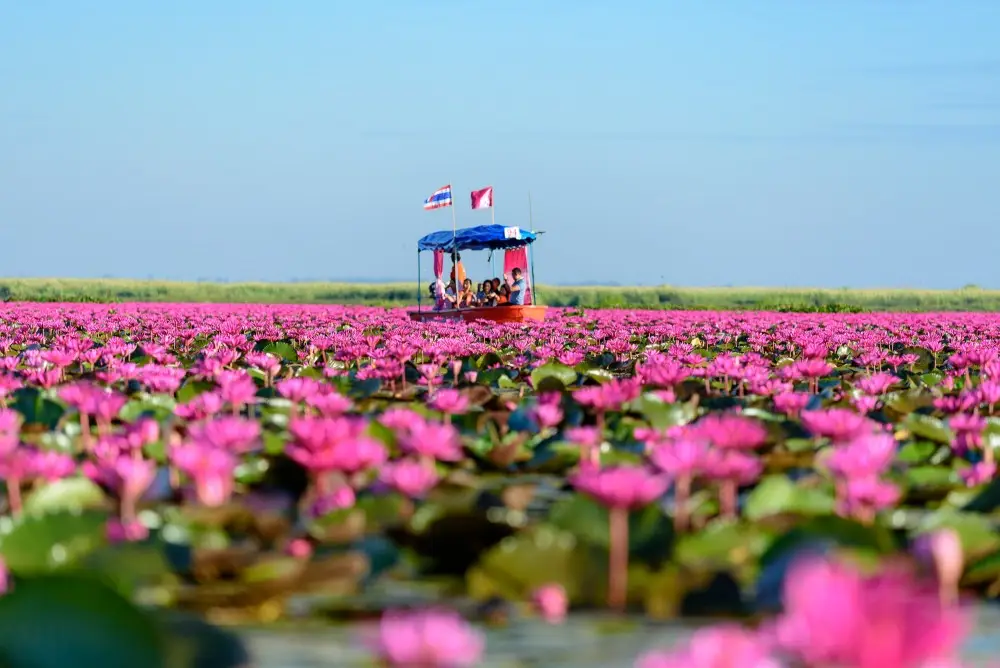
Seasonal Changes and Thailand's Ecosystems Rainfall and temperature changes affect plant growth, animal movements, and wetland conditions. The Red Lotus Sea in Udon Thani, for example, is a wetland where water levels and aquatic plants change with the seasons. Conserving such wetlands is important for fish, waterbirds, and numerous other species that depend on freshwater habitats.
Thailand's Cool Season generally lasts from mid-October to mid-February. During this period, the northeast monsoon brings relatively cool and dry air from continental Asia into upper Thailand, lowering temperatures in many areas, particularly Northern and Northeastern Thailand. Southern Thailand's Gulf coast, however, can experience heavy rainfall as the same monsoon absorbs moisture while passing over the sea, creating seasonal conditions that differ considerably from those in the north.
The Monsoon Systems Influencing Thailand consist mainly of the southwest and northeast monsoons. The southwest monsoon is an important driver of the rainy season across upper Thailand, while the northeast monsoon contributes to cooler conditions in the north and rainfall on the southern Gulf coast. The monsoon trough, tropical cyclones, and low-pressure systems can also produce intense rainfall and unstable weather during different periods of the year.
Natural Disasters in Thailand include river flooding, flash floods, landslides, droughts, summer storms, forest fires, rough seas, and coastal erosion. Risks vary depending on local geography and climate. Low-lying floodplains are vulnerable to river overflow, steep mountain slopes may experience flash floods and landslides, and some agricultural regions face water shortages during dry periods. Disaster preparedness therefore requires reliable weather information, appropriate land-use planning, and continued community readiness.
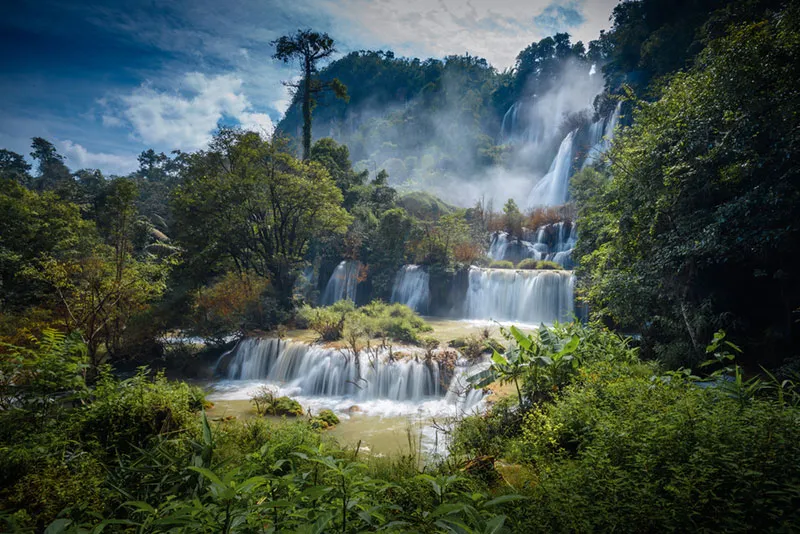
Watershed Forests and Natural Rivers are essential to Thailand's long-term water security. Forests help absorb rainfall, reduce soil erosion, and support natural river flows. Mountain regions in Northern and Western Thailand contain important watershed areas. Thi Lo Su Waterfall in Tak Province, for example, is located within a protected forest landscape where water volumes change seasonally. Conserving watershed forests is consequently important for both ecosystems and downstream communities that depend on their water resources.
Natural Resources of Thailand include forests, soils, freshwater, minerals, marine resources, and diverse plant and animal species. These resources support food production, agriculture, manufacturing, energy, tourism, and the quality of life of local communities. The country's varied geography creates distinctive resource distributions and ecosystems across its regions.

Forest Resources of Thailand differ according to climate and terrain, including tropical rainforests, dry evergreen forests, montane evergreen forests, mixed deciduous forests, dry dipterocarp forests, pine forests, and mangroves. Each forest type supports different communities of plants and animals. Protected areas such as Khao Yai National Park play important roles in ecosystem conservation, wildlife protection, watershed management, and environmental education.
Water Resources of Thailand include rivers, canals, lakes, reservoirs, wetlands, and groundwater. Major river basins include the Chao Phraya, Mekong, Chi, Mun, Mae Klong, and Pa Sak systems. Water is essential for households, agriculture, electricity generation, industry, and ecosystem health. Because rainfall is unevenly distributed, some regions face flood risks while others experience drought, making appropriate water management crucial.
Soil and Mineral Resources of Thailand vary according to geology and topography. Fertile alluvial plains support rice cultivation, while some highland and foothill areas are suitable for orchards and other crops. Important mineral resources include limestone, gypsum, rock salt, potash, and other minerals occurring in different geological environments. The development of mineral resources should be balanced with environmental protection and appropriate land restoration.
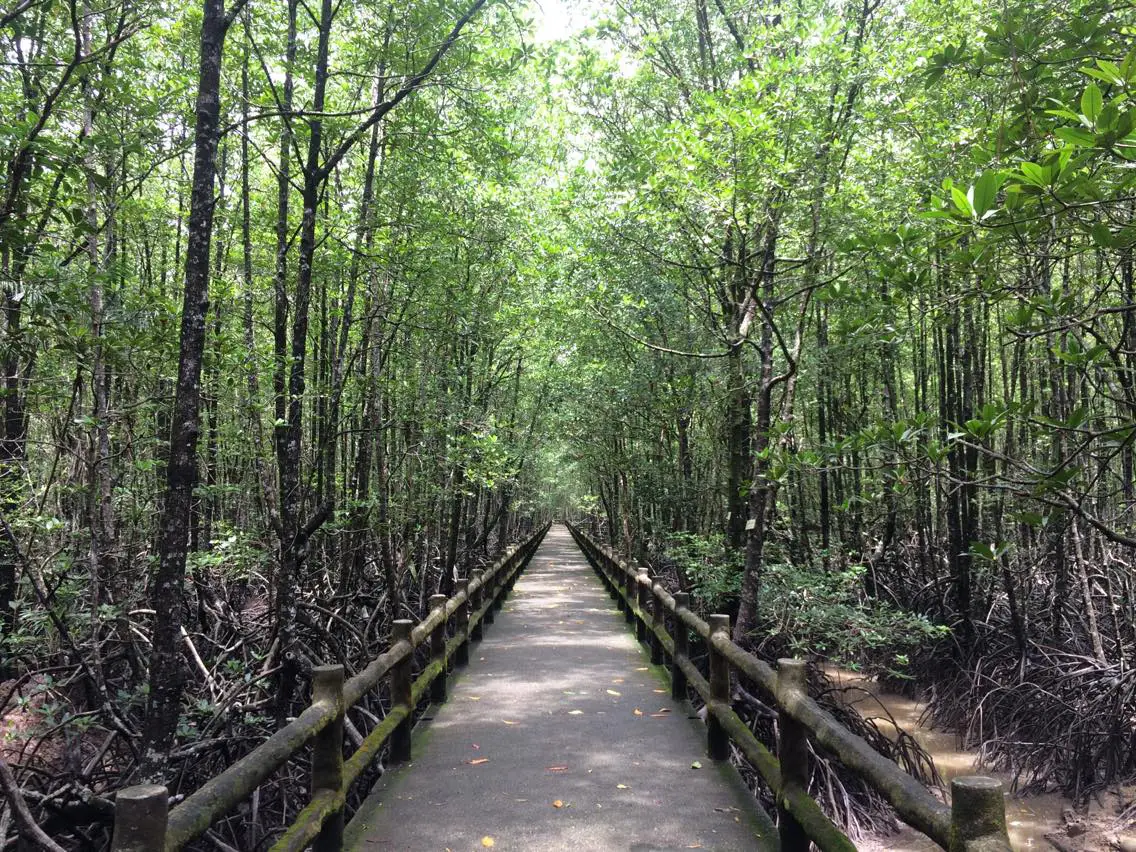
Marine and Coastal Resources of Thailand are important to the national economy and biodiversity. The coastlines of the Gulf of Thailand and Andaman Sea support mangrove forests, coral reefs, seagrass beds, sandy beaches, and river estuaries that provide habitats and nursery grounds for many aquatic species. The mangrove research area at Ngao in Ranong Province is an example of a coastal environment associated with mangrove study and conservation. Mangroves are important for reducing certain types of coastal erosion, storing carbon, and supporting fishing communities.
Biodiversity in Thailand results from the country's varied ecosystems, including mountains, forests, wetlands, and marine environments. Thailand supports numerous wildlife species, including Asian elephants, tigers, gaurs, tapirs, hornbills, sea turtles, and dugongs. Conserving these animals requires protecting natural habitats and reducing threats associated with encroachment, hunting, pollution, and climate change.
Climate Change and Environmental Challenges in Thailand are increasingly important considerations for long-term development planning. Rising temperatures, intense rainfall, drought, and changing sea levels may affect agriculture, coastal communities, and ecosystems. Reducing greenhouse gas emissions, improving energy efficiency, conserving forests, and strengthening early-warning systems are important strategies for adapting to environmental change.
Politics and Government of Thailand Thailand is a unitary state governed as a constitutional monarchy under a democratic parliamentary system, with the King serving as Head of State. The Constitution is the supreme law defining the structure of government, the exercise of sovereign authority, and the rights and freedoms of citizens. The political system underwent a major transformation after the Siamese Revolution on June 24, 1932, when absolute monarchy was replaced by government under a constitution.
The Constitution of Thailand establishes fundamental principles governing political institutions, state authority, and the rights and obligations of the population. Thailand's constitutional development has been closely connected with political changes throughout modern history. The Constitution of 2017, as amended in 2021, has been an important legal framework governing the structure of political institutions during the period covered by this article.
The Legislative Branch of Thailand operates through a bicameral National Assembly consisting of the House of Representatives and the Senate. Under the constitutional framework described in this article, the House has 500 members, including 400 elected from constituencies and 100 through party-list representation. The Senate under the general constitutional provisions consists of 200 members selected according to the prescribed legal process. The National Assembly is responsible for legislation, constitutional functions, and oversight of the executive within its legal authority.
The Executive Branch of Thailand is exercised by the Council of Ministers, comprising the Prime Minister and other ministers within the number permitted by the Constitution. The Prime Minister heads the government and oversees national administration and policies in areas including the economy, education, healthcare, transportation, foreign affairs, the environment, and national security. Government administration is organized at central, provincial, and local levels to support national policies and public services.
The Judiciary and Court System of Thailand are responsible for considering and deciding legal cases. The country has Courts of Justice, Administrative Courts, and Military Courts, each with jurisdiction defined by law. The Constitutional Court performs functions related to the interpretation and adjudication of constitutional matters. Judicial institutions are important for protecting legal rights, resolving disputes, and upholding the rule of law.

The Monarchy of Thailand has been closely connected with the country's political and cultural history for centuries. Historically, Thai monarchs played important roles in governing kingdoms, maintaining political stability, supporting religious institutions, and promoting arts and culture. Following the political change of 1932, Thailand developed into a constitutional monarchy in which the King serves as Head of State under the provisions of the Constitution.
The Chakri Dynasty and the Kings of the Rattanakosin Period The Chakri Dynasty began in 1782 when King Phutthayotfa Chulalok the Great established Rattanakosin as the capital. The dynasty continues to the present day and comprises ten monarchs in the conventional sequence of reigns.
1. King Rama I — King Phutthayotfa Chulalok the Great. He established Rattanakosin in 1782 and played a major role in restoring the state, law, Buddhism, and cultural traditions after the Thonburi period.
2. King Rama II — King Phutthaloetla Naphalai. His reign is associated with the promotion of literature, classical performing arts, and traditional craftsmanship, particularly within royal artistic and literary culture.
3. King Rama III — King Nangklao. His reign was marked by developments in trade, economic activity, and Buddhist patronage, as well as extensive commercial contacts with foreign countries.
4. King Rama IV — King Mongkut. He promoted diplomatic relationships with Western powers and played an important role in Siam's response to international developments during the age of European imperial expansion.
5. King Rama V — King Chulalongkorn. His reign included major reforms in government administration, education, law, transportation, and the gradual abolition of slavery, which contributed to the development of a modern state.
6. King Rama VI — King Vajiravudh. He promoted education, literature, and ideas surrounding national identity. The Thai national tricolor flag was officially adopted in 1917 during his reign.
7. King Rama VII — King Prajadhipok. His reign encompassed the political transformation of 1932, which ended absolute monarchy and introduced government under a constitution.
8. King Rama VIII — King Ananda Mahidol. He was monarch during a period marked by major political changes and World War II.
9. King Rama IX — King Bhumibol Adulyadej the Great. He reigned from 1946 to 2016 and undertook royal initiatives involving water resource development, agriculture, education, and the improvement of living conditions.
10. King Rama X — King Maha Vajiralongkorn. He is the present monarch of the Chakri Dynasty. His coronation ceremony was held in 2019.
The history of the Thai monarchy is important for understanding the establishment of royal capitals, political transformations, and cultural developments throughout the country's history. Additional information can be explored through historical palaces, monuments, and museums associated with individual periods.
Overview of Thailand's Economy Thailand operates a mixed economy comprising both private-sector and government economic activities. Agriculture, manufacturing, commerce, exports, services, and tourism are major components. Over several decades, the economy has developed from one heavily reliant on agriculture toward a more diversified structure with increasingly important industrial and service sectors.
Agriculture in Thailand produces important commodities such as rice, natural rubber, cassava, sugarcane, oil palm, and tropical fruits including durian, mangosteen, longan, and mango. Livestock production and fisheries also contribute to food supplies and rural incomes. Agricultural development is closely related to irrigation, crop research, productivity improvements, and responsible natural resource management.
Manufacturing in Thailand is an important part of the national economy. Major sectors include automobiles and components, electronics, electrical appliances, processed food, rubber products, chemicals, and other manufactured goods. Industrial activities are concentrated around Bangkok and its neighboring provinces, as well as Eastern Thailand, particularly Chon Buri, Rayong, and Chachoengsao, which are significant centers for investment and logistics.
Exports and International Trade contribute substantially to Thailand's economy through manufactured products, food, and agricultural commodities sold to international markets. Thailand also imports energy, machinery, and industrial raw materials. Its international competitiveness depends on product quality, manufacturing costs, transport infrastructure, technology, and changing global demand.
Services and Tourism in Thailand include retail and wholesale trade, finance, transportation, accommodation, restaurants, education, and other services. Tourism is particularly important for distributing income to different regions through hotels, restaurants, tour operators, handicraft businesses, and community activities. Developing tourism responsibly therefore involves balancing economic benefits with the preservation of nature and cultural heritage.
Thailand's Digital Economy is growing through the expansion of internet services, electronic payments, online commerce, and technology adoption in business operations. Digital development creates additional sales and service channels while improving production and management efficiency. However, it also introduces challenges related to cybersecurity, personal data protection, and unequal access to digital technology.
Economic Challenges Facing Thailand include income inequality, changes in workforce composition, population aging, household debt, and volatility in the global economy. Workforce skills development, innovation, higher productivity, and improved public services are therefore important for sustaining economic growth and improving living standards.
Languages and Culture of Thailand Thailand has considerable linguistic, religious, and cultural diversity arising from the settlement histories and interactions of many communities. Thai is the official language and is used in government administration, education, and formal communications. At the same time, numerous regional dialects and ethnic languages remain important to local identities and the transmission of traditional knowledge.
Regional Languages of Thailand include Kham Mueang in Northern Thailand, Isan, which has close linguistic connections with Lao, Southern Thai, and other Thai regional varieties. Languages of ethnic communities include Hmong, Karen, Mon, and Pattani Malay. This linguistic diversity reflects settlement patterns, local history, and cultural exchange across Southeast Asia.
Religions of Thailand play important roles in the cultural traditions and daily lives of the population. Buddhism is practiced by the majority of the population and has been closely associated with Thai festivals and artistic traditions for centuries. Thailand is also home to Muslim, Christian, Hindu, Sikh, and other religious communities. Its diversity of faith is visible through temples, mosques, churches, shrines, religious ceremonies, and local customs.
Buddhism and Thai Society are closely connected through education, art, and community life. Buddhist temples serve as places of worship and as centers for social activities in many communities. Important religious observances include making merit, offering alms, ordination ceremonies, candlelit processions around temples, and celebrations associated with Makha Bucha, Visakha Bucha, Asalha Bucha, and the beginning of Buddhist Lent. Practices may vary according to the traditions of different local communities.

The Thai Wai is a distinctive form of greeting and showing respect, performed by placing the palms together while bowing the head to a level appropriate to the social situation. The wai may be used when greeting someone, expressing gratitude, apologizing, or saying goodbye. It is also used to show respect to Buddhist monks, elders, and other people according to Thai social customs. The gesture is therefore both an everyday social practice and an important expression of respect for others.
Traditional Performing Arts of Thailand include royal court performances and regional folk traditions such as khon, classical Thai dance-drama, fon lep, fon thian, mor lam, nang talung shadow puppetry, and Nora. Each art form has distinctive music, costumes, choreography, and storytelling techniques, reflecting connections among religion, literature, history, and regional cultural traditions.

Khon: Thailand's Classical Masked Dance-Drama combines dance, music, literature, and traditional craftsmanship. Performances commonly tell stories from the Ramakien, the Thai adaptation of the Ramayana, using highly structured dance movements accompanied by piphat orchestral music, narration, and dialogue. Certain characters wear elaborate khon masks, while the principal male and female human characters generally perform without masks. Khon was inscribed on UNESCO's Representative List of the Intangible Cultural Heritage of Humanity in 2018. The performance requires collaboration among artists and craftspeople with different specialized skills.
The artistic components of khon include stage scenery, masks, costumes, musical instruments, and carefully developed performance techniques. The continuation of khon depends on the transmission of knowledge through training, performances, and the work of artists and craftspeople across generations.
Thai Traditions and Major Festivals are closely associated with religion, history, and community life. Some traditions are celebrated throughout the country, while others are specific to particular regions. Many correspond to the lunar calendar, agricultural seasons, ancestral beliefs, and the expression of gratitude toward elders. Thai festivals therefore carry both religious significance and an important role in strengthening relationships within families and communities.

Songkran Festival is one of Thailand's major annual celebrations and is connected with the traditional Thai New Year. April 13–15 is the principal public holiday period associated with Songkran. Traditional activities include offering alms to monks, bathing Buddha images, respectfully pouring water over elders' hands to ask for blessings, visiting relatives, and participating in water festivities according to local customs. Thailand's Songkran tradition was inscribed on UNESCO's Representative List of the Intangible Cultural Heritage of Humanity in 2023.

Regional Variations of Songkran in Thailand can be seen in distinctive ceremonies and festivals held in different parts of the country. Examples include the Lanna New Year traditions of Northern Thailand and the Phra Pradaeng Songkran Festival in Samut Prakan, which preserves important cultural expressions of the Thai-Mon community. These differences show how a shared national festival can contain distinct rituals, clothing, games, and performances shaped by local history.
Loy Krathong and Yi Peng Festivals are associated with beliefs and ceremonies involving waterways and religious merit-making. Loy Krathong is commonly celebrated on the full moon of the twelfth lunar month, while Yi Peng is an important Lanna festival associated with lanterns, oil lamps, and Buddhist activities according to local customs in Northern Thailand.
Bun Bang Fai and the Candle Festival are important traditions in many Northeastern Thai communities. The Bun Bang Fai Rocket Festival is linked to beliefs about rainfall and the agricultural cycle. The Candle Festival is associated with offering candles to Buddhist monks during the Buddhist Lent period. Ubon Ratchathani is particularly well known for its elaborate large-scale wax sculptures, demonstrating local craftsmanship and community participation.
Sat Duan Sip and Chak Phra Festivals are important traditions of Southern Thailand. Sat Duan Sip is associated with making merit in remembrance of ancestors, while Chak Phra involves Buddhist celebrations following the end of Buddhist Lent. Ceremonies differ among provinces and local communities.
Traditional Handicrafts and Local Knowledge in Thailand include weaving, pottery, basketry, wood carving, silverwork, and various forms of decorative craftsmanship. Distinctive traditions can be found across the country, including Lanna textiles, Isan silk, Central Thai pottery, and the intricate yok mueang nakhon textiles of Southern Thailand. These crafts possess both cultural and economic value and can provide income for communities that preserve their traditional skills.
Thai Cuisine and Regional Food Traditions form an important part of Thailand's cultural heritage. Thai food varies in ingredients, seasoning, flavors, and cooking techniques, reflecting local geography and historical cultural exchanges. Common cooking methods include boiling, preparing curries, stir-frying, deep-frying, steaming, grilling, pounding, and mixing salads. Herbs and spices such as lemongrass, galangal, kaffir lime leaves, chili, garlic, and lime are widely used to create distinctive flavors and aromas.
Thai food culture also reflects the traditional use of locally available resources. River communities commonly use freshwater fish, shrimp, and aquatic vegetables, while mountain communities make use of forest vegetables, bamboo shoots, mushrooms, and agricultural crops. Coastal populations depend heavily on fish, shellfish, and other seafood. Traditional food preservation methods, including drying, salting, fermentation, pickling, and smoking, have long helped communities preserve seasonal foods and develop distinctive seasonings.
Meals are often shared among family members, with rice accompanied by several complementary dishes such as curries, vegetables, chili dips, grilled foods, and soups. Regional cuisines differ significantly, and not all Thai dishes are intensely spicy. Some emphasize the natural flavor of ingredients, delicate seasonings, or the fragrance of herbs. Understanding Thai cuisine therefore involves considering regional history, ingredients, cooking techniques, and the social traditions surrounding meals.
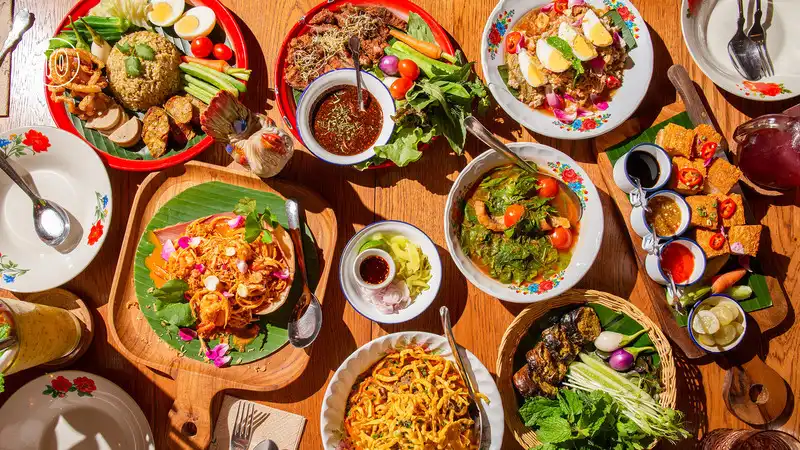
Northern Thai Cuisine is closely connected with Lanna culture and the lifestyles of communities in mountainous landscapes and valleys. Sticky rice is a traditional staple in many communities and is commonly served with chili dips, curries, grilled foods, and local vegetables. Traditional Northern Thai dining may involve a khantok, a low pedestal tray used to present shared dishes during meals and cultural occasions.
Important Northern Thai dishes include khao soi, nam phrik num, nam phrik ong, gaeng hang lay, gaeng khae, gaeng ho, sai ua, crispy pork rinds, and khanom jeen nam ngiao. Their ingredients and flavors reflect local herbs, spices, agricultural products, and historical exchanges with neighboring communities in Myanmar, Laos, and other parts of the region.
Khao Soi is a celebrated Northern Thai noodle dish. Popular modern versions consist of egg noodles served in a spiced curry broth containing coconut milk, often with chicken or beef. It is typically garnished with crispy fried noodles and served with pickled mustard greens, shallots, lime, and chili oil. Khao soi reflects historical interactions among Northern Thai communities and regional trade networks, with recipes differing among localities.
Gaeng Hang Lay is a Northern Thai curry associated with Lanna culinary traditions and cultural exchanges with Myanmar. It commonly uses pork, ginger, garlic, and aromatic spices, producing a distinctive combination of savory, sour, and mildly sweet flavors. The dish is frequently prepared for special celebrations and religious merit-making occasions.
Sai Ua is a Northern Thai sausage typically prepared with minced pork, curry paste, lemongrass, kaffir lime leaves, galangal, and chili. The mixture is stuffed into casings and grilled until cooked, producing a fragrant sausage commonly enjoyed with sticky rice and vegetables. It is a good example of how Lanna cuisine uses herbs to create complex aromas.
Nam Phrik Num and Nam Phrik Ong are important chili dips in Northern Thai meals. Nam phrik num is commonly made with roasted young green chilies, shallots, and garlic, while nam phrik ong often combines minced pork, tomatoes, and curry paste. Both are frequently served with fresh or steamed vegetables, crispy pork rinds, and sticky rice.
Gaeng Khae and Gaeng Ho demonstrate the use of seasonal vegetables and locally available ingredients. Gaeng khae commonly combines a variety of vegetables, herbs, curry paste, and meat according to household recipes. Gaeng ho is traditionally associated with the combination of several ingredients into a distinctive dish. Both reflect approaches to using food resources efficiently and creatively.
Additional Northern dishes include nam ngiao, khao kan jin, Northern-style larb, and bamboo shoot curries. The region's food culture therefore expresses the relationships among geography, agricultural products, herbs, settlement history, and communal dining.

Northeastern Thai Cuisine, also known as Isan cuisine, is strongly connected with the Khorat Plateau, the Chi and Mun river basins, and communities along the Mekong River. Many dishes feature spicy, sour, and salty flavors, along with distinctive aromas from fermented ingredients. Sticky rice is an important staple, commonly accompanied by pounded salads, larb, soups, curries, and grilled foods.
Traditional Isan livelihoods have historically depended on seasonal rice cultivation, freshwater fishing, and the collection of locally available vegetables. Food preservation has consequently been particularly important. Fermented fish, dried fish, and preserved vegetables help communities store ingredients for later use, while also contributing distinctive flavors to regional cuisine.
Som Tam is among the most widely recognized Isan-associated dishes. It is prepared by pounding shredded green papaya with ingredients such as chili, garlic, lime, fish sauce, tomatoes, and sugar, depending on the recipe. Some varieties incorporate fermented fish, salted crab, or other ingredients. Common versions include tam Thai, tam pu pla ra, tam sua, and tam taeng. Som tam is frequently enjoyed with sticky rice, grilled chicken, and fresh vegetables.
Larb and Nam Tok commonly combine meat with roasted rice powder, ground chili, fish sauce, lime juice, shallots, spring onions, and mint. Recipes vary among communities. Nam tok often uses grilled or cooked sliced meat mixed with seasonings and fresh herbs, while larb may be prepared in different ways depending on local tradition. Both are popular with sticky rice and vegetables.
Pla Ra and Traditional Food Preservation reflect the longstanding practice of fermenting fish with salt and other ingredients according to local recipes. Pla ra is used to flavor som tam, gaeng om, chili dips, and other dishes. Safe preparation requires appropriate ingredients, hygienic handling, and suitable cooking methods.
Gaeng Om is a traditional Isan curry prepared with herbs and vegetables, together with meat or other ingredients. Typical seasonings include chili, lemongrass, shallots, and dill. The dish often contains relatively little liquid and has a fragrant herbal character, demonstrating the region's reliance on seasonal vegetables.
Grilled Chicken and Other Isan Grilled Foods are commonly eaten with sticky rice and som tam. Meat is marinated with spices and herbs before being cooked over heat. Such dishes are important in home cooking, community markets, and Isan restaurants throughout Thailand.
Isan cuisine also reflects the traditions of several ethnic communities, including Lao Isan, Phu Thai, Thai Phuan, Northern Khmer, and Kuy groups. Different areas have distinctive recipes featuring roasted rice powder, bamboo shoots, mushrooms, freshwater fish, and locally gathered vegetables. Contemporary Isan cuisine is popular both within Thailand and abroad, yet its culinary foundations remain connected with local ingredients, preservation techniques, and communal meals.

Central Thai Cuisine reflects the agricultural abundance of the Chao Phraya river basin and a history of international trade and cultural exchange. The region has access to rice, freshwater fish, shrimp, vegetables, tropical fruits, and numerous herbs. Central Thai cuisine also developed under influences associated with the royal court and foreign communities, combining diverse ingredients and cooking methods with local culinary practices.
The region's cuisine is characterized by a broad range of flavors and preparations, including coconut milk curries, non-coconut curries, stir-fried dishes, fried foods, steamed dishes, and chili dips. Steamed rice is commonly served as the principal staple, while many dishes balance sweet, salty, sour, and spicy flavors according to their recipes.
Tom Yum Kung is an internationally recognized Thai soup featuring shrimp and aromatic herbs such as lemongrass, galangal, kaffir lime leaves, chili, and lime juice. It is known for its sour and spicy flavor and distinctive herbal fragrance. Both clear and creamy versions are popular, with ingredients and methods varying by recipe. Tom yum kung was inscribed on UNESCO's Representative List of the Intangible Cultural Heritage of Humanity in 2024.
Green Curry, or Gaeng Khiao Wan is a coconut-based curry prepared with green curry paste containing chilies, lemongrass, galangal, kaffir lime peel, and other herbs and spices. Common versions contain chicken, beef, or other proteins, along with eggplant and Thai basil. It is usually served with steamed rice or khanom jeen rice noodles.
Massaman Curry reflects culinary exchanges associated with Muslim communities and international trade. It combines aromatic spices such as cinnamon, cardamom, cloves, and cumin with coconut milk and curry paste. Popular modern recipes often include meat and potatoes, producing a fragrant combination of savory and mildly sweet flavors.
Pad Thai is a popular stir-fried noodle dish prepared using rice noodles and seasonings such as tamarind, fish sauce, and sugar, often combined with egg, tofu, bean sprouts, shrimp, or other ingredients. The dish illustrates the development of modern Thai cuisine through the adaptation of stir-frying techniques and noodle traditions to local ingredients and flavors.
Nam Phrik Kapi and Vegetable Accompaniments are associated with traditional Central Thai meals. Shrimp paste is pounded with chilies, garlic, lime, and other seasonings to create a flavorful dip commonly served with raw or blanched vegetables, fried mackerel, and other side dishes. This style of dining illustrates how Thai meals combine varied ingredients and flavors within a shared assortment.
Thai Royal Court Cuisine developed through refined methods of ingredient preparation, food presentation, and the arrangement of dishes. Foods associated with royal court culinary traditions include khao chae, cho muang, krathong thong, and carefully prepared savory snacks. Many such dishes gradually became known outside the royal court and were adapted for broader public enjoyment.
Khao Chae is a traditional dish particularly associated with warm weather. Cooked rice is served in chilled fragrant water and accompanied by carefully prepared side dishes, which may include fried shrimp-paste balls, sweet preserved radish, and stuffed peppers. Khao chae has connections with Mon food traditions and later developed into refined Thai culinary recipes.
Central Thailand is also known for sweets and snacks such as khanom chan, thong yip, thong yot, foi thong, khanom tan, khanom thuai, and khanom krok. Rice flour, coconut, palm sugar, and eggs are among the principal ingredients. Some sweets carry symbolic associations with auspicious occasions, while others reflect historical exchanges with foreign culinary traditions.
Overall, Central Thai cuisine demonstrates the fertility of the river plains, the diversity of agricultural resources, the historical importance of urban and royal court culture, and the long history of international commerce. It is also one of the regional food traditions that has contributed substantially to Thailand's international culinary reputation.

Southern Thai Cuisine reflects the geography of a tropical peninsula surrounded by seas and a long history of maritime trade. Culinary traditions developed through interactions among Thai, Malay, Indian, and other communities associated with the Malay Peninsula. Many dishes emphasize strong, spicy, salty, and sour flavors, although the region also contains milder dishes and a variety of rice-based foods.
Southern Thai cooking frequently uses turmeric, chili, lemongrass, galangal, kaffir lime leaves, pepper, shrimp paste, and seafood. Ingredients vary according to geography, with coastal communities using marine products and inland communities incorporating local vegetables, herbs, and agricultural produce.
Gaeng Tai Pla is a distinctive Southern Thai curry prepared with a fermented fish ingredient known as tai pla, together with curry paste and vegetables such as bamboo shoots, pea eggplant, pumpkin, or long beans, depending on the recipe. Its rich flavor and aroma reflect traditional coastal food preservation techniques. Because fermented ingredients can contain substantial sodium, portion sizes and overall dietary balance are important considerations.
Gaeng Lueang, or Southern-Style Sour Curry uses curry paste featuring turmeric and chili, producing a yellow-colored curry with prominent sour and spicy flavors. Fish or seafood is commonly combined with vegetables such as pickled bamboo shoots or coconut shoots, depending on local recipes.
Khua Kling is a spicy, relatively dry Southern Thai curry made by stir-frying minced or finely chopped meat with concentrated curry paste. Herbs such as lemongrass, galangal, kaffir lime leaves, and chili give it a distinctive aroma. It is commonly served with steamed rice and fresh vegetables.
Stir-Fried Sataw with Shrimp Paste uses sataw, also called stink beans or bitter beans, a plant widely consumed in Southern Thailand. The beans are stir-fried with shrimp paste, chili, garlic, and meat or seafood according to the recipe. The dish is recognizable for its strong aroma and illustrates the use of locally available plants and coastal seasonings.
Nam Phrik Kung Siap is a Southern Thai chili dip using dried or smoked shrimp, mixed with chili, garlic, shrimp paste, and other seasonings. It is traditionally served with rice and fresh vegetables. The dish demonstrates the importance of preserving seafood and incorporating marine resources into everyday meals.
Southern-Style Khanom Jeen Nam Ya is widely enjoyed in Southern Thailand. The curry sauce is commonly prepared with fish, curry paste, and other ingredients depending on local recipes. It is served with fermented rice noodles and a selection of fresh vegetables, often including regional herbs and other accompaniments. Recipes vary in their use of coconut milk and the consistency of the sauce.
Southern Thailand also has foods influenced by Malay and Muslim culinary traditions, such as khao yam, khao mok, and roti. Khao yam combines rice with vegetables, herbs, and a characteristic dressing, while khao mok reflects spiced-rice traditions found across Muslim communities in the region. These foods illustrate Southern Thailand's historical diversity and maritime cultural connections.
Food Traditions of Eastern and Western Thailand further demonstrate that Thai cuisine cannot be fully explained through only four major regional groupings. Eastern Thailand has distinctive dishes reflecting its maritime resources and orchards, including moo chamuang, a pork dish flavored with chamuang leaves, and sen chan pad pu, a rice noodle dish associated with Chanthaburi. Western Thailand contains diverse culinary traditions linked to the Mae Klong river basin and communities of Mon, Karen, and other backgrounds, including dishes using forest vegetables, bamboo shoots, herbs, and local crops.
Thai Desserts and Sweet Food Culture are important elements of Thailand's culinary heritage. Traditional desserts use ingredients such as rice, flour, coconut, sugar, eggs, and seasonal fruits. Some are enjoyed as everyday snacks, while others are associated with Buddhist merit-making events, auspicious ceremonies, and community festivals.
Well-known Thai desserts include thong yip, thong yot, foi thong, khanom chan, khanom thuai, khanom krok, mango sticky rice, and khanom chak. Some carry symbolic meanings associated with good fortune, while others developed from agricultural ingredients such as sticky rice, bananas, coconuts, and palm sugar.
The history of Thai desserts also reflects culinary exchanges with other countries. Certain sweets made with egg yolks and sugar are associated with techniques introduced through historical contacts with foreign communities. Thai cooks subsequently adapted these methods to local ingredients and preferences, producing distinctive recipes that continue to be enjoyed today.
Thai Cuisine, Tourism and the Creative Economy are increasingly interconnected. Food is a cultural experience that visitors can explore through local restaurants, traditional markets, cooking classes, and visits to agricultural communities. Regional food traditions create economic opportunities for farmers, food producers, restaurant operators, artisans, and local communities.
Gastronomy tourism combines travel with learning about the food culture of a destination. Visitors can discover regional identities through local dishes, community markets, and recipes passed down over generations. Food therefore represents both an economic activity and a form of cultural heritage that expresses local history.
Internationally, Thai cuisine contributes to cultural promotion and the creative economy. Dishes such as tom yum kung, pad Thai, green curry, som tam, and khao soi are enjoyed in many countries. Their international popularity encourages interest in Thailand's language, culture, ingredients, and travel destinations. At the same time, maintaining the diversity and quality of local recipes is essential to safeguarding Thailand's culinary heritage.
Thai cuisine is therefore an important part of understanding Thailand as a whole. It reveals relationships among geography, history, natural resources, culture, and economic life. Differences among regional dishes demonstrate how communities have adapted to their environments and shared knowledge with others, while the preservation of traditional recipes helps maintain cultural identities alongside the changes of modern society.
Education System of Thailand plays an important role in human resource development and the country's economic and social progress. It encompasses basic education, vocational education, higher education, and lifelong learning. Educational institutions include both public and private organizations, while curricula and learning methods continue to develop in response to students' needs and changes in the economy and technology.
Thailand's basic education system supports the development of language, mathematics, science, social studies, and essential life skills. Vocational education focuses on practical knowledge and occupational skills relevant to the labor market. Higher education contributes to professional development, research, and the creation of new knowledge across many disciplines.
Challenges Facing Education in Thailand include differences in educational quality among regions, unequal access to educational technology, foreign language skill development, and preparation for future employment. Promoting lifelong learning and improving digital skills are therefore important for expanding economic opportunities and strengthening the population's competitiveness.
Healthcare System of Thailand is important for maintaining public health and improving quality of life. The country has several levels of medical facilities, including primary healthcare centers, community hospitals, general hospitals, regional hospitals, specialized hospitals, and private healthcare institutions. Medical services encompass health promotion, disease prevention, medical treatment, and rehabilitation according to the responsibilities of different providers.
Thailand has several public healthcare coverage systems for eligible populations, including the Universal Coverage Scheme, the Social Security Scheme, and the Civil Servant Medical Benefit Scheme. Eligibility requirements and benefits differ among these systems. Improving healthcare services is particularly important for reducing inequalities in access between urban and rural populations.
Health and Quality of Life in Thailand are influenced by income, education, housing, environmental conditions, lifestyle, and access to healthcare. The country faces a substantial burden from noncommunicable diseases such as diabetes, hypertension, and cardiovascular disease, as well as health problems associated with air pollution and other environmental risks. Population aging also increases the importance of long-term care services and support for caregivers.
Health Promotion and Disease Prevention in Thailand contribute to reducing treatment costs and improving the population's well-being. These activities include promoting appropriate nutrition, exercise, recommended vaccinations, health screening, and mental healthcare. Creating environments that support healthy living is important at household, community, educational, and workplace levels.

Transportation System of Thailand includes road, rail, air, and water transportation. These networks are essential for passenger travel, freight movement, tourism, and economic connections among different regions. Highways form the main network for land travel, while railways and urban mass transit systems are increasingly important for intercity and metropolitan transportation.
Road Transportation in Thailand is supported by an extensive highway network connecting Bangkok with other regions. Important routes include Phahonyothin Road, Mittraphap Road, Sukhumvit Road, and Phetkasem Road, together with intercity motorways and secondary roads linking provinces and communities. Road transportation is essential for moving goods, accessing public services, and traveling throughout the country.
Rail Transportation in Thailand connects Bangkok with Northern, Northeastern, Eastern, and Southern Thailand. Railway lines and infrastructure have been developed to improve passenger travel and freight transportation. Bangkok and neighboring metropolitan areas also operate several urban rail transit lines, including elevated trains, underground railways, and suburban rail services that support daily commuting.
Air Transportation in Thailand is supported by airports serving domestic and international flights. Suvarnabhumi and Don Mueang are major air travel centers serving Bangkok and surrounding areas. Other significant airports serve tourism and economic destinations such as Chiang Mai, Phuket, Krabi, Hat Yai, and Chiang Rai, improving connections among regions and international destinations.
Water Transportation in Thailand remains important for domestic travel and international trade. The Chao Phraya River and certain canals continue to support passenger boat services. Major commercial ports such as Bangkok Port and Laem Chabang Port are important for freight transportation. Coastal communities and islands also depend on passenger ferries and other vessels for daily transport and tourism.
Traveling Around Thailand is possible by car, public bus, railway, aircraft, or boat, depending on distance and local geography. Travel planning should consider journey duration, connections between transport services, convenience, and weather conditions. These considerations are particularly important when traveling to mountain regions, islands, or national parks, where accessibility and safety may be affected by seasonal conditions.
Tourism in Thailand is an important economic and cultural activity. The country offers a wide range of destinations, including historical monuments, Buddhist temples, museums, national parks, waterfalls, mountains, beaches, islands, traditional markets, and cultural communities. This variety allows travelers to plan trips according to personal interests and the seasons most suitable for different regions.
Tourism in Northern Thailand is distinguished by mountains, cooler seasonal weather, and Lanna cultural heritage. Important destinations include Chiang Mai, Chiang Rai, Nan, Mae Hong Son, Doi Inthanon, Doi Suthep, Wat Phra That Lampang Luang, and Wat Phumin. Visitors can explore Lanna history, Buddhist architecture, traditional handicrafts, and local lifestyles alongside nature-oriented travel.
Tourism in Northeastern Thailand features archaeological heritage, historical monuments, and natural landscapes. Major destinations include Phanom Rung Historical Park, Phimai Historical Park, Ban Chiang Archaeological Site, Phu Kradueng, Pha Taem National Park, and attractions along the Mekong River. Local festivals such as Bun Bang Fai, the Candle Festival, and Bun Phawet also create opportunities to learn about regional culture.
Tourism in Central Thailand includes major historical and cultural destinations such as Bangkok, Ayutthaya, Sukhothai, Nakhon Pathom, and Lop Buri. Floating markets and riverside communities provide insights into traditional life in the Chao Phraya basin. Visitors can explore the history of Thailand's former capitals, Buddhist temples, royal palaces, and the traditional commerce of canal communities.
Tourism in Eastern Thailand is especially well known for beaches, islands, fruit orchards, and natural attractions. Popular destinations include Pattaya, Ko Samet, Ko Chang, and coastal destinations in Chon Buri, Rayong, Chanthaburi, and Trat. The region also contains historic communities and cultural attractions associated with maritime trade and diverse settlement histories.
Tourism in Western Thailand features mountains, forests, waterfalls, caves, and historical sites. Kanchanaburi, Tak, Ratchaburi, Phetchaburi, and Prachuap Khiri Khan are important destinations. Travelers can experience natural ecosystems, learn about historical transportation routes and border communities, and discover the cultural traditions of different ethnic groups.
Tourism in Southern Thailand is distinguished by tropical seas, beaches, islands, and coastal ecosystems. Popular destinations include Phuket, Krabi, Phang Nga, Surat Thani, and Trang. Historical and cultural attractions can also be found in Nakhon Si Thammarat, Songkhla, Pattani, and other provinces. Southern Thailand is known for distinctive cuisine and performing arts such as Nora and shadow puppetry, as well as the traditions of coastal communities.
Sustainable Tourism in Thailand is important for protecting natural resources and cultural heritage. Tourism development must consider visitor numbers, waste management, water and energy consumption, ecosystem conservation, and the distribution of income to local communities. Community-based tourism and nature conservation tourism can help create long-term economic benefits while protecting the resources on which tourism depends.
Thailand's Role in ASEAN began as one of the founding members of the Association of Southeast Asian Nations in 1967. ASEAN was established to promote cooperation in economic, social, cultural, and international affairs. Thailand participates in regional collaboration involving trade, investment, tourism, education, and the management of challenges that affect countries across national borders.
Thailand's International Relations are maintained through diplomacy, trade, investment, educational exchanges, and international organizations. Thailand is a member of the United Nations and participates in numerous multilateral cooperation frameworks addressing economic development, environmental challenges, public health, and sustainable development.
The Future of Thailand and Sustainable Development depends on balancing economic growth, quality of life, and the protection of natural resources. Major challenges include population aging, climate change, inequality, workforce development, and international economic competition. Investment in education, technology, healthcare, and infrastructure is therefore essential for creating opportunities and strengthening the country's ability to adapt to future changes.
Thailand's identity is shaped by the close connections among its geography, history, society, economy, and cultural heritage. Understanding these relationships provides insight into the country's historical foundations and contemporary development, while demonstrating the importance of protecting natural and cultural resources alongside improvements in the economy and quality of life.
| Official Country Name | Kingdom of Thailand |
| Common Name | Thailand |
| Former Name | Siam. The country was first renamed Thailand in 1939 and adopted the name Thailand again in 1949. |
| Geographical Location | Southeast Asia, covering areas of the Indochinese Peninsula and Malay Peninsula. |
| Capital | Bangkok |
| Country Area | Approximately 513,120 square kilometers, equivalent to about 320.7 million rai. |
| Administrative Areas | 76 provinces and Bangkok, a special local administrative area, for a total of 77 provincial-level administrative areas. |
| Geographical Regions | Six regions under the classification used in this article: North, Northeast, Central, East, West, and South. Regional classifications may differ among agencies. |
| Northern Thailand — 9 Provinces | 1. Chiang Rai 2. Chiang Mai 3. Nan 4. Phayao 5. Phrae 6. Mae Hong Son 7. Lampang 8. Lamphun 9. Uttaradit Highlights: Mountain ranges, watershed forests, agriculture, and Lanna cultural heritage. |
| Northeastern Thailand — 20 Provinces | 1. Kalasin 2. Khon Kaen 3. Chaiyaphum 4. Nakhon Phanom 5. Nakhon Ratchasima 6. Bueng Kan 7. Buriram 8. Maha Sarakham 9. Mukdahan 10. Yasothon 11. Roi Et 12. Loei 13. Sakon Nakhon 14. Surin 15. Si Sa Ket 16. Nong Khai 17. Nong Bua Lamphu 18. Udon Thani 19. Ubon Ratchathani 20. Amnat Charoen Highlights: The Khorat Plateau, Chi–Mun river basins, Isan culture, and archaeological heritage. |
| Central Thailand — 22 Provincial-Level Areas | 1. Kamphaeng Phet 2. Chai Nat 3. Nakhon Nayok 4. Nakhon Pathom 5. Nakhon Sawan 6. Nonthaburi 7. Pathum Thani 8. Phra Nakhon Si Ayutthaya 9. Phichit 10. Phitsanulok 11. Phetchabun 12. Lop Buri 13. Samut Prakan 14. Samut Songkhram 15. Samut Sakhon 16. Sing Buri 17. Sukhothai 18. Suphan Buri 19. Saraburi 20. Ang Thong 21. Uthai Thani 22. Bangkok Highlights: The Chao Phraya River plain, historical capitals, and the country's principal economic and administrative centers. This grouping includes some provinces often classified as Lower Northern Thailand. |
| Eastern Thailand — 7 Provinces | Highlights: Tropical fruit cultivation, coastal tourism, industry, and commerce. |
| Western Thailand — 5 Provinces | Highlights: The Tenasserim Mountains, Western Forest Complex, Mae Klong basin, and border communities. |
| Southern Thailand — 14 Provinces | 1. Krabi 2. Chumphon 3. Trang 4. Nakhon Si Thammarat 5. Narathiwat 6. Pattani 7. Phang Nga 8. Phatthalung 9. Phuket 10. Ranong 11. Satun 12. Songkhla 13. Surat Thani 14. Yala Highlights: The Gulf of Thailand and Andaman Sea coasts, rubber and oil palm production, fisheries, and marine tourism. |
| Neighboring Countries | Myanmar, Laos, Cambodia, and Malaysia — four countries sharing land borders with Thailand. |
| Northern Border | Borders Myanmar and Laos, with mountainous landscapes in provinces such as Chiang Rai, Chiang Mai, Mae Hong Son, and Nan. |
| Eastern Border | Borders Laos and Cambodia and includes coastal areas along the Gulf of Thailand. The Mekong River forms a natural international boundary along several sections. |
| Western Border | Borders Myanmar and extends toward the Andaman Sea along the southwestern part of the country. |
| Southern Border | Borders Malaysia through Satun, Songkhla, Yala, and Narathiwat, with coastlines on both the Gulf of Thailand and Andaman Sea. |
| Physical Geography | High mountain ranges, intermontane valleys, plateaus, river plains, coastal lowlands, and islands. |
| Highest Mountain | Doi Inthanon, Chiang Mai Province, approximately 2,565 meters above mean sea level, within Doi Inthanon National Park. |
| Major Mountain Ranges | Thanon Thong Chai, Phi Pan Nam, Daen Lao, Phetchabun, Dangrek, Tenasserim, Nakhon Si Thammarat, and Sankalakhiri mountain systems. |
| Major Rivers | Chao Phraya, Mekong, Ping, Wang, Yom, Nan, Chi, Mun, Mae Klong, Pa Sak, and Tha Chin rivers. |
| Major River Basins | Chao Phraya, Mekong, Chi, Mun, Mae Klong, Pa Sak, Bang Pakong, and southern coastal river basins. |
| Major Seas and Gulf | Gulf of Thailand to the east and south, and Andaman Sea to the west of the southern peninsula. |
| Important Islands and Archipelagos | Phuket Island, Ko Samui, Ko Pha Ngan, Ko Tao, Ko Chang, Ko Samet, Phi Phi Islands, Similan Islands, and Surin Islands. |
| Climate | Tropical monsoon-influenced climate, generally hot and humid, with variations according to region, altitude, and proximity to the sea. |
| Seasons in Thailand | 1. Hot Season: Approximately mid-February to mid-May 2. Rainy Season: Approximately mid-May to mid-October 3. Cool Season: Approximately mid-October to mid-February Note: These are general seasons for upper Thailand. Southern rainfall patterns differ by coast and monsoon. |
| Major Monsoon Winds | Southwest monsoon, associated with the rainy season, and northeast monsoon, associated with cooler conditions in upper Thailand and rainfall along the southern Gulf coast. |
| Major Natural Hazards | Floods, flash floods, landslides, droughts, summer storms, forest fires, haze, rough seas, and coastal erosion. |
| Natural Resources | Forests, soils, freshwater, minerals, marine resources, coastal ecosystems, and biodiversity. |
| Major Forest Types | Tropical rainforests, dry evergreen forests, montane evergreen forests, mixed deciduous forests, dry dipterocarp forests, pine forests, and mangroves. |
| Important Wildlife | Asian elephants, tigers, gaurs, banteng, tapirs, hornbills, dugongs, and sea turtles, all significant to ecosystem conservation and biodiversity protection. |
| Major Protected Natural Areas | Khao Yai National Park, Huai Kha Khaeng Wildlife Sanctuary, Thungyai Naresuan Wildlife Sanctuary, Doi Inthanon National Park, and marine protected areas in the Gulf of Thailand and Andaman Sea. |
| Registered Population | 65,809,011 people as of December 31, 2025, based on civil registration. This figure does not represent a direct count of everyone physically residing in Thailand. |
| Registered Male Population | 32,045,088 people as of December 31, 2025. |
| Registered Female Population | 33,763,923 people as of December 31, 2025. |
| Registered Population of Bangkok | 5,422,568 people as of December 31, 2025, excluding unregistered residents and commuters. |
| Demographic Structure | Thailand faces declining birth rates and a rising proportion of older people, influencing employment, healthcare, social welfare, and family structures. |
| Official Language | Thai |
| Regional and Community Languages | Kham Mueang, Isan, Southern Thai, Pattani Malay, Mon, Northern Khmer, Karen, Hmong, and languages of other ethnic communities. |
| Religions and Beliefs | Most of the population practices Buddhism, with Muslim, Christian, Hindu, Sikh, and other religious and traditional belief communities. |
| Political System | A constitutional monarchy under a democratic parliamentary system, with the King as Head of State. |
| Form of State | Unitary State |
| Branches of Government | Legislative branch: National Assembly; Executive branch: Council of Ministers; Judicial branch: courts established by law. |
| Parliamentary System | Bicameral National Assembly consisting of the House of Representatives and Senate, with membership and selection procedures governed by the applicable Constitution and laws. |
| Public Administration | Central, provincial, and local administration, including provinces, districts, subdistricts, and local administrative organizations established by law. |
| National Flag | Thai Tricolor with five horizontal red, white, and blue stripes, officially adopted in 1917. |
| National Anthem | Thai National Anthem, with lyrics by Luang Saranupraphan and music by Phra Chenduriyang. |
| National Emblem | Garuda Emblem, used as an important state symbol and in official government documents according to applicable regulations. |
| Government Before 1932 | Absolute monarchy before the political transformation of 1932. |
| Siamese Revolution of 1932 | June 24, 1932, led by the People's Party, marking the transition toward government under a constitution. |
| Major Historical Periods | 1. Prehistoric Communities and Ancient States 2. Sukhothai Period 3. Ayutthaya Period: 1350–1767 4. Thonburi Period: 1767–1782 5. Rattanakosin Period: From 1782 6. Constitutional Government: From 1932 |
| Current Royal Dynasty | Chakri Dynasty, established in 1782. |
| Currency | Thai Baht (THB), symbol ฿; one baht equals 100 satang. |
| Time Zone | UTC+7, Indochina Time (ICT), without daylight saving time. |
| International Dialing Code | +66 |
| Country-Code Internet Domain | .th |
| Major Economic Sectors | Agriculture, manufacturing, commerce, exports, tourism, finance, transportation, and digital services. |
| Major Agricultural Products | Rice, natural rubber, cassava, sugarcane, oil palm, durian, mangosteen, longan, and other agricultural products. |
| Major Industries | Automobiles and parts, electronics, electrical appliances, processed food, rubber products, chemicals, and other manufacturing industries. |
| Major Economic Areas | Bangkok and its metropolitan area, together with the Eastern Economic Corridor covering Chachoengsao, Chon Buri, and Rayong. |
| Education System | Basic education, vocational education, higher education, and lifelong learning through public and private institutions. |
| Healthcare System | Primary care facilities, community hospitals, general hospitals, regional hospitals, specialized hospitals, and private healthcare providers, supported by several health insurance schemes. |
| Road Transportation | National highways including Phahonyothin, Mittraphap, Sukhumvit, and Phetkasem roads, together with intercity motorways and secondary roads. |
| Rail Transportation | Interregional railways, long-distance passenger trains, suburban rail services, and urban mass transit systems in Bangkok and surrounding areas. |
| Air Transportation | Major airports include Suvarnabhumi, Don Mueang, Chiang Mai, Phuket, Krabi, Chiang Rai, and Hat Yai, along with airports in other provinces. |
| Water Transportation | Passenger boats on rivers and canals, inter-island ferry services, and major commercial ports including Bangkok Port and Laem Chabang Port. |
| Major Thai Cultural Traditions | The wai, Buddhist merit-making, Songkran, Loy Krathong, Yi Peng, Bun Bang Fai, Candle Festival, Sat Duan Sip, local handicrafts, and community festivals. |
| Traditional Performing Arts | Khon, classical Thai dance-drama, fon lep, fon thian, mor lam, pong lang, nang talung, and Nora. |
| Northern Thai Cuisine | Khao soi, gaeng hang lay, nam phrik num, nam phrik ong, sai ua, gaeng khae, gaeng ho, and khanom jeen nam ngiao. |
| Northeastern Thai Cuisine | Som tam, larb, nam tok, grilled chicken, gaeng om, tom saep, and dishes using fermented fish seasonings. |
| Central Thai Cuisine | Tom yum kung, green curry, massaman curry, pad Thai, nam phrik kapi, and khao chae. |
| Eastern Thai Cuisine | Moo chamuang, sen chan pad pu, seafood, and traditional dishes featuring fruit-orchard produce. |
| Western Thai Cuisine | Local dishes from Mae Klong river communities, Mon and Karen culinary traditions, and foods incorporating local vegetables and agricultural ingredients. |
| Southern Thai Cuisine | Gaeng tai pla, gaeng lueang, khua kling, stir-fried sataw with shrimp paste, khao yam, khao mok, and nam phrik kung siap. |
| Famous Thai Desserts | Thong yip, thong yot, foi thong, khanom chan, khanom thuai, khanom krok, mango sticky rice, and regional desserts. |
| Important Historical Sites | Sukhothai Historical Park, Ayutthaya Historical Park, the Former Palace, the Grand Palace, and other major historical monuments. |
| Major Tourist Attractions in Northern Thailand | 2. Wat Phra That Doi Suthep, Chiang Mai 3. Doi Tung, Chiang Rai 4. Wat Phra That Lampang Luang, Lampang 5. Wat Phumin, Nan |
| Major Tourist Attractions in Northeastern Thailand | 2. Phanom Rung Historical Park, Buriram 3. Phimai Historical Park, Nakhon Ratchasima 4. Ban Chiang Archaeological Site, Udon Thani 5. Pha Taem National Park, Ubon Ratchathani |
| Major Tourist Attractions in Central Thailand | 1. The Grand Palace, Bangkok 2. Temple of the Emerald Buddha, Bangkok 3. Ayutthaya Historical Park 5. Phra Pathom Chedi, Nakhon Pathom |
| Major Tourist Attractions in Eastern Thailand | 1. Ko Samet, Rayong 2. Ko Chang, Trat 3. Bang Saen Beach, Chon Buri 4. Pattaya Beach, Chon Buri 5. Namtok Phliu, Chanthaburi |
| Major Tourist Attractions in Western Thailand | 1. Erawan Waterfall, Kanchanaburi 2. Bridge Over the River Kwai, Kanchanaburi 3. Thi Lo Su Waterfall, Tak 4. Damnoen Saduak Floating Market, Ratchaburi 5. Kaeng Krachan National Park, Phetchaburi |
| Major Tourist Attractions in Southern Thailand | 2. Phang Nga Bay, Phang Nga 3. Patong Beach, Phuket 4. Ko Samui, Surat Thani 5. Similan Islands National Park, Phang Nga |
| Major UNESCO Cultural World Heritage Sites | Historic Town of Sukhothai and Associated Historic Towns, Historic City of Ayutthaya, Ban Chiang Archaeological Site, and other cultural World Heritage properties in Thailand. |
| Major UNESCO Natural World Heritage Sites | Thungyai–Huai Kha Khaeng Wildlife Sanctuaries, Dong Phayayen–Khao Yai Forest Complex, and Kaeng Krachan Forest Complex. |
| UNESCO Intangible Cultural Heritage | Examples inscribed on UNESCO's Representative List include khon, Nora, Songkran, and tom yum kung. |
| Major International Organizations | Association of Southeast Asian Nations (ASEAN), United Nations (UN), and other international cooperation organizations. |
| Thailand's Role in ASEAN | Thailand was one of ASEAN's founding members in 1967 and contributes to regional cooperation in economics, society, trade, tourism, and international relations. |
| Future Development Challenges | Population aging, digital economic development, workforce productivity, reducing inequality, improving education, climate change adaptation, and conserving natural resources. |
Population, Society, Languages, and Religions of Thailand: Comparison Table Thailand is home to a diverse population with a rich variety of languages, religions, ethnic communities, and cultural traditions. Standard Thai is the country's principal language for nationwide communication, while regional languages and local customs reflect the distinctive identities of different communities. Thailand's registered population includes both Thai nationals and registered non-Thai residents. The country is also experiencing significant demographic changes, including declining birth rates and an increasing proportion of older people, which are reshaping its economy, workforce, and social structure.
| Category | Thailand's Key Information | Characteristics and Regional Differences |
| Total Population | 65,809,011 registered residents as of December 31, 2025. | This figure represents Thailand's official civil registration population, including both Thai nationals and registered non-Thai residents. |
| Population by Sex | Male: 32,045,088 people. Female: 33,763,923 people (2025). | The registered female population exceeds the registered male population by approximately 1.72 million people. |
| Population Age Structure | Ages 0–14 account for approximately 14.61%, while people aged 65 and over account for approximately 14.97% (2025). | These figures reflect Thailand's aging population and the declining proportion of children. The international age threshold of 65 and over differs from Thailand's commonly used elderly population threshold of 60 and over. |
| Population Distribution | People live throughout Bangkok and all regions of Thailand. | Major urban centers have high concentrations of residents and economic activity, while rural communities have different settlement patterns and occupations influenced by local geography. |
| Urban and Rural Society | Thailand includes large metropolitan areas, regional cities, smaller towns, and rural communities. | Lifestyles and occupations vary across services, manufacturing, agriculture, tourism, and local community-based economic activities. |
| Principal Language | Standard Thai. | Standard Thai is the principal language used in government administration, education, mass media, and communication throughout the country. |
| Regional Languages | Northern Thai (Kam Mueang), Northeastern Thai (Isan), Southern Thai, and other regional Thai varieties. | Regional languages and dialects differ in pronunciation, vocabulary, and everyday usage, reflecting the historical and cultural identities of local communities. |
| Ethnic Community Languages | Languages spoken by ethnic communities include Pattani Malay, Mon, Khmer, Karen, and many others. | These languages form an important part of Thailand's linguistic heritage and cultural diversity. |
| Buddhism | 93.5% of the population according to the 2018 survey. | Buddhism is the religion followed by most people in Thailand and has a significant influence on temples, traditional ceremonies, religious observances, festivals, and cultural practices. |
| Islam | 5.4% of the population according to the 2018 survey. | Muslim communities are found throughout Thailand, with substantial populations in Southern Thailand and Bangkok. |
| Christianity | 1.1% of the population according to the 2018 survey. | Christian communities are distributed across several provinces and contribute to religious, educational, and community activities. |
| Other Religions and No Religious Affiliation | Together account for less than 0.1% according to the 2018 survey. | This category includes followers of other religions and belief systems as well as people without a religious affiliation. Freedom of religion is recognized in Thailand. |
Note: Population figures and age structure data refer to 2025, while religious affiliation percentages are based on the National Statistical Office's 2018 Survey on Social and Cultural Conditions. These datasets represent different reporting periods, and the religious percentages should not be interpreted as measurements for 2025 or 2026.
Major Events in Thailand Over the Past 100 Years (1926–2026) Thailand has experienced significant political, economic, social, and cultural transformations over the past century. These developments range from the final years of absolute monarchy and the Siamese Revolution of 1932 to national development after World War II, modern economic growth, major natural disasters, and social changes in the 21st century. The following chronological table presents important events together with their dates and significance to the country's historical development.
| Year / Date | Major Event | Details and Historical Significance |
| 1926–1931 | Thailand During the Final Years of Absolute Monarchy | During the reign of King Prajadhipok, Siam faced political and economic challenges, particularly the effects of the global economic depression during the late 1920s and early 1930s. These developments formed part of the historical context preceding the Siamese Revolution. |
| June 24, 1932 | Siamese Revolution of 1932 | The People's Party brought about the transition from absolute monarchy to government under a constitution, marking a fundamental change in Thailand's political system and the structure of state authority. |
| December 10, 1932 | First Permanent Constitution | The Constitution of the Kingdom of Siam, B.E. 2475, was promulgated. It became an important milestone in the development of parliamentary government and constitutional law in Thailand. |
| 1934 | Foundation of the University of Moral and Political Sciences | The institution that later became Thammasat University was founded to promote education in law, politics, economics, and public administration, contributing significantly to higher education and political thought in Thailand. |
| 1935 | Abdication of King Rama VII | King Prajadhipok abdicated the throne, and King Ananda Mahidol succeeded him as King Rama VIII. |
| 1939 | Country Renamed from Siam to Thailand | The government officially changed the country's name from Siam to Thailand, reflecting ideas associated with nation-building and national identity at the time. |
| December 8, 1941 | Japanese Forces Enter Thailand | Japanese forces landed and advanced into Thailand during World War II, leading to important changes in foreign policy, national security, and civilian life. |
| 1942–1945 | Free Thai Movement | The Free Thai Movement conducted anti-Japanese activities and coordinated with the Allied powers, playing an important role in Thailand's international relations and postwar circumstances. |
| June 9, 1946 | Transition from King Rama VIII to King Rama IX | King Ananda Mahidol died, and King Bhumibol Adulyadej succeeded to the throne as King Rama IX. |
| December 16, 1946 | Thailand Joins the United Nations | Thailand became a member of the United Nations, marking an important step in its participation in international cooperation after World War II. |
| 1947 | Military Coup of November 8 | A military group overthrew the civilian government, leading to a period of growing military influence over Thai politics and government. |
| 1949 | Restoration of the Name Thailand | The government readopted the name Thailand following a period in which the name Siam had been restored after World War II. |
| 1950 | Coronation of King Rama IX | King Bhumibol Adulyadej's coronation ceremony was held on May 5, 1950. |
| 1957 | Coup Led by Field Marshal Sarit Thanarat | A major political change reshaped state authority and contributed to subsequent economic and administrative policy developments. |
| 1961 | First National Economic Development Plan | Thailand introduced its first National Economic Development Plan, marking the beginning of systematic national economic planning focused on infrastructure, transportation, and growth. |
| 1962 | International Court of Justice Judgment on Preah Vihear | The International Court of Justice issued its judgment concerning sovereignty over the Temple of Preah Vihear, an important event in the history of Thai–Cambodian border relations. |
| August 8, 1967 | Founding of ASEAN | Thailand joined Indonesia, Malaysia, the Philippines, and Singapore as a founding member of the Association of Southeast Asian Nations through the signing of the Bangkok Declaration in Bangkok. |
| October 14, 1973 | October 14 Popular Uprising | Student and public demonstrations demanding a constitution and political reform led to the end of Field Marshal Thanom Kittikachorn's government, amid casualties and injuries among protesters and other citizens. |
| 1975 | Stock Exchange of Thailand Begins Securities Trading | The Stock Exchange of Thailand began securities trading operations, representing an important development in the country's capital markets and corporate financing system. |
| October 6, 1976 | October 6 Massacre | Violence was used against protesters at Thammasat University and nearby areas, causing numerous deaths and injuries before a military coup occurred on the same day. The event is central to Thailand's political and human rights history. |
| 1980 | Prem Tinsulanonda Becomes Prime Minister | General Prem Tinsulanonda began his premiership, which continued until 1988 and influenced political stability and economic policy during the period. |
| 1980 | Prime Minister's Office Order 66/2523 | The government introduced Order 66/2523 to change its approach toward the communist insurgency, emphasizing political measures and opportunities for participants to return to civilian society. |
| 1986 | Eastern Seaboard Development | Industrial, port, and infrastructure investments expanded along the eastern coast during the 1980s, establishing important foundations for industrial growth in Chon Buri and Rayong. |
| 1988 | Chatichai Choonhavan Becomes Prime Minister | Following a general election, an elected member of parliament became prime minister. The government promoted the idea of turning battlefields into marketplaces and expanding economic relations with neighboring countries. |
| 1989 | Typhoon Gay | Typhoon Gay caused severe damage in Southern Thailand, particularly Chumphon and surrounding areas, and became an important event in the history of disaster preparedness and early-warning development. |
| 1991 | Military Coup by the National Peace Keeping Council | The military coup of February 23, 1991, ended the government of Chatichai Choonhavan and led to a period of political changes during the following year. |
| 1991 | Sukhothai and Ayutthaya Become UNESCO World Heritage Sites | UNESCO inscribed the Historic Town of Sukhothai and Associated Historic Towns and the Historic City of Ayutthaya as World Heritage cultural properties, recognizing their outstanding historical and cultural significance. |
| May 17–20, 1992 | Black May Protests | Demonstrations against the continuation of military political power were followed by violence against civilians in Bangkok. The events contributed to changes in government and demands for democratic reform. |
| 1992 | Ban Chiang Becomes a UNESCO World Heritage Site | The Ban Chiang Archaeological Site in Udon Thani was inscribed as a UNESCO World Heritage cultural property for its importance to the study of prehistoric communities in Southeast Asia. |
| July 2, 1997 | Tom Yum Kung Financial Crisis | Thailand shifted to a managed floating exchange-rate system. The baht depreciated sharply, and the financial crisis affected banks, businesses, employment, and economies across Asia. |
| October 11, 1997 | Constitution of 1997 | The constitution, often known as the People's Constitution, came into effect. It introduced significant institutional reforms and placed greater emphasis on citizens' rights and freedoms. |
| 2001 | Thaksin Shinawatra Government and New Economic Policies | Thai Rak Thai won the general election and formed a government. Policies such as the Village Fund became important features of community-level economic development and influenced subsequent political competition and public policy. |
| 2002 | Universal Healthcare Coverage | The expansion of universal healthcare coverage and the National Health Security Act of 2002 marked an important step in increasing public access to healthcare services. |
| 2004 | Escalation of Violence in the Southern Border Provinces | A series of incidents marked a major escalation of unrest in Thailand's southern border provinces, affecting security, public safety, and local livelihoods and becoming a long-term peace and development challenge. |
| December 26, 2004 | Indian Ocean Tsunami | A major earthquake near Sumatra triggered a tsunami that struck Thailand's Andaman coast, causing thousands of deaths and disappearances and prompting improvements to warning systems and disaster preparedness. |
| 2006 | Military Coup of September 19 | Military leaders overthrew the caretaker government of Thaksin Shinawatra, ending the Constitution of 1997 and leading to a new constitution-making process. |
| 2007 | Constitution of 2007 | A new constitution was approved through a referendum and promulgated following the 2006 coup, before a general election took place later that year. |
| 2008 | Political Crisis and Major Protests | Political tensions and mass demonstrations included the occupation of major airports, affecting transportation, tourism, and confidence in the economy. |
| 2010 | April–May Political Protests | Large demonstrations and security operations in Bangkok resulted in substantial loss of life and injuries, with lasting consequences for political divisions and Thai society. |
| 2011 | Yingluck Shinawatra Becomes Thailand's First Female Prime Minister | Following the general election, Pheu Thai formed a government, and Yingluck Shinawatra became the country's first female prime minister. |
| 2011 | Thailand's Great Flood | Severe flooding affected numerous regions, especially the Chao Phraya River basin and major industrial estates, causing extensive human and economic losses. |
| 2014 | Military Coup of May 22 | The National Council for Peace and Order, led by General Prayut Chan-o-cha, seized power, beginning a period of military administration and another constitutional drafting process. |
| October 13, 2016 | Death of King Rama IX | King Bhumibol Adulyadej died after more than 70 years on the throne, marking a major moment in the history of the Chakri Dynasty and Thai society. |
| 2017 | Constitution of 2017 | The Constitution was promulgated on April 6, 2017, establishing a new framework for the National Assembly, political system, constitutional bodies, and transitional political arrangements. |
| 2018 | Tham Luang Cave Rescue | Twelve boys and their football coach became trapped inside Tham Luang–Khun Nam Nang Non Cave in Chiang Rai before all 13 were successfully rescued through an operation involving Thai agencies and international specialists. The event attracted worldwide attention. |
| 2018 | Khon Inscribed as UNESCO Intangible Cultural Heritage | Khon was inscribed on UNESCO's Representative List of the Intangible Cultural Heritage of Humanity, recognizing the cultural value of Thai classical dance-drama, music, literature, and craftsmanship. |
| 2019 | General Election Following the 2014 Coup | Thailand held a general election on March 24, 2019, under the Constitution of 2017, marking an important transition from administration by the military council to a government formed after an election. |
| 2019 | Coronation of King Rama X | King Maha Vajiralongkorn's coronation ceremonies took place in May 2019, representing an important royal occasion in the Chakri Dynasty. |
| 2020–2022 | COVID-19 Pandemic in Thailand | The COVID-19 pandemic affected healthcare, the economy, education, tourism, and everyday life. Thailand introduced disease-control measures, vaccination programs, and changes to working and learning arrangements. |
| 2020–2021 | Youth and Public Political Protests | Students and members of the public organized demonstrations calling for political and constitutional reforms. The movement contributed to national discussions concerning rights, freedoms, and political participation among younger generations. |
| 2021 | Kaeng Krachan Forest Complex Becomes a World Heritage Site | UNESCO inscribed the Kaeng Krachan Forest Complex as a natural World Heritage property, recognizing the ecological significance and biodiversity of Western Thailand's forests. |
| 2021 | Nora Inscribed as UNESCO Intangible Cultural Heritage | Nora, an important performing art of Southern Thailand, was inscribed on UNESCO's Representative List of the Intangible Cultural Heritage of Humanity, supporting its preservation and recognition. |
| 2022 | Thailand Hosts APEC | Thailand hosted the APEC Economic Leaders' Meeting in Bangkok, providing an important platform for regional and international economic and trade cooperation. |
| 2023 | General Election of May 14 | The Move Forward Party won the largest number of seats but was unable to form a government. Pheu Thai subsequently led a governing coalition, with Srettha Thavisin becoming prime minister. |
| 2023 | Songkran Inscribed as UNESCO Intangible Cultural Heritage | Thailand's Songkran festival was inscribed on UNESCO's Representative List of the Intangible Cultural Heritage of Humanity, recognizing its cultural role in family relationships, communities, and traditional New Year celebrations. |
| 2024 | Dissolution of the Move Forward Party and Change of Government | The Constitutional Court ordered the dissolution of the Move Forward Party in August 2024 and subsequently ruled that Srettha Thavisin must leave office. Paetongtarn Shinawatra was later selected as prime minister. |
| 2024 | Tom Yum Kung Inscribed as UNESCO Intangible Cultural Heritage | Tom yum kung was inscribed on UNESCO's Representative List of the Intangible Cultural Heritage of Humanity, recognizing Thai culinary knowledge, the use of aromatic herbs, and traditional food culture. |
| January 23, 2025 | Marriage Equality Law Takes Effect | Thailand's marriage equality legislation entered into force, allowing same-sex couples to register marriages under the law and marking an important development in family rights and legal equality. |
| March 28, 2025 | Myanmar Earthquake Affects Thailand | A major earthquake in Myanmar produced strong tremors felt in Thailand, particularly Bangkok. Buildings were damaged, and a State Audit Office building under construction collapsed, resulting in deaths and injuries. |
| 2025 | Government Transition | Following political developments and Constitutional Court rulings, Anutin Charnvirakul was selected as prime minister in September 2025. |
| 2025 | Thailand–Cambodia Border Tensions | Border tensions and armed clashes occurred during several periods in 2025, affecting border communities, evacuations, and bilateral relations. |
| November 2025 | Severe Flooding in Southern Thailand | Severe flooding affected several southern areas, particularly Hat Yai and Songkhla Province, disrupting communities, transportation, economic activities, and public services. |
| February 8, 2026 | General Election and Constitutional Referendum | Thailand held a general election for members of the House of Representatives together with a referendum concerning the process of drafting a new constitution. The events were significant for the country's political and constitutional development. |
| March 19, 2026 | House of Representatives Selects Prime Minister | The House of Representatives voted to select Anutin Charnvirakul as prime minister again following the February 2026 general election, marking the formation of a government through the parliamentary process. |
List of Prime Ministers of Thailand, 1932–Present (Updated October 22, 2026) Thailand has had 32 individuals officially numbered as prime minister, from Phraya Manopakorn Nititada to Anutin Charnvirakul. The table follows the order of individuals rather than the number of times they assumed office, and includes terms of office, cabinet numbers, political parties or affiliations, and significant events during each administration.
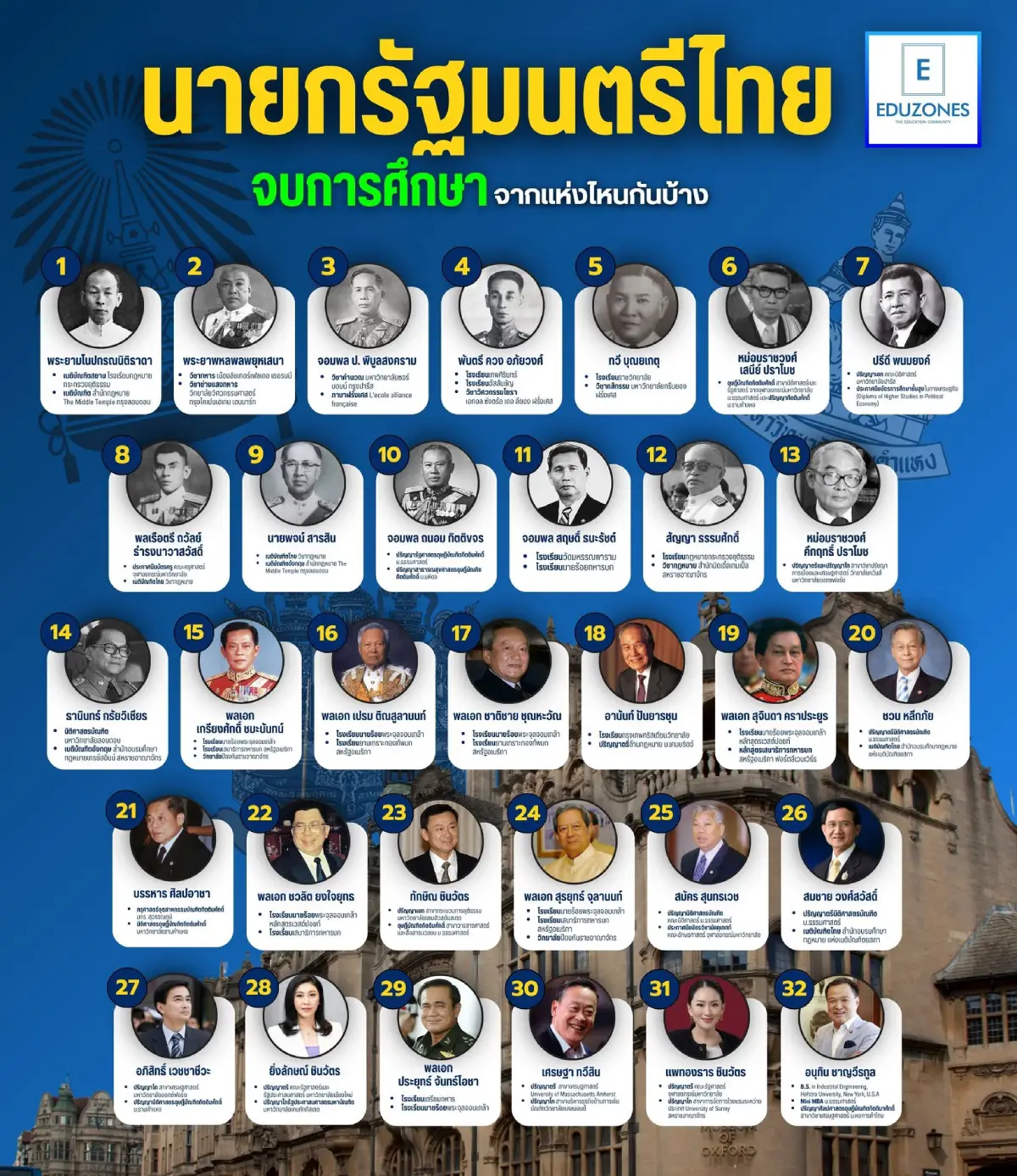
| No. | Prime Minister | Term of Office | Cabinet No. | Party / Affiliation | Key Details |
| 1 | Phraya Manopakorn Nititada (Kon Hutasing) | 28 Jun. 1932 – 20 Jun. 1933 | 1–3 | Independent | The first prime minister following the 1932 change of government; left office after the change of government in June 1933. |
| 2 | Phraya Phahon Phonphayuhasena (Phot Phahonyothin) | 21 Jun. 1933 – 16 Dec. 1938 | 4–8 | Khana Ratsadon (People’s Party) | Led several cabinets during the early years of constitutional government. |
| 3 | Field Marshal Plaek Phibunsongkhram (Plaek Khittasangkha) | 16 Dec. 1938 – 1 Aug. 1944; 8 Apr. 1948 – 16 Sep. 1957 | 9–10, 21–26 | Khana Ratsadon; Thammathipat Party; Seri Manangkhasila Party | Served in two separate periods; associated with state cultural mandates, World War II, and the renaming of Siam as Thailand. |
| 4 | Khuang Aphaiwong | 1 Aug. 1944 – 31 Aug. 1945; 31 Jan. – 24 Mar. 1946; 9 Nov. 1947 – 8 Apr. 1948 | 11, 14, 19–20 | Khana Ratsadon; Democrat Party | Served on several occasions during World War II, the postwar years, and periods of political transition. |
| 5 | Thawi Bunyaket | 31 Aug. – 17 Sep. 1945 | 12 | Khana Ratsadon | Served briefly during the post–World War II transition between governments. |
| 6 | M.R. Seni Pramoj | 17 Sep. 1945 – 31 Jan. 1946; 15 Feb. – 14 Mar. 1975; 20 Apr. – 6 Oct. 1976 | 13, 35, 37–38 | Free Thai Movement; Democrat Party | Played a role in the Free Thai Movement and served several terms before and after the political events of the 1970s. |
| 7 | Pridi Banomyong | 24 Mar. – 23 Aug. 1946 | 15–16 | Sahachip Party | A key Khana Ratsadon figure who contributed to the development of Thai law and politics. |
| 8 | Thawan Thamrongnawasawat | 23 Aug. 1946 – 8 Nov. 1947 | 17–18 | Constitutional Front Party | His government ended with the 1947 coup d’état. |
| 9 | Pote Sarasin | 21 Sep. 1957 – 1 Jan. 1958 | 27 | Independent | Headed a transitional government after the 1957 coup and before elections. |
| 10 | Field Marshal Thanom Kittikachorn | 1 Jan. – 20 Oct. 1958; 9 Dec. 1963 – 14 Oct. 1973 | 28, 30–32 | National Socialist Party; United Thai People’s Party; Revolutionary Council | Headed several governments; left office amid the events of October 14, 1973. |
| 11 | Field Marshal Sarit Thanarat | 9 Feb. 1959 – 8 Dec. 1963 | 29 | Revolutionary Council | Led a period of centralized rule and the introduction of national economic development planning. |
| 12 | Sanya Dharmasakti | 14 Oct. 1973 – 15 Feb. 1975 | 33–34 | Independent | Assumed office after October 14, 1973, during the drafting of the 1974 Constitution. |
| 13 | M.R. Kukrit Pramoj | 14 Mar. 1975 – 20 Apr. 1976 | 36 | Social Action Party | Formed a coalition government and pursued economic and foreign policy amid intense political competition. |
| 14 | Thanin Kraivichien | 8 Oct. 1976 – 20 Oct. 1977 | 39 | Independent | Appointed after the October 6, 1976, coup; removed by another coup in 1977. |
| 15 | General Kriangsak Chamanan | 11 Nov. 1977 – 3 Mar. 1980 | 40–41 | Military; Independent | Governed amid energy problems and refugee challenges before resigning in 1980. |
| 16 | General Prem Tinsulanonda | 3 Mar. 1980 – 4 Aug. 1988 | 42–44 | Independent | Led three consecutive cabinets, playing a significant role in political and economic stability during the 1980s. |
| 17 | General Chatichai Choonhavan | 4 Aug. 1988 – 23 Feb. 1991 | 45–46 | Chart Thai Party | Promoted economic relations with neighboring countries; removed in the 1991 coup. |
| 18 | Anand Panyarachun | 2 Mar. 1991 – 7 Apr. 1992; 10 Jun. – 23 Sep. 1992 | 47, 49 | Independent | Served twice during political transitions surrounding the May 1992 events. |
| 19 | General Suchinda Kraprayoon | 7 Apr. – 24 May 1992 | 48 | Independent / Backed by the National Peace Keeping Council | Resigned during the Black May political crisis of 1992. |
| 20 | Chuan Leekpai | 23 Sep. 1992 – 13 Jul. 1995; 9 Nov. 1997 – 9 Feb. 2001 | 50, 53 | Democrat Party | Served twice; his second administration managed recovery after the 1997 financial crisis. |
| 21 | Banharn Silpa-archa | 13 Jul. 1995 – 25 Nov. 1996 | 51 | Chart Thai Party | Led a coalition government that pursued infrastructure and provincial development policies. |
| 22 | General Chavalit Yongchaiyudh | 25 Nov. 1996 – 9 Nov. 1997 | 52 | New Aspiration Party | Resigned amid the 1997 financial and currency crisis. |
| 23 | Thaksin Shinawatra | 9 Feb. 2001 – 19 Sep. 2006 | 54–55 | Thai Rak Thai Party | Introduced universal healthcare and village funds; his government was overthrown in the 2006 coup. |
| 24 | General Surayud Chulanont | 1 Oct. 2006 – 29 Jan. 2008 | 56 | Independent | Served after the 2006 coup and during the promulgation of the 2007 Constitution. |
| 25 | Samak Sundaravej | 29 Jan. – 9 Sep. 2008 | 57 | People’s Power Party | Left office following a Constitutional Court ruling. |
| 26 | Somchai Wongsawat | 18 Sep. – 2 Dec. 2008 | 58 | People’s Power Party | Left office following the Constitutional Court’s dissolution of the People’s Power Party. |
| 27 | Abhisit Vejjajiva | 17 Dec. 2008 – 5 Aug. 2011 | 59 | Democrat Party | Governed during the global financial crisis and the political protests of 2010. |
| 28 | Yingluck Shinawatra | 5 Aug. 2011 – 7 May 2014 | 60 | Pheu Thai Party | Thailand’s first female prime minister; handled the 2011 floods and was removed following a Constitutional Court ruling. |
| 29 | General Prayut Chan-o-cha | 24 Aug. 2014 – 22 Aug. 2023 | 61–62 | National Council for Peace and Order (NCPO); Independent (while in office) | Entered office after the 2014 coup and subsequently led the post-2019-election government; governed during the COVID-19 pandemic. |
| 30 | Srettha Thavisin | 22 Aug. 2023 – 14 Aug. 2024 | 63 | Pheu Thai Party | Selected by parliament in 2023; removed following a Constitutional Court ruling. |
| 31 | Paetongtarn Shinawatra | 16 Aug. 2024 – 29 Aug. 2025 | 64 | Pheu Thai Party | Thailand’s second female prime minister; removed following a Constitutional Court ruling. |
| 32 | Anutin Charnvirakul | 7 Sep. 2025 – 18 Mar. 2026; 19 Mar. 2026 – Present | 65–66 | Bhumjaithai Party | Served as the 32nd prime minister in successive terms; received the House of Representatives’ approval again on March 19, 2026. |
Note on Numbering Prime ministers numbered 1–32 are counted as distinct individuals in the official sequence. Someone who serves more than one term retains the same number, and a new cabinet does not necessarily mean that a new prime minister has taken office. Dates of parliamentary approval, formal appointment, the commencement of cabinet duties, and departure from office may differ. This table primarily records each person’s term of office.
Acting Prime Ministers and Transitional Authorities The individuals and groups below acted in place of a prime minister or exercised executive responsibilities during political transitions. They are not counted as additional individuals among the 32 officially numbered prime ministers.
| Name / Group | Period | Nature of Role |
| Field Marshal Phin Choonhavan / National Military Council | 8–9 Nov. 1947 | A coup group temporarily exercised executive authority. |
| Field Marshal Sarit Thanarat / Military Authority | 16–21 Sep. 1957 | Exercised authority during the transition following a coup. |
| Admiral Sangad Chaloryu / Administrative Reform Council | 6–8 Oct. 1976; 20 Oct. – 11 Nov. 1977 | A coup group temporarily exercised executive authority. |
| Meechai Ruchuphan | 24 May – 10 Jun. 1992 | Served as acting prime minister after the prime minister’s resignation. |
| Chaovarat Chanweerakul | 3–17 Dec. 2008 | Served as acting prime minister while a new government was formed. |
| Niwatthamrong Boonsongpaisan | 7–22 May 2014 | Served as acting prime minister following a Constitutional Court ruling. |
| General Prawit Wongsuwon | 24 Aug. – 30 Sep. 2022 | Acted as prime minister while the sitting prime minister was suspended from duty. |
| Phumtham Wechayachai | 14–16 Aug. 2024; Jul.–Sep. 2025 | Acted as prime minister during changes of officeholders and periods when the prime minister was suspended from duty. |
| Suriya Juangroongruangkit | 1–3 Jul. 2025 | Acted as prime minister during a temporary suspension of the sitting prime minister. |
Climate and Seasons of Thailand: Regional Comparison Thailand has a tropical monsoon climate, with weather patterns influenced by seasonal winds, geographical features, and proximity to the sea. The country generally experiences three main seasons: the hot season from approximately mid-February to mid-May, the rainy season from mid-May to mid-October, and the cool season from mid-October to mid-February. However, Southern Thailand remains warm and humid throughout most of the year, with distinct rainfall patterns along the Gulf of Thailand and Andaman Sea coasts. Understanding these regional differences helps travelers choose suitable destinations and plan their visits throughout the year.
| Region | Hot Season | Rainy Season | Cool Season and Key Characteristics |
| Northern Thailand | Approximately March–May. The weather becomes hot and dry, particularly in lowland areas and valleys. | Approximately May–October. Rainfall is influenced by the southwest monsoon and the monsoon trough. | Approximately November–February. Temperatures become cool to cold, especially in mountainous areas of Chiang Mai, Chiang Rai, and Mae Hong Son. |
| Northeastern Thailand | Approximately March–May. The region experiences hot and relatively dry conditions, with periods of intense heat. | Approximately May–October. Rainfall is associated with the southwest monsoon and monsoon trough, although precipitation varies significantly between locations. | Approximately November–February. The weather becomes cooler and drier, with particularly cold conditions possible in mountainous areas. |
| Central Thailand | Approximately February–May. Temperatures are generally high and may become extremely hot, particularly across the central plains. | Approximately May–October. Frequent rainfall may cause flooding in low-lying areas and river basins. | Approximately November–February. Temperatures become more comfortable, although the region is generally warmer than Northern and Northeastern Thailand. |
| Eastern Thailand | Approximately February–May. Conditions are hot and humid, particularly in coastal areas influenced by the sea. | Approximately May–October. Heavy rainfall is common, especially in Chanthaburi and Trat, which receive substantial precipitation from the southwest monsoon. | Approximately November–February. Rainfall generally decreases, and temperatures become cooler in some inland areas. |
| Western Thailand | Approximately February–May. Hot weather is common, particularly across plains and valleys. | Approximately May–October. Mountain slopes exposed to the southwest monsoon receive substantial rainfall, while some areas behind mountain ranges experience comparatively less precipitation. | Approximately November–February. Temperatures decline, with mountainous areas remaining cooler than nearby lowlands. |
| Southern Thailand – Gulf of Thailand Coast | Warm and humid throughout the year. Many areas experience relatively less rainfall between approximately February and April. | Rainfall occurs during both monsoon periods, with particularly heavy precipitation often recorded between October and December, especially along the eastern coast. | There is no clearly defined cool season comparable to Northern Thailand. Heavy rainfall can continue during the northeast monsoon. |
| Southern Thailand – Andaman Sea Coast | Warm and humid throughout the year. Many coastal destinations experience relatively drier conditions between approximately December and April. | Approximately May–October. The southwest monsoon brings frequent rainfall and rough sea conditions, with September often among the wettest months. | There is no distinct cold season. Rainfall generally decreases from late in the year into the following early months, creating favorable conditions for beach holidays and marine activities when sea conditions are suitable. |
Seasonal periods represent general climatic patterns rather than fixed annual dates. Actual weather conditions can vary depending on monsoon activity, geographical location, and yearly climate variations. This distinction is particularly important in Southern Thailand, where the Gulf of Thailand and Andaman Sea coasts experience different rainfall seasons.
Explore All 77 Provinces of Thailand – Highlights and Travel Guides Thailand's 77 provinces offer an extraordinary variety of travel experiences, from the mist-covered mountains and historic temples of the north to the ancient Khmer ruins of the northeast, vibrant central cities, eastern islands, and tropical beaches of the south. This province-by-province guide highlights what makes each destination special. Explore the attractions, culture, landscapes, and local experiences of each province through the travel guides linked below.
| Province | Travel Highlights and Overview | Explore More |
| 1. Chiang Mai | Discover Doi Inthanon, Wat Phra That Doi Suthep, historic Lanna temples, mountain villages, local markets, and northern Thai traditions. | Things to Do in Chiang Mai |
| 2. Chiang Rai | Explore the White Temple, Phu Chi Fa, the Golden Triangle, contemporary Buddhist art, tea plantations, and spectacular mountain scenery. | Things to Do in Chiang Rai |
| 3. Lampang | Experience traditional horse-drawn carriages, Wat Phra That Lampang Luang, Chae Son National Park, historic wooden houses, and charming Lanna heritage. | Things to Do in Lampang |
| 4. Lamphun | Discover the ancient Hariphunchai Kingdom, Wat Phra That Hariphunchai, historic communities, traditional architecture, and peaceful countryside. | Things to Do in Lamphun |
| 5. Mae Hong Son | Visit Pang Ung, Ban Rak Thai, Pai, traditional mountain villages, scenic valleys, and misty viewpoints surrounded by forested mountains. | Things to Do in Mae Hong Son |
| 6. Nan | Explore Wat Phumin, Wat Phra That Chae Haeng, the historic town center, Bo Kluea salt wells, and the mountain landscapes around Pua. | Things to Do in Nan |
| 7. Phayao | Enjoy the scenic Kwan Phayao Lake, Wat Si Khom Kham, lakeside sunsets, Buddhist heritage, and relaxing northern Thai countryside. | Things to Do in Phayao |
| 8. Phrae | Discover historic teakwood mansions, Khum Wongburi, traditional indigo-dyed mo hom fabric, local temples, and preserved northern architecture. | Things to Do in Phrae |
| 9. Uttaradit | Explore Sirikit Dam, Laplae town, mountain scenery, historic temples, and communities along the Nan River. | Things to Do in Uttaradit |
| 10. Kalasin | Visit the Sirindhorn Museum, dinosaur fossil sites, Phu Khao, traditional Phu Thai communities, and northeastern cultural landmarks. | Things to Do in Kalasin |
| 11. Khon Kaen | Discover Phra That Kham Kaen, Bueng Kaen Nakhon Lake, dinosaur heritage in Phu Wiang, and the urban culture of northeastern Thailand. | Things to Do in Khon Kaen |
| 12. Chaiyaphum | Experience the Siam tulip fields, Mo Hin Khao rock formations, scenic national parks, waterfalls, and seasonal wildflower landscapes. | Things to Do in Chaiyaphum |
| 13. Nakhon Phanom | Visit Wat Phra That Phanom, explore the Mekong River waterfront, admire historic buildings, and experience the area's distinctive multicultural heritage. | Things to Do in Nakhon Phanom |
| 14. Nakhon Ratchasima | Explore Khao Yai National Park, Phimai Historical Park, Khmer architecture, rural communities, and the gateway to northeastern Thailand. | Things to Do in Nakhon Ratchasima |
| 15. Bueng Kan | Discover the extraordinary Three Whale Rock formation, Phu Thok, forest landscapes, and scenic viewpoints overlooking the Mekong region. | Things to Do in Bueng Kan |
| 16. Buriram | Explore Phanom Rung Historical Park, Muang Tam Khmer sanctuary, ancient volcanic landscapes, and local cultural heritage. | Things to Do in Buriram |
| 17. Maha Sarakham | Visit Phra That Na Dun, Buddhist heritage sites, traditional Isan communities, and cultural learning centers. | Things to Do in Maha Sarakham |
| 18. Mukdahan | Enjoy panoramic views from Mukdahan Tower, explore Phu Pha Thoep National Park, and discover communities along the Mekong River. | Things to Do in Mukdahan |
| 19. Yasothon | Experience the famous Bun Bang Fai Rocket Festival, Wat Mahathat, traditional festivals, and authentic Isan rural culture. | Things to Do in Yasothon |
| 20. Roi Et | Discover Phra Maha Chedi Chai Mongkhon, Bueng Phlan Chai Park, traditional temples, and northeastern cultural traditions. | Things to Do in Roi Et |
| 21. Loei | Explore Chiang Khan, Phu Kradueng, Phu Ruea, mountain viewpoints, and the cool-season landscapes of northeastern Thailand. | Things to Do in Loei |
| 22. Sisaket | Discover ancient Khmer sanctuaries, Wat Pa Maha Chedi Kaew, local agricultural landscapes, and the cultural heritage of southern Isan. | Things to Do in Sisaket |
| 23. Sakon Nakhon | Visit Wat Phra That Choeng Chum, Nong Han Lake, indigo-dyeing villages, and traditional craft communities. | Things to Do in Sakon Nakhon |
| 24. Surin | Explore elephant-related cultural traditions, ancient Khmer sanctuaries, renowned silk-weaving communities, and local festivals. | Things to Do in Surin |
| 25. Nong Khai | Discover the Mekong River promenade, Naga-related traditions, sacred temples, and scenic riverside communities. | Things to Do in Nong Khai |
| 26. Nong Bua Lamphu | Explore Erawan Cave, Wat Tham Klong Phen, limestone mountains, forest landscapes, and peaceful Buddhist retreats. | Things to Do in Nong Bua Lamphu |
| 27. Amnat Charoen | Visit Phra Mongkhon Ming Mueang, traditional temples, agricultural communities, and local northeastern cultural attractions. | Things to Do in Amnat Charoen |
| 28. Udon Thani | Experience the Red Lotus Sea, Ban Chiang Archaeological Site, Kham Chanot, and the province's rich prehistoric and cultural heritage. | Things to Do in Udon Thani |
| 29. Ubon Ratchathani | Explore Sam Phan Bok, Pha Taem National Park, Mekong landscapes, and the celebrated Candle Festival. | Things to Do in Ubon Ratchathani |
| 30. Bangkok | Discover the Grand Palace, Wat Phra Kaew, Wat Arun, historic riverside neighborhoods, bustling markets, world-class dining, and modern city attractions. | Things to Do in Bangkok |
| 31. Kamphaeng Phet | Explore Kamphaeng Phet Historical Park, ancient city walls, Buddhist ruins, and forested landscapes in western Thailand. | Things to Do in Kamphaeng Phet |
| 32. Chai Nat | Visit Chai Nat Bird Park, Chao Phraya Dam, riverside communities, and family-friendly attractions in central Thailand. | Things to Do in Chai Nat |
| 33. Nakhon Nayok | Discover Sarika Waterfall, Khun Dan Prakan Chon Dam, forest trails, river activities, and convenient nature escapes from Bangkok. | Things to Do in Nakhon Nayok |
| 34. Nakhon Pathom | Visit Phra Pathom Chedi, Sanam Chandra Palace, traditional markets, and canal-side communities near Bangkok. | Things to Do in Nakhon Pathom |
| 35. Nakhon Sawan | Explore Bueng Boraphet, Pak Nam Pho, the confluence of the Ping and Nan rivers, and traditional Chinese-Thai communities. | Things to Do in Nakhon Sawan |
| 36. Nonthaburi | Discover Ko Kret island, Mon pottery communities, riverside temples, and traditional markets along the Chao Phraya River. | Things to Do in Nonthaburi |
| 37. Pathum Thani | Explore Wat Chedi Hoi, science museums, traditional temples, local markets, and riverside communities north of Bangkok. | Things to Do in Pathum Thani |
| 38. Ayutthaya | Discover Ayutthaya Historical Park, Wat Mahathat, royal palaces, ancient Buddhist ruins, and UNESCO World Heritage architecture. | Things to Do in Ayutthaya |
| 39. Phichit | Explore Bueng Si Fai Lake, Wat Tha Luang, historic temples, and the legendary tales of Chalawan the crocodile. | Things to Do in Phichit |
| 40. Phitsanulok | Visit Wat Phra Si Rattana Mahathat, Phu Hin Rong Kla National Park, historic landmarks, and scenic highland landscapes. | Things to Do in Phitsanulok |
| 41. Phetchabun | Explore Khao Kho, Phu Thap Boek, Si Thep Historical Park, misty mountains, and ancient archaeological sites. | Things to Do in Phetchabun |
| 42. Lop Buri | Discover Phra Prang Sam Yot, King Narai's Palace, historic Khmer architecture, and the province's famous resident monkeys. | Things to Do in Lop Buri |
| 43. Samut Prakan | Visit the Ancient City, Bang Pu Recreation Center, traditional temples, and coastal communities near Bangkok. | Things to Do in Samut Prakan |
| 44. Samut Songkhram | Explore Amphawa Floating Market, the Maeklong Railway Market, traditional orchards, and canal-side communities. | Things to Do in Samut Songkhram |
| 45. Samut Sakhon | Discover Phanthai Norasing Shrine, Mahachai Market, coastal fishing communities, and traditional seafood culture. | Things to Do in Samut Sakhon |
| 46. Saraburi | Explore Wat Phra Phutthabat, Namtok Chet Sao Noi National Park, scenic waterfalls, and historic Buddhist pilgrimage sites. | Things to Do in Saraburi |
| 47. Sing Buri | Visit Wat Phra Non Chakkrasi, the Bang Rachan historical sites, traditional temples, and quiet rural communities. | Things to Do in Sing Buri |
| 48. Sukhothai | Discover Sukhothai Historical Park, Si Satchanalai, ancient Buddhist monuments, and the artistic legacy of the Sukhothai Kingdom. | Things to Do in Sukhothai |
| 49. Suphan Buri | Explore Bueng Chawak, Sam Chuk Old Market, historic temples, and traditional central Thai communities. | Things to Do in Suphan Buri |
| 50. Ang Thong | Visit Wat Muang, Wat Khun Inthapramun, giant Buddha statues, traditional handicraft villages, and historic Buddhist landmarks. | Things to Do in Ang Thong |
| 51. Uthai Thani | Explore Wat Tha Sung, Hup Pa Tat, traditional floating homes, and the tranquil Sakae Krang River. | Things to Do in Uthai Thani |
| 52. Chanthaburi | Discover Chanthaboon Waterfront Community, Namtok Phlio National Park, tropical fruit orchards, and historic cultural neighborhoods. | Things to Do in Chanthaburi |
| 53. Chachoengsao | Visit Wat Sothon Wararam Worawihan, Ban Mai Riverside Market, and traditional communities along the Bang Pakong River. | Things to Do in Chachoengsao |
| 54. Chon Buri | Explore Pattaya, Koh Larn, Bang Saen Beach, seafood markets, and the diverse coastal attractions of the Gulf of Thailand. | Things to Do in Chon Buri |
| 55. Trat | Discover Koh Chang, Koh Kood, Koh Mak, tropical beaches, mangrove forests, and peaceful island communities. | Things to Do in Trat |
| 56. Prachin Buri | Explore Thap Lan National Park, Si Mahosot archaeological sites, forest landscapes, and traditional communities. | Things to Do in Prachin Buri |
| 57. Rayong | Visit Koh Samet, Mae Ramphueng Beach, tropical fruit farms, seafood villages, and scenic eastern coastal attractions. | Things to Do in Rayong |
| 58. Sa Kaeo | Discover Pang Sida National Park, the remarkable Lalu rock formations, forest landscapes, and cultural attractions near the Cambodian border. | Things to Do in Sa Kaeo |
| 59. Kanchanaburi | Explore the Bridge over the River Kwai, Erawan Waterfall, the Death Railway, national parks, and important World War II heritage sites. | Things to Do in Kanchanaburi |
| 60. Tak | Discover Thi Lo Su Waterfall, Bhumibol Dam, Mae Sot, mountain forests, and the multicultural communities of Thailand's western border. | Things to Do in Tak |
| 61. Prachuap Khiri Khan | Explore Hua Hin, Ao Manao, Khao Sam Roi Yot National Park, sandy beaches, and beautiful limestone mountain scenery. | Things to Do in Prachuap Khiri Khan |
| 62. Phetchaburi | Visit Phra Nakhon Khiri Historical Park, Cha-am Beach, historic temples, traditional markets, and the province's celebrated Thai desserts. | Things to Do in Phetchaburi |
| 63. Ratchaburi | Discover Damnoen Saduak Floating Market, Suan Phueng, traditional pottery, scenic countryside, and multicultural local communities. | Things to Do in Ratchaburi |
| 64. Krabi | Explore Railay Beach, the Phi Phi Islands, the Talay Waek sandbar, limestone cliffs, and the turquoise waters of the Andaman Sea. | Things to Do in Krabi |
| 65. Chumphon | Discover Thung Wua Laen Beach, Mu Ko Chumphon National Park, Khao Matsee Viewpoint, tropical islands, and peaceful seaside communities. | Things to Do in Chumphon |
| 66. Trang | Explore Emerald Cave, Koh Kradan, stunning Andaman islands, limestone landscapes, and Trang's renowned breakfast culture. | Things to Do in Trang |
| 67. Nakhon Si Thammarat | Visit Wat Phra Mahathat Woramahawihan, Kiriwong Village, Khao Luang National Park, and historic southern Thai cultural landmarks. | Things to Do in Nakhon Si Thammarat |
| 68. Narathiwat | Discover Narathat Beach, To Daeng Peat Swamp Forest, traditional Malay cultural heritage, historic mosques, and southern border communities. | Things to Do in Narathiwat |
| 69. Pattani | Explore Pattani Central Mosque, Krue Se Mosque, historic neighborhoods, coastal communities, and the province's distinctive Malay-Thai heritage. | Things to Do in Pattani |
| 70. Phang Nga | Discover Phang Nga Bay, Koh Panyee, the Similan Islands, dramatic limestone formations, and spectacular Andaman marine scenery. | Things to Do in Phang Nga |
| 71. Phatthalung | Explore Thale Noi Wetland, Khao Ok Thalu, lakeside villages, birdwatching areas, and traditional southern Thai community life. | Things to Do in Phatthalung |
| 72. Phuket | Visit Patong Beach, Promthep Cape, Phuket Old Town, Sino-Portuguese architecture, and beautiful tropical beaches along the Andaman Sea. | Things to Do in Phuket |
| 73. Ranong | Discover Raksawarin Hot Springs, Koh Phayam, lush mangrove forests, tropical rainforests, and quiet Andaman coastal scenery. | Things to Do in Ranong |
| 74. Songkhla | Explore Songkhla Old Town, Samila Beach, Songkhla Lake, historic architecture, and the multicultural heritage of southern Thailand. | Things to Do in Songkhla |
| 75. Satun | Discover Koh Lipe, Tarutao National Marine Park, Satun UNESCO Global Geopark, turquoise waters, and remarkable geological landscapes. | Things to Do in Satun |
| 76. Surat Thani | Explore Cheow Lan Lake, Koh Samui, Koh Phangan, Khao Sok National Park, tropical islands, and lush rainforest landscapes. | Things to Do in Surat Thani |
| 77. Yala | Discover Aiyerweng Skywalk, Betong, misty mountains, tropical forests, and the cultural diversity of Thailand's southern border region. | Things to Do in Yala |
Common Misconceptions and Facts About Thailand: Comparison Table Thailand is internationally recognized for its beautiful destinations, distinctive cuisine, traditional festivals, and cultural heritage. Nevertheless, several aspects of the country are frequently misunderstood, including its administrative divisions, regional classifications, climate, linguistic diversity, religious traditions, and population statistics. Understanding the differences between common misconceptions and established facts provides a clearer and more accurate picture of Thailand's geography, society, and national identity.
| Topic | Common Misconception | Facts About Thailand |
| Number of Provinces | Thailand has 77 provinces, all with exactly the same administrative status. | Thailand has 76 provinces under its provincial administration system, together with Bangkok, which has special local administrative status. The country is therefore commonly described as having 77 province-level administrative areas. |
| Regional Divisions | Thailand has only one official method of dividing the country into regions. | Thailand uses different regional classifications depending on their purpose. Common systems divide the country into four or six regions, while other classifications are used for economic planning, administration, and specialized geographical analysis. |
| Thailand's Climate | Every province in Thailand experiences the same hot weather throughout the year. | Thailand has a predominantly tropical climate, but Northern and Northeastern Thailand experience cooler conditions during the cool season, especially at higher elevations. Southern Thailand generally remains warm and humid throughout the year. |
| Seasons of Thailand | All regions experience three identical seasons that begin and end at exactly the same time. | Upper Thailand generally experiences three main seasons: hot, rainy, and cool. Southern Thailand has more pronounced wet and relatively dry periods, with different peak rainfall seasons along the Gulf of Thailand and Andaman Sea coasts. |
| Beach Tourism Seasons | Thailand's beaches on both coastlines share exactly the same ideal travel season. | The Andaman Sea coast is strongly influenced by the southwest monsoon from approximately May to October, while many destinations along the Gulf of Thailand experience their wettest conditions later in the year. Travel planning should therefore consider the specific coastline and current weather conditions. |
| Languages Spoken in Thailand | Everyone in Thailand speaks exactly the same form of Thai. | Standard Thai is the principal language used nationwide, but the country has considerable linguistic diversity, including Northern Thai, Isan, Southern Thai, and languages spoken by various ethnic communities. |
| Religious Affiliation | All Thai people are Buddhists. | Buddhism is the religion followed by most people in Thailand. However, the country also has Muslim, Christian, Hindu, Sikh, and other religious communities, as well as people without a religious affiliation. |
| Population and Nationality | Everyone included in Thailand's official civil registration population must be a Thai citizen. | Thailand's registered population includes Thai nationals and non-Thai nationals whose information is recorded in the country's civil registration system. |
| Registered Population | The registered population of each province always equals the number of people actually living there. | Official civil registration figures may differ from actual resident populations because people often move for employment, education, or other purposes without changing their registered household address. |
| Geographical Landscape | Thailand has essentially the same geographical landscape throughout the country. | Thailand has diverse geographical features, including mountainous landscapes in the north, the Khorat Plateau in the northeast, the Chao Phraya River Basin in the central region, and the southern peninsula bordered by both the Gulf of Thailand and the Andaman Sea. |
Frequently Asked Questions (FAQ)
Q: What is the history of Thailand?
A: Thailand has a long history beginning with prehistoric communities and ancient states such as Dvaravati. Important kingdoms and royal capitals later developed, including Sukhothai, Ayutthaya, Thonburi, and Rattanakosin. The country was formerly known as Siam before officially adopting the name Thailand again in 1949.
Q: What are the most important events in Thailand over the past 100 years?
A: Major events between 1926 and 2026 include the Siamese Revolution of 1932, Thailand's involvement in World War II, the founding of ASEAN in 1967, the October 14, 1973, and October 6, 1976, political events, the 1997 Asian financial crisis, the 2004 Indian Ocean tsunami, the 2011 floods, the COVID-19 pandemic, and the implementation of marriage equality legislation in 2025. These events significantly influenced Thailand's political, economic, and social development.
Q: When did Thailand change its political system, and why was it important?
A: Thailand underwent a major political transformation on June 24, 1932, when the People's Party brought about a transition from absolute monarchy to government under a constitution. A provisional charter was promulgated on June 27, 1932, followed by the first permanent constitution on December 10, 1932. This transformation was a defining event in the development of Thailand's political institutions and parliamentary system.
Q: How many provinces does Thailand have, and how many regions are there?
A: Thailand has 76 provinces and Bangkok, a special local administrative area, for a total of 77 provincial-level administrative areas. This article divides the country into six regions: Northern Thailand, Northeastern Thailand, Central Thailand, Eastern Thailand, Western Thailand, and Southern Thailand. Regional classifications may differ depending on the criteria used by individual organizations.
Q: How many seasons does Thailand have, and when is the best time to visit?
A: Upper Thailand generally has three seasons: the hot season from approximately mid-February to mid-May, the rainy season from mid-May to mid-October, and the cool season from mid-October to mid-February. The cooler months are often suitable for mountain tourism in Northern Thailand, while coastal and island trips should be planned according to calmer sea conditions and the differing monsoon seasons of the Gulf of Thailand and Andaman Sea.
Q: What are Thailand's most important historical attractions?
A: Important historical attractions include Sukhothai Historical Park, Ayutthaya Historical Park, the Grand Palace, the Temple of the Emerald Buddha, the Former Palace in Thonburi, and the Ban Chiang Archaeological Site. These destinations reveal the development of political institutions, religion, architecture, and human settlements in Thailand from ancient times to the present.
Q: Which Thai cultural traditions and foods are internationally famous?
A: Well-known Thai cultural traditions include the wai greeting, khon, Nora, Songkran, Loy Krathong, and traditional handicrafts. Famous Thai dishes include tom yum kung, pad Thai, green curry, som tam, khao soi, and massaman curry. Khon, Nora, Songkran, and tom yum kung have been inscribed on UNESCO's Representative List of the Intangible Cultural Heritage of Humanity.
Q: What factors will have the greatest impact on Thailand's future?
A: Major factors include population aging, improvements in education and workforce skills, economic competitiveness, digital transformation, reducing inequality, and adapting to climate change. Sustainable national development requires coordinated progress in the economy, society, and environmental protection.
Q: Was Thailand previously called Siam, and when did the name change?
A: Thailand was formerly officially known as Siam. Its name was first changed to Thailand on June 24, 1939, during the government of Field Marshal Plaek Phibunsongkhram. After World War II, the name Siam was briefly restored before Thailand was adopted again in 1949. The name Thailand has remained in official use ever since.
Q: What is the population of Thailand?
A: Thailand had a registered population of 65,809,011 people as of December 31, 2025, comprising 32,045,088 males and 33,763,923 females. These figures are based on civil registration and may differ from estimates of the population actually residing in the country.
Q: How large is Thailand, and how does its land area rank in Southeast Asia?
A: Thailand covers approximately 513,120 square kilometers, equivalent to around 320.7 million rai. It is the third-largest country in Southeast Asia by land area, after Indonesia and Myanmar. Its landscapes include mountains, plateaus, river plains, and extensive coastal areas.
Q: Which countries share land borders with Thailand?
A: Thailand shares land borders with four countries: Myanmar, Laos, Cambodia, and Malaysia. Myanmar lies to the north and west, Laos to the north and northeast, Cambodia to the east, and Malaysia to the south. Thailand also has coastlines along the Gulf of Thailand and the Andaman Sea.
Q: Why are the Sukhothai, Ayutthaya, Thonburi, and Rattanakosin periods important?
A: Sukhothai was an important historical state known for Buddhism, art, and evidence of early Thai writing. Ayutthaya served as a royal capital and international trading center from 1350 to 1767. Thonburi was the capital during the postwar restoration period from 1767 to 1782. The Rattanakosin period began in 1782 and has been central to the development of modern government, the economy, and Thai society.
Q: What was the 1997 Tom Yum Kung Financial Crisis, and how did it affect Thailand?
A: The Tom Yum Kung Financial Crisis was a major economic and financial crisis that began in 1997. On July 2, Thailand changed its exchange-rate system to a managed float, after which the Thai baht depreciated sharply. The crisis severely affected financial institutions, businesses, employment, and the national economy. It also became an important starting point for the wider Asian financial crisis that affected several countries.
Q: What major natural disasters has Thailand experienced?
A: Major disasters include Typhoon Gay in 1989, the Indian Ocean tsunami that struck Thailand's Andaman coast on December 26, 2004, the great floods of 2011, and the effects of the major Myanmar earthquake on March 28, 2025. Thailand also experiences droughts, flash floods, landslides, and coastal erosion in different regions. Monitoring official warnings and preparing for emergencies are essential for public safety.
Q: What are the most important UNESCO World Heritage Sites in Thailand?
A: Major UNESCO World Heritage properties in Thailand include the Historic Town of Sukhothai and Associated Historic Towns, Historic City of Ayutthaya, Ban Chiang Archaeological Site, Thungyai–Huai Kha Khaeng Wildlife Sanctuaries, Dong Phayayen–Khao Yai Forest Complex, and Kaeng Krachan Forest Complex. Thailand also has other properties inscribed in later years, reflecting the country's historical, cultural, and natural heritage.
Q: Why is Thailand important to ASEAN?
A: Thailand was one of the five founding members of the Association of Southeast Asian Nations, or ASEAN, established on August 8, 1967, through the signing of the Bangkok Declaration in Bangkok. Thailand plays an important role in regional trade, investment, tourism, transportation, and international cooperation, while also providing geographical connections among mainland Southeast Asian economies.
Q: Why is Thailand a popular destination for international tourists?
A: Thailand attracts international travelers through its diverse natural landscapes, historical heritage, cuisine, and cultural traditions. Major destinations include Bangkok, Chiang Mai, Ayutthaya, Sukhothai, Phuket, Krabi, and Ko Samui. Visitors can explore Buddhist temples, historical monuments, beaches, islands, Thai cuisine, and regional festivals. Extensive transportation networks and tourism services also support different types of travel throughout the country.
 Category: ●Travel Articles, Recipes
 Group: ●Travel Review, Food Review
Last Update : 2 WeekAgo
 Last Update : 2 WeekAgo
Recommend

 Art, Culture and Heritage
 Historical Sites and Monuments(3)
 Landmarks and Memorials(23)
 Royal Palace(13)
 Art, Craft Centres, Tradition(35)
 Museums(59)
 Historic Homes and Cities(3)
 Art Gallery(16)
 Educational Places
 Museum for Study(6)
 Library(4)
 University
 Public university(8)
 Autonomous Universities(8)
 Rajamangala University of Technology(6)
 Rajabhat University(6)
 Private University(22)
 Places of Worship
 Temple(72)
 Church(2)
 Mosque(67)
 Other Sacred Sites(8)
 Research and Development
 Royal Project(1)
 Suburban Living
 Village, Community(5)
 Local Market(9)
 Floating Market(2)
 Nature and Wildlife
 River, Canal(3)
 Bays and Beaches(1)
 Other natural attractions(1)
 Entertainment and Agricultural
 Zoos and Aquariums(5)
 Animal camps and shows(5)
 Stadium(9)
 Farms, Parks and Ecotourism(20)
 Amusement Park(1)
 Waterpark(4)
 Theater(7)
 Cinema(1)
 Shopping
 Shopping and Night Market(20)
 Department Store(7)
 Spas and Wellness
 Spas and Wellness(1)
 Restaurant
 Michelin Star(5)
 Accommodation
 Hotel(3)
 Call Customer Service in Tourism
 Call Customer Service in Tourism(1)
Travel Review, Food Review(52)
 Royal Thai Desserts and Recipes(56)


