
lovethailand home >Central Travel Attractions >Bangkok Travel Attractions >Bang Plad >Bang Yi Khan > Pata Zoo
TL;DR: Pata Zoo is located at 125 Somdet Phra Pinklao Road, Bang Yi Khan, Bang Phlat District, Bangkok 10700, Thailand, open Friday, Saturday, Sunday, and Special Public Holidays as Announced, hours 10:00 – 18:00.
Pata Zoo
Open Days: Friday, Saturday, Sunday, and Special Public Holidays as Announced
Opening Hours: 10:00 – 18:00
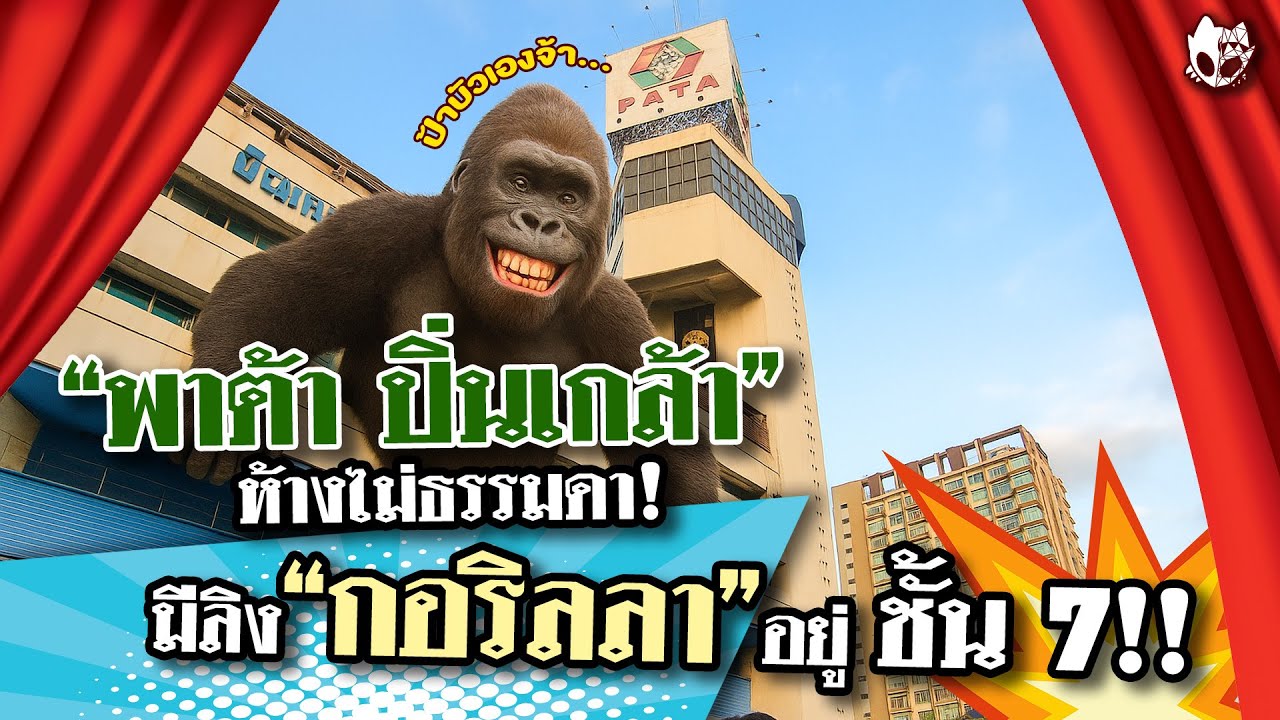
Pata Zoo is a historic privately operated rooftop zoo occupying the sixth and seventh floors of the Pata Pinklao building at 125 Somdet Phra Pinklao Road, Bang Yi Khan, Bang Phlat, Bangkok 10700. It opens on Fridays, Saturdays, Sundays, and designated special holidays from 10:00 to 18:00. Admission costs THB 120 for adults and THB 80 for children, while children no taller than 90 centimeters enter free of charge. Its best-known resident is Bua Noi, a female gorilla who has lived at the zoo for decades. The attraction also includes exhibits featuring mammals, birds, reptiles, aquatic animals, and activities within the building. Visitors can reach the area by car, bus, or metro followed by local transportation.
Pata Zoo is one of Bangkok's most distinctive and historically significant animal attractions. Unlike conventional zoological parks occupying extensive grounds, it is located on the upper floors of the Pata Pinklao department store. Established in 1983, the zoo became part of the childhood memories of many Bangkok residents, especially families living on the Thonburi side of the Chao Phraya River. Parents once brought their children to shop and observe animals during weekend outings. The zoo remains in operation today, with mammal, bird, reptile, and aquatic exhibits distributed across indoor air-conditioned areas, elevated outdoor sections, and spaces used for scheduled visitor activities.
Pata Zoo's defining characteristic is the integration of an animal attraction into a commercial building during an era when department stores were central to family recreation. Taking an elevator from a shopping complex to a zoological attraction several floors above street level provides an experience unlike entering a conventional open-air zoo. Visitors encounter wildlife exhibits and landscaped areas within a building surrounded by the dense urban environment of Bangkok. This unusual arrangement makes Pata Zoo significant not only as a visitor attraction but also as part of the city's history of shopping and leisure.
The Pata Pinklao building stands along Somdet Phra Pinklao Road in Bang Yi Khan, Bang Phlat District, an area connecting Thonburi with central Bangkok across the Somdet Phra Pinklao Bridge. Its location is close to Borommaratchachonnani Road, Arun Amarin Road, and routes serving Bangkok Noi, Bang Phlat, and Phra Nakhon. The Pata department store was once an important shopping destination in Pinklao. As newer shopping centers expanded across Bangkok, commercial activity and the use of the building changed over time.
The history of Pata Zoo is closely connected with the development of the department store. Pata Pinklao opened on December 24, 1982, and the zoological attraction began welcoming visitors in 1983. Its earliest phase included bird and animal exhibits that people could originally visit without paying admission. The animal collection and facilities subsequently expanded, and the zoo introduced ticket charges as its operations developed. This evolution reflected the popularity of combining shopping, entertainment, and wildlife education within a single family destination.
During its early years, the zoo attracted considerable attention by exhibiting animals that many city residents rarely encountered. Wildlife from different regions was presented in spaces on the upper floors of the building, and additional exhibits were developed over time. The sixth floor became associated with the air-conditioned zoo facilities established during the mid-1980s, while the seventh floor accommodated animal enclosures and outdoor areas. These contrasting environments contributed to the unusual identity of the rooftop zoo.
The atmosphere of Pata in its earlier decades reflected a period when visiting department stores was an important leisure activity in Bangkok. Families could shop, dine, and see animals without traveling to several separate destinations. For many children growing up during the 1980s and 1990s, Pata Zoo offered their first close encounter with exotic animals. Those experiences created lasting memories that continue to shape the cultural significance of the attraction.
Pata Zoo also illustrates Bangkok's transition from its early generation of modern department stores to a city filled with shopping malls and diverse recreational attractions. The fact that the zoo continues operating within its original building allows former visitors to revisit a familiar place from childhood. Younger visitors, meanwhile, can experience a type of commercial-building zoo that differs substantially from contemporary large-scale zoological parks and outdoor nature centers.
In 2023, Pata Zoo underwent an important phase of renovation. Its management and staff worked on updating indoor exhibition spaces, air-conditioning facilities, and areas devoted to unusual animals. Additional family-oriented activities were also introduced. These improvements changed how certain parts of the building were used and helped expand the attraction beyond the arrangements of earlier decades.
The zoo's architecture is unusual because its animal exhibits occupy the upper floors of a commercial building. Operating a zoo in such an environment requires attention to limited floor space, ventilation, sanitation, lighting, and the structural arrangements needed for individual species. Indoor environments differ considerably from large ground-level animal parks, where natural terrain and more extensive land can be incorporated into enclosure design.
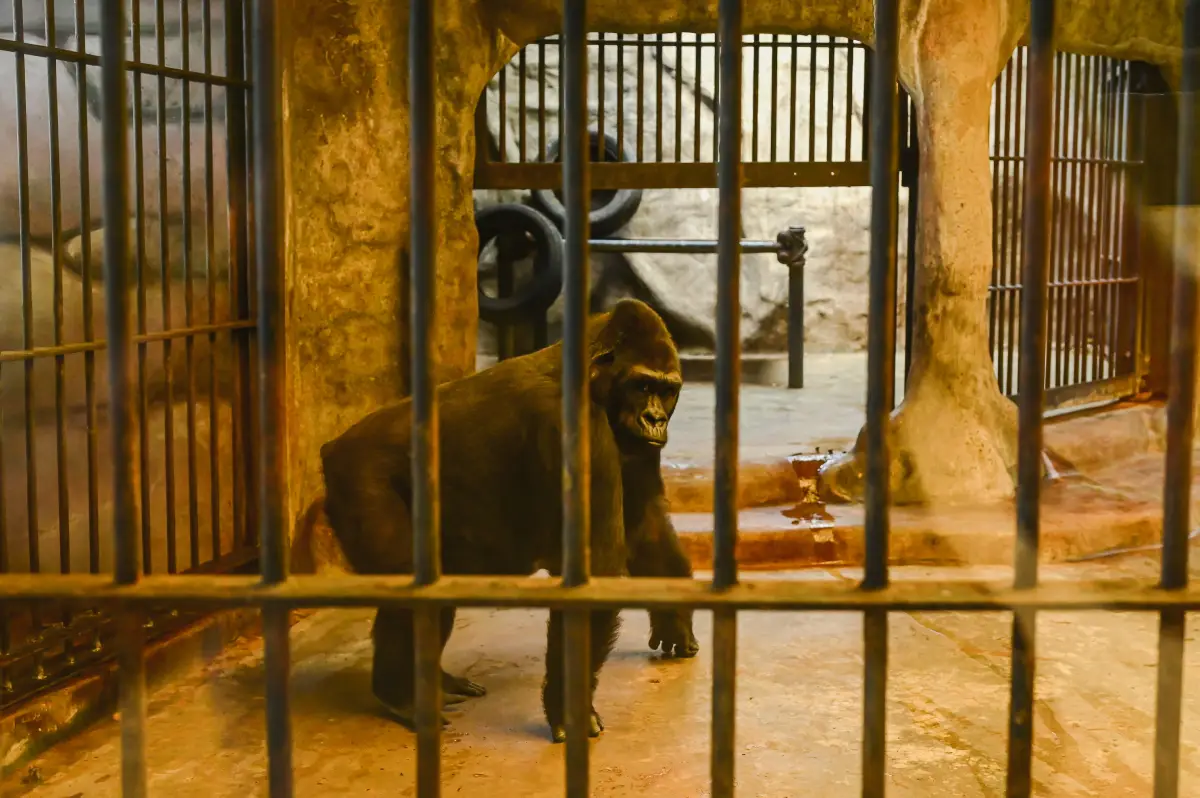
The most famous animal associated with Pata Zoo is Bua Noi, a female gorilla who has lived at the attraction for many decades. Her presence has attracted continuous public interest and made Pata Zoo widely known across Thailand. Bua Noi's story is closely linked with the development of zoological exhibits in the country and with changing attitudes toward wildlife conservation and animal welfare over several generations.
Gorillas are large primates belonging to the great ape family and are native to the tropical forests of Africa. They possess powerful bodies, long arms, and anatomy adapted to movement through forest environments. Gorillas have complex social behavior and considerable abilities to learn and remember. They communicate through gestures, vocalizations, and physical contact with other group members.
A gorilla's body differs significantly from that of many monkeys. Gorillas have no tail and possess exceptionally strong muscles around the arms, shoulders, and torso. They commonly move across the ground using their knuckles to support part of their weight. This form of locomotion, known as knuckle-walking, is found among certain great apes. Observing gorilla anatomy provides opportunities to understand the diversity of body structures and movement patterns within the primate order.
In natural habitats, gorillas live in social groups with relationships among different individuals. Their daily activities include foraging, resting, moving through their environment, and maintaining social contact. Their intelligence and social behavior create complex environmental and behavioral needs. Caring for gorillas in human-managed settings consequently requires specialized understanding of zoology and animal welfare.
Bua Noi is particularly significant because she is a female gorilla whose life has been discussed extensively in Thai society. Her history is connected with animal caretakers who have spent many years working at Pata Zoo. Among those associated with her long-term care is Sompong Budda, a keeper whose experience with gorillas at the zoo spans several decades. The relationship between caretakers and individual animals is an important part of the institution's history and illustrates the responsibilities involved in daily wildlife management.
Viewing arrangements for Bua Noi have included limits on visitor numbers during certain periods in order to manage the environment and reduce disturbance. Observing the gorilla may therefore differ from walking freely through exhibits that have no scheduled viewing restrictions. Quiet behavior is especially important because large primates can respond to noise, crowding, and other environmental stimuli.
Pata Zoo has been the subject of continuing public discussion about animal welfare, particularly concerning Bua Noi and other primates. Some animal welfare organizations have raised concerns about enclosure conditions and the behavioral needs of the animals. The zoo's management has, in turn, publicly discussed its animal care practices and improvements to the exhibits. These differing perspectives have made Pata Zoo an important example in wider discussions about privately operated zoos and animal welfare standards in Thailand.
Understanding animal welfare is important because different species have widely varying requirements. Tree-dwelling animals need suitable climbing structures, while social species require opportunities to express appropriate interactions. Nocturnal animals have resting and activity cycles that differ from those of humans. Evaluating the quality of animal care therefore involves considering physical health, natural behavior, and the suitability of the surrounding environment.
Pata Zoo offers visitors opportunities to observe animals from several biological groups. The exhibits have included mammals, birds, reptiles, and aquatic animals across the building's visitor areas. Species historically associated with the zoo include orangutans, several monkey species, lemurs, small rodents, other mammals, parrots, snakes, turtles, and animals displayed in aquariums.
Orangutans are great apes native to Borneo and Sumatra. They are recognizable by their long reddish-brown hair and exceptionally long arms, which are well suited to life in trees. Orangutans possess impressive learning and problem-solving abilities and can manipulate objects with their hands. In the wild, they spend much of their time in forest canopies. Learning about orangutans therefore illustrates the importance of tropical rainforests and habitat conservation in Southeast Asia.
Monkeys and apes belong to the primate order but differ in important biological characteristics. Gorillas and orangutans are great apes without tails, whereas many monkeys have tails and anatomical adaptations suited to moving through trees or across the ground. Comparing these groups helps visitors recognize differences in physical structure, behavior, and evolutionary relationships.
Lemurs are primates native to Madagascar. Their appearance and behavior differ from those of monkeys found in Asia and Africa. Many lemur species have long tails, distinctive faces, and agile movement patterns. Studying them introduces the remarkable biological diversity of islands and the importance of protecting forests that support species with limited natural distributions.
Small mammals are another interesting group for families. They exhibit a wide variety of shapes and behavior, from rodents that use strong front teeth to gnaw food to species that dig burrows or live in social groups. Watching these animals helps children understand that mammals are not limited to large wildlife or familiar household pets. The group includes organisms with an extraordinary range of ecological adaptations.
Indoor educational exhibits devoted to unusual animals were among the facilities developed during the zoo's 2023 renovation. These exhibits introduced animals with distinctive characteristics and provided information about their care. They also illustrated that certain exotic animals require specialized knowledge and carefully managed conditions and cannot be cared for in the same way as common domestic pets.
Reptiles have an important place in Pata Zoo's history because the institution has previously been associated with reptile exhibition and breeding in Thailand. Reptiles include snakes, lizards, and turtles, whose skin structure, temperature regulation, and lifestyles differ from those of mammals. Most reptiles depend heavily on environmental heat to regulate body temperature, making appropriate lighting and thermal conditions essential to their care.
Snakes have a distinctive anatomy because they lack legs and use coordinated muscular movements to travel. Their feeding strategies and sensory abilities differ across species. Some snakes subdue prey through constriction, while others possess venom used during feeding. Learning about snakes therefore requires distinguishing between different species rather than assuming that all snakes present the same level of danger.
Turtles and tortoises are reptiles distinguished by protective shells integrated with their skeletal structure. Some species spend most of their lives on land, while others are adapted to aquatic habitats. The shapes of their shells and limbs reflect the environments in which they live. Observing these animals provides an accessible example of the relationship between anatomy, movement, and habitat.
Birds contribute color and diversity to Pata Zoo. Its animal exhibits have historically included parrots, macaws, and other birds from different regions. Parrots are known for their strong beaks and feet adapted for handling branches and food. Their plumage varies greatly among species, while communication and social recognition play important roles in the lives of many birds.
Macaws are large parrots native to Central and South America, recognizable by their long tails and vivid colors. Their powerful beaks help them process food, and they display complex social behavior. Many parrots naturally live in pairs or groups and depend on flying, climbing, and communication. Learning about these birds also introduces the importance of conserving the forests in which they live.
Aquatic animal exhibits are another component of the zoo's history, with aquarium displays introducing the diversity of life in water. Aquatic animals differ from land animals in their breathing, movement, and sensory adaptations. Observing aquariums can help children understand how water quality, oxygen, food, and environmental conditions influence aquatic ecosystems.
The air-conditioned indoor exhibits provide a partly controlled environment that contrasts with outdoor sections on the upper floor. Visitors therefore encounter different forms of animal exhibition within one attraction. Indoor areas can accommodate certain smaller species and specialized enclosures, while the outdoor section provides a different atmosphere and viewing experience.
The seventh floor is particularly important to the identity of Pata Zoo because it is closely associated with the rooftop experience. It includes animal areas and walkways that differ from the indoor exhibits below. Reaching this section reveals the unusual character of a zoological attraction located high above the streets of Bangkok, a feature that has distinguished Pata Zoo for decades.
The zoo has also offered visitor areas associated with smaller mammals and animals suitable for supervised family activities, including goats and certain small species. Feeding is permitted only where staff have established an approved activity and supplied appropriate food. Avoiding unauthorized food helps protect animals from digestive problems and excessive feeding.
Close observation allows visitors to discover everyday animal behavior, including feeding, grooming, resting, exploring, and responding to the surrounding environment. Some species are active at particular times, while others rest for long periods. Seeing an animal sleeping or remaining still is a normal part of wildlife observation and should not lead visitors to provoke unnecessary movement.
Pata Zoo has also expanded its visitor activities beyond basic animal exhibits. Depending on the operating schedule, these have included animal demonstrations, entertainment performances, and areas offering food and drinks. Such programs are designed around the use of the building and the larger numbers of visitors who attend during weekends and holidays. Individual activities follow their own published schedules.
Part of the fifth floor has been used to extend the visitor experience beyond animal observation through retro-themed displays and exhibitions. These areas evoke the culture of the 1980s, when Pata was becoming a prominent shopping destination. For adults returning after many years, the displays reconnect the building with their memories. For younger visitors, they offer a glimpse of the commercial and leisure culture of an earlier Bangkok.
Food and beverage areas provide places to rest between exhibits without immediately leaving the building. These facilities are useful for families with young children who may need breaks during a longer visit. Visitors can organize their time between animal observation, dining, and activities according to their interests.
Exploring Pata Zoo requires attention to the building's multi-level layout. Visitors use the building's elevators to reach the designated entrance and exhibition areas. The main zoological sections occupy the sixth and seventh floors, while additional activities may be located elsewhere within the building. Following signs and the marked visitor route helps distinguish the zoo from the commercial spaces of the department store.
Pata Zoo is situated in a part of Bangkok served by public buses, hired transportation, and nearby metro connections. Travelers coming from the historic city center can cross the Somdet Phra Pinklao Bridge to reach the main road. Those approaching from Bang Phlat, Bangkok Noi, or Borommaratchachonnani Road can use the connected road network to reach the Pata building.
Bang Yi Khan Station on the MRT Blue Line is a useful transport connection for visitors coming by metro. From the station, travelers can continue toward Pata Pinklao using a taxi or local bus. Rail travel offers an alternative to driving through the busy roads and intersections of western Bangkok.
Visitors traveling by private car can approach via Somdet Phra Pinklao Road or connecting routes from Borommaratchachonnani and Arun Amarin roads. Drivers should follow current traffic directions and use designated turning points, particularly around the major intersections and the approaches to the Somdet Phra Pinklao Bridge. Traffic can be heavy during certain periods of the day.
The surrounding area contains numerous historical and cultural attractions, including Rama VIII Bridge, Santichaiprakan Park, Phra Sumen Fort, Wat Rakhang Khositaram, Bangkok National Museum, and the Royal Barges National Museum. These destinations allow travelers to combine wildlife observation with the history, architecture, and cultural heritage of Bangkok.
Rama VIII Bridge is a prominent bridge across the Chao Phraya River, recognized for its tall pylon and cable-supported structure. Public spaces beside the bridge offer views of the river and the historic city skyline. Visiting the riverside park provides a different experience from the indoor animal exhibits at Pata Zoo and adds an outdoor recreational stop to a Thonburi itinerary.
Santichaiprakan Park is located beside the Chao Phraya River on the Phra Nakhon side, close to the historic Phra Sumen Fort. The area combines riverside walkways, historic defensive architecture, and landscaped public space. It is particularly interesting for visitors who appreciate Bangkok's urban history and views of the river.
Wat Rakhang Khositaram Woramahawihan is an important Buddhist temple on the Thonburi bank of the Chao Phraya River. It is associated with the history of the Rattanakosin period and revered Buddhist figures. Its architecture and religious buildings make it a significant cultural destination for travelers combining family recreation with visits to Bangkok's historic temples.
The Royal Barges National Museum is located in Bangkok Noi and houses ceremonial boats associated with Thailand's royal processions. Visitors can learn about the history of the royal barges, traditional craftsmanship, and the relationship between the Chao Phraya River and royal ceremonies. The museum provides another cultural stop within the wider Pinklao and Thonburi area.
The Bangkok National Museum, near Sanam Luang and the Grand Palace, is one of Thailand's most important institutions for history, archaeology, and art. Its collections introduce objects and artworks from different periods of Thai history. Visitors traveling across the river from Pata Zoo can incorporate this museum into an itinerary focused on the historic center of Bangkok.
Pinklao and Bang Phlat offer varied dining options, from everyday Thai restaurants and noodle shops to riverside dining, coffee shops, and food establishments within shopping areas. The district has a long history of residential settlement and commerce, resulting in a mixture of traditional local dining and contemporary restaurants along main streets and neighborhood lanes.
Riverside restaurants along the Chao Phraya offer another attractive dining experience. Views of the river and its bridges contribute to the atmosphere, while menus may include Thai dishes, seafood, and contemporary cuisine. Dining near the water after a zoo visit creates a change of setting from the enclosed building to Bangkok's riverside landscape.
Accommodation in Bang Yi Khan, Bang Phlat, and Pinklao ranges from small hotels and guest accommodation to larger riverside properties. Staying near Somdet Phra Pinklao Road offers convenient access to Pata Zoo. Hotels near the Chao Phraya River or in the historic city center may be more suitable for travelers also planning to visit temples, museums, and other cultural attractions.
Planning the day of a visit is particularly important because Pata Zoo is no longer open every day. Its current advertised schedule covers Fridays, Saturdays, Sundays, and designated special holidays, from 10:00 to 18:00. These arrangements differ from earlier periods when the zoo operated on more weekdays, making the updated timetable essential for planning a trip.
The advertised admission charges are THB 120 for adults and THB 80 for children. Children measuring no more than 90 centimeters in height receive free admission under the published 2026 rates. The main ticket provides access to the zoo, while separately offered activities or purchases may have additional charges depending on the service.
Visitors especially interested in Bua Noi should be aware that gorilla viewing may involve scheduled access and limitations on the number of people entering at once. Gorillas can be sensitive to environmental changes and human activity. Quiet observation, avoiding excessive noise, and refraining from striking glass or attempting to provoke reactions are appropriate ways to respect the animal.
For families with young children, Pata Zoo provides opportunities to learn about several categories of animals within one building. Children can compare mammals, birds, reptiles, and aquatic organisms while discovering their feeding habits, habitats, and behavior. Explaining the difference between wild animals and domesticated pets also provides a useful introduction to responsible relationships with animals.
Visitors should exercise care near barriers and animal exhibits. Hands and objects must not be extended into enclosures, and animals should not be fed without permission. Discussing these rules with children before beginning the visit helps create a safer experience while teaching respectful behavior around wildlife.
Photography in indoor zoo exhibits requires sensitivity to lighting and animal behavior. Certain enclosures may have lower lighting levels to suit the animals. Visitors should avoid using flash when it could disturb an animal and should respect other people observing nearby. Taking photographs from appropriate distances supports a calmer environment for both animals and visitors.
For visitors interested in biology, Pata Zoo offers opportunities to compare animals belonging to different groups. Primates illustrate relationships between anatomy and social behavior, reptiles demonstrate the importance of environmental temperature, and birds and aquatic animals show adaptations related to flight and life in water. Understanding these differences makes the experience more educational than simply identifying animals by name.
Pata Zoo is also part of the history of privately operated zoological institutions in Thailand. Over more than four decades, it has experienced changes in the urban economy, department-store culture, and public attitudes toward wild animals. Its continued operation provides a visible example of how earlier approaches to animal exhibition differ from contemporary expectations concerning conservation and welfare.
Wildlife conservation is a significant subject for visitors to consider. Many species exhibited in zoos worldwide face threats in their natural habitats, including habitat destruction, illegal wildlife trade, and ecosystem changes. Learning about animals can therefore lead to a broader understanding of the importance of protecting forests and avoiding activities that disturb wildlife in nature.
The relationship between zoos and public education has changed over time. In earlier decades, seeing unusual animals was often the principal attraction. Today, many visitors also ask questions about animal welfare, enclosure design, health management, and quality of life. A thoughtful zoo visit can involve appreciating an animal's characteristics while also considering the responsibilities associated with caring for wildlife under human management.
Pata Zoo is notable for the memories it connects across generations. Adults who visited as children may remember taking an elevator to see animals on the upper floors and encountering the gorilla that became the attraction's symbol. Contemporary visitors encounter a site that has undergone renovations and introduced additional activities. These changes reveal how a long-established urban attraction can remain part of a city's cultural memory even as shopping habits and the surrounding economy evolve.
The zoo therefore has significance in several overlapping ways: as an animal attraction, a place to learn about biology, an unusual example of a rooftop zoo, and part of the history of shopping and recreation in Thonburi. Its identity is defined not only by the animals on exhibition but also by the stories of their caretakers, the memories of visitors, and the continuing public debate about animal welfare.
A visit to Pata Zoo can fit into a relatively short Bangkok itinerary. Travelers may explore the zoo before continuing to riverside parks or historic attractions. Visitors with only half a day can focus on the animal exhibits and facilities within the building, while those with a full day can add temples, museums, or public gardens along a convenient route.
Overall, Pata Zoo is a distinctive attraction with an important place in Bangkok's history. Its origins in 1983, location in the upper floors of the Pata Pinklao building, varied animal exhibits, and the story of Bua Noi have all contributed to its identity. Visiting the zoo offers an opportunity to experience both wildlife and a part of Bangkok's changing urban history while reflecting on biodiversity, animal behavior, and the importance of appropriate care for living creatures.
Getting There Pata Zoo is located at 125 Somdet Phra Pinklao Road, Bang Yi Khan, Bang Phlat District, Bangkok 10700, Thailand, inside the Pata Pinklao building. The principal zoological exhibits occupy the sixth and seventh floors. From central Bangkok, cross the Somdet Phra Pinklao Bridge and follow Somdet Phra Pinklao Road. Metro passengers can take the MRT Blue Line to Bang Yi Khan Station and continue by taxi or local bus. For visitor information, call +66 2 434 3333, extension 2714, or +66 80 559 7719.
| Name | Pata Zoo Pinklao, Bangkok |
| Category | Private Rooftop Zoo, Wildlife Education Attraction, and Family Destination |
| Address | 125 Somdet Phra Pinklao Road, Bang Yi Khan, Bang Phlat District, Bangkok 10700, Thailand |
| Operator | Pata Zoo Company Limited |
| History | Pata Pinklao Department Store Opened on December 24, 1982; Zoo Operations Began in 1983; Pata Zoo Company Limited Was Registered on January 5, 1984; Renovated Exhibits Reopened in 2023 |
| Location Within Building | Main Zoo Exhibits on Floors 6 and 7 of Pata Pinklao; Additional Visitor Activities and Retro Exhibitions on Floor 5 According to the Operating Program |
| Highlights | Bua Noi the Female Gorilla, Historic Rooftop Zoo, Varied Animal Exhibits, Exotic Animal Learning Areas, and Nostalgic Department Store Setting |
| Main Zones and Exhibits | 1. Bua Noi Gorilla Viewing Area 2. Monkey and Great Ape Exhibits 3. Reptile Exhibits 4. Exotic Animal Learning Area 5. Aquatic Animal Exhibits 6. Parrot and Bird Exhibits 7. Outdoor Mammal and Animal Areas on Floor 7 8. Activities, Entertainment, and Refreshments 9. Retro-Themed Exhibitions Within the Building |
| Notable Animals | Bua Noi the Gorilla, Orangutans, Monkeys, Lemurs, Small Rodents, Parrots, Macaws, Snakes, Turtles, and Aquatic Animals. Individual Exhibits Depend on Operational Availability. |
| Open Days | Friday, Saturday, Sunday, and Special Public Holidays as Announced |
| Opening Hours | 10:00 – 18:00 |
| Admission Fees | Adults: THB 120 Children: THB 80 Children No Taller Than 90 cm: Free Admission |
| Activities | Animal Observation, Exotic Animal Education, Scheduled Demonstrations and Performances, Photography, and Retro-Themed Exhibitions |
| Facilities | Passenger Elevators, Restrooms, Seating Areas, Food and Beverage Facilities, Ticket Counter, and Walkways Connecting the Exhibits |
| Getting There | Travel Along Somdet Phra Pinklao Road Toward the Pata Pinklao Building Near Somdet Phra Pinklao Bridge, or Take the MRT Blue Line to Bang Yi Khan Station and Continue by Local Transport |
| Telephone | +66 2 434 3333 Ext. 2714 +66 80 559 7719 |
| Information Channel | https://www.facebook.com/Patazoo67/ |
| Current Status | Open on the Advertised Operating Days and Hours |
| Nearby Tourist Attractions | 1. Wat Bang Yi Khan, Bang Phlat District 2. Rama VIII Bridge Riverside Park, Bang Phlat District 3. Santichaiprakan Park, Phra Nakhon District 4. Phra Sumen Fort, Phra Nakhon District 5. Royal Barges National Museum, Bangkok Noi District 6. Wat Rakhang Khositaram Woramahawihan, Bangkok Noi District 7. Bangkok National Museum, Phra Nakhon District |
| Nearby Restaurants | 1. Five Star Pata Pinklao, Next to the Building, Tel. +66 95 381 1908 2. Je Sim Pinklao, Somdet Phra Pinklao Soi 2, Tel. +66 86 324 9929 3. Nai Han Tom Yum Noodles, Somdet Phra Pinklao Road, Tel. +66 61 625 4232 4. Rim Nam Restaurant, Somdet Phra Pinklao Road, Tel. +66 87 342 3424 5. All Time Pinklao, Somdet Phra Pinklao Road, Tel. +66 96 147 9693 6. Int Chon Pinklao, Arun Amarin Road, Tel. +66 98 207 9247 |
| Nearby Accommodation | 1. Sunset Residence Pinklao, Charan Sanitwong Soi 40 2. Charlie House Pinklao, Borommaratchachonnani Road, Tel. +66 2 886 4561 3. The Royal River Hotel, Charan Sanitwong Road, Tel. +66 2 422 9222 4. Riverside Bangkok Hotel, Ratchawithi Road Area 5. Praya Palazzo Hotel, Chao Phraya Riverside 6. Chillax Heritage Hotel, Phra Athit Road, Phra Nakhon District |
Frequently Asked Questions (FAQ)
Q: Is Pata Zoo still open?
A: Yes. Pata Zoo remains open on Fridays, Saturdays, Sundays, and designated special holidays from 10:00 to 18:00.
Q: Which floors of the building contain Pata Zoo?
A: The main exhibits occupy the sixth and seventh floors of the Pata Pinklao building at 125 Somdet Phra Pinklao Road, Bang Yi Khan, Bang Phlat District, Bangkok.
Q: How much does admission to Pata Zoo cost?
A: Adult admission is THB 120 and children's admission is THB 80. Children no taller than 90 centimeters can enter free of charge.
Q: Is Bua Noi the gorilla still at Pata Zoo?
A: Yes. Bua Noi remains at Pata Zoo. Gorilla viewing may be managed through scheduled sessions and limits on visitor numbers to maintain a calm environment.
Q: What animals can visitors see at Pata Zoo?
A: The zoo has exhibits associated with gorillas, monkeys, great apes, small mammals, reptiles, birds, and aquatic animals. The species available to view depend on current exhibit operations.
Q: Can visitors reach Pata Zoo by MRT?
A: Yes. Take the MRT Blue Line to Bang Yi Khan Station and continue by taxi or local bus to the Pata Pinklao building.
Q: Is Pata Zoo suitable for families with children?
A: The attraction introduces children to several animal groups within one building. Parents should supervise children closely, prevent unauthorized animal contact or feeding, and follow the rules of each exhibition area.
Q: What attractions can visitors explore near Pata Zoo?
A: Nearby places include Wat Bang Yi Khan, Rama VIII Bridge Riverside Park, Santichaiprakan Park, Phra Sumen Fort, the Royal Barges National Museum, and Wat Rakhang Khositaram.
 Category: ●Entertainment and Agricultural
 Group: ●Zoos and Aquariums
Last Update : 1 WeekAgo
 Last Update : 1 WeekAgo
 Click to Access the Navigation Map GPS

 Art, Culture and Heritage
 Historical Sites and Monuments(3)
 Landmarks and Memorials(23)
 Royal Palace(13)
 Art, Craft Centres, Tradition(35)
 Museums(59)
 Historic Homes and Cities(3)
 Art Gallery(16)
 Educational Places
 Museum for Study(6)
 Library(4)
 Places of Worship
 Temple(72)
 Church(2)
 Mosque(67)
 Other Sacred Sites(8)
 Research and Development
 Royal Project(1)
 Suburban Living
 Village, Community(5)
 Local Market(9)
 Floating Market(2)
 Nature and Wildlife
 River, Canal(3)
 Bays and Beaches(1)
 Other natural attractions(1)
Zoos and Aquariums(5)
 Animal camps and shows(5)
 Stadium(9)
 Farms, Parks and Ecotourism(20)
 Amusement Park(1)
 Waterpark(4)
 Theater(7)
 Cinema(1)
 Shopping
 Shopping and Night Market(20)
 Department Store(7)
 Spas and Wellness
 Spas and Wellness(1)
 Restaurant
 Michelin Star(5)
 Accommodation
 Hotel(3)
 Call Customer Service in Tourism
 Call Customer Service in Tourism(1)
 Travel Articles, Recipes
 Travel Review, Food Review(41)
 Royal Thai Desserts and Recipes(56)


