
lovethailand home >Northeastern Travel Attractions >Nakhon Ratchasima Travel Attractions >Muang Nakhon Ratchasima >Chai Mong Khon > Nakhon Ratchasima Zoo
TL;DR: Nakhon Ratchasima Zoo is located at Chai Mongkhon Subdistrict, Mueang Nakhon Ratchasima District, Nakhon Ratchasima Province, open Daily, hours 08.00 – 17.00.
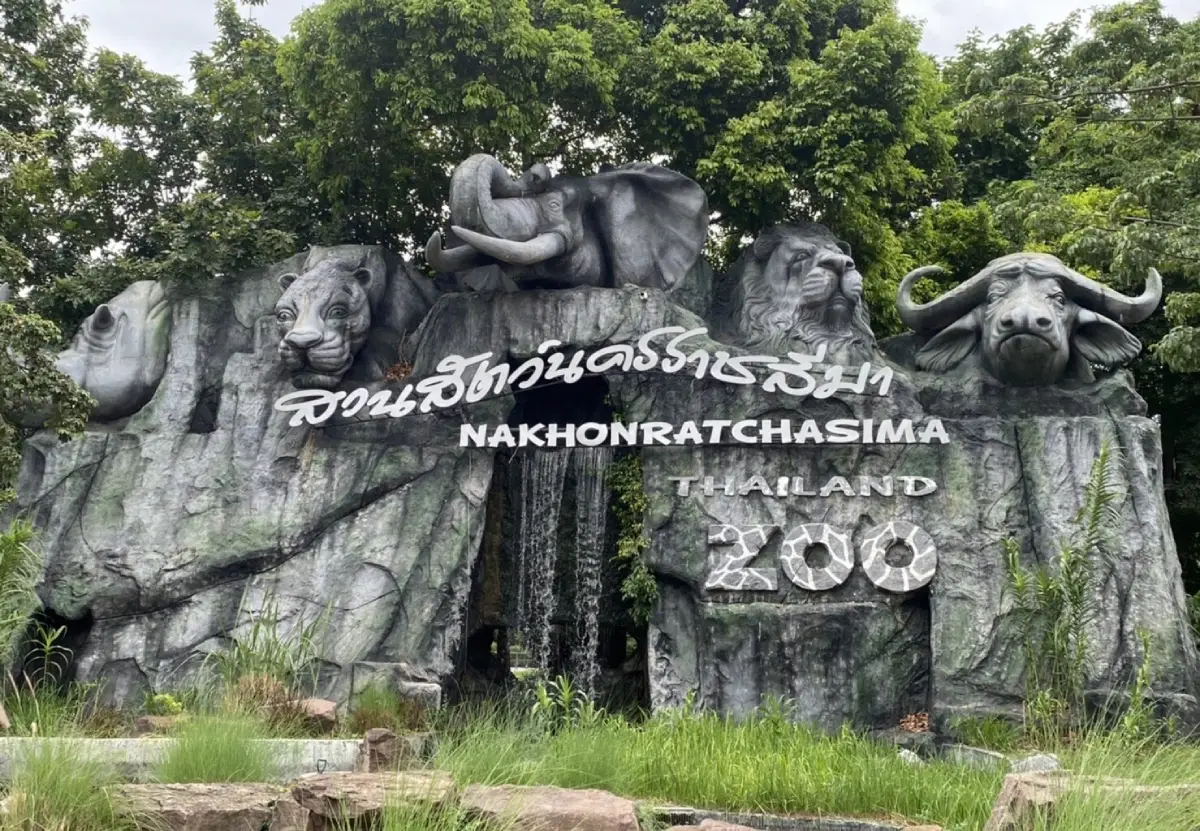
Nakhon Ratchasima Zoo
Open Days: Daily
Opening Hours: 08.00 – 17.00
Nakhon Ratchasima Zoo, widely known as Korat Zoo, is one of the most important wildlife learning attractions in Nakhon Ratchasima Province. Open daily, the zoo is suitable for families, school groups, local visitors, and international travelers who want to experience a spacious green attraction in northeastern Thailand. Covering approximately 545 rai, the zoo is located on Ratchasima-Pak Thong Chai Road in Chai Mongkhon Subdistrict, Mueang Nakhon Ratchasima District. It brings together African wildlife exhibits, rare animals, learning zones for children, a reptile building, a hornbill aviary, a freshwater fish museum, and The Lagoona Korat Zoo water park within the same large area, making it a full-day destination for education, recreation, and family travel.
The strongest identity of Nakhon Ratchasima Zoo is its semi-open and semi-closed safari-style design. Unlike many compact city zoos, Korat Zoo has wide enclosures, large walking areas, shaded garden paths, and landscaped spaces that help create a more natural atmosphere for visitors. The animal exhibits are designed to suit the behavior and needs of different species as much as possible. This makes a visit here more meaningful than simply walking past animal cages. Travelers can learn how habitat, diet, animal welfare, conservation, and species behavior are connected in real life.
The history of Nakhon Ratchasima Zoo began with the Nakhon Ratchasima Zoo Project, established by a Cabinet resolution on 23 May 1989 during the administration of Prime Minister General Chatichai Choonhavan. The zoo was officially opened on 14 December 1996, with General Prem Tinsulanonda, then President of the Privy Council and statesman, presiding over the opening ceremony. Since then, the site has operated under the name Nakhon Ratchasima Zoo. Its significance therefore goes beyond tourism; it is also part of the region’s long-term public learning infrastructure for wildlife, environmental education, and conservation awareness.
Because of its large area of about 545 rai, the zoo was developed in relation to the landscape and climate of Korat. The province’s open and dry conditions make it suitable for displaying many grassland species, especially African wildlife. Highlight animals include giraffes, zebras, lions, cheetahs, African elephants, white rhinoceroses, African buffaloes, antelopes, penguins, seals, flamingos, hornbills, reptiles, amphibians, and many other species. For visitors, these animals offer an accessible introduction to biodiversity, food chains, global wildlife conservation, and the difference between natural habitats across continents.
For families, one major advantage of Nakhon Ratchasima Zoo is its location. It is not far from Nakhon Ratchasima city center and can be reached by car in roughly half an hour, depending on traffic. The zoo can be planned as either a half-day or full-day trip. Visitors who arrive in the morning can explore the main animal zones before lunch, then continue to the water park or educational areas in the afternoon. This makes Korat Zoo especially practical for families with children, as one trip can include animal watching, outdoor learning, photography, resting under trees, and water-based recreation.
The atmosphere inside the zoo is open, relaxed, and green. Many walking routes are suitable for slow sightseeing, but because the zoo is very large, visitors should plan their route before entering. Those traveling with young children, elderly family members, or anyone who prefers not to walk long distances can use the tram service inside the zoo. Visitors who enjoy a slower pace may choose to rent bicycles or focus only on specific zones. The overall experience is flexible and can be adjusted according to time, energy level, weather, and the needs of each travel group.
The African wildlife zone is one of the central highlights of Korat Zoo and strongly supports its image as the “Safari of Isan.” Visitors can see large grassland animals that many people know from wildlife documentaries, including elegant giraffes, striped zebras, lions, fast-running cheetahs, white rhinos, African elephants, and African buffaloes. These species help visitors understand the structure of savanna ecosystems, the relationship between herbivores and predators, and the importance of protecting wildlife habitats at a global level.
Children and general visitors are often especially interested in animals that are rarely seen in everyday life, such as penguins and seals. Watching penguins walk together, dive, and swim offers a memorable experience for young travelers, while the seals demonstrate intelligence, movement, and interaction with their caretakers. These exhibits help children understand that each animal species has different natural needs. Aquatic and semi-aquatic animals require different environments from land animals, and proper care must be designed around those differences.
The reptile building is another worthwhile area for visitors who are interested in snakes, turtles, lizards, and other reptiles. For many people, reptiles can seem intimidating at first, but seeing them in a safe and organized exhibit helps transform fear into understanding. Reptiles play important roles in ecosystems, from controlling smaller animal populations to serving as part of the food chain. Learning about them in a zoo setting allows visitors to appreciate their ecological value without entering risky natural environments.
The hornbill aviary and bird areas show another layer of biodiversity. Hornbills are large and distinctive birds, easily recognized by their impressive beaks, strong colors, and nesting behavior. In nature, hornbills are important seed dispersers, helping forests regenerate and remain healthy. Seeing hornbills at Korat Zoo connects a simple sightseeing experience to wider ideas about forest conservation, plant-animal relationships, and the importance of protecting habitats that support both birds and trees.
The children’s zoo and educational zoo areas are designed for young learners, students, and visitors who want a closer understanding of animal life. The educational content includes exhibits and learning media about the origin of the Earth, the origin of life, evolution, marine life, ecosystems, human origins, and the world of eggs. These learning zones make the zoo more than a leisure attraction. They allow children to ask questions, observe living things, and connect classroom knowledge with real experiences.
Another area worth noting is the freshwater fish museum located within the zoo grounds. This space expands the learning experience beyond land mammals, birds, and reptiles by introducing visitors to freshwater aquatic life. Travelers who are interested in nature can connect knowledge from land animals, flying species, reptiles, and freshwater ecosystems in one visit. For schools and families, this creates a broader educational route and helps children understand that biodiversity exists not only in forests and grasslands, but also in rivers, ponds, and freshwater habitats.
The Lagoona Korat Zoo, also called the Korat Zoo water park or “Korat Sea of Isan,” is a major feature that makes Nakhon Ratchasima Zoo different from many other zoos. Located inside the zoo grounds, the water park covers about 12 rai and offers several play zones, including a high tower slide, King Kong slider, tube slide, giant tipping bucket zone, octopus and shark zone, ALOHA children’s pool, and Lagoona Playground. This makes the attraction suitable for families with children of different ages, from toddlers who need shallow water to older children who want more exciting slides.
Visitors who want to enter the water park must first pass through the zoo entrance because The Lagoona Korat Zoo is located inside Nakhon Ratchasima Zoo. The current zoo admission fee for Thai visitors is 130 baht for adults and 40 baht for children aged 3–12. Children under 3 years old, visitors aged 60 and above, people with disabilities, Buddhist monks, novices, and veterans are eligible for free entry under the stated conditions. Foreign adult admission is 350 baht and foreign child admission is 120 baht. Vehicle fees are 50 baht for cars, 10 baht for motorcycles, and 60 baht for vehicles with six wheels or more. The water park fee is 50 baht for adults and 25 baht for children, while children taller than 135 cm are charged 50 baht.
Facilities within the zoo help make a family visit more comfortable. Available services include parking, ticket counters, tram services, bicycle rental, restrooms, food and drink areas, resting points, learning zones, and water park services. Visitors traveling with children should bring hats, umbrellas, sunscreen, drinking water, and comfortable walking shoes because the zoo is large and some walking areas are outdoors. Those planning to use the water park should prepare swimwear and swimming caps, as the water park requires proper swimwear and caps for hygiene and safety.
Nakhon Ratchasima Zoo is particularly suitable for educational trips. It provides many animal species, interpretive zones, broad outdoor spaces, and activity areas that can be used for science, biology, environmental studies, and social learning. Teachers can use the zoo as a field classroom where students observe animal habitats, species classification, conservation, and the relationship between humans and nature. This form of learning is more memorable than reading from a textbook alone because children see living examples directly.
For general travelers, Korat Zoo works well for different age groups. Children enjoy the animals, learning areas, and water park. Adults can relax in a green environment. Elderly visitors can use the tram to reduce walking. Photography lovers will find many opportunities to capture animals, landscaped gardens, shaded paths, and family moments. During weekends, public holidays, and school breaks, arriving early is the best way to enjoy the zoo at a comfortable pace and avoid the busiest hours.
A good one-day plan is to arrive before 10.00, when the weather is usually easier for walking. Visitors can begin with the main animal zones, then pause for lunch before continuing to the learning areas or the water park in the afternoon. Families with small children should include rest breaks between zones because the zoo is large and children may become tired if they walk continuously. A balanced schedule allows visitors to enjoy the animals, rest properly, and still have enough time for the water park or nearby attractions.
There are also several nearby attractions that can be combined with a visit to the zoo. The Lagoona Korat Zoo is located within the same grounds, while other nearby places include Suan Kaset 100 Rai, Teerawongs Garden Gallery, Airplane Park Korat, the Regional Observatory for the Public in Nakhon Ratchasima, and the Northeastern Research Institute of Petrified Wood and Mineral Resources. These places allow travelers to extend a zoo visit into a broader Korat itinerary covering agriculture, science, astronomy, geology, family activities, and outdoor recreation.
Food options around the zoo include Isan restaurants, som tam shops, noodle shops, cafés, and simple local food places. Within roughly 700 meters to 1.5 km from the zoo, visitors can find Organic Coffee 100 Rai, Som Tam Pan Lan Korat Zoo Branch 1, Emperor Duck Noodles, Som Tam Song Phi Nong, ib Coffee Space, Highlands Cafe, and Pa Nara near the zoo entrance. Those looking for a grilled pork buffet nearby may consider Pun Pun Moo Kra Ta near the zoo, which has a publicly listed phone number.
Accommodation options are available both near the zoo and in Nakhon Ratchasima city. Visitors who want to enter the zoo early in the morning may prefer staying in the Chai Mongkhon area or near Ratchasima-Pak Thong Chai Road. Nearby options include Baan Yen Sabai Rooms in front of Korat Zoo, The Sept Korat, Golden Land Resort Hotel, Suan Tho Fan, Baan Kiang Mor, and Khorat Resort Hotel. Travelers who prefer evening restaurants, shopping malls, and easier access to city services may stay in central Korat and drive to the zoo the next morning.
Getting There is easiest by private car. From Nakhon Ratchasima city, take Highway 304 toward Pak Thong Chai along Ratchasima-Pak Thong Chai Road, then continue toward Chaloem Phra Kiat Rama IX Road or Highway 2310. The distance from the city center is about 18–19 km. Travelers driving from Bangkok can take Mittraphap Road to Nakhon Ratchasima, then continue toward Pak Thong Chai and follow signs to the zoo. Visitors without a private car can use local transport from the city depending on services available at the time of travel.
Visitors arriving by private car should allow time for parking and ticket purchase, especially on weekends, public holidays, and school holidays. Those who want to photograph animals and explore the zoo without rushing should begin with the main wildlife zones and save the water park or educational zones for later. Families planning to use the water park should bring swimwear, swimming caps, towels, sandals, and a bag for wet clothes to make the afternoon easier.
From a conservation perspective, Nakhon Ratchasima Zoo plays a broader role than tourism alone. Zoos under the Zoological Park Organization of Thailand are involved in animal care, learning, wildlife breeding, and public communication about the environment. Responsible visiting is important. Visitors should not feed animals without permission, knock on glass, shout near exhibits, throw objects into animal areas, or ignore safety signs. Following staff instructions helps protect the animals and ensures a better experience for everyone.
What keeps Nakhon Ratchasima Zoo popular is the way it combines many travel needs in one place. It offers large wildlife exhibits, rare animals, educational zones, a children’s zoo, a water park, shaded green spaces, family facilities, and nearby attractions that can turn a simple zoo visit into a full-day itinerary. For first-time visitors to Korat, the zoo offers another perspective on the province beyond the Ya Mo Monument, Khao Yai, and historical sites. It shows that Nakhon Ratchasima is also home to a major wildlife learning destination suitable for all ages.
Overall, Nakhon Ratchasima Zoo is a practical and rewarding destination for both locals and travelers. Visitors can enjoy a relaxed walk through animal zones and gardens, or plan a fuller program with tram rides, water park activities, local restaurants, and nearby accommodation. Its range of activities makes it suitable for family holidays, school trips, nature-loving couples, and international travelers who want to explore a wildlife learning attraction in the Isan region of Thailand.
| Name | Nakhon Ratchasima Zoo, also known as Korat Zoo |
| Location | Chai Mongkhon Subdistrict, Mueang Nakhon Ratchasima District, Nakhon Ratchasima Province |
| Address | 111 Moo 1, Ratchasima-Pak Thong Chai Road, Chai Mongkhon Subdistrict, Mueang Nakhon Ratchasima District, Nakhon Ratchasima 30000, Thailand |
| Highlights | A large safari-style zoo of about 545 rai with African wildlife, learning zones, a children’s zoo, reptile building, hornbill aviary, and The Lagoona Korat Zoo water park |
| History | Established by Cabinet resolution on 23 May 1989 and officially opened on 14 December 1996 |
| Name Origin | Named after Nakhon Ratchasima Province and commonly called Korat Zoo |
| Distinctive Features | A semi-open and semi-closed safari-style zoo with spacious enclosures, naturalistic animal areas, and family-friendly learning zones |
| Travel Information | From Nakhon Ratchasima city, take Highway 304 toward Pak Thong Chai and continue to Chaloem Phra Kiat Rama IX Road or Highway 2310. The distance from the city is about 18–19 km. |
| Current Status | Open as a major wildlife learning and family travel attraction in Nakhon Ratchasima Province |
| Open Days | Daily |
| Opening Hours | 08.00 – 17.00 |
| Fees | Zoo admission: Thai adult 130 baht, child aged 3–12 years 40 baht, foreign adult 350 baht, foreign child 120 baht. Children under 3 years old, people with disabilities, Buddhist monks, novices, veterans, and visitors aged 60 and above are eligible for free entry under the stated conditions. Vehicle fees: car 50 baht, motorcycle 10 baht, vehicle with six wheels or more 60 baht. The Lagoona Korat Zoo water park: adult 50 baht, child 25 baht, child taller than 135 cm 50 baht. |
| Facilities | Parking, ticket counters, tram service, bicycle rental, restrooms, food and beverage areas, rest areas, learning zones, and water park services |
| Main Areas / Zones | African wildlife zone, The Big Five, giraffe, zebra, lion, cheetah, rhino, and African elephant exhibits, penguin and seal areas, reptile building, hornbill aviary, children’s zoo and educational zoo, freshwater fish museum, The Lagoona Korat Zoo |
| Caretaker | Mr. Thanachon Khensing, Director of Nakhon Ratchasima Zoo |
| Main Contact Number | 044-934532, 044-934647, 083-3720404 |
| Official Website / Official Page | Nakhon Ratchasima Zoo official website and the official Facebook page “Nakhon Ratchasima Zoo KORAT ZOO” |
| Nearby Tourist Attractions | 1. The Lagoona Korat Zoo, about 1 km 2. Suan Kaset 100 Rai, about 600 m 3. Teerawongs Garden Gallery, about 2.6 km 4. Localhost, about 3.7 km 5. Airplane Park Korat, about 4.6 km 6. Northeastern Research Institute of Petrified Wood and Mineral Resources, about 5.6 km 7. Regional Observatory for the Public, Nakhon Ratchasima, about 5.9 km |
| Nearby Restaurants | 1. Organic Coffee 100 Rai, about 700 m 2. Som Tam Pan Lan Korat Zoo Branch 1, about 900 m 3. Pun Pun Moo Kra Ta Zoo Branch, about 1 km, Tel. 065-237-8867 4. Emperor Duck Noodles, about 1 km 5. Som Tam Song Phi Nong, about 1.2 km 6. ib Coffee Space, about 1.3 km 7. Highlands Cafe, about 1.4 km |
| Nearby Accommodations | 1. Baan Yen Sabai Rooms in Front of Korat Zoo, about 500 m, Tel. 095-296-4946 2. The Sept Korat, about 2.1 km, Tel. 092-393-8788 3. Golden Land Resort Hotel, about 4.4 km 4. Suan Tho Fan, about 6 km 5. Baan Kiang Mor, about 6.4 km 6. Khorat Resort Hotel, about 9.1 km, Tel. 044-935111 |
Frequently Asked Questions (FAQ)
Q: What time does Nakhon Ratchasima Zoo open?
A: Nakhon Ratchasima Zoo is open daily from 08.00 to 17.00.
Q: How much is the admission fee for Nakhon Ratchasima Zoo?
A: Thai adult admission is 130 baht and children aged 3–12 are 40 baht. Foreign adult admission is 350 baht and foreign child admission is 120 baht. Free entry applies under stated conditions for children under 3 years old, visitors aged 60 and above, people with disabilities, Buddhist monks, novices, and veterans.
Q: Is there a water park inside Nakhon Ratchasima Zoo?
A: Yes. The Lagoona Korat Zoo is located inside the zoo grounds and is open daily from 09.00 to 17.00. Visitors must first enter through the zoo gate before accessing the water park.
Q: Is Nakhon Ratchasima Zoo suitable for children?
A: Yes. The zoo is highly suitable for children because it offers animal exhibits, learning zones, a children’s zoo, educational displays, and a water park.
Q: What are the highlight animals at Nakhon Ratchasima Zoo?
A: Highlight animals include giraffes, zebras, lions, cheetahs, African elephants, white rhinos, African buffaloes, penguins, seals, hornbills, and various reptiles.
Q: How do travelers get to Nakhon Ratchasima Zoo by car?
A: From Nakhon Ratchasima city, take Highway 304 toward Pak Thong Chai and continue to Chaloem Phra Kiat Rama IX Road or Highway 2310. The zoo is about 18–19 km from the city center.
Q: Are there restaurants near Nakhon Ratchasima Zoo?
A: Yes. Nearby food options include Organic Coffee 100 Rai, Som Tam Pan Lan Korat Zoo Branch 1, Pun Pun Moo Kra Ta Zoo Branch, Emperor Duck Noodles, Som Tam Song Phi Nong, and several cafés near the zoo.
Q: Are there accommodations near Nakhon Ratchasima Zoo?
A: Yes. Nearby accommodations include Baan Yen Sabai Rooms in Front of Korat Zoo, The Sept Korat, Golden Land Resort Hotel, Suan Tho Fan, Baan Kiang Mor, and Khorat Resort Hotel.
 Category: ●Entertainment and Agricultural
 Group: ●Zoos and Aquariums
Last Update : 2 MonthAgo
 Last Update : 2 MonthAgo
 Click to Access the Navigation Map GPS
Nakhon Ratchasima Zoo Map
Gellery
Recommend

 Art, Culture and Heritage
 Historical Sites and Monuments(20)
 Landmarks and Memorials(5)
 Art, Craft Centres, Tradition(7)
 Museums(6)
 Art Gallery(1)
 Educational Places
 Educational Gardens, Farm(4)
 Places of Worship
 Temple(29)
 Mosque(1)
 Other Sacred Sites(6)
 Research and Development
 Royal Project(3)
 Suburban Living
 Village, Community(6)
 Local Market(4)
 Floating Market(1)
 Nature and Wildlife
 National Parks and Marine Reserves(3)
 Mountain (Doi)(5)
 Dam, Reservoir, Lake(8)
 Waterfalls(9)
 Hot Springs(1)
 Caves(2)
 Flower Field(1)
 River, Canal(8)
 Bays and Beaches(2)
 Other natural attractions(3)
Zoos and Aquariums(1)
Other natural attractions(3)
Zoos and Aquariums(1)
 Animal camps and shows(1)
 Farms, Parks and Ecotourism(21)
 Waterpark(2)
 Outdoor and Adventure Activities(6)
 Shopping
 Shopping and Night Market(2)
 Travel Articles, Recipes
 Travel Review, Food Review(5)


