
lovethailand home >South Travel Attractions >Phang Nga Travel Attractions >Muang Phang Nga >Tak Daet > Phang Nga Wildlife Breeding Station
TL;DR: Phang Nga Wildlife Breeding Station is located at Beside Phetkasem Road, Tak Daet Subdistrict, Mueang Phang Nga District, Phang Nga Province, near kilometre marker 33, open Daily, hours 08.30 – 16.30.

Phang Nga Wildlife Breeding Station
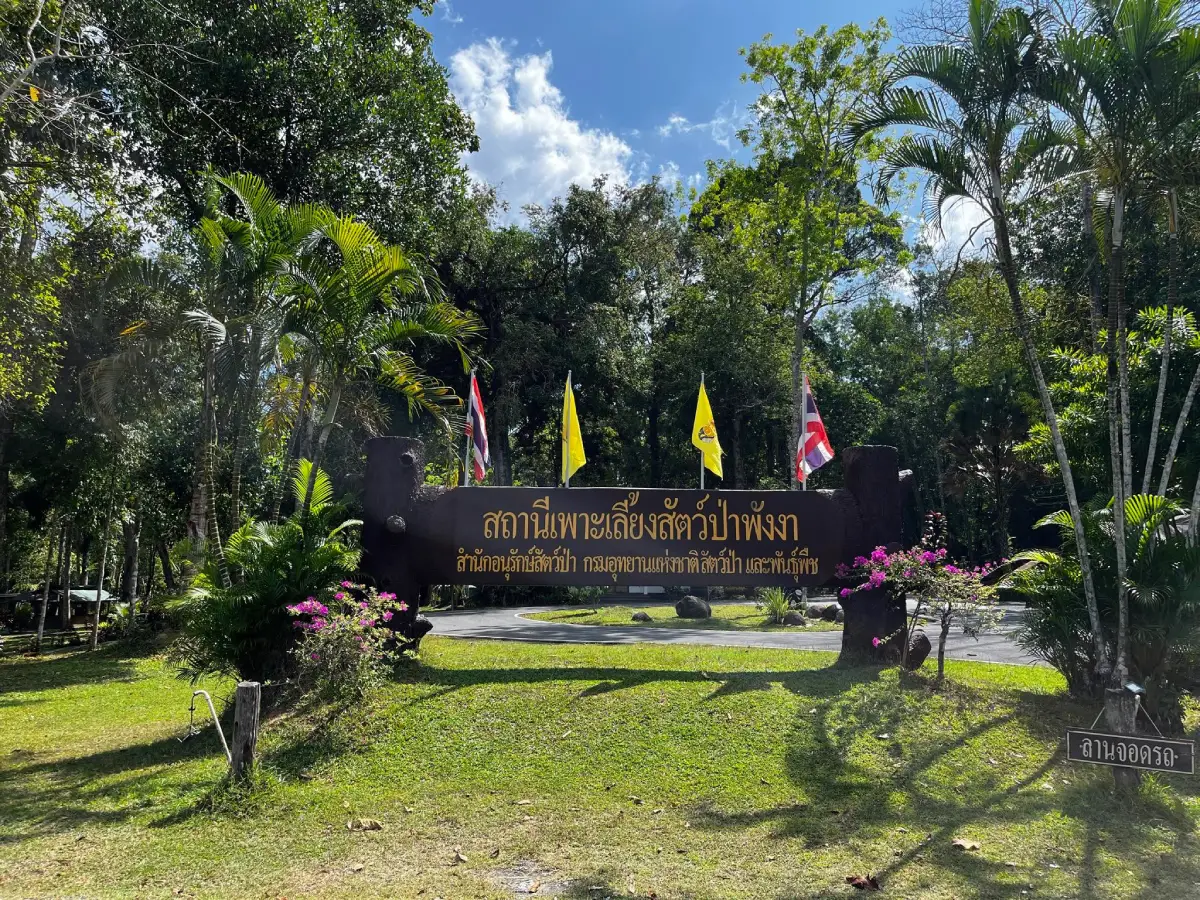
Open Days: Daily
Opening Hours: 08.30 – 16.30
Phang Nga Wildlife Breeding Station is a wildlife conservation and learning facility located beside Phetkasem Road in Tak Daet Subdistrict, Mueang Phang Nga District, Phang Nga Province. It sits near kilometre marker 33 on the main Phang Nga–Phuket route, making it one of the easiest wildlife-related places to visit from Phang Nga Town. The station breeds, cares for, and conserves rare or vulnerable wildlife, especially birds and native animals such as red-whiskered bulbuls, owls, barn owls, brahminy kites, golden pheasants, Thai and Indian peafowl, serow, porcupines, gibbons, monkeys, dusky langurs, bears, and wild ducks.
This site should not be understood as a conventional entertainment zoo. Its core purpose is wildlife conservation, breeding, rehabilitation, animal care, and public education. Visitors can observe a range of animals under station care while learning that wildlife conservation requires much more than protected forests. It also depends on trained staff, animal keepers, veterinarians, breeding areas, suitable enclosures, feeding programs, health monitoring, and public awareness. A visit here helps travelers understand the practical work behind wildlife protection in southern Thailand.
The station operates within the Pa Nakok National Reserved Forest area and covers about 1,573 rai. The terrain includes a central plain, surrounding hills, year-round water sources, and a humid climate typical of Phang Nga. This green setting gives the station a natural atmosphere and provides suitable conditions for caring for many species. Although visitors access only selected public areas, the wider site supports conservation work on a much larger scale than the visible visitor route.
The station’s background is linked with Thailand’s wildlife conservation system. It was established after conservation authorities recognized the importance of the Pa Nakok forest area and the need for a dedicated facility supporting wildlife breeding and care in Phang Nga. Today, it is connected with the Wildlife Conservation Office under the Department of National Parks, Wildlife and Plant Conservation, through the regional conservation administration. Its role therefore extends beyond tourism and contributes to wider conservation work in southern Thailand.
One of the strongest visitor interests is the bird collection. The station is known for breeding and caring for rare and threatened wildlife, especially birds. The red-whiskered bulbul is a useful example for conservation learning because it is a bird strongly connected with human demand and capture from the wild. Seeing birds in a conservation facility helps visitors understand that beauty in wildlife must be connected with responsibility, protection, and legal awareness.
Other notable birds include owls, barn owls, brahminy kites, golden pheasants, and Thai and Indian peafowl. Each species has a different ecological meaning. Barn owls represent nocturnal hunters that help control small animals. Brahminy kites represent raptors and their role in the food chain. Pheasants and peafowl attract attention through color and form, making them effective ambassadors for nature education, especially for families and students.
Mammals at the station also help visitors understand the diversity of southern Thailand’s wildlife. Serow are associated with rugged limestone and mountain habitats. Porcupines are distinctive for their quills. Gibbons, monkeys, and dusky langurs introduce visitors to the diversity of primates. Bears show why larger animals require careful management, space, safety, and professional care. Observing these animals should encourage respect for their specific needs rather than simple curiosity.
Phang Nga Wildlife Breeding Station is suitable for educational visits because it is open free of charge and provides a real-world setting for learning about wildlife. Schools, universities, families, and conservation-minded travelers can use the site as a living classroom. Groups that need a guided visit should contact the station in advance by formal letter to the station chief so that staff can prepare the route, timing, and educational content properly.
Visitor etiquette is important. Animals should not be fed by visitors, cages should not be hit or shaken, hands should not be placed inside enclosures, and flash photography should be avoided near animals. Some species are sensitive to noise, light, and sudden movement. Parents should explain to children that animals at the station are living beings under professional care, not objects for entertainment.
The station has a shaded, green atmosphere, so morning or early afternoon is a practical time to visit. Opening hours are 08.30 to 16.30 daily. Most visitors should allow about 1 to 2 hours to walk through the public areas slowly, observe the animals, read signs where available, and understand the purpose of the facility. A hat, drinking water, and comfortable walking shoes are useful because some areas are outdoors and Phang Nga’s climate can be humid.
Access is straightforward. From Phang Nga Town, follow Highway 4, Phetkasem Road, toward Tak Daet Subdistrict and the Phang Nga–Phuket route. The station is located beside the road near kilometre marker 33. Its position makes it convenient to combine with Phung Chang Cave, Phang Nga City Pillar Shrine, Sa Nang Manora Forest Park, Ao Phang Nga National Park, Wat Suwan Khuha, or other attractions around Mueang Phang Nga District.
For visitors interested in wildlife, the station offers more than a simple animal-viewing stop. It raises questions about why certain animals need breeding programs, why some rescued animals cannot immediately return to the wild, how illegal wildlife trade affects natural populations, and why conservation requires science, law enforcement, fieldwork, public cooperation, and long-term care. These questions make the visit more meaningful for students and environmentally aware travelers.
The station also plays an important role in conservation awareness. Seeing animals directly can make people understand wildlife vulnerability more clearly than reading about it alone. Children and young visitors learn that each animal has behavior, habitat needs, and ecological value. This understanding can lead to responsible habits such as not buying illegal wildlife, not supporting improper wildlife keeping, and reporting injured or illegally kept wildlife to relevant authorities.
For ordinary travelers, this is a useful short stop near Phang Nga Town. It is easy to reach, free to enter, and suitable for families. It also adds variety to a Phang Nga itinerary that might otherwise focus only on sea, limestone scenery, and caves. The station gives visitors a chance to see another side of the province: wildlife conservation work taking place close to the town.
A good one-day route can begin with Phang Nga Wildlife Breeding Station in the morning, continue to Phung Chang Cave or Phang Nga City Pillar Shrine, have lunch in town, then visit Sa Nang Manora Forest Park or Ao Phang Nga National Park in the afternoon. This type of route gives travelers a balanced view of wildlife, caves, forest, water, and local city culture without long driving distances.
Preparation is simple. Visitors should dress comfortably, wear walking shoes, bring drinking water, and avoid carrying strong-smelling food close to animal areas. School or group visits should prepare the number of participants, desired time, purpose of the visit, and contact details before submitting a formal request. This helps station staff arrange the visit more effectively.
Many brief travel listings describe the site only as a wildlife breeding station beside Phetkasem Road. A fuller understanding should include its conservation role, the large reserved-forest area, the range of rare and threatened species under care, free public access, advance arrangements for group visits, and the correct way to observe animals respectfully. These details help visitors see the station not simply as a photo stop but as part of Phang Nga’s conservation system.
Phang Nga Wildlife Breeding Station is therefore a worthwhile place for travelers who care about nature, wildlife, education, and responsible tourism. It shows that Phang Nga is not only about islands, bays, beaches, and limestone cliffs. The province also has ongoing wildlife conservation work near the town. Visitors who come quietly, follow staff guidance, and respect the animals will gain a clearer understanding of the value of wildlife and the work required to protect it.
| Name | Phang Nga Wildlife Breeding Station / Phang Nga Wildlife Animal Sanctuary |
| Location | Beside Phetkasem Road, Tak Daet Subdistrict, Mueang Phang Nga District, Phang Nga Province, near kilometre marker 33 |
| Address | Village No. 3, Tak Daet, Mueang Phang Nga District, Phang Nga 82000, Thailand |
| Coordinates | Approximately 8.4210, 98.4887 |
| Area | About 1,573 rai within Pa Nakok National Reserved Forest |
| Highlights | Wildlife breeding and conservation learning site, rare birds, serow, porcupines, gibbons, monkeys, dusky langurs, bears, and green surroundings near Phang Nga Town |
| History / Site Status | Established to support wildlife breeding, care, and conservation in Phang Nga under Thailand’s Department of National Parks, Wildlife and Plant Conservation |
| Notable Animals | Red-whiskered bulbul, owl, barn owl, brahminy kite, golden pheasant, Thai peafowl, Indian peafowl, serow, porcupine, gibbon, monkey, dusky langur, bear, and wild duck |
| Travel Information | From Phang Nga Town, follow Highway 4, Phetkasem Road, toward Tak Daet or the Phang Nga–Phuket route. The station is beside the main road near kilometre marker 33. |
| Current Status | Open for wildlife observation and conservation learning, including general visits and advance-arranged group visits |
| Open Days | Daily |
| Opening Hours | 08.30 – 16.30 |
| Fees | Free Admission |
| Facilities | Animal-viewing paths, green areas, parking area, staff contact area, and learning areas for visitors or groups |
| Main Areas / Zones | Entrance and station sign area, bird care area, mammal care area, wildlife breeding and rehabilitation zones, green area, and staff office area |
| Caretaker / Local Authority | Phang Nga Wildlife Breeding Station, Wildlife Conservation Office, Department of National Parks, Wildlife and Plant Conservation |
| Main Contact Numbers | 076-413261, 076-490540 |
| Group Visits | Groups requiring staff guidance should send an advance request letter to the chief of Phang Nga Wildlife Breeding Station. |
| Recommended Activities | Wildlife observation, conservation learning, school field trips, respectful nature photography, and learning about responsible attitudes toward wildlife |
| Visitor Etiquette | Do not feed animals, hit cages, make loud noises, use flash near animals, place hands inside enclosures, or ignore staff guidance. |
| Nearby Tourist Attractions | 1. Phung Chang Cave, about 10 km 2. Phang Nga City Pillar Shrine, about 10 km 3. Khao Chang And Phang Nga Town Viewpoint Area, about 11 km 4. Sa Nang Manora Forest Park, about 13 km 5. Ao Phang Nga National Park, about 18 km 6. Wat Suwan Khuha, about 20 km 7. Samet Nangshe, about 45 km |
| Nearby Restaurants | 1. Weihenstephaner Biergarten, about 3 km 2. Kub Khao Mae Phang Nga, about 10 km, Tel. 095-4299546, 095-2758275 3. Khao Man Kai Mae Pranee, about 9 km, Tel. 089-9711853 4. Ban Nai Suan, about 10 km, Tel. 083-1059253 5. Aunt Naow Thai Sweets, about 10 km, Tel. 081-5381162 6. Dairy Hut Farm, about 15 km |
| Nearby Accommodations | 1. Luk Muang 2 Hotel, about 9 km, Tel. 076-411500 2. Thaweesuk Heritage Homestay, about 9 km, Tel. 089-4896842 3. Blue Mountain Phangnga Resort And Restaurant, about 10 km, Tel. 095-2577565 4. The Sleep Phang-nga, about 10 km, Tel. 076-411828 5. Manora Garden B&B, about 12 km, Tel. 087-2771563 6. Accommodations In Phang Nga Town, about 9–12 km |
Frequently Asked Questions (FAQ)
Q: Where is Phang Nga Wildlife Breeding Station located?
A: It is located beside Phetkasem Road, Village No. 3, Tak Daet Subdistrict, Mueang Phang Nga District, Phang Nga Province, near kilometre marker 33 on the Phang Nga–Phuket route.
Q: What are the opening hours?
A: The station is open daily from 08.30 to 16.30. Morning or early afternoon is suitable for walking and learning about the animals.
Q: Is there an admission fee?
A: No. Admission is free.
Q: What animals can visitors see?
A: Visitors may see species such as red-whiskered bulbul, owl, barn owl, brahminy kite, golden pheasant, Thai and Indian peafowl, serow, porcupine, gibbon, monkey, dusky langur, bear, and wild duck.
Q: How should group visits be arranged?
A: Groups that require staff guidance should send an advance request letter to the chief of Phang Nga Wildlife Breeding Station so the station can prepare staff, timing, and a suitable route.
Q: Who is this place suitable for?
A: It is suitable for families, students, teachers, wildlife enthusiasts, conservation learners, and travelers looking for an educational stop near Phang Nga Town.
Q: What visitor etiquette should be followed?
A: Visitors should not feed animals, hit cages, make loud noise, use flash near animals, place hands inside enclosures, or ignore staff instructions.
Q: What nearby attractions can be combined with this visit?
A: Nearby options include Phung Chang Cave, Phang Nga City Pillar Shrine, Khao Chang, Sa Nang Manora Forest Park, Ao Phang Nga National Park, Wat Suwan Khuha, and Samet Nangshe.
 Category: ●Nature and Wildlife
 Group: ●National Parks and Marine Reserves
Last Update : 2 MonthAgo
 Last Update : 2 MonthAgo
 Click to Access the Navigation Map GPS
Phang Nga Wildlife Breeding Station Map
Recommend

 Art, Culture and Heritage
 Historical Sites and Monuments(2)
 Landmarks and Memorials(6)
 Art, Craft Centres, Tradition(3)
 Places of Worship
 Temple(18)
 Other Sacred Sites(8)
 Suburban Living
 Village, Community(3)
National Parks and Marine Reserves(12)
 Mountain (Doi)(8)
 Waterfalls(21)
 Hot Springs(2)
 Caves(12)
 River, Canal(4)
 Bays and Beaches(28)
 Islands(11)
 Other natural attractions(7)
 Entertainment and Agricultural
 Animal camps and shows(2)
 Farms, Parks and Ecotourism(2)
 Waterpark(3)
 Outdoor and Adventure Activities(3)
 Travel Articles, Recipes
 Travel Review, Food Review(1)
 Southern Food Menu, Southern Food Recipes(1)


