
lovethailand home >Northeastern Travel Attractions >Ubon Ratchathani Travel Attractions >Muang Ubon Ratchathani >Kham Yai > Ubon Ratchathani Zoo
TL;DR: Ubon Ratchathani Zoo is located at 112 Moo 17, Kham Yai Subdistrict, Mueang Ubon Ratchathani District, Ubon Ratchathani Province 34000, Thailand, open Daily, including public holidays, hours 08:30 – 16:30.
Ubon Ratchathani Zoo
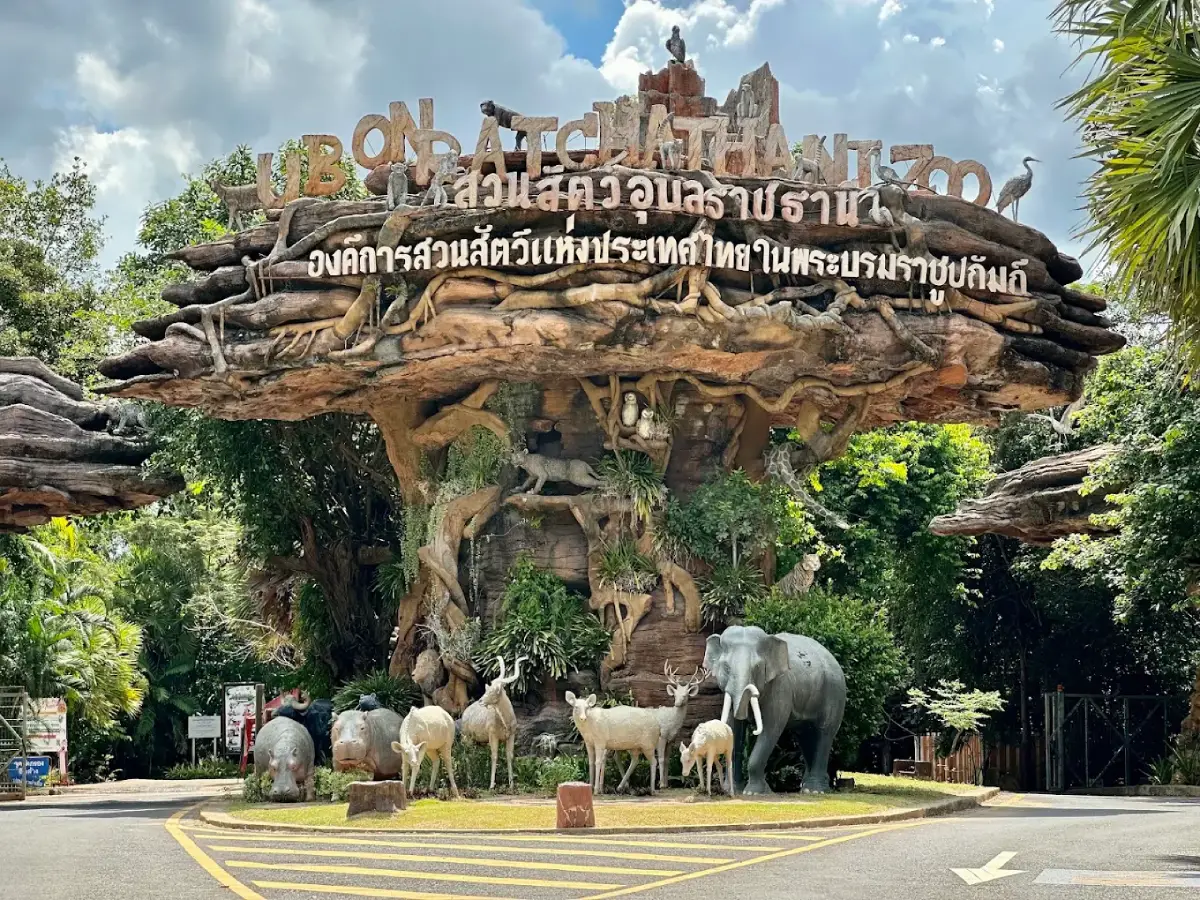
Open Days: Daily, including public holidays
Opening Hours: 08:30 – 16:30
Ticket Sales: 08:30 – 16:00
Last Tram Departure: 16:15
Ubon Ratchathani Zoo is one of the most important wildlife attractions and environmental education destinations in Ubon Ratchathani Province, northeastern Thailand. Located within Dong Fa Huan National Reserved Forest in Kham Yai Subdistrict, Mueang Ubon Ratchathani District, the zoo covers approximately 1,217 rai, or 195 hectares. Its defining concept is the integration of zoological exhibits with an existing natural forest landscape. The grounds contain diverse wildlife exhibits, green spaces, mature trees, visitor routes, tram services, and conservation education activities. It is an attractive destination for families, children, students, and nature enthusiasts seeking both relaxation and meaningful opportunities to learn about wildlife.
What makes Ubon Ratchathani Zoo distinctive is its setting within Dong Fa Huan Forest. Native trees and vegetation remain central elements of the surrounding landscape, allowing visitors to experience a zoological park that retains much of its natural character. Rather than concentrating entirely on buildings and artificial exhibition structures, the zoo incorporates existing forest features into its overall environment. Visitors can enjoy the shade of mature trees while traveling between animal exhibits and develop a greater understanding of the relationships between wildlife, vegetation, and natural ecosystems.
The zoo is particularly well suited to family outings because it combines leisure activities with educational experiences. Adults can enjoy wildlife observation and the surrounding natural environment, while children can encounter animals that differ significantly from familiar domestic species. Observing animals' physical characteristics, colors, movements, and behavior offers valuable opportunities for learning. Such experiences can also encourage an early interest in biology, environmental science, and wildlife conservation.
For travelers visiting Ubon Ratchathani Province, the zoo provides an alternative to the region's many Buddhist temples, historical landmarks, museums, and cultural attractions. A visit can form the main activity of a day trip, with additional sightseeing arranged around central Ubon Ratchathani. Combining nature and wildlife experiences with cultural destinations offers a broader appreciation of the province's identity, landscapes, and local communities.
The history of Ubon Ratchathani Zoo began with a project to establish a wildlife education and conservation destination in northeastern Thailand. On August 21, 1997, the Zoological Park Organization of Thailand received permission from the Royal Forest Department to use land within Dong Fa Huan National Reserved Forest. The establishment was originally known as Ubon Ratchathani Wildlife Park before developing into a public zoological park capable of supporting organized wildlife exhibits and educational activities.
Construction began in 2007 under a forest-based zoo development concept. The project emphasized adapting zoological facilities to the existing environment rather than completely transforming the natural landscape. Its objectives included supporting research and breeding programs for rare wildlife, contributing to ecosystem restoration, and creating educational opportunities for the public. This approach connected the development of wildlife exhibits with broader considerations of environmental conservation.
Ubon Ratchathani Zoo began trial operations on December 25, 2012, allowing its facilities, animal exhibits, and visitor services to be prepared for full public operation. On March 26, 2013, Her Royal Highness Princess Maha Chakri Sirindhorn bestowed the name Ubon Ratchathani Zoo upon the establishment. The zoo officially opened on July 12, 2013, marking an important milestone in the development of wildlife tourism and conservation education in northeastern Thailand.
The selection of Dong Fa Huan Forest as the zoo's location is significant from both geographical and ecological perspectives. The site contains native vegetation and mature trees that contribute to the character of the surrounding landscape. These natural elements provide more than an attractive setting: they illustrate the importance of forest habitats and the relationship between wildlife and plant communities. Learning about animals at the zoo therefore provides an opportunity to understand why protecting natural habitats is essential to effective wildlife conservation.
Among the important tree species associated with the local landscape is the Yang Na tree, a large native hardwood species recognized as the provincial tree of Ubon Ratchathani. Mature Yang Na trees provide shade and form part of the forest's ecological structure. Preserving these trees within the zoo maintains a visible connection with the original forest environment and reinforces the principle that protecting wildlife also requires conserving the habitats upon which animals depend.
The forest-based design makes exploring Ubon Ratchathani Zoo different from visiting a conventional indoor exhibition complex. Routes connect animal exhibits across a large landscape where trees and green spaces remain important visual features. The visitor experience therefore combines animal observation with the atmosphere of a natural woodland setting. Because the grounds are extensive, planning a suitable route and using available transportation services can make a substantial difference to the comfort and efficiency of a visit.
Ubon Ratchathani Zoo has a long history of exhibiting deer and related hoofed mammals. Deer were among the first animals introduced during preparations for the zoo's opening. The collection has included native Thai species and animals from other regions, such as sambar deer, barking deer, Eld's deer, sika deer, and other hoofed mammals. These exhibits provide opportunities to compare body size, antler structure, coat patterns, and behavior among different species.
Hoofed mammals play important roles in natural ecosystems, particularly through their interactions with vegetation and food webs. Many herbivorous species have teeth and digestive systems adapted for consuming grasses, leaves, and other plant material. Herd behavior can also help certain animals detect predators and respond to danger. Observing these characteristics helps visitors understand how anatomy and social behavior contribute to survival in different habitats.
The African wildlife exhibits are another notable attraction. Animals historically exhibited at Ubon Ratchathani Zoo include giraffes, zebras, ostriches, eland, and nyala. These species represent the remarkable biodiversity of African grasslands and open habitats. Their distinctive physical characteristics allow visitors to learn how animals from different geographical regions adapt to their environments, feeding requirements, and patterns of movement.
Giraffes are easily recognized by their exceptionally long necks and legs, which enable them to browse leaves high above the ground. Zebras are distinguished by their black-and-white stripe patterns, which vary between individuals. Ostriches are large flightless birds with powerful legs adapted for running. Together, these animals provide accessible examples of evolutionary adaptations and illustrate the ways body structure supports different methods of feeding and movement.
Observing African wildlife also introduces visitors to ecosystems beyond Thailand. African grasslands support a wide range of herbivores and predators, each contributing to ecological processes. Comparing these animals with species native to Thailand highlights the relationships between geography, climate, vegetation, and the characteristics of wildlife. Such comparisons can deepen an understanding of global biodiversity and the diversity of habitats found across different continents.
The predator exhibition area, known locally as Dong Chao Pa, is associated with carnivorous animals. Ubon Ratchathani Zoo has historically exhibited tigers and lions, both of which possess physical adaptations related to hunting and survival. Observing large predators offers opportunities to learn about feeding behavior, strength, sensory abilities, territorial activity, and the ecological roles of animals occupying higher levels of the food web.
Tigers are large members of the cat family, distinguished by their striped coats, which help them blend into certain natural environments. In the wild, tigers generally lead solitary lives and maintain individual territories. Lions, by contrast, are known for their social organization and group living. Comparing these two species demonstrates that large predators do not necessarily share the same behavior or social structure, even when they belong to the same biological family.
African lions play an important role in grassland ecosystems and are particularly notable for their group-based social behavior. White lions are lions with unusually pale coats resulting from inherited genetic characteristics rather than a separate species. Learning about these animals therefore provides an introduction to behavioral ecology, heredity, and genetic variation within a single species.
Safety and animal welfare are essential considerations in predator exhibits. Visitors must remain behind designated barriers, avoid reaching into animal enclosures, refrain from striking glass or fences, and avoid making unnecessary noise. Maintaining appropriate distances protects both visitors and animals. Respecting the animals' space is a fundamental part of responsible wildlife tourism and helps ensure that educational experiences do not interfere with animal welfare.
The hippopotamus and crocodile exhibits introduce visitors to animals closely associated with aquatic environments. Although both groups spend considerable time in or near water, their biology differs substantially. Hippopotamuses are large mammals, whereas crocodiles are reptiles with anatomical adaptations that allow them to function efficiently in aquatic and terrestrial environments.
Hippopotamuses spend much of their time in water, which helps them regulate their body temperature and limit exposure to intense heat. Despite their considerable size, they can move effectively through aquatic environments. Crocodiles possess powerful tails and body structures suited to swimming, while the position of their eyes and nostrils allows them to observe their surroundings and breathe while much of the body remains submerged. Comparing these species clearly illustrates the distinctions between mammals and reptiles.
Ubon Ratchathani Zoo has also exhibited several crocodilian species. Crocodiles are ecologically significant predators in aquatic habitats, and learning about them introduces visitors to reptilian anatomy, hunting strategies, and the relationships between predators and other organisms in freshwater ecosystems. Such exhibits also demonstrate the importance of wetlands and the need to preserve healthy aquatic environments.
The Mini Zoo adds another dimension to wildlife education by focusing on smaller animals. Species historically associated with this area include red kangaroos, meerkats, and other small mammals. These animals differ from larger zoo inhabitants in movement, body structure, and social behavior. Their exhibits provide opportunities for visitors, especially children, to explore the diversity of mammalian adaptations in an accessible setting.
Meerkats are small mammals known for their group living and cooperative vigilance. In the wild, individuals may take turns watching for potential danger while other group members forage. Red kangaroos are marsupials with powerful hind legs used for hopping and movement across open terrain. Observing these animals illustrates important differences in locomotion, social organization, and anatomical adaptation among mammals from different regions.
Small mammals can be just as important to ecosystem stability as larger animals. Some participate in seed dispersal, others influence insect or small-animal populations, and many form essential links within food webs. Including smaller species in wildlife exhibitions broadens visitors' understanding of biodiversity and reinforces the idea that an animal's ecological significance is not determined by its size.
The bird exhibits provide further opportunities to investigate differences in anatomy and behavior. Birds possess specialized wings, beaks, legs, and feeding strategies adapted to their environments. Some species are well suited to ground-based activities, while others are adapted to perching, flying, or feeding in particular habitats. Observing these distinctions can help visitors understand how physical structure relates to food sources, locomotion, and ecological conditions.
Another important animal in conservation education is the Malayan tapir, a protected wildlife species of particular significance in Thailand. Tapirs possess a distinctive elongated snout and a striking body coloration that distinguishes them from many other mammals. Ubon Ratchathani Zoo publicized two tapirs named Marvin and Oppo during late 2025 and early 2026, drawing attention to a species closely associated with the forests of Southeast Asia.
Malayan tapirs are herbivores that contribute to forest ecosystems through their feeding behavior and involvement in the dispersal of certain plant seeds. Protecting tapirs is therefore connected to conserving forest vegetation and maintaining ecological relationships. The species also provides an important example of how habitat loss and forest fragmentation can threaten wildlife populations, emphasizing the need for long-term habitat conservation.
Learning about protected wildlife helps visitors understand that conservation extends beyond caring for individual animals. It also involves preserving suitable habitats, food sources, water, breeding opportunities, and ecological relationships. The disappearance of a forest habitat can affect numerous species simultaneously. Protecting natural landscapes is consequently a fundamental component of wildlife conservation and biodiversity management.
In addition to animal exhibitions, Ubon Ratchathani Zoo conducts environmental enrichment activities as part of modern animal welfare practices. Such activities encourage animals to use natural abilities, including exploration, food searching, sensory engagement, and movement. Enrichment is designed around the biological and behavioral characteristics of individual species, helping make the animals' managed environments more stimulating and appropriate.
Different animals require different forms of environmental management. Their needs vary in terms of diet, space, resting areas, water, and behavioral stimulation. Providing suitable surroundings is an essential aspect of responsible animal care. Observing enrichment activities can also help visitors recognize that zoo management involves much more than providing food and maintaining clean enclosures; it includes supporting behaviors associated with each species' natural lifestyle.
The zoo organizes educational events and animal-related activities at different times. These may include demonstrations, wildlife interpretation programs, and supervised feeding experiences. The availability and scheduling of individual activities depend on operational arrangements and animal care considerations. Visitors should only feed animals through activities officially authorized by zoo staff and should never provide food brought from outside, as human food may be harmful to certain species.
Wildlife education is particularly valuable for children and young people because it connects classroom knowledge with living examples. Students can investigate differences between herbivores and carnivores, adaptations to particular habitats, relationships within food chains, and the importance of ecological balance. Direct observation often stimulates curiosity and encourages students to ask questions that lead to a deeper interest in science and nature.
Ubon Ratchathani Zoo has an education department responsible for organizing activities for schools and other educational institutions. Programs include school excursions, nature learning activities, and group-based educational experiences. These programs allow teachers and organizers to align the visit with students' ages, academic levels, and learning objectives, turning a recreational outing into a structured educational experience.
Learning outside the classroom encourages observation, questioning, and the development of reasoning skills. Students can compare what they have studied in textbooks with the physical characteristics and behavior of living animals. Examples include the differences between mammals and reptiles, the adaptations of hoofed mammals, and the sensory capabilities of predators. These experiences support the development of foundational knowledge in biology and environmental science.
The zoo also contributes to wider public education through activities and cooperation with schools, community organizations, and other institutions. This outreach extends wildlife conservation knowledge beyond the zoo grounds and allows children, teachers, and local communities to engage with environmental learning even when they are not participating in a regular zoo visit.
For families with young children, a visit provides an opportunity to explain the differences between wild and domesticated animals. Children can learn that wildlife requires appropriate habitats, diets, and living conditions and must be treated with care and respect. Parents can encourage observation and discussion by asking questions about animal behavior, physical differences, and habitats, making the visit both enjoyable and educational.
Teaching children not to strike enclosure barriers, shout at animals, throw objects, or provide unauthorized food is an important part of developing environmental responsibility. Such lessons reinforce the principle that wild animals are living creatures with individual needs and natural behavior, rather than objects intended solely for entertainment.
One of the zoo's most convenient visitor services is its tram transportation system. Because the grounds cover a large area and exhibits are distributed across different sections, trams can reduce the amount of walking required. This is especially beneficial for older visitors, families with small children, and organized groups hoping to visit several areas within a limited period. Traveling by tram also provides an opportunity to appreciate the surrounding forest landscape between animal exhibits.
Golf cart and bicycle rental services provide additional options for moving around the grounds. The choice of transport depends on group size, physical ability, available time, weather conditions, and the zoo's operating rules. Families traveling with young children or older relatives can select a suitable arrangement that balances convenience, sightseeing opportunities, and time for rest.
Planning a route through the zoo is useful because different exhibit areas require varying amounts of travel and observation time. Travelers particularly interested in African wildlife may prefer spending more time with grassland species, while visitors fascinated by predators can focus on learning about lions and tigers. Families with small children may prefer smaller animal exhibits and convenient tram transportation. A flexible itinerary allows visitors to explore the areas that interest them without unnecessarily rushing between exhibits.
The time of year can influence the comfort of a zoo visit. Ubon Ratchathani experiences hot weather during parts of the year, particularly in the summer season. Arriving early allows visitors to explore before the hottest part of the day and leaves more time for activities. During the rainy season, the forest landscape becomes particularly green, although wet pathways and changing weather conditions should be taken into account.
The cooler season is another attractive period for outdoor activities because temperatures on some days are more comfortable than during the summer months. Nevertheless, conditions can change throughout the day. Visitors intending to spend several hours exploring should carry drinking water, wear comfortable walking shoes, and bring sun protection appropriate to the weather.
Wildlife photography is a popular activity at the zoo because different animals offer distinctive shapes, colors, and behavior, while mature trees provide a natural visual backdrop. Photography should always be undertaken from appropriate viewing areas. Visitors should avoid attempting to provoke animals into particular movements or poses and should refrain from using flash photography when it could disturb the animals.
Quiet observation can make wildlife viewing considerably more rewarding. Different species have different feeding, movement, and resting patterns, which may vary with time of day, temperature, and daily routines. Some animals are more active in the morning or evening, while others rest for long periods during daylight hours. Resting behavior is itself an interesting subject of observation and provides opportunities to learn how animals use their surroundings.
Ubon Ratchathani Zoo also contributes to public awareness of wildlife conservation challenges, particularly habitat destruction, declining animal populations, and the consequences of human activity for ecosystems. Educational experiences at the zoo can encourage broader awareness of forest protection, opposition to illegal wildlife trade, and respect for the rules governing protected natural areas.
Effective wildlife conservation requires cooperation across several fields, including species research, veterinary care, nutrition, genetic diversity management, and public education. A zoological institution that integrates animal care with educational programs can help connect scientific knowledge with public participation in conservation. This relationship is particularly important when explaining complex environmental issues to younger generations.
Behind every animal exhibit is a system of professional care involving animal health, feeding, sanitation, and habitat management. Herbivores and carnivores have different nutritional requirements, while reptiles and aquatic animals require specialized environmental conditions. These operational responsibilities are essential components of managing a zoological park and demonstrate that the institution's work extends far beyond displaying animals to visitors.
Another facility within the zoo is the Dong Fa Huan Training and Seminar Center, which supports meetings, training activities, and seminars organized by various institutions. This facility expands the zoo's role beyond recreational tourism, allowing the grounds to serve as a venue for educational and professional activities within a natural setting.
Schools and organizations interested in arranging educational excursions can coordinate with the zoo's education department regarding activity formats, guided learning, and group requirements. Planning ahead allows organizers to manage participant numbers, transportation, and educational schedules effectively. The education department can be contacted at +66 84 831 9311.
Ubon Ratchathani Zoo contributes to the province's tourism sector as a major nature-based attraction located within reach of the city. A visit can be combined with nearby restaurants, hotels, and cultural attractions, allowing travelers to experience different aspects of the region. This combination supports more varied itineraries that bring together wildlife, outdoor recreation, local cuisine, history, and everyday community life.
Ubon Ratchathani has a distinctive northeastern Thai cultural identity, particularly in its cuisine, festivals, and Buddhist artistic heritage. Popular regional dishes include som tam, larb, nam tok, grilled chicken, and seasonal local specialties. Travelers visiting the zoo can explore restaurants in Kham Yai Subdistrict or central Ubon Ratchathani to experience local food alongside their outdoor activities.
Overnight visitors will find a range of accommodation options in Mueang Ubon Ratchathani District, including city hotels, small guesthouses, and resorts on the outskirts of town. The most suitable location depends on the travel itinerary and available transportation. Visitors with private vehicles can conveniently consider accommodation outside the city center, while those relying on public transportation may prefer hotels with easier connections to the airport, bus terminal, and central attractions.
Several cultural attractions can be combined with a visit to the zoo, including Wat Phra That Nong Bua, Wat Thung Si Mueang, Thung Si Mueang Park, and Ubon Ratchathani National Museum. These places offer different experiences, ranging from Buddhist architecture and important religious monuments to public spaces and collections that illuminate local history. Together, they provide a fuller picture of the province's cultural heritage.
Wat Phra That Nong Bua is among Ubon Ratchathani's prominent Buddhist landmarks, particularly known for its striking stupa and religious significance. Wat Thung Si Mueang is valued for its historical and architectural heritage, while Thung Si Mueang serves as an important public space associated with community events and provincial traditions. Visiting these sites after a wildlife excursion offers a different perspective on the character and identity of Ubon Ratchathani.
Ubon Ratchathani National Museum provides another valuable educational experience through exhibits relating to archaeology, history, and regional culture. Combining a museum visit with the zoo is especially suitable for families and school groups seeking an itinerary that covers different fields of knowledge. The zoo introduces wildlife and natural ecosystems, while the museum explores the development of communities and cultural traditions in the region.
For families, an enjoyable zoo visit benefits from a balanced schedule that includes animal observation, rest periods, and convenient transportation. This is particularly important when traveling with young children or older relatives. Visitors do not need to rush through every exhibit. Spending adequate time observing selected animals and discussing what they see can provide a more meaningful experience than attempting to cover the entire park too quickly.
During long weekends and major holidays, the zoo may organize additional visitor activities, including educational programs, family events, and conservation-themed experiences. The format and availability of such activities depend on individual event schedules. Regular daytime admission should therefore be distinguished from special programs that operate only during designated festivals or occasions.
Ubon Ratchathani Zoo has also organized special nighttime wildlife viewing activities on selected occasions, allowing participants to discover aspects of animal behavior outside normal daytime visiting hours. These events operate according to specific schedules and are not part of the zoo's everyday admission program. Standard visits continue to take place during the published daytime opening hours.
Responsible visitor behavior is essential to a positive experience for both people and animals. Guests should dispose of rubbish in designated bins, avoid unauthorized feeding, refrain from disturbing animals with excessive noise, respect barriers, and follow instructions from zoo staff. These practices contribute to visitor safety, animal welfare, and the long-term quality of the zoo environment.
Overall, Ubon Ratchathani Zoo combines tourism, conservation, and environmental education within a distinctive forest setting. Its major attractions include the landscape of Dong Fa Huan Forest, diverse wildlife exhibits, transportation services, and educational activities that connect the study of animals with the natural ecosystems they depend upon. It is a worthwhile destination for travelers seeking an outdoor experience in Ubon Ratchathani while gaining a deeper appreciation of wildlife and environmental conservation.
Getting There Ubon Ratchathani Zoo is located at 112 Moo 17, Kham Yai Subdistrict, Mueang Ubon Ratchathani District, Ubon Ratchathani Province 34000, Thailand. From central Ubon Ratchathani, visitors can travel by private car or rental car along Highway 23 toward Yasothon before continuing on connecting local roads following the signs to the zoo. Travelers arriving from other provinces can reach Ubon Ratchathani by air, intercity bus, or private vehicle and continue to the zoo by hired car or rental vehicle. For admission information and visitor services, contact +66 45 252 761 or +66 93 320 9369.
| Name | Ubon Ratchathani Zoo |
| Category | Zoological Park, Nature Attraction, and Wildlife Education Center |
| Address | 112 Moo 17, Kham Yai Subdistrict, Mueang Ubon Ratchathani District, Ubon Ratchathani Province 34000, Thailand |
| Area | Approximately 1,217 rai (195 hectares), within Dong Fa Huan National Reserved Forest |
| Managing Organization | Zoological Park Organization of Thailand, Under the Royal Patronage of H.M. the King |
| History | Land-use permission granted on August 21, 1997; construction began in 2007; trial operations started on December 25, 2012; royal naming on March 26, 2013; official opening on July 12, 2013 |
| Highlights | Forest-based zoological park, diverse wildlife exhibits, mature Yang Na trees, nature education, and tram tours |
| Main Areas and Zones | Thai and International Hoofed Animal Exhibits, African Wildlife Exhibits, Predator Zone, Hippopotamus and Crocodile Exhibits, Mini Zoo, Bird Exhibits, and Dong Fa Huan Training and Seminar Center |
| Notable Animals | Giraffes, Zebras, Lions, Tigers, Deer, Barking Deer, Eld's Deer, Ostriches, Red Kangaroos, Meerkats, Hippopotamuses, Crocodiles, and Malayan Tapirs. Viewing depends on animal care and exhibit availability. |
| Activities | Wildlife Observation, Tram Tours, Nature Education, School Excursions, Animal Enrichment Activities, and Seasonal Events |
| Open Days | Daily |
| Opening Hours | 08:30 – 16:30; Ticket Sales Until 16:00; Last Tram Departure at 16:15 |
| Thai Visitor Admission | Adults: THB 130; Children Aged 3–12: THB 40 |
| Foreign Visitor Admission | Adults: THB 350; Children Aged 3–12: THB 120 |
| Free Admission | Children Under 3, Buddhist Monks and Novices, Visitors With Disabilities, War Veterans, and Seniors Aged 60 and Above, Subject to Zoo Admission Policies |
| Parking Fees | Motorcycles: THB 10; Cars: THB 50; Buses With Six or More Wheels: THB 60 |
| Visitor Services | Tram Tours, Golf Cart Rentals, Bicycle Rentals, Parking, Visitor Information, and Educational Activities |
| Getting There | Follow Highway 23 from central Ubon Ratchathani and continue along local connecting roads toward Kham Yai Subdistrict and the zoo. |
| Main Contact Numbers | +66 45 252 761, +66 93 320 9369 |
| Education Department | +66 84 831 9311 |
| Dong Fa Huan Training and Seminar Center | +66 88 590 3697 |
| Official Website | https://ubon.zoothailand.org/ |
| Current Status | Open to Visitors |
| Nearby Tourist Attractions and City Landmarks | 1. Wat Phra That Nong Bua, Mueang Ubon Ratchathani 2. Nong Bua Public Park, Mueang Ubon Ratchathani 3. Huai Muang Park, Mueang Ubon Ratchathani 4. Wat Thung Si Mueang, Mueang Ubon Ratchathani 5. Thung Si Mueang Park, Mueang Ubon Ratchathani 6. Ubon Ratchathani National Museum, Mueang Ubon Ratchathani |
| Restaurants in the Surrounding Area and City | 1. Nobu Growing Space, Kham Yai Subdistrict 2. Chao Phraya Boat Noodles, Kham Yai Subdistrict 3. Ricco Cafe, Mueang Ubon Ratchathani 4. The Bliss Restaurant, Mueang Ubon Ratchathani 5. Matsu Sushi, Mueang Ubon Ratchathani |
| Accommodation in the Surrounding Area and City | 1. Dong Fa Huan Training and Seminar Center, Zoo Grounds, Tel. +66 88 590 3697 2. Tripper Hotel, Mueang Ubon Ratchathani 3. Corner Grand Hotel, Kham Yai Subdistrict 4. Chatsuree Boutique Resort, Kham Yai Subdistrict 5. Nichravee Resort, Mueang Ubon Ratchathani, Tel. +66 88 130 0163 6. Pen Ta Hug Hotel, Mueang Ubon Ratchathani |
Frequently Asked Questions (FAQ)
Q: Where is Ubon Ratchathani Zoo located?
A: Ubon Ratchathani Zoo is located at 112 Moo 17, Kham Yai Subdistrict, Mueang Ubon Ratchathani District, Ubon Ratchathani Province, within Dong Fa Huan National Reserved Forest.
Q: Is Ubon Ratchathani Zoo open every day?
A: Yes. The zoo is open daily from 08:30 to 16:30. Ticket sales close at 16:00, and the last tram departs at 16:15.
Q: How much does admission to Ubon Ratchathani Zoo cost?
A: Admission for Thai visitors is THB 130 for adults and THB 40 for children aged 3–12. Foreign visitors pay THB 350 for adults and THB 120 for children aged 3–12.
Q: Can young children and senior citizens enter free of charge?
A: Children under 3 and visitors aged 60 and above qualify for free admission under the zoo's policies. Admission exemptions also apply to Buddhist monks, novices, visitors with disabilities, and war veterans according to the applicable rules.
Q: What animals can visitors see at Ubon Ratchathani Zoo?
A: The zoo has exhibits associated with giraffes, zebras, lions, tigers, deer, red kangaroos, meerkats, hippopotamuses, crocodiles, and Malayan tapirs. The availability of individual animals depends on exhibit operations and animal care arrangements.
Q: Are there tram tours and other transport services inside the zoo?
A: Yes. Tram services are available, together with golf cart and bicycle rentals under the zoo's operating conditions. These services help visitors explore the extensive grounds more conveniently.
Q: Is Ubon Ratchathani Zoo suitable for families and school groups?
A: Yes. The zoo offers wildlife exhibits, nature education, and activities suitable for families and students. Schools can contact the education department at +66 84 831 9311 to discuss educational excursions.
Q: What other attractions can be visited during a trip to Ubon Ratchathani Zoo?
A: Travelers can combine a zoo visit with Wat Phra That Nong Bua, Wat Thung Si Mueang, Thung Si Mueang Park, and Ubon Ratchathani National Museum, depending on travel time and personal interests.
 Category: ●Entertainment and Agricultural
 Group: ●Zoos and Aquariums
Last Update : 2 WeekAgo
 Last Update : 2 WeekAgo
 Click to Access the Navigation Map GPS
Ubon Ratchathani Zoo Map
Recommend

 Art, Culture and Heritage
 Historical Sites and Monuments(5)
 Landmarks and Memorials(2)
 Royal Palace(1)
 Art, Craft Centres, Tradition(7)
 Museums(3)
 Places of Worship
 Temple(37)
 Other Sacred Sites(4)
 Research and Development
 Royal Project(2)
 Suburban Living
 Village, Community(2)
 Local Market(4)
 Nature and Wildlife
 National Parks and Marine Reserves(5)
 Mountain (Doi)(6)
 Dam, Reservoir, Lake(8)
 Waterfalls(12)
 Hot Springs(1)
 Caves(2)
 River, Canal(11)
 Bays and Beaches(8)
 Islands(2)
 Other natural attractions(6)
Zoos and Aquariums(2)
 Animal camps and shows(1)
 Farms, Parks and Ecotourism(1)
 Waterpark(1)
 Travel Articles, Recipes
 Travel Review, Food Review(1)


