
lovethailand home >North Travel Attractions >Phayao Travel Attractions >Muang Phayao >Wiang > Phayao Inland Fisheries Research and Development C..
TL;DR: Phayao Inland Fisheries Research and Development Center is located at Phahonyothin Road, Wiang Subdistrict, Mueang Phayao District, Phayao Province, open Official Working Days, hours 08.30 – 16.30.

Phayao Inland Fisheries Research and Development Center
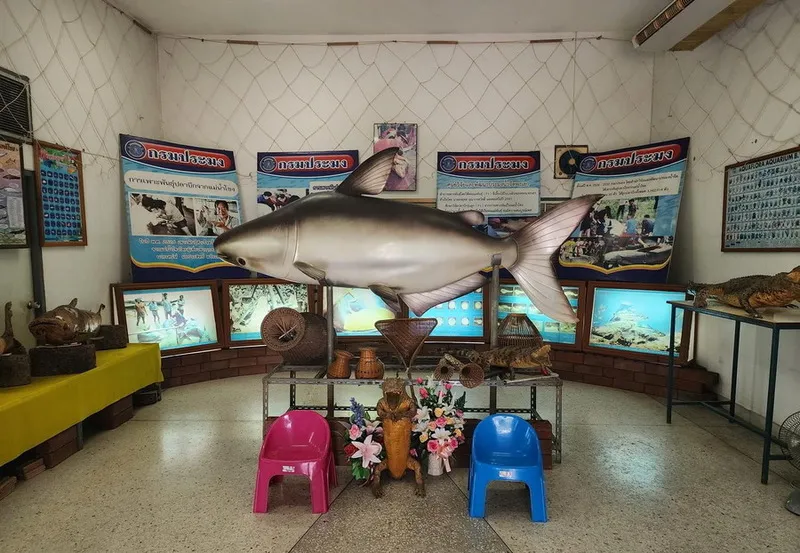
Open Days: Official Working Days
Opening Hours: 08.30 – 16.30
Phayao Inland Fisheries Research and Development Center is one of the most important freshwater fisheries learning sites in Phayao Province and northern Thailand. Located at 1 Phahonyothin Road, Wiang Subdistrict, Mueang Phayao District, the center is more than a government fisheries office. It combines freshwater fish breeding, aquaculture research, public knowledge, giant catfish conservation history, the Mekong giant catfish museum, and Phra Tamnak Kwan Phayao, a royal residence associated with the work of Her Royal Highness Princess Srinagarindra, the Princess Mother.
The center plays an important role in freshwater fisheries development. It breeds freshwater fish to support local people, farmers, and public agencies. Fish fingerlings produced through the center can be used for aquaculture careers, community income generation, and the release of fish into natural water sources. This work connects scientific research with local livelihoods, food security, and the long-term care of rivers, ponds, reservoirs, wetlands, and Kwan Phayao, one of the province’s most important freshwater resources.
One of the most significant achievements associated with this center is the successful artificial breeding of the Mekong giant catfish in 1983, recognized as the first success of its kind in the world. The Mekong giant catfish is one of the largest freshwater fish species and is strongly connected to the ecology and culture of the Mekong River basin. The success at Phayao was therefore not only a technical achievement for a fisheries station, but also a major milestone in Thai freshwater fisheries research, conservation science, and the study of large river fish reproduction.
Inside the center, visitors can learn about this history through the Mekong Giant Catfish Museum and the freshwater fish display area. The museum was created to share knowledge with the public, students, researchers, travelers, and anyone interested in aquatic life. It helps transform specialized scientific topics, such as fish breeding, hatchery work, fry nursing, aquatic conservation, and freshwater ecology, into information that general visitors can understand. Because of this, the center functions not only as a research unit but also as a public learning space.
The Mekong giant catfish is the symbolic focus of the museum. This remarkable fish is associated with the Mekong River and with local fishing traditions along the river basin. In the past, giant catfish were found in the wild and were part of community knowledge and ritual life in some river communities. Their rarity and extraordinary size made them a subject of national and international interest. When the Phayao fisheries station succeeded in breeding the species artificially, Phayao became part of an important chapter in the conservation and scientific study of freshwater fish.
Another important feature within the same area is Phra Tamnak Kwan Phayao. This two-storey wooden residence is associated with Her Royal Highness Princess Srinagarindra, who stayed here during her work in Phayao Province in 1971. The residence has been carefully maintained, preserving much of its original atmosphere. Items inside the building help visitors sense the quiet and modest character of the place. For Thai visitors, the residence is connected with royal memory and public service. For foreign travelers, it provides a meaningful context for understanding how royal development work reached provincial communities.
Phra Tamnak Kwan Phayao is located near the Mekong giant catfish museum, making the visit feel naturally connected. Visitors can begin with the story of freshwater fish research and the giant catfish, then continue to the royal residence to understand another layer of the site’s history. The contrast between the scientific learning area and the preserved wooden residence gives the place a distinctive character. It is not a typical tourist attraction built only for sightseeing; it is a real site shaped by research, public service, conservation, and memory.
For travelers, the center is a good choice for those who want to see a different side of Phayao. Many visitors know the province through Kwan Phayao, lakeside restaurants, temples, and sunset views. This center adds another dimension: science, freshwater ecology, aquaculture, conservation, and modern local history. Families, students, researchers, aquaculture farmers, and travelers interested in learning-based tourism can all benefit from a visit. The site helps visitors understand that freshwater resources are not only scenic landscapes but also living ecosystems that require knowledge and management.
The center’s role in supporting local livelihoods is especially important. By producing freshwater fish fingerlings, it helps farmers and communities access fish for aquaculture and stocking. This can support small-scale income generation, household food supply, and community resource management. The work of the center shows how government fisheries research can move beyond laboratories and ponds into everyday life, where farmers and local residents apply knowledge in practical ways.
Another key role is fish release and resource restoration. Releasing suitable fish species into appropriate natural water bodies can help maintain aquatic abundance, support local food sources, and improve community access to fish resources. Such work must be based on scientific understanding of species, habitats, and ecological balance. For this reason, a research center like the Phayao Inland Fisheries Research and Development Center plays an important role in ensuring that fish stocking and conservation activities are done with proper knowledge rather than simple symbolic release.
The Mekong giant catfish museum also helps visitors understand the vulnerability of large freshwater fish. Species like the Mekong giant catfish require large river systems, suitable breeding conditions, and healthy aquatic environments. When rivers and habitats change, wild populations can be affected. Research, breeding, and public education therefore become important tools for conservation. The museum is not only a display space but also a place that encourages awareness about freshwater biodiversity.
A typical visit can take around 1 to 2 hours. Visitors may start by learning about the center’s history and its freshwater fisheries work, then explore the Mekong giant catfish museum and the freshwater fish display area. After that, they can continue to Phra Tamnak Kwan Phayao to appreciate the preserved wooden residence and its historical significance. School groups, study groups, and visitors who need technical information should contact the center in advance so that the visit can be properly coordinated.
The atmosphere of the center is different from entertainment-focused tourist attractions. It is a government and research area, so visitors should dress politely, walk respectfully, avoid loud behavior, and not enter working areas or fish breeding zones without permission. Photography should be done according to signs and staff instructions, especially around the royal residence or operational areas. Respecting these rules helps protect the site and supports its role as a functioning research and learning center.
The location is convenient because the center is situated on Phahonyothin Road in Mueang Phayao. From Pratu Chai Intersection, follow Highway 1 south toward Mae Tam Intersection, passing Thetsaban 3 School and the entrance to Wat Li. The entrance to the fisheries center is on the left. This route is practical for travelers using private cars, motorcycles, or local transport. The center can be combined easily with Wat Li, Wiang Phayao Museum, Mae Thong Kham Fresh Market, Kwan Phayao, Wat Si Khom Kham, and other city attractions.
For a city itinerary, the center fits well with cultural and historical attractions. Travelers can begin the morning near Kwan Phayao or a local market, continue to Wat Li and Wiang Phayao Museum, then visit the fisheries center in the late morning or afternoon. In the evening, they can return to the lakeside for views of Kwan Phayao. This route allows visitors to experience religion, local history, freshwater science, conservation, and the natural identity of Phayao within one day.
For those interested in Phayao’s modern history, the center adds a perspective that temples and ancient sites do not fully provide. Phra Tamnak Kwan Phayao connects the area with the Princess Mother’s work in the province, while the giant catfish museum connects Phayao with scientific achievement and aquatic resource conservation. Together, these elements create a site that reflects public service, research, environmental awareness, and provincial memory.
Families with children may find the center especially useful. Children can learn about fish, water sources, and conservation through real examples rather than only through books. The giant catfish story is easy to remember because of the size and importance of the species, while the royal residence offers parents an opportunity to explain the Princess Mother’s work and Phayao’s historical connection to national development. The visit can therefore be both educational and meaningful.
For people interested in freshwater aquaculture, the center is also a useful starting point. Contacting a government fisheries center provides access to clearer information about fish fingerlings, breeding, and suitable species. Anyone planning to raise fish as an occupation should study water sources, pond management, feed, species selection, disease prevention, and market demand. Visiting the center can help begin that learning process in a practical way.
One important thing to notice when visiting is that the center has several roles in one place. It is a government office, a research site, a fish breeding center, a public learning space, a museum, and a historic residence area. Visitors should therefore look at it with more than one perspective. It is not only a short photo stop but a place that has accumulated knowledge, development work, and memories of Phayao over many decades.
If visitors want to take photos or collect information for a school report, they should pay attention to signs, display labels, building names, and official information. Images of the giant catfish museum, freshwater fish displays, Phra Tamnak Kwan Phayao, or the fisheries center sign can help tell the story of the site clearly. However, photography in operational or restricted areas should be avoided unless staff give permission.
The center is also conceptually connected with Kwan Phayao. Although it is not simply a lakeside viewpoint, its work is directly related to freshwater resources, fish, and aquatic ecosystems. Visiting the center before or after seeing Kwan Phayao helps travelers understand the lake more deeply. The lake becomes not only a beautiful view but also an ecosystem, a food source, and a living water body that requires scientific care and responsible management.
Compared with the best-known attractions in Phayao, the center may be overlooked by some travelers. However, for those who appreciate learning sites, conservation stories, and local history, it offers a distinct experience. The combination of the world-first artificial breeding of the Mekong giant catfish, the Princess Mother’s residence, freshwater fisheries research, and public education makes this place different from ordinary sightseeing stops.
Before visiting, travelers should contact the center, especially for group visits, study trips, or visits during holiday periods. Some areas may be used for official work, research activities, educational programs, or maintenance. Calling ahead helps confirm access, opening arrangements, and any current conditions. Those wishing to buy fish fingerlings should contact the designated number for fish seed purchase to ask about available species, prices, and timing.
Getting There is straightforward from Pratu Chai Intersection in Mueang Phayao. Follow Highway 1 or Phahonyothin Road south toward Mae Tam Intersection, pass Thetsaban 3 School and the entrance to Wat Li, then look for the entrance to the Phayao fisheries center on the left. Drivers should be careful because this is a main urban road. Visitors without private vehicles can use local transport from hotels or the city area because the site is within Mueang Phayao and close to several landmarks.
A visit to Phayao Inland Fisheries Research and Development Center reveals another side of Phayao: a side connected with water, fish, science, conservation, community livelihoods, and royal memory. It should not be seen merely as a government office on Phahonyothin Road. It is a valuable learning site where visitors can understand how freshwater resources, research, public service, and history are woven into the identity of Phayao Province.
| Name | Phayao Inland Fisheries Research And Development Center / Phra Tamnak Kwan Phayao / Mekong Giant Catfish Museum And Phayao Freshwater Fish Display |
| Location | Phahonyothin Road, Wiang Subdistrict, Mueang Phayao District, Phayao Province |
| Address | 1 Phahonyothin Road, Wiang Subdistrict, Mueang Phayao District, Phayao 56000 |
| Highlights | Freshwater fisheries learning site, Mekong Giant Catfish Museum, Phayao freshwater fish display, Phra Tamnak Kwan Phayao, and the history of the world’s first successful artificial breeding of the Mekong giant catfish |
| History / Local Context | An important freshwater fisheries station in northern Thailand, supporting fish breeding, fish fingerling distribution, aquaculture careers, and fish release into natural water sources |
| Key Achievement | Successful artificial breeding of the Mekong giant catfish for the first time in the world in 1983 |
| Phra Tamnak Kwan Phayao | A two-storey wooden residence where Her Royal Highness Princess Srinagarindra stayed during her work in Phayao Province in 1971 |
| Distinctive Features | Combines fisheries research, freshwater fish displays, Mekong giant catfish knowledge, and a preserved royal residence in one area |
| Travel Information | From Pratu Chai Intersection, follow Highway 1 or Phahonyothin Road south toward Mae Tam Intersection, pass Thetsaban 3 School and Wat Li entrance, then the center entrance is on the left |
| Current Status | Operating as a Department of Fisheries research and development center and a public learning site for the Mekong giant catfish, Phra Tamnak Kwan Phayao, and freshwater aquatic life |
| Open Days | Official Working Days |
| Opening Hours | 08.30 – 16.30 |
| Fees | No Admission Fee |
| Facilities | Mekong Giant Catfish Museum, freshwater fish display, fisheries learning areas, Phra Tamnak Kwan Phayao, government contact area, and parking within the center |
| Main Areas / Zones | Mekong Giant Catfish Museum, Phayao Freshwater Fish Display, Phra Tamnak Kwan Phayao, freshwater fish breeding areas, and the Phayao Inland Fisheries Research And Development Center office |
| Caretaker | Phayao Inland Fisheries Research And Development Center, Department Of Fisheries |
| Center Director | Mr. Anusorn Saen-asa |
| Main Contact Number | 054-431251 / Fax 054-480266 / Fish Fingerling Purchase 054-480527 |
| Official Website / Official Page | Official website of Phayao Inland Fisheries Research And Development Center, Department Of Fisheries, and the center’s official Facebook page |
| Nearby Tourist Attractions | 1. Wat Li / Wiang Phayao Museum, About 1 km 2. Mae Thong Kham Fresh Market, About 2 km 3. Kwan Phayao, About 3 km 4. King Ngam Muang Monument, About 3 km 5. Wat Si Khom Kham, About 4 km 6. Wat Tilok Aram / Kwan Phayao Pier, About 4 km 7. Wat Phra That Chom Thong, About 5 km |
| Nearby Restaurants | 1. Local Restaurants In Mae Tam Area, About 1 km 2. Aurora Kwan Phayao Restaurant, About 3 km, Tel. 054-410065, 093-136-6655 3. Phayao Cruise Marina, About 4 km, Tel. 085-488-9101 4. Chidlom Chom Kwan, About 4 km, Tel. 084-483-1274 5. Lan Lom Coffee Phayao, About 5 km, Tel. 061-982-4498 |
| Nearby Accommodations | 1. Green Hill Hotel Phayao, About 3 km, Tel. 054-482-277 2. The Cozy Nest Hotel, About 4 km, Tel. 054-071-222 3. Phuglong Hotel, About 4 km, Tel. 054-481-915 4. Chaykwan Hotel, About 4 km, Tel. 054-073-991 5. Pillow Inn Phayao, About 5 km, Tel. 063-805-7186 6. M2 Hotel Waterside, About 7 km, Tel. 063-164-7824, 054-070-587 7. ABIZZ Hotel Kwan Phayao, About 7 km, Tel. 062-941-6228 |
Frequently Asked Questions (FAQ)
Q: Where is Phayao Inland Fisheries Research and Development Center located?
A: It is located at 1 Phahonyothin Road, Wiang Subdistrict, Mueang Phayao District, Phayao Province 56000, near the route toward Mae Tam Intersection and Wat Li.
Q: What can visitors see at the center?
A: Visitors can see the Mekong Giant Catfish Museum, the Phayao freshwater fish display, Phra Tamnak Kwan Phayao, freshwater fisheries learning areas, and the history of the world’s first successful artificial breeding of the Mekong giant catfish.
Q: Why is the center important for the Mekong giant catfish?
A: The center is associated with the successful artificial breeding of the Mekong giant catfish for the first time in the world in 1983 and has a museum that shares knowledge about the species.
Q: Why is Phra Tamnak Kwan Phayao significant?
A: It is the residence where Her Royal Highness Princess Srinagarindra stayed during her work in Phayao Province in 1971. The building is preserved as a historic learning site.
Q: What are the opening hours of Phayao Inland Fisheries Research and Development Center?
A: It is open on official working days from 08.30 to 16.30. Groups or study visitors should contact the center in advance.
Q: Is there an admission fee?
A: No. There is no admission fee, but visitors should follow government office rules and ask staff before entering restricted or operational areas.
Q: How do visitors get to the center?
A: From Pratu Chai Intersection, follow Highway 1 or Phahonyothin Road south toward Mae Tam Intersection, pass Thetsaban 3 School and Wat Li entrance, then the center entrance is on the left.
Q: What nearby attractions can be visited after the center?
A: Nearby places include Wat Li, Wiang Phayao Museum, Mae Thong Kham Fresh Market, Kwan Phayao, King Ngam Muang Monument, Wat Si Khom Kham, Wat Tilok Aram, and Wat Phra That Chom Thong.
 Category: ●Nature and Wildlife
 Group: ●National Parks and Marine Reserves
Last Update : 4 MonthAgo
 Last Update : 4 MonthAgo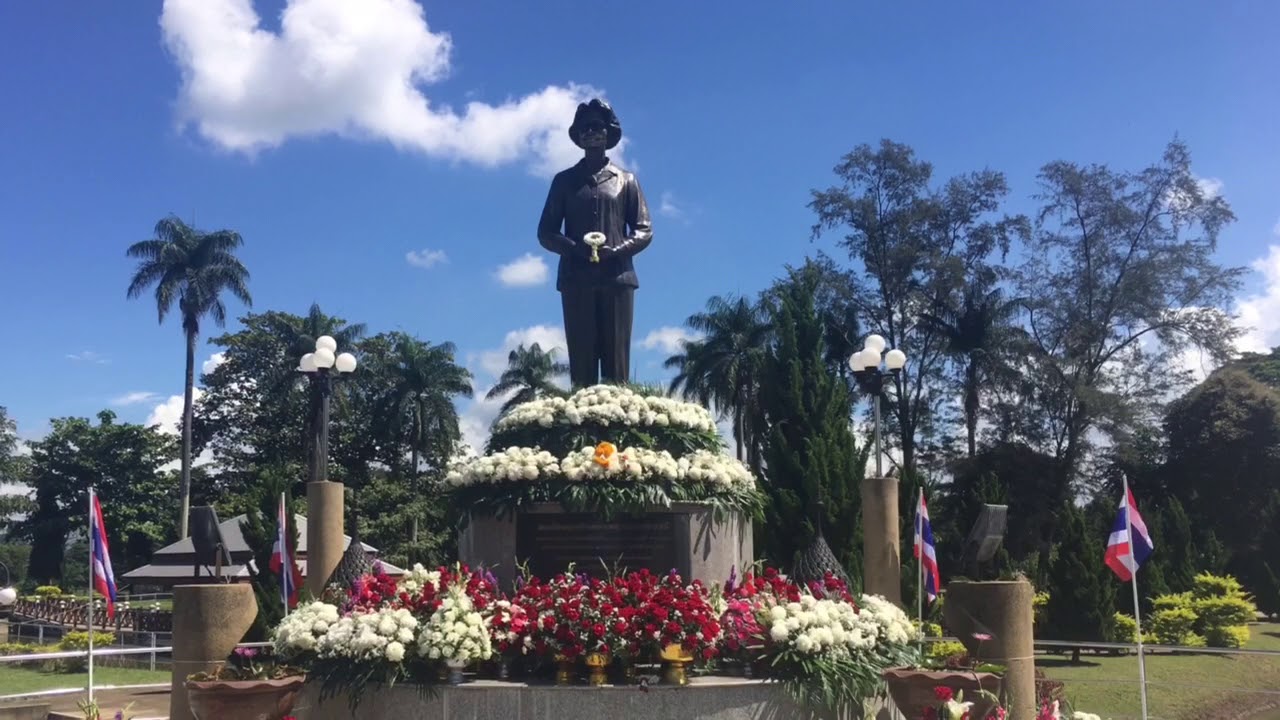
 Click to Access the Navigation Map GPS
Phayao Inland Fisheries Research and Development Center Map
Recommend

 Art, Culture and Heritage
 Historical Sites and Monuments(4)
 Landmarks and Memorials(4)
 Art, Craft Centres, Tradition(1)
 Museums(2)
 Places of Worship
 Temple(39)
 Other Sacred Sites(5)
 Research and Development
 Royal Project(1)
 Suburban Living
 Village, Community(2)
 Local Market(4)
National Parks and Marine Reserves(6)
Local Market(4)
National Parks and Marine Reserves(6)
 Mountain (Doi)(2)
 Dam, Reservoir, Lake(11)
 Waterfalls(8)
 Caves(5)
 River, Canal(3)
 Other natural attractions(5)


