
lovethailand home >South Travel Attractions >Songkhla Travel Attractions >Muang Songkhla >Khao Rup Chang > Songkhla Zoo
TL;DR: Songkhla Zoo is located at Songkhla–Na Thawi Road, Khao Rup Chang Subdistrict, Mueang Songkhla District, Songkhla Province, open Daily, hours 08.30 – 16.30.
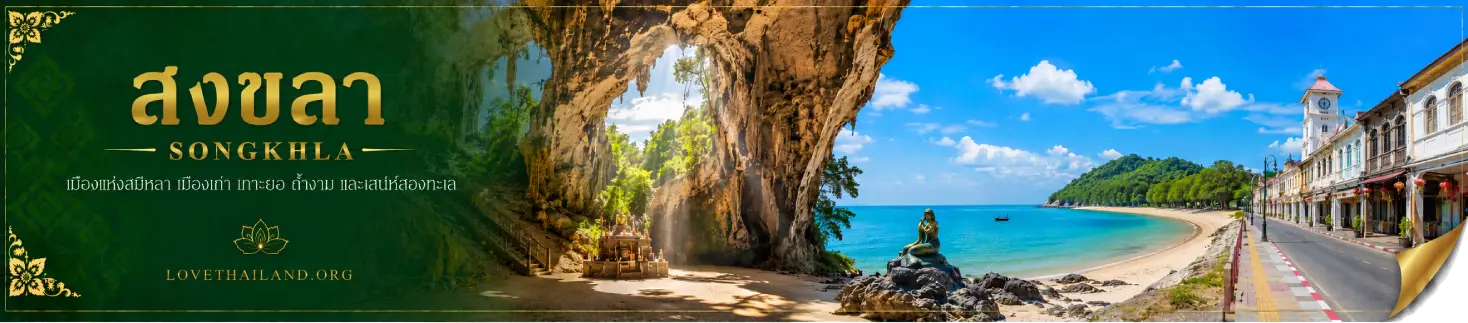
Songkhla Zoo
Open Days: Daily
Opening Hours: 08.30 – 16.30
Songkhla Zoo is one of the most important open zoos in southern Thailand. It is located at 189 Moo 5, Songkhla–Na Thawi Road, Khao Rup Chang Subdistrict, Mueang Songkhla District, Songkhla Province. The zoo is a family attraction, wildlife learning center, and natural recreation area set on a large hillside landscape. Covering more than 878 rai, it features paved roads throughout the grounds and organizes animal exhibits into different zones so visitors can learn about Thai wildlife, rare species, international animals, hoofed animals, birds, big cats, reptiles, primates, tapirs, and other animals suitable for outdoor learning.
The strength of Songkhla Zoo is not only the number of animals on display, but also the character of the site. Unlike a mostly indoor attraction, Songkhla Zoo is an open zoo built across small hills with greenery, shaded roads, viewpoints, and natural surroundings. Visitors can enjoy wildlife exhibits while also seeing panoramic views of Songkhla city, Songkhla Lake, the Gulf of Thailand, Ko Yo, and the wider coastal landscape. This makes the zoo a learning destination, family recreation area, and scenic viewpoint in one place.
Songkhla Zoo was established with the purpose of conserving, breeding, and collecting Thai wildlife, as well as supporting wildlife education and public recreation. Its role goes beyond entertainment. The zoo contributes to animal care, breeding of rare species, wildlife behavior education, public awareness, and conservation learning for younger generations. A visit to Songkhla Zoo should therefore be understood as a chance to connect people with nature and wildlife, not simply as a place to take photographs.
The zoo is best explored with a plan because the area is large and located on hilly terrain. Visitors can drive inside the zoo along designated paved roads, stop at different exhibit areas, and reduce walking distance in hot weather or when traveling with small children or elderly family members. Using the zoo map helps visitors choose key zones in advance, such as hoofed animals, primates, tigers, birds, tapirs, the water park, and scenic viewpoints.
The hoofed-animal zone is one of the major sections. Animals recorded in this group include spotted deer, eld’s deer, sambar deer, red muntjac, Fea’s muntjac, mouse deer, serow, banteng, gaur, elephants, and hippopotamus. These animals are useful for learning about herbivores, body structure, adaptation, movement, feeding behavior, and the difference between Thai wildlife and animals from other regions. Large animals are especially attractive for children because they are easy to observe.
The bird zone adds another important learning dimension. It includes parrots, macaws, waterbirds, hornbills, pheasants, and other colorful or rare birds. Hornbills are particularly important for conservation learning because they are strongly associated with healthy forests and seed dispersal. Visitors should not only notice the birds’ colors but also think about forests, nesting cavities, food sources, and the relationship between wildlife and natural ecosystems.
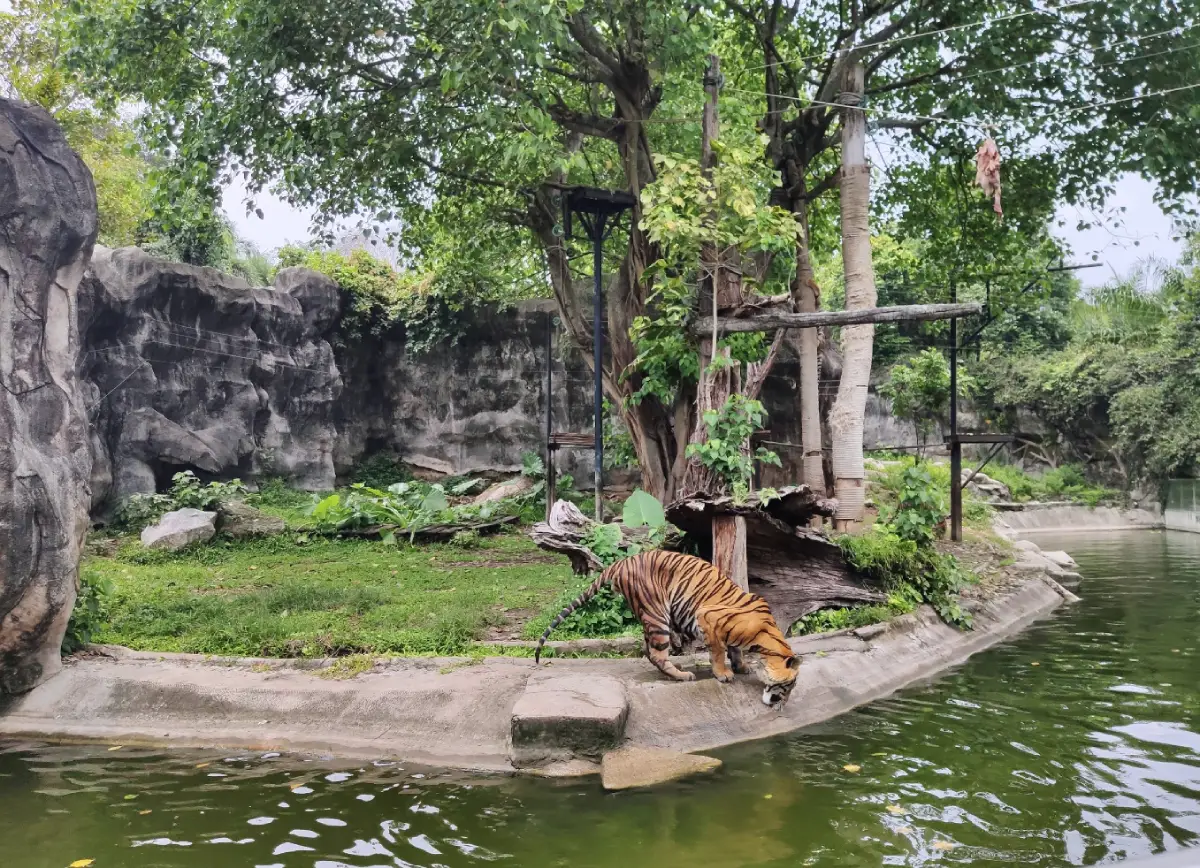
The tiger center and carnivore areas are among the most popular parts of Songkhla Zoo. Provincial tourism information records several big-cat species, including Bengal tiger, Indochinese tiger, black jaguar, leopard, clouded leopard, and other related species. Visitors should observe these animals from designated areas, avoid loud noises, avoid throwing objects, and avoid trying to provoke animal behavior. These animals require proper space, calm conditions, and professional animal-welfare care.
The bear and primate zones add more variety to the zoo experience. Primates such as chimpanzees, orangutans, Thai monkeys, langurs, and gibbons are useful for observing social behavior, communication, hand use, movement, and intelligence. Songkhla Zoo also has well-known animal personalities in its primate areas, making the visit more engaging for families and children while still supporting learning about animal behavior and conservation.
Tapirs are among the most important animals at Songkhla Zoo. The Malayan tapir is a protected and rare species in Thailand and is often described as a natural forest planter because it eats fruits and disperses seeds through its droppings. The zoo’s tapir exhibit and breeding work are therefore important for learning about protected wildlife and rainforest ecosystems. Recent news from 2026 also reported the public introduction of a young male tapir born at Songkhla Zoo, reinforcing the zoo’s role in rare-wildlife breeding.
In addition to tapirs, Songkhla Zoo features animal highlights that attract younger visitors, such as capybaras, lemurs, giraffes, zebras, flamingos, reptiles, and smaller animals in appropriate learning areas. The diversity of species allows visitors to learn about biology, animal behavior, diet, habitat, adaptation, and conservation across both Thai and international wildlife.
The zoo also organizes special activities during different periods of the year, including children’s events, feeding activities, educational events, festival programs, and locally themed activities. Visitors who want to join specific shows or special activities should check the zoo’s current announcements before traveling because some activities run by schedule, limit participant numbers, or change according to weather, season, and animal welfare.
Songkhla Zoo Water Park is another family highlight. Located on the higher part of the zoo, it includes pools, slides, a whirlpool area, rest spaces, and viewpoints overlooking Songkhla city. The water park can add variety to a family trip, especially on hot days. However, water-park access and activity services should follow the zoo’s current announcements on the day of visit because operating conditions may differ from normal zoo admission.
The viewpoint inside Songkhla Zoo is one of the reasons the zoo feels different from many other animal attractions. Because the zoo sits on Khao Rup Chang and nearby small hills, visitors can see Songkhla city, Songkhla Lake, the Gulf of Thailand, and on clear days the direction of Ko Yo and Tinsulanonda Bridge. This scenic layer gives the zoo a strong sense of place and connects wildlife learning with the geography of Songkhla.
Songkhla Zoo is especially suitable for families because children can observe real animals at close range. They can learn about size, color, body shape, movement, feeding, and social behavior by seeing animals directly. Parents can turn the visit into a learning experience by asking simple questions such as what the animal eats, why its feet or mouth are shaped that way, why some animals live in groups, and why wildlife needs protection.
The zoo is also appropriate for school trips and educational groups. It supports learning topics such as Thai wildlife, rare species, international animals, ecosystems, conservation, and animal care in managed environments. Songkhla Zoo has also been involved in educational activities for schools, including day-trip and camp-style learning formats. Group visits should be arranged in advance so that routes, timing, staff support, and learning activities match the age and size of the group.
Facilities at Songkhla Zoo include a tourist service center, toilets, parking areas, shops, restaurants, a Muslim prayer room, public-service points, main and secondary roads, activity areas, accommodation or camp areas, the water park, and scenic viewpoints. Mountain View cafe&restaurant is located inside the zoo area and is known for its elevated view of Songkhla city. These facilities make the zoo suitable for visitors who want to spend half a day or most of a day on-site.
Current admission fees for Thai visitors are 130 Baht for adults and 40 Baht for children aged 3–12. Children under 3 years old, novices, monks, veterans, disabled visitors, and seniors aged 60 and above can enter free of charge. For foreign visitors, admission is 350 Baht for adults and 120 Baht for children. Vehicle entry fees are 10 Baht for motorcycles and 50 Baht for cars. These costs help visitors plan their budget before arrival, especially families entering the zoo by private car.
The best time to visit Songkhla Zoo is in the morning. The weather is cooler, many animals are more active than during the hottest hours, and visitors have enough time to explore several zones without rushing. Families with children or elderly travelers should break the visit into shorter sections, rest often, drink water, and prioritize key areas such as hoofed animals, tigers, birds, primates, viewpoints, and the water park.
A practical half-day visit can begin with arrival in the morning, a photo stop at the entrance, checking the zoo map, and exploring the main animal zones by route. Visitors can then stop at the viewpoint, eat inside the zoo, and finish with any available activity that matches the schedule. Families with young children may want to start with animals children are most excited to see, such as giraffes, zebras, primates, capybaras, flamingos, or large mammals.
A full-day visit can cover the zoo more completely. Start with outdoor animal zones in the morning, move to shaded or rest areas later in the day, have lunch, and use the afternoon for special activities or the water park when available. After leaving the zoo, visitors can continue to Kao Seng Beach, Samila Beach, Khao Tang Kuan, or Songkhla Old Town. This makes a family trip more complete by combining wildlife learning, recreation, and Songkhla city sightseeing.
Getting There is easiest by private car. From Songkhla city, travel toward Songkhla–Na Thawi Road and enter Khao Rup Chang Subdistrict. From Hat Yai, travelers can use Kanchanawanit Road or Lop Buri Ramesuan Road toward Songkhla, then continue toward Songkhla–Na Thawi Road. The distance from Hat Yai to the zoo is roughly 25–30 kilometers, depending on starting point and route.
Public transport is possible by taking the Hat Yai–Songkhla route into Songkhla city and continuing by local transport, tuk-tuk, or motorcycle taxi to the zoo. This option is workable for travelers without a car, but the return trip should be planned in advance because the zoo is large and located outside the main city center. Families and elderly visitors will usually find private transport more convenient.
Visitors should follow zoo rules carefully. Do not feed animals outside permitted points, do not throw objects into exhibits, do not tap glass, do not make loud noises near animals, do not climb fences, and do not use flash or behavior that may frighten animals. Each species has different physical and behavioral needs, and proper visitor behavior protects both guests and animal welfare.
Preparation is important because Songkhla Zoo is largely outdoors. Visitors should bring a hat, umbrella, sunglasses, drinking water, personal medicine, comfortable walking shoes, and breathable clothing. Families with small children may want to bring a stroller, wet tissues, light snacks, and spare clothes. Visitors planning to use the water park should bring swimwear, towels, and a separate bag for wet clothes.
Songkhla Zoo can be suitable for elderly visitors with good planning. The internal road system helps reduce walking between zones, but visitors should avoid the hottest hours, park close to exhibit areas, and rest often. Wheelchair users should ask staff about the most convenient routes, parking spots, and slope conditions before moving around because the zoo is built on hilly terrain.
The main advantage of Songkhla Zoo over many other family attractions is that it combines wildlife, nature, viewpoints, a water park, restaurants, activities, and education in one place. Children can learn from real animals, adults can enjoy green space and views, and families can spend meaningful time together without having to move between many separate destinations.
Songkhla Zoo is also important because it is recognized as the first zoo in southern Thailand and an important facility under the Zoological Park Organization of Thailand under the Royal Patronage. This gives the zoo a regional role beyond ordinary recreation. It supports learning for schools, families, local communities, tourists, and long-term wildlife conservation work in southern Thailand.
Songkhla Zoo can be combined easily with nearby attractions such as Kao Seng Beach, Khao Tang Kuan, Samila Beach, Laem Son On, Songkhla Aquarium, Ko Nu–Ko Maeo, Songkhla Old Town, and Ko Yo. Travelers from Hat Yai can use the zoo as a main morning stop and continue to the coast or old town in the afternoon. Travelers staying in Songkhla city can make the zoo a half-day trip and return to the beach area in the evening.
In summary, Songkhla Zoo is a complete destination for wildlife learning, family recreation, nature, and conservation. It offers many animal exhibits, internal roads, panoramic viewpoints, a water park, restaurants, and activities suitable for families. With proper time planning, suitable preparation for outdoor weather, and respectful visitor behavior, Songkhla Zoo can become one of the most memorable and educational stops in a Songkhla travel itinerary.
| Name | Songkhla Zoo |
| Location | Songkhla–Na Thawi Road, Khao Rup Chang Subdistrict, Mueang Songkhla District, Songkhla Province |
| Address | 189 Moo 5, Songkhla–Na Thawi Road, Khao Rup Chang Subdistrict, Mueang Songkhla District, Songkhla 90000, Thailand |
| Coordinates | 7.1429569, 100.6021214 |
| Place Type | Open zoo, wildlife learning center, family attraction, and southern Thailand wildlife conservation site |
| Area | More than 878 rai |
| Governing Organization | Zoological Park Organization of Thailand Under The Royal Patronage |
| Director | Ms. Ularika Kongprom |
| Purpose | Wildlife conservation, breeding, collection of Thai wildlife, public education, and recreation |
| Highlights | Open zoo on hilly terrain, Songkhla city viewpoint, diverse wildlife, protected species, tapirs, tigers, hornbills, capybaras, water park, and scenic restaurant |
| Main Zones | Office Zone, Service Zone, Wildlife Exhibits, Rare Animal Zone, Camping Zone, Hoofed-Animal Zone, Bird Zone, Tiger Zone, Primate Zone, Tapir Zone, Water Park, and Viewpoint Area |
| Featured Animals | Elephants, hippopotamus, giraffes, zebras, banteng, gaur, deer, eld’s deer, tigers, leopards, clouded leopard, bears, chimpanzees, orangutans, hornbills, macaws, flamingos, capybaras, and tapirs |
| Open Days | Daily, including public holidays |
| Opening Hours | 08.30 – 16.30 |
| Thai Visitor Admission | Adults 130 Baht / Children aged 3–12 years 40 Baht / Children under 3, novices, monks, veterans, disabled visitors, and seniors aged 60 and above enter free |
| Foreigner Admission | Adults 350 Baht / Children 120 Baht |
| Vehicle Entry Fee | Motorcycle 10 Baht / Car 50 Baht |
| Facilities | Tourist service center, toilets, parking, shops, restaurants, Muslim prayer room, internal roads, accommodation/camping area, activity areas, water park, and viewpoints |
| On-Site Restaurant | Mountain View cafe&restaurant, Tel. 074-260-198 |
| Getting There | From Songkhla city, take Songkhla–Na Thawi Road toward Khao Rup Chang. From Hat Yai, use Kanchanawanit Road or Lop Buri Ramesuan Road toward Songkhla, then continue to Songkhla–Na Thawi Road |
| Current Status | Open daily for wildlife viewing, with special activities organized according to zoo announcements |
| Main Contact Number | Marketing And Customer Relations, Tel. 086-4981-447 |
| Nearby Tourist Attractions | 1. Suan Tul Public Park, about 3 km 2. Kao Seng Beach, about 6 km 3. Songkhla Old Town, about 8 km 4. Khao Tang Kuan, about 9 km 5. Samila Beach / Laem Samila, about 10 km 6. Songkhla Aquarium, about 12 km 7. Ko Yo And Tinsulanonda Bridge, about 15 km |
| Nearby Restaurants | 1. Mountain View cafe&restaurant, about 1 km, Tel. 074-260-198 2. Steak Lung Yik Songkhla Branch, about 5 km, Tel. 087-293-2960 3. Tam Roi Khao Rup Chang, about 6 km, Tel. 065-218-7442 4. Cheese Yerm Khao Rup Chang, about 6 km, Tel. 062-519-9847 5. Songkhla Clean Food, about 7 km, Tel. 063-875-2515 6. Nong Ple Rice And Curry / Made-To-Order Food, about 8 km, Tel. 086-346-6997, 085-582-8515, 093-713-0474 |
| Nearby Accommodations | 1. Songkhla KeeRee Resort, about 3 km, Tel. 099-163-3310 2. Sun Inn, about 7 km, Tel. 090-232-8428 3. Songkhla Palace Hotel, about 7 km, Tel. 092-838-9119 4. Sabai Sabai Resort, about 7 km, Tel. 081-909-1211 5. W Sotels Hotel Songkhla, about 8 km, Tel. 088-784-5440 6. B Brand Hotel, about 8 km, Tel. 093-615-6688 |
Frequently Asked Questions (FAQ)
Q: Where is Songkhla Zoo located?
A: Songkhla Zoo is located at 189 Moo 5, Songkhla–Na Thawi Road, Khao Rup Chang Subdistrict, Mueang Songkhla District, Songkhla 90000, Thailand.
Q: What are the opening days and hours of Songkhla Zoo?
A: Songkhla Zoo is open daily, including public holidays, from 08.30 to 16.30.
Q: How much is the admission fee for Songkhla Zoo?
A: Thai adult admission is 130 Baht and Thai children aged 3–12 pay 40 Baht. Children under 3, novices, monks, veterans, disabled visitors, and seniors aged 60 and above enter free. Foreign adults pay 350 Baht and foreign children pay 120 Baht.
Q: What animals can visitors see at Songkhla Zoo?
A: Visitors can see elephants, hippopotamus, giraffes, zebras, deer, eld’s deer, banteng, gaur, tigers, leopards, bears, chimpanzees, orangutans, hornbills, macaws, flamingos, capybaras, tapirs, and many other animals.
Q: Is there a water park at Songkhla Zoo?
A: Yes. Songkhla Zoo has a water-park zone with pools, slides, a whirlpool area, rest spaces, and views of Songkhla city. Visitors should check current zoo announcements before using the water park.
Q: How do travelers get to Songkhla Zoo?
A: From Songkhla city, take Songkhla–Na Thawi Road toward Khao Rup Chang. From Hat Yai, use Kanchanawanit Road or Lop Buri Ramesuan Road toward Songkhla, then continue to Songkhla–Na Thawi Road. Private car is the most convenient option.
Q: Is Songkhla Zoo suitable for children and elderly visitors?
A: Yes. It is suitable for children, families, and elderly visitors because internal roads allow visitors to plan the trip by zone. Avoid the hottest hours, rest often, and choose parking spots close to the exhibit areas.
Q: What should visitors be careful about at Songkhla Zoo?
A: Visitors should follow zoo rules, avoid feeding animals outside permitted areas, avoid throwing objects, avoid tapping glass, avoid climbing fences, keep noise low near animals, and supervise children closely throughout the visit.
Website : www.songkhlazoo.com
 Website :
Tel : 074336038-40
 Tel : 074336038-40
 Category: ●Entertainment and Agricultural
 Group: ●Zoos and Aquariums
Last Update : 2 MonthAgo
 Last Update : 2 MonthAgo
 Click to Access the Navigation Map GPS
Songkhla Zoo Map
Recommend

 Art, Culture and Heritage
 Historical Sites and Monuments(2)
 Landmarks and Memorials(7)
 Royal Palace(1)
 Art, Craft Centres, Tradition(4)
 Museums(4)
 Art Gallery(1)
 Educational Places
 Library(1)
 Educational Gardens, Farm(3)
 Places of Worship
 Temple(52)
 Mosque(2)
 Other Sacred Sites(11)
 Suburban Living
 Village, Community(3)
 Local Market(3)
 Floating Market(2)
 Nature and Wildlife
 National Parks and Marine Reserves(5)
 Mountain (Doi)(6)
 Dam, Reservoir, Lake(5)
 Waterfalls(12)
 Caves(4)
 River, Canal(2)
 Bays and Beaches(13)
 Islands(3)
 Other natural attractions(2)
Zoos and Aquariums(2)
 Animal camps and shows(1)
 Farms, Parks and Ecotourism(6)
 Waterpark(1)
 Travel Articles, Recipes
 Travel Review, Food Review(1)
 Southern Food Menu, Southern Food Recipes(2)


