
lovethailand home >South Travel Attractions >Phuket Travel Attractions >Muang Phuket >Wichit > Phuket Aquarium
TL;DR: Phuket Aquarium is located at Cape Panwa, Wichit Subdistrict, Mueang Phuket District, Phuket Province, open Daily, Including Public Holidays, hours 08.30 – 16.30; Ticket Sales Close At 16.00.

Phuket Aquarium
Open Days: Daily, Including Public Holidays
Opening Hours: 08.30 – 16.30; Ticket Sales Close At 16.00
Phuket Aquarium is one of Phuket’s most important public marine-learning attractions. It is located at 51 Moo 8, Sakdidej Road, Wichit Subdistrict, Mueang Phuket District, Phuket Province, at the southern end of Cape Panwa. The aquarium is closely connected with the Marine and Coastal Resources Research Center for the Upper Andaman Sea and plays several roles at once: a tourist attraction, an educational center, a public science communication space, and a place that encourages awareness of marine and coastal conservation. Inside, visitors can explore freshwater species, marine species, and organisms related to coastal and ocean ecosystems, with more than 130 species and over 1,500 living animals displayed across a sequence of learning zones.
The value of Phuket Aquarium is not limited to watching colorful fish behind glass. The experience is designed to help visitors understand the Andaman Sea and aquatic ecosystems in a more structured way. The exhibition route introduces freshwater fish, marine fish, invertebrates, coral-related habitats, sea anemones, shrimp, shellfish, crabs, jellyfish, clownfish, parrotfish, lionfish, trevally, rays, sea turtles, leopard sharks, and other aquatic animals. These exhibits help visitors see that the underwater world is not a single simple environment, but a living system made up of many species, behaviors, habitats, and ecological relationships.
The aquarium is suitable for families, school groups, students, nature lovers, and travelers looking for an indoor educational activity near Cape Panwa. The layout is easy to follow, and each exhibit gives visitors a chance to learn at a comfortable pace. Children can focus on movement, color, shape, and size, while adults can look more closely at the habitat information and conservation messages. This makes the aquarium useful for both casual travel and deeper environmental learning.
Phuket Aquarium has been operating since 1983 and differs from many commercial aquariums because it is directly linked with marine research and public education. A visit here is not only about entertainment. It is also an entry point into the scientific and conservation work connected with Phuket’s coastal and marine resources. The aquarium reminds visitors that the sea is not only a scenic tourist asset, but a complex life-supporting system that requires knowledge, monitoring, and responsible care.
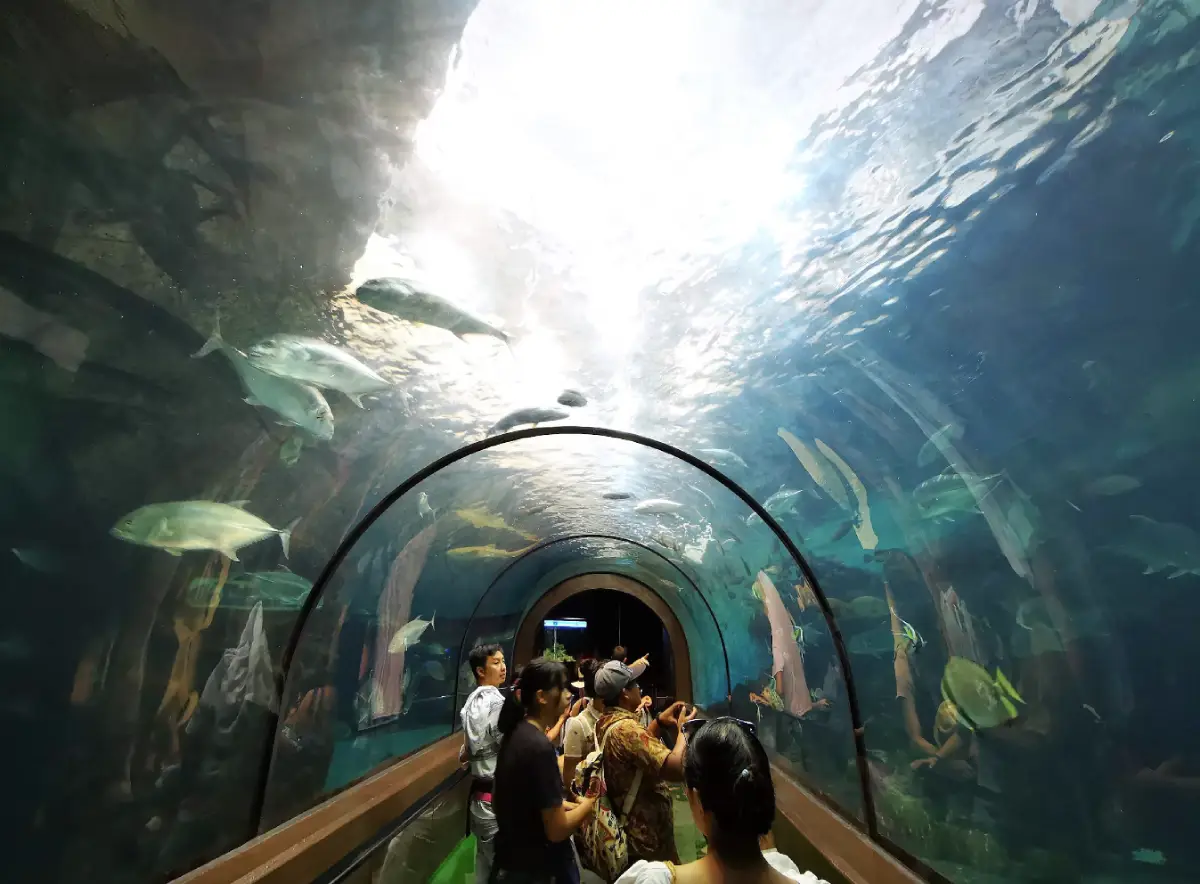
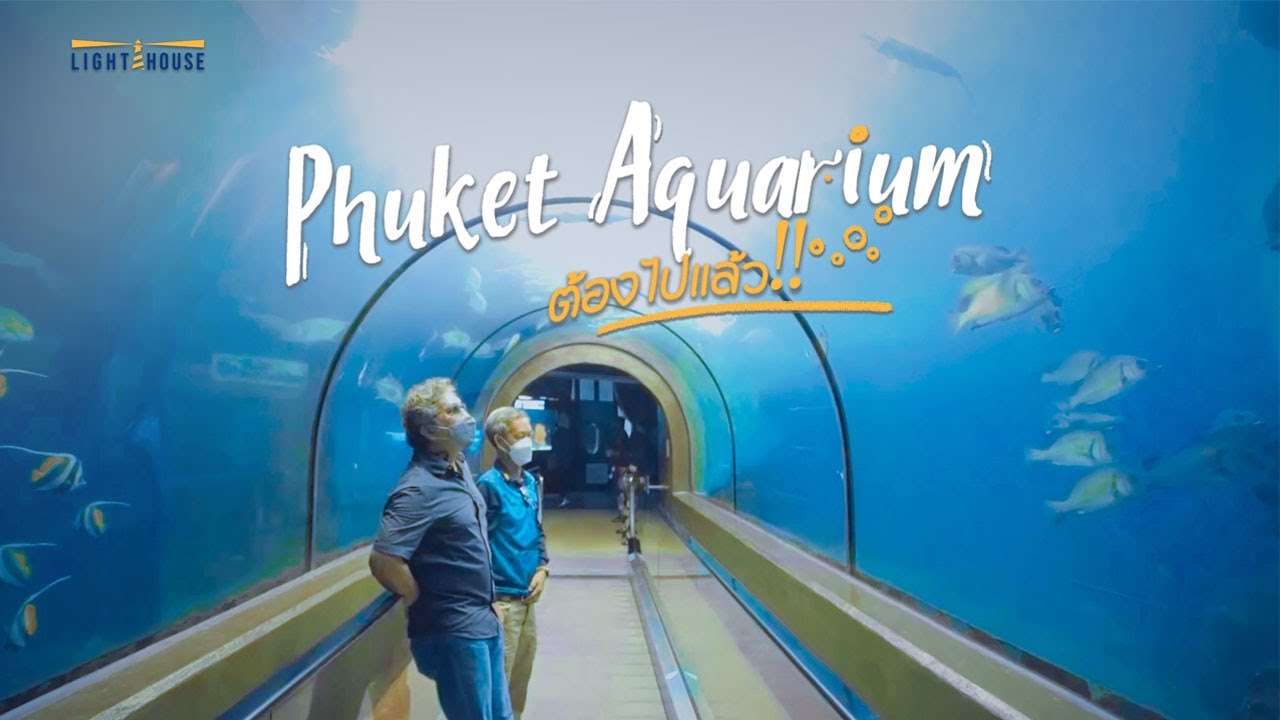
The most memorable highlight for many visitors is the underwater tunnel. Walking through this tunnel gives the impression of being below the sea surface while fish and larger marine animals move around the viewing area. Visitors may see trevally, rays, sea turtles, leopard sharks, and other species in a more immersive setting than a flat-front tank. The daily diver feeding show in the tunnel tank, held from 11.00 to 11.30, is one of the most useful times to observe movement, feeding behavior, and the relationship between divers and the animals under professional supervision.
The freshwater and rainforest zone introduces the visit before moving into marine displays. It presents freshwater species and helps explain that aquatic life is not limited to oceans. Rivers, streams, wetlands, ponds, brackish waters, and estuaries all support different forms of life. One notable example is the electric catfish, a freshwater fish with electric organs used for defense or prey capture. Starting with freshwater ecosystems gives the visitor a broader understanding of how water systems connect across landscapes before reaching the sea.
The mangrove zone is another important part of the experience. Mangroves are transitional ecosystems between land and sea. They serve as nursery grounds for young fish, shrimp, crabs, and many small organisms. The zone helps visitors understand why mangrove forests are crucial for coastal fisheries and shoreline stability. Species such as archerfish also demonstrate unique feeding behavior and adaptation to mangrove habitats. This part of the aquarium is especially useful for explaining that mangroves are not just coastal trees, but living ecological infrastructure.
The marine fish zone brings visitors into the blue world of the sea. This section includes reef and coastal species such as clownfish living with sea anemones, parrotfish associated with reef systems, lionfish with venomous spines, and many other fish and invertebrates. It is a strong educational zone for children because it shows that beauty in the sea is not separate from ecological function. Every species has a role, whether as predator, prey, cleaner, grazer, shelter user, or part of a larger food web.
The whale exhibition adds another layer to the visit by introducing large marine animals. Visitors can learn about whale species and see the skeleton of an Omura’s whale discovered between Koh He and Koh Racha Yai in Phuket. This exhibit helps connect Phuket’s surrounding sea with larger marine life. Whales are not distant creatures unrelated to Thailand; they are part of the broader marine ecosystem, scientific monitoring, and conservation concerns of the region.
The large twelve-sided tank is another significant display area. It features large marine fish and gives visitors a closer sense of size, movement, and the complexity of life cycles in bigger reef-associated animals. Large tanks are important because they allow visitors to appreciate animals not only as individual species, but as part of wider habitats that must be protected in nature.
The touch pool is designed for close learning under proper guidance. It allows visitors, especially children, to observe and carefully learn from selected seafloor organisms in a more interactive way. Touch-based learning can be meaningful, but it must be done responsibly. Visitors should follow staff instructions, avoid rough handling, never lift animals out of the water unless permitted, and understand that contact with living animals is a privilege that depends on respectful behavior.
Beyond the indoor exhibits, Phuket Aquarium also has the Cape Panwa seaside nature trail. This area connects indoor learning with real coastal nature outside. Visitors can see beach and coastal plants such as sea pandanus, small-leaved mangrove, and other shoreline vegetation. The trail shows that the aquarium is not isolated from its environment; it is located in a real coastal research and conservation setting at Cape Panwa.
The nature trail also offers sea views and a glimpse of the coastal environment around Cape Panwa. However, this area has important rules: visitors are not allowed to swim or collect aquatic animals because the shoreline is part of a conservation area connected with the research center. These rules protect small organisms, juvenile marine life, and fragile coastal habitats that can easily be damaged by careless activity.
One of Phuket Aquarium’s strongest values is that it makes marine conservation easier to understand. Visitors do not need to be scientists to see how marine debris, overfishing, coral damage, disturbance of marine animals, and careless tourism behavior can affect aquatic life. Seeing living animals up close often creates a stronger connection than reading about conservation in the abstract. That connection can lead to better behavior when visitors later travel to beaches, islands, reefs, or mangrove areas.
Phuket Aquarium is a practical attraction for hot days, rainy days, and family travel days around Cape Panwa. The indoor exhibits make it easier to visit comfortably compared with many open-air attractions. It also combines well with nearby places such as Cape Panwa Viewpoint, Makham Bay, Ao Yon Beach, Khao Khad View Tower, and Khlong Mudong. With good planning, visitors can build a half-day or full-day route around Wichit and Cape Panwa that includes marine learning, viewpoints, coastal scenery, restaurants, and quieter local areas.
Families visiting with children should allow at least 1 to 2 hours. Children often spend more time watching each tank than adults expect. Parents can make the visit more meaningful by explaining animal names, movement, colors, patterns, habitats, and behaviors. Children should also be reminded not to knock on glass, use flash photography, bring drinks into exhibit zones, run inside the building, or disturb other visitors.
The visiting rules are important for both animal welfare and visitor safety. No-flash photography helps reduce stress for animals sensitive to sudden light. Not tapping the glass prevents stress and protects display structures. Keeping pets out of exhibition areas reduces hygiene and disturbance risks. Not bringing drinks into exhibit zones helps prevent spills, litter, and contamination in a learning environment.
Current admission is accessible compared with many family attractions. Thai adults pay 80 baht and Thai children pay 40 baht. Foreign adults pay 300 baht and foreign children pay 150 baht. Children under 108 centimeters tall, visitors aged 60 and over, monks, novices, people with disabilities, and disadvantaged visitors are eligible for free admission under the stated conditions. This makes Phuket Aquarium suitable for local families, schools, and travelers looking for an affordable educational stop.
The official opening hours are 08.30 to 16.30, with ticket sales closing at 16.00. Visitors who want to see the aquarium properly should not arrive too close to closing time. Late arrival can make the visit rushed and may cause visitors to miss the daily diver feeding activity from 11.00 to 11.30. Morning or late morning is a practical time to visit, especially for those who want to continue to nearby viewpoints, beaches, or restaurants afterward.
Getting There is straightforward by road. Phuket Aquarium is located at the end of Sakdidej Road on Cape Panwa. From Phuket Town, the drive usually takes around 30 minutes depending on traffic. Visitors using a private car can follow signs toward Makham Bay, Cape Panwa, and Phuket Aquarium. Public transport is also possible by local songthaew on the Makham Bay and Aquarium route, although travelers should allow more time and check the service pattern before relying on it.
Because the aquarium sits at the end of Sakdidej Road, it works well as a main stop in a Cape Panwa itinerary. Travelers can begin from Phuket Town, drive toward Makham Bay, stop at Khao Khad View Tower or Ao Yon Beach, then continue to Phuket Aquarium. Another good plan is to visit the aquarium first, then walk or drive to Cape Panwa Viewpoint and finish the day with a meal by the sea.
Visitors coming from Phuket International Airport should allow more time because Cape Panwa is on the southeastern side of the island. Those staying in Patong, Kata, or Karon should plan the aquarium as part of a half-day or full-day route with Phuket Old Town and Cape Panwa instead of crossing the island only for a short stop. Combining destinations reduces travel time and makes the visit more worthwhile.
The aquarium is also useful because it connects directly with the real coastal environment outside. After seeing fish, coral-related displays, mangrove information, and marine animals indoors, visitors can walk the seaside nature trail and see coastal plants and sea views around Cape Panwa. This helps make the lesson clearer: clownfish, sea anemones, coral reefs, mangroves, and marine animals are not only displays in tanks, but living parts of natural habitats that need protection.
Compared with large commercial aquariums in shopping malls or major cities, Phuket Aquarium has a different character. It is not primarily about spectacle. It is a public aquarium with strong educational and research connections. The atmosphere may feel simpler, but its value lies in scientific context, affordability, conservation messaging, and the direct relationship with the marine environment of Phuket.
Phuket Aquarium also helps visitors distinguish between animals that are visually attractive and animals that are ecologically important. Some species may not be colorful or dramatic, but they still play essential roles as predators, prey, cleaners, grazers, shelter users, or indicators of habitat health. Seeing many groups of aquatic life in one place helps visitors understand that marine conservation must protect the whole system, not only the animals that are famous or photogenic.
For photography, the aquarium offers several useful scenes: fish moving through large tanks, the underwater tunnel, reflections in glass, children observing marine life, and exhibition displays about the ocean. Visitors should keep flash turned off and avoid pressing cameras against glass in ways that disturb others. Waiting calmly often produces better photos than chasing fast-moving fish from tank to tank.
As an educational venue, Phuket Aquarium works well for learning outside the classroom. Teachers and parents can use the exhibits to explain food chains, biodiversity, animal adaptation, freshwater ecosystems, brackish-water habitats, marine environments, and human impact on the sea. Learning in a real place helps visitors remember marine science more clearly than reading about it alone.
Restaurants near Phuket Aquarium include hotel restaurants, Thai restaurants, Japanese dining, cafés, and beachside places around Ao Yon and Khao Khad. Panwa House and dining venues at Sri Panwa are among the closest options. Travelers who prefer a relaxed beach atmosphere can drive toward Ao Yon or Khao Khad, where more seaside cafés and local restaurants are available.
Accommodation near Phuket Aquarium is concentrated around Cape Panwa, Ao Yon, and Khao Khad. This area is quieter than Phuket’s west-coast beach towns and is suitable for travelers who want sea views, privacy, and a slower coastal atmosphere. Several hotels are very close to the aquarium, making it easy to visit in the morning or afternoon. Travelers staying in Phuket Town can also visit as a short trip because the distance is manageable.
A practical itinerary can begin with Phuket Aquarium in the morning, include the 11.00 diver feeding show, continue to Cape Panwa Viewpoint, have lunch nearby, and then visit Khao Khad View Tower or Ao Yon Beach in the afternoon. Visitors who prefer a later start can visit the aquarium in the early afternoon and finish with a coastal walk or dinner around Cape Panwa.
Useful preparations include allowing 1 to 2 hours for the aquarium, checking the feeding-show time, bringing a camera or phone with flash turned off, and planning nearby stops in advance. Families should use the visit to build simple conservation habits: do not litter, do not disturb marine animals, do not collect animals from the shore, and do not support irresponsible trade in rare marine life.
In summary, Phuket Aquarium is more than a fish-display building. It is a marine-learning center connected with research, conservation, and the real coastal environment of Cape Panwa. With more than 130 species, an underwater tunnel, freshwater and marine displays, mangrove learning, whale exhibition, touch pool, large tank displays, daily diver feeding, and a seaside nature trail, it is suitable for families, students, travelers, and anyone who wants to understand Phuket’s sea more deeply. A visit here shows that the beauty of the ocean is not only the blue surface of the water, but also the living systems beneath it and the responsibility people share in protecting them.
| Name | Phuket Aquarium |
| Thai Name | สถานแสดงพันธุ์สัตว์น้ำภูเก็ต |
| Location | Cape Panwa, Wichit Subdistrict, Mueang Phuket District, Phuket Province |
| Address | 51 Moo 8, Sakdidej Road, Wichit Subdistrict, Mueang Phuket District, Phuket 83000, Thailand |
| Coordinates | 7.803620416508571, 98.40787510993505 |
| Highlights | Marine learning center, underwater tunnel, freshwater and marine displays, whale exhibition, touch pool, twelve-sided tank, daily diver feeding show, and Cape Panwa seaside nature trail |
| History / Background | Operating since 1983 and connected with public marine education, research communication, and marine and coastal resource conservation at Cape Panwa |
| Distinctive Features | Displays more than 130 freshwater, marine, and related aquatic species, totaling more than 1,500 living animals |
| Main Areas / Zones | Freshwater And Rainforest Zone, Mangrove Zone, Marine Fish Zone, Whale Exhibition, Touch Pool, Underwater Tunnel Zone, Twelve-Sided Tank Zone, Culture And Nursery Station, Cape Panwa Seaside Nature Trail |
| Main Activity | Diver feeding show in the tunnel tank from 11.00 to 11.30 daily |
| Visitor Rules | No flash photography, no tapping on glass, no pets, no drinks inside exhibit zones, and no swimming or collecting aquatic animals at the seaside nature-trail area |
| Travel Information | Follow Sakdidej Road to the end of Cape Panwa. The drive from Phuket Town takes about 30 minutes depending on traffic. Visitors can use a private car, rental car, taxi, ride-hailing service, or local songthaew on the Makham Bay and Aquarium route. |
| Current Status | Open as a marine-learning attraction and public aquarium in Phuket |
| Open Days | Daily, including public holidays |
| Opening Hours | 08.30 – 16.30; ticket sales close at 16.00 |
| Admission Fee | Thai Visitors: Adult 80 THB / Child 40 THB Foreign Visitors: Adult 300 THB / Child 150 THB Free admission for children under 108 cm, visitors aged 60 and above, monks, novices, people with disabilities, and disadvantaged visitors under stated conditions |
| Facilities | Aquarium exhibition building, ticket area, toilets, indoor walking route, seaside nature trail, learning areas, souvenir shop, food and beverage services depending on operation, and parking area |
| Caretaker | Marine and Coastal Resources Research Center for the Upper Andaman Sea, Department of Marine and Coastal Resources |
| Main Contact Number | 0-7639-1126 |
| phuket.aquarium@gmail.com | |
| Official Website / Channels | Phuket Aquarium official website and Department of Marine and Coastal Resources website |
| Nearby Tourist Attractions | 1. Cape Panwa Viewpoint, about 0.3 km 2. Makham Bay, about 2 km 3. Ao Yon Beach, about 3 km 4. Khao Khad View Tower, about 5 km 5. Khlong Mudong, about 8 km 6. Phuket Old Town, about 13 km |
| Nearby Restaurants | 1. Panwa House, about 1 km, Tel. 076-391-123 2. Baba Soul Food, about 1 km, Tel. 076-371-000 3. Baba Soul Café, about 1 km, Tel. 076-371-008 4. Baba IKI, about 1 km, Tel. 076-371-000 5. The Cove Phuket, about 4 km, Tel. 062-242-3442 6. At The Beach Restaurant & Bar, about 7 km, Tel. 095-412-9291 |
| Nearby Accommodations | 1. Kantary Bay Hotel Phuket, about 0.4 km, Tel. 076-391-514 2. Cape Panwa Hotel, about 1 km, Tel. 076-391-123 3. Sri Panwa Phuket, about 1 km, Tel. 076-371-000 4. Amatara Welleisure Resort, about 2 km, Tel. 076-318-888 5. Pullman Phuket Panwa Beach Resort, about 4 km, Tel. 076-602-500 6. The Cove Phuket, about 4 km, Tel. 062-242-3442 |
Frequently Asked Questions (FAQ)
Q: Where Is Phuket Aquarium Located?
A: Phuket Aquarium is located at 51 Moo 8, Sakdidej Road, Wichit Subdistrict, Mueang Phuket District, Phuket Province, at the end of Cape Panwa.
Q: What Are The Opening Hours Of Phuket Aquarium?
A: Phuket Aquarium is open daily from 08.30 to 16.30, including public holidays. Ticket sales close at 16.00.
Q: How Much Is The Admission Fee?
A: Thai adults pay 80 THB and Thai children pay 40 THB. Foreign adults pay 300 THB and foreign children pay 150 THB. Free admission applies to eligible visitors under stated conditions.
Q: What Are The Main Highlights Of Phuket Aquarium?
A: The main highlights are the underwater tunnel, freshwater and rainforest displays, mangrove zone, marine fish zone, whale exhibition, touch pool, twelve-sided tank, daily diver feeding show, and Cape Panwa seaside nature trail.
Q: What Time Is The Diver Feeding Show?
A: The diver feeding show in the tunnel tank is scheduled from 11.00 to 11.30 daily, making late morning a good time to visit.
Q: How Do Visitors Get To Phuket Aquarium?
A: Visitors can follow Sakdidej Road to the end of Cape Panwa. The drive from Phuket Town takes about 30 minutes depending on traffic. Private cars, rental cars, taxis, ride-hailing services, and local songthaews on the Makham Bay and Aquarium route can be used.
Q: Is Phuket Aquarium Suitable For Children?
A: Yes. It is very suitable for children because it has many aquatic species, easy-to-understand exhibits, an underwater tunnel, interactive learning areas, and conservation-focused activities.
Q: What Should Visitors Be Careful About?
A: Visitors should avoid flash photography, tapping on glass, bringing pets or drinks into exhibit zones, disturbing aquatic animals, swimming at the seaside nature-trail area, or collecting animals from the shoreline.
 Category: ●Entertainment and Agricultural
 Group: ●Zoos and Aquariums
Last Update : 2 MonthAgo
 Last Update : 2 MonthAgo
 Click to Access the Navigation Map GPS
Phuket Aquarium Map
Recommend

 Art, Culture and Heritage
 Landmarks and Memorials(7)
 Art, Craft Centres, Tradition(5)
 Museums(4)
 Historic Homes and Cities(1)
 Art Gallery(1)
 Educational Places
 Educational Gardens, Farm(2)
 Places of Worship
 Temple(14)
 Mosque(47)
 Other Sacred Sites(15)
 Suburban Living
 Village, Community(2)
 Floating Market(1)
 Nature and Wildlife
 National Parks and Marine Reserves(2)
 Mountain (Doi)(2)
 Dam, Reservoir, Lake(1)
 Waterfalls(4)
 Bays and Beaches(30)
 Islands(12)
 Other natural attractions(10)
Zoos and Aquariums(2)
 Stadium(2)
 Farms, Parks and Ecotourism(4)
 Amusement Park(2)
 Waterpark(6)
 Theater(1)
 Outdoor and Adventure Activities(1)
 Shopping
 Shopping and Night Market(1)
 Travel Articles, Recipes
 Travel Review, Food Review(1)
 Southern Food Menu, Southern Food Recipes(5)


