
lovethailand home >Northeastern Travel Attractions >Nakhon Ratchasima Travel Attractions >Pak Chong >Khanong Phra > Bonanza Exotic Zoo
TL;DR: Bonanza Exotic Zoo is located at 236, Khanong Phra Subdistrict, Pak Chong District, Nakhon Ratchasima Province 30130, Thailand, Within the Bonanza Khao Yai Area, open Daily, hours Monday–Friday 10:00 – 17:00; Saturday–Sunday 09:00 – 17:00.

Bonanza Exotic Zoo
Open Days: Daily
Opening Hours: Monday–Friday 10:00 – 17:00; Saturday–Sunday 09:00 – 17:00
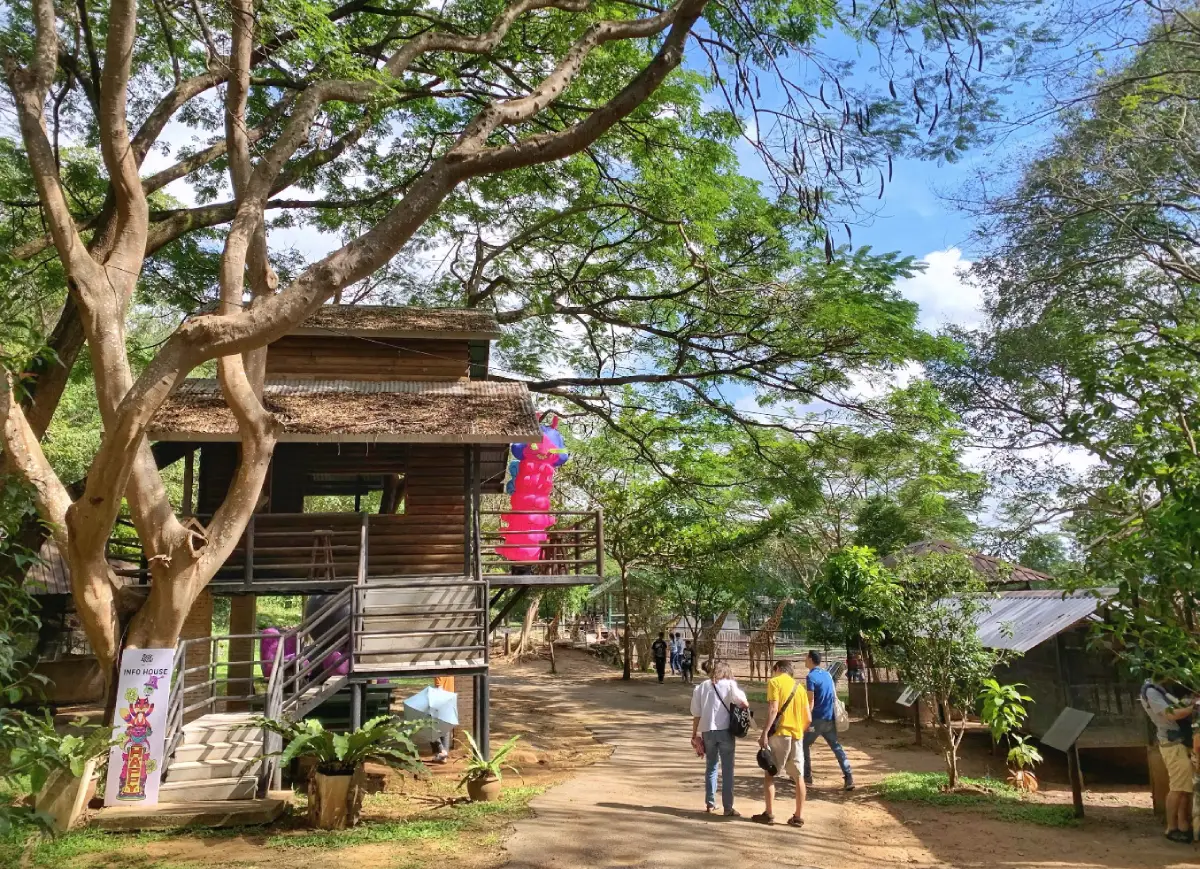
Bonanza Exotic Zoo, Khao Yai, is a compact wildlife attraction surrounded by the natural scenery of Khanong Phra Subdistrict, Pak Chong District, Nakhon Ratchasima Province, Thailand. The zoo forms part of the wider Bonanza Khao Yai development, which includes resort accommodation, a golf course, and recreational facilities. Its main attraction is a collection of animals from different parts of the world, presented along a convenient walking route. The pathway follows a circular course around a small hill and extends approximately 700 meters, allowing visitors to observe animals, enjoy the green surroundings, and participate in designated animal-feeding activities within a relatively manageable area.
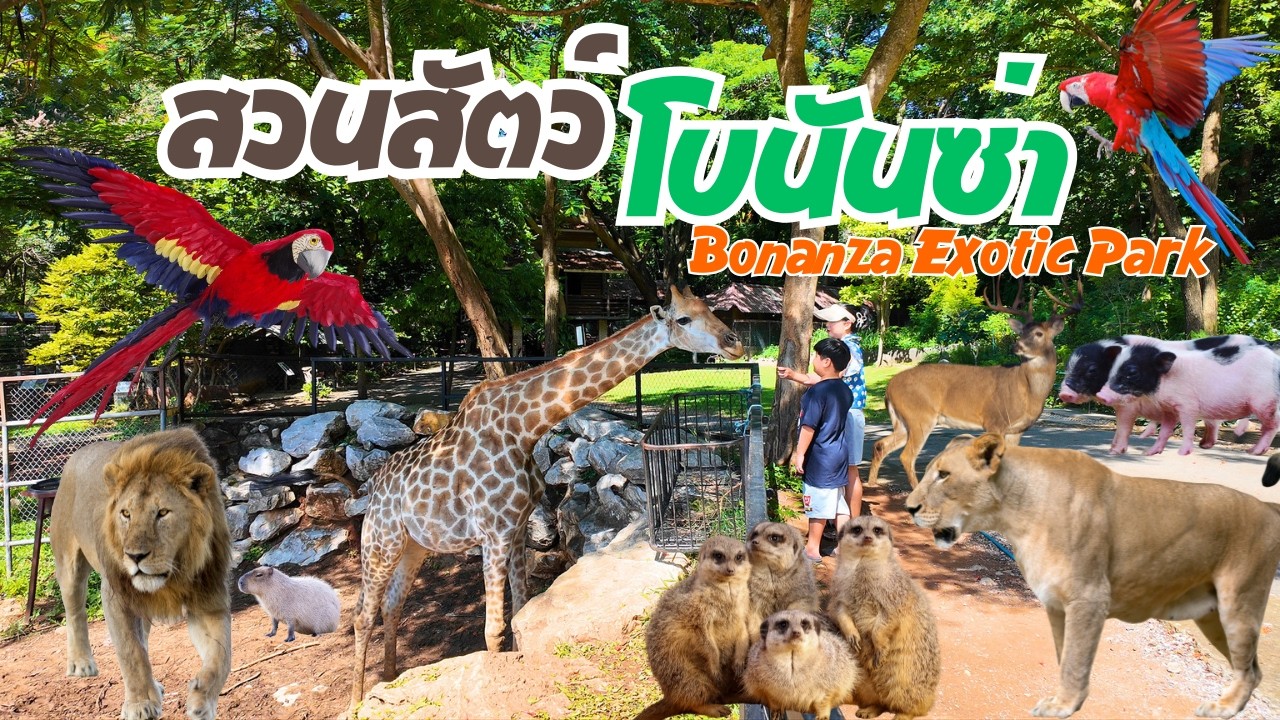
The zoo is distinguished by its walkable layout and relaxed outdoor setting. Shaded sections, connecting paths, and animal exhibits allow families to explore at a comfortable pace. Among the animals associated with the zoo are giraffes, zebras, alpacas, capybaras, miniature horses, wallabies, meerkats, lemurs, prairie dogs, parrots, and several smaller mammal species. Their different appearances, behaviors, and geographical origins make the attraction particularly interesting for families, nature enthusiasts, and travelers looking for a recreational stop during a Khao Yai holiday.
The Bonanza area is located within Khanong Phra, a part of Pak Chong District characterized by a mixture of low hills, grassland, agricultural areas, and tourism developments. The wider Khao Yai region is known for its green landscapes and mountain scenery. Against this setting, Bonanza Exotic Zoo provides a different experience from an urban zoo surrounded by roads and buildings. Visitors walk through a pleasant landscape of trees and open spaces while observing different animals without the need to rush between distant exhibits.
The Bonanza name has long been associated with recreational tourism in Khao Yai. Its development includes several types of attractions and visitor services, and the exotic zoo adds a family-oriented experience to this broader destination. This combination is attractive to groups whose members have different interests, allowing wildlife observation to be included alongside resort stays, golf, dining, and other leisure activities.
Bonanza Exotic Zoo began welcoming visitors around December 2013 and gradually became a recognizable stop for travelers exploring Khao Yai. Its concept focuses on unusual and visually distinctive animal species that many visitors do not encounter in everyday life. The relatively short walking route has helped establish the zoo as an accessible wildlife attraction for people who want to see a range of animals without spending an entire day traveling across a much larger zoological park.
The zoo's development is also connected to the expansion of tourism in Khanong Phra and Pak Chong. This region now offers a substantial selection of resorts, restaurants, farm attractions, museums, and outdoor recreational destinations. Bonanza Exotic Zoo contributes to this network by providing a wildlife experience that can easily be combined with other attractions, particularly for travelers using private or rental vehicles.
One advantage of a compact zoological park is the opportunity to spend more time observing animals rather than traveling long distances between exhibits. The circular route provides a logical sequence through the grounds and reduces the need to repeatedly retrace one's steps. Families with young children can organize breaks and activities more comfortably than they might at a much larger zoo with widely separated viewing areas.
For children, encountering living animals that they previously knew only through pictures or books helps make their understanding of wildlife more concrete. They can compare the remarkable height of a giraffe with the proportions of a zebra, examine an alpaca's distinctive fleece, or discover why different birds have differently shaped beaks and colorful plumage. Such observations naturally connect recreation with learning and curiosity.
Adults can also appreciate the zoo as a leisurely outdoor attraction. Quiet observation reveals aspects of animal behavior that may be overlooked during shorter encounters, including feeding, exploration, group living, resting, and communication. Watching these routine activities offers opportunities to understand animals as living creatures with their own biological and behavioral needs.
Giraffes are among the most popular animals at Bonanza Exotic Zoo. Native to Africa, these large mammals are distinguished by their exceptionally long necks and legs. Giraffes are the tallest living land animals, and their height allows them to browse foliage beyond the reach of many other herbivores. The giraffe viewing area is one of the zoo's best-known attractions and a favorite stop for visitors interested in large wildlife.
A giraffe's remarkable appearance extends beyond its height. Each animal has a distinctive coat pattern, with variations related to inherited characteristics. Its tall body and long legs also create a recognizable way of moving. Observing a giraffe at an appropriate distance helps visitors appreciate anatomical details that photographs alone cannot fully communicate.
Giraffe feeding is one of the experiences strongly associated with Bonanza Exotic Zoo. Feeding sessions use the food and procedures designated by the facility. Participating through supervised activities allows visitors to observe the animals' feeding behavior without introducing outside food that might be unsuitable for their diet or health.
Giraffes are plant-eating mammals capable of using their tongues and lips to select leaves and other vegetation. Watching how a giraffe handles food can prompt questions about anatomical adaptation, diet, and habitat. Viewing barriers and designated feeding positions also demonstrate why interactions with large animals require suitable distances and safety arrangements.
Zebras are another recognizable African species. Their black-and-white stripe patterns make them visually distinctive from domestic horses and other hoofed mammals. Although their body shape resembles that of a horse, zebras remain wild animals with their own behavior and responses to environmental conditions.
In their natural habitats, zebras commonly live in social groups. Group living improves opportunities to detect predators, while their legs and hooves are adapted for movement across open landscapes. Observing zebras provides an introduction to the relationship between an animal's anatomy, natural environment, and social behavior in grassland ecosystems.
Alpacas are particularly popular with visitors because of their gentle-looking faces, thick fleece, and varied coat colors. They originated in the Andes of South America and are closely related to llamas. Their dense fleece is associated with adaptation to the climate of their original mountain environments, while their body structure supports movement and life in highland grasslands.
Alpacas are generally smaller than llamas and have distinctive proportions, including relatively long necks, small heads, and fleece covering much of the body. Seeing an alpaca closely helps visitors distinguish among members of the camel family and understand the importance of animal fleece as an adaptation to environmental conditions.
The zoo includes supervised alpaca-feeding experiences. Visitors can observe how the animals approach food and interact within a group while following staff instructions. Alpacas are herbivores with digestive systems adapted to plant material. Providing only approved feed supports appropriate animal care and reduces the risk of nutritional problems.
Capybaras are another fascinating feature of the animal collection. Native to South America, they are the largest living rodents. Their rounded bodies, short legs, and brown coats give them a distinctive appearance. Capybaras are closely associated with wetlands and aquatic habitats, and their swimming ability distinguishes them from many smaller rodents familiar to visitors.
In the wild, capybaras often live in groups, graze on vegetation, and use water for resting or escaping danger. They provide an excellent example of adaptation to wetlands and grassland environments. Seeing a capybara also demonstrates that the rodent group extends far beyond small rats and squirrels and includes animals with substantial body size and specialized lifestyles.
Miniature horses introduce visitors to the diversity of body sizes found within domestic horses. Although they resemble ordinary horses, their fully grown size is significantly smaller. Miniature horses retain many characteristic equine behaviors and nutritional requirements. They help children understand that a small animal is not necessarily a juvenile of a larger breed or species.
Prairie dogs are rodents native to North America, known for digging burrows and living in organized social groups. Despite their common name, they are not dogs and are more closely related to squirrels. Their upright vigilance and communication within groups make them particularly interesting examples of social behavior among small mammals.
Prairie dog burrows contribute to grassland ecosystems by influencing soil conditions and creating spaces that other species may use. Their feeding and movement also interact with surrounding vegetation. Studying these animals demonstrates that small mammals can play ecological roles that are just as meaningful as those of much larger wildlife.
Meerkats are small African mammals recognized for their slender bodies, long tails, and characteristic upright posture when watching their surroundings. They live in social groups and cooperate in activities such as vigilance and caring for group members. These behaviors are particularly useful for explaining communication and cooperation in the animal world.
Supervised meerkat-feeding activities provide an additional opportunity to observe behavior at close range. In natural environments, meerkats consume a variety of food, including insects and certain small animals. Their specialized dietary requirements mean that only approved food should be used during feeding activities.
Lemurs are primates native to Madagascar. Many species have long tails, distinctive facial features, and lifestyles closely associated with trees. Their unusual evolutionary history makes them important subjects for understanding biological diversity on islands, especially where animals have developed independently from populations on continental landmasses.
Madagascar supports a remarkable number of endemic plants and animals. Studying lemurs therefore provides a broader introduction to habitat conservation and the vulnerability of species with restricted geographical distributions. When their forests are reduced or fragmented, these animals may face particularly serious threats because they have limited alternative habitats.
Squirrel monkeys are small primates native to Central and South America. They are agile, spend much of their time in trees, and have relatively large eyes and slender bodies. Observing them introduces the diversity of primates living in tropical forests and allows comparisons with other monkey species whose anatomy and behavior differ substantially.
Marmosets are another group of small primates associated with the zoo's animal collection. They move with considerable agility among branches and possess adaptations suited to an arboreal lifestyle. Some species feed on tree exudates, insects, and fruit. Learning about marmosets helps illustrate the diversity of feeding strategies and behaviors among primates.
Gibbons are apes especially adapted for moving through the forest canopy using their long arms. Their shoulder joints and body structure support movement from branch to branch, while their vocal communication is important in social interactions and territorial behavior. Studying gibbons highlights the ecological significance of mature forests with continuous tree canopies.
Wallabies are marsupials native to Australia and nearby regions. They resemble kangaroos, although many wallaby species are smaller. Their powerful hind legs are adapted for hopping, while females carry their developing young in a pouch. Observing wallabies provides opportunities to learn about a reproductive system that differs from that of many other mammals.
Albino raccoons are another distinctive animal associated with the zoo. Raccoons originate from North America and are known for using their front paws to explore and manipulate objects. An unusually pale coat is related to genetic characteristics affecting pigmentation. These animals provide opportunities to discuss sensory behavior, food gathering, and inherited physical variation.
Sun conure parrots are striking birds known for their colorful yellow, orange, and green plumage. They display interesting social and vocal behavior, while their powerful beaks are suited to handling particular foods. Observing these birds illustrates the relationships between feather coloration, beak anatomy, feeding, and communication.
Bird-feeding activities allow visitors to observe how parrots and other birds take food at close range. Guests must use the fruit or feed supplied by the zoo and follow the procedures displayed at each station. Birds can be sensitive to environmental disturbance and dietary changes, making appropriate food and calm interactions important.
Rabbits are familiar small mammals, particularly popular among younger visitors. The zoo offers carrot-feeding activities under its designated arrangements. Children can observe the animals' long ears, strong hind legs, front teeth, and characteristic movement while learning the importance of gentle, respectful treatment of small animals.
Sheep and goats are hoofed mammals that differ in coat texture, horn characteristics, and feeding behavior. The zoo has offered bottle-feeding activities involving young lambs and goats when suitable animals are available. These experiences introduce the nutritional and care requirements of young mammals, which differ from those of fully grown animals.
Miniature pigs have also been associated with bottle-feeding activities for young animals at the zoo. Pigs are mammals with well-developed sensory abilities and considerable capacity for learning. Observing miniature pigs adds another example of the diversity found among terrestrial mammals and the different ways animals use their surroundings.
Bonanza Exotic Zoo has historically publicized experiences involving white lion cubs. White lions are not a separate lion species; their pale coloration results from inherited genetic characteristics. Learning about these animals provides a useful example of the distinction between genetic variation within a species and the classification of different species.
Lions are powerful predators whose natural social behavior differs from that of tigers. Any activities involving lions require careful consideration of safety and the animals' age and condition. Historical references to white lion cub feeding should not be interpreted as meaning that young lions are available for such activities every day, since the number and ages of animals naturally change over time.
Although the zoo features many different animal species, responsible participation is a common requirement across its activities. Each animal has particular dietary and behavioral needs. Feeding unapproved outside food can create health problems or result in excessive feeding, so visitors should use only the food supplied through the zoo's designated activities.
Respectful interaction is also an important educational lesson. Children should not pull an animal's fur or tail, chase resting animals, or make loud noises to provoke a response. These behaviors can disturb animals and cause unnecessary stress. Observing the animals' behavior and respecting their space contributes to a better experience for both visitors and wildlife.
Bonanza Exotic Zoo's walking route forms a circuit of approximately 700 meters around a small hill. This layout is one of the attraction's most practical features. It allows guests to follow a continuous course and return toward their starting point without depending primarily on internal vehicles. Trees provide shade along parts of the route, creating a pleasant setting for walking and animal observation.
Although the route is relatively short compared with those of larger zoos, the time required depends on visitors' interests. Some guests prefer a general overview of the exhibits, while families with young children or people interested in detailed animal observation may spend considerably longer. Feeding activities, rest periods, and photography also influence the duration of a visit.
The walking route encourages visitors to compare animal groups within a continuous experience. Large herbivores can be observed alongside much smaller rodents, while ground-dwelling mammals contrast with birds and primates associated with trees. These differences encourage visitors to reflect on the many ways that animals adapt to their environments.
The green surroundings contribute to the atmosphere of the zoo. Walking beneath trees and through open areas adds a natural dimension to the visit, beyond the individual animal exhibits. Nature enthusiasts may also appreciate the vegetation, landscape, and changing patterns of sunlight and shade throughout the day.
Seasonal weather affects the experience of visiting Bonanza Exotic Zoo and Khao Yai more broadly. During the rainy season, the vegetation becomes particularly green and lush. In the cooler season, temperatures on some days are more comfortable for outdoor walking. Summer can be hot during the middle of the day, making the time of a visit an important consideration for comfort.
Families traveling with young children should bring comfortable shoes, breathable clothing, and sufficient drinking water for an outdoor excursion. Older visitors can plan regular breaks along the route. Adjusting the pace to suit everyone in the group allows more time to appreciate the animals without unnecessary fatigue.
Wildlife photography is a popular part of the Bonanza Exotic Zoo experience because of the diverse shapes, colors, and movements of its animals. Giraffes have tall bodies and distinctive coat markings, zebras display contrasting stripes, alpacas have thick fleece, and parrots provide bright plumage. This diversity allows visitors to document many different kinds of wildlife within a single excursion.
Photography should be conducted from designated areas without extending hands or equipment through barriers unless expressly permitted. Visitors should avoid making loud noises to attract an animal's attention. Some species respond quickly to disturbances, while others require quiet rest periods. Respecting these differences is part of responsible wildlife tourism.
The zoo also offers opportunities to learn about global biodiversity because its animal collection includes species native to different continents. Giraffes and zebras represent African fauna, alpacas and capybaras originate from South America, prairie dogs are native to North America, and wallabies are associated with Australia. Comparing these animals helps explain how geography, climate, and habitat influence the characteristics of living organisms.
Diet provides another useful subject for observation. Herbivores such as giraffes, zebras, and alpacas have feeding and digestive adaptations that differ from those of more opportunistic feeders such as raccoons. Birds and primates also possess diverse food-selection behaviors related to their beaks, hands, teeth, and digestive systems. These differences demonstrate why animal care must be tailored to the requirements of each species.
Animal movement provides further opportunities for comparison. Giraffes walk on exceptionally long legs, wallabies hop using powerful hind limbs, some primates move through tree branches, and prairie dogs are closely associated with underground burrows. These differences reflect evolutionary adaptations to the environments in which the animals developed.
For students and young visitors, the zoo provides accessible examples for learning about mammalian groups, birds, herbivores, and animals with varied diets. Observing living animals reinforces understanding of their basic biological characteristics while encouraging interest in geographical origins and the ecosystems of different continents.
Animal species also differ in their relationships with people. Some have historically been domesticated or raised for agricultural products, while others remain wild animals whose survival depends on natural habitat conservation. Recognizing these differences helps explain why the management and conservation of animals cannot follow a single approach for every species.
Professional animal care requires appropriate feeding systems, health monitoring, cleaning, environmental management, and observation of species-specific behavior. Animals from cool highland regions, grasslands, and tropical forests have different biological requirements. A zoo housing species from diverse habitats must therefore pay close attention to nutrition, health, and environmental conditions.
Beyond wildlife observation, Bonanza Exotic Zoo forms part of the broader Khao Yai tourism experience. Khanong Phra and its neighboring districts offer resorts, golf courses, restaurants, art museums, and outdoor attractions. Combining these destinations allows travelers to experience different aspects of the region, including nature, art, food, and family recreation.
The Bonanza golf course and resort are part of the same tourism area as the zoo. This reflects the development of facilities serving different visitors, including golfers, families, and travelers seeking relaxation in a countryside setting. The zoo adds an accessible wildlife experience for family members who may not be interested in the same leisure activities.
One popular nearby attraction is Pete Maze, a hedge maze in Khanong Phra. Its winding paths are designed to challenge visitors to find their way through a series of turns. Unlike wildlife observation, the activity emphasizes exploration, orientation, decision-making, and problem-solving, making it an engaging outdoor experience for families.
A hedge maze also encourages children to develop spatial awareness and plan routes through a setting with multiple possible directions. Walking through the maze together offers families opportunities to communicate and cooperate, adding a playful and active dimension to a day that includes visiting the zoo.
Khao Yai Art Museum is another attraction in the surrounding area. Located near Ban Tha Chang in Mu Si Subdistrict, Pak Chong District, it displays contemporary art and sculptures in both indoor and outdoor spaces. Visiting the museum introduces a creative dimension to Khao Yai tourism, complementing the region's well-known natural scenery.
The museum features artworks that vary in form, materials, and artistic concepts. Visitors can explore indoor collections and outdoor sculptural pieces integrated into a landscaped garden. Pairing a zoo visit with an art museum creates an itinerary that appeals to people interested in both the natural world and contemporary visual culture.
Ban Tha Chang Natural Spring is another natural attraction in the Khao Yai area. Its appeal lies in its spring-fed water and surrounding environment, offering a different experience from zoological exhibits. Visitors can appreciate the natural setting while observing local access rules and helping preserve the cleanliness of the water and surrounding landscape.
Ban Tha Chang and Mu Si also connect travelers with many other Khao Yai destinations, including restaurants, cafés, farms, and recreational areas. Continuing from Bonanza toward these communities creates opportunities for a varied day trip that balances children's activities with relaxation for adults.
The Khao Yai region also includes agricultural tourism attractions such as mushroom farms and other educational farms. These destinations introduce different aspects of plant cultivation and the management of agricultural environments. They complement a zoo experience by offering further opportunities to learn about living organisms and the ecological processes related to everyday human activities.
For travelers seeking a larger natural environment, Khao Yai National Park is one of the region's most significant destinations. It protects extensive forest ecosystems and a variety of wildlife species. Visiting a national park differs substantially from visiting a zoo because wild animals move freely and sightings cannot be predicted or guaranteed. Experiencing both settings can therefore deepen an understanding of the difference between managed animal collections and wildlife living in natural habitats.
Khao Yai National Park plays an important role in preserving tropical forests and biodiversity in Thailand. Visitors must follow park regulations concerning travel, waste disposal, driving, and wildlife observation. Feeding wild animals is not appropriate in a national park, in contrast with authorized animal-feeding activities conducted under supervision at zoological facilities.
Restaurants in Khanong Phra and Mu Si offer a wide range of dining options, including Thai and northeastern Thai cuisine, Western food, pizza, and garden cafés. Some establishments are located along the roads connecting Bonanza with Thanarat Road, while others are found within resorts and landscaped properties. Visitors can therefore select dining experiences that match their preferred atmosphere and travel plans.
For families with young children, restaurants with comfortable seating and convenient access are useful after an outdoor excursion. Many Khao Yai restaurants incorporate gardens, trees, and open-air spaces into their design, allowing visitors to continue enjoying the region's natural atmosphere while resting after their zoo visit.
Overnight visitors can choose accommodation within the Bonanza development or at nearby resorts in Khanong Phra. Options include resort-style hotels, private villas, and family accommodation. Some properties are located near the golf course and zoo, while others in Mu Si provide convenient access to Khao Yai National Park and attractions along Thanarat Road.
The wider Khao Yai accommodation market includes full-service hotels and houses designed for family groups. The most suitable location depends on the number of travelers, length of stay, and planned destinations. Visitors concentrating on the Bonanza area may prefer Khanong Phra, while those intending to explore the national park and the Mu Si dining area may choose accommodation farther along the connecting route.
Private cars are a convenient way to reach Bonanza Exotic Zoo because the region's attractions are spread across several local roads. Travelers from Bangkok can follow Mittraphap Road toward Pak Chong and then continue along connecting routes toward Khanong Phra and the Bonanza area.
Visitors traveling from Nakhon Ratchasima city can also use Mittraphap Road toward Pak Chong before turning onto local roads leading to Khanong Phra. Travel time depends on the starting point, traffic conditions, and selected route. Digital navigation can help drivers find the final approach to the attraction, particularly where local roads branch away from the main highway.
Rail travelers can use Pak Chong Railway Station as a connection point before continuing by hired vehicle or rental car. Because the zoo is not immediately beside the railway station or a major public transport terminal, arranging the final section of the journey is an important part of planning for visitors without their own car.
Families can include Bonanza Exotic Zoo in a morning or daytime itinerary before visiting Khao Yai Art Museum, Pete Maze, or restaurants around Khanong Phra. Choosing destinations along related routes reduces unnecessary backtracking and allows more time for resting and enjoying each location.
The zoo is open daily. Published operator hours are 10:00 to 17:00 from Monday to Friday and 09:00 to 17:00 on Saturdays and Sundays. The difference between weekday and weekend opening times is relevant for visitors who prefer to begin sightseeing early, particularly those combining the zoo with several other attractions.
The reported 2026 admission price is THB 150 for adults and THB 80 for children, with free admission for children whose height does not exceed 100 centimeters. Animal feed and special activities are separate items according to the arrangements at individual activity stations.
Bonanza Exotic Zoo can be contacted at +66 83 941 3368. The venue also provides email contact details for questions about visiting, activities, and services. The attraction is located within the Bonanza Khao Yai area in Khanong Phra Subdistrict, Pak Chong District, Nakhon Ratchasima Province, making it accessible from other major Khao Yai destinations.
Overall, Bonanza Exotic Zoo offers a distinctive experience centered on a diverse collection of animals within a convenient walking environment. Giraffes, zebras, alpacas, capybaras, wallabies, lemurs, parrots, and small mammals provide opportunities to discover wildlife from different regions of the world. Supervised feeding activities add an interactive dimension, while the green surroundings and location within Bonanza Khao Yai make the zoo an appealing destination for families and travelers seeking nature-based recreation in Pak Chong District.
Getting There Bonanza Exotic Zoo is located within the Bonanza Khao Yai development, Khanong Phra Subdistrict, Pak Chong District, Nakhon Ratchasima Province 30130, Thailand. Travelers from Bangkok or Nakhon Ratchasima can follow Mittraphap Road toward Pak Chong before continuing along local connecting roads toward Khanong Phra and Bonanza Khao Yai. Visitors arriving by train can get off at Pak Chong Railway Station and continue by hired vehicle or rental car. For visitor information, telephone +66 83 941 3368.
| Name | Bonanza Exotic Zoo Khao Yai |
| Category | Compact Wildlife Park, Exotic Animal Attraction, and Family Recreation Destination |
| Location | 236, Khanong Phra Subdistrict, Pak Chong District, Nakhon Ratchasima Province 30130, Thailand, Within the Bonanza Khao Yai Area |
| Operator | Bonanza Khao Yai Group |
| History | Opened around December 2013 as an exotic animal attraction within the Bonanza Khao Yai tourism development |
| Setting | A Landscaped Wildlife Park With Trees and a Circular Walking Route of Approximately 700 Meters Around a Small Hill |
| Highlights | Giraffes, Zebras, Alpacas, Capybaras, Animals From Different Continents, and Supervised Animal-Feeding Activities |
| Main Exhibits and Activities | 1. Giraffe and Zebra Viewing Area 2. Alpaca Exhibit 3. Capybara and Rodent Exhibits 4. Miniature Horse Exhibit 5. Meerkat and Prairie Dog Exhibits 6. Primate and Small Mammal Exhibits 7. Parrot and Bird Exhibits 8. Rabbit, Goat, Sheep, and Miniature Pig Areas 9. Supervised Feeding Activities, Subject to Availability |
| Notable Animals | Giraffes, Zebras, Alpacas, Capybaras, Miniature Horses, Prairie Dogs, Meerkats, Lemurs, Squirrel Monkeys, Marmosets, Gibbons, Wallabies, Albino Raccoons, Sun Conures, Rabbits, Goats, Sheep, and Miniature Pigs |
| Open Days | Daily |
| Opening Hours | Monday–Friday: 10:00 – 17:00 Saturday–Sunday: 09:00 – 17:00 |
| Admission | Adults: THB 150 Children: THB 80 Children No Taller Than 100 cm: Free Admission |
| Facilities | Walking Paths, Designated Animal-Feeding Stations, Rest Areas, and Parking |
| Getting There | Travel via Mittraphap Road toward Pak Chong, then follow local roads toward Khanong Phra and Bonanza Khao Yai. |
| Telephone | +66 83 941 3368 |
| Official Website | https://bonanzakhaoyai.thebonanzakhaoyai.com/exotic-zoo/ |
| Current Status | Open to Visitors |
| Nearby Attractions | 1. Pete Maze, Khanong Phra, Tel. +66 80 168 9601 2. Bonanza Golf & Country Club, Khanong Phra, Tel. +66 86 327 3193 3. Khao Yai Art Museum, Mu Si, Tel. +66 44 756 060 4. Ban Tha Chang Natural Spring, Mu Si 5. Khao Yai Panorama Mushroom Farm, Pak Chong 6. Khao Yai National Park, Pak Chong |
| Nearby Restaurants and Dining Along the Khao Yai Route | 1. Daydreaming Khaoyai, Khanong Phra 2. Paetonnam Restaurant, Khanong Phra 3. The Poom Cafe & Resort Khaoyai, Khanong Phra 4. Krua Khao Yai, Mu Si, Tel. +66 86 865 9263 5. Fairy's Scone House Khaoyai, Nong Nam Daeng 6. The Chocolate Factory Khao Yai, Mu Si, Tel. +66 92 443 8881 |
| Nearby Accommodation | 1. The Bonanza Resort Khao Yai, Khanong Phra, Tel. +66 86 327 3199 2. La Cocotte Villa & Farm Khao Yai, Khanong Phra 3. Villa Pituk Bonanza Khao Yai, Khanong Phra 4. Morning Khao Yai, Khanong Phra, Tel. +66 89 014 4582 5. Waterfront@Khao Yai, Khanong Phra, Tel. +66 84 769 9316 6. Riverside Khao Yai, Khanong Phra, Tel. +66 95 164 1979 7. Grandsiri Resort Khaoyai, Pak Chong |
Frequently Asked Questions (FAQ)
Q: Where is Bonanza Exotic Zoo located?
A: It is located within the Bonanza Khao Yai development in Khanong Phra Subdistrict, Pak Chong District, Nakhon Ratchasima Province, Thailand. The area is accessible by local roads connecting with Mittraphap Road.
Q: What are the opening days and hours of Bonanza Exotic Zoo?
A: The zoo is open daily, from 10:00 to 17:00 on weekdays and from 09:00 to 17:00 on Saturdays and Sundays.
Q: How much is admission to Bonanza Exotic Zoo?
A: The reported 2026 admission rates are THB 150 for adults and THB 80 for children. Children no taller than 100 centimeters receive free admission. Animal feeding activities may carry separate charges.
Q: What animals can visitors see at Bonanza Exotic Zoo?
A: Notable animals include giraffes, zebras, alpacas, capybaras, miniature horses, meerkats, prairie dogs, lemurs, squirrel monkeys, wallabies, parrots, and various small mammals.
Q: Can visitors feed animals?
A: Yes. The zoo offers designated feeding activities involving animals such as giraffes, alpacas, rabbits, birds, and meerkats. Visitors must use approved feed and follow staff instructions.
Q: Is Bonanza Exotic Zoo suitable for young children?
A: Yes. Its circular walking route of approximately 700 meters and varied animal collection make it suitable for family visits. Children should be supervised during animal-feeding and close-observation activities.
Q: How much time should visitors allow for the zoo?
A: The zoo can be included as one part of a day's sightseeing. The actual time required depends on the number of animal-feeding activities, rest breaks, and how long visitors spend observing each exhibit.
Q: What attractions can be visited near Bonanza Exotic Zoo?
A: Nearby attractions include Pete Maze, Khao Yai Art Museum, Ban Tha Chang Natural Spring, Khao Yai Panorama Mushroom Farm, the Bonanza recreational facilities, and destinations along the route toward Khao Yai National Park.
 Category: ●Entertainment and Agricultural
 Group: ●Zoos and Aquariums
Last Update : 2 WeekAgo
 Last Update : 2 WeekAgo
 Click to Access the Navigation Map GPS
Bonanza Exotic Zoo Map
Recommend

 Art, Culture and Heritage
 Historical Sites and Monuments(20)
 Landmarks and Memorials(5)
 Art, Craft Centres, Tradition(7)
 Museums(6)
 Art Gallery(1)
 Educational Places
 Educational Gardens, Farm(4)
 Places of Worship
 Temple(29)
 Mosque(1)
 Other Sacred Sites(6)
 Research and Development
 Royal Project(3)
 Suburban Living
 Village, Community(6)
 Local Market(4)
 Floating Market(1)
 Nature and Wildlife
 National Parks and Marine Reserves(3)
 Mountain (Doi)(5)
 Dam, Reservoir, Lake(8)
 Waterfalls(9)
 Hot Springs(1)
 Caves(2)
 Flower Field(1)
 River, Canal(8)
 Bays and Beaches(2)
 Other natural attractions(3)
Zoos and Aquariums(2)
 Animal camps and shows(1)
 Farms, Parks and Ecotourism(21)
 Waterpark(4)
 Outdoor and Adventure Activities(6)
 Shopping
 Shopping and Night Market(2)
 Travel Articles, Recipes
 Travel Review, Food Review(6)


