
lovethailand home >North Travel Attractions >Lampang Travel Attractions >Hang Chat >Wiang Tan > Thai Elephant Conservation Center
TL;DR: Thai Elephant Conservation Center is located at Ban Thung Kwian, Wiang Tan Subdistrict, Hang Chat District, Lampang Province, open Open Daily, hours 08.30 AM – 03.30 PM. Elephant Show Rounds: 10.00 AM, 11.00 AM, And 01.30 PM.

Thai Elephant Conservation Center
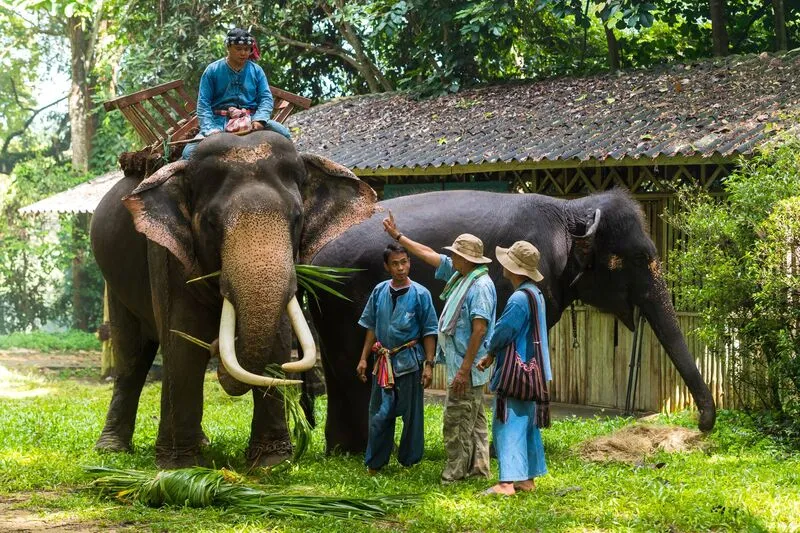
Open Days: Open Daily
Opening Hours: 08.30 AM – 03.30 PM. Elephant Show Rounds: 10.00 AM, 11.00 AM, And 01.30 PM.
The Thai Elephant Conservation Center at Thung Kwian Forest Park in Lampang Province is one of Thailand’s most important elephant conservation and learning destinations. Located in Ban Thung Kwian, Wiang Tan Subdistrict, Hang Chat District, Lampang, along Highway 11 between Lampang and Lamphun, the center is about 24 kilometers from Lampang city. It is operated under the Forest Industry Organization and plays multiple roles as a conservation center, elephant welfare facility, mahout knowledge site, ecotourism destination, and green recreational area connected with Thung Kwian Forest Park.
The appeal of the Thai Elephant Conservation Center goes far beyond seeing elephants up close. It is a place where visitors can understand the long relationship between elephants, mahouts, forests, and Thai society. The center began from the need to train young elephants so they could safely follow commands and work with mahouts. Over time, Thailand’s forest policies and the reduced role of working elephants changed the lives of many elephants. As a result, the former training center gradually developed into a place for caring for old, unemployed, injured, and sick elephants while also educating the public about elephant conservation.
The history of the center dates back to 1969, when the Forest Industry Organization established a place to raise and train young elephants. The original purpose was to help calves learn basic commands and develop skills needed for work in the forest while their mothers were away. In that early period, the work was closely connected with the forestry industry and the traditional role of elephants in timber operations. Later, when forest closure policies reduced the use of elephants in logging, many elephants no longer had work. The center then shifted from training working elephants to caring for elephants that needed long-term support.
In January 1992, the Thai Elephant Conservation Center was formally established to expand the mission into broader elephant conservation. Its work includes elephant health care, preservation of mahout knowledge, public education, ecotourism activities, and programs that help people understand elephants more deeply. This is not an ordinary animal attraction. It is a place where visitors can learn about the transformation of Thai elephants from working animals to conservation ambassadors, and about the continuing efforts required to balance tourism, welfare, culture, and public learning.
One of the most important qualities of the center is that it helps visitors see elephants as intelligent social animals rather than as simple tourism icons. Elephants have memory, emotions, habits, and individual needs. Learning about elephant behavior through the center’s activities can change the way visitors think about elephant tourism. Instead of focusing only on entertainment, visitors are encouraged to observe how mahouts communicate with elephants, how daily care is managed, and why proper space, food, rest, and medical attention are essential for elephant well-being.
The Elephant Hospital inside the center is a major part of its welfare mission. It provides care for elephants that are sick, injured, elderly, or in need of rehabilitation. The hospital reminds visitors that behind the charming image of elephants lies a serious field of veterinary care, long-term treatment, nutrition, wound care, and physical recovery. The presence of the hospital makes the center a meaningful learning site for anyone who wants to understand elephant welfare in practical terms.
The elephant show is one of the best-known visitor activities. The show is usually presented in three rounds at 10.00 AM, 11.00 AM, and 01.30 PM. Visitors should view it as an educational demonstration rather than pure entertainment. The most meaningful things to observe are the relationship between elephant and mahout, the use of voice and signals, and the skills historically linked to forest work. These demonstrations help explain how elephants once worked with humans and why the knowledge of mahouts remains important.
Before or around show times, visitors may also see elephant bathing activities. This is one of the most memorable moments for many travelers because it shows elephants in a relaxed setting. Bathing is not only a photo opportunity; it is part of daily elephant care, helping elephants cool down and maintain skin health. This is especially important in Lampang, where the weather can be hot during many parts of the year. Watching elephants bathe helps visitors better understand routine care in an elephant center.
Elephant riding or elephant taxi activities have been mentioned in older visitor information as nature-viewing routes within the center. Travelers interested in such activities should contact the center directly before visiting because elephant tourism practices may change according to welfare standards and current policies. The most important principle is to choose activities that respect elephant health, avoid unnecessary pressure on the animals, and emphasize learning rather than treating elephants merely as tourist vehicles.
The center also has mahout training programs that preserve and pass on knowledge about proper elephant care. Becoming a mahout is not simply about giving commands. It requires understanding elephant behavior, emotion, health, food, rest, safety, and trust. Such programs are important because traditional mahout knowledge could disappear as the era of working elephants fades. By teaching new generations how to care for elephants responsibly, the center helps keep this cultural knowledge alive.
The homestay experience within the center offers a deeper connection with the daily life of mahouts and elephants. Guests can experience the atmosphere of a mahout village, observe elephant feeding and care, and learn how much responsibility is involved in living with elephants. This experience is suitable for visitors who want more than a short sightseeing trip. Anyone interested in the homestay should contact the center in advance to check updated packages, accommodation availability, and conditions.
Another interesting aspect of the Thai Elephant Conservation Center is its use of renewable energy. Elephant dung is used to produce biogas for cooking, and solar power is used within the area. This demonstrates that elephant conservation can be linked with environmental management. Waste reduction, renewable energy, and careful resource use show how a conservation center can operate in a more sustainable way.
Thung Kwian Forest Park, located in the same area, is a long-standing recreational space for Lampang residents and travelers. The park includes pine trees, ornamental plants, flowers, foliage plants, cacti, palms, and medicinal plants. It is suitable for walking, resting, photography, and learning about plants in a shaded setting. Because it is located near a major highway, it also serves as a convenient green stop for travelers moving between Lampang, Lamphun, and Chiang Mai.
The park is especially attractive from the late rainy season to the early cool season, particularly in November when Mexican sunflowers bloom. Lampang’s basin-like geography and warmer climate often make the flowers bloom earlier than those in some higher northern destinations. The bright yellow flowers, green forest, and cool-season atmosphere make Thung Kwian Forest Park a pleasant place for photos and relaxation.
Within the forest park area, visitors can also find an open zoo atmosphere where animals such as barking deer, deer, hog deer, and peacocks can be seen more closely. This makes the area suitable for families with children. Children can learn about animals and nature from direct experience, but parents should supervise them carefully. Visitors should not chase animals, make loud noise, or feed animals without permission from staff.
The Thai Elephant Conservation Center and Thung Kwian Forest Park are highly suitable for family travel. The area offers elephant-related learning, outdoor activities, gardens, shops, and shaded resting spaces. Children can see real elephants and understand how large animals are cared for, while adults can learn about the historical role of elephants in Thailand’s forestry industry and the modern challenges of elephant welfare. A visit here is both relaxing and educational.
For travelers interested in Thai forestry history, this center is especially meaningful. Elephants once played an important role in timber work and forest transportation. When the social and policy context changed, many elephants and mahouts had to adapt. The center shows how that transition affected elephants, mahouts, and the forestry system. At the same time, it demonstrates how conservation, health care, public education, and responsible tourism can help create a new future for Thai elephants.
A visit should take at least half a day in order to see the elephant show, walk around the area, learn about the elephant hospital, visit Thung Kwian Forest Park, and relax without rushing. Travelers with more time can plan a full-day route including Thung Kwian Market, Wat Phra That Lampang Luang, the Dhanabadee Ceramic Museum, Kad Kong Ta, or accommodation in Hang Chat and Lampang city.
Getting There is convenient because the center is located along Highway 11 on the Lampang-Lamphun route, around kilometer markers 28-29. From Lampang city, drive toward Lamphun or Chiang Mai for about 24 kilometers. The center is located near Ban Thung Kwian in Wiang Tan Subdistrict. Traveling by private car or rented vehicle is the easiest option because visitors can also stop at Thung Kwian Market and other nearby attractions on the same route.
Visitors using public transport can take a bus or public vehicle heading toward Chiang Mai from Lampang Bus Terminal and get off in front of the Thai Elephant Conservation Center. This option is possible for travelers without a private car, but return transportation should be checked in advance. For families, elderly travelers, or groups, hiring a car with a driver from Lampang city is usually more convenient because it allows flexible timing and easier movement between nearby places.
The best time to visit is from morning to early afternoon, especially if visitors want to match the elephant show schedule. Arriving at least 30 minutes before a show round is recommended for ticketing, questions, and walking to the activity area. Visitors who want to watch elephant bathing should ask staff for the latest schedule because activity timing may change depending on weather, elephant health, and center policy.
Travelers who care about animal welfare should participate respectfully. Do not make loud noises, do not feed elephants without permission, do not stand too close to elephants outside designated areas, and avoid using flash photography at close range. Elephants are large, sensitive animals that need safe space. Following staff instructions protects both visitors and elephants.
Useful items to bring include a hat, umbrella, drinking water, comfortable walking shoes, a camera, insect repellent, and some cash for activities or souvenirs. Some areas are outdoors and can be hot during midday. During the rainy season, a raincoat or folding umbrella is helpful. During the late-year season, visitors may want extra time for walking in Thung Kwian Forest Park and taking photos of flowers.
Souvenir shops inside or near the center allow visitors to purchase elephant-themed items and local products. Buying appropriate souvenirs can support the center and surrounding community. Visitors should choose products that do not harm wildlife or the environment and avoid items made from animal parts or unsuitable materials.
Nearby Thung Kwian Market is one of Lampang’s well-known souvenir stops. Many travelers visit the market before or after the elephant center because it offers local food, pork cracklings, northern sausages, handicrafts, and regional products. Combining the Thai Elephant Conservation Center with Thung Kwian Market is a convenient itinerary for people traveling between Lampang and Chiang Mai.
For accommodation, visitors can stay near Thung Kwian, Hang Chat, or Lampang city. Staying near Thung Kwian is convenient for those who want to start the visit early, while Lampang city offers more restaurants, cafes, markets, and cultural attractions such as Kad Kong Ta, Ratsadaphisek Bridge, Wat Phra Kaeo Don Tao Suchadaram, and the Dhanabadee Ceramic Museum.
In summary, the Thai Elephant Conservation Center at Thung Kwian Forest Park is much more than a place to see elephants. It tells the story of Thai elephants from their historical role in forestry to their modern role in conservation, welfare, education, and responsible tourism. With the elephant hospital, mahout training, homestay experience, renewable energy projects, forest park, open zoo area, and convenient location near Lampang city, it is one of the most meaningful destinations for travelers who want to understand elephants, people, forests, and Thai conservation culture in one visit.
| Name | Thai Elephant Conservation Center / National Elephant Institute |
| Location | Ban Thung Kwian, Wiang Tan Subdistrict, Hang Chat District, Lampang Province |
| Address | 272 Moo 6, Wiang Tan Subdistrict, Hang Chat District, Lampang 52190, Thailand |
| Coordinates | Along Highway 11, Lampang-Lamphun Route, around kilometer markers 28-29 |
| Highlights | Elephant show, elephant bathing, Elephant Hospital, mahout training, mahout village homestay, Thung Kwian Forest Park, and conservation-based tourism activities. |
| History | The site began as a young elephant training center under the Forest Industry Organization in 1969. After forest closure policies changed the role of working elephants, it developed into a conservation, welfare, and education center. The Thai Elephant Conservation Center was formally established in January 1992. |
| Name Origin | The name reflects the center’s core mission to conserve, rehabilitate, and educate the public about Thai elephants. Thung Kwian refers to the local forest park area where the center is located. |
| Distinctive Features | A major elephant learning destination combining conservation, elephant welfare, veterinary care, mahout knowledge, ecotourism, and a green forest park setting. |
| Travel Information | From Lampang city, take Highway 11 toward Lamphun for about 24 km. The center is located around kilometer markers 28-29. Public buses heading to Chiang Mai from Lampang Bus Terminal can stop in front of the center. |
| Current Status | A conservation and elephant learning center operated under the Forest Industry Organization, open to visitors through scheduled activities. |
| Open Days | Open Daily |
| Opening Hours | 08.30 AM – 03.30 PM. Elephant show rounds: 10.00 AM, 11.00 AM, and 01.30 PM. |
| Facilities | Visitor service center, elephant show arena, elephant bathing area, Elephant Hospital, souvenir shop, mahout village homestay, forest park, parking area, and recreation spaces. |
| Main Areas / Zones | Thai Elephant Conservation Center, Elephant Hospital, elephant show area, mahout village, mahout training school, homestay area, Thung Kwian Forest Park, open zoo area, and plant sales area. |
| Caretaker / Coordinating Office | Forest Industry Organization / National Elephant Institute / Thai Elephant Conservation Center |
| Main Contact Number | Thai Elephant Conservation Center Tel. 054-829-329, 054-829-333 / National Elephant Institute Tel. 054-829-300 |
| Official Website / Official Page | National Elephant Institute / Thai Elephant Conservation Center Lampang |
| Nearby Tourist Attractions | 1. Thung Kwian Forest Park – 1 km 2. Thung Kwian Market – 2 km 3. Thung Kwian Open Zoo Area – 2 km 4. Wat Phra That Lampang Luang – 22 km 5. Dhanabadee Ceramic Museum – 25 km 6. Kad Kong Ta, Lampang City – 28 km |
| Nearby Restaurants | 1. Thung Kwian Market Food Area – 2 km 2. Sai Ua Mae Amporn, Thung Kwian Market – 2 km 3. Khrua Kala, Hang Chat – 8 km 4. Kuai Tiao Luk Thung Dap Daeng – 8 km 5. Khun Nai Tuen Sai Cafe – 23 km Tel. 088-2533293, 061-5133103 6. Kuai Tiao Nai Chang Lampang – 24 km Tel. 087-5598836 |
| Nearby Accommodations | 1. Thai Elephant Learning Center Accommodation – 1 km Tel. 054-829-300 2. Ban Suan Thung Kwian Homestay – 2 km Tel. 096-248-6474, 062-780-2024 3. Ban Suan Thung Kwian Resort – 2 km Tel. 054-830-194, 080-558-3033, 088-066-8860 4. Satakanta Hotel, Hang Chat – 13 km Tel. 094-6635255 5. Lampang River Lodge – 20 km Tel. 054-209-777, 054-209-778, 054-209-779, 081-961-6313 |
Frequently Asked Questions (FAQ)
Q: Where is the Thai Elephant Conservation Center located?
A: It is located in Ban Thung Kwian, Wiang Tan Subdistrict, Hang Chat District, Lampang Province, along Highway 11 on the Lampang-Lamphun route.
Q: What time is the Thai Elephant Conservation Center open?
A: It is open daily from 08.30 AM to 03.30 PM. Elephant show rounds are at 10.00 AM, 11.00 AM, and 01.30 PM.
Q: What can visitors see at the Thai Elephant Conservation Center?
A: Visitors can see elephant shows, elephant bathing, the Elephant Hospital, mahout training areas, mahout village homestay, Thung Kwian Forest Park, and open zoo areas.
Q: How can visitors travel from Lampang city to the center?
A: From Lampang city, take Highway 11 toward Lamphun for about 24 km. Public buses heading to Chiang Mai from Lampang Bus Terminal can also stop in front of the center.
Q: Who is the Thai Elephant Conservation Center suitable for?
A: It is suitable for families, children, students, study groups, conservation travelers, and anyone interested in Thai elephants, mahout culture, and animal welfare.
Q: Is there an Elephant Hospital at the center?
A: Yes. The Elephant Hospital provides care for sick, injured, elderly, and recovering elephants within the center area.
Q: What can visitors do at Thung Kwian Forest Park?
A: Visitors can walk among trees and ornamental plants, see open zoo areas, relax in shaded green spaces, and enjoy the seasonal atmosphere of the forest park.
Q: What number should visitors contact before traveling?
A: Visitors can contact the Thai Elephant Conservation Center at 054-829-329 and 054-829-333, or the National Elephant Institute at 054-829-300.
Website : www.thailandelephant.org
 Website :
 Tel : 054829329, 054829333, 054247876
 Tel : 054829329, 054829333, 054247876
 Category: ●Entertainment and Agricultural
 Group: ●Animal camps and shows
Last Update : 4 MonthAgo
 Last Update : 4 MonthAgo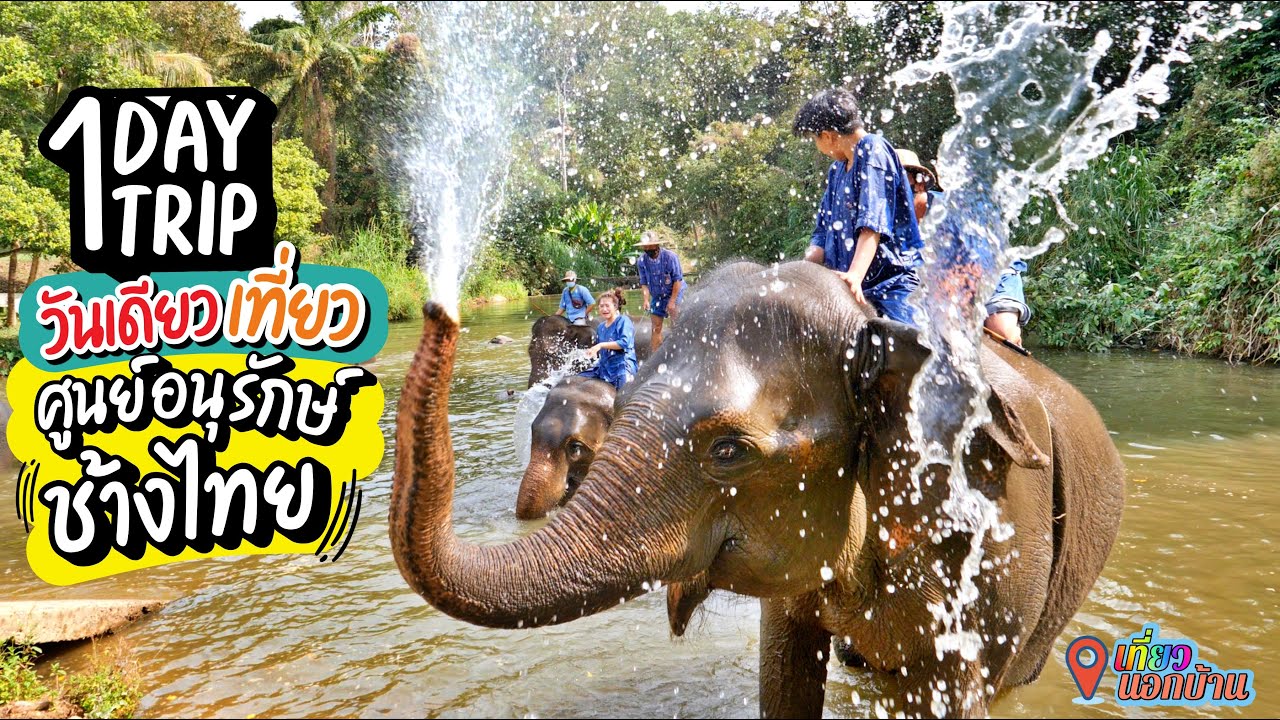
 Click to Access the Navigation Map GPS
Thai Elephant Conservation Center Map
Recommend

 Art, Culture and Heritage
 Historical Sites and Monuments(2)
 Landmarks and Memorials(5)
 Art, Craft Centres, Tradition(10)
 Museums(4)
 Historic Homes and Cities(1)
 Places of Worship
 Temple(86)
 Other Sacred Sites(9)
 Research and Development
 Royal Project(2)
 Suburban Living
 Village, Community(3)
 Local Market(2)
 Nature and Wildlife
 National Parks and Marine Reserves(5)
 Mountain (Doi)(4)
 Dam, Reservoir, Lake(11)
 Waterfalls(15)
 Hot Springs(1)
 Caves(12)
 Flower Field(1)
 River, Canal(1)
 Bays and Beaches(1)
 Other natural attractions(4)
Animal camps and shows(1)
Other natural attractions(4)
Animal camps and shows(1)
 Farms, Parks and Ecotourism(2)
 Outdoor and Adventure Activities(2)
 Shopping
 Shopping and Night Market(2)
 Spas and Wellness
 Spas and Wellness(1)


