
lovethailand home >Central Travel Attractions >Bangkok Travel Attractions >Thon Buri >Bang Yi Ruea > Suan Phlu Mosque
TL;DR: Suan Phlu Mosque, Bangkok attractions : Places of Worship, Mosque.
Suan Phlu Mosque
Open Days: Every day (primarily open for community religious activities)
Opening Hours: Visitors are allowed according to the mosque’s prayer schedule (recommended visiting time 08:00–17:00)
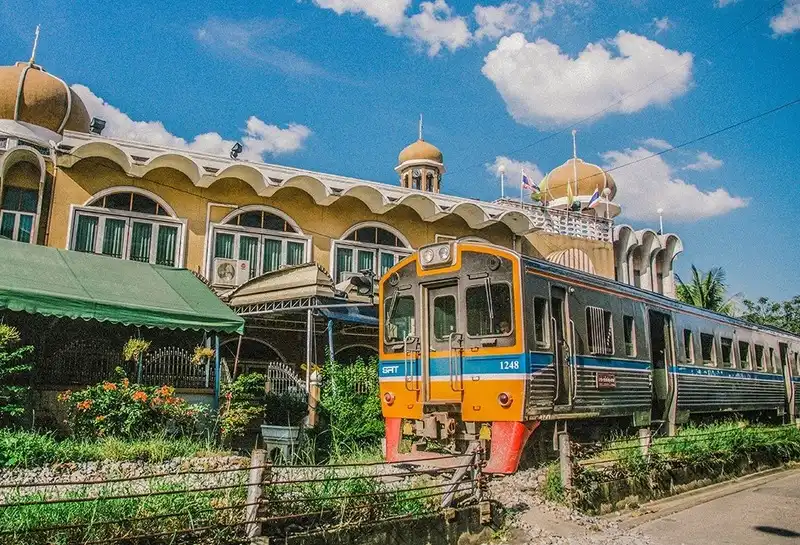
Suan Phlu Mosque is one of the mosques in Bangkok that clearly reflects the migration history of Malay Muslims from Pattani, the canal-side way of life, and the atmosphere of an old Thonburi community. It is located along the Wongwian Yai–Mahachai railway line, in Soi Thoet Thai 11 on Thoet Thai Road, opposite the Thonburi District Office. In the past, more than 90 percent of this area was covered with betel gardens for household consumption and sale, which is why people came to call it “Suan Phlu” (betel garden). That name eventually became part of the identity of both the community and the mosque.
Before it became a district of markets, railways, and dense housing, Suan Phlu was once a quiet agricultural area. Many locals grew betel leaves for use in betel chewing and for sale to neighborhoods across Bangkok. When the state later issued a ban on betel chewing, betel cultivation gradually declined, but the name “Suan Phlu” remained attached to the area. In the same way, Suan Phlu Mosque has stood firm amid the city’s continual transformation.
The Muslim community around Suan Phlu Mosque consists of several ethnic strands: native Thai Muslims, Malay descendants from Ayutthaya who migrated here after the fall of the old capital, Malay Muslims who were relocated from the Pattani Sultanate, and Muslims from India who came later for trade. Over time, these people settled down, tying their lives to the canal, the railway, and the small mosque that became the spiritual and social heart of Suan Phlu.
If we look back to 1786 (B.E. 2329) in the reign of King Rama I, King Buddha Yodfa Chulaloke the Great dispatched an army to subdue Pattani, then a major southern city before the Malay Peninsula. In those days, the Thai people knew the southern Malay states under names such as Palit (Perlis), Kalantan (Kelantan), Trangkanu (Terengganu), and Saiburi (Kedah). The campaign was commanded by Chaophraya Borom Maha Phichaiyat, whom many Thai Muslims later revered as “Dato Somdet”. In that war, the Siamese army gathered and relocated a large number of Pattani people to Bangkok and Thonburi, marking a crucial starting point in the spread of Malay Muslims into the Chao Phraya river basin.
The officer appointed as commander of the Pattani captives was “Tunku Mahmud” from Saiburi. He played a key role in arranging accommodation and settlements for the relocated Muslims in various parts of Bangkok and Thonburi. Later records mention several of these areas: the old mosque at Suan Luang, Ban Sai in the Khlong Tan area, Mahanak, Ban Somdet, and Khlong Bang Luang. The stretch known as “Bang Luang”, running along the mouth of the canal to Wat Mai Thong Khung, is the very area people came to know as “Suan Phlu”, which eventually became the site of Suan Phlu Mosque today.
Originally, Suan Phlu Mosque was just a single-storey wooden building in the style of a traditional Thai house with a hipped roof, about 5 meters wide and 8 meters long, with a wooden drum tower (ho klong) rising above it. Nestled among gardens and homes along the canal, this small building functioned as a little surau where the faithful gathered for prayer, Qur’an lessons, and community meetings. Its Thai-style structure and roof mirrored both the craftsmanship of the era and the mosque’s coexistence with the surrounding Buddhist Thai culture.
In 1836 (B.E. 2379), the name “Hajji To Cha-ngor (Chai)” appears as the first imam of the community and the person who initiated the construction of a new Thai-style brick-and-mortar building to replace the old wooden surau. The new structure resembled a vihara or kuti in a Buddhist temple, so people in those days called it a “surau” or “kuti” because it looked very much like monastic quarters. This style of mosque architecture is now rare in Thailand; one of the few remaining examples is Bang Luang Mosque, better known as “White Kuti Mosque”, on the banks of Khlong Bang Luang.
The early brick building had a hipped-roof form similar to the original wooden structure, measuring roughly 8 meters in width and 12 meters in length. A central pillar supported the roof frame, which was covered with old-style clay tiles. Inside, it felt like both a prayer hall and a communal living room. As time passed and the number of congregants grew, the mosque’s administrators or trustees (trustees) decided to repair and enlarge the building so it could accommodate more worshippers.
In 1903 (B.E. 2446), a major renovation was undertaken. The building’s length was extended from 12 to 16 meters, while the width remained 8 meters. At the same time, the old roof frame was replaced and new 8x8-inch square tiles were used, giving the mosque a more solid, up-to-date look consistent with early Rattanakosin architecture of the period.
After the extension, the central pillar was removed and the doors and windows were rebuilt with intricate Thai carved woodwork. As a result, Suan Phlu Mosque took on the appearance of a brick structure rich with Thai artistic details, visible in the building’s proportions, the hipped roofline, and the delicate carved patterns. At a glance, if you didn’t see the sign or the drum tower, you might mistake it for a kuti or vihara in a nearby temple.
Legally, Suan Phlu Mosque was registered as a religious juristic person with the authorities on 12 November 1948 (B.E. 2491), officially using the name “Suan Phlu Mosque”. Before that, locals often called it “Ban Suan Mosque” or “Suan Phlu Surau” in reference to the surrounding betel gardens and canal-side houses. Its long history extends back around 180 years, from the days of the small wooden surau through the brick-and-mortar building and the major expansions of the 20th century.
Once the mosque was registered under the Islamic Mosque Act, its administrative structure became more clearly defined, with the mosque committee and the imam forming the leadership core. At one point, Imam Hajji Abdulhamid Chulthira led the administration and oversaw an extension on the eastern side of the building by about 8 meters, while preserving as much of the original architectural style as possible. The adjoining wooden pavilion (balai) was also renovated: the floor level was lowered and connected to the main building so the entire space could be used as one continuous hall about 24 meters in length.
Time, however, never stops. As the building aged and the number of congregants kept growing, the interior space became increasingly cramped. The mosque’s Islamic committee, the congregants, and the Suan Phlu Muslim youth came together for discussions and eventually agreed that the old building needed to be completely demolished. Their shared vision was to build a new mosque: stronger, more modern, and large enough to serve the community’s needs.
Initial funding for the construction of the current mosque came from a donation of about 280,000 baht by Hajjah Noe Yokkayokhun. Additional funds were gradually raised from congregants and Muslims from other areas, in the classic style of faith-based community projects of that era. By the time the work was finished, the total construction cost for the building alone reached over 1,040,552 baht, a substantial project that powerfully demonstrated the cooperation and devotion of the Suan Phlu community.
During construction, the drum tower (ho klong) was also redesigned to harmonize with the new building’s architectural style. The tower became a striking landmark visible from afar, simultaneously a call to prayer and a symbol that this was the heart of Suan Phlu. For many years it was the tallest structure in the neighborhood and remains an unforgettable sight for visitors even today.
Once the new Suan Phlu Mosque was completed, several interior elements were further refined: the main prayer hall was opened up to accommodate large congregations, dedicated spaces for Islamic instruction and youth activities were added, and pathways were created to connect the mosque more seamlessly with the railway and surrounding community. The official opening and celebration of the new Suan Phlu Mosque took place on 6 December 1975 (B.E. 2518), marking another major milestone in the community’s history.
Today, if you look from Thoet Thai Road or from in front of the Thonburi District Office, you’ll see Suan Phlu Mosque as a modest yet solid reinforced-concrete building, with small details that hint at the older structure that came before. The roofline, the proportions of the main volume, and some openings still carry a touch of Thai architectural character. The tall drum tower defines the local skyline along the railway, serving as a backdrop to everyday life in the Suan Phlu community.
Inside the mosque, the prayer area is neatly organized, with separate spaces for men and women according to Islamic practice. Soft carpets create a calm, focused environment, while walls and windows allow natural light to filter in during the day. In the evenings, the sound of the adhan from the tower echoes across the neighborhood, signaling the time for worship, while below, along the railway and within the lanes, the sounds of people and small shops continue to fill the air.
Today’s Suan Phlu Muslim community still includes old Malay–Ayutthaya families alongside younger generations raised in the modern city. Some work in Bangkok’s central business districts but return regularly to pray at Suan Phlu Mosque, which remains their “second home” in a spiritual sense. At the same time, Buddhist Thai and people of other faiths live in the surroundings, creating a picture of peaceful coexistence in this old corner of Thonburi.
As a center of faith, Suan Phlu Mosque hosts the five daily prayers, the Friday congregational prayer, and the important Eid prayers (Eid al-Fitr and Eid al-Adha). It also offers ongoing Qur’an and religious classes for children and youth, along with regular talks and small workshops to help interested people understand Islamic teachings in areas such as faith, ethics, and everyday conduct.
During Ramadan, the Suan Phlu community becomes especially lively, particularly in the late afternoon before iftar. The railway-side stretch in front of the mosque fills with halal food stalls and traditional sweets, from savory dishes and roti to freshly baked bread and cakes from Mariyah Bakery, as well as local noodle and rice dishes familiar to residents. This bustling scene has turned Suan Phlu Mosque into one of Thonburi’s key “halal food hubs” for anyone who wants to taste authentic Muslim flavors.
There are also many halal eateries around the mosque, including Kingkee Ban Bang Wang – a long-standing local favorite for made-to-order dishes and noodles, the halal basil-noodle stalls in Soi Thoet Thai 11, Bua Din Khanom Ban Pa Lek, and baked goods from Mariyah Bakery, which turns out fresh bread and cakes almost daily. Many of these places serve customers both at the shop and via delivery apps, making it easy for people from other parts of Bangkok to try the food.
From a traveler’s viewpoint, Suan Phlu Mosque is a “Bangkok attraction” of a very local kind, quite different from shopping malls or famous temples and riverside landmarks. One simple route is to start from the Talat Phlu area, walk along the railway towards Soi Thoet Thai 11, passing old houses, halal eateries, and tiny mom-and-pop shops, before reaching the mosque courtyard where the tall drum tower comes into view. If your timing happens to coincide with a prayer time, you’ll hear the adhan mingling with the sound of trains, a memorable fusion of modern city life and old community rhythms.
Non-Muslim visitors are welcome to visit, but it is important to show respect to the place and its worshippers. Modest dress is recommended: shoulders and knees covered; women should ideally wear a headscarf or hijab. If you do not have one, you may politely ask the mosque staff whether there is a spare scarf available. Shoes should be removed before entering the prayer area, and visitors should avoid loud conversation or walking in front of those who are praying. If you wish to take photographs inside, always ask permission from the imam or mosque committee first so as not to disturb the atmosphere of worship.
The area around Suan Phlu Mosque connects conveniently to other Thonburi attractions. Welu Rachinirat Worawihan (Wat Welurachinirat) and the Thonburi District Office are just a few hundred meters away. The Talat Phlu neighborhood, famous for its street food and old shophouses, is within easy walking distance. Wat Phothinimit Sathit Mahasimaram and several canal-side districts can also be combined into a one-day itinerary of walking, eating, and paying respects. It’s a great area for those who want to see another side of Thonburi, where Thai, Chinese, and Muslim cultures blend together.
Getting There Suan Phlu Mosque is located in Soi Thoet Thai 11 on Thoet Thai Road, opposite the Thonburi District Office and not far from Talat Phlu Railway Station and BTS Talat Phlu Station. Travelers using public transport can take the BTS to Talat Phlu Station, then continue by songthaew, bus, taxi, or motorcycle taxi to Soi Thoet Thai 11. From there, walk a few hundred meters along the railway to reach the mosque courtyard. Those driving can cross Krung Thonburi or Taksin Bridge, then head towards Ratchaphruek Road and Thoet Thai Road, but should be prepared to look for parking outside the soi, as space directly in front of and inside the lane is limited.
If you stay overnight on the Thonburi side – in areas such as Talat Phlu, Krung Thonburi, or near other BTS stations – you can easily include Suan Phlu Mosque as one of your cultural stops, combining it with halal food tasting before continuing on to visit riverside temples along the Chao Phraya or crossing over to the old city areas of Sampheng and Yaowarat. The distance from Suan Phlu Mosque to Bangkok’s major tourist zones is not great, making it ideal for travelers who want a change of pace from big temples and shopping malls to a walk through a Muslim community along the railway.
Seen as a whole, Suan Phlu Mosque is not only a house of worship for Muslims in the Suan Phlu area, but also a living record of Malay Muslim migration, of how a community adapts to life in a growing city, and of the subtle blend between Thai and Islamic architecture. If you’re looking for a Bangkok experience that feels different, doesn’t take too long, and lets you connect with real local lives, a visit to Suan Phlu Mosque – strolling along the railway, tasting halal food, and chatting with community members – can be just as warm and memorable as visiting any of the city’s famous landmarks.
| Name | Suan Phlu Mosque |
| Location | Soi Thoet Thai 11, Thoet Thai Road, Talat Phlu Subdistrict, Thonburi District, Bangkok 10600. Next to the Wongwian Yai–Mahachai railway line, opposite the Thonburi District Office. |
| Overall Characteristics | A historic mosque of the Suan Phlu Muslim community, serving as a center of religion, education, and everyday life for Muslims in Thonburi, combining its role as a house of worship with that of a halal food hub and cultural learning space along the railway. |
| Construction Period | Originally a small wooden surau dating to early Rattanakosin, later rebuilt as a brick-and-mortar structure in 1836 (B.E. 2379), extended in 1903 (B.E. 2446), registered as Suan Phlu Mosque in 1948 (B.E. 2491), and rebuilt as the current mosque with an opening ceremony in 1975 (B.E. 2518). |
| Key Features | A simple reinforced-concrete mosque building with a tall drum tower rising above the community, remnants of Thai carved-wood details around doors and windows (from the earlier structure), and a vibrant Muslim community atmosphere along the railway that remains very much alive. |
| Distinctive Features of the Mosque | One of Thonburi’s older mosques, reflecting the migration history of Malay Muslims from Pattani and blending Thai-style “kuti” architecture with a modern mosque structure. Its location beside the railway in the Suan Phlu neighborhood, famed for halal food and local markets, offers both a spiritual atmosphere and lively local street life in one place. |
| Current Status | An actively used mosque serving the Suan Phlu Muslim community, hosting the five daily prayers, Friday prayers, Islamic education, and community activities. It welcomes modestly dressed visitors who respect local customs and mosque etiquette. |
| Facilities | Main indoor prayer area with separate sections for men and women, open courtyard in front of the mosque, toilets and ablution (wudu) facilities, and multi-purpose spaces for religious teaching and community activities. Parking is limited in front of the mosque and along the lane (public transport is recommended). |
| Admission Fees | No admission fee for visiting or praying at the mosque. Visitors may make donations to support the mosque’s upkeep according to their means and should dress modestly and follow local guidelines. |
| Public Transportation | Take the BTS to Talat Phlu Station, then continue by taxi, motorcycle taxi, or walk along the railway to Soi Thoet Thai 11 (about 0.5 km). Alternatively, take bus routes along Thoet Thai Road, alight at the Thonburi District Office stop, and walk into the soi to reach the mosque. |
| Nearby Attractions (Approximate Distance) | Welu Rachinirat Worawihan (Wat Welurachinirat) – approx. 0.3 km Talat Phlu (street food and old shophouses) – approx. 0.8 km Talat Phlu Railway Station – approx. 0.5 km BTS Talat Phlu Station – approx. 0.5 km Wat Phothinimit Sathit Mahasimaram Ratchaworawihan – approx. 1.5 km |
| Nearby Halal Restaurants + Distance + Phone | Kingkee Ban Bang Wang (made-to-order dishes – noodles) – approx. 0.1 km, Tel. 086-750-5175, 083-547-4931, 089-794-4368 Halal basil-noodle stall, Thoet Thai 11 – approx. 0.1 km (in front of the mosque/same lane) Ban Khanom Bua Din Pa Lek, Suan Phlu Mosque – approx. 0.1 km, Tel. 081-560-4307 Mariyah Bakery (bua din sweets, halal bread and cakes) – approx. 0.2 km, Tel. 086-057-7550, 085-984-8883 |
| Nearby Accommodations + Distance + Phone | Krungthai Hostel Station @ Talat Phlu – approx. 1.0 km, Tel. 092-285-4222, 087-679-5547 HOP INN Bangkok Krung Thonburi Station – approx. 4.0 km, Tel. 02-080-2222 (Reservation Center) Amanah Bangkok Hotel (Somdet Phra Chao Taksin Road area) – approx. 3.0 km, Tel. 02-466-6598, 02-466-6599 |
Frequently Asked Questions (FAQ)
Q: Can non-Muslims visit Suan Phlu Mosque?
A: Yes, non-Muslim visitors are welcome, as long as they dress modestly with shoulders and knees covered. Women should ideally wear a headscarf or hijab. Shoes must be removed before entering the prayer area, and visitors should follow the guidance of the imam or mosque committee. If you wish to take photographs inside, please ask for permission first so as not to disturb people who are praying.
Q: When is the best time to come and try halal food around Suan Phlu Mosque?
A: On regular days, late morning to afternoon is a good time to find halal food stalls around the mosque and along the railway. If you want to experience a particularly lively atmosphere, come in the late afternoon before iftar during Ramadan, when the area in front of the mosque and through the community fills with stalls selling a wide variety of halal dishes and sweets.
Q: Is it allowed to take photos along the railway and in front of Suan Phlu Mosque?
A: You can take photos outside the mosque and along the railway, but please be careful about safety and avoid standing too close to the tracks. Try not to capture clear images of people who are praying without their consent. If you would like to photograph the mosque’s interior, always ask the staff or committee members for permission first.
Q: How should I prepare if I want to attend Friday prayers or Eid prayers at Suan Phlu Mosque?
A: It is best to arrive early to allow time to find parking or a suitable place to pray. Bring your personal prayer mat if you prefer, and follow the instructions of the imam and mosque committee. Non-Muslims who wish to observe should ask for permission in advance and avoid walking in front of those who are praying.
Q: What kind of clothing is appropriate for visiting Suan Phlu Mosque?
A: Modest clothing is recommended: tops that cover the shoulders and chest, with long trousers or a long skirt. For women, a headscarf or hijab is recommended. If you don’t have one, you may politely ask at the mosque whether a spare scarf is available. Dressing modestly is a way of showing respect for both the mosque and the local Muslim community.
Tel : 024727020
 Tel : 024727020
 Category: ●Places of Worship
 Group: ●Mosque
Last Update : 9 MonthAgo
 Last Update : 9 MonthAgo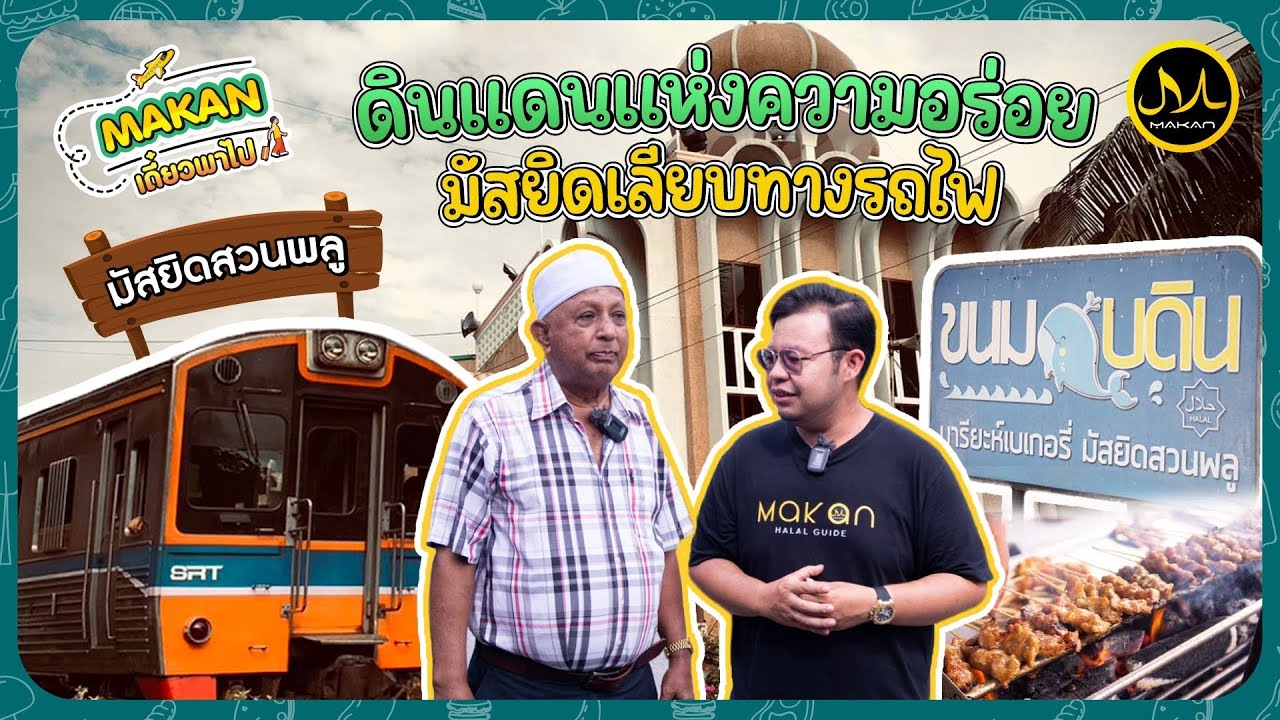
 Click to Access the Navigation Map GPS
Suan Phlu Mosque Map
Recommend

 Art, Culture and Heritage
 Historical Sites and Monuments(3)
 Landmarks and Memorials(23)
 Royal Palace(13)
 Art, Craft Centres, Tradition(35)
 Museums(59)
 Historic Homes and Cities(3)
 Art Gallery(16)
 Educational Places
 Museum for Study(6)
 Library(4)
 Temple(72)
 Church(2)
Mosque(67)
Church(2)
Mosque(67)
 Other Sacred Sites(8)
 Research and Development
 Royal Project(1)
 Suburban Living
 Village, Community(5)
 Local Market(9)
 Floating Market(2)
 Nature and Wildlife
 River, Canal(3)
 Bays and Beaches(1)
 Other natural attractions(1)
 Entertainment and Agricultural
 Zoos and Aquariums(5)
 Animal camps and shows(5)
 Stadium(9)
 Farms, Parks and Ecotourism(20)
 Amusement Park(1)
 Waterpark(4)
 Theater(7)
 Cinema(1)
 Shopping
 Shopping and Night Market(20)
 Department Store(7)
 Spas and Wellness
 Spas and Wellness(1)
 Restaurant
 Michelin Star(5)
 Accommodation
 Hotel(3)
 Call Customer Service in Tourism
 Call Customer Service in Tourism(1)
 Travel Articles, Recipes
 Travel Review, Food Review(42)
 Royal Thai Desserts and Recipes(56)


