
lovethailand home >South Travel Attractions >Narathiwat Travel Attractions >Ba Cho >Lu Bo Sa Wo > 300-Year Mosque (Taloh Mano Mosque)
TL;DR: 300-Year Mosque (Taloh Mano Mosque) is located at Moo 1, Ban Taloh Mano, Lubo Sawo Subdistrict, Bacho District, Narathiwat Province, open Daily, hours 08.00 – 18.00.

300-Year Mosque (Taloh Mano Mosque)
Open Days: Daily
Opening Hours: 08.00 – 18.00
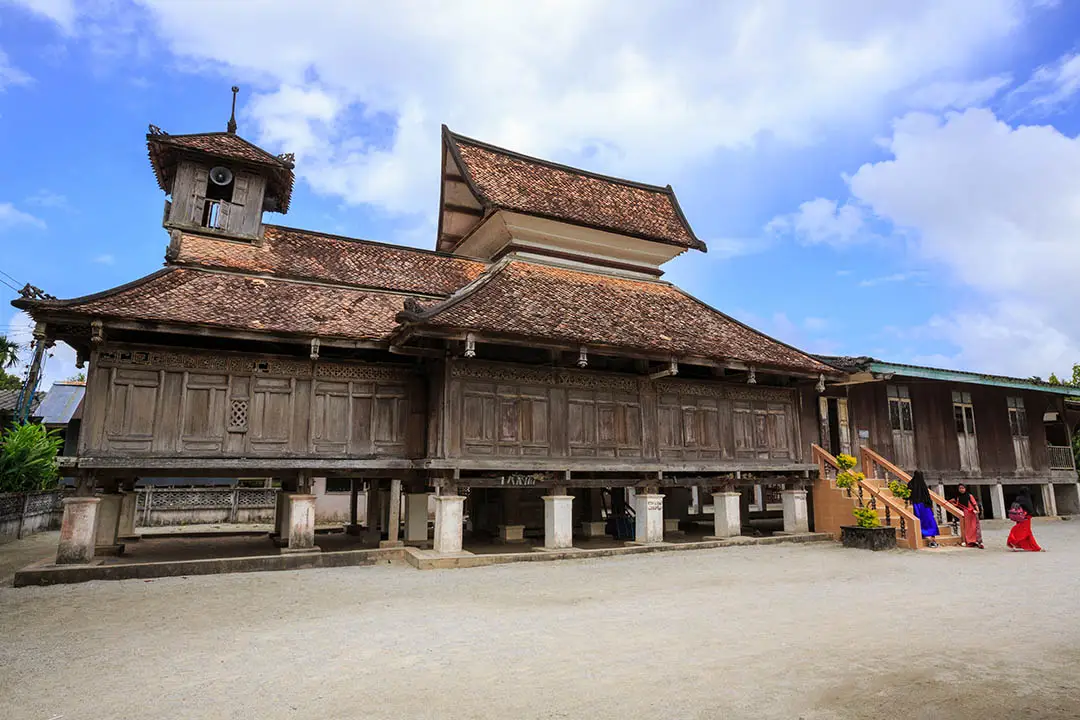
The 300-Year Mosque, also known as Wadi Al-Hussein Mosque or Taloh Mano Mosque, is one of the most important Islamic heritage sites in Ban Taloh Mano, Lubo Sawo Subdistrict, Bacho District, Narathiwat Province. Located near the foothills of the Budo range, about 25 kilometers from Narathiwat town, the mosque is a rare historic wooden mosque that continues to serve the local Muslim community. It is a meaningful place for travelers who want to understand Narathiwat through religion, architecture, craftsmanship, and Malay-Muslim village life.
The value of Taloh Mano Mosque does not come only from its age. It is important because it remains an active place of worship while preserving an old timber structure built with remarkable traditional craftsmanship. The mosque is made entirely from takian wood and joined with wooden pegs instead of nails or screws. Its two connected buildings combine Thai vernacular, Chinese, and Malay architectural influences, creating one of the most distinctive mosque designs in southern Thailand.
Local history records Wan Hussein As-Sanawi, a migrant from Sanoyanya village in Pattani Province, as the founder of the mosque in 1624. The original roof was made from palm leaves before it was later replaced with terracotta roof tiles. This change shows how the mosque adapted over time while retaining its original wooden structure, joinery, and architectural identity.
The name Wadi Al-Hussein is connected with the founder’s name, while Taloh Mano comes from the village where the mosque is located. The popular name “300-Year Mosque” refers to its great age and long-standing memory in the local community. Several sources now describe the mosque as more than 300 years old, and some refer to it as roughly 400 years old when counted from the recorded founding year.
The most striking feature of the mosque is its roof and the adhan tower placed on the rear part of the building. The adhan tower resembles a Chinese pavilion, making it visually different from most mosques. Above the roofline, a raised base supports the gable, giving the structure a layered and highly recognizable silhouette. The terracotta roof, aged timber, and wooden joinery make the building a rare example of cross-cultural architecture in the Malay world.
The wall panels are made from large timber boards with windows cut into them. Ventilation panels are carved with leaf, flower, and Chinese-inspired patterns. These carvings are not only decorative. They reflect local artistic taste, religious environment, and the skill of earlier craftsmen. The doors and structural details also show a high level of woodworking knowledge, especially because the building relies on timber joints instead of metal fasteners.
Takian wood is central to the mosque’s durability. This hardwood was once available in the Budo forest area and is known for its strength and long life. Using takian wood for the entire structure helped the mosque survive for centuries. The use of wooden pegs, interlocking joints, and traditional carpentry makes the building an important record of local engineering knowledge.
Beside the mosque is a Muslim cemetery. The grave markers reflect local customs: rounded stones are used for men, while half-stone markers are used for women. This cemetery adds another layer of meaning to the site. Taloh Mano Mosque is not only a prayer space, but also a place of memory where the lives of the community, the faith of the living, and the resting place of the departed exist together.
In the past, Ban Taloh Mano was also known as a place where handwritten Qur’an manuscripts were produced. This gives the village and mosque deeper religious significance. Handwritten manuscripts represent learning, devotion, and the transmission of Islamic knowledge before modern printing became common. This history shows that the mosque was not only a place for prayer, but also part of a religious learning culture in the Malay-Muslim community.
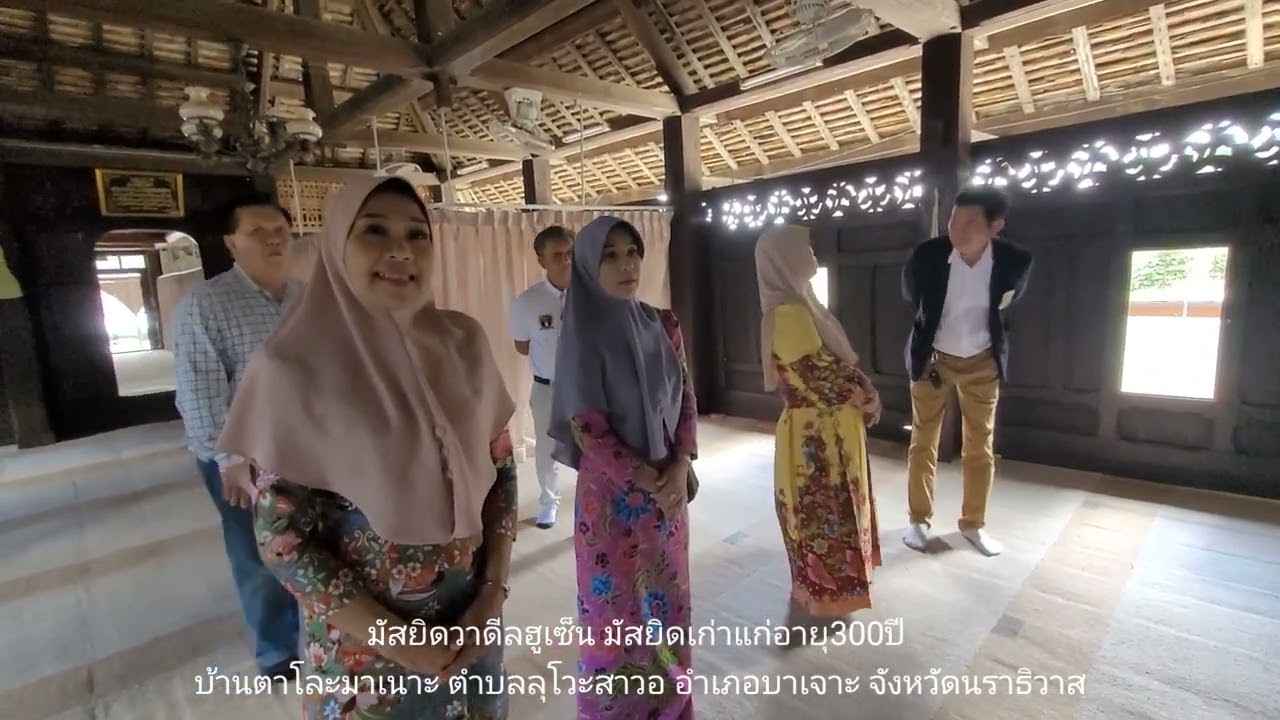
Today, Taloh Mano Mosque remains an active place of worship for local Muslims. Visitors should understand that it is not a museum or display building. It is still used by the community for religious practice. In general, visitors may view the exterior only. Anyone wishing to enter the interior must first receive permission from the village imam or the local caretaker.
Visitors should behave respectfully. Modest clothing is required, voices should be kept low, and worshippers should not be disturbed. If prayer or another religious activity is taking place, visitors should keep a respectful distance and should not enter the mosque without permission. Photography should be done carefully and should not include worshippers at close range without consent.
The surrounding village atmosphere is also part of the experience. Ban Taloh Mano is an agricultural community near the Budo foothills, with houses, fields, gardens, and streams from the mountains. The mosque is closely tied to this landscape. To understand the site properly, visitors should see the building together with the village, the cemetery, the hills, and the community that has cared for the mosque across generations.
In recent years, local agencies have paid attention to the preservation and improvement of the area around the mosque. The aim is to protect its historical, architectural, and religious value while improving the setting for cultural visitors. Any improvement around the site must respect the original view of the mosque and avoid disturbing the traditional atmosphere of the village.
A visit to Taloh Mano Mosque should be slow and respectful. Allow at least 45 minutes to 1 hour to observe the exterior, the wooden walls, roof form, adhan tower, carved ventilation panels, cemetery, and surrounding community setting. Groups should coordinate ahead where possible, so the visit does not disturb worship or village life.
Getting There is easiest by private car or local hired transport. From Narathiwat town, follow Highway 42 toward Bacho District, then turn at Ban Buera-ngae toward Ban Taloh Mano. The mosque is about 25 kilometers from Narathiwat town and about 4 kilometers from Bacho town. Because it is located inside a village, local road access and respectful driving through the community are important.
Travelers can combine the mosque with other places in Bacho and nearby Narathiwat. Pa Cho Waterfall, Pa Cho Waterfall Forest Park, Budo-Su-ngai Padi National Park, Bale Hile Beach, Ao Manao-Khao Tanyong, and Narathiwat town can all be included in a wider route. This itinerary brings together Islamic architecture, forest landscapes, waterfalls, coastal scenery, and local life.
Pa Cho Waterfall is one of the most suitable natural attractions to visit after Taloh Mano Mosque. Travelers can visit the mosque in the morning, then continue to the waterfall or nearby forest area later in the day. This creates a balanced trip that includes religious heritage, village culture, and natural scenery.
Ao Manao-Khao Tanyong and Bale Hile Beach add a coastal element to the journey. Combining the 300-Year Mosque with seaside stops gives travelers a broader picture of Narathiwat, from the Budo foothills and historic Muslim village to the sea and coastal communities.
Restaurants near the mosque are mainly found in Bacho town and along the route back to Narathiwat town. Options include Cafe’ Intrend Bacho, Five Star Salam Bacho, Café Amazon Bacho, and restaurants or cafés in Mueang Narathiwat. Visitors should plan meal stops in advance because Ban Taloh Mano itself is not a dense restaurant area.
Most practical accommodation choices are in Mueang Narathiwat rather than directly in Ban Taloh Mano. Travelers can stay at The Imperial Narathiwat Hotel, Tanyong Hotel, Paksina 2 Hotel, Pohnphansa Boutique Hotel, or Art Nara Resort, then visit the mosque as a half-day trip. Staying in Narathiwat town also makes it convenient to continue to Narathat Beach, Narathiwat Central Mosque, Narathiwat City Museum, and Narathiwat Airport.
In summary, the 300-Year Mosque or Wadi Al-Hussein Mosque is one of Narathiwat’s most valuable Islamic heritage sites. Its takian wood structure, wooden peg construction, Thai-Chinese-Malay architectural blend, Chinese pavilion-style adhan tower, cemetery, and handwritten Qur’an history make it much more than a sightseeing stop. It is a living mosque, a record of local craftsmanship, and a cultural memory of the Malay-Muslim community in Thailand’s southern border region.
| Name | 300-Year Mosque / Wadi Al-Hussein Mosque / Taloh Mano Mosque |
| Location | Moo 1, Ban Taloh Mano, Lubo Sawo Subdistrict, Bacho District, Narathiwat Province |
| Address | Ban Taloh Mano, Lubo Sawo Subdistrict, Bacho District, Narathiwat 96170, Thailand |
| Coordinates | 6.4844036312, 101.656602693 |
| Highlights | Historic takian-wood mosque joined with wooden pegs, two connected buildings, Thai-Chinese-Malay architectural blend, and a Chinese pavilion-style adhan tower on the roof |
| History | Built in 1624 by Wan Hussein As-Sanawi, a migrant from Sanoyanya village in Pattani Province. The original palm-leaf roof was later replaced with terracotta tiles |
| Name Origin | Wadi Al-Hussein is linked with the founder’s name, Taloh Mano comes from the village name, and 300-Year Mosque refers to the mosque’s great age |
| Distinctive Features | Entirely made of takian wood, with timber-wall panels, carved ventilation openings, floral and Chinese-inspired motifs, and a Muslim cemetery beside the mosque |
| Travel Information | From Narathiwat town, take Highway 42 toward Bacho District, then turn at Ban Buera-ngae toward Ban Taloh Mano. The mosque is about 25 km from Narathiwat town and about 4 km from Bacho town |
| Current Status | Still used as a place of worship by local Muslims in Ban Taloh Mano and open for exterior viewing |
| Open Days | Daily |
| Opening Hours | 08.00 – 18.00 |
| Visiting Rules | Exterior viewing is generally allowed. Interior access requires permission from the village imam or local caretaker |
| Main Areas / Zones | Wooden mosque building, prayer area, roof adhan tower, carved ventilation panels, Muslim cemetery beside the mosque, and surrounding Ban Taloh Mano community area |
| Nearby Tourist Attractions | 1. Ban Taloh Mano and Budo Foothill Community, about 0.1 km 2. Pa Cho Waterfall, about 12 km 3. Pa Cho Waterfall Forest Park, about 12 km 4. Budo-Su-ngai Padi National Park, about 14 km 5. Bale Hile Beach, about 22 km 6. Ao Manao-Khao Tanyong, about 25 km 7. Narathiwat Central Mosque (New), about 25 km |
| Nearby Restaurants | 1. Cafe’ Intrend Bacho, about 5 km, Tel. 081-798-3803 2. Five Star Salam Bacho, about 5 km, Tel. 063-134-1857 3. Café Amazon Bacho, about 5 km 4. Amee Ro Story, about 24 km, Tel. 082-266-6033 5. Mangkon Thong Restaurant, about 25 km, Tel. 073-511-835 6. The Room Bistro & Bar, about 25 km, Tel. 073-619-098 |
| Nearby Accommodations | 1. Art Nara Resort, about 20 km, Tel. 065-772-2226, 091-846-4739 2. Pohnphansa Boutique Hotel, about 24 km, Tel. 063-258-8668 3. The Imperial Narathiwat Hotel, about 25 km, Tel. 073-515-041 4. Tanyong Hotel, about 25 km, Tel. 073-511-477 5. Paksina 2 Hotel, about 27 km, Tel. 086-287-5050 |
Frequently Asked Questions (FAQ)
Q: Where is the 300-Year Mosque located?
A: The 300-Year Mosque, or Wadi Al-Hussein Mosque, is located in Moo 1, Ban Taloh Mano, Lubo Sawo Subdistrict, Bacho District, Narathiwat Province, near the Budo foothills.
Q: When was Wadi Al-Hussein Mosque built?
A: Local history records Wan Hussein As-Sanawi as the founder of the mosque in 1624. The original roof was made from palm leaves and was later replaced with terracotta tiles.
Q: What makes Taloh Mano Mosque special?
A: The mosque is made entirely from takian wood, joined with wooden pegs instead of nails, and combines Thai, Chinese, and Malay architectural influences. Its Chinese pavilion-style adhan tower is especially distinctive.
Q: Can visitors enter the mosque interior?
A: Exterior viewing is generally allowed. Anyone wishing to enter the interior must first receive permission from the village imam or local caretaker.
Q: Is Taloh Mano Mosque still used for worship?
A: Yes. Taloh Mano Mosque is still used by local Muslims in Ban Taloh Mano as a place of worship.
Q: How can travelers get to the 300-Year Mosque?
A: From Narathiwat town, follow Highway 42 toward Bacho District, then turn at Ban Buera-ngae toward Ban Taloh Mano. The mosque is about 25 kilometers from Narathiwat town.
Q: What nearby places can be visited with the 300-Year Mosque?
A: Nearby places include Pa Cho Waterfall, Pa Cho Waterfall Forest Park, Budo-Su-ngai Padi National Park, Bale Hile Beach, Ao Manao-Khao Tanyong, and Narathiwat town.
 Category: ●Places of Worship
 Group: ●Mosque
Last Update : 2 MonthAgo
 Last Update : 2 MonthAgo
 Click to Access the Navigation Map GPS
300-Year Mosque (Taloh Mano Mosque) Map

 Art, Culture and Heritage
 Landmarks and Memorials(8)
 Royal Palace(1)
 Art, Craft Centres, Tradition(7)
 Museums(4)
 Art Gallery(1)
 Temple(16)
Mosque(23)
 Other Sacred Sites(5)
 Research and Development
 Royal Project(1)
 Suburban Living
 Village, Community(9)
 Local Market(1)
 Nature and Wildlife
 National Parks and Marine Reserves(5)
 Mountain (Doi)(2)
 Dam, Reservoir, Lake(2)
 Waterfalls(16)
 River, Canal(3)
 Bays and Beaches(5)
 Islands(1)
 Other natural attractions(4)
 Entertainment and Agricultural
 Stadium(1)
 Farms, Parks and Ecotourism(7)
 Shopping
 Shopping and Night Market(1)
 Travel Articles, Recipes
 Travel Review, Food Review(1)


