
lovethailand home >South Travel Attractions >Krabi Travel Attractions >Muang >Ao Nang > The Phi Phi Islands
TL;DR: The Phi Phi Islands is located at Ao Nang Subdistrict, Mueang Krabi District, Krabi Province, about 42 kilometers from Mueang Krabi, open Daily in areas permitted by the national park; Maya Bay, Loh Samah Bay, and Ao, hours 08.00 – 16.30.

The Phi Phi Islands
Open Days: Daily in areas permitted by the national park; Maya Bay, Loh Samah Bay, and Ao Lo Ko are closed annually from 1 August – 30 September for ecological recovery
Opening Hours: 08.00 – 16.30
The Phi Phi Islands in Krabi Province are one of the most iconic island groups in the Andaman Sea. Known for dramatic limestone cliffs, white sand, clear water, emerald bays, coral reefs, sea anemones, and colorful marine life, the islands attract travelers from around the world. The destination combines natural beauty with practical travel convenience: accommodation, restaurants, shops, piers, boat tours, dive centers, and tourism services are concentrated mainly on Ko Phi Phi Don, while the surrounding islands provide scenery, beaches, conservation areas, and diving sites.
The Phi Phi Islands are located about 42 kilometers from Mueang Krabi and are part of Hat Noppharat Thara-Mu Ko Phi Phi National Park. The group consists of six key islands: Ko Phi Phi Don, Ko Phi Phi Le, Ko Yung, Ko Mai Phai or Bamboo Island, Ko Bida Nok, and Ko Bida Nai. Each island has a different role. Ko Phi Phi Don is the main inhabited island and service hub. Ko Phi Phi Le is known for Maya Bay, Pileh Lagoon, Loh Samah Bay, and Viking Cave. Bamboo Island is known for its beach and clear water. Ko Yung is a marine-rehabilitation area. Ko Bida Nok and Ko Bida Nai are important dive sites.
The name Phi Phi has a cultural origin. The islands were once known among sea people as “Pulau Piapi.” The word “Pulau” means island, while “Piapi” refers to a coastal tree associated with mangrove and seashore vegetation. As Muslim communities and people from the mainland settled and traveled through the area, the name was shortened and gradually became “Phi Phi.” The name therefore reflects the islands’ maritime setting, coastal ecology, and long relationship with seafaring communities.
The Phi Phi Islands are often described as an underwater garden because many visitors come to see coral reefs, sea anemones, reef fish, and the marine life of the Andaman Sea. The value of the destination is not limited to beaches and viewpoints. Much of its richness lies below the water: reef systems, underwater rocks, limestone walls, and habitats for many species of fish and invertebrates. For this reason, Phi Phi should be understood as both a world-famous travel destination and a protected marine ecosystem.
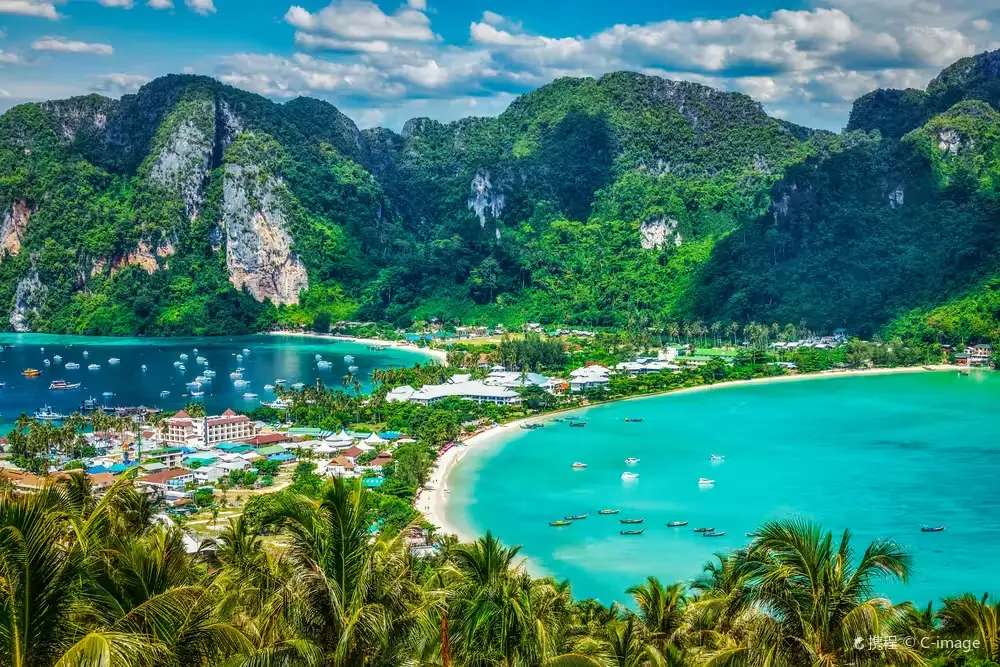
Ko Phi Phi Don is the heart of the archipelago. Covering about 28 square kilometers, it is the main island for accommodation, restaurants, shops, piers, dive centers, and boat services. Its most recognizable landscape is the twin-bay view of Tonsai Bay and Loh Dalum Bay, separated by a narrow central settlement. Tonsai Bay is the main arrival point and transport hub, while Loh Dalum Bay offers a curved, shallow beach and a lively visitor atmosphere. Travelers who want to stay overnight in the Phi Phi Islands should use Ko Phi Phi Don as their main base.
The northern part of Ko Phi Phi Don is Laem Tong, an area with both natural and cultural value. It is home to a small sea-people community of about 15–20 families, many of whom migrated from Ko Lipe in Satun Province. Laem Tong is quieter than Tonsai and Loh Dalum, making it suitable for travelers who want a calmer beach atmosphere. It is also a practical base for northern Phi Phi boat routes, including Bamboo Island and nearby marine areas when conditions and park rules allow.
Ko Phi Phi Le lies south of Ko Phi Phi Don. It is an uninhabited limestone island with no hotels, permanent village, or tourist restaurants. Its main appeal is natural scenery: steep cliffs, enclosed bays, emerald water, and world-famous coastal formations. The best-known areas are Pileh Lagoon, Maya Bay, Loh Samah Bay, and Viking Cave. Travelers visit Ko Phi Phi Le by boat, and access to each area depends on national park rules, safety conditions, sea state, and seasonal conservation measures.
Maya Bay is the most famous location in the Phi Phi Islands. It is framed by high limestone cliffs and known for its white sand and clear water. Because the bay has faced heavy tourism pressure in the past, it is now managed under strict conservation rules. Maya Bay, Loh Samah Bay, and Ao Lo Ko are closed annually from 1 August to 30 September for natural recovery and visitor safety during the monsoon season. Travelers should always check current park announcements before booking a tour that includes Maya Bay.
Pileh Lagoon is another highlight of Ko Phi Phi Le. It is a sheltered lagoon-like bay enclosed by limestone cliffs, with water that can turn a vivid emerald color under good light and calm sea conditions. Boat tours often enter the lagoon for sightseeing and photography when tides, boat traffic, and national park management allow. Loh Samah Bay is closely connected to the access management of Maya Bay, while Viking Cave or Tham Phaya Nak adds cultural and historical depth to the island.
Bamboo Island, or Ko Mai Phai, lies north of Ko Phi Phi Don. It is known for its bright beach, clear water, and relaxed day-trip atmosphere. The island is often included in Phi Phi day tours because it offers a more open beach setting than Ko Phi Phi Le. Visitors usually come for swimming, photography, and short beach stops during daylight hours. As with all national park areas, boat access and activities depend on weather, park regulations, and the current status of the site.
Ko Yung, also known as Mosquito Island, lies near the northern part of the Phi Phi group. Unlike regular tourist islands, Ko Yung is important as a marine-rehabilitation area. It is not suitable to promote as a casual snorkeling stop or landing destination. Responsible travel content should describe Ko Yung as a protected reef-recovery area and emphasize respect for the closure rather than encouraging visitors to enter.
Ko Bida Nok and Ko Bida Nai are small limestone islets south of the Phi Phi group and are among Krabi’s most important diving areas. Their beauty lies underwater. Coral reefs, sea fans, sponges, cup corals, branching corals, massive corals, and many reef fish species make the Bida Islands valuable for snorkeling and scuba diving in permitted areas. Visitors should join licensed operators, follow dive-safety rules, and avoid any contact with coral or marine life.
Travel to the Phi Phi Islands is by boat. From Krabi, travelers can use ferries, speedboats, or tour boats from Klong Jilad Pier, Noppharat Thara Beach, Ao Nang, or other approved departure points. From Phuket, boats commonly depart from Rassada Pier. Seasonal routes from Ko Lanta are also available depending on operator schedules. Travelers already staying on Ko Phi Phi Don can arrange local boat trips to Ko Phi Phi Le, Bamboo Island, and nearby dive sites more easily than visitors traveling from the mainland for only one day.
Getting There should be planned around the departure point, boat type, sea conditions, national park fees, and the exact islands included in the route. Day trips are possible from Krabi and Phuket, but staying at least one night on Ko Phi Phi Don gives travelers more time for Tonsai Bay, Loh Dalum Bay, the viewpoint, Long Beach, Laem Tong, Ko Phi Phi Le, and approved snorkeling or diving stops.
Main activities in the Phi Phi Islands include beach relaxation, viewpoint hiking, boat sightseeing, visits to permitted bays, snorkeling, scuba diving, photography, sunset viewing, and dining on Ko Phi Phi Don. Each island suits a different type of experience. Ko Phi Phi Don is for staying, eating, and connecting to boat tours. Ko Phi Phi Le is for scenery and protected-bay visits. Bamboo Island is for beach time. Ko Yung is for conservation. The Bida Islands are for diving.
The best general travel season is from November to April, when the Andaman Sea is usually calmer and boat travel is more comfortable. From May to October, travel is still possible on suitable days, but weather, waves, and monsoon conditions should be checked carefully. Travelers planning to visit Maya Bay, Pileh Lagoon, Bamboo Island, or dive sites should confirm current access rules and sea conditions before departure.
Visitors should check national park fees before booking. Some packages include the fee, while others charge it separately. Travelers should confirm whether the tour price includes the boat, national park fee, snorkeling equipment, meals, drinks, insurance, and hotel transfer. Special fees apply to some Phi Phi areas, especially for foreign visitors entering the Phi Phi Don, Phi Phi Le, and Bamboo Island area.
Choosing the right place to stay on Ko Phi Phi Don improves the whole trip. Tonsai Bay is best for pier access and convenience. Loh Dalum Bay suits travelers who want a central beach and active atmosphere. Long Beach is calmer while still accessible from the main village. Loh Ba Gao Bay and Laem Tong are better for quieter resort-style stays. Travelers who want to visit several islands or dive sites should choose accommodation based on both comfort and boat access.
Responsible travel is essential in the Phi Phi Islands. Visitors should not litter, feed fish, touch marine animals, step on coral, collect shells, remove sand, or enter closed rehabilitation zones. These rules are not minor details; they protect the very ecosystems that make the islands beautiful. A good Phi Phi trip respects both the scenery and the limits needed to keep that scenery alive.
In summary, the Phi Phi Islands are one of Thailand’s most complete Andaman Sea destinations. Ko Phi Phi Don provides the travel base, piers, hotels, restaurants, and services. Ko Phi Phi Le offers world-class limestone bays. Bamboo Island provides a bright beach escape. Ko Yung represents marine recovery. Ko Bida Nok and Ko Bida Nai offer some of the area’s best diving. With good timing, licensed operators, current national park information, and respect for conservation rules, the Phi Phi Islands deliver a travel experience that is beautiful, convenient, and ecologically meaningful.
| Name | Phi Phi Islands |
| Location | Ao Nang Subdistrict, Mueang Krabi District, Krabi Province, about 42 kilometers from Mueang Krabi |
| Park Office Address | Hat Noppharat Thara-Mu Ko Phi Phi National Park, 79 Moo 5, Ao Nang Subdistrict, Mueang Krabi District, Krabi 81000 |
| Reference Coordinates | Ko Phi Phi Don area approximately 7.74433, 98.78112 |
| Main Islands | Ko Phi Phi Don, Ko Phi Phi Le, Ko Yung, Bamboo Island, Ko Bida Nok, Ko Bida Nai |
| Highlights | Limestone cliffs, white sand, clear water, Maya Bay, Pileh Lagoon, Loh Samah Bay, Tonsai Bay, Loh Dalum Bay, Phi Phi Viewpoint, Bamboo Island, and Phi Phi dive sites |
| Distinctive Features | An Andaman Sea archipelago combining an inhabited service hub, limestone islands, world-famous bays, beaches, coral reefs, and marine conservation areas |
| Current Status | Open in areas permitted by the national park; marine activities depend on weather, sea conditions, and park announcements. Ko Yung is a rehabilitation area, while Maya Bay, Loh Samah Bay, and Ao Lo Ko have annual recovery closures. |
| Open Days | Daily in permitted areas |
| Opening Hours | 08.00 – 16.30 |
| Key Seasonal Closure | Maya Bay, Loh Samah Bay, and Ao Lo Ko close annually from 1 August – 30 September; Ko Yung is closed for marine rehabilitation. |
| Fees | Basic Hat Noppharat Thara-Mu Ko Phi Phi National Park fee: Thai adults 40 THB, Thai children 20 THB; foreign adults 200 THB, foreign children 100 THB Special area fee for foreign visitors entering Ko Phi Phi Don, Ko Phi Phi Le, and Bamboo Island: adults 400 THB, children 200 THB |
| Caretaker | Hat Noppharat Thara-Mu Ko Phi Phi National Park |
| Main Contact Number | 075-656-150 |
| Main Areas / Zones | Tonsai Bay, Loh Dalum Bay, Phi Phi Viewpoint, Long Beach, Loh Ba Gao Bay, Laem Tong, Maya Bay, Pileh Lagoon, Loh Samah Bay, Viking Cave, Bamboo Island, Ko Yung, Ko Bida Nok, Ko Bida Nai |
| Facilities | Ko Phi Phi Don has piers, hotels, restaurants, shops, tour operators, and dive centers. Other islands are natural or activity-specific areas that require boat access and compliance with park rules. |
| Travel Information | Travel by ferry, speedboat, or tour boat from Klong Jilad Pier, Noppharat Thara Beach, Ao Nang, Phuket, or Ko Lanta depending on active schedules and season. Ko Phi Phi Don is the main base for onward island trips. |
| Nearby Tourist Attractions | 1. Phi Phi Viewpoint, about 1 km 2. Long Beach, Ko Phi Phi Don, about 2 km 3. Ko Phi Phi Le, about 6 km 4. Maya Bay, about 7 km 5. Ko Bida Nok And Ko Bida Nai, about 8 km 6. Bamboo Island, about 15 km 7. Ko Yung, about 11 km, marine rehabilitation area |
| Nearby Restaurants | 1. Papaya Restaurant, Tonsai Bay, about 1 km, Tel. 091-157-2007 2. Restaurant At Phi Phi The Beach Resort, Long Beach, about 2 km, Tel. 062-191-4945, 062-161-4965 3. Ruan Thai Restaurant At SAii Phi Phi Island Village, Loh Ba Gao Bay, about 5 km, Tel. 075-628-900 Ext. 8809 4. Jasmin Restaurant, Laem Tong Beach, about 7 km, Tel. 086-277-0959 5. The Beach Terrace Restaurant At Phi Phi Natural Resort, Laem Tong Beach, about 7 km, Tel. 075-818-706 6. Banyantree Phiphi, Laem Tong Beach, about 7 km, Tel. 095-431-8419 |
| Nearby Accommodations | 1. Phi Phi Cliff Beach Resort, Tonsai Bay, about 1 km, Tel. 062-217-2239, 075-601-457 2. Phi Phi CoCo Beach Resort, Loh Dalum Bay, about 1 km, Tel. 075-812-277 3. Phi Phi The Beach Resort, Long Beach, about 2 km, Tel. 062-191-4945, 062-161-4965 4. SAii Phi Phi Island Village, Loh Ba Gao Bay, about 5 km, Tel. 075-628-900 5. P.P. Erawan Palms Resort, Laem Tong Beach, about 7 km, Tel. 075-818-713 6. Phi Phi Holiday Resort, Laem Tong Beach, about 7 km, Tel. 075-627-300 7. Phi Phi Natural Resort, Laem Tong Beach, about 7 km, Tel. 075-818-706 |
Frequently Asked Questions (FAQ)
Q: Where are the Phi Phi Islands located?
A: The Phi Phi Islands are located in Ao Nang Subdistrict, Mueang Krabi District, Krabi Province, about 42 kilometers from Mueang Krabi, inside Hat Noppharat Thara-Mu Ko Phi Phi National Park.
Q: Which islands are included in the Phi Phi Islands?
A: The main six islands are Ko Phi Phi Don, Ko Phi Phi Le, Ko Yung, Bamboo Island, Ko Bida Nok, and Ko Bida Nai.
Q: How is Ko Phi Phi Don different from Ko Phi Phi Le?
A: Ko Phi Phi Don is the inhabited hub with piers, hotels, restaurants, shops, and tour services, while Ko Phi Phi Le is an uninhabited limestone island visited only in areas permitted by the national park.
Q: Is Maya Bay open all year?
A: Maya Bay is open only during periods permitted by the national park and closes annually from 1 August to 30 September together with Loh Samah Bay and Ao Lo Ko.
Q: Can travelers visit Ko Yung?
A: Ko Yung is a marine-rehabilitation area and should not be treated as a general landing or snorkeling stop for tourists.
Q: How do travelers get to the Phi Phi Islands?
A: Travelers must go by boat from Krabi, Phuket, or Ko Lanta. From Krabi, common departure points include Klong Jilad Pier, Noppharat Thara Beach, and Ao Nang depending on the boat service.
Q: Where should travelers stay in the Phi Phi Islands?
A: Travelers should stay on Ko Phi Phi Don because it is the main island with piers, hotels, restaurants, shops, and boat services to nearby islands and bays.
Q: What should visitors be careful about in the Phi Phi Islands?
A: Visitors should check park announcements and weather conditions, avoid littering, avoid feeding fish, avoid touching or stepping on coral, avoid disturbing marine life, avoid closed rehabilitation zones, and choose licensed boat operators.
 Category: ●Nature and Wildlife
 Group: ●Islands
Last Update : 2 MonthAgo
 Last Update : 2 MonthAgo

 Click to Access the Navigation Map GPS
The Phi Phi Islands Map
Recommend

 Art, Culture and Heritage
 Historical Sites and Monuments(1)
 Landmarks and Memorials(7)
 Art, Craft Centres, Tradition(2)
 Museums(2)
 Educational Places
 Educational Gardens, Farm(1)
 Places of Worship
 Temple(3)
 Mosque(2)
 Other Sacred Sites(2)
 Research and Development
 Royal Project(1)
 Suburban Living
 Village, Community(6)
 National Parks and Marine Reserves(5)
 Mountain (Doi)(2)
 Dam, Reservoir, Lake(3)
 Waterfalls(12)
 Hot Springs(3)
 Caves(20)
 River, Canal(2)
 Bays and Beaches(36)
Islands(23)
 Other natural attractions(7)
 Entertainment and Agricultural
 Farms, Parks and Ecotourism(1)
 Outdoor and Adventure Activities(1)
 Travel Articles, Recipes
 Travel Review, Food Review(2)
 Southern Food Menu, Southern Food Recipes(1)


