
lovethailand home >South Travel Attractions >Phang Nga Travel Attractions >Takua Pa >Khuek Khak > Khao Lak Beach
TL;DR: Khao Lak Beach is located at Khao Lak–Lam Ru National Park, Moo 7, Khuk Khak Subdistrict, Takua Pa District, Phang Nga Province, open Normally Open Daily, Except During The Annual Tourism And Overnight-Stay, hours 08:30–16:30.
Khao Lak Beach
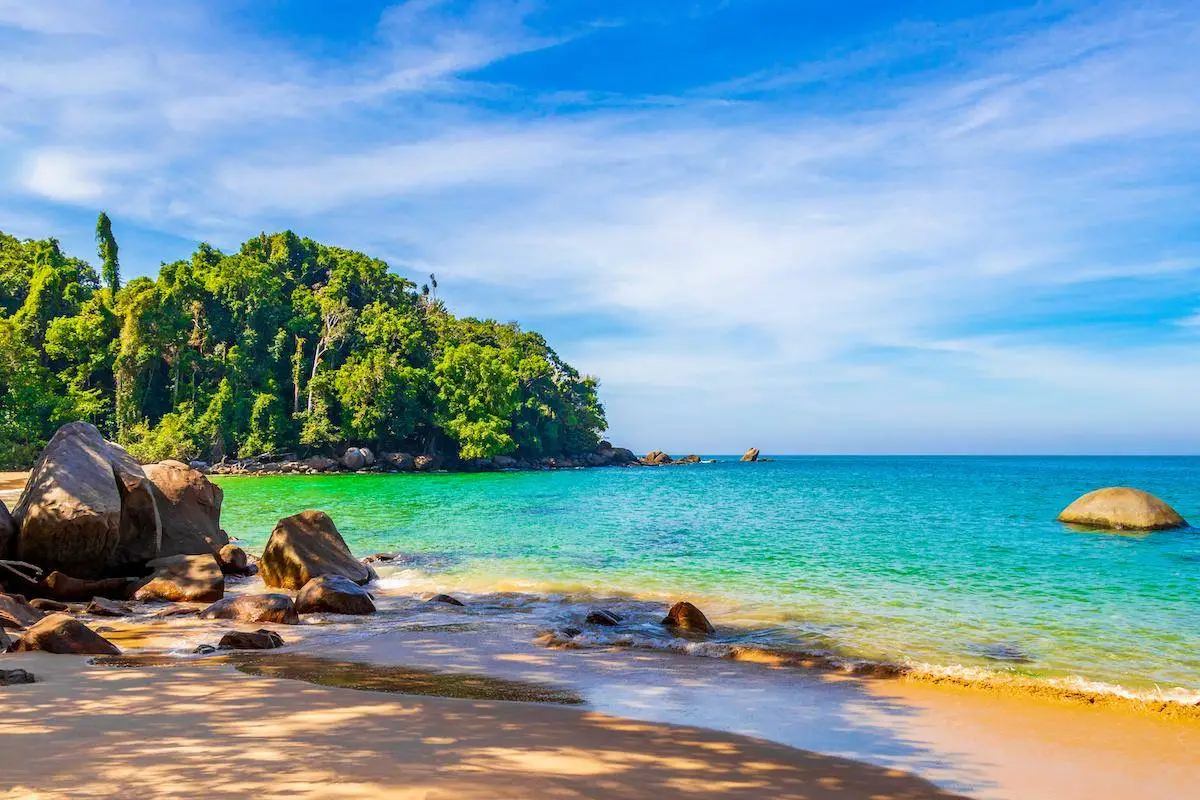
Open Days: Normally Open Daily, Except During The Annual Tourism And Overnight-Stay Closure From 1 June To 31 August
Opening Hours: 08:30–16:30
Khao Lak Beach in Phang Nga Province is a natural coastal attraction located within Khao Lak–Lam Ru National Park in Khuk Khak Subdistrict, Takua Pa District. It lies about 33 km from Takua Pa District toward Thai Mueang along Phet Kasem Road, with only a short access from the main road into the seaside area. The beach is known for its wide sandy shore, rocky coastline, small and large boulders, pine and coconut trees along the beach, quiet atmosphere, and Andaman Sea views. It is suitable for relaxing, beach walking, photography, swimming in calm conditions, coastal nature study, and sunset watching.
Khao Lak Beach has a different character from typical resort beaches because it combines sand, rocks, headland scenery, and coastal forest in one compact area. Some sections are open sandy beach, while other parts contain rocky formations and boulders shaped by waves and time. When the waves break against the rocks, the shoreline becomes visually dramatic without losing its calm natural mood. This makes Khao Lak Beach ideal for travelers who want more than a simple straight beach and prefer a coastline with texture, scenery, and a strong sense of place.
The area was formerly known as Khao Lak Seaside Forest Park before becoming part of Khao Lak–Lam Ru National Park. Today, the park headquarters are located in this coastal zone, making Khao Lak Beach an important gateway to the national park. Visitors can enjoy the main beach, viewpoint, coastal rocks, nature trail, and the route to Small Sandy Beach, locally known as Hat Lek. A visit here can therefore include both seaside relaxation and a deeper nature experience within the national park.
The atmosphere of Khao Lak Beach is quiet, shaded, and natural. Pine trees along the beach create a pleasant resting area, while coconut trees add to the familiar Andaman coastal scenery. Visitors can walk on the sand, sit in the shade, listen to the waves, and enjoy the slower rhythm of Khao Lak. The beach is not defined by heavy entertainment or dense commercial activity. Its appeal comes from natural light, sea breeze, shade, rocks, and the balance between forest and sea.
The shoreline contains both sandy and rocky areas, so it is especially good for walking and photography. Some sections are suitable for resting by the water, while others require care because of rocks and uneven surfaces. Swimming may be possible when the sea is calm and the chosen area is safe, but visitors should always watch the waves, currents, and rocks before entering the water. Families with children should stay in open sandy sections and avoid slippery rocks or strong surf.
Late afternoon is one of the best times to visit Khao Lak Beach. The sunlight becomes softer, the water reflects warmer tones, and local people often come to sit by the sea and watch the sunset. The west-facing Andaman view gives the beach a strong evening atmosphere, especially when the sky is clear. Sunset photography is particularly rewarding because the rocks, waves, sand, and tree-lined shore create natural foregrounds for the open sea.
Across the entrance to the national park is the Khao Lak Guardian Spirit Shrine, a respected local shrine for residents and travelers in the area. It is closely associated with the road corridor between Phang Nga and Takua Pa and is regarded by many local people as a protective spiritual place. Visitors can combine a respectful stop at the shrine with a visit to Khao Lak Beach, giving the trip both a natural and cultural dimension.
Another point of local interest is the footprint-like mark engraved or preserved on a stone slab under a banyan tree, mentioned in local tourism descriptions of the area. This feature adds another layer to Khao Lak Beach, connecting the shoreline with local belief and memory. Visitors should treat such places respectfully, avoid damaging natural or cultural features, and keep the area clean.
The viewpoint around Laem Khao Lak is another highlight. From the headland and elevated coastal areas, visitors can see the Andaman Sea, beach, forested slopes, and the natural meeting point of mountain and coastline. This view helps explain why Khao Lak–Lam Ru National Park is distinctive: it is not only a beach park, but a protected landscape where tropical forest, hills, streams, sandy shore, rocky beach, and sea exist together.
Recommended activities include beach walking, resting under pine trees, photographing the rocks and sea, watching sunset, visiting the shrine, and walking the nature trail to Hat Lek. The trail from the park headquarters to Hat Lek is about 1.4–2 km and follows a coastal route through shaded forest. It is one of the best ways to experience both the beach and the forest side of the national park in a single visit.
Hat Lek, or Small Sandy Beach, is a key nearby destination inside the national park. It is reached by the nature trail from the park headquarters and offers a quieter beach setting surrounded by forest. On good-weather days, the white sand, clear water, and shaded natural surroundings make it one of the most rewarding short walks in Khao Lak. Visitors should bring water, wear suitable walking shoes, and return before the park closes.
Khao Lak–Lam Ru National Park also includes waterfalls such as Ton Chong Fa Waterfall, Lam Ru Waterfall, Lam Phrao Waterfall, and Hin Lat Waterfall. These show that the area is not only a beach destination but also a mountain and forest landscape. For this article, Khao Lak Beach remains the main destination, while the waterfalls can be included in a longer nature-focused itinerary for travelers who have more time.
The national park landscape includes complex mountain ranges such as Khao Lak, Khao Lam Ru, Khao Saeng Thong, Khao Mai Kaeo, and Khao Plai Bang To. The highest peak reaches about 1,077 meters above mean sea level, and the park forms part of important watershed areas for Phang Nga Province, including the Phang Nga and Takua Pa river systems. This makes Khao Lak Beach part of a much larger ecological setting that connects mountain forest, streams, coastal forest, rocky shore, sandy beach, and the Andaman Sea.
Swimming at Khao Lak Beach should be done only in calm sea conditions and in safe areas. Because parts of the beach contain many rocks, visitors should not run into the water without checking the ground and wave conditions. The beach is often better for walking, resting, photography, and nature appreciation than for careless swimming. During rain, strong wind, or rough surf, visitors should avoid entering the sea and follow park staff guidance.
Some shallow coral viewing may be possible around parts of the Khao Lak coast, but this is not a major snorkeling destination like the Similan or Surin Islands. The main value of Khao Lak Beach is its accessible natural scenery, coastal forest, viewpoint, rocks, and nature trail. Travelers who want serious snorkeling should plan a separate trip to dedicated marine sites, while Khao Lak Beach is best enjoyed as a forest-and-sea nature destination.
The best season to visit is generally from late year into the early hot season, when the Andaman Sea is calmer. The national park has an annual tourism and overnight-stay closure from 1 June to 31 August, so travel to the park area should be planned outside that closure period. During the open season, visitors should arrive early enough to enjoy the beach, viewpoint, and nature trail within the operating hours of 08:30–16:30.
Facilities are one of the advantages of this beach. Because it is located around the park headquarters, visitors can access parking, a visitor service area, welfare restaurant, cafe, toilets, viewpoint, nature trail, accommodation, and camping areas when available. Around the wider Khao Lak area, there are also restaurants, hotels, resorts, and travel services. This makes Khao Lak Beach suitable for both short stops and longer stays.
Hotels and resorts around Khao Lak are often designed to blend with the beach and tropical landscape. Many properties emphasize gardens, shaded areas, sea views, and quiet coastal relaxation rather than dense urban-style tourism. Travelers can choose accommodation around Khao Lak Beach, Nang Thong Beach, Bang Niang, or Lam Kaen depending on their route, budget, and preferred atmosphere.
Dining options near Khao Lak Beach include the national park welfare restaurant, beachfront restaurants, resort restaurants, seafood restaurants, and local dining venues. A practical visit can include an afternoon walk at the beach, photography at the headland, a short nature trail, and dinner near the beach or in a nearby resort. The calm coastal atmosphere is a major part of the dining experience in this area.
Getting There is straightforward by private car, rental car, hotel transfer, or public transport along Phet Kasem Road. From Takua Pa, drive toward Thai Mueang for about 33 km and enter the park area near Khao Lak Guardian Spirit Shrine. From Phuket, cross Sarasin Bridge, continue through Khok Kloi and Thai Mueang, then follow Highway 4 north to Khao Lak. The park entrance is close to the main road and is easy to identify.
Travelers arriving from Phuket International Airport can reach Khao Lak by private transfer, rental car, or hotel transport via Sarasin Bridge and Thai Mueang. Those coming from Phang Nga Town can also use Highway 4 toward Thai Mueang and Khao Lak. Visitors without their own vehicle should arrange return transport in advance or stay in Khao Lak, where hotels and local services make it easier to move between beaches, restaurants, and attractions.
A half-day route can begin at Khao Lak Guardian Spirit Shrine, continue into Khao Lak–Lam Ru National Park, visit Khao Lak Beach, stop at the viewpoint, and end with a meal nearby. Visitors with more time can walk the nature trail to Hat Lek or combine the area with Nang Thong Beach, the Tsunami Museum, Bang Niang Beach, Ton Chong Fa Waterfall, or Thap Lamu Pier. This makes Khao Lak Beach a flexible anchor point for a broader Khao Lak itinerary.
Useful items to bring include walking shoes suitable for sand and rocks, drinking water, sunscreen, sunglasses, a hat, a personal rubbish bag, and a fully charged phone or camera. Those planning to walk to Hat Lek should allow enough time for the return walk before the park closes. Visitors coming for sunset should avoid wet rocks and dark areas once light becomes low.
Responsible travel is important because the beach is inside a protected national park. Visitors should not leave rubbish, remove natural objects, disturb wildlife, climb risky rocks, or ignore park rules. Following the park’s operating hours, safe swimming guidance, and annual closure period helps protect the beach and ensures a safer experience for all visitors.
Overall, Khao Lak Beach is one of the most important coastal nature destinations in Phang Nga. It combines beach, rocks, forest, mountain views, sunset scenery, a respected local shrine, and a nature trail in one accessible area. With good timing, respect for national park rules, and careful attention to sea conditions, visitors can experience a quiet and meaningful side of Khao Lak that goes beyond a simple beach stop.
| Name | Khao Lak Beach / Khao Lak Seaside |
| Location | Khao Lak–Lam Ru National Park, Moo 7, Khuk Khak Subdistrict, Takua Pa District, Phang Nga Province |
| Address | Moo 7, Phet Kasem Road, Khuk Khak Subdistrict, Takua Pa District, Phang Nga Province, Thailand |
| Coordinates | 8.6262774, 98.2375932 |
| Highlights | Wide beach, rocky shore, coastal headland, pine trees, Laem Khao Lak viewpoint, Khao Lak Guardian Spirit Shrine, and the nature trail to Hat Lek |
| Distinctive Features | A subsided coastal landscape with sandy beach, rocky beach, boulders, shaded coastal trees, and a quiet natural atmosphere |
| Importance | A key seaside area of Khao Lak–Lam Ru National Park and one of Khao Lak’s main coastal nature attractions |
| History / Area Status | The area was formerly Khao Lak Seaside Forest Park and is now part of Khao Lak–Lam Ru National Park, which was declared a national park on 20 August 2001 |
| Name Origin | The name Khao Lak is associated with the mountain and coastal area that serves as an important landmark along the Phang Nga–Takua Pa route |
| Recommended Activities | Beach walking, photography, resting under pine trees, sunset watching, swimming in calm conditions, walking the nature trail to Hat Lek, and visiting Khao Lak Guardian Spirit Shrine |
| Travel Information | From Takua Pa, drive toward Thai Mueang along Phet Kasem Road for about 33 km and enter the park area near Khao Lak Guardian Spirit Shrine. From Phuket, cross Sarasin Bridge, pass Khok Kloi and Thai Mueang, then continue north on Highway 4 to Khao Lak. |
| Current Status | A national park seaside attraction with an annual tourism and overnight-stay closure from 1 June to 31 August |
| Open Days | Normally open daily, except during the annual closure from 1 June to 31 August |
| Opening Hours | 08:30–16:30 |
| Fees | Thai Visitors: Adult 20 THB, Child 10 THB Foreign Visitors: Adult 100 THB, Child 50 THB Vehicles: 4-Wheel Car 30 THB, Motorcycle 20 THB |
| Facilities | National park headquarters, parking, visitor service area, welfare restaurant, cafe, toilets, viewpoint, nature trail, accommodation, and camping area when available |
| Main Areas / Zones | Khao Lak Beach, Laem Khao Lak, rocky shore, sandy beach, viewpoint, Khao Lak Guardian Spirit Shrine, footprint-like stone mark under the banyan tree, and the nature trail to Hat Lek |
| Caretaker / Local Authority | Khao Lak–Lam Ru National Park, Department of National Parks, Wildlife and Plant Conservation |
| Main Contact Number | Khao Lak–Lam Ru National Park Tel. 076-485-243 |
| Nearby Tourist Attractions | 1. Khao Lak Guardian Spirit Shrine, about 0.1 km 2. Hat Lek, Khao Lak–Lam Ru National Park, about 1.4–2 km by nature trail 3. Nang Thong Beach, about 3 km 4. International Tsunami Museum / Police Boat 813, about 6 km 5. Bang Niang Beach, about 7 km 6. Ton Chong Fa Waterfall, about 9–12 km 7. Thap Lamu Pier, about 12 km |
| Nearby Restaurants | 1. Khao Lak–Lam Ru National Park Welfare Restaurant, about 0 km, Tel. 076-485-243 2. Muteara Seafood Restaurant, about 0.6–1 km, Tel. 076-450-642 3. Sundowners Restaurant at Khaolak Laguna Resort, about 2 km, Tel. 076-427-888 4. Malila Restaurant at Moracea by Khao Lak Resort, about 2 km, Tel. 076-428-111 5. Talay Restaurant at The Sands Khao Lak by Katathani, about 4 km, Tel. 076-428-800, 076-428-828 |
| Nearby Accommodations | 1. Khaolak Bayfront Resort, about 1 km, Tel. 076-485-641 2. Khaolak Laguna Resort, about 2 km, Tel. 076-427-888 3. Moracea by Khao Lak Resort, about 2 km, Tel. 076-428-111 4. The Sands Khao Lak by Katathani, about 4 km, Tel. 076-428-800, 076-428-828 5. The Briza Beach Resort Khao Lak, about 6 km, Tel. 076-428-600, 076-428-629 6. Khaolak Merlin Resort, about 7 km, Tel. 076-428-300 |
Frequently Asked Questions (FAQ)
Q: Where is Khao Lak Beach located?
A: Khao Lak Beach is located within Khao Lak–Lam Ru National Park in Moo 7, Khuk Khak Subdistrict, Takua Pa District, Phang Nga Province, near Phet Kasem Road and opposite Khao Lak Guardian Spirit Shrine.
Q: What is Khao Lak Beach known for?
A: It is known for its wide beach, rocky shoreline, coastal headland, pine trees, peaceful atmosphere, Laem Khao Lak viewpoint, Khao Lak Guardian Spirit Shrine, and the nature trail to Hat Lek.
Q: Is Khao Lak Beach open every day?
A: It normally opens daily from 08:30 to 16:30, except during the national park’s annual tourism and overnight-stay closure from 1 June to 31 August.
Q: Is there an entrance fee for Khao Lak Beach?
A: Yes. The national park entrance fee is 20 THB for Thai adults, 10 THB for Thai children, 100 THB for foreign adults, and 50 THB for foreign children. Vehicle fees apply separately.
Q: Can visitors swim at Khao Lak Beach?
A: Swimming is possible when the sea is calm and the chosen area is safe, but visitors should be careful of rocks, waves, and currents.
Q: How far is Hat Lek from Khao Lak Beach?
A: Hat Lek is about 1.4–2 km from the national park headquarters by coastal nature trail, making it a good short walk for visitors who want both forest and beach scenery.
Q: What is the connection between Khao Lak Guardian Spirit Shrine and Khao Lak Beach?
A: The shrine is located opposite the national park entrance and is respected by local residents. Visitors can stop there before or after visiting Khao Lak Beach.
Q: What nearby places can be visited with Khao Lak Beach?
A: Nearby places include Hat Lek, Khao Lak Guardian Spirit Shrine, Nang Thong Beach, the International Tsunami Museum, Bang Niang Beach, Ton Chong Fa Waterfall, and Thap Lamu Pier.
 Category: ●Nature and Wildlife
 Group: ●Bays and Beaches
Last Update : 2 MonthAgo
 Last Update : 2 MonthAgo
 Click to Access the Navigation Map GPS
Khao Lak Beach Map
Recommend

 Art, Culture and Heritage
 Historical Sites and Monuments(2)
 Landmarks and Memorials(6)
 Art, Craft Centres, Tradition(3)
 Places of Worship
 Temple(18)
 Other Sacred Sites(8)
 Suburban Living
 Village, Community(3)
 National Parks and Marine Reserves(12)
 Mountain (Doi)(8)
 Waterfalls(21)
 Hot Springs(2)
 Caves(12)
 River, Canal(4)
Bays and Beaches(28)
 Islands(11)
 Other natural attractions(7)
 Entertainment and Agricultural
 Animal camps and shows(2)
 Farms, Parks and Ecotourism(2)
 Waterpark(3)
 Outdoor and Adventure Activities(3)
 Travel Articles, Recipes
 Travel Review, Food Review(1)
 Southern Food Menu, Southern Food Recipes(1)


