
lovethailand home >South Travel Attractions >Surat Thani Travel Attractions >Viphawadi >Ta Ku Nuea > Ban Bang Cham Hot Spring
TL;DR: Ban Bang Cham Hot Spring is located at Ban Bang Cham, Moo 15, Takuk Nuea Subdistrict, Vibhavadi District, Surat Thani Province, open Daily, hours 08.00 – 19.00.

Ban Bang Cham Hot Spring
Open Days: Daily
Opening Hours: 08.00 – 19.00
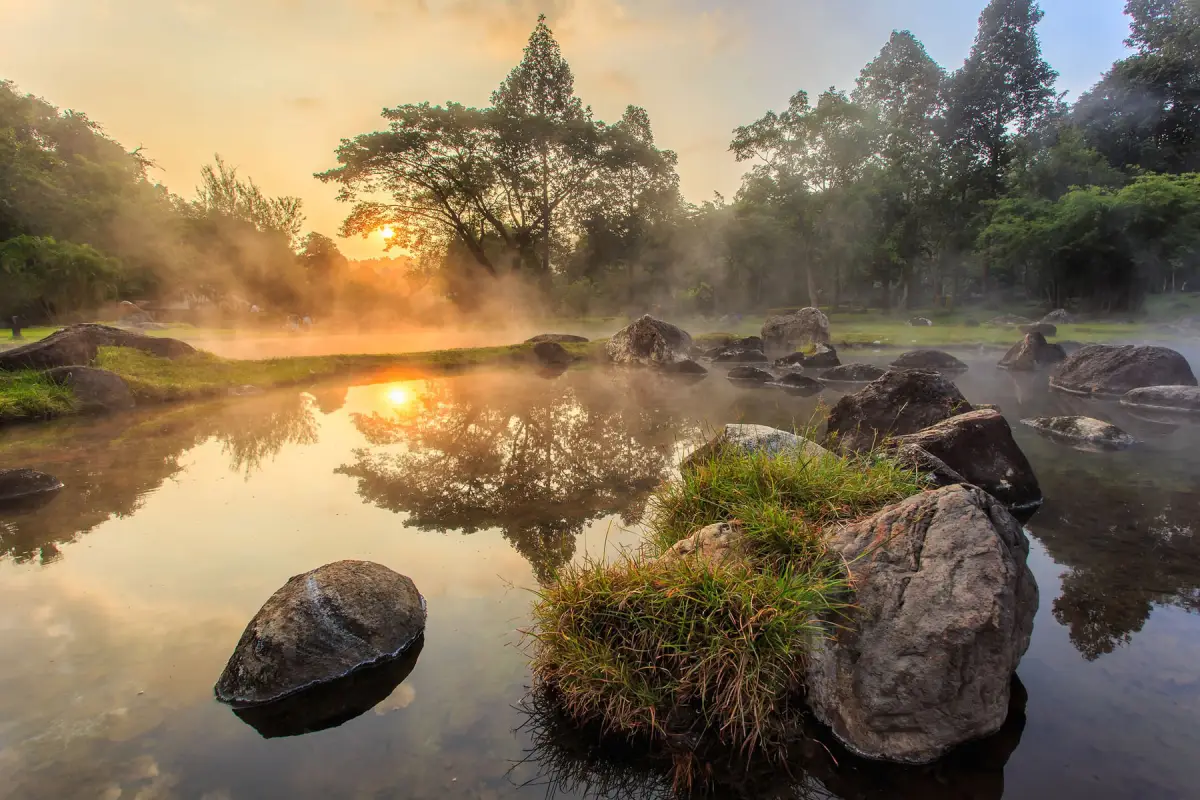
Ban Bang Cham Hot Spring in Surat Thani is a natural hot spring located in Ban Bang Cham, Moo 15, Takuk Nuea Subdistrict, Vibhavadi District. The site is known for a wide open ground where warm spring water rises naturally from the earth. The water temperature is around 40 degrees Celsius, and the area has a clear sulfur smell. Around the spring is a large mineral lick area of about 2 rai, making this place more than a simple hot spring. It is a natural spring, a mineral-rich soil area, and a wildlife observation environment in one location.
This destination is suitable for travelers who want to experience the inland natural side of Surat Thani. Ban Bang Cham Hot Spring is not a commercial spa or a highly developed bathing facility. Its value lies in the natural spring vents, the sulfur scent, the mineral soil, the quiet mountain village setting, and the possibility of seeing wildlife that comes down to the mineral lick. Visitors should approach the place as a nature-learning site rather than a conventional hot spring resort.
Ban Bang Cham is a village in Takuk Nuea Subdistrict, Vibhavadi District. The wider subdistrict is characterized by mountains, rolling terrain, forest areas, streams, and agricultural communities. Khlong Yan, an important local waterway, passes through the area and supports both the ecosystem and local livelihoods. This landscape explains why many attractions in Vibhavadi District are nature-based, including waterfalls, forests, streams, viewpoints, rafting routes, and natural hot springs.
What makes Ban Bang Cham Hot Spring distinctive is the large mineral lick surrounding the spring. A mineral lick is an area where mineral-rich soil naturally attracts wildlife. Animals may come to lick the soil or drink mineral water to supplement their diet. The presence of warm spring water, sulfur smell, and mineral-rich ground gives the site strong ecological value. It is a place where geology, water, soil, and wildlife are closely connected.
The spring water temperature is about 40 degrees Celsius, which is warm to moderately hot compared with some hot springs that reach 60 – 70 degrees Celsius. Even so, visitors should be careful. Natural hot spring temperatures can vary between spring vents. Test the water before touching or soaking, start with a short foot soak if appropriate, and avoid entering any part of the spring that has not been prepared for visitors.
The sulfur smell is one of the strongest identifying features of Ban Bang Cham Hot Spring. For first-time visitors, the smell may feel sharp at first. For nature travelers, however, it is part of the site’s identity and indicates the presence of natural geothermal water. This feature helps distinguish the area from ordinary warm-water pools or man-made bathing areas.
The 2-rai mineral ground around the spring should be treated carefully. Some parts of the surface may be damp, soft, or slippery, especially after rain. Visitors should wear footwear with good grip, avoid walking too close to spring vents, and never disturb the natural pool edges. The mineral lick and spring vents are important parts of the site, and too much disturbance can affect the landscape and the wildlife that uses it.
Wildlife observation is possible, but it requires patience and quiet behavior. Visitors should not play loud music, shout, feed animals, or approach wildlife for photographs. Animals that come to mineral licks are often cautious and can be easily disturbed. Early morning and late afternoon may offer a better natural atmosphere, but safety should always come first. Avoid visiting isolated natural areas alone.
Ban Bang Cham Hot Spring is not suitable for noisy water play or large group activities that disturb nature. Its charm is quietness, raw natural character, and ecological learning. Visitors who arrive with the right expectations will appreciate the spring vents, sulfur scent, mineral soil, forest atmosphere, and the story of Ban Bang Cham as a small village in a mountainous part of Surat Thani.
From a wellness perspective, warm water may help the body feel relaxed after travel, but it should not be treated as a guaranteed medical treatment. Elderly visitors, young children, pregnant travelers, people with heart disease, abnormal blood pressure, skin conditions, open wounds, or dizziness should be especially cautious. If you feel weak, overheated, light-headed, or uncomfortable, stop using the hot spring area immediately and rest in a shaded place.
Preparation is important because the site is a natural area. Bring drinking water, a towel, non-slip walking shoes, a hat, insect repellent, a personal rubbish bag, and a phone with enough battery. During the rainy season, check the weather and road conditions before traveling. Vibhavadi District receives frequent rain, and some local routes can become slippery or harder to access.
Ban Bang Cham is also linked with community-based tourism under the name Nakhon Bang Cham. The village is known for its mountain setting, community history, local livelihoods, and cultural development. A trip to Ban Bang Cham Hot Spring can therefore be combined with a broader understanding of the village and its nature-based tourism identity.
A good trip plan can include Bang Cham Waterfall, which is also located in Ban Bang Cham. The waterfall area is forested and suitable for nature trekking and seasonal outdoor activities. Small streams flow through the mountain area before joining Khlong Yan near Chiao Bang Cham. Together, the hot spring, mineral lick, waterfall, forest, and stream landscapes show the richness of Ban Bang Cham’s natural environment.
Other nearby nature routes in Vibhavadi District include Kaeng Krung National Park, Kok Kak Waterfall, Vibhavadi Waterfall, Khlong Yan, and Khlong Yan rafting. Khlong Yan is an important stream originating from the mountain areas of Kaeng Krung National Park. It is about 70 km long and forms part of the upper watershed connected to the Phum Duang and Tapi river systems. This makes Ban Bang Cham Hot Spring a useful starting point for understanding the natural landscape of Vibhavadi District.
The best times to visit are early morning and late afternoon. Morning is suitable for observing the hot spring and mineral lick area in a calmer atmosphere. Late afternoon is good for a quiet nature stop after traveling around Vibhavadi District. Those hoping to observe wildlife should remain quiet and keep a safe distance. Strong lights, loud sounds, and sudden movement should be avoided.
Travel planning is necessary because Ban Bang Cham is located in a mountain community area rather than a city zone. From Surat Thani City, travel toward Vibhavadi District and Takuk Nuea Subdistrict, then continue to Ban Bang Cham, Moo 15. Navigation should be used together with local directions, especially near the final approach to the natural area.
Getting There is easiest by private car, pickup truck, or rental vehicle. Public transport access is limited. From Surat Thani City, head toward Vibhavadi District, enter Takuk Nuea Subdistrict, and continue to Ban Bang Cham, Moo 15. Check fuel, phone signal, and weather before departure. During the rainy season, drive slowly and avoid soft ground, stream edges, or slippery local roads.
Upon arrival, park without blocking community roads or natural paths. Avoid walking outside safe areas, do not stand too close to spring vents, and do not leave rubbish in the mineral lick zone. Food waste, loud noise, and human disturbance may affect wildlife behavior. Responsible travel helps preserve Ban Bang Cham Hot Spring as a natural hot spring and ecological learning site for the community.
Overall, Ban Bang Cham Hot Spring is ideal for travelers who prefer quiet, natural, and ecologically meaningful places. Its key features are warm spring water of about 40 degrees Celsius, natural water vents, sulfur smell, a large mineral lick, a 2-rai natural area, and the chance to observe wildlife activity. It reveals another side of Surat Thani as a province of mountains, forests, streams, waterfalls, and natural hot springs, not only islands and beaches.
| Name | Ban Bang Cham Hot Spring |
| Location | Ban Bang Cham, Moo 15, Takuk Nuea Subdistrict, Vibhavadi District, Surat Thani Province |
| Address | Ban Bang Cham, Moo 15, Takuk Nuea Subdistrict, Vibhavadi District, Surat Thani 84180, Thailand |
| Highlights | Natural spring vents, water temperature around 40 degrees Celsius, sulfur smell, large mineral lick, about 2 rai of natural ground, and possible wildlife activity around the mineral spring |
| History | A natural hot spring of Ban Bang Cham in the mountain and forest landscape of Takuk Nuea Subdistrict, connected with local community life and Vibhavadi District’s nature routes |
| Name Origin | The name comes from Ban Bang Cham, Moo 15, Takuk Nuea Subdistrict, where the natural hot spring is located. |
| Distinctive Features | A natural hot spring on open ground with spring water emerging from the earth and a large mineral lick that may attract wildlife |
| Travel Information | From Surat Thani City, travel toward Vibhavadi District, enter Takuk Nuea Subdistrict, and continue to Ban Bang Cham, Moo 15. A private car or rental vehicle is recommended. |
| Current Status | Still listed as a natural attraction of Ban Bang Cham, and Ban Bang Cham remains an official village under Takuk Nuea Subdistrict administration |
| Open Days | Daily |
| Opening Hours | 08.00 – 19.00 |
| Facilities | Natural ground, mineral lick area, and natural hot spring vents |
| Main Areas / Zones | Hot spring vent area, mineral lick ground, natural observation zone, forest edge, and surrounding natural area |
| Local Authority | Takuk Nuea Subdistrict Administrative Organization |
| Main Contact Number | Takuk Nuea Subdistrict Administrative Organization, Tel. 0-7729-2111 |
| Nearby Tourist Attractions | 1. Bang Cham Waterfall, about 5 km 2. Nakhon Bang Cham Community, about 6 km 3. Khlong Yan / Khlong Yan Rafting Area, about 18 km 4. Kok Kak Waterfall, Ban Khlong Chun, about 22 km 5. Kaeng Krung National Park, about 30 km 6. Vibhavadi Waterfall, about 38 km |
| Nearby Restaurants | 1. Local Restaurants In Ban Bang Cham Community, about 6 km 2. Local Restaurants In Takuk Nuea Community, about 18 km 3. Chonnabot@Vibhavadi Surat Thani, about 25 km 4. Om Au Coffee & Tea, Vibhavadi District, about 25 km 5. Bang Tai Camping Vibhavadi, about 28 km, Tel. 098-799-0100 6. Local Restaurants Around Vibhavadi District, about 25 km |
| Nearby Accommodations | 1. Ban Bang Cham Community Homestay, about 6 km 2. Community Stays And Camping Areas In Takuk Nuea Zone, about 20 km 3. Suan Sam Bai Thao Camping, Vibhavadi, about 22 km 4. Bang Tai Camping Vibhavadi, about 28 km, Tel. 098-799-0100 5. Accommodations Around Vibhavadi District, about 25 km 6. Accommodations Around Surat Thani City, about 70 km |
Frequently Asked Questions (FAQ)
Q: Where is Ban Bang Cham Hot Spring located?
A: It is located in Ban Bang Cham, Moo 15, Takuk Nuea Subdistrict, Vibhavadi District, Surat Thani Province.
Q: What makes Ban Bang Cham Hot Spring special?
A: It has natural hot spring vents, water temperature around 40 degrees Celsius, a sulfur smell, and a large mineral lick where wildlife may come to feed on mineral-rich soil or water.
Q: Is Ban Bang Cham Hot Spring open daily?
A: Yes. The listed opening schedule is daily from 08.00 to 19.00.
Q: Is Ban Bang Cham Hot Spring suitable for soaking?
A: It is best treated as a natural observation and careful warm-water site rather than a conventional recreational pool, because the area consists of natural spring vents and mineral lick ground.
Q: Why does the hot spring smell like sulfur?
A: The sulfur smell is a natural characteristic of geothermal water and underground mineral processes in the area.
Q: Can visitors see wildlife at Ban Bang Cham Hot Spring?
A: Wildlife may come to the mineral lick, but visitors should stay quiet, keep a safe distance, avoid feeding animals, and avoid disturbing the natural area.
Q: What should visitors bring?
A: Bring drinking water, non-slip walking shoes, a towel, a hat, insect repellent, a personal rubbish bag, and check the weather before traveling.
Q: What nearby places can be combined with this trip?
A: Nearby options include Bang Cham Waterfall, Nakhon Bang Cham Community, Khlong Yan, Kok Kak Waterfall, Kaeng Krung National Park, and Vibhavadi Waterfall.
 Category: ●Nature and Wildlife
 Group: ●Hot Springs
Last Update : 5 DayAgo
 Last Update : 5 DayAgo
Recommend

 Art, Culture and Heritage
 Landmarks and Memorials(1)
 Art, Craft Centres, Tradition(8)
 Museums(5)
 Educational Places
 Educational Gardens, Farm(1)
 Places of Worship
 Temple(32)
 Other Sacred Sites(8)
 Research and Development
 Royal Project(1)
 Suburban Living
 Village, Community(6)
 Local Market(1)
 National Parks and Marine Reserves(8)
 Mountain (Doi)(2)
 Dam, Reservoir, Lake(8)
 Waterfalls(34)
Hot Springs(7)
 Caves(18)
 River, Canal(11)
 Bays and Beaches(30)
 Islands(16)
 Other natural attractions(10)
 Entertainment and Agricultural
 Animal camps and shows(6)
 Farms, Parks and Ecotourism(7)
 Outdoor and Adventure Activities(2)
 Shopping
 Shopping and Night Market(1)
 Travel Articles, Recipes
 Travel Review, Food Review(1)
 Southern Food Menu, Southern Food Recipes(1)


