
lovethailand home >South Travel Attractions >Ranong Travel Attractions >Muang Ranong >Bang Rin > Ban Phon Rang Hot Spring
TL;DR: Ban Phon Rang Hot Spring is located at Ban Phon Rang, Bang Rin Subdistrict, Mueang Ranong District, Ranong Province, within Namtok Ngao National Park, open Open Daily, hours 08:30 – 16:30.
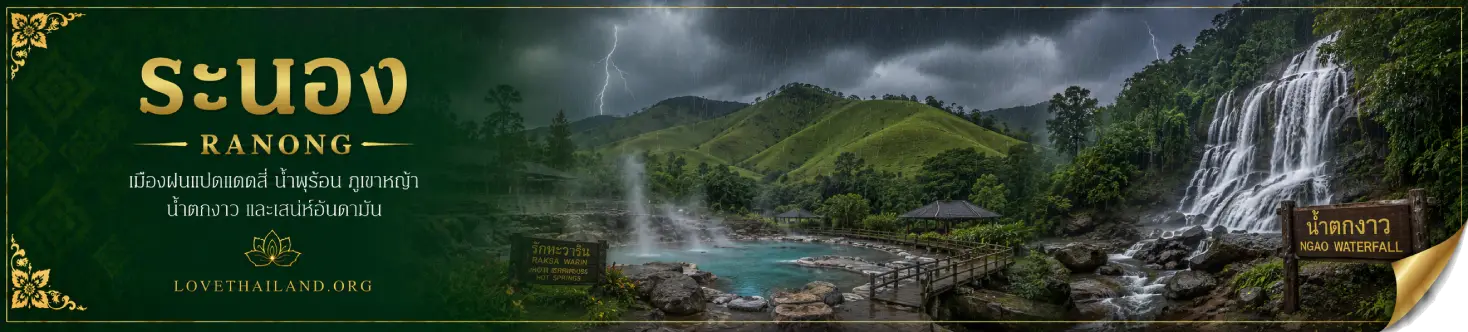
Ban Phon Rang Hot Spring
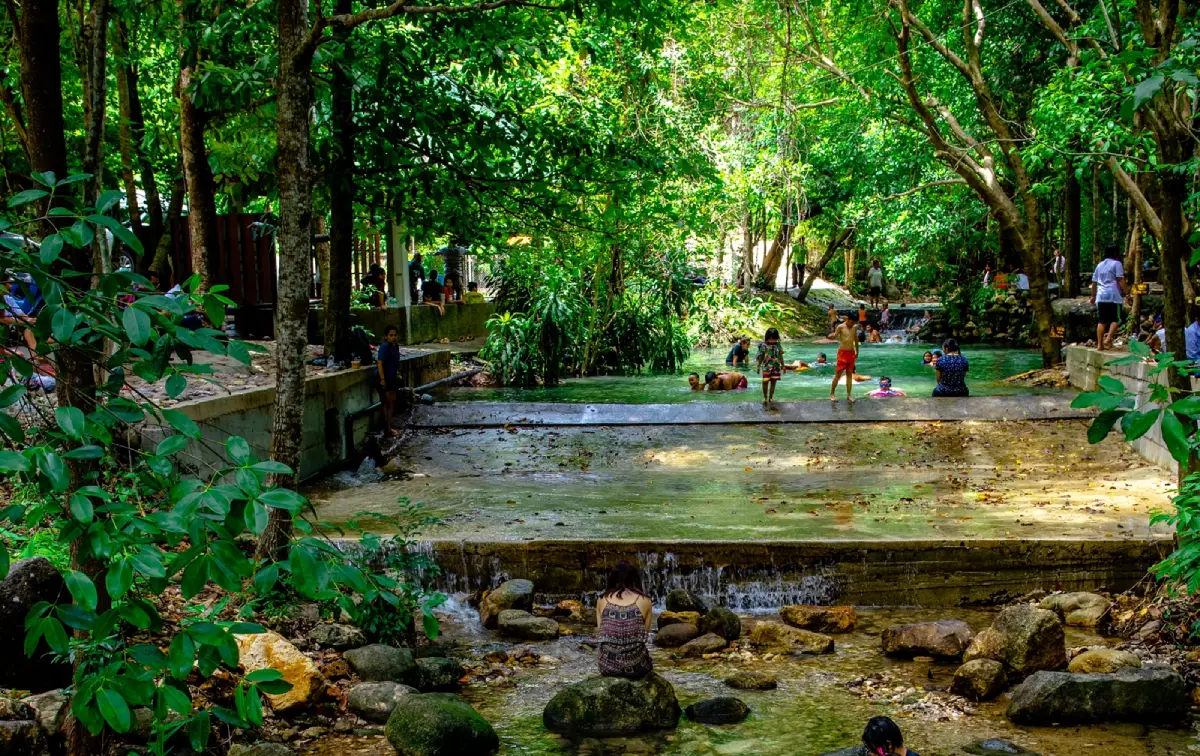
Open Days: Open Daily
Opening Hours: 08:30 – 16:30
Last Updated: 2 September 2026
Ban Phon Rang Hot Spring, also known as Porn Rang Hot Spring, Phon Rang Mineral Hot Spring, or Ban Phon Rang Hot Mineral Spring, is one of Ranong’s most important natural wellness attractions. Located in the Ban Phon Rang area of Bang Rin Subdistrict, Mueang Ranong District, within Namtok Ngao National Park, it is a natural hot spring where local residents and travelers come to bathe, soak, relax, and spend quiet time in nature. The spring emerges naturally from the ground, forming warm mineral-water pools in a valley beside Khlong Phon Rang. Its water is clear, clean-looking, and known for having no sulfur or rotten-egg smell. With warm mineral water, a cool natural stream, shaded forest, soaking areas, food services, and visitor facilities, Ban Phon Rang Hot Spring offers one of the most complete mineral-bathing experiences in Ranong.
The character of Ban Phon Rang Hot Spring is different from an ordinary spa building. The site sits in a forested national park landscape, where hot mineral water, cool stream water, trees, walking paths, and open-air bathing areas are part of the same experience. Visitors can enjoy foot soaking, full-body soaking, simple mineral bathing, a natural stream environment, local food, coffee, onsen-style eggs, and the quiet atmosphere of a valley close to Ranong town. This makes the hot spring suitable for a half-day wellness trip, a relaxed family outing, or a nature-and-health route combined with other nearby attractions.
The mineral water at Ban Phon Rang Hot Spring is generally around 40 – 44 degrees Celsius in the visitor-use bathing areas. This temperature is suitable for careful soaking when used properly. It is warm enough to help the body feel relaxed, but visitors still need to use it responsibly. Soaking should be done gradually, and visitors should avoid staying in hot water for too long at one time. The spring’s lack of sulfur smell also makes the bathing experience more comfortable than many hot springs where strong odor is present.
The hot spring is part of Namtok Ngao National Park, a protected natural area covering forest landscapes in Ranong and Chumphon. The park is known for Ngao Waterfall, humid forest, streams, rare plant and animal life, and the distinctive natural identity of Ranong. Ban Phon Rang Hot Spring should therefore be understood not only as a bathing site but also as part of a wider ecological system. The water, forest, valley, and stream all contribute to the experience, and visitors should use the area with respect for both wellness and conservation.
The hot spring landscape is shaped by a valley beside Khlong Phon Rang. Warm mineral water rises from the ground and meets the cool stream environment nearby, creating a natural contrast between heat and freshness. Visitors can hear flowing water, see forest shade, and feel the warm mineral water in an open-air setting. This is the main reason many travelers consider Ban Phon Rang one of Ranong’s most atmospheric hot spring destinations. It is not just a place to soak; it is a place to slow down, rest, and experience Ranong’s forest-water identity.
Current visitor facilities include 17 mineral-bath areas: 7 soaking pools, 2 scoop-bathing pools, 5 private soaking rooms, and 3 open-air onsen-style pavilions. This range of bathing options allows different visitor groups to choose what suits them best. Families, elderly visitors, groups of friends, and travelers who prefer more privacy can use different zones without crowding into one small pool. The site also includes a cool stream area, resting pavilions, toilets, changing rooms, food services, a cafe, parking, shops, and accommodation nearby.
In recent years, Ban Phon Rang Hot Spring has been developed with stronger attention to universal design. Ramps, access paths, bathing areas, and visitor facilities have been adjusted so that elderly visitors and wheelchair users can access more of the site. This gives the hot spring a stronger role as a wellness destination for all visitor groups. The design aims to make the site more accessible while keeping the forest and stream atmosphere intact.
The main activities are mineral bathing, foot soaking, streamside relaxation, light walking, enjoying the natural fish-spa atmosphere in the stream area, tasting onsen-style eggs, and resting in the forested surroundings. The warm water is best used in short sessions. A practical routine is to rinse before bathing, test the water gradually, soak for about 10 to 15 minutes, then rest and drink water before soaking again. Visitors should not treat the hot spring as a competition to stay in the water for as long as possible. The aim is relaxation, not endurance.
Visitors with certain medical conditions should be especially careful. People with heart disease, abnormal blood pressure, diabetes, circulatory problems, open skin wounds, pregnancy, advanced age, or reduced heat sensation should avoid long soaking sessions. Hot mineral bathing may help visitors feel relaxed, but it should not be used as a substitute for medical treatment. If dizziness, chest tightness, shortness of breath, palpitations, or unusual weakness occurs, soaking should stop immediately.
The cool natural stream is one of the site’s best features. It allows visitors to rest after soaking in hot water and enjoy a more natural forest atmosphere. In some periods, visitors also experience a natural fish-spa sensation from small fish in the stream. However, the stream should be used carefully. Rocks can be slippery, water levels can change, and food waste should never be left in or near the water. Keeping the stream clean is essential because the attraction depends on the quality of its natural environment.
Ban Phon Rang is also known for onsen-style eggs sold in the area. Eating these eggs after soaking or before leaving is a simple local experience associated with the hot spring. Visitors should use only the prepared service points and should not place personal items or food directly into bathing pools without permission. This helps protect cleanliness, safety, and order within the site.
The hot spring is suitable for many types of travelers. Families can use the soaking areas, stream, food services, and rest zones. Elderly visitors benefit from improved access and the comfortable mineral-water temperature. Nature travelers can enjoy the forest setting and combine the hot spring with nearby attractions. Photographers can capture open-air mineral pools, shaded walkways, stream scenery, and the calm valley environment. Travelers interested in wellness can use the site as a gentle mineral-bathing stop close to town.
Visitors should keep the area clean and follow national park instructions. Do not litter, do not use soap or shampoo in public pools or streams, do not bring food into bathing areas, and do not disturb other visitors. Proper bathing etiquette includes rinsing before entering pools, dressing appropriately, avoiding excessive noise, and limiting soaking time when other visitors are waiting. Ban Phon Rang is both a public recreation area and a protected natural attraction, so considerate use matters.
The hot spring is open daily from 08:30 to 16:30. Admission is 20 baht for Thai adults and 10 baht for Thai children, while foreign visitors pay 100 baht for adults and 50 baht for children. Vehicle fees include 20 baht for motorcycles and 30 baht for four-wheel cars. Visitors who want to stay overnight in nearby park accommodation should contact the hot spring or Namtok Ngao National Park in advance because accommodation is limited and weekends or holidays can be busier.
Getting there from Ranong town is straightforward. Take Highway 4, or Phetkasem Road, toward Phang Nga. Around kilometre markers 620 – 621, follow the sign for Ban Phon Rang Hot Spring on the left, then continue along the side road for about 2 km into the valley area of Namtok Ngao National Park. The site is roughly 10 km from Ranong town and is most convenient by private car, rental car, motorbike, or hired local vehicle.
Travelers without their own transport can arrange a local vehicle from Ranong town or ask their accommodation to help arrange a round trip. Because visitors usually spend time soaking, resting, eating, and walking around the site, it is best to agree on pickup time clearly before entering. This is especially useful for families, elderly travelers, and visitors carrying bathing clothes or other belongings.
The best time to visit is in the morning or early afternoon. Morning visits offer cooler air, softer light, and a fresher forest atmosphere. Early afternoon is also practical if visitors plan to combine the hot spring with Phu Khao Ya, Ngao Waterfall, or Ranong’s mangrove research area. Late arrival is not ideal because soaking should not be rushed, and the site closes in the late afternoon.
Ranong’s rainy season gives the forest around Namtok Ngao National Park a lush and vivid character. The surrounding trees become greener, the stream carries more water, and the atmosphere feels fresher. However, wet weather also means slippery surfaces and changing stream levels. Visitors should bring non-slip footwear, a towel, spare clothes, a waterproof pouch for phones, and drinking water. If heavy rain affects the stream, use only safe bathing areas and avoid entering moving water.
For photography, the best times are morning and soft afternoon light. Good subjects include open-air mineral pools, roofed soaking pavilions, forest walkways, Khlong Phon Rang, cafe corners, and the shaded valley setting. Visitors should avoid photographing people in bathing areas without permission and should not stand too close to slippery pool edges for a better angle.
Ban Phon Rang Hot Spring is easy to combine with several nearby attractions. A half-day route can begin with mineral bathing in the morning, followed by onsen-style eggs or a cafe stop, then continue to Phu Khao Ya or Ngao Waterfall. This route gives visitors a balanced view of Ranong’s wellness and nature identity without requiring a long drive from town.
A full-day route can include Ban Phon Rang Hot Spring, Phu Khao Ya, Ngao Waterfall, the Ngao mangrove research area, and Raksawarin Hot Springs or Ranong old town in the evening. This combines hot mineral water, open hills, forest waterfall, mangrove ecosystem, and city culture in one itinerary. Starting with Ban Phon Rang in the morning is practical because mineral bathing works best when visitors are not rushed.
Phu Khao Ya, also known as Khao Hua Lan, is one of the closest natural landmarks. Its open grass-covered hills change colour by season, turning vivid green during the rainy period and golden brown in drier months. Pairing Phu Khao Ya with Ban Phon Rang gives a clear contrast between a shaded hot spring valley and an open hill landscape.
Ngao Waterfall is closely connected with the hot spring because both belong to the Namtok Ngao National Park landscape. The waterfall is one of Ranong’s major natural symbols, with water dropping down a high cliff and becoming especially striking during the rainy season. Visiting both sites helps travelers experience hot underground water and cool mountain water in the same protected area.
The Ngao mangrove research area and Ranong Biosphere Reserve are suitable for travelers interested in ecology. They show another side of Ranong: mangrove forest, coastal habitat, mudflat ecology, and the connection between freshwater and the Andaman Sea. Combining the hot spring with the mangrove area gives a broader understanding of Ranong’s environmental diversity.
Phu Lum Phi Hot Spring and Raksawarin Hot Springs can also be added for travelers who want to compare Ranong’s different hot spring experiences. Phu Lum Phi is a smaller community hot spring in Bang Rin, while Raksawarin is a historic hot spring public park near Ranong town. Together with Ban Phon Rang, these sites show why Ranong is strongly associated with mineral-water tourism.
Food options near Ban Phon Rang include the on-site hot spring restaurant, onsen-style egg stalls, Minna Cafe’de Ranong, small local food stops, A Bunch Of Bread Crispy Butter Toast, and food services near Taryn Ranong Hot Springs. Travelers wanting more restaurant variety can return to Ranong town or the Raksawarin area, where there are more local restaurants, cafes, and hotel restaurants.
Accommodation near the hot spring includes park-related guesthouses, local stays around Bang Rin, and hotels in Ranong town. Visitors who want to stay close to the hot spring can consider the Ban Phon Rang hot spring guesthouses and nearby local accommodation. Travelers who prefer more restaurants, markets, and onward transport can stay in Ranong town at hotels such as FarmHouse Hotel Ranong, Tinidee Hotel Ranong, or other central properties.
Ban Phon Rang Hot Spring has an important role in Ranong’s tourism identity. The province is promoted as a mineral-water and wellness destination, and this hot spring shows why. It offers more than bathing: it combines forest, stream, mineral water, national park management, local food, accessible design, and a relaxing visitor experience. For travelers who want to understand Ranong beyond beaches and islands, Ban Phon Rang is one of the most useful places to visit.
Getting There from Ranong town is by Highway 4, or Phetkasem Road, toward Bang Rin and Kapoe. Around kilometre markers 620 – 621, turn left at the sign for Ban Phon Rang Hot Spring and continue about 2 km along the access road into the Namtok Ngao National Park area. Search for Ban Phon Rang Hot Spring, Porn Rang Hot Spring, or Phon Rang Hot Spring in navigation apps, and confirm with road signs on the way. Private car, rental car, motorbike, or a hired local vehicle is the most convenient option, especially for visitors who want to continue to Phu Khao Ya, Ngao Waterfall, the Ngao mangrove area, or Raksawarin Hot Springs on the same day.
In summary, Ban Phon Rang Hot Spring is a complete natural mineral-water destination in Ranong. Located in Bang Rin Subdistrict within Namtok Ngao National Park, it offers clear warm mineral water, no sulfur smell, a visitor-use temperature of about 40 – 44 degrees Celsius, multiple soaking facilities, a cool stream, food services, guesthouses, and a shaded valley atmosphere. It is suitable for wellness travelers, families, elderly visitors, nature lovers, and anyone who wants to experience Ranong’s mineral-water culture close to town. Visitors should come during operating hours, soak in short sessions, follow health precautions, keep the area clean, and respect national park rules. With the right approach, Ban Phon Rang Hot Spring is not only a place to bathe in hot mineral water but also one of the best ways to understand Ranong as a province of forest, water, wellness, and quiet natural beauty.
| Name | Ban Phon Rang Hot Spring |
| Other Names | Porn Rang Hot Spring / Phon Rang Mineral Hot Spring / Ban Phon Rang Hot Mineral Spring |
| Location | Ban Phon Rang, Bang Rin Subdistrict, Mueang Ranong District, Ranong Province, within Namtok Ngao National Park |
| Address | Ban Phon Rang, Bang Rin Subdistrict, Mueang Ranong District, Ranong Province 85000 |
| Coordinates | 9.89459, 98.64136 |
| Highlights | Natural hot spring in a forested valley, clear mineral water without sulfur smell, cool stream, multiple soaking pools, and shaded national park surroundings |
| Distinctive Features | Natural mineral water rises from the ground, spreads into pools, and flows near Khlong Phon Rang, creating a forest hot spring and cool-stream bathing environment |
| Mineral Water Temperature | About 40 – 44°C in visitor-use bathing areas |
| Area Context | Located in the natural landscape of Namtok Ngao National Park, with forest, stream, valley terrain, and mineral hot spring resources in the same area |
| Travel Information | From Ranong town, take Highway 4 / Phetkasem Road toward Phang Nga. Around kilometre markers 620 – 621, turn left at the Ban Phon Rang Hot Spring sign and continue about 2 km to the site |
| Current Status | Open as a wellness attraction and natural mineral hot spring destination within Namtok Ngao National Park |
| Open Days | Open Daily |
| Opening Hours | 08:30 – 16:30 |
| Fees | Thai Visitors: Adults 20 Baht, Children 10 Baht Foreign Visitors: Adults 100 Baht, Children 50 Baht Motorcycle 20 Baht, Four-Wheel Car 30 Baht |
| Facilities | Soaking pools, scoop-bathing pools, private soaking rooms, open-air onsen pavilions, foot-bath areas, cool stream, toilets, changing rooms, resting pavilions, parking, restaurant, cafe, shops, and guesthouses |
| Main Areas / Zones | 1. Entrance And Fee Collection Area 2. Nature Walkway And Plant-Viewing Area 3. Seven Soaking Pools 4. Two Scoop-Bathing Pools 5. Five Private Soaking Rooms 6. Three Open-Air Onsen Pavilions 7. Khlong Phon Rang Cool Stream And Natural Foot-Soaking Area 8. Restaurant, Cafe, And Onsen-Egg Area 9. Guesthouse Area 10. Universal Design Area For Elderly Visitors And Wheelchair Users |
| Caretaker | Namtok Ngao National Park, Department Of National Parks, Wildlife And Plant Conservation, with local agencies in Bang Rin Subdistrict |
| Main Contact Number | Ban Phon Rang Hot Spring, Tel. 077-862-103 Namtok Ngao National Park, Tel. 077-825-946 |
| Nearby Tourist Attractions | 1. Taryn Ranong Hot Springs, About 1.6 km, Tel. 077-826-726, 062-893-2239 2. Chalerm Phrakiat Nawaminthrachini Park, About 1.6 km 3. Ban Mueang Rae Nong Museum, About 2.2 km 4. Phu Khao Ya / Khao Hua Lan, About 3.9 km 5. Namtok Ngao National Park / Ngao Waterfall, About 4.5 km, Tel. 077-825-946 6. Ngao Mangrove Research Area And Ranong Biosphere Reserve, About 4.6 km 7. Wat Ban Ngao, About 5.2 km 8. Raksawarin Hot Springs, About 7.2 km |
| Nearby Restaurants | 1. Ban Phon Rang Hot Spring Restaurant Area, About 64 m 2. Roti Nissara, About 100 m 3. Minna Cafe’de Ranong, About 200 m, Tel. 095-354-4456 4. Healthy Food Happy Bowl, About 1 km 5. Khrua Tit Fon, About 1.2 km 6. A Bunch Of Bread Crispy Butter Toast, About 1.3 km, Tel. 081-455-6645, 082-465-9154 7. Restaurant Area At Taryn Ranong Hot Springs, About 1.6 km, Tel. 077-826-726, 062-893-2239 |
| Nearby Accommodations | 1. Ban Phon Rang Hot Spring Guesthouses, About 100 m, Tel. 077-862-103 2. Mu Ban Raksa Ranong, About 1.1 km 3. Ranong Gable, About 1.6 km 4. De Rae Nong, About 2 km, Tel. 093-624-5478 5. Yes No Hotel, About 2.2 km, Tel. 084-805-3333 6. Ban Choeng Khao Resort, About 2.5 km, Tel. 077-826-900, 077-826-990, 077-985-229, 091-035-0978 7. The White Village Ranong Resort, About 3.3 km, Tel. 082-729-9229 |
Frequently Asked Questions (FAQ)
Q: Where Is Ban Phon Rang Hot Spring Located?
A: Ban Phon Rang Hot Spring is located in the Ban Phon Rang area of Bang Rin Subdistrict, Mueang Ranong District, Ranong Province, within Namtok Ngao National Park. From Ranong town, follow Highway 4 and turn left near kilometre markers 620 – 621, then continue about 2 km to the hot spring.
Q: What Are The Opening Hours Of Ban Phon Rang Hot Spring?
A: Ban Phon Rang Hot Spring is open daily from 08:30 to 16:30. Morning or early afternoon visits are the most practical because visitors have enough time for soaking, resting, and continuing to nearby attractions.
Q: How Much Is The Entrance Fee?
A: The fee is 20 baht for Thai adults and 10 baht for Thai children. Foreign adults pay 100 baht and foreign children pay 50 baht. Vehicle fees are 20 baht for motorcycles and 30 baht for four-wheel cars.
Q: What Types Of Mineral Bathing Areas Are Available?
A: The site includes soaking pools, scoop-bathing pools, private soaking rooms, open-air onsen pavilions, a cool stream, and natural foot-soaking areas, allowing visitors to choose according to comfort and physical condition.
Q: What Is The Water Temperature?
A: The mineral water in visitor-use bathing areas is about 40 – 44°C, which is suitable for careful short soaking sessions when visitors follow safety guidance and avoid staying in hot water too long.
Q: Who Should Be Careful When Soaking In Hot Mineral Water?
A: Visitors with heart disease, abnormal blood pressure, diabetes, circulatory problems, open wounds, pregnancy, advanced age, or reduced heat sensation should soak cautiously and stop immediately if they feel dizzy, weak, or unwell.
Q: What Nearby Places Can Be Combined With Ban Phon Rang Hot Spring?
A: Nearby places include Taryn Ranong Hot Springs, Phu Khao Ya, Ngao Waterfall, Namtok Ngao National Park, the Ngao mangrove research area, Wat Ban Ngao, Raksawarin Hot Springs, and Ranong old town.
Q: What Should Visitors Bring?
A: Visitors should bring a towel, spare clothes, a waterproof phone pouch, drinking water, sandals or non-slip footwear, and a bag for carrying rubbish back out. Visitors with medical conditions should assess their health before soaking.
 Category: ●Nature and Wildlife
 Group: ●Hot Springs
Last Update : 2 MonthAgo
 Last Update : 2 MonthAgo
 Click to Access the Navigation Map GPS
Ban Phon Rang Hot Spring Map
Recommend

 Art, Culture and Heritage
 Historical Sites and Monuments(4)
 Landmarks and Memorials(1)
 Royal Palace(1)
 Art, Craft Centres, Tradition(4)
 Educational Places
 Educational Gardens, Farm(1)
 Places of Worship
 Temple(12)
 Other Sacred Sites(2)
 Suburban Living
 Village, Community(2)
 National Parks and Marine Reserves(6)
 Mountain (Doi)(4)
 Waterfalls(15)
Hot Springs(3)
 Caves(4)
 River, Canal(2)
 Bays and Beaches(10)
 Islands(8)
 Other natural attractions(3)
 Travel Articles, Recipes
 Travel Review, Food Review(1)


