
lovethailand home >Northeastern Travel Attractions >Buri Ram Travel Attractions >Muang Buri Ram >Nai Muang > Buriram City Pillar Shrine
TL;DR: Buriram City Pillar Shrine is located at Lak Mueang Road, Nai Mueang Subdistrict, Mueang Buri Ram District, Buri Ram Province, open Daily, hours 06.00 – 17.00.

Buriram City Pillar Shrine
Open Days: Daily
Opening Hours: 06.00 – 17.00
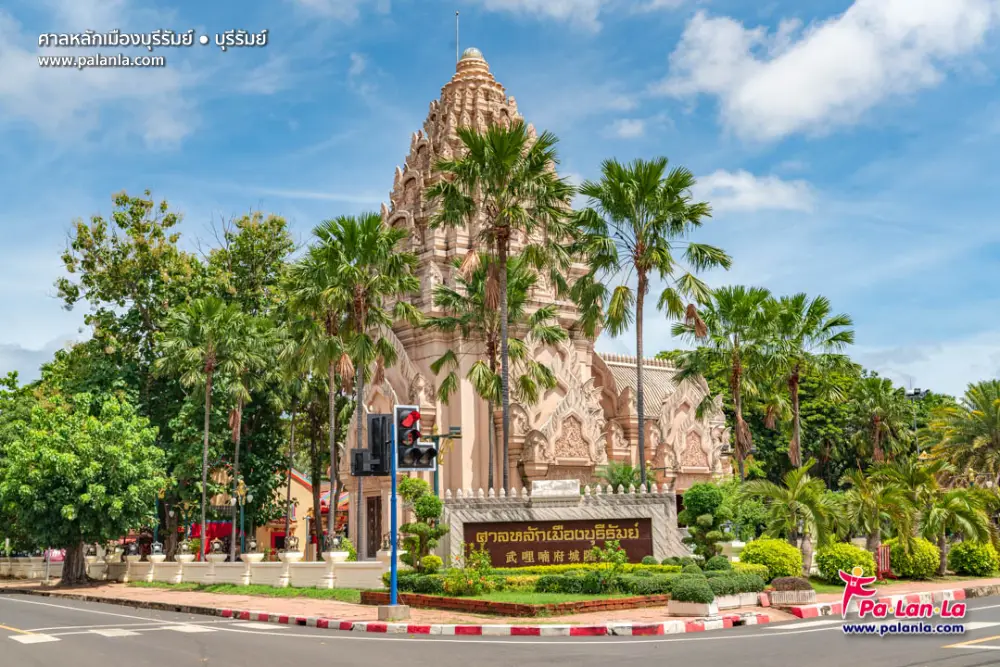
Buriram City Pillar Shrine, locally known as Chao Pho Lak Mueang Shrine, is one of the most important spiritual landmarks in downtown Buri Ram. Located on Lak Mueang Road in Nai Mueang Subdistrict, the shrine houses the city pillars, guardian deities, and a Chinese shrine within the same sacred compound. Its architecture is inspired by ancient Khmer art and Phanom Rung Stone Castle, making it both a place of worship and a cultural landmark that reflects the identity of Buri Ram as a province of Khmer heritage, faith, and living urban tradition.
Buriram City Pillar Shrine is a sacred landmark at the heart of Buri Ram city. Situated in the municipal area of Mueang Buri Ram District, the shrine is easy to reach from main roads, local communities, government areas, railway connections, and nearby urban attractions. For local residents, it is much more than a beautiful building. It is a spiritual center of the city, a place where people come to ask for blessings, pay respect to the guardian spirit of Buri Ram, and begin important journeys with a sense of confidence and good fortune.
Local people commonly call this place Chao Pho Lak Mueang Shrine because the compound contains both the Thai city pillar shrine and sacred Chinese deities worshipped by the Thai-Chinese community. This combination gives the shrine a distinctive identity. It is not only a traditional Thai city pillar shrine, but also a shared spiritual space for different cultural groups in Buri Ram. Thai Buddhists, Thai-Chinese families, merchants, students, officials, local residents, and travelers all come here to pay respect according to their beliefs.
The shrine is important not only because of its sacred status, but also because of its role in representing Buri Ram’s historical and cultural identity. Buri Ram is known for ancient Khmer sites, local Isan traditions, and the modern growth of the city. The City Pillar Shrine connects all of these layers. It stands as a symbol of civic stability, cultural continuity, and community faith. Visitors who come here can understand that Buri Ram is not only a destination for stone castles and sports tourism, but also a city with deep spiritual roots.
The area where the shrine stands is traditionally believed to be linked to the early history of Buri Ram. Local accounts connect the site with King Rama I, who is believed to have rested in this area when he was still known as Chao Phraya Chakri. The site is also associated with the origin of old Mueang Pae, which later developed into Buri Ram. This historical belief gives the shrine added significance. For many visitors, paying respect here is not only an act of worship, but also a way to acknowledge the historical memory of the city.
The original city pillar shrine was once a small structure. Over time, it became old and deteriorated, so local officials, merchants, and residents supported the construction of a new shrine in 2005. The present building was designed with strong inspiration from ancient Khmer art in order to express the cultural identity of Buri Ram. This is why many visitors immediately notice its resemblance to Khmer stone sanctuaries, especially Phanom Rung Historical Park, one of the most famous landmarks of the province.
The architecture is one of the main reasons why Buriram City Pillar Shrine is so memorable. The building is shaped like a Khmer-style prang with a tall central tower, detailed decorative elements, and a strong vertical form. Its design evokes the grandeur of ancient sanctuaries while functioning as a modern urban shrine. The structure is elegant, solemn, and highly photogenic. For foreign travelers, it offers a clear visual link between present-day Buri Ram and the province’s ancient Khmer heritage.
Inside the main shrine building are the city pillars, the symbolic heart of the site. One remarkable feature is that Buri Ram has two city pillars placed close together. Local interpretation suggests that one pillar may be associated with the founding period of old Mueang Pae, while the other may be connected with the later status of Buri Ram as a province. This makes the interior of the shrine especially meaningful. It presents the development of the city in sacred form, connecting old settlement memory with modern provincial identity.
Other guardian deities are also enshrined inside the compound, including Phra Suea Mueang, Thepharak, and Phra Song Mueang. These sacred figures are believed to protect the city and support peace, stability, and prosperity. In Thai belief, a city is not only a physical settlement. It also has a spirit, a guardian presence, and a symbolic center. The City Pillar Shrine therefore represents both civic order and spiritual protection.
Beside the main city pillar shrine is a Chinese shrine where Thai-Chinese worshippers pay respect to sacred figures such as Chao Pho Lak Mueang, Cai Shen, and Guan Yu. This area reflects the multicultural character of Buri Ram. The city has long been home to local Thai communities, merchants, and Thai-Chinese families. The coexistence of Thai and Chinese sacred spaces in the same compound makes the shrine a meaningful example of cultural harmony in a provincial Thai city.
Visitors usually begin by paying respect to the city pillars inside the main shrine, then continue to the guardian deities and the Chinese shrine. Offerings may include garlands, flowers, incense, candles, red drinks, or other items according to personal faith. The atmosphere is orderly and respectful. Even though the shrine is located in a busy urban area, the inside of the compound feels calm and focused, making it suitable for a short but meaningful visit.
The shrine also plays an important role in annual civic and cultural ceremonies. During the Songkran period and related city pillar ceremonies, local authorities, communities, students, merchants, and residents gather here for worship, ritual offerings, traditional dance, merit-making, and public participation. These events show that the shrine is not merely a static monument. It is an active cultural space where the people of Buri Ram continue to express shared faith and collective identity.
Buriram Municipality is involved in maintaining the area, and the shrine is also connected with a city pillar committee and local agencies. This continued care helps keep the compound clean, organized, and suitable for worshippers and visitors. The shrine therefore remains part of the living city rather than only a historical symbol. Its ongoing use and maintenance show how sacred spaces can continue to serve modern communities.
Getting There is convenient because the shrine is located in downtown Buri Ram. Travelers can reach it via Lak Mueang Road, Jira Road, and other main roads within the municipal area. Those arriving by train can get off at Buri Ram Railway Station and continue by local transport for a short distance. Travelers arriving by air can travel from Buri Ram Airport to the city center, a distance of about 30 km. From Bangkok, Buri Ram is about 384 km by road and about 376 km by rail.
If driving from Bangkok or Nakhon Ratchasima, travelers can enter Buri Ram city and follow local signs or a navigation app to Lak Mueang Road. The shrine is near important city landmarks such as Wat Klang Phra Aram Luang, Jira Road, and central community areas. During major events, especially Songkran and city pillar ceremonies, visitors should allow extra time for traffic and parking because many local residents gather at the shrine.
The best time to visit is in the morning, when the weather is cooler and the atmosphere is calm. The late afternoon is also pleasant for viewing the exterior architecture and taking respectful photographs. Visitors should remember that this is a sacred site, not simply a tourist photo spot. Photography should be done with care, especially when other people are praying or making offerings.
Modest dress is appropriate. Although the shrine is not a temple, it is a sacred city landmark, so visitors should cover shoulders and knees where possible, speak quietly, and avoid inappropriate poses near sacred images or the city pillars. Respectful behavior is especially important inside the shrine and around the Chinese deity area.
For travelers interested in architecture, the shrine is worth close observation. Its design does not merely copy Phanom Rung, but reinterprets Khmer-inspired forms in a contemporary city shrine. The tall prang-like form, ornamental details, and sacred interior create a visual language that immediately connects the site with Buri Ram’s identity as a province of ancient stone sanctuaries. This makes the shrine both beautiful and meaningful.
A typical visit takes about 30 minutes to 1 hour. Visitors can pay respect to the city pillars, walk around the main building, visit the Chinese shrine, and take photographs of the architecture. The shrine can be combined easily with nearby places such as Wat Klang Phra Aram Luang, Buri Ram Railway Station, King Rama I Monument, Chang Arena, Buriram Castle, and Khao Kradong Forest Park. This makes it a convenient stop for travelers exploring Buri Ram city before continuing to larger attractions such as Phanom Rung Historical Park and Prasat Muang Tam.
The surrounding area has restaurants, cafés, and hotels within a short distance. Because the shrine is located in the city center, visitors can find local food, simple meals, Isan dishes, cafés, and city hotels nearby. Staying in central Buri Ram is convenient for travelers who want to visit the shrine, the railway station, local night markets, sports attractions, and urban landmarks without long travel times.
Overall, Buriram City Pillar Shrine has several layers of value. Spiritually, it is the sacred center of the city. Historically, it is connected with the story of old Mueang Pae and King Rama I. Architecturally, it reflects the Khmer-inspired identity of Buri Ram through a modern shrine form. Socially, it serves as a gathering place for annual rituals and local ceremonies. For first-time visitors to Buri Ram, the shrine is one of the best places to begin understanding the city’s character.
| Name | Buriram City Pillar Shrine / Chao Pho Lak Mueang Buriram Shrine |
| Location | Lak Mueang Road, Nai Mueang Subdistrict, Mueang Buri Ram District, Buri Ram Province |
| Address | Lak Mueang Road, Nai Mueang Subdistrict, Mueang Buri Ram District, Buri Ram Province 31000, Thailand |
| Coordinates | 14.9958716, 103.1135752 |
| Highlights | A sacred city pillar shrine inspired by ancient Khmer architecture and Phanom Rung Stone Castle, housing the city pillars, city guardian deities, and a Chinese shrine in the same compound |
| History | The original shrine was a small structure. The present shrine was rebuilt in 2005 with ancient Khmer-inspired design to represent the cultural identity of Buri Ram. |
| Name Origin | Local people call it Chao Pho Lak Mueang Shrine because the compound includes both the city pillar shrine and sacred Chinese deities worshipped by the Thai-Chinese community. |
| Distinctive Features | A Khmer-style prang-like shrine, two city pillars, city guardian deities, and a Chinese shrine with important sacred figures |
| Main Areas / Zones | 1. Main City Pillar Shrine Building 2. Two City Pillar Area 3. Phra Suea Mueang, Thepharak, And Phra Song Mueang Worship Area 4. Chinese Shrine Beside The Main Shrine 5. Worship Courtyard And Architectural Photo Area 6. Offering Area And Visitor Service Point |
| Caretaker | Buriram Municipality, together with the Buriram City Pillar Shrine Committee and related local agencies |
| Important Activities | City pillar worship ceremony, annual shrine celebration, Songkran rituals, blessing prayers, and worship of the city guardian deities |
| Current Status | Active sacred shrine and faith-based cultural attraction in downtown Buri Ram |
| Open Days | Daily |
| Opening Hours | 06.00 – 17.00 |
| Fees | No Admission Fee |
| Facilities | Worship area, offering point, nearby parking, toilets, and photo areas around the shrine |
| Travel Information | Located in downtown Buri Ram and accessible via Lak Mueang Road, Jira Road, and main municipal roads. From Bangkok, the distance is about 384 km by road and about 376 km by rail. Buri Ram Airport is about 30 km from the city center. |
| Nearby Tourist Attractions | 1. Wat Klang Phra Aram Luang, about 0.2 km 2. Buri Ram Railway Station, about 1.2 km 3. King Rama I Monument, about 1.5 km 4. Chang Arena And Buriram Castle, about 6 km 5. Khao Kradong Forest Park, about 7 km |
| Nearby Restaurants | 1. Lak Mueang Ping Zaab, about 0.1 km, Tel. 083-725-5115 2. Jim Nom Phanit Buriram, about 0.1 km, Tel. 082-324-6399 3. Baan Mali Crispy Pork Soi Jira 15, about 0.3 km, Tel. 094-332-6728 4. Tumnur Night Market Buriram, about 0.7 km, Tel. 062-152-1265 5. Chumnum Thai Chicken Rice, about 1 km, Tel. 088-115-5199 6. Baan Chay Nam Buriram, about 2 km, Tel. 044-620-713, 096-336-5141, 095-353-5169 |
| Nearby Accommodations | 1. The New Residence Buriram, about 0.3 km, Tel. 092-846-8999 2. B2 Buriram Boutique & Budget Hotel, about 0.6 km, Tel. 052-009-161, 088-263-2897 3. Chill D Resort Buriram, about 1 km, Tel. 044-110-724 4. QOO Hotel Buriram, about 1.8 km, Tel. 044-602-561 5. Green@Buriram, about 2 km, Tel. 044-666-086 6. The Circle Hotel Buriram, about 1.2 km, Tel. 044-602-222 |
Frequently Asked Questions (FAQ)
Q: Where is Buriram City Pillar Shrine located?
A: It is located on Lak Mueang Road, Nai Mueang Subdistrict, Mueang Buri Ram District, Buri Ram Province 31000, in the downtown municipal area.
Q: Why do locals call it Chao Pho Lak Mueang Shrine?
A: Local people use this name because the compound contains both the city pillar shrine and a Chinese shrine with sacred deities worshipped by the Thai-Chinese community.
Q: What is special about the shrine architecture?
A: The shrine is designed in a Khmer-inspired prang style influenced by Phanom Rung Stone Castle, reflecting Buri Ram’s identity as a province of ancient stone sanctuaries.
Q: What can visitors worship inside the shrine?
A: Visitors can pay respect to the two city pillars, Phra Suea Mueang, Thepharak, Phra Song Mueang, and the Chinese shrine with Chao Pho Lak Mueang, Cai Shen, and Guan Yu.
Q: What are the opening hours of Buriram City Pillar Shrine?
A: The shrine is open daily from 06.00 to 17.00.
Q: Is there an admission fee?
A: No. There is no admission fee, but visitors may make donations or purchase offerings according to their faith.
Q: What should visitors wear?
A: Visitors should dress modestly, speak quietly, and behave respectfully because this is a sacred city shrine.
Q: What nearby attractions can be visited after the shrine?
A: Nearby places include Wat Klang Phra Aram Luang, Buri Ram Railway Station, King Rama I Monument, Chang Arena, Buriram Castle, and Khao Kradong Forest Park.
 Category: ●Places of Worship
 Group: ●Other Sacred Sites
Last Update : 3 MonthAgo
 Last Update : 3 MonthAgo
 Click to Access the Navigation Map GPS
Buriram City Pillar Shrine Map
Recommend

 Art, Culture and Heritage
 Historical Sites and Monuments(14)
 Landmarks and Memorials(2)
 Art, Craft Centres, Tradition(6)
 Museums(3)
 Educational Places
 Museum for Study(1)
 Temple(74)
Other Sacred Sites(5)
Temple(74)
Other Sacred Sites(5)
 Suburban Living
 Village, Community(3)
 Nature and Wildlife
 National Parks and Marine Reserves(2)
 Mountain (Doi)(1)
 Dam, Reservoir, Lake(14)
 River, Canal(1)
 Bays and Beaches(1)
 Other natural attractions(2)
 Entertainment and Agricultural
 Animal camps and shows(1)
 Stadium(2)
 Farms, Parks and Ecotourism(2)
 Waterpark(1)


