
lovethailand home >South Travel Attractions >Surat Thani Travel Attractions >Muang Surat Thani >Talat > Surat Thani City Pillar Shrine
TL;DR: Surat Thani City Pillar Shrine is located at Talat Subdistrict, Mueang Surat Thani District, Surat Thani Province, open Daily, hours 07.00 – 19.00.

Surat Thani City Pillar Shrine
Open Days: Daily
Opening Hours: 07.00 – 19.00
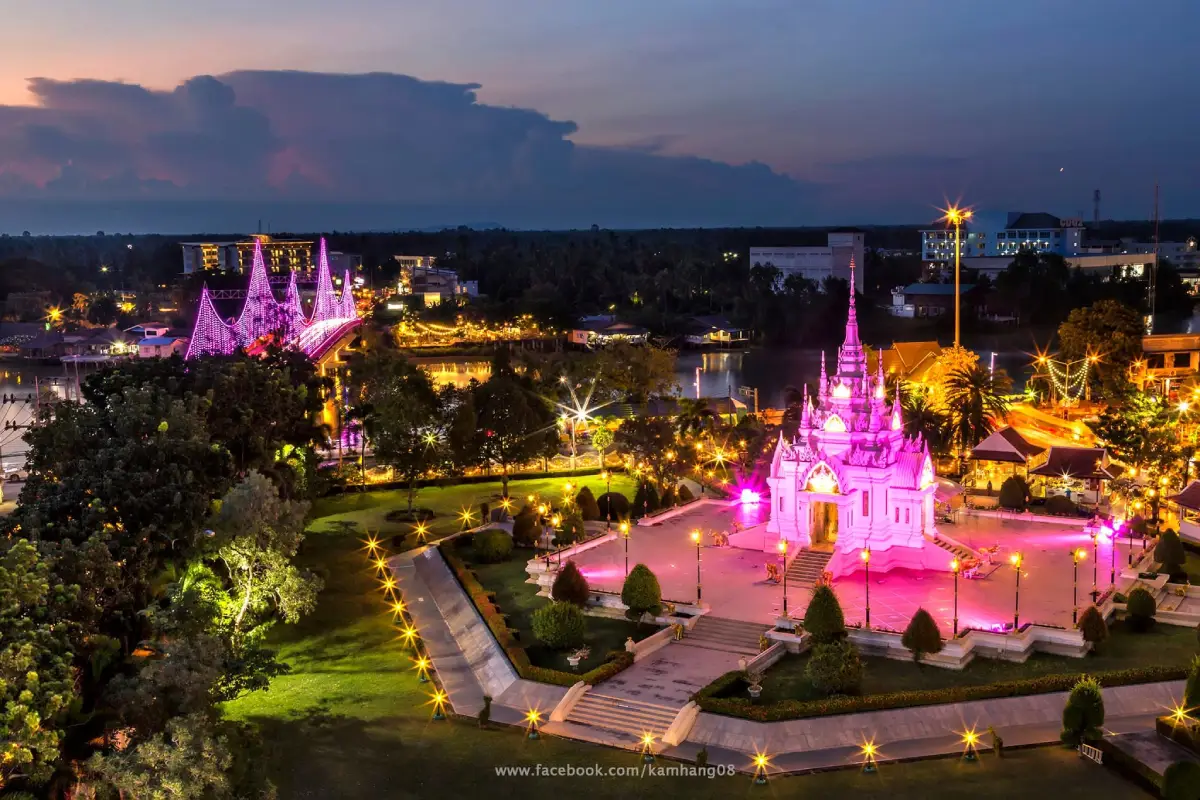
Surat Thani City Pillar Shrine is a major spiritual landmark in central Surat Thani. It was built to honor King Rama IX on the auspicious occasion of the 50th anniversary of his accession to the throne on 9 June 1996. The shrine is known for its adapted Srivijaya architecture, a sacred city pillar carved from auspicious Ratchaphruek wood, and its role as a symbolic center of faith for the people of Surat Thani Province.
Surat Thani City Pillar Shrine is located in Talat Subdistrict, Mueang Surat Thani District, Surat Thani Province, close to the Tapi River and the old urban area of the city. For local residents, the shrine is not only a place to pray for blessings. It is also the symbolic pillar of the province, a spiritual anchor, and a civic landmark that reflects the identity of Surat Thani through royal history, Buddhist belief, local craftsmanship, and southern Thai cultural heritage.
The shrine was constructed as a royal tribute to King Rama IX on the auspicious occasion of the 50th anniversary of his reign on 9 June 1996. It was also created to bring prosperity, protection, and auspiciousness to the province. In this sense, Surat Thani City Pillar Shrine is more than a beautiful religious structure. It represents the idea of a city having a spiritual center where local people can gather their faith, make offerings, and ask for peace, safety, and success.
One of the most distinctive qualities of the shrine is its architecture. The design was created by craftsmen from the Fine Arts Department and draws on the old local architectural language of the region. Its visual form combines influences from Lanka, Java, and Khmer artistic traditions with the broader style of Srivijaya art, which is deeply connected to the cultural history of southern Thailand. Because Surat Thani has important historical links with the Srivijaya cultural sphere, the shrine’s design carries both artistic and historical meaning.
The main shrine building has a square, four-sided mandapa form with recessed corners. The structure is arranged like a principal stupa rising from a ceremonial base. Its upper section has a five-tiered umbrella finial, while the roof below is layered in four receding tiers. Each tier includes subsidiary stupa-like elements, creating a balanced rhythm when viewed from a distance. The exterior is decorated with Srivijaya-style stucco patterns, golden details, and symbolic ornamental forms on all 4 sides.
The emblem commemorating the 50th anniversary of King Rama IX’s accession to the throne is displayed on all 4 sides of the shrine. This detail clearly connects the site with the royal occasion that inspired its construction. When visitors walk around the shrine, they can see that every side was designed to be visually complete. The white body of the building, golden stucco patterns, and open green surroundings make the shrine stand out beautifully from every direction.
At the heart of the shrine is the sacred city pillar. The pillar is carved from Ratchaphruek wood, an auspicious tree associated with prosperity, brightness, and royal symbolism in Thailand. The pillar is round and large, measuring 108 inches in height and 20 inches in diameter. It is lacquered and gilded in gold. The top of the pillar is carved into 4 faces of Bodhisattva Avalokitesvara, each facing one of the 4 directions, similar in concept to the four-faced sacred figures found on many city pillars in Thailand.
The Avalokitesvara imagery is significant because it resonates with the Buddhist and artistic traditions associated with Srivijaya culture. The 4 faces suggest protection in all directions and the spreading of compassion across the city. At the hair knot of the figure, a seated Buddha image in meditation posture is carved and gilded. This combination gives the city pillar both a sacred meaning and an exceptional level of craftsmanship.
Around the main city pillar stand 4 smaller replica pillars. They are placed on a black granite base that supports the principal pillar. The base is decorated in 2 levels. The first level is an octagonal base with gilded elephant figures set within niches, while the second level features a lotus-inspired pattern known locally as bua lep chang. These details strengthen the sacred atmosphere of the interior and make the shrine particularly meaningful for visitors interested in religious art.
The interior of the shrine is finished with cream-colored marble walls and flooring, giving the space a clean, bright, and calm atmosphere. The ceiling is made of teakwood with gilded decorative moldings and is arranged in 2 layers. The entrance canopy ceiling also uses teakwood and gilded molding. A chandelier hangs in the center, with ceiling lamps around the interior, making the shrine graceful both during the day and when illuminated in the evening.
The entrance doors are double glass doors engraved with colorful guardian figures, including yakshi and yaksha images that stand symbolically at the entrance. Around the shrine, the windows and light openings also use engraved glass with bright colors and decorative patterns. When natural light passes through these surfaces and reflects on the marble floor, gilded moldings, and city pillar, the interior gains a quiet but powerful sacred quality.
Outside, Surat Thani City Pillar Shrine stands in the middle of a green lawn with ornamental plants arranged around the structure. The white shrine building appears striking against the grass, almost as if placed on a ceremonial carpet of greenery. The total area covers about 7 rai, with roads surrounding the site on all 4 sides. This open layout allows visitors to see the shrine clearly from multiple angles and makes it one of the most recognizable landmarks in central Surat Thani.
The surrounding ground is arranged in 2 levels. Before reaching the shrine, visitors pass from the lower walkway through a sloped retaining wall surfaced with gray granite. The first platform is designed largely as a lawn, with pathways leading up to the second platform. The upper platform is paved with cream-white granite tiles and surrounded by planting beds, decorative edging, and golden swan-shaped garden lamps. These landscape elements make the shrine attractive in both daylight and evening light.
Local people visit Surat Thani City Pillar Shrine regularly, especially in the morning, late afternoon, and during important provincial ceremonies. Visitors commonly pray to the city pillar for personal prosperity, family peace, work success, protection, and safe travel. Flower, incense, and candle offerings are available at the site, and the area includes parking and open walking space around the shrine. First-time visitors can follow the usual order of worship inside the shrine without difficulty.
The shrine also plays an important ceremonial role in Surat Thani Province. Each year, official ceremonies are held to worship and honor the city pillar. These events include both Brahmin and Buddhist rites and are attended by the provincial governor, government officials, public agencies, private organizations, and local residents. This shows that the shrine is not only a private place of prayer but also a civic ceremonial space for the province.
Surat Thani City Pillar Shrine is also connected with the Songkran period in the province. During the Thai New Year season, ceremonies are held at the shrine to bring blessings to the people of Surat Thani. For many families, stopping at the shrine during Songkran is a way to begin the new year with respect, gratitude, and a sense of connection to their hometown.
The shrine is also linked to other important cultural events in the city, including rituals associated with the annual cloth-wrapping tradition of Phra That Si Surat on Khao Tha Phet. Ceremonial activities begin at the City Pillar Shrine before moving toward other sacred sites. This connection reinforces the role of the shrine as a spiritual starting point for major provincial traditions.
For travelers, the shrine is easy to visit and does not require a long schedule. Most visitors spend about 30 minutes to 1 hour here to pay respect, admire the architecture, take photos, and walk around the landscaped grounds. Morning and late afternoon are the best times to visit because the weather is more comfortable and the light works well for photography. In the evening, the shrine is illuminated, giving the white and gold architecture a different kind of beauty.
Getting There is straightforward because the shrine is in the city center near Don Nok Road, Si Surat Road, Talat Mai Road, and the Tapi River area. From Highway 401, turn into the city at Tha Kup junction, continue along Si Wichai Road, cross the Makham Tia canal bridge, pass Wang Tai Hotel, enter Talat Mai Road, and continue past Don Nok intersection. The shrine is on the left-hand side, opposite the police station area. Visitors staying in central Surat Thani can also use local transport, taxis, or walk from nearby city areas.
A visit to the shrine can easily be combined with nearby attractions such as Ko Lamphu Public Park, San Chao Market, Naris Bridge Walking Street, Wat Pattanaram, and the Tapi River waterfront. A practical half-day route is to visit the shrine in the late afternoon, walk around the grounds, take photos, and then continue to San Chao Market or the riverside area for dinner.
Visitors should dress politely and behave respectfully while inside the shrine. Avoid making loud noise, blocking people who are praying, climbing on any sacred structure, or taking intrusive photographs inside the worship area. The best way to experience the shrine is to approach it calmly, pay respect sincerely, and take time to appreciate the architecture and local meaning of the place.
Overall, Surat Thani City Pillar Shrine is one of the most worthwhile cultural stops in the city. It combines sacred belief, royal commemoration, Srivijaya-inspired architecture, detailed interior craftsmanship, and a convenient central location. For foreign travelers who want to understand Surat Thani beyond its role as a gateway to islands and beaches, this shrine provides an accessible and meaningful introduction to the city’s spiritual identity.
| Name | Surat Thani City Pillar Shrine |
| Location | Talat Subdistrict, Mueang Surat Thani District, Surat Thani Province |
| Address | Si Surat Field area, central Surat Thani, near the Tapi River, Talat Subdistrict, Mueang Surat Thani District, Surat Thani 84000, Thailand |
| Coordinates | 9.1393279, 99.3216759 |
| Highlights | A major city shrine of Surat Thani, Srivijaya-inspired architecture, sacred Ratchaphruek wood city pillar, and a central location near the Tapi River |
| History | Built to honor King Rama IX on the 50th anniversary of his accession to the throne on 9 June 1996 |
| Name Origin | It is the city pillar shrine of Surat Thani Province, serving as the symbolic pillar and spiritual center of the province |
| Distinctive Features | Four-sided mandapa with recessed corners, principal stupa form, five-tier umbrella finial, four receding roof tiers, Srivijaya-style stucco decoration, and golden details |
| Key Sacred Elements | Ratchaphruek wood city pillar, 108 inches high and 20 inches in diameter, with 4 faces of Bodhisattva Avalokitesvara and a seated Buddha image in meditation posture at the top |
| Travel Information | From Highway 401, enter the city at Tha Kup junction, continue via Si Wichai Road and Talat Mai Road, pass Don Nok intersection, and the shrine is on the left-hand side opposite the police station area |
| Current Status | Open for worship and sightseeing as a major spiritual and cultural landmark in central Surat Thani |
| Open Days | Daily |
| Opening Hours | 07.00 – 19.00 |
| Fees | No admission fee |
| Facilities | Flower, incense, and candle offering point, parking area, open walking area, green lawn, and worship space inside the shrine |
| Main Areas / Zones | Main shrine, city pillar, 4 replica city pillars, lower plaza, upper plaza, green lawn, planting beds, and roads surrounding all 4 sides of the site |
| Caretaker / Related Bodies | Surat Thani City Pillar Shrine Promotion Foundation, together with provincial and municipal agencies during major ceremonies |
| Official Website / Official Page | 365 Surat Travel information page and activity updates from Surat Thani provincial and municipal sources |
| Nearby Tourist Attractions | 1. Ko Lamphu Public Park, about 0.4 km 2. Naris Bridge Walking Street, about 0.8 km 3. San Chao Market, about 0.9 km 4. 100-Year Saphan Khong Market, about 0.7 km 5. Surat Thani Municipal Fresh Market, about 0.4 km 6. Wat Pattanaram, about 2.4 km |
| Nearby Restaurants | 1. Ma Nang Ban Tanai City Pillar Shrine, about 0.2 km, Tel. 093 724 4628, 095 854 4941 2. Tan Khao Tom Baht Diao Branch 3 City Pillar Shrine, about 0.7 km, Tel. 065 513 9962 3. San Chao Market Surat, about 0.9 km, Tel. 081 415 1511 4. Tadin Seafood Pa Thing 2, about 1 km, Tel. 081 956 5517, 080 537 2595 5. Crossroads Riverside, about 1 km, Tel. 077 210 612 6. Pop Eye Restaurant Don Nok, about 2 km, Tel. 077 204 120, 077 281 198, 081 085 8588 |
| Nearby Accommodations | 1. Grand Thara Hotel, about 0.1 km, Tel. 077 273 741 2. Evergreen Suite Hotel, about 0.3 km 3. Little PP Hometel, about 0.5 km 4. CBD Hotel Suratthani, about 0.7 km 5. Blu Monkey Hotel Suratthani, about 1.5 km, Tel. 092 539 5939, 077 945 456 6. B2 Surat Thani Boutique & Budget Hotel, about 1 km, Tel. 077 963 227 |
Frequently Asked Questions (FAQ)
Q: Where is Surat Thani City Pillar Shrine located?
A: Surat Thani City Pillar Shrine is located in Talat Subdistrict, Mueang Surat Thani District, Surat Thani Province, close to the Tapi River and the city center.
Q: What are the opening hours of Surat Thani City Pillar Shrine?
A: The shrine is open daily from 07.00 to 19.00.
Q: Is there an admission fee?
A: No. There is no admission fee to enter, worship, or walk around the shrine area.
Q: Why was Surat Thani City Pillar Shrine built?
A: It was built to honor King Rama IX on the 50th anniversary of his accession to the throne and to serve as the symbolic spiritual pillar of Surat Thani Province.
Q: What is special about the city pillar?
A: The city pillar is carved from Ratchaphruek wood, measures 108 inches high and 20 inches in diameter, and has 4 faces of Bodhisattva Avalokitesvara at the top.
Q: When is the best time to visit?
A: Morning and late afternoon are the best times to visit because the weather is more comfortable and the light is suitable for photography.
Q: What nearby places can travelers visit after the shrine?
A: Nearby places include Ko Lamphu Public Park, Naris Bridge Walking Street, San Chao Market, 100-Year Saphan Khong Market, and Wat Pattanaram.
 Category: ●Places of Worship
 Group: ●Other Sacred Sites
Last Update : 2 MonthAgo
 Last Update : 2 MonthAgo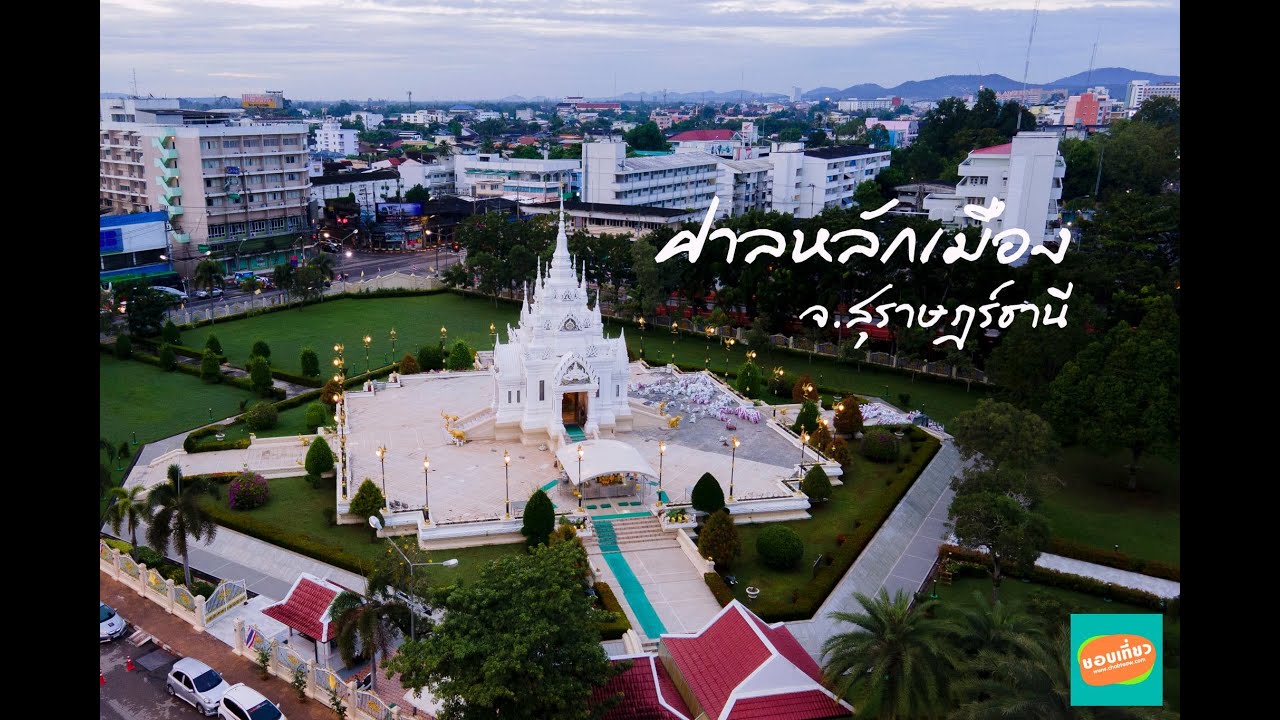
 Click to Access the Navigation Map GPS
Surat Thani City Pillar Shrine Map
Gellery
Recommend

 Art, Culture and Heritage
 Landmarks and Memorials(1)
 Art, Craft Centres, Tradition(8)
 Museums(5)
 Educational Places
 Educational Gardens, Farm(1)
 Temple(32)
Other Sacred Sites(8)
Temple(32)
Other Sacred Sites(8)
 Research and Development
 Royal Project(1)
 Suburban Living
 Village, Community(6)
 Local Market(1)
 Nature and Wildlife
 National Parks and Marine Reserves(8)
 Mountain (Doi)(2)
 Dam, Reservoir, Lake(8)
 Waterfalls(34)
 Hot Springs(7)
 Caves(18)
 River, Canal(11)
 Bays and Beaches(30)
 Islands(16)
 Other natural attractions(10)
 Entertainment and Agricultural
 Animal camps and shows(6)
 Farms, Parks and Ecotourism(7)
 Outdoor and Adventure Activities(2)
 Shopping
 Shopping and Night Market(1)
 Travel Articles, Recipes
 Travel Review, Food Review(1)
 Southern Food Menu, Southern Food Recipes(1)


