
lovethailand home >Northeastern Travel Attractions >Nakhon Ratchasima Travel Attractions >Muang Nakhon Ratchasima >Ban Koh > Nakhon Ratchasima City Pillar Shrine
TL;DR: Nakhon Ratchasima City Pillar Shrine is located at Jomphon Road, at the corner of Wat Phra Narai Maharat, Nai Mueang Subdistrict, Mueang Nakhon Ratchasima District, Nakhon Ratchasima, open Daily, hours 08.00 – 16.30.
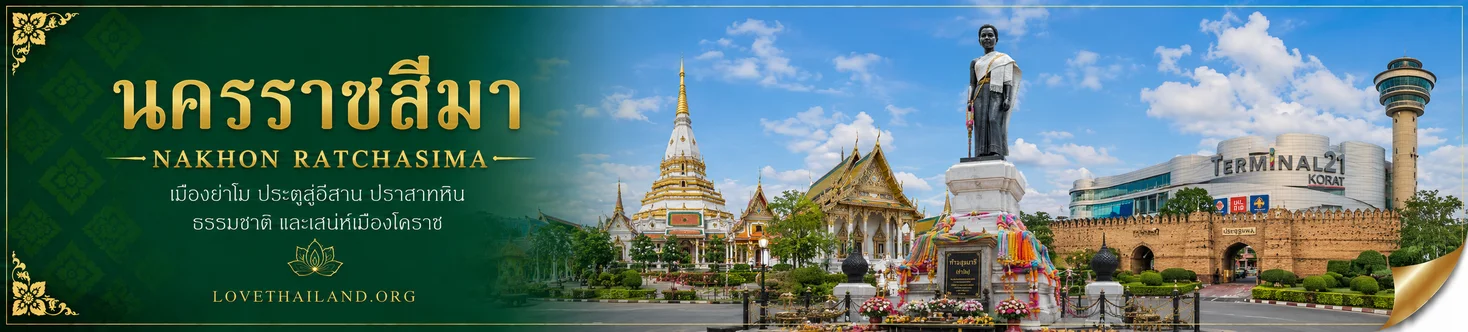
Nakhon Ratchasima City Pillar Shrine
Open Days: Daily
Opening Hours: 08.00 – 16.30
Nakhon Ratchasima City Pillar Shrine, also known as Korat City Pillar Shrine, is located on Jomphon Road at the corner of Wat Phra Narai Maharat in Nai Mueang Subdistrict, Mueang Nakhon Ratchasima District. It is one of the most important spiritual landmarks in the old city of Korat. The shrine houses the city pillar of Nakhon Ratchasima, a sacred symbol of the city’s foundation, protection, and civic identity. Although the shrine is compact in size, it carries deep historical and cultural meaning. Local Thai residents, Thai-Chinese families, merchants, travelers, and visitors regularly come here to pay respect, ask for blessings, and connect with the spiritual heart of the city before exploring nearby landmarks such as Thao Suranari Monument, Chumphon Gate, Wat Phra Narai Maharat, and the old city area.
The shrine is important because it represents the foundation of Korat as a historic city. It is not only a place for worship, but also a symbolic marker of the city’s origin and continuity. Nakhon Ratchasima has long served as a strategic gateway between central Thailand and the northeastern region. In the past, it was a frontier city of political and military importance. The city pillar therefore became a central sign of stability, legitimacy, protection, and collective identity. Visitors who come to the shrine can experience how faith, urban history, and local memory are connected in one small but meaningful site.
The history of Nakhon Ratchasima City Pillar Shrine dates back to the reign of King Narai the Great of Ayutthaya, between 1656 and 1688. During this period, Nakhon Ratchasima was developed as an important city on the northeastern frontier of the kingdom. The establishment of a city pillar was part of the traditional process of founding a city, marking a sacred center and creating auspicious protection for the people who lived there. The city pillar became the spiritual core of Korat and a sign that the city had been formally established with both practical and symbolic importance.
The original shrine and city pillar were made of wood, reflecting the construction practices and local materials of the time. Although the shrine has passed through many historical changes, the spiritual importance of the city pillar has remained strong. For local people, the shrine is more than an old structure. It is a place where the memory of the city is preserved, where generations of residents have paid respect, and where the idea of Korat as a protected and enduring city continues to live in daily practice.
In 1826, Nakhon Ratchasima experienced a major historical event during the campaign of Chao Anouvong of Vientiane. The city and its pillar were affected during that period. This history is closely linked with the heroic memory of Thao Suranari, or Ya Mo, who remains the most beloved historical figure of Korat. For this reason, the City Pillar Shrine should be understood together with Thao Suranari Monument, Chumphon Gate, Wat Phra Narai Maharat, and the old town landscape. Together, these places form the core memory of the city.
After the historical damage and movement of the city pillar, the original pillar eventually returned to its former area. In 1963, officials, merchants, and local residents joined together to build a new shrine to replace the old wooden structure, which had deteriorated over time. The new shrine was built in a compact four-sided pavilion form, and the original city pillar was installed permanently inside. This rebuilding reflected the shared devotion of government officers, businesspeople, and citizens who wanted to preserve the sacred symbol of Korat for future generations.
The shrine was registered as an ancient monument by the Fine Arts Department on 3 January 1937. This status gives the place both spiritual and heritage value. Any care, restoration, or improvement around the shrine must take into account its historical significance, its protected status, and the devotion of the people who worship there. The shrine therefore stands at the intersection of faith, heritage conservation, local memory, and everyday urban life.
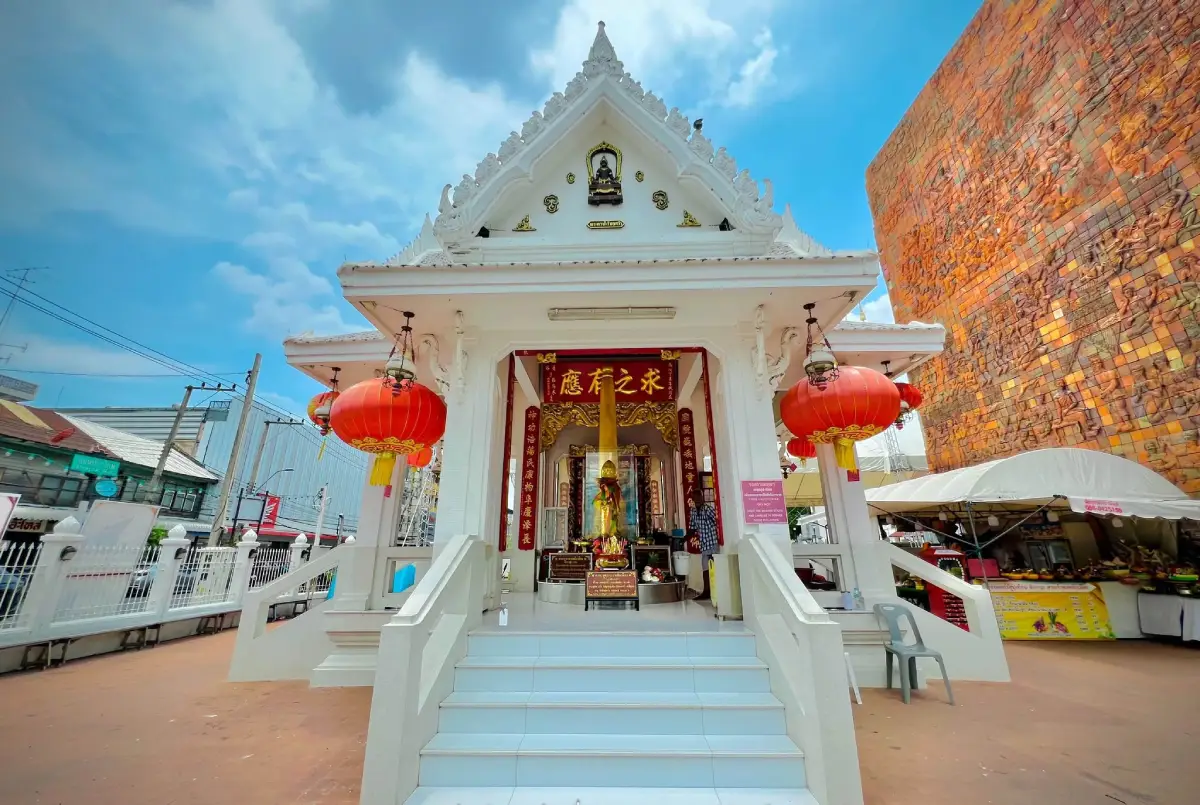
One of the most distinctive characteristics of Nakhon Ratchasima City Pillar Shrine is its Thai-Chinese shrine style. The building has the atmosphere of a Chinese shrine, with red and gold decorative elements, Chinese inscriptions, and a compact sacred interior. The city pillar is placed as the central object of worship. This visual character reflects the cultural mixture of Korat, where Thai and Chinese communities have long shared the same urban space, trading life, and local devotion. The shrine is respected by both Thai and Thai-Chinese residents as a sacred place protecting the city and its people.
The eastern wall of the shrine is decorated with terracotta relief panels. These panels depict the battle story of Thao Suranari and scenes of Thai life in earlier times. This artistic feature gives the shrine additional cultural value. Visitors can see how local history, heroism, daily life, and art are brought together through low-relief storytelling. The shrine is therefore not only a spiritual site, but also a small cultural space where the memory of Korat is expressed through visual art.
The atmosphere inside the shrine is calm and solemn. People come to light incense, offer candles and flowers, bow before the city pillar, or stand quietly in prayer. At different times of the day, the shrine receives local residents, shop owners, office workers, travelers, and families who come to ask for blessings. The constant flow of worshippers shows that the shrine remains active and meaningful in the life of the city, rather than being a historical object separated from daily use.
For local people, paying respect at the City Pillar Shrine is often connected with important life moments. Some people come before beginning a new job, opening a business, making an important journey, or starting a family ceremony. Some families bring young men before ordination to pay respect at the shrine, following an old local custom. These practices show how the shrine connects personal hopes with the larger spiritual identity of the city.
The shrine is closely connected with the old city plan of Nakhon Ratchasima. It stands near Wat Phra Narai Maharat, an important royal temple in the center of the old city. This area contains layers of religious, political, and cultural meaning. Around the shrine are temples, old roads, market areas, historic gates, and places of worship. Walking from the shrine to Wat Phra Narai Maharat or Chumphon Gate allows visitors to see how the old city still exists within the modern cityscape.
Jomphon Road and the surrounding area are ideal for exploring central Korat on foot. Important nearby places include Thao Suranari Monument, Chumphon Gate, Wat Phra Narai Maharat, San Phra Narai, Ya Mo Market, Maha Weerawong National Museum, and Korat Museum. The shrine is therefore a practical starting point for understanding Korat through faith, history, local streets, and the rhythm of the old city.
For the Thai-Chinese community in Nakhon Ratchasima, the shrine’s Chinese-style character gives it a familiar and meaningful form. The red and gold colors, Chinese inscriptions, and shrine layout connect with the tradition of Chinese community worship. At the same time, the city pillar itself belongs to the broader Thai tradition of city foundation and protection. This combination creates a shared sacred space where different cultural elements coexist naturally.
The shrine is small, but its compact size makes the experience direct and accessible. Visitors can enter, pay respect, observe the city pillar, and see the decorative details within a short period of time. A general visit may take around 15 to 30 minutes. Those who want to observe the terracotta reliefs, photograph the exterior respectfully, and continue to Wat Phra Narai Maharat may spend around 45 minutes to 1 hour in the area.
Worship at the shrine usually begins with a calm mind and respectful manner. Visitors may prepare flowers, incense, candles, or offerings available near the shrine. After that, they pay respect to the city pillar and make their wish silently. Many people ask for protection, safe travel, good fortune, family peace, or success in work and business. The act of worship here is simple, but it carries strong emotional meaning for local people and visitors alike.
The shrine is located in a busy urban area, so parking near the site can be limited at certain times. This is especially true on weekends, holidays, and during periods when many people visit Ya Mo Monument, the old city area, or nearby markets. Many visitors park in nearby areas and walk to the shrine. Since the shrine is close to several important places, walking is often the most convenient way to experience the old city core.
Getting There is straightforward. Visitors can search for Nakhon Ratchasima City Pillar Shrine on Jomphon Road or use the coordinates 14.975001, 102.106013. From Thao Suranari Monument, the shrine is within a short distance by walking or a brief drive. From Nakhon Ratchasima Railway Station, the bus terminal, or hotels in the city center, visitors can take a local taxi, songthaew, or app-based ride to Jomphon Road near Wat Phra Narai Maharat.
Travelers driving from Bangkok can enter Nakhon Ratchasima via Mittraphap Road and continue toward the city center, the Ya Mo area, and Jomphon Road. Since central Korat can become busy, especially in the evening and during holidays, extra travel time is useful. Navigation apps help visitors choose the best route into the old city area and locate the shrine more easily.
Travelers arriving by train can continue from Nakhon Ratchasima Railway Station to the shrine by local transport. Those arriving by interprovincial bus can get off at Nakhon Ratchasima Bus Terminal and continue into the city center. Staying in central Korat makes it easy to combine the shrine with Thao Suranari Monument, Chumphon Gate, Ya Mo Market, museums, and temples in the same day.
The best time to visit is in the morning or late afternoon. Morning offers a calmer atmosphere and is suitable for beginning the day with worship. Late afternoon is convenient for visitors who have already explored other parts of the city. The softer light of the day can also make the shrine’s exterior, decorative details, and terracotta wall panels easier to appreciate. Weekdays are generally quieter than major holidays or city events.
Wat Phra Narai Maharat is one of the closest and most meaningful places to visit together with the shrine. This royal temple is located beside the shrine and has long been associated with the old city center. Visiting both places in the same route helps reveal the religious structure of old Korat, where the city pillar, royal temple, and historic streets form a connected cultural landscape.
From the shrine, visitors can continue to Thao Suranari Monument, one of the most important symbols of Nakhon Ratchasima. The monument honors Ya Mo, the heroine of Korat, and is deeply respected by local people. A route that begins at the City Pillar Shrine and continues to Ya Mo Monument connects the sacred foundation of the city with the historical memory of its defense and identity.
Chumphon Gate is another nearby landmark. It is one of the historic city gates and is closely associated with the old city layout and the memory of Korat. Seeing the shrine, Chumphon Gate, and Thao Suranari Monument together gives visitors a clear impression of the city’s symbolic core: the sacred pillar, the old gate, and the heroine of the city.
Maha Weerawong National Museum and Korat Museum are suitable for visitors who want to understand the broader history of Nakhon Ratchasima. These museums provide context about archaeology, art, culture, and the development of the province. Beginning at the City Pillar Shrine and continuing to a museum creates a meaningful contrast between living faith and organized historical knowledge.
Wat Sala Loi can also be included in the same city route. The temple is associated with Thao Suranari and is known for its distinctive modern Buddhist architecture. A route covering the City Pillar Shrine, Wat Phra Narai Maharat, Chumphon Gate, Thao Suranari Monument, Maha Weerawong National Museum, and Wat Sala Loi offers a rich introduction to the heart of Korat.
Food options around the shrine include local restaurants, cafés, dessert shops, Ya Mo Market stalls, and eateries on Jomphon Road and nearby streets. Visitors can pay respect at the shrine and then continue to a nearby café or restaurant within a short distance. The old city area is suitable for a slow walking route because food, temples, shrines, markets, and historic landmarks are located close together.
Accommodation near the shrine is available in several parts of central Nakhon Ratchasima. Visitors who want to walk around the old city can choose hotels near Jomphon Road, Pho Klang Road, Atsadang Road, or the Ya Mo area. Those who plan to continue toward Khao Yai, Phimai, or other provinces may prefer hotels with easier access to Mittraphap Road. Staying in the city center makes early morning worship and evening walks more convenient.
Visitors should behave respectfully inside the shrine. Modest clothing, quiet speech, careful movement, and awareness of other worshippers are important. The shrine may be small and active at the same time, so visitors should avoid blocking the main worship area or standing too close to people who are praying. Respectful behavior helps maintain the dignity of the shrine as a sacred place for local people.
Photography is best done from the exterior or from areas that do not disturb worshippers. Good subjects include the Thai-Chinese shrine structure, the city pillar, Chinese inscriptions, red and gold decorations, terracotta reliefs, and the flow of people coming to pay respect. Flash photography or close-up images of private worship should be avoided. The most meaningful images of the shrine are those that preserve its calm and sacred atmosphere.
The shrine also reveals a delicate relationship between people and place. Many local residents do not visit only to see the building; they come to ask for blessings, calm the mind, remember the city, and connect with the foundation of Korat. For people who live in Nakhon Ratchasima, passing the shrine and raising their hands in respect may seem ordinary, but this simple gesture carries a deep sense of attachment to the city.
As a cultural destination, Nakhon Ratchasima City Pillar Shrine is an excellent starting point for understanding Korat. The city contains Ayutthaya-period history, Rattanakosin-era heroism, Thai-Chinese culture, commercial neighborhoods, royal temples, museums, and walkable old streets. The shrine is small but powerful in meaning because it brings together the city’s foundation, sacred protection, heritage, and everyday devotion.
Overall, Nakhon Ratchasima City Pillar Shrine is a historic and sacred landmark with strong value in faith, history, art, and urban culture. Located on Jomphon Road near Wat Phra Narai Maharat, it houses the city pillar of Korat and features a Thai-Chinese shrine style with terracotta reliefs telling stories of Thao Suranari and Thai life in the past. It remains a living place of worship for local residents, Thai-Chinese families, and visitors. A visit to the shrine adds spiritual and historical depth to a journey through the center of Nakhon Ratchasima.
| Name | Nakhon Ratchasima City Pillar Shrine / Korat City Pillar Shrine |
| Location | Jomphon Road, at the corner of Wat Phra Narai Maharat, Nai Mueang Subdistrict, Mueang Nakhon Ratchasima District, Nakhon Ratchasima Province 30000 |
| Address | Jomphon Road, Nai Mueang, Mueang Nakhon Ratchasima, Nakhon Ratchasima 30000, near Prachak Road, Wat Phra Narai Maharat, Chumphon Gate, and Thao Suranari Monument |
| Coordinates | 14.975001, 102.106013 |
| Highlights | The city pillar of Nakhon Ratchasima, Thai-Chinese shrine style, sacred landmark of Korat, and terracotta reliefs depicting Thao Suranari and Thai life in the past |
| History | Built during the reign of King Narai the Great between 1656 and 1688. In 1963, a new shrine was built and the original city pillar was permanently installed inside. The shrine was registered as an ancient monument by the Fine Arts Department on 3 January 1937 |
| Name Origin | The shrine houses the city pillar of Nakhon Ratchasima, the sacred foundation pillar and symbolic guardian of the city |
| Distinctive Features | A Chinese-style shrine containing the city pillar, with terracotta relief panels on the eastern wall depicting Thao Suranari’s battle and scenes of traditional Thai life |
| Important Sacred Object | Nakhon Ratchasima City Pillar |
| Travel Information | Located in central Korat and accessible by private car, local taxi, songthaew, or app-based transport. Search for Jomphon Road at the corner of Wat Phra Narai Maharat, near Thao Suranari Monument and Chumphon Gate |
| Current Status | Open for public worship and visits as a protected ancient monument and sacred city landmark of Nakhon Ratchasima |
| Open Days | Daily |
| Opening Hours | 08.00 – 16.30 |
| Admission Fee | Free Admission |
| Facilities | Worship area, offering area, standing prayer space, entrance area, and nearby shops in the old city district |
| Main Areas / Zones | City pillar worship area, Chinese-style shrine hall, terracotta relief wall, front shrine area, and the connected area near Wat Phra Narai Maharat |
| Caretaker | Nakhon Ratchasima City Pillar Shrine Committee |
| Contact Number | 093-614-6473 |
| Nearby Tourist Attractions | 1. Wat Phra Narai Maharat Worawihan – about 100 m 2. San Phra Narai – about 200 m 3. Chumphon Gate – about 450 m 4. Thao Suranari Monument – about 500 m 5. Maha Weerawong National Museum – about 1 km 6. Korat Museum – about 3 km – Tel. 044-009-009 ext. 1011 |
| Nearby Restaurants | 1. Jompol Cafe – about 200 m – Tel. 081-547-4906 2. Jompol Boutique Cafe – about 250 m – Tel. 064-462-8787 3. Ta Sushi Ya Mo Market – about 700 m – Tel. 061-974-5885 4. Krua Mae Or Fish Maw Soup, Ya Mo Market – about 700 m – Tel. 095-447-7939 5. Jompol Nam Khaeng Sai – about 1 km – Tel. 098-638-2878 |
| Nearby Accommodations | 1. Korat Hotel – about 600 m – Tel. 044-341-345 2. Tokyo Hotel Korat – about 1 km – Tel. 044-242-788 3. Siri Hotel Nakhon Ratchasima – about 2 km – Tel. 044-341-822 4. Centre Point Hotel Terminal21 Korat – about 2 km – Tel. 044-498-880 5. The Imperial Hotel & Convention Centre Korat – about 4 km – Tel. 044-256-629 |
Frequently Asked Questions (FAQ)
Q: Where is Nakhon Ratchasima City Pillar Shrine located?
A: It is located on Jomphon Road at the corner of Wat Phra Narai Maharat, Nai Mueang Subdistrict, Mueang Nakhon Ratchasima District, Nakhon Ratchasima Province 30000, near Chumphon Gate and Thao Suranari Monument.
Q: What are the opening days and hours of Nakhon Ratchasima City Pillar Shrine?
A: The shrine is open daily from 08.00 to 16.30.
Q: Is there an admission fee for Nakhon Ratchasima City Pillar Shrine?
A: There is no admission fee. Visitors can enter and pay respect free of charge.
Q: What is the main highlight of Nakhon Ratchasima City Pillar Shrine?
A: The main highlights are the city pillar of Nakhon Ratchasima, the Thai-Chinese shrine style, and the terracotta relief wall depicting Thao Suranari and scenes of Thai life in the past.
Q: When was Nakhon Ratchasima City Pillar Shrine built?
A: The shrine dates back to the reign of King Narai the Great, between 1656 and 1688. In 1963, a new shrine was built and the original city pillar was permanently installed inside.
Q: How can travelers get to Nakhon Ratchasima City Pillar Shrine?
A: Travelers can go to Jomphon Road near Wat Phra Narai Maharat or use the coordinates 14.975001, 102.106013. The shrine is accessible by private car, local taxi, songthaew, or app-based transport within central Korat.
Q: What attractions are near Nakhon Ratchasima City Pillar Shrine?
A: Nearby attractions include Wat Phra Narai Maharat Worawihan, San Phra Narai, Chumphon Gate, Thao Suranari Monument, Maha Weerawong National Museum, and Korat Museum.
 Category: ●Places of Worship
 Group: ●Other Sacred Sites
Last Update : 3 MonthAgo
 Last Update : 3 MonthAgo
 Click to Access the Navigation Map GPS
Nakhon Ratchasima City Pillar Shrine Map
Recommend

 Art, Culture and Heritage
 Historical Sites and Monuments(20)
 Landmarks and Memorials(5)
 Art, Craft Centres, Tradition(7)
 Museums(6)
 Art Gallery(1)
 Educational Places
 Educational Gardens, Farm(4)
 Temple(29)
 Mosque(1)
Other Sacred Sites(6)
Mosque(1)
Other Sacred Sites(6)
 Research and Development
 Royal Project(3)
 Suburban Living
 Village, Community(6)
 Local Market(4)
 Floating Market(1)
 Nature and Wildlife
 National Parks and Marine Reserves(3)
 Mountain (Doi)(5)
 Dam, Reservoir, Lake(8)
 Waterfalls(9)
 Hot Springs(1)
 Caves(2)
 Flower Field(1)
 River, Canal(8)
 Bays and Beaches(2)
 Other natural attractions(3)
 Entertainment and Agricultural
 Zoos and Aquariums(2)
 Animal camps and shows(1)
 Farms, Parks and Ecotourism(21)
 Waterpark(4)
 Outdoor and Adventure Activities(6)
 Shopping
 Shopping and Night Market(2)
 Travel Articles, Recipes
 Travel Review, Food Review(6)


